
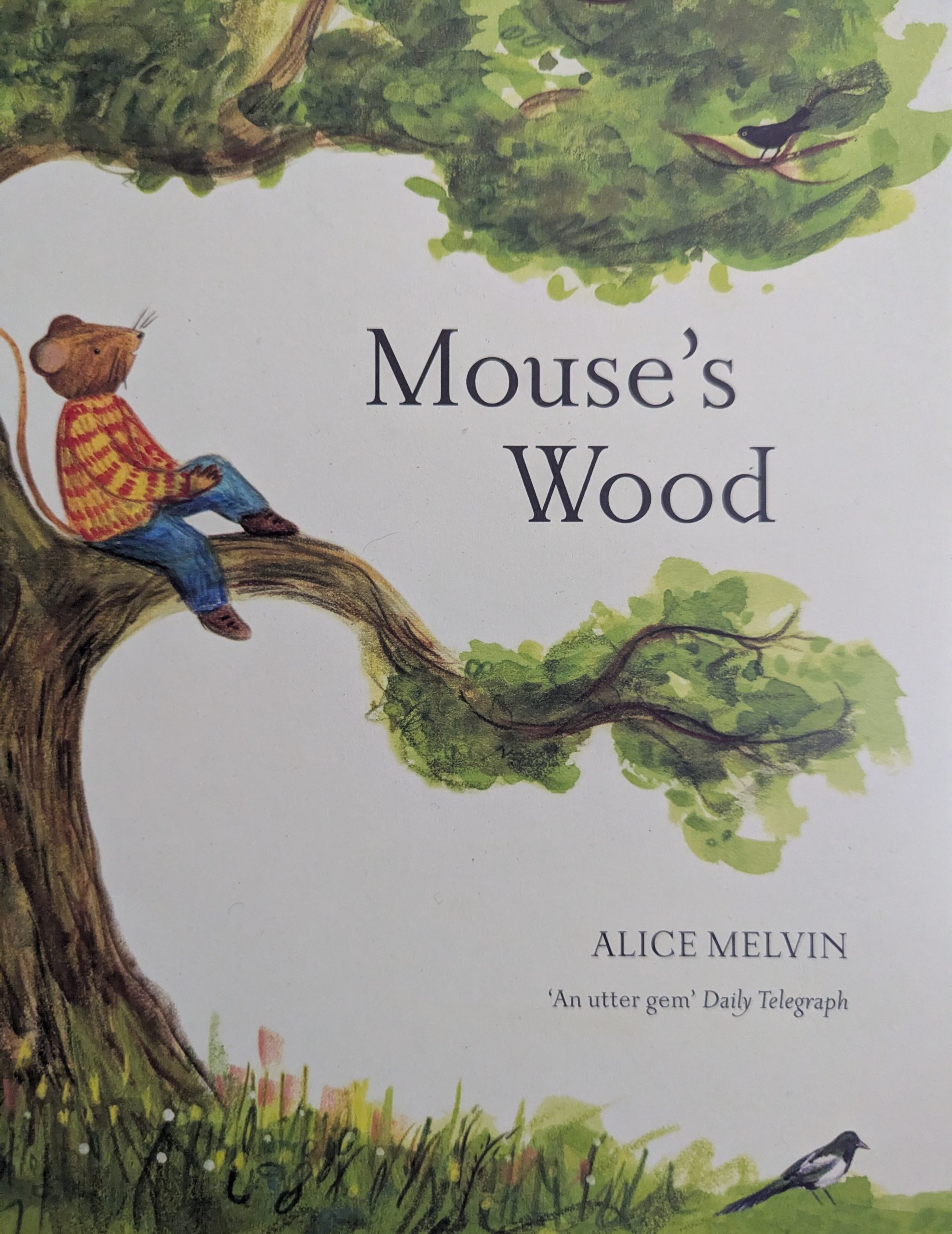
When a book begins with a map I get very excited. When a book begins with a map AND has interactive flaps to lift, I’m all in! These illustrative choices make “Mouse’s Wood” a beautiful book to enjoy just for the sake of the creative style but the story also can be a springboard into the curriculum. Alice Melvin created a whimsical woodland where Mouse is found visiting various friends such as squirrels and hedgehogs who live in different micro-environments of the forest. Among them are cherry trees, a strawberry patch and the river bank.
As Melvin says on her website:
“Mouse’s Wood is my love letter to woods and nature. The book follows Mouse on a woodland walk through the changing seasons.” https://alicemelvin.com/mouses-wood/
This story can help children see the natural world in a way that feels peaceful and respectful. Isn’t this perspective needed amongst all the negative messages kids get about the environment? The story can be read at any time of the year, since all seasons and months are represented. The book is ideal for kindergarten as well as grades one and two but there are many students over 8 years old who would love to have this book shared in their class or recommended for a small group or reading buddy situation. Here are some cross curricular follow up activities and theme ideas to go with Mouse’s Wood.
Activity 1: Illustrated Map Primary/Junior
After reading Mouse’s Wood, students create an illustrated map of their neighbourhood or a fictional location. An illustrated map gives the students poetic licence to enhance their favourite areas with illustrations, graphic designs, logos, etc. If you want to follow the model in Mouse’s Wood, encourage them to show details about the location in a particular season. For example, do the plants have buds, blooms, or fruit?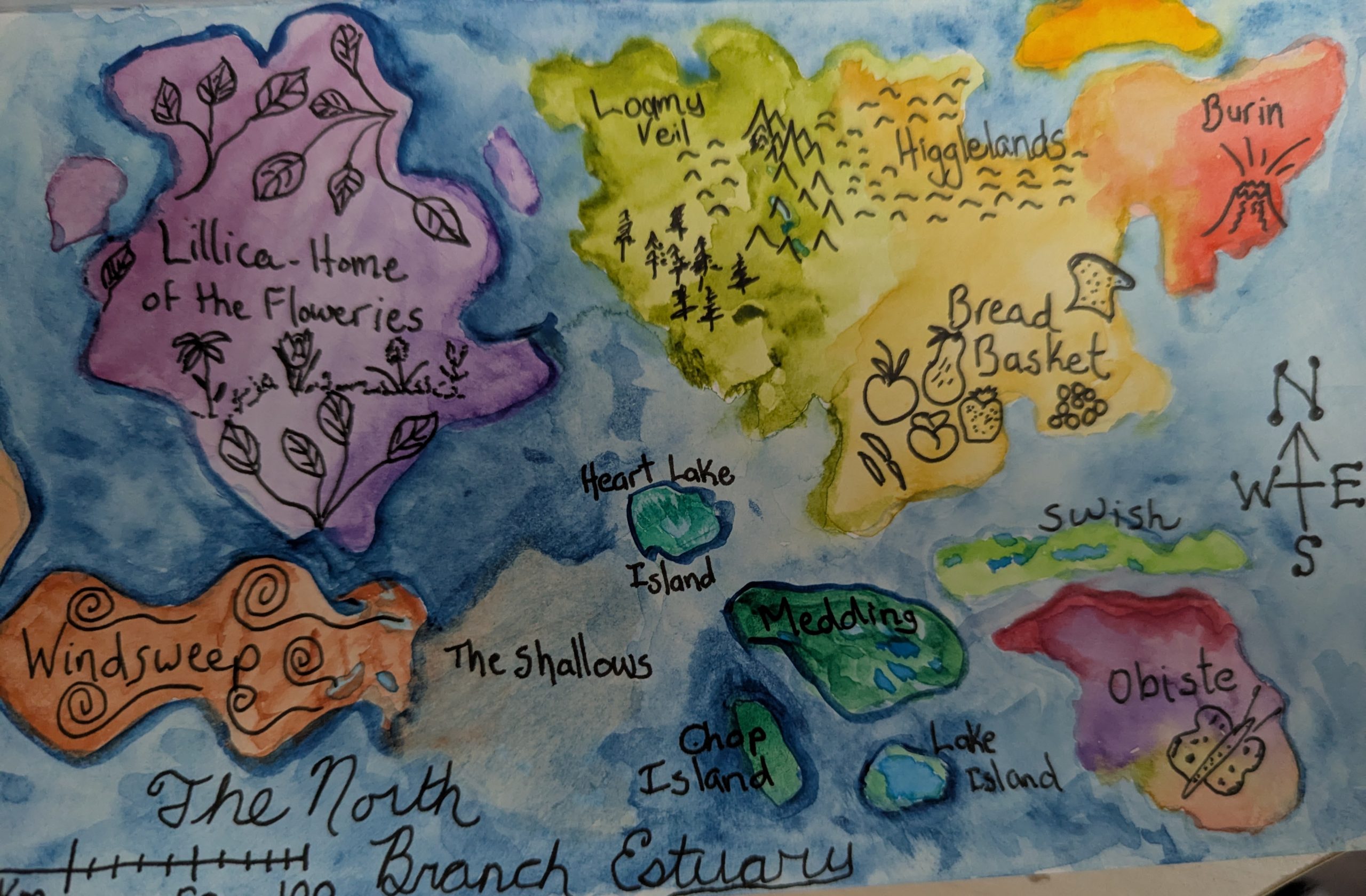
Activity 2: Observing Animal Habitats Primary/Junior
Mouse’s Wood is set in England so some of the plants and animals featured are different from the ones we find in Ontario. As a class, create a chart listing animals in the story and discover more about their habitats. What types of plants and animals live there?
Compare those habitats to animals in Ontario. Consider including porcupines, skunks, beavers, or study some less common animals like shrews, bats, or voles.
Activity 3: Making Flip Art Illustrations Primary/Junior
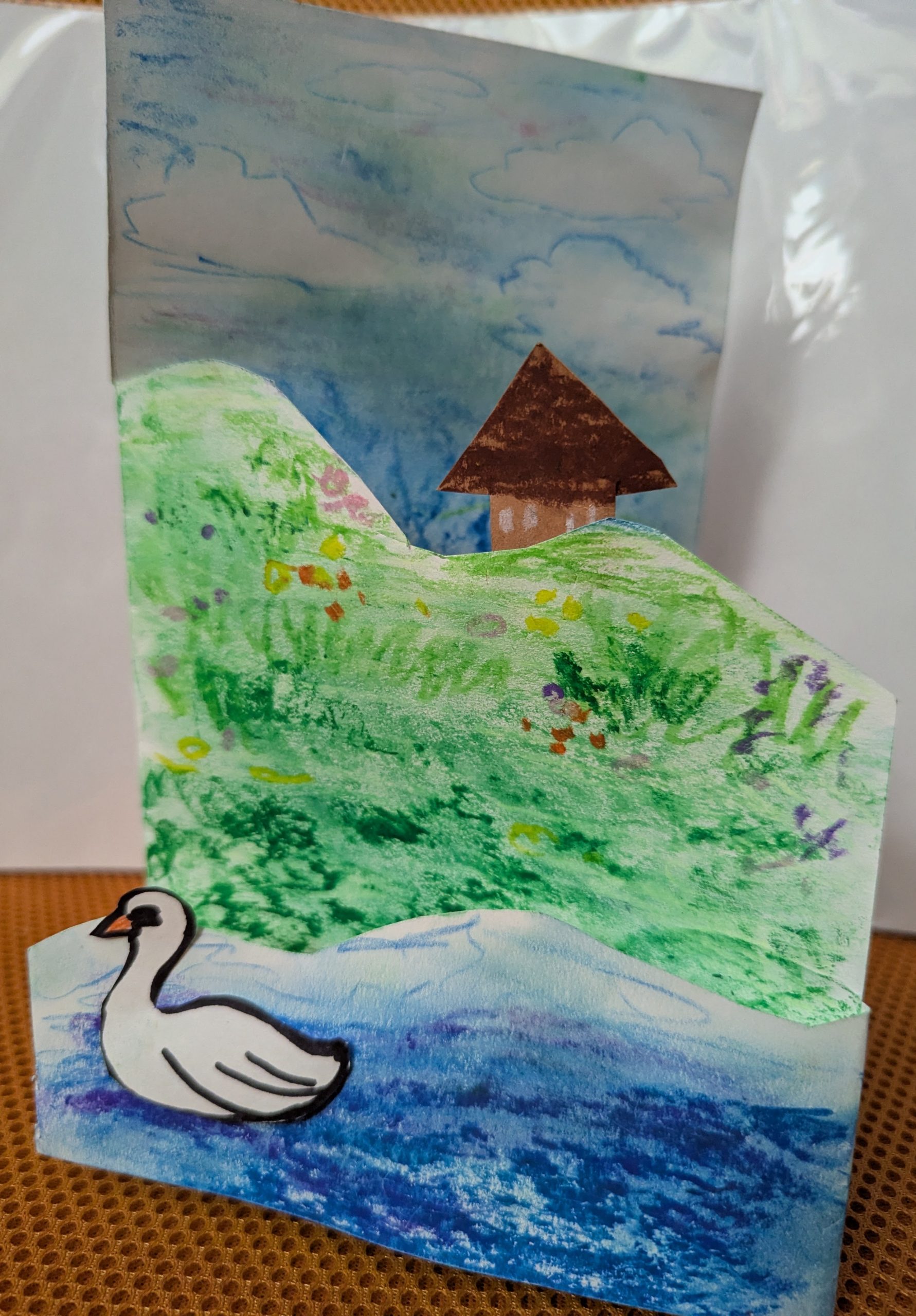
Having students analyse the illustrations and develop their own flip art illustrations just takes paper, scissors, glue, pencil and the courage to experiment. These illustrations could be subject based for a science, social studies or health topic. Another suggestion is to turn these illustrations into greeting cards that students can use as thank you cards. The idea of opening a door or window and seeing what is inside a room piques the reader’s curiosity. One of the illustrations in the book flips up to show the underwater world of the river in the wood. I’ve included a picture of another type of 3-D flip art that students have enjoyed making.
Theme Suggestions
Mice in Children’s Literature
Students are often interested in comparing picture books. There are thousands of choices of picture books with mice as characters. We can read these other books and ask questions about the art and the story, looking for contrasts with Mouse’s Wood. I immediately think of the series by Laura Joffe Numeroff and illustrated by Felicia Bond, If You Give a Mouse a Cookie. Another favourite is the outstanding Canadian book, Subway Mouse, with plasticine art by Barbara Reid. Jan Brett has detailed illustrations for Town Mouse Country Mouse. Also, the Mouse King in the Nutcracker ballet gives us a chance to explore characters in dance as well as literature.
Months and Seasons
One way to start the new year in January is to review the upcoming months and seasons. To reinforce these concepts, younger students will also enjoy Hap-Pea All Year by Keith Baker. The illustrations in this book are bright and colourful and the little peas do a wonderful job showing activities common at various times of the year. The style of illustrations is quite different from Mouse’s Wood and will make an excellent discussion topic. For an Indigenous perspective, try Kaitlin Curtis’ three books: Winter’s Gifts, Spring’s Miracles and Summer’s Magic. I referred to Winter’s Gifts in my December 2025 post about the winter solstice.
…
If this is the start of a new year for you, I hope it is a wonderful one full of many delightful books that entertain and educate.
Happy Reading!
Brenda