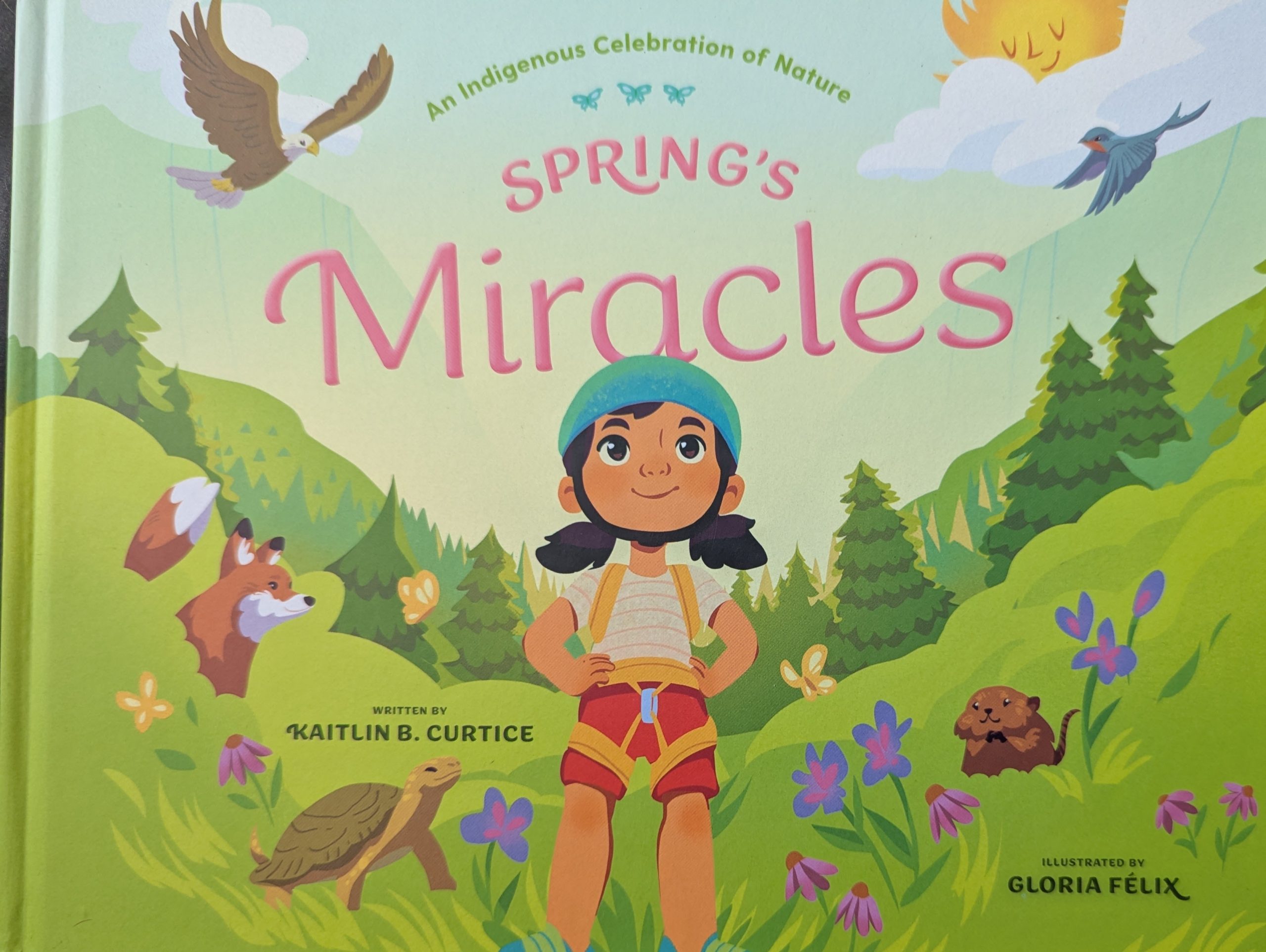
Across Canada, the groundhogs and lobsters have made their predictions for the start of spring. Now we can read a picture book celebrating the arrival of spring, Spring’s Miracles, by Indigenous author Kaitlin B. Curtice. Ideal for kindergarten to grade 3, this story explains how Dani, a member of the Potawatomi nation, celebrates the new year when spring arrives. The Potawatomi are Anishinaabe whose traditions include celebrating the new year with food and getting outside to appreciate the gifts of spring.
Before Reading – New Year Celebrations and Seasonal Changes
Ask the class about the ways people celebrate the new year. They may mention January 1st with fireworks and parties and also Lunar New Year celebrations in February. Also look at the illustrations on the cover, does this cover look like early spring? Why or why not? We can use the students’ observations to talk about climate in different parts of North America and that early spring will look different depending how far south or north we are. Just thinking about this has me humming the chant from Bill Nye the Science Guy, “The reason for the seasons is the tilt of the earth”. It is possible to make an entire science lesson about seasonal changes just based on this story, but we can also include social studies, language and the arts.
During Reading – Relating to Students’ Experiences
The story takes Dani up a challenging climbing rock and she has to overcome her fears if she wants to reach the top. She remembers that, “Even when she is scared, she can still do great things.” Students may wish to give examples of times when they were scared but found the courage to complete something frightening.
Dani’s family has a celebratory meal, and we can use this opportunity to ask students about favourite foods for the New Year. Are they the same or different?
After the meal, Dani’s family share their hopes for the new year around the campfire. Again, students may wish to relate their ideas and wishes for the new year as well.
After Reading – A Spring Walk and Creative Response
Looking for signs of spring is a beautiful way to celebrate Spring’s Miracles! We can take the class for a walk around the schoolyard or into the neighbourhood*. It’s very rewarding to take photographs of the signs of spring on your walk. Another exciting task is to bring along peeled crayons and paper to take rubbings of tree bark. If we did this walk in my area of southern Ontario we might find: melting snow and ice, mud, puddles, running water (creeks), plants pushing through the soil, buds on trees, pine cones on the ground or on the branches, a variety of birds (listen for their calls), insects, squirrels or other small mammals, animal scat, and people enjoying warmer weather in a variety of ways in their spring clothing.
Follow-up Suggestions
Once students have been outdoors and made observations of the change in seasons, we can ask students to reflect on the new growth they would like to see in their own lives. What changes do they hope to see? Is there something new they could try, even if it requires courage?
Creative Reflections
– use photographs to create a digital collage of spring’s miracles;
– draw or paint a garden of spring flowers such as trout lilies and trilliums;
– work together to create a Goodbye Winter, Hello Spring class book similar to the one in my Winter Solstice Blog;
-take crayon rubbings of tree bark and cut pieces of the rubbings out to create cut and paste flowers or a spring scene;
-dramatize what is happening to the snow or the plants in early spring;
-any of these ideas can be accompanied by a written statement in which the student shares an area of growth that they are working on;
More Experiences to Consider
-visit a farm to see what is being done to prepare for the coming season. How is life changing on a farm in the spring?;
-have an outdoor education experience focusing on spring changes in the forest;
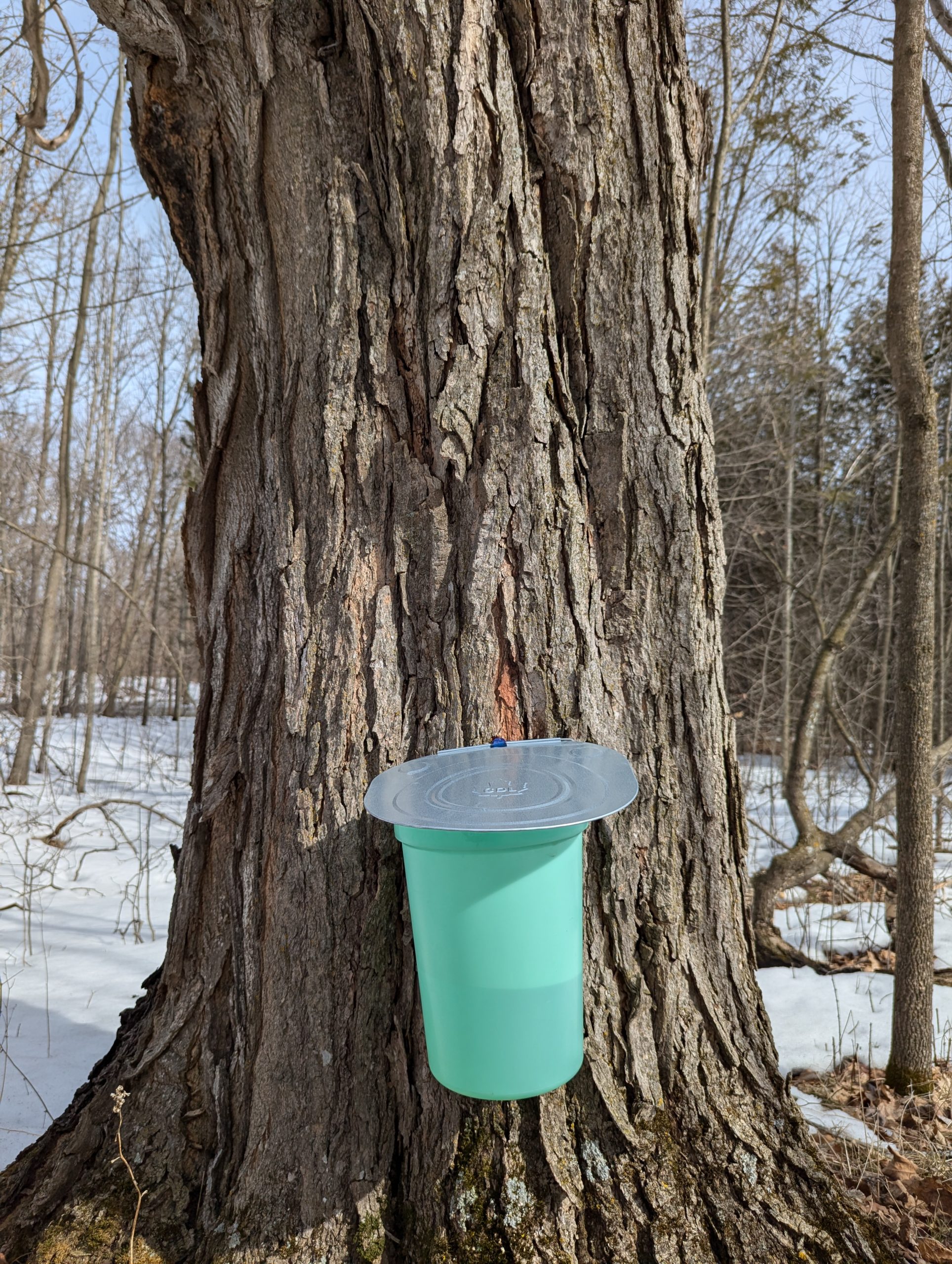
-visit a sugar bush and observe maple trees being tapped for sap that is boiled into delicious syrup.
The Potawatomi Nation
As Treaty People we benefit from learning Indigenous perspectives. Since author Kaitlin B. Curtice is a member of the Potawatomi nation, we can take time to listen to their stories and learn about their communities. This nation crosses the Canada/U.S. border, with communities in both countries. Studying a map and reading from the community websites, or even better, having a guest speaker, helps us work on research skills while learning about the Potawatomi.
I hope spring brings you growth and change in the most rewarding ways!
Brenda
*Please check your school board’s policy on neighbourhood walks. I also recommend checking weather conditions, especially with the spring thaw causing flooding in some areas.