Coloured felt letters on a black felt background.

On Supporting English Language Acquisition in the Mainstream Classroom: A Blog in 2 Parts

This summer I will have the privilege of facilitating a workshop with new teachers in my board at a New Teacher’s Conference. The topic is one that I know has stymied many teachers for a long time, including myself: how do you support newcomer students in acquiring English in the mainstream classroom?

Answering this question is a challenge – even with all the policy documents and resources out there, the reality is always more nuanced and complex than it seems.

In my own conversations with teachers, I have noticed a trend where there is decreasing support for English Language Learners (ELLs) in schools, as ESL support staff are being utilized all too often to cover classes in schools where there is a supply teacher shortage. Support for ELLs is critical, especially for newcomer students who need accelerated instruction in English to build vocabulary, speaking, and listening skills.

Another element that makes teaching ELLs a challenge in Ontario is the fact that ESL programming in elementary school is based on accommodations and modifications to the curriculum. Yes, accommodations and modifications are essential to adapting the learning environment to ELLs. These adaptations create an entry point for ELLs and make equitable assessment and evaluation possible for teachers. But there is still a missing piece: how do we actually do the work of teaching the essential, oral foundations of English?

Additional or Foreign Language classes are typically focused on teaching students the basics of the target language: how to greet others, to interact in practical situations, build vocabulary, or how to use different verb tenses. While the secondary curriculum offers specific courses that address the usage and mechanics of English, there is no specific ministry resource that provides a scope of learning expectations that address the unique needs of elementary English language learners. Sure, we have the STEP continua – but this document is more of a list of look for we might see as ELLs acquire English, and not a comprehensive list of learning expectations.

What I often see in schools is the expectation that newcomer students will acquire the oral foundations of English from interacting with other students or being immersed in the English saturated world of Canada. And for the most part, this is largely what happens. For younger children in Kindergarten and the primary grades, English acquisition happens through structured play, the explicit teaching of foundational literacy skills, and texts and lessons that are highly visual and graphic. Teachers may incorporate practices like language experience approach and picture word inductive model that support academic vocabulary acquisition for English learners.

Older students in the intermediate grades are in a much different position. Older ESL students may have completed the majority of their learning in another language, not to mention in another school system with a curriculum different from the Ontario’s. Entering a new classroom can be exciting for newcomer students, but also difficult if they perceive that their prior learning and language skills have no place in their new learning environment. Many students go through “silent phases”, or appear disconnected or disengaged from classroom activities. As a result, many classroom teachers often feel at a loss of what to do, especially if they are unused to working with newcomer students. In my discussions with many classroom teachers, they are often wondering:

  • How do I teach them to start speaking and understanding English?
  • Are they bored?
  • What more can I do for the student?

While I wish there was more specificity to ESL programming beyond modifications and accommodations, there are many strategies teachers can use to make the work of teaching ELLs feel more purposeful and intentional without adding additional weight to the current workload. In the next blog, I will focus on unpacking some ways educators can integrate English language instruction into their regular classroom teaching.

Cover Image Source: Magda Ehlers, Pexels

Teacher Tip: Take a Real Break This Summer

June has arrived, bringing the promise of summer and a sudden shift toward optimism in our daily routines. While I will eventually write a post about some of my favourite recommended teacher reads for the summer, I am going to encourage all of my fellow ETFO members to do something really important: take a long break from teaching.

a sunset in the trees
Take some time to disconnect this summer.

I remember my first few teaching years rather vividly: the stress, the endless classroom management, planning endlessly, and the never-ending pile of marking that only seemed to grow. It is hard to describe the feeling of absolute relief, joy and freedom that comes on that last day of school when the bell rings. Within days, I would pack my giant backpack and head on a flight to South America, where I would gleefully spend my days exploring new cities, trying new foods, and meeting people from all over the world in the hostels I would stay in. Nothing puts distance between yourself and your daily routines like immersing yourself fully in another country, especially if  you are somewhere radically different from the place you are from. Spending long weeks simply exploring was like living another life, and I relished every moment until the inevitable day I would return home and be in the same place I had left – but utterly refreshed and ready to start a new school year.

While my life has changed radically since those carefree days – it’s a little harder to live out the backpacker lifestyle with two kids in tow – I still feel it is critical to distance myself from work for as long as possible when summer arrives. Teaching is intense, and this school year was perhaps one of the most challenging. As the recent ETFO member survey points out, violence in schools is pervasive, behaviour in schools is escalating, and understaffing persists. The challenges faced by students re-entering schools after years of pandemic disruption added a whole new dimension to the work of classroom management. Self-care is absolutely critical to stay healthy in the teaching profession today.

A view of a coastal village.
Where will summer take you?

As educators, we continue to teach and support students, even in difficult circumstances: but to keep going, it is essential to take the time to distance, decompress, and refresh.

This summer – if it is possible – create as much space as you can between your personal and professional life. Get lost in a new country, the woods, the desert, a new town, a new park, or new neighbourhood. Read books or watch movies that that activate your imagination and take you to another world. When you see your teacher friends, try not to talk about work! Try it for a few days, a week, a month, or more.

a picture of the desert
Spend time in nature and clear your mind.

Of course, professional development over the summer is important, but going into a learning session when you are burnt out or frustrated may hinder you from getting an optimal learning experience. Take the time you need before pushing yourself again in your professional practice. Your body and mind will thank you for it!

Podcast Recommendation: Teaching MLs with Tan Huynh

Do you want to keep up with the latest culturally responsive pedagogical strategies and thinking, but cannot squeeze yet another book into your shelf? Look no further than Tan Huynh’s “Teaching MLs” podcast, which focuses on sharing the perspectives of the most innovative educators in the field of multilingual learning. Best of all, it’s free, and perfect content for your commute, lunchtime walk, or whenever you find its best to listen to a podcast. Tan’s podcast has over 150 episodes, with new content added weekly.

I have personally found podcasts to be very “hit and miss” in terms of content and quality. Some podcasts seem to barely scratch the surface of their topics, focusing a little too long on conversation and not nearly enough time on the topic that drew me to listen in the first place. Tan does a great job of balancing the banter with substance, making every episode feel like something between a friendly conversation and a keynote address.

This podcast is excellent not only for the topics featured – translanguaging, multilingual assessment, dual language schools, science of reading, and Chat GPT, just to name a handful – but the incredible speakers that most educators will recognize from their professional libraries. John Hattie, Jim Cummins, Ayanna Cooper, Margot Gottlieb, John Seidlitz, and Gholdy Muhammad are just some of the “educelebrities” you will encounter on the podcast.

Tan manages to bring out useful insights and conversations from renowned speakers and experts that will make a lasting imprint on your thinking and pedagogy. Personally, I have found it an excellent resource for summarizing big topics like phonics based instruction, balanced literacy, aritificial intelligence, and and teacher collaboration. Tan connects the research and ideas of his interviewees to his own experiences as a multilingual educator, English learner, and language learner, layering his ideas and perspectives onto the work of renowned researchers and educators in the field. Even when speakers are not completely focused on the topic of multilingual learning, Tan does an excellent job of connecting the topic back to English language pedagogy.

Listening to an author or expert speak about their work also helps me to better understand things I have read, and sometimes even compels me to re-read, deepen and consolidate my learning.

I was fortunate to meet Tan in the fall of 2021 when he accepted an invitation to be a virtual guest speaker at our board’s annual conference for ESL/ELD teachers. He joined our planning meetings and conference from Thailand, where he was likely tuning in at what should have been his bedtime. He turned out not only to be a confident, knowledgeable, and talented presenter, but unbelievably kind, humble and easy to talk to. His presentation on Translanguaging continues to impact my work and the work of my fellow PETL colleagues: we still get comments on how informative and practical his presentation was.

Tan’s dedication to the work of multilingual educators is inspirational and exciting. In a moment where it can seem more challenging than ever to be an Ontario educator, we need professional learning that will affirm and enhance our practices. Check out the Teaching MLs podcast on your favourite streaming platforms. His website also contains great resources and a blog!

An Amazing Day at the Unlearn Conference 2023

Getting back into professional learning has been a blast – as teachers, it is easy to forget about how fun it is to be students. After years of planning lessons and professional learning sessions for colleagues, it always feels special to learn from a lesson someone else has created! So when my fellow PETL member and extraordinary NTIP coordinator, Allison Cunningham, invited me to attend the Unlearn conference – I eagerly accepted the invitation.

Unlearn offers learning experiences that inspire critical thinking.

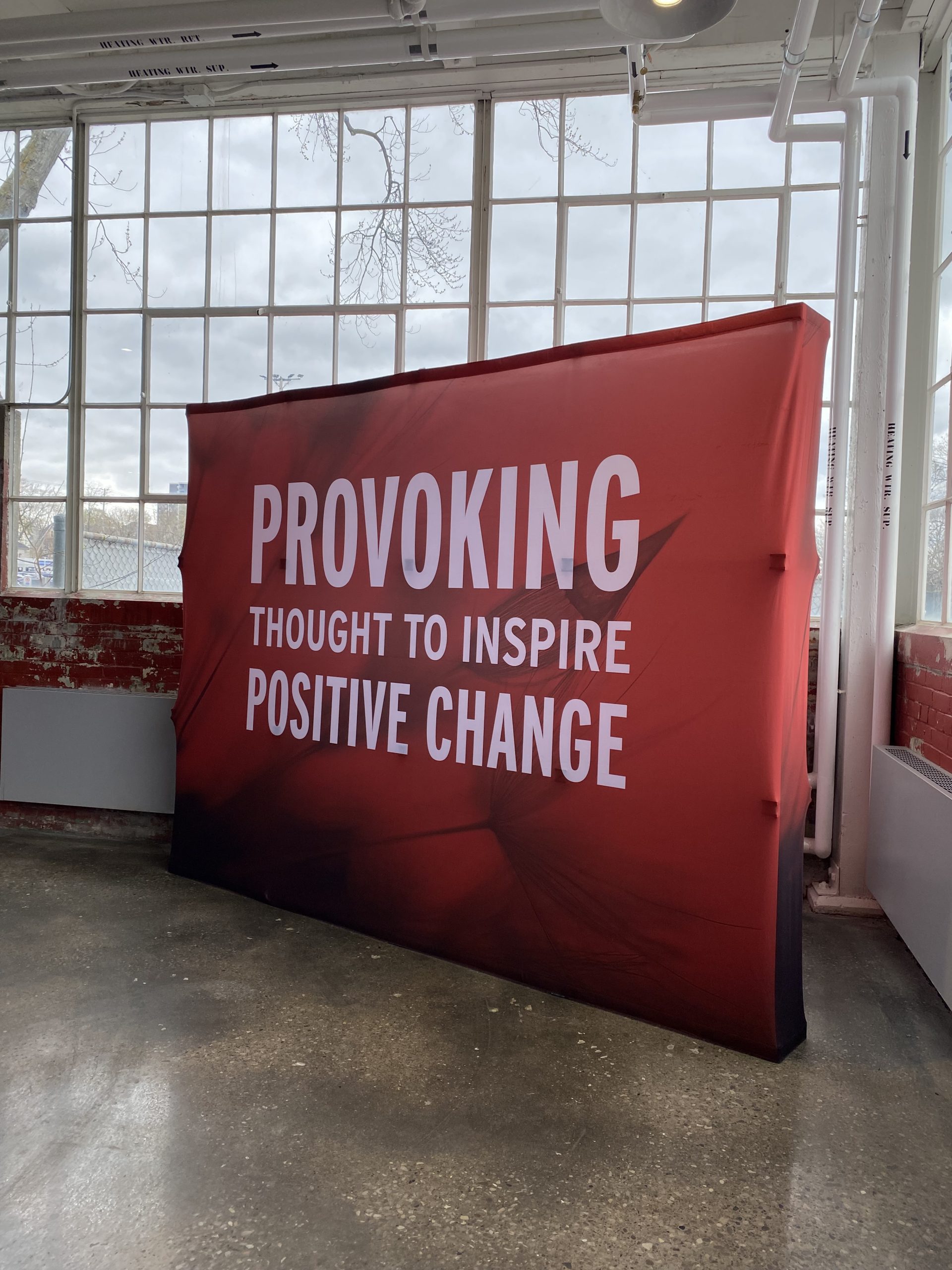
The excitement that comes with entering a day of learning (or unlearning, in this case)  was high as I entered the conference. Unlearn is a well-known Canadian organization whose thought provoking posters and visuals can be found in hundreds of schools. Their goal is to inspire positive change through transformative, critical thinking pedagogy that facilitates rich discussions about social issues and inequities. In addition to posters and visuals, Unlearn also puts together professional learning experiences for educators focused on implementing inclusive, anti-oppressive, and anti-racist pedagogy.

Upon arriving at the conference, I was thrilled to see a large ETFO sign showing our union’s support for the event. The venue took place at the Mississauga Small Arms Centre, which has since been transformed into gorgeous, light filled art gallery and event space. The venue has a special energy that is unique to historic, industrial architecture and was a perfect space to host over 200 socially conscious educators from all around Ontario.

The day started with an unforgettable land acknowledgement from Clarance Cachagee, who captivated us all with a smudging ceremony that compelled us to think about the importance of having positive intentions and mindsets for the day. Unlearn’s founder Abhi Ahluwalia also spoke of the growth of the dynamic organization , activating our thinking about destreaming with a powerful new graphic released in the latest publication of posters. A powerful keynote about the experience of growing up Black in Canada from Dwayne Morgan followed: the audience, completely captivated by Morgan’s insights and stories, gave a standing ovation. While it would be hard to distil the keynote into a single takeaway, what stood out for me was how he emphasized how important it is to provide Black and racialized students with a learning environment that enables them to grow and flourish, like a plant in a well-tended garden. Toronto Star journalist Shree Paradkar led the afternoon session: she spoke about the importance of self-care and protection for social justice educators in a time of widespread volatility on social media.

Amazing keynote speakers are part of Unlearn’s conference.

All in all, I would highly recommend any educator to attend the Unlearn conference. The event is incredibly well organized, informative, and engaging. The food was also fabulous, and the swag bag included some great souvenirs from the event, including a cool mug and key chain.

Check out their amazing offering of posters for students in your school, and don’t hesitate to sign up for the conference in 2024!

Book Review: Son of Elsewhere: A Memoir in Pieces, by Elamin Abdelmahmoud

Professional reading for educators tends to be rather prosaic, focusing on how to do things, such as taking a new approach to teaching or reinforcing specific strategies. While these books are certainly important to read, it can be highly stimulating to look outside the realm of education for new perspectives and ideas. For this reason, autobiography is one my favourite genres of writing. Reading the everyday, exceptional and relatable lived experiences of others is fascinating, inspiring, and empowering at the same time. As the publishing industry has diversified, the range of voices we can choose from as readers is broader than ever. In my own reading and exploration, I have found that many autobiographies I have helped me to enhance my work in becoming a more culturally responsive educator.

One particular autobiography that stood out for me this year is Son of Elsewhere: A Memoir in Pieces, by Elamin Abdelmahmoud. I initially picked up this book because I had been following Abdelmahmoud for his journalistic writing, but quickly learned that it was an excellent text for enriching for my teaching practice as well. Throughout this book, Abdelmahmoud shares his lived experience of Canadian school and society as a Black newcomer student learning English and a plethora of different cultural norms.

Abdelmahmoud’s book describes his journey from Sudan to Canada as a child, interweaving the turbulent colonial history of Sudan and “Operation Infinite Reach” with the numerous culture shocks that came with moving to the largely white community of Kingston, Ontario. Both informative and reflective, Abdelmahmoud’s writing tenderly intersects geopolitical, migration, and coming-of-age narratives. The concept of “elsewhere” forms the foundation of Abdelmahmoud’s storytelling. He writes: “elsewhere is an orientation, an emotional frequency, a chaotic compass that waits until you take a step in one direction, then immediately points in the direction behind you.”

Abdelmahmoud’s developing sense of identity is a central theme of the book. He discovers that he has “become” Black when he arrives in Canada, and grapples with the expectations and stereotypes that are ascribed to his skin colour in Canada. He describes the Islamophobia that surrounded his upbringing in Kingston, and the suspicion his community faces after the horrific 9/11 attacks. He also delves into what secondary school life was like as an English language learner, sometimes humorously exploring what that meant for his dating and social life.

Music and pop culture fans of the early aughts will also appreciate Abdelmahmoud’s reflections on country music and his complex connections with Linkin Park, WWE wrestling the OC. Personally, I found his thoughts on adolescence incredibly relatable and heartwarming. The tensions he describes between his parents’ Sudanese cultural values and Canadian society will likely be incredibly relatable for anyone who has grown up in a cross-cultural home.

Son of Elsewhere: A Memoir in Pieces is a worthwhile read for educators reading for work, recreation, or both! It is also available on audiobook, and is read by the author himself, which I highly reccommend.

Why Teacher Networking is So Important

Business is a concept that probably comes to mind more often than teaching when we think of networking. I remember being in grade 11 business administration class and hearing about it from a guest speaker who worked in finance: “networking is one of the most important things you can do in your career.” I understood that it broadly meant meeting the right people and making connections. Once you built that network, opportunities would magically appear.

What confused me was how. How do you even get into a room with people that can help you advance your career? What do you even say to build a relationship? Aren’t such relationships inauthentic?

As I entered my career in education, it occurred to me that networking might not even be relevant to my career choice. I got my first job as a supply teacher by submitting a resume and interviewing, and a permanent job through the same process. I figured, this is it! I’m done! No need to worry about networking!

I Was Wrong About Networking

Becoming a more experienced teacher helped me to realize how I wrong I was. In fact, the network that I ended up building throughout my career ended up becoming a critical part of my professional growth.

Networking isn’t just about finding people who will be “useful” or who have influence that can work in your favour. It’s also about locating expertise, building professional relationships, finding career mentors, and getting your own name out there. While being an educator would seem to be a fairly straightforward profession, there are actually lots of different career pathways you can choose, even within your own board.

Which brings us to the next question: how do build your network, especially as a new teacher?

The first and easiest way is to join events with other schools. Professional learning sessions, for example, are great ways to broaden your professional network. While it can be tempting to stay with the people you already know during a table activity, step out of your comfort zone and meet teachers from other schools. The same goes for social events at your ETFO local, or conferences. ETFO also hosts excellent professional learning sessions and conferences, where you can connect with teachers at other boards.

In my own experience, I have found that some of the best networking opportunities come from joining initiatives like writing teams or workshops. At one STEAM based workshop, I met another teacher in my board and we planned a joint event between classes at our school. It was exciting, and experience we could reference in job interviews and on our resumes.

Why Is Networking Important as a Teacher?

Over time, networking can lead to so many new experiences, opportunities and relationships. I love that I have colleagues that have moved to other positions in and outside the board, and that I can turn to them to ask questions about how they navigated their careers, what challenges they encountered, and the successes they found in new contexts. I enjoy the fact that I can find familiar faces and names at the events I go to.

Conversely, I also enjoy being part of other people’s networks. It makes me happy that I can share my own insights and experiences with others, and be a resource in areas that I have built capacity.

So the big takeaway here? Make time to network. You will see the results pay off in dividends throughout your career!

A Day at “Reading for the Love of It”: Thoughts on Returning to In Person Conferences

I love attending teacher conferences: meeting new people, learning new ideas and strategies, browsing the latest student resources, experimenting with new technology for the classroom. Pre-pandemic, finding a good conference was a ritual I’d perform every school year – Googling endlessly for an event that was just the right location, theme and cost for my professional learning funding for that year. Like many teachers, I love travel – so spending hours comparing accommodations, conference speakers, and transportation fees brings me a very high level of excitement and joy.

Last year I went to my first conference since the pandemic had started, and it fortunately was a virtual one – I was recovering from a bout of COVID-19 as I watched the speakers present through my screen. While I learned a lot about culturally responsive assessment, I found it a little too easy to tune out of the conversation and start researching random topics, or respond to work emails that popped up. All of this is to say that virtual conferences just aren’t the same – while they can be good learning experiences, there are a lot of pieces missing that make conferences a fully immersive professional learning experience.

Attending Reading for the Love of It

What is Reading for the Love of It? This conference is organized by the East York-Scarborough Reading Association, a group of Ontario educators who are passionate about literacy. The event and organization is entirely volunteer run, and the conference has run for 44 years. You can read all about their organization and past conferences at their website.

When an opportunity came up to attend this year’s annual Reading for the Love of It conference in downtown Toronto, I promptly signed up with several of my colleagues. Simply planning to attend was already a different experience from getting a virtual link. We excitedly chose which sessions to attend, organized a lunch meetup, and coordinated meeting points.

Arriving at the venue, a big smile spread across my face: the beautiful lobby of the Sheraton hotel was flooded with teachers carrying conference programs and swag bags, friendly volunteers appeared at every turn to guide us in the right direction. A large exhibitor section filled with booksellers and vendors provided endless browsing possibilities where I could finally thumb through student resources I had been eyeing online for months, like a decodable reader set for older students and a full trove of hi-lo fictional novels.

What was truly wonderful was running into colleagues and ETFO members, some of which I had never met in person. It struck me how easy it was to have interactions that other wise took days of planning: scheduling a zoom meeting, or planning a visit. I remembered how exchanging valuable tidbits of information about projects and sharing resources and insights could happen in the span of second – this is the real value of being at conferences like these.

The Value of Choosing Your Professional Learning Pathways

Experiencing an in person conference again also reminded me of the value of choosing our own professional learning pathways. Just as the students we teach benefit from determining their own inquiries, as educators we may also be more engaged in our learning when we can choose our own way to grow professionally.

Understanding how to access funding is critical to fostering our own growth. There are hundreds of conferences and learning opportunities happening all over Canada, and many new teachers may not be aware that some ETFO locals offer professional development funding to assist with costs. For example, at my local, we can access up to $300 for conferences and $400 for professional learning courses. I will be always grateful for the mentor that showed me this funding was available, since I have used it at every opportunity.

If you are unfamiliar with how to organize and fund your professional learning, contact your local to find out what options are available!

Supporting Intermediate Multilingual Language Learners in Reading

Reading a new language you are learning can be challenging, particularly for multilingual language learners (MLLs) – who are expected to read English texts in every area of the curriculum. Novels, textbooks and other curriculum resources are laden with academic language: verb tenses, words, and phrases that are rarely used in everyday conversations. Those in the early phases of English acquisition may spend a lot of time decoding, in addition to comprehending the overall meaning of the texts they are reading.

Intermediate English language learners are a unique group. As older elementary students, they may have already spent years developing literacy in another language. While their level of English language proficiency suggests that they need books with a level of text complexity different from their peers, it is unlikely that they will want to read picture books used by younger children.

Helping intermediate grade MLLs to gain confidence as readers does not require any sophisticated tools or reading kits. There are lots of strategies educators can use to support multilingual learners to become more confident readers of English. Of course, if you do observe a learner who continually experiences difficulty in reading with appropriate program adaptations in place, it is important to discuss their learning with the family and educator team to determine if further interventions are needed.

Here are some tips to help MLLs become more confident readers.

Help the MLLs you Teach Select the Right Books

When starting in a new classroom, newcomer MLL students may be eager to engage in the same texts as their peers, even if the text complexity is beyond of their zone of proximal development. How do you encourage students to choose other books without discouraging their enthusiasm?

To help newcomer students find books that are both challenging and accessible, provide opportunities for them to browse and explore several books at different levels. Hi-lo readers, non-fiction magazines, and graphic novels are great options for older elementary students. Your school librarian, MLL or ELL teacher, or Special Education team may have suggestions or books on hand to share. Always aim to share texts that are culturally responsive to the student and reflect their interests – if the text is not engaging, it will be much more difficult to read!

Encourage Students to Use a Digital Translator

Digital translators such as Google Translate, Microsoft Translate, and Say Hi are great tools intermediate students can use to get through a challenging sentence or paragraph. They are free, can be added easily to any mobile device, and are a convenient way to clarify meaning and build vocabulary. To get the best translation, encourage students to translate a sentence at a time. Consider that digital translators may not give an exact translation, or even capture the full meaning that the author may want the reader to understand.

As an educator, you may be wondering if reading with the help of a translation app problematizes the assessment and evaluation of reading. Can you assess or evaluate a student on their reading comprehension if they are relying on a translator? Keep the intention or the purpose of the reading in mind: is it to learn content or concepts? If so, then the use of a translator is an effective accommodation. Are you assessing their English comprehension skills? You will want to focus on helping the student to select texts that are within their zone of proximal development that they can read to build proficiency in reading in English independently.

Show MLLs How to Use Context

When students run into an unfamiliar word and do not have a dictionary or translator close by, they can try reading ‘around’ the word to see if they can figure out the definition. Model the process of using context to determine the meaning of words – this a great skill for all learners to practice!

When modeling the use of context, ask students to consider the sentence or sentences around the unfamiliar word. If the student is reading a graphic novel or a text with images, encourage them to use the graphic context to determine the overall meaning of the sentence or paragraph.

It may also be useful to ask students if they recognize part of the word. Identifying the root of a word can be revelatory. For example, the word origin sounds a lot like original or originate – which may be a clue that the author is writing about the start or beginning of something.

Encourage Students to Read Summaries

The internet is filled with book summaries, and MLLs may find that these summaries are easier to understand than the text itself. Book summaries share a short or brief explanation of what happened in the book, and can be found on sites like Good Reads, book blogger, and bookseller websites such as Amazon or Indigo. Students can also be encouraged to read summaries to check their understanding of a story.

Make Rereading a Regular Literacy Activity

Rereading a text is one of the best ways to support your comprehension of a book. Reading a chapter or even an entire book again will also help students to develop confidence in the language they are learning, as reading something a second time will often be easier than the first time. They may notice things they did not before, such as details about a character or an event in the story.

It’s OK if Students Don’t Understand Everything

When students are reading a challenging text in a language they are learning, it is important to accept that they may not understand everything fully. This is completely normal! It is more important to get the general idea of a text or the main events of a story. Encourage students to mark the areas you want to return to with a sticky note – they may even find the challenging parts easier to understand once you have explored the rest of the text. In other words, just keep reading.

The Benefits and Joys of Learning a New Language as a Teacher

There is always so much new learning we are encouraged to engage with as teachers – much of it with the specific aim of enhancing our pedagogical practice. And yes, it is critical that we expand our teaching repertoire – but it is also essential for us to pursue our own interests for our own mental health and well-being. Finding time to balance both personal and professional learning can be tough!

If you have been considering learning a new language for personal reasons but have struggled to make time because of a busy teaching schedule, you might want to consider the benefits learning a new language can have on your teaching practice. As an English language teacher with a passion for learning languages (or me, it has been Spanish, Tagalog, Portuguese, and Serbian), I can wholeheartedly say that the experiences have informed my teaching practice in so many ways.

Here is a list of some of the best reasons teachers should learn a new language, for both work and fun!

You’ll Better Understand the Multilingual English Language Learners in the Classroom

If you have ever wondered what you English language learners are experiencing as they learn in the classrooms you teach, there is nothing quite like actually being a language student. You will get a sense of what it feels like to decode a text or consume media with limited vocabulary, and which resources are comprehensible at different phases of language acquisition. Learning a new language can be an exercise in empathy, and will inform the way you approach instructing newcomer multilingual students.

You may even be surprised to find learn what resources work, and which do not. For example I am always amazed at how much new vocabulary and confidence I gain just by talking and listening to people who are communicating in the language I am trying to learn. Much information goes way over my head, and other times, if the conversation is going slow enough, I can hear the different verb tenses and familiar words. The takeaway for me as a teacher is that opportunities to talk are so important for multilingual students!

It’s Great to be Taught

As teachers, we often spend so much time planning and facilitating learning that we forget how great it is to be a student. Sitting back and letting someone else teach you feels shockingly luxurious! Imagine someone else planning learning experiences and doing all the photocopying while you get to sit in class and chat with classmates. It’s pretty amazing!

Being a student can also an incredible source of insight about different pedagogical strategies. One thing that surprised me in Spanish class, for example, was how hard it was to read a novel even though I was in the “Intermediate Advanced” class. The experience really made me see how important it is to offer a range of texts to students. I also realized how fun group work actually is, and how stressful it is to write a pen and paper exam. Entering a classroom as a student and being on the receiving end of learning activities, group work, and assessments just feels different as an educator.

Make Cultural Connections while Travelling

One of the best parts about being an educator are the summer months where we can not only prepare for the new school year ahead, but rest and make time to travel and explore. This is where having another language under your belt comes in handy: being able to communicate with locals in the countries you are visiting enriches your experience while also making exploration much easier. It is wonderful to be able to order exactly what you want in a restaurant, to understand directions, and to be more aware of your surroundings.

Travel is also a great way to immerse yourself in the language you are learning and truly accelerate your acquisition. You’ll get a sense of how quickly you can learn with spontaneous social interactions and having to use your language skills in practical, real-life situations.

Reconnect with Your Cultural Heritage

Like many second generation kids in Canada, I grew up in a multilingual home but developed a very limited ability to communicate in the language my parents and elders spoke. Taking online Tagalog classes with my kids has helped me to understand my relatives better and feel much more connected to my heritage. If you have a home language you want to learn more about, you may love how identity affirming and relevant it is to make the time to study it.

Develop a New Teaching Skillset

While it may sound farfetched in the beginning, it is certainly possible to develop a whole new set of teaching skills by learning another language. I was obsessed with learning Spanish as an additional language from a young age, and while I would never describe myself as fluent, I loved being able to teach the basics of Spanish to younger learners in weekend and after school international language programs. Making some extra income not only helped to fund my language learning hobby, but gave me some new teaching experiences I would not have had otherwise.

Set Your Personal Learning Goals

Your personal growth matters, and making the time to pursue your interests is truly a radical act of self-care when you are in a career that seems to constantly demand more of your time and mental energy. Whether it is learning a new language or learning any new skill, you can enrich yourself both personally and professionally. So don’t hold back on following your interests!

January Thoughts: On Practicing Self Care

As educators, I have always thought we have been rather blessed to have at least 2 New Year’s celebrations a year: the one that comes every September, and the one that comes every January 1st. For me, both of these days brings about a slew of self-care goals: to exercise more, eat better, cook more, be more social, or even look more “put together”. More often than not, I start strong, and regress just in time to reset for the next new year.

After years of cycling through all of my “new years” – and never really ever making any permanent lifestyle changes – it occurred to me that I wasn’t putting enough effort into my own self-care. In fact, I mistakenly believed that self care was something that would be instinctive, or simply happen without any expenditure of energy. What I have realized is that real self care comes with work.

This year has been exceptionally busy and Meg, the gym manager invited me to the dreaded new year fitness and nutrition challenge. The gym manager, a very young, fit and enthusiastic woman probably about half my age texted me with a flurry of fire and muscle arm emojis.

“Book the challenge! Commit! Are you in? Yassssss 🔥🔥🔥💪💪💪”

I honestly couldn’t picture myself cooking a whole other menu of food on top of what I was regularly preparing for my own family, all while regularly attending early morning workouts and of course, doing a full time job.

“You can do this. 🔥🔥💪💪Train insane or never change ayeeeee ☠️”

In that moment, I realized that there would never be an “ideal” time to embark on a lifestyle challenge. I had always wanted to clean up my diet and increase my fitness, but always made sure I was way too busy to ever do it in earnest. I had bought into a narrative in which I was the busy teacher-mom that was way too overburdened to do anything for myself. This narrative, I decided, needed to end.

I relented, said yes, and promptly scheduled my body scan so I could get the cold hard facts on what I specifically needed to improve.

Sure, I can book a vacation, a spa visit or an evening at a favourite restaurant and be practicing a version of self care where I feel I have carved out some “me time”. But these moments are fleeting, and end as soon as the bill is paid. These one-off events are fantastic, but do not bring any transformation. The kind of self care that brings lasting change means being consistent, and rethinking the way I approach my work as an educator.

As teachers, it is all too easy to throw ourselves into an endless workflow. In schools and school boards, there are always more things to do than people to do them. The key is knowing when to stop so you can have the energy to funnel to attempt manifesting your own personal goals.

You may be wondering, did I succeed? Did I indeed manifest?

To be honest, it is too early to tell. What I do know was that it was indeed liberating to simply stop answering emails, planning lessons, and reading yet another book on assessment to get to bed early enough to make a 5:45 am workout and make a protein smoothie. And if learning how to interrupt my endless workflow is the only thing that comes out of this whole experience, I will have achieved something truly transformational.