Creating a Classroom Library

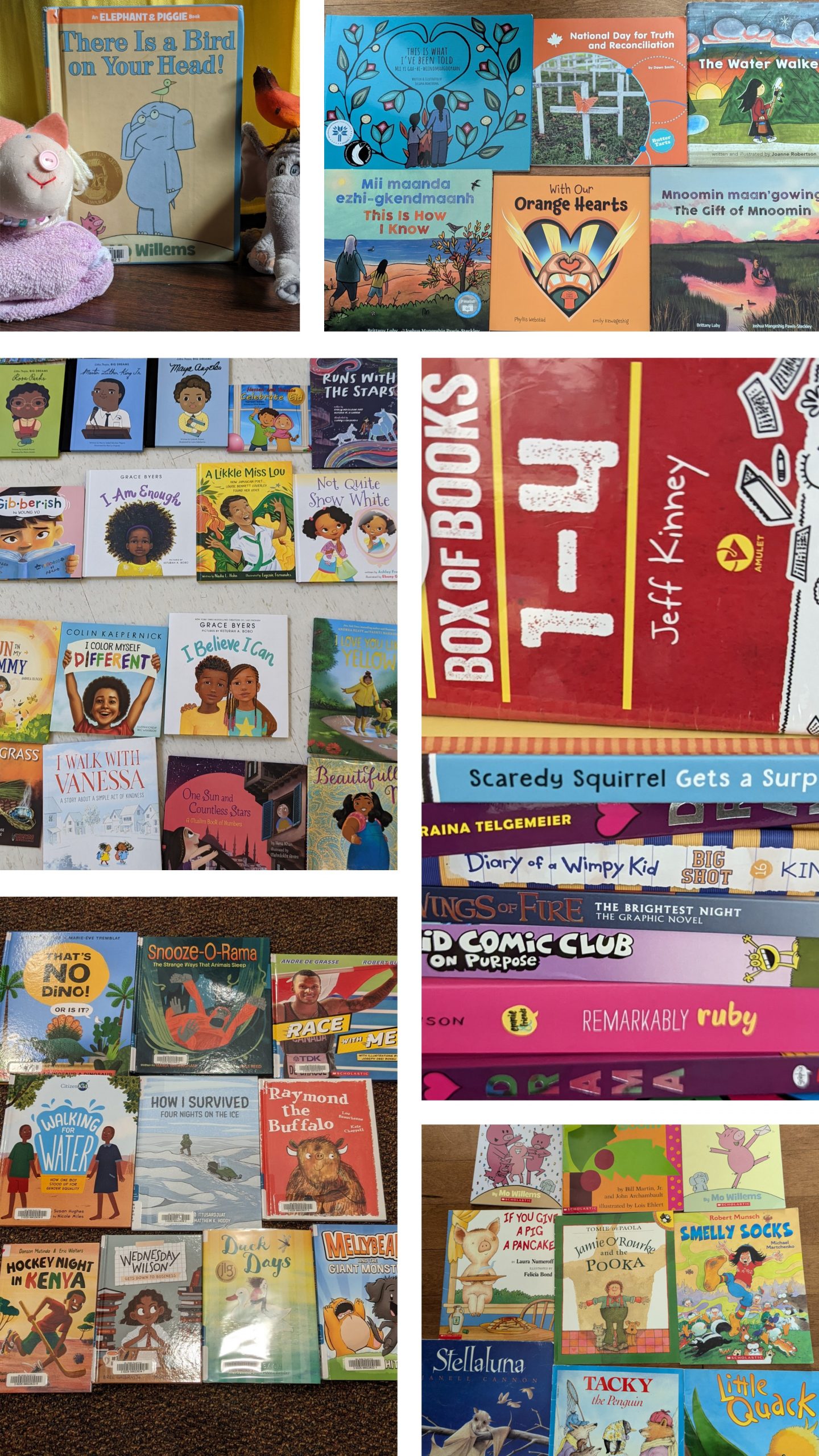
In this collage are six photos. Each photo includes several children's books with colourful covers and spines.For some students our classroom libraries provide the most frequent access to books. I would like to share thoughts on creating a collection of books that students will love. My experience comes from working as a teacher-librarian but the ideas apply in a classroom. Let’s imagine you have been given a budget to build a class library. Where do you start?

Know your Class

We have to cater to the age and stage of our students. That said, there is likely a large range of reading abilities and interests in every class. I propose that we prepare our classroom libraries balancing student interest, curriculum topics, quality, diversity and reading levels. You don’t need to have the largest quantity of books, but the right books for your readers. The books in your classroom can be a window to the world for your students so it’s important we consider diverse viewpoints to build a collection that reflects values such as empathy and acceptance.

Keep a Wish List

It’s helpful to have a list prepared of books you and your students want for your classroom library. We need to be prepared for those occasions when someone asks what the classroom needs. All the publishing companies and book stores send out newsletters with ideas of new books you might like and there are bloggers who will give reviews to help you narrow down your choices.

 Popular Picture Books

One strategy is to look for series, authors, or titles that have been best sellers for a while. For example many Robert Munsch titles are well loved and suit a primary classroom. Munch’s characters are diverse and the stories are often very humorous. The settings are across Canada and some even touch on curriculum topics. These books check a lot of boxes and are a great addition to a classroom library. In kindergarten and early primary classes I find Elephant and Piggie by Mo Willems is a huge hit as well.

Another approach is to collect picture books by theme. Examples of themes include alphabet/counting, character traits, holidays, cultural topics, seasons, and books you can sing.  I have so much fun when I get to sing a book!

Graphic Novels

The most popular section of my library is the graphic novels. They are highly appealing with fast-paced storytelling which keeps our readers engaged. My personal favourites are Babymouse, Dogman, Bone, and anything by Raina Telgemeir. My students also love Chi, Warrior Cats, and all the superheroes, including Teenage Mutant Ninja Turtles. Comic strips in book form such as Calvin & Hobbes and Garfield are appealing to older elementary students. Graphic novels released with movie tie-in often have a limited time that they are popular. Buyer beware!

Novels

I love to see a student immersed in a novel. It’s so satisfying when you have them come back saying they enjoyed a book you recommended. The best thing we can do is to read the books and do the research to know what we are recommending. If you can catch them before seeing the movies, then I always recommend grade 6-8 students read The Hunger Games series. Those books had me completely engaged! Often students at this age are doing research themselves about books, so it’s very important to have their input as you build your collection.

Non-Fiction

There are several non-fiction topics that students at my school constantly ask for: pets, sports, animals, and cars. The most popular book in non-fiction is The Guiness Book of World Records. I also encounter students with common niche interests such as The Titanic, WWII, or biographies of actors and singers.

Screens vs Books

I believe the classroom library is a great investment in student learning. There is definitely a place for reading using technology but the hard copies of books are still an important part of our society.

I think I could expand much more on each of these topics but I hope you find this overview helpful.

Keep on Reading!

Brenda
The Little Library

My mom has always loved books; over the years she has acquired too many to count. So when she moved to a retirement home this spring, and I went to her apartment to begin packing up her things, those books were one of the first things my gaze fell upon. There wouldn’t be room for them at her new home, and she knew she had to give them away. Find a good place for them, was all she said. But there were shelves and shelves, and I didn’t know how I could possibly pack them all up and haul them away in heavy boxes, or where I would take them.

​And then I remembered the Little Library.

​There is one right outside her apartment. Standing on a single pole, it looks like an oversized birdhouse, its wood painted dark blue. Two glass-paned doors open to reveal three shelves, on which community members are invited to “take a book, share a book”.

​To be honest, I have never left anything in it before. They always catch my eye though, these wonderful little giving spots that pop up in neighbourhoods all over the city. And whenever I pass them I can’t help but wonder what’s inside.

​So when I was looking at the rows of mom’s books in her too-quiet apartment, I thought, why not put some in the little library?

​I took about 10 books down on the first run, in a bag slung over my shoulder. When I got down there I found one door slightly ajar, moving with the breeze and softly tapping against the frame. I opened both doors and peeked inside. There were a few titles there … a cookbook, a novel and, delightfully, a cartoon-character festooned children’s book in Mandarin.

​I placed my books on the shelf, then lugged the rest of my bags to the car, and drove off to deliver them to my mother.

When I returned a few hours later for a second round of packing I stole a glance inside the little library as I walked by. Someone had taken the Mandarin reader, and a few of my mom’s books from on top. I felt a little of rush of excitement. I wondered who had taken them, and how great it was that people could find a little unexpected gift like that on their way home.

​This time when I came back down from her apartment, I had a full pull-cart of books to add. I lined them up on the shelves, moving taller ones to the top, and smaller ones to the bottom, until they all fit into colourful rows. Cramming the last book in, I stood back and admired my work. Every inch of space was taken. The titles looked back at me invitingly, a jumble of genres and subjects, everything from how to make soap, to yoga guides, to mystery novels, and even Mr. Spock’s autobiography. Satisfied, I started to close the doors but stopped when I heard a happy voice behind me.

​“I have some too!”

​A woman holding a bagful of books walked up, and I instantly regretted bringing those last ones down. “I’m sorry,” I said, “I think I took the last of the space.”

​She smiled and started piling her books horizontally across the tops of the others.

​“Oh it’s ok, that’s great,” she replied. “I just went to a book exchange last month, and I’ve been meaning to bring the ones I read.” She shook out her bag. “It’s been empty every time I’ve gone by lately, so I’m glad I remembered today.”

We chatted for only a few moments, but there was unmistakable kid-like energy in our exchange. You’d think we had just dumped out our Halloween candy to see what treasures had come our way.

​“It’s the best thing ever,” she said.

​“It is the best thing ever,” I agreed.

​This ritual has continued for weeks … me going over to mom’s to pack, and ending my evening with a trip down to the little library. Each time I see new people, from all walks of life. Once it was a man in a business suit, coming up as I loaded the day’s tomes with a friendly, “What have we got today?” Another time it was a university student, stopping on her walk to scan the titles. One time I pulled up to find a teenager with a skateboard under his arm looking at what was there. And ever since I saw that little Mandarin book, I’ve taken to bringing some of my kids’ old picture books, to make sure little readers might find something that delights them too.

​There is a beauty about this spot. Where anyone might find joy and learning in a book. It’s not dependent on how much money you have, there’s no expectation of payment. No improved access if you have more connections or resources than someone else. It’s just there, for everyone.

​And so I happily continued on this way, and my mother’s shelves grew bare as the little library’s grew full. And finally, there came a day when I carried the last of the books down and laid them on the shelf, for whoever would come to get them. ​

​We hit a patch of rainy weather around that time. Not many people were out and about like before. Sometimes when I drove by, there were a couple of books, but mostly it looked empty. I felt a little sad that I had no more to give.

​Of course, very similar thoughts have been on my mind lately, with a year of uncertainty and advocacy approaching. Like that little library, our schools should be joyful places, with full access to learning and resources for everyone, and yet they too grow increasingly empty.  Funding for special classes and support staff to meet the needs of all exceptional learners … funding for psychoeducational assessments that determine rich and diverse learning needs, increasingly available only to families who are able to pay for them privately … funding for Multilingual Language Learners … books, supplies, resources … reading intervention groups …

​In the face of never-ending cuts and reductions, advocating for the supports students need is a most daunting task. But I have hope. Teachers are a tough bunch, and I am looking forward to seeing all we can accomplish together.

​And by the way, I did find out who took those first books of mom’s. The other day, on one of my last packing trips and during the first warm days of the season, I saw a couple standing in front of the little library. They were returning some books to the shelves, and one of them looked very familiar. It was mom’s novel, the bright colour and slightly bent corner giving it away. They returned the gift for someone else to read, and more. The shelves were full.

​Like the community members so invested in the little library, caring for it and bringing it back to life when it seemed all but forgotten, we too will do our best for our students. And I know that one day, our shelves will be full again too.

Considerations for Ongoing Communication

As we know, communicating with families is a key component to student success. When we take the time to build that home to school connection in the beginning of the year, students are better supported in their educational experiences. When families and caregivers understand the learning, they can reinforce classroom lessons at home, feel more connected to their child’s learning journey, and help foster a genuine love for learning.

Some considerations

  • Clear: Be specific and actionable; offer concrete examples in plain language of what a student is doing well and where they need support
  • Accessible: Consider families’ preferred language and method of communication (e.g., email, phone call, notes)
  • Ongoing: Monthly newsletters, biweekly emails, calendars.. however you decide to share progress, make sure to not do it just during assessment periods or when a concern arises
  • Timely: Allows for communication to be responsive and continuous throughout the year

Some strategies:

  • Welcome letters in the beginning of the year
  • Asking families for their preferred method of communication
  • Connecting with families with positive news more often (i.e. “sunshine messages”)

We each use our professional judgment to determine how and when communication takes place. Here is another article for your own reflections ETFO Voice: Connecting with Parents

What to Consider when Making Translanguaging Part of your Teaching Practice: Reframing Translanguaging (Part 2)

In the first part of this blog, we discussed some of the main concerns educators have with translanguaging: over-reliance of digital translation tools, the slowing of English acquisition skills, and families wanting their child to focus only on learning English. These concerns are justifiably good reasons to think critically about translanguaging, and what we can do to implement it purposefully in schools.

Let’s start by remembering why translanguaging is important effective in the first place. First of all, translanguaging is part of any culturally responsive teaching practice. When we encourage the use of home languages in the classroom, we send the message that the school values all the cultural funds of knowledge newcomers students bring to Ontario, while also encouraging students to bring their “whole”, authentic selves into the learning.

Translanguaging also helps educators to better understand the oral language and literacy skills newcomer students bring to the classroom. For example, if we notice a newcomer student can read, write and communicate extensively in another language, we can tell that they have already learned foundational language skills and perhaps even more sophisticated writing skills. As they they learn English, they will continue using these skills with a new language.

Finally, translanguaging provides a way for students, when they have literacy skills in the home language, to have comprehensible input in schools. For example, they can use their home language to read and explore the same content as their peers, they can express their ideas and learning in writing (teacher would use the translation device to assess their work), and have more opportunities to collaborate and socialize with others that know the same language.

Now, let’s look at some tips for using translanguaging in the classroom so we can address some of the major concerns with its practice head on.

Avoiding Over-Reliance on Translation Tools

We can encourage a culture of translanguaging while also avoiding over-reliance on tools like Google Translate by being clear on what our language output goals are for the newcomer MLLs we are teaching. The Steps to English Proficiency (STEP) continua is critical here: knowing the student’s STEP will help us to understand what we can expect for students at different points of their language learning. For example, a student who is approaching STEP 1 and is in the intermediate grades could have the language output goal of writing sentences using prompts and sentence frames, or responding through short phrases and gestures.

The same goes for setting input goals. It would be unreasonable to expect a student in grade 8 who is approaching STEP 1 read a grade-level appropriate text on the topic of Canadian Confederation. The level of academic language in English would likely be too complex for them to decode without sufficient time to develop a foundation for English comprehension. If the student has strong literacy skills in their home language, a digital translation tool would be a great way to enable them to access the content. Or, if we want to provide the student with an opportunity to learn the content in English, we might use an adapted, visually supported text for them to understand some of the core concepts in that lesson.

Generally speaking, students in the earliest STEPs would use translation tools most, and we gradually lower the use of those tools as students continue to build their oral foundation in English. At the same time, it is important that we encourage students to engage in their learning in English so they are practicing the skills to progress on the STEP continua, scaffolding as needed to support their growth.

Using Translanguaging as a Tool to Support Target Language Acquisition

This brings us right to our next point, which is understanding how translanguaging can actually support English language learning. When students can use another language, they already have developed an understanding of the connections between sounds and meaning, and structures for communicating ideas and information. Encouraging students to make connections between their home language and English means that they can transfer their existing knowledge over to an entirely new system of speaking, decoding, and encoding.

This means encouraging students to create their own language glossaries/dictionaries, to use languages interchangeably when writing notes or listening to English discussion, or writing short texts in their home language and seeing how those ideas look in English. Dual language texts, access to subtitles during videos, or having a same-language speaking peer (with higher levels of English language proficiency) to work with are just a few simple ways students can use their home language to build their English comprehension skills.

Responding to Families about using Home Languages in School

Translanguaging may be a teaching concept families are unfamiliar with, and it is important to address the concerns they may have about their child speaking their home language in schools. This can be particularly concerning for families that live in communities where they are surrounded by others that speak the same language: the time their child spends learning English in school is valuable.

One way to explain the importance of translanguaging to families is to explain that the Ontario curriculum approaches English learning from an additive perspective: schools want MLLs to learn additional languages without losing their home language. It is undoubtedly advantageous for Canadians to be multilingual in a global economy, and when we encourage the use of home languages in specific contexts (ex. Social situations) we support the additive approach.

It’s also important for families to know that translanguaging can enable their child’s thinking to be visible, especially in the early STEPs of English acquisition. You can share that translanguaging is used in curricular contexts as a scaffold until students increase their proficiency in English.

Intentional Translanguaging

Translanguaging has raised its share of criticism, and it is important that we use those concerns to develop a more intentional and purposeful practice that supports multilingualism and increased proficiency in English.

Interested in learning more? Check out ETFO’s resources for teaching Multilingual Language Learners!

Finding Joy

In our house we’ve recently started watching the show “Abbott Elementary”.  If you’ve never viewed it before, it’s a great modern take on what it’s like to teach in a school.  This satirical comedy is set in Philadelphia and follows the staff members as they approach challenging situations with joy and determination to do their best for the children.  

One of the characters, Geoffrey, is always known for being stoic and reserved.  He takes teaching and learning very seriously; also expecting the children to do the same.  In one episode, a guest musician is hosting a presentation in the school gym.  As the viewer can see, all the other students are laughing and singing and dancing.  However, Geoffrey’s class is following his lead by standing still with arms folded – very serious!  As the teacher looks around and notices the difference between his class and the others, something clicks.  He starts to dance with some fun moves.  And as he starts to dance, so do the kids.  Soon enough, the whole class is looking like it’s having fun at the assembly. 

Educators are often so propelled by competing priorities – paperwork, planning, marking, the newest seating plan, finding resources, etc. These are all important and vital to ensuring that this hard work of educating young minds is centred.  Teaching is the crux of our work, after all.  

At times in my career, I felt a little like Geoffrey.  Focused on making sure the lesson was perfect and that I was well prepared, worksheets photocopied, tests with the right questions. I was focused hard on building my own teaching knowledge, theories about what education should be like, and creating routines that I felt best supported student learning. 

But something felt missing without humanizing myself, staff, families, and students.  My fondest recollections of school are the ones where I felt the most joy.  The moments of learning, yes, but also moments of shared laughter and memories being built together. I remembered what it was like to sing silly songs in music class, to have those shared jokes together, to get to know one another and build a community. Finding joy every day that we spend together is important, too. 

What does that space look like, sound like, and feel like?  It looks like everyone is able to work to their greatest potential at that moment; it looks like smiling faces and silly dance moves.  It sounds like students reading confidently and engaging in discussion; it also sounds like laughter and shared stories about our weekends.  It feels like achievement and success; however, it also feels joyful and fun and accepting – and a little something like home.

Preparing for Math Experiences

I’ve spent almost my whole life in school – as a student and then as an educator. Something I’ve learned about myself is that I learn best when I get the chance to sit in the moment.  As a notoriously slow processor, I need plenty of opportunities to think, slow down, and talk things out before I feel comfortable.  As a student, I loved opportunities to work in small groups, to listen to others, share and gain new ideas.  Classes where collaboration and discussion were encouraged – language, arts, and even science – bring memories of working on projects, debating, discussing, and creating. 

I try very hard to work on creating those same experiences during math classes. Focusing on the process has given me a better understanding of the children’s learning that I would not get from looking only at final solutions, tests, and other products.  I’ve spent a lot of time thinking about meaningful math classes, although my process started off slow it got easier with practice.  

Typically, I try to plan the experience as much as possible.  We are planning all the time as educators, but sometimes those moments come up suddenly and we follow that teachable moment.  When possible, panning is an exercise for myself as a teacher.  It has helped me to understand what I’m hoping to learn about the students’ thinking and it has even helped me to grow as a mathematician. 

Though there are lots of things to consider and every educator has their own planning process, these prompts help to frame my thinking.  They might help you, if you’re looking for a place to start. 

How are the students experiencing this particular expectation? Is it the first time we’re looking at a concept?  Are students applying familiar knowledge to a new situation? Or am I hoping they demonstrate what they have learned about a concept?

Thinking about these questions helps me to think about the student experience and the information I hope to gather about their understanding.  If we’ve worked with this concept for a while, perhaps I’m hoping to see certain strategies developing in their work.  If we’ve not yet learned this particular concept, maybe I’m hoping to see what past knowledge they might be bringing as a starting point to my next lesson.

What do I anticipate students will say or do when presented with this experience? What am I hoping to see or hear? 

Anticipation has been a necessary exercise for me.  When I anticipate what the students might say or do, it helps me to focus on what I am looking for; which tools they are comfortable with, where might they start their solution.  This helps me to map out what my conversations might be with students while they are working and which direction I hope they might go.

How will I present this to the students? Do they need printed ‘rules’?  Do I want to give a personal story to the problem?

I find that presenting math to students helps to frame the experience.  Whether that’s introducing the rules to a math game or sharing context for a problem that needs to be explored – sometimes we don’t get to a firm solution! Scripting what I want to say helps me to frame my own thinking more clearly.  

What are some of the materials we will need?  How will they record their work?  How will I document what I see and hear?  

These logistics are important.  Sometimes I give students a few minutes to think of their own solutions to the question and then they come together in a small group to share and build upon their ideas.  Sometimes they are using manipulatives that I give them to use because I am hoping to observe something specific.  As I am documenting their work, I might write what I see them using or doing or I might have a checklist of expectations I am hoping to observe.  For each opportunity to engage with the students during their math experience, it’s important to have these details planned ahead of time. 

When I first started building my math for teaching knowledge, it took me some time to plan out meaningful experiences and activities for students beyond the initial question.  There are many wonderful research based resources that you can go to for ideas on problems to solve or experiences to offer students, but taking the time to work through the planning is beneficial for all of us.

Cross Curricular Teaching Ideas for “Storyteller Skye: Teachings from my Ojibway Grandfather” by Lindsay Christina King and Illustratrated by Carolyn Frank

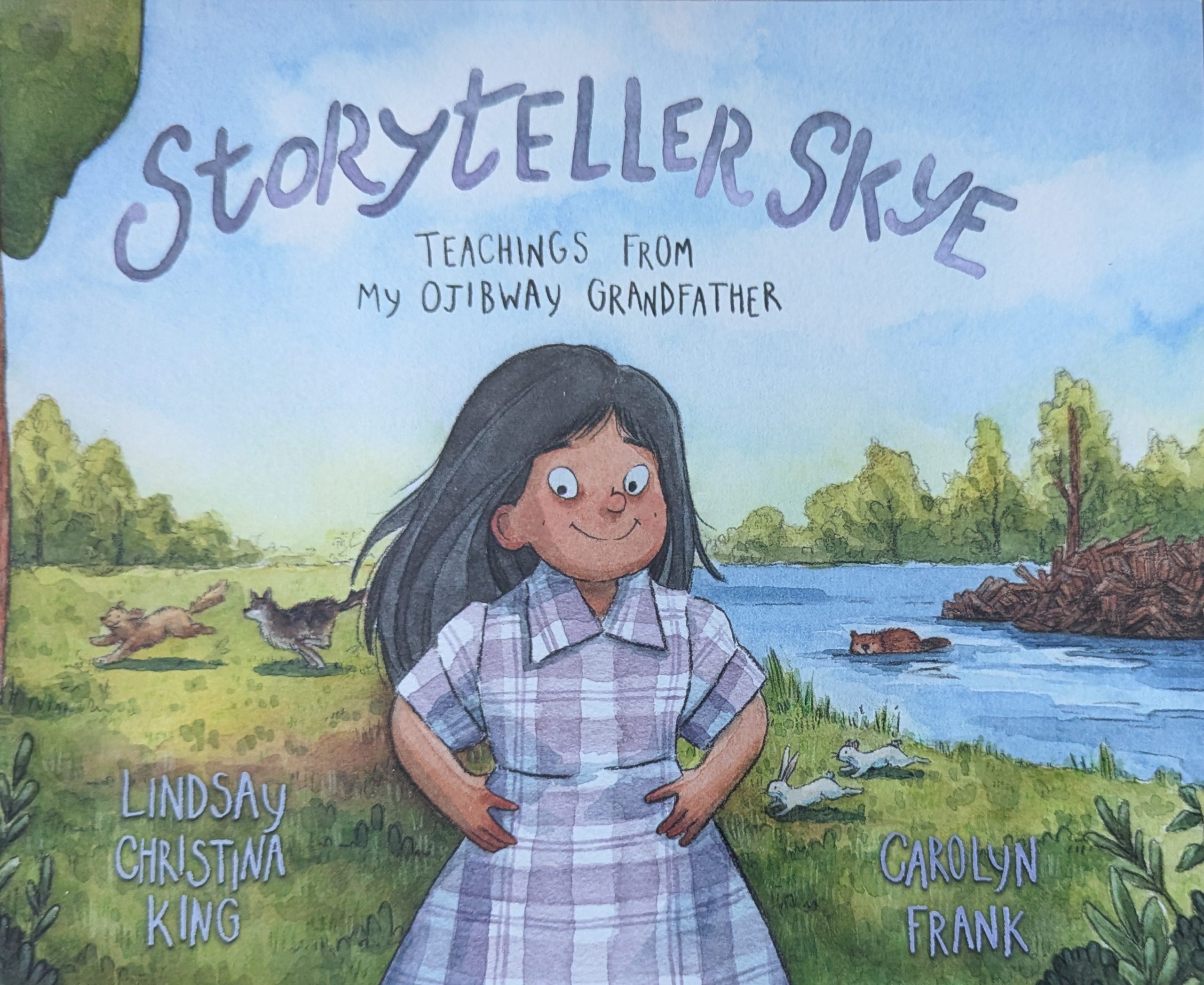
The illustrated cover of a picture book is shown with the title in large blue font "Storyteller Skye" and in smaller black font, "Teachers from my Ojibway Grandfather". There is a smiling young girl with dark hair in a plaid violet and white dress and her hands on her hips. Behind her is a field and a river with trees in the background. There is a beaver in the water and in the field are a wolf chasing a dog and two white rabbits but one rabbit has very small ears. The author's name is Lindsay Christina King and the illustrator is Carolyn Frank.
Medicine Wheel Publishing, 2023.

I am very excited to share with you a book for elementary students written by Lindsay Christina King. King is a member of Pikangikum First Nation in Northwestern Ontario. Pikangikum is a community that is accessible by plane and by boat in the summer. Her book, Storyteller Skye: teachings from my Ojibway Grandfather, was part of TD summer reads and is widely available to purchase or borrow.

The story introduces us to Skye, a young girl who loves telling stories. She invites readers to listen closely as the stories she tells have important messages within them. She then goes on to relate stories about animals like skunk, beaver, rabbit, raccoon and wolf. I greatly appreciate that the animals are introduced with their names given in Ojibway, the language of Pikangikum. Each story is told with humour that will appeal to all readers.

Each animal in the story is featured because of one of their unique traits and Skye has a story behind how they got that trait. For example, why does the skunk have a foul smell? Why does a raccoon have a mask? The lessons taught to each animal tie in to the Seven Grandfather Teachings. This book leads seamlessly into an oral language lesson and there is an activity outlined in the back of the book on how to get storytelling started in our classes. Beyond oral language I have some cross curricular connections for this read aloud.

Social Studies: 

This book gives us an opportunity to learn about a fly-in First Nation community of Northwestern Ontario. Millions of Ontarians have never been to a community in Treaty 5 territory, like Pikangikum, so it is important to share the photographs at the end of the book showing Lindsay King’s family and community. The author’s daughter, Maddy King, had her photography of Pikangikum featured in a CBC News article in 2020. Maddy King’s photos show the beautiful boreal forest of the Canadian Shield and promote an understanding of the interconnectedness of all.

Both Lindsay Christina King and Maddy King were interviewed for a video series called Portraits – Pikangikum First Nation, available on YouTube. The YouTube channel highlights community members and some of their challenges. For older students, we can examine ongoing impacts of colonialism. In particular, the video about Maddy King has beautiful photography and demonstrates her connection to the land. There are community leaders interviewed in the Portraits series and they outline the ways they are promoting traditional values to counteract the challenges being faced in Pikangikum. Some of the initiatives include promoting youth connection to the land, support for young mothers, and working toward more modern infrastructure.  The school there has 1700 students and its own teacher education program in partnership with Queen’s University. I highly recommend learning more about this community!

Science

Storyteller Skye connects language and science in the several grades:

Grade 1: Needs and Characteristics of Living Things;

Grade 2: Growth and Changes in Animals;

Grade 4: Habitats;

Grade 6: Biodiversity.

Reading this book during a science unit or as a review of the concepts gives our students a different perspective filled with humour and enjoyment.  This story allows students to respond to discussion and comprehension questions and to review the characteristics, growth, habitats and biodiversity of our science curriculum.

Visual Art

Each of Skye’s animal stories can be an inspiration for art as well. Whether it is drawing, painting, or creating a 3 D model, our students enjoy making changes to animals, using their imagination. The art they create can lead to an oral storytelling activity which allows them to share what characteristics they have changed and how the change could teach the animal an important lesson. Animals do not have to be the only subject of this art.  It could be about making changes to a certain environment or building as well. 

Drama

I envision students working in groups to create skits about the different animal stories that Skye has in this book. Creating or finding some simple props for students to use in their dramatization will add another level of creativity to this lesson.

This is definitely a book I will carry from class to class and use for my supply teaching assignments!

Storyteller Skye: teachings from my Ojibway Grandfather by Lindsay Christina King and Carolyn Frank; Medicine Wheel Publishing, 2022.

Happy Reading!

Brenda

The Secret Life of Ordinary Objects

A teacher friend called me the other day, and as per usual, we got right into our “teacher talk.” We have this habit of bouncing ideas off each other until we’ve basically mapped out a whole month of school. Our “quick” conversations always end up being 40 minutes or longer, you know how it is when the creative gears start turning!

In this recent conversation, we began brainstorming some great ideas for Grade 3 and 4 STEM. We were looking for a fresh way to spark curiosity, and it led me back to a topic that never fails to get kids talking: Ordinary Objects.

As teachers, we spend so much time over-analyzing our lesson plans that we sometimes forget the magic hidden in a simple pencil or a roll of tape. Inquiry-based learning doesn’t always need a complex kit; sometimes, it just needs a really good “Why?”

Thinking about this took me right back to my own “young investigator” days. I can still see myself sitting on the floor with a broken cassette tape, determined to save my favorite music. I wasn’t just fixing a toy; I was an engineer on a mission. I remember the focus it took to re-thread that delicate ribbon around the tiny plastic gears, making sure it would pull in the right direction. Hours would disappear in a blink because I was so lost in the “how” of it all.

That’s the energy I love in my classroom. Have you ever given your class a broken toaster or an old mechanical keyboard and a screwdriver? (Safety goggles on, of course!) Just to find out how it works?

As our conversation began to dive in deeper we realized that this is the ultimate bridge for our Structures and Mechanisms strand. As students unscrew the casing, they see the internal structure (the frame) and the simple machines (the gears and levers) that make it “go.” There are so many curriculum connections to be found just by un-inventing the world around us.

I challenge you and your students to look at a common object, like a backpack and “un-invent” one part of it. Think, what if backpacks didn’t have zippers? Suddenly, Grade 4 students are brainstorming pulleys, toggles, and gears, while the Grade 3s are thinking about how the structure of the bag would have to change to keep things from falling out.

When we teach kids to question the things they see every day, we are teaching them that the world is designed, and if it’s designed, it can be understood and eventually, improved by them.

What is one “ordinary” object in your classroom that your students might want to un-invent? Let’s swap some ideas in the comments!


My Top 5 Learning Experiences at Elementary School

Today’s blog features unforgettable classroom experiences that I had in elementary school. I benefitted from these rich learning tasks and in turn these memories spurred me on to design similar experiences for my students. I hope some of my students remember what I taught decades later!

This illustration shows a drawing of a child dressed as a large raindrop. He is wearing a no acid rain sign.

Cross Curricular Drama Lessons 

As a kid who loved to play and use my imagination, I have vivid memories of combining science and history with role play.  One year, we were allowed to include costumes with environmental presentations. One student came dressed as a raindrop as he explained acid rain.

 In French class we often performed skits to practice new vocabulary. The teacher would have children’s clothes or food on hand so we could pretend we were shopping.

In language class in grade 3 we read plays and were challenged to perform a scene. I remember being a mountain goat, kicking and bleating my heart out! Then in grade 7 English we studied Charles Dickens, “A Christmas Carol” and I got to take my performances to the stage.

Guest Speakers

A change from the routine made for a very memorable day in elementary school. Meeting artists and singers brought us joy and learning. In grade 2, one of the parents in my class came to teach origami and talk about her country of origin, Japan. 

In grade 5 we had a musician visit the class and play a variety of instruments that were not normally available to us. Rich learning experiences are easily created when teachers invite guests into the classroom. 

As a teacher, some of my favourite days have included bringing guest speakers, especially Indigenous elders or dancers/drummers/singers. It is a responsibility we carry as treaty people to build these relationships.  I also appreciate having older adults as guest speakers. Some students have no exposure to seniors and they may not realize the importance of a lifetime of experiences.

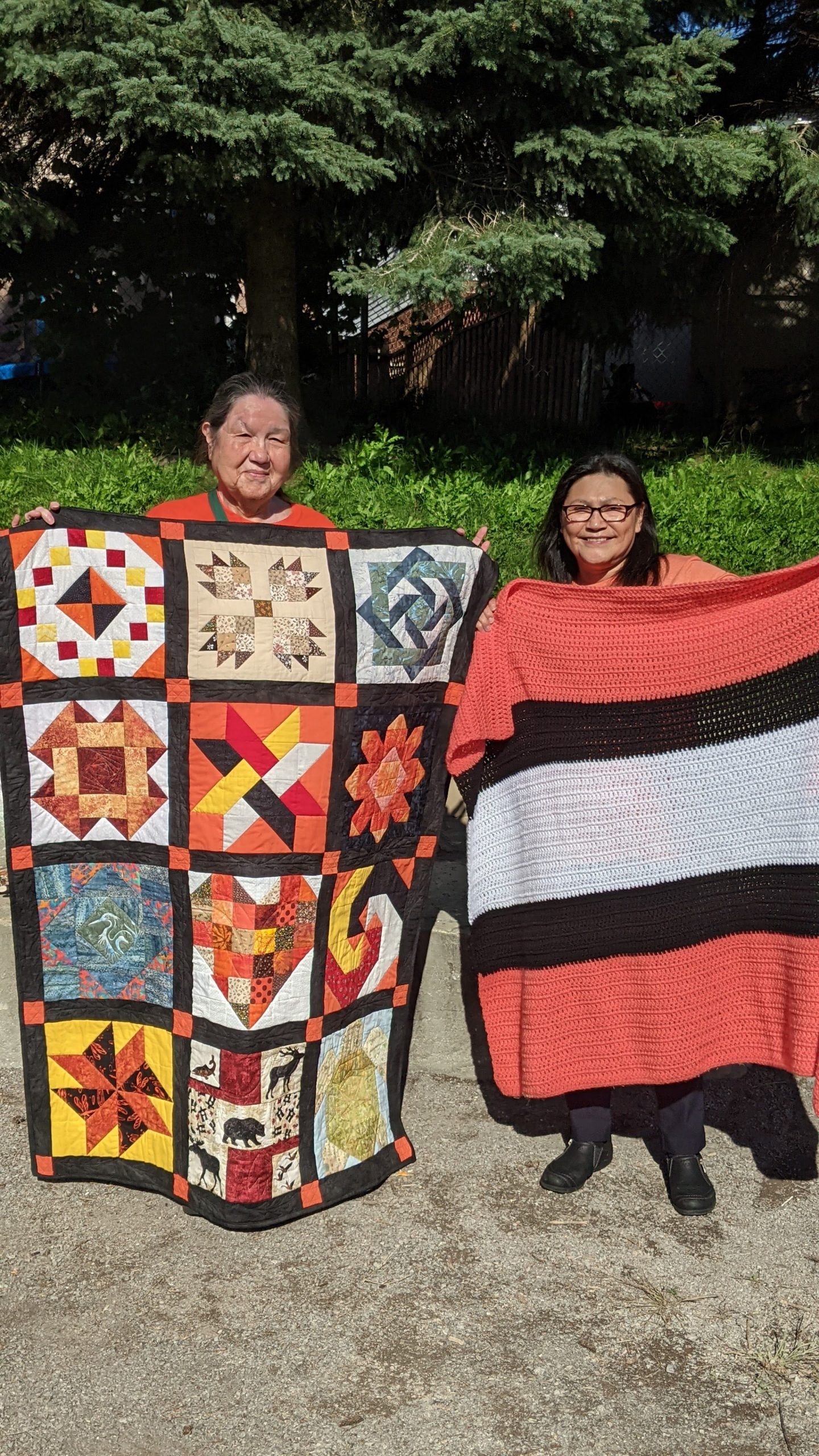
A photograph of two First Nations women is shown. They are standing outside and holding up a handmade blanket and quilt that feature the colour orange. The quilt has 12 squares including a heart near the centre.

Two First Nation guest speakers who were presented with a quilt and a blanket made by my colleague, ETFO member Shelley Miehe.

Hands-On Learning

Paper airplane making was the task we were given in grade 5 for a study of manufacturing. Our group members each had specific roles and responsibilities. My group did not make the most airplanes but we had high quality! 

Our grade 6 teacher had us create a relief map of Australia using salt/flour dough. We then painted the project. This was a fantastic way to help us interpret a 2D map.

Learning Outdoors

When I attended an urban school in grade 4, we walked through the area trying to find where the water traveled above and below ground. We looked for evidence of sewer grates and then mapped out  the nearby stream and reservoir. We also went around the area taking tree bark rubbings to use for collages in art. The idea was to cut out various shapes and glue them down to make a very eye-catching piece of art.

 By grade 6 I was in a rural school with more snowy winters. We were allowed to create snow sculptures as art. Colour was part of the experience, but I don’t remember if we had spray bottles or brushes. Was it paint or food colouring? I remember being very proud of our giant, snowy caterpillar.

Current events, Poetry and Sharing

From this top 5 list, you have probably gathered that I enjoyed speaking in front of a group!

In primary grades, my teachers used the show and share model to help students get used to public speaking. We were always encouraged to bring something to share that had educational value. For example, in grade 1, I brought in my corking tool and wool to show the class how to create a craft. 

Performing magic was a hobby I developed in grade 4 and my teacher allowed me to show the class some tricks and I had background music playing from my tape recorder.

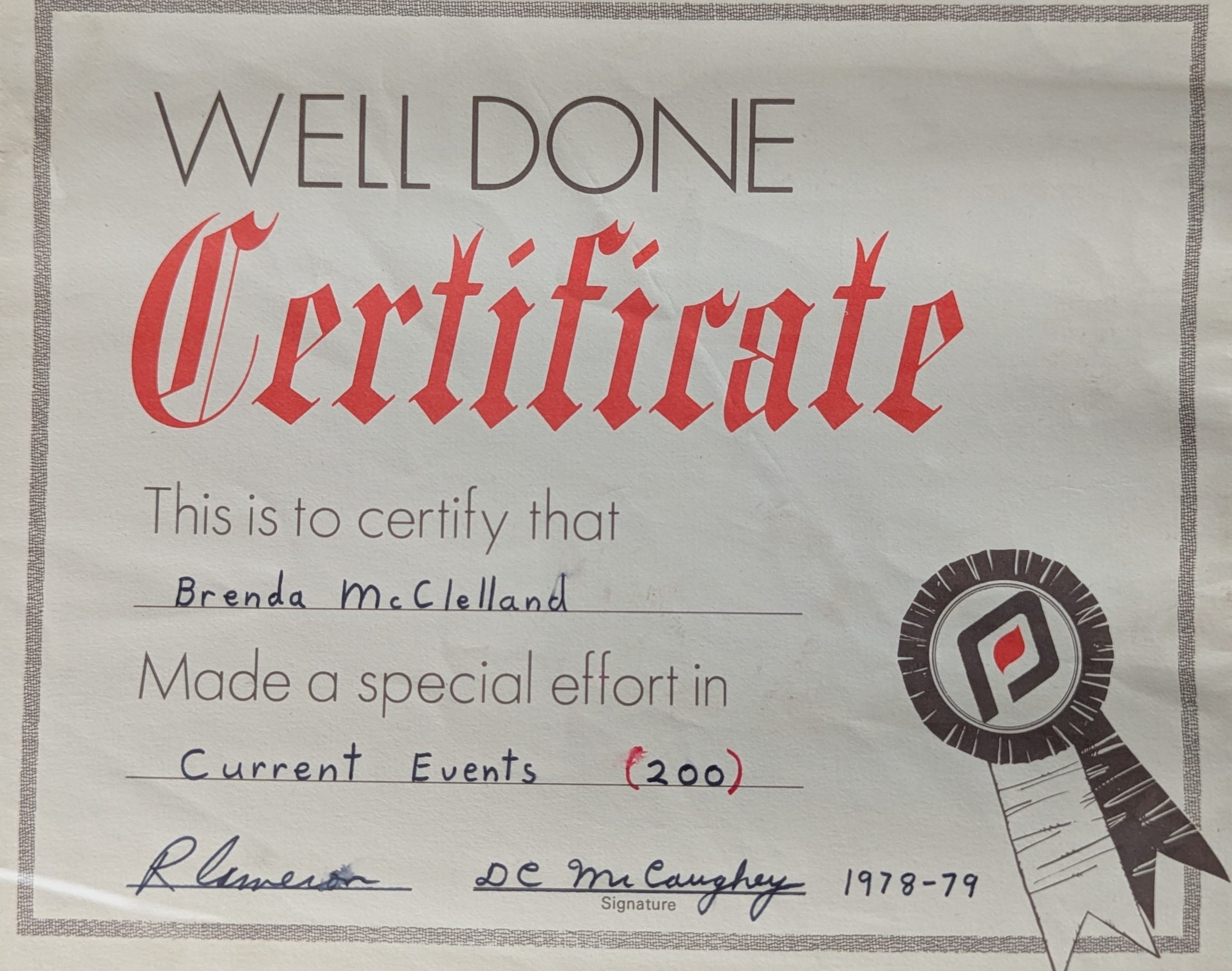
Sharing current events and poetry was encouraged in grade 5 and our teacher gave out a certificate if shared 200 times. Yes, I achieved that goal along with one other friend. If I were doing it today I might have a certificate for every 25 or 50 items shared to encourage more students to participate.

I hope you found some helpful ideas here. These tasks are easily adaptable among grades and appeal to many of our learners. 

What are your top 5 learning experiences? Do we have any in common?

Brenda

A photograph of a Well Done Certificate is shown from 1978-79. Brenda McClelland was completed 200 Current Events.

The Importance of Social and Emotional Learning for MLLs (Part 2)

Having a trauma-informed approach can be vital in Ontario’s diverse schools. Many students, particularly newcomer students, arrive in schools having experienced traumatic events: first-hand experience with armed conflict, family separation, or losing one’s home – just to name a few examples. These students may also be in the early steps of learning English, which adds to the challenge of understanding their unique needs.

Newcomer students that have experienced trauma may show up in school in a variety of ways. For example, they may be dysregulated, have hard time staying focused in their learning, be sensitive to different stimuli, or may not display any indication that they are traumatized at all. There is no single way a child will respond to trauma, but research indicates that prolonged exposure to trauma has a significant impact on the development of the brain.

I recall having multiple students that experienced the death of parents as a direct result of war in their home countries. One student was eager to engage with his peers and was open to communicating about his life experiences right away. Another student was distant and reluctant to interact with her teachers and classmates, and needed frequent breaks from her busy classroom.

Because the impact of trauma in children shows up in so many forms, it is important for educators to understand how to support learners, especially when they are emergent English speakers. These students typically a difficult time communicating their needs, emotions, and are likely also experiencing the stress that comes with learning in a new language and school environment. Adding to their unique student portrait may also be significant learning literacy and numeracy gaps from having missed years of formal schooling.

As an educator, it is not uncommon to feel underprepared and under-resourced when welcoming newcomer MLLs (multilingual language learners) that have experienced trauma into school. It’s important to know how to support these unique learners effectively, who to turn to for support, and what resources will be the most useful and practical in the contexts we work in.

In the first part of this blog, we looked at how Nara, an Ontario educator, used the “Discover – Connect – Respond” strategy to calm a newcomer MLL who was on the verge of having a bad day. Now, let’s take a look at some practical, trauma-informed approaches that can be leveraged as a starting point for helping students in this unique group.

Build a Detailed Student Portrait

Gathering information about the learner’s family background, prior experiences, and journey is an essential starting point for taking a trauma-informed approach. Take note that much of this information is highly personal and confidential, so discretion is key.

Often the first place to find out about the background of a student is through family interviews. Some boards may have a process in place to welcome newcomer students where an interpreter and settlement worker is available at the time of registration, and guardians may share information about their child’s experiences, including those that are traumatic.

When a newcomer initial assessment and orientation report is not available, sensitive information might surface through conversations with the student or family interviews. If you discover information about a student’s previous trauma through such interactions, it is important to share that information with an administrator and support team so it can be documented appropriately in your board’s student information system or the Ontario School Record (OSR).

One useful tool for gathering information is the “7 Factors Impacting Student Learning” table. Use it as a guideline for building a student portrait, or adapt it to suit your own workflow.

Create Safe and Supportive Learning Environments

There are so many ways educators can take a trauma-informed approach to managing the classroom that are good for all learners. For example, establishing predictable routines in the classroom not only makes the learning environment feel stable and organized – it helps students to feel safe and secure. Having timetables posted, routines for entry and exit times, designated areas where supplies and notebooks are kept, and clear expectations for behaviour that are consistently maintained will help students to feel supported.

When possible, create spaces in the classroom or the school where students can calm down, get quiet time, or have an alternative space to simply be in. Teamwork in the school can be critical for making this kind of space available for students and also developing guidelines for how it might be administered.

Provide Opportunities for Students to Communicate their Emotions

Newcomer students who are just learning English may need scaffolds to communicate what they are feeling and what their needs are when they are feeling dysregulated. As educators, we can facilitate communication by making translation devices accessible, teaching social emotional vocabulary, and providing aids that students can easily use to show how they are feeling.

Ultimately, taking a trauma-informed approach with newcomer multilingual learners is less about having the perfect strategy and more about developing a stance of curiosity, compassion, and shared responsibility. When we intentionally build student portraits that go beyond academic concerns, create predictable and supportive environments, and offer meaningful ways for students to communicate their emotions, we send an important message to the newcomers in our care: you are safe here, and you belong.

Part 1 may be found here.

Discover, Connect, Respond: The Importance of Social and Emotional Learning for MLLs