Your Community as a Teaching Partner

Last year I had the pleasure of teaching in the smaller community of Dundas, Ontario. My school was located just a two minute walk from the charming, very walkable, downtown area. This got me thinking about how I can use the community as my main teaching resource.

As important as it is for children to build a sense of community within a classroom (Belonging and Contributing!), I believe it is equally as important to build this sense within the larger community. At a school where a wealth of enriching experiences was just a short walk from our classroom door, we decided to make this a large part of our program.

One of my favourite aspects of the year was the amount of walking trips that we went on. Since we obtained walking trip permission forms at the beginning of the year, we were able to take our class on adventures out in the community whenever it suited our programming. Here are all of the places we took our class last year:

Coffee Shop – When our children wanted to make a coffee shop in our dramatic play centre, we extended their learning by arranging a visit to a real one nearby where they got to go behind the counter and serve their own hot chocolate!

Animal Hospital – When an inquiry led us towards learning about veterinarians and pets, I connected with a friend who is a veterinarian who provided us with real life materials for our dramatic play centre. The next week, we went for an hour-long tour of the animal hospital and a “day in the life” experience!

Book Store – After a visit from an author, we walked to the local bookstore to look for and purchase a copy of her book for our classroom. This led to some great discussions about how books can be sorted and organized.

Dundas Museum – One day, while out for a walk, we watched construction crews use a crane to lift an antique steam hammer onto an installation on the front of the museum. We watched for nearly half an hour as they lowered the large machinery into place, and came back a few weeks later to confirm our hypothesis about what that machinery actually was and why they were putting it in the museum!

Community Park – When our outdoor learning program needed a little change of scenery! We also used the directions to the park as an opportunity for some learning about directions and maps.

Down Town Strip – After a discussion about places in the community one day, we took the class on a walk down the main strip of downtown. Equipped with clip boards and pencils, we invited the children to document what they saw. This led to some beautiful discussions and connections to familiar words, signs, logos and numbers they saw as they walked!

The Mail Box – A few times, we mailed letters or thank you cards to our special guests and walked to the community mail box to drop them off.

A Construction Zone – During our inquiry about structures, we extended the learning by walking to a nearby construction site and observing the workers for a short while. We were lucky that a foreman came over to answer all of our questions!

Our Neighbourhood – We made sure to go for a neighbourhood walk at least once a week, usually twice. We made observations about nature, house numbers, street signs, cars, architecture, and whenever possible, pointed out the students’ houses.


And, when we couldn’t walk, we took the bus for three trips to:

Community Theatre – I work and teach at a local theatre and arranged for my class to attend a matinee performance of our current show. For many, it was their first experience with live theatre. I was also able to take them on a backstage tour afterwards! I think there is a lot of value in showing your “real” side to students by sharing important parts of your life with them.

Butterfly Conservatory – To extend our inquiry about life cycles and insects.

Children’s Museum & Maker Space – This was our year end trip this year. We spent the day exploring the hands-on exhibits at The Museum in Kitchener, and also got to participate in two workshops: one about using colour in visual arts and another problem solving challenge to solve a puzzle by finding clues around the museum.


We also had a variety of rich experiences that came from people in the community that visited our classroom. Whether they were sharing knowledge, a new skill or facilitating an activity, each special guest that came to visit us brought with them something that enriched our classroom in a way that we couldn’t on our own. Between parents and other family members of our students, we had the following visitors:


A Musician and Sound Engineer – A father came in at the end of our music inquiry to play guitar for us and then make a recording of our “orchestra”, which we then shared with all of our families.

University Engineering Students – Arranged by an engineer parent, we had a workshop about engineering and each child got to design a robot that balances!

An Apiologist [A honey bee researcher!] – A mother came in and prepared a hands-on workshop about honey bees and how we can save them, as a compliment to our insect inquiry.

A Fisheries and Oceans Scientist – Another father came to teach us about fish and clams during our inquiry about the ocean!

Two Children’s Book Authors – A friend of mine came to read her book about math, and one of the children’s aunts came to read her children’s book as well! Both followed with a Q&A session about being an author.

A Visual Artist – One mother came every Wednesday to share a visual arts invitation with the children during play.

A Sushi Chef – We had a sushi day and children had the opportunity to make [allergy friendly] sushi, which led to some wonderful discussion about food from different cultures.

An Outdoor Learning Specialist – The owner of the natural playground company that designed our play space came every Friday to bring new outdoor learning opportunities for us. Some of our favourites were wood whittling, threading berries onto string for the birds, berry picking and making syrup from scratch by harvesting it from nearby maple trees.

A Violinist – A parent that played the violin came in to demonstrate the instrument, which allowed us to make great connections during our music inquiry.

A Children’s Music Artist – A neighbour to the school, and friend of a parent, was a locally famous children’s musician. He came in to sing and perform for our class!


The community was an integral part of our programming. It was such a powerful resource to have, and it really was at our finger tips – all we had to do was ask.

This year, I’ve moved on to a new town, new school and new grade. I know I was very lucky to spend a year in that wonderful community, and I only hope I can recreate the same experiences for my new class. More on that to come!

How do you make use of your local community in your teaching?
 

Progress Reports

It is that time of year again! Progress reports are due in most boards this month. It is a hard task to think about what your students have done in just a month and a half of school.

I like to give students time to reflect on their learning skills as well as what they have done in each subject. Each year I create a survey for students to self evaluate themselves. Then, I include comments from this evaluation on their progress report. I like to use google forms to create the survey so all of their answers stay in my google drive.

For learning skills, my current grade eight class has made it quite challenging to comment on. They have good and bad days but it is important to set these students up for their next grade. Getting an “E” has to be true at all times since next year I am nervous about how their learning skills would measure up. I gave my students time to come check their current learning skills today and only one student came to my desk to see their mark. At my old school, the entire class used to line up to check their current learning skills. I feel that they may know they aren’t doing the best since they did not come to see their marks.

For math and literacy, progressing very well is very hard to receive as a level four is hard to achieve at all times. I have explained this to my class so that they will not be disappointed by the “progressing well” comment on their reports.

Other subjects we are just getting started on so the “progressing well” comment is hard to justify. “With difficulty” and “very well” also wouldn’t make sense since we have just begun. It is for that reason I find the progress reports timeline a bit challenging and I wish students had a bit more time to dive into each subject. It is hard to get students interested in their marks as well for the first time in my career so this thought makes me nervous for them in high school as well as for the rest of the year.

Is getting students interested in their marks something I can teach or is it just something students come to school with? I am hoping my students will gain that desire soon.

The Fundamentals of Teaching Balanced Math

math

Balanced math programs are not something new. Balanced math programs have always taught the fundamentals of math.

Many years ago, the board I teach for released an excellent poster outlining their approach to balanced math. The poster consisted of the importance of teaching: attitudes to math, approaches to instruction/assessment, teaching through problem solving, purposeful practice, basic facts and operational skills, and purposeful use of resources. When I saw the poster I was thrilled to see math pedagogy that aligned with my own teaching practice.

I have taught math from grade two to university level. Regardless of the grade or level of math, I believe there are four fundamental pillars in math instruction:

  1. Real world applications: Math instruction needs to connect to the real world – here students see the purpose of learning math such as measuring the diagonals of a door to ensure it is squarely/correctly installed or calculating how much paint you need to paint a room.
  2. Problem solving: Math should be taught with problem solving – problem solving adds complexity in applying math facts and operations skills within context and especially when connected to the real world.
  3. Practice to develop automaticity: Practicing addition and multiplication facts is not the most exciting part of math but without knowing them, students have to use more of their working memory to figure out the facts. This use of working memory/executive function leaves less space for working on the math that is in front of the student.
  4. Manipulatives/hands-on math: Manipulatives are not just for primary or junior grades, all students need them to make sense of abstract math concepts. I used math manipulatives to teach grade 8 students how to solve algebraic equations. Once the students did this with the manipulatives, they could work out the problems on paper. Even when I took university math courses, I always drew pictures of the math problem so I could understand my task better.

Other boards of education are also promoting balanced math programs. These boards of education may give their math programs a different name, but essentially the programs are similar.

In 2018, jobs that require math pay more than jobs than do not require math. This is a key reason to learn math!

These jobs include scientist, engineer, technologist, electronics specialist, robotics engineer, economist, game designer, roller coaster designer, animator, pilot, sports announcer, professional photographer, financial planner/analyst, cryptographer, research analyst, accountant, lawyer, marketing researcher, real estate agent, software designer/tester, global warming specialist, professional cook, and math teacher.

Math is important to students’ lives. It helps students make sense of the world as well as ways to figure out practical things like managing their money, doing home renovations, and making sense of their cell phone bills.

Do math, teach math, explore math.

If you know of anymore resources to share, please comment below so I can check them out!

Collaboratively Yours,

Deb Weston

More Information

Ford wants to get back to basics with math — but educators say balance is best

SEEING AS UNDERSTANDING: The Importance of Visual Mathematics for our Brain and Learning

York Region District School Board Comprehensive Math Program 

Peel District School Board Balance Math Instruction K-12 Program

Why is it important to study math?

Math Resources for Parents and Teachers

Queens University

Mathies

Peel District School Board Parent Guide to Learning Math Today

Peel District School Board Engage Math for Parents

Parents Guide to the Fundamentals of Math

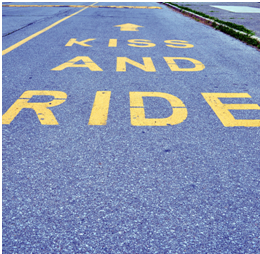
School Kiss and Ride Zone Safety for All

Kiss and Ride

School Kiss and Ride zone locations are designed to drop off and pick up children in vehicles before and after school. In some schools over 200 students are picked up and dropped off every day. In winter and on rainy days, this number increases relative to worsening weather conditions. In addition, parking lots are often located beside and as part of the Kiss and Ride drive through. Kiss and Ride lanes are designed to have up to 100 vehicles driving through during a 20 minute period.

It is important to keep all students and staff safe. Rules and guidelines are put in place to keep vehicles moving and to ensure the safe entry and exit of students from vehicles. Some of these rules include:

  • Drivers adhering to limiting speeds
  • Drivers, parents and students following school staffs’ instructions
  • Drivers not parking and waiting in the Kiss and Ride lane (It’s called Kiss and Ride NOT Kiss and Park)
  • Drivers yielding to pedestrian traffic
  • Drivers treating staff, students, volunteers, passengers, and other drivers with respect
  • Drivers not double parking beside the Kiss and Ride lane (students crossing between vehicles could be injured by other vehicles)
  • Adults making sure students fully exit or enter the vehicle before driving away from the Kiss and Ride lane
  • Ensuring all passengers, especially students, have seat belts on at all times while in the vehicle
  • Drivers remaining in the vehicle while in the Kiss and Ride lane so as to not block the flow of traffic
  • Drivers not parking in the Fire Route or School Bus zone
  • All people following directions of crossing guards and school staff acting as crossing guards
  • Drivers not idling vehicles in the Kiss and Ride lanes or Parking Lot zone areas

There rules and guidelines are put into place to prevent accidents. Students, parents, and school staff are injured every year. In February 2018, a student was and killed hit by a car as a result of vehicles inappropriately parking near a school (Maharaj, 2018). Another school closed their Kiss and Ride lanes after safety concerns became overwhelming (Milton Canadian Champion, 2013). As a teacher on Kiss and Ride duty, I have personally witnessed near missed of vehicles almost hitting children and adults.

Kiss and Ride Zones can also be a problem by exposing children and adults to high levels of pollution. A University of Toronto study (Adams & Requia, 2017) showed that Kiss and Ride school zones contain a “Halo of air pollution” due to idling vehicles nearby (Elliot, 2017).

Teachers need to be especially vigilant in keeping themselves safe while on duty in Kiss and Ride areas and in school parking lots. For the most part, teachers should use their common sense and professional judgement. Here are a few common sense suggestions to keep you safe from injury at the Kiss and Ride:

  • Do not help students in and out of vehicles – your arm could be injured if a vehicle drives away or you could injury a student while closing a vehicle door (think car doors closing on little fingers!)
  • Do not put your back to vehicles – you cannot see where they are or how they are moving
  • Teachers do not have to enter cross-walk zones if they feel unsafe – do not use your body to block a car
  • Do not put up with abuse from drivers and/or parents
  • Do not intervene in Kiss and Ride/Parking Lot disputes between drivers – you are there to supervise students, not adults
  • Use your professional judgement to consider reporting dangerous drivers or students not in seat belts to the administration

If you have any additional common sense suggestions in keeping all people safe in Kiss and Ride Zones, please share them with me and I will add them in this blog.

Collaboratively Yours,

Deb Weston

References

Adams, M. D., & Requia, W. J. (2017). How private vehicle use increases ambient air pollution concentrations at schools during the morning drop-off of children. Atmospheric Environment165, 264-273.

Elliot, J. (August 10, 2017). School drop-off zones expose kids to high levels of pollution: study, CTV News. https://www.ctvnews.ca/health/school-drop-off-zones-expose-kids-to-high-levels-of-pollution-study-1.3540552

Maharaj, S. (February 28, 2018) Scarborough student’s death sparks call for safer school zones, Global News. https://globalnews.ca/news/4054718/duncan-xu-kennedy-public-school/

Milton Canadian Champion. (2013). Traffic issues bring safety blitz to Escarpment. Milton Canadian Champion. https://www.insidehalton.com/news-story/2885147-traffic-issues-bring-safety-blitz-to-escarpment-view/