Coping with Eco-Anxiety Part 1:  Observing and Teaching Outdoors

Are you and your students anxious about the future of life on earth? The term eco-anxiety applies to those of us whose feelings of dread, anxiety, and depression are associated with climate change, mass extinction, pollution, plastic islands, depletion of the earth’s resources, the water crisis, and other ecological issues. We can help ourselves and our students to cope with these feelings in several ways.

Part 1 of this blog examines appreciating nature and getting outside to learn. 

 Go Outside and Observe

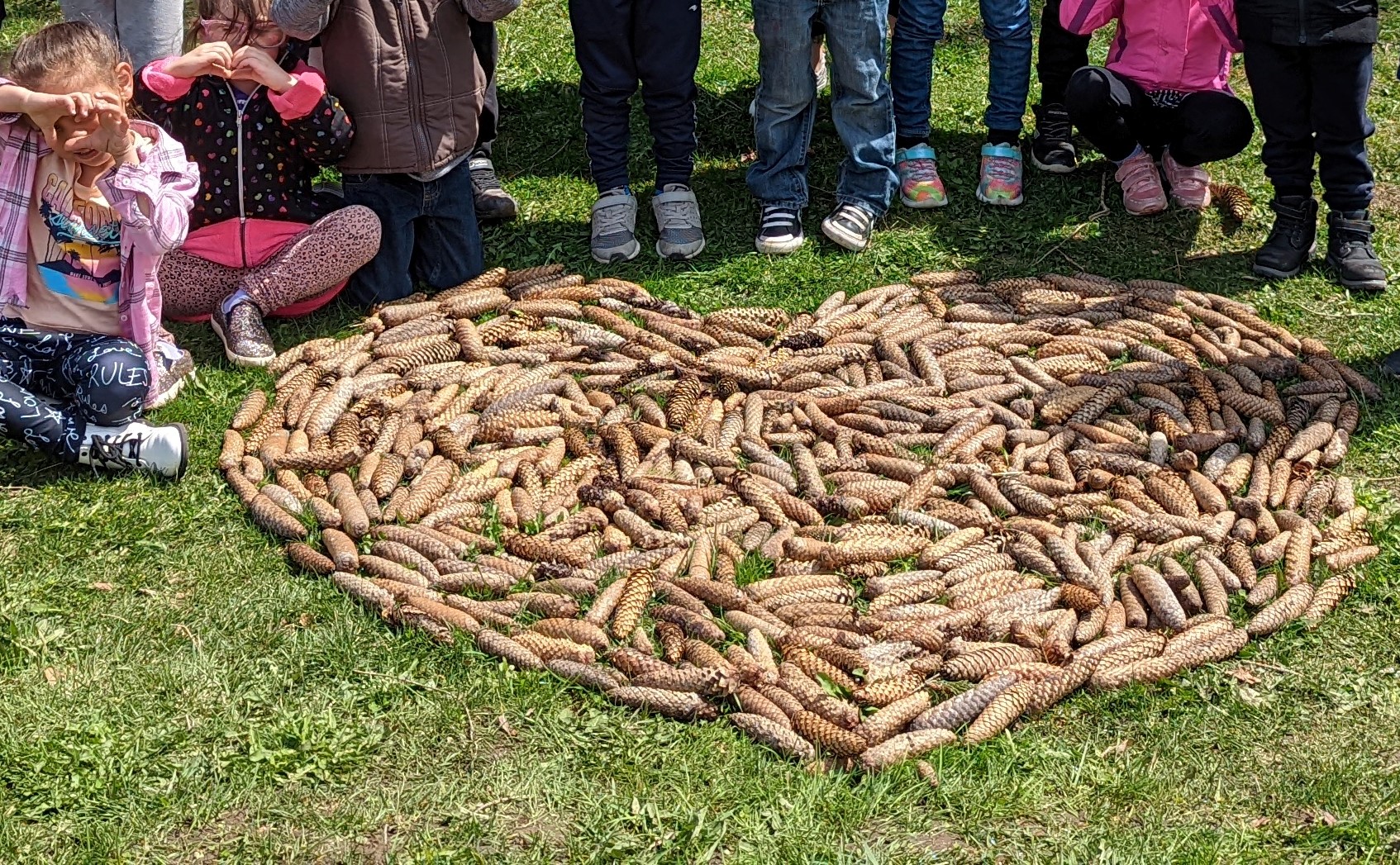
Plan a variety of teaching opportunities outdoors. Fresh air, sunshine, snow, mud, and rain give us exercise and vitamin D with the bonus of the chance to observe the seasonal cycles, the water cycle, habitats, plants, and all sorts of animals, including insects. You will need to prepare for the weather, but I believe this will reduce student anxiety about the natural world just by spending time outside appreciating the gifts of this planet. Specific learning expectations in every grade from K-8 require students to be outside. When it’s part of the class routine to take a walk together or adopt a nearby tree, plant, or garden, students will likely gain more respect and understanding of the natural world. Bring cameras outside to create media. Take time to write, draw, paint, and create drama or music outdoors. The outdoor setting is a beautiful place to let the artistic side emerge. Respectfully using natural materials is a fantastic way to work together and be creative.

Go Outside and Learn

Your schoolyard is a habitat, no matter where it is located. It’s in a weather zone; it’s on a waterway; it’s a food source for something, even if you are in a concrete jungle! Explore the nooks and crannies of cracks in the pavement. Watch the skies for birds and other insects. You will find many opportunities to cover the curriculum right outside your door. Any subject for grades 1-8 and any of the four frames in the kindergarten program has components that you can cover outdoors. If your school does not have an outdoor classroom, that’s ok! You can do plenty of teaching with students using cameras or clipboards for making observations, calculations, mapping, or art. You can set up a nature-based inquiry by asking students to compare the characteristics of trees and animal habitats or make detailed weather observations. Always ensure outdoor learning is accessible to all students, and have fun!

fine, everything is fine

I have a habit of saying, “fine” whenever asked how things are going. Whether it is symptomatic of a half century plus of social conditioning or simply learned ambivalence is still to be determined. It could be a combo of the two as well. I am a big fan of “fine”.

It has the insouciant distance and indifference that propels me past and through the issues of the day. After all, who wants to be a burden to others when so many are already maxed out with their own lives. Isn’t it the North American expectation to steadfastly power through the day with stoic determination. In many ways that’s what happens to people who stay in the safety of their silos. 

It is not beyond a single educator to utter this answer all the while knowing that behind the scenes, in our heads, or in full view of all to see that there is a lot of meaning to “fine”. It is a societal expectation that we respond “fine” because our polite programming provides the same answer each time even when it is not true. 

It’s not a lie if you believe it. – George Costanza

I love the quote above and it rings a little too true with this topic. Although it was intended for a different context in the show Seinfeld, it definitely applies when considering the mental health and well being of all who work in education. When will we have time to unpack the emotional baggage covered by “fine”? How do we get to a place of trust to provide the support that is necessary for us to listen as well as be heard? 

Breathe in, breathe out. I’m fine. You are fine. Everything is fine.  Thank you very much for asking and not burdening either of us with a truth that we verily have little time to acknowledge or attend to if it turned out to be false. Now, let’s get about our days. Sound familiar?

As a profession, there are few others to rival the frenetic paces that educators face over the entirety of a school year. Imagine each classroom along the lines of a corporate model where each grade occupies an important floor of a tall tower. On each of these floors there are numerous cubicles filled with team leaders and workers all charged with annually accumulating, accruing, and retaining the knowledge and the skills to find, climb, and remain on the next floor above them. 

With each September ‘new year’ comes the mysteries, highs, lows, and unexpected life events of a newly gathered group. Buckle up because it could be a bumpy ride. What surprises me, over most of my 14 years in education, is that the ride is nearly 3/4s finished before I realize where the heck I am. This explains the timing of this post in March with the realization that there is much work to be done. 

As if that collaboration and hard work to move on up wasn’t enough, the teams are dismantled, mixed, and reassembled to include other workers from their former floor, but now forming under different leaders just to keep it fresh. Despite the best efforts to make everything seem fine, I can’t help but wonder how students are doing too. The past 3 years have been anything but fine. Yet, as we move them from floor to floor, like the adults who lead them, they are already accepting that the only answer to give is “fine”. 

With all of the talk surrounding mental health and community wellness in schools, I am not fine with “fine” being the answer and am working hard to redefine the work I am doing around it. 

I’ll leave you with this.

I was fortunate enough to be a part of a meeting with student leaders from our school mental health collaborative.
This session revealed some extremely important truths that can light a path to somewhere good for students and teachers.
Here are my takeaways and echoed thoughts in (  ).

  1. Students are feeling the stress
    (Teachers are feeling the stress)
  2. Students want to do something about it
    (Teachers want to do something about it)
  3. Students are looking to work with educators to create and implement solutions
    (Teachers are looking to work with students to create and implement solutions)
  4. Students need teachers who can listen without feeling that they need to have any or all of the answers
    (Teachers need others who can listen without feeling that they need to have any or all of the answers)
  5. Students need teachers who will help lead programs that are relevant to their needs rather than those that have been prescribed from outside of the building.
    (Teachers need others who will help lead programs that are relevant to their needs  rather than those that have been prescribed from outside of the building.)

Thank you for reading. Please feel free to add your thoughts in the comment box to keep the conversation going.  

Teacher Librarians

After listening to Anjula Gogia speaking about the history of Toronto Women’s Bookstore at ….And Still We Rise in February, I have been doing a lot of reflecting on how the school library can be a place of hands-on learning and community. Sometimes called the learning commons, the library is a gathering space for all students and school staff. As such, the library sets a tone that resonates throughout the entire school.

In elementary schools, the library today is so much different than I can remember. My whole life I have been an avid reader. I can remember being in grade seven and eight and looking for books to read in the school library. We had to all be silent and keep a pen and paper reading log of all the books we read and how long it took us to read them. Given that this was the late 1980s, the majority of my reading log consisted of titles from Sweet Valley High and Sweet Dreams. I recall recognizing a formula to all of those books (mostly pre-teen romance about high school) that told us how to behave and what was going to be important in high school. Everything was very gendered and those were the only ‘girl’ options – and none of them ever applied to me. I never saw a racialized girl at the centre of the story. I cannot recall ever reading about a girl who was interested in the same things I was – books and science and just living a happy life.

Fast forward to today and the library looks very different when I enter a school. There are learning sounds of laughter and talking together. Sometimes there are maker spaces, breaker spaces, robotics, and all kinds of technology being used. The library may also host presentations or be a space for students to be in community with one another. There is a feeling of camaraderie and support for students. However, most noticeable to me is that the teacher librarians that I work with really do their best to honour student identities, experiences, and voices.

When I walk into a school library and the shelves are filled with different experiences and identities, I think of what it means to those students who might not see themselves represented in places outside of school. They see their identities accepted and celebrated; they see many possibilities about who they can become, who they can admire, and who is important. Teacher librarians have the opportunity to provide these spaces for students where they feel and see themselves as welcome without expectation and without judgment. Some teacher librarians even ask the students for recommendations on the books they want to read or identities they want to read about.

The school library can be such a joyful space! Thank you to teacher librarians who are thoughtful professionals, taking time to affirm student identities and intentionally curate materials and books that reflect students. No wonder the students look so excited to get to the library when walking down the hall!