Teaching Beyond the Land Acknowledgment

In order to minimize exposure to COVID-19, many educators will be teaching and learning outdoors.  This is a wonderful opportunity to re/connect with land, explore environmental justice through inquiry, and integrate First Nations, Inuit and Metis peoples’ knowledge and perspectives throughout the curriculum.

As a non-Indigenous ally and accomplice, I am learning about the critical importance of teaching through relationships.  This year, I will be teaching Grade 2 and I hope to be outdoors every day, learning with, through and from the land around our school.  We will use environmental inquiry and land education to explore the “big ideas” of gratitude, reciprocity, and respect, as we critically reflect on land in the context of colonial settlement.

Whose Land?

In every school, the day begins with a land acknowledgment of the traditional First Nations, Metis, and/or Inuit territories that the school is situated upon.  This is an important way to honour Indigenous protocol and understand ourselves in relationship to land.  It can also be a call to action to decolonize schools and recognize Indigenous sovereignty.

In “What are land acknowledgments and why do they matter?” Indigenous writer Selena Mills invites us to think about how land acknowledgements connect to reconciliation and justice.  Land acknowledgements are an important way to honour Indigenous peoples’ kinship beliefs, deep connection, and relationship to land.  They can also be used to unsettle colonial narratives and hold all of us accountable to our responsibilities as treaty people.

This year, our school days and entry times might be staggered, and many students will be learning remotely, but I hope that educators will continue to begin each day with a land acknowledgment.  This can be shared orally and/or it can appear visually at the top of your virtual classroom.

Call to Action

It is our responsibility as educators to deepen our understandings of Indigenous protocols, history, world views and perspectives, and to integrate these teachings throughout the curriculum.  These calls to action are clearly outlined in the 2015 Truth and Reconciliation Commission of Canada Report, which are endorsed by ETFO.

After learning more about the diverse communities that have lived and continue to live on the land, students can demonstrate their understanding by writing their own land acknowledgement, and include actions that they will take to care for the land.  Here is a template from Amnesty International to consider.

Where Do I Begin?

Every time I teach about lived experiences that are not my own, I approach the new learning with curiosity, humility, and respect.  I position myself as a co-learner, actively listen, and share my own questions and learning process with others.

I reach out to families and invite community members to share their knowledge and teaching with us, paid for by Parent Council funding and/or my classroom budget.

I search for resources that are culturally relevant and responsive, written or created by the communities we are learning about.  I site the voices and sources of the texts we are using, and focus on narratives that celebrate resistance, love, beauty, innovation, pride, and achievement.

With my students and their families, I try to create a community of collaboration and curiosity.  At the beginning of the year, I will encourage reflection and critical thinking about the questions, “Who am I?” and “Where am I?”  Throughout the year, I will use the Land Acknowledgment to:

  • share stories about our multiple and diverse relationships to land
  • ask questions and learn about the original inhabitants and caretakers of land
  • identify and disrupt settler colonialism and systemic racism
  • learn about treaty agreements and Indigenous rights
  • encourage deep connection and gratitude for our relatives
  • acknowledge our collective responsibility to protect land
  • explore and honour our family journey stories
  • engage in acts of solidarity with Indigenous resistance

As we (re)story our relationships to land, we can begin to transform schools, and build relationships of mutual trust and accountability between Indigenous and Settler communities.  Teaching beyond the land acknowledgment is a powerful place to start.

ETFO Resources

ETFO has developed outstanding resources to support the integration of First Nations, Inuit, and Metis perspectives in the classroom.  Ask your Teacher Librarian and/or Administrator to bring these inclusive texts into the school:

You can find additional resources, including posters, webinars, and literature at: www.etfofnmi.ca  You can also find excellent articles in ETFO’s VOICE magazine.

Additional Resources:

https://youtu.be/nG_iMUHFuOg

https://native-land.ca/

https://www.youtube.com/watch?v=qNZi301-p8k

www.tolerance.org/magazine/what-is-settlercolonialism

Please share any other resources that you use in the comments below.  Thank you!

What is Social-Emotional Learning (SEL)?

Meeting the Social and Emotional Needs of All Students - MDR

When I started reading Ontario’s 2020 Mathematic Curriculum, I came across “Overall Expectations A. Social-Emotional Learning (SEL) Skills in Mathematics and the Mathematical Processes.”

According to the ministry document

“This (Math) strand focuses on students’ development and application of social-emotional learning skills to support their learning of math concepts and skills, foster their overall well-being and ability to learn, and help them build resilience and thrive as math learners. As they develop SEL skills, students demonstrate a greater ability to understand and apply the mathematical processes, which are critical to supporting learning in mathematics. In all grades of the mathematics program, the learning related to this strand takes place in the context of learning related to all other strands, and it should be assessed and evaluated within these contexts.”

Social-Emotional Learning will go beyond teaching just Math

“As of the 2019-20 school year, learning about mental health in Ontario schools will take place:

  • through the newly enhanced elementary Health and Physical Education (HPE) curriculum
  • across the curriculum, as well as in Kindergarten, and
  • as a part of students’ everyday experience at school

Source: https://www.dcp.edu.gov.on.ca/en/curriculum/elementary-mathematics/context/the-strands-in-the-mathematics-curriculum

Social-Emotional Learning (SEL) skills

  • “Throughout the curriculum, students also learn to apply SEL skills.
  • Because these skills are so important to students’ mental health and healthy development, SEL is now also a distinct section of the updated curriculum. This new section builds on Living Skills learning from the previous curriculum to help students foster their own overall health and well-being, positive mental health, resilience and ability to learn and thrive. The table below shows what students learn about and why.
Students learn about: So they can:
identifying and managing emotions express their feelings and understand the feelings of others
coping with stress develop resilience
positive motivation build a sense of hope and the will to keep trying for their goals
building relationships support healthy relationships and respect diversity
deepening their sense of self build an understanding of their own identity and feel that they belong
thinking critically and creatively support decision-making and problem solving

Students apply these everyday skills as part of their learning across the other three parts of the curriculum, and in their experiences at school, at home and in the community.

A few examples of how these skills could be integrated with the other three parts of the curriculum (Active Living, Movement Competence and Healthy Living) are outlined below.

  • Grade 1: To learn about positive motivation, students practise showing willingness to try out new skills and keep practising. (Movement Competence)
  • Grade 2: To practise identifying and managing emotions, students try taking a moment to breathe deeply and refocus if they are feeling anxious or upset before starting a physical activity. (Active Living)
  • Grade 3: To build relationships, students working in small groups practise welcoming everyone and being willing to be a partner with anyone in the group. (Active Living)
  • Grade 4: As they learn about coping with stress, students explain how knowing about physical and emotional changes that come with puberty can help them handle those changes when they occur. (Healthy Living)
  • Grade 5: To practise thinking critically and creatively, students make connections between being active, working towards personal fitness goals and mental health. (Active Living)
  • Grade 6: To deepen their sense of self, students think about how stereotypes affect how they feel about themselves and identify other factors, including acceptance by others, that influence their sense of themselves. (Healthy Living)
  • Grade 7: As they learn about coping with stress, students explain how to access various sources of support (for example, school staff, family, counselling and medical professionals) when dealing with mental health challenges or issues related to substance use. (Healthy Living)
  • Grade 8: To practise identifying and managing emotions, students explain how social media can create feelings of stress and describe strategies, such as connecting thoughts, feelings, and actions, that can help maintain balance and perspective. (Healthy Living)”

Supporting students

  • “There is strong evidence that developing social-emotional learning skills at school contributes to student well-being and successful academic performance. Learning about mental health can also help to reduce the stigma around problems in this area. When students understand that many people experience mental health difficulties from time to time, and that there is support available when needed, they are more likely to seek help early when problems arise.
  • As they develop SEL skills, students will also gain “transferable skills” (for example, self-directed learning, collaboration, critical thinking, communication and innovation) and develop “learning skills and work habits” as they learn to set goals, follow through and overcome challenges. These interconnected skills taken together, help foster overall health and well-being, and the ability to learn, build resilience and thrive. Helping students make connections among these skills is key to enhancing their learning experience in school and throughout their lives.”

Source: https://www.ontario.ca/document/health-and-physical-education-grades-1-8/social-emotional-learning-sel-skills#section-1

My first question was where did this initiative originate from?

Collaborative for the Advancement of Social and Emotional Learning (CASEL)

The concept was first published in 1997 Promoting social and emotional learning: Guidelines for educators (Elias, Zins, Weissberg et. al., 1997) by the Association for Supervision of Curriculum Development (ASCD). It was coauthored by members of the Research and Guidelines Committee of the Collaborative for the Advancement of Social and Emotional Learning (CASEL). According to CASEL it is a “trusted source for knowledge about high-quality, evidence-based social and emotional learning (SEL). CASEL supports educators and policy leaders and enhances the experiences and outcomes for all PreK-12 students.”

CASEL’s “mission is to help make evidence-based social and emotional learning (SEL) an integral part of education from preschool through high school. Our work is critical at a time when educators, parents, students, and employers increasingly recognize the value of SEL. Together, we are united in our call for schools to educate the whole child, equipping students for success in school and in life.”

CASEL provides training and resources for programs that support social-emotional learning such as:

Second Step “provides instruction in social and emotional learning with units on skills for learning, empathy, emotion management, friendship skills, and problem solving. The program contains separate sets of lessons for use in prekindergarten through eighth grade implemented in 22 to 28 weeks each year.”

Steps to Respect is a school-wide program designed for use in third through sixth grade. Implementation occurs in three phases:  school administrators take stock of their school environment and bullying issues; then all adults in the building are trained; and finally classroom-based lessons are taught.”

In a meta study The Impact of Enhancing Students’ Social and Emotional Learning: A Meta-Analysis of School-Based Universal Interventions endorsed by CASEL and written by Durlak, Weissberg, Dymnicki, Taylor, & Schellinger (2011) universal social and emotional skills (SEL) participants demonstrated improved social and emotional skills, attitudes, behaviour, and academic performance where school teaching staff successfully conducted SEL programs.

The use of four recommended practices for developing skills and the presence of implementation problems moderated program outcomes (Durlak et. al, 2011.) The practices used the SAFE acronym (Sequenced, Active, Focus, Explicit).

“New behaviors and more complicated skills usually need to be broken down into smaller steps and sequentially mastered, suggesting the benefit of a coordinated sequence of activities that links the learning steps and provides youth with opportunities to connect these steps (Sequenced).”

“Gresham (1995) has noted that it is ‘‘important to help children learn how to combine, chain and sequence behaviors that make up various social skills’’ (p. 1023). Lesson plans and program manuals are often used for this purpose. An effective teaching strategy for many youth emphasizes the importance of active forms of learning that require youth to act on the material (Active).”

“’ ‘It is well documented that practice is a necessary condition for skill acquisition’ (Salas & Cannon-Bowers, 2001, p. 480). Sufficient time and attention must also be devoted to any task for learning to occur (Focus). Therefore, some time should be set aside primarily for skill development.”

“Clear and specific learning objectives over general ones are preferred because it is important that youth know what they are expected to learn (Explicit). “

In other words, SEL programs must follow the SAFE practices and be well-executed in order to be effective. The meta study noted that only a small percentage of the meta research investigated did follow-up assessments to determine long term efficacy of SEL practices.

The meta study also noted that classroom teachers were the most effective in implementing SEL practices which usually included a specific curriculum and set of instructions such as behavioural rehearsals and cooperative learning. It noted that SEL programs were successful at all education levels.

The meta study included books/articles/reports that ranged in dates between 1955 to 2007 (e.g. 1955 to 1989 work = 25% of research included) and published/unpublished articles/books (e.g. unpublished reports = 19% of research included). The meta study excluded studies targeting students with behavioural, emotional, or academic issues. In addition, the meta study did not note effects on students with special education needs or the impact on students from lowers socioeconomic backgrounds.

Economic Value to Social and Emotional Learning

In The Economic Value to Social and Emotional Learning, the paper noted most SEL interventions had multiple goals and benefits and this contrasted with interventions to improve cognitive test results in a particular subject. The SEL interventions reduced aggression which “may also improve impulse control and later juvenile crime and/or may raise academic achievement”. The “measures of benefits are based upon a limited set of dimensions … actual benefits may be considerably higher if we were able to identify all effects” (Belfield et. al., 2015.) The paper examined the costs of Second Step at $440 per student including instructional time.

What does this mean to teachers?

In my opinion, I am sure that SEL programs do have an impact on students’ academic and emotional success. I also agree that learning should be social, in the context of a classroom, in collaborative groups and through discussions. What concerns me is that in order to be effectively implemented, SEL programs require a great deal of classroom teacher training and program costs.

Ontario’s Mathematics Curriculum includes SEL as a strand within the Mathematics curriculum. The ministry of education states that SEL “should be assessed and evaluated within these contexts.” Does this mean that for each subject like Mathematics, teachers will be assessing SEL skills as a strand of the subject?

I do not agree with Social-Emotional Learning (SEL) Skills being included as a strand in the Ontario’s Mathematics curriculum for 2020. I see SEL skills as being incorporated into the learning skills elementary teachers already report upon three times an academic year in the Elementary Report Cards.

I wonder when the SEL resources and teacher training will be provided to Ontario’s elementary teachers. As the The Impact of Enhancing Students’ Social and Emotional Learning: A Meta-Analysis of School-Based Universal Interventions paper reports, in order to be effective, teachers must be trained in SEL SAFE instructional strategies. In a time when education budgets are being cut, this sounds like an expensive initiative.

Collaboratively Yours,

Deb Weston, PhD

References

Belfield, C., Bowden, A. B., Klapp, A., Levin, H., Shand, R., & Zander, S. (2015). The economic value of social and emotional learning. Journal of Benefit-Cost Analysis6(3), 508-544.

Durlak, J. A., Weissberg, R. P., Dymnicki, A. B., Taylor, R. D., & Schellinger, K. B. (2011). The impact of enhancing students’ social and emotional learning: A meta‐analysis of school‐based universal interventions. Child development82(1), 405-432.

Durlak, J. A., Weissberg, R. P., Dymnicki, A. B., Taylor, R. D., & Schellinger, K. B. (2011). The impact of enhancing students’ social and emotional learning: A meta‐analysis of school‐based universal interventions. Child development82(1), 405-432.

Elias, M. J., Zins, J. E., Weissberg, R. P., Frey, K. S., Greenberg, M. T., Haynes, N. M., … & Shriver, T. P. (1997). Promoting social and emotional learning: Guidelines for educators. Ascd.

Zins, J. E. (Ed.) (2004) Building academic success on social and emotional learning: What does the research say?. Teachers College Press.

Zins, J. E., Bloodworth, M. R., Weissberg, R. P., & Walberg, H. J. (2007). The scientific base linking social and emotional learning to school success. Journal of educational and psychological consultation17(2-3), 191-210.

Zins, J. E., Weissberg, R. P., Wang, M. C., & Walberg, H. J. (2004). Building school success through social and emotional learning.

#ETFOProud

Full Disclosure: I am a proud and active ETFO member who feels grateful every day for the privileges I have as an elementary educator.

In the last 17 years, I have met educators and activists from all over this province who are passionate, committed, smart, innovative, creative, and brave.  I am inspired by the collective strength of our membership, and ETFO’s ongoing commitment to equity and social justice.

Professional Development

As a classroom teacher, I have participated in many programs offered by ETFO’s Equity and Women’s Services, as well as ETFO workshops, conferences, and Summer Academy courses.  This professional learning has supported me to deepen my teaching practice, build relationships, develop leadership skills, and find my voice.  ETFO facilitators and instructors are strong, and they always bring an inclusive, anti-racist/anti-oppression framework to their practice.

I strongly recommend visiting the ETFO website regularly to find out about professional development opportunities that are available, and to work with your local union to bring ETFO workshops to your area.  Search: “Supporting Members & Local Leaders: Equity Workshops”

Mobilizing for Justice

Last year, I participated in a powerful ETFO program called “Mobilizing for Justice”.  At the time that I applied, I had no idea that our school year would be impacted by job action and COVID-19.  This program supports women members to learn what it means to be an ally in social movements, and to develop an action plan in their local communities.  I used the opportunity to create a BBSAT: Building Better Schools Action Team to increase engagement and political action.

As we prepare to return to work, I am using our BBSAT to mobilize and organize families to support what we need for a #SafeSeptember.  You can find resources to create your own BBSAT at: BuildingBetterSchools.ca.

Recently, I joined OEWU: Ontario Education Workers United.  They are actively working with Ontario Parent Action Network and other community groups to fight for the schools our students deserve.  OEWU have organized many resources to empower members to mobilize for justice in our schools.  Check out these resources: linktr.ee/oewu

Union Steward

Another way to get involved in ETFO is to become a Union Steward.  In my first year of teaching, I shared the Union Steward role with a mentor teacher.  Working in collaboration with 1-2 other staff members helps to build relationships across divisions and supports effective communication, especially in a big school.  Last year, during our contract negotiations, I really appreciated the support of my co-Stewards.

Union Stewards participate in training throughout the year, which is an excellent way to learn about your local and provincial union, and to appreciate the importance of solidarity and action.  This training has prepared me to advocate and collaborate with staff, families, and community members.  I have also made a lot of friends and allies!

Annual Meeting

If you really want to appreciate the power of the union, you should attend an Annual Meeting, which is held every year in August.  This is an opportunity to meet educators from all over Ontario, hear reports from ETFO officers and committees, ask questions, participate in elections, vote on resolutions, and receive a line-by-line financial report of how our membership dues are spent.  It is exhausting and exhilarating!  ETFO members work hard, and they know how to celebrate and honour achievement.  The annual dinner is always a highlight!

Every other year, the whole delegation participates in United Social Justice Actions.  This year, ETFO will take action on anti-Black racism and will re-affirm its commitment to develop policies, professional learning and curriculum resources to hold members accountable and push for systemic change in schools.

You will find excellent resources created by ETFO members at: www.etfo.ca.  Search: “Building a Just Society: Anti-Black Racism”.

Re-Think, Re-Connect, Re-Imagine

This year, I am honoured to be joining the writing team at ETFO’s Heart and Art Blog.  I look forward to learning with you during this transformative year as we explore pedagogies of hope and healing.

The 2020-2021 school year will be challenging for all of us, but it can also be an opportunity to transform the way we teach, learn, and assess.  It will require us to collaborate, to think critically and creatively about pedagogy and possibilities.  As my wise ETT colleague Ayesatta Conteh says, “May we rise as we re-imagine.”

It’s Too Much: Teacher Anxiety in the Time of School with Covid-19

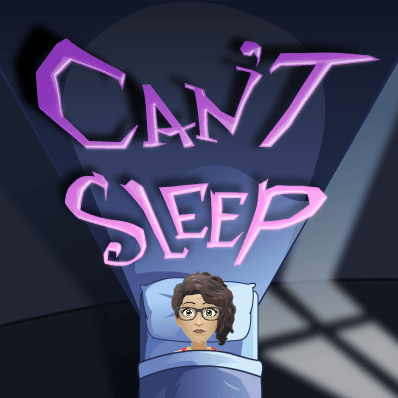
can't sleep

ETFO’s position on in-person learning remains unchanged. The union firmly believes that the daily, in-person model of instruction and support best meets the educational, developmental and social needs of students, provides the best experience for support, and is the most equitable learning model for all students. ETFO’s expectation is that elementary virtual learning in any capacity, including through hybrid models of instruction, will end once the pandemic ends.

As I usually write blogs about educational issues, I’ve decided to make this one more personal. I know that teachers are feeling very stressed at the thought of going back to school in a pandemic while having to face classrooms with up to 30 elementary students. At this point in time, students will return to school with no decrease in class sizes from March 2020.

Issues with teaching in schools in a time of Covid-19

Infection Control

As teachers, we all know that students are “viral conduits” and that we can usually rely on catching some flu or cold before the end of September. In my 20 years of teaching, I’ve contracted H1N1 (2009 swine flu), Whooping Cough twice, various coughs and colds, and had 3 months of bronchitis.

My health was particularly poor when I taught primary grades as students in these grades tend to have less developed immune systems and they like to hug teachers. I taught middle school for 11 years and was sick less often in which I attribute this to the fact that middle school students rarely touch their teachers! What I do know is that no amount of cleaning will be able to keep up with little hands in hallways and classrooms.

Adequate Ventilation

The Ontario Government is complacent to the fact that infections are spread in schools. Elementary school classrooms are usually poorly ventilated as is evident in September and June with no air circulation to combat hot classrooms. Classrooms are also not all the same size but due to equity issues, classes consist of the same number of students. This means a teacher with a larger classroom will have the same number of students as a teacher with a smaller classroom.

Social Distancing Seating

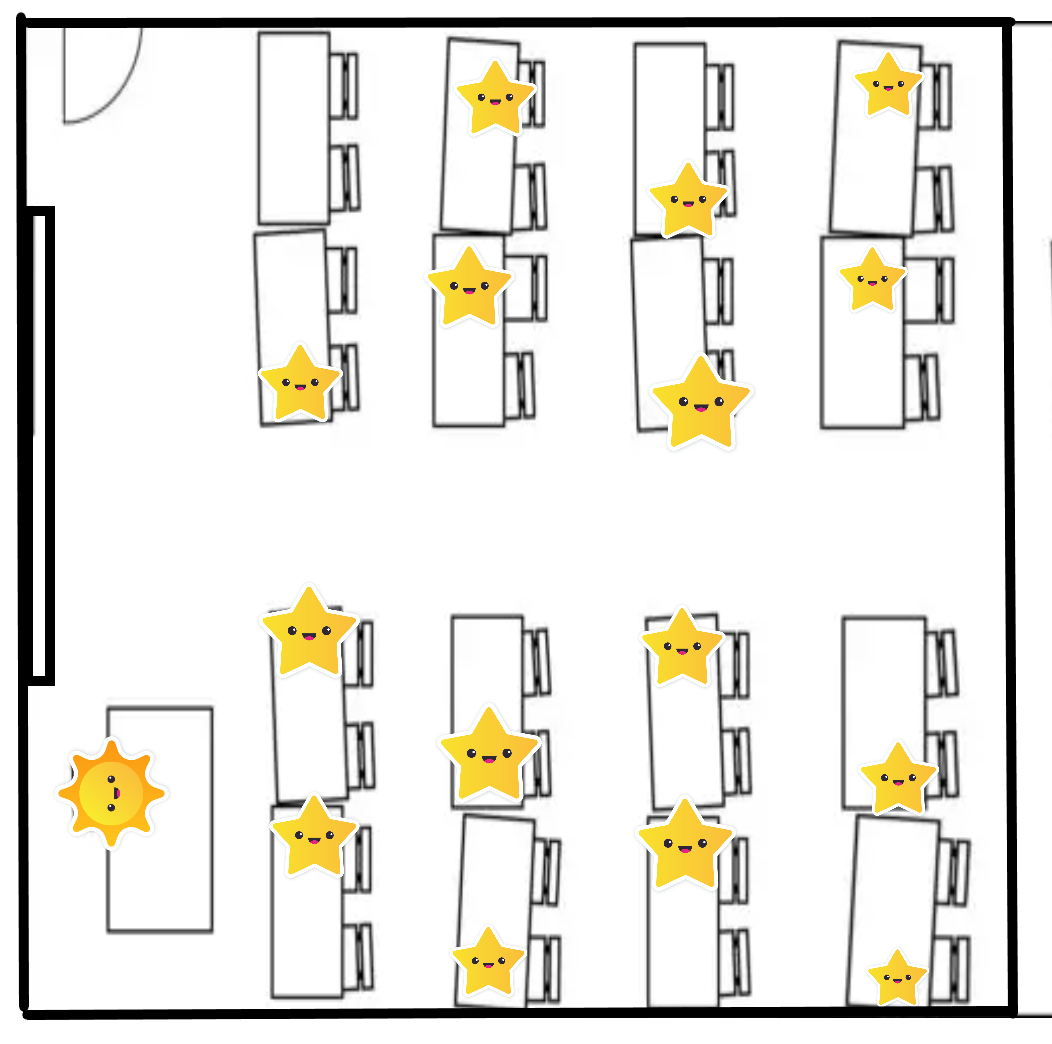
With flexible seating and collaborative learning, many classrooms no longer use desks. Instead, to facilitate a more fluid learning environment, teachers have students sitting at tables in many different groupings. This means that there are not enough desks to put students in socially distanced rows. With underfunding and a lack of hard caps on class sizes, some classes contain up to 30 students or more.  With no cuts to class sizes, this means students will have to sit beside each other.

Social Distancing Hallways

Hallway management is another challenge as students crowd the hall during breaks or classroom changes. Even with arrows and tape on the floor, I cannot imagine having all these students being able to socially distance before, during, or after school. There is simply not enough space to have students move separately through hallways.

Social Distancing Busing

Busing is a further challenge. As an average bus carries 24 students without social distancing, a socially distanced bus would contain only 8 students. I’d like to know where Ontario will be able to find 3 times the amount of buses and bus drivers to drive students to school.

Unknowing Before Schools Closed

In March 2020, when schools first closed, I had no idea what I was about to face. I had a mission to get my classroom learning online and a very steep learning curve to make this happen. Like all the other teachers in Ontario, we worked many hours to make online learning a reality. It is what teachers do for their students. Teachers heard reports for extended school closures hoping for school to open in April, then May, and then June. As online learning work was not to be evaluated, we wrote June 2020 report cards and Individual Education Plans based on assessments and evaluations from before the school closures occurred.

Dealing with Uncertainty and Stress

During this time, I was going through moments of great anxiety which resulted in low-grade panic attacks. This has been an ongoing issue most of my life and in my mid 30s I was diagnosed with chronic anxiety and depression. The first time I took meds, I felt like a curtain had been lifted as I could hear, feel, taste, and see more clearly. In dealing with this anxiety, I considered seeking more medication support. But the idea of more meds was not an immediate option as all medication comes with some side effects. I decided, instead, to manage my anxiety with regular exercise, plenty of water, and eating well.

In addition to my moments of anxiety, I had many sleepless nights between March 2020 and the end of June. I know I am not unique in losing sleep in this uncertain time as I’ve spoken with colleagues and read teachers’ posts on Twitter. Sleepless nights worrying about students is an occupational hazard.

But the exercise, water, food, and light did not help. I reached out to my doctor and started seeing a psychotherapist online. This worked to some extent, but my anxiety was ever-present like a big weight pulling me down. Weekly therapy sessions did help. In coming into summer, my anxiety waivered and became manageable again.

With anxiety and depression, for me, it never really goes away completely. Without meds, my anxiety and depression can become so disabling that my ability to do anything complicated fails me and I’m left on the sofa staring at the ceiling for hours. Even with meds, I can have a low-grade depression staying around like an uninvited guest.

Going Back to School with Covid-19

Given the many challenges that await teachers, it is no wonder why my anxiety is ramping up again. In the past Septembers, I always thought about my return to the classroom with waves of joy. I looked forward to seeing my students, in setting up my classroom, and in catching up with my colleagues. Now, I just feel dread.

Health & Employment

My dread is centred around the health and safety of my school and its community. I worry about my school’s students and my colleagues. I wonder how many students and colleagues will return to school this September given the risks of contracting Covid-19 with little social distancing. There are two reasons why my colleagues may not return to school; personal health and family status.

The first is ongoing health concerns. If some colleagues contract Covid-19, their health would be severely compromised. Colleagues, with health concerns, could also ask for accommodations and work via teaching online instead. Although I am not sure, if a teacher has health issues, they may be placed on short term disability.

The second reason for not returning to school would be to request for accommodations due to family status. This would include needs to provide childcare, eldercare, care to a family member, or living with a family member with a compromised immune system or chronic condition. Here, teachers could work from home via online learning if needed.

As I never completely trust employers, I am concerned that boards may deny teachers paid leave which may precipitate having to go on Employment Insurance. This could be a problem for both the teacher and the employer as teachers would essentially be laid off. Boards would then have to hire teachers back to work. It would also impact teachers as they could lose benefits.

Knowing What to Expect

Another challenge with going back to school is that I have gained a great deal of experience and knowledge since March. Now I have a good idea as to what I can expect to face in my instruction and supervision duties.

I know that some of my students will not be attending school face to face, as attendance is voluntary. This will mean that I will be teaching some students online and some students face to face through a “blended” approach. This will include using synchronous streamed lessons that may or may not be supported with equipment and technicians for set up so it will work seamlessly. I do know that I do not have this equipment and with my previous online experience I know these sessions will likely crash several times a week as they did in the spring.

I also know that some of my students will have a challenging time with social distancing in school, especially at recess. I envision my recess duty will consist of trying to keep students apart. I am shaken at the thought of this!

If schools do shut down again, I know what to expect in teaching online. This means that some students will become completely disengaged and as a result, will miss more learning time which is critical to helping them keep up to their grade level. I know that missing months of learning could present significant disadvantages to students in the long run. This is especially true for students from low socio-economic backgrounds which can limit achievement. Allowing this to happen to any student is highly objectionable.

Evaluation and Reporting

When returning to school, while teaching using online or blended learning, I will be tasked with writing report cards. The ministry of education “recommends that, to the greatest extent possible, assessment, evaluation and reporting activities proceed as usual, with a focus on the achievement of overall expectations and the primary purpose of assessment and evaluation being to improve student learning.” So, this means that assignments will be evaluated as if students were in school.

In evaluating students’ work, I also will not be able to confirm “who” is completing the work. I wonder, if a student does not produce work in an online or blended school year, will I be recording “incompletes” for work not done. Further, will I be taking attendance in an online or blended learning format? Will boards of education be providing additional support for students who are struggling?

I could easily write another page about all the things I think about late at night while I lay in bed awaiting sleep, but I will stop here. What I do know is that I will have my colleagues to support me through this exceedingly difficult time in my career.

It is my greatest hope and prayer that not one person gets sick with Covid-19 as a result of being in schools, where social distancing will not be possible.

Sending my best wishes of health and peace to you and your family.

Collaboratively Yours,

Bitmoji Image


Fostering Student Engagement Through Voice and Choice via Culturally Responsive Pedagogy

Now, more than any other time, it is important to give students a place for their advocacy and hearing their opinions. In this time of Covid-19, students are unsettled. Their traditional ways of going through their lives have been disrupted by the closing of schools and times of isolation during the lockdown. Students have not been able to interact with their peers and family members. And they’ve spent even more time on technology as a result. Students need to be given some control of their lives and giving them more control over assignments and assessment is a good place to start.

Choice in assignments and assessment

Building student advocacy is a powerful instructional strategy to build on student engagement and their overall learning experience in school. Empowering learners happens through student voice and student choice. Here students can provide suggestions on how to learn and how to demonstrate their learning through their choice of assessment. Visual learners might wish to supplement a writing assignment with a illustration, graphic organizer, or video. Auditory learners may wish to talk about their science project while limiting some of their writing. Kinetic learners might ask to act out their summary of their novel study.

In being flexible and open to suggestions, teachers allow students more agency in their own learning and in their ownership of their work.

The importance of hearing students and honouring their perspectives

As an advocate of student voice, I have listened to my students’ concerns and feedback. This process keeps my teaching practices in sync with students’ life experiences. I always thought I had a well-established practice with student advocacy until one day. While talking about police my student stated, “I hate the police.” At first, I was taken back by this very definitive statement (this was before the Black Lives Matter protests of the Spring/Summer of 2020). I thought the statement was disrespectful but then I realized that this was based on the students’ experiences as he identified as Black. He watched his older siblings being harassed by police. He had experienced being watched in stores to see if he would steel anything. He had been criticized for his very large amount of curly hair.

There, in that moment, I adjusted my perspective as he had every right to state this. I asked him to explain why he had said it and the rest of the students in my classroom were in shock that their experience had been very different to his. In allowing him to voice his perspective, he introduced a new perspective to each student in our classroom.

Hearing students’ voices in schools

Students should be able to see their identity in the curriculum they study. This means promoting equity and inclusion through culturally responsive instruction and assessment. The role of culturally responsive teaching is to understand who students are as people and who they are within their community. This pedagogical approach acknowledges, responds to, and celebrates fundamental aspects of student culture while providing equitable and inclusive education for students of all backgrounds and identities. With the Black Lives Matter movement in full force, this is especially important for students who identify as Black. Essentially, in teaching through a lens of culturally responsive pedagogy, student identity is honoured.

How does culturally-relevant pedagogy benefit teaching?

Teachers need to be reflective of who their students are and how best to adapt with instruction and assessment to their needs. As reflective practitioners, teachers learn to adapt their teaching to meet the needs of their students. Here, the focus of teaching goes away from the curriculum and towards the learning needs of the students.

Schön (1987) stated that in teachers’ reflection, learning influences behaviour through the teachers’ self-discovery, self- assessment, and deciding the appropriateness of instruction. It is through teacher reflection that the opportunity, the motivation, and the environment reflects on the idea that learning belongs to the learner, the student. In this process, teachers take on the role of and status of facilitator over the traditional role of an “expert” teacher (Schön, 1987).

In using a reflective stance (Schön, 1987), teachers incorporate issues of equity, inclusion, and social justice as a necessary element in their day to day teaching practices. The development of culturally relevant teaching strategies is necessary in order to challenge learners to think critically about their own learning and who they are as learners. In other words, to feel included, students need to see themselves within the curriculum and instruction (Hutton, 2019).

By including their identity in education, students become more engaged in their culture in the context of learning. This helps develop perspectives and skills to adapt to present day reality in order to address skills and knowledge for the future (Hutton, 2019).

Best Practices for Culturally Responsive Teaching & Assessment.

The Culturally Responsive Educator Mindset (adapted from Ontario Ministry of Education, 2014, p. 4/5)

  1. Socio-cultural consciousness: Teachers are aware of how socio-cultural structures impact individual students’ experiences and opportunities.
  2. High expectations:Teachers hold positive and affirming views of student success from all backgrounds.
  3. Desire to make a difference:Teachers work towards more equity and inclusion as change agents.
  4. Constructivist approach:Teachers understand that students’ learning is constructed through their own knowledge (or schema).
  5. Deep knowledge of their students:Teachers know who their students are by knowing about students and their families. Teachers then know how individual students learn best and where they are at in their learning.
  6. Culturally responsive teaching practices: Teachers design and build instruction based on students’ prior knowledge in order to stretch students in their thinking and learning.

An example of student agency in action

Before schools closed and the lockdown was in place, my class was studying Black History. One student mentioned Viola Desmond being place on the Canadian ten dollar bill. As we discussed her story, the students became very engaged as they were great advocates of human rights and several students identified as being Black. I had planned this to be a relatively short lesson that was followed by a short journal. But I have learned that half of my planning is abandoned due to student choice and voice as the students usually come up with much more engaging lessons and ways to show their learning.

My time of lesson planning stopped and the students took over. One student said “Let’s do a play about Viola” another mentioned costumes and another started writing scrips. By the time they were done, we had full scripts, costumes, props, blocking (i.e. where actors should stand), and invitations to come see our play, Viola Desmond Buys a Ticket. The principal and vice principal came to see our play; the grade 2s and 3s came to see our play; the grade 4/5 class came to see our play; and even the custodian came to see our play. My assessment blossomed with reading, writing, art, media, and drama marks. It was magical all because I let go.

I write this blog as a person who identifies as White in privilege. Because I am White and educated, I carry my privilege in my Invisible White Backpack. I’ve included a resource if you’d like to explore this further.

Wishing you good health and peace,

Dr. Deb Weston, PhD

References

Hutton, F. (2019). Notes on culturally responsive pedagogy.

Ontario Ministry of Education. (November 2014). Culturally responsive pedagogy: Towards equity and inclusivity in Ontario Schools, Secretariat Special Edition #35, Ontario Ministry of Education, Downloaded from http://www.edu.gov.on.ca/eng/literacynumeracy/inspire/research/cbs_responsivepedagogy.pdf

Schön, D. A. (1987). Educating the reflective practitioner.

Resources

Culturally Responsive Pedagogy

Fostering Self Advocacy Tip Sheet

Promoting Students’ Self Advocacy

Advocacy – Student Voice by Adam Lajoy

Unpacking the Invisible White Backpack

Advocacy – Student Voice by Adam Lajoy

Promoting Black Lives Matters

No single right way to be an effective ally, says Black Lives Matter activist — but there is a wrong way


School re-opening smart policy design: How Ontario’s current school reopening policy is not so smart

Education policy implementation is a complex process that requires the input of all stakeholders including teachers, school staff, parents, and school communities. As major players in policy implementation, teachers decode and recode policy texts in the process of understanding and translating with various degrees of intentional and unintentional interpretation (Clune, 1987; Fuhrman, Clune, & Elmore, 1991).

In the complex process of policy implementation, teachers experience challenges with implementing educational reforms where previous policy initiatives have not met their objectives (Fullan, 2001). In the layers of educational initiatives, an “array of policies” implemented simultaneously in schools, can cause policy overload within teachers’ practices (Fullan & Hargreaves, 1996; Grossman & Thompson, 2004).

In addition, teachers’ thinking is focused on the complexities and ambiguity of their classroom practice and not necessarily on system-wide views of initiative implementation (Timperley & Robinson, 2000). This means that policies, developed with the system-wide perspective of policy authors, may conflict with the classroom-bound perspectives of teachers.

Teachers’ reactions to the “fragmented and cluttered” policy implementation process  may be viewed as teachers being resistant to change. This instead may be a response to the accumulation of past policy experiences, policy overload, policy fragmentation, policy contradictions, and competing perspectives (Timperley & Robinson, 2000). In other words, most education policies don’t fit into the complex and variable context of teachers’ classrooms.

Even when educational policies do not present the intended results, policy authors still believe the design of their policies is an effective way to make change in education. Greenfield (1993) argues that although this reality “usually fails to shake our faith in such theory” (p. 3), it implies that “we need to ask whether the theory and assumptions still appear to hold in the settings where they were developed before they are recommended and applied to totally new settings” (p. 4).

In other words, are education policies producing the intended results in all schools and classrooms? Policy authors rarely follow up with an audit of the effectiveness of their policies nor do they consider if their policies have resulted in harmful consequences to schools, to school communities, and to students’ lives. This is particularly objectionable when the health and lives of students and teachers is impacted.

What makes good policy implementation?

(Viennet & Pont, 2017)

Smart policy design:

Well developed policies offer a logical and feasible solutions to policy problems. Effective policy implementation is based on the feasibility of adequate resources available to support its successful implementation. These resources should include funding to ensure adequate staffing and supplies to support policy implementation in schools that support the policy’s framework.

For example, if a policy is framed upon students being able to social distance in classrooms, then there should be enough space in classrooms to accommodate students with this level of distancing. If classrooms are not large enough to have over 25 students sitting in desks spread out over the classroom, the policy is sure to fail.

Including stakeholders like educators:

Whether and how key stakeholders (i.e. educators, parents, communities, students) are recognized and included in the implementation process is crucial to any policy’s effectiveness. Without the input of front-line stakeholders, the intended policy objectives could result in unintended consequences.

For example, if a policy is to be implemented in the landscape of schools and classrooms in communities, it is imperative that those with intimate knowledge of the landscape should be consulted in order to unearth any obvious challenges presented. An example of this is the diversity of classroom layouts and its contents. Classrooms are as unique as the people who learn in them. Not all classrooms are the same size or configuration. Further, not all classrooms contain desks and instead have collaborative work areas where students sit at tables. If students are to sit two metres or even one metre away from each other, tables may only have one spot for a student. If a policy is based on a configuration of desk placements, it will fail unless furniture is purchased to meet the policy’s assumptions.

Policy designed for schools and their communities:

An effective policy implementation process recognizes the existing policy environment (i.e. schools before Covid-19), the educational governance (i.e. board and school administration) and institutional settings (i.e. elementary and secondary schools) and the external context (i.e. returning to school in a pandemic). Without input from frontline stakeholders, policy authors may produce policy recommendations that are completely inappropriate for schools and their communities.

For example, implementing a return to school policy based on schools’ past configurations will likely result in a quick realization that this assumption is flawed. The practical conclusion is that there will be no way to fit the same number of students into the same amount of space with the implementation of a social distancing policy.

Sensible policy strategies for schools:

A coherent implementation takes into consideration all the guidelines and resources needed to make a policy operational at the school level (i.e. policy needs to be flexible enough to meet the needs of schools’ in their particular communities).

For example, policy authors may mandate synchronous daily online learning sessions for each classroom. Policy makers may not consider the specific technology and the resultant cost for the set up of these online sessions. One most obvious challenge is that there might not be enough Internet bandwidth to support the synchronous daily learning sessions simultaneously for all classes in all schools in Ontario at the same time. In June of 2020, I personally had my own class synchronous learning sessions crash when my board’s staff meetings were occurring at the same time.

Safe Schools in September?

In summary, without consulting school staff and their communities, policy authors will likely see their policy objectives fail as they did not consider the context in which their policies were to be implemented. On a further note, as school boards are already stretched for funding, no additional funding will result in policy implementation that is not smart and not implemented.

I write this blog in a state of frustration and concern as Ontario’s Ministry of Education released plans to open schools in September 2020. Key stakeholders were not consulted in the making of this policy which have resulted in glaring deficits in it’s implementation, particularly in elementary schools.

As a person who has taught through 20 years of education policy implementation, I know education policies fail more than they succeed. I’ve worked through half-baked policy implementation that was only partly implemented or completely abandoned. I’ve faced the fall out of failed policies such as having hand sanitizer in schools during the H1N1 outbreak as some students became sick from ingesting this substance.

Even the thought of having to manage the social distancing of so many students makes my head spin.

My greatest fear is that school communities will face outbreaks of Covid-19 and people will get very sick. The worse negative consequence is that school communities may have to mourn the loss of a person belonging to their community.

A failed return to school policy may end up failing us all.

Take care of yourself and your communities.

Stay safe.

Deb Weston, PhD – a concerned classroom teacher

PhD in Education Policy and Leadership

References

Clune, W. H. (1987). Institutional choice as a theoretical framework for research on educational policy. Educational Evaluation and Policy Analysis, 9(2), 117-132.

Fuhrman, S., Clune, W., & Elmore, R. (1991). Research on education reform: Lessons on the implementation of policy (pp. 197-218). AR Odden, Education Policy Implementation. Albany, NY: State University of New York Press.

Fullan, M. (2001). The new meaning of educational change (3rd ed.). Toronto, ON: Irwin.

Fullan, M., & Hargreaves, A. (1996). What’s worth fighting for in your school? New York, NY: Teachers College Press.

Greenfield, T. (1993). Theory about organization: A new perspective and its implications for schools. In T. Greenfield & P. Ribbins (Eds.), Greenfield on educational administration (pp. 1-25), London, UK: Routledge.

Grossman, P., & Thompson, C. (2004). District policy and beginning teachers: A lens on teacher learning. Educational Evaluation and Policy Analysis, (26)4, 281-301.

Timperley, H., & Robinson, V. (2000). Workload and the professional culture of teachers. Educational Management & Administration, 28(1), p. 47-62.

Viennet, R., & Pont, B. (2017). Education Policy Implementation: A Literature Review and Proposed Framework. OECD Education Working Papers, No. 162. OECD Publishing.