New Year, New Perspective: Discoveries in the Desert

One thing I have always loved about being an educator is that we have two “new year’s”: one in September when the year starts, and one in January when the year changes. Travel is a luxury that I feel so fortunate to enjoy during those moments: it is the perfect time to reset my thinking and refocus on the time ahead.

In the last year, the desert has been a special place for me to reconnect with nature and think critically about how we learn about the world. Learning about the environment from two very different cultural approaches has helped me to build a greater appreciation for different ways of knowing and seeing the world.

Learning the Sonoran Desert

I had the privilege of spending time in Arizona last January, and came a cross a place called the White Tank library. This place had an entire wall of back windows that faced a sprawling nature reserve. In the same building beside the library was a nature centre and bookstore. The bookstore had dozens of books for kids and adults themed on desert flora and fauna, particularly the notorious javelina (totally worth Googling if you have never heard of this animal!). There were desert spiders, snakes, and other creatures on display for people to look at, and guides on site to give information about them.
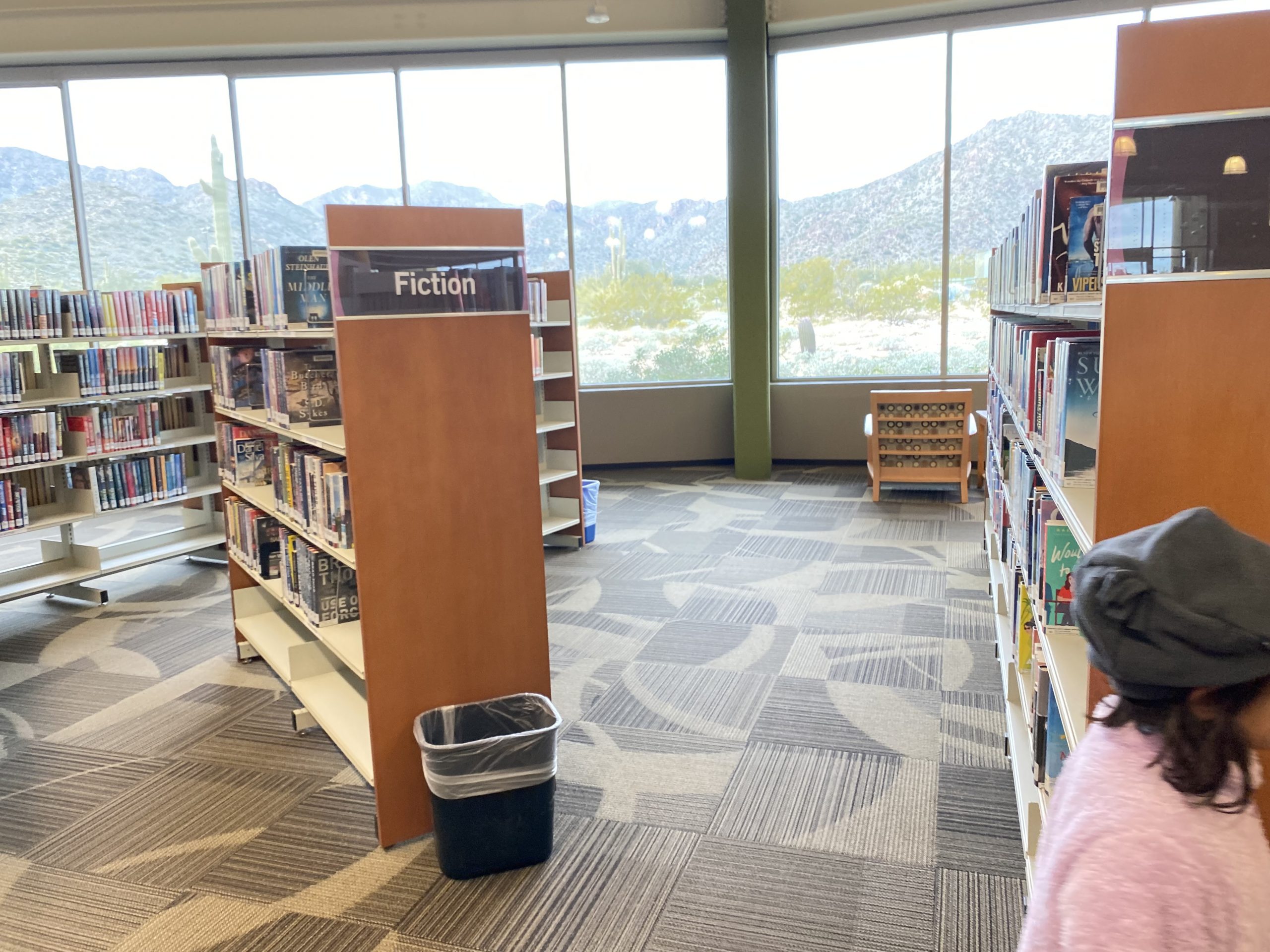
a library
Panoramic windows make the White Tank library feel integrated into nature. Source: author.

The trails at the back of the building were well manicured, with information signs throughout the walk explaining the different variety of cacti. Even if you didn’t feel like reading, the site was absolutely spectacular to look at. The trails looked well cared for, and loved by the locals we saw in technical fitness gear running and hiking through the grounds.

The library and all of its resources resonated with me because it aligned with my personal experience of learning – books, guides, and clearly defined trails that I could navigate easily. Immediately I imagined how great it would be to take students here, and how easy it was to connect science and literacy learning.
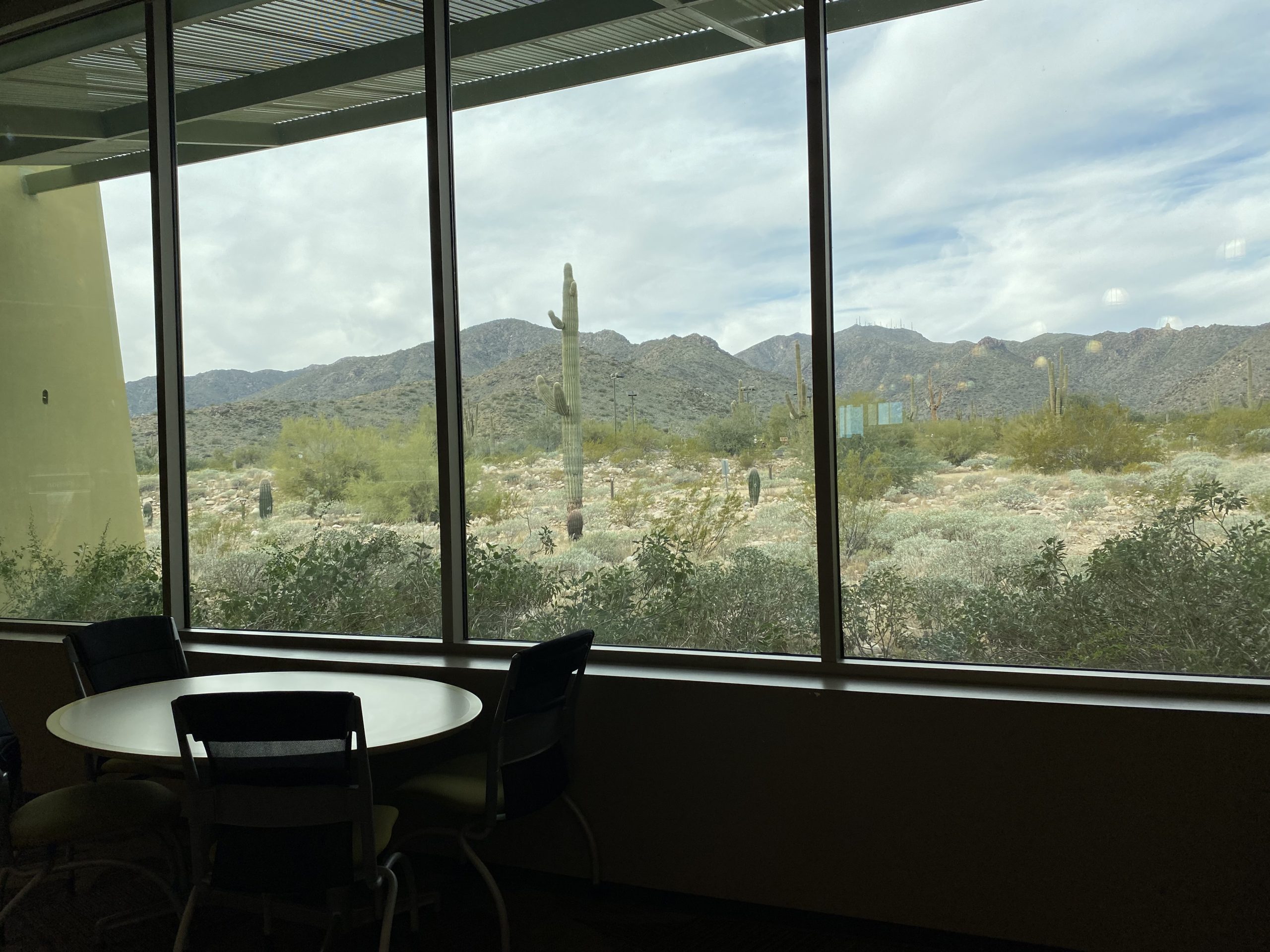
An incredible place to read about and explore the desert. Source: author.

A Jaunt in the Sahara

On another desert trip last summer, I went on a short tour of a small section of the Sahara in Egypt. Desolate, mountainous, and nearly unbearably hot, this desert contrasted starkly with Arizona’s Sonoran landscape. A wild and bumpy jeep ride took us about 30 minutes into the desert.
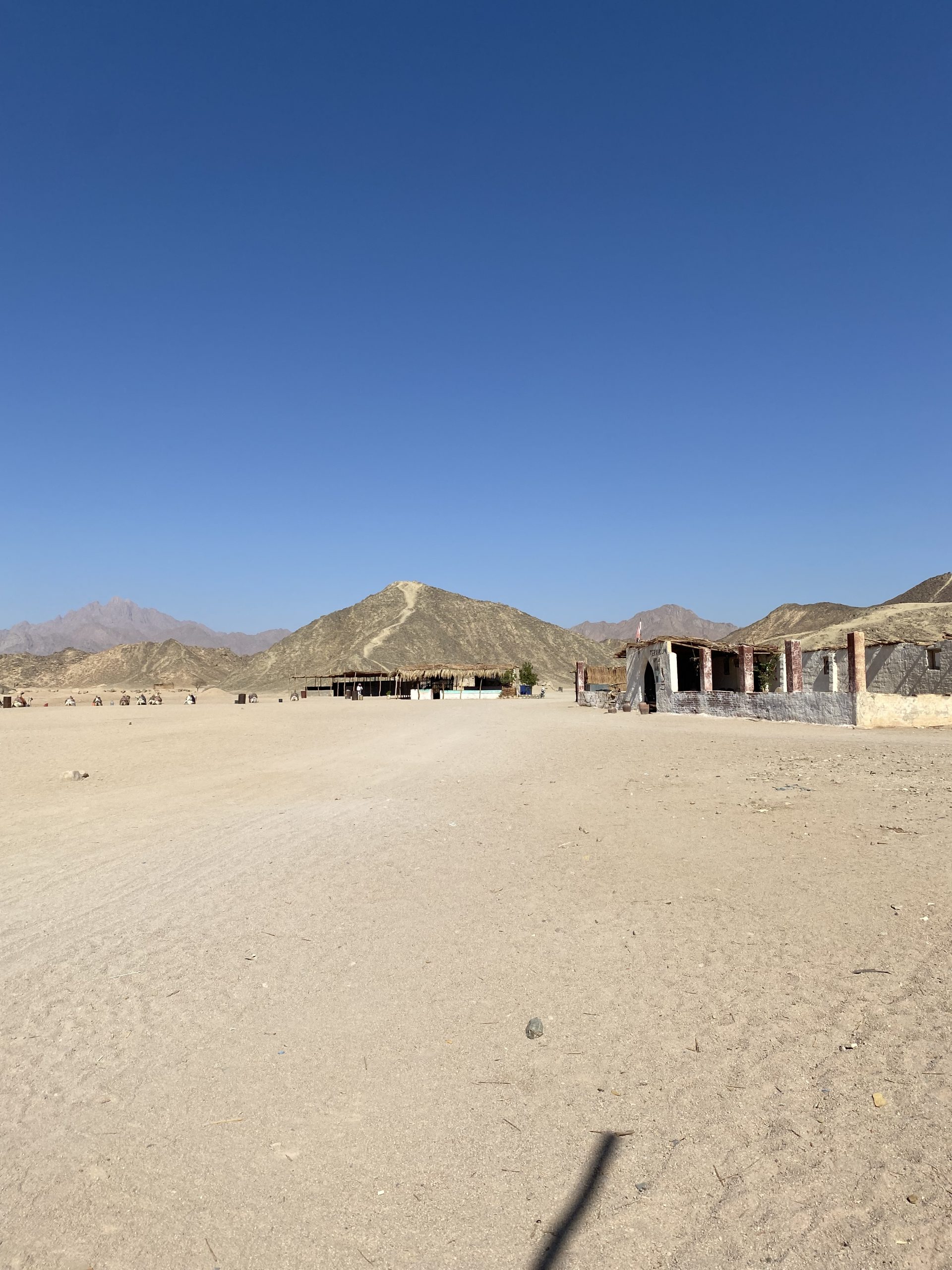
Rustic tourist centre for tourists near Hurghada, Egypt. Source: author.

The excursion took us to a desert village largely set up for tourists. According to the guide, the locals quite understandably did not like tourists peering into their homes, so they separated their homes from the area that foreigners could explore. Constructed of simple, open air buildings and a space where tourists could ride camels led by local residents, the whole experience of the place beautifully showcased the arid, mountainous landscape.
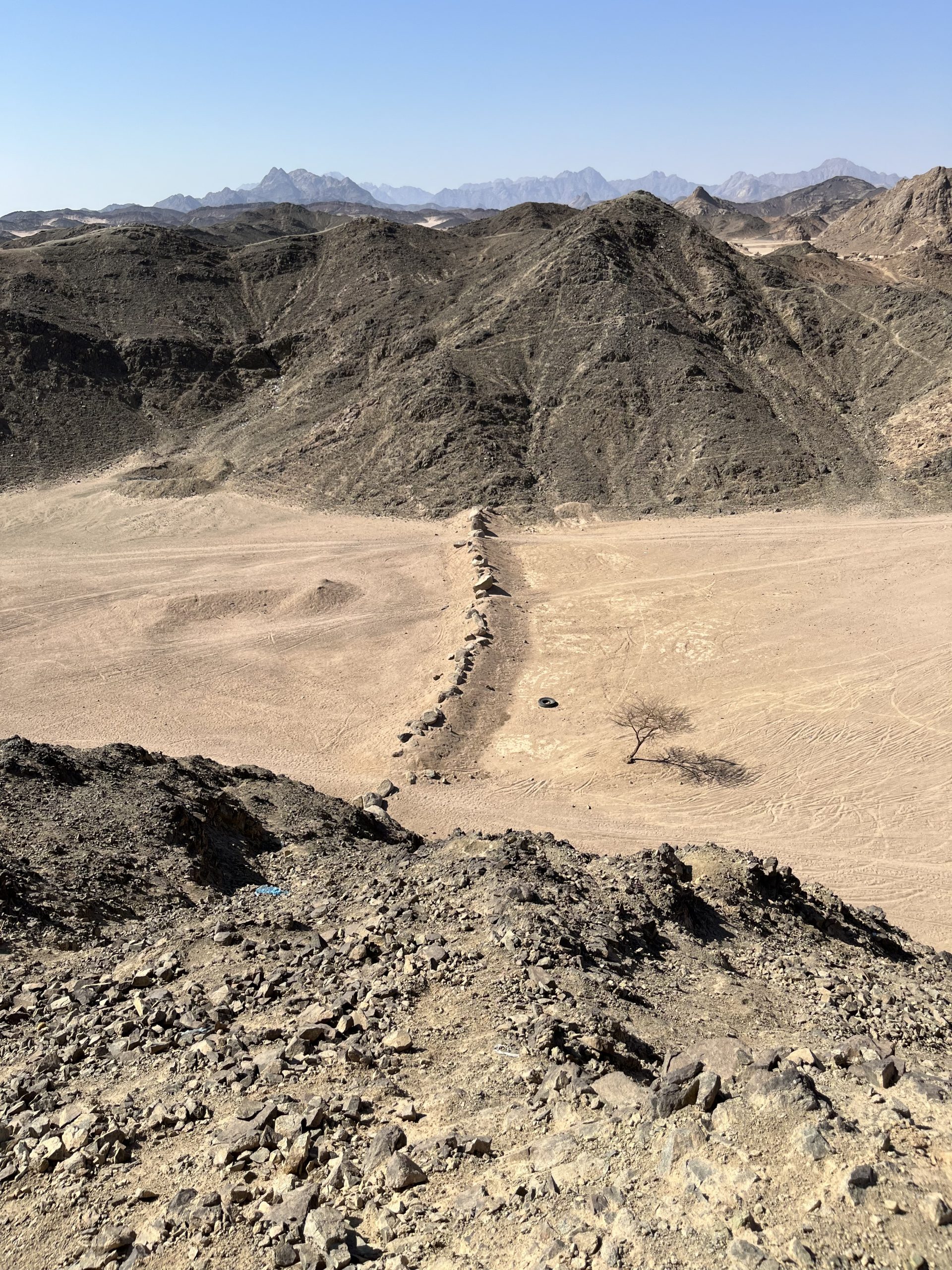
Rocky, unmarked trails gave led to vistas that showed how locals interact with the land. Source: author.

We looked into a small mosque, watched a young girl demonstrate bread making, and drank hot tea. A small hut featured local animals such as lizards and bugs. A rocky climb up a hill gave a view of the actual village homes in the distance. Completely unmarked, it was a struggle to climb until we became accustomed to climbing the steep and rather unstable ground.

And while the rustic tourist site bore zero resemblance to the modern, well-funded Arizona library and trails, it struck me how two completely different cultures had created similar  experiences for people to learn about the desert environment.

The Takeaway

There are so many ways to experience and learn from the outdoors. Why should we limit ourselves, and the students we teach, to a single perspective?

It is wonderful and enriching to have books, exhibits, panoramic windows, and guides to help us navigate nature. It is also equally great without all of these things, and learn from observing the way that people sustainably maximize the resources they have access to.

Outdoor education has come a long way in Canada. More and more, schools are embracing Indigenous ways of knowing, particularly when it comes to stewardship and wildlife protection. Books like Robin Wall Kimmerer’s Braiding Sweetgrass have offered powerful, Indigenous perspectives on the natural world and scientific learning.

It is an exciting time to embrace the different ways we can understand nature. In a time when stories of forest fires and climate change have become part of the daily news cycle, alternative ways of learning are more critical than ever.
what happened

Imagine a last week of school before the winter break that was so crammed with activities that when the bell sounded on the last day that there was applause and a collective exhale?

Imagine a last week of school that collected, organized, logged on a spreadsheet, and delivered over 600 non-perishable items to 2 local food banks?

Our class split into 3 groups (logistics, sales, and marketing). Each group developed and defined their roles in the project which included creating marketing materials such as posters to place around the school and daily announcements for the duration of the campaign. Our sales team was in charge of creating grade level appropriate presentations for grades K to 2, 3 to 5 and 6 to 8. Once the campaign started our logistics team collected the food from classes and drop off points, sorted them by type, checked for best before dates, and logged the items on to spreadsheets.

Imagine taking time for a kindergarten concert, a dance, and some class social activities? This included sending notes and games to our Sweet Secret Santa class in the school, and then joining them for a surprise shared read aloud. It also gave us a chance to cheer for their singing performances too.*

Imagine getting caught up on past work so that there was nothing to work on over the holiday? Perhaps it is a personal preference that has developed over the years, but I like to clean the homework house before extended breaks. It is not my goal to burden my scholars with busy work. Instead, I choose to encourage them to be helpful at home. I shared that washing dishes, doing laundry, using a vacuum, or tidying up will be good habits to start forming now in advance of those post secondary days away to come. 

Imagine having to do, not one, but 2 assessments on the last day before the break? That’s on me. I hate deferring good assessment opportunities for which all the prep has been put in. Plus we can all return to new learning once the break is over. 

Imagine not watching a single movie other than a few Bugs Bunny cartoons? If you want your kids to see movies in my class, then you are going to be disappointed. TED talks, short docs, creative animations or music videos (OK Go), and classic cartoon shorts are what you’ll find queued up. 

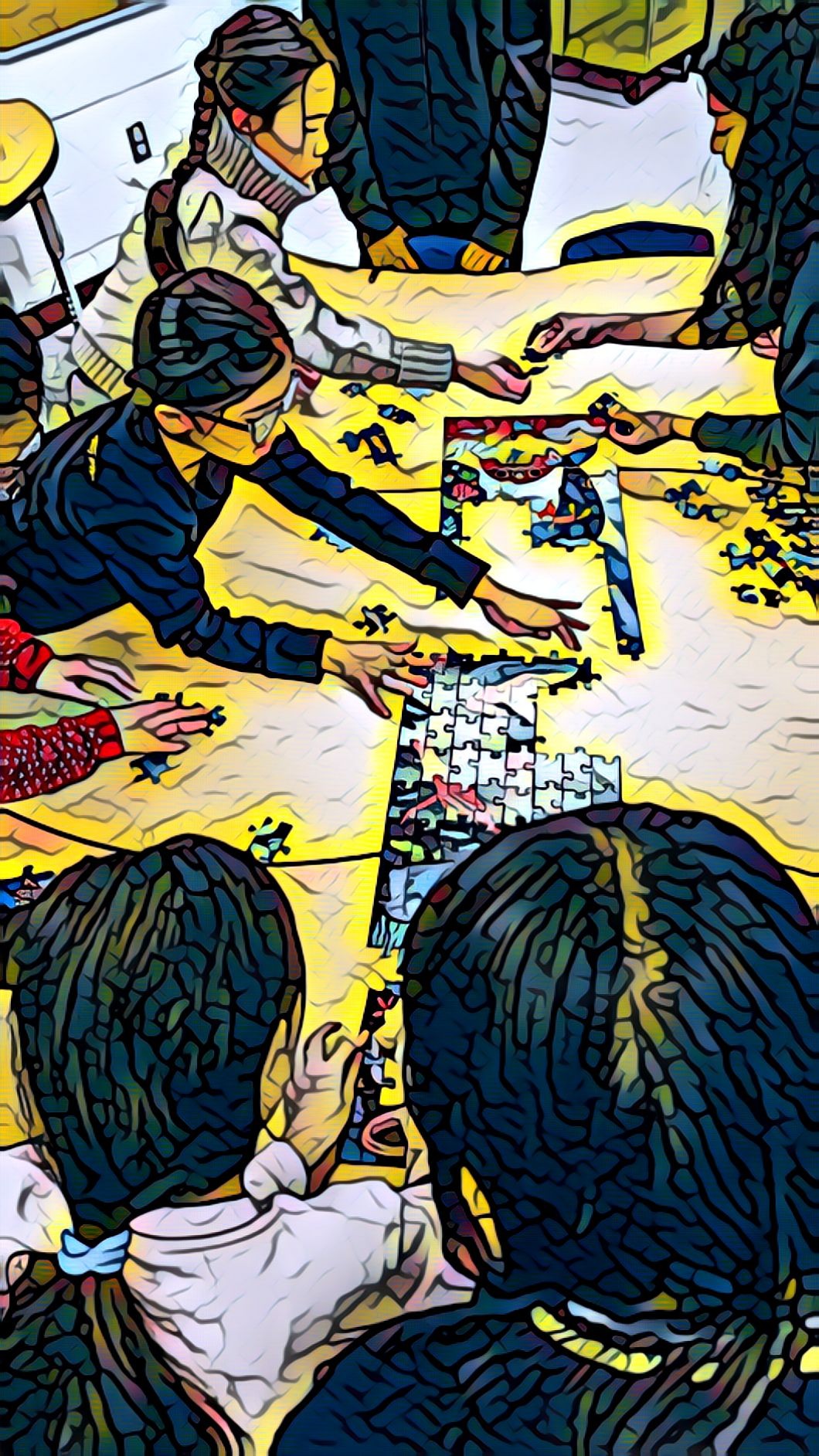
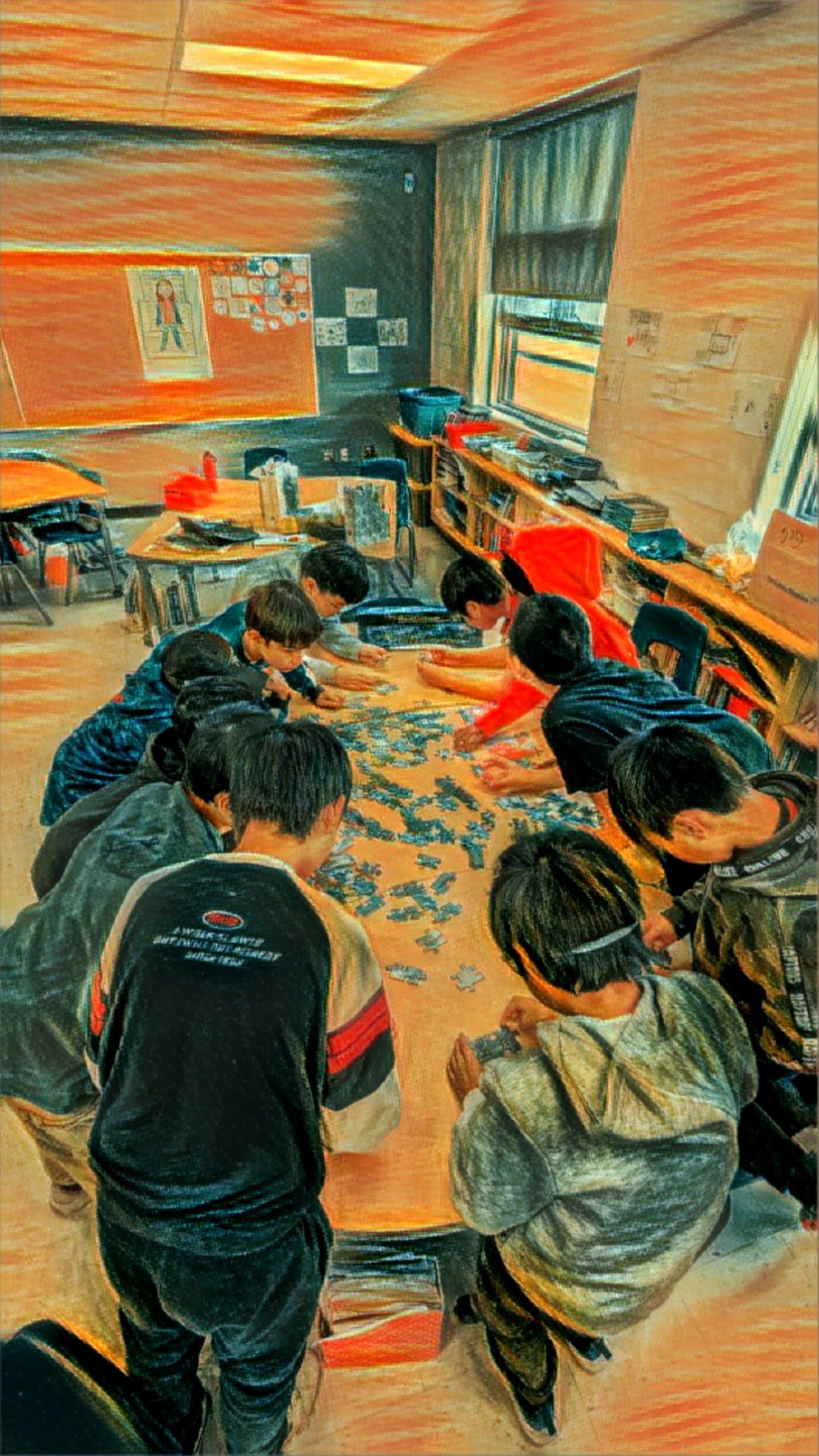
Imagine a team puzzle solving challenge that asked students to be leaders and encouragers when under pressure? I thought that this might be fun instead of playing a Kahoot or Blooket (both of which I really enjoy) for a change.

I found two 200 piece puzzles at the Dollar Store. The neat thing was that the puzzles were 150 cm x 30 cm in size. The large pieces made it easy for the 10 plus students to see who gathered around the large table to put it all together as quickly as they could. On the line, bragging rights and a bag of cherry blasters (gelatin free). My only advice was that good teams/leaders work hard at encouraging one another, not yell at each other. 

It was really interesting to watch the two teams (boys vs girls this time) work together. I witnessed two totally different, yet effective collaborative approaches. In my mind this activity was only going to take a half an hour to complete so I set it up before lunch thinking it would all be over just in time.

Nope. 15 minutes into their lunch time, students were still buzzing around their puzzle tables working on their team task before one team prevailed. Victorious and magnanimous they shared their prize.

Photos by author. Edited using Prisma app

Imagine tidying up the class so that it sparkles for our return? Sweeping (me), tech , art supplies, books, math manipulatives all organized, book boxes and lockers cleaned out, and chairs stacked in manageable piles (students). This ongoing chance to model responsible class stewardship never gets old. I always love the zen moments that come from sweeping.

Imagine saying happy holidays, Merry Christmas, and peace on earth? 

That’s what happened. 

p.s.
Imagine being home for two weeks? For some these weeks will be the toughest times where they may not feel as connected or seen as they might be at school. My hope is that all students and staff will come back rested and ready for the next 6 months at school. Wishing you all the best for a healthy 2024. 

* It’s been a while since I have seen a JK/SK concert which was so entertaining and out of the traditional Rudolph and Frosty box. Based on student and adult audience reactions, I was not alone in this opinion. 

Self-Regulation with Sensory Experiences

We all experience stress and anxiety that can make self-regulation challenging. As adults we have figured out strategies to help us feel more calm and in control of ourselves.  Perhaps you listen to music, try a new recipe, get some exercise or chat with a friend. These strategies that use our senses can bring us out of our heads and more focused on the here and now. Our students will retain more of their learning if they are in a good headspace so let’s consider some sensory activities to try.

Slime

I highly recommend creating slime with your students. It is a fantastic learning experience in science and gives students a tactile, gooey substance to stretch, pop, roll, and squeeze. I’ve seen quiet students have confidence to talk to classmates while using slime and I’ve seen students who were screaming calm down completely when slime was introduced.

Brain Breaks

Exercising in the classroom with videos that have visual prompts, music and fun characters can put energy into a class after a longer period of sitting still. No video? No problem! Using a playlist of favourite music combined with body movement is energizing too!

Food Experiences

With a parent volunteer or co-op student it’s rewarding to get some easy recipes like fruit kebabs, veggies and hummus or personal pizzas going. There are so many recipes available to accomodate all kinds of needs. Plus your students will be more likely to try something new in this social situation. Years ago a colleague introduced me to the book Stone Soup and we made soup together. I kept that tradition with all my homeroom classes because students really enjoyed it and it reinforces healthy eating habits. 

Crafts

Having materials on hand for students to make creations can be very soothing.  The act of creating really gets the mind focussed and calm. I’m a fan of loose parts, a collection of odds and ends like paper towel rolls, scrap paper, plastic lids, bread tags, etc. 

Soft Start

Looking for a smoother start to your day? January would be a great time to implement the soft start.  Students enter the class and have choice of quiet activities. You may include things like building materials, play dough, drawing, reading, etc. Using a timer can help students to be aware of the transition to your start of day routines.

Invite Animal Visitors

You may have local organizations that sponsor pet visits to the classroom. Animals can bring out the best in humans! I have witnessed examples of empathy from everyone in the class when they are learning about dogs, chicks or even lizards.

I’d love to hear more helpful suggestions from our readers. What works to help your students with self-regulation? Do you have other sensory activities that your students love?

Photo Credit: T. Pfautsch

Intermediate Reading- Part One

This year, myself as well as the other intermediate teachers in my school will be taking place in a three-part reading school sponsored professional development. We will be looking at phonics and its place in the intermediate classroom. I look forward to blogging about these three sessions.

For these sessions, Kate and Ashley (our consultants) came in to lead us through our reading PD. We had our first session last week with the focus on what everyone’s current literacy block looks like and how much time we are devoting to word studyfocus on the right to read report. To start our PD session, we looked at our different students and what their current needs are. We know that some of our students are starting to read, reading with some understanding or reading with a good knowledge of what they are learning about. We want to focus on assisting each student at where they are at.

We were introduced/re-reminded of what a literacy block should look like:

Literacy Block

  1. Whole group oral language and knowledge building- 30 minutes
  2. Whole group word study- 20 minutes
  3. Small group instruction- 20 minutes
  4. Reading and writing- 20 minutes 

Our focus for our first PD would be whole group word study and how we can incorporate that into our language lessons. Recently, our school support staff helped complete a CORE phonics assessment for our students. The data showed where students were at and what their needs were. Some examples of needs were: reading  multisyllabic words and di & trigraphs. The lessons we use in our class should be based on our core phonics reading data and the gaps displayed in that data. 

Our focus and curriculum expectation for our the lesson we would be co-creating would be:

Grade 7:

B2.1- use generalized knowledge of the meanings of words and morphemes (i.e., bases, prefixes, and suffixes) to read and spell complex words with accuracy and automaticity

B2.2-  demonstrate an understanding of a wide variety of words, acquire and use explicitly taught vocabulary flexibly in various contexts, including other subject areas, and use generalized morphological knowledge to analyze and understand new words in context

B2.3- read a variety of complex texts fluently, with accuracy and appropriate pacing, to support comprehension, and when reading aloud, adjust expression and intonation according to the purpose of reading

Grade 8:

B2.1- use consolidated knowledge of the meanings of words and morphemes (i.e., bases, prefixes, and suffixes) to read and spell complex words with accuracy and automaticity

B2.2- demonstrate an understanding of a wide variety of words, acquire and use explicitly taught vocabulary flexibly in various contexts, including other subject areas, and use consolidated morphological knowledge to analyze and understand new words in context

B2.3- read a variety of complex texts fluently, with accuracy and appropriate pacing, to support comprehension, and when reading aloud, adjust expression and intonation according to the purpose of reading


Throughout our PD, we looked at how to teach our students these important skills and how they could be integrated into our other subjects. Some strategies include:

  • Using the vocabulary from our science units 
    • Break up the syllables, read, identify consonants and vowels
  • Using the vocabulary from Nelson literacy texts
    • Break up the syllables, read, identify consonants and vowels

Our school provided us with a book that would help us teach this new learning. The book is:

“Teaching phonics & word study in the intermediate grades” by Wiley Blevins. I have already tried one lesson from this book and my students had a great time. This lesson was designed with Kate & Ashley with other intermediate teachers.

Word Study Lesson

Activity: 

Write the word “fabric” on the board. Have the students count the syllables in the word and divide the syllables with a line. Identify underneath the consonants and vowels in the word. Then, repeat with several other words without saying the word aloud to them. Have students read the word out together after they have broken up the syllables. 

Duration:

We did this for about 20 minutes as a whole class with multiple words. 

Consolidation:

We talked about patterns and how we noticed that the word was broken up in between its consonants. We also talked about what type of words we were reviewing and how they were all closed vowel words.

Other words used:

  • Husband
  • Beverage
  • Jogger
  • Active
  • Package
  • Splendor 

I look forward to trying another lesson from the book during my next language class.