Waiting is worth its weight.

I wanted to share a post about the joys of waiting.

No it is not Health curriculum based so uncover your eyes and read on.
It might be worth the…time spent before something happens.
Ha! You thought I was going to write the word ‘wait’ there.
Dang it! I just did.

In the Tom Petty and the Heartbreaker’s song The Waiting the chorus goes, “the waiting is the hardest part” and in the classroom it is no different for teachers.

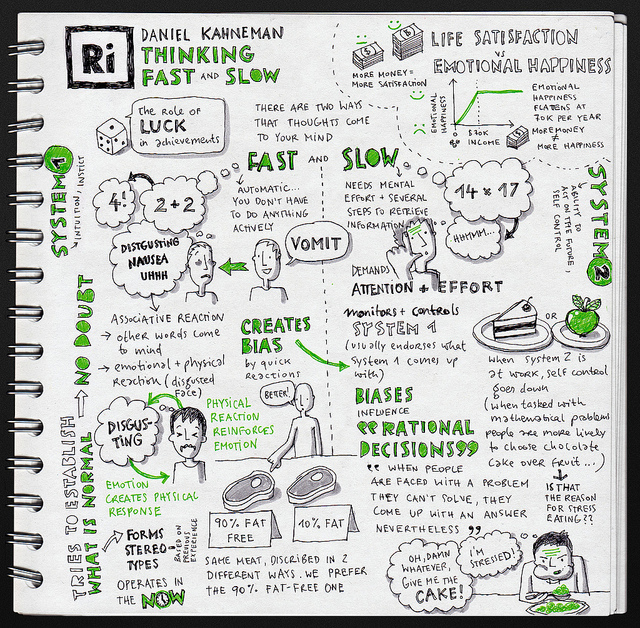
There are a lot concepts to cover. There are a lot of assessments (for, as, and of learning) to record. And yes, there are a lot of students to teach. One thing there does not seem to be enough of is time. So in an average, active modern learning environment, there is little time left to permit students to engage in anything but what Daniel Kahneman refers to as System 1 Thinking. Yet, what we need to be doing, more than ever, is allowing our students and ourselves to engage in System 2 Thinking.

Here’s a graphic comparing the two. Click to enlarge.

Thinking-Fast-and-Slow

Understanding and implementing think or wait time in my classroom has changed the dynamics of learning for my students. It is no longer a contest to see whose hands can defy gravity the fastest or longest. It has increased the number of participants and ideas shared. It has deepened our discussions in many subject areas such as Science, Social Studies, and Literacy.

For my part, questions are crafted, whenever possible, that require the awkward silences achieved while learning and thinking beyond automatic or immediate responses. Letting students know before they respond that no hands will be acknowledged until think time has happened for the entire class has helped transition my instruction.

What about Math? Yes, even Math. Here’s an example to support think/wait time in Math from Kahneman’s book Thinking Fast and Slow that I share with students and adults alike:

A ball and a bat cost $1.10.
The bat costs $1 more than the ball.
How much does ball cost?

According to the book most people get this question wrong because they are engaging the wrong system of thinking. I did. So how can we as educators afford more think/wait time in all of our classrooms?

My suggestion is to slowly integrate it into your daily instructional routines. Be intentional with a few questions in specific subject areas to start. Be patient. The silence can be deafening at the start, but is worth it.

Want to know the answer to the bat and ball question?
Take your time. You’ll get it. It’s worth the wait.


Brain Shifts

Have you ever been on a very long car ride and just as you think you are not able to continue you come upon a service center? Within 10 minutes of having a change of state, you eagerly hop back into your vehicle and are ready to go for several more hours. The same is true for students. By allowing short (1-2 minute breaks) you help energize the students to continue on with their learning, fully engaged.

I call these breaks ‘Brain Shifts’. For example my students just finished working on a problem-solving task in Mathematics and prior to starting Science (which is the next item on our daily agenda) I ask them to do a Museum Walk around our displays. The first benefit is that they are physically moving and thus increasing blood flow to all body parts, including the brain. Secondly they are now focussed on our science topic and have started to activate prior knowledge even before the lesson begins. The final benefit is that it allows socializing to occur amongst my students.

The Brain Shifts are not just random activities but rather have a very specific purpose. That purpose is dependent on what is occurring or not occurring in the class at that particular time. For example, if the energy level seems low, the activity will be chosen to increase the energy in the room (find 3 people and share with them the strategy you used to solve this task). If the students are bordering on being hyper, the task is designed to bring a calm to the room (look around the room and show with your fingers a score out of 10 that you would give this latest chapter in our book). There are so many ways that Brain Shifts can occur. The key is that you develop activities that are a good fit for your teaching style and accomplish what they are intended to be used for.

Classroom Resolutions

New Year’s Resolutions are a time-tested tradition in which individuals make personal commitments to improve in some aspect of their life. I have used this activity in my classroom for over two decades and find it to be a wonderful, fun tool in helping both myself and my students set goals on how to make the most of their academic year.First and foremost I model this activity for my students by reflecting on my first four months of the school year. I determine what went well and what do I need to do to further enhance the success of my students. I set personal resolutions in the following areas:

  1. Continue – what practices are going very well and should continue in the new year
  2. Improve – what practices have not went as well as expected and what do I need to do to improve that area of my teaching
  3. Experiment – what new area or tool would I like to start to experiment with in my day-to-day practice

This year my resolutions are going to be to continue with the use of technology as an alternative option for demonstrations of learning. I will improve in my area to both understand and apply the concept of sensory accommodations in the room (especially around noise). I will start to experiment with social media and how it can become an option for my classroom pedagogy.

For my students it starts with a discussion around New Year’s Resolutions and how it is a part of their life. Most often they talk about how the adults in their life make resolutions around quitting smoking, losing weight or exercising more. The conversation shifts to what the purpose of a resolution is and why people make them. I pose the following question, ‘Should only adults make New Year’s Resolutions?’. Of course their answer is always no. That leads us to talking about the types of resolutions that children might make. It always generates a very rich discussion about how we are individuals with different strengths, different needs and different lifestyles. That focus in itself is a key vehicle in which our group comes to understand and accept the uniqueness of each other.

The final product that is used by my students is a graphic organizer that will focus on four different areas of their life. The first is personal health. What do they need to do in order to be healthier (exercise more, less screen time, eat healthier)? The second focus is on happiness. What will they do in order to be happier in their life? The third area is academics. What do they need to spend more time on in order to be successful? The final component will be on friendships. How will they be a better friend or seek out more friendships? For the month of January we review these resolutions every Friday. After that we look at them every 2-3 weeks and finally in our year-end celebration we examine how successful we have been in reaching our resolutions. Over time I have had the students put them in a time capsule that is opened up much later in the year as well as having them take it home and share with family or a close friend. Whatever way they are used, it is an enjoyable way to start the new calendar year off.

Teachers need to get away from each other. Once in a while.

talking-bubbles-and-head-silhouettesI love teaching.
Like you’ve never read that before?

I get excited when I learn something new and get to share it with my class and others in our profession – or with any one else, for that matter. Also not news.

I’m not alone in a relentless pursuit of learning. My wife can attest that my personality changes gears whenever the conversations turn to education. And why not? It’s like a spark plug ignites and a fire lights my mind.

With education, I’m in my happy place.*  When it comes to gatherings of educators, I always want to be there too. However, I recently declined to attend a conference. I even surprised myself by this decision, but was really happy my pass was able to allow another colleague to go in my place. This got me wondering. Why am I eschewing some educational events while gravitating towards others?

To wrestle with this I need to purge some myths(real or perceived) that might be affecting my decision to say yes or no to attend certain conferences going forward.

Myth 1: Everybody loves sitting and listening to speakers prattle on for endless hours? UGH!!! This is the antithesis to the differentiation we embody in the classroom. So why is it this way at education conferences so conferences? If I have to endure one more power point slide show with content I could read from home I’m done.

Many conferences feature speakers who are bringing published research and or their brand of common sense content to conferences. Theirs are messages which have already been shared among those actively engaged in a Twitter PLN. The exception being they are in the same room for a conference. Is it worth it? How do we extract a greater value from keynote speakers that cannot be taken from their books?

After 5 years of conferences, I struggle to find anything to rival Sir Ken Robinson, Sugata Mitra or Rita Pierson’s TED Talks as the last times my mind has been set ablaze with such a lasting impact. How can we curate moments like this when they only come around so rarely?

Yet, if you ask me about student speakers who have rocked my thought life? I only have to go back to my own school’s TED Ed Club weekly meeting, or the recently held TED Youth to find Ishita Katyal, Marta Botet Borras, Chelsea Ha or Raymond Wang. Perhaps a stronger student presence at educational conferences is necessary to bring the truth to educators?

Myth 2:
Everyone wants to view data sets gleaned from standardized tests ranking different nations, and then to applaud delegations from other countries supposedly doing education better than us? This bugs me. There seems to be an idolization of success from other countries around PISA results et al, but no tangible road map, context, funding models or political will to genuinely support change if that is what’s truly desired from seeing whether the grass really is greener on the other side of the fence.

I find this a Catch-22. They should pay our experts to visit them, and share what we do well. We have excellent systems in place that serve our students in an incredibly effective and affordable manner. Better yet, as an act of fiscal restraint and responsibility, why not cancel the visits and make a couple of Skype calls instead?

Myth 3:

Everyone feels good after their heart strings have been tugged on or torn out by a powerful narrative about the nobility of our calling? Me too. The myth is that the feeling lasts. I am touched by triumph, but am also disappointed that the fire cannot be stoked, maintained, and spread further beyond the ride home or at the next staff meeting.

How do we keep the fires burning by authoring our own every day success stories in the classroom. This might mean blogging, micro-blogging(Instagram, Twitter), and creating leadership opportunities beyond our comfort zones. If we stay close and connected we share in the warmth and encouragement of one another. This is a powerful tool against educational apathy that can happen after messages from educational conferences are long forgotten.

networking

This year I have attended 2 Edtech  conferences (Connect 2015 & BIT15), a GAPPS type summit, 2 Ignite events, a TED conference, and most recently a Pechakucha. Of course, there were teachers at all of them hoping to learn, unlearn, and innovate what we love to do. What I discovered surprised me. The more the conferences were open to other voices and experiences, the better the level of engagement and interaction. Would education conferences benefit from having speakers and attendees from outside our hallowed halls?

Admittedly, I am a bit disappointed that the vibe and messages given at conferences dedicated solely to education have remained static year after year with few exceptions. Few, if any, big ideas from the past have been usurped by revolutionary and achievable new ones. There are some perennial favourite themes that have stood the test of time; engagement, mental health, literacy, numeracy, technology, student voice, and inclusion.  Worth noting that each plays a vital role in creating the conditions for successful modern learning. As the proverb says, “There is nothing new under the sun.”

Did I miss any? Trust me. That’s enough for a decade’s worth of growth and learning. So how about some time to embrace the messages in a meaningful and manageable manner?

Should there be a pause in education so that education can catch up with all of its ideas? How are any of these ideas ever going to be implemented without more time, commitment, and guidance/leadership?

And so it goes. Teachers gather, share ideas, share experiences, commiserate, and collaborate. Every week there is another conference somewhere, another keynote speaker plucked to expound the latest wisdom culled from a data herd unlike any other. Is that all there is left for us to change the world of education? What if we started meeting other professions at conferences and working alongside of them in workshops to solve real world problems facing our youth?

I propose to take a break from educational conferences to put into place some of the ideas that have been shared over the past few years. We all have some catching up to do.

*Anyone familiar with couple dynamics knows this can be a bone of contention in relationship politics. I am not prepared to admit this is a problem. However, let the record show, my wife is an understanding and patient person in this and several other areas of our 22 years of marriage.