Why I Love Teaching “Unusual” Things

I have a bit of a reputation for being a quirky teacher. My students can often be found in the hallways at school, engaged in some strange new whim that I have managed to tie into the curriculum in some way. There just isn’t enough room in a traditional classroom for my students to really get into their work without feeling cramped or overwhelmed by the proximity of other sutdents.

Up until this year, my classroom was located on the second floor of the school, surrounded by other hard-working classes with students who were much quieter and more studious than my boisterous, exuberant class. I think I know why I was moved to the bottom floor this year, and I can sum it up in one word: ukulele. I’ve talked about teaching ukulele before – about how it benefited me tremendously, because I never have to teach dance any more.

What I didn’t really talk about was how the ukuleles – and other unusual undertakings like them – benefit my students.

First, let me tell you a little bit about some of the more unusual or exciting projects my students have worked on over the last few years:

– Melted crayon art: Using hair dryers, hot glue guns, bristol board, and a lot of patience, my Grade 5s explored physical changes of matter by using wax crayons to create works of art for our annual art show.

– Original musical compositions: Using online musical notation software, my Grade 5s composed original pieces of music to accompany short stories they wrote for French Writing. The following year, I had my Grade 5s use the same software to create pieces of music that represented different fractions. One activity, multiple curriculum connections!

– Board games: In Mathematics, my Grade 4s and 5s created their own versions of the popular board game “Carcassonne” to explore fractions and probability.

– Quilts: For our art show last year, my Grade 4s and 5s designed and created small quilts using sewing machines and donated fabric. The quilts were auctioned off and the proceeds were donated to charity. This project was a part of both our Mathematics and Visual Arts programs.

– Dream homes: I have had Grade 4s and 5s design their “dream home” using a set of parameters (specific area and perimeter, specific rooms they must include, etc.).

– Weblogs: As part of my Language Arts curriculum, I have had my Grade 4s and 5s create personal weblogs (password protected) where they responded to writing prompts, wrote about their lives, and read and responded to peers’ posts.

It has been a phenomenal experience teaching my students to do these things. Some of them are REALLY fun, some of them are REALLY hard, but they have all been beneficial. These projects have allowed my students to explore the curriculum in ways that they wouldn’t have imagined on their own.

You’ll notice that a lot of them have to do with Mathematics – and that’s been a conscious focus on my part. When I ask my students at the beginning of the year what their favourite and least favourite subjects are, the majority of my students list Math as one of their least favourite subject. I try to change that by having them look at Math in a different way. A lot of my students don’t realize, at the beginning of the year, that Math is an integral part of music and graphic design. It’s exciting to watch them discover fractions and patterns in a musical composition, or figure out ratios to make different colours in visual art, or carefully and painstakingly measure out quilt squares to ensure that they will fit within the design they have envisioned. These activities help my students see that Mathematics has more to do with everyday life than just adding up numbers or memorizing multiplication facts. They see why Math is important to learn and how they might actually use it in the future. It is made less abstract by being placed in a real world context.

The blogs, on the other hand, give my students a purpose for their writing that goes beyond “writing in a notebook that only my teacher will see.” Their voices as writers change when they are writing for their peers instead of their teacher. It’s exciting to watch them interact in their second (or third, or fourth…) language through the comments on their weblogs. It’s also a way for them to make connections with other students that they might never have spoken to or sought out before. I have watched new friendships form in our protected online sphere, then watched as those students brought that friendship into the real life classroom. By having them write for one another instead of me, I find that my students are more willing to take risks with their writing and worry less about getting it “perfect.” They have fun. They talk about things they wouldn’t have talked about before. They enjoy writing.

These projects take a lot of forethought and preparation. They are not small undertakings by any means, nor are they particularly easy. There is a learning curve with these kinds of things, and not all students will enjoy all of these activities. It’s worth doing things a little outside the traditional realm of teaching, though. I’ve never seen some of my students laugh as much as they do when they’re making up a ridiculous song on the ukulele about smelly feet. I also never imagined that a group of very athletic, very boyish boys would take quilt design and sewing quite as seriously as some of my students did last year.

The best part, though, is seeing every student in my class find something to be proud of. Sometimes it’s the fact that they got up and performed a song in front of the class, other times it’s the new skill they learned, other times it’s that they actually knew HTML before I taught students how to make weblogs and they were able to jump in and help other students learn. It is really exciting and rewarding to see my students engaged in these activities and taking charge of their learning.

Even if I’m a giant disruption to my colleagues when I take over the foyer of the school with six sewing machines (and 50 students) every Monday morning for two months straight… or when my 25+ students are scattered through the halls of the schools plucking away at the strings of their (mostly out of tune) ukuleles… or when we blow a breaker on one side of the school with all our hair dryers so none of the hallway outlets work.

I am that teacher. My students are those students.

We have a LOT of fun learning.

Photo of Lisa Taylor

Themes of Success: Passion for Teaching

When I sat down to think about my very first post for this blog, it was suggested to me that I share some information about myself. So that is where I started. I would share that I have taught for 8 years in the Upper Grand DSB (Guelph and area), that I am currently released from the classroom as Chief Negotiator and Staff Officer at my Local ETFO Office, and that I am a crafter, musician, mother, wife, and animal lover. So many ideas came flooding through!

In reading through the first chapter of Heart and Art, I came across the Themes of Success: themes that emerged after over 2,500 teachers were asked to share their best teaching experience from that year. The heading Passion for Teaching (Page 8 ) really spoke to me.

Passion for Teaching highlights the importance of connecting your own personal experiences and passions with your teaching by drawing on your own personal “resources” for support. I decided this would be the perfect place to start, as I could share some ways that I have done this with my classes with great success, and in the process, you will get to know me a bit better!

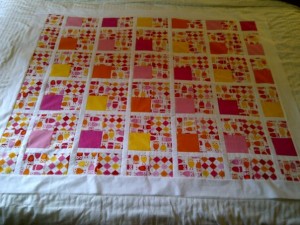
Patterning with Quilts: As an avid quilter, I brought in fabric squares to my Grade 2 class and had students help me plan a quilt. They loved this activity because it was “real” to them. They got to lay out the squares, plan the repeating pattern of colours (in this case light pink, dark pink, yellow, orange) and then see it come together. I would take the squares home and sew a row or two and then come back and have them recall what came next. I would then sew a few vertical columns and see if they could figure out what the next column would look like as the pattern changes in that direction, but there is still a pattern. We did a problem solving based activity with this quilt for weeks!

When I worked with older grades, I brought in fabric measurements (i.e., 100cm x 75cm in blue, 125cm x 50cm in green, etc.) and had them plan out the entire quilt top from start to finish and then the class voted on their favourite quilt and that is the one I cut and made. It is amazing how many ways using quilts in math can be differentiated too! Giving some students a quilt plan and asking them to use colour tiles to plan the pattern, while others are being asked to measure the fabric that would be needed to make that same quilt, allows for extensions galore!


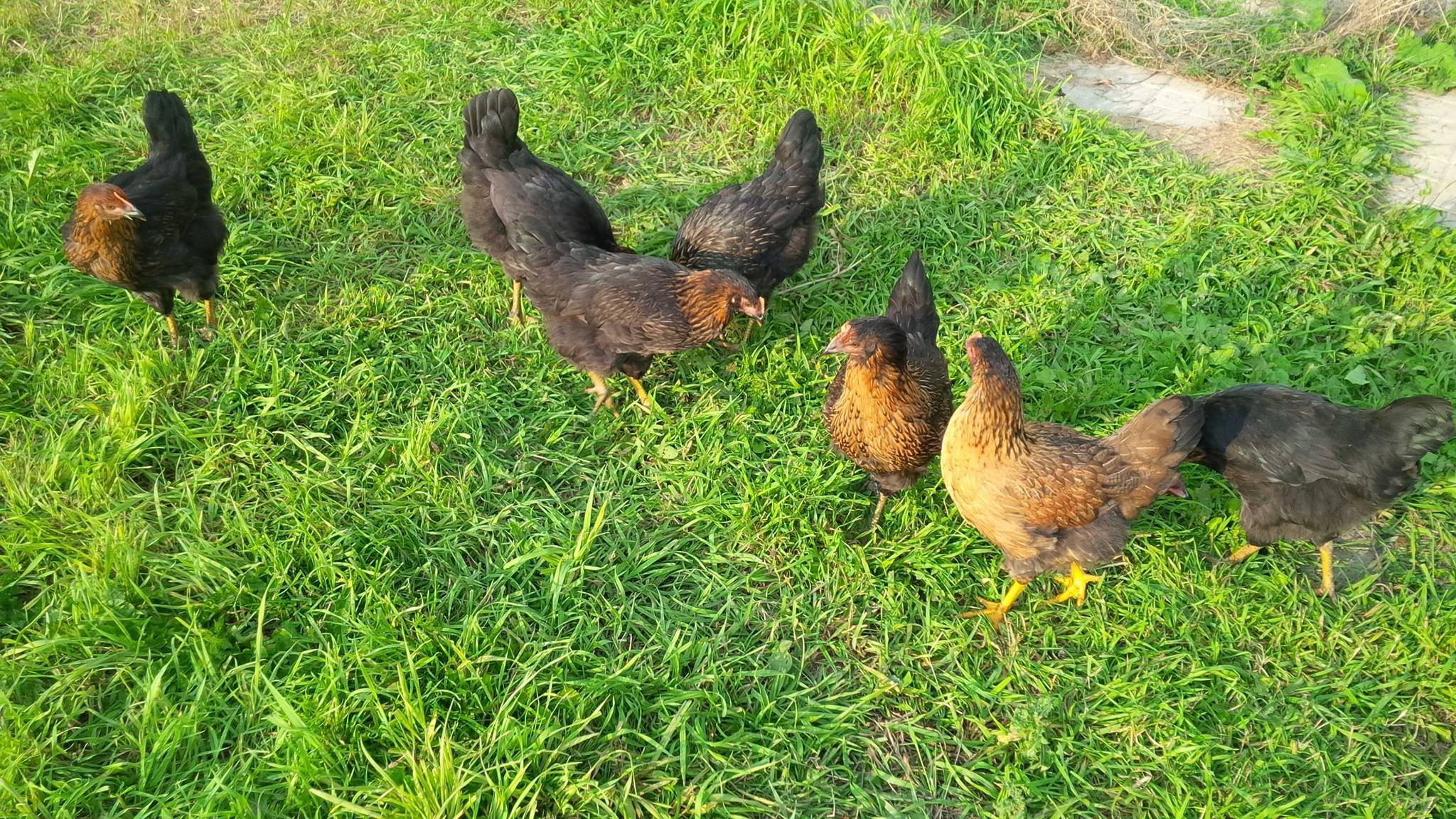
Animal Creative Writing: Living out in the country, we have lots of animals running around our property. One of my favourites is our chickens. We have 8 chickens that wonder the yard and every now and then, one of them disappears for a while. I often give my class an update on what the birds are up to and they write about them. They love using pictures of the chickens, that I take on the classroom iPad, to illustrate their stories using different apps.

I find bringing my own interests into the classroom really helps my students to connect with the activities we are working on and it makes them feel like what they are doing is relevant.


Math in Play-based Learning

Math is integrated into most of the learning centres in the classroom. Although glancing around the room, it often looks just like play. To ensure that I am continually assessing for math, I keep a clipboard of observations sheets accessible. I prefer observation sheets that have a square with each child’s name that I can fill-in with any pertinent information I want. Then, by glancing at the sheet, I can easily see if there is a blank box and ensure that I seek out that child to observe. Looking around the classroom, I may see children measuring at the water table, sorting in the drama centre, or comparing shapes in the building centre. I approach and listen. Often, I can record their understanding with a phrase or a brief description. Then, I am able to clarify or extend their learning. For example, if a child is counting animal figures and gets stuck at 15, I may direct them to the number line to show them what was missed. Observation and recording them at play allows for assessment of their current understanding as well as an opportunity to support their learning.

At the beginning of the year, some parents may ask about the math program, as they do not see generic math sheets coming home in the backpacks. It is therefore a good idea to take photos of the children engaged in mathematical activities as you are observing them in the classroom. These can be added to a website to communicate to your families what math learning looks like in the classroom. Or you can print them to display in the hallway, add to a student’s portfolio, or keep for a parent interview.

Recording comments during circle time is also another way to demonstrate a child’s understanding of math. Last week, when the children were considering a number line together, one student pointed out that there were kid numbers and teenage numbers. He said, “The 1-10 are like kid numbers and the 11-20 are like teenager numbers!” Another day we did a group activity when reading the book One Monday Morning by Uri Shulevitz. Using connecting cubes we represented the characters, as someone new arrived, each day of the week. When the concrete graph was finished, a student observed, “It looks like stairs going up!” By recording these comments, I am able to add them to their math profile when writing reports or planning for further learning.

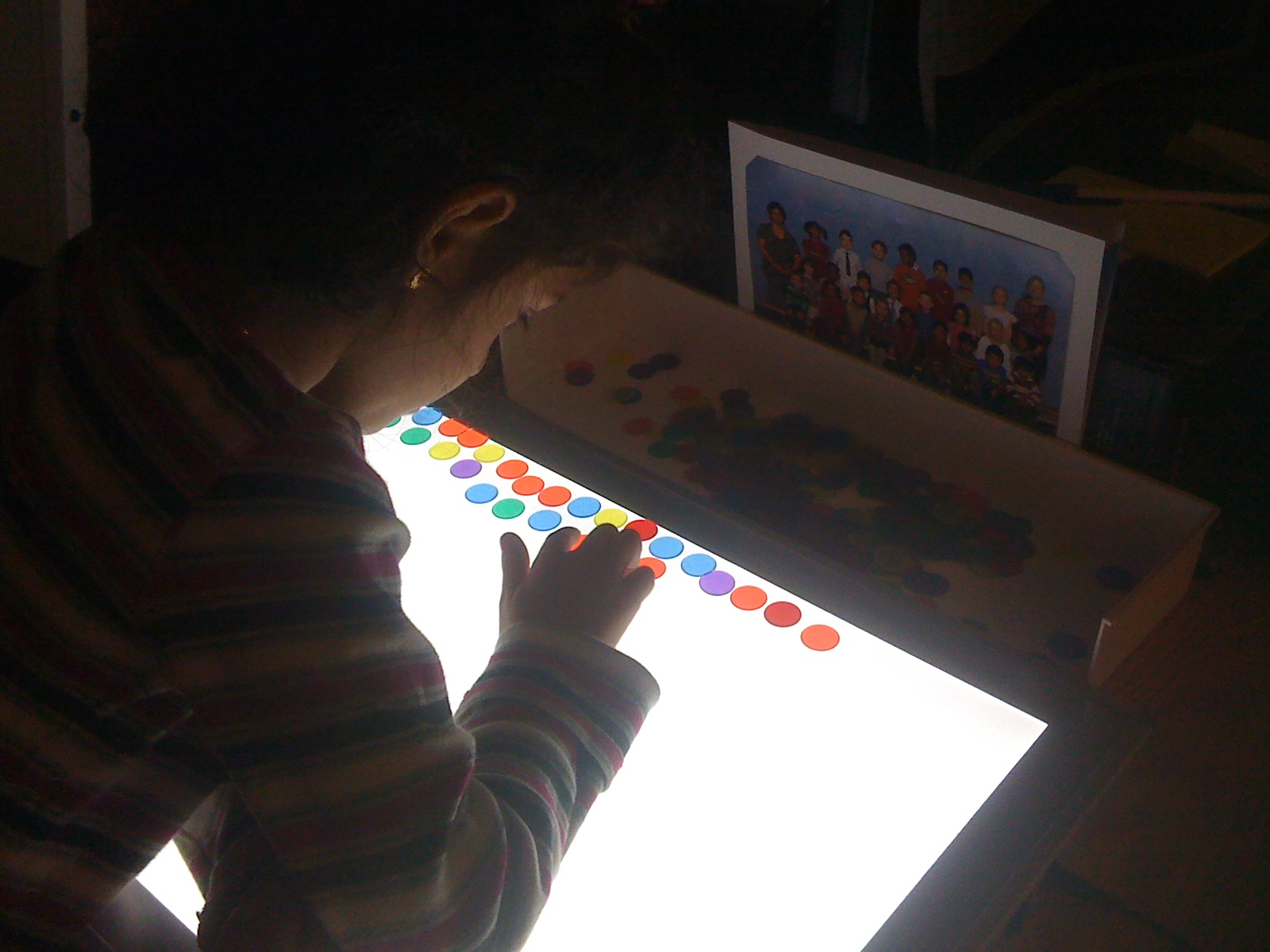
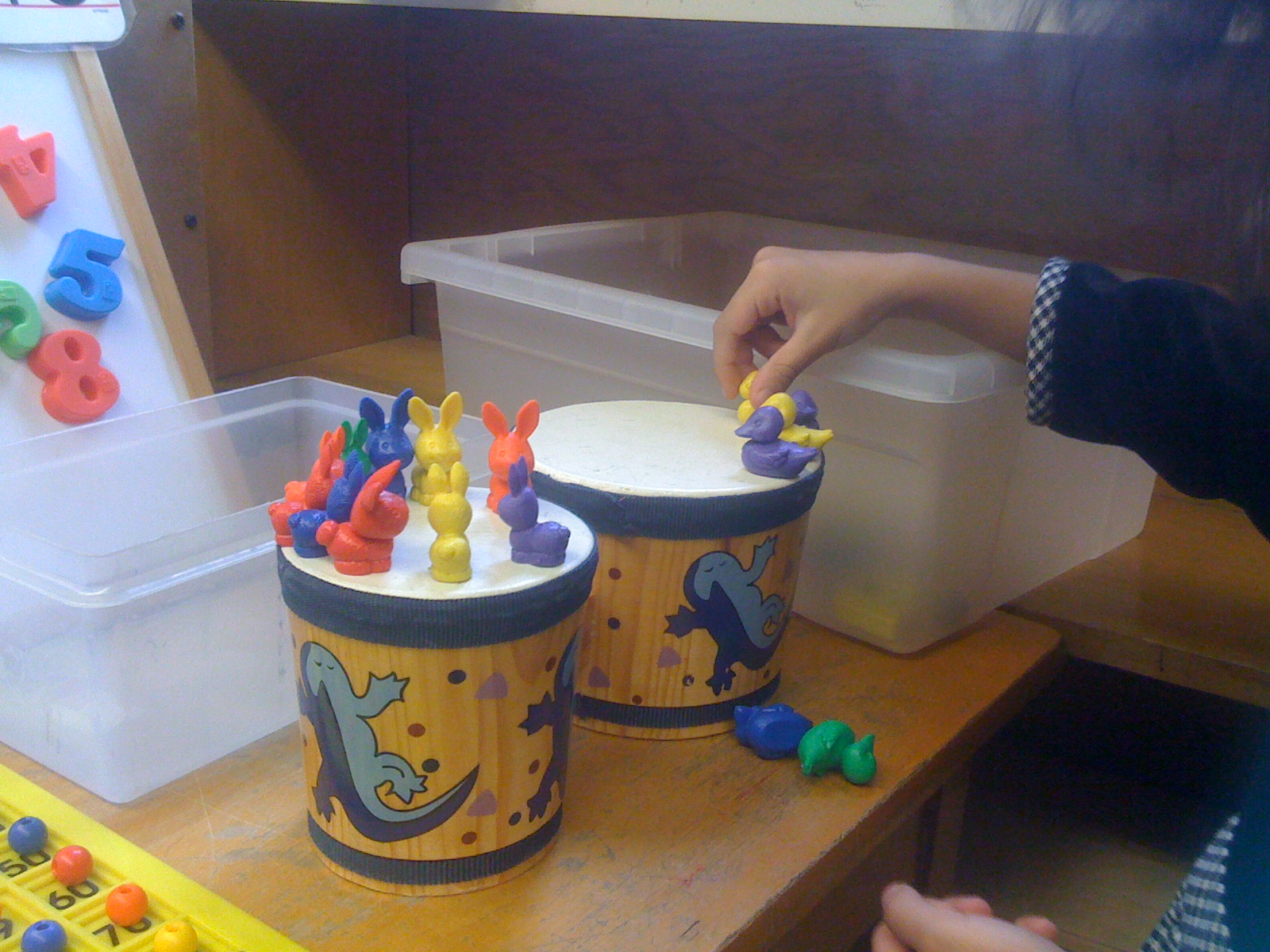
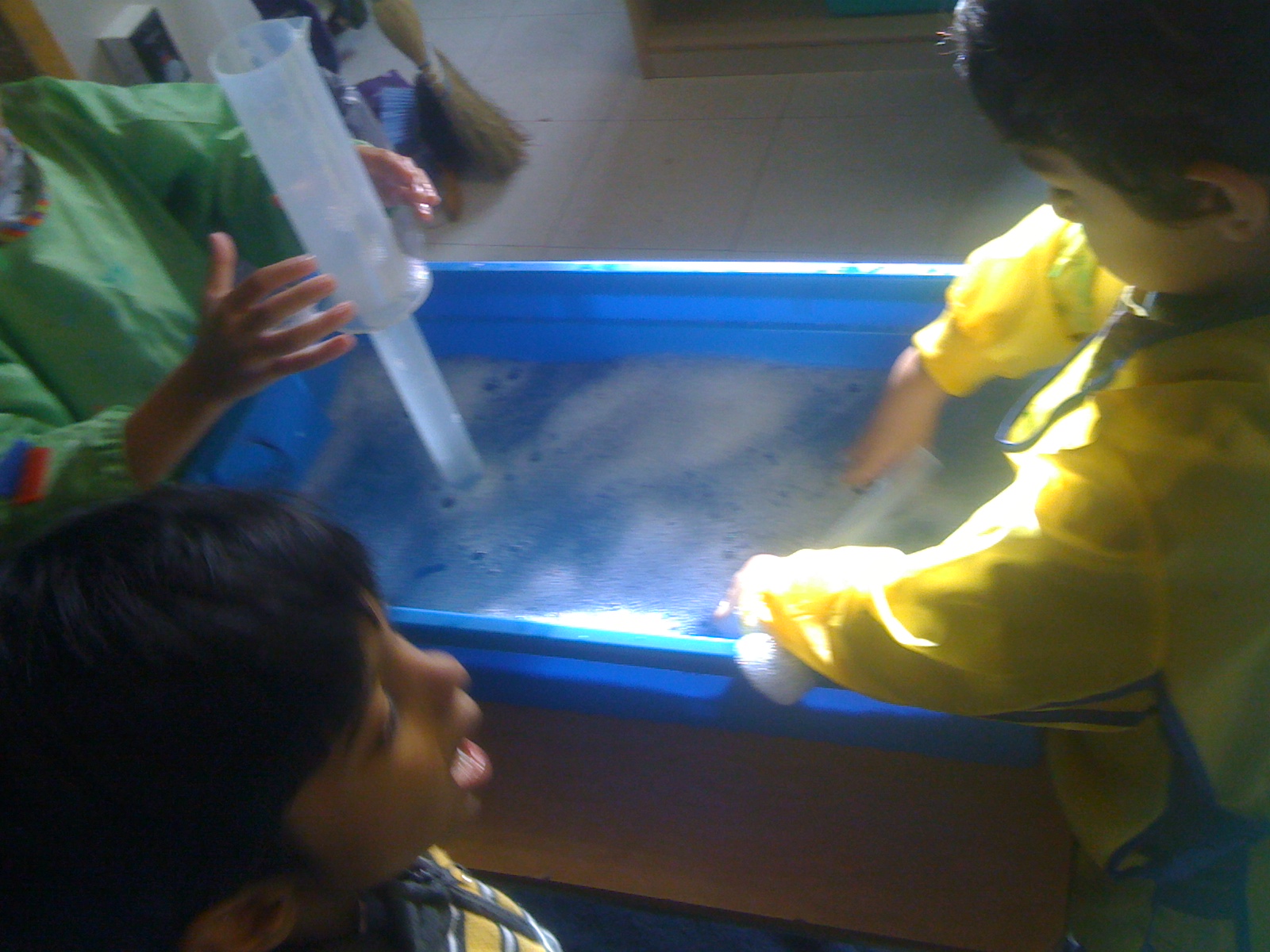
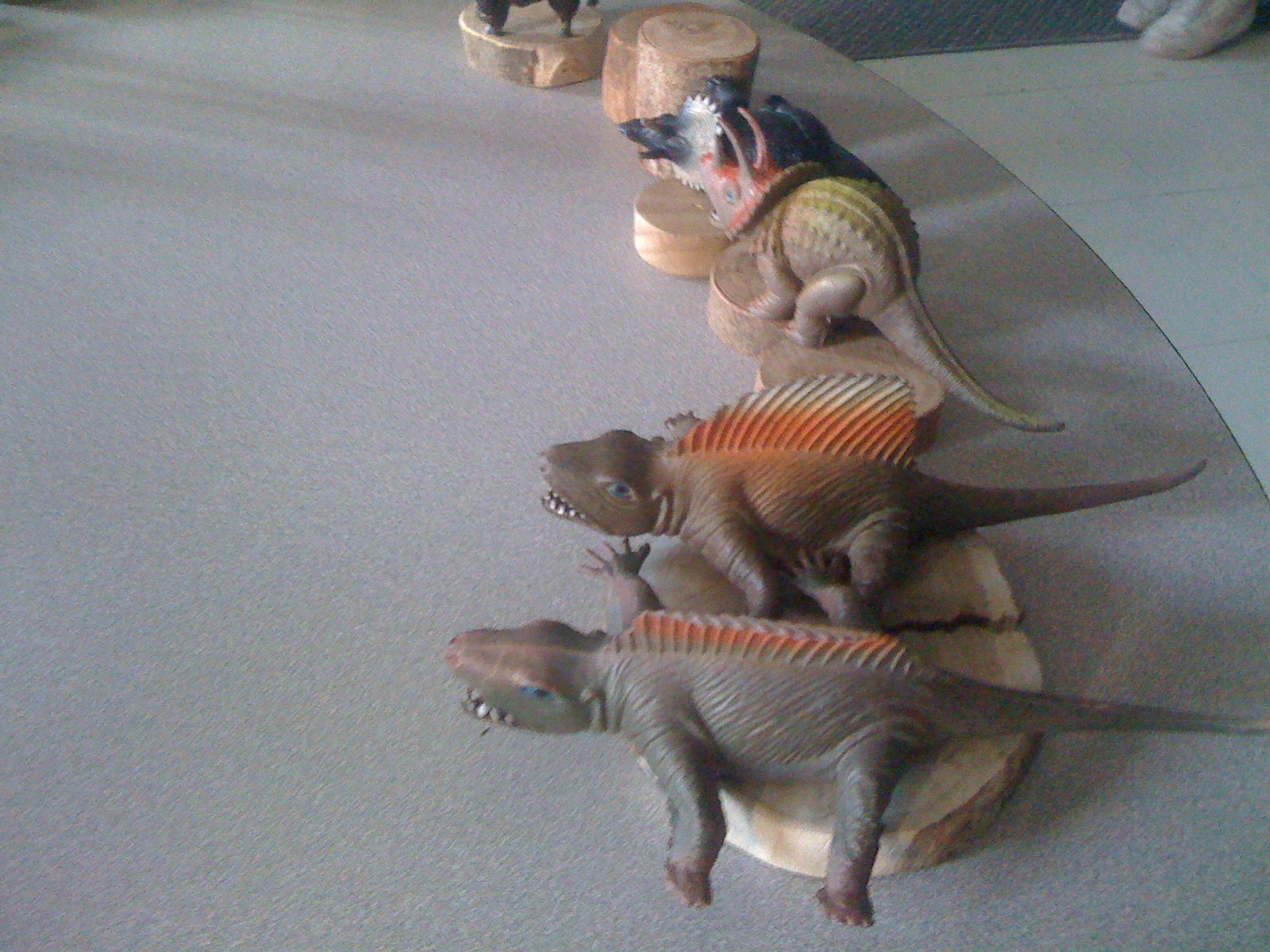
The photos show what math looks like in a play-based learning environment:


This child is using 1:1 representation with counters on the light pad to represent each individual in our class photo (her idea!)


This child has sorted the animals into two groups and is then counting them as she places them on the top of the drums (her idea!)


These students are measuring volume by filling a larger container with a smaller one.


The children grouped like objects, sorted them, and displayed them on wood blocks using 1:1 representation.


There are also opportunities for children to write mathematically throughout the classroom with pencils and paper provided, as well as number lines and number displays of quantity. They use magnetic numbers to put in order on white boards and they learn to recognize their phone numbers at the carpet (after learning their first and last names), then write their phone numbers at entry during sign-in. Children enjoy songs with counting and books with sequences. Math is happening all around the classroom and children are intuitive with math. When teaching Kindergarten, it is important to see it, name it, and record it!