Heart Picture

Reflections of the School Year – Student Written Reports

As the end of the school year approaches, with teachers busy with final assessments and report card writing, and students anxious to enjoy the nice weather and their last month with their class mates, it is a great time for self-reflection, self-assessment and community building in the classroom.

Similar to the awesome self-reflection activities that Carmen has done with her students, an activity that my students have really enjoyed was writing a report card for a friend and presenting it to the class, as sort of an ‘exit speech’ that reflects the events, learning and memories during the school year:

1.  Have the students select their own partner, groups of 2 or 3, and give them a list of curriculum and subject areas to brainstorm ideas about the partner that is being interviewed.   (*Click here to see an example)

2.  Give the students some free time to interview each other and  record the ideas and memories for the ‘report card’. (I connected this with the  interviews that the students did at the beginning of the school year to learn about each other).

3.  Later, send the students to individually write a short  ‘report card’ about their friend, using the brainstormed ideas.

4.  The partners are also in charge of creating an ‘award’ for their classmate.  (In my class, they were given free rein to create a ‘statuette’ or a symbol using whichever materials they could find along with a an  explanation for why the student was getting that ‘award’) . The results were creative and the sentiments were funny, personal and touching.

5.  Hold a ‘graduation ceremony’ in the classroom, where the students present their partner with the report card (read aloud) and their ‘award’.  If the students are not in grade 5 or 8 (and changing schools), the ‘graduation ceremony’  could just mean that the students are ‘graduating’ to the next grade in school, or graduating from your class. Either way, it is a fun spin on an end of year celebration, and its individualized for each student.

The students really seem to enjoy this activity- it allows them to reflect on their relationships and highlights of the school year and they have fun sharing about what was unique to them or their own experiences.  The students laugh as they recall events that happened during the year, and also being reminded of their certain tendencies. The classroom vibe is light, fun, creative, reflective and honest.

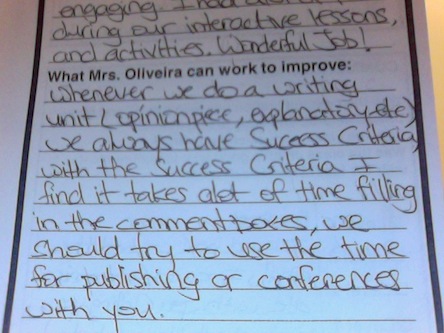
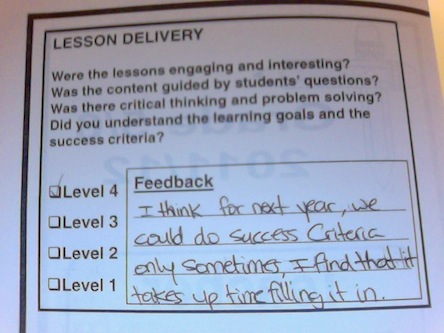
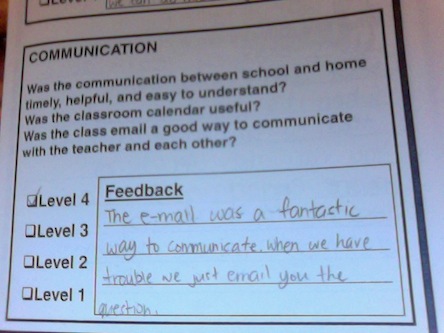
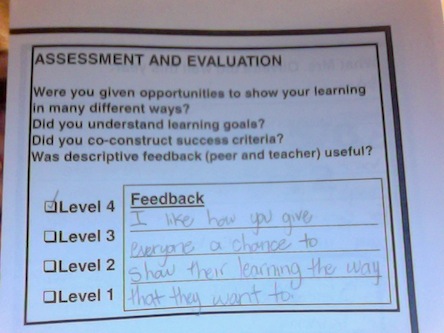
Carmen’s idea of a report card for the teacher, by the students is a great follow up to this activity, and something I will try in the future.

For me, when listening to the ‘report card’ presentations, I am able to learn about the things that stood out to the students about their school year- their successes, strengths, social growth and even pet-peeves. Not only is it a reflective piece for the children, it serves as a reflective piece for me as well -learning what the students loved, didn’t love, and what learning they would remember and carry on after the final school bell  at the end of June. This opportunity of self-reflection is a fun activity for the students and  provides me with another opportunity to hone my own art of teaching and  learning as well!


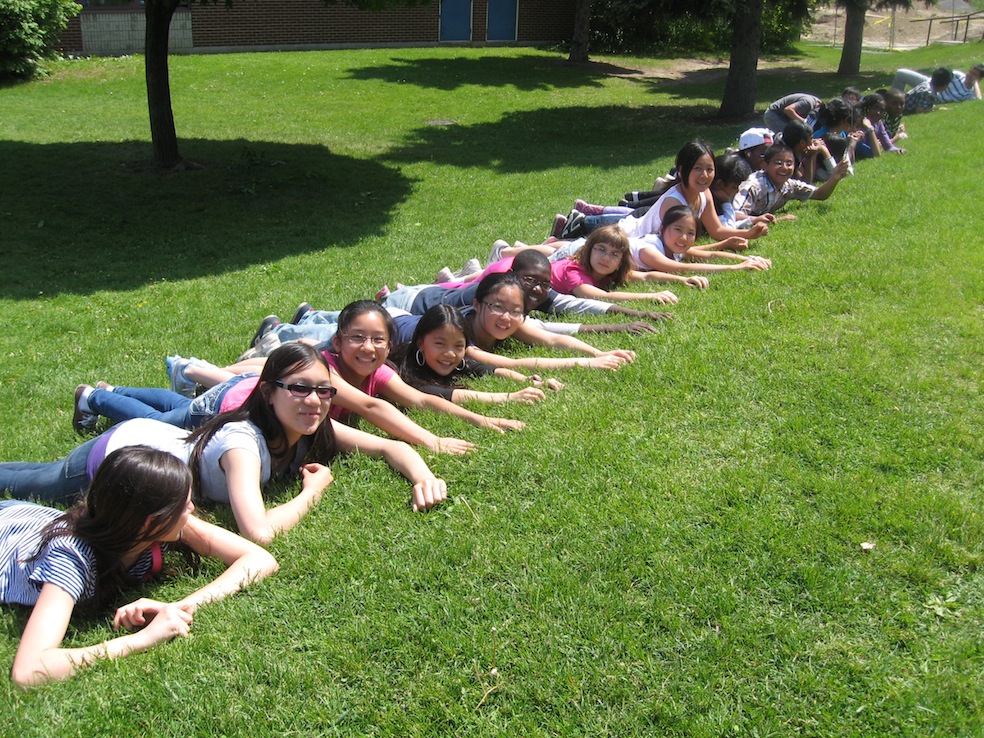
Students lying on the grass for a photo

Looking Back, Reflecting, and Celebrating Our Year!

The students in my class understand the importance of daily reflection in order to take a step back and look at the whole picture before continuing on our journey toward the goals we have set for ourselves.  They also know that celebrating each milestone and learning from our setbacks creates an attitude of gratitude,  a belief in what we can accomplish, and the excitement to take new risks as we adjust our course to take us to the places we imagine in life.

As we near the end of our time together, there are a few activities my students seem to enjoy very much.  It gives them the opportunity to look back on their year, reflect, and celebrate both themselves and their journey.

The activities include:

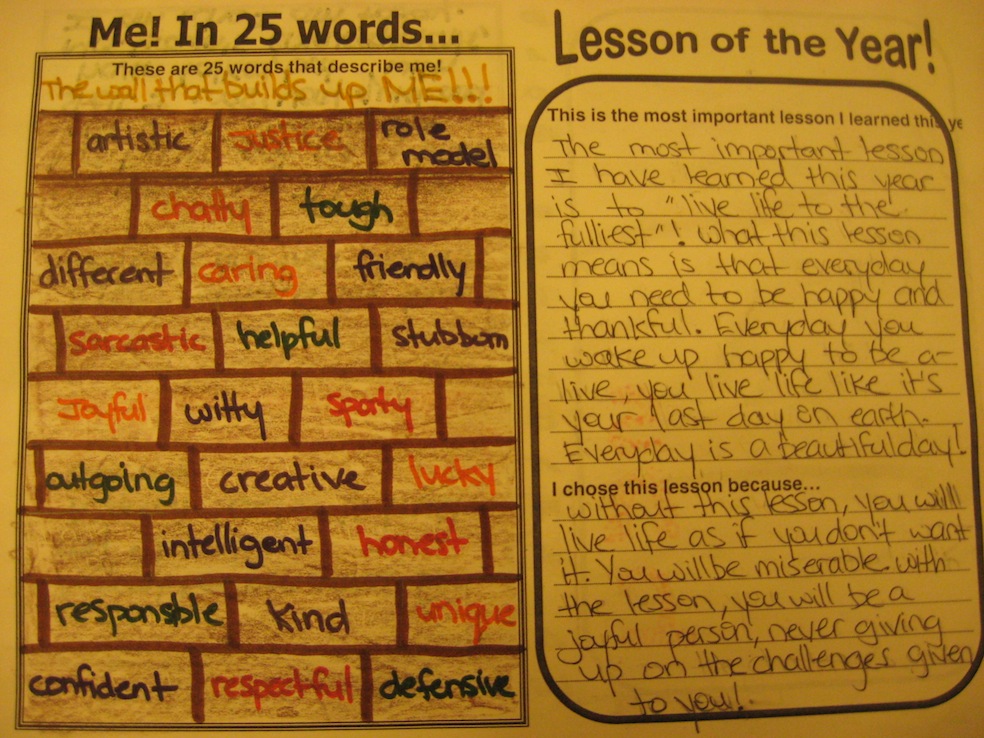
1. Year End Booklet: prompts are used to get students writing and creating art about themselves and their year.

Students take pride in creating their year end booklet
The reflections and art are meaningful and fun!


2. Award: the template is used for students to create an award for themselves and another classmate
On the back of each award students explain why they deserve to receive it
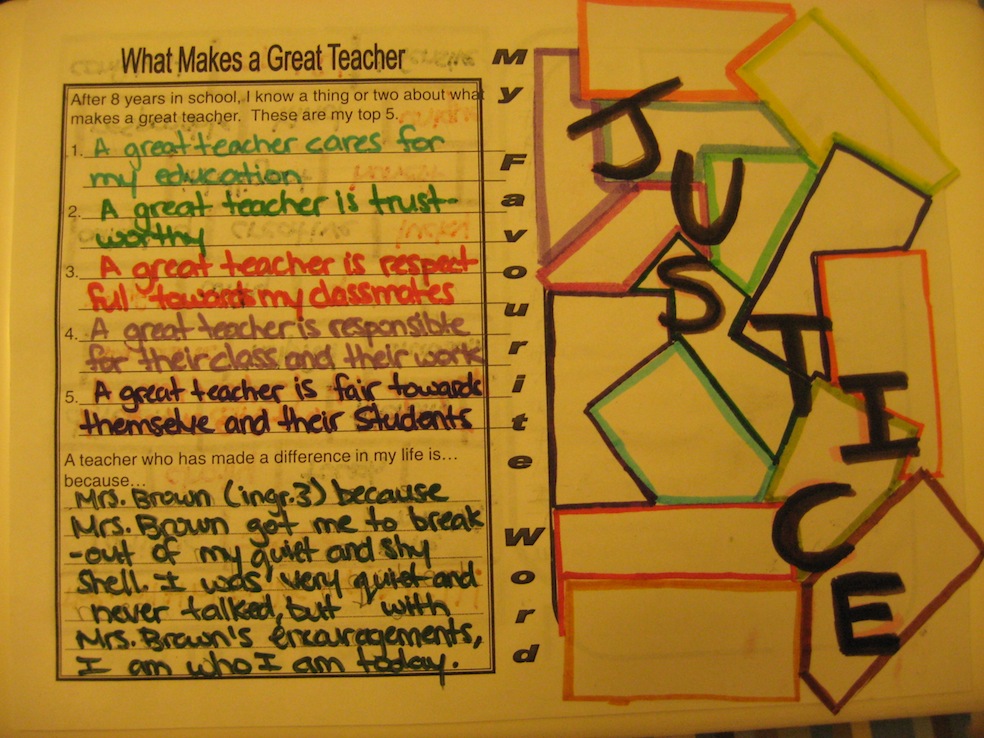
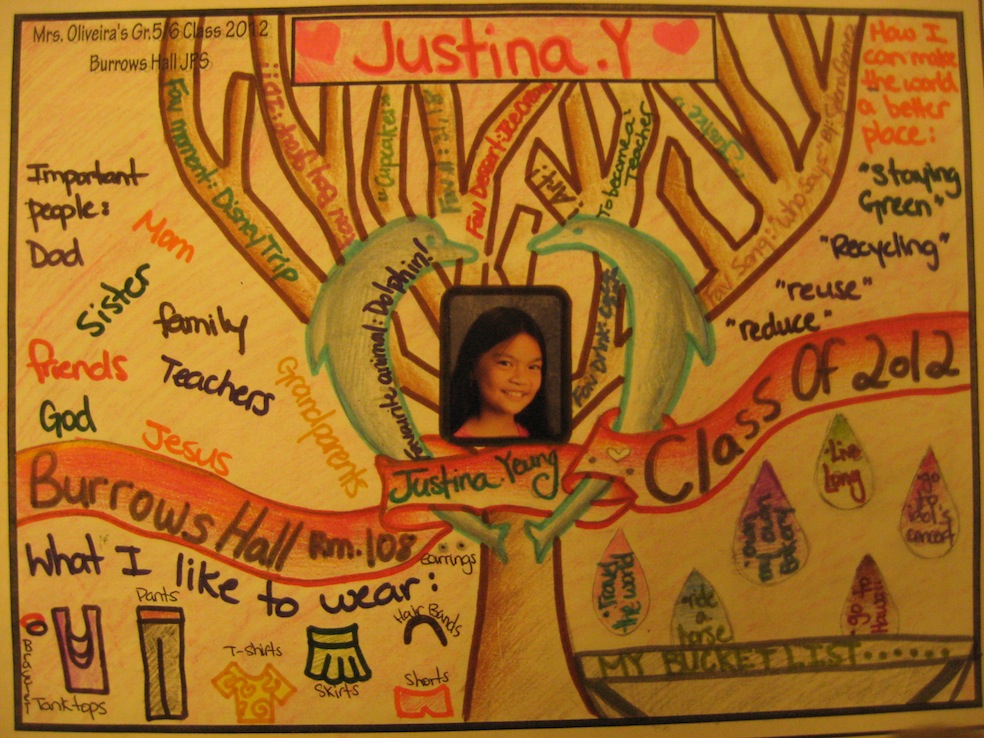
3. Year End Scrapbook Page: students create a scrapbook page using prompts co-created with the class
You can learn so much about Justina!
4. Bucket List: following a story from the Toronto Star on bucket lists, students wanted to create their own (a wall will be put                             up in Toronto this summer so people can write what they want to do in their lifetime)
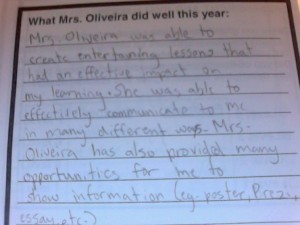
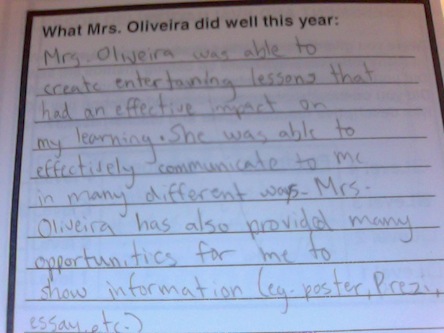
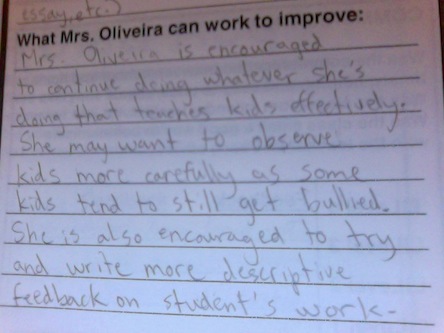
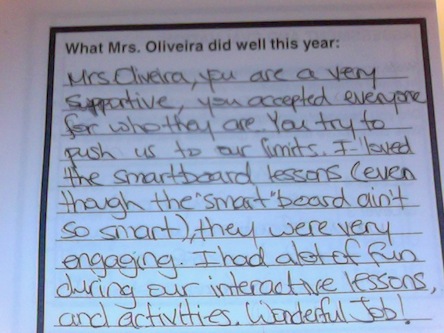
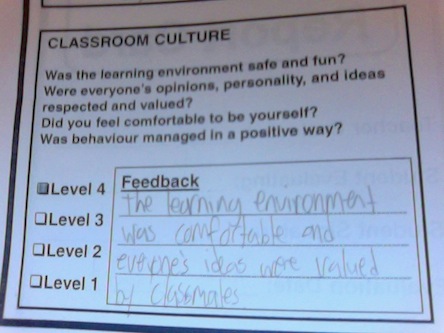
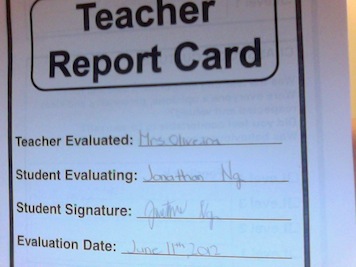
5. Teacher Report Card: students are not the only ones receiving a report card at the end of the year- I do too! It is co-created
                                              based on what students think is most important for a successful classroom.
Believe it or not, I always get a little nervous when it comes time to receiving my report card!  It too is a way for me to get a sense of how my year went and how my journey as a teacher will look like as I continually grow in the art of teaching and learning!
Photo of Erin G

Summer’s Here! Oh yeah, it’s only the beginning of June (Part 2)

Pen Pals – Corresponding with Other Teachers and Students

Pen pals (via actual paper!! or computer) is a great way to link up with other students and teachers. This is something that is wonderful to do throughout the course of the entire school year but it’s also a fun thing to end off with as well. You have a couple options – actual correspondence with francophone students or even writing back and forth to your colleague’s classes at a different school. I’ve found that the yearbook page is a perfect lead in to this activity since students basically have already created their profile in French and can choose to alter it as they wish.

If you’re starting this activity in June, chances are, you’ll only have the time for one exchange but it is still worth it since students will naturally anticipate getting a reply to their letter. Something to consider is also meeting up with the other class and having some kind of event (café/speed meeting, etc) where they can meet and have a personal discussion in French. This exchange can be continued next year when students can continue to build a relationship through correspondence and even future meetings. Not only is this a great opportunity for the students, it also naturally provides a chance for teachers to collaborate with colleagues (much more rare for Core French teachers) on projects and even field trips.


Out of the Mouths of …..Former Students – Serious Words of Advice

Not to give the impression that the entire month of June is a time-filler but between class parties, field excursions, awards assemblies, tournaments, end of the year trips, graduation, etc, there are many days where you need a short/bridge activity. I stumbled across this particular idea entirely by accident when I bumped into four former students in the hallway. With an assembly that unexpectedly ended 40 minutes early and with no energy to entertain the hordes with another French game, I more or less coerced them to come into my class and give a short, impromptu talk about life in high school, and of course, their experience with secondary French.

Tiring of the oft repeated and unheeded “You’re going to need this in Grade 9…,” I figured it would provide my class with real-life renditions of high school experiences and dispel some commonly-held beliefs (or jaded accounts by ill-intentioned older siblings). What resulted was a spontaneous, dynamic discussion that covered a range of topics – challenges, differences with elementary school, preparedness, things they would have done differently, etc.

If you really wanted to play up the French part, it would be a good idea to invite those students who pursued French through high school and to discuss international travel opportunities and future studies/career choices. Somehow, it made a real difference having this frank, open discussion with former peers. They were engaged and because of their familiarity, took their advice seriously. In fact, it was so successful, they willingly agreed to stay and talk to my next class as well. From that year onwards, I always made a point to invite former students back for the same type of discussion. Not only was it beneficial to my grade 8s, it was also an empowering experience for my guest speakers as well.

Photo of Erin G

Summer’s Here! Oh yeah, it’s only the beginning of June (Part 1)

At this time of year, there seems to be a most distinct correlation between hot sunny weather and a drastically decreased output on the part of students (and if we’re being really honest, teachers as well). It’s been my experience that anything that doesn’t involve soccer baseball is met with a combination of disbelief, outrage and downright disgust. The secret is to engage your students in projects that are just too much fun to pass up. One such activity upon which I rely for such occasions is the “Annuaire” or class yearbook. With enough hype and enthusiasm on your part, they will buy into it as well. I usually give them a rough copy template with the following headings:

  • Nom
  • Sobriquet
  • Classe
  • Moment mémorable
  • Bête noire
  • Ambition personnelle

As with all assignments, it’s important to give students an exemplar for reference, brainstorm useful structures/expressions together and have all information visually accessible in the form of anchor charts. Again, you could also help them out by giving them sentence starters as well. Something that will no doubt grab their attention is if you fill out the sheet as you would have in grade 8 and of course, provide a picture of yourself at that age. In the past, this is what I have used as an exemplar so it serves a dual purpose. I think you’ll find this project will get them focused and productive and also provides a great opportunity for review if you’re discreet about it (le passé compose, le futur proche, les constructions avec deux verbs, etc).

Once complete, you can have the yearbook of each of the separate classes on display (and even use the yearbooks from previous years) – they are naturally curious about the work of their peers and love to reminisce about former students.


*For this to be really successful, it helps if you provide them with the materials they need such as bright, coloured paper, watercolours, markers and pencil crayons. What I also found is that it was much easier if I took their pictures and had them developed so that each student had a picture to accompany their page.

Photo of Alison Board

Celebrating Our Year

We often think that the last two months of school will be all about reflection and reviewing, yet with so many other demands outside of the classroom – our last weeks can feel rushed and frantic. Teachers are often asked to think about planning for the following year, before they can fully complete the one they are in.

To stay present and celebrate with your current classroom community, here are a few suggestions:

1. Consolidate learning – Spend two or three weeks in June reflecting on the students’ learning and giving them time and opportunity to make connections between topics or skills. As a class, you can can discuss the highlights of the year and chart them, or have students work in small group on their shared topics of interest. This may evolve to look like a yearbook that they make with words and images or a story they create in comic form on the computer.

2. Celebrate learning – Provide students with an opportunity to invite other classes, learning buddies, or parents/friends to the classroom before their projects are sent home. Students can make invitations, create portfolios of work, or set up the room for an open house. The celebration may look like a gallery walk, a dramatice presentation, a sharing of portfolios, or a relaxed poetry cafe.

3. Outdoor Classes – In the last week of school when you are sending home work and generally cleaning up your classroom, take students outside for activities that you would normally do inside. This could  look like a read-a-loud, visual art activities (such as sketching), visits to local parks or public libraries.

We are completing our assessments and writing reports now, but with a little planning for the next few weeks with reflective exercises and opportunities to make connections, the students will be more engaged and value their last weeks at school as meaningful and rewarding.