
Adjustments in September


With all the plans we make for those first days and weeks in September, it is worth being open to making adjustments, for your benefit and the benefit of the students. Here are some examples of how I have adjusted the environment and the program in the first few weeks:

  • I have changed the layout twice. We were pleased to get 6 rectangular tables and 1 round table in the second week, but have rearranged them twice to suit the needs of the students. This means that there are two sets of tables put together seating groups of up to 12 students who like to work together, and one table seats only 4 students who require more personal space. I planned for an even distribution of students per table, but am responsive to their different requests regarding space and collaboration.
  • The area carpet was originally placed in one corner of the room for community discussions and knowledge building sessions. The students enjoyed these talks, but found it hard to get close when we are limited with only two accessible sides to the carpet for rows of chairs behind those who are seated on the carpet. So, I moved the carpet to the centre of the room and it connects to the small carpet area of our class library. Now there is less movement of chairs as students turn to the centre of the room for discussions and use the extended space of the class library to sit.
  • We took a Multiple Intelligence survey to get to know our own learning strengths and the strengths of all the students in the class. We continue to consider these and reflect on them by referring to graph compiled in the class to remind us.
  • I finally typed out my schedule last Thursday. It took me that long to juggle our literacy block and periods for Science and Social Studies with withdrawal for ESL and special education support. I have added 15 minutes of literacy to the end of our day when we review our agendas with a poetry cafe allowing dedicated time for the reading, sharing, and writing of poetry.
  • We introduced “Minutes for Mindfulness” each afternoon. After lunch and a transition for French class, some of the students had difficulty settling for a full-class discussion regarding our inquiry topic. I asked if they wanted to try some mindfulness techniques, and a new student shared a website/app called www.calm.com that his teacher used last year. This adjustment not only helps the students, but I benefit from the 2 minute relaxation exercises as well!
I am sure our class will continue to grow and change. Allowing for adjustments to your best made plans is necessary to be responsive in your teaching practice – and everyone will benefit.
Photo of Tammy Axt

Planning Time Coverage in an Autism Spectrum Disorder Class

Hi everyone! My name is Tammy Gallant and I am a music teacher for students in grade 1, 2 and 5 in the Peel District School Board. This is my fourth year as a music teacher and I hope to be able to assist those new to the planning time role in schools across Ontario. My school is a suburban school about 30 minutes outside of Toronto with a very high ELL population. In addition to music, I also have planning time coverage in the full day kindergarten and contained Autism Spectrum Disorder classes. I hope you enjoy my posts.

As mentioned above, I am very lucky to be doing coverage with the students in the contained Autism Spectrum Disorder class. A colleague of mine was also given the ASD class on a different day. So, the two of us decided to meet before the first day to discuss possible ideas for our 40 minute classes with them. The conversation went something like this:
“Tammy, what do you think we should do with these students during our first period with them?”
“Maybe we could try to do some songs or games, but I really don’t know these students as many of them are new to the school.”
“Which do you think would be better, a game or a song?”
“Well, possibly some songs. In the past, I have had great success with some action songs but I don’t really know this group of students that well. They may not like them.”
“What do you think about some kind of craft or art activity?”
“I haven’t done a lot of art activities in the past with the ASD class as they haven’t really enjoyed it. But, these new students might really like them.”
The conversation went back and forth like this for about five minutes until we both realized that we could plan all day long but it didn’t matter until we actually met and interacted with the students. We decided that our best course of action for the first four or five periods that we had this class was to try a variety of activities including: songs, bean bag games, puppetry, books, short videos, art activities, instrument building, costume play, French language exposure, etc… We also tried different structures within the class such as teacher-directed, small group, circle time, student-led, and exploration time.
We decided that we both would take some observational notes and meet after the first two weeks to discuss some longer term planning for this class. The aim will be to make it as enjoyable as possible for these students while supporting them to meet their own unique goals. I will keep you updated on our evolving program.

Overheard in an Ontario Classroom…
One kindergarten class was asked what kinds of things they could make up songs about. After answers like butterflies and school, one old soul in the front row raised his hand and told us that he would like to make up songs about being brokenhearted. One can only assume that his family are avid country music listeners.

Exciting new opportunity


Hi! My name is Kelly McLaughlin and I am a new occasional teacher for the Hamilton Wentworth Public School Board. I am so excited for this new opportunity and am awaiting each day to let the adventure begin.

Before I was fortunate enough to receive an interview to be on the supply list, I was doing my final placement at a beautiful school in Ancaster. There I was able to start a choir of about 30 girls and 1 boy and we sang at different events for the school. My passion is music and always has been as during my previous placements I have always tried to get a choir started as well. Through this passion, I was able to take the AQ course for instrumental music. So hopefully this year I will be able to share all about my experiences in some of those classes as well. I really do love the fact that music in schools nowadays is not just crossword puzzles and theory but a hands on experience which will allow children to have an appreciation for instrumental music at a young age. This will hopefully foster their love for it and allow them to carry on with playing instruments throughout their lives.

In my spare time I enjoy running, rock climbing and travelling to Portugal and Disney World which I do once a year! I am really excited to apply all I have learnt from university and my nine summers as a camp counsellor in the classroom.

Photo of Mike Beetham

I Lost My Pencil

If I had a dollar for every time I heard ‘I lost my pencil. I don’t have an eraser.” I would, well I wouldn’t be blogging about it. This is just one of many ways that off task time takes away from instructional focus. Over the last several years I have experimented with a communal focus in terms of supplies and materials. My intent was to reduce the energy spent and ultimately time lost  looking for basic working tools. I started by having containers that held pencils and containers that held erasers and they were placed on work areas. The idea was the students just had to get their book out and the writing tools would be there right in front of them. The students would just return it to the container where they borrowed it from. This produced immediate results in that as a group we seemed to be organized and ready to go sooner. This routine had to be taught and consistently applied. Of course students were allowed to use their own tools, but quick access was just an arm’s reach away.

As this plan evolved I had to figure out how to keep the pencils sharpened, rotation of old pencils out and new pencils and erasers in. Well, that ended being a great job for  a team of students (student helpers). The current edition of this strategy is where I create complete tool kits (pencils, erasers, glue, scissors, rulers and highlighters) and each team is responsible for caring for their work materials. This shift in thinking from individual to communal supplies also assisted with students who have difficulty supplying their own tools, it eliminates the competition in having the most creative or expensive pencils or pens and puts the students on task earlier and for longer periods of time.

I am very interested in other suggestions around this topic. Please add your experiences.

Photo of Mike Beetham

What’s For Lunch?

One of the best team building activities and diagnostic tools that I use is eating lunch with my students during the first month of school. During this precious time, I am able to discover so much about the uniqueness of each and every one of my students as people and students. Bonus content comes in the form of what I learn about the  social climate of the classroom (and school).  Over the course of a week I make sure that I move around the room and sit in a variety of groupings to ensure that I have 1:1 contact with every student.

Of course the reciprocal scenario also unfolds as I am able to reveal myself as a real person right before their eyes. I soon am not just their teacher! It is that critical beginning where I am able to send them the message they are important, they are special and that together we will accomplish great things and overcome challenging struggles.

For any teacher new to a school you must always balance this with the need to connect and become a part of the professional team at your site. The critical concept is that this is a planned event with a specific target outcome and can’t just be left to happen haphazardly.

Photo of Mike Beetham

The Power of Believing

It is not found in a curriculum, at an educational supply store or in a university course outline. But yet it is one of the most powerful tools that a teacher has. It is the belief in yourself to handle the varying demands of the teaching role, to have confidence in your professional expertise to help students and to instill that belief in each and every one of your students. As my students arrive in my classroom in September the one common element they have (besides a multitude of at risk behaviours) is the belief that they are not smart and that school is not a setting where they will do well. My target priority becomes the mission of helping my students be successful and to believe that school is a place where they will thrive and be triumphant.  This is easy said,  but experience has taught me that it does not occur in a few lessons or a unit of study but rather exists in my teaching philosophy and must be embedded in my talk, my instructional practices and my way of life in the school. I have developed a set of teaching eyes that focus on what students can do rather than what they can’t do. That is a contagious approach that will spread quickly from adults to children.

I would like to introduce you to J who arrived in my classroom with a very closed attitude toward school despite not knowing me, the school or the classroom he has been forced to attend. Before I could begin to help him I had to get to know him as a person and not a student. What are his interests, his talents and his challenges? Our journey of learning is now underway and it will have its ups and downs, joyous moments and sad times but we are coming together with the understanding that he will be successful, he is smart and that school is a not so bad place to be. I will keep you updated on our progress.

Children must be taught how to think

Let’s Get This Learning Started

This year I begin a new journey as I welcome the opportunity to teach Grade 4.  For the record, I must admit that I was a bit nervous simply because I’ve been teaching Grade 6 and above for the past five years.  However, the first week has proven that if we enjoy getting to know our students and work to create engaging opportunities for them to learn about each other, the classroom environment becomes a comfortable place to be, no matter which grade we’re teaching.

Although I’ve had to be more mindful of the way I communicate by constantly keeping in mind that the students in front of me just left Grade 3, I continue to be amazed at how capable children can be when they’re given guidelines for learning and are then left to explore and build on their understanding of the world around them.

This year, my goal is to be very intentional about the feedback I provide, the conversations I have, and how I approach character education.  This goal stems out of the learning I experienced (and continue to do so) with some very powerful books I decided to read this summer.  “How Children Succeed,” by Paul Tough and “Mindset: The New Psychology of Success,” by Carol S. Dweck, really got me thinking about the way I approach conversations, feedback, and teaching in my classroom.  The books focus on the power of building a strong character based on resilience in children and how to help them understand that more than our talents or abilities, it is our mindset that influences our learning.

If you want to start off your year by exploring how a simple idea about the brain can create a love of learning and a resilience that is the basis of great success in every area of a child’s life, I recommend you take some time this year to read the books I’ve mentioned.

For a quick overview, I’ve provided an article by Carol S. Dweck below where she explains the growth mindset and how it can positively affect and change the way students learn, think, and perform.

Dweck: MiindSets and Equitable Education

Photo of Roz Geridis

Getting to Know your Students

At the beginning of the year I complete some activities about the classroom environment. I look to build a community environment highlighting the classroom is as much theirs as it is mine. We completed a few activities but I wanted to share this particular one because the student responses really helped me understand and get to know them.

One of the activities we did this year was we talked about keeping the good in and the bad out of us in order to do well at school. We had a conversation about what helps us do well at school and what keeps us from doing well. Some responses about what helps us do well at school were: healthy eating, sleeping, completing homework, asking for help. Some of the responses about what bad things can keep us from doing well at school were: being late, not completing homework, eating bad, not getting enough sleep, bullying, people being mean, depression, anxiety.

The last two responses were comments which really made me pay attention to who said them. I immediately contacted the guidance counselor, informed the administration, and spoke to last year’s teachers. These two comments (from two different students) have helped me with my approach to the students. It made me remember, no matter what community you are in students could have a hard life and have a variety of family/life situations to handle. It reminded me of the need to make that connection as a person with the students.

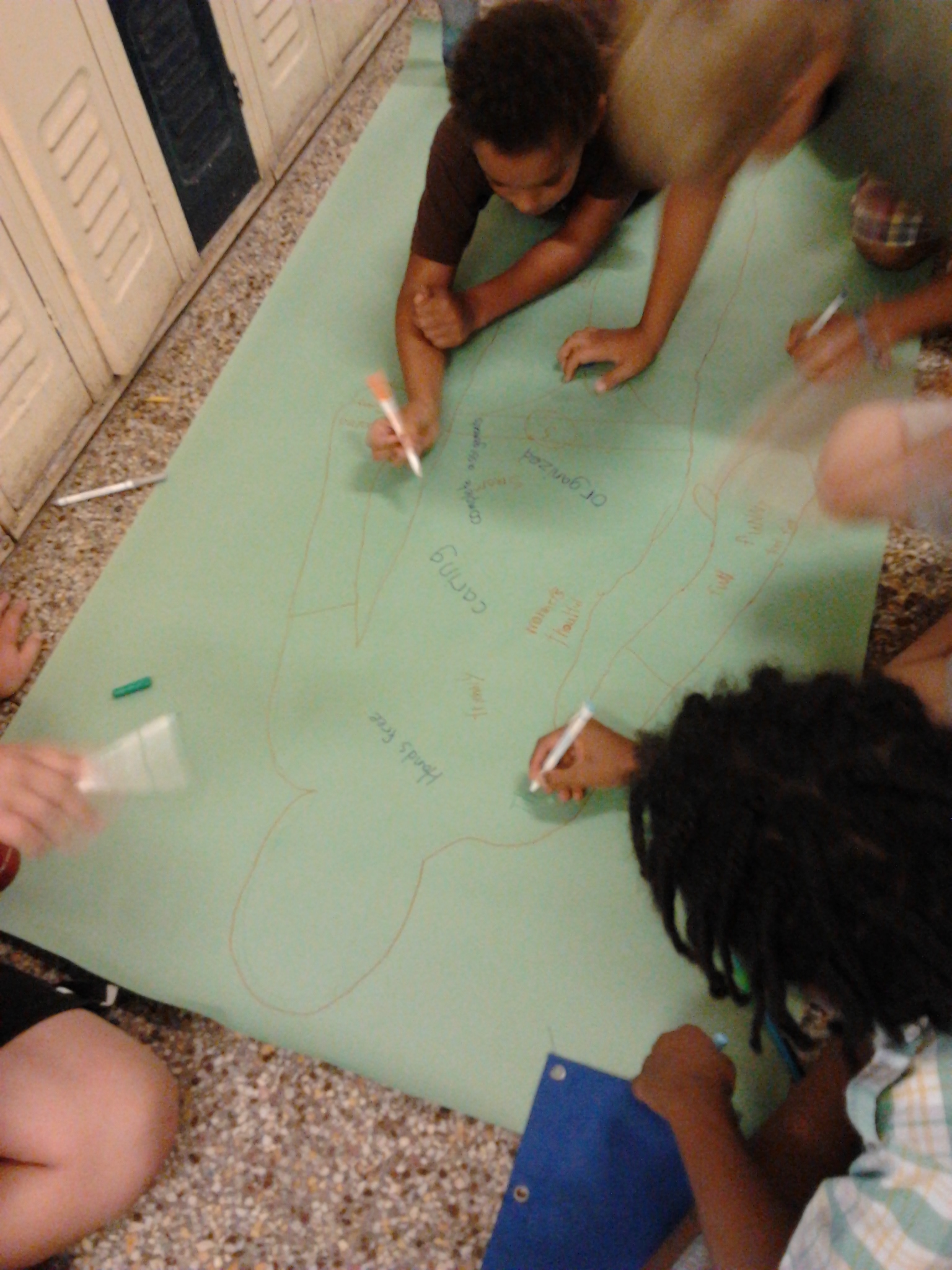
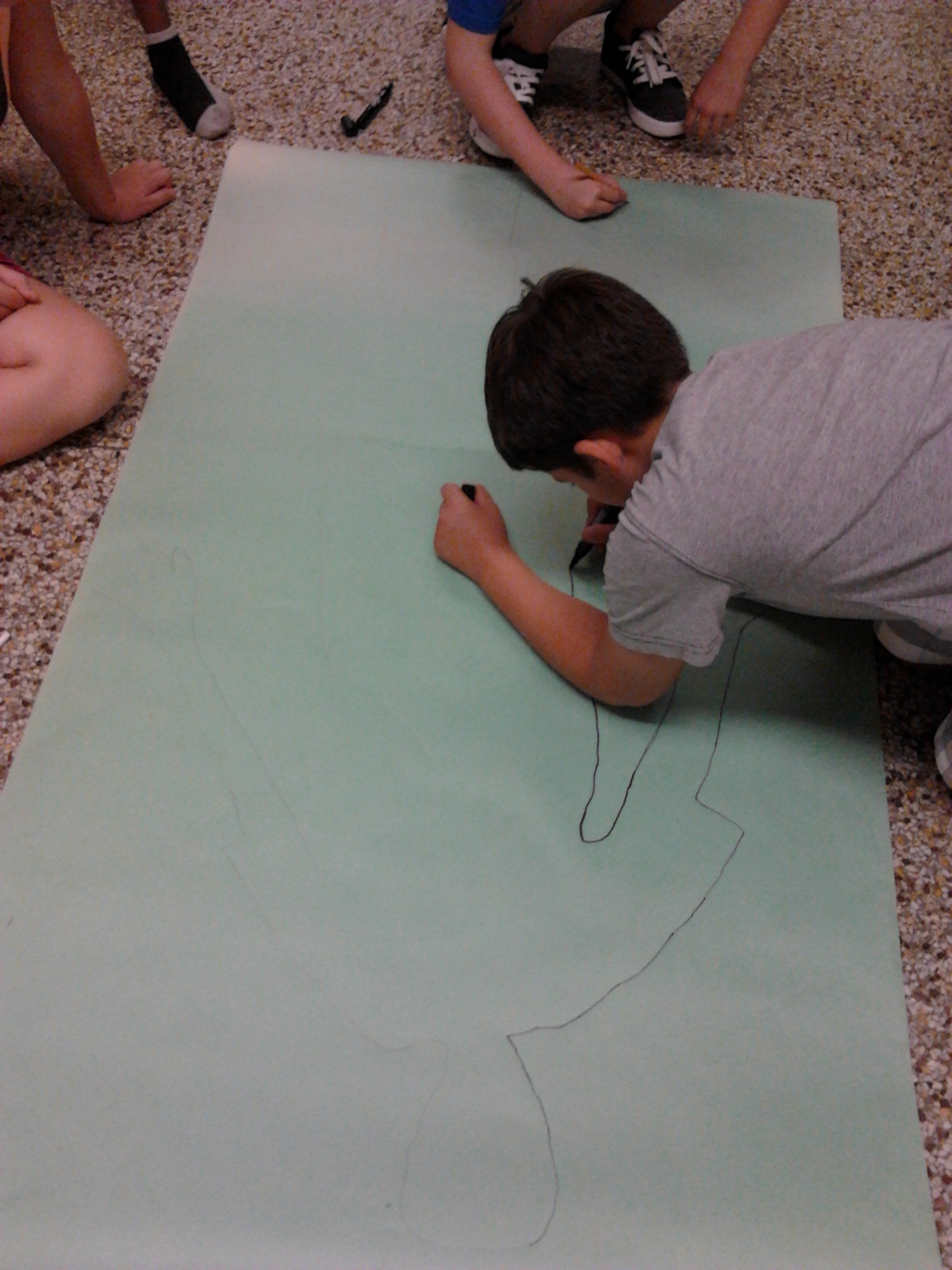
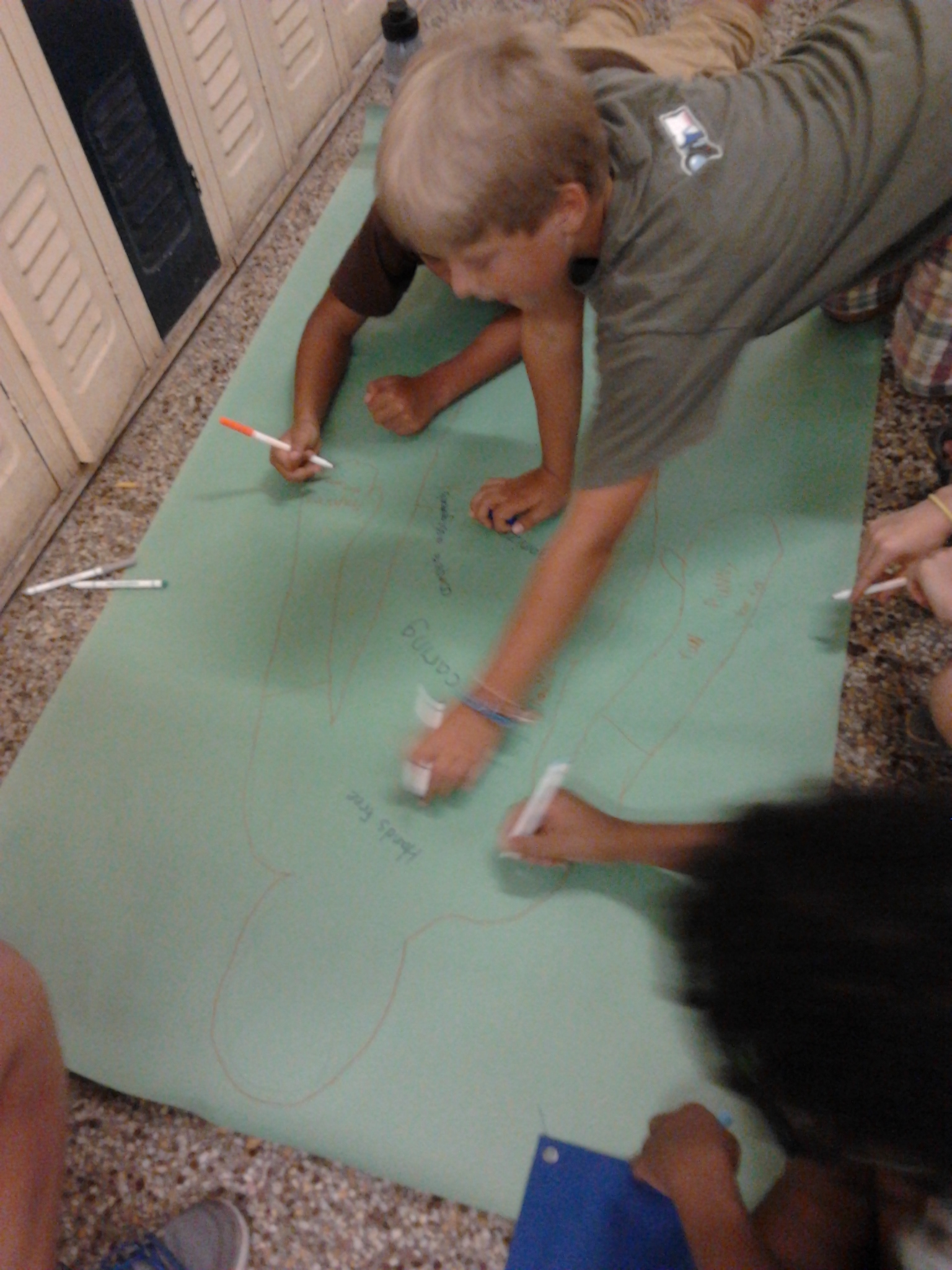
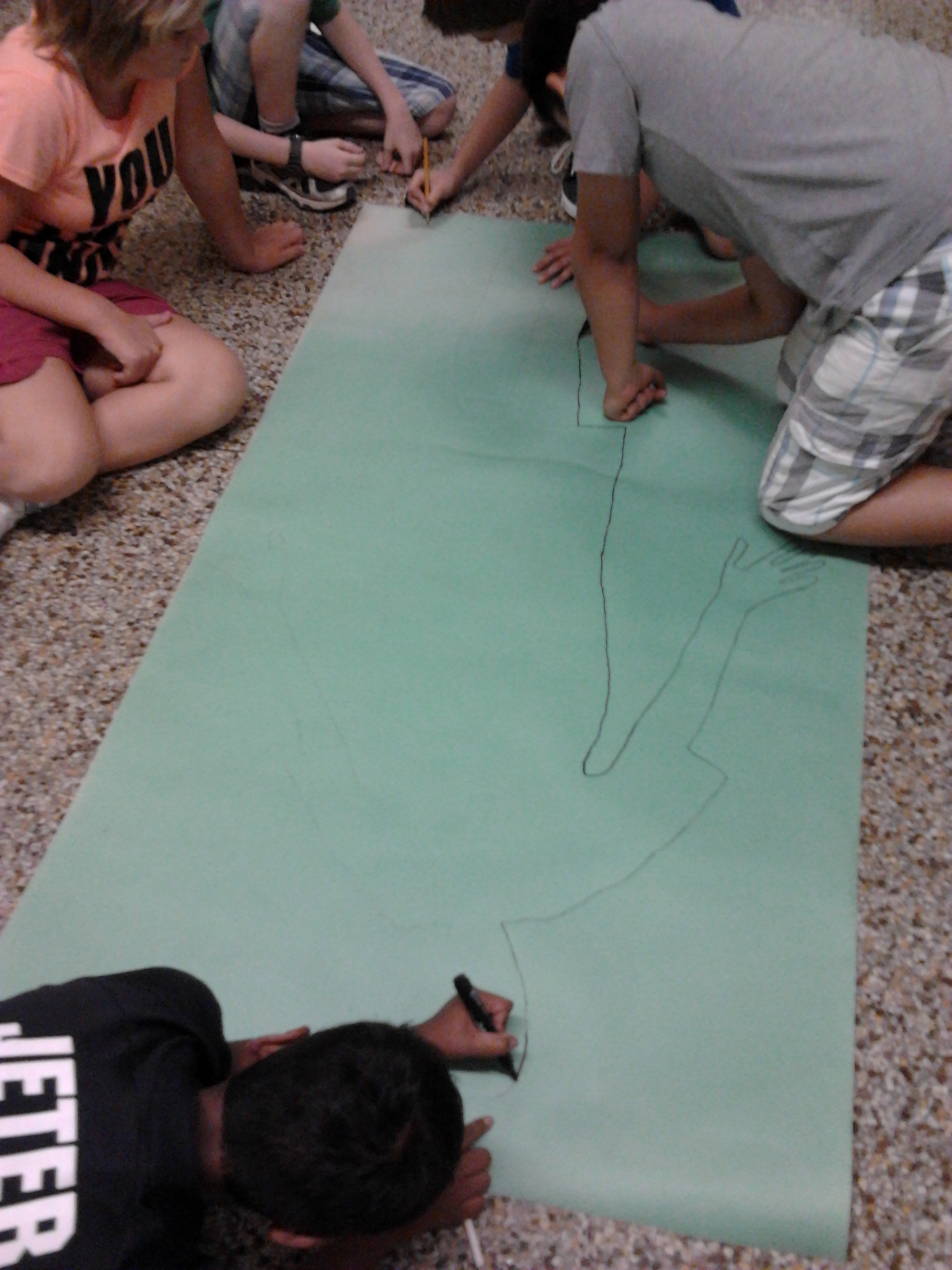
Getting back to the activity; after our lesson, the students got into groups and traced one student in the group. Then as a group, they wrote what helps them to do well at school on the inside of the body and what keeps them from doing well on the outside of the body. The students really enjoyed the activity and every class (from grade 5 to grade 8) has asked to complete the activity. We have the final products hanging in the class as an everyday reminder. This year, I decided to not complete the activity with my prep classes but I will consider it for next year.

Photo of Alison Board

Getting Started In A New Grade and School

As I return to blog about my experiences this year, I have a different perspective of some of the challenges that September brings. In addition to a new program (Full-Day Kindergarten), I am also at a new school. The change is exciting, but learning the culture and practices of a new school takes time, as occasional teachers know all too well.

During the first week I was focused on creating an inviting and supportive environment for all the new students, and with staggered entry the number of students grew each day from 17 to 26. However, I was also getting accustomed to the many bells (bells for students and bells to remind teachers of duty), locating printers that were close to my classroom for print jobs, and learning school protocols for various incidents.

In addition to Carmen’s good advice in the previous post, I would like to add:

  • Be flexible. We love to plan, however flexibility is needed throughout the day dependent on the needs of the students, your colleagues, and your administration.
  • Be innovative. You may not have the materials or resources that you want for your ideal program, so draw on your own creativity and innovation.
  • Have a sense of humour. When things go array, see the humour and enjoy the laugh.
With Phase III of the Full-Day Kindergarten program being launched at my new school, we are all adapting to the unexpected. It helps that we communicate daily on what is working to establish consistent routines for entry, lunch hour, and dismissal in all the FDK classrooms. My classroom was previously a Special Education classroom. I set up the room with limited resources and furniture, though it is expected to arrive soon. We are waiting for a carpet, chairs, easels, and kitchen units for the drama centre. However, some creative borrowing has provided the necessities for the first few weeks of school.
I am attaching a photo of my room (15) before the make-over to a Full-Day Kindergarten room. Then I will post photos as the room evolves with materials, resources, and the children’s work. If anyone is interested in ideas for centres, let me know and I can also add a specific post in response to a question.
Room 15 (Before becoming a FDK room)
Photo of Erin G

Building Inclusion through Oral Communication Activities

In the Core French classroom, building inclusion is a must. Students will only feel comfortable participating in an environment of tolerance, security and where they are not afraid of risk. In this type of atmosphere, creativity flourishes and learning French becomes interactive and a more authentic experience. I usually start with simple short dialogues involving greetings and exchanging information (ex. telephone numbers and emails). What makes the outcome so positive is that students infuse their skits with current expressions and it is simple enough that everyone can be successful.

Getting all levels of students to participate is also facilitated when you  have visible prompts for those who need more support. Likewise, I also make sure to always to include and model ideas for level 4 extensions using compound sentences with parce que, mais and alors.

Having read through the book, I found several suggestions which would lend themselves perfectly to encouraging inclusiveness through speaking activities. In particular, I thought I would try Carmen’s “Friend Venns” where kids exchange likes and dislikes. Also Shernett’s “Ten Things About Me” incorporated into inside/outside circles would be the perfect and always welcome kinesthetic activity!