Sunshine Moments and Organization SKills

Hello Fellow Travellers

Those of you have been in community with me for two years, may know that I have moved from a centrally assigned position as a Consultant (Special Education) to being a Grade 7-8 teacher in a school this September. I am delighted.

My Work and My Job Title

Like you, my work is more than what my job title suggests. There are many small and big things that educators do through our work day that is invisible or invisibilized (made invisible) due to many factors. One of them is that we do not know the realities of people’s home and work lives. We do not know the complexities of the lives of our students even from day to day and period to period.

Reframing and Regulation

When my children were growing up, and now when my students feel overwhelmed by new experiences, I gently remind them that…

It Is Not Weird. It is New.

I also reminded myself that this week when I was in a school full time and for the whole day. You see in my centrally assigned role, I used to be in two to three schools in a day and although I co-taught with colleagues and was always in classrooms with students, I was not governed by bells and timetables the same way. That takes some getting used to.

Grace Is Key

  • In these early days of the school year, everyone, whether colleagues, office staff, caretakers, administrators, families and of course our students, is figuring things out anew given all the variables in our lives.
  • Sometimes timetables get messy, supervision duties need tweaking and pencil cases are forgotten.
  • At such times, it helps to extend some space and grace to the person in front of us in real time, just as we would expect it to be gifted to us.
  • Attending workshops and webinars, sharing updates of sessions presented on social media, following content and putting up glitzy posters on our walls may be important.
  • But really being able to practice grace towards one another is the key to building and strengthening school culture.

The Person and The Paperwork

Since September 8th, in addition to building community and getting to know the students in my class, I have been speaking with students, families and colleagues to understand students’ strengths and areas of support so that I can coordinate IEPs with multiple system partners’ inputs.

I find that at this busy time it helps me to remember this reality:

Under All The Paperwork is Someone’s Child

Sunshine Moment

My sunshine moment was therefore related to paperwork because it impacts my everyday work as it does for colleagues who are partnering with me.

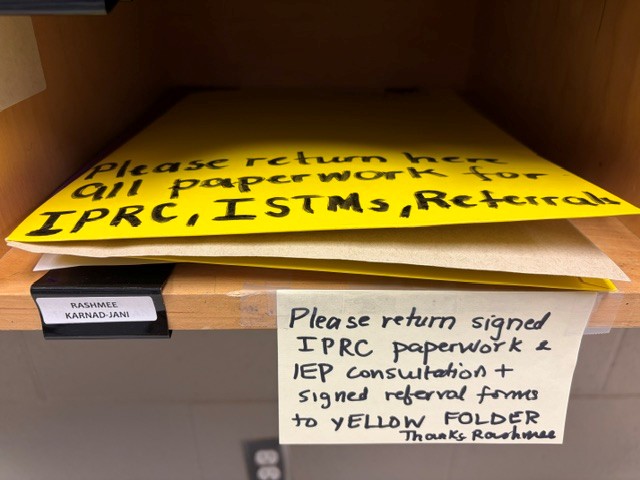
As my colleagues and I have busy work lives, and I am trying to keep my teaching space and my school-wide paperwork organized, I began by setting up one process in motion that works well for all of us.

Moreover, we do not have to leave our schedules and walk around to look for one another. This way, papers get filed promptly and we can all move on with our day.

Often the seemingly small considerations are the start of long term collaborative and respectful work practices.

P.S: In addition to the messaging and memos from your school district, do review The Individual Education Plan (IEP): Advice to Members

With You, In Solidarity,

Rashmee Karnad-Jani


September Blossoms

Hello Fellow Travellers,

Welcome back to you and me in our schools, classrooms, to our routines and to this special place where we connect and converse.

To those who are just coming to this space, welcome also. I am delighted to be able to return to The Heart and Art of Teaching and Learning for the 3rd term of writing as it gives me an opportunity to learn from and with you, my colleagues who write alongside, as well as everyone else who reads and responds to my writing.

Why This Greeting?

Like many students, families and colleagues in Ontario, I too am multilingual and in one of the my languages the word for people who are on the same journey especially metaphorically, are referred to as hum-suh-fur or fellow traveller. This is why I often address you as my fellow traveller.  We carry similar loads, sometimes more, sometimes less. We travel routes left for us by educators who taught our students previously and we will leave our footprints for others to look at and determine if they want to walk alongside or take a different route.

The Map for the Read Ahead

The map for the road ahead appears to be a fluid one and we get to determine with our students and colleagues how we would like to proceed. That said, there are many supports available to me and you from ETFO resources of which some key ones, I am sharing below.  Please visit, review and share with early career colleagues and those who have taught longer because just like we want our students to be lifelong learners, we too need to keep learning.

Register on ETFO Website and Login

When you register and/or update your contact information on the ETFO website, you can access a variety of rich resources created by members for members.

Also, you can get prompt access to the latest information from ETFO even if there is a time lag in getting it from the school-based stewards of your local.

Open Access Resources

These are some key ones that you and others will find helpful.

Pedagogy and Professional Judgement Series 

Thoughtful Assessment: Equitable Practices to Improve Student Learning in the Age of Artificial Intelligence

Some Previous Conversations

In the 2 years I have been connecting with you through this space, I am sharing some conversations that were well received ny colleagues that you may browse through to get to know me better.

Please write back and share what you want to talk about.

Welcome to ETFO

Of Lawn Signs and Talking to People

Leave Your Shoes At The Door

Supporting Special Education Needs: Part 3

As I say bye for now, please know that you are not alone though sometimes it may feel that way.

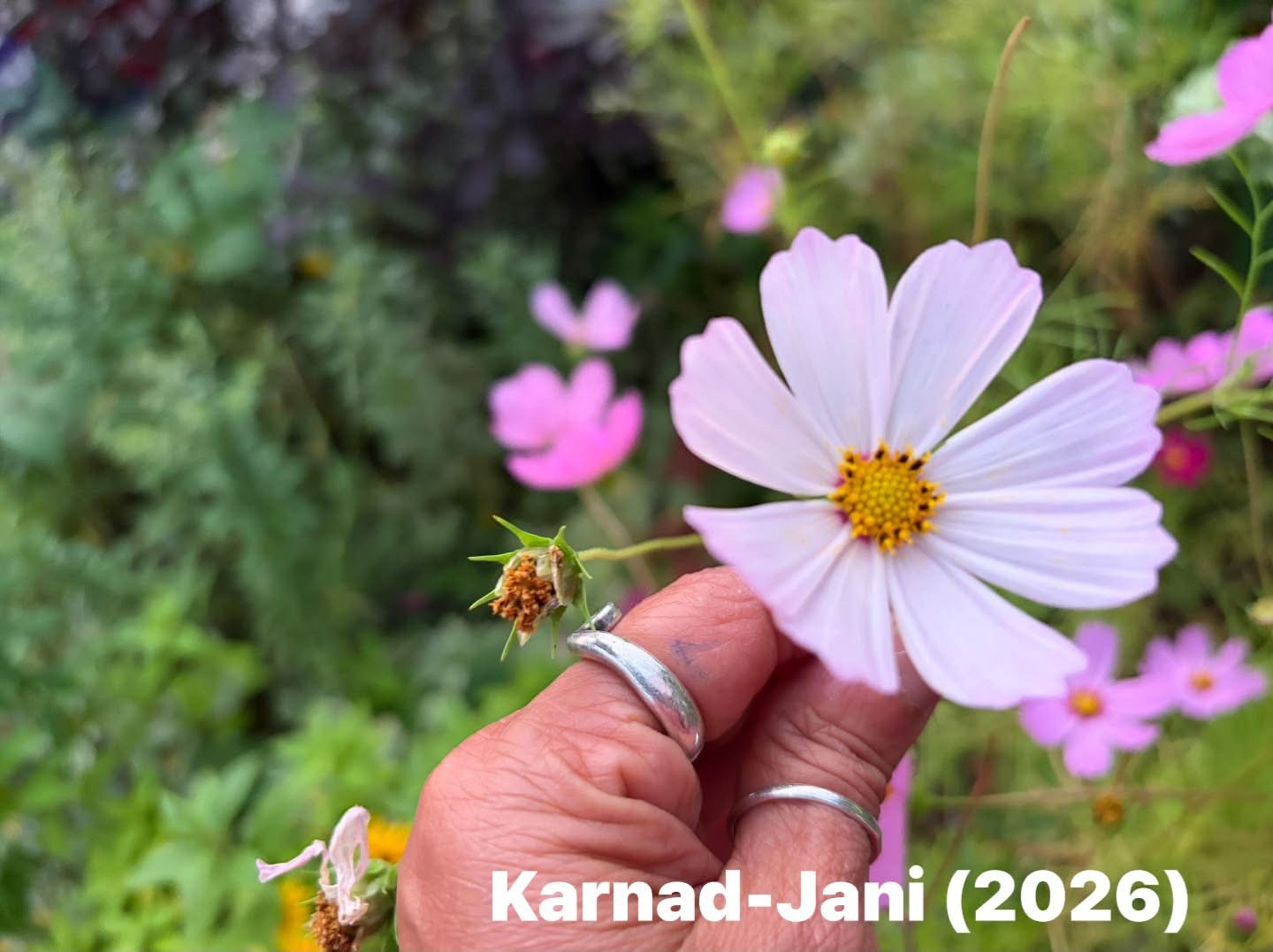
A light pink cosmos flower held between finger and thumb by the gardener who is wearing silver rings. The flower is set against background of green foliage.
September Blossoms

With You, In Solidarity

Rashmee Karnad-Jani

What Happened?

Where Are We?

The world is a strange place right now, more than ever. And educators want to help. We try and find ways to support students and their families through the difficulties they may be experiencing.  We need to be mindful of many things before, during and after our interactions in these endeavours.

Important…

This is the word that came to mind when I saw this video shared on social media. Scrolling through a screen I discovered “Communicating with Families Through a Trauma-Informed Lens” at https://etfopley.ca/pley-chats. 

“Educator Christine Galvin shares important elements of her approach to building meaningful partnerships with parents through a trauma-informed lens” the post said. I found the explanation accompanying the link to be very thoughtful as it invites educators to think through a variety of aspects while engaging with the material.

Let Us Examine Both Intention and Impact 

Sometimes the best intentions can have unintended impacts.  So it is with trauma informed work, and it becomes important to develop a mindset that allows me and you to step away from taking things personally and asking “What did I miss here? What do I still need to learn?”

I weighed out the pros and cons of consuming content in our busy, under-resourced work lives if we do so without critical self reflection.

My Stories Are My Stories

When reaching out to families, students and even colleagues whose experiences we think will help us understand others’ better, it is important to be mindful of intention and impact.

It is also very important to remember and understand that no one owes us their stories.

  • To those of us who have been through difficult times, while we value our experiences we don’t have to re-traumatize ourselves by over sharing to become believable when others question our trauma informed practice as can happen.
  • I always think when asked “So what happened?” … My life isn’t a story for you to consume is what I may think but I don’t say that.
  • Instead, I say “Thank you for your interest in my experiences.  However as this is my personal experience, I’m choosing not to speak about it.
  • While I am not always able to say this exactly as I have typed it here, due to power relations in the space I am in, I do my best to place boundaries when people get more curious than they need to.
  • I am mindful of the impact this has on me although I understand their well intentioned questions.
  • Also, we  don’t have to ask people to recount their experiences  by asking probing questions.
  • Especially with children and young people, as well as families who are socialized and trained by life experiences to answer all questions directed to them due to power relations, it’s important to not ask questions that I/you wouldn’t be comfortable answering if they were directed to us.

Some Tips

  1. Examine your biases.
  2. Listen with empathy.
  3. Keep the conversation confidential always.
  4. Keep your meeting notes in secure spaces as per the guidelines of your school board.
  5. Speak to people within the school and school board who has the institutional responsibility to support the next steps needed to support the family and student or staff members.
  6. Remember that people’s stories shared in confidence aren’t for public consumption –> staff rooms, workrooms, hallways or social media are all public spaces. 
  7. As educators, our role is to support and to find support. Never judge.
  8. Acknowledge that our talk becomes the official text when we write meeting summaries so read and revise language so that it pertains to students’ learning and well being, nothing else.
  9. Please read, share and implement ETFO’s Managing Current Events and Sensitive Issues: Tips for Members (Feb 2026).
  10. This is a very important resource for early career and experienced members alike. If colleagues in your schools have not seen this, do share.


Above all, Let Us Consider This…

Acknowledging humanity and the understanding that people have lived lives in other places before coming “here” is key.

Those who have ties to this land since times immemorial do not owe us their stories either. It is upto us to learn and demonstrate respect.

It is up to me/us to learn the history and look around right now to see what is unfolding.

Kindly reach out to the Mental Health Department in your school district for further support to engage with and strengthen Trauma Informed Practices.

Doing this work with others as a community based school-wide approach is very helpful as one is not alone and the learning is deeper and across all workspaces that provides a wrap around support.

With You, In Solidarity

Rashmee Karnad-Jani

Pouring Water On Sand ?

Hello Fellow Travellers,

I hope you are well. As the growing season comes to a close in our part of the world and I begin these conversations with you for the 2nd year through this space, I wanted to share how delighted I am to spend this time with you.

Last year, I had written about how sometimes we feel wobbly…

Coming back to a new school year is challenging for me/us as it is for our students, sometimes.  Colleagues ask me sometimes “Is it me?” and I do my best to listen, just listen and if the connection allows, I reassure them that it is not them. It is all of us together, trying to figure out the complexities and the joy of this work one day at a time.  As I was thinking about my day and week recently, I said to myself “this feels like I am pouring water on sand”. I sat with that idea for a while, had a cup of tea, went for a walk and I felt lighter afterwards. I had some new ideas about whom I would reach to, what I would continue and what I would reimagine. I let the words flow like the water I thought I was pouring on sand.

Here is my gift to you – my first poem here.

Pouring Water On Sand ?

Some days I feel

as if  I am

pouring

precious

water on sand

The water disappears

and I don’t see

anything grow.

Yet there is

a deeply held belief

that this water

flows

and goes somewhere

underground

and comes up

far away,

in a verdant space

where there’s fertile soil

And the seeds

that you and I have planted

will thrive.

Will you also believe this

with me?

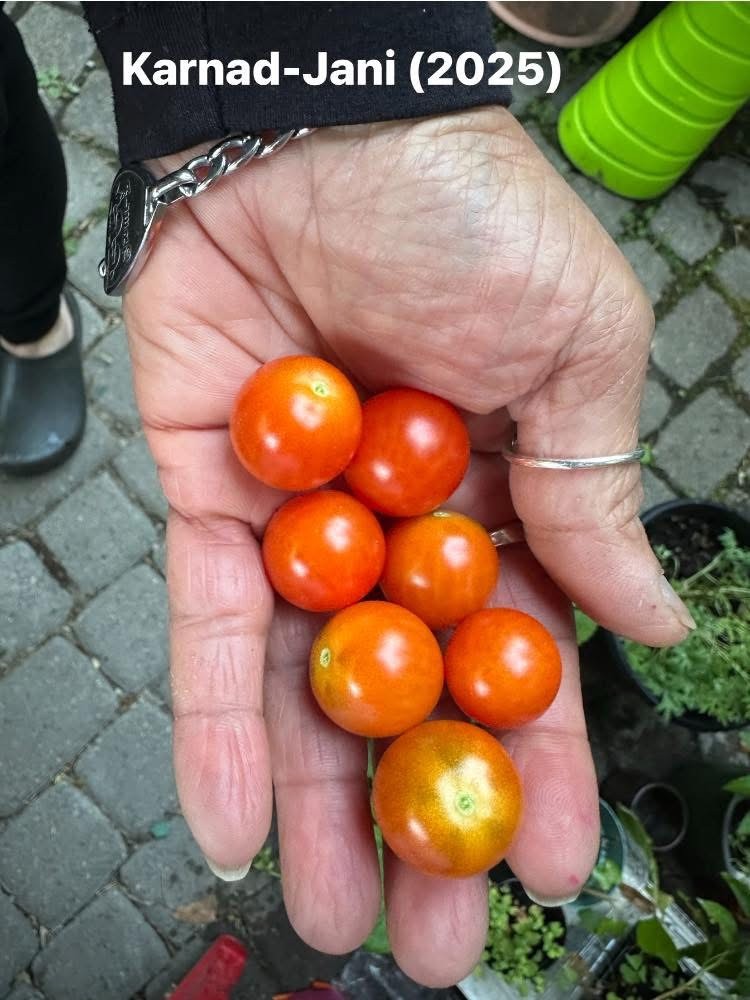
7 red cherry tomatoes in the palm of a hand against a grey background of a paved yard.
Tomatoes from August 2025

With You In Solidarity,

Rashmee Karnad-Jani

Shift from Summer Recaps to Hope

During the first week of school, it is common for teachers to assign a writing task that to ease students in with light writing activities — like the classic “What I Did This Summer” assignment. However, I chose to focus on connection instead. This is because the beginning of the year should be about building a classroom community and expectations. 

Recognizing that students may not want to recount their summers for several reasons, these are the questions I ask instead.

  • What do you want your classmates to know about you?
  • Tell me about a time that you were proud of yourself!
  • What are you looking forward to this year?
  • What are your hopes? 

Let’s start the year by making every student feel like they belong!

Mentoring Moments: Time Management 101 for the New Year….

This New Year, I wanted to encourage you to manage your time, your busy time, your spare time and alone time. I can’t think of a better time to blog about this topic than now as we make new years resolutions for the up coming year ahead.

I can honestly say that if you organize your time well as a teacher, you will be able to have work during work hours and build your family and friendship lives separately and explore life the way you would like…

As a mentor or mentee at any given moment in your teaching career, time management skills will help you accomplish everything you want and not burn out in your profession. Remember it’s a career and you need to explore the learning opportunities, balance life and enjoy the moments as we teach daily. So, here are my thoughts. Please feel free to share yours…

Strategies that have worked for me!

  • Using a calendar that is user friendly
  • Goal setting weekly
  • Timed To Do List with daily, weekly and monthly goals

Plan with a Backwards Design in mind

  • Plan the ending of your lesson first.
  • Then plan your teaching goals.
  • Then plan the steps that will take you to the goal.
  • Consider student input in how you plan things out.
  • Set those learning goals for your students and lesson.

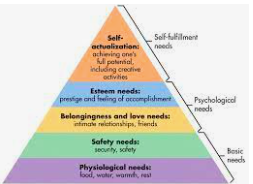
Maslow vs. Vygotsky vs. Bloom

  • Put the needs of the students first, with high expectations on what you expect them to do.
  • Remember all students have to feel like the belong to make significant contributions.
  • Let students guide the lesson pace and ideas.
  • Make the space so that you can advocate for your students.
  • Remember “RELATIONSHIPS” are the key.
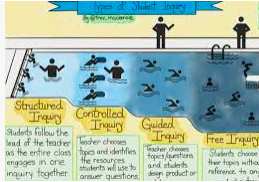
  • Inquiry with gradual release of responsibility has been my secret to being successful.

It is always important to draw connections between Maslow’s basic needs to ensure they are met and Vygotsky’s learning expectations as we develop skills for students.

Photo credit: for the Maslow Hierarchy of Needs graphic.

Photo credit: for the  Blooms Taxonomy graphic.


Photo credit: for the Vygotsky’s philosophy graphic for Inquiry based learning.

We build amazing lesson expectations so that we can guide discussions and lead students to think with higher order thinking skills when approaching problems. We encourage students to look at situations that they face with a problem solving mentality in order to develop their comprehension skills, and resilience.

Reflection: What were your New Year’s resolutions as an educator? Write them down with timelines. SMART goal them. That’s my goal for you as a reader of my blog!

Yours in Education,

Nilmini

First Days of School Through a Wellness Lens

The long awaited return to the classroom has finally come! After being outside of the classroom since March 2020, I was able to go back to the physical classroom this September 8th. I was so happy to be able to set up my room and await the arrival of students. Teaching online was challenging and did not allow me to have the face-to-face connections that are much needed in a classroom. I am so happy that schools are open and that my position is no longer online. This year, I am teaching grades 7 & 8. I hope to still be teaching the same class come October, but with re-organization, things could change. 

Preparing for the first day was challenging as it had been 14 months since I had taught in person. Luckily, our school board prepared activities for us entitled “Reimagining Wellness”, where teachers are asked to teach 90 minutes a day from the wellness activity choice boards. The choice boards have a variety of activities within one of these three categories: Community and Team Building, Physical Activation and Social Emotional Skill Development. Teachers select one activity from each of these categories to introduce each day (thirty minutes per activity). My students seem to enjoy the activities and have enjoyed getting to know each other without feeling pressured to jump into all the curriculum activities. I am thankful for these resources as it has always been important to start a class off with these types of activities, especially after many students have been away for 14 months as well.

Additionally, it has been great to get to know students such as finding out their preferred pronouns and to try to get back into the swing of things. Our school board is looking to start voluntary extracurriculars soon and my class has already begun planning for the Terry Fox Assembly. Myself and my students are looking forward to these leadership opportunities as we have been without them for much longer than the COVID shutdown. As long as we can stay safe and get back to doing the things at school that we love, the extra things make the day that much better. 

As October draws closer, teachers in our board find out if any students are leaving to go online/returning from online. Our school could undergo a massive re-organization and we are all hoping things will stay the same as many students have now had the chance to bond due to these wellness activities. However, after teaching online last year, I have gotten better at dealing with change and learning how to overcome challenges. So if my assignment changes, I will be able to accept that with a positive attitude. 

I hope all teachers and students had a great first two weeks and that everyone is happy to be back. I know that all students are definitely glad to be back in the physical classroom where they can continue to make connections and learn in the way we were always meant to learn. 

Community Immunity!

COVID-19 has turned everyone into a first-year teacher.  It doesn’t matter how many years of experience you might have, because this year is unlike any other that we have ever experienced.  All of us are re-imagining new ways to connect with students, whether you are learning together on-line or in-person.  It is a very humbling experience to be starting from scratch.

I have chosen to teach in-person because I crave community and collaboration.  The weeks leading up the first day of school were frustrating and stressful.  Everyone was scared and nervous as we struggled to create new routines and protocols.  As soon as the students arrived, I began to relax.  There is still so much that is unknown and unpredictable, but I know how to play and learn with children.

Here are some of my insights from the first few weeks of teaching Grade 2.

Sign Language:

Wearing masks makes it very difficult to communicate clearly.  We cannot read each other’s lips or facial expressions, and it is hard to hear each other.  For those of us who are teaching outside, our voices are struggling to project.  I grew up with a father who was deaf-blind.  As a child, I learned about barriers, disability justice, and how to communicate with my hands.

I worked with my students to develop simple signs that we can use to help us communicate.  We have symbols for: turning up the volume, sharing the same idea, making connections, asking to use the washroom or get a drink of water, and letting someone know we are smiling underneath.  I made a short video, which I shared with my families after the first day of school.  Send me an email if you would like me to share it with you.

I also bought myself a voice amplifier, which helps everyone to listen, and makes me feel like a rock star!

Drama and Play:

Drama is a powerful way to teach and create community.  I have been using role-playing and charades to practice and reinforce new routines, and problem-solve different scenarios.  I believe in the possibilities of play, and I am holding space for us to play together.  After months of isolation and loss, we all need to connect and have fun!

Every morning, after pre-screening and sharing our connection to land, we play a few cooperative games.  We have been learning each other’s names by clapping out syllables, using gestures or wordplay, such as “Very Velvet”.  We ask questions and “Step into the Circle”.  We change places with someone else “When the Big Wind Blows….” and we try to guess who is leading the action in “Follow the Leader”.

My teacher friend, Peyton Leung, shared this link of Socially Distant Outdoor Games for Kindergarten-Grade 8.  Check it out!  Also, here are some Drama Games that will work on-line and in-person.

Outdoor Learning:

All the educators at our school are trying to spend as much time outside as possible.  We know that learning outdoors is safer, and we are transforming our pedagogy by teaching and learning outdoors.  There are many challenges to overcome, including city traffic and construction noise, carrying the materials you need everywhere you go, the lack of shelter and easy access to washrooms, etc.  We are embracing the “big ideas” of change and adaptation and using our imagination to co-create new possibilities for education.

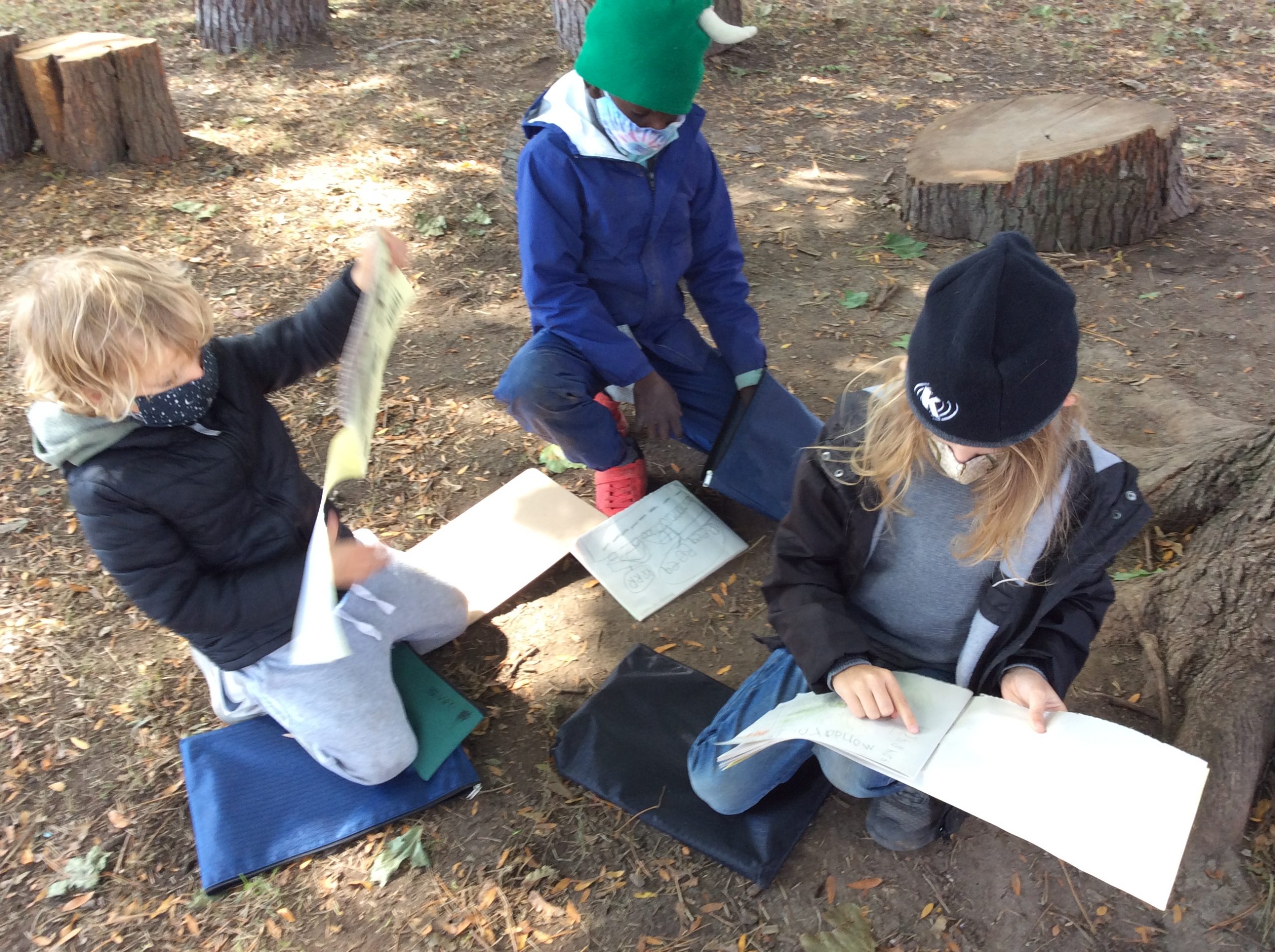
Kindergarten-Grade 6 students have been exploring measurement and mapping, as we connect with the different areas of our school yard.  Inside our “portable desks” are materials we can use for documenting our learning.  We are all learning how to keep our knapsacks organized and take responsibility for the extra masks and layers, hand sanitizer, “sit-upons” and school supplies.

This year, we will be deepening our understanding of land education and collaborating with Doug Anderson, who is one of the co-authors of Natural Curiosity 2nd edition: The Importance of Indigenous Perspectives in Children’s Environmental Inquiry.  We will explore a pedagogy of relationships, and honour land as first teacher.

There are extensive resources that connect Outdoor Learning to the Ontario Curriculum.  These Kindergarten-Grade 8 activities were created by the Peel District School Board Field Centre Instructors.  Please share other resources that are supporting you to do this work.

School year start up

A new school year has begun again and I am once again teaching grade eight, in my opinion, the most exciting and enriching grade I have taught so far.

The first few weeks have been incredible because of the honest conversations we had week one about how great their year can be if they make it that way. We talked about fun trips, ideas and awards that go on during their grade eight year. We talked about what the ideal classroom looks like, sounds like and smells like (ha!) so we made some ideas on how we can achieve those goals. The students have done an amazing job so far on adhering to all of the goals they set out for our own classroom.

A few things have been making this start up so incredible:

  1. There are many student leaders in the classroom who have helped to set the tone for all of the other students in the room. They model positive behaviours and shut down negative ones. There is little to no times where I have interjected to tell them what I expect because another student has already done that for me.
  2. I have already received the help during breaks and afterschool of about 9 or 10 students with teams that go on at our school. These leadership activities have made them stand out in the classroom as well as the extra responsibility has made them thoroughly enjoy each day. That feeling that they are making a difference in their school shows everyday in their mood and behaviours. I am hoping even more students will be interested in these opportunities as only ten of the 26 have stepped up so far. I have awarded these students with small circular stickers that they put on their desk organizers. At the end of the year, we will see who has volunteered the most and those students will be eligible for a token of appreciation (not sure what that will look like yet). It will also help the staff with selecting grade eight awards because they will see who has given up so much of their time for our school community.
  3.  I have offered students homework to complete every night which will help them prepare for grade nine. 19 out of the 26 students have taken this homework and completed it each night. I have three ESL students who I am working on preparing appropriate homework for them so then it will be 22 out of 26. We take up this homework each morning and new homework is given out every night before they go home. The fact that it is optional makes students actively take the initiative to better themselves and their after school time. I am so proud of these students as I mentioned it will help them get ready for grade nine and the few students who took that opportunity last year had the highest marks in the school (they won the principal’s award). It is great hearing groups of students want to hang out after school to work on homework. It is definitely a good after school option for them.
  4. I also have offered students level four or above and beyond opportunities that go with each task we have completed as a class. Seeing those 10-12 students select that option is awesome as they are actively selecting to do better and to challenge themselves each day. I remember being in school not knowing the difference between all of the levels and not knowing how my teacher came up with my mark. I make sure all of my students know how they can excel to the highest level possible.


I think all of these things working together have made it impossible for the students in my room to have a negative experience or to make the day negative for someone else. It is incredible to see such focus and leadership day to day and it makes me so proud of my class. I was away last week at a junior baseball tournament (coached by two of my students) and my supply left only this note, “Your class rocks!” This would not have been possible last year as I must have missed many of these steps in the school year start up. I am really hoping the year will continue in this positive manner.

Having faith in your students and challenging them daily is the best way to go 🙂

School year start up

Well we are already four weeks in and hopefully it has been a great start of the school year for everyone. I am now teaching a grade eight class, teaching math, science, history/geography, language, art and drama. I was overwhelmed at first thinking about all of the subjects I would be responsible for but I have such an amazing grade team so I am truly thankful for all of their support and activities that have been shared.

September is an important month to get to know your students for not only their likes and dislikes but just honestly, do they enjoy school? Every student has their ideas of teachers, rules, subjects, reading, the list goes on and on. Just listening to them talk to other students during class teaches you so much about their interests and about how they have been affected by various things in their past school years. By grade eight students either LOVE or HATE being in a school. I am now faced with the task of continuing to develop that love or trying hard to turn around the hate.

I have been looking at new apps, reading exciting activities for my class to try, looking at fun trips, trying to think of new clubs/teams and I am hoping that I will engage some students who have been disinterested in the past. It is definitely a year long task to try to engage and involve all students so I hope to continue on that journey each day.

On a personal note, as teachers we often feel many emotions at the end of each day. There are questions we ask ourselves and things we always wonder. The one I have been asking myself a lot lately is, “Did I get to everyone?” I feel that is the hardest thing to go home with at the end of each day. That is why I am trying this year to make a few notes on who to go to first the next day and then actually following up on those plans. I am fortunate to finish early at the end of my school day so I can finish all my school work around 3:30/4:00 pm. That gives me roughly six hours of “me” time! That time is so important for our mental health and it is something I am also hoping to focus on this year. Shopping. stair climbing, doing the laundry, making a fun dinner, watching an episode of my favourite show…just a few examples of things I can do each night to stay positive and enjoy each day to the fullest.

I am hoping to talk to my students tomorrow about how to use our after school time wisely to better ourselves and to really add to our day. Our day isn’t over after school and we should really do our best to enjoy the time we have to keep ourselves positive and to make the most of our day.

These are just a few things I have thought about as summer ended and our school year begins. These four works have not been the easiest as being permanent now full time in a very different setting has made me think differently but I am staying positive and really reflecting on the good at the end of each day and looking forward to working on new things the next day.

I am looking forward to posting every few weeks about exciting ideas that occur in my class as well as all the ways I am staying positive and making the most of each day!