Sometimes you win. Sometimes you learn.

My Little Guru

Ever since I can remember, I have always strived to surround myself with people and experiences that inspire and motivate me to question, learn, and celebrate the art of living.  My teachers, or gurus, have manifested themselves in different forms.  A parent, a sister, my son, a friend, poets and writers in my favourite books, social activists, great teachers, or simply people who demonstrate an innate ability to rise above obstacles in their quest to live a life of purpose.

I have the privilege of coming across little gurus each and every day of my life.  They happen to share a classroom with me.  I owe much of my learning and growth, both professional and personal, to my students.  One in particular has left me humbled and deeply grateful for allowing me to be a part of his journey.  Daniel* has been the reason behind quite a few sleepless nights.  His life has been one I wouldn’t wish on my worst enemy.  At the start of year, his personality reflected the confusion, fear, anger, and instinct for survival that is expected within his reality.  He’s the one  I would come home and talk to my family about non-stop because I was determined to understand him and somehow be a guide or figure that would help him see how amazing he truly was.  After a few weeks of racking my brain and over-thinking the situation, I decided to let it go and just work on three things: building trust, getting him to believe that I liked him no matter what he did or said, and playing to his strengths at all times so he felt the power that comes from knowing that he matters.  I learned to really listen, so much so that he would need to feel that he was the most important person at that moment.

What unfolded in the following months was a teacher-student relationship where I learned far more than I could teach him.  When his social worker came to visit 3 weeks ago, he asked me to be at the meeting with him.  What I heard during that time, was nothing short of astonishing.  His wisdom, strength, compassion, and resiliency left the social worker and I in complete awe.  I was in the presence of a little guru, a teacher who knows how to use obstacles to create possibilities and hold himself accountable for the decisions he makes in life.

I’ll leave you with an excerpt from the speech he recently wrote for our Speech Arts unit.  When I conferenced with him to look it over, I had to make an excuse to leave the classroom so I could have a cry in private.  He gave me permission to share it with you:

Have you ever had a moment in your life when you didn’t believe you could do something or you thought you weren’t good enough?  I remember having low self-esteem.  There was a time I didn’t care about myself and I felt I couldn’t be me.  But that time is long gone and now when I come to school I’m proud to be Daniel*.  I feel free from judgement.  I walk down the hall and feel joyful.  Every child needs to have someone who inspires them to stay true to themselves.  They must be inspired.  The change can happen in your life and it’s amazing.  

My teacher inspires me because every day I’m with her she gets me to really think about life and how I can become better and better at what I do.  When I’m having a bad day and so something I didn’t mean to, she sits down with me and talks to me.  We talk about how I can use what I know to make decisions to avoid negative situations.  I have learned to just be me without changing for anyone else.  

…Imagine what society would be like if everyone who needed help had someone to inspire them?  Thinking back to when I felt so low and not like the Daniel* I am today I realize that having someone that came into my life and helped me change made all the difference.  There’s a quote in my classroom I really like.  It goes like this, “I may not be perfect, but parts of me are pretty awesome.”  I’m not perfect, but I am a very unique and awesome kid.”

I let him know that he inspired me to share our story with teachers world-wide.  He smiled with the smirk of self-confidence.
Classroom setup

What’s Working

There is nothing like the gift of time. I so look forward to long weekends, not just because I can spend extra time with my family, or catch up on sleep, but also because it gives me time to reflect. I made a few changes in my classroom after March Break and it seemed like the right time to consider what’s working and perhaps not working, and how to make it work. That’s the beauty of teaching…change can happen at any time!

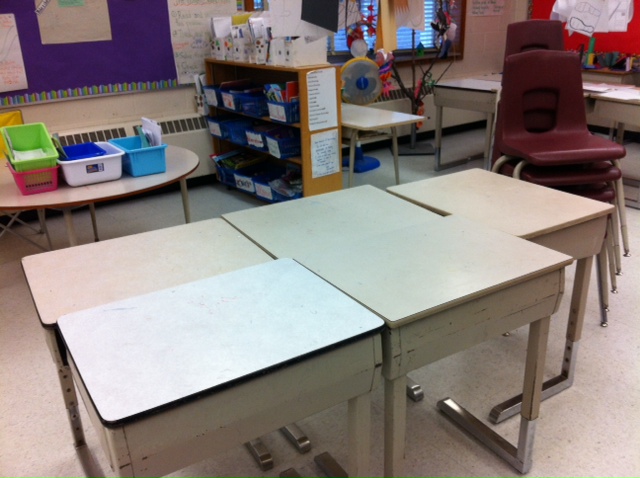
1) The desk arrangement in my classroom seemed to offer less space for movement, so I moved groups of desks together on an angle.

It still somehow feels like too many students at one table grouping…and sometimes group work can be challenging. This one I will have to re-think, perhaps making smaller groups and varying the sizes based on my students.

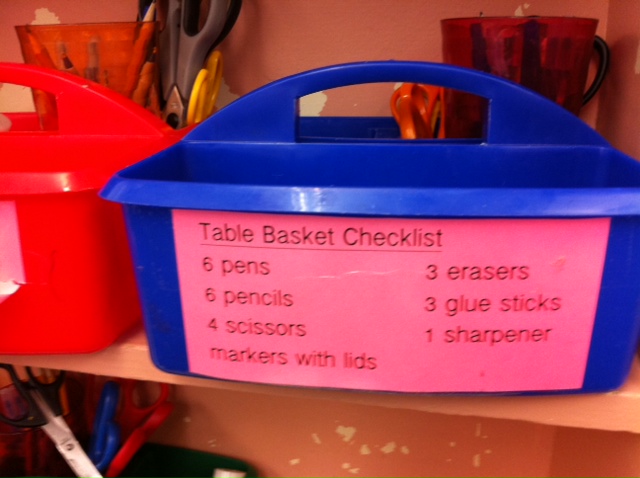
2) The table basket materials at each grouping often seemed disorganized, and I realized I had assumed that because my last set of Grade 4 students had been relatively organized and independent, this year would be similar. An unfair assumption on my part, given how unique each group can be! Therefore, I tried to add a list to these baskets so students could put materials back in the appropriate spot, thereby allowing them to access what they need.

This idea seems to work when the student assigned to table monitor checks the baskets throughout the day. I’m noticing my students are spending less time getting prepared and more time on actual tasks.

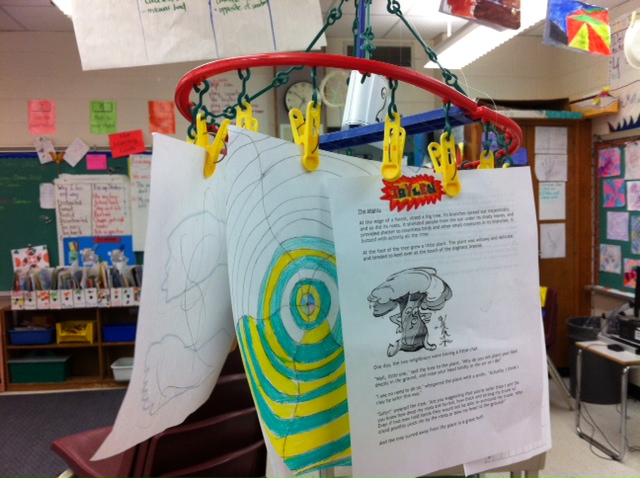
3) Many years ago, I noticed that the amount of unfinished work in different places made it difficult for me to know when my class needed “finish up” time. So, I hung hoops over each table grouping and when students were not finished, they would hang it on the hoop and return to it when they had time. It also helped me to see who might be struggling to complete work and when accommodations might be helpful.

This year, I’ve asked students to put their work on one particular hoop, so that they do not need to search several locations for their unfinished work. I find this method also more helpful for me, so I can support students who have unfinished work at each table grouping.

4) Many of my students seem to have self-esteem issues and it’s hard for them to reflect on what they are doing well. I’ve tried a variety of ideas over the year and most recently, we’ve added this “go-to people” list so that they can feel they have expertise and the ability to help others.

This idea is one I have to followup on and possibly add to, given that some students will not be able to share their expertise in a classroom setting (e.g., swimming)!

5) The last idea I wanted to revisit was reducing anchor charts to frames that can be used at the tables as a reference. This idea has been helpful for some of my students and I hope to continue using it for art activities as well.


The best part is, I have to spend less time trying to find places to hang chart paper! Next, I want to take the papers out of these frames and put them in a book that students can continue to refer to later, if they wish.

Now that I have completed my long weekend reflections, it’s time to head back to eating chocolates…


Photo of Roz Geridis

Wait time

The other day I was reading through Professional Speaking (our OCT magazine). I came across a little piece on wait time and it reminded me of a situation and comment from a colleague last year. I was a model classroom for a combined grade social studies lesson. While I was teaching my lesson, I utilized my wait time with the students throughout my lesson. Upon completion of the lesson, during our debrief session, the Instructional Leader highlighted my wait time. Which developed a fantastic discussion amongst the teachers. Some of the comments were about how long I waited, thought no one was going to answer, how quiet the room was, how proud and surprised many colleagues were about the rich classroom discussion developed due to enough wait time.

Wait time is something which is very important. The first few students who are ready to answer the questions are the students who may not need wait time and are ready to answer most questions. However, by using wait time we allow many students (if not all) an opportunity to process the question and gather information to answer the question. We also know that most students are ready to move on in the lesson and are not left behind still thinking about the question or answer.

A strategy I use to help keep the students focused is I asked the question a second time, the third time I will rephrase the question. Also, sometimes I may need to help activate the prior learning by using some guided questions. Every year I use wait time. Some years I have to wait longer than others but all my students know they need to be engaged and paying attention to the lesson and classroom discussions.


Newspaper Poetry

Discovering Our Inner Poet

I love teaching writing.  Let me be more specific.  I loved teaching writing except when it came to poetry.  For some reason, I’ve always managed to bring to life the other writing formats and genres with engaging lessons set upon a backdrop of real world contexts.  The students, for the most part, ate it all up and asked for more.  That is, until  I mentioned we would be exploring poetry.  The good times would come to a screeching halt as their faces reflected what I had also thought of poetry as an elementary student: boring and challenging to understand (how did I know what so-and-so meant by this-and-that?…and who cares?).  So of course, with my determined and stubborn personality, in the past few years I’ve focused on learning how to breathe life into this wonderful writing genre.  It hasn’t always been an ocean of roses but, for the most part, the exploration has led us to a whole new level of appreciation and learning.

We have just completed our poetry unit (which will continue  informally throughout the year) and I can honestly say that the class thoroughly enjoyed it.  I’d like to share with you a few of the activities and resources that made the experience engaging, meaningful, and memorable.

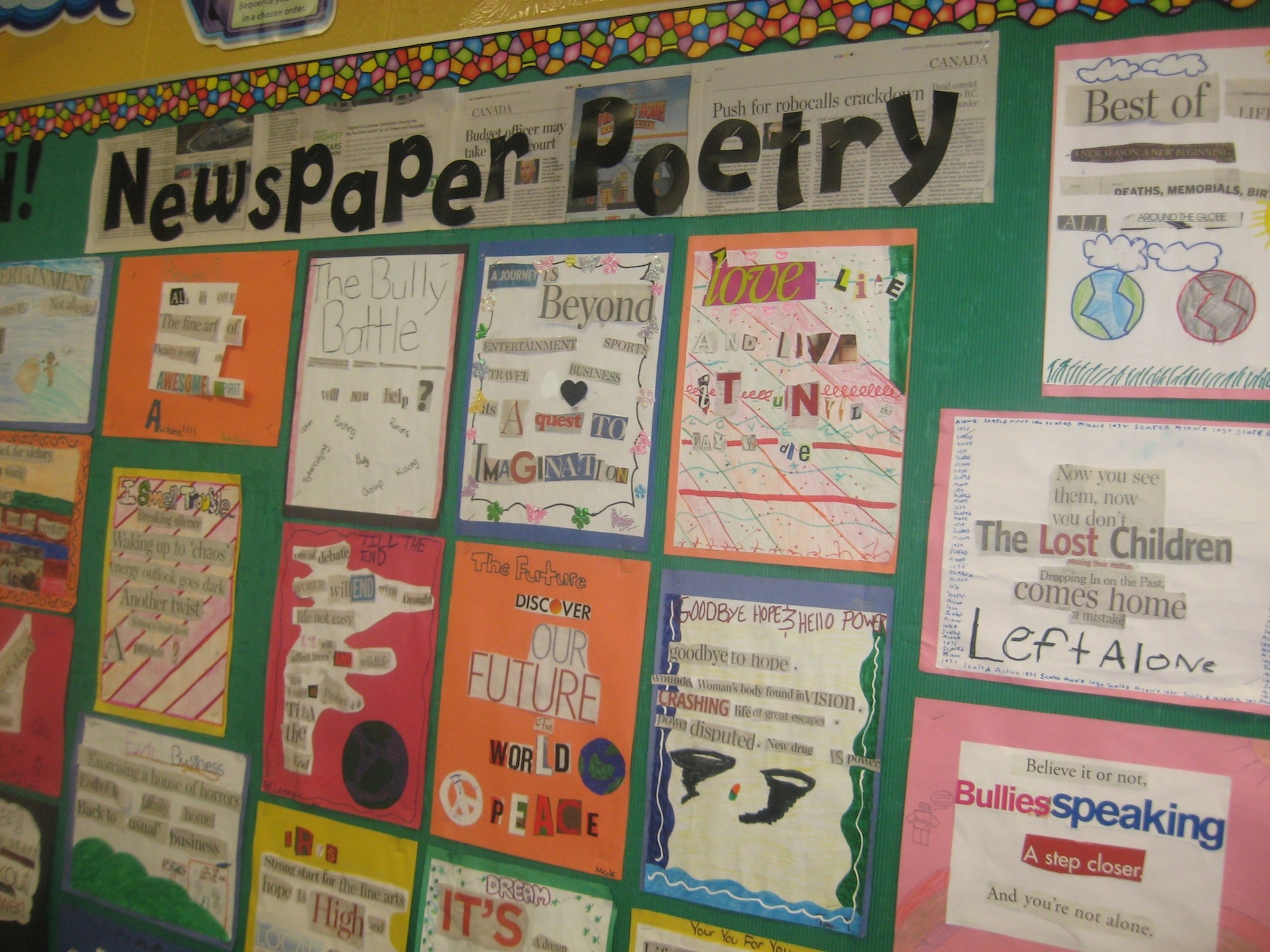
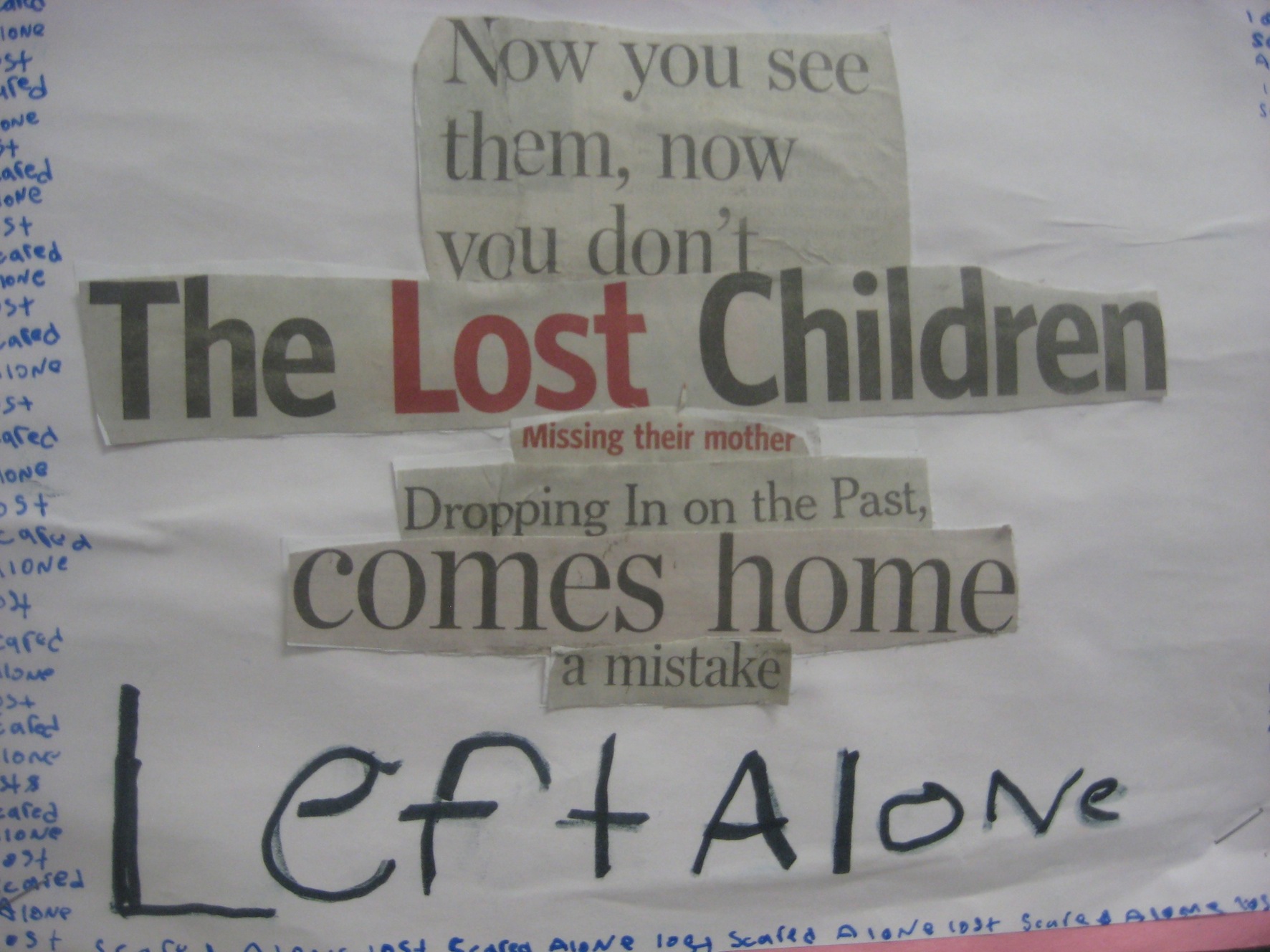
If you haven’t already done so, I strongly encourage you to purchase Classroom Events Through Poetry by Larry Swartz (just purchase any of his books on poetry and drama and you’ll be well on your way to an incredible teaching/learning experience).  It’s a practical and concise book that provides easy and meaningful activities to explore poetry in our classroom and our lives.  We started by looking at poetry in books, researching it on the internet, and sharing it with each other in daily poetry circles.  We created newspaper poems by cutting out words and phrases and ordering them to try and create a themed poem.  We took 2-4 sentences from a favourite poem and created a graffiti wall on our classroom door (the students thought this was very cool!).  We acted out poetry, sang poetry, and shared the lyrics of our favourite songs after listening to them together.  We learned about different structures by having groups of students become “specialists” as they taught the class the structure, gave examples, and had everyone try to create their own.

The culminating task involved creating a poem in the structure of their choice and presenting it at our Poet’s Cocktail Party!  This was no ordinary party!  Invitations were sent out, the poems were displayed all around the classroom, students dressed up, and food was ordered (grapes, cheese, crackers, cupcakes, and grape juice in place of red wine).  As jazz music played, students mingled by reading each others’ poems and discussing their thoughts and opinions.  A few students shared their poems and we snapped our fingers in appreciation of their work (yes, we snapped fingers, not clapped because that’s apparently what poets do).

A few students decided that they wanted to enter the Urban Voices poetry contest and their poems have been sent off.  How special would it be to have a winner come from our class!  Keeping our fingers crossed.

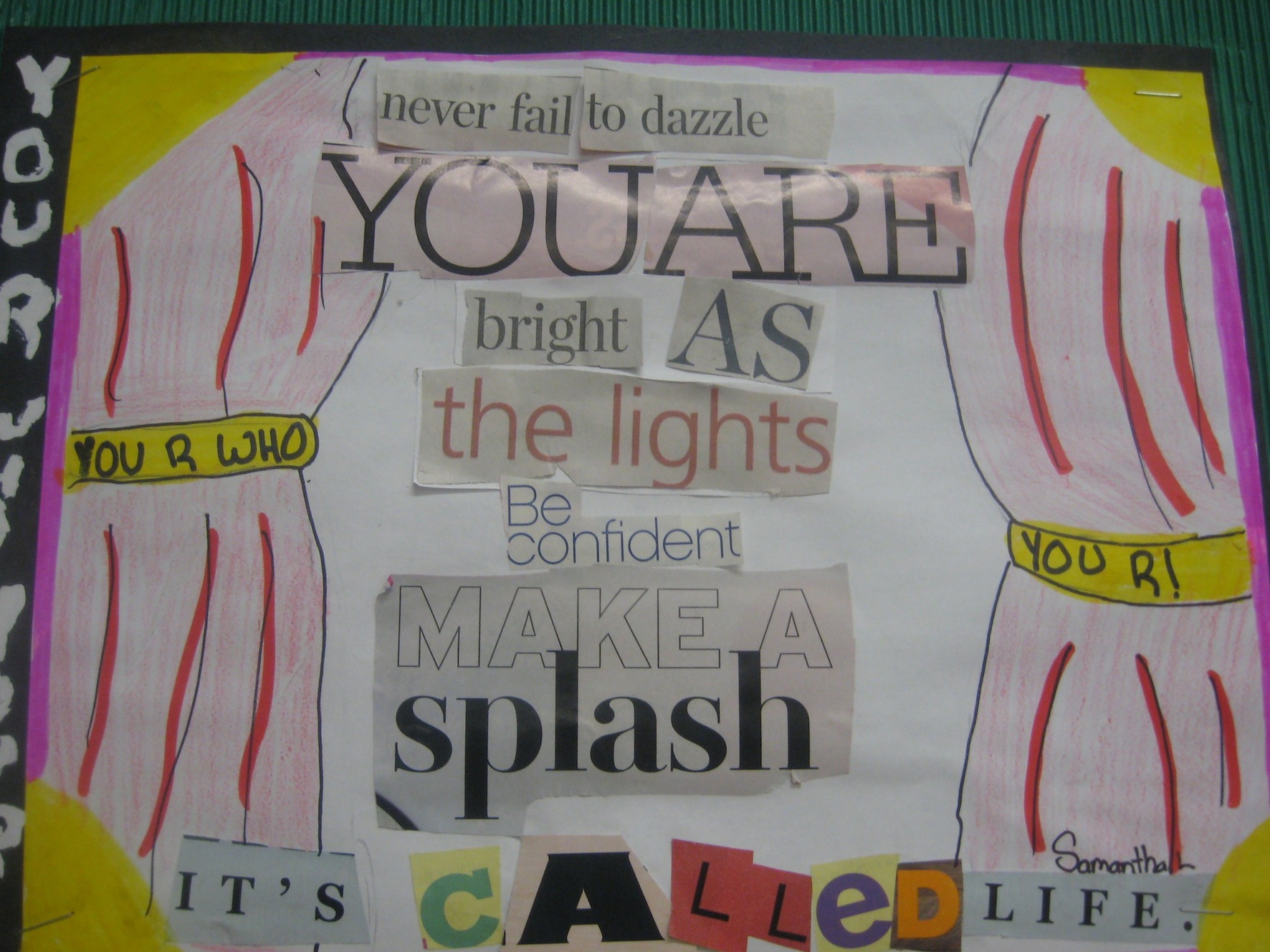
We cut out words and phrases from newspapers and ordered them to create a themed poem.


An example of a newspaper poem.


An example of a newspaper poem.


Students took 2-4 lines from favourite poems and created a graffiti wall on our door.


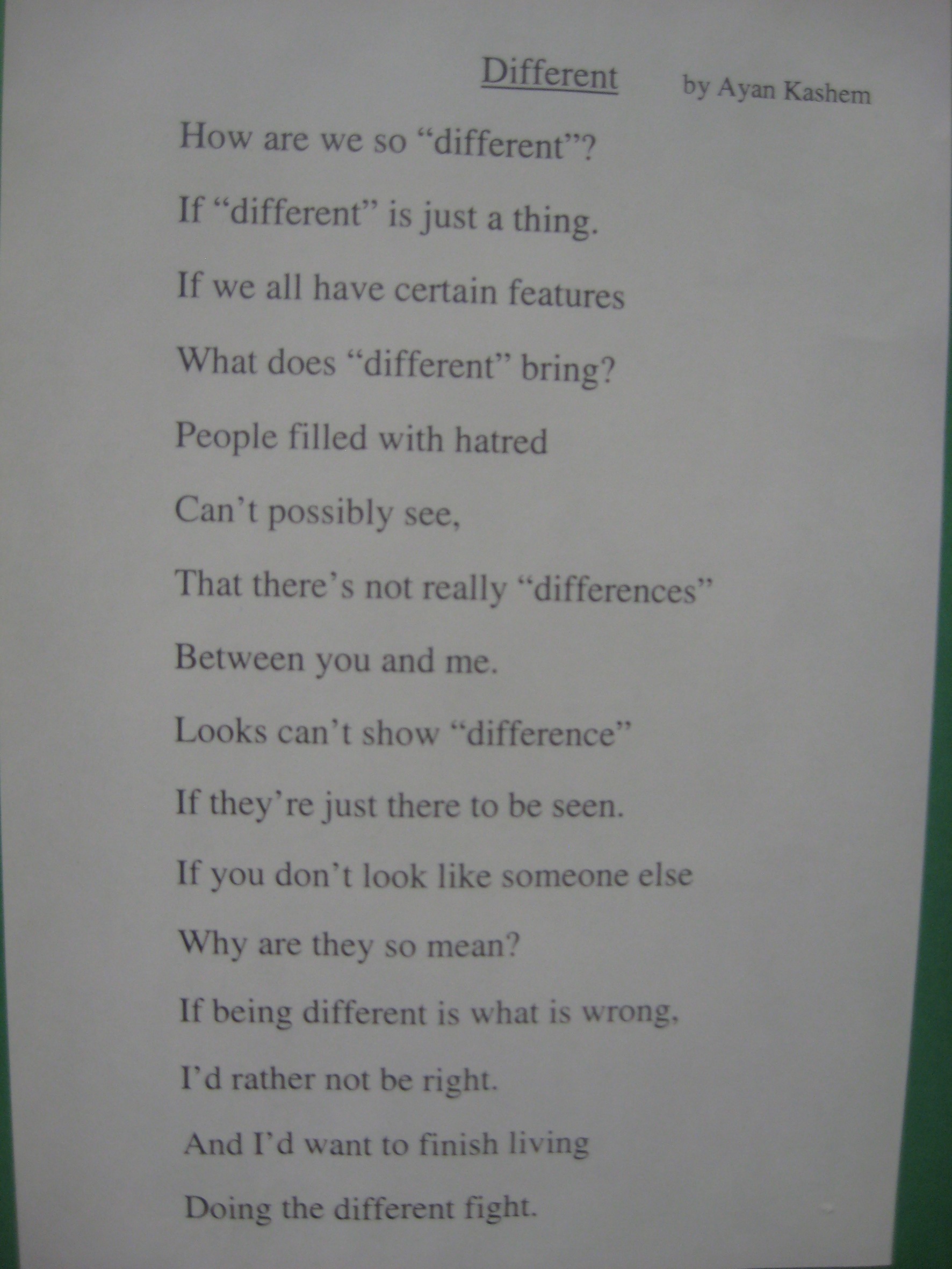
This poem was presented at our poetry cocktail party.
Writer's wall bulletin board

Writer’s Wall

Do you ever wonder what to do with all the wonderful pictures and cards that students create for us teachers? Do you ever guilty putting pictures in the recycling? I know I have! And I have found a solution for you…

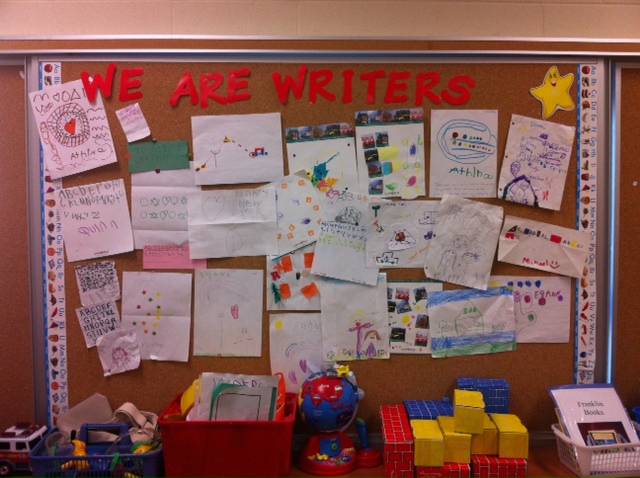
Create a We Are All Writer’s board. On one of the bulletin boards in the classroom, I have posted student work on this wall. This is such a wonderful idea because students get to show their work off to the world, it is all in once place, and students are recognized for being writer’s no matter what they are writing/drawing. My students love to create pictures and cards for me, or for others in the classroom, and having this wall is a great idea!

Here is a picture:

Photo of Erin G

New Years Equals a New Leaf

     I know there are lots of clichés around the start of the New Year and I have to say that I believe in every one of them. As far as teaching is concerned (in my experience), there are guaranteed to be two magical times of the year where everything goes smoothly and you feel on top of the world. The first is the very first week of school in September where your bright-eyed students sit complacently hanging off your every word. The second couldn’t come at a better time and occurs upon the return from the winter holidays. New Year’s coincides with a shift of cosmic, spiritual or divine proportions and seems to permeate the psyche of even hormonal eighth graders. It is a small window where people stop to take stock of the past and visualize the future.
     As a teacher, this “pause” is a golden opportunity not to be squandered. In this momentary blip (which might last a few days if you’re lucky), it’s as though students have suffered a mild form of amnesia. Apart from being slightly annoying from a pedagogical perspective, it nonetheless allows you to chart a new direction. Changing up the look of your classroom with new displays, layout and seating plan is refreshing and energizing.
     A fresh start has a lot of appeal on many levels not only for you the teacher but for your students as well. Although it’s often said that students thrive on routine, it’s also true that change, spontaneity and an element of surprise go a long way as well. Don’t neglect the fact that your students might also be affected by the psychological hype surrounding New Year’s. I would bet that many of them are thinking about their own ambitions and might have something specific that they would like to achieve. Others might need a blank slate and a chance to start over with you. Any way you look at it, it’s good to capitalize on the energy and momentum surrounding the New Year and move forward with positivity, renewed energy and vigour.

*Some suggested New Year’s Activities:
Have students write down a goal they wish to achieve by the end of the year. At the same time on another sheet of paper, have them envision some of the difficulties they might encounter and write a short encouraging letter to themselves. This teaches them how to set realistic goals, anticipating challenges. At some point, have them read their letters to themselves and compose another to also be opened in the near future. Repeat the process until the final time when they re-read their goal an have them assess their progress.

On a small piece of paper, have students write down something they do not want to carry with them into the New Year. It can be a bad habit, a personal quality or negative situation. In real practice, you would toss your paper into a bonfire symbolizing that you are leaving your burdens behind. This is obviously not an ideal method of disposal for a classroom situation – something equivalent might be the shredding machine…

Student Led Conferences

The past 2 weeks, I have been preparing my students for Student-Led Conferences, since the Progress Reports were sent home, and conferences were set for this past Friday.

I have never done or seen Student-Led Conferences before, and what an amazing experience it was. Yes, it does take a lot of prepareation for the students, but after a lot of feedback, the parents really enjoyed it.

What Are Student-Led Conferences?
Instead of the formal Parent-Teacher Interviews, my school board has taken the approach to doing Student-Led Conferences, which enables the student to take full responsibility for their learning, and they choose things to share with their parents that they are most proud of and some things they feel they need to work on. They also choose a Learning Skill that they think is the best, as well as a Learning Skill that they need to improve upon.

Preparing My Students for the Conferences:
Two weeks prior to the Student-Led Conferences, we began preparing ourselves for these conferences. It does take a lot of time and preparation, but the outcome is wonderful! First, I laid out all the work my students have done so far. I explained to students that they would look through their work and choose 2 things they were most proud of (could include anything but most were Social Studies Tests, Math Tests, Journal Entries, and Daily 5 Work), and 1 thing they felt they needed to improve upon. Once they chose their 3 items, they were given 2 “star” papers where they wrote why they were most proud of this pieve of work and why (they had to be specific-because they looked at the Word Wall to help them spell, they studied really hard for a test, or they used the Success Criteria to help them in their writing…). Then, students were given one “Next Steps” paper where they wrote about why they feel they needed to improve upon that piece of work, and what they can do next time (use the Editing Checklist, use the Work Wall, etc.).

As a class, we then reviewed the Learning Skills and what each skill means. We brainstormed (and reviewed) some examples about what each Learning Skill looks like here at school. Then students chose which Learning Skill they felt was their best, and explained why using examples, as well as choosing a Learning Skill that they needed to work on, and explained what they can do to improve upon this Learning Skill.

Once all the writing was complete, I created a script that students practiced so they knew exactly what to say, and when to show/explain their work. For many days, students would practice reading this script and showing their work independently, to a partner, in a group, and even their Reading Buddies. We encouraged students to take on different roles as well, to prepare them (i.e. one student would be a mom, one would be a dad, and the other would present to them).

When it came time for the Student-Led Conferences, the students ran the show. They took full responsibility, and THEY were the ones explaining to parents why they need to improve upon the work they chose, and even asked how their parents could support them at home. I feel that the student saying this to their parents is much more powerful than if I were the one saying it. Parents really enjoyed seeing their child’s work, and were excited to come up with ways that they could support their child at home. Overall, the Student-Led Conferences were a huge success at my school, and it was really great for the students to be so enthusiastic about the work and learning they have done thus far!

Student-Led Conference Script:

Introductions: “Hello, Ms. Pryde. This is my _______ and my _________.”

Explanation about the Conference: “I am taking responsibility for my learning. Today, I will be showing you the accomplishments I have done so far at school. I will also be showing some work that I feel I need to improve upon, and will be asking for your input about how you can help me in reaching my goals at home.”

Showing of the Work: “This is one of my best pieces of work because __________________.

I also chose this piece of work as something that I am most proud of because __________________.

I feel that I could improve upon this piece of work because _____________. I think I can improve on it by __________________________________.

I think my best Learning Skill is ________________________ because _______________________________________________.

The Learning Skill that I think I can improve on is _______________ because _______________________________________________.”

Conclusion: “Thank you for coming to my conference. Is there any questions or comments for myself or Ms. Pryde?”


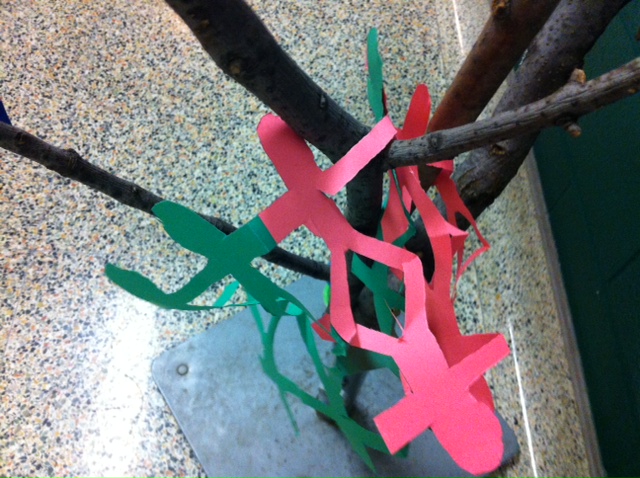
Art work hung to the peace tree

The Peace Tree

Recently, for Remembrance Day, I contemplated how to help my students understand the meaning of this solemn occasion.

My class is made up of students from India, Pakistan, Somalia, Czech Republic, Afghanistan and Slovakia to name a few. Through several discussions, I learned that their understanding of war from their homelands seemed different than what our Canadian soldiers went through, yet the common thread was the idea of peace.

Having seen the film, “The Peace Tree” by Mitra Sen, I thought this might be a good place to start. The film is about a young girl whose family is celebrating Eid. She shares her holidayand customs with her best friend and when Christmas draws nearer, she questions why her family can’t celebrate both occasions. This leads her to make a peace tree with symbols from different religions and cultures. After watching this film with my class, I could see them making connections to their own experiences with religion, exclusion and identity.

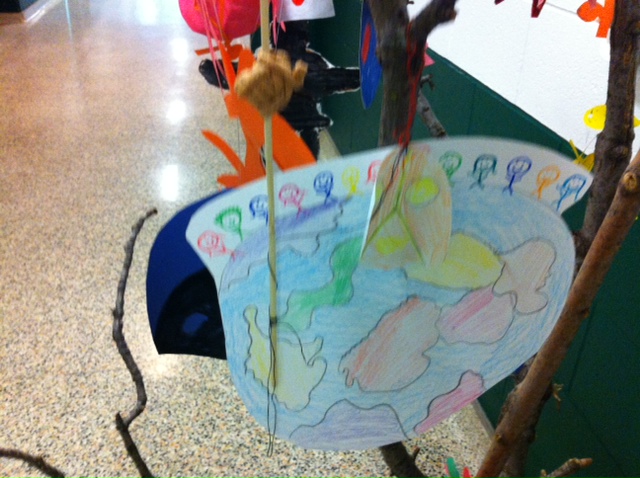
We became excited at the thought of making our own Peace Tree and I began the search for the right branches to hold our ideas. Together, we spent some time studying different signs of peace from around the world, such as the diya (India), the Inukshuk (North America), the Yin Yang (China), the Star of David (Israel) and more. My students took materials home in earnest to start making these signs and often came up with their own symbols: flags from different countries, chains of people, and hands.

At our school assembly, while each class was invited to bring a wreath, my class chose to bring their Peace Tree which had also been decorated with poppies. Two of my students spoke at the assembly about why we had created this tree and what it stood for. It has been an interesting experience for me to watch my students get so excited about the different symbols and how the meaning of peace is the same no matter where you live in the world.

We were asked to put our Peace Tree outside the school office for others to enjoy and my students often ask when we are getting it back…they want to add more to it!


Photo of Erin G

Keeping It All in Perspective – Teaching Really is a Far-Reaching Profession

As teachers and former students ourselves, we know the impact that we can have on students. One just has to think about “rateyourteacher.com” or think back to our impressions of our own past teachers to realize how distinct and ingrained our memories really are. As we embark on another (or perhaps the first) year in the most “noblest of professions”, it seems like a good time to psych ourselves up with such inspirational thoughts before we are rendered irate and exasperated by that particular student who drives us nuts. I originally planned to address one of the suggested topics of discussion regarding your “most remarkable student” and how you were able to make a difference. In the process of reviewing the legions of young adults I’ve come into contact with in the past 10 years of teaching, I digressed and instead became sidetracked with the notion of time. Nothing brings home the quick passing of years like bumping into a former student who is now teaching your own children. For those of you who have also taught for a while, I’m sure you can relate. Mentally flipping through the faces of all my former students in search of the most remarkable brought to mind many who stand out for their compassion, their funny jokes, their temperamental nature, etc. There are also those who are memorable not only for who they were, but also for what they became – the suicide, the innovative scientist, the high school dropout, the successful entrepreneur, the teenage mother, the infamous actor, the murder victim, the accidental death. What struck me as interesting was that for both of us, we remain frozen in time and are lastingly perceived as a grade 8 teacher and a boy/girl of fourteen. All of which made me appreciate the fact that each year with every new batch of students, relationships, interactions and impressions are formed and will mutually impact us in a way that is more profound and enduring than we realize.

Photo of Roz Geridis

End of the Year is Near!

Summer is almost here and the kids know it. Their lack of attention and wanting to be outside in the beautiful weather is hard to compete with. What do I do to keep the boys attention? How or what do I keep teaching when my reports are completed and in? No air conditioning or fan – my room is known as one of the hottest in the school. Why fight it – I take their learning outside and still teach curriculum.


I try to keep them inside as long as we can handle it; which means sometime between morning recess and lunch. At this point of the year, I am changing my day plan slightly. It is based on which lessons do I need the whiteboard or computer connection for? I teach those lessons first. For language, I take a book and read it to them while the boys are lying down under a tree. I ask questions about inferring, point of view, comprehension and relating the reading to their own life experiences. However, this is all completed orally, some questions are discussed in partners (while I go to every group and engage the students) and some are large group discussions.


For Math, I may take them on a walk looking for 3D shapes or angles in nature. This can also be done in your playground. I also may play a game with them related to probability or multiplication baseball. I look for ways to connect Math to their real world experiences. Having the students show me and themselves why we need Math in our everyday lives.


For Art, we have gone out into the community and sketched trees and flowers; items in our environment. We also have used digital cameras to take pictures of structures in our environment and used photoshop to add to their pictures.


I also am finding ways to take the kids on affordable field trips. While planning field trips, the boys have an input and have often asked for the trip to be just our class. We have one planned for the division to go to a Park, and my class want to go to a different area of the park. We are taking the TTC and exploring our city. Doing a walking tour of the city (while taking pictures) was one of the boys’ most favourite trips this year.


At this point of the year, I am finding ways to have fun with the class and also relate it to the curriculum. They seem to be enjoying it and even understand why we are learning certain aspects of the curriculum. The community environment we have developed is one I hope the boys will always remember.