Photo of Sangeeta McCauley

Themes As the Driving Force

While there are some conflicting opinions about the use of themes in teaching, I have found that they are extremely powerful tools we can use to help our students connect their world to curriculum subjects.

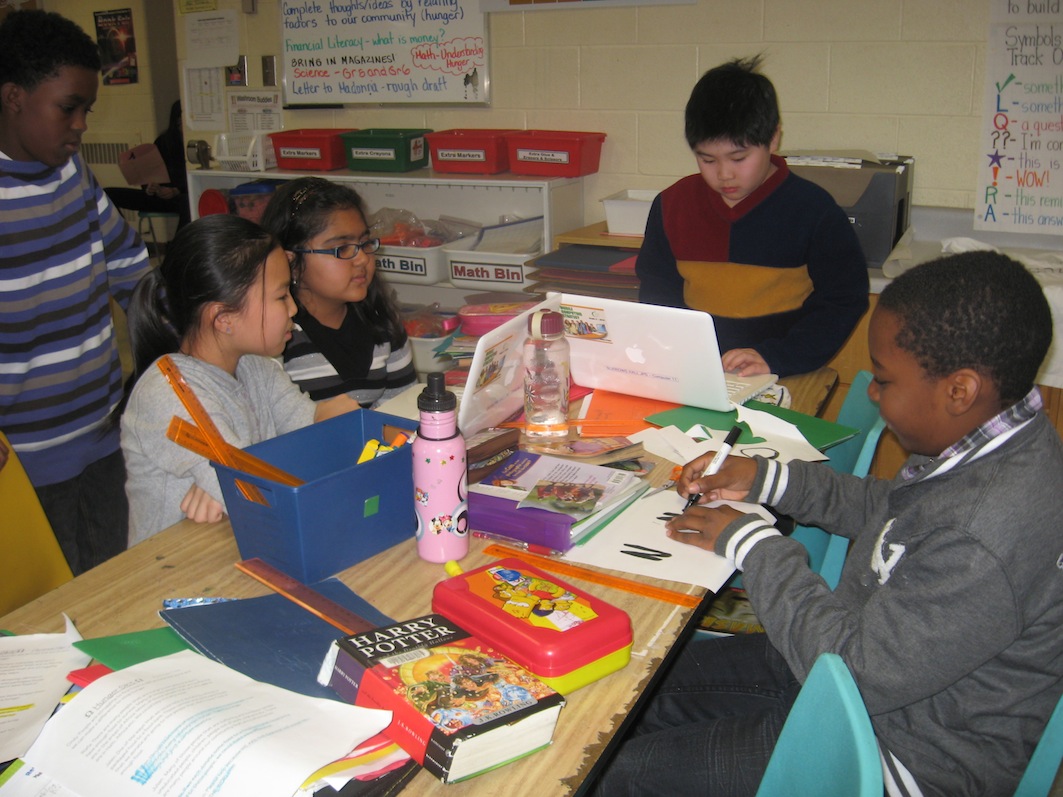
I began my school year with the theme of Identity, so my Grade 4 students could know more about who they are as individuals. We examined factors like religion, gender, family, and media and how they play a role in shaping our identities. I was particularly excited to zero in on gender, in an attempt to work on one of the UN Millennium goals:

Goal #3 – Promote Gender Equality and Empower Women (http://www.un.org/millenniumgoals/)  
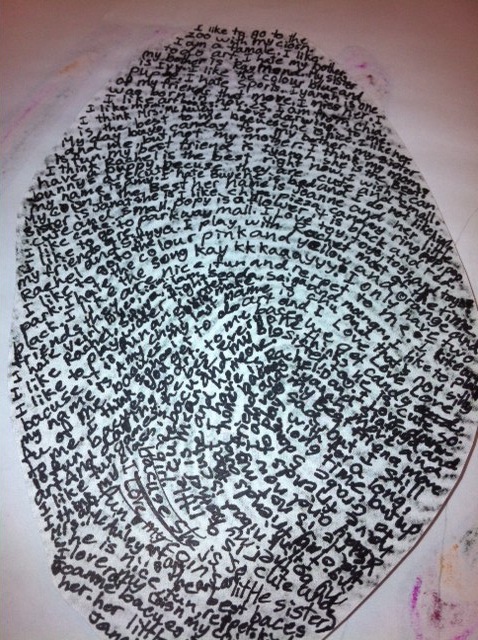
This led us to discuss stereotypes that can exist for males and females and through drama, visual arts and writing, my students reflected on their experiences and how stereotypes can lead to exclusion. We read personal stories and viewed clips from the site, “Because I Am A Girl” (http://becauseiamagirl.ca/) and they mapped places in the world where these stories came from and looked for patterns. At the end, students wrote about themselves and their learning in a blown-up version of their individual fingerprints.

Over the course of working within this theme, I began to see the challenges my students had with the concept of Choice and realized I had found my next theme to explore with them.

Goal #1 – End Poverty and Hunger

Goal #2 – Achieve Universal Education

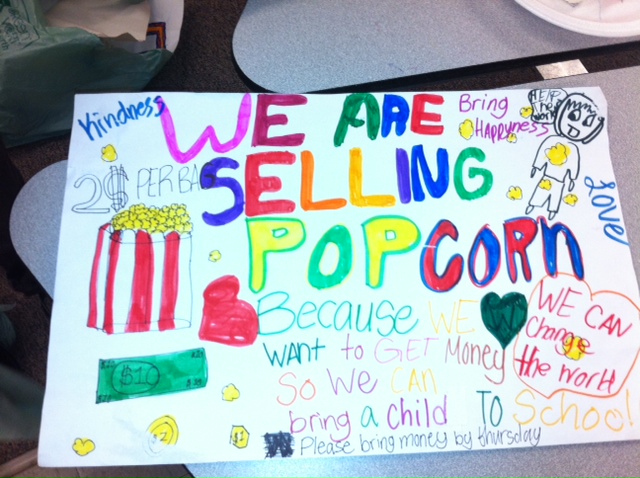
My students made puppet shows on iPads to illustrate a time when they had to make a difficult choice and we studied persuasive writing and how their voices can have an impact on the choices others make. Closer to the holiday season, we planned a fundraiser and I shared Unicef’s website and the survival gifts program (www.unicef.ca/). They convinced me that we should raise money to send a child to school because that would decrease the chances of this child living in poverty. So, we sold popcorn throughout our school, in the hopes of raising $75 to send a child to school. My students designed posters, they went to each class in the school and shared our idea, they counted and tracked the money that came in with the orders and to our surprise, we raised $300 and were able to send 4 children to school. Their one condition before I made the donation: can you please make sure that it is 2 boys and 2 girls?


Over the holidays, I contemplated how relatively quiet my mind was because I wasn’t hearing the daily concerns: he’s not sharing the soccer ball, I can’t find a teacher to help me outside, no one will play with me. In order to help my students with some of these issues, I needed to move to Power and its role in relationships and specifically on the playground. My students took post-its notes outside to record when they heard power being used and we studied about power in science through light and sound. They wrote articles for a class newspaper that outlined powerful people in our school and my personal favourite, we discussed imbalance in power, which led to yoga during our gym periods.

As I move into my last theme of the year, Agents of Change, Mission Impossible music plays in the background while my students are designing badges and creating surveys which will provide them with the data they need to make changes within our school.

Goal #7 – Ensure Environmental Sustainability

When my colleagues ask me how I find time to teach the curriculum, I say: The themes are my curriculum, they are what drive me to make connections for my students.


Heart Picture

Classroom Management and Tips for Daily Occasional Teaching

It’s funny to me that when I tell people that I am ‘supply teaching’, I am often met with statements along the lines of “Well that’s pretty easy, you don’t have to plan, and you basically just watch the kids for a day.” At this statement, I usually scoff and reply with “Do YOU remember what you and your classmates were like when your teacher was away?”. This is usually met with a chuckle and a “oh yeah, I see what you’re getting at.”

I think we can all recall a time in our years as students, when the absence of the regular classroom teacher was met with the idea that there was a free pass to try to get away with what you normally couldn’t get away with when the regular classroom teacher was around.  Kids being kids, this scenario still often rings true: students, knowing that an occasional teacher is only in for a day and is not familiar with the rules and routines, will try to push some boundaries.  For me, when teaching as a daily occasional teacher, this is where classroom management and foresight are paramount to having a successful day. I have started my daily occasional teaching assignments, and in preparation, I read Chapter 7- Preparing for or Being an Occasional Teacher (Heart and Art of Teaching and Learning). I found the practical ideas from Connie were helpful in getting my head around teaching in someone else’s classroom for the day, and in being proactive in anticipating the turns the day could take.

In addition to the good ideas already mentioned in the book, I start out my day with my own bag of tricks. My daily bag is equipped with my desk bell, a whistle (in case I am teaching gym), a book of fun drama activities and a few picture books that are appropriate and liked by many age groups. Along with it, I try to think of a follow up activity that can be used if the teacher hasn’t left any plans or when work is completed and we have an extra chunk of time (for example, plotting the beginning, middle, and end of a book, writing in the point of view, creating an alternate cover page for the book).

For the older grades, I make sure to write Ms. Perrin’s Expectations on the board for the students to see right when they enter into the classroom.  My expectations follow along the lines of:

  1. Be respectful of your classmates and teacher
  2. Raise your hand and wait your turn to speak
  3. Ask for permission to use the restrooms or to leave the classroom
  4. Be kind and do your best
  5. Let’s have a great day together!

I find that taking this little step sets the tone for the day.  The students immediately know who I am. They understand that my expectations are probably similar to their regular teacher’s expectations, and that I want to have a positive day with them. Once the students are settled, I take a few minutes to introduce myself and share a little bit about the grades and schools that I have taught in. This way, the students (hopefully) view me as a teacher (and not as some grown-up impostor who has taken over the classroom for the day).  I also take a minute to inform the students of my strategy for getting their attention (ring bell, clap sequence) and what my expectations are for when I use the strategy (stop what you are doing, track the teacher).  With these expectations already established, the students are aware of what being successful and being unsuccessful looks like in terms of their behaviour.

Another thing that I do for most grades that I teach, is if the student’s desks aren’t labelled, I will have the students create a personalized name tag that reflects who they are (and maybe include 3 things that they would like to share with me or the class).  I find that this is a great community building exercise, that lets the students know that I am interested in learning a bit about them, and it helps me to call on the students by name from the beginning of the day. A few minutes spent at the beginning of the day establishing community and guidelines, help me to set a tone that is conducive to us all getting along and  doing what we need to do.

I find it most helpful to envision what I want my day to look like, then think about the things that need to be established in order for that to happen.  If you’re starting out as a daily occasional teacher, or are struggling in getting the students ‘on board’ in your teaching assignments, referring to p. 115-116 of Heart and Art is a good place to start. Hopefully my tips will also help some beginning teachers to have a smooth, well managed day of teaching too. Best of luck!

Photo of Tina Ginglo

Let’s not Forget Stations

Stations are one way to differentiate learning to meet different learners’ needs.  Stations can be a lot of work to prepare, but I am always pleased with the level of engagement and the pace of the learning when students learn through stations.  I don’t do stations nearly as often as I should, but lately I have put my planning into a higher gear!

Two weeks ago I planned stations for students to explore symmetry.  I decided to use stations after my formal assessments revealed that my grade 3 students were still struggling with symmetry. I thought I had done a good job reviewing and teaching symmetry.  The students completed the exercises in our math textbook and they students successfully and independently completed all extra practice black line masters with ease.   Then I decided to give my students some symmetry questions from past EQAO assessments.  To my surprise, they didn’t do that well with the questions.  They were able to identify lines of symmetry, but they were not able to apply their understanding of symmetry by completing symmetrical shapes.  So I decided to give the students more opportunities to explore symmetry through a variety of stations.  At one station, students were to look through magazines and find examples of symmetry. In another, they were given half of a symmetrical picture and they had to use a mirror to complete the other half.   I had a symmetry game using attribute blocks at another station, plus a few others.  As the kids rotated through the stations, I was able to walk around and observe the students as they gained more experience and practice with symmetry.  I did not need to correct any behaviours or redirect any students back to learning….and best of all, students had fun!   I should also note that I also asked my students’ visual arts teacher to review symmetry through art activities as well.  I will bring out the EQAO questions again, but I am sure that they will be better with the application questions.

Last week, my teacher candidate planned stations for the plants and soils unit she is teaching.  At one station, students were planting tomato seeds.  At another, they were making a dip out of refried beans, corn, coriander, lime and cumin (each ingredient represented a different component of healthy soil); at another station students were observing red wigglers (worms!) and labeling the different parts of the worm!

Feedback from parents has been impressive.  A number of parents commented on how happy and excited their child was about their learning.  Let’s not forget about stations when planning to meet the different learning styles and interests of our students!

Photo of Alison Board

Technology in Grade 1& 2

After reading about how technology has engaged  the students in Carmen’s class, I thought about the same affect it has had on children in grade 1 & 2. The activities using media definitely developed throughout the year as the children gained confidence and skill in their use of computers (some had to learn how to move the mouse and click).

At the beginning of the year the children played educational games on the computers in the computer lab. Then we learned how to log on individually with a password (this took time). Then students wanted to create using KidPix software, so we worked our 2-D drawings for math into a computer lesson and printed off our creations to share with one another. As the year progressed, we integrated the use of video cameras to record math songs that they created. This was such a success that the children wanted to also record their “Public Service Announcements” (PSA) that they were working on. This project integrated persuasive writing, media literacy, and science.

Once the PSAs were completed there was some difficulty sharing the videos for viewing. A colleague suggested we use VoiceThread, which would enable all the videos to be downloaded to one location and would also allow the students to view and comment on each others work. There is a cost for this service ($15 for 2 months), however, it was already worth it when the children gazed in awe at themselves and their classmates. We are now in the next step of using the technology which enables the children to provide feedback to one another’s PSAs using either a voice tool or a comment box for writing.

This technology has extended the children’s learning for media literacy, adding metacognition and peer feedback. If you are interested visit Voicethread for teachers at http://voicethread.com/products/k12/.


Photo of Erin G

Communicating (OMG) in French – A New Approach

I know that it can be a real struggle to get your students to communicate in French. Although initially enthusiastic in grade 4, by the time they hit grades 7 and 8, they are reluctant at best. I recently went to a workshop regarding the communicative approach which made me evaluate (apart from being forced to during the course of the session with those reflection activities) my current teaching practices. It’s always rewarding and energizing to be presented with a challenge and new ideas to try out. For those of you who might not have had the chance to attend any PD on the new philosophy rocking the world of FSL, I thought I’d sum up a few things to take into consideration when planning your next oral activity.

  • choose a reasonable task that reflects student interests and abilities
  • prepare students thoroughly by planning a progression of short activities that incorporate increasing degrees of communication
  • with your students, establish a list of expressions that they will need to use during the activity and have it displayed for reference
  • MAKE them communicate in French but in a way that is meaningful and authentic

Now that you hopefully have some food for thought, I’ll update you in my future blogs as to which activities I’ve created and tried out. In the meantime, loosen up, collaborate with your students for some ideas, be creative and have fun!

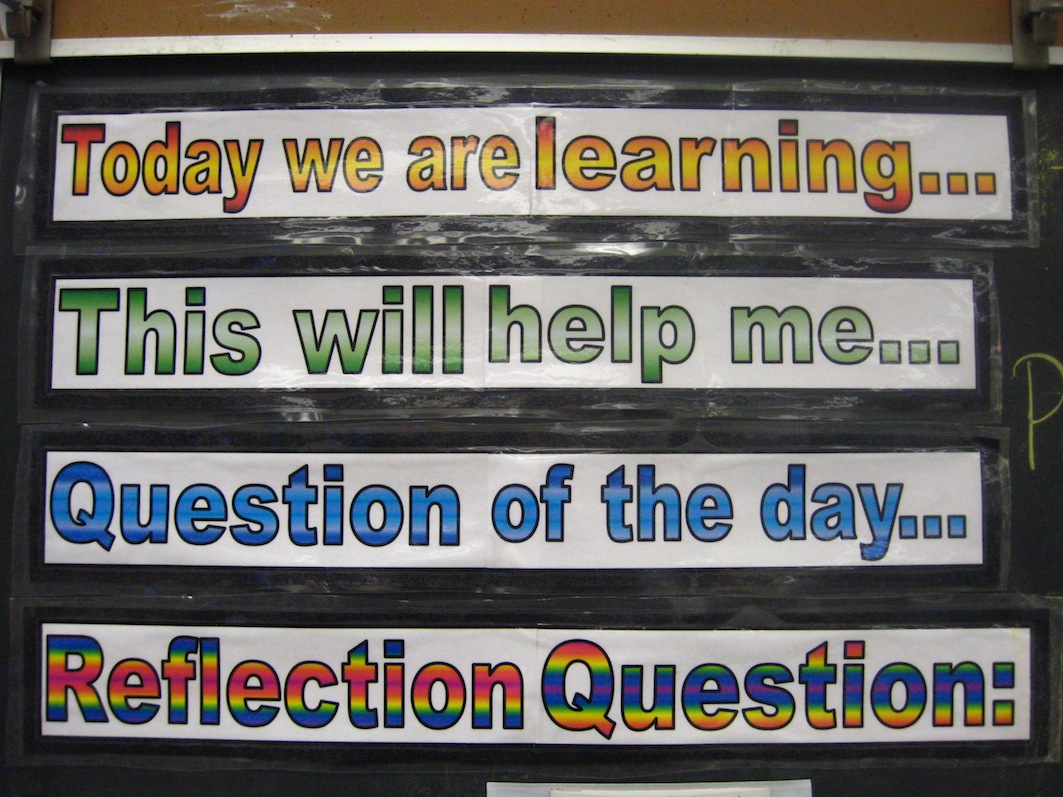
Learning Goals: Today we are learning...This will help me...Question of the day,.. Reflection Question

Just Let Us Be Kids!

Today, during our Gr.5/6 Writer’s Workshop, we were visited (as we regularly are) by a group of “kindies” who dropped by  to share what they had learned and created while exploring constellations.  The fact that the Kindergarten teacher and I have a similar view on the importance of celebrating children’s learning across the grades could in itself be an interesting topic to blog about but today’s visit lead us to another important topic: teachers should sometimes just let kids be kids, especially as they grow older.

The “kindies” very enthusiastically went on about their exciting day which started with “Show and Tell” and then moved on to exploring space.  Oh, yes, they also took a quick rest after lunch because they were very tired from all the work in the morning.  As they were leaving, I commented on how creative their work was and that my wish was that children never lose their curiosity or the simplicity with which they view the world around them.  I also confessed that I wouldn’t mind a nap myself after getting back into the work routine.  Suddenly, one of the little wonders turned around and said, “Well then, why don’t you guys be kids like us?  Why don’t you take a quick nap too sometimes?  That way, you’ll think better.”

I wasn’t expecting what happened next.  I had a class of junior students agreeing with the “kindie” and asking why we couldn’t sometimes take a 5 minute nap to relax before continuing with our work or having “Show and Tell” once a month to share what’s important and meaningful in their lives.  “It’s true Mrs. Oliveira,” one student said, “parents and teachers want us to grow up and be responsible and then they’re shocked that we grow up so fast.  If you let us just be kids more often then maybe we won’t lose our curiosity.”

Let’s just say we enjoyed our first nap to a 5-minute classical music piece and we have “Show and Tell” scheduled for the end of this month when students will be sharing an object that has special meaning in their life.

I expect to get a few calls from confused parents…


Heart Picture

Saying Goodbye…

Last week, my Long Term Occasional assignment ended.  Leaving a classroom three quarters into the year creates some mixed reactions from both students and me, their teacher. Part of me feels a little bit of sadness, knowing that I will miss my students, new colleagues and familiarity of the school I worked at, but I also feel a sense of  a renewed resolve, to continue getting to know new schools, and developing other collegial connections that could lead to a permanent contract. Mindful of the upcoming ‘goodbye’ and end of my contract, I did my best to prepare my students for the transition of me leaving and make it a meaningful and positive experience for them.

Throughout the school year, I collected pieces of student work and filed them away. During the last month of my contract, I was hard at work afterschool and evenings, glue-stick in hand, creating a scrapbook of each student’s work. These pieces consisted of writing pieces, crafts, drawings, photographs, math activities that showed the students’ progress.  I can’t say that I loved the hours of sorting and sticky fingers that were associated with the task, but I knew that the end result would be worth it. The final addition to their scrapbook was a photograph of me with each student and a ‘goodbye’ poem.

On my last day with the students, and before we had our ‘goodbye’ party, I settled the students and spoke to them about ‘reflecting on our learning’. I encouraged them to recall how some of them struggled with spelling their names at the beginning of the year, and many didn’t know how to read yet or spell many words. I reminded them of the many hours we had spent together at school, how they persevered and had accomplished so much.  I then sent the students off with their scrapbook to look at and reflect on the learning and fun that we had done throughout the year.  It was interesting to hear some students share their reflections:  “Look, Ms. Perrin, in September I didn’t know that my R’s were facing in the wrong direction”. “Why didn’t I finish a lot of my work? Oh yeah, I wasn’t good at focusing so well then”.

Many of them were excited to see a personalized photo of themselves with me, and I was happy to have given them something that demonstrated their learning, and something that they could reflect upon and remember me by.  I believe that I have given my students a meaningful ‘goodbye’ as demonstrated by the enormous hugs I received, thoughtful cards and requests to come back and visit. I am grateful to have had the opportunity to have touched my student’s lives in some way, and am equally grateful to have learned so much about Grade 1, from my students.

I’m certain that my next step of daily occasional teaching will bring forth different stirrings of emotions and experiences and it will be inevitable:  a lot of learning will take place. Wish me luck!

Photo of Roz Geridis

Addressing Student Needs

After returning to the classroom, I have been introduced to a wonderful computer program which supports student learning. Read and Write Gold is a computer program which is used to help student read and write. Anything on the computer can be used with this program (Internet sites, email, scanned reading selections, electronic books/resources).   If you teach for the Toronto District School Board all students have access to the program through every school and the program can be downloaded on a home computer for free. Other boards may offer the same support, please check with your administration.

Read and Write Gold is a text to speech, easy to use toolbar which sits on top of any open Windows application (it also works with MAC computers). Not only is it great to help organize information for students with learning disabilities, students without learning disabilities like the structure of the program.  To give you a quick overview of the program:  the students highlight a selection to have read to them. The speed, passage, volume and voice of the reading selection is determined by the user. The students can also highlight important information using 4 different colours. The program will sort the colour coded highlights and merge (into fact folder) all highlighted information onto a word document. The program even sites the sources for the students.

You can check out the program at: http://www.pdfaloud.com/media/12742/Read%20Write%2010%20Gold%20Beginners%20Guide.pdf

I have used the program with my students for their research projects. In order to support the students with learning how to use the program, our school held an evening learning session for parents to learn how to use Read and Write Gold. At first, it wasn’t about the research, the assignment was about learning how to use the program. The students have a better understanding of gathering research and compiling it for a paper or presentation.

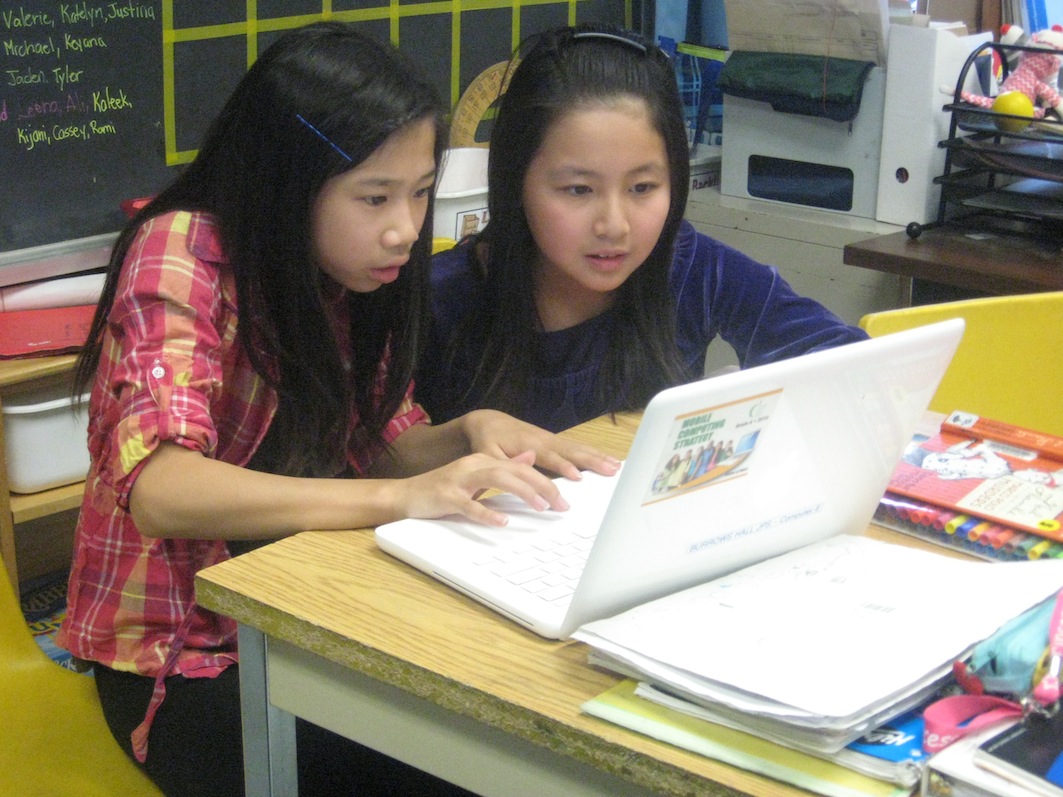
Students testing their knowledge of energy conservation by "living" in an online home and applying their learning.

Engaging and Supporting Kids Through Technology

One of my favourite moments to take in during a school day is watching kids as they become completely engaged in their learning.  I love to see their eyes light up, their facial expressions full of curiosity, and the buzz of interested voices in deep conversation.  It’s what teaching and  learning should be all about.

In our classroom, this experience often happens when kids build on and explore topics and concepts through the use of technology.  We are fortunate to have a SMART board and a set of laptops which we use on a regular basis to support our lessons.  It’s quite interesting to see the difference between how the students view and use technology now and how they did in the beginning, when everything was a novelty.  Through guided lessons on how to use technology to support our learning in constructive and meaningful ways, students moved away from simply wanting to play games to using it as a tool for research, independent reading, organizing their work, communicating with myself and their classmates, presenting projects and assignments in various creative formats, but of course, playing educational games is always an added treat!

Last week we had a metric conversion competition between each group by using an online game.  You would have thought you were watching the final of the World Cup of soccer with the cheering and excitement in the classroom.  Watching the teams work together to solve the metric conversions was a delight (they got extra points for demonstrating their cooperation skills) and I used it as an opportunity to assess their learning of the math concepts.

Using computers and laptops is just another way to add to the learning experience and it works when students become responsible for using technology at appropriate times and for appropriate reasons.  It’s not that I think we must have technology to teach engaging lessons and keep kids interested in their learning but in the reality we face today as educators, it sure is a very helpful tool!

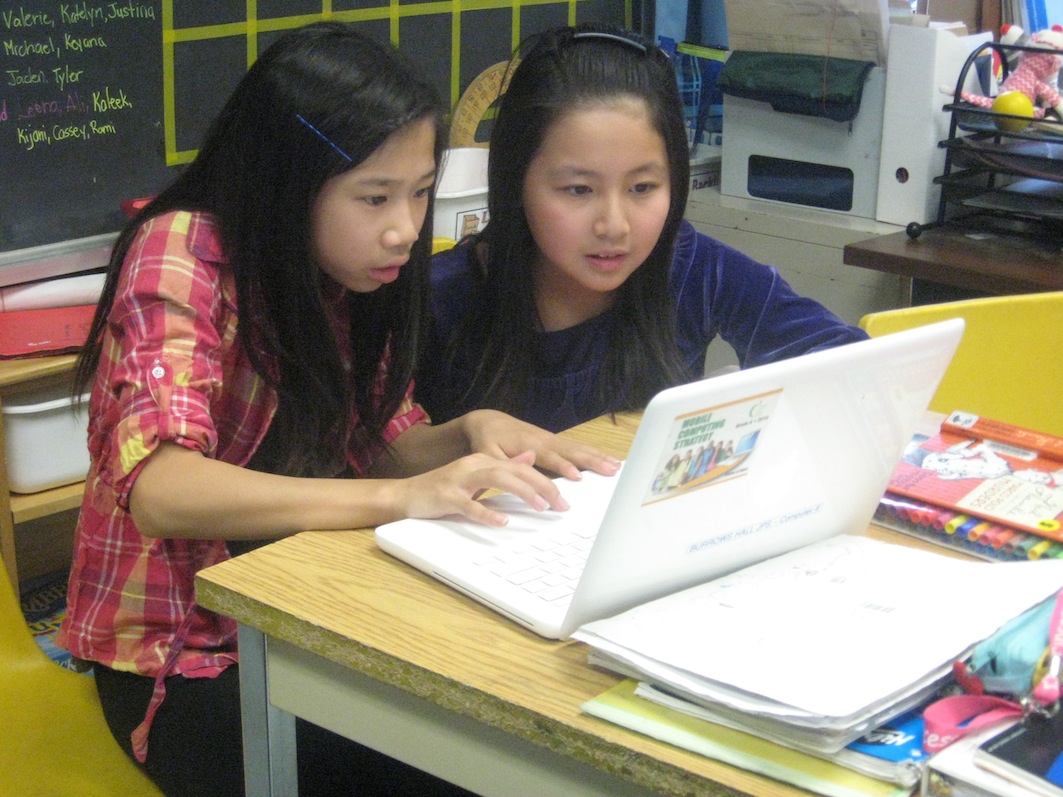
Students use a laptop to read a newspaper story and discuss their ideas and opinions through guiding questions.


Students testing their knowledge of energy conservation by "living" in an online home and applying their learning.
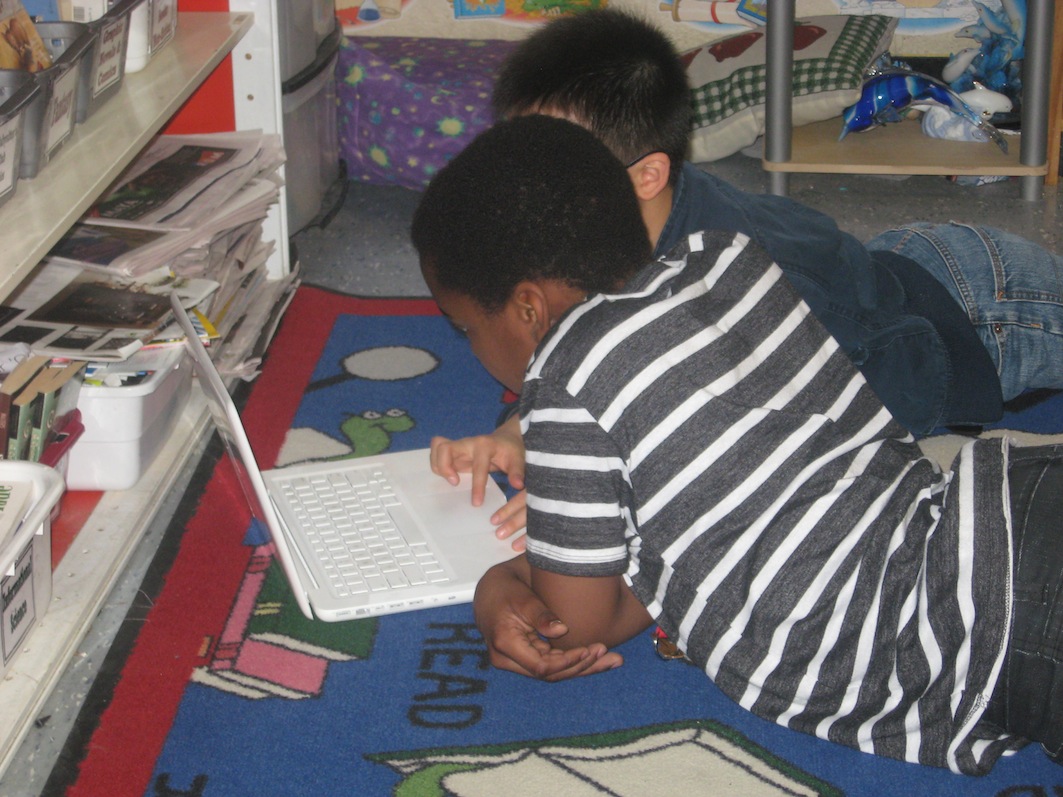
A group uses recess time (their decision!) to work on a project involving the presentation of a PSA and brochure.
Heart Picture

Colleague Collaboration and Leaving a Teaching Assignment

In just over a week, my LTO (long term occasional teaching) teaching assignment will be over, I will say good bye to my lovely Grade 1 students and surrender myself to new students and the world of unpredictable daily occasional teaching once again.  Leaving a classroom, just like starting up a classroom, is a process that requires planning, communication, organization, and it is a process that is seriously benefitted by collaboration.

In my school year start-up planning, I was mindful of the kind of student-information that I would need to have on-hand to transfer over to the returning teacher. In my planning I made sure that information on students, timetables, assessments and the like were all clear, concise and put together in such a way that anyone could make sense of the information.  I started this when I created learner background forms back in September (with parent information, information on allergies, caregivers etc.), which were placed in a divided binder where the students’ progress report, report card, IEP’s and parent communication records would later be added).  This process of having to later transfer student information was also in mind when I created student files with examples of student work and diagnostic testing for an informative ‘at a glance’ of each student, that could easily be passed on to a new teacher.

In the month leading up to the ‘transfer’, I took inventory of the classroom supplies that the new teacher would need for the upcoming months and made sure to place my order so that the class was short on things that might come in handy (fresh glue, markers, erasers, pencils). I also made sure not to over-order knowing that the teacher might want to order supplies in June for the upcoming 2012-2013 school year. I made sure to return books to the library and return any borrowed resources to other teachers in the school. As a child I was always told to ‘leave a place in the same, or better,  state as which you found it’, good advice for any teacher, whether they are changing classrooms, leaving from a leave, leaving after a day of supply teaching or leaving a long term occasional assignment.

I have also been in touch with the returning teacher, and we plan to meet next week, when she will observe the classroom routines, meet the students and we will also have a chance to go over some of the planning and she will get a sense of where I will be leaving off. I have also emailed her my day-plans template, week at a glance timetable and class list, so that she does not have to re-invent the wheel, and so that she can focus on other priorities such as getting to know her new class.  She also knows that she can contact me with questions once she returns to work.

I know that a lot of what I am doing isn’t actually required of long-term occasional teachers, or of contract teachers who are going on leave, but I believe that teamwork and collaboration are positive and essential practices for any teacher. We teachers  are not required to meet, or to share our personal ‘creations’, to share our units, resources, ideas, or hand over our ‘intellectual property’, but we put so much of ourselves into our work to benefit our students, why wouldn’t we share if someone could add to it and make it better? Why wouldn’t  we divide the labour so that more attention can be given to an area that needs it? Or Why wouldn’t  we lean on one another and be a team so that we restore ourselves from time to time and take turns leading the charge?

I have been in teaching situations where I was given little, or any information on how to program my classroom, which resources to use, how to order supplies, establish systems or routines (teaching under these circumstances can be quite challenging, a trial-by-fire learning experience that is never forgotten), and I have also been in teaching situations where harmonious team work, sharing and planning was the norm (which had an even more positive impact on my experiences as a teacher, my learning and on the kind of things the students and I were able to accomplish in the classroom). Perpetuating a practice that supports teachers, inexperienced and experienced, that allows them to succeed and in turn assist the students succeeded is just another reason why we teachers should do our best to help each other out.  Whether we are moving classrooms, going on leave, leaving an LTO behind, or leaving a classroom after supply teaching for a day, I hope this post helps us all be a little more mindful of other ways we can be more positively collaborative and communicative with our colleagues.