Blog

Bulletin board divided by 4 sections

Classroom Management Tools

As a supply teacher, I was constantly in and out of different classrooms on a daily basis. I found so many great ideas that I knew I would use (or modify) when I got my own classroom. I believe that classroom management is key! It not only helps students feel that they are in a welcoming classroom, but it also diminishes the behavioural problems that could occur in any of our classes today. I created a monitoring device in my classroom to help with my classroom management. I have placed each students’ name on a piece of paper, that has been laminated with a magnet on the back. Students are responsible for moving their own name on the chart throughout the day. On my whiteboard, I have made a small area that has 4 boxes, which are labelled: I’m Here and Ready to Learn, We Missed You, Washroom/Drink Break, and On a Mission.


Each morning, students will move their name from We Missed You (those names that stay here are because the students are absent from school) to I’m Here and Ready to Learn. By using this, it makes it very easy to quickly look at the board while completing the attendance and knowing immediately who is and who is not at school. Whenever students need to go to the bathroom or get a drink, they move their name to Washroom/Drink Break, and when they return, they put their name back to I’m Here and Ready to Learn. This is a great tool to use when other students ask to leave the classroom, you can take a quick look at the board and see whether any other students are out of the room (as we have a rule that only 2 students from each class are allowed to leave the room at a time). Likewise, if students are out of the room “On a Mission” such as dropping off the attendance, getting something from another classroom, etc. then they will move their name to On a Mission. Upon returning to the classroom, they move their name back to I’m Here and Ready to Learn.

My students really seem to enjoy using this chart as well. Students can work on their self-regulation by moving their own name to whatever box they need to. I have had a lot of teachers in and out of my classroom as coverage, and they all enjoy using this chart as a monitoring system. Many other teachers have also adopted using this in their own classrooms and I hope you do too.

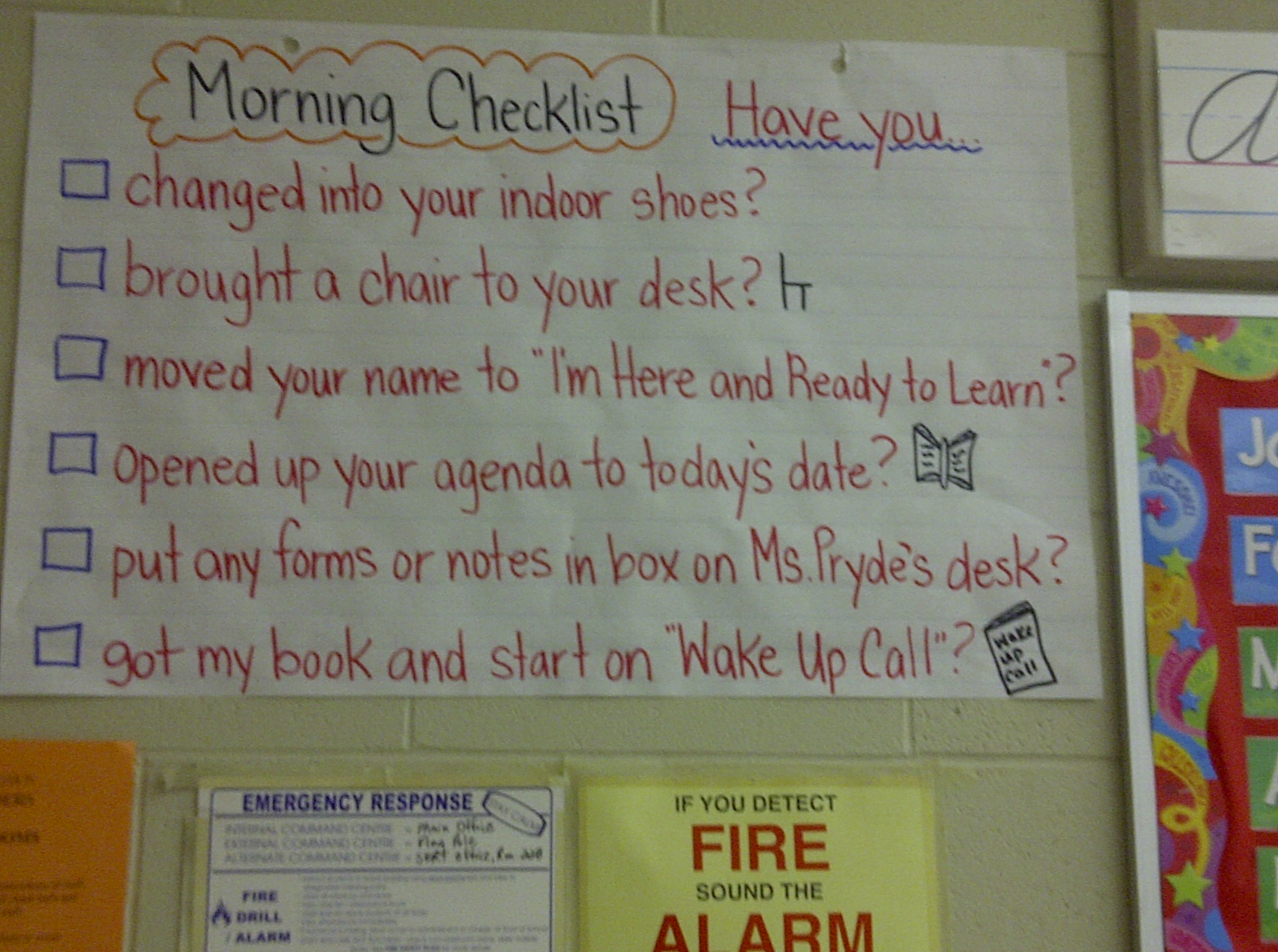
I also created an anchor chart to remind my students what they need  to do every morning. It is October, and my students are FINALLY getting into the routine, however, it did take quite some time. After the first week of school, I got the idea to create a Morning Routine anchor chart that helped students remember what they need to do in the morning upon entry.

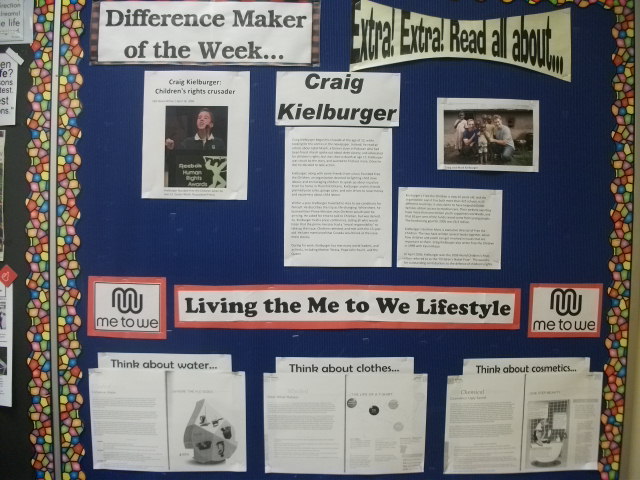
Living the Me to We Lifestyle Bulletin Board

Social Justice Begins With Me!

“A small group of thoughtful people could change the world. Indeed, it’s the only thing that ever has.”
-Margaret Mead

As we ease into another school year our class has begun to live the truth of this quote by Margaret Mead.  We started by becoming involved in learning a dance for a flashmob that we performed to fundraise for the Scarborough Hospital’s campaign to purchase a new MRI machine.  The students felt the opportunity was very meaningful and powerful.  It prompted read-alouds, class discussions, and journal entries on the topics of giving back to our community through simple acts of kindness and the power of believing that we can all make a difference in the world we live in.

This experience was a perfect segway to our Me to We Day.  The group of students who had the privilege of attending the celebration at the Air Canada Centre came back to school in awe and full of motivation to continue learning about how we can create a life where we are aware of how each decision, belief, and act impacts not only those around us but potentially people around the world.

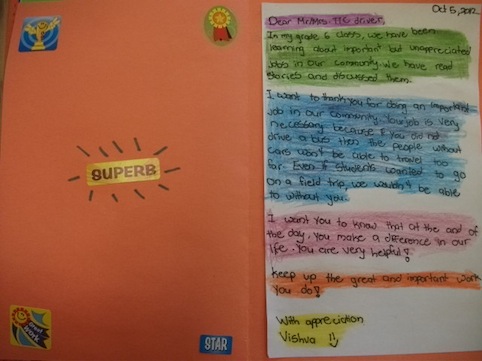
Feeling that the students were ready to embark on a year dedicated to social justice issues, I decided to use the resource “Social Justice Begins With Me! created by ETFO.  Our first activity centred around reading the picture book “Yanni Rubbish” by Shulamith Levey Oppenheim.  The activity proved to be one of the students’ favourites so far.  We discussed how certain jobs and professions are viewed as more prestigious or important than others and why that is.  Amazingly, the students needed absolutely no guidance with respect to understanding that all professions and jobs are important and necessary in their own way.  As a cumulative task, each student created a Thank You card for someone in the community that had an important but unappreciated job.  This Thanksgiving weekend, they gave their cards and took pictures with the recipients.

I cannot begin to express how satisfying it was to see the pictures of my students bringing such positivity to their community!

This email I received from a student says it all:

Hi Mrs. Oliveira!I gave the thank you card to the librarian(s)!!!! They were so thankful and grateful. The librarian that I gave the card to said she will make sure that she shows the other librarians!! When I left, I felt so good and so helpful! I couldnt bring a camera because they were all not available. I feel so happy!
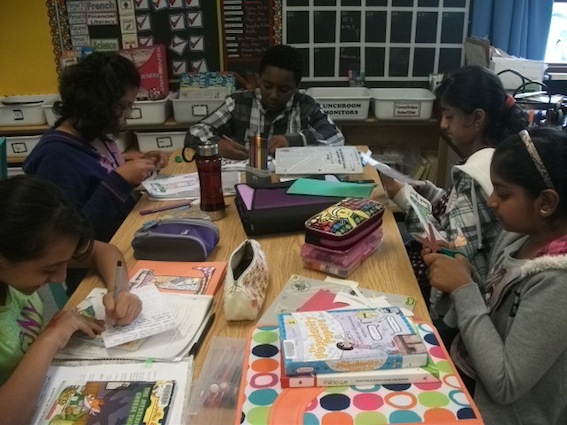
Students create their Thank You cards 
Thank You card cover
Inside a Thank You card
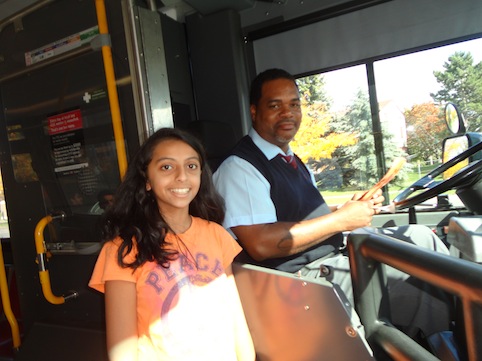
A student gives her card to a TTC driver


Photo of Tina Ginglo

Sharing Personal Narratives

I am a big fan of Lucy Calkin’s Writers’ Workshop.  I have seen it in action in many classrooms and I couldn’t wait to implement it in my own program.  I started using writer’s notebooks last year with some success, but I wasn’t satisfied with my writing program.  I decided to give it another go with this year’s group of grade 3s and we are off to fantastic start!

Students love having their own journals for writing.  During the first few days of school, we covered their notebooks with colorful paper and I allowed students to decorate their covers.  I loved seeing messages such as PRIVATE KEEP OUT and PROFESSIONAL WRITER’S NOTEBOOK written in big letters on the cover.  In Calkin’s resources, she recommends that you begin the school year writing personal narratives through “small moments.”  Small moments are short narratives where students write about something they did with a special person or in a special place.   I have not had one student unable to think of something to write about! Students know they are to write for 15-20 minutes each day without interruption.  They understand that we must be quiet so we can think about our writing.  They love sharing their writing in Writers’ Circle and with their peer editor.   Almost daily, I will photocopy (with permission from the author) a student’s small moment.  As a group we identify strengths in the writing.  I then use the student’s writing to teach a specific craft in writing such as adding dialogue or words we could use instead of “said.”

We are now focusing on “zooming in” when writing our small moment.  Students are encouraged to use three types of sentences in their writing: action sentences, dialogue sentences and thinking sentences.   They are starting to get the hang of it.  Here is one grade three student’s small moment:

I opened the square box and smelled. “Mmmmm,” I thought to myself.  “You better grab a slice before I eat all the pizza Tatiana!” I warned.  

By S.B. 

It seems so simple, but it does take students a while to get the hang of it. Three sentences that capture what Lucy Calkins refers to as “seed” ideas rather than watermelon ideas.   Once students get the hang of writing these short personal narratives, they can start to write longer personal narratives.  Our goal for the first week of October is for students to take one of the small moments they wrote in September and develop it into a longer personal narrative.

These personal narratives complement the reading resource I use in my classroom.  The first unit in Nelson Literacy grade 3 is personal narrative or My Story.  Reading as Writers, Writing as Readers…it doesn’t get better than that!

Photo of Tina Ginglo

What a Difference A Year Makes

This time last year I had just returned from a seven-year absence from the classroom.  During the seven years I was working in various centrally assigned positions, I had many opportunities to visit K-12 classrooms across the Greater Toronto Area.  You could imagine my excitement!  I observed many effective lessons and teaching strategies, classroom set-ups and routines.  I couldn’t wait to adopt some of them for my own program.  As well, I felt my literacy and numeracy program in my last school and teaching assignment was effective and I planned on resurrecting many of those strategies and routines with my new group of students in my new school.

September 2011, I was teaching a new grade (grade 3) in a new school community. I expected my classroom management to be a tad rusty and it was, but there were many initial problems that I could have avoided had I not taken some things for granted.

Prior to leaving the classroom for central positions I taught grades 4 and 5 for more than half my teaching career.  I provided prep coverage to grade 3 students over the years, but I never had a third grade teaching assignment.  I expected grade threes to be similar to my grade fours in terms of social emotional development and their ability to work independently.  After all, it’s only a year difference…what a difference a year makes!    The students were so “little” compared to my grade 4s at the beginning of the year.  I started the year with the mind-set of a junior teacher. I didn’t expect that I would have to model routines such as using the pencil sharpener!  This year, I began the year thinking like a primary teacher.  I take time to model the simplest routines, over and over and over again.   My expectations are more realistic.

I believe in collaborative knowledge building.  My classroom set up has always reflected my beliefs about teaching and learning.  In my last school, I didn’t have desks in my classroom.  I had 6-8 tables and I never seemed to have a problem getting students to work both collaboratively and independently in this setting.  Naturally, when I was setting up my classroom last summer I immediately placed the individual student desks into groups of 4.  The fact that most, if not all, of the grade 2-7 teachers in the school arranged their desks in pairs didn’t register.  Sometimes I need to be hit with a brick to get a message.  My students were not ready to work in groups.  By the end of week two, my classroom looked like all the other classrooms in the school, with students sitting in pairs in long rows.  I hated it, but the students were more settled and were better able to focus.  I managed to finally get them into groups of four when we returned from March Break.

On the first day of school, I did my usual spiel about making smart choices.  I told the students that they could sit wherever they wished as long as they were responsible in the choice they made.  I warned students that if I felt their choice was interfering with our learning I would move students.  This always worked for me in the past. Of course I had to move students around, but it never was a disaster.

This year, I started the year with the students sitting in rows of two per group. I purchased three sets of calendar numbers and taped them to student desks, coat hooks and cubbies.  When we entered the classroom on the first day of school, I invited all students to stand at the front of the classroom.  I quickly reviewed odd and even numbers with the students.  I then invited the boys to hang their bags on an odd numbered hook, pick up their name card, and sit at the desk with the same number as their coat hook.  Next, I invited the girls to find an even numbered hook, pick up their name card and sit at the desk with the same number as their coat hook.  There were no problems at all.  I have groups of two, boy-girl groups.  I have shuffled a few students around, but it really made the first day, first week, first-month of school more structured and settled.  I think it is a bit of a compromise on my part.  I want to keep to my belief that students should have choice and control in the classroom, but at the same time, taking the pressure off of the students who are not ready to make those types of choices right now.  What a difference a year makes! 

This number system really makes planning for supply teachers and lining up so much easier as well.  Instead of having a floor plan prepared for supply teachers. All I need to do is leave a list, 1-22 with each student’s name beside a desk number. I can move the furniture around and not have to worry about updating my floor plan, just as long as I update my class list with desk assignments.  Students also know they must line up in their numbered order.  All their teachers have a copy of our class list with their desk assignments.  It has made transitions so much easier on teachers and students.  What a difference a year makes!

In the years I was out of the classroom, I guess I took for granted all the structure, the little details, that did exist in my past classrooms and the classrooms I visited that would go unnoticed by visitors.  Structure doesn’t necessarily mean that we are taking choice and control away from the students.

Creating the Environment for FDK

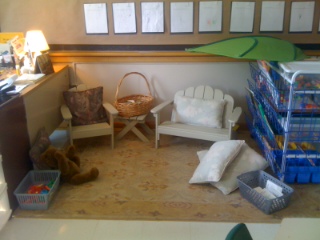
As I mentioned in my last post, our Full-Day Kindergarten room was formerly a Special Education classroom, so it is evolving each week as I acquire furnishings and materials. With a limited budget I have been busy searching for some small scale furniture items and resources that will provide an inviting and engaging learning environment. One of the first centres that I focused on was a Reading Centre. Although I had a carpet and cushions to define a reading area, the children were not frequenting the space as expected. Last weekend I was able to source a small set of outdoor furniture from a friend that only required some sanding and painting. I then went to IKEA to buy a canopy leaf that would define the space (hanging a curtain or fabric as a canopy is also effective). Baskets were used for organizing the books, and I also added a container of magnetic letters to use on the front of my desk which frames the reading centre space. The Reading Centre is now an inviting area that is enticing all the students to settle alone or with a friend to look at a book.


In the photo you will notice a covered chalk board above. I found that the black chalk boards surrounding the areas were not useful, so I covered them with brown craft paper. This provides a neutral background to display the children’s work. In this area as seen in the photo, I glued a piece of black construction paper for each student (26 total) and used paperclips to hang their current “Self-Portrait” representation. As noted on page 85 of The Heart and Art of Teaching and Learning, the self-portraits provide a gallery of the children’s work, as well as a source for assessment. Each month the children complete a new self-portrait and it is added on top of the previous month. Over time, one can see the development of fine motor skills, pictorial development, and writing abilities.

The other centres that are popular at this time are the blocks/building centre, drama centre (we just received a fridge and sink), and the play dough table. I do not have a specific number of students for each centre, however we limit according to what makes sense. If 5 or 6 children want to play in the dramatic centre, the children can accommodate to make it work. However, if 10 children ask to go to the drama centre, we say, “There isn’t enough space today,” and the child selects an alternative.  We are still adjusting our centres to meet the students needs and interests. This week I will be working on the art studio, writing centre and math centre. In the next blog, I will provide updates on this progress.

Photo of Sangeeta McCauley

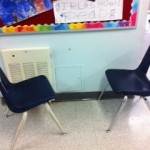
Talking and Listening Chairs

As I look back on this past week, I realize that I spent very little time teaching curriculum and more time working on life skills. I have two choices at this point. I could think, “Oh wow, I’m really far behind!” or “I’ve made a huge investment that I hope will pay off in the future.” I choose the latter.

My students have been coming to with me problems that happen at recess: someone left them out of a game, two friends were whispering something not-so-nice about them or they saw someone being treated badly and didn’t know what to do.

When we talk through these problems, it’s obvious to me that they have the answers on how to solve their issues, but they need a tool to help them do so.

So, I introduce the talking and listening chairs. One chair is marked “T”, the other “L”.

We use one of the problems that happened to illustrate how to use the chairs. For example, “Bill” was upset that “Megan” was not listening to his ideas when they were trying to solve a math problem together. So, Bill sat in the “T” chair and Megan sat in the “L” chair and each had opportunities to talk about what was bothering them and listen to how the other person was feeling. It quickly became evident that they was room for compromise on both ends and they seemed relieved to be able to move on from this problem.

Like most tools, the talking and listening chairs also have boundaries, which I discuss with my students:

* If the person you want to take to the chairs is not ready, you may need to wait.

* If you go out to talk, you will need to attentively listen as well.

* If the problem takes longer than 10 minutes to solve, you may need some help.

* When classmates are using the chairs, we can show respect by giving them some privacy.

* If there are many students involved in the problem, we may need to discuss it as a whole class.

When students ask to use the chairs, I keep track of what time they step out in the hallway and occasionally walk by the door, so the talking and listening remains positive and focused.

As a tool, it can be very successful at helping students who lack confidence to speak up when something is bothering them. I especially enjoy watching, when some of my students who are still learning English approach a classmate to say, “I need to talk to you.”

I have yet to teach a curriculum subject that is more rewarding than that moment.

A bulletin board with notes about reading and listening

The Daily 5

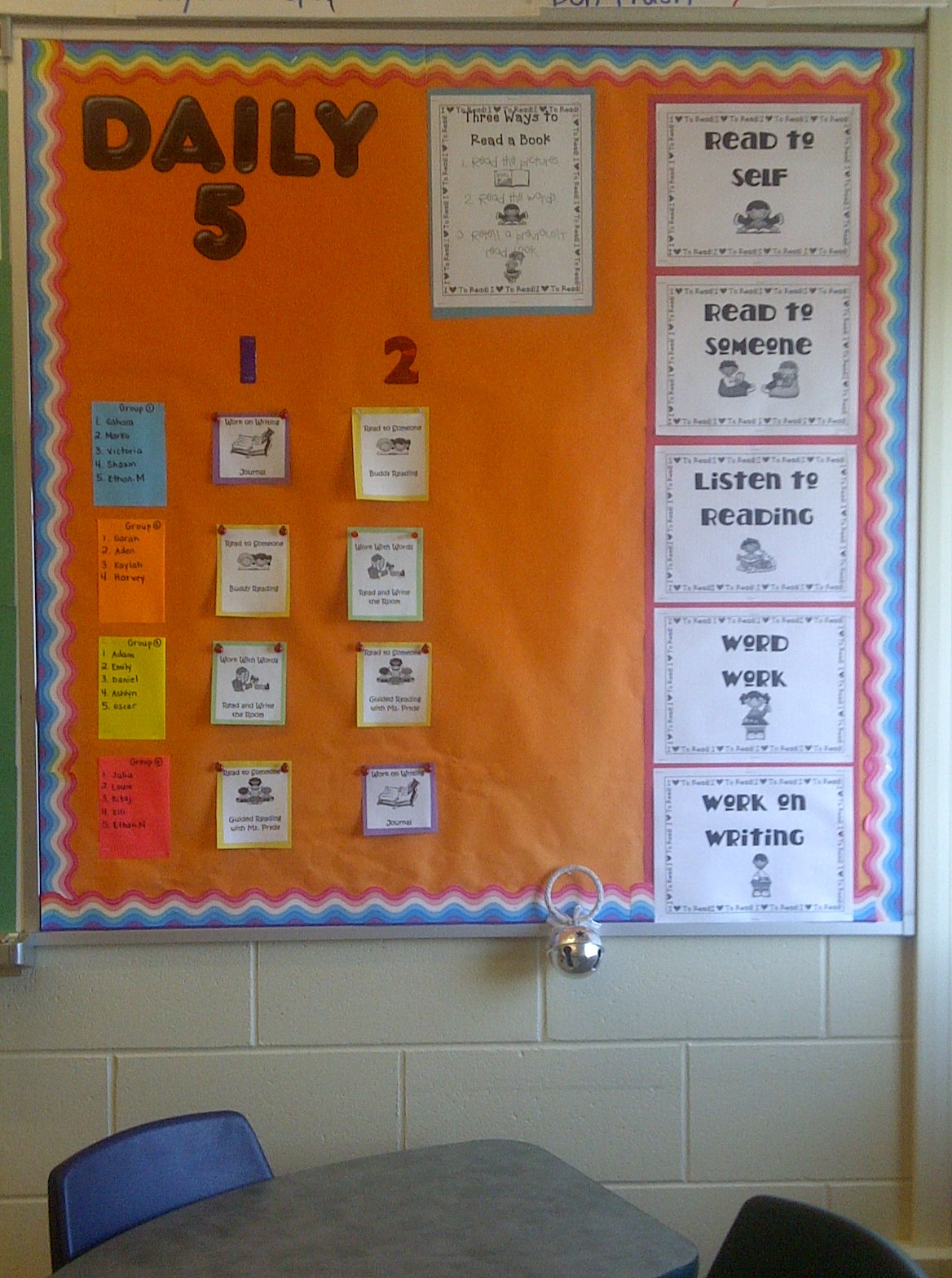
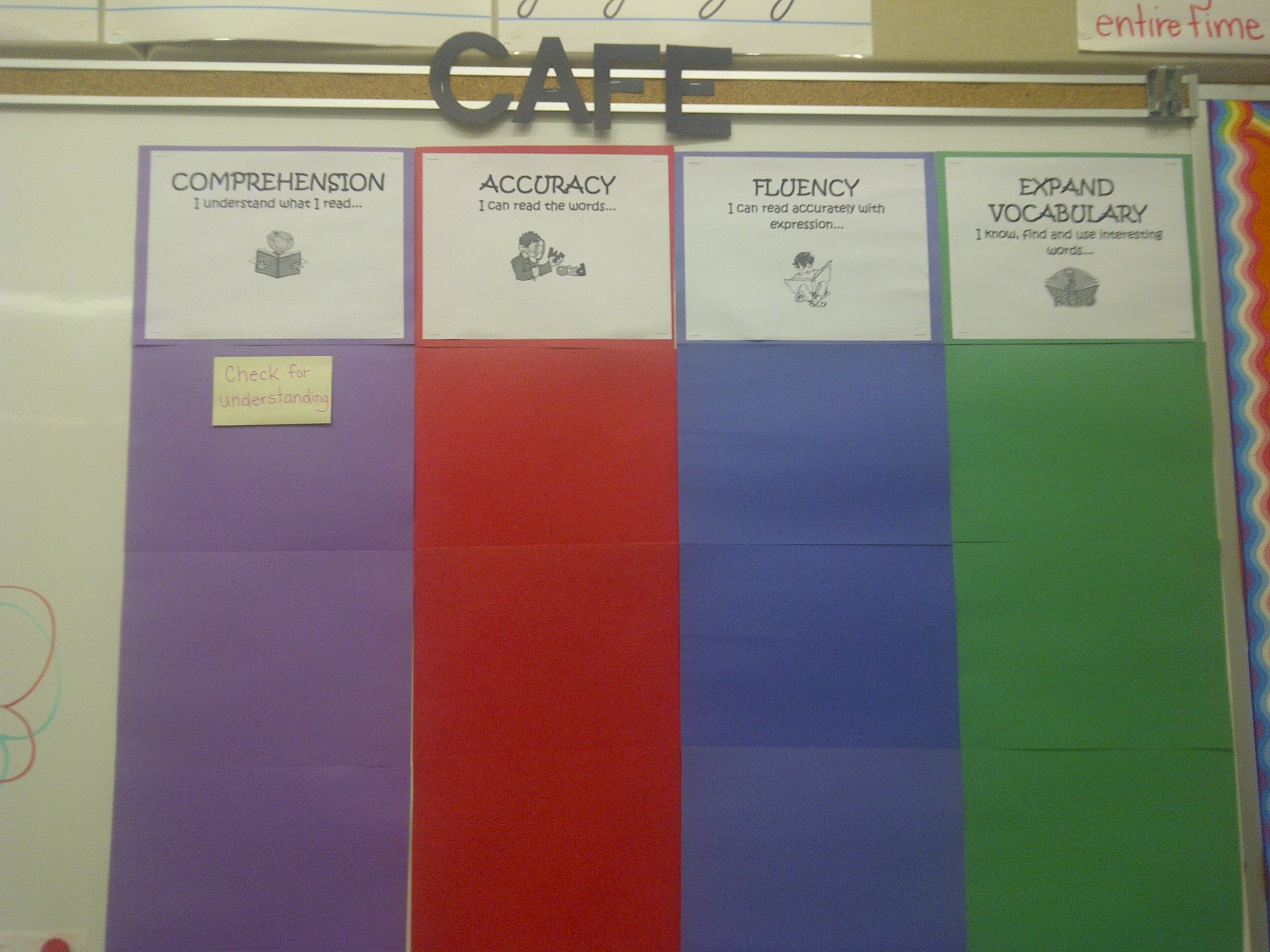
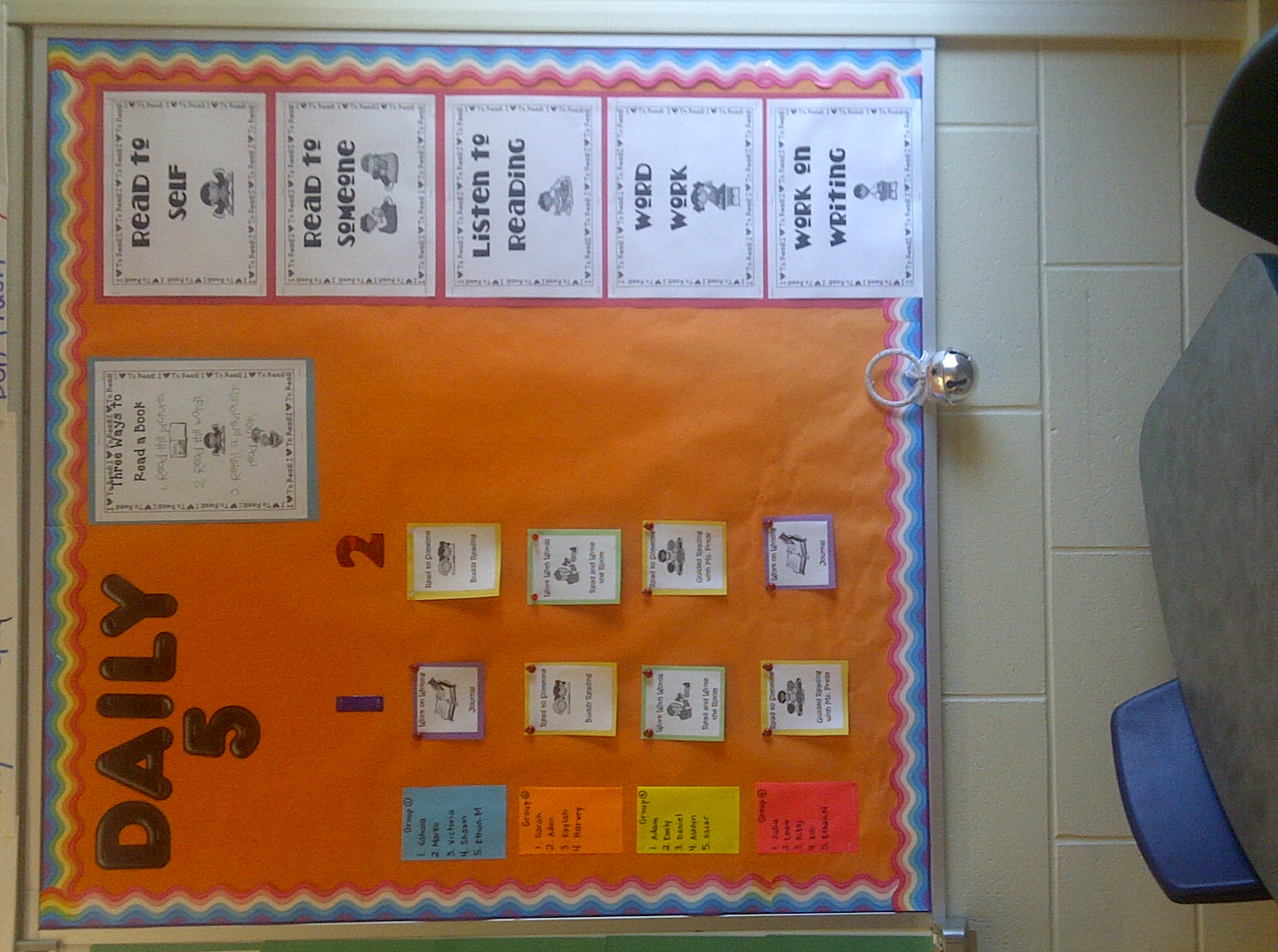
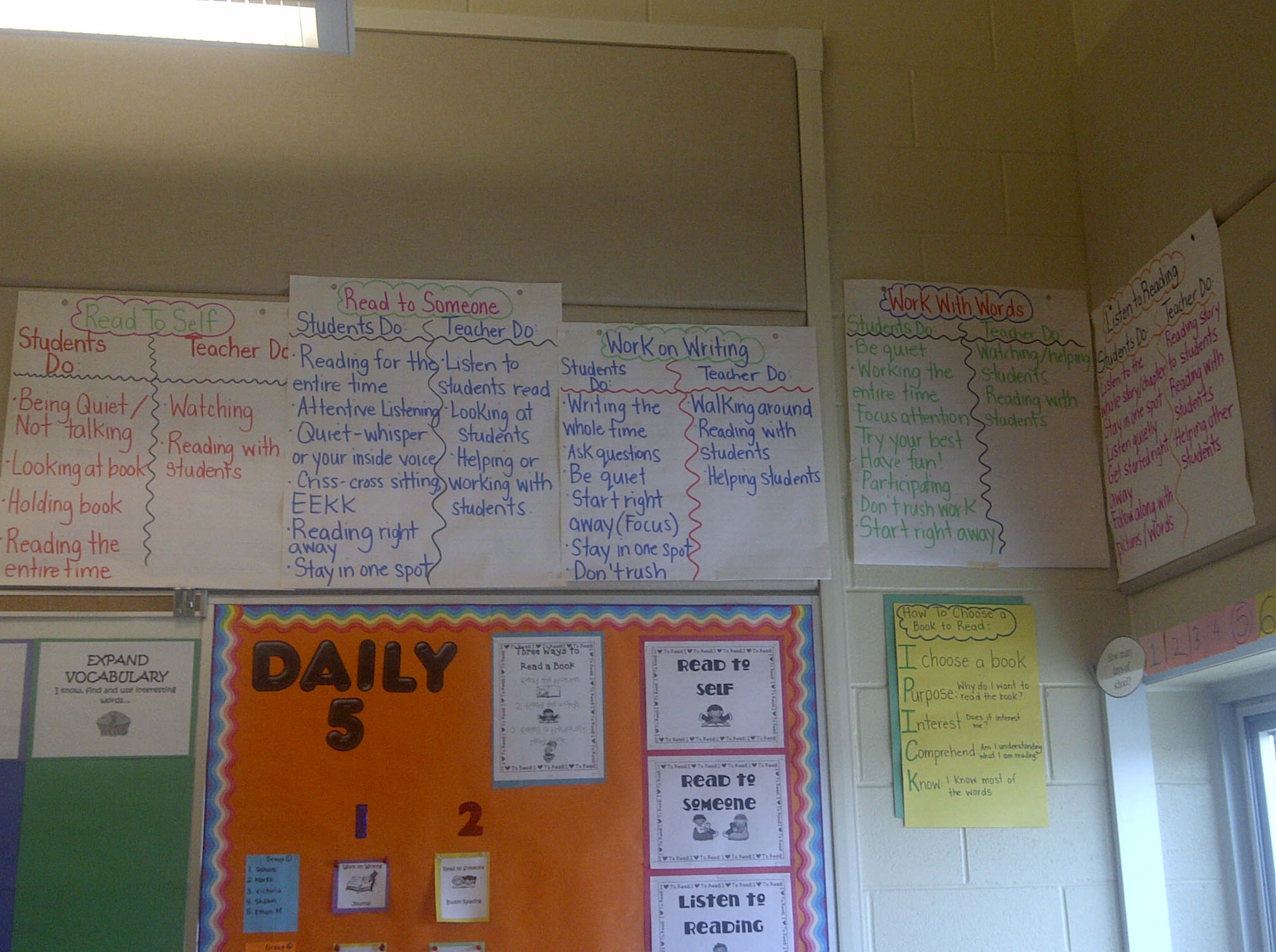
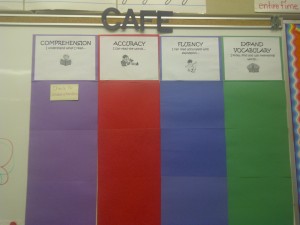
 This year, the initiative our Primary Team has taken on in regards to literacy, is implementing  The Daily 5 and CAFE. For those of you whom are unfamiliar with the 2, they are based on books  written by “The Sisters”, Joan Moser and Gail Boushey. These books are a great (easy) read and  gives you a wonderful basis and understanding of the 2 concepts, and how to set it up in your  classroom.  The Daily 5 is a framework that allows students to participate in 5 different activities  each and every day: Read to Self, Read to Someone, Listen to Reading, Work on Writing and Work  on Words. CAFE is an acronym standing for C- Comprehension, A- Accuracy, F- Fluency and E-  Expanding Vocabulary, and are the strategies good readers and writers need to be successful. The 2  work very well and I feel, go hand in hand with one another. If you buy (or read) both books, they  give you examples of how your first few days will look like when you are setting up the program in  your classroom.
Since the 2nd week of school, I begun implementing these programs, one by one, illustrating what each Daily 5 looks like. We also created anchor charts that have been posted around the room illustrating the “expectations” both students and teachers have during our literacy block. Our chart is set up with the headings Students Do vs Teacher Do. Many of the activities are very similar in what the students and teachers are expected to do. Students, for the most part, are expected to work the whole time, remain quiet, work in one spot, get to work right away, and have fun! The teacher is expected to work with students at the guided reading table, conference with students, and watch/listen to how students are reading/writing.
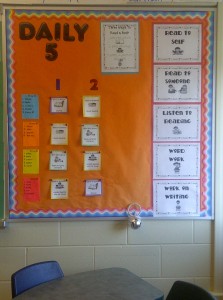
The first concept I introduced to my class was Read to Self (independent reading). When we were practicing,
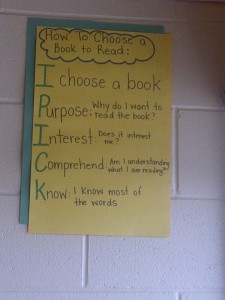
we were working on our stamina. This means, how long our brains are working without any breaks. Students should be reading for 20 mins each day, but first, we needed to build up our stamina, to reach the 20 mins. My students are quite fabulous, and really enjoy reading and it only took us 7 days to reach of goal of reading for 20 mins consecutively without any breaks. I encourage my students to have 2-3 books with them at their desk so if they finish a book before the 20 mins is over, they will have some more books at their desks so they can continue to read without stopping and interrupting others by getting a new book. Then, we moved  to Listen to Reading, which is when I introduced our class read a loud. I brought in all my old Goosebumps Books for our classroom library, and my students are now obsessed with them. So, we took a classroom vote, and our first read a loud book was a Goosebumps Book- The Ghost Next Door. Then, we moved on to Read to Someone. How I set this up in my classroom, was by practicing buddy reading. We discussed how it looks like when you are reading to your buddy and EEKK (Elbow to Elbow, Knee to Knee). We did this for 2 days, and built up our Read to Someone stamina of 20 mins. Then, I introduced Work on Writing, where students had the opportunity to write in the writing journals. We created success criteria for journal writing, so students knew exactly what was expected of them when they wrote in their journals. Finally, I taught a mini lesson on syllables, and our Work on Words introduction allowed students to add their names to the class word wall, and they needed to sort all the students’ names based on the number of syllables in each name.
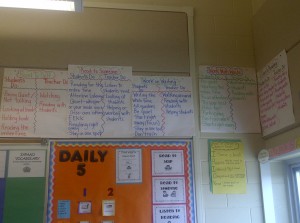
    Once we went through all of the lessons and talked about what each Daily 5 looked like, as well  as modelling some of the CAFE strategies (such as Check for Understanding, Choosing Good Fit  Books and Go Back and Re-Read), we started our Daily 5 centres last week. The Daily 5 is all about  choice, but for the first week, I decided to split my class into groups and they rotated through the  Daily 5 centres so they could become familiar with the whole process. In our 100 minute literacy  block, my students have the opportunity to be engaged in the Daily 5. My students first start off with  Read to Self, where they read independently for 20 minutes. Then, I ring the bell which is an  indicator to my students that they need to quickly tidy up and meet me on the carpet. Then, I teach a  mini lesson on the CAFE strategy that we are currently working on. Sometimes, I read a read a loud  picture book to my students and either model how to use the CAFE strategy, or get students to help  me with it (so it becomes a shared reading and shared use of the CAFE strategy).     
Once the lesson is  complete, students are told which centre they will start off with. Students will rotate through 3 centres in one day. Last week, our centres were: Read to Someone (Buddy Reading) or Read to Someone (Guided Reading with Ms. Pryde), Work on Writing (journal writing which integrated with Social Studies- If I were a First Nations person, I would live… I would eat… I would travel by…), Work on Words (Read and Write the Room) and then I would finish off the 100 minute literacy block by reading a few chapters from our chapter read a loud book. Students spend 2 min at each centre. Next week, now that the students have had the opportunity to complete one complete rotation of our Daily 5 centres, students will be able to choose which centre they will go to and will keep track of which centres they would like to go to (a great Responsibility indicator, for students to make sure they go to each centre at least once, as well as keeping track of it on their own).

So far, it has been a success in my classroom and I look forward to seeing how it will look like in my classroom this week!

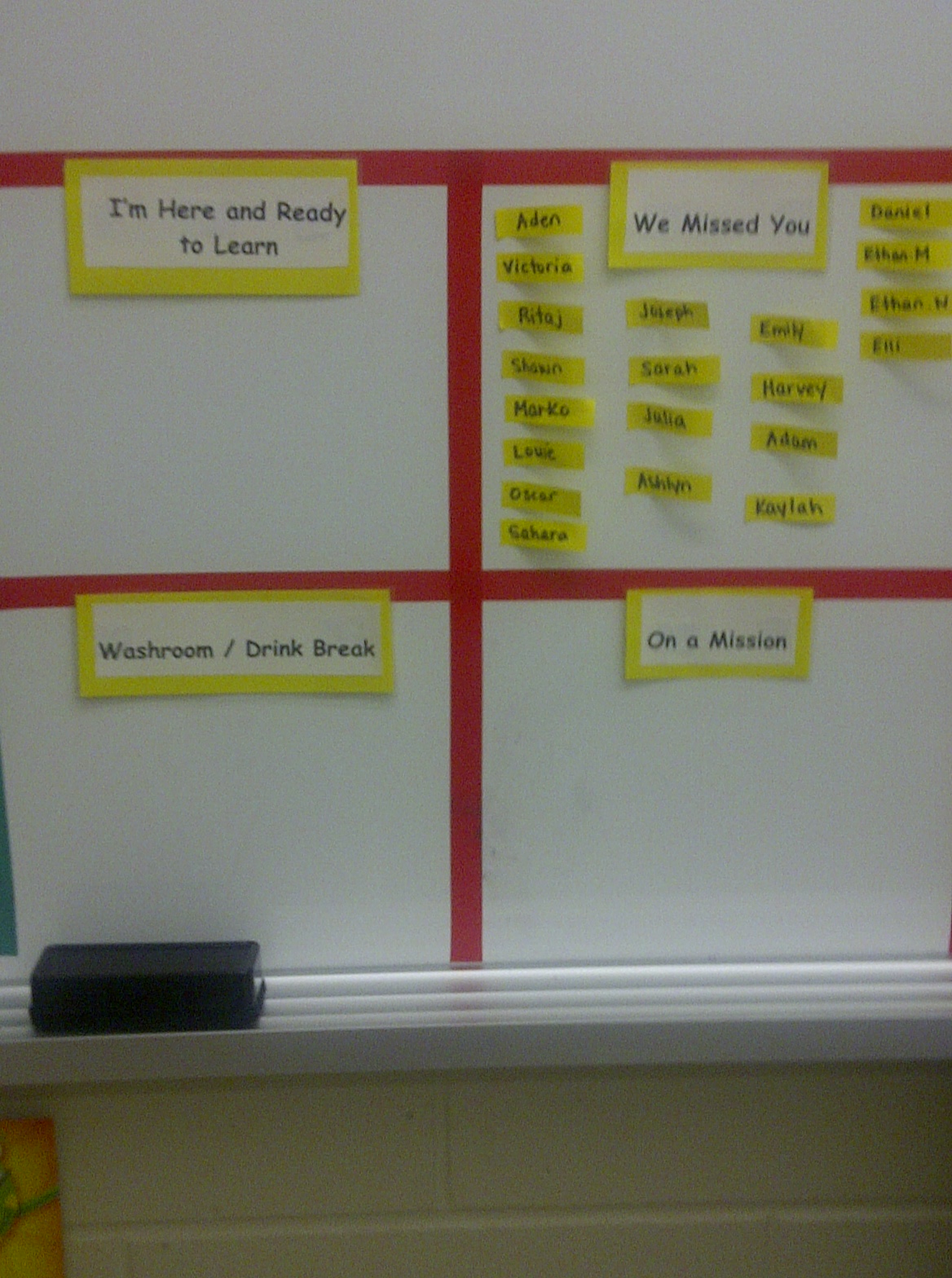
Photo of Erin G

Reinventing the Wheel – Improving Past Practice

One advantage of entering your second or multiple year(s) of teaching is being able to go back and reuse materials you had previously gathered and created. The mad and desperate scrambling for resources during the first year of teaching a subject is what many would attribute as being the most stressful part of the job. Having a bank of lessons/activities/assessments allows you to devote more energy and thought to the many other aspects of teaching.  As everyone is aware however, the need to consistently update, revise or in some cases, entirely revamp your program is a necessity. Apart from being an obvious benefit to your students, it is a way to push your own limits of creativity. I’ve found that this task is much easier and productive if undertaken sooner rather than later. It can be particularly tempting when your best plans and intentions go awry to want to immediately block out the experience or at least relegate it to the realm of distant memory with “well, I know I won’t be doing that again”. Without belabouring the “reflective process”, I try to efficiently take stock of the success or failure of activities and assignments as soon as they are completed by jotting down impressions on a sticky note and then adhering them to my printed master copy. At the same time and using the same sticky note procedure, I also solicit the input of students and ensure that everyone has the chance to comment at some point during the year. At the end of the process, I have a bank of input available when it comes time to plan for the following year. Sometimes, “reinventing the wheel” can be as simple as changing the assignment pairing (from an individual to small group) or restructuring the order in which things were taught or assessed. Of course, this process can be more stimulating and interesting if you have the opportunity to debrief and compare with your grade team or teaching partner, all of whom will bring a different perspective and insight to the table.

Photo of Erin G

Keeping It All in Perspective – Teaching Really is a Far-Reaching Profession

As teachers and former students ourselves, we know the impact that we can have on students. One just has to think about “rateyourteacher.com” or think back to our impressions of our own past teachers to realize how distinct and ingrained our memories really are. As we embark on another (or perhaps the first) year in the most “noblest of professions”, it seems like a good time to psych ourselves up with such inspirational thoughts before we are rendered irate and exasperated by that particular student who drives us nuts. I originally planned to address one of the suggested topics of discussion regarding your “most remarkable student” and how you were able to make a difference. In the process of reviewing the legions of young adults I’ve come into contact with in the past 10 years of teaching, I digressed and instead became sidetracked with the notion of time. Nothing brings home the quick passing of years like bumping into a former student who is now teaching your own children. For those of you who have also taught for a while, I’m sure you can relate. Mentally flipping through the faces of all my former students in search of the most remarkable brought to mind many who stand out for their compassion, their funny jokes, their temperamental nature, etc. There are also those who are memorable not only for who they were, but also for what they became – the suicide, the innovative scientist, the high school dropout, the successful entrepreneur, the teenage mother, the infamous actor, the murder victim, the accidental death. What struck me as interesting was that for both of us, we remain frozen in time and are lastingly perceived as a grade 8 teacher and a boy/girl of fourteen. All of which made me appreciate the fact that each year with every new batch of students, relationships, interactions and impressions are formed and will mutually impact us in a way that is more profound and enduring than we realize.

Mix of a few photos of inside of a classroom with students

A Little Perspective

This past summer, my family and I spent 6 weeks in India. Apart from the wonderful moments we enjoyed with family and the extraordinary travels we embarked on, there was one experience that helped us all gain a little perspective.


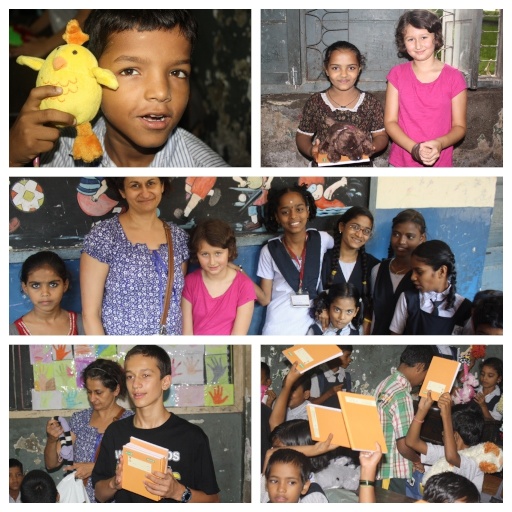
Our son, Sunjay, turned 12 in June and decided that in lieu of gifts, he wanted to collect money to donate in India when we would be there. Once we arrived, we discovered that one of my cousins had volunteered in a school that needed help and it seemed like the right “cause” for Sunjay’s donation money.

The school was in Dharavi, one of the biggest slum areas in Mumbai. Families live in shacks one on top of the other, with an “outhouse” that drains into a creek. Due to the location and inadequate drainage systems, there are often floods during the monsoon season. It is estimated that anywhere from 600,000 to 1 million live in this one area of the city, so few children get the opportunity to attend school.

My cousin explained to us that the school she volunteered in was running solely on donations from charitable organizations and they offer free education until grade 7, but only for three kids per family. If you have a fourth child, you have to pay for their education.

When we discussed making a donation, it didn’t feel like enough. We wanted to visit the school ourselves and meet the children. Sunjay and our daughter, Maneesha, had also brought stuffed animals from home that they wanted to give the students. Communication between my cousin and the classroom teacher led us a small store in the local market, where Sunjay used his money to buy blank notebooks for the students so they could have something to write in.

That day at the school was one we shall never forget. The students were curious to see 4 foreigners walking in the hallways and while some were friendly, most were shy and hesitant. They were wearing school uniforms, yet some did not have shoes.

The classroom looked so different from what we are all used to…there were 3 kids to one desk, paint peeling off the walls, and no visible school supplies. The noise level when we entered was very high, and the teacher was trying to control the class by pulling some kids apart who were fighting. We learned that parents have very little time to supervise their children because they are often out working when the kids come home from school. It can then fall upon the teacher, to create a community of learners that not only trust her, but each other and the world around them.

Once we handed out the notebooks and the stuffed animals, the teacher asked if the students had any questions and one student said, “Why did you give us these things?” It was a hard question to answer, but we tried to explain how special the school was and how we just wanted to help. Really as I look back on the experience, they gave us so much more than we gave them.

Each day when I walk in my classroom this year, I am grateful. Grateful to have pencils, paper, chairs and an area where I can keep my own belongings. Grateful to have colleagues to talk to and learn from. Grateful that parents are able to send their children to school and they do so with hope, appreciation and respect for what we do every day. But most of all, I’m grateful for the 26 faces I see at the door in the mornings. They remind me why I’m a teacher.