
Blog

Photo of Erin G

When Parents Get an A+ on Their Kid’s Assignments

I was recently talking to a colleague over lunch about some purely spectacular geography projects submitted by the most unlikely candidates. Some had subheadings dreamed up by a team of marketing execs while others rivalled last month’s feature article in National Geographic in terms of in-depth analysis and startling facts. What made them all the more surprising was that some of the projects belonged to students who normally functioned at a level 1. It was obvious that the parents had been extensively involved in the project and was made all the more evident when one called in to get some additional feedback.


We talked a lot about how to grade such an assignment and how it’s an awkward situation if one actually confronts the parent. One way to avoid the problem entirely is to break the project down into components (pre-research, graphic organizers, rough drafts, etc) all of which are graded and completed in class. That way, you can assume it is actually the students’ work and that there is not a miraculous transformation into a Nobel Prize-winning final copy.  Although I was quick to condemn the many negative implications of the parents’ involvement, when I actually started to think about it, I remembered a few of my own school projects where my parents were definitely a part of the process. Without doing my actually work, they nonetheless made it a more enriching experience by taking me to museums, art galleries and the Science Centre to compliment my research. Thinking back to my own experiences made it less clear cut in my mind. Obviously it’s not ethical for the parents to actually be doing the work but at the same time, is it wrong for them to participate constructively from the sidelines to provide a more enriching and complimentary experience for their children?

Photo of Carmen Oliveira

Parent/Teacher Interviews: Connecting, Celebrating, Planning, Supporting

Samantha’s experience with parent/teacher interviews was powerful and resonated with my view of the important partnership we share with our students’ care-givers.

This year I structured my interviews in order to connect, celebrate, plan, and support both students and parents.  In each interview I made sure to:

CONNECT: Catching up with parents after our Curriculum Night was a nice way to begin our interview.  With each one I tried to express how grateful I was for their involvement in their child’s life and encouraged them to share how things were going outside of school (homework, clubs, sports, hobbies, etc.).  I also had parents share their thoughts and feelings about their child’s progress.

CELEBRATE: We celebrated their child’s strengths, progress, and special or important accomplishments thus far.

PLAN: Based on the child’s progress, their strengths, and needs, we created a “next steps” by choosing one or two goals and deciding on some strategies we (student, parent, and teacher) could use to help the child accomplish each goal.

SUPPORT: I offered some resources and advice for both parents and students that could be used to support the plan we decided to put into action.

I had one of the most successful interview experiences of my career which was spectacular!  However, when all is said and done, it’s the unexpected moments that empower and inspire me most.  I’d like to share one such moment that solidified my belief that we can be agents of change to our students in ways we might not have imagined.

I have a student in my class who spent a great deal of time in the principal’s office during his previous six years at the school.  “Good luck” was the response I got when teachers saw the name on my class list (a reaction which is one of my greatest pet peeves).  This of course, only sparked my interest and motivation to bring about positive change.   The funny thing is that it took very little effort to witness a complete turn-around in behaviour, focus, and attitude toward learning!  I attributed it to a structured but engaging classroom environment, a lot of positive feedback, and regularly connecting with his mom with respect to his work and behaviour.  During our interview I had the pleasure of sharing and celebrating all the progress and success the student had demonstrated and together, we planned our next steps/goals.  At one point, the student’s mother hugged him tightly and filled his face with kisses.  She began to tear up and said, “You can’t imagine what it is for a mother to continuously hear negative comments and be called into the school every other day to deal with problems.  Since the beginning of this year, he comes home happy to show me his agenda with all the positive notes you write.  He believes you like him and is eager to be his best self.  At home, he is an amazing kid.  I hardly recognize him.  I cannot begin to thank you enough.”  I quickly reminded her of the factors I attributed to his progress.  “I really do feel that he’s more mature and ready for a change”.   But she nodded in disagreement and said, “He believes you really like him.  That’s all it took.”

Needless to say, as exhausting as interviews are, hearing that from his mom completely made my day.

Photo of Roz Geridis

Combined Grade Planning

Like Alison’s Blog on Meaningful Connections, I too have a combined grade (5/6) and have to find common curriculum connections within both grades. I recently have been able to attend a multi day board workshop on planning Science and Social Studies for a combined grade classrooms. After one session, I volunteered to take on the challenge of becoming a Demo Classroom to discuss my planning process with a group of colleagues and have my class lesson as a demo to allow the opportunity for my colleagues to see how the planning is implemented.

Although I was a little nervous to find the connections, the experience to have one on one time with a board instructional leader was very valuable to my professional learning. I also was able to take the new skills learned and implement them to other areas of the curriculum. The main idea is to find connections between the each grade’s curriculum. Sometimes it is a research skill or an investigation, I also have found connections in the big ideas or concepts in the overall expectations. Remembering Science and Social Studies curriculum are related to topics, you look to find ways to teach the skills and tools needed in combined lessons to allow students to complete some individual or grade group work related to each student’s grade topic.

I also look for ways to combine expectations within my lessons. For example, one lesson I took the kids out for a community walk. While the grade 5s looked for (and took pictures of) areas of concern within the community, the grade 6s went into a Sobey’s, looked for imported food and recorded the data on a chart (country of export and what the product was). The grade 6 students were encouraged to find products from a variety of countries. We then took the information gathered for both grades; the grade 5s selected one area of concern and wrote a letter to City Hall describing the location, what the concern was, and how to fix the concern. The grade 6s completed a research project (in pairs) of a country from the list developed in Sobey’s which Canada imports products from.

Another combined lesson was looking at Immigration and how it affects Canadian Trade. I used the Frayer Model defining immigration, what it looks like, what it doesn’t look like, and examples of how it affects Canada’s trade. I need to highlight, I am just short of 2/3 of the class having an IEP with the range from gifted to learning disabilities. All the students did great on all of these activities and one reason was the activities were connected to their community and their families. Giving the students real life context really does help to engage and make the connections for their learning.

With the many needs in my class and teaching lessons combined, I was worried the students might not have understood the concepts. When I used an exit card for assessment (or assess in any other way) the students have shown me their understanding of the new knowledge and their ability to learn and apply new concepts in a very busy classroom. There are many ways to connect combined curriculum but you do have to think outside the box and sometimes away from the resources provided by your school. I do still look at the resources and team plan with my colleagues. But when I team plan, I take the time to find connections ahead of time so I am ready to expand the team planning ideas into both grades.

Photo of Sangeeta McCauley

Are We Open?

Reading Samantha’s post about interviews and Tina’s post about co-teaching brings to mind a recurring theme I feel I’m living: teaching is about being open to partnerships.

There are many different ways we can show we are open and they may be as simple as:

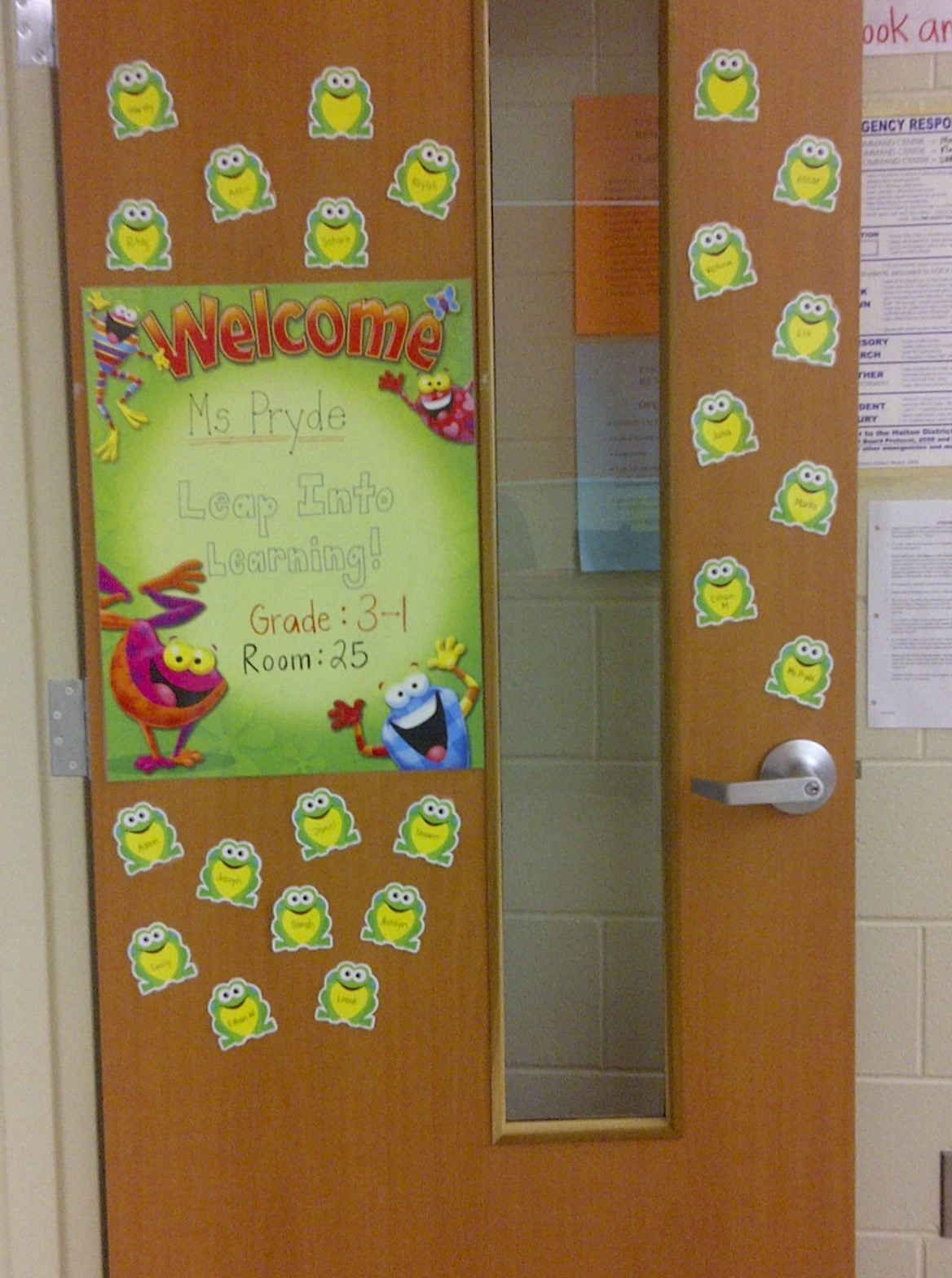
-keeping our classroom door open to welcome others

-walking our students outside at the end of the day and talking with parents

-trying a new idea that someone shares with us

-taking time to listen to stories from our students, their family members, or our colleagues

-letting our students take the lead by sharing their ideas and insights

-asking questions when we are unsure

Through these examples and more, we can gain so much information about our students, our school community and most of all, ourselves.

It may be that my perspective is different, given that I haven’t had my own class for the last 6 years, but I like to think that being “new” allows me to see things in another light and I, for one, am glad to be in this position!


Heart Picture

Parent Teacher Interviews

Parent teacher interviews are definitely one of the things that I love about my job.

To date, I have spent  7 hours a day, for  53 consecutive days (excluding weekends and P.A. days) with these little young people and during parent teacher interviews, I get to speak at depth (at greater depth than  telephone interviews and letters home) with the people who spend all that other time with them, and share all of the students’ gains and struggles that  we have had in class.

Parent teacher interviews allow me to look at each student as the unique individuals that they are.  Often in my teaching, I am focussed on my teaching practices, getting the students to a ‘Level 4’ and looking at what they are not doing, and what I need to do to get them where I want them to be. This is an expected aspect of teaching, but meeting with the parents provides me with perspective and reassurance of how much we have already accomplished together.

I am finding that Grade 1 is a very rewarding grade to teach. I am amazed at the progress my students have made. ‘Johnny didn’t want to write at all in September and is now writing consonant sounds?’ That’s a big gain.’ Liza didn’t seem to understand at all when we were learning our word families, and is now printing initial and final sounds during her spelling tests…even though she got one out of ten words correct?’… ‘That’s a lot of progress for someone I was concerned about when I first did my diagnostic tests at the beginning of the year’…’ Oh,  and she was born a month and a half premature?’ That makes sense of my developmental concerns that I had that were not mentioned in her file.  Let’s monitor that and look into what other resources are available to us.’ ‘Aiden still is having hard time remembering his homework and to hand in letters. Let’s set up more routine at home so that this doesn’t continue to be a problem once grade 6 and big assignments roll around. ‘

Through parent-teacher interviews I also get deeper insights than what were communicated to me through my parent correspondence at the beginning of the year.  Parents going through a difficult time, resulting in misbehaviours in the class?, You are seeing the same inattention at home?’ Let’s both monitor it and see if we need to speak with a professional in the future… ‘. Meeting with parents provides me with perspective of what is going on in my students’ lives and that the time that I spend working with them, pushing them to their best IS working. I get to realise how much of a  positive impact I am actually having on my students.  It’s easy during the day-to-day to feel a little bit frustrated that despite my best efforts to deliver an engaging, memorable lesson,  all students don’t seem to carry it over to their work.  But after meeting with the parents, and after reflecting on where the students were when they arrived in my classroom (and speaking to the parents about where they were before); looking at where they are now, I realise that each and every one of my students have made gains.  Not exclusively academic, but behaviourally and also with respect to their ability to follow routines, socially, and also with their engagement and love of school.

Having parent-teacher interviews affirms the work that I am doing with my students in the classroom, and it also makes me hopeful about the behaviours that we need to correct at school. It serves as a distinct reminder of what I need to revisit or refocus on at school.  When teaching a younger grade level  teachers have the opportunity (with the cooperation of parents) to instil good habits and practices in young students  that will serve them well in life.  To me, this is a very optimistic, and rewarding feeling that can easily fall by the wayside when running around gathering materials, resources, integrating and staying on top of student progress… all of it.  Parent teacher interviews remind me of how much my students and I have accomplished through our hard work.

As a small aside I would also like to share an encounter that I had with another teacher on the night of parent-teacher interviews: A teacher and I were chatting in the staff room, and she shared that an exasperated student looked at her and said “teachers have it so easy, they don’t have to do all the hard work… it’s us (the students) that do!”.  We laughed knowing that three times the hard work goes into our preparations for their tasks, and yet in their smaller worlds, their work IS the hard work.  The bottom line from that conversation is that we have ALL worked hard.  The conversation also gave me some perspective,… maybe that I need to reward my students’ hard work a little more often: free time, a movie, some extra DPA outside,… after all, each and every one of us are all working hard and all work and no play isn’t good for any one of us.  Another one of my goals this year will be to make a greater effort to celebrate my students’ successes.

My tip to fellow beginning teachers out there is to try to be less anxious about parent-teacher interviews, and use that valuable time to  reflect on how well you actually know your students, how much you have learned from your parent-teacher meeting and how  much you have accomplished in 53 days.  Remember to save the good representations of the students’ work,  their struggles and their gains, and what you’ve both accomplished, and your ability to speak to it will often speak for itself.

Photo of Tina Ginglo

The Power of Co Teaching

I have heard about the power of co teaching for some time now, but I have only had the opportunity to experience co teaching first hand in recent weeks.  I am sold!  Co teaching mathematics with my teaching partner and Family of Schools Math Coach challenges me and engages me in authentic context based professional learning.   For those who are not familiar with co teaching, co teaching is not synonymous with team teaching. In team teaching, the students basically have two teachers teaching them a lesson.  Each teacher takes a turn leading a specific part of the lesson.  When co teaching, one teacher is the Lead Teacher and the other is the Co-teacher.  The Lead Teacher teaches all parts of the lesson and the co-teacher is the “kid watcher” as well as “teacher watcher”.  For example, today I was the co teacher for a third grade number sense lesson.  In addition to paying close attention to the strategies my students were using to solve an addition word problem that required them to add two large numbers, I was also paying close attention to the probing questions the Lead Teacher asked the students.

Valuable learning occurs at a number of levels.  First, I value the opportunity to observe my students closely, recording every noteworthy observation, what challenged them, student “aha” moments, and evidence of understanding or confusion.  I am free to concentrate fully on my formative assessment.  On another level, I am also gathering data on the questions and instructional strategies the Lead Teacher used while teaching the lesson.  During the debrief (which usually occurs during lunch or a common planning time) we first focus on what the students were doing.  We assess the problem we presented to students, analyze the different types of responses students provided and we determine where we are going to go next.  For example today, we concluded that our students are ready to move on to adding and subtracting larger numbers.  We also noticed that many students use place value algorithms to solve addition math problems, but they don’t understand why they are “carrying a 1 over.”  We decide that we need to review grouping and tens and ones with my class.

After we have decided on our next instructional steps.  We then reflect on the Lead Teacher’s instruction.  How were the questions?   Is there a different way we could ask students a particular question?  How might we phrase questions in our next lesson?  On the days that I am part of a co teaching experience, I leave for home feeling confident about where I am headed in my math instruction and committed to following through on the next steps that were collaboratively planned.  For the next co teaching lesson, teaching roles will be reversed and I will be the Lead Teacher.

My teaching partner and I both value this professional learning and instructional strategy.  We are now looking for creative timetabling ways to make co teaching part of our literacy program as well. If you have an opportunity to participate in a co teaching experience, I strongly encourage you to go for it!


Heart Picture

Using Release Time….

In my last blog post ‘ The Power of Partnership’, I discussed the powerful impact that partnering with a grade team member/mentor has had on my teaching.  I related that my mentor and I have been using common planning time and regular check-ins  to align what is going on in both our classrooms and share our resources and reflections.

Mentorship and co-planning  has been wonderful for me, however  for some teachers, establishing a common planning time with a colleague can be challenging for many reasons such as differences in scheduling or teachers’ responsibilities. There can also be school or board-wide initiatives that might require more of a teacher than time that they set aside for classroom planning.   Fortunately the New Teacher Induction Program enables Ontario school boards to provide beginning teachers (and their mentor teachers) release time that allows for such planning.   The school board that I teach in has a Job Embedded Learning Initiative that allows beginning teachers and newly hired Long Term Occasional teachers release time for activities such as attending workshops,  visiting  a model classroom or working with a mentor, and I have found it to be helpful in the past and intend to use it again this year.

In my case, our school is adopting some new initiatives that are intended to improve upon the  way we have been typically teaching in the past. My mentor and I feel that we could use some time for long-range planning and to effectively wrap our heads around what these initiatives look like in our classrooms ( with respect to the materials that we already have and the curriculum). We are going to utilize my board allocated release time for planning and we  plan to find ways to combine the resources and materials that we already have with the school’s learning goals.  We hope to try out our new ideas and then share our successes and strategies with the other teachers in our division.

For beginning  teachers that don’t have a close mentoring relationship or someone to take planning time with, there are options to visit other classrooms in the board or attend workshops.  In the past, I have found that using release time has really allowed me to spend a block of focused time on classroom planning. It has also been beneficial to visit other schools and look at the best practices of other teachers.    I am thankful that my school board recognizes the huge learning curve that beginning teachers face and provides opportunities and choice for how teachers can best use their time for learning.

So, if you haven’t thought of it already, mentors and beginning teachers, consider looking into what kind of support your board is able to provide you with, and consider the many options that will enhance your teaching!

Photo of Alison Board

Co-constructing Before Assessing

Back in September, I allotted time to establish the many routines in the classroom. For the grade one’s in the class, most of their learning consisted of new routines. As the children were more comfortable with the expectations in the classroom, we then focused on their work. Then, by the end of October it was already time to gather assessments and start planning for the Progress Reports.

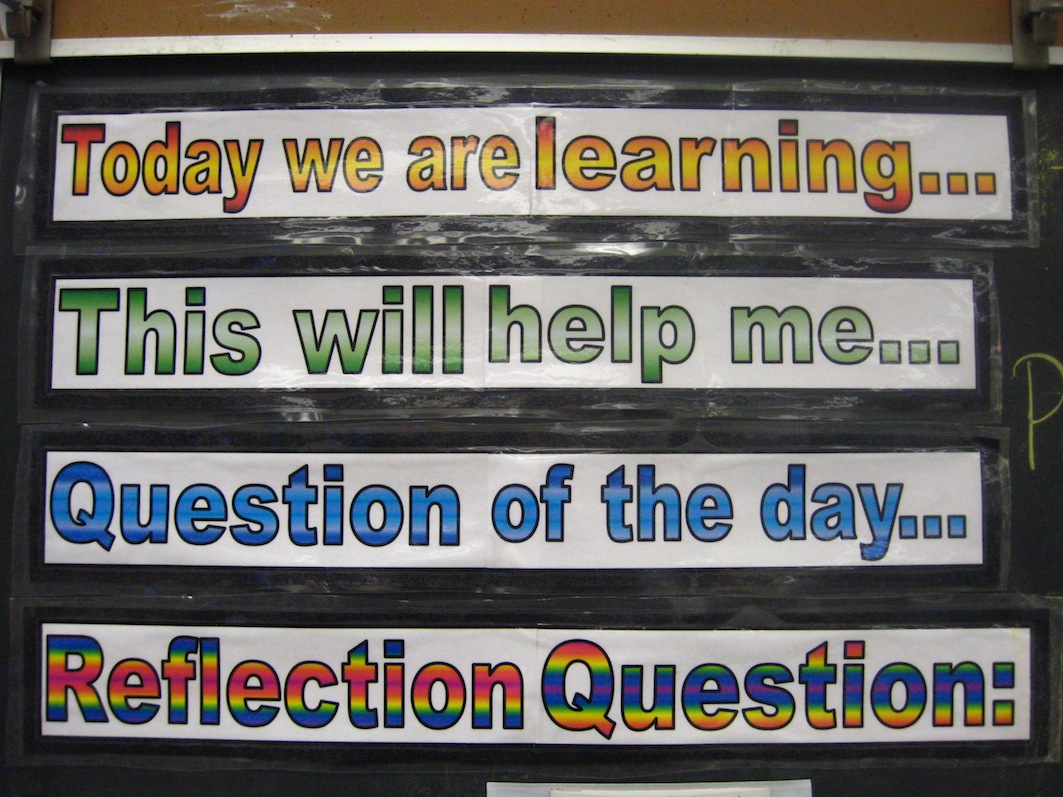
I realized that the students needed to know what they were being assessed on and what the success criteria for achievement would be. We started by co-constucting the criteria for Level 4 on such things as writing a letter, a procedure, or a recount. We added sticky notes to our anchor charts with reminders. The children then assisted in the selection of their best piece using the success criteria as their guide.

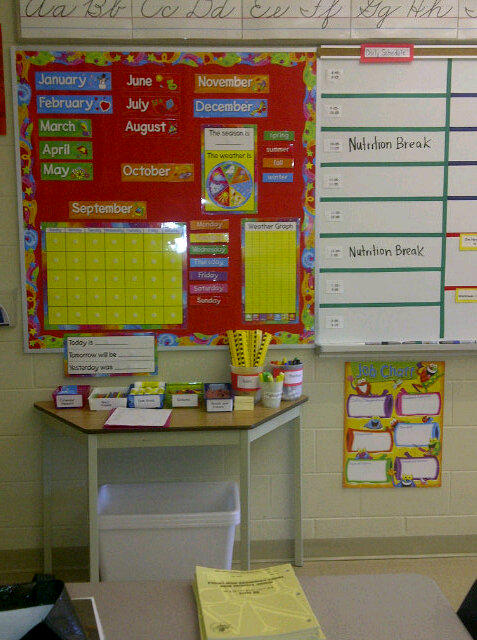
We also reviewed the Learning Skills together. Reviewing Responsibility coincided well with our focus on students demonstrating Responsibility with the TDSB Character Education Traits. We created a “My Responsibilities” corner in the classroom to provide a reference area for the students who need support or visual checkpoints to assist with their self-regulation and determine what their responsibilities are. The area includes a schedule for the day, the job chart with names attached on clothespins, our TRIBES agreements, the TDSB Character Traits, a list of tasks that can be done if their work is finished, and an inspiration chart for independent inquiry work.

I have found that this corner of the room is frequented more than I had planned. It assists the children with their self-regulation in the classroom, as there are times throughout the day that some children have completed their work before others. These students are able to refer to the “My Responsibilities” corner independently, and the result is less need for direct classroom management. It also benefits the children’s development of their learning skills and supports their understanding of the assessment of their learning skills.

Photo of Erin G

Connecting Through Mini-Conferences

In my last blog, I talked about trying to get students to meaningfully assess how and what they learned. As a crucial follow-up, I make sure to spend some one-on-one time with every student to discuss their progress throughout the term. As a rotary teacher who sees three classes of 30 plus students a day for 42 minutes (a full-time teacher would then see approx 180), I find that it’s challenging to establish a personal relationship with each one of them. Ensuring that I build in the time to sit down and talk to each one of them is a must. I plan around an activity (usually French skits) where students are focused, self-directed and engaged to minimize interruptions with questions. Over the course of the week, I spend between 3 to 5 minutes (not nearly enough I know), where we have each other’s undivided atttention talking about their results for the term, their strong points as students and concrete, realistic steps they could take to  improve. Finally, it is also a great opportunity to just shoot the breeze. It’s been my experience that students respond more positively to this individual attention and it allows them to more fully appreciate and understand their mark on their report card. Most importantly, it allows for each of you to connect on a personal level.

Photo of Tina Ginglo

Sleep

Like Roz, since September,  I have been up really late most nights planning, organizing, assessing, and trying to keep up with board and school initiatives.   Most nights, I go to bed t feeling good about the engaging activities I have planned for my students.  Then the alarm rings 5 – 6 hours later…

I find myself driving to school feeling beat.  What a terrible way to start a day.  I have come to realize that my great lessons turn out to be “not so great” when I can’t get myself out of second gear all day long.  I have decided to pack it in earlier most nights.  I may go to bed a little less planned, but I am getting 8 hours sleep.  Now, more often than not, my lessons turn out the way they were planned because I have more energy to move and think…and most importantly, I enjoy my students and their abundant energy so much more!