Advice for Starting Partway Through the Year

This particular post comes to you as I try to wrap my head around going back to work on Monday after fifteen months off. I left mid-October of 2014 after being placed on medical leave for the last few months of my pregnancy, handing off a lovely group of students to a great teacher for the rest of the year. That was difficult, but I knew they were in good hands. This time, I’m taking over a class someone else has been teaching for the first half of the year – something I find much more difficult.

This isn’t the first time I’ve taken over for another teacher. Having done this a few times now at different grade levels, I’ve learned a few things to help make the process a little smoother.

Introduce yourself! This might seem like a no-brainer to some of you out there, but communication with families is really important. No matter what time of year you’re starting, you should either send a letter home or invite families into the school to meet you. I actually like to do both. Your letter doesn’t have to be huge and really shouldn’t be your life story, but a little bit of background is nice to include – where you’re from, how long you’ve been teaching, that sort of thing.

Get to know your students. I start the first day by playing a few get-to-know-you games, then transition into a variety of activities meant to provide insight into where my students are with language. I’m a French Immersion teacher, and at my level I don’t teach math, but if I did I would include some activities to learn their problem solving/reasoning skills in that subject as well.

Find out your students’ goals for learning. This is the perfect time of year to talk about goal setting and have your students do a learning skills self-assessment (in fact, I do that every year already). Goal setting can tell you a lot about a student and where their strengths are. I find students are typically very honest when discussing their learning skills, too. Those two activities can give you a lot of insight into your students’ strengths and areas for improvement.

Don’t try to change the routine all at once. You don’t have to be stuck with the routine the previous teacher put into place before you arrived, but you really shouldn’t overhaul everything at once. Transitioning from one teacher to another is already stressful for students, so try to keep most of the routine familiar to them while you gradually implement your own ideas. It’s hard to rein in your excitement, I know, and sometimes you just have so many ideas you want to try them all right away before you forget them. Resist that urge – you don’t want to overwhelm your students.

Resist gossiping about the previous teacher, either with colleagues or students and their families. I’ve been there, I know all about it: people will try to engage you in discussing the previous teacher’s style, personality, and methods. Just don’t do it. I probably don’t have to tell anyone this.

Don’t take on too much outside the classroom. I love running extracurricular activities, but when I’m starting an assignment partway through the year, I try to limit how much I’m doing other than teaching my class. I need the extra time to plan and, I’ll be honest, unwind. You have lots and lots and lots of years ahead of you to do the drama club or sports team you love doing. Sometimes, it’s incredibly liberating to just have to worry about teaching your class every day.

Remember that students need time to adjust. Don’t take anything they say or do the first few weeks personally – I’ve had students decide on the first day that they hate me, only to have them declare me their favourite teacher by the end of the year. I’ve had students do a complete 180 in behaviour when I started. Students will react differently from one teacher to the next, and they need time to adapt to having a new teacher.

Finally, don’t be discouraged. I find starting partway through the year much harder than starting at the beginning. I feel lost for a few weeks every time, and I think that’s a normal part of the process. Just like at the beginning of the year, it will take time for you to find your footing and get into a groove with your new class. All you can do is show up and do your best every day.

A word or three about 2015

Last day to come clean. Tomorrow is January 1, 2016 – New Year’s Day on the Gregorian Calendar for those keeping score at home. It’s also a Leap Year too, so I wrote a lesson about it. With 365 days in the books and a great year ahead, I wanted to share a few words that have kept me hopping in 2015;

Resilience Patience Silence

Silence – In 2015, I worked really hard to step aside and listen. I learnt to listen to all of the voices in the room, not just the most frequent and loudest ones. By being silent more students were empowered to find and have their voices heard.

Silence took on another form in the classroom again in 2015. It meant that students had time to consolidate new ideas into enduring understandings in a calm and stress free environment. In 2015 we took time to be still and allow our minds to catch up from the daily bombardment of outside stimuli. We learnt about Mindfulness and how it can help in the classroom.

Patience – Patience is not a cliche, but a call to inaction at its purest. When I felt the most vulnerable in my practice as a teacher this word held me on the rails. I’ll admit, that there were times when it felt like that my life as an educator was only a penny left on the tracks away from a train wreck. At times when anxieties rose the word patience steadied me when I wasn’t feeling it that day.

Patience also guided my class room management style. Students need time, they need understanding, and they need someone in their corner while they work things out. Patience is like counting to 10. It can be the difference between a hasty [over]reaction or a thoughtful response. Patience is the lens by which we all need to see that things are not always as they appear.

Resilience – In 2015 the word resilience has worked its way to the top on a lot of lists as the 4th R in education. In my estimation, resilience is, and always will supersede the other Rs because it transcends the classroom.  We must allow students to ideate, learn, iterate, fail, succeed and repeat.

If all we are doing is programming students with the software from a curriculum, and never allowing them to test their own operating systems and hardware, then we are missing the chance to develop lifelong problem solving skills. Resilience is what makes first attempts in learning bigger than the FAIL acronym, by being the launch pad for lifelong learning.

Learning must be relevant to their lives, not ours. We cannot expect students to care about something totally antiquated and irrelevant to their world and future. Our role as knowledge mediums and intellectual fire starters is to kindle a spark of curiosity in students to become constant learners. Resilience can be developed by equipping and evolving real life problem solving skills now. My students are expected to do this everyday. As our class motto asks, “What are the real life problems you are solving today?”

So as the hours tick towards another new year I look back with appreciation on a great year of learning and look forward to another year ahead. May silence, patience, and resilience be part of your classroom in 2016. I know they will be part of mine.

Happy New Year.


Tortoise Brained Learning

Do the best you can until you know better. Then when you know better, do better”. This quote from Maya Angelou holds true no matter what stage of  teaching  you are at. Too often teachers feel pressured to constantly be moving their best practice forward before the last component has been consolidated into their everyday practice.

Over the course of my career I have evolved from a Hare Brained Learner to a Tortoise Brained Learner. A Hare Brained Learner is one who is constantly delving into new areas without going through the process needed to implement theory into best practice. I attended multiple workshops, almost everyone our board offered. I would see so many good ideas in practice, take notes on them, put them in a file, give them a try for a week or two and then most often let them fizzle out in that file. I was off to the next workshop, new idea or teaching practice.

My life as a Tortoise Brained Learner is much more manageable and is producing a far greater change in my day-to-day pedagogical practice. I have learned that my personal learning cycle is about two years. From the initial exposure to a new idea (e.g. mind mapping) through further research, personal experimentation, classroom experimentation and finally a part of my practice where I no longer even think about it as a new idea it takes me about two years. Thus my shift from quantity to quality professional learning has resulted in me being a much more pedagogically sound teacher.

It is not possible, nor reasonable for teachers to be constantly in a state of change. My advice is to develop an Annual Learning Plan that focuses in on one or two key areas that you are both interested in and know will enhance your journey toward best practice.

“I Don’t Know” and “I Need Help”

“I don’t know” and “I need help” are two statements that I have uttered this week. I have said both of these statements while discussing two students that I am struggling to teach. After the conversations, I felt really down and defeated that I am at a complete and total loss on how to help these students and manage their behaviour. My usual management strategies are just not working and I have tried at least a half dozen new strategies with no success. I have analyzed every word, interaction and problem that has happened but cannot figure out the puzzle of these students.

After a couple of weeks of really beating myself up over not having all the answers, I realized this morning that I am not supposed to have all the answers. It is unreasonable to expect that I am an expert in ADHD, Autism, learning disabilities and communication disabilities which both of these students are identified as having. In addition, I also do not have a degree in child phycology or training in dealing with trauma. I want to help these students more than anything in the world, as I do with all of my students, but some of these students needs are greater than my training. In short, I needed to remind myself today that it is okay to ask for help and that my learning is an ongoing process!

So now that I have picked myself up from my downtrodden state, I have made a plan to be proactive in trying to change the patterns of learning in my classroom with these two students.

Plan #1

Re-read their IEPs.

My first task will be to re-read the IEPs for both of these students with a focus on their strengths. I know what the challenges are for these students. I have been focused on nothing but their challenges for the past month. It is time now to try and capitalize on their strengths.

Plan #2

Meet again with the classroom teachers

My plan is to go through my next lesson with their classroom teachers and let them see if they can add any insight into shaping an environment that will promote success for these students. Both classroom teachers have had moderate success with their students so I want to build upon the things that are working for them.

Plan #3

Get suggestions of resources and articles to read

My behaviour specialist has told me that the student I am struggling with has the most severe case of ADHD she has ever seen in 30 years of doing her job. This tells me that I need to learn more about ADHD by doing some further research. I will be asking my special education team and behaviour specialist for recommendations on resources and articles to read.

Hopefully, my plan of improvement will start the ball rolling in the right direction for these students. However, if the first three ideas that I try do not yield positive results, the most important part of the plan is…

PLAN #4

Do not beat myself up if things don’t go perfectly!!!

I admit that this is SO hard for me. If I have a problem with one of my classes or students, I will spend so much time thinking about how to solve the problem. I am trying hard to accept that challenges exist that I might not have answer to right away and that it is okay for me to be in a constant state of professional learning and growth.

Desks on the move

Christopher Sessums UF McCarty Desks
The only time my seats are arranged like this is for EQAO.

I did it. I rearranged the classroom. Strike up the band!

And I promise to do it again in the future. Even sooner if it suits the needs of our class. Admittedly, as a bonus, I enjoy seeing the reactions of students as they discover their new, albeit temporary, learning spots.

Our classroom is on its 4th layout since September*, and the response from students remains positive. In fact, for the past 5 years, I have intentionally reorganized every  -learning space. And what’s resulted has helped my class room management, provided necessary/preferential seating opportunities for some learners, and contributed to a greater overall sense of community in class.

I like the way that August (Sandy) Merz III explains strategic seating in her Edweek.org post. In it Merz writes about “power seats and safe zones” for students that are intended to “magnify a student’s presence or…downplay a student’s actions on class dynamics.” I find changing the physical space provides a not so subtle, yet effective way to allow students to bloom where they’re planted. All the while maintaining a mindful eye on the specific needs of learners.

I’ve observed that each time the desks get rearranged, there is potential for new conversations, collaborations, fresh perspectives, and even friendships. It can also be a strategic, and crucial component of effective classroom management. Changing the classroom layout also allows students an opportunity to develop problem solving and inter-personal skills. Although infrequent, whenever students are unable to work within an iteration of the seating plan it becomes a teachable moment.

Allowing students a voice in the process leads to advocacy skills too. If students are not taking to their new spots, or ask to move, they must be able to provide a good reason why. This includes some evidence of how they tried to resolve/overcome the issues before a request is considered.

After 3 months and 4 seating plans, with more to come, our class continues to evolve its own zones of power and safety where students are empowered to share, safe to collaborate, and grow as modern learners.


*To start the year students are allowed to choose their own seats from a pre-set arrangement of desks. This way I am allowed a glimpse at existing friendships, and the way the layout allows for sight lines to the various teaching spots(tech cart, whiteboard, middle of the class). This is especially important this year to provide a completely accessible space for a student using a motorized wheel chair. This means function must mesh with form like no other year. With 30 students in a class designed for 25, layout must be intentional, fluid and serve the needs of all students.

Personal Wellness

It is that time of year where your steps are getting a little slower and your energy is starting to dwindle. There are concerts coming up, progress reports to write and a million other little things to do before the next five and a half weeks wrap up. Usually I handle this chaos with a steady stream of caffeine and a total stoppage to all things at my home including cleaning, shopping and spending time with friends. However, this year, a member of my family and my teaching partner are both suffering with a critical illness. This has forced me to slow down and take care of my personal wellness.

This year, I am trying to take time to exercise regularly. I attend swimming lessons and belong to a running group. I attend them at least a couple times of week. Nothing like a good sweat or your face in the water to let go of the day and just relax. The weather has been fantastic this fall which has also made being outside just awesome!

I also have committed to only one extracurricular this fall. This was a tough one for me but necessary. Only giving up two breaks a week will ensure that my sense of humour, energy and general cheeriness stay intact.

At my school, my team and I decided to change some long standing practices around things like the Remembrance Day assembly. I realized that doing an elaborate wreath processional, a choir, and a tableau presentation was not necessary for the act of showing respect to the members of the military. This year, I taught all of my classes the same songs and we sang them together. We all stopped for a moment of silence and watched a beautiful tribute on our screen. The singing sounded awesome with 300 students singing together. It was a simple but meaningful tribute to the amazing men and women who deserve our reflection on the eleventh.

Overall, I am trying to find a balance between home and work. This is something that I am definitely still working on and will continue to strive towards for the next 27 years.

Celebrating You

As my all time favourite author Dr. Seuss said, “Today you are you! That is truer than true! There is no one alive who is you-er than you!” If you are like me at all, you have difficulty accepting compliments from colleagues, administrators, students and/or parents for the commitment that you put forth in your role as a teacher. Yet we are open to criticism each and every day. Why is that?

Well this past weekend while I was doing some work in my office area I looked at the bare walls around me and thought to myself. Today I am going to hang up my diplomas that I received over 30 years ago. Yes, that is right, they have never seen daylight, never been hung and thus never been admired for the accomplishments I had reached. I scoured through a variety of storage bins and found them still in their original holder from the university. So off I went to get them framed. Within a few hours and a few extra holes in my wall, I sat back and admired my accomplishments (albeit a few years later). What I hadn’t expected was the renewed sense of pride and enthusiasm that followed that small action of recognizing my work.

As we know ever so well, positive feedback, sincere compliments and celebrating small and big successes with our students is an essential component to helping students be triumphant in their educational journey. So to it is for teachers. Take the time and not only smell the roses on your grand tour, pick a few and put them on display!

Unless someone like you cares a whole awful lot, nothing is going to get better. It’s not.”

Mental health in the hallowed halls.

Here’s a snippet from casual conversations playing out in school hallways everywhere.
Pick the lines you’ve heard or have used before.

https://www.flickr.com/photos/wfiupublicradio/5601192190 https://creativecommons.org/licenses/by-nc/2.0/
Photo Credit:
WFIU Public Radio

“How are you? How’s it going? What’s up? How’s it?”

“Good. Great. All good here. Meh. No worries. Busy. So busy. Cool. Not too bad. OK. Could be worse.”

What would you do if someone answered honestly saying; “Not good. I’m being bullied by a group of students. I don’t like my body. My parents are divorcing. No one likes me. I feel alone and sad all of the time”? Would you pull out the motivational clichés and tell the person to toughen up? Would you walk away saying, “hope you’re OK?” and “things will be better with time” or would you inquire further? Would you feel comfortable finding out the truth? Do you have enough emotional energy in the tank to make a difference?

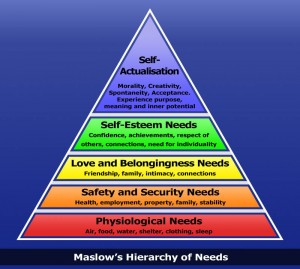
Regardless of years of experience, many new teachers feel uncomfortable, even under-equipped when facing mental health issues in the classroom After all, we’ve been taught pedagogy, not psychology, in teacher’s college. That’s not completely true. We did learn about Maszlow’s Hierarchy of Needs, but that was so long ago, it was only a small series of lessons/readings, and  besides we have lessons to deliver.

In this post I want to share a side of education that Maslowdoes not get enough attention. I’m talking about mental health in schools.

Understanding and supporting students with mental health issues is as important in our classrooms as the curriculum we are instructing.

What keeps educators awake at night are the the same daily problems being encountered in classrooms around the world. I am a witness to how mental health issues are scarring education. There is a recurring generational amnesia in the hallways of educational institutions and it’s time we do more about it.

That may not seem like a light and lively subject for conversation, but discussion in all of these areas is crucial as it pertains to making our classrooms safe and inclusive learning spaces. How are you dealing with issues like this in your classroom? Here are a few ideas that have helped in my learning space.

In my classroom we have worked hard to develop a safe space for all learners. This means that we all try to support each other when times get tough. We try to use the idea of Ohana (family) where no one is alone or forgotten. We have instituted Mindfulness Moments as brain breaks. Students need time to consolidate their learning, and to be still/quiet for a few minutes. This little break in the action calms the mind, reduces anxiety and teaches students a valuable de-stressing skill.

In my classroom, there is always a little something to eat. It is amazing how a granola bar, a juice box, and some crackers can help a student who has not had enough to eat to start the day. During tests, quizzes or quests, as we call them, we have “test crackers”.  They’re tasty, crunchy, and important to helping students relax during assessment tasks. I have found that when a student has something to eat, albeit very small, they are more relaxed and perform better.*

In a follow up post I share some thoughts about mental health issues as they relate directly to educators. You’d be surprised how similar they are to those our students face. Or maybe not?

I need a granola bar.

* Maybe I’ve found a thesis to test for my M Ed?

Yikes! I’m Teaching A “Split” Grade Class

Meet Linda. The start of the school year has come and gone and she has finally been successful at landing her first Long Term Occasional teaching assignment in October. It’s an FDK/Grade 1 class, and given the dynamics of the FDK program, she struggles to even make sense of what that might actually look like.

Meet Lester. After finally feeling settled with his Grade 5 class, he learns that as a result of a school wide reorganization, his neatly packaged single-grade class has now become a “split-grade” class.

Do either of these situations sound familiar? Do these narratives hold true for your current experience? Before you pull out your hair or scream, here are some practical strategies that will help you navigate this new experience. Consider the following 3Cs, Context, Community and Curriculum, for teaching in a multigrade classroom.

Context: Although a multigrade classroom is not the ideal setting for an optimum teaching and learning experience, it is worth re-imagining the situation as a combined class rather than a “split grade.” The idea of a “split” gives the impression of a type of separateness that does not accurately describe the context of learning in a class of students who generally are within the same developmental stages. The great news is that combined grade class have of two consecutive grades in one class as opposed to grades that are years apart. In this way, a combined grade class maintains a similar diversity of students, range of learning styles, social skills and academic needs as in a single grade classroom.

Community: Rethinking the notion of a “split” grade can do wonders for the type of classroom environment you nurture. As in any class dynamic, students learn best in an environment that is inclusive and fosters a of sense community and belonging. As such, the ways in which the class environment is setup should work to unite students rather than separate them based on grade. Students should have opportunities to work in flexible groupings using a range of collaborative learning structures as often as possible to invite positive peer interactions through both collaborative and independent learning situations. A combined grades should never be thought of as housing two classes in one room. Rather, students should know that they are one class engaging in similar learning opportunities. Students should be taught how to navigate their unique learning situation by explicitly teaching the importance of cooperation, and how to engage in learning that takes on a variety of groupings; such as whole class, small group, partners or even independent learning. Inviting leadership opportunities and encourage students to view their peers as resources will help to establish a community based on cooperative interdependence.

Curriculum: The idea of covering a combination of two curricula is one of the primary concerns for teachers who have been assigned combined grades. In Ontario, thankfully, many of the content areas align in ways that make tackling both grades more manageable. These content areas include Mathematics, Language, Health and Physical Education and The Arts. In these curricular areas, differentiating instruction is an essential tool for ensuring that the overall expectations of each grade is addressed and assessed. Differentiating content, process and product will allow for a seamless flow between the different grade expectations. At the same time, using the gradual release of responsibility will set the tone for independence that is often essential in a combined grade classroom. For content areas that are less similar such as Social Studies and Science, teaching through an inquiry framework allows teachers to focus on essential skills and invite students to apply those skills in different contexts. By focusing whole-class instruction on big ideas, thinking processes and strategies, teachers are able to engage students in parallel learning experiences while differentiating content.

Teaching a combined grade is never easy. But with the heart for learning and the art of teaching with finesse, even the least of ideal situations can be one that is done successfully.

For more information about teaching in a combined grade class, check out the resource Learning Together: A Teacher’s Guide to Combined Grades at Shop ETFO.

Protect Yourself and Document

I want to share with you one of the most taxing and emotional experiences I have had in my three decade long career as a teacher. I work with a very challenging group of students who all have aggressive, violent tendencies and have significant struggles in learning socially appropriate skills they need to function in their day-to-day lives. As their teacher I am faced with the task of helping them develop self-regulation strategies, teach them how to interact with peers and adults in a safe and respectable manner and of course move them forward on the academic continuum.

In September, one of my students was struggling with complying to simple adults requests and would often escalate to verbal barrages of profanity in an attempt to goad me and/or my team into an argument. We of course would not buy into his behavior, so that student decided to further escalate the scenario to aggressive acts of throwing things, kicking things and yelling insults. Once again we remained calm and focused on our message of coaching that student to calm. On this particular occasion, the student chose to completely ignore us and began to punch a wooden bookshelf. At that point our team was faced with the burden of having to remove the rest of the students and physically intervene in order to stop the student from certain injury. My colleague and I then moved into a physical restraint that lasted for about 15 minutes at which time the student calmed and we were able to move forward with our debriefing session.

When the student was calm I checked for injuries on the hand that had punched through a wooden bookcase. We administered proper first aid, fully documented the scenario that had took place in our classroom, had kept our principal informed throughout the process and finally called the parent to update her on what had occurred and the status of her child. Throughout the day we monitored the student’s hand, updated the parent and continued on with our inclass model of assisting the student with solving the problem that was created.

That evening I was informed by my principal that the police had been called by the parent and that Family and Children’s Services was going to conduct an investigation into the allegation the next morning. I immediately contacted my ETFO President to seek advice. Over the next 12 hours I was on an emotional roller coaster. I checked and rechecked all of our documentation, went over the  child’s safety plan that we had followed and prepared to the best of my abilities for what was to come.

The next morning I participated in a meeting that included my principal, our superintendent, my ETFO President and the worker from Family and Children’s Services. Over the next three hours I answered questions, shared my documentation, toured my class where the scenario had taken place, shown them the damaged book case and then waited for what seemed like eternity for a decision as to whether I would be deemed safe to return to my professional responsibilities.

Fortunately for me, the evidence was extremely clear that my team had not only acted in the best interest of the child to ensure that further injury did not occur but had also had used our Behaviour Management System training and safety plan appropriately. BUT, had it not been for there being two adults there, detailed and ongoing documentation, clear and open communication to all parties and support from ETFO I am sure that this could have easily turned into a larger nightmare for me.

So once again, I encourage you to safeguard yourself against the possibility of false allegations by familiarizing yourself with safe practices as outlined by our provincial office. If you have any questions please seek support from your union. I hope that my experience can help ensure that other teachers do not ever have to face what I went through.