Photo of Tina Ginglo

What a Difference A Year Makes

This time last year I had just returned from a seven-year absence from the classroom.  During the seven years I was working in various centrally assigned positions, I had many opportunities to visit K-12 classrooms across the Greater Toronto Area.  You could imagine my excitement!  I observed many effective lessons and teaching strategies, classroom set-ups and routines.  I couldn’t wait to adopt some of them for my own program.  As well, I felt my literacy and numeracy program in my last school and teaching assignment was effective and I planned on resurrecting many of those strategies and routines with my new group of students in my new school.

September 2011, I was teaching a new grade (grade 3) in a new school community. I expected my classroom management to be a tad rusty and it was, but there were many initial problems that I could have avoided had I not taken some things for granted.

Prior to leaving the classroom for central positions I taught grades 4 and 5 for more than half my teaching career.  I provided prep coverage to grade 3 students over the years, but I never had a third grade teaching assignment.  I expected grade threes to be similar to my grade fours in terms of social emotional development and their ability to work independently.  After all, it’s only a year difference…what a difference a year makes!    The students were so “little” compared to my grade 4s at the beginning of the year.  I started the year with the mind-set of a junior teacher. I didn’t expect that I would have to model routines such as using the pencil sharpener!  This year, I began the year thinking like a primary teacher.  I take time to model the simplest routines, over and over and over again.   My expectations are more realistic.

I believe in collaborative knowledge building.  My classroom set up has always reflected my beliefs about teaching and learning.  In my last school, I didn’t have desks in my classroom.  I had 6-8 tables and I never seemed to have a problem getting students to work both collaboratively and independently in this setting.  Naturally, when I was setting up my classroom last summer I immediately placed the individual student desks into groups of 4.  The fact that most, if not all, of the grade 2-7 teachers in the school arranged their desks in pairs didn’t register.  Sometimes I need to be hit with a brick to get a message.  My students were not ready to work in groups.  By the end of week two, my classroom looked like all the other classrooms in the school, with students sitting in pairs in long rows.  I hated it, but the students were more settled and were better able to focus.  I managed to finally get them into groups of four when we returned from March Break.

On the first day of school, I did my usual spiel about making smart choices.  I told the students that they could sit wherever they wished as long as they were responsible in the choice they made.  I warned students that if I felt their choice was interfering with our learning I would move students.  This always worked for me in the past. Of course I had to move students around, but it never was a disaster.

This year, I started the year with the students sitting in rows of two per group. I purchased three sets of calendar numbers and taped them to student desks, coat hooks and cubbies.  When we entered the classroom on the first day of school, I invited all students to stand at the front of the classroom.  I quickly reviewed odd and even numbers with the students.  I then invited the boys to hang their bags on an odd numbered hook, pick up their name card, and sit at the desk with the same number as their coat hook.  Next, I invited the girls to find an even numbered hook, pick up their name card and sit at the desk with the same number as their coat hook.  There were no problems at all.  I have groups of two, boy-girl groups.  I have shuffled a few students around, but it really made the first day, first week, first-month of school more structured and settled.  I think it is a bit of a compromise on my part.  I want to keep to my belief that students should have choice and control in the classroom, but at the same time, taking the pressure off of the students who are not ready to make those types of choices right now.  What a difference a year makes! 

This number system really makes planning for supply teachers and lining up so much easier as well.  Instead of having a floor plan prepared for supply teachers. All I need to do is leave a list, 1-22 with each student’s name beside a desk number. I can move the furniture around and not have to worry about updating my floor plan, just as long as I update my class list with desk assignments.  Students also know they must line up in their numbered order.  All their teachers have a copy of our class list with their desk assignments.  It has made transitions so much easier on teachers and students.  What a difference a year makes!

In the years I was out of the classroom, I guess I took for granted all the structure, the little details, that did exist in my past classrooms and the classrooms I visited that would go unnoticed by visitors.  Structure doesn’t necessarily mean that we are taking choice and control away from the students.

Creating the Environment for FDK

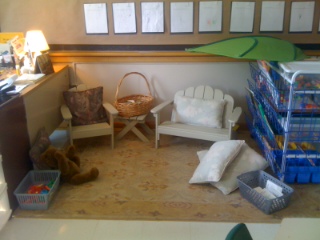
As I mentioned in my last post, our Full-Day Kindergarten room was formerly a Special Education classroom, so it is evolving each week as I acquire furnishings and materials. With a limited budget I have been busy searching for some small scale furniture items and resources that will provide an inviting and engaging learning environment. One of the first centres that I focused on was a Reading Centre. Although I had a carpet and cushions to define a reading area, the children were not frequenting the space as expected. Last weekend I was able to source a small set of outdoor furniture from a friend that only required some sanding and painting. I then went to IKEA to buy a canopy leaf that would define the space (hanging a curtain or fabric as a canopy is also effective). Baskets were used for organizing the books, and I also added a container of magnetic letters to use on the front of my desk which frames the reading centre space. The Reading Centre is now an inviting area that is enticing all the students to settle alone or with a friend to look at a book.


In the photo you will notice a covered chalk board above. I found that the black chalk boards surrounding the areas were not useful, so I covered them with brown craft paper. This provides a neutral background to display the children’s work. In this area as seen in the photo, I glued a piece of black construction paper for each student (26 total) and used paperclips to hang their current “Self-Portrait” representation. As noted on page 85 of The Heart and Art of Teaching and Learning, the self-portraits provide a gallery of the children’s work, as well as a source for assessment. Each month the children complete a new self-portrait and it is added on top of the previous month. Over time, one can see the development of fine motor skills, pictorial development, and writing abilities.

The other centres that are popular at this time are the blocks/building centre, drama centre (we just received a fridge and sink), and the play dough table. I do not have a specific number of students for each centre, however we limit according to what makes sense. If 5 or 6 children want to play in the dramatic centre, the children can accommodate to make it work. However, if 10 children ask to go to the drama centre, we say, “There isn’t enough space today,” and the child selects an alternative.  We are still adjusting our centres to meet the students needs and interests. This week I will be working on the art studio, writing centre and math centre. In the next blog, I will provide updates on this progress.

Photo of Sangeeta McCauley

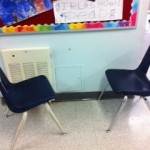
Talking and Listening Chairs

As I look back on this past week, I realize that I spent very little time teaching curriculum and more time working on life skills. I have two choices at this point. I could think, “Oh wow, I’m really far behind!” or “I’ve made a huge investment that I hope will pay off in the future.” I choose the latter.

My students have been coming to with me problems that happen at recess: someone left them out of a game, two friends were whispering something not-so-nice about them or they saw someone being treated badly and didn’t know what to do.

When we talk through these problems, it’s obvious to me that they have the answers on how to solve their issues, but they need a tool to help them do so.

So, I introduce the talking and listening chairs. One chair is marked “T”, the other “L”.

We use one of the problems that happened to illustrate how to use the chairs. For example, “Bill” was upset that “Megan” was not listening to his ideas when they were trying to solve a math problem together. So, Bill sat in the “T” chair and Megan sat in the “L” chair and each had opportunities to talk about what was bothering them and listen to how the other person was feeling. It quickly became evident that they was room for compromise on both ends and they seemed relieved to be able to move on from this problem.

Like most tools, the talking and listening chairs also have boundaries, which I discuss with my students:

* If the person you want to take to the chairs is not ready, you may need to wait.

* If you go out to talk, you will need to attentively listen as well.

* If the problem takes longer than 10 minutes to solve, you may need some help.

* When classmates are using the chairs, we can show respect by giving them some privacy.

* If there are many students involved in the problem, we may need to discuss it as a whole class.

When students ask to use the chairs, I keep track of what time they step out in the hallway and occasionally walk by the door, so the talking and listening remains positive and focused.

As a tool, it can be very successful at helping students who lack confidence to speak up when something is bothering them. I especially enjoy watching, when some of my students who are still learning English approach a classmate to say, “I need to talk to you.”

I have yet to teach a curriculum subject that is more rewarding than that moment.

Mix of a few photos of inside of a classroom with students

A Little Perspective

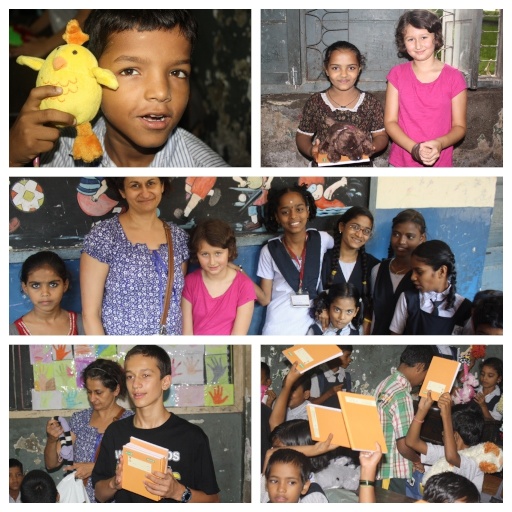
This past summer, my family and I spent 6 weeks in India. Apart from the wonderful moments we enjoyed with family and the extraordinary travels we embarked on, there was one experience that helped us all gain a little perspective.


Our son, Sunjay, turned 12 in June and decided that in lieu of gifts, he wanted to collect money to donate in India when we would be there. Once we arrived, we discovered that one of my cousins had volunteered in a school that needed help and it seemed like the right “cause” for Sunjay’s donation money.

The school was in Dharavi, one of the biggest slum areas in Mumbai. Families live in shacks one on top of the other, with an “outhouse” that drains into a creek. Due to the location and inadequate drainage systems, there are often floods during the monsoon season. It is estimated that anywhere from 600,000 to 1 million live in this one area of the city, so few children get the opportunity to attend school.

My cousin explained to us that the school she volunteered in was running solely on donations from charitable organizations and they offer free education until grade 7, but only for three kids per family. If you have a fourth child, you have to pay for their education.

When we discussed making a donation, it didn’t feel like enough. We wanted to visit the school ourselves and meet the children. Sunjay and our daughter, Maneesha, had also brought stuffed animals from home that they wanted to give the students. Communication between my cousin and the classroom teacher led us a small store in the local market, where Sunjay used his money to buy blank notebooks for the students so they could have something to write in.

That day at the school was one we shall never forget. The students were curious to see 4 foreigners walking in the hallways and while some were friendly, most were shy and hesitant. They were wearing school uniforms, yet some did not have shoes.

The classroom looked so different from what we are all used to…there were 3 kids to one desk, paint peeling off the walls, and no visible school supplies. The noise level when we entered was very high, and the teacher was trying to control the class by pulling some kids apart who were fighting. We learned that parents have very little time to supervise their children because they are often out working when the kids come home from school. It can then fall upon the teacher, to create a community of learners that not only trust her, but each other and the world around them.

Once we handed out the notebooks and the stuffed animals, the teacher asked if the students had any questions and one student said, “Why did you give us these things?” It was a hard question to answer, but we tried to explain how special the school was and how we just wanted to help. Really as I look back on the experience, they gave us so much more than we gave them.

Each day when I walk in my classroom this year, I am grateful. Grateful to have pencils, paper, chairs and an area where I can keep my own belongings. Grateful to have colleagues to talk to and learn from. Grateful that parents are able to send their children to school and they do so with hope, appreciation and respect for what we do every day. But most of all, I’m grateful for the 26 faces I see at the door in the mornings. They remind me why I’m a teacher.

Photo of Roz Geridis

Flexibility

I have part of a new assignment this year. In the morning I am covering prep. Due to re-organization, my schedule is changing again for Monday. I have completed many get to know activities, learned students’ names and just found out some classes I still have and others are new for me. That being said, it will all work out! Everything does. The students get attached very quickly and now I will get to know even more students.

My afternoon, I teach English, Math, Health and Pool to a grade 6 extended French class. The grade 6 curriculum is the same for me but now I teach a smaller portion of it. I will be busy sharing my plans with the other teacher who now has my class for Science.

That is teaching; change and flexibility. My morning will work out and I have worked out my plans to have the next days covered. I just needed to adjust a few items and have been able to use my current plans. As a school, you may have to go through re-organization. It is difficult. Deciding which students will excel in which environment, which students need to be separated from each other, balancing the girls and boys, special education and ELL needs. It is a very difficult task which also needs to be completed after a long day of teaching a class of 52 kids.

As I need to get teaching (with the new classes) in order to have enough assessment for the Progress Report card, I have decided to incorporate my get to know activities with the curriculum. I am planning to find ways to incorporate these activities as much as possible with my new classes. I plan to start with appreciation fans to help build the community within the classroom. The students all know each other and many know who I am but I need to get to know their names (better).

Photo of Roz Geridis

Getting to Know your Students

At the beginning of the year I complete some activities about the classroom environment. I look to build a community environment highlighting the classroom is as much theirs as it is mine. We completed a few activities but I wanted to share this particular one because the student responses really helped me understand and get to know them.

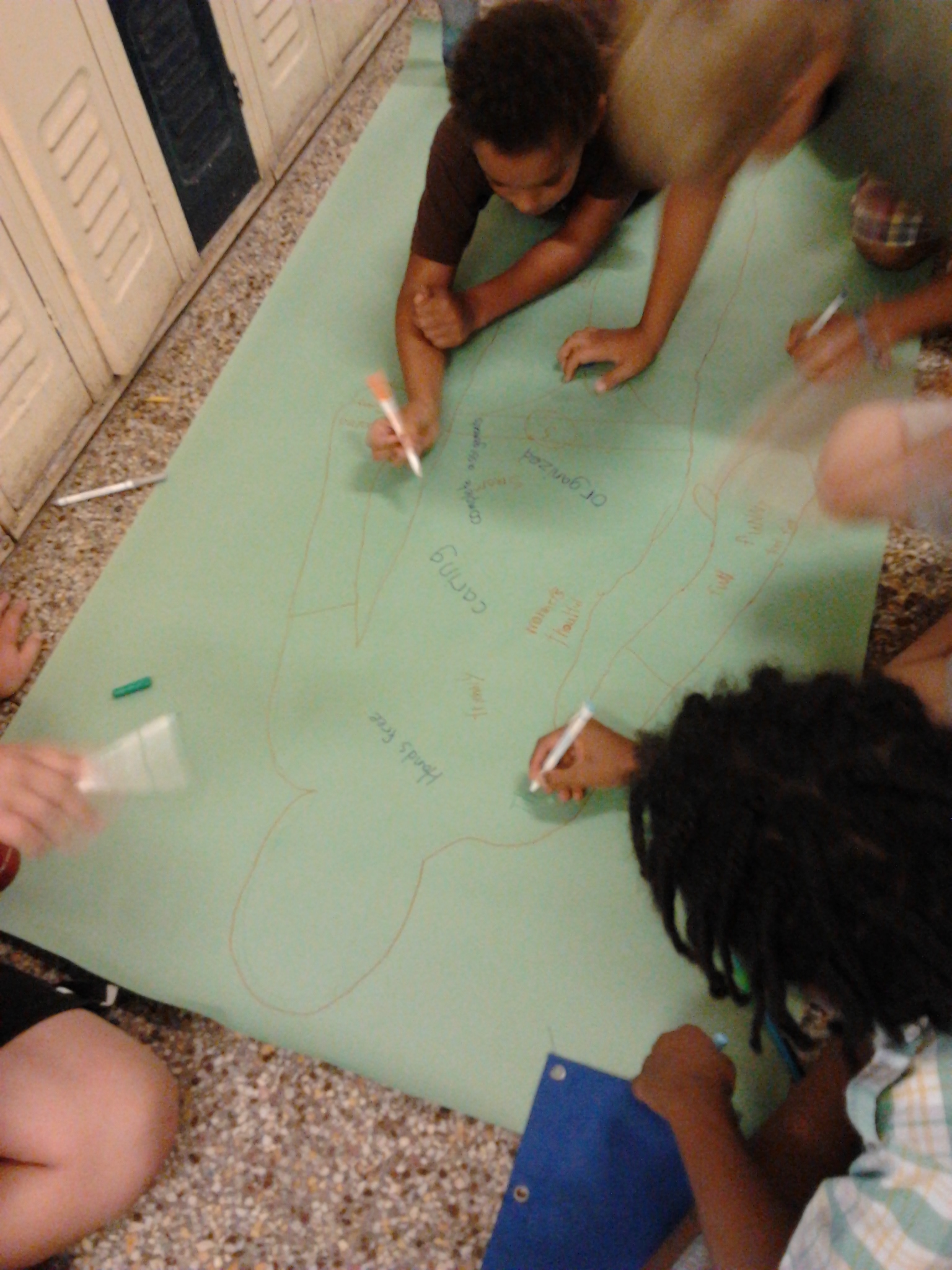
One of the activities we did this year was we talked about keeping the good in and the bad out of us in order to do well at school. We had a conversation about what helps us do well at school and what keeps us from doing well. Some responses about what helps us do well at school were: healthy eating, sleeping, completing homework, asking for help. Some of the responses about what bad things can keep us from doing well at school were: being late, not completing homework, eating bad, not getting enough sleep, bullying, people being mean, depression, anxiety.

The last two responses were comments which really made me pay attention to who said them. I immediately contacted the guidance counselor, informed the administration, and spoke to last year’s teachers. These two comments (from two different students) have helped me with my approach to the students. It made me remember, no matter what community you are in students could have a hard life and have a variety of family/life situations to handle. It reminded me of the need to make that connection as a person with the students.

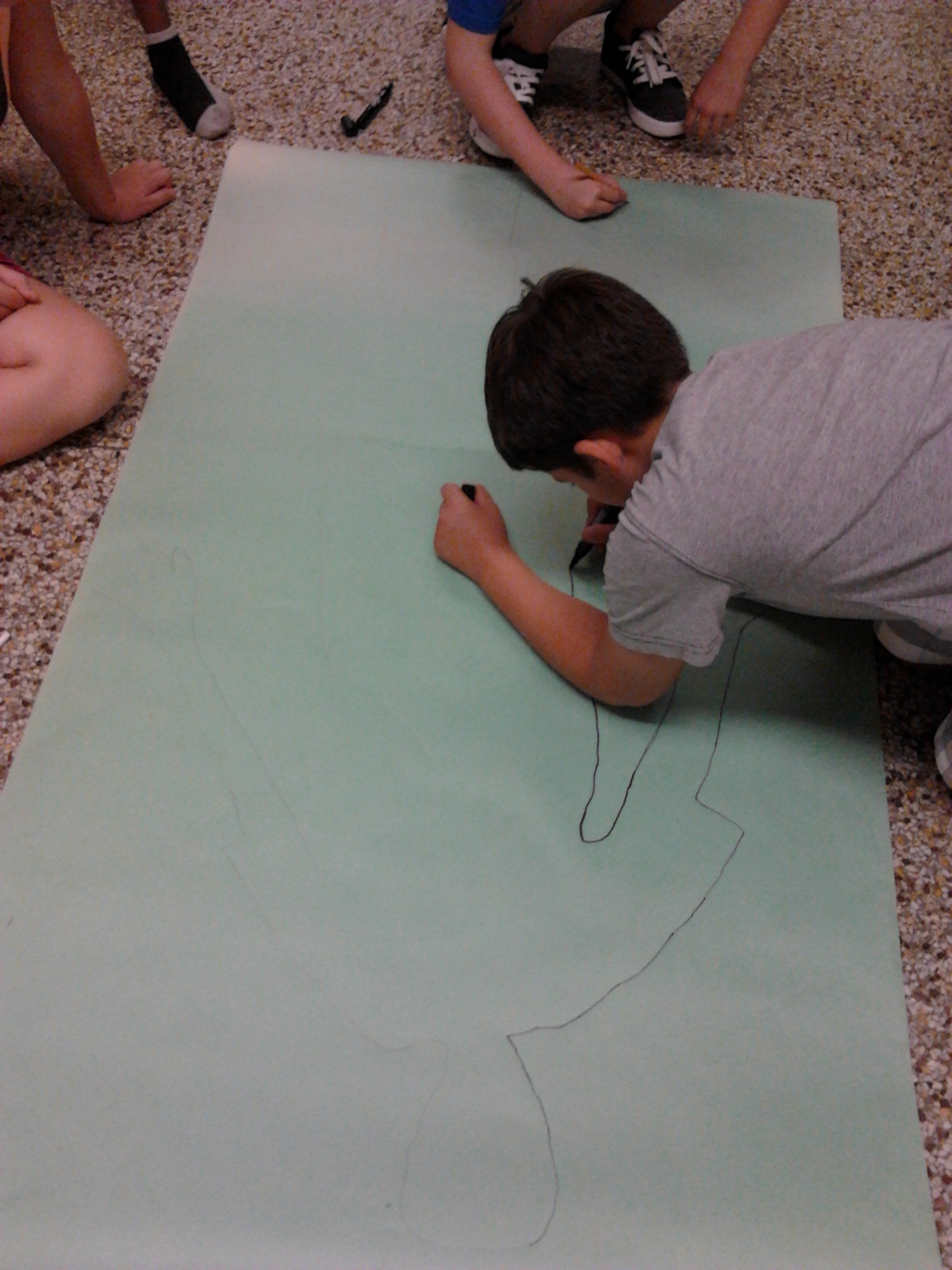
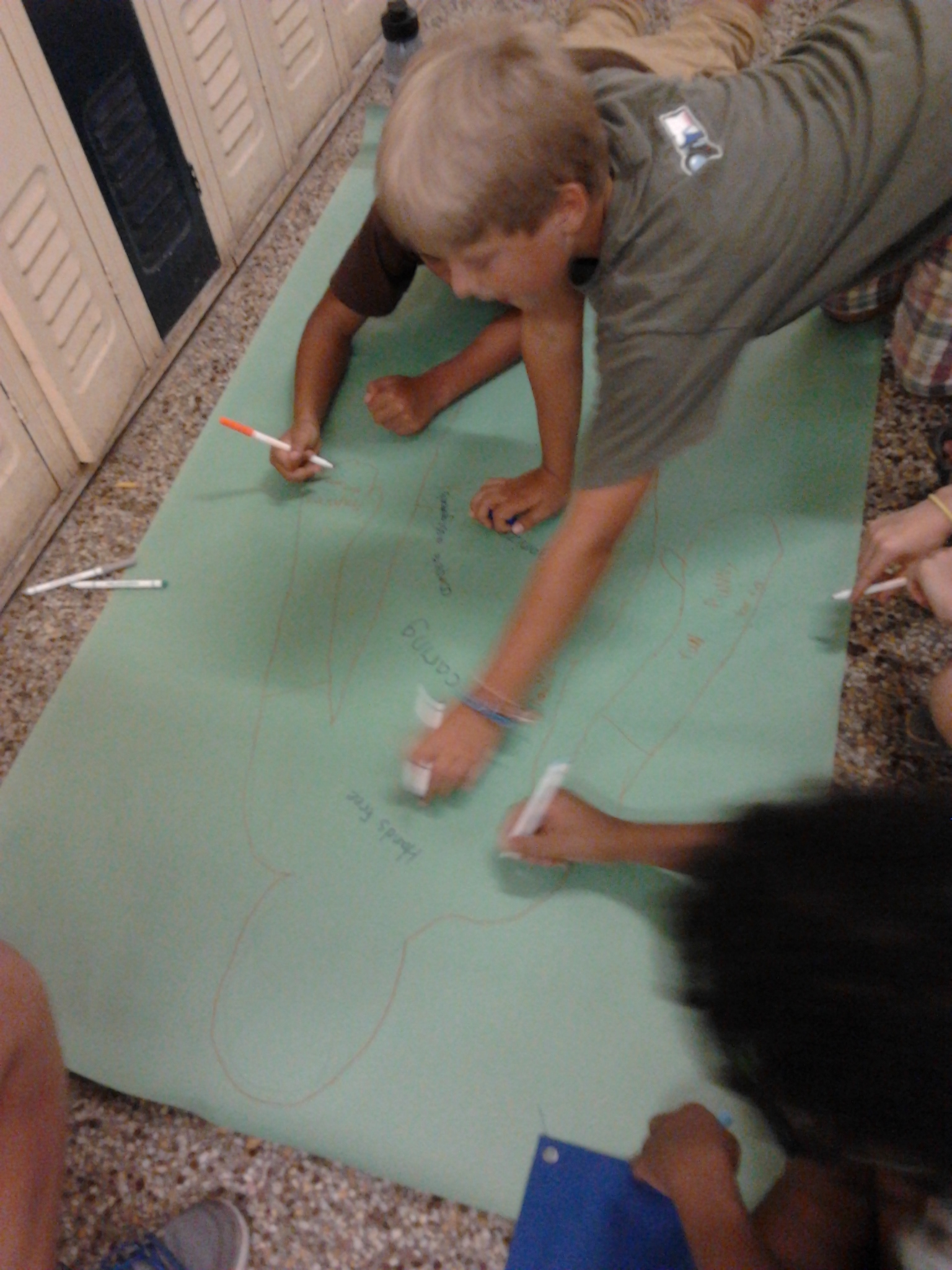
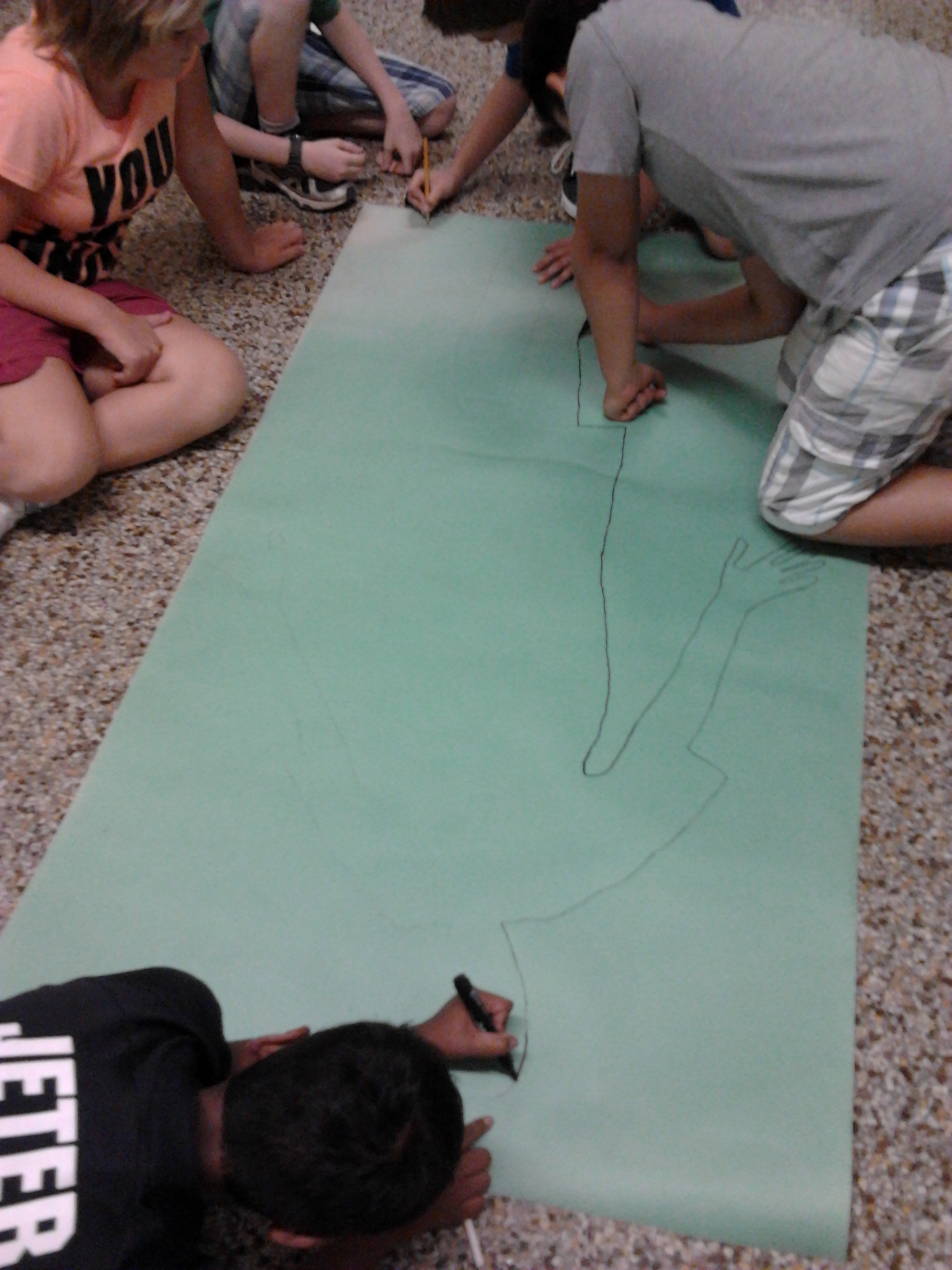
Getting back to the activity; after our lesson, the students got into groups and traced one student in the group. Then as a group, they wrote what helps them to do well at school on the inside of the body and what keeps them from doing well on the outside of the body. The students really enjoyed the activity and every class (from grade 5 to grade 8) has asked to complete the activity. We have the final products hanging in the class as an everyday reminder. This year, I decided to not complete the activity with my prep classes but I will consider it for next year.

Photo of Carmen Oliveira

Lifeclass Begins

“The difference between school and life is that in school you learn the lessons and then get a test, but in life you get a test and then learn the lessons.”

This year I have decided to dedicate a substantial amount of time and effort to learning about and teaching life lessons that can be  integrated into my program.  Having spent the last few weeks really getting to know my students, I feel that they are a group of kids that can benefit from deep and meaningful lessons because they are both ready to explore them and in need of that support in their life.  I looked into integrating each lesson into our Literacy, Social Justice, Financial Literacy, and Healthy Living aspects of the curriculum.  So far, the students have really enjoyed their experience so I thought I’d share what we’ve done.

At the start of each week, I post a quote (linked to a life lesson I believe they need to explore) with questions to guide the students’ thinking.  They glue the prompt into their Journals and then have a week to complete the Journal entry.  The entries have written components and can also be expressed in artwork and various media (cartoons, posters, etc.).  The prompt is also posted on our website so students can share it with their families and hopefully discuss it together.

The responses I have received have been such a pleasure to read and I find that the students are working to try and incorporate the lesson into their way of thinking and acting.  They understand life so much more than we sometimes give them credit for!  At the end of the week, we share our thoughts, how we will use the lesson in our lives, and how some of us have already tried.  This week, the first thing out of their mouths as they walked in on Monday was, “Mrs. Oliveira, what’s the life lesson quote this week?”

If you’d like to take a look at some examples, you can find them in our classroom website.  Click “More” and scroll down to “Lifeclass”- it’s a simple idea that has my students learning about life in a way they’re ready to explore.

www.oliveiraclassroom.webs.com


Photo of Erin G

Summer’s Here! Oh yeah, it’s only the beginning of June (Part 1)

At this time of year, there seems to be a most distinct correlation between hot sunny weather and a drastically decreased output on the part of students (and if we’re being really honest, teachers as well). It’s been my experience that anything that doesn’t involve soccer baseball is met with a combination of disbelief, outrage and downright disgust. The secret is to engage your students in projects that are just too much fun to pass up. One such activity upon which I rely for such occasions is the “Annuaire” or class yearbook. With enough hype and enthusiasm on your part, they will buy into it as well. I usually give them a rough copy template with the following headings:

  • Nom
  • Sobriquet
  • Classe
  • Moment mémorable
  • Bête noire
  • Ambition personnelle

As with all assignments, it’s important to give students an exemplar for reference, brainstorm useful structures/expressions together and have all information visually accessible in the form of anchor charts. Again, you could also help them out by giving them sentence starters as well. Something that will no doubt grab their attention is if you fill out the sheet as you would have in grade 8 and of course, provide a picture of yourself at that age. In the past, this is what I have used as an exemplar so it serves a dual purpose. I think you’ll find this project will get them focused and productive and also provides a great opportunity for review if you’re discreet about it (le passé compose, le futur proche, les constructions avec deux verbs, etc).

Once complete, you can have the yearbook of each of the separate classes on display (and even use the yearbooks from previous years) – they are naturally curious about the work of their peers and love to reminisce about former students.


*For this to be really successful, it helps if you provide them with the materials they need such as bright, coloured paper, watercolours, markers and pencil crayons. What I also found is that it was much easier if I took their pictures and had them developed so that each student had a picture to accompany their page.

Photo of Alison Board

Celebrating Our Year

We often think that the last two months of school will be all about reflection and reviewing, yet with so many other demands outside of the classroom – our last weeks can feel rushed and frantic. Teachers are often asked to think about planning for the following year, before they can fully complete the one they are in.

To stay present and celebrate with your current classroom community, here are a few suggestions:

1. Consolidate learning – Spend two or three weeks in June reflecting on the students’ learning and giving them time and opportunity to make connections between topics or skills. As a class, you can can discuss the highlights of the year and chart them, or have students work in small group on their shared topics of interest. This may evolve to look like a yearbook that they make with words and images or a story they create in comic form on the computer.

2. Celebrate learning – Provide students with an opportunity to invite other classes, learning buddies, or parents/friends to the classroom before their projects are sent home. Students can make invitations, create portfolios of work, or set up the room for an open house. The celebration may look like a gallery walk, a dramatice presentation, a sharing of portfolios, or a relaxed poetry cafe.

3. Outdoor Classes – In the last week of school when you are sending home work and generally cleaning up your classroom, take students outside for activities that you would normally do inside. This could  look like a read-a-loud, visual art activities (such as sketching), visits to local parks or public libraries.

We are completing our assessments and writing reports now, but with a little planning for the next few weeks with reflective exercises and opportunities to make connections, the students will be more engaged and value their last weeks at school as meaningful and rewarding.

Photo of Alison Board

Demonstrating Community

Last week my Grade 1/2 classroom was open as a demonstration classroom. In the morning, we went through a condensed version of our regular day, and in the afternoon we debriefed in the staff room. Every time I attend or host a demonstration classroom, I feel energized. And with the end of the year approaching, some re-charing is beneficial.

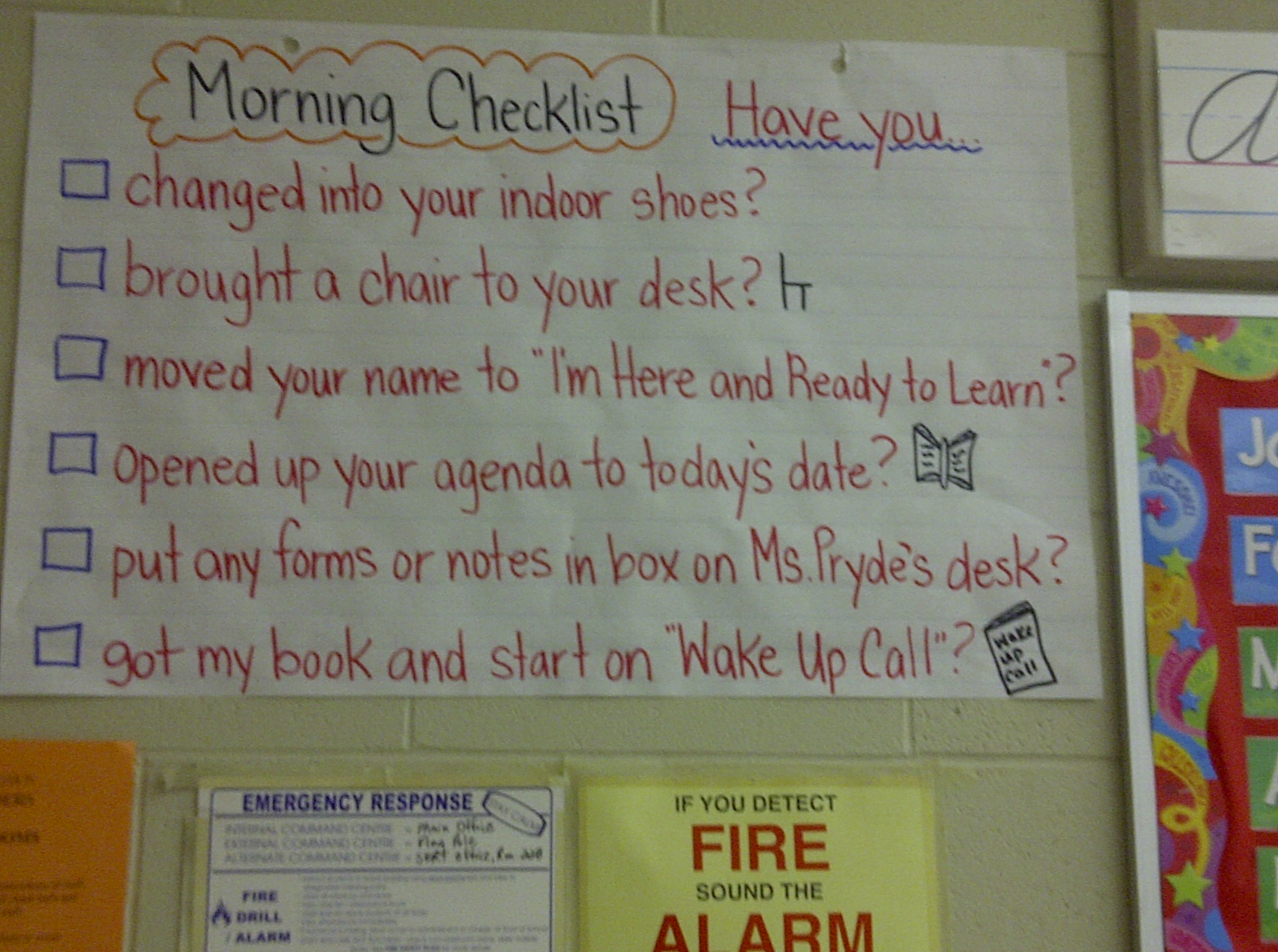
What interests me, is the feedback from the visiting teachers. There is always the usual talk about curriculum planning, instructional strategies, and classroom environment. But last week, there were comments about how the children shared their thoughts and ideas, and how they listened to one another with respect and patience. The visiting teachers also noticed that while at the carpet for dicussion, some of the children sat on chairs they brought over from their desks, and a few got up to perform a quick task, such as check on a date in their agenda to confirm a fact.

Although I am aware of our daily sharing and community building, it has become so interwoven into the fabric of the day now that it is less obvious. However, I know that back in September we spent most of our time on routines, expectations, and classroom community building. In The Heart and Art of Teaching and Learning, all of Chapter 3 is devoted to Building Inclusion. There are other areas in the book that also provide ways to sustain community, such as the Morning Check In described on page 101. We started doing this exercise when we were studying our Big Idea, “What is Well-Being?” It gave us an opportunity to talk about how much sleep we had, whether family members were home or away, and how we felt in general. We have continued this in the morning – as it has informed us of one another’s feelings and encouraged empathy. Over the year we have also set limits but allowed a certain amount of movement, free choice, and variation to expectations throughout the day. This has resulted in a more engaged learning and responsibility for the children and less classroom management. Discussing with the visiting teachers the intentions in planning and community building that is needed in September, confirms how effective the outcomes are.