Blog

21st Century Learning

This past month, a group of students came to me with an idea of performing a Bollywood dance in our May assembly. I personally know nothing about Bollywood dancing, therefore I was a little nervous about being the staff member helping the girls with their dance. I quickly realized that they needed me as a facilitator and not as a leader of this group.

I didn’t find the song for the performance, the students did. I did not make up the moves, the students did. I did not arrange the times for practice, the students coordinated with me to organize themselves. They were the ones who recognized when they needed an extra practice outside of school and met at one of the dancer’s homes. They led the practices and I was there to ask probing questions to help them achieve their goal.  Some of the questions that I asked were: “What other formation could we use here?”, “Have we given everyone a chance to be at the front?” and “Does that part of the dance highlight the change in music?”

Giving the students an opportunity to do the leading worked on some of the very important skills in 21st century learning. They problem solved the issues with dance formation and musical timing. They also worked through personality conflicts and took turns leading and following. My job was to create an environment where their creativity could happen.

It is hard as teachers to take a step back sometimes and let our students do the leading. We are used to planning and preparing lessons all day long. However, the skills that our students learn are skills that they will use for the rest of their life.

So the next time a student comes to you and says we want to lead a Bollywood dance or Peruvian dance or Taiko drumming or recorder consort club, don’t hesitate to say “Sure, how can I help you do that?”

Bollywood


Learning Academic Vocabulary

It is the time of year to start reflecting on what went right and what you would like to improve on for next year. As teachers, it is important to say “I did a good job this year on helping Paramjot learn his timetables or Kayla adjust to a new school and make friends.” However, in more cases than not, we spend time looking at what we can improve on as that is what makes us good teachers.

If I had to choose one area that I would really like to improve in the next couple of years is helping my students acquire academic language in music. This has been an area of my program that has challenged me over the past five years as I feel that the vocabulary is not ‘sinking in’. I feel like we use it to describe the music we are listening to, but when we try to use it again a couple of weeks later, the students have forgotten it. I feel like I am constantly re-teaching the vocabulary.

I teach at a school where there are many English Language Learners, so vocabulary in general is a challenge for them. After doing some reading about vocabulary acquisition for ELLs (there is a great monograph from the Literacy and Numeracy Secretariat called “World of Words”) I learned that many of my students come to school about 1000 words behind their peers. This means, as teachers, that we are constantly in a catch up game for our students.

After thinking about why the vocabulary acquisition part of my program is not working, I think one problem is that I do not place enough emphasis on it. We play, compose and rock out all day in music class, but we don’t spend as much time talking about the music. I feel the other problem that could be plaguing that part of my program is that I try to introduce too many words at once, which overwhelms the students.

The other issues are that most of the approaches that are suggested for direct vocabulary instruction don’t really happen in music class. We rarely, if ever, do shared reading, and making inferences from context can be more challenging when the new words are used orally instead of in a reading passage. I also see how word analysis can be really challenging, as a lot of the academic vocabulary that we use is in Italian. Students are therefore unable to look for clues in prefixes and suffixes that they might know from other subject areas.  

The one suggestion that I have read about that I am going to try for next year is called 30 on the wall. The goal is to target 30 subject specific words that students become “intimately familiar” with by the end of each year in every subject. 30 words seems really manageable and by the end of their five years with me they would know 150 words very well-related to music. It would take some forethought and planning to target a specific set of words, but that is going to be my goal for the coming year. I will spend some time this June looking at a natural progression of vocabulary words, which ones will work best with the curriculum expectations for each grade, and which words are most useful and transferable in my students’ academic career.

But at the end of the day, as we work towards our goal, I will still take time to raise a glass and proclaim….


vocabulary


Speaking of immovable objects

Here’s an open ended question for your classroom or next staff meeting.

Q: What happens when an unstoppable force meets an immovable object?

I love asking questions like this. They tend to force people to engage a different set of neurons to come up with the answer(s). Usually, the room gets quiet at first, but then what follows can be quite rich and edifying.

Did images of the universe collapsing upon itself come to mind? Were Neutrinos, light energy, and dark matter dancing destructively in your mind? Nice, but this is not a Science blog. I predict nothing happens. This seems to be the most simple answer I can conjure. Especially, when neither entity can be stopped or moved. Let the exchange of ideas begin. This is what I strive to achieve in my classroom.

Lately, something has interrupted our flow. Again.

Fill in the blank.

It’s the most __________________ time of the year.

a) Wonderful (b) Hectic (c) Incredible (d) Stressful (e) All of the above

Here’s a snapshot from last week in my own incredibly hectic and quasi-stressed out classroom.
Tuesday: Students come to school under a cloud of distraction and worry over the provincial government’s mandatory standardized test EQAO. So I prescribed a Math test to get their minds off of the days ahead.

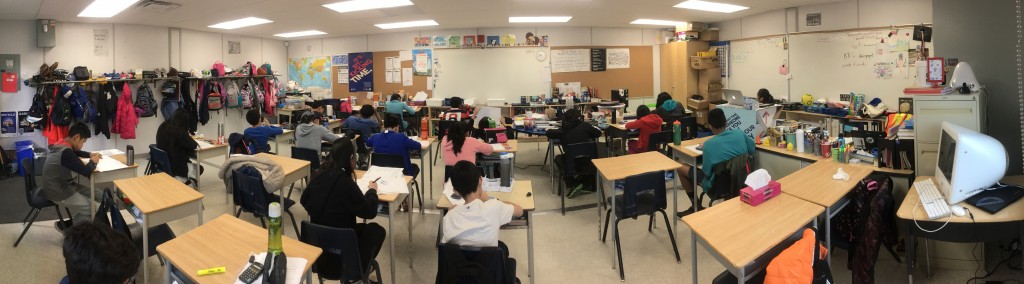
Wednesday to Friday: EQAO testing delivered over 3 days in 6 x 100 minute periods. Followed by a decision to provide 100 minutes of movement time each of those afternoons. After sitting at their desks writing assessments, which are as long as some high school tests, my grade 6 students earned the right to move around. So to the gym and outdoors we fled. Unless Participaction and Ophea are lying to us, an active body leads to a healthy mind and the two are inextricably connected because they add up to happy learners.
EQAO17

Movers and groovers

If we are truly differentiating education to support all learners in Ontario, then why is the standardized assessment basically a read and respond test? How are the needs of all learners honoured here? When will kinesthetic, musical, visual/spatial, and inter-personal learners get their rightful moments to shine? And then there are the students who suffer from anxiety regardless of their incredible skills.

Anxiety is one thing parents and schools do not need to teach students.

Q: Why do so many students come to school worried about this test?
A: They’ve learnt it at home, and then they’re learning it in school.

This revelation comes from an informal poll taken over 8 years of teaching students in grade 6, many, who feel their families put pressure on them over EQAO, and also that the school intentionally or inadvertently perpetuates in the classroom in Grades 3 and 6 does the same.

Despite repeated assurances that EQAO is a meaningless test, with regards to their report cards and chances of getting into university, students and their families are still laying a lot of emotional eggs into this basket. For whose benefit, then, do tests like these really serve? In my neighbourhood it appears to be increasingly financial as homes in “high achieving” schools like Markham and Unionville are in constant demand on the real estate market.  No pressure. 

Think of the money

Are parents sub-consciously stressing children over EQAO scores to influence their property values? Say it isn’t so. Each year on meet the parent night in September, the test is front and centre on the agenda of many in attendance. With some time and clear information, many of their concerns are acknowledged and addressed. However, 8 months into another year, there are still remnants of confusion in the general public. Recent correlations between house prices and test scores are adding fuel to this fire?

So how can you help students overcome test anxiety? Last year I shared some of my strategies. Below you’ll find some others to choose from and build on;

a) Give them lots of tests and worksheets to build up students’ test-taking immune systems? This is a classic technique from the Drill and Kill Society of Educators. This would not be my personal strategy to share, but it is still widely in use. It is easily rationalized with, “Life is a test” and “Everything is a test.” To which I reply, “Life’s tests are, at least, meaningful.”
b) Develop strategies for answering questions? This involves a plan. I always suggest reading the questions over 2 or 3 times while highlighting the key points, skipping questions to revisit afterwards helps students to get past feeling stuck, double checking calculations helps make sure all steps were followed along the way, and re-reading answers afterwards for evidence of understanding. These techniques help students to a point, but are not test taking cure-alls.
c) You could also build higher order-thinking skills that apply understanding, knowledge, application, and evaluation into every response?
d) Don’t forget to look after your body. Drink water, have a snack, close your eyes, take a few deep breaths, and repeat motivational axiom of your choice. You got this.

Our corner

What did we do to prepare? Nothing. No sheet of paper was harmed in preparation for EQAO in my class. I posted some links to the EQAO homepage via our class web site at the beginning of the year after a parent requested them. Other than that, it’s been a beautiful year of asking engaging questions, interleaving concepts*, and opportunities to develop/use critical thinking in every aspect of the learning lives.

Let me know what strategies you use in the classroom to combat standardized test fatigue. Please share in the comments section and keep the conversation going. Thank you.

* More on Interleaving via http://www.greatmathsteachingideas.com/2015/02/01/building-interleaving-and-spaced-practice-into-our-pedagogy/


Building Better Schools Forum

What does a healthy classroom look like? What does it sound like? What does it feel like when you enter through the classroom door? I recently had the opportunity to be a part of our local ETFO’s Building Better Schools Forum in Kitchener. It is an initiative by our provincial office to engage parents, guardians and community members in helping shape the direction of elementary schools in our province (http://www.buildingbetterschools.ca/the_plan ).

I was part of a three-member panel that was made up of a social worker professor from the University of Waterloo, a school council chair and mother of students in the WRDSB and myself, a teacher in the board. We had a variety of questions that were asked of us that allowed the audience (including our local released officers, director of education, superintendents, board trustees and general community) to hear from this cross section of people about their concerns, their wishes and the areas that they felt satisfied with in the public education system.

The number one item that came across from the panel was the concern about mental health and how it permeates every area of our education system from students to teachers to parents. What was once overlooked, swept under the carpet or just ignored now is coming to light as a result of the courage of many people who are helping reshape our thinking.

The end result of needs not being met when it comes to mental health in the classroom is usually maladaptive behaviour that can range from withdrawal to violence to attempting suicide. What was clear in the conversation is that there is not enough supports available in our communities and schools to support the increasing demand.

As teachers, we are at the frontline to this growing epidemic and need to understand that our wellness will dictate the wellness of our classroom. Don’t tolerate violence, don’t just look at the behaviour component and don’t stop lobbying for change by our government. We must give ourselves permission to take care of ourselves, we must build balance into our lives throughout the school year and not just on holidays and finally we must have our voices heard in helping get the changes needed in our education system.


The Changing Nature of the Outdoor Classroom

With the warmer weather, we have arranged it so that every day of the week, a group of 5 kindergarten students can trek with either a teacher or Early Childhood Educator to the Mud Lake bird conservation area across the field from our school. During the winter, when weather was less predictable, and often times uncooperative with temperatures plunging to -30 degrees celsius, or fields of sheer ice to navigate across with 4 and 5 year old students, we could not plan on going out every day. With the arrival of spring, however, everyone is happy to have the chance to move beyond the school building to do some outdoor learning.

For the first few visits, everything was wonderful with buds on trees, a small variety of plants coming up through the mulch and moss, and the Canada Geese filling the air and the waterways with their boisterous presence. Then it started to rain. The run-off and the rain soon created flood conditions that were catastrophic for some people along the Ottawa River. The flooding was so severe that the paths were impassable and our students and staff were prohibited from visiting the area because the water levels were so high. Birds that nest along the shoreline most definitely lost their clutches, and we are not sure how the female beaver, who a week before the flood could be observed proudly grooming herself on top of the fortified lodge, was managing now that the lodge was almost completely submerged.

The flooding offered to all the students at our school, not only an opportunity to observe the transformation of an area they had come to know very well in previous seasons, but also a goldmine of inquiry-based learning which was opened up as students wondered about how flooding affects animals and insect populations, where flooding happens, where the water came from and where it eventually goes. It also gave us a chance to explore around the fenced off, protected conservation area of Mud Lake. This meant that the children could climb the trees beside the bike path that lies between our school yard and the forest, and they could learn about a completely different collection of medicinal plants that grow best in disturbed soil with exposure to full sun, such as mullein (Verbascum thapsus), shepherd’s purse (Bursa pastoris), yarrow (Achillea millefolium), and the rather abundant and pesky, but with rich medicinal properties, dandelion (Taraxacum officinale), and burdock (Arctium lappa). We even found some stinging nettle (Urtica dioica) which irritates more than stings – and is not toxic like poison ivy (Toxicodendron radicans). The students have been able to get up close and personal with these plants because the habitat they grow in is easily accessible. In the forest, we do not touch or pick anything because it is a protected area, and because there is so much poison ivy along the trails. However, in the fields and ditches which are frequently mown, these plants grow in abundance as long as there has been no pesticide treatment.

This Spring, the flooding of the shores of Mud Lake has really exemplified the benefits of the outdoor classroom which is neither static nor predictable like a classroom within a building can be. With the changing nature of the forest and pond that make up the bird conservation area, our students have been able to experience how powerful, dynamic, and full of life a small area in their neighbourhood is. As the waters recede, we will soon be able to return to the trails and waterside that the children have come to know so well, and explore the changes that have occurred over the past few weeks, but now we will add a stop on the way to climb a tree and notice a plant or two.


It’s the End of the Year – time to panic!

Last week, the first sentence of an article for teachers caught my eye and then my gut – “It’s the end of the year…..” – I have no idea what was discussed in the article because I was numbed by the realization and panic that gripped me. Rather than a, “woohoo!”, I felt an, “ack!” as I realized what I read was true – the end of the school year is indeed upon us and I still have mountains of things I need/want to do.

I thought that it might be helpful for new teachers to know that it is a common occurrence for many teachers, new or seasoned, at this time of the year to feel as if they are running out of time to teach everything in the curriculum, to finish up projects and assessments, to get to things they meant to cover but hadn’t started yet, to adequately prepare students for EQAO and have something meaningful for students to become engaged in afterwards, etc., etc. And it’s not as if we’ve been doing nothing all year long, it’s just that we’ve likely been doing a LOT of EVERYTHING and time, none the less, tends to run out on us. If you find yourself waking up in the middle of the night with the scary thought that you will never make to the end of the year, here are some ideas which may help you steer yourself towards the last day without too much distress.

Firstly, think about what you are most proud of having accomplished this year – an inquiry, a student who made great gains in an area of his or her learning, successful parent relationships, a positive and inspiring professional relationship, a problem you solved, something valuable you learned that will influence your teaching in the future, or simply having survived a challenging year.

In kindergarten, the students have grown a lot and achieved so much in the short time they have been at school. Kindergarten is a major growth period in a child’s life – no doubt about it. While the math and literacy components are important and provide a lot of the structure and framework for our days, weeks, months of learning, it is the social and emotional learning that carries the greatest amount of significance for the future learning of a child. Taking stock of the year, I’d have to say that this is the area where my partner and I have spent a great deal of effort trying to provide access to enriching experiences and building positive relationship skills, and where we are the most pleased with the progress we have seen in our students.

Next, with the days counting down, although report cards need to be written, and classrooms need to be organized or cleared out, it is also important to look at what you may want to build on or change in your teaching practice for the following year. This is much more effective to do while you are still in the midst of teaching, rather than when you are on summer holidays and you think you will take the time but somehow never do. Here is a great article written by Caitlin Tucker entitled, Save Your Sanity with a Things To Revamp Next Year List in which she provides a ready-made chart you can fill in as you take stock of your year. You can use her categories or add your own. Anything you ‘revamp’ may also provide points you could address in your Annual Learning Plan at the beginning of the next school year, or they may simply be things that will help you feel a little more on top of your game when you get back into the classroom at the end of the summer.

Finally, as unpleasant the comparison may be, this is the time of the year that most resembles exam period at university. There will be some long hours at the computer and maybe some cramming on top of full days at work. However, just as we managed to get through our exams, so too will we eventually arrive at our summer holidays. In the meantime, I remind myself to breathe deeply and make some sense of the workload by putting things into perspective, with a healthy balance of time to recharge, and I know I will make it through as I always do. 

Overcoming Math Phobia

A phobia is defined as an extreme fear or aversion to something. This can often be associated with mathematics both by students and teachers alike. Human nature is such that when we feel we are not good at something, we therefore can’t be successful at it and we tend to avoid that what we will fail at. This self-fulfilling prophecy is often alive and well in a teacher’s or student’s thoughts.

I will be the first to say that at an earlier stage of my career I was very uncomfortable and unsure of myself when teaching mathematics. Sure I knew how to do math, but did I know how to teach something I was not very comfortable with. I had to do something to ensure that my skills and pedagogy were improving. Thus began a voyage of self-learning or self-guided professional development. Now, twenty-five years later I am still on that journey of learning about how to best teach mathematics so that my students learn and are engaged in their world that is so filled with math.

As with anything else you must find the right tool or vehicle for learning. I attended as many workshops as I could on mathematics. The Waterloo Region District School Board offers a wealth of learning opportunities for their teachers as does ETFO and the Ontario Association for Mathematics Education (OAME) (http://www.oame.on.ca/main/index1.phplang=en&code=home).

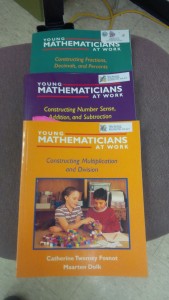
These are several key areas where you can start your journey of learning. I would like to share three key resources that have helped me become a more efficient and knowledgeable mathematics teachers. The first is the work of Dr. Catherine Twomey Fosnot. Her work and approach to the instruction of mathematics is the number one influence I attribute to my growth in mathematical instruction. I attended several of her sessions as well as visiting her site in Harlem. I would highly recommend her series ‘Young Mathematicians at Work’ as a classroom resource.

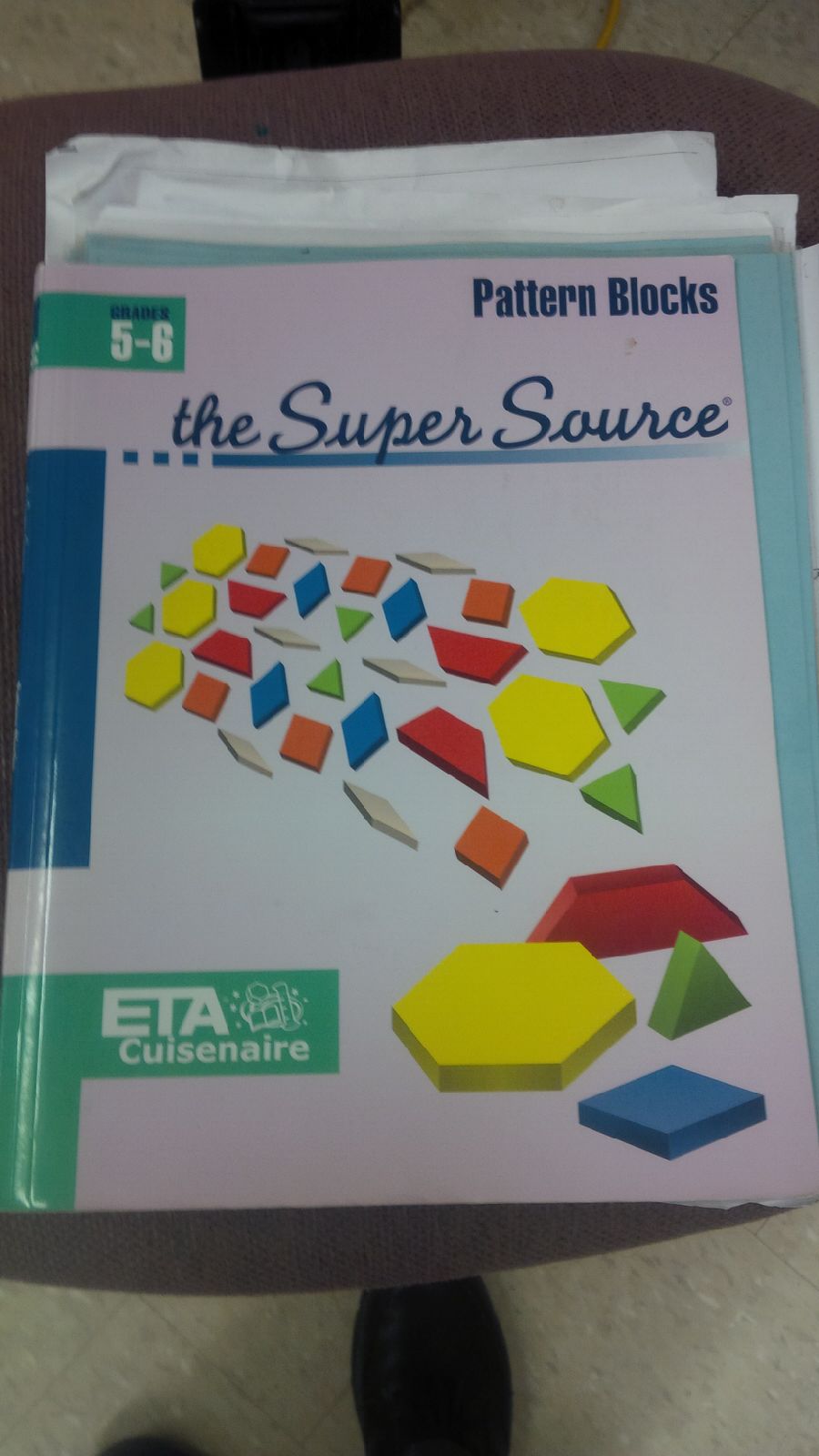
The second most useful tool I have come upon is the series entitled Super Source. There are many reasons why I like this resource. The first is the rich problem solving tasks that are in each book. There are a variety of tasks and each task is connected to an area of mathematics where it can be used like number sense or patterning. There is a book written for each type of manipulative (Base 10, Pattern Blocks, Tangrams etc…). The most valuable asset of this resource is that there is a section where the mathematics behind each task is explained to the educator (the big ideas) as well as suggestions on how to bring out the math in your students. As with any resource this provides a jumping on point where a teacher can then adapt the task to meet their needs.

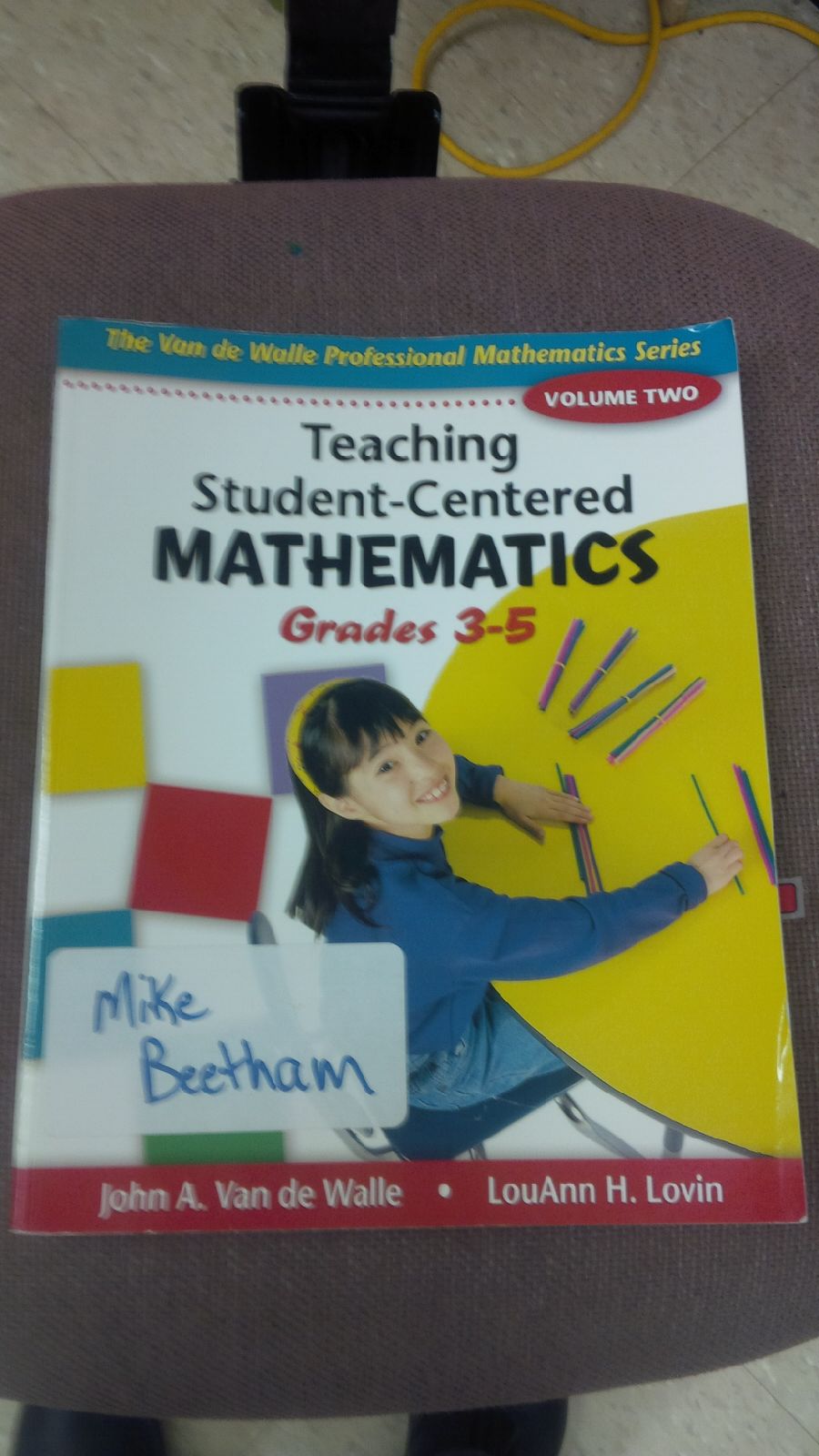
The final resource I would like to share with you is one of the many works of Van de Walle. I used this resource as a teaching tool for myself. It helped me understand the concepts I was teaching and how to bring out both a level of engagement as well as a deeper understanding of mathematics in my students. I hope these resources prove to be as valuable a tool to you as they are for me in my teaching of mathematics.

132

Discipline used to mean something good

Discipline

The mere mention of it conjures up deeply personal memories. Other than infancy, there are very few times in our lives when we act without discipline. STOP signs, social media, and schedules are all prime examples when it is required. And then there’s discipline as it relates to school. For me, it started with stories shared by my mom about a one room school house where the headmaster sadistically silenced students into submission with a switch. Shudder. I clearly remember the rows on a dusty chalkboards replete with repetitive reminders of our recalcitrance. In the 70s, my grade 6 rotary teacher allowed students to pick the paddle with which he would use to discipline us. He had a collection in the corner. Speaking of corners, many were filled with kids “rewarded” with a change of scenery and a new hat for their misgivings. It was a different time and we were afraid.

Discipline varied from year to year and teacher to teacher. Perhaps it was to keep us off balance or that a constant was simply not possible. I’ve experienced 100% of them myself, and was tied to a chair in grade 1 for good measure. Thankfully, I haven’t seen 80% of these types of discipline since beginning my career as an educator in 2009.

In 2017, discipline has evolved to lost recesses, extra work, isolation from peers, loss of privileges, the walk of shame/glory to the office to see the principal, expulsion, and yes still, the writing of lines.* Have students become better behaved or have educators become better at classroom management? Ask yourself, “How does discipline happen in your school?”

In my classroom, a collective establishment of behavioural expectations has been crucial. With my students involved there is democracy, their voices are heard, and this then becomes the standard for everyone to uphold. At it’s heart, discipline must be founded in respect and responsibility where students contribute to and are expected to make good decisions at all times.

via https://www.flickr.com/photos/st3f4n/4193370268 CC BY-NC-SA 2.0

So how in 2017, where a JK to 12 education is mandatory and free for all, why then are things like the one below still happening?

| The state of Arkansas Corrections department carried out the unprecedented  execution of 4 prisoners in April. Really?|

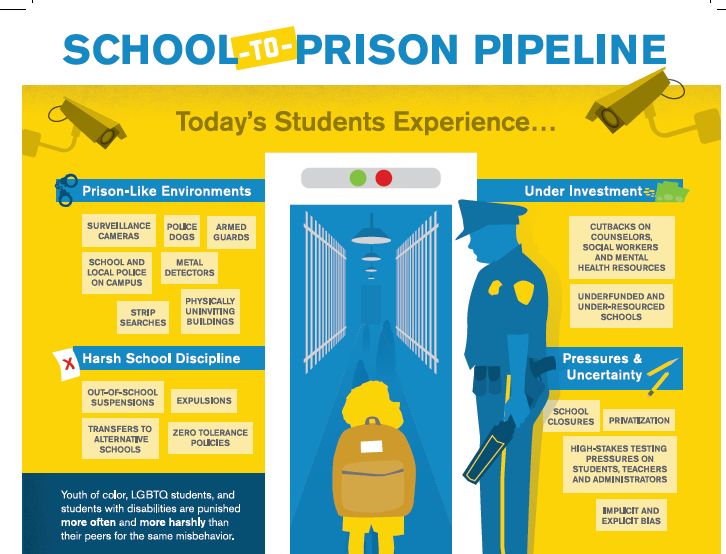
This got me thinking about discipline, law, crime, law enforcement, punishment, society, and then, without fail, back to education. I wondered how any society built on the rule of laws, which are guaranteed for the protection and benefit of all, fails itself so frequently? Does education contribute to the school to prison pipeline with outdated methods of discipline?

Would it not be easier to rearrange the order of this equation in order to place education and society first? Could schools be funded as highly as prisons in order to end this destructive cycle?  Did you know that education receives approximately one tenth of the funding per student as the prison system does per inmate? This gap cannot continue if we expect to grow happy, healthy, and whole learners.

Can we return to discipline’s original Latin disciplina; where it means method, instruction, and knowledge instead of scourging and flagellation? If we put knowledge and instruction over control we could restore discipline to its positively intentioned origins? I am positive the investment in education will lead to greater opportunities for everyone while reducing crime and prison populations.

I wanted to stretch, if not challenge, thinking with this reflection on discipline. Specifically, how this word, through its meaning and deeds, effects everything we do in education. Assuredly, any discussions of discipline require rules, boundaries, and consequences. But after all, isn’t that what it’s here for? Perhaps, in the spirit of the word, it can be so much more if we choose to use it positively instead to preserve power.

Thank you for reading. Feel free to share your memories in the comments section below.

Please read on if you’d like a little more.

* A switch history

Remember the axiom. ” Spare the rod and spoil the child.” Banning the Strap delves into the history of discipline and banishment of corporal punishment in Canada.  Looking on our neighbours to the south, New Jersey was the first state in the USA to abolish corporal punishment in 1867 with Massachusetts coming a close second doing the same in 1972.

Thought this was interesting from our friendly neighbourhood land of the free.

via https://www.pinterest.com/edweekpress/

Attainable goals

In my first couple of years of teaching, I was so overwhelmed. I felt like I was doing everything wrong and not helping my students at all. I was so focused on lessons that didn’t go exactly how I wanted, that I totally missed out on all the positive things that were happening in my class. I was incredibly hard on myself and my expectations were way too high.

I looked at the first ALP that I wrote as part of my NTIP recently and I can see those overachieving expectations in the goals I set:

1)      Deliver a language program that meets the needs of all learners, engages students and uses assessment and evaluation to drive instruction.

2)      Deliver a math program that follows a three part lesson plan, allows multiple entry points and encourages rich math conversations.

Looking at these goals now, I realize that there were too many things that I was trying to accomplish at once. What I have learned is that when you try to do everything perfectly, you end up being a grumpy, unproductive teacher. I have learned that focusing on one thing at a time produces much better results. Also, becoming skilled at developing a three part lesson or creating an environment that encourages rich math conversations takes time! Reading professional books, attending workshops and the implementation of new knowledge take thought and reflective practice. This cannot be accomplished in one day, week or even a year.

What I have since learned is that everything is not going to be perfect – not by a long shot – and that you really need to set reasonable goals for yourself that are attainable. When I finally came to this realization, I decided to focus on improving one thing per year. Of course, working towards competency in language and math instruction were my first two goals. I also decided to focus on developing good management and climate techniques. After I had a handle on these items, the focus became other things like better parent communication, stronger programming for my English Language Learners and developing creative thinkers.

Two years later, my goals looked like this:

1.     Continue to learn good classroom management strategies

2.     Continue to learn from collaboration with colleagues, including lesson and unit planning.

3.     Continue to learn best practices in assessment and evaluation.

Seven years into my teaching career, my annual learning plan is reflecting a shift into some leadership goals:

1.      Mentor a student teacher through their practicum

2.      Mentor new teachers in their first years of teaching through a blog called the “Heart and Art of Teaching and Learning”

3.      Continue to learn best practices in music instruction by attending workshops and conferences.


Take the time to celebrate the success that you have had and make achievable goals!


Helping English Language Learners in Music

Music Class can be tricky to navigate for our ELLs (English Language Learners). Although music is really fun and engaging, learning lyrics to songs and terms for describing music can be challenging to remember.

Lyrics to songs can be difficult for ELLs as there are often slang words, incomplete sentences or words that are used in unusual ways. Lyrics manipulate grammar rules and each genre can have its own style of communication, depending on its origin. In addition to lyrics, vocabulary for music has the same challenges as many content subjects, which is that the vocabulary is often not used in daily life. You don’t hear people talking about how forte, vivace or legato a song was. As the vocabulary is only used for such a small portion of their school week, it is very hard to internalize. 

My student population has around 70-80 percent of students on the STEPS of Language Acquisition. In trying to help my ELLs be successful in music class, I have used the following:

1)      Song selection: My team is very selective when choosing songs to sing in class, and we are always looking to make sure songs are not too long, often repetitive and that new vocabulary is not too overwhelming for students to learn.

2)      Patience: We take time to let students internalize one section of the song before we move onto the next. If we are learning a song that is a little longer, we only focus on one verse for part of a class and visit the next verse in subsequent classes.

3)      Visuals: There are diagrams and visuals to support students in discussing music. (You can find mini posters about the elements of music on the website Teachers Pay Teachers).  Also, illustrating a song can help solidify meaning.

4)      Actions: We often add actions to many songs to help us understand the meaning of what we are singing.

5)      Cooperative Learning: We do some whole group and teacher led instruction to learn some new vocabulary and lyrics. However, more often, students work together as pairs or groups towards internalizing the lyrics and their responses to music.

6)      Use music that represents the culture and language of your students: Using songs from a student’s culture allows them to feel valued and they become the expert in the room.  Finding authentic arrangements and scores can be difficult. Making a connection to a member of the community that can help you is a very important asset.

7)      Make it fun: Ultimately, music should be a fun way to engage with language. So encourage the students to enjoy themselves!

Even though music can be challenging, it can also be very supportive when learning a new language. About 15 years ago, I decided to move to Japan to be a teacher. I ended up loving it so much that I stayed there for three years. In my own personal journey of learning a new language and writing system, music played an important role. I listened to a lot of Japanese music and bopped and bounced along to the music in my home, car and at school. New vocabulary stuck in my brain from the songs that I heard, and I enjoyed learning how new vocabulary was written in Kanji (the Japanese writing system) from the inside of CD covers. Listening to music was great as it was the one Japanese activity in my day that didn’t require a response from me. Music can play a very important role in the acquisition of language.