
Cancer, pink shirts, and why I hate Jell-O

cancer

Cancer is a ruthless disease. It knows no boundaries, respects no ideologies or cultures, and disrupts the lives of everyone affected by it. Cancer has a twin in education. It’s bullying.

Recently, I was creating some TED Ed lessons about bullying(in its various forms –The Cyber Bullying Virus and Bully Dance). This got me thinking about the following question;

What makes bullying so virulent that it can evade, morph, and destroy generation after generation?

What if we looked at bullying like it was a medical epidemic? If we called it a disease, which it truly is, would it be treated more seriously? Could it then be given the same attention and urgency as HIV/Aids, Ebola, and Cancer are in the medical world?

Or have we built up our immunity to the existence of bullying in our schools that says if it is not happening to us?  Like cancer, bullying is serious. Its symptoms leave lives in havoc along its path.

Yet, for all of the attention(meetings, resources, legislation), research, assemblies, and instructional time invested into eradicating bullying across multiple lifetimes it has not disappeared. With fingers pointing in all directions it is time we all look to our youth to solve the problem of bullying because the adults have made a mess out of it.

Remember back in 2014 when school trustees, all adults, managed to create a working environment so toxic that the police needed to be called in to deal with the troubles. My students asked why the adults couldn’t get along? I couldn’t answer it with anything other than bullying.

How do we justify this behaviour to a media savvy student body when those in positions of leadership are modeling “do as I say, not as I do” by their actions?

The course of treatment for the cancer of bullying is simple. Let students lead.

Students possess limitless energy, potential, and ideas so why not equip, empower, and get out of their way to do great things? A powerful example of a student led initiative to stop bullying is Pink T-Shirt Day. It started in 2007 at a Nova Scotia high school where a grade 12 student defended a grade 9 be being bullied because of the colour of his shirt. It has since become celebrated as a national day of awareness, with schools across the country holding stand up to bullying by wearing pink events.
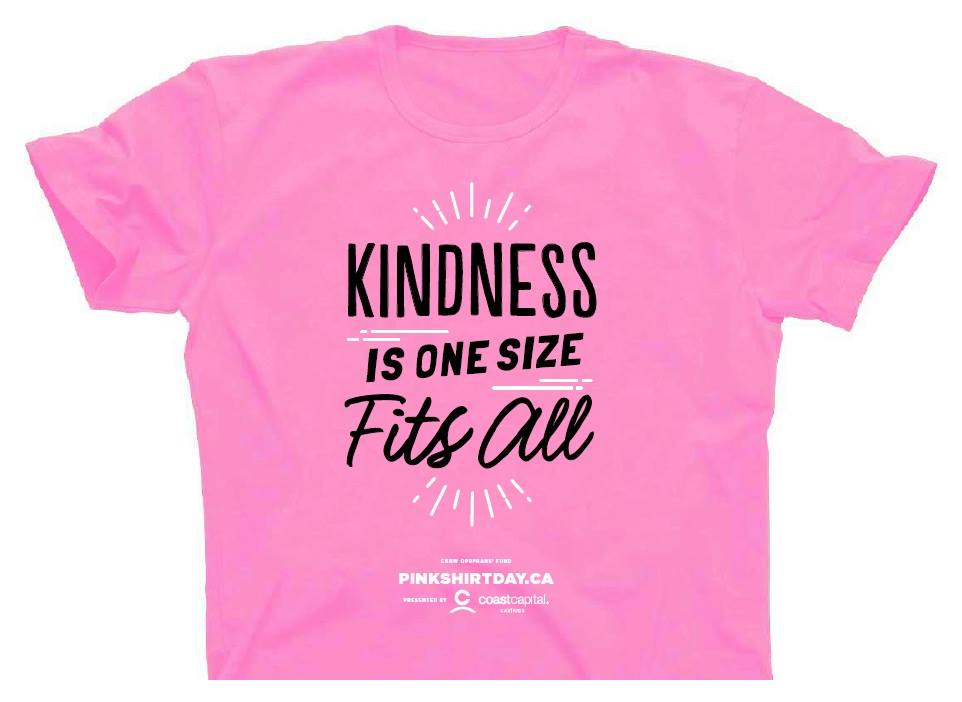
PinkShirtDay

One of the reasons Pink T-Shirt Day is such a success comes from students leading the way. It has now fostered other wear pink events to fight bullying, homophobia, and transphobia. My school will be participating in its 2nd Day of Pink of 2016 on April 13th. At its core, pink shirt day is a way for everyone to stand together in order to focus on everything that unites us. I feel more student led events like this would set a positive and lasting example for people who have struggled with bullying at all levels of education from classroom to committee.

When students are allowed to lead they naturally rise to the task. Want proof? Look at the impact that Ryan’s Well, Free the Children, and Me to We have made on our world. Each amazing initiative inspired by a student.

Think about how you can encourage your students to be agents of change and social good in the fight against bullying in your school. I would love to hear if your school participates in Day of Pink activities. Tag me here or on Twitter @willgourley.

p.s.

I had Jell-O in the title because I was looking for a silly focus point in the title. There is an explanation of my true dislike for Jell-O at …why I hate Jell-O on escheweducationalist.wordpress.com.
Mental health in the hallowed halls.

Here’s a snippet from casual conversations playing out in school hallways everywhere.
Pick the lines you’ve heard or have used before.

https://www.flickr.com/photos/wfiupublicradio/5601192190 https://creativecommons.org/licenses/by-nc/2.0/
Photo Credit:
WFIU Public Radio

“How are you? How’s it going? What’s up? How’s it?”

“Good. Great. All good here. Meh. No worries. Busy. So busy. Cool. Not too bad. OK. Could be worse.”

What would you do if someone answered honestly saying; “Not good. I’m being bullied by a group of students. I don’t like my body. My parents are divorcing. No one likes me. I feel alone and sad all of the time”? Would you pull out the motivational clichés and tell the person to toughen up? Would you walk away saying, “hope you’re OK?” and “things will be better with time” or would you inquire further? Would you feel comfortable finding out the truth? Do you have enough emotional energy in the tank to make a difference?

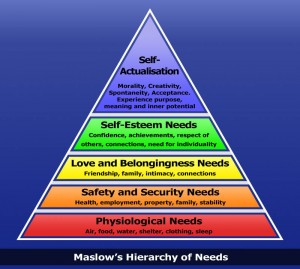
Regardless of years of experience, many new teachers feel uncomfortable, even under-equipped when facing mental health issues in the classroom After all, we’ve been taught pedagogy, not psychology, in teacher’s college. That’s not completely true. We did learn about Maszlow’s Hierarchy of Needs, but that was so long ago, it was only a small series of lessons/readings, and  besides we have lessons to deliver.

In this post I want to share a side of education that Maslowdoes not get enough attention. I’m talking about mental health in schools.

Understanding and supporting students with mental health issues is as important in our classrooms as the curriculum we are instructing.

What keeps educators awake at night are the the same daily problems being encountered in classrooms around the world. I am a witness to how mental health issues are scarring education. There is a recurring generational amnesia in the hallways of educational institutions and it’s time we do more about it.

That may not seem like a light and lively subject for conversation, but discussion in all of these areas is crucial as it pertains to making our classrooms safe and inclusive learning spaces. How are you dealing with issues like this in your classroom? Here are a few ideas that have helped in my learning space.

In my classroom we have worked hard to develop a safe space for all learners. This means that we all try to support each other when times get tough. We try to use the idea of Ohana (family) where no one is alone or forgotten. We have instituted Mindfulness Moments as brain breaks. Students need time to consolidate their learning, and to be still/quiet for a few minutes. This little break in the action calms the mind, reduces anxiety and teaches students a valuable de-stressing skill.

In my classroom, there is always a little something to eat. It is amazing how a granola bar, a juice box, and some crackers can help a student who has not had enough to eat to start the day. During tests, quizzes or quests, as we call them, we have “test crackers”.  They’re tasty, crunchy, and important to helping students relax during assessment tasks. I have found that when a student has something to eat, albeit very small, they are more relaxed and perform better.*

In a follow up post I share some thoughts about mental health issues as they relate directly to educators. You’d be surprised how similar they are to those our students face. Or maybe not?

I need a granola bar.

* Maybe I’ve found a thesis to test for my M Ed?

Photo of Samantha Perrin

Safe and Accepting Schools in today’s Social/Political Climate

All teachers are familiar with the Ontario Ministry of Education’s initiative for teaching inclusion;

A safe, inclusive and accepting school environment is a necessary condition for student success. Students cannot be expected to reach their potential in an environment where they feel insecure and intimidated. We are committed to providing all students with the supports they need to learn, grow and achieve.
Building a positive and inclusive school climate requires a focused effort on developing healthy and respectful relationships throughout the whole school and surrounding community, among and between students and adults. “

We respect this philosophy and we would not deny our students the full application of this mandate. And yet, for all the anti-bullying lessons, resources, activities; for all the lessons and discussions on civics and character education within our schools, I cannot help but feel as if I am complicit in perpetuating a myth that grown-ups know how to behave properly – when in fact, outside of our schools, our society is anything but civil, respectful, and devoid of bullies. For examples of intolerance and disrespect, we need look no further than the relentless doses of hysteria, stereotyping and racism in our newspapers and in our laws. The media is rife with stories pitting Us against Them, creating fear about Others, and discrimination based on clothing, skin colour, or mother tongue. Meanwhile in stark contrast in our classrooms, we are reading books such as “Children like Me”, promoting diversity and trying our best to ensure that our students learn about community and how Social Justice applies to everyone in our society.

Feeling overwhelmed by the latest news stories, I have been thinking about young students who, on the way to school, or once within its confines, may be unexpected targets of the divisive environment where ignorance, scapegoating, blaming, shaming, guilt by virtue of association, and racial profiling may have trickled down. Our anti-bullying initiatives may be only a Bandaid solution to circumstances of inconceivable scope and which are completely out of our control. Children who are subjected to this intolerance have to navigate through the quagmire with little or no grasp on the realities and myths that may be associated with their lives, and as in many cases of intimidation, because it is insidious nature, teachers may have no clue what these children have to endure. As visible minorities, or as minorities suspected of an affiliation, no matter how remote, children risk being targets of ignorance and vitriol from other children or adults in the community. Sadly, we have so many brutal historical examples of just this type of situation. Therefore, it is essential that, we as teachers, remember to be aware and have empathy to help all of our students feel secure and free from intimidation so that they can learn, grow and achieve, even when we may not fully understand the greater issues that they may be dealing with – politically, religiously or culturally.

And, without a doubt, the world has always been so. Danger from bigotry and intolerance existed long before the implementation of the Safe and Accepting Schools Act in Ontario. We can only hope that the effort we put into promoting diversity and ensuring students are educated within a safe and accepting school environment will eventually make the myth of a society of respectful, civic-minded people a reality. In the meantime, it is worthwhile to make sure that our students know we are an ally they can depend on for help should they need it.

Promoting Prosocial Behaviour

Most students, if asked, know not to bully or know not to litter. Yet, you may see those same students exhibiting behaviours that contradict what they know.

Prosocial behaviour is behaviour that uses positive words or actions to benefit others. Rather than a desire for personal gain, students are prompted to act this was by empathy, responsibility to others, or moral values. Much of the responsibility to teach this behaviour is falling on schools and teachers.

To promote prosocial behaviour, consider some of the following:

  • Encourage a caring school community that includes everyone from teachers to caretakers and lunch room supervisors.
  • Implement a positive discipline approach that includes clear expectations, discussions, and modelling.
  • Initiate school-wide programs such as “learning buddies” that match up older and younger students to work together in a variety of activities (computer lab, shared reading, picking up litter, community walks).
  • Integrate value or character education to learning in all classrooms
For more information on creating a caring community in your classroom or school that promotes prosocial behaviours, see the Principles and Practices of Responsive Classroom at http://www.responsiveclassroom.org/principles-and-practices-responsive-classroom.
Photo of Mike Beetham

A Great Classroom Is Created When…

I had to share this with someone, so I felt this blog was the best way. At a recent class meeting we all sat down and started to talk about what makes a classroom great. This topic generated a myriad of ideas, discussion and debate. I am sharing with you the final product that came from this amazing group of students.

– when everyone works as a team

– you celebrate when people do something right

– every student is a success

– tell the teacher how you care for them and they will tell you the same way

– teachers teach us how to share, cooperate and work as a team

– we have fitness in the morning

– we do different kinds of things like planting

– you don’t give too many chances

– you take the time to get to know each other

– don’t be too easy, don’t be too hard

– we set goals

– when students can be taught and entertained at the same time

– teachers discipline

– you take risks with each other

– students and teacher communicate to each other

– we give lots of smiles

– students are allowed to teach teachers

– students are allowed to learn from their mistakes

Needless to say, my students have once again taught me how valuable an asset to our classroom they are. Their collective voice has demonstrated the power of our class motto ‘Together Everyone Achieves More Success’. I hope you can read my happiness and pride!

Engaging Idea

A new year is an opportunity for introducing new routines or learning opportunities. If your routines are already established and your planning is complete, you may just want to add a new “twist” to the assignments, addressing different learning styles and increasing student engagement.

Depending on the age group that you teach, – receive infographics on a wide-range of topics at Daily Infographic, see http://dailyinfographic.com/. This is a great way to get comfortable with the use of infographics. View before sharing with students.  Infographics (information graphics) are all around us in subway maps, advertisements, and historical representations. They provide students with an alternative way to read information as well as present information. An infographic is a graphic visual representation. Larger amounts of data or information are presented in a visually appealing way that the reader is able to easily retain. Infographics can include timelines, maps, charts, graphs, illustrations or photographs, making them a useful and beneficial resource for social studies, math, language, science and art.

Suggestions for introducing or integrating infographics:

– receive infographics on a wide-range of topics at Daily Infographic, see http://dailyinfographic.com/. This is a great way to get comfortable with the use of infographics. View before sharing with students.

– in Google search a selected topic and “infographic” to find a reputable author/creator of an infographic that connects to your lesson or subject. Preview the infographic. Provide it to your students to read individually or have them discuss in small groups.

– use infographics for specific knowledge-building. For example, if studying First Nations treaties with the Canadian Government, a government produced infographic is provided at: http://www.aadnc-aandc.gc.ca/eng/1380223988016/1380224163492. This infographic provides factual information in an interesting format for students that is easy to understand.

– after using infographics and understanding the components that make them effective, have students create their own infographics. It could be their own life story, their community or outer space. It could replace the pamphlet idea for presenting information on another city, country, or issue.

– create a campaign against bullying (or address various social issues) using student created infographics modelled on a reputable resource such as the infographic at Stop Bullying Gov, see http://www.stopbullying.gov/image-gallery/what-you-need-to-know-infographic.html.

– students can design their own infographic with pencil or paper, or electronically with tools such as Infogr.am or Piktochart.


Enjoy introducing something new to your students for the New Year!

Photo of Mike Beetham

Update on J

When I last shared (September), J had arrived  in a foreign school, classroom and community. After three months of focussed work to help J realize his potential, celebrate his uniqueness and work through his challenges, I am ecstatic to report on a young boy who has blossomed. He comes to school each and every day with a smile on his face (and most importantly) a belief that he is a capable learner who now views school as a safe place to be.

Our journey is not over, but rather just beginning. J is now in an emotionally safe  place where the academic and social gaps that will help him return to a regular classroom can be addressed. As with all good instruction, the front loading work established the foundation that was necessary to build the bridge to allow J to join the learning community that awaited him.

I hope you all have a wonderful holiday and that you are able to enjoy it with family and friends.


Photo of Mike Beetham

Celebrations

“If it is worth doing, it is worth celebrating”. That component is a significant part of every classroom agreement that I am a part of. As my classroom community evolves it becomes a priority that best effort is all that can be asked of the students and the teacher. As such, we do not celebrate grades, we celebrate best effort. Each and every child in the room knows and understands that as long as they are working as hard as they can, the result is always worth celebrating.

That belief began to evolve in my teaching about twenty years ago when I first began to understand the role of diagnostic assessment and how important it is to start where my students are and not be driven by grade expectations. I can best sum it up by saying, it is the juncture in my career where I began to teach children and not deliver curriculae.  My students (and classroom) began to lose the competitive edge and shifted toward a cooperative learning environment with a focus on helping everyone be successful. A significant aspect to that change was the need to redesign what celebrations looked like.

C– classroom community social events (Thanksgiving lunch, special days)

E– everyone gets to share their work in a public forum

L – lots of trips to connect learning to real life scenarios

E– extra high fives, fist pumps, sunshine calls home, notes and oral praise

B – board filled with weekly awards

R– regular positive visits from principal, parents and other staff

A – always asking for input from classroom advisors on new ways to celebrate

T – teacher models and then a gradual release of responsibility

E– every effort big or small is worth celebrating

How do you celebrate the efforts of your students? I encourage you to post your ideas for others to read.

Photo of Mike Beetham

Conflict or Bullying

  • Bullying or Conflict?

Bullying is a reality in schools, but misplaced reactions to the day-to-day conflicts that occur in life will also not serve to help our students become problem solvers. I have noticed in my classroom (and around the school hallways) that any situation that involves one student disagreeing with another is being referred to as bullying. I had to really reflect on how to handle this scenario to ensure that the right approach is being taken to benefit all. I searched out information I could use to help clarify the misconceptions that were being developed by my students and came across an amazing resource entitled ‘We All Belong – A Multimedia Toolkit For Parents and Schools’. It was developed by the Centre Ontarien De Prevention Des Agressions (COPA). It is a very comprehensive tool for schools, teachers, parent councils and families to use as they work to develop a culture of inclusiveness within their community.

This resource helped me frame a strategy on how to move my students forward in their thinking. The Bullying Prevention Guide in the kit clearly explained that conflict is a disagreement or difference of opinion between two parties who are relatively equal in social status and thus there are two sides to a story. Bullying is not a natural part of daily life and is a targeted and planned act by a person or group of people in a position of power or social status and is often carried out over a period of time. If a bullying scenario is dealt with using conflict resolution strategies I have added to the harm done by the bully because I have now forced the victim to spend more time face-to-face working it out and have concluded that he/she is part of the problem.

The kit is a very rich resource that includes a Bullying Prevention Guide, The Capsule Families Get Involved and a DVD of short entertaining vignettes to be used. There are two volumes to the DVD with one targeting Parent Engagement and the other Bullying Prevention. The versatility of the kit has made it an option that can help bring families and schools closer in their battle against bullying. I am currently spending more time familiarizing myself with the resource as there are other options on how I may use it.

COPA – 457 Danforth Ave, Toronto, ON M4K 1P1
(416) 466-8975 or infocopa.com


Photo of a Skyscraper

Building Skyscrapers

This year my Grade 6 students have demonstrated a deep interest in looking at a few social justice issues that they feel have a direct impact on their lives.  The most important issue has been bullying (at school, the home, and in society as a whole).  I have described how we have focused on exploring this issue in a previous blog where I explained how we, as a class, brought to light aspects of bullying including: what it is, why people do it, who it affects, how it affects them, and ways to deal with it in our classrooms, schools, and communities.

It came as no surprise to me that a group of my students (and a few Me to We Club members) decided to create an anti-bullying club in our school.  As the club members came together to discuss their purpose, the plan, and how each student would be involved, I sat back in awe at how big their hearts were and how creative their minds became as they began to put together an anti-bullying awareness video to both educate the students at the school and reassure them that the club was there to support them.  The whole process came to demonstrate what can be possible when a topic or issue is dissected through inquiry-based learning and students are given the opportunity to dive, head first, into an ocean of experiences that allow them to question, research, share ideas and opinions, look at different perspectives, decide where they stand on an issue, and how they plan to become involved.

After an intense few weeks, the group decided that they would like to first raise awareness through a video they would create.  They then decided that students needed to know who they were in order to seek them out for support outside at recess if they needed someone to talk to or play with.  They also realized that in most cases, the students involved in bullying behaviour (whether it be the bully, the victim, or the bystander) needed to become educated and so they would spend time with those students reading, talking, role-playing, etc. to help them learn about how their actions (or lack thereof) were impacting those involved.

The project is on-going and I couldn’t be more proud of what the students have accomplished so far.  They decided to name the anti-bulling club “We Build Skyscrapers” (the title comes from the Demi Lovato song “Skyscraper”).  The reasoning was that although skyscrapers can seem fragile and many are made of glass, they always stand tall and are built to withstand extreme conditions.  The analogy is that the Skyscrapers Club is there to help build up students to stand tall and proud of who they are by not being afraid and learning to overcome negative situations.  I thought it was brilliant and the school and parent community completely agreed.

If you’d like to see the “Skyscrapers” video, which I strongly recommend you do, follow the link below.

http://schoolweb.tdsb.on.ca/burrowshall/Students/MetoWeClub/WeBuildSkyscrapers.aspx