

Building Community


September has been all about building community in our 5/6 classroom. It is difficult not to move full-steam ahead into the curriculum and feel pressured by time. However, by slowing things down and making time for community circles, Tribes activities, and more discussions, the students feel valued as contributors to their classroom and also their learning.

To build community we:

  • Start each morning with a community gathering  – I say a gathering rather than a circle as we are challenged with space and don’t have a carpet to sit on. So we gather near the reading corner where there is a small carpet and some bean bag chairs. Students are welcome to sit on the cushions, the small rug, or pull up their chairs in a semi-circle. It has an informal feel to it and the options allow students a choice in their seating, which they appreciate. We initially started our meetings with prompts that everyone responded to, such as favourite hobbies, number of siblings, etc. Now we open the discussion to anyone who wants to share. Last week, a student shared that she had just got a puppy the night before. This led to an engaging talk about dogs as pets and the fears that others had experienced with dogs.
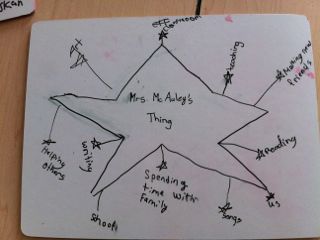
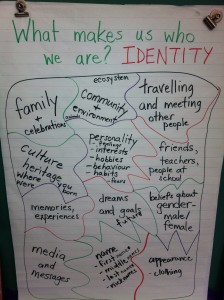
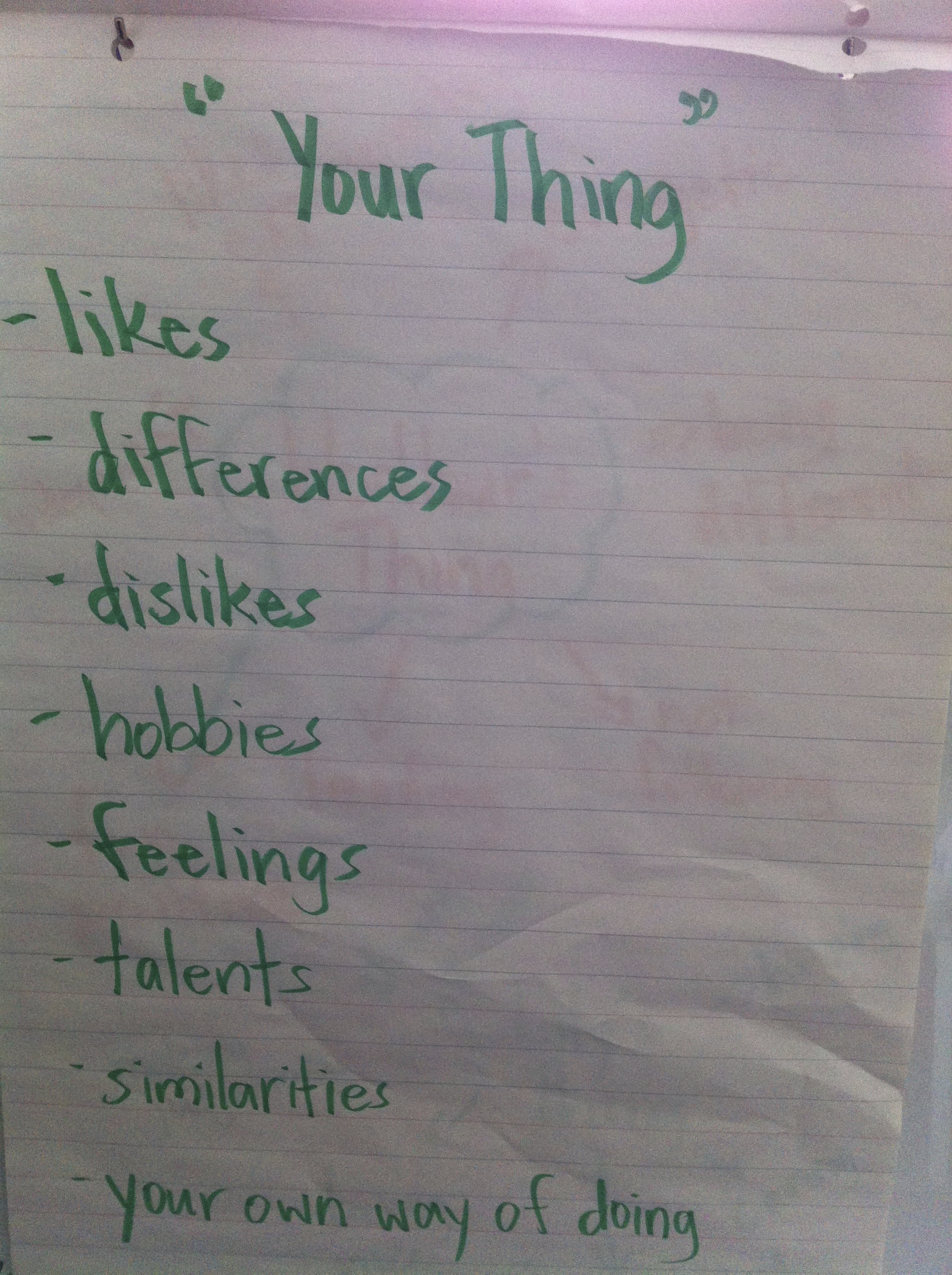
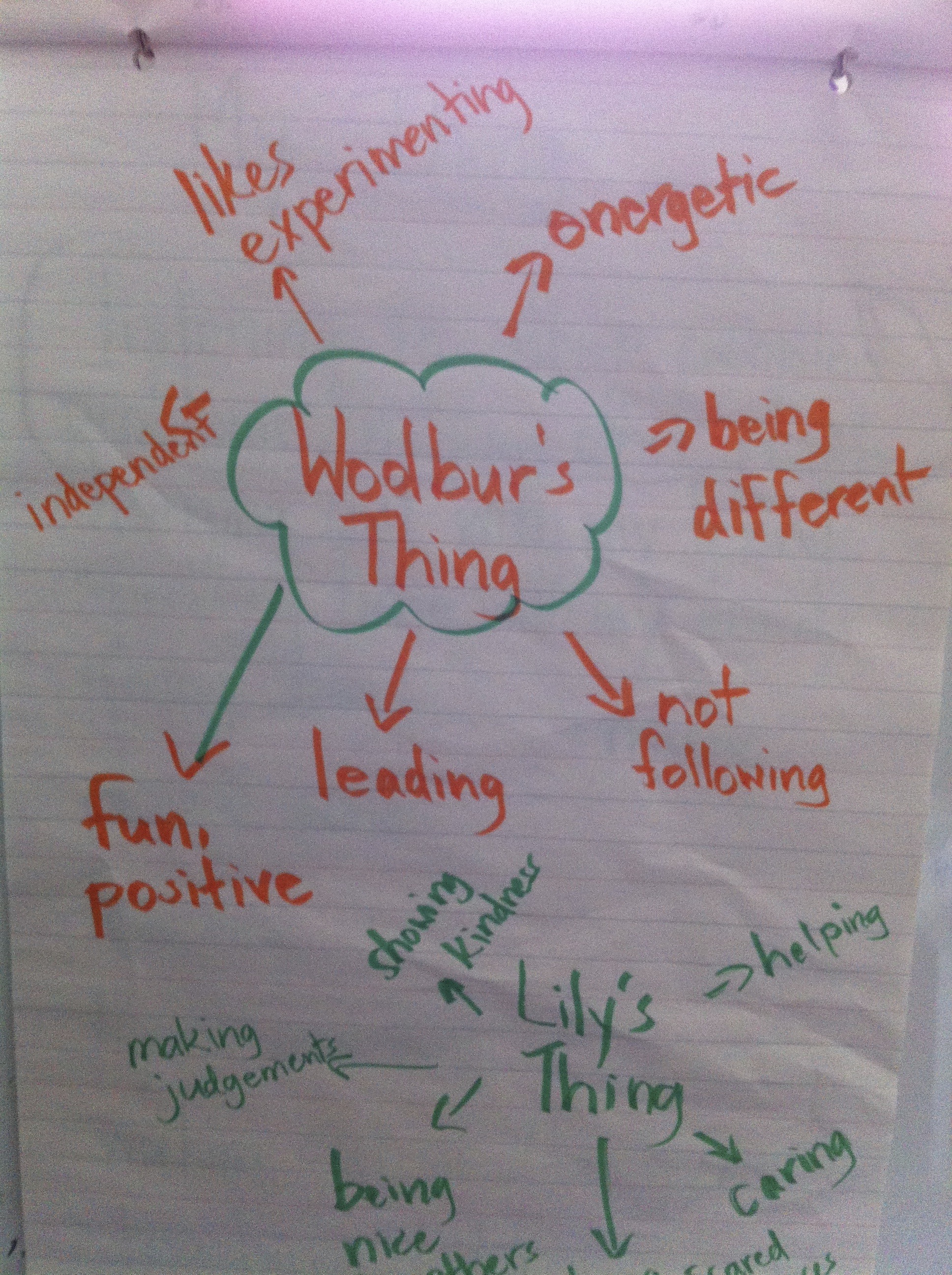
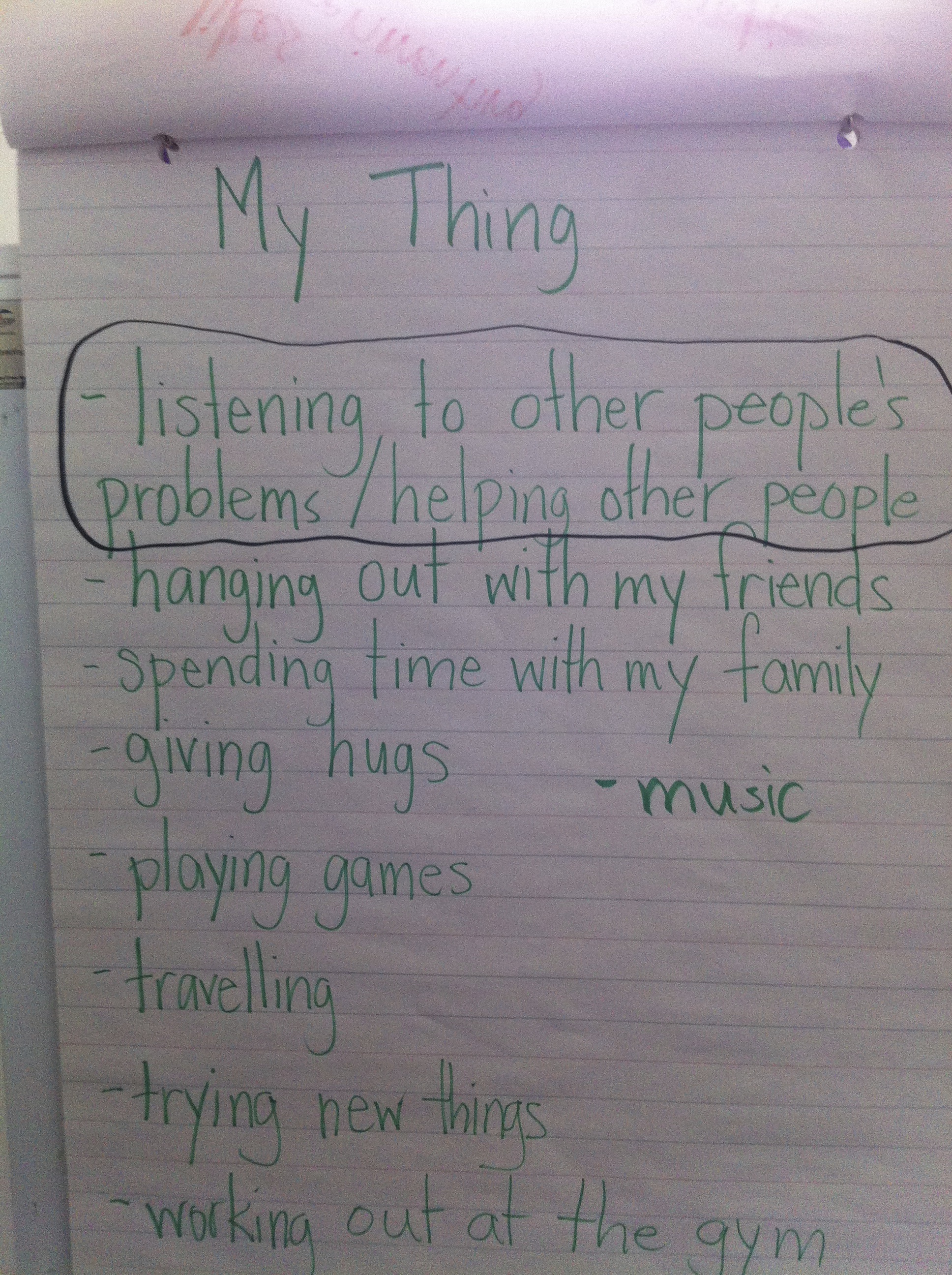
  • Writer’s workshop – To launch our writing workshop, we used Tribes activities that created discussions about our interests and selves. We then spent the first week writing lists that reflected those discussions, which will later be used to generate ideas during independent writing times. We all took a survey home to find out the origin of our names and why were given our particular names. After sharing our information in small groups, it provided a good starting topic for writing. We also wrote about our birth order after a fun Tribes activity that involved separating the class into four corners of the room for discussion, grouped as: oldest, only, middle, and youngest child.
  • Reading workshop – We are also going slow with our development of reading workshop routines. To do this, we are following the 20 day plan that is simply laid out by Fountas and Pinnell in their book, Guiding Readers and Writers (Grades 3-6). On the Heinemann website it describes the book as presenting, “the basic structure of the language/literacy program within a breakthrough framework that encompasses the building of community through language, word study, reading, writing, and the visual arts.”
  • Math – Starting with data management, the students have had the opportunity to survey each other about their interests and make graphs. We also took an online Multiple Intelligence survey and are graphing the strengths of the class on a large graph to be displayed and referred to in the classroom.
  • Social Studies and Art – Our first art activity followed a read-aloud about totem poles created by the Haida. We used a chart that described the meaning about each crest and the significance of colour. After selecting crests that reflected each individual, the students drew their crest using pastels with bold black outlines, then used brown paint around the crest to resemble the totem pole. We have attached the rectangular drawings into groups of 5 or 6 crests and formed 3D cylinder shapes to resemble poles. We are preparing to hang them in the hallway outside our classroom.
In addition to slowing down to build community in September, it is something to consider incorporating into subjects and activities throughout the year to maintain an ideal environment that continues to be inclusive and engaging for all students. Check out suggestions for inclusive activities and lessons in the Matrix of Ideas at the back of The Heart and Art of Teaching and Learning!
Photo of Mike Beetham

The Power of Believing

It is not found in a curriculum, at an educational supply store or in a university course outline. But yet it is one of the most powerful tools that a teacher has. It is the belief in yourself to handle the varying demands of the teaching role, to have confidence in your professional expertise to help students and to instill that belief in each and every one of your students. As my students arrive in my classroom in September the one common element they have (besides a multitude of at risk behaviours) is the belief that they are not smart and that school is not a setting where they will do well. My target priority becomes the mission of helping my students be successful and to believe that school is a place where they will thrive and be triumphant.  This is easy said,  but experience has taught me that it does not occur in a few lessons or a unit of study but rather exists in my teaching philosophy and must be embedded in my talk, my instructional practices and my way of life in the school. I have developed a set of teaching eyes that focus on what students can do rather than what they can’t do. That is a contagious approach that will spread quickly from adults to children.

I would like to introduce you to J who arrived in my classroom with a very closed attitude toward school despite not knowing me, the school or the classroom he has been forced to attend. Before I could begin to help him I had to get to know him as a person and not a student. What are his interests, his talents and his challenges? Our journey of learning is now underway and it will have its ups and downs, joyous moments and sad times but we are coming together with the understanding that he will be successful, he is smart and that school is a not so bad place to be. I will keep you updated on our progress.

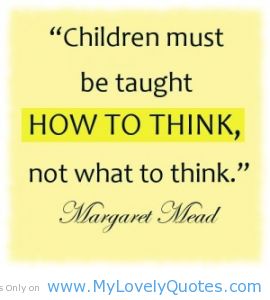
Children must be taught how to think

Let’s Get This Learning Started

This year I begin a new journey as I welcome the opportunity to teach Grade 4.  For the record, I must admit that I was a bit nervous simply because I’ve been teaching Grade 6 and above for the past five years.  However, the first week has proven that if we enjoy getting to know our students and work to create engaging opportunities for them to learn about each other, the classroom environment becomes a comfortable place to be, no matter which grade we’re teaching.

Although I’ve had to be more mindful of the way I communicate by constantly keeping in mind that the students in front of me just left Grade 3, I continue to be amazed at how capable children can be when they’re given guidelines for learning and are then left to explore and build on their understanding of the world around them.

This year, my goal is to be very intentional about the feedback I provide, the conversations I have, and how I approach character education.  This goal stems out of the learning I experienced (and continue to do so) with some very powerful books I decided to read this summer.  “How Children Succeed,” by Paul Tough and “Mindset: The New Psychology of Success,” by Carol S. Dweck, really got me thinking about the way I approach conversations, feedback, and teaching in my classroom.  The books focus on the power of building a strong character based on resilience in children and how to help them understand that more than our talents or abilities, it is our mindset that influences our learning.

If you want to start off your year by exploring how a simple idea about the brain can create a love of learning and a resilience that is the basis of great success in every area of a child’s life, I recommend you take some time this year to read the books I’ve mentioned.

For a quick overview, I’ve provided an article by Carol S. Dweck below where she explains the growth mindset and how it can positively affect and change the way students learn, think, and perform.

Dweck: MiindSets and Equitable Education

Preparing for the First Day

This year I will be moving classrooms and divisions. Teaching a grade 5/6 class at the other end of school from the Kindergarten section will be a big change for me and also for my students. I am sure they will be looking for glimpses of the “Kindergarten Teacher” that they saw in the halls last year. So I am planning to bring some of what I have learned as a Kindergarten teacher to my new students in grade 5/6. Statistics show that over 90% of children in Kindergarten enjoy school. This number dramatically decreases as children reach the junior and intermediate grades. I want the children in my class to be engaged in their learning and enjoy coming to school.

When starting the new school year I always look through the practical information provided in “The Heart and Art of Teaching and Learning,” to find suggestions on setting up the classroom or planning for building inclusion. On page 22, in a section on Environment, it refers to the Reggio Emilia approach, which considers the children’s development and relationships with their environment. The chapter continues with, “Not only should the classroom represent your beliefs and values about teaching, it should also support them. In order to make the classroom engaging and inviting, consider what you want students to feel when they come in and how you might communicate this in a non-verbal way.”

I always find the environment a good place to start when planning for a new group of students. The layout, the materials, even the lighting can affect how the students interact with the resources and with each other. My goal this year is to have a classroom that is comfortable and aesthetically inviting, yet organized to foster responsibility and independence. I want to encourage collaboration and provide areas for movement within the classroom that focus on particular interests such as reading, art, science & technology, and math.

Photo of Mike Beetham

Begin With The End In Mind

Welcome to another school year and no matter whether this is your first year or your 29th year of teaching (that is me), the beginning of September brings forth both the anticipation of thrills and chills.  I have spent the last 29 Augusts anxiously preparing, planning and remodeling my classroom to create just the right start for my classroom. A start that will engage my students, a start that will let them experience what a fun and active learning environment they are entering into and most of all, a start that will make them believe that they will be valued, challenged and will work together to help everyone reach their potential.

Together Everyone Achieves More Success

My name is Mike Beetham and I am starting my 29th year of teaching. I have the amazing opportunity to teach an area behaviour class in the Waterloo Region District School Board. I work with some of the most complex Junior age students in our board.

There are five things that I attempt to accomplish with each start to my classroom.

First and foremost is to make a connection with my students as people first and then as students.

Secondly, I set a tone of fun, hands on learning.

Thirdly, I dive headlong into academics by selecting a starting unit that will engage my audience. This year I am starting with a theme of  ‘Then and Now’. We will examine a variety of items or trends about the year they were born and compare them to our current year. Items will include, popular video games, winning sport teams, popular movies, and cost of items. I will be learning along with them as I model the task using my year of birth (1959). Did you know that a postage stamp only cost 4 cents back then? I am aging myself.

The fourth is that our classroom is community whereby everyone has a responsibility to make it work. I start this process through the development of a classroom agreement that is worked out by the end of the first week and the sharing of the expertise within the room. I do not nor do I need to know everything about everything. I will capitalize on the talents and skills within the class.

Finally, I demonstrate to my students that this room is going to be a safe place physically, emotionally and intellectually. The message is sent often, consistently and in a calm and straight forward way to students that in no way, shape or form will disrespect toward each other be allowed.

The plan for the above five items are a proactive approach rather than a reactive response. They are all carefully thought out, planned and put in place based on my understanding of the grade level, individual student needs and setting that I will be working in. Good luck with your start!


Photo of Erin G

Matchmakers: Creative Ways of Forming Groups

I’m always looking for different ways of forming groups either for teams in games or for class projects/presentations. I like to make sure that not everyone is always working together with their friends. In a book called Energizers and Other Great Cooperative Activities for All Ages (Quest Books, 1991) I hit the jackpot. I know it’s an old book but good ideas are good ideas. I found these to be a great alternative to “Choose Your Own Partner” or randomly drawing names on popsicle sticks, etc. Not only did these provide a nice break or “energizer”, they were so entertaining that people forgot to complain about their groups!

Line ‘Em Up

Have the class line up in a single line according to the following criteria:

  • by age
  • by length of hair
  • by the time they get up in the morning
  • by how long they’ve lived in the community

Once in a line, you can then simply count off depending on the number of students you need in a group (ex 5).

Group Puzzlers

  • Select a picture from a magazine for each group you need (ex. If you need 5 groups, you then need 5 different pictures). Cut each picture into the same number of pieces as group members needed and mix all the pieces together in a container.
  • Students each draw a piece from the container and must then find others with pieces of the same picture. When they find each other, they must then put their pictures back together again.
  • *Make sure to select pictures that are distinct from one another.

Stone Soup

  • Fill a pot with groups of common items-the same number and kind of objects as the number of members needed in each group. You could use small rocks, jacks, marbles, squares of fabric, paper clips, paper umbrellas for drinks, etc.
  • Have each student draw an item from the pot. Holding up their selections, they mingle and find their fellow group members who have also chosen the same object.
Trolley drawing

French a la carte

I’m not sure who coined that expression but if I wasn’t a Core French teacher, it would bring to mind the image of a quaint dessert trolley featuring a variety of artfully baked pastries. Funnily enough, when I typed in that subject heading to get some different ideas of carts on the market, that is exactly what came up. The one model I did find came duly equipped with many different coloured bins, whiteboard, sturdy triangular construction (and relaxed smiling model to boot). However, I couldn’t help noticing some design deficiencies. There was no built-in loudspeaker system blaring the message “Écartez-vous! Laissez passer le prof de Français!!” accompanied with flashing lights and a siren. Nor did they have an activated alarm for when someone tries to pilfer one dictionary or pencil too many. Finally, the lack of GPS tracking device for lost overheads and CDs is clearly an oversight in this day and age of technological wizardry.

A few years ago, I did see someone who seemed to master the teaching from a cart phenomenon and regretfully I didn’t take photos (the days before an Iphone). What made it work for her was the following:

  • a variety of different sized bins and boxes that were all clearly labelled with the corresponding word(s) and images
  • practical supplies which included textbooks, some dictionaries, pencils, pens, pencil crayons, overhead markers, scissors, tape, magnetic strips, stapler, etc (you get the picture)
  • hanging file folder box to store extra worksheets and assignments
  •  cds, camera
  • visually decorated with French/Quebec flags and postcards so that it was a large-scale rolling tourist brochure
  • a horn

Finally, a few suggestions for teaching on the run which I have gleaned so far from my own experience. Truthfully, they would work a whole lot better if I had the wherewithal to implement them consistently after my dash across the school and up two flights of stairs in 1 min and 30 seconds (that’s if I’m running on time).

  • If you’re not supremely organized, enlist the help of a professional organizational consultant to get you on track. No matter how organized you think you are, you’re not organized enough.
  • Get into the habit of putting things down only in specific places.
  • Have a physical checklist of important items that you actually check before leaving the room.
  • Colour code things in bright colours for different classes (class lists, folders, etc) so they can easily be spotted.
  • Ensure your lesson includes some down time for you to get organized at the beginning and end of the period (structured student-run games, conversation starters, short audio recordings).
  • Have responsible students take inventory of borrowed items such as textbooks and school supplies.

If anyone else has any other ideas that work for them, please share them. Thanks to Michelle, Kate and Sylvia who responded to my last post with their thoughtful commentary. This is obviously a justifiably sensitive subject. Hang in there all of you!

Photo of Erin G

Teaching on the Run

I have recently returned from mat leave to my usual position of Core French Teacher in Grades 7 and 8
(not easy to get out of that one…) but this time with a major change which has greatly impacted my job – no classroom.

For the past 10 years, I have always had the luxury of having my own space (albeit occasionally squished between stoves, ovens, washers and dryers of the Family Studies room) and now I am truly realizing how lucky I was.  At the workshops for the TDSB Summer Institute for Beginning Teachers, there was bound to be some poor soul who posed the question “What advice can you offer to someone teaching on a cart?” While outwardly commiserating, I was always secretly thankful I wasn’t in that position. I can say without a doubt, that in my 10th year of teaching, I have never felt so disorganized, frazzled and somewhat ineffective and not for lack of trying. And I’m one of the lucky ones who only has to shuttle between two different classrooms (on two different floors and opposite sides of the school).

I originally intended to blog about how to effectively teach Core French from a cart but when I was looking online for different visuals of such a piece of equipment, I came across an article from an older issue of Professionally Speaking entitled “The Core of the Matter” which succinctly discusses the major issues confronting FSL teachers. Based on a report authored by Maureen Smith, a teacher with 30 years FSL experience, the area of most concern was a lack of dedicated classrooms to Core French. She outlines in the study that it is not uncommon for some teachers to “give eight or more classes a day, working from a cart set up in the lunchroom, gym or multiple portables, even when there’s an empty classroom in the school.”  Delivering your lessons in time sensitive 42 minute increments is stressful enough, but charging around from one classroom to the next within the 2 min travel time only to arrive and find you’d left your overhead/textbook/assignments behind adds a level of intensity which is taxing on even the most organized and well prepared instructors.

Given the situation, it is obvious that a teacher’s program would be greatly compromised. I feel particularly empathetic towards the newer teachers who must struggle with getting their resources together in addition to teaching on the run. What I miss most about my own classroom (even though my “roommate” is most congenial) is a dedicated spot to display visual aids and showcase student work as well as the flexibility to alter the seating arrangements to best suit my planned activities. Smith concludes that if teachers are expected to deliver a quality FSL education, then the gap “between the classroom environment and the policies that influence it requires careful study.” It’s too bad that as a core subject of the Ontario curriculum, there is no correlation between the huge comment box devoted to FSL on the report card and actual size of dedicated classroom space.

Be that as it may, the reality is that with the advent of full day kindergarden, classrooms in many schools are at a premium and this situation is perhaps a new permanent reality of FSL teachers. In that case then, enough venting…Stay tuned for my next blog (and originally intended article) on how best to teach French from a cart.

For the Love of Literacy – The 21st Century Learner

Last weekend, I had the joy of attending Halton’s annual For the Love of Literacy Conference. This was my first time attending this conference, and I would highly recommend it! To start off the day, we got our welcome package which consisted of our name tag, the workshop information about the workshops we would be attending as well as a fabulous new teaching bag, which was provided by Scholastic.

To start off the conference, I had the absolute pleasure of listening to an hour long presentation about the 21st Century Learner from the honoured guest, Lisa Donohue (you can visit her blog located at www.lisadonohue.wordpress.com). Lisa is the author of educational books, including her latest book: 100 Minutes. In her presentation, we learned about the key traits to learning in the 21st Century:
* Collaboration (working with others)
* Communication (communicating with others, via various different forms)
* Authenticity (making learning authentic / meaningful to students’ lives)
* Engagement (making learning fun to engage our students)
* Creativity (creative teaching/giving students the opportunity to be creative in their learning)
* Choice (giving students choice is KEY to them being engaged and taking ownership in their learning).

Using digital media is extremely important with the 21st Century learner. Technology is all around us, and using it in the classroom will be engaging and authentic to our students. One quote I absolutely loved that Lisa tells her students is that when they are using social media/technology, they are “tools, not toys” and these tools should be used to “extend, not escape”. I think these are fabulous quotes to teach our students about when using technology in the classroom.

Here are some fabulous ideas of how YOU can implement social media into your classroom/assignments:
* using media literacy with higher level thinking questions (perhaps give students a higher level question, that they can respond to it on their own student blog)
* having a classroom twitter account (I have one, and post pictures/quotes of students while they are learning. My parents absolutely love this. Follow us @class_obrien).
* using Toontastic or mystorybook for storytelling/retelling
*  incorporating Blue Spruce books with technology. Give each group a book from the Blue Spruce collection, and get them to use iMovie to make a commercial advertising their book of choice. They could use many things taught in media literacy as well such as looking at their audience, what is the big idea of the book, etc
* using Edmodo for Learning Skills. Each group could have a different learning skill, and could make their own Edmodo page, which can be accessed all year long

If you can attend next years Love of Literacy Conference, I would highly suggest it. I will be there… will you?

Sometimes you win. Sometimes you learn.

My Little Guru

Ever since I can remember, I have always strived to surround myself with people and experiences that inspire and motivate me to question, learn, and celebrate the art of living.  My teachers, or gurus, have manifested themselves in different forms.  A parent, a sister, my son, a friend, poets and writers in my favourite books, social activists, great teachers, or simply people who demonstrate an innate ability to rise above obstacles in their quest to live a life of purpose.

I have the privilege of coming across little gurus each and every day of my life.  They happen to share a classroom with me.  I owe much of my learning and growth, both professional and personal, to my students.  One in particular has left me humbled and deeply grateful for allowing me to be a part of his journey.  Daniel* has been the reason behind quite a few sleepless nights.  His life has been one I wouldn’t wish on my worst enemy.  At the start of year, his personality reflected the confusion, fear, anger, and instinct for survival that is expected within his reality.  He’s the one  I would come home and talk to my family about non-stop because I was determined to understand him and somehow be a guide or figure that would help him see how amazing he truly was.  After a few weeks of racking my brain and over-thinking the situation, I decided to let it go and just work on three things: building trust, getting him to believe that I liked him no matter what he did or said, and playing to his strengths at all times so he felt the power that comes from knowing that he matters.  I learned to really listen, so much so that he would need to feel that he was the most important person at that moment.

What unfolded in the following months was a teacher-student relationship where I learned far more than I could teach him.  When his social worker came to visit 3 weeks ago, he asked me to be at the meeting with him.  What I heard during that time, was nothing short of astonishing.  His wisdom, strength, compassion, and resiliency left the social worker and I in complete awe.  I was in the presence of a little guru, a teacher who knows how to use obstacles to create possibilities and hold himself accountable for the decisions he makes in life.

I’ll leave you with an excerpt from the speech he recently wrote for our Speech Arts unit.  When I conferenced with him to look it over, I had to make an excuse to leave the classroom so I could have a cry in private.  He gave me permission to share it with you:

Have you ever had a moment in your life when you didn’t believe you could do something or you thought you weren’t good enough?  I remember having low self-esteem.  There was a time I didn’t care about myself and I felt I couldn’t be me.  But that time is long gone and now when I come to school I’m proud to be Daniel*.  I feel free from judgement.  I walk down the hall and feel joyful.  Every child needs to have someone who inspires them to stay true to themselves.  They must be inspired.  The change can happen in your life and it’s amazing.  

My teacher inspires me because every day I’m with her she gets me to really think about life and how I can become better and better at what I do.  When I’m having a bad day and so something I didn’t mean to, she sits down with me and talks to me.  We talk about how I can use what I know to make decisions to avoid negative situations.  I have learned to just be me without changing for anyone else.  

…Imagine what society would be like if everyone who needed help had someone to inspire them?  Thinking back to when I felt so low and not like the Daniel* I am today I realize that having someone that came into my life and helped me change made all the difference.  There’s a quote in my classroom I really like.  It goes like this, “I may not be perfect, but parts of me are pretty awesome.”  I’m not perfect, but I am a very unique and awesome kid.”

I let him know that he inspired me to share our story with teachers world-wide.  He smiled with the smirk of self-confidence.