Classroom setup

What’s Working

There is nothing like the gift of time. I so look forward to long weekends, not just because I can spend extra time with my family, or catch up on sleep, but also because it gives me time to reflect. I made a few changes in my classroom after March Break and it seemed like the right time to consider what’s working and perhaps not working, and how to make it work. That’s the beauty of teaching…change can happen at any time!

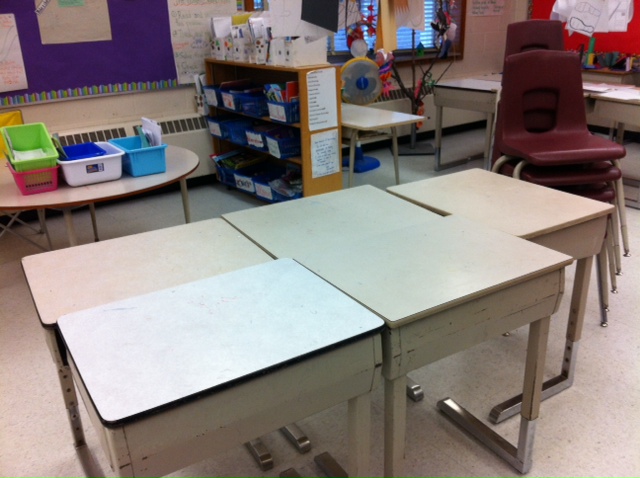
1) The desk arrangement in my classroom seemed to offer less space for movement, so I moved groups of desks together on an angle.

It still somehow feels like too many students at one table grouping…and sometimes group work can be challenging. This one I will have to re-think, perhaps making smaller groups and varying the sizes based on my students.

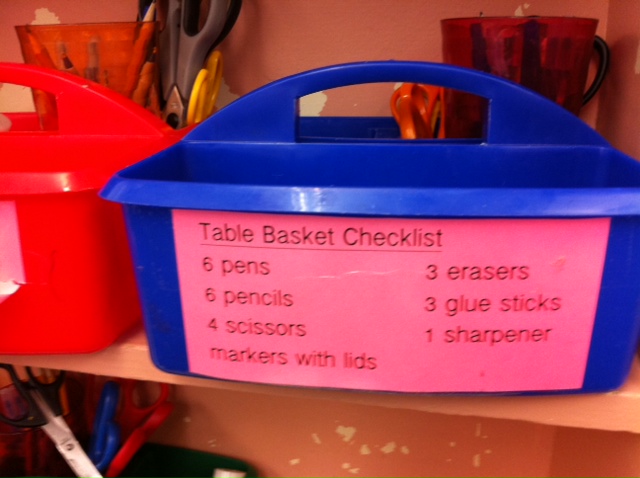
2) The table basket materials at each grouping often seemed disorganized, and I realized I had assumed that because my last set of Grade 4 students had been relatively organized and independent, this year would be similar. An unfair assumption on my part, given how unique each group can be! Therefore, I tried to add a list to these baskets so students could put materials back in the appropriate spot, thereby allowing them to access what they need.

This idea seems to work when the student assigned to table monitor checks the baskets throughout the day. I’m noticing my students are spending less time getting prepared and more time on actual tasks.

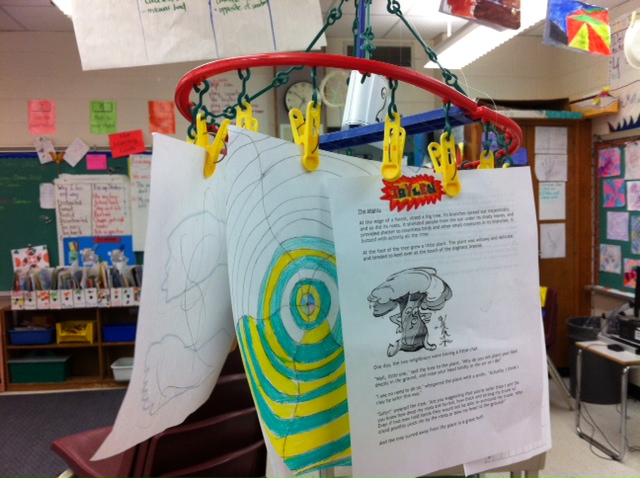
3) Many years ago, I noticed that the amount of unfinished work in different places made it difficult for me to know when my class needed “finish up” time. So, I hung hoops over each table grouping and when students were not finished, they would hang it on the hoop and return to it when they had time. It also helped me to see who might be struggling to complete work and when accommodations might be helpful.

This year, I’ve asked students to put their work on one particular hoop, so that they do not need to search several locations for their unfinished work. I find this method also more helpful for me, so I can support students who have unfinished work at each table grouping.

4) Many of my students seem to have self-esteem issues and it’s hard for them to reflect on what they are doing well. I’ve tried a variety of ideas over the year and most recently, we’ve added this “go-to people” list so that they can feel they have expertise and the ability to help others.

This idea is one I have to followup on and possibly add to, given that some students will not be able to share their expertise in a classroom setting (e.g., swimming)!

5) The last idea I wanted to revisit was reducing anchor charts to frames that can be used at the tables as a reference. This idea has been helpful for some of my students and I hope to continue using it for art activities as well.


The best part is, I have to spend less time trying to find places to hang chart paper! Next, I want to take the papers out of these frames and put them in a book that students can continue to refer to later, if they wish.

Now that I have completed my long weekend reflections, it’s time to head back to eating chocolates…


Photo of Roz Geridis

Wait time

The other day I was reading through Professional Speaking (our OCT magazine). I came across a little piece on wait time and it reminded me of a situation and comment from a colleague last year. I was a model classroom for a combined grade social studies lesson. While I was teaching my lesson, I utilized my wait time with the students throughout my lesson. Upon completion of the lesson, during our debrief session, the Instructional Leader highlighted my wait time. Which developed a fantastic discussion amongst the teachers. Some of the comments were about how long I waited, thought no one was going to answer, how quiet the room was, how proud and surprised many colleagues were about the rich classroom discussion developed due to enough wait time.

Wait time is something which is very important. The first few students who are ready to answer the questions are the students who may not need wait time and are ready to answer most questions. However, by using wait time we allow many students (if not all) an opportunity to process the question and gather information to answer the question. We also know that most students are ready to move on in the lesson and are not left behind still thinking about the question or answer.

A strategy I use to help keep the students focused is I asked the question a second time, the third time I will rephrase the question. Also, sometimes I may need to help activate the prior learning by using some guided questions. Every year I use wait time. Some years I have to wait longer than others but all my students know they need to be engaged and paying attention to the lesson and classroom discussions.


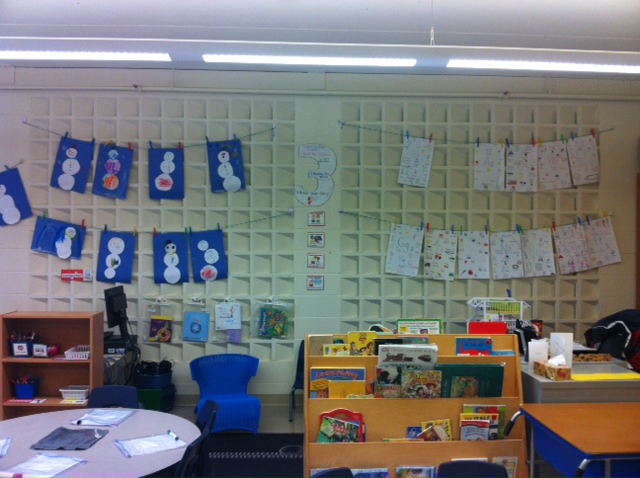
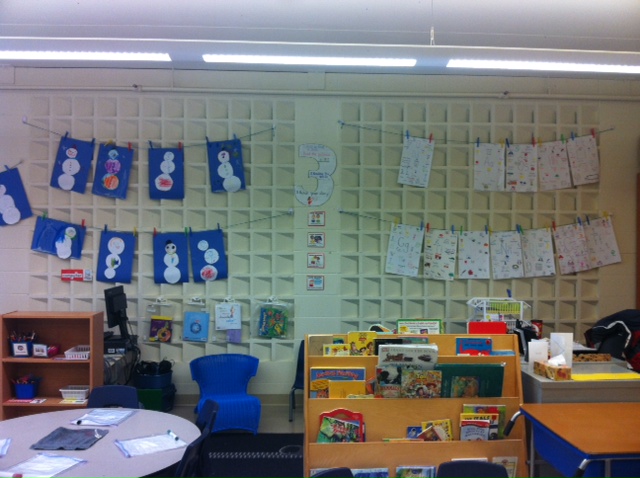
Classroom setup with drawings on the wall

Adding More Wall Space

I have often run out of wall space in my classroom. There is always so much I could hang up in my classroom, however, I often run of room. I never really knew what to do about it. But now, I do! Thanks to the teachers at my school, they have helped add more wall or hanging space in my classroom. In my classroom, I have many detachable hooks on my wall with string hanging from them. I used clothes pins to hang my students’ work, which allows me the opportunity to hang more of my students’ artwork. You can get these detachable hooks from many stores, including Walmart or Canadian Tire.

Here are some pictures of how it is set up in my room, and it allows me to hang a class’s worth of papers or artwork:

Photo of Carmen Oliveira

Equity Work: Difficult and Transformative

I am currently taking a Mentoring AQ course that is really impacting my understanding of equity in education and how I can work with my colleagues to explore this topic in our teaching practice.  I truly believe that it is necessary for all of us to take a step back and explore equity as it pertains not only to our classrooms, but to our schools, communities, and personal lives as well.  I have decided to share some of my learning and wonderings as I take a closer look at the “Equity Continuum” from OISE’s Centre for Urban Schooling and the TDSB’s Equitable and Inclusive Schools site.

OISE Centre for Urban Schooling: http://cus.oise.utoronto.ca/

TDSB Equitable and Inclusive Schools: http://www.tdsb.on.ca/_site/ViewItem.asp?siteid=15&menuid=570&pageid=452

Just some food for thought…

Fairness does not mean everyone gets the same. Fairness means everyone gets what they   need.”-Rick Riordan, The Red Pyramid

This very simple and yet profound quote set off a critical unit of inquiry around equity in my Grade 6 classroom last year.  Over the span of a few weeks (and subsequently the school year), we explored, discussed, questioned, challenged, and brought to light this important understanding that, in order for everyone to experience success and a strong sense of self, they would not necessarily need to be treated exactly the same.  The best part of this experience was my own journey as I grappled with my previously constructed schema around equity and fairness in all aspects of my life.

I vividly remember coming back after a supply teacher had been in the classroom during this period of inquiry and having my students astonished and fuming at her reaction when a student asked for extra time and a quiet space to complete a task.  She said she had to be fair and that everyone would need to hand it in at the same time.  When the students let her know that fairness is when they have the right to learn the way that is best for them to be successful and in our classroom that means people may need different treatment, she completely disagreed in a manner that undermined what they had come to understand as being “fair.”  Our conversation was lively, to say the least, and their questions were ones I have come to ask many times since then: “How can we get people, especially in education, to think about fairness as a way of everyone getting what they need?” and, “How can we create a positive space where teachers, students, and parents question, challenge, voice their own opinions, and feel that they have the right to self-advocate?”  (Theirs were in kid-friendly language, of course).

After looking at the “Importance of Equity in Education” from the TDSB’s Equitable and Inclusive Schools page as well as the “Equity Continuum” from OISE’s Centre for Urban Schooling, I came to realize that, for me, the reasons that make equity work personally and professionally difficult are the same as those that make it transformative and fundamental if we are to move forward in education.

Whether it be with friends, colleagues, mentees, students, or parents, I find that when a conversation begins to challenge the status quo, challenge stereotypes, or involves having to critically look at ourselves, our beliefs, our expectations, or our practice, discomfort can quickly build up and the outcome takes the form of people shutting down, becoming outwardly upset, and unfortunately not evolving or learning from the experience.  I feel that at the core of this difficulty in equity work is the reality that all of us are complex beings having been influenced on so many levels in so many ways by so many people throughout our lives therefore often making us oblivious to how our own story is projected in what we think, say, and do both personally and professionally.  We seem to jump at the opportunity to try and convince others to take our viewpoint and find it easier to criticize those who do not share our beliefs.  However, looking at and inside ourselves is a whole other story.  Thus, the difficulty lies in welcoming discomfort as we tread the path of looking at equity not only by having others explore it but in also working through it ourselves.

The beauty and transformation in equity work comes about when we all courageously welcome the discomfort that arises in questioning our belief system as it pertains to our own culture and that of our school, classroom, and global community.  When we are willing to question the status quo, challenge stereotypes, critically think about how our experiences and schemas influence our pedagogical practice, hold all students (and anyone connected to education, for that matter) to the highest standards and expectations regardless of race, ethnicity, religion, gender, linguistic competence, etc., we begin to pave a path toward open-mindedness, acceptance, respect, and transformation not only within our personal lives but in our professional practice as well.  When I began to take a deeper look at the Equity Continuum, I came to the realization that, even though I honestly believed I understood equity and had infused it in my teaching, there were so many other layers to it that I had not yet begun to peel back.  In the world we live in today, this may be one of the most important questions we can ask ourselves as educators, parents, leaders and global citizens, “How will we work to ensure that everyone gets what they need to live a dignified life?”

I now know where my focus on equity will take me: unlearning what I have over time come to believe as the truth when it does not support the idea that everyone can be held to the highest standards and expectations regardless of their cultural background, race, gender, socio-economic status, etc.  I’m willing to get my hands dirty as I explore the topics, ideas, beliefs, experiences, and realities that continue to shape my understanding and practice of equity within our education system.

As Will Durant commented, “Education is a progressive discovery of our own ignorance.” I chose this quote because it can provoke discomfort by having us admit that we may be ignorant while also noting that the path to discovery is progressive which to me signifies that learning happens when we entertain that which may make us uncomfortable.  Learning is messy business.  That’s what makes it transformative.



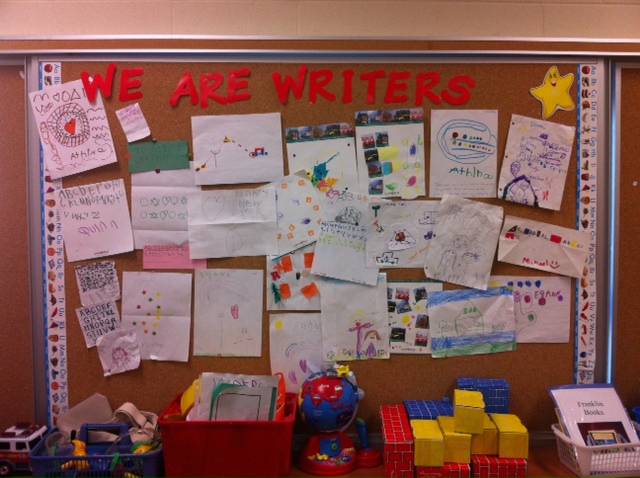
Writer's wall bulletin board

Writer’s Wall

Do you ever wonder what to do with all the wonderful pictures and cards that students create for us teachers? Do you ever guilty putting pictures in the recycling? I know I have! And I have found a solution for you…

Create a We Are All Writer’s board. On one of the bulletin boards in the classroom, I have posted student work on this wall. This is such a wonderful idea because students get to show their work off to the world, it is all in once place, and students are recognized for being writer’s no matter what they are writing/drawing. My students love to create pictures and cards for me, or for others in the classroom, and having this wall is a great idea!

Here is a picture:

Photo of Erin G

New Years Equals a New Leaf

     I know there are lots of clichés around the start of the New Year and I have to say that I believe in every one of them. As far as teaching is concerned (in my experience), there are guaranteed to be two magical times of the year where everything goes smoothly and you feel on top of the world. The first is the very first week of school in September where your bright-eyed students sit complacently hanging off your every word. The second couldn’t come at a better time and occurs upon the return from the winter holidays. New Year’s coincides with a shift of cosmic, spiritual or divine proportions and seems to permeate the psyche of even hormonal eighth graders. It is a small window where people stop to take stock of the past and visualize the future.
     As a teacher, this “pause” is a golden opportunity not to be squandered. In this momentary blip (which might last a few days if you’re lucky), it’s as though students have suffered a mild form of amnesia. Apart from being slightly annoying from a pedagogical perspective, it nonetheless allows you to chart a new direction. Changing up the look of your classroom with new displays, layout and seating plan is refreshing and energizing.
     A fresh start has a lot of appeal on many levels not only for you the teacher but for your students as well. Although it’s often said that students thrive on routine, it’s also true that change, spontaneity and an element of surprise go a long way as well. Don’t neglect the fact that your students might also be affected by the psychological hype surrounding New Year’s. I would bet that many of them are thinking about their own ambitions and might have something specific that they would like to achieve. Others might need a blank slate and a chance to start over with you. Any way you look at it, it’s good to capitalize on the energy and momentum surrounding the New Year and move forward with positivity, renewed energy and vigour.

*Some suggested New Year’s Activities:
Have students write down a goal they wish to achieve by the end of the year. At the same time on another sheet of paper, have them envision some of the difficulties they might encounter and write a short encouraging letter to themselves. This teaches them how to set realistic goals, anticipating challenges. At some point, have them read their letters to themselves and compose another to also be opened in the near future. Repeat the process until the final time when they re-read their goal an have them assess their progress.

On a small piece of paper, have students write down something they do not want to carry with them into the New Year. It can be a bad habit, a personal quality or negative situation. In real practice, you would toss your paper into a bonfire symbolizing that you are leaving your burdens behind. This is obviously not an ideal method of disposal for a classroom situation – something equivalent might be the shredding machine…

Making the Change

As my Grade 3 LTO came to an end on a Friday, and my new Kindergarten LTO started the following Monday, I needed to change from Grade 3 mode, to Kindergarten mode in just a weekend’s time. As I have taught Kindergarten before, I knew what to expect. However, I knew it would take some time for myself to become familiar with the new classroom routines, the new students as well as the Kindergarten program that the teacher had already implemented. Because I will only be working this LTO for 3 months, I felt it was really important to make the transition as smooth as possible and to continue with the type of program the teacher had already implemented. I felt this was extremely important to keep some sense of normal for the students, as the adjustment to a new teacher would be more than enough for them.


The Week Before:

  • I felt extremely lucky that my principal gave me some extra coverage time the week before I started my new Kindergarten position to go into the classroom for 2 half days to meet the students, meet some of the parents and see the program in action. I felt this was so beneficial not only for me, but for the students as well
  • Students got a chance to meet me, and they knew a head of time that I would be their new teacher, so that hopefully eased  the anxiety and helped the transition from one teacher to another
  • I was able to see exactly how a day in this Kindergarten classroom was run

The Week I Started:

  • The week I started teaching Kindergarten, the students were very excited since they had already met me. I came to school with students bringing me pictures they created as well, showing/telling me how excited they were I was their new teacher
  • I hardly changed anything in their room or the program, and just continued teaching what the current teacher had been doing
  • I started giving some diagnostics to the students so I could really see where each of my students were at
  • As I have a lot of ESL and ELL students in my class, I also downloaded a translation app on my iPhone, which helped me interact and speak with my Spanish speaking students
  • We also reviewed our classroom rules and created some carpet rules, to make sure students knew what was expected of them and to show them that I knew/was familiar with the rules they already had in place in the classroom
  • I wrote an introductory letter home to parents, so they know who I am, what my teaching experiences are, and how they can communicate with me (which I got a lot of positive feedback from).


Overall, I feel the transition was quite seamless, and I think the main reasons are because:
1) My principal gave me time to go into the classroom before I officially started my new position, in which I was able to get to know and start the bonding process with my new students

and

2)  I kept the program the same, so the students did not have to adjust to too many things at once. With young students, especially Kindergarten students, I feel it is important not to change everything because it will confuse them and may take away their sense of community/ownership that has already been created in the classroom.

Photo of Roz Geridis

Connecting with Students as a Prep Teacher

It has been an interesting start to the school year. I have a change in my teaching assignment and for the first time I have ½ day of prep coverage. Getting to know all the names and developing relationships with over 100 students I see 80 minutes a week has been a challenge. Especially since most of my teaching position has me in the gym (no desks and regular seating plans).

To help me get to know the student names – I have the students change into gym clothes. At the beginning of the year, I had the students sit on the floor or bench in the gym and went through the class list calling out the student names and putting a face to the names. As the year has progressed, I have moved to having the students come up to me and showing me their clothes. I have them share their last name which still gave me time to get to know their names. To move things even faster, the students who have brought in their gym clothes regularly go a change right away and say hi to me as they come into the gym.

The student teacher relationship has taken some time to develop. I try to find a way to connect with each student. Some students, I ask about their extra-curricular activities (sports, dance, etc). Once I know what the student participates in, I try to ask the student about their extra-curricular once a month. For my ELL or students who do not have extra-curricular, I ask about their weekend or break plans. Sometimes, the kids go to the movies and I ask about the movie s/he saw.

Developing the relationships have really helped with the classroom management during the prep periods. The students have appreciated my effort to get to know them a little better and are making a larger effort to listen and to do their best during class time. It is great to have the kids walk up to you in the halls asking when we have your class again. I know some of that is because it is gym but also I have some classroom prep which kids are also inquiring about. Making the connection with students is something that helps to make a difference in student education.


Photo of Alison Board

Making Adjustments

As I read the previous additions by fellow bloggers, I look for connections to my own classroom, and what I see is the constant of change. We are all working with different age groups, but consider similar topics, such as adjustments to integrate technology, outdoor education, or making learning meaningful. Like others, I am continuously reflecting on my practice and making adjustments. As I am teaching in a new Full-Day Kindergarten classroom, there are many changes that the ECE and I have made in the last 8 weeks.

In September, our days were focused on establishing routines and building a community with our 27 children. The biggest routines were entry and dismissals, learning centres, and independent reading/quiet time. Then, as the children settled into these routines, we constantly re-assessed our schedule. We found that our children are so social, that independent reading is more like a book club with sharing and discussions. So, we now lead meditation and quiet breathing and stretching exercises after our reading block. Some of the children struggle with stilling their minds, while others have embraced it and look forward to this part of our day.

Adjustments to the classroom are also a constant in FDK. As interests in certain areas increase or wain, I change the spaces to accommodate the children’s interests and needs. I also change the materials. The basics in each learning centre remain the same, such as the blocks in the building centre, however, I may add recycled materials, clipboards and paper, or figures to encourage new relationships with the materials.

The planning has become one of the most challenging aspects of the FDK program, as there is no time for the ECE and I to sit down and exchange ideas. I continue to plan weekly with my Kindergarten teacher partners, then I convey ideas to my ECE while we are in the classroom together. I started off the year with my weekly plans in a binder on my desk (as I always previously used them). Then, I realized that it was more beneficial to enlarge them on an 11 x 17 inch page and hang them in the centre of the room where the ECE, and the Special Education Assistant can access the daily plans with ease. We are also using a web diagram to document the big ideas that are emerging in the classroom and the connections to the curriculum, which is visible to all.

Every day at our gathering circle, I start by asking the children, “How do you feel today?” As the children share their responses, I get a better understanding of what adjustments I can make to ensure it is a successful day for all of us. Making adjustments is just another way of being a reflective and responsive teacher.

Student Led Conferences

The past 2 weeks, I have been preparing my students for Student-Led Conferences, since the Progress Reports were sent home, and conferences were set for this past Friday.

I have never done or seen Student-Led Conferences before, and what an amazing experience it was. Yes, it does take a lot of prepareation for the students, but after a lot of feedback, the parents really enjoyed it.

What Are Student-Led Conferences?
Instead of the formal Parent-Teacher Interviews, my school board has taken the approach to doing Student-Led Conferences, which enables the student to take full responsibility for their learning, and they choose things to share with their parents that they are most proud of and some things they feel they need to work on. They also choose a Learning Skill that they think is the best, as well as a Learning Skill that they need to improve upon.

Preparing My Students for the Conferences:
Two weeks prior to the Student-Led Conferences, we began preparing ourselves for these conferences. It does take a lot of time and preparation, but the outcome is wonderful! First, I laid out all the work my students have done so far. I explained to students that they would look through their work and choose 2 things they were most proud of (could include anything but most were Social Studies Tests, Math Tests, Journal Entries, and Daily 5 Work), and 1 thing they felt they needed to improve upon. Once they chose their 3 items, they were given 2 “star” papers where they wrote why they were most proud of this pieve of work and why (they had to be specific-because they looked at the Word Wall to help them spell, they studied really hard for a test, or they used the Success Criteria to help them in their writing…). Then, students were given one “Next Steps” paper where they wrote about why they feel they needed to improve upon that piece of work, and what they can do next time (use the Editing Checklist, use the Work Wall, etc.).

As a class, we then reviewed the Learning Skills and what each skill means. We brainstormed (and reviewed) some examples about what each Learning Skill looks like here at school. Then students chose which Learning Skill they felt was their best, and explained why using examples, as well as choosing a Learning Skill that they needed to work on, and explained what they can do to improve upon this Learning Skill.

Once all the writing was complete, I created a script that students practiced so they knew exactly what to say, and when to show/explain their work. For many days, students would practice reading this script and showing their work independently, to a partner, in a group, and even their Reading Buddies. We encouraged students to take on different roles as well, to prepare them (i.e. one student would be a mom, one would be a dad, and the other would present to them).

When it came time for the Student-Led Conferences, the students ran the show. They took full responsibility, and THEY were the ones explaining to parents why they need to improve upon the work they chose, and even asked how their parents could support them at home. I feel that the student saying this to their parents is much more powerful than if I were the one saying it. Parents really enjoyed seeing their child’s work, and were excited to come up with ways that they could support their child at home. Overall, the Student-Led Conferences were a huge success at my school, and it was really great for the students to be so enthusiastic about the work and learning they have done thus far!

Student-Led Conference Script:

Introductions: “Hello, Ms. Pryde. This is my _______ and my _________.”

Explanation about the Conference: “I am taking responsibility for my learning. Today, I will be showing you the accomplishments I have done so far at school. I will also be showing some work that I feel I need to improve upon, and will be asking for your input about how you can help me in reaching my goals at home.”

Showing of the Work: “This is one of my best pieces of work because __________________.

I also chose this piece of work as something that I am most proud of because __________________.

I feel that I could improve upon this piece of work because _____________. I think I can improve on it by __________________________________.

I think my best Learning Skill is ________________________ because _______________________________________________.

The Learning Skill that I think I can improve on is _______________ because _______________________________________________.”

Conclusion: “Thank you for coming to my conference. Is there any questions or comments for myself or Ms. Pryde?”