As my all time favourite author Dr. Seuss said, “Today you are you! That is truer than true! There is no one alive who is you-er than you!” If you are like me at all, you have difficulty accepting compliments from colleagues, administrators, students and/or parents for the commitment that you put forth in your role as a teacher. Yet we are open to criticism each and every day. Why is that?
Well this past weekend while I was doing some work in my office area I looked at the bare walls around me and thought to myself. Today I am going to hang up my diplomas that I received over 30 years ago. Yes, that is right, they have never seen daylight, never been hung and thus never been admired for the accomplishments I had reached. I scoured through a variety of storage bins and found them still in their original holder from the university. So off I went to get them framed. Within a few hours and a few extra holes in my wall, I sat back and admired my accomplishments (albeit a few years later). What I hadn’t expected was the renewed sense of pride and enthusiasm that followed that small action of recognizing my work.
As we know ever so well, positive feedback, sincere compliments and celebrating small and big successes with our students is an essential component to helping students be triumphant in their educational journey. So to it is for teachers. Take the time and not only smell the roses on your grand tour, pick a few and put them on display!
“Unless someone like you cares a whole awful lot, nothing is going to get better. It’s not.”
Here’s a snippet from casual conversations playing out in school hallways everywhere.
Pick the lines you’ve heard or have used before.
Photo Credit: WFIU Public Radio
“How are you? How’s it going? What’s up? How’s it?”
“Good. Great. All good here. Meh. No worries. Busy. So busy. Cool. Not too bad. OK. Could be worse.”
What would you do if someone answered honestly saying; “Not good. I’m being bullied by a group of students. I don’t like my body. My parents are divorcing. No one likes me. I feel alone and sad all of the time”? Would you pull out the motivational clichés and tell the person to toughen up? Would you walk away saying, “hope you’re OK?” and “things will be better with time” or would you inquire further? Would you feel comfortable finding out the truth? Do you have enough emotional energy in the tank to make a difference?
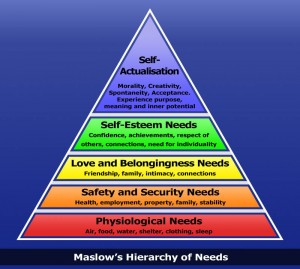
Regardless of years of experience, many new teachers feel uncomfortable, even under-equipped when facing mental health issues in the classroom After all, we’ve been taught pedagogy, not psychology, in teacher’s college. That’s not completely true. We did learn about Maszlow’s Hierarchy of Needs, but that was so long ago, it was only a small series of lessons/readings, and besides we have lessons to deliver.
In this post I want to share a side of education that does not get enough attention. I’m talking about mental health in schools.
Understanding and supporting students with mental health issues is as important in our classrooms as the curriculum we are instructing.
What keeps educators awake at night are the the same daily problems being encountered in classrooms around the world. I am a witness to how mental health issues are scarring education. There is a recurring generational amnesia in the hallways of educational institutions and it’s time we do more about it.
That may not seem like a light and lively subject for conversation, but discussion in all of these areas is crucial as it pertains to making our classrooms safe and inclusive learning spaces. How are you dealing with issues like this in your classroom? Here are a few ideas that have helped in my learning space.
In my classroom we have worked hard to develop a safe space for all learners. This means that we all try to support each other when times get tough. We try to use the idea of Ohana (family) where no one is alone or forgotten. We have instituted Mindfulness Moments as brain breaks. Students need time to consolidate their learning, and to be still/quiet for a few minutes. This little break in the action calms the mind, reduces anxiety and teaches students a valuable de-stressing skill.
In my classroom, there is always a little something to eat. It is amazing how a granola bar, a juice box, and some crackers can help a student who has not had enough to eat to start the day. During tests, quizzes or quests, as we call them, we have “test crackers”. They’re tasty, crunchy, and important to helping students relax during assessment tasks. I have found that when a student has something to eat, albeit very small, they are more relaxed and perform better.*
Teaching is always new! With a new group of students, fresh reflections on practice and the opportunity to start from scratch, as it were, the start of the school year provides teachers and students alike the opportunity to create new beginnings every year. Knowing this, what might some important considerations be to make it a great start? Chapter One of The Heart and Art of Teaching and Learning: Practical Ideas and Resources for Beginning Teachers highlights four important themes for success: connecting with students, passion for teaching, attributes-based approach and importance of school culture. I would like to focus this reflection on the importance of connecting with students within the first 20 days of school as a means to establish an authentic relationship with students that fosters trust and inspires a willingness to take risks within a safe learning environment.
Renowned poet and author Maya Angelou once said, “I’ve learned that people will forget what you said, people will forget what you did, but people will never forget how you made them feel.” This profound sentiment holds true for teachers and their relationship with students in that when students feel respected, safe and cared for, the experience of learning is enriched. The following are five practical ways for teachers to build authentic connections with their students at the start of the school year:
1. Be authentic. When teachers model what it means to be an authentic learner – mistakes and all, students are then encouraged to take risks without fear of reprisal. Let your model of authentic learning influence students to do the same. This form of transparency sets the tone for fostering meaningful connections between teachers and students.
2. Ask students about their needs and listen. Validate student voice by positioning them as the experts on themselves. Invite students to share their learning needs and the things that you could do as their teachers that would support their success and commit to doing them. Conducting multiple intelligence and attitudes and dispositions surveys are great ways to begin the dialogue for students to articulate how you can support their learning and their level of self-efficacy.
3. Explore student interests. As teachers we all need to cover the curriculum but viewing the curriculum as a launching pad as opposed to a landing pad can invite student’s interests to take centre stage in the teaching and learning process. Ask students about their interests and find creative ways to invite further inquiry into them while exploring the curriculum at the same time.
4. Learn the students. In addition to the information that can be found in student records (i.e. OSRs), commit to learning more about your students in meaningful ways. Pronouncing student names correctly is important way to let students know that they are valued. Challenge yourself to learn at least five non-school related facts about each of your students. This can help to build a positive relationship and validate their experiences outside of the domain of the classroom. Finally, being aware of students personalities (i.e. introverts, extroverts, etc.) will inform how to relate to them as well as setting the conditions of the classroom experience.
5. Invite to student voice by fostering a reciprocal relationship with your students. Nurturing a collaborative learning environment for students does not merely mean giving students the opportunity to collaborate with each other, but it also means positioning students as collaborators with you. Partner with your students to design the learning space and learning opportunities. This fosters student ownership in the teaching and learning experience and empowers students to be meaningful contributors to the class. When you invite their voice in classroom decisions, ensure that it is validated by action on your part. Leveraging positional power in the classroom creates space for a more meaningful connection between students and teacher.
As teachers we are in the business of supporting students success. Fostering meaningful connections with students goes along way in promoting both student achievement and well-being. When students know that their teachers authentically care about them, their willingness to learn will support their ability to do well. Starting the school year with students in mind will set you on a solid foundation for building upward. Make it a great start.
If you are feeling at all like me (due to the amazing summer I had), you can best be described as refreshed, energized and motivated to begin another academic year. Excited to see those fresh faces arrive into your classroom regardless of what academic, emotional or socio-economic concerns they have. What occurred over the last two months that has brought me to this healthy status? The answer is BALANCE. Balancing your lifestyle naturally brings your entire self into harmony. Of course there is only one time in a teacher’s year where that time frame is available. So what do we do to keep that balance in place and thus keep ourselves healthy for the remaining twelve months?
The beginning of an academic year is one of the busiest and demanding on teachers as everything from long-range planning, classroom management, parent connections and the endless forms to be collected occur. Thus it is critical that, not only are classroom routines developed early but also that teachers build in or continue on with incorporating routines that bring balance into their lives. Summer months should not and must not be the only time in teachers’ lives where they do the things they love or spend time with the people that are most important to them. Of course this is easier said than done. That does not make it any less important. Keep the balance going as the healthier you are, the healthier your classroom will be.
The elementary school that I teach at is a K-8 school with approximately 540 students. It has grown over the century with new additions, since its original build in 1923. I have only known the school for the past three years that I have been teaching there. So I consider the school to be diverse with many new Canadians, mostly from Bangladesh. It is also higher needs in terms of the challenges students face for success, according to the Learning Opportunity Index. The family income has declined for families attending the school, as demonstrated by the data. Many of the parents work part-time, multiple jobs, and through the evenings, nights, or on weekends.
What I found interesting to note, is that teachers who have taught at the school for more than ten years, many for more than 15 years, have difficulty seeing the demographics of the school as they are. They continue with the same fund raising projects as they always have, yet lament that there is less participation or interest from the students. They continue to book trips that cost more that an hourly wage that most families would make, then are disappointed in the attendance. It is only in the past year that they have been questioned about the cost required for students to attend their own graduation celebration. The teacher response in regards to how they are accommodating a student population with a decrease in family income, is to encourage students to come forth if they don’t have the funds and the staff will address it or provide the funds, based on the individual situation.
Recently I was talking to a teacher from another school board about equity and teacher bias. She recommended the ETFO publication, Possibilities: Addressing Poverty in Elementary Schools to read. It is an excellent resource. It not only encourages a change in mindset by educators about assumptions and biases in regards to poverty, but it provides strategies and literature connections to address the real needs of students for academic success and well-being. It also provided information on how to engage parents and the community of a lower income status.
According to TDSB, “Educational research has demonstrated that children from lower income families face more significant barriers in achieving high educational outcomes.” It is essential that we as educators are aware of these facts and barriers, as well as the strategies and supports necessary for the students that are in our schools right now.
To quote my favourite author Dr. Seuss, “Unless someone like you cares a whole awful lot, nothing is going to get better. It’s not.” As the year is rapidly coming to a close it is so easy to reflect on what you did not get accomplished, how you wish you had more time, if only …. The reality is that for the last ten months you have given everything that you have to a group of students, their families and your school community. You have sacrificed your personal health at times, your family time and your passions in order to provide each and every individual under your care the best opportunity to learn and evolve as best they can.
It is now time to allow yourself to take a deep breath, look in the closest mirror and smile as you celebrate the relentless commitment you have put forth in your role. It is not easy for teachers to do this as we are by nature perfectionists that do not seek out the limelight. As the summer break quickly approaches it is important that you take the time that you need to bring that balance back into your life (family, friends, passions) so that in a very short two months from now, you are prepared to do it all again!
This blog is based on a real life scenario that I was fortunate enough to be a part of both on a personal and professional basis. It truly reminded me just how important our teacher/student relationships are as you never know when your kind word, out of the ordinary effort or simply just being there will make a difference.
On a late Saturday afternoon there was a knock on our home door and to our surprise, there was our very distraught neighbour who just needed someone to talk to. Over the course of the next hour this young mother poured her heart out to both my wife and I. During that time she asked us to read a series of letters that obviously were very important to her.
As we scanned the pages it became clear to us that these letters were from a past teacher who took the time to write to this young women while she was in her classroom. The key message that surfaced on each and every page was that this young woman was an amazing person who had the potential to be herself and that alone would make her great. It was clear that she had experienced trauma in her adolescence and did not receive the necessary support that she should have had. Through teary eyes, this distraught woman just kept telling us how important this teacher had been in helping her get through some very dark times in her life. In fact, she owed her life to her.
Although these letters were almost 20 years old, we could tell by the wrinkled paper and tear stain marks, that she had went to these words of support many, many times over the past two decades. Once again, she was going to this teacher for support in these times of hardship.
As a teacher, we are merely a step or two on a child’s life journey. Yet that time we spend with each child is one of the most influential events they will ever experience. It is our responsibility to ensure that memory is as positive as can be.
So often as educators, we feel like we are just failing. It is a common feeling, especially among new teachers. The term “teacher burnout” is often used to describe the exhaustion, both physically and mentally, that comes from teaching. Teacher burnout is especially common in the first few years of teaching. Teaching in Ontario is tough. Everyday you are tasked with planning and accounting for children’s lives from 8:30am to 4pm, give or take. That in and of itself is an exhausting thought. Add to it the curriculum you need to cover, the parents who want to meet to discuss their child, the IEPs that need to be updated, the IST you have to attend, the administrator that is scheduling your Teacher Performance Appraisal, the ministry and the school board coming down on teachers and public sector workers in general, and the overwhelming feeling that the public hates you! It is enough to make you consider another career. So why do we do it? We do it because we love it – plain and simple.
So when things get tough, it is so important to take care of yourself. When you are struggling with content, seek help from others – we aren’t in this to reinvent the wheel! Reach out and find a “pro” that can help you out. Often school boards even have teachers released from their teaching duties to come and work with you 1:1. Take advantage of this!!
You can also turn to the internet (which is possibly what lead you here!). There are countless blogs, Pinterest Boards, and Twitter PLCs, just to name a few places to start. Building your confidence as a teacher can be as simple as finding a simple lesson idea that supports your current learning goals and trying it out. Even if you crash and burn in the middle of the lesson – you can use it as a personal learning experience and reflect on it! Everything we do as educators contributes to our own professional learning. That includes every failed lesson, and every activity planned and abandoned half way through because they just weren’t getting it – these are all ways in which we as teachers evolve and get to know our students.
Each time a lesson flops, don’t be so hard on yourself. If every lesson we did went swimmingly, it might indicate that we aren’t pushing our students hard enough. If every inquiry you did went exactly as planned, perhaps you are guiding your students too much. It is the inquiries that fly off the rails and go in the exact opposite direction you had hoped that really challenge your students and yourself. It is the lessons that you abandon half way through and change course to meet their needs that make you an amazing teacher. Embrace these moments – they will never not be there! Learn to enjoy the ride and if things don’t work out, there is always tomorrow.
I have had my own fair share of days where I felt like it just wasn’t working. I have had weeks and even entire years where I have felt like maybe teaching isn’t for me. But it is when you have that one class, that one student, that one golden moment when everything you have been working for comes together and you see a child show compassion, or empathy, and you know why you got into this business of educating children: the payback the students give you is more than any paycheck you will ever receive, it is more than any World’s Best Teacher mug you will ever get (I may have a shelf in my kitchen cupboard full of these!) – that feeling you get when you know you have made a difference makes it all worth it. Knowing that if you hadn’t been there, if you hadn’t known that child, that might not have happened. You are making a difference everyday and that is what keeps us coming back no matter how tough the job gets!
It is important to note however, that through the course of teaching, the wear and tear of your emotions can be quite difficult and devastating at times. Keep a close watch on your mental health as this is often something teachers struggle with (and rightfully so). When a child is struggling, you struggle along with them. When we walk out the door at the end of the day, no matter how hard we try, it is impossible to leave all of them there. You will find yourself worrying about if a child has enough to eat at supper time while you prepare dinner for your family, or you will wonder if your students are going home to a safe environment. It all adds up. Access your Employee Assistance Program if you can. You will often have access to a counselor that can help you with maintaining proper mental health. Do this early and set yourself up with healthy routines. We don’t plan to teach for a few years and then burnout, but if we aren’t careful, it could happen!
With PPM150 having had some time to settle into schools, there are blog posts and parent forums popping up all over with discussions about food options being offered to students at schools. While the PPM does outline expectations for what foods can be offered to students at schools, many teachers provide food in class as a reward for good behaviour, sharing candies and snacks as curriculum connections (graphing M&Ms, making Rice Krispie Squares for measurement, blowing a bubble with bubblegum for procedure writing, etc.). Websites like Pinterest are full of ideas that involved engaging students with food and candies.
As a mom of a child with a food allergy and significant digestive struggles that require a very strict diet, I am often overwhelmed when she comes home from school to tell me about all of the special snacks she had that day. It is next to impossible for a 6-year-old to say no to a cupcake, so we as the educators need to make those healthy decisions for them by simply not offering them at all. With poor eating habits and obesity on the rise, we need to take advantage of the time we have when children’s diets are completely dependent on the decisions of adults and only provide them with healthy options.
I have had classes that “earned” a positive behaviour reward and we opted to have a balanced breakfast reward where the first period of our day was spent talking about healthy breakfast choices and then we had a balanced breakfast together complete with wholegrain cereal, milk, fruit, and even some veggies! They loved it because it was a snack and it was out of the ordinary!
Think about the value of what you are giving your students both nutritionally and educationally. If you are giving candy or something that is not a healthy choice, ask yourself if there is a healthier option you could give that would get the same result (i.e., if you are teaching procedure with bubblegum, could you teach procedure with making oatmeal, or salad, or something else that is healthy?).
Wellness is an important focus for our grade 6/7 classroom and is also a hot topic school and board wide. It encompasses so much of what we do and who we are that it can be difficult to create a specific lesson for “wellness.” In The Heart and Art of Teaching and Learning book, it states, “Getting to know your students is a big part of your success as a teacher” (p 34). This is an important message, as it encourages teachers to be responsive to the specific needs and interests of their current students and not apply generic strategies or lessons.
I recently read a suggestion that a leader should learn and know at least 10 things about a person. This would be a good tool for teachers to use if getting to know the individual needs and interests of their students is challenging for them. A simple notebook with a list under each student name can be filled in as a teacher gets to know new students. I know that for some students I would easily have a list of 20 facts, while there are a few that I would struggle to get 10 for! The Class Database activity (p 39) could be easily modified with questions that involve students’ needs and interests around wellness, to gather some initial data on your students. I have also used a Multiple Intelligence quiz to determine preferences for students and used them (music, nature) throughout the year to guide my plans and make my lessons or activities more inclusive, especially when some students are feeling less confident with content or skill development.
Leading up to Bell Let’s Talk day, we viewed the commercials on YouTube and worked in groups to discuss the effective use of language and its influence on attitude and acceptance. During a language activity with the book, The Man With the Violin, students recognized the sadness of the child and made similar connections from their own experiences of being rushed through their day. We went for a class walk to a nearby park with no activity planned, but to enjoy whatever we noticed. Students were excited to Tweet about their own understanding of wellness using the Bell Let’s Talk #, making suggestions that were accessible and real for them such as “write in a journal” or “talk to an adult”. They are currently making lists of what inspires them and what brightens their day. These activities and discussions continue to be integrated through subjects like language, health, art, music, and science.


 does not get enough attention. I’m talking about mental health in schools.