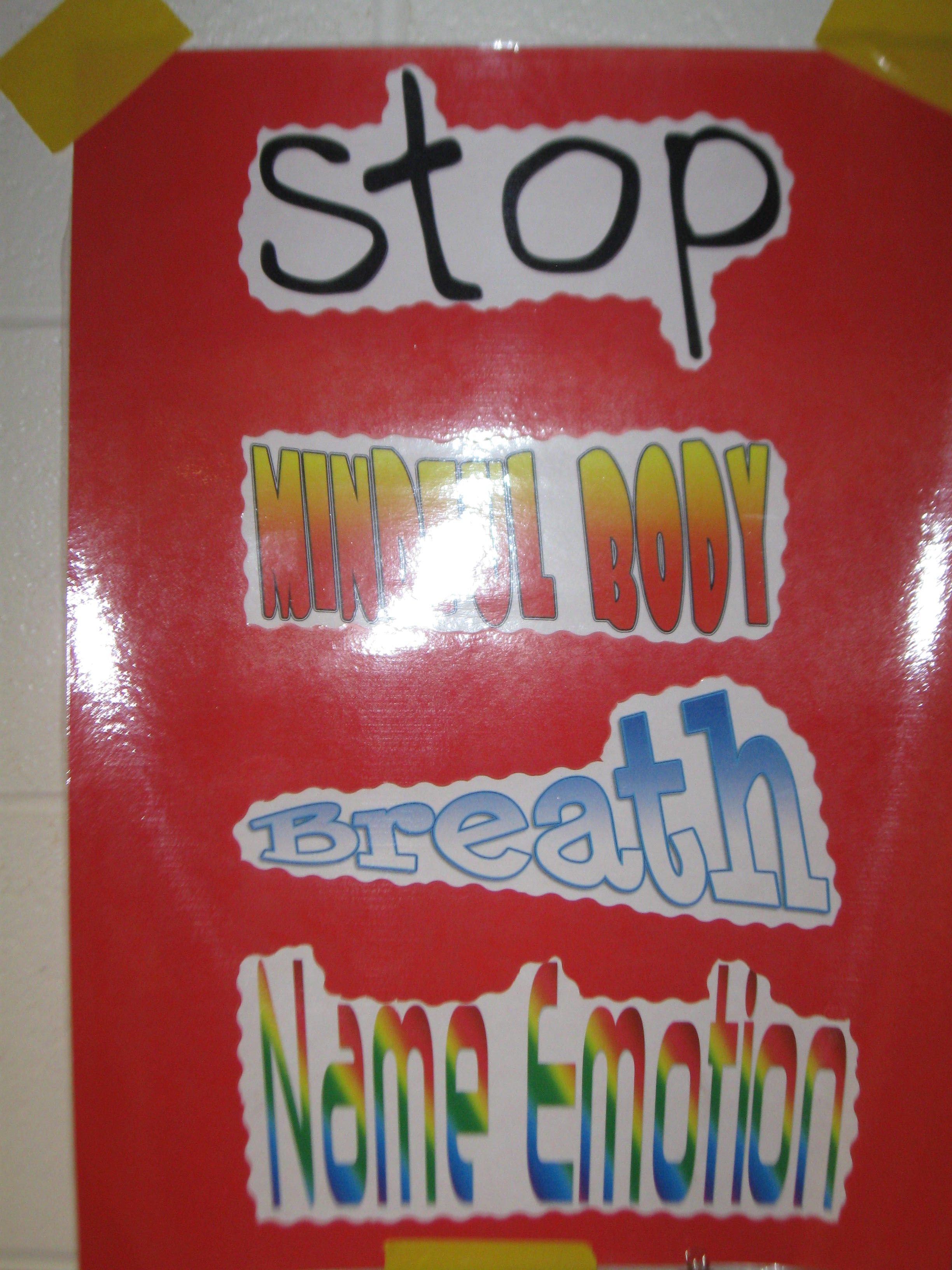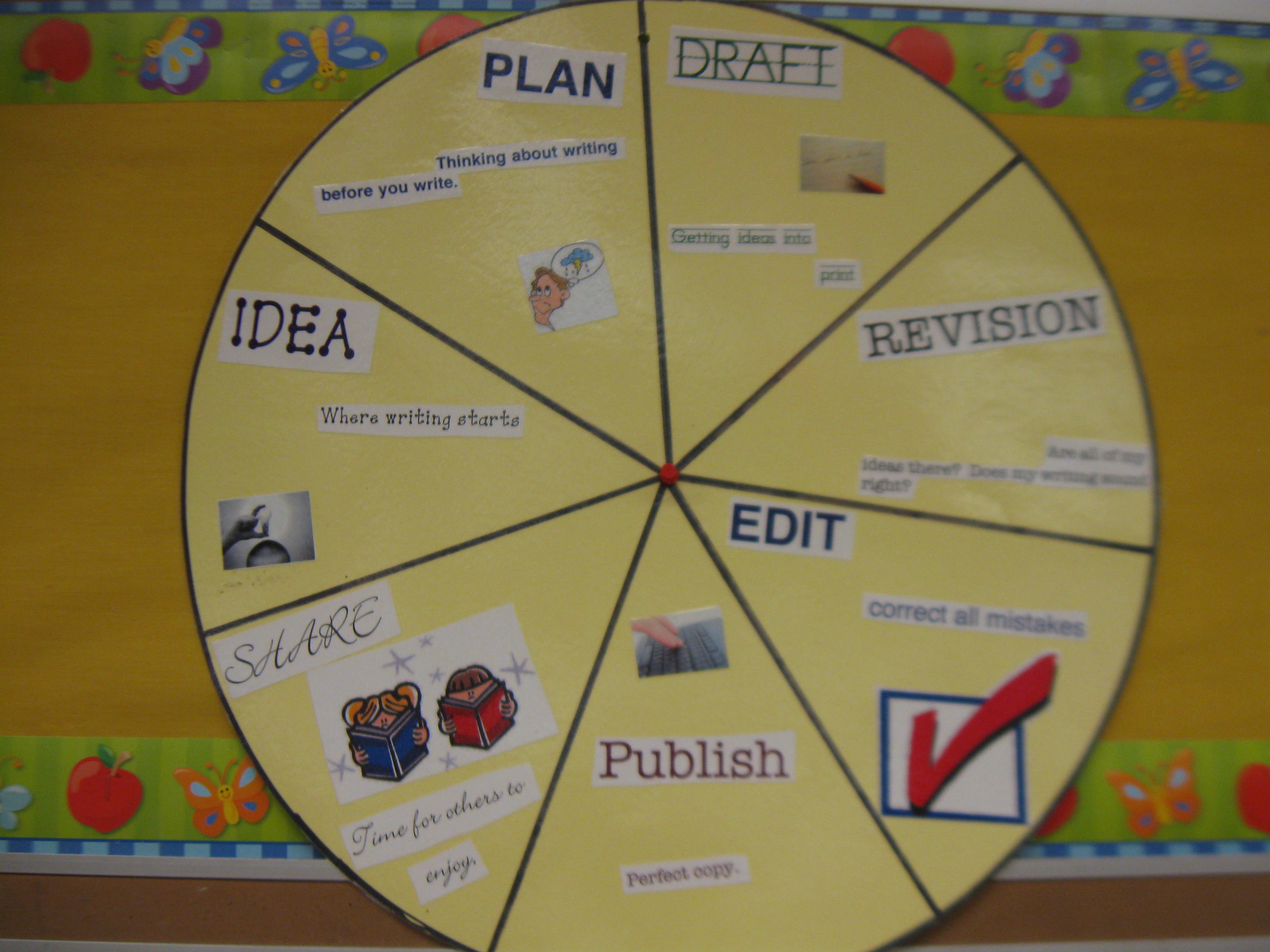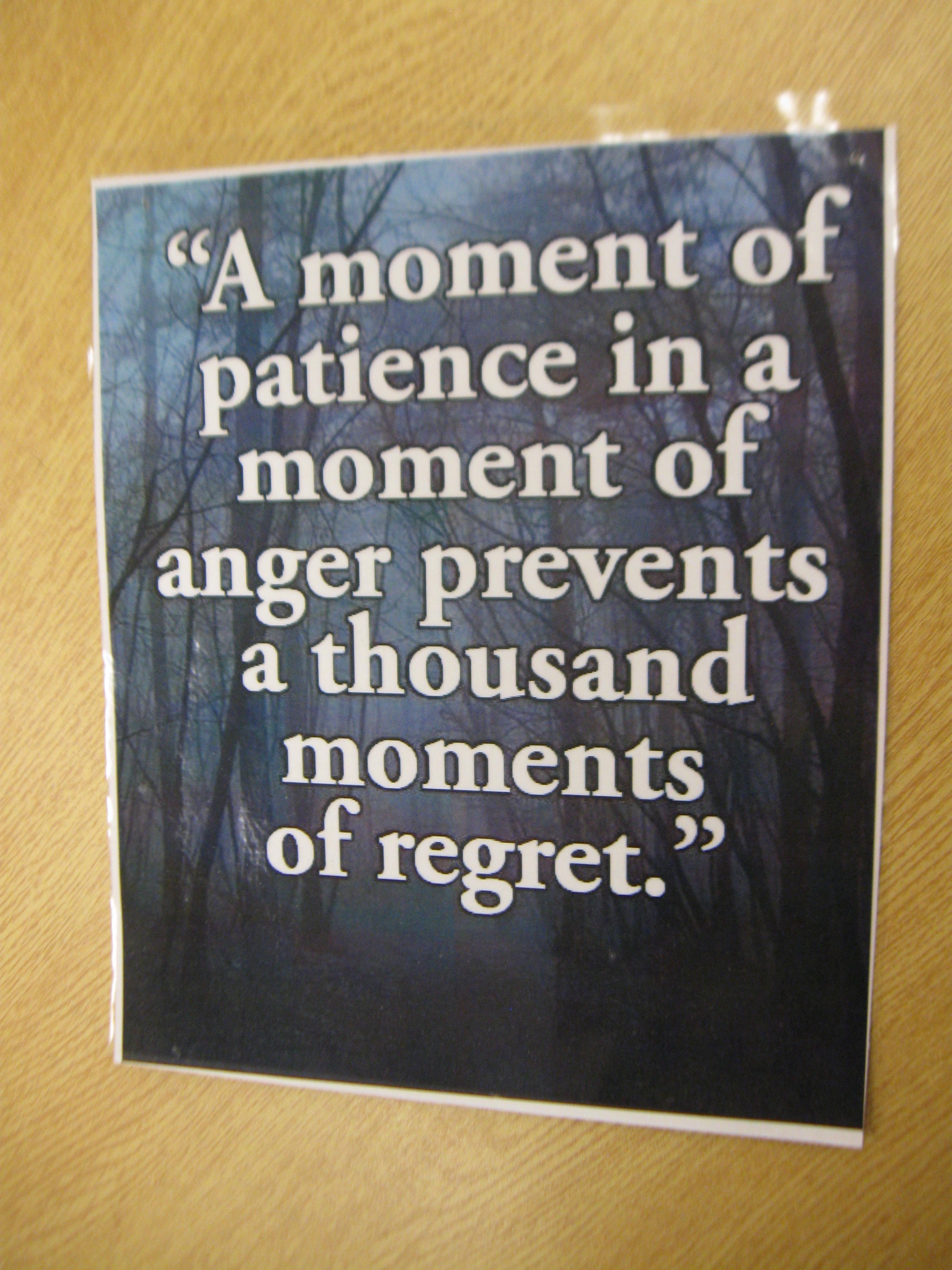
Discipline used to mean something good

Discipline

The mere mention of it conjures up deeply personal memories. Other than infancy, there are very few times in our lives when we act without discipline. STOP signs, social media, and schedules are all prime examples when it is required. And then there’s discipline as it relates to school. For me, it started with stories shared by my mom about a one room school house where the headmaster sadistically silenced students into submission with a switch. Shudder. I clearly remember the rows on a dusty chalkboards replete with repetitive reminders of our recalcitrance. In the 70s, my grade 6 rotary teacher allowed students to pick the paddle with which he would use to discipline us. He had a collection in the corner. Speaking of corners, many were filled with kids “rewarded” with a change of scenery and a new hat for their misgivings. It was a different time and we were afraid.

Discipline varied from year to year and teacher to teacher. Perhaps it was to keep us off balance or that a constant was simply not possible. I’ve experienced 100% of them myself, and was tied to a chair in grade 1 for good measure. Thankfully, I haven’t seen 80% of these types of discipline since beginning my career as an educator in 2009.

In 2017, discipline has evolved to lost recesses, extra work, isolation from peers, loss of privileges, the walk of shame/glory to the office to see the principal, expulsion, and yes still, the writing of lines.* Have students become better behaved or have educators become better at classroom management? Ask yourself, “How does discipline happen in your school?”

In my classroom, a collective establishment of behavioural expectations has been crucial. With my students involved there is democracy, their voices are heard, and this then becomes the standard for everyone to uphold. At it’s heart, discipline must be founded in respect and responsibility where students contribute to and are expected to make good decisions at all times.

via https://www.flickr.com/photos/st3f4n/4193370268 CC BY-NC-SA 2.0

So how in 2017, where a JK to 12 education is mandatory and free for all, why then are things like the one below still happening?

| The state of Arkansas Corrections department carried out the unprecedented  execution of 4 prisoners in April. Really?|

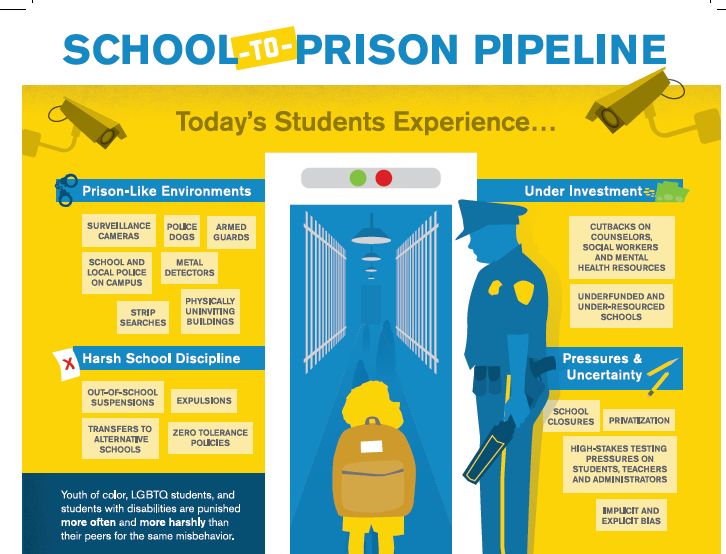
This got me thinking about discipline, law, crime, law enforcement, punishment, society, and then, without fail, back to education. I wondered how any society built on the rule of laws, which are guaranteed for the protection and benefit of all, fails itself so frequently? Does education contribute to the school to prison pipeline with outdated methods of discipline?

Would it not be easier to rearrange the order of this equation in order to place education and society first? Could schools be funded as highly as prisons in order to end this destructive cycle?  Did you know that education receives approximately one tenth of the funding per student as the prison system does per inmate? This gap cannot continue if we expect to grow happy, healthy, and whole learners.

Can we return to discipline’s original Latin disciplinawhere it means method, instruction, and knowledge instead of scourging and flagellation? If we put knowledge and instruction over control we could restore discipline to its positively intentioned origins? I am positive the investment in education will lead to greater opportunities for everyone while reducing crime and prison populations.

I wanted to stretch, if not challenge, thinking with this reflection on discipline. Specifically, how this word, through its meaning and deeds, effects everything we do in education. Assuredly, any discussions of discipline require rules, boundaries, and consequences. But after all, isn’t that what it’s here for? Perhaps, in the spirit of the word, it can be so much more if we choose to use it positively instead to preserve power.

Thank you for reading. Feel free to share your memories in the comments section below.

Please read on if you’d like a little more.

* A switch history

Remember the axiom. ” Spare the rod and spoil the child.” Banning the Strap delves into the history of discipline and banishment of corporal punishment in Canada.  Looking on our neighbours to the south, New Jersey was the first state in the USA to abolish corporal punishment in 1867 with Massachusetts coming a close second doing the same in 1972.

Thought this was interesting from our friendly neighbourhood land of the free.
via https://www.pinterest.com/edweekpress/

The stretch

It’s April. Phew! We made it through Winter. OliverWendellHolmes

It’s official because geese are honking on the playground. There’s more daylight, the snow is not staying on the ground, and my classroom is buzzing from the promise of Spring. Students’ activity levels are coming to life as the weather warms; even though, they’re prohibited from using the grass(mud/chance for grass to grow)or running on the tarmac(overcrowding).

Energy levels range from abundant to absent, as any teacher would attest. Our class is making excuses to learn outside. I love it when they ask and am happy to shift instruction and inquiry to outdoor mode. A sort of”Education on la Grande Jatte” with apologies to Seurat.  There’s movement happening in the halls, and it’s not only the students this time. It’s educators too.

An annual migration of staff is in full flight. One that can only be equated to something akin to the trade deadlines in professional sports. Teachers and administrators are being moved, receiving their teaching assignments for the new year, or are actively seeking new opportunities. Whether it’s a move to a brand new grade, a new school, a new role in admin, or retirement; thousands of educators will find themselves in new spaces come September. Or is it a rut? So, like death, taxes and dishes left in the staff room sink – change is inevitable.

In March, teachers were told of their teaching assignments for the year ahead. Like the birds returning from the south, administrators were tasked with considering staff requests, future growth/decline, fit, and a host of intangible staff dynamics. Some teachers have discovered that the nest has been blown out of the tree. Some are learning, with a measure of surprise and uncertainty, how a change has happened which was contrary to their absolutism of choice(s). Yes, there are people who would go out of their way to avoid change. They have their reasons and are respected for them. However, there are still others  who will be welcoming new opportunities with excitement.

It’s always a good time for a change when the dust in your classroom is older than the students.

By Stromcarlson (Originally uploaded to en as PD by Stromcarlson) [Public domain], via Wikimedia Commons
Let’s consider a sample scenario that could playing out right now with a veteran teacher in the same grade for 5 or more years. Add to this fact, s/he has been in the same physical space for that long. Now, think of the upheaval and umbrage that might underscore the news they’re being shifted to a new grade, a new room, and maybe even a new teaching team?

Some might think that this educator was being shifted as a form of punishment. While in fact the move is the breath of fresh air. Yes, there is uncertainty and people hate that, but there is also freedom. Think of it like changing the air filter of your furnace. You would never keep the same one in place for a year let alone 5 or 6?

So this Spring, choices can be met with acquiescence or anticipation. Whichever view you choose will shape your thoughts and practice for the coming year. Will you stretch beyond your walls or will you barricade yourself behind your dusty desk?

Now before any harsh replies, keep in mind that the goal of our job has never been to become the comfortable automatons of education, but to stretch as lead learners in our schools. It is the very idea and excitement of change that should set us a light in our teaching practice.

Last year I wrote a piece entitled Time for a Change where I share advice and encouragement about stepping out of our comfort zones as educators if you want to read more.

and something else

There is another side to this thought that reflects the turnover of educators in struggling/poorer schools in England. This two page graphic made me wonder whether this might correlate to our inner-city or First Nations Metis and Inuit communities are facing the same issues of teacher turnover, and therefore are creating an educational vacuum in our own country? http://www.bristol.ac.uk/media-library/sites/cmpo/migrated/documents/howlongteachersstaying.pdf I’d love to know your thoughts about this.

The Groove

This is my follow up post to Am I Teaching in a Rut

By Shane Gavin [CC BY 2.0 (http://creativecommons.org/licenses/by/2.0)], via Wikimedia Commons
Without offending your musical sensibilities, I want those who might have been singing Madonna’s Get into the Groove, to turn it off of their mental playlist for a few minutes, and spin Stevie Wonder’s Higher Ground instead.

It’s OK, if you have both battling it out in your brain. I did. Stevie prevailed in case you wondered.

Although it’s catchy, the Madonna track gets me into a small groove, but it can’t keep me there. Music is like that. I count on it, always, to get me in a steady groove and to keep me there. Shouldn’t education be like that too?

So, what’s a groove?  Is it a track or channel that you fit yourself? Is it a vibe or a feeling? Is a groove smooth? How do you distinguish when you’re in a groove versus a rut? And how does it relate to my practice and pedagogy when you’re in one?

A groove is something that fits you perfectly. A groove feels good. When you’re in a groove, it never feels like what you’re doing is work. Being in the groove is contagious. It helps others around you find theirs too.* Imagine a whole school where everyone is in their teaching and learning groove? Students are witness to enthusiastic educators who are fearless learners and relentless encouragers.

What an incredible opportunity to learn, grow, and share everything that is awesome in education?

The groove is good

So whenever it feels like work then you’re in a rut. A rut travels from A to B or deeper. A rut wears down the traveler and the trail. Teaching in a rut is like being on auto-pilot because you’ve been down the same worn path over and over. A rut leaves its travelers dulled before, during, and after the journey.

The foundation for this post was set by wondering whether I am teaching in a rut or rocking/rolling along in a groove? And whether one was different from the other? My original post can be summed up in 3 key points to help stay out of a rut;

  1. Being a flexible learner in front of students and colleagues
  2. Being open and adaptable to what and where I teach(kind of like #1).
    Seeing the challenge as something to accomplish rather than feeling punished for it.
  3. Being unafraid of change even when it is something unknown

Thinking about this might be scary for some. Many of us have been raised in a corporate culture that requires keeping a nose to the grindstone, focused on the job, and safe from risk. That is precisely why we have to lift our heads and stretch our outlook. This comes from taking chances in the classrooms, hallways, staff-rooms. We have to encourage one another to share ideas, passions, successes, and failures. Teachers need to celebrate “the hard times and the good” with our students and with each other. That’s how we will find our groove(s)?

For me the groove is what gets me out of bed before the sun rises. It makes me excited to share learning with my students and with a world of educators. A groove does not have time for pettiness, negativity or self indulgence. A groove is designed for the positive, potential, and process in education.

Now the hard part…

What’s your groove? If you could do anything in education knowing you’d succeed, what would it be?
Thank you for reading. Please share and keep the conversation going in the comments section.

Will

* Oh, oh! I just thought of a B52’s song to go with this post.

I love music in most of it’s forms. It pervades my day, accompanies me as I work/relax, and provides me insight into people as an inter-generational time machine and lens. For a deeper understanding about the soundtrack to my life, click on this link to I(n) Tune.


Cultivating a culture of creativity

Recently, I was asked to explain my vision on how to cultivate a culture of creativity in the classroom. After a few moments of reflection came this response.

From the moment that a student enters our classroom fostering a culture of creativity requires 3 key things; fearlessness, fluidity, and failure.

IMO, these 3 are inextricably linked in my classroom. As lead learners first, teachers are crucial to a successful culture of creativity as they model fearlessness to students in our own approaches to learning. When students see their teacher unafraid to take chances and make mistakes, they too will be emboldened to do the same as they approach the new and unknown.

Establishing this in a classroom might require teachers to become Pirates as Dave Burgess shares in his transformative book Teach Like a Pirate. This requires complete commitment and patience. Remember, it’s about the process not the product.

This requires flexibility to escape from what is fixed within a text book, a single narrative/point of view, or schema. A classroom must be a fluid space where the way must be tried (tentanda via), but if it is limited to merely the information provided out of ivory towers; when and where will students have an opportunity to challenge it?

If we want a culture of creativity, we must allow room in our instruction to critically consider/falsify(as Scientists would according to Popper) what is being taught. This takes a mighty courageous educator who is willing to let go and share “power” with students.

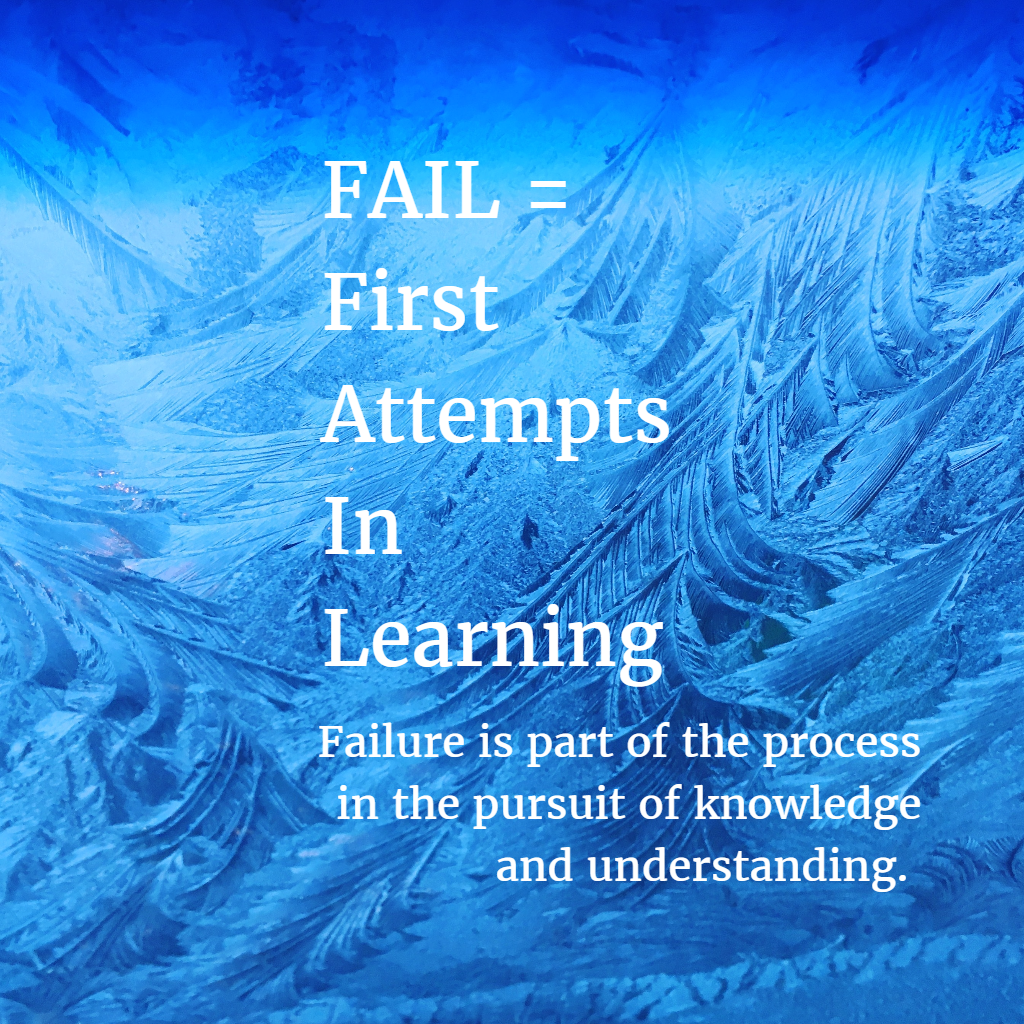
FailureFinally, for cultures of creativity to occur, a FAIL mindset is needed. FAIL is a wonderful acronym for First Attempts In Learning. We celebrate failure in the classroom because there is still something learnt in the attempts at something. When students feel safe to learn, try, and supported when they fail then they will be strengthened to extract the lesson, unlearn, relearn, try again, and repeat as a natural part of the process.

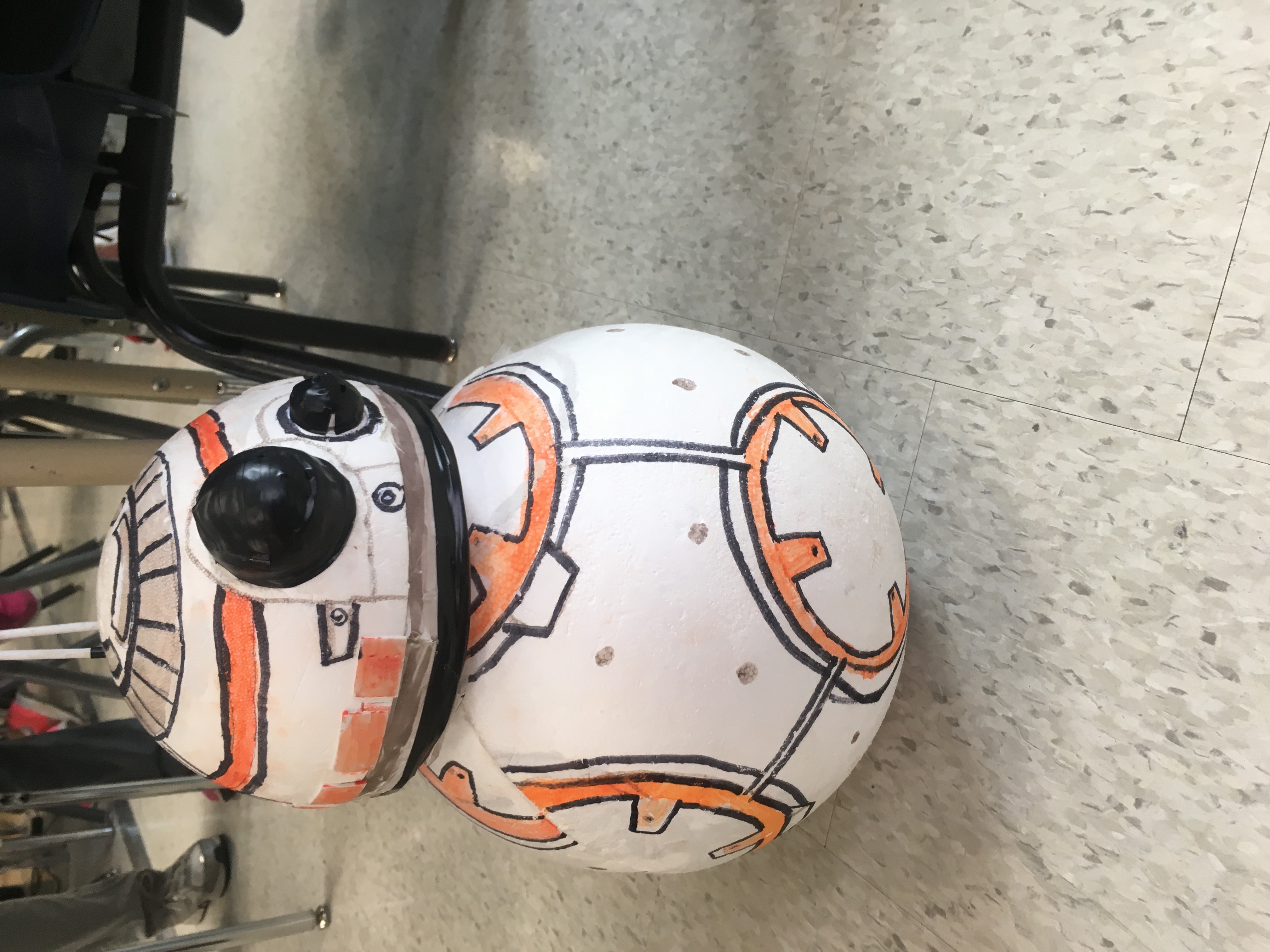
Some tangible examples of this in my class have come in my Electricity unit where we have been trying to make a fully functioning replica of BB-8 from Star Wars: Episode VII The Force Awakens movie. IMG_0131Throughout the process we have ideated, iterated, learned, adjusted, tried again. Instead of disappointment after an attempt or apparent failure, there is opportunity to rethink and try again.

Students empowered with a mindset of fearlessness in a flexible environment are bound to be invigorated and engage in their learning/tasks with their creativity emboldened.

I believe these 3 things to be at the core of innovation in education and have worked to embody them in my personal practice.
ps If I was to share a fourth item it would be that a culture of creativity is messy. Often, no path exists and therefore students must blaze their own trails. With the right attitude, the mess and muck of learning and creativity mesh to form a ‘lit’ learning environment.

pss – George Couros is the current godfather of innovative practices in education. He is a brilliant and gifted communicator who shares a passion for education with the world. His book the Innovator’s Mindset is on my reading list and I’d encourage you to add to yours.

If you want to continue this conversation about innovation or to share how you are innovating in your learning space, feel free to share in the comment section below. Thank you for reading. Will

Express lane to learning

Recently, I was out shopping, and came upon something that’s not usually found for sale on the shelves at local grocers. Insight.

Funnily enough, it was probably there all along. I must have blown past a bunch of times while buzzing about my mental list of must buys. But this time, finding insight was meant to be. I’ll explain in 10 items or fewer.

https://www.flickr.com/photos/kirrilyrobert/2355105082/ CC by 2.0

Usually, upon walking into a store, I’m pre-occupied with my mental shopping list, figuring whether something is a good deal or not, and by getting out as quickly as possible. This requires the use of several life, mental Math, and critical literacy skills.

The act of shopping really requires planning and strategic thinking to figure out when a store will have the least amount of people as possible in it so that we may park, pickup a cart, procure, pay, and part. It is impossible to ignore the thought required for such seemingly innocuous trips that are made for our milk, bread, and eggs etc.

From now on, and armed with this understanding, I am going to use my trips to the store to seek out and share its valuable lessons. There’s knowledge to acquire about Math(Measurement or Number Sense), to Media Literacy(package design, use of space), and to the development of crucial future life/socialization skills in every aisle.

Consider the yogurt section for a moment; there’s something for everyone in that part of the dairy case. Where else could so many products co-exist so peacefully? In fact where else could such diversity exist(except Canada)? Here gluten free, lactose free, peanut free, Halal, Kosher, vegan, and meatatarian are available to all at the grocery store and share an inclusive space.

Then there’s the produce section.

While perusing here, I saw couples discussing, quite demonstratively, which bunch of Rapini to buy. Then I spied the apple aisle. There was a person who felt compelled to touch all of the apples in the case. I witnessed a grape thieve looking from side to side and then pop a few into her mouth. Here were real lessons on relationships, human behaviour, and decision making all before me waiting to be picked and extended into the classroom.

It’s like that in the classroom or a head of Iceberg(lettuce). Teachers work hard to make learning engaging, extendable, and relevant everyday.What most outsiders see is only the first leaf, layer or ply.*

Speaking of plies. I thought it would be fun for my students to calculate which toilet paper at the store was the better deal based on size and number of sheets per roll.

Talk about a real life problem. Initially, I went around snapping pictures of the different packages and their details to build the questions. The class discovered that there’s a lot going on that can confuse consumers. We came away wiser for the time knowing we wouldn’t get rolled over by the manufacturers next time. IMG_3962

Your turn

Have you ever considered or taken a class to the local grocer? What about a super-type store à la WalMart(wish I could still write Zeller’s here)?

Or how about a homework assignment to include children in the planning and shopping? Who knows it might become fun, or democratize the food choices in some households. It may even lead to conversational and debating skills.

There’s a line forming behind me. Happy shopping. Thank you for reading. Please share and take time to comment to keep the conversation going.

*You thought I’d say tip since iceberg was used, but no!

Jack of All Trades, Master of None

I am for sure aging myself here, but for those of you who may not be familiar with this figure of speech it is used to describe a person who is good at many skills but a master of none. That is the best way to describe who I am as a teacher and how I have evolved over my career of  learning to be a better teacher.

Far too often we think that in order to use a strategy or tool in our classroom we have to be an expert at it. We don’t! As a teacher I have to be familiar with the content, the methodology and/or the necessary steps but I do not have to be a master of it. I am going to talk specifically to my personal Achilles tendon of teaching, the ARTS. I am in no way a musician, yet I can share my passion for music, lyrics and the powerful messages found in music. I can learn and teach to the curriculum expectations of my grade. I can partake in professional development opportunities to expand my skill set and knowledge. Even after all that, I will still not be an expert as compared to a music specialist.

My greatest accomplishment in the arts has been my work on understanding drama as a teaching tool, learning dramatic content and implementing it into my program. I have never been on stage (other than as an elementary student at Christmas time). I have never been a part of any formal dramatic theme, other than helping clean up after a school event and yet drama is one of the most successful components of my program these days. Each year my team and I take a group of highly volatile behaviour students and put on a formal dramatic presentation that we travel with to various schools within my board to share. We are currently in mid production of this year’s play.

Like in almost anything I was not comfortable with as a teacher, the students’ skill set, passion and innate ability to learn took over and I was just left to facilitate their growth. The second message is that when you share your expertise with your colleagues (collaborative planning) the saying that no one person knows more than all of us holds true. I am writing this for all teachers to understand that is it okay to take risks, it is okay to make mistakes in your classroom and learn from those mistakes and it is certainly okay to be a jack of all trades and master of none.

Anchoring Learning

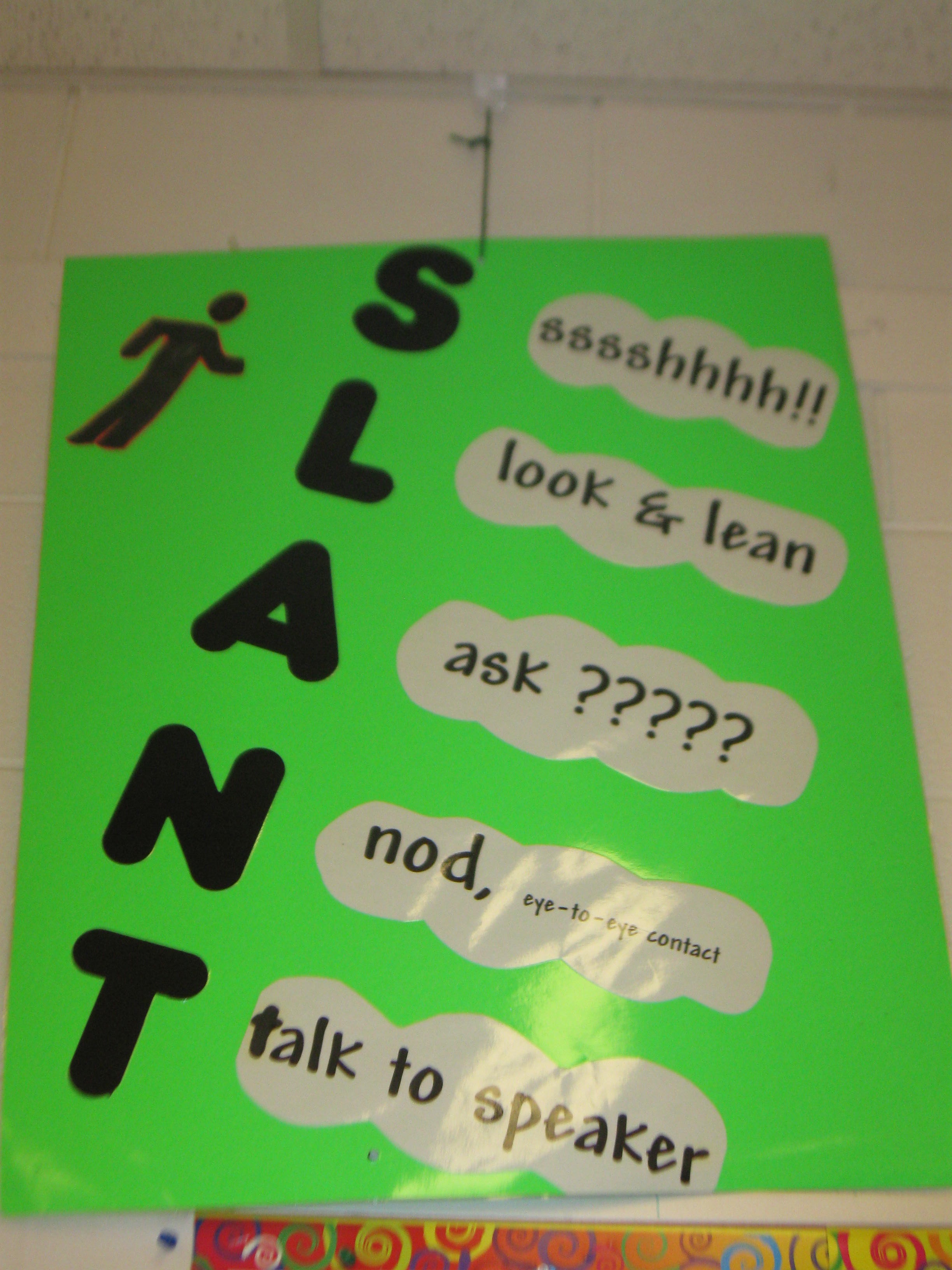
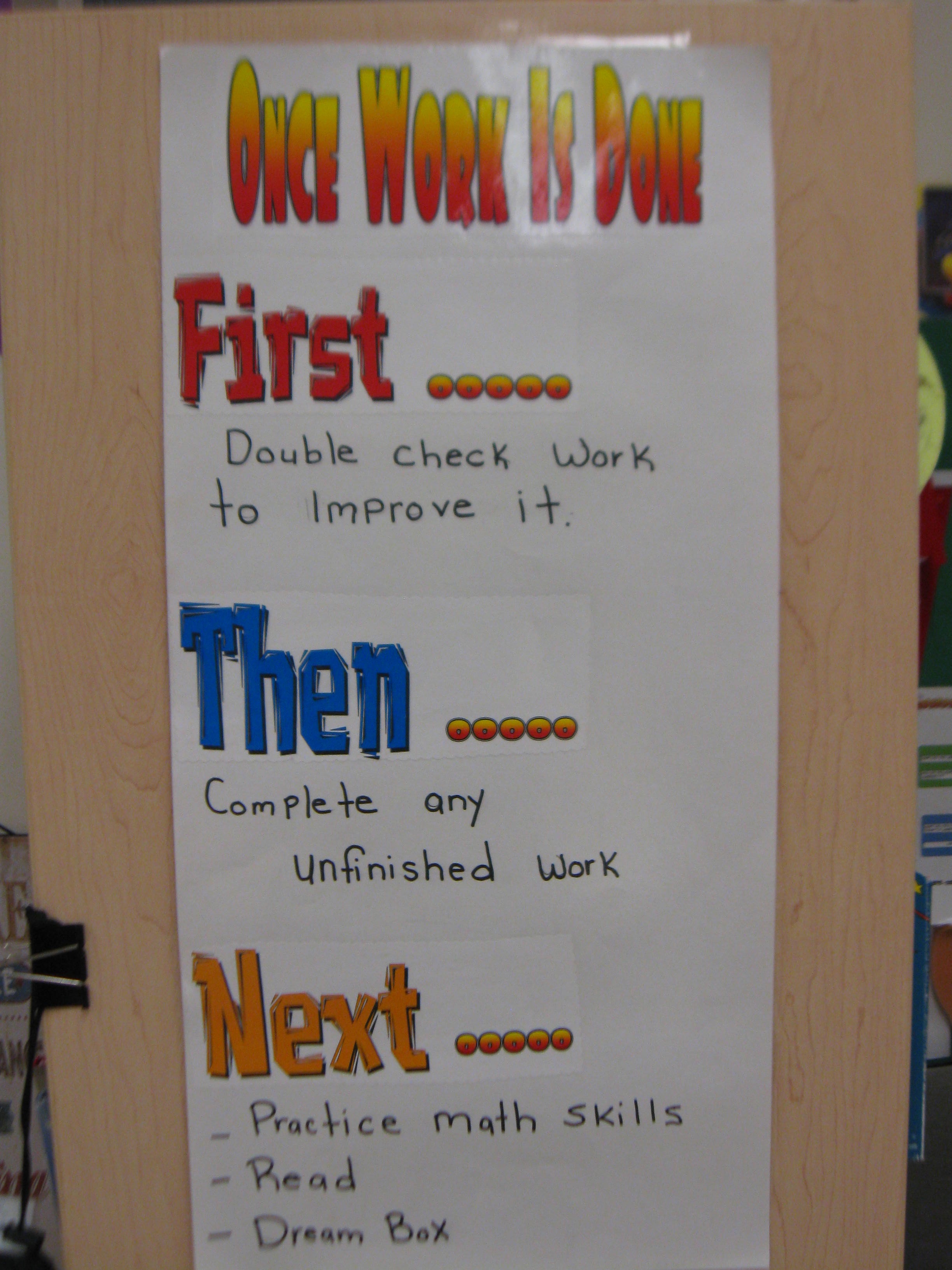
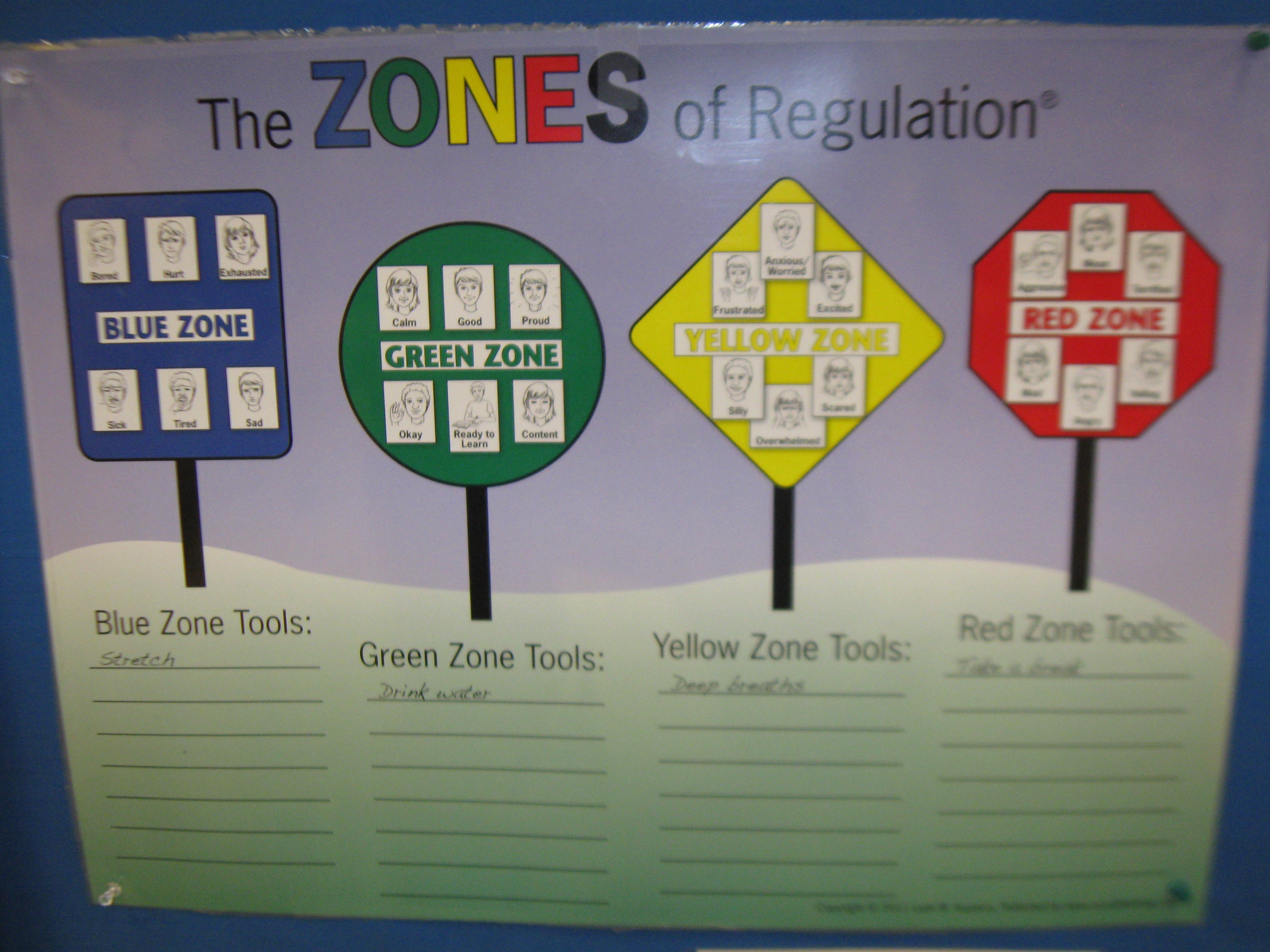
Anchor charts have long been identified as a high-yield learning tool. What exactly is an anchor chart? Why use them? How do you determine what should be on an anchor chart? These are common questions faced by teachers as they try to establish optimum learning environments for their students.

I have heard anchor charts best described as the ‘third teacher’. The following is a quote from Scholastic’s Literacy Place – For The Early Years, 2010. “ To promote literacy skills and encourage independence, you will want to make strategic and purposeful use of print resources such as posters, signs, lists, charts, and student/teacher writing samples in your classroom. One tool in particular, the anchor chart, is very effective in promoting student success. An anchor chart outlines or describes procedures, processes, and strategies on a particular theme or topic and is posted in the classroom for reference by students. Examples of anchor charts include: what to do in an interview, tips on using commas, what readers need to do when they infer, how to choose just right’ books, or how to write a literature response.

This of course aligns perfectly with the visual learner. Visual learners learn through seeing, observing and anchor charts allow them perpetual access to critical information and not just when instruction by a teacher is occurring. They can return to the key ideas or concepts when they need to and as often as they need to.

One lesson that I have learned is that not everything can be an anchor chart even though it is all so valuable. If the visual scene in your classroom becomes cluttered the benefits of this tool diminish as they just become part of the scenery and no longer a tool for the students. In my class we have a large variety of anchor charts positioned around the classroom with different colours, fonts, sizes, shapes and almost any other way I can make them unique and stick out. I did an experiment with my students one day where I gave them post it notes and asked them to go around and put them on the anchor charts they used most often and felt were most helpful to them. Prior to that I had made my prediction of what might occur. Needless to say, what I thought was most important did not align with their view. Sooooo from that point on, my anchor charts became a mutual task created by my students and myself. I still do all of the finish work, but the content and positioning in the room is a shared decision. One final change in my practice as a result of that data collection was that I am constantly changing the visual cues so that they stay fresh as learning tools and not just become a regular site in the room.

Another feature of this great tool is that I also have personal anchor charts around my desk that help me as I learn new pedagogy to add to my practice. I am able to return to them throughout the day to evaluate my growth and development progress. IMG_1799 IMG_1803 IMG_1804 IMG_1797 IMG_1806 IMG_1798 IMG_1800 IMG_1801

2016, seems like we were just getting started…

https://www.flickr.com/photos/orvalrochefort/2992146699 https://creativecommons.org/licenses/by/2.0/
https://www.flickr.com/photos/orvalrochefort/2992146699
https://creativecommons.org/licenses/by/2.0/

It’s too late. Whatever you wanted to share or teach in the classroom will have to wait until next year. I’d have liked a little more time. Was this the case for you too? Fortunately, a return date is just around the corner. Conversely, time away from routines can also restore mind, body, and spirit.

A break like this provides me with time to think about teaching and other pursuits. Usually, it’s catching up with family, over-caffeinating, reading, and blogging. With the school year already 40% complete, our time off serves as both restorative opportunity and cathartic challenge.

This December’s end, I wanted to reflect like it’s June. Think of it as part of my own personal development. I am trying to make sense of things now – in the moment. A resolution, pep talk, or plan of action if you please. This means there are a lot of questions to which the answers are either too simple, or underdeveloped.

Did I miss something? Could I have been more supportive? Did I make the curriculum come alive with relevance for my students? Did they have enough challenge, motivation, and opportunity to learn? Did I prepare enough? Did I assess too little? Too much? Did I give my students opportunity to succeed? Was I supportive to my colleagues? Did I give everything I could? Was my work-life balance maintained?

I am sure the answer to each one of the above questions could be yes. Even the one about work-life balance.

Now what?

Questions like these pervade my thoughts. I’m cannot be alone as a reflective practitioner in our profession. So how do you reflect at this time of the year? How are you de-stressing? Are you able to turn off your teacher brain for 2 weeks? How about checking your email or assessing student work?

Do you think that this changes over a career in education? After 8 years in the classroom, I am trying to see each season with fresh eyes, but still struggle with disconnecting entirely. Saying goodbye to 2016 and hello to 2017 will see me sharing, reflecting, learning, and unlearning as part of a process crucial to a professional pursuit of progress. How about you?

Keep the conversation going. Please share, respond, or retort.
I love hearing about your journey and heart for the art of education.

Happy 2017.

Will

Lessons from the hall. Or was it the mall?

https://creativecommons.org/licenses/by-nc-sa/2.0/

Not sure if anybody noticed, but local shopping malls were unusually festive over the past 6 weeks. Come to think of it, schools were too. Ever since Progress Reports went home, there’s been something in the air. In fact, I’m pretty sure it had to do with an annually anticipated event or holiday festivity. Whatever the cause, excitement abounded wherever I looked – whether it was in the halls or the malls.

However, there was one distinct difference, I couldn’t imagine have Boxing Day type line ups to get back into the classroom as if there was a 75% off learning sale. Get your lessons while supplies last! What if it was? There is no doubt that many educators and students were ready for a break.

The time leading up to the big day saw many classrooms adorned with seasonally themed crafts, gyms hosting concerts with particular attention paid to inclusive and acceptable winter music standards, and a lot of people wearing red in order to match the annual gift giving man’s commercially conjured wardrobe.

For years, many(not all) have decided, that during the six weeks leading up to the winter holiday break, they would attempt to cram as much kindness, creativity, and cuteness beyond human limits, capacity or reason. It was amazing to witness what can be accomplished when plans are hatched and deadlines approach. All of the work, acts of kindness/giving, and stress leading up to the winter break did not go un-noticed.

But wait, I wanted to connect this post to education not the Hall-i-daze or Mall-idays

In between dodging the inattentive and exhausted hordes, all I could think during my annual ‘mall-people-watching’ spectacle was how important having a purpose was to survive the experience. Come to think of it, teaching is quite similar. Having a purpose, a plan, and an exit strategy are imperative.

Am I saying that the halls of schools are filled with the inattentive and exhausted? Not exactly. Well maybe, but it does not have to be that way if we invigorate, iterate, and innovate our educational spaces. This can happen when educators at all levels are given the funds, flexibility and freedom to do so.

Take for example, instead of buying more text books a.k.a. knowledge coffins(my term), why not a document camera? See how I put some shopping in this post? Imagine the savings when digital copies of a Math text can replace 20 or 30 ($60 to 90) aging copies for fraction of the cost? Why should publishing companies be taking the lion’s share of our budgets? Of course, a few texts are necessary in each class, but not a text for every student in every subject in every class. The school wide savings of limiting text book purchases would free up budgets for more hands on learning resources like Math manipulatives, Science materials, maker spaces, and technology.

Allowing teachers a greater voice in their own budgets is a great place to start. In my classroom, we are paper minimalists. I do not believe in worksheets, instead make use of a document camera to share anything that might otherwise be copied. Instead of paper and consumables, I purpose 90% of my class budget for a growing collection of Math and Science manipulatives that will be useful from year to year instead of destined for the recycling bin.

By providing PD through school/board wide initiatives teachers would have a chance to engage in new ideas as new learners themselves. In the YRDSB we host 2 Edtech Summits per year to share ideas and learn new skills to use in the modern learning classroom. The new ideas, tools, and confidence can transform and invigorate a classroom. Imagine the engagement when students see a teacher as a learner too instead of the transmitter of lessons and marker of tests?

I can sense some walls and arguments being raised. Feel free to respond in the comment section. I promise it will not be comfortable at first. I promise it will be messy for a bit longer than that. I promise that mistakes will be made, but remember FAIL only means First Attempts In Learning. I promise that it will be the best thing you have ever done as an educator for a long time.

Painting with the same brush.

https://creativecommons.org/publicdomain/zero/1.0/deed.en
PublicDomainPictures / 18043 images CCO 1.0

Underlying
An artist was preparing to paint one day. First, she stretched and secured her canvas over its wooden frame. The artist continued by arranging her brushes, planning a colour scheme, and then by setting up her supplies. Finally, it was time to ponder her subject forever to be captured in a moment of time and occupied space – where her vision would be on display in pigment, oil or acrylic for evermore for all to enjoy.

The artist could already see her finished masterpiece. As if the picture had miraculously painted itself. Without anything left to imagine, conjure, or deliberate she began.

Un-(der) inpired
It was all right there in living, er um, cold dead colour. All she had to do was slather it onto the wintery whitewashed space in waiting. She pulled out the widest brush in her kit, dipped it into the first colour, white, and painted a perfectly straight line across the top of the canvas. She dipped her brush again and repeated, the same thing over and over, with the precision of her first strokes until she has covered the entire canvas. She felt satisfied, but did not have time to admire her work for long. There were 29 more canvases to cover just like the first one. She smiled, sighed, dipped her brush, and started on the next one.  Yet, with a pallet of colours and brushes at the ready, the artist only knew how to paint with a single brush and to use white paint to do her work.

http://kaboompics.com/one_foto/880/brush-painting-the-white-wall CCO License

Under pressure
Does teaching ever seem like this to you? Do educators feel they are asked to paint blank canvases everyday, but are only given one wide brush and a single colour to work with? I wonder whether that is how some teachers have come to feel when a learning system is imposed on them which expects students to be taught to the test?

Teachers plan and prepare their materials to deliver a lesson much like the artist in the story above and in the end are expected to use the broadest brush and one shade of paint. What may be more disappointing, is that many only have time to paint one coat before feeling they have to move on.

Underwhelmed
I am not a huge fan of the traditional textbook. In fact I have called them “knowledge coffins” in the past. When traditional textbooks are at the centre of the instructional day, there is little option for learners to explore beyond its pages.  Yes, it’s all in there, but at what cost are other things and ideas being left out?

First, consider the cost of purchasing texts/licenses per class. Math books alone can range upwards of $1500 to $2000 for a class set per subject. What happens when the curriculum gets revamped like what has recently happened in Ontario with the French(2013), Health/Physical Education(2015), and Social Studies(2013). Could the money schools, boards, and government pour into photocopies and textbooks be used to provide Chromebooks for every student instead? Imagine the cost savings in paper alone. If we did this, every learner from K to 12 could be equipped with a productivity and research tool for the classroom at their fingertips? And, at home too if WiFi is available.

Unrepentant
I am a fan of adaptive and hands on learning environments. In the classroom, I want students to have a voice in how and what they are being taught so we can democratize education. I believe all educators possess the means/ability to transform and tailor their instruction to suit their students. What they need now is a safe place to do so and that’s an issue of system and school leadership.

JFK Paint by Numbers

To paint a portrait of the future, educators need to use the prescribed curriculum as a pallet filled with colours that is not limited to a paint-by-number task. However, many are afraid to use other, less traditional brushes and materials to paint their masterpieces because the outcomes might not look resemble or match work gathering dust on the walls.

Yes, there are things to be taken from the past, but the world outside our classrooms has not remained fixed in space and time. Neither should it remain static inside. The classroom must become a vibrant and connected place where students have access to, and be able to contribute to a world of knowledge.

This requires courage to happen. It requires time for others to understand, accept, and embrace. It doesn’t have to look perfect. The mess is an important part of the process.

Ask yourself what or who inspires you to take chances as a learner? What new idea(s) would you try in your classroom if you knew you couldn’t fail? Start by giving yourself permission to change things up in one subject area, and then go from there.

I’ll be here to chat if you want to talk more about how we can change the portrait of education to a landscape of creativity, differentiation, and encouragement.

In the meantime I have some brushes to clean.