A photo of the outdoor

Outdoor Education

Outdoor education is something I have been trying out this year in my Grade 3 classroom. I have tried giving my  students opportunities to use the outside world to explore and learn from it. As our first social studies unit was  First Nations people, we decided to go for a class walk to a nearby forest/pond area near our school. We took  some time to explore and look around at the environment we saw around us. After some exploration, we came  together and had a community circle to discuss things we have seen. We pretended to be First Nations people,  and discussed things we would use in our environment to survive (trees for building our homes, ducks for food,  water for drinking water, etc). It was a great experience, and students were able to make social studies  connections to the environment around them.

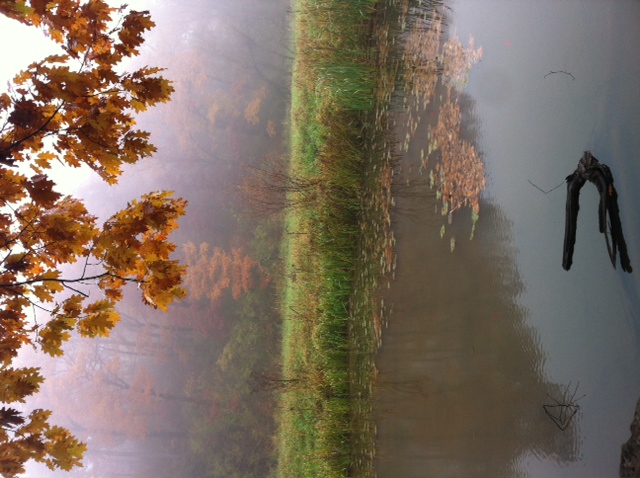
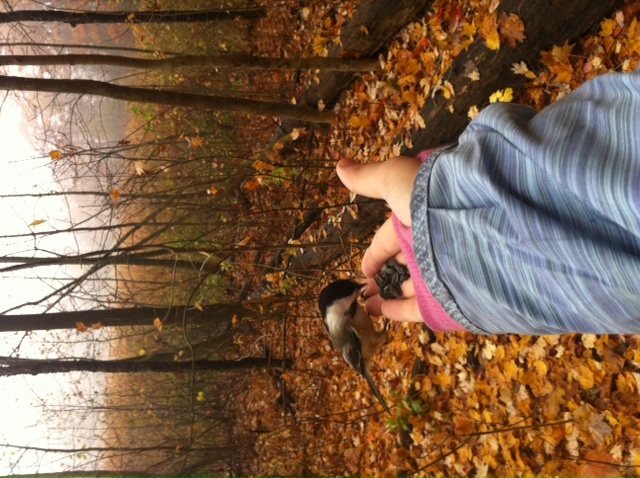
Although I have been trying out some of the outdoor education ideas, I felt I needed more. So, I signed up for an  Outdoor Education Workshop. It was called Outdoor Education: Look and Learn, which was provided to me  through my school board, Halton District School Board and Royal Botanical Gardens in Hamilton, Ontario. The  day started off with us playing some outdoor games, which came from the Project Wild resource book. Then, we  went on a hike where we were able to use our 5 senses and explore the environment. We all used our cellphones,  or were given cameras to take pictures of things that interested us. It was a rainy/foggy day, so we were able to  take some beautiful pictures. After some exploration, we were given some birds seed and these chickadees flew right down to us and ate the seeds from our hands. As adults, we were so excited about this, so I could only imagine how our younger students would have enjoyed this.

We were all assigned to choose a few leaves that stood out to us and share what types of activities we could do with them. The leaves were so beautiful with bright orange and red colours. Some ideas were to sort them leaves based on different properties, use the leaves for art (making leaf turkeys for Thanksgiving, or leaf rubbings) and using the leaves for math by looking at symmetry.

It was a wonderful workshop, I learned many things and felt more confident about doing outdoor education with my students. We also were given some wonderful resources. If you are interested in reading more on Outdoor Education, please check out:

Into Nature: A Guide to Teaching in Nearby Nature
http://www.back2nature.ca/resources-research/education

Happy Exploring!!!

Photo of Tina Ginglo

Equity and Access to Technology

I am committed to equity and inclusive practice.  Each day I “check in” with myself and ask those important questions:  Do all my students feel included in the classroom?  Have I excluded any students from the learning I have planned today?  With technology these questions are particularly important to consider.  In particular, I want to address the concerns around students’ access to computers.   As I mentioned in my last blog post, my students and I are fortunate to have unlimited access to technology, specifically, laptops, wireless Internet and digital cameras.  Access to these tools presents us with endless opportunities to make learning meaningful and engaging for students.  The students are so excited about learning.  They want to take their flash drives home to work on writing projects and they log in from home to contribute to their Edmodo groups.  However, there are some students who don’t have computers at home.  What about these kids?  These students can quickly feel left out if they are not part of the “virtual” in-group, so how can I make the most of the technology I have and not marginalize any of my students?

I have been working closely with one of my mentors since October.   He has helped me create a vision for my class use of computers.  I want to get my students to the point where they decide when they need the computers and when they do not.  At the beginning, I had all the control.  I directed students when to take out the laptops and when to put them away.  In the first few weeks, you could walk into our classroom and see all the students working on their laptops at the same time, doing the same thing, like a computer lab.  This didn’t feel right for me.  Now, more often, you could walk into our classroom and see some students on laptops, some not.  The students using laptops will likely be doing different activities.  A few may be logged on to Edmodo contributing to their discussion groups, some may be working on a second or third draft of writing, others could be reading or doing research, while others could be engaged in  an on-line lesson from Ontario’s Education Resource Bank.   I believe that this kind of  learning environment helps students develop independent work habits, increases student engagement and by allowing students to have some control and choice in their learning, I hope to see an increase in student achievement and a decrease in classroom management issues.  I also believe that such an environment will allow all students to participate in and  keep up with on line learning during the school day.  It may not completely resolve my access concerns, but I am sure it helps.

Social Justice Begins in Kindergarten

I am using the literature-based resource kit, Social Justice Begins with Me (ETFO), to introduce various themes to my Kindergarten students regarding social justice. In the first lesson lesson we used the book, The Colors of Us by Karen Katz. It is the story of a little girl that paints a self-portrait and wants to use brown for her skin. Her mother takes her on a walk in their neighbourhood where she learns that there are many different shades of brown.

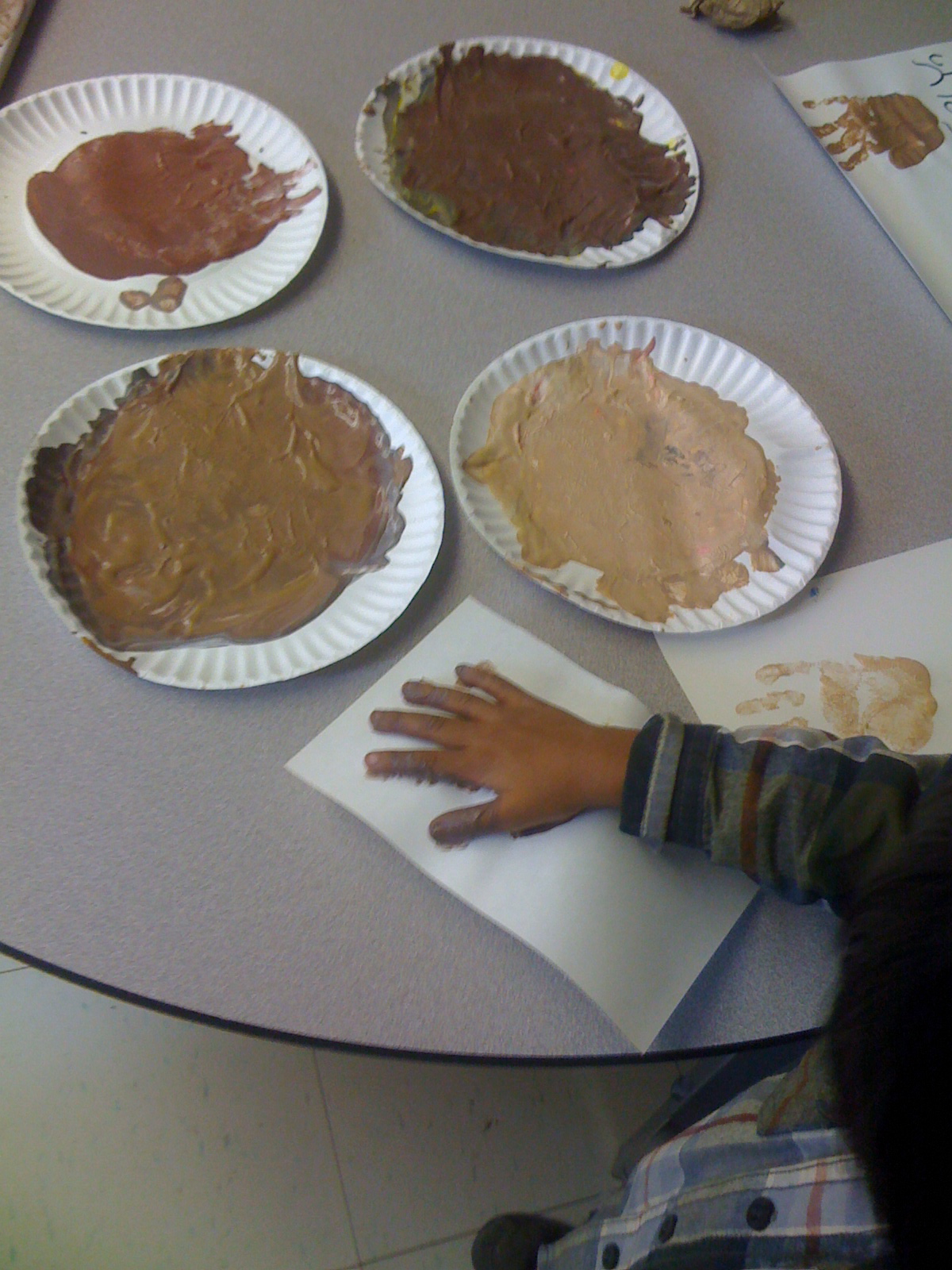
Before reading the book we compared and discussed the sources of colour used in the book, such as cinnamon, chocolate, and honey. After we read the book, we used red, yellow and black paint to mix and create various shades of brown. The children were engaged in the process as they observed then commented on whether their shade was a light or dark brown. Some children were using the words from the book in their descriptions, such as “It looks like cocoa!”

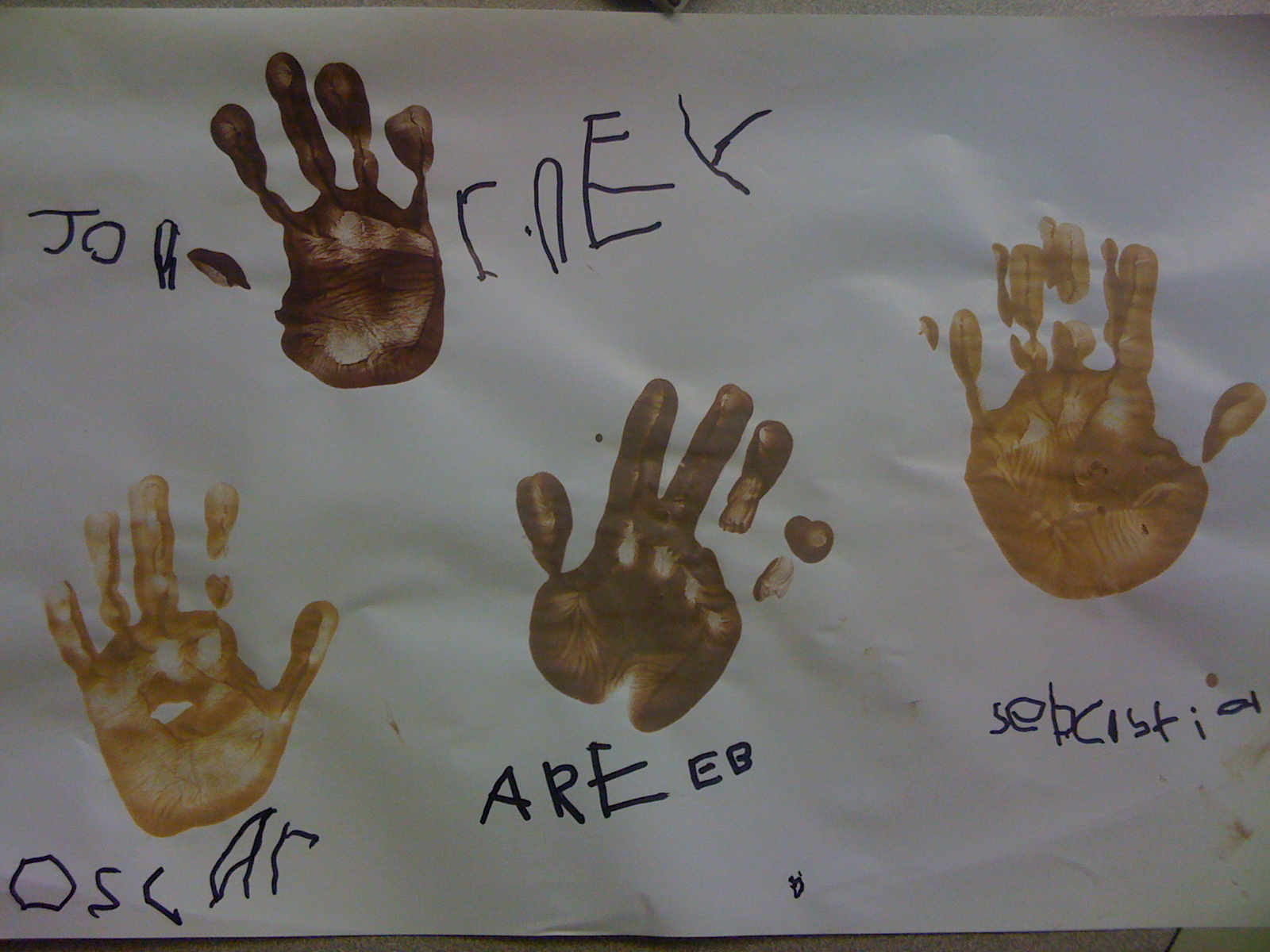
For the final activity, each child looked at the shades of brown and selected the one they identified with as the colour of their own skin. We made a display of “handprints” for display in our classroom, one for each child. As they picked the shade of their choice, they made comments such as, “My hand looks like honey” or “She is that shade of brown (pointing).”

During the week we spent on these lessons, we were also asked to paint a canvas for one of the Character Traits that our school recognizes throughout the year. The canvases are hung with pride at our school entrance. Our class was given the task of creating a canvas for the trait, Co-operation. The ECE and I thought why not have the children use their selected handprint not only as a symbol of identity and self-esteem in the classroom, but as part of one panel to demonstrate how respect for one another is the first step that leads to co-operating with one another. Our canvas became a culminating activity for lessons we learned about social justice.

Photo of Alison Board

Integrating Art in Kindergarten

As mentioned in my previous post, I have been working on an Art Studio for the classroom that will provide enough space and materials to meet the interests of all the children in my class. Even though I have set up a physical space called the “Art Studio” there are other centres in the classroom where representational art is also taking place. At the Messaging Centre, many children are graphically representing their ideas with pictorial images, and in the Building Centre children are using the blocks to create designs and structures. We have a table where play dough is often provided, and this too allows the students to represent their ideas in 3-D form.

By integrating art throughout the classroom, I can access many areas of the curriculum in a way that is engaging and accessible for the children. For example, one of the first overall expectations in Science that I like to plan for is “demonstrate an awareness of the natural and human-made environment through hands-on investigations, observation, questioning, and sharing their findings.” Children need support to develop their observation skills and really notice what is around them, rather than assume an image that they picture in their mind. When you ask a child to draw a tree, they often draw the same straight trunk with a round green top on it! By taking students outside to touch the bark, notice the texture and observe the branches, children will develop an awareness and reflect their observations in more accurate representations.

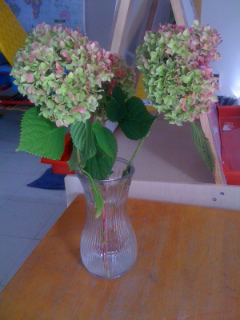
Strengthening visual discrimination in young children can be done at the art centre by providing an object to observe and represent. I often select a natural and aesthetic piece such as the vase of hydrangeas pictured below. A basket of leaves could also be used at this time of year. Then provide a controlled palette of materials. So for the hydrangeas I only set out pencils for drawing and coloured pencils that match the shades of the actual flowers, stems, leaves and vase. The children still have choice, but their selection is from a realistic palette that they will identify as they look at the object with discrimination.


Rather than make art for art’s sake, planned centres can be used to support skill development for visual discrimination, fine motor, and representational as well as integrate many subjects such as Science, Language, and Math.

Creating the Environment for FDK

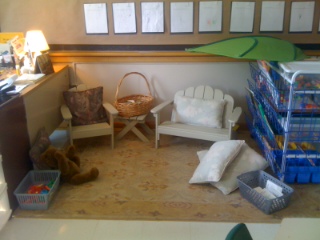
As I mentioned in my last post, our Full-Day Kindergarten room was formerly a Special Education classroom, so it is evolving each week as I acquire furnishings and materials. With a limited budget I have been busy searching for some small scale furniture items and resources that will provide an inviting and engaging learning environment. One of the first centres that I focused on was a Reading Centre. Although I had a carpet and cushions to define a reading area, the children were not frequenting the space as expected. Last weekend I was able to source a small set of outdoor furniture from a friend that only required some sanding and painting. I then went to IKEA to buy a canopy leaf that would define the space (hanging a curtain or fabric as a canopy is also effective). Baskets were used for organizing the books, and I also added a container of magnetic letters to use on the front of my desk which frames the reading centre space. The Reading Centre is now an inviting area that is enticing all the students to settle alone or with a friend to look at a book.


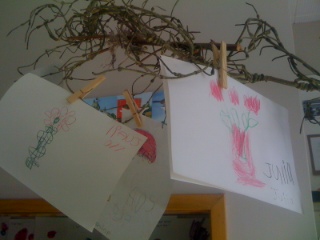
In the photo you will notice a covered chalk board above. I found that the black chalk boards surrounding the areas were not useful, so I covered them with brown craft paper. This provides a neutral background to display the children’s work. In this area as seen in the photo, I glued a piece of black construction paper for each student (26 total) and used paperclips to hang their current “Self-Portrait” representation. As noted on page 85 of The Heart and Art of Teaching and Learning, the self-portraits provide a gallery of the children’s work, as well as a source for assessment. Each month the children complete a new self-portrait and it is added on top of the previous month. Over time, one can see the development of fine motor skills, pictorial development, and writing abilities.

The other centres that are popular at this time are the blocks/building centre, drama centre (we just received a fridge and sink), and the play dough table. I do not have a specific number of students for each centre, however we limit according to what makes sense. If 5 or 6 children want to play in the dramatic centre, the children can accommodate to make it work. However, if 10 children ask to go to the drama centre, we say, “There isn’t enough space today,” and the child selects an alternative.  We are still adjusting our centres to meet the students needs and interests. This week I will be working on the art studio, writing centre and math centre. In the next blog, I will provide updates on this progress.

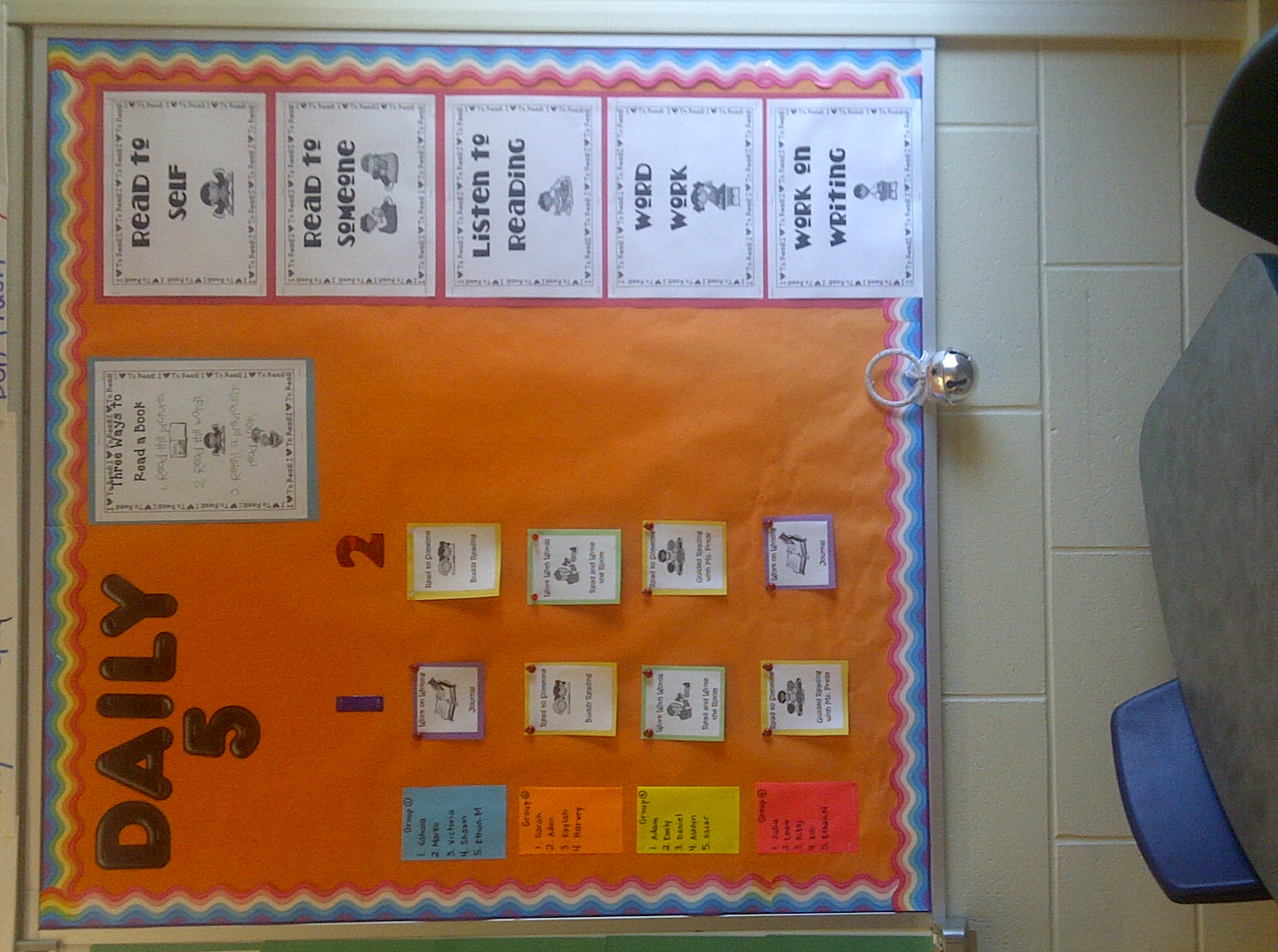
A bulletin board with notes about reading and listening

The Daily 5

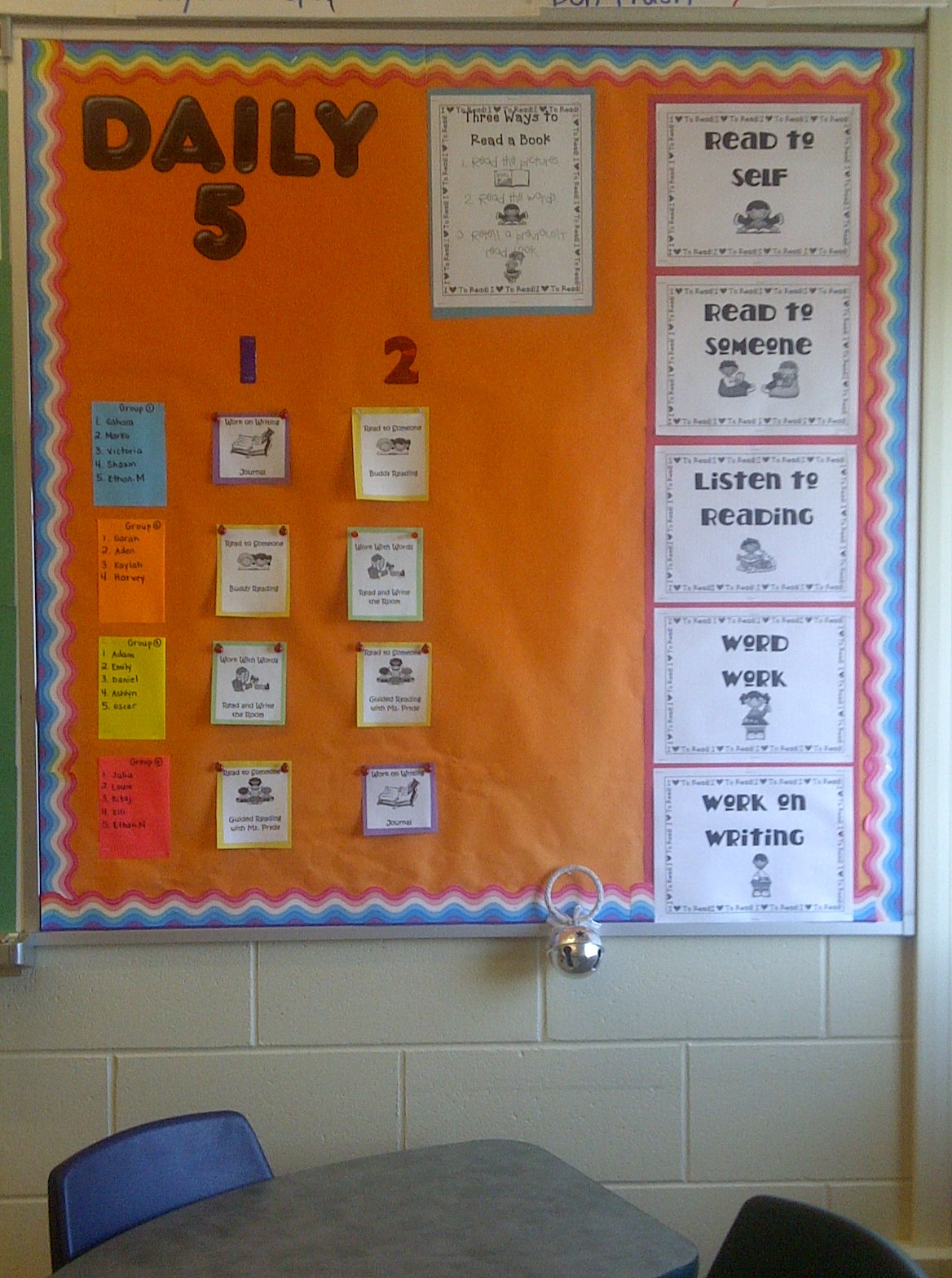
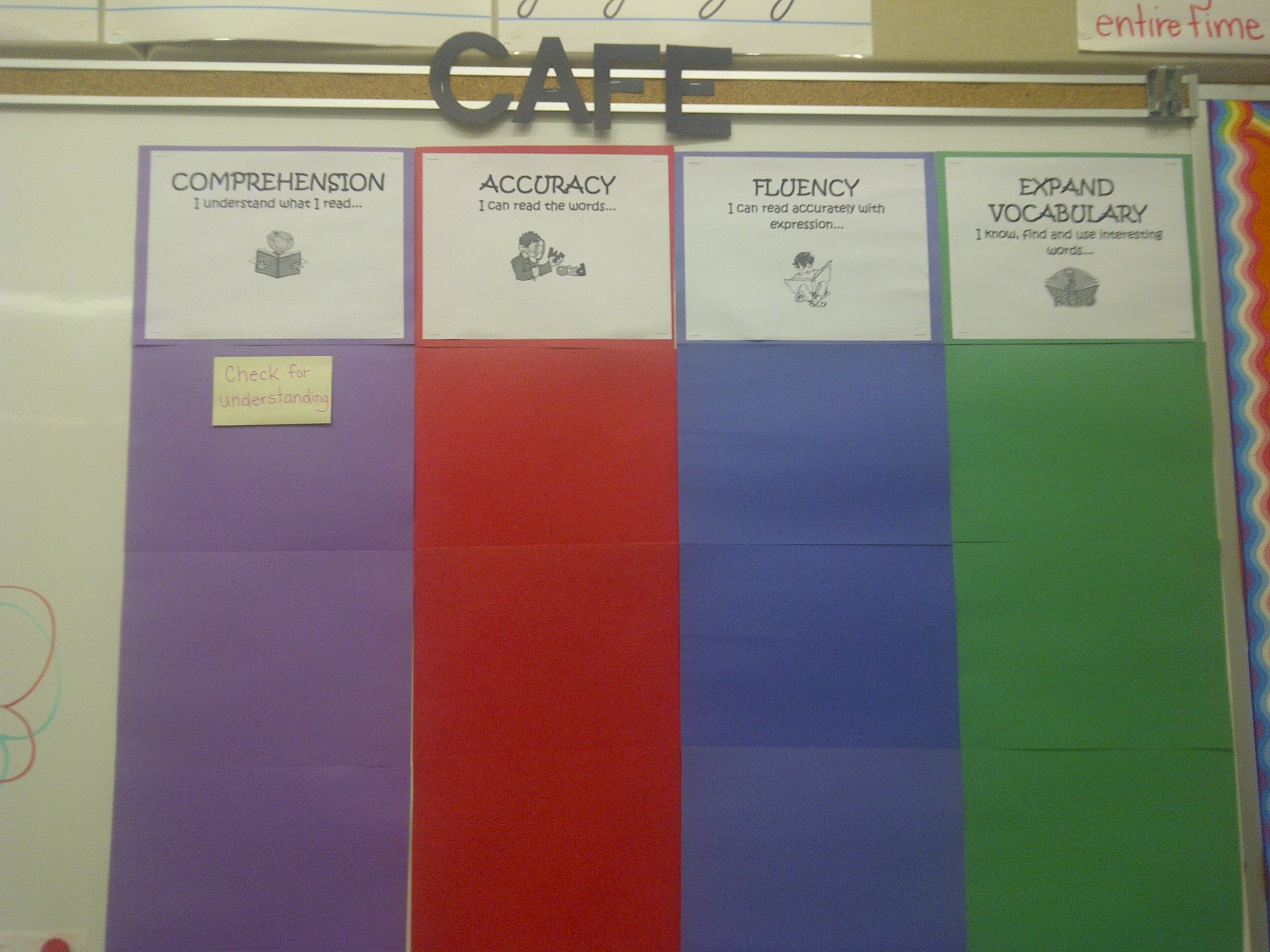
 This year, the initiative our Primary Team has taken on in regards to literacy, is implementing  The Daily 5 and CAFE. For those of you whom are unfamiliar with the 2, they are based on books  written by “The Sisters”, Joan Moser and Gail Boushey. These books are a great (easy) read and  gives you a wonderful basis and understanding of the 2 concepts, and how to set it up in your  classroom.  The Daily 5 is a framework that allows students to participate in 5 different activities  each and every day: Read to Self, Read to Someone, Listen to Reading, Work on Writing and Work  on Words. CAFE is an acronym standing for C- Comprehension, A- Accuracy, F- Fluency and E-  Expanding Vocabulary, and are the strategies good readers and writers need to be successful. The 2  work very well and I feel, go hand in hand with one another. If you buy (or read) both books, they  give you examples of how your first few days will look like when you are setting up the program in  your classroom.
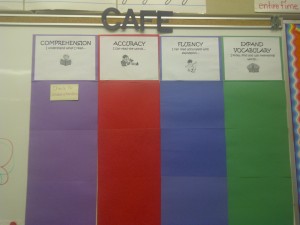
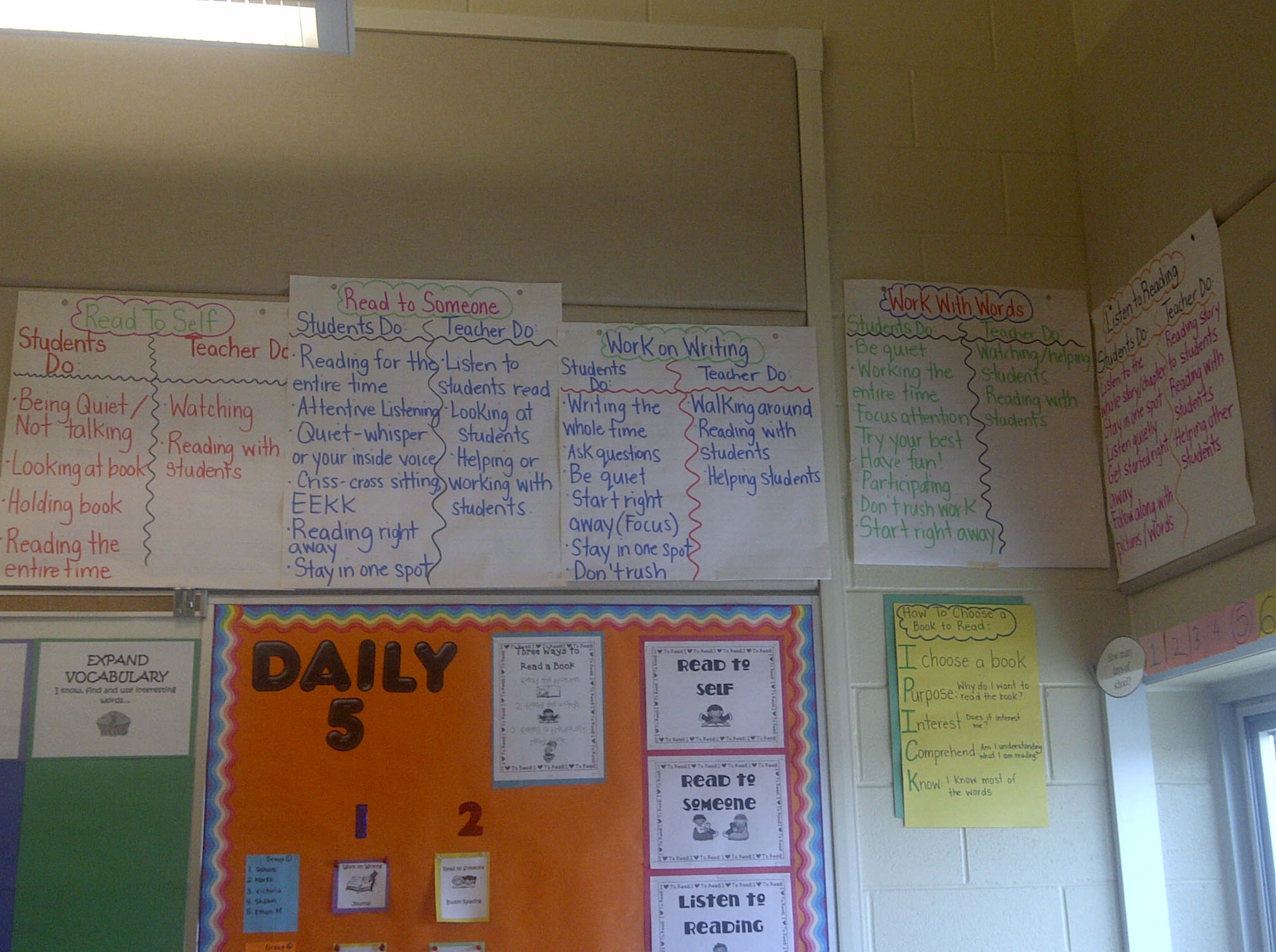
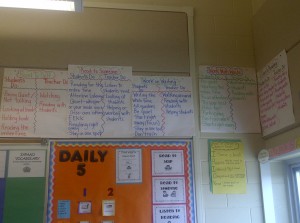
Since the 2nd week of school, I begun implementing these programs, one by one, illustrating what each Daily 5 looks like. We also created anchor charts that have been posted around the room illustrating the “expectations” both students and teachers have during our literacy block. Our chart is set up with the headings Students Do vs Teacher Do. Many of the activities are very similar in what the students and teachers are expected to do. Students, for the most part, are expected to work the whole time, remain quiet, work in one spot, get to work right away, and have fun! The teacher is expected to work with students at the guided reading table, conference with students, and watch/listen to how students are reading/writing.
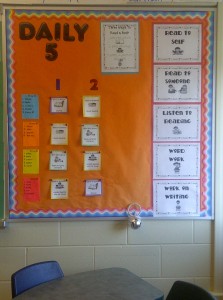
The first concept I introduced to my class was Read to Self (independent reading). When we were practicing,
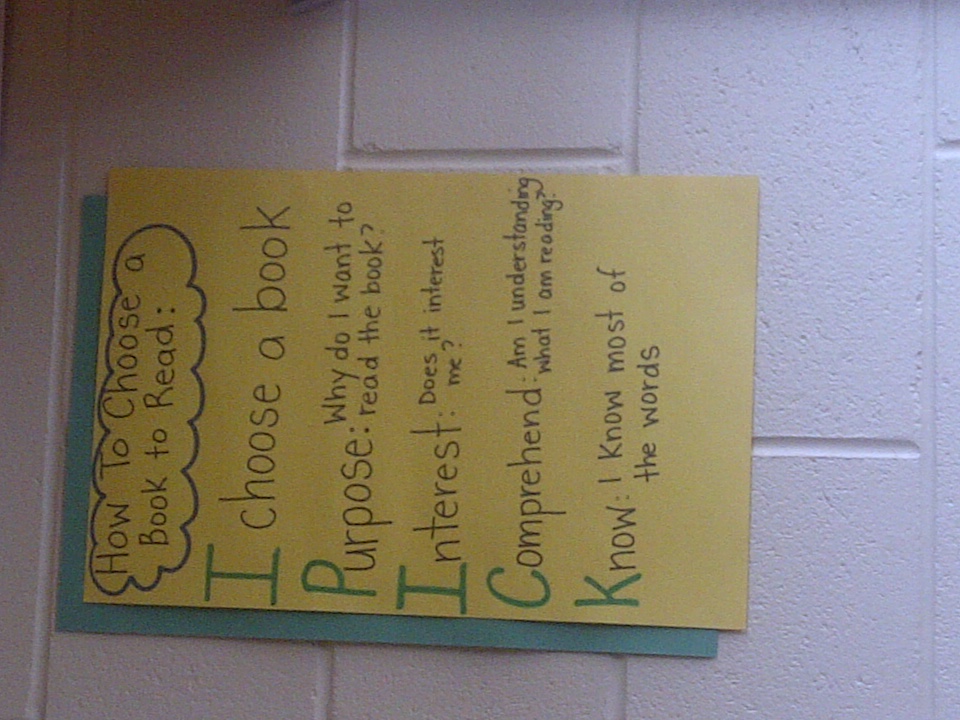
we were working on our stamina. This means, how long our brains are working without any breaks. Students should be reading for 20 mins each day, but first, we needed to build up our stamina, to reach the 20 mins. My students are quite fabulous, and really enjoy reading and it only took us 7 days to reach of goal of reading for 20 mins consecutively without any breaks. I encourage my students to have 2-3 books with them at their desk so if they finish a book before the 20 mins is over, they will have some more books at their desks so they can continue to read without stopping and interrupting others by getting a new book. Then, we moved  to Listen to Reading, which is when I introduced our class read a loud. I brought in all my old Goosebumps Books for our classroom library, and my students are now obsessed with them. So, we took a classroom vote, and our first read a loud book was a Goosebumps Book- The Ghost Next Door. Then, we moved on to Read to Someone. How I set this up in my classroom, was by practicing buddy reading. We discussed how it looks like when you are reading to your buddy and EEKK (Elbow to Elbow, Knee to Knee). We did this for 2 days, and built up our Read to Someone stamina of 20 mins. Then, I introduced Work on Writing, where students had the opportunity to write in the writing journals. We created success criteria for journal writing, so students knew exactly what was expected of them when they wrote in their journals. Finally, I taught a mini lesson on syllables, and our Work on Words introduction allowed students to add their names to the class word wall, and they needed to sort all the students’ names based on the number of syllables in each name.
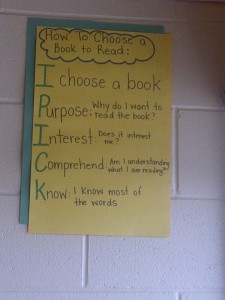
    Once we went through all of the lessons and talked about what each Daily 5 looked like, as well  as modelling some of the CAFE strategies (such as Check for Understanding, Choosing Good Fit  Books and Go Back and Re-Read), we started our Daily 5 centres last week. The Daily 5 is all about  choice, but for the first week, I decided to split my class into groups and they rotated through the  Daily 5 centres so they could become familiar with the whole process. In our 100 minute literacy  block, my students have the opportunity to be engaged in the Daily 5. My students first start off with  Read to Self, where they read independently for 20 minutes. Then, I ring the bell which is an  indicator to my students that they need to quickly tidy up and meet me on the carpet. Then, I teach a  mini lesson on the CAFE strategy that we are currently working on. Sometimes, I read a read a loud  picture book to my students and either model how to use the CAFE strategy, or get students to help  me with it (so it becomes a shared reading and shared use of the CAFE strategy).     
Once the lesson is  complete, students are told which centre they will start off with. Students will rotate through 3 centres in one day. Last week, our centres were: Read to Someone (Buddy Reading) or Read to Someone (Guided Reading with Ms. Pryde), Work on Writing (journal writing which integrated with Social Studies- If I were a First Nations person, I would live… I would eat… I would travel by…), Work on Words (Read and Write the Room) and then I would finish off the 100 minute literacy block by reading a few chapters from our chapter read a loud book. Students spend 2 min at each centre. Next week, now that the students have had the opportunity to complete one complete rotation of our Daily 5 centres, students will be able to choose which centre they will go to and will keep track of which centres they would like to go to (a great Responsibility indicator, for students to make sure they go to each centre at least once, as well as keeping track of it on their own).

So far, it has been a success in my classroom and I look forward to seeing how it will look like in my classroom this week!

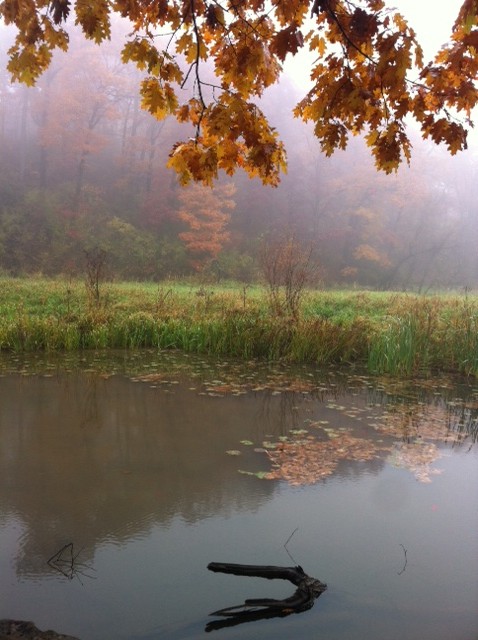
Photo of Erin G

Reinventing the Wheel – Improving Past Practice

One advantage of entering your second or multiple year(s) of teaching is being able to go back and reuse materials you had previously gathered and created. The mad and desperate scrambling for resources during the first year of teaching a subject is what many would attribute as being the most stressful part of the job. Having a bank of lessons/activities/assessments allows you to devote more energy and thought to the many other aspects of teaching.  As everyone is aware however, the need to consistently update, revise or in some cases, entirely revamp your program is a necessity. Apart from being an obvious benefit to your students, it is a way to push your own limits of creativity. I’ve found that this task is much easier and productive if undertaken sooner rather than later. It can be particularly tempting when your best plans and intentions go awry to want to immediately block out the experience or at least relegate it to the realm of distant memory with “well, I know I won’t be doing that again”. Without belabouring the “reflective process”, I try to efficiently take stock of the success or failure of activities and assignments as soon as they are completed by jotting down impressions on a sticky note and then adhering them to my printed master copy. At the same time and using the same sticky note procedure, I also solicit the input of students and ensure that everyone has the chance to comment at some point during the year. At the end of the process, I have a bank of input available when it comes time to plan for the following year. Sometimes, “reinventing the wheel” can be as simple as changing the assignment pairing (from an individual to small group) or restructuring the order in which things were taught or assessed. Of course, this process can be more stimulating and interesting if you have the opportunity to debrief and compare with your grade team or teaching partner, all of whom will bring a different perspective and insight to the table.

Photo of Roz Geridis

Flexibility

I have part of a new assignment this year. In the morning I am covering prep. Due to re-organization, my schedule is changing again for Monday. I have completed many get to know activities, learned students’ names and just found out some classes I still have and others are new for me. That being said, it will all work out! Everything does. The students get attached very quickly and now I will get to know even more students.

My afternoon, I teach English, Math, Health and Pool to a grade 6 extended French class. The grade 6 curriculum is the same for me but now I teach a smaller portion of it. I will be busy sharing my plans with the other teacher who now has my class for Science.

That is teaching; change and flexibility. My morning will work out and I have worked out my plans to have the next days covered. I just needed to adjust a few items and have been able to use my current plans. As a school, you may have to go through re-organization. It is difficult. Deciding which students will excel in which environment, which students need to be separated from each other, balancing the girls and boys, special education and ELL needs. It is a very difficult task which also needs to be completed after a long day of teaching a class of 52 kids.

As I need to get teaching (with the new classes) in order to have enough assessment for the Progress Report card, I have decided to incorporate my get to know activities with the curriculum. I am planning to find ways to incorporate these activities as much as possible with my new classes. I plan to start with appreciation fans to help build the community within the classroom. The students all know each other and many know who I am but I need to get to know their names (better).

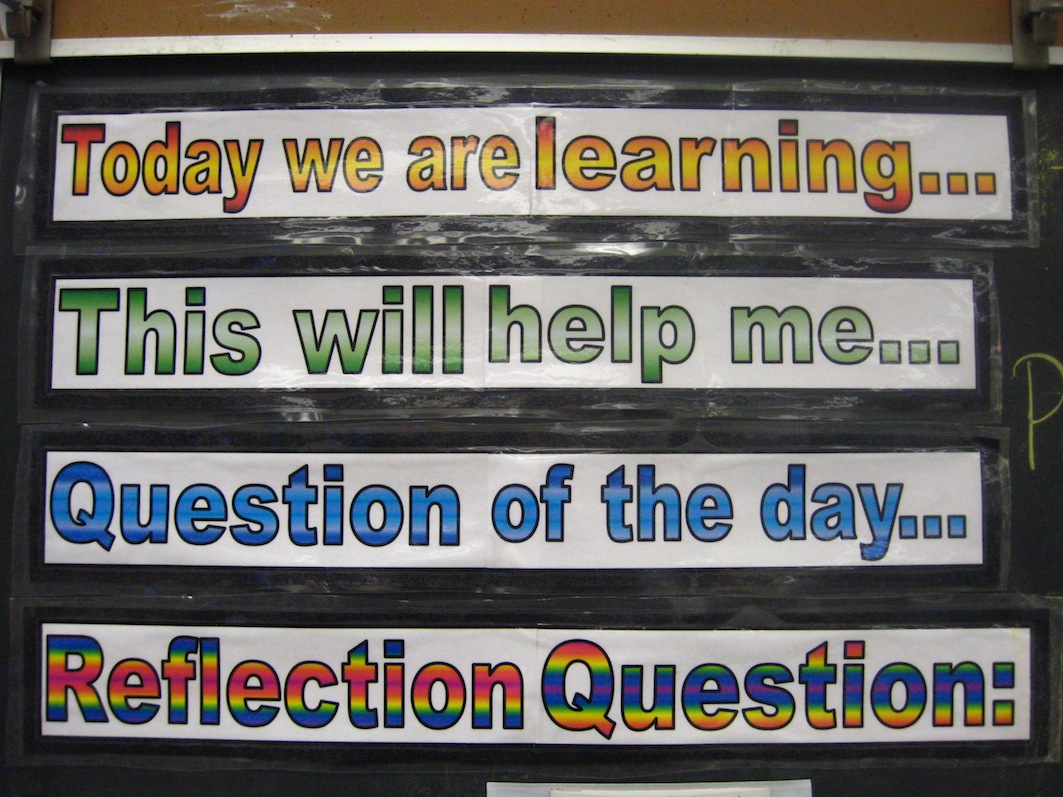
Learning Goals: Today we are learning...This will help me...Question of the day,.. Reflection Question

Getting Ready for the Art of Teaching and Learning

If you would thoroughly know anything, teach it to others. –Tryon Edwards

As I headed into my classroom today to set up our learning environment for this year, I stood in the middle and looked around at the space which, in a few days, will be filled with curious faces wondering what this year will be like.  A teacher candidate who was helping me mentioned that any advice I could give her would be appreciated because right now, it all seemed a bit overwhelming.  I told her that there are a few things I have come to know for sure about teaching and learning and proceeded to share them with her.  At the end of our conversation she had a big smile on her face and looked so much more at ease!  The truth is, my advice was simple.  Everyone knows it, but it’s sometimes forgotten as we go through our busy teacher lives!  Here are a few things I shared with her:

1. Connect!  Life and learning are about connections, to each other and to the world around us.  If you put in the effort to really connect with your students and create learning opportunities where they explore the connections within the world around them through cross-curricular activities, the learning environment will be charged with an energy that keeps students engaged and willing to take risks as their learning progresses.

2. Start small.  The journey to becoming a great teacher begins with mastering one aspect, topic, or subject at a time.  Choose one (or if you’re very courageous, two) areas to focus on this year to really explore, practice, and begin to master.  Become the best possible teacher in your chosen area of focus.  Celebrate your learning and success!

3. Become resourceful.  No one who has become great at what they do reached their peak without some guidance and support from mentors.  Network and reach out to teachers, administrators, support staff and anyone else who may help you on your path of professional development.  Contact the bloggers on our site!  A useful resource is the “Heart and Art of Teaching and Learning” to get you started this year.

Teaching isn’t always easy.  That’s a fact.  But the journey is well worth it when you realize the potential you have to inspire students, parents, staff, and the community around you.

Below you will find a few items that may be useful for the start of the year (some of which appear in the “Heart and Art of Teaching and Learning” resource.

BT Building effective Classrooms

curriculum night information newsletter

september wanted poster

my t-shirt and summer shorts

In a Million Words or Less…

if math were

grade 6 student intro letter

grade 6 math introductory letter

grade 6 homework newsletter

grade 6 first week newsletter

Photo of Roz Geridis

End of the Year is Near!

Summer is almost here and the kids know it. Their lack of attention and wanting to be outside in the beautiful weather is hard to compete with. What do I do to keep the boys attention? How or what do I keep teaching when my reports are completed and in? No air conditioning or fan – my room is known as one of the hottest in the school. Why fight it – I take their learning outside and still teach curriculum.


I try to keep them inside as long as we can handle it; which means sometime between morning recess and lunch. At this point of the year, I am changing my day plan slightly. It is based on which lessons do I need the whiteboard or computer connection for? I teach those lessons first. For language, I take a book and read it to them while the boys are lying down under a tree. I ask questions about inferring, point of view, comprehension and relating the reading to their own life experiences. However, this is all completed orally, some questions are discussed in partners (while I go to every group and engage the students) and some are large group discussions.


For Math, I may take them on a walk looking for 3D shapes or angles in nature. This can also be done in your playground. I also may play a game with them related to probability or multiplication baseball. I look for ways to connect Math to their real world experiences. Having the students show me and themselves why we need Math in our everyday lives.


For Art, we have gone out into the community and sketched trees and flowers; items in our environment. We also have used digital cameras to take pictures of structures in our environment and used photoshop to add to their pictures.


I also am finding ways to take the kids on affordable field trips. While planning field trips, the boys have an input and have often asked for the trip to be just our class. We have one planned for the division to go to a Park, and my class want to go to a different area of the park. We are taking the TTC and exploring our city. Doing a walking tour of the city (while taking pictures) was one of the boys’ most favourite trips this year.


At this point of the year, I am finding ways to have fun with the class and also relate it to the curriculum. They seem to be enjoying it and even understand why we are learning certain aspects of the curriculum. The community environment we have developed is one I hope the boys will always remember.