Beat the clock

Tick tock teachers, can you beat the clock?

The month of May is on the books, and with fewer than 20 instructional days for us in the classroom remaining in June, every minute is valuable. So, I’ll try to be brief.

Where is your time being apportioned to this June?

Concerts, bbqs, play days, graduations, grad trips, field trips, track and field, mandatory government standardized testing, final projects and presentations, assessments, report cards, ordering consumables, class placement meetings, staff meetings, packing up to move rooms, packing up to leave schools for new postings or after an LTO ends or after receiving a surplus/redundancy notice or one last time before retirement, and of course, there are the year end celebrations of learning with students and staff each and all are stretching teachers to the limit.

A number of educators I’ve spoken too share the same surprise that they feel it is all wrapping up too fast. One thing’s for sure, I do not have time to waste or to pop in a movie to ride out the year.

Not to be overlooked either, but some students are already beginning to check-out. Don’t forget the world outside of school which has its fill life’s extra-curriculars such as family, personal health/wellness, and the tauntings of a misbehaving/misinformed government too. Let’s face it, it can be overwhelming at times especially when there is a set number of days to get all of our work done.

How are you managing?

I am struggling with all of the above, but am always reflecting on how it can be easier next time. My school has a naturally evolved a number of buddy groups who cluster together over coffee or lunch to support one another. I have found myself checking in on colleagues who tend to miss visiting the staff room. I have also been lunching with our caretakers lately. No matter where I have been breaking bread, I am able to listen to the stories of my peers, and to share when I feel frustrated or anxious too.

Sharing meal time within the different groups of our school team has been very insightful. I appreciate the relationships that are being formed as we do. I encourage everyone to do the same and step outside of their usual lunch groups to engage with someone different or new or who might only be visiting for a day as an OT.

So as you reflect on the past 9 months and prepare to finish strong, take time to encourage one another. Take time to reflect on all of the good you have done and give yourself permission to be proud of the hard work. Take a walk, grab a drink/meal with someone. Just avoid staying stuck in the same place if you can. There is so much we stand to gain from time with one another. It’s worth it. The more teachers I meet, and witness in action, the more I am proud of the work we are all doing on behalf of our students, families, and schools.

Tick, tock, less than 20 days left on the school clock.
Keep going, we’re in this together. We got this. #ETFOStrong


Bumps, bruises, and other lessons from play and weather

It’s been Spring for nearly 2 months and I can say that most of the snowsuits in our school have been taken home. Most of them.

It’s also safe to say that our weather readiness has been scaled back from red alert to a beautiful shade of green as the sunshine and warmth arrives. Once again, we have survived Winter’s worst – albeit still recovering.

With the exception of below seasonal average cold days and relentless rain the above statement is true. Well, partially true because it is still very grey out below the constand clouds overhead. Literary scholars might label this as pathetic fallacy. Regardless of location, the weather plays a significant part in everyone’s lives and learning, especially in school.

As of May 22, 2019 we are still dealing with pavement only recesses due to our grass fields still in a wet and muddy state from recent(incessant) Spring Showers. To add to the fun, indoor recesses. When you add it all up, it has meant students are missing out on some crucial time outside. A teacher shared that he knew there had been too many indoor recesses when a student called him dad.

Has the current trend in weather now become a climate crisis issue or a prolonged meteorological anomaly? As it is, the timing of our seasons appears to have shifted slightly and that it feels like Winter and the others are running a month behind schedule? It might make a great Science project to find out.

This is tough because Spring is traditionally a time where we all burst forth with energy and vigour to shake off the wait/weight of Winter to get outdoors, breathe fresh air, ambulate, and soak up some overdue sunshine. However, it has yet full bloom has yet to happen and it is taking its toll.

Like most schools, the outdoor space limits are unable to accomodate numbers. Recent weather has dictated that students be limited to a smaller space(pavement only) if and when they are allowed to go out for recess. This has necessitated some creative ways to schedule, manage, and safely supervise them during these times – emphasis on safely.

Despite splitting the time between Grades 2 to 5 and 6 to 8, students are still arriving in the office with a surprising amount of injuries. These range from cuts, scrapes, sprains, breaks, and bumps. Our office resembles a triage unit somedays and in order to ensure concussion protocols are followed, a team approach is vital.

Our school does this very well. When I 1st arrived at ACPS in 2017, there was already a strong communication infrastructure in place. Staff were expected to carry walkie-talkies while they were on the yard for supervision and or outside for DPA or instruction. This was new for me, but I quickly came to appreciate the connectivity.

That said, there are still numerous injuries that take place on a daily basis in schools. These can range from jammed fingers from basketball, an errant dodgeball(gator) to the face in PE, a fall from the outdoor play structures, slips/trips on the pavement, or bumps to the head.

An ice pack, a kind word, and a bandage is usually all that is required for most school injuries. However, there are still occasions when more attention is required. This usually happens in two places, the gymnasium and outdoors during unstructered time.

When a child incurs more serious injuries, the office is radioed in advance to alert available members from the 1st Aid team of impending arrival(s). In these instances, gloves are on and ready to avoid contact with blood and other bodily fluids(yes, children come to school with the flu). It can often be very loud as students are in heightened states of distress.

Last week a child received quite a gash on their forehead and there was a lot of blood, their sustained scream could be heard throughout the entire school(I think hearing protection might be required when the gloves go on too). This is where having good calming strategies in place is crucial. With some time and focused breathing, all subsided and we were able to provide First Aid.

Most schools have 4 or 5 staff who are trained in 1st Aid, but I highly recommend getting the training whenever it is offered. The peace of mind in being able to promptly and properly care for an injured student or adult is worth the time and effort. The more hands on deck the better. As I mentioned before, most to all injuries are superficial, thankfully.

The bumps and bruises of play also hold lessons for our students. It is never a bad idea to remind them that they are subjects in and subject to the laws of nature. Whether they know it or not, students naturally and opportunely learn most of the concepts of Physics long before they are ever formally taught:

Gravity, objects in motion, centripedal force, centrifugal force, torque, inertia, balance, rotation, angular momentum, acceleration, deceleration, launch angle, and many others all happen when students are in various states of play. So no wonder, they get hurt sometimes. Students also learn their own limits, how to get up after a fall, how to get mud out of clothes, and about pain.

I’d say some of my best learning came from moments at play where I began to understand my limitations as well as potential. Falling out of a tree or jungle gym Our students are learning this way too when given the time, space, and when weather co-operates. How we frame all of this may help learners appreciate the value of play and the weather and the impact the latter has on the former. Let me break it down.

Here’s what the weather teaches us all:

  1. Be prepared.
  2. Plan for the best, but expect the worst.
  3. Things change without warning.
  4. You often do not get what is advertised in the forecast.
  5. Meteorology is a science that involves observing, gathering, and interpreting massive amounts of data. #ScienceForTheWin
  6. Snow days are fun for students and few others who must still drive to school.
  7. Elementary schools are not, but high schools are air-conditioned.
  8. Always have dry clothes to change into after arrival or dismissal duty during a rain storm.
  9. Snow suits are never meant to be worn after April 30th.
  10. Shh = Sunblock, hats, and hydration when spending time outdoors or see 1. above.

We have all gained first hand life lessons from the above, and am sure there are many more, not mentioned. It means that there is always a lesson, to be found in every situation. That’s what makes teaching so fun and meaningful. Stay safe, active, constantly learning…and dry.

If you have a First Aid or a weather related story, please take time to share in the comments.

Emotional labour: What matters most to our students

Emotional Labour

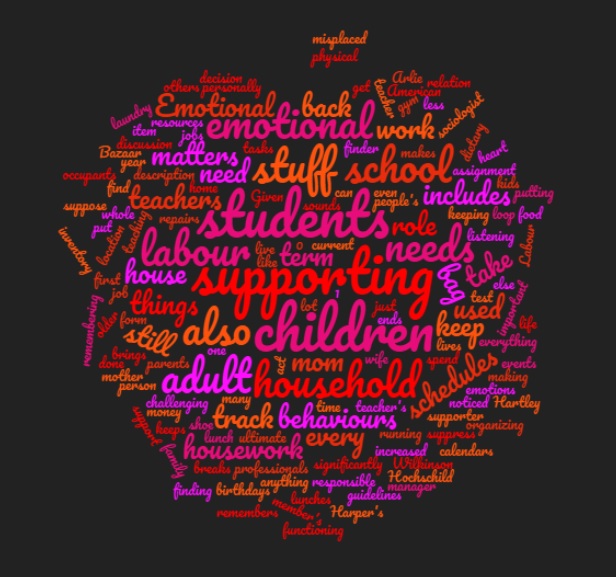
As a mother of adult children, I find with every year they get older, I take on less physical labour and more emotional labour in supporting them through their life. It’s the heart breaks and the support in adult decision making that keeps me in the “mom loop”. There is also supporting my children with money and other resources but that’s a whole other discussion.

Emotional labour is the act of supporting a person who needs to suppress their emotions (Wilkinson, 2018). The term was first used in 1983 by American sociologist Arlie Hochschild.

In 2017, Harper’s Bazaar (Hartley, 2017) used the term in relation to being the manager of a household that remembers all the things that need to be done to keep a household and its occupants functioning. This includes putting stuff back where it is suppose to go and finding stuff that others have misplaced because they did not put it back. It also includes remembering birthdays, kids’ schedules, dietary guidelines for school lunches, school events, family member’s calendars and schedules, food and household item inventory, and organizing laundry and home repairs. So it’s not just about housework, its more work than house work … because housework ends.

My adult children do not live with me but I still take on many of these tasks keeping track of people’s stuff. In my current role of wife, I am the ultimate finder of all things in my house.

Given the above description, it sounds a lot like a teacher’s job too. As teachers, we need to keep track of everything … the location of every form, lunch bag, test, assignment, running shoe, gym bag, and anything else students brings to and from school. As teachers, we are also responsible for supporting students’ emotional needs and behaviours. I’ve personally noticed that my role as a supporter of emotional needs and behaviours has increased significantly. This makes teaching even more challenging.

As a teacher and a mom, I still spend most of my time listening to students and my own children and supporting them in their lives. It’s one of the most important jobs we can do as parents and as professionals. It matters most to our students.

Happy Mother’s Day to All,

Collaboratively Yours,

Deb Weston

References 

Hartley, G. (Sept, 27, 2017). Women aren’t nags,  we’re just fed up: Emotional labor is the unpaid job men still don’t understand. Harper’s Bazaar. Downloaded from https://www.harpersbazaar.com/culture/features/a12063822/emotional-labor-gender-equality/

Wilkinson, S. (December 24, 2018). Why was everyone talking about emotional labour in 2018? BBC. downloaded from https://www.bbc.co.uk/bbcthree/article/5ea9f140-f722-4214-bb57-8b84f9418a7e

The Gender Gap in Technology

Quote for blog

According to a recent report* by ICTC (the Information and Technology Information Council) Canadian women represent about 50% of the overall workforce but represent only 25% of the technology industry workforce.  Of the 100 major tech companies in Canada only 5 have female CEOs and 1 Co-CEO.   26% of the tech companies have no women in senior leadership at all.  There is a gender wage gap in the industry of $7,000-$20,00 per year.  When I read these statistics I wondered as educators, what can we do about the gender gap in technology?  This is not an exhaustive list, but it is a place to begin:

1.  Build her confidence in her abilities.

2. Cultivate a community of supportive peers.

3.  Provide a STEM/STEAM club for girls.

4. Ensure that access to technology and computer experiences is encouraged and inclusive.

5. Foster interest in computing careers.

6. Be a role model as a LEARNER.

May 11th is National Girls Learning Code Day.  If you are looking to encourage coders in your school, why not begin on May 11th?  Below you will find links to resources for beginning coding.  Many students code on their own at home and may appreciate the opportunity to mentor fellow students.  The resources attached will get you started.  There is no special equipment or robotics required.  Teachers do not have to be expert coders to encourage their students.  Teachers can be role models of resilience, risk taking and problem solving by learning alongside their students.  Teachers only need to open the door and expose their students to the opportunities.

Girls Who Code Canada

National Girls Learn Code Day

Canada Learning Code

Scratch

Hour of Code

Code.org


*Cutean, A., Ivus, M. (2017). The Digital Talent Dividend: Shifting Gears in a Changing Economy. Information and Communications Technology Council (ICTC). Ottawa, Canada.

Elaborated and written by Alexandra Cutean (Director, Digital Innovation Research and Policy). and Maryna Ivus (Senior Analyst, Research and Policy) with generous support from the ICTC Research and Policy Team.

Remember to breathe (as you continue to inspire others)

I checked in on a few of my former student teachers today. Each of whom are shining examples of professionalism, commitment, and creativity in their classrooms. They have been on my mind alot lately, as daily news of the government sponsored attrition games occupy headlines and conversations across the province. I am sure they represent the hundreds, even thousands of new educators who have recently joined our calling.

It’s rough out there right now, and for many new hires to school boards the uncertainties of the day are leaving many wondering what the future holds? For each one of these amazing educators, things are changing and there is not much they can do to about it until the facts and figures are finalized. It must be difficult to know that the educational landscape is shaking beneath so many feet. We all need something to hold on through the experience.

Sharing what we have in the emotional toolbox may be all that can be done for now. I encourage everyone to keep checking in on one another as we remain united and ride out the storm. A call, an email, or time for a cup of coffee could provide a little needed encouragement. I have noticed that even veteran teachers are feeling the tension of these days too. I have caught myself stress eating, acting a little more impatient than usual, and struggling for motivation. I’ve taken to breathing exercises to slow down my busy mind. Perhaps it’s the unknowns of it all that are keeping me off my game?

To get a sense of it all I have been turning to Andrew Campbell. He curates Ontario Education Cuts. This is a list of announcements and projections from school boards and grade panels that challenges the message being delivered by the province to the public and school boards about job losses, shrinking course offerings, expanding class sizes, and shifts to online instruction.

screenshot-twitter.com-2019.04.30-20-35-35The information and numbers in this document seem to add up differently than political messages about job losses over time due to attrition and attrition alone. Maybe there is a Math Curriculum revision opportunity in the works here since such skewed accounting discrepancies exist?

What we all need is to have the complete set of numbers to work with before we can truly provide assurances to our new teachers that there will be jobs for them in education.

I remind myself that I am surrounded by incredibly dedicated and caring professionals whose lives are dedicated to making the world a better place. Stay informed. Stay encouraged. Be strong. We are all here to support and lift each other up when things get rough. Sometimes it might be a time for a cup of coffee and a conversation. Other times, it might be a simple reminder to breathe.


Bursting bubbles

POP!
What’s
that sound?
Fear and loss,
dreams – on hold,
watching, without a
voice as opportunity
is cut and cancelled.
For the people, or
for their bank
accounts?

Doubts – fill the staffroom.
Murmurs – echo down the halls.
Uncertainties – buzz through minds.

Bubbles – bursting before they are even formed.
Cuts like needles meant to pierce hearts and minds.

Are preparations being made for a classless class war?
Why has education been made the enemy in our province?

They say the bitter pills prescribed in government cuts must be taken or else there won’t be a future and that everyone must sacrifice because this mess is nobody’s and everybody’s fault. Yet, why aren’t elected officials in line for the same medicine that they’re prescribing? We hear tonnes of sound bites and sound bluffs. We see posturing on every stump, but where are the planters and peace makers after the forest that is public education has been razed?

We see fingers pointing in every direction because everyone is worried more about the colour of the ink on the spreadsheet than the lives that it will stain to change it.

What message is being sent to our youth by the adults, who cannot get along? The same adults making decisions about their futures? We ask our students to advocate, invest, and dedicate to their potential. We teach them to think critically, consider the facts, and make good choices. We expect students to buy into a better system, but it has already been sold out by the ones elected to take care of it.

Investing in our youth and their education should never come at a cost of denying them anything less than what their predecessors and parents had before them. Opportunity cost may be a term from an Economics textbook to understand the potential for a loss by doing something else. When we consider where things are heading in schools over the next few years, the money saved will never make up for the lost opportunity, innovation, and productivity, or the imminent financial and social costs.

Remember. Quality only hurts once. Our students are worth it. The work we provide prepares and protects them to possess a future. Our youth cannot be blamed for the mistakes of those who leveraged their futures before they were ever born. We cannot let another bubble burst and expect their children to pay for it.

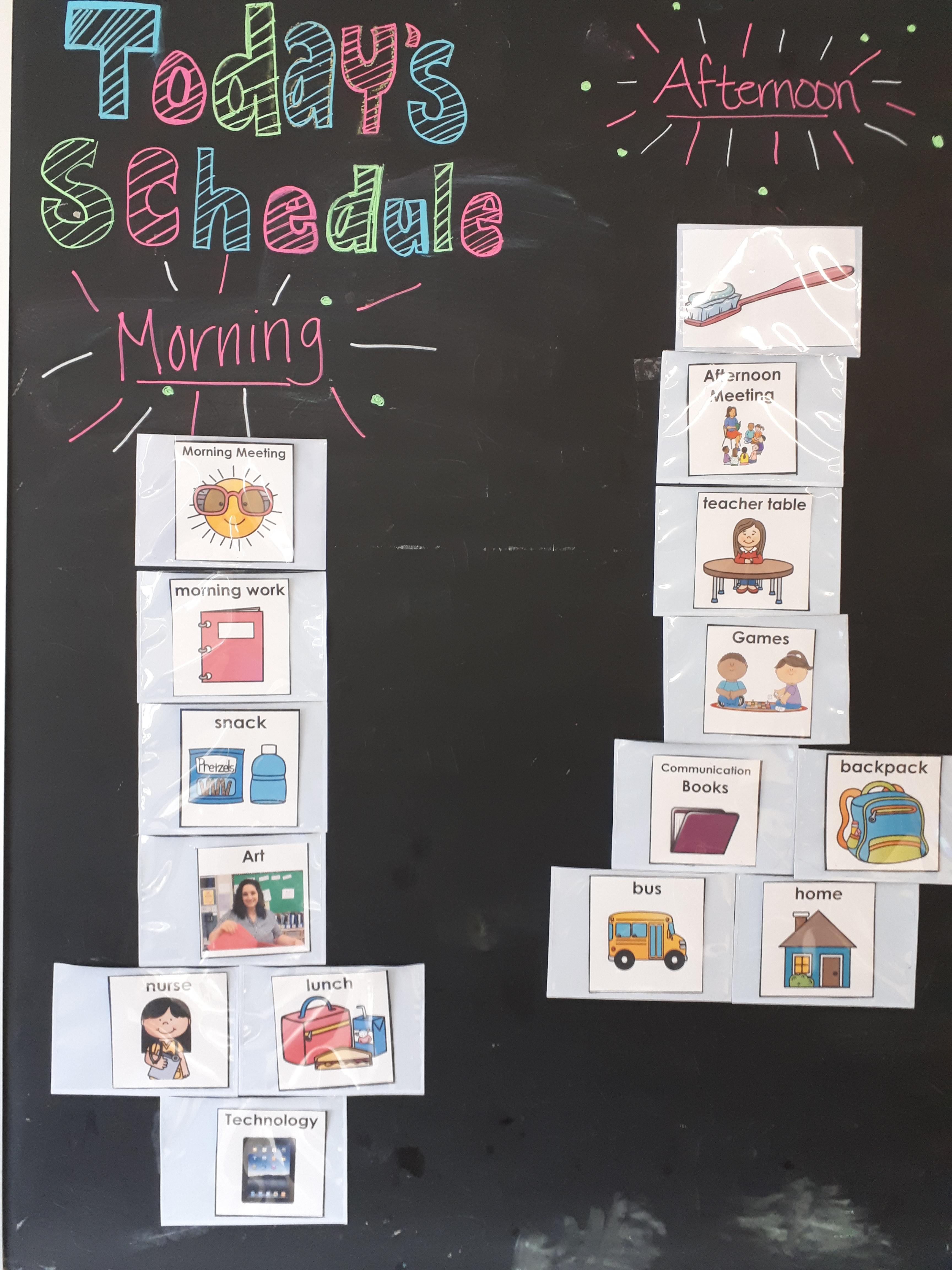
A blackboard with the schedule taped on it.

A Typical Day in a Class of Students with Developmental Disabilities

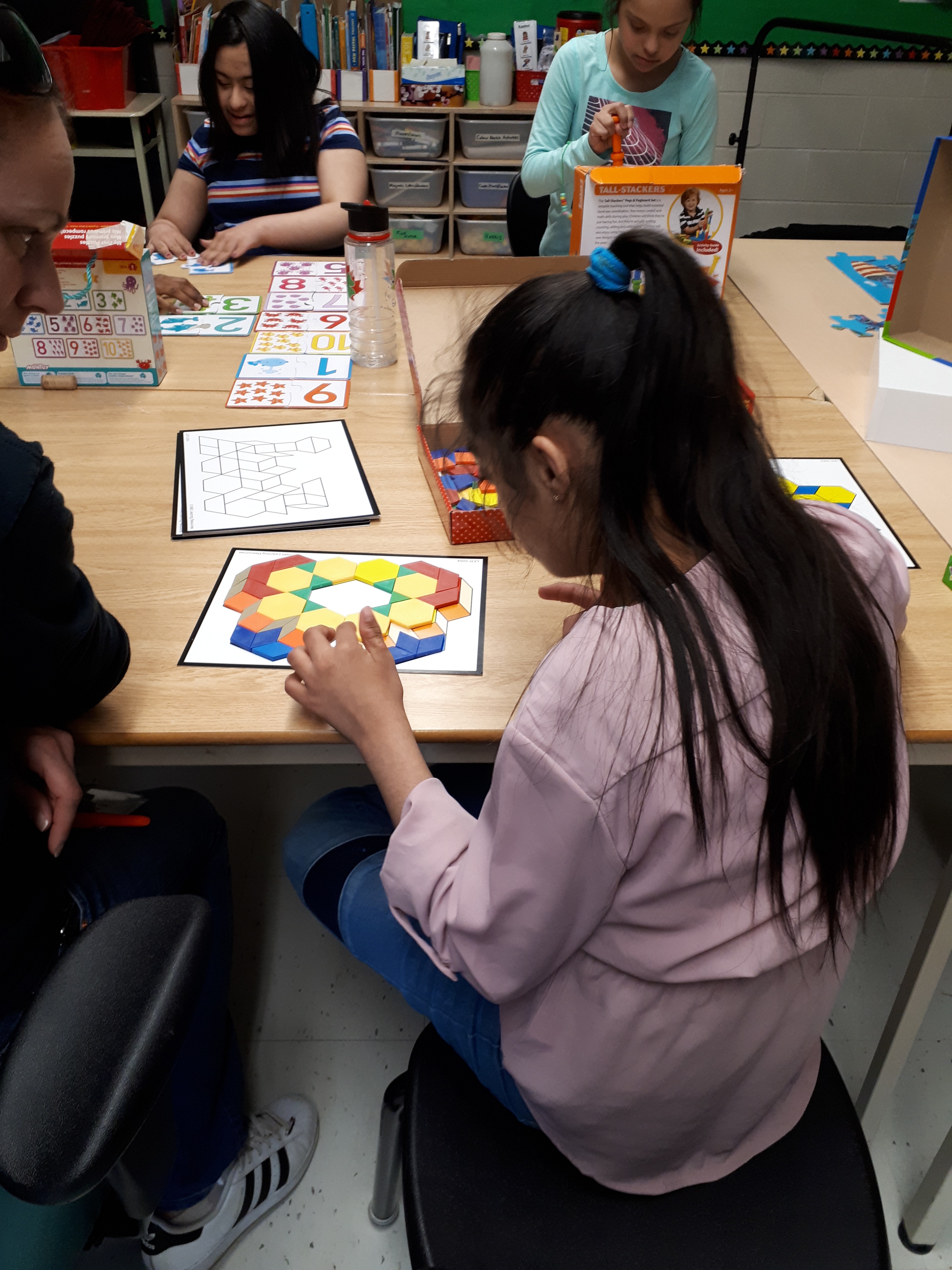
When I started my new role of supporting students with Developmental Disabilities this year, my biggest question really was about the structure of the day. Since it was my first time doing this role, I asked many other teachers who have been doing this role for a long time for advice. They shared with me how their day was structured and ideas for potential programming. I took many of their suggestions and paired them with ideas that met the needs of my students. Without the kindness of so many of my Peel colleagues, I would have been LOST! For those of you out there that will be taking on this new challenge in September, below is a typical day in our classroom to hopefully give you some ideas to get you started.

It is important to note that my schedule has changed at least 30 times since September as we worked towards the perfect fit for our students. All of our students and staff were new to our class this year and there were many things that impacted our schedule that I didn’t anticipate such as medical needs, busing schedules, integration opportunities, behavioural needs and student goals. The schedule is something that I am constantly reflecting on and am constantly tweaking as I observe my students and team in action.

A typical day in my class:


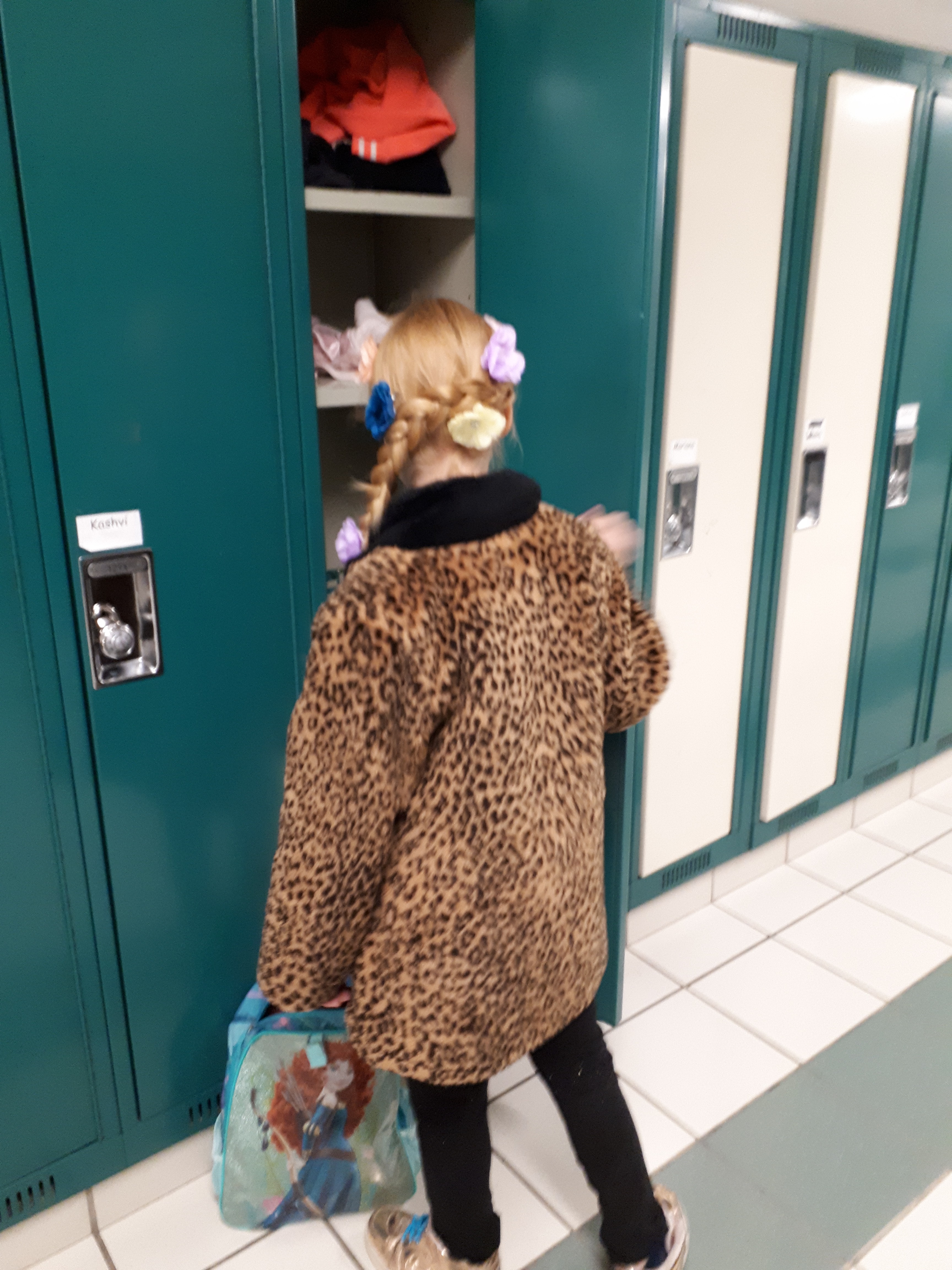
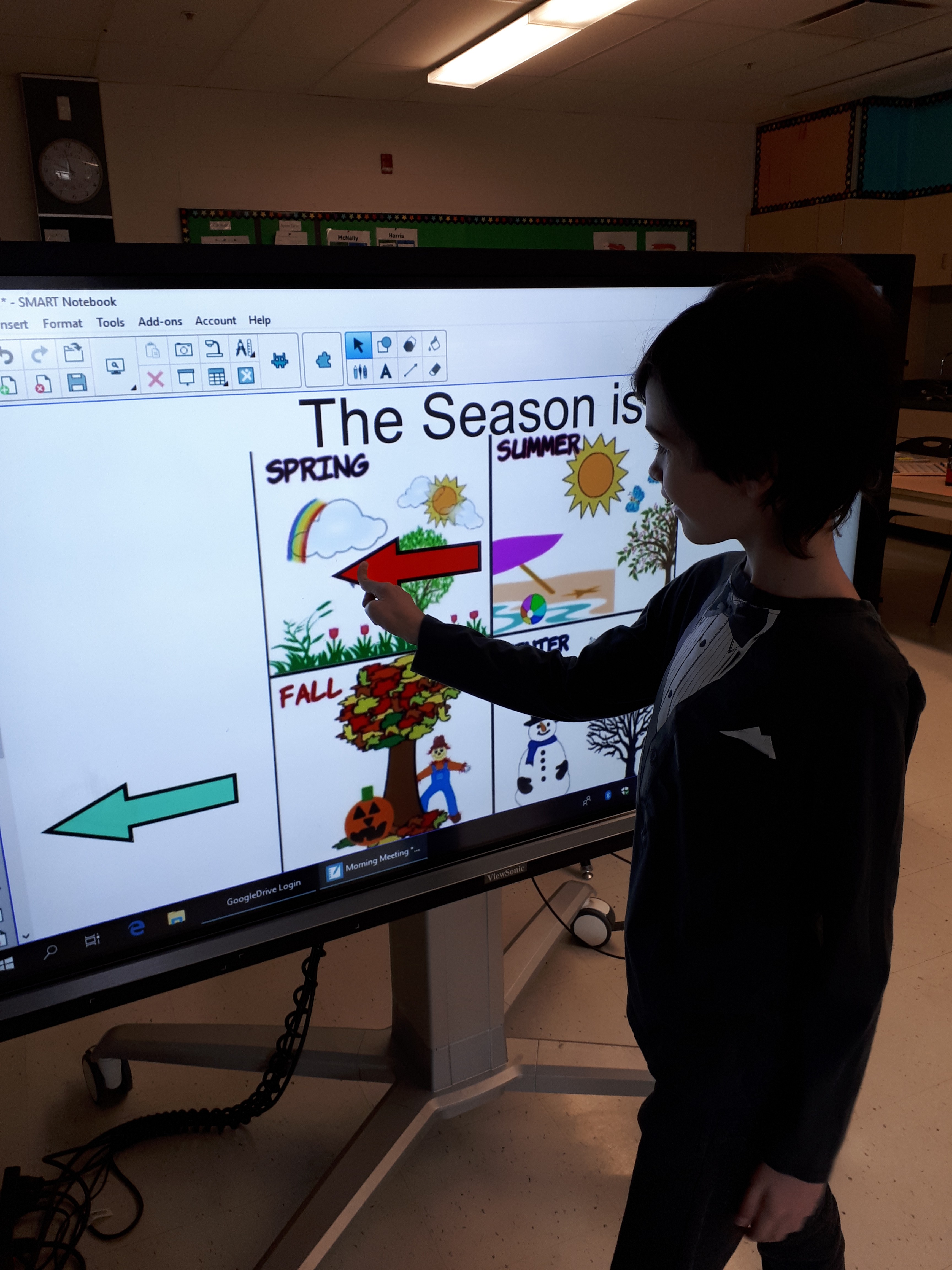
We enter the building and put our stuff in our lockers.

locker

We have our morning meeting.

Morning meeting

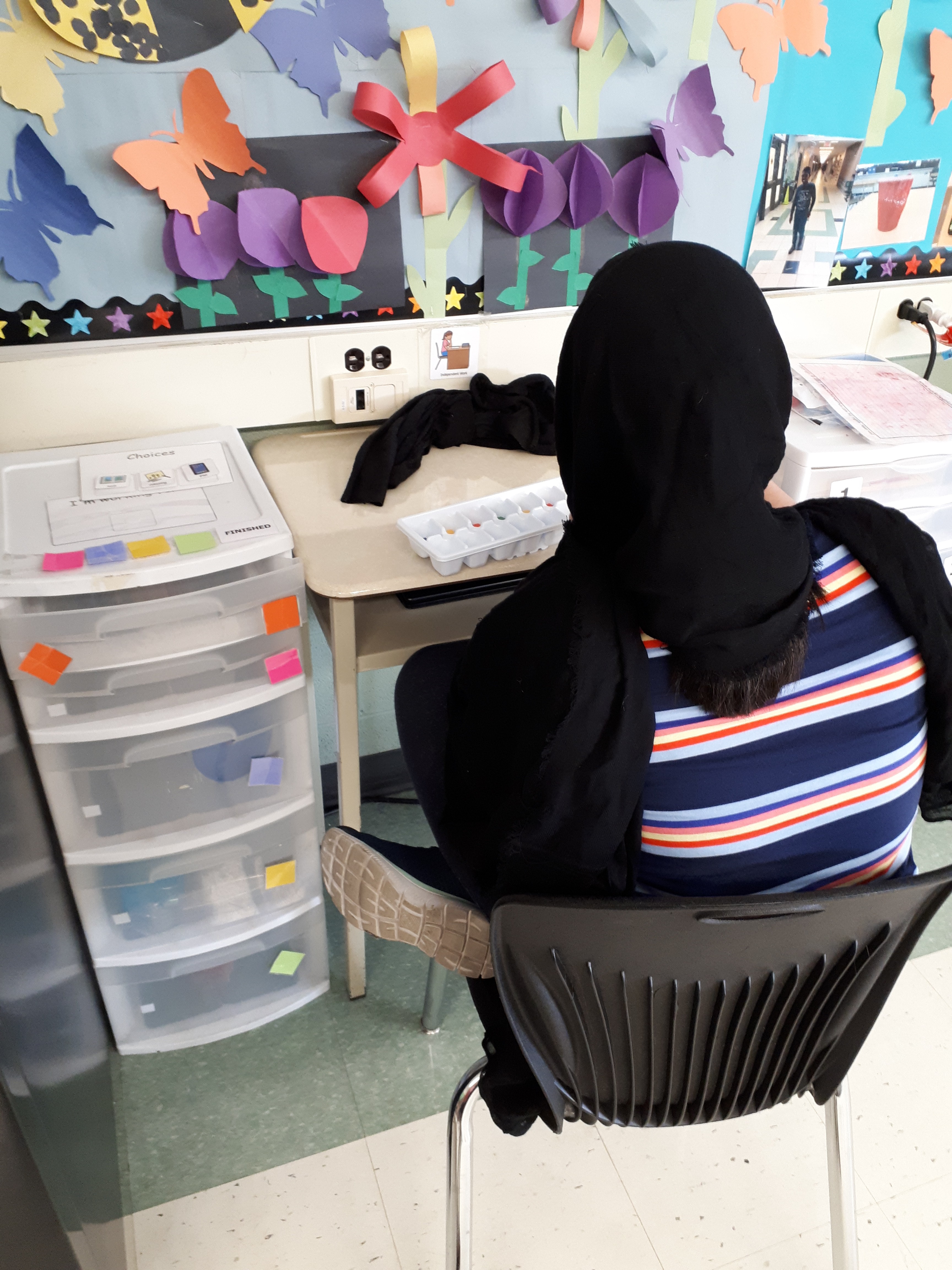
We do our morning work.

Morning Work

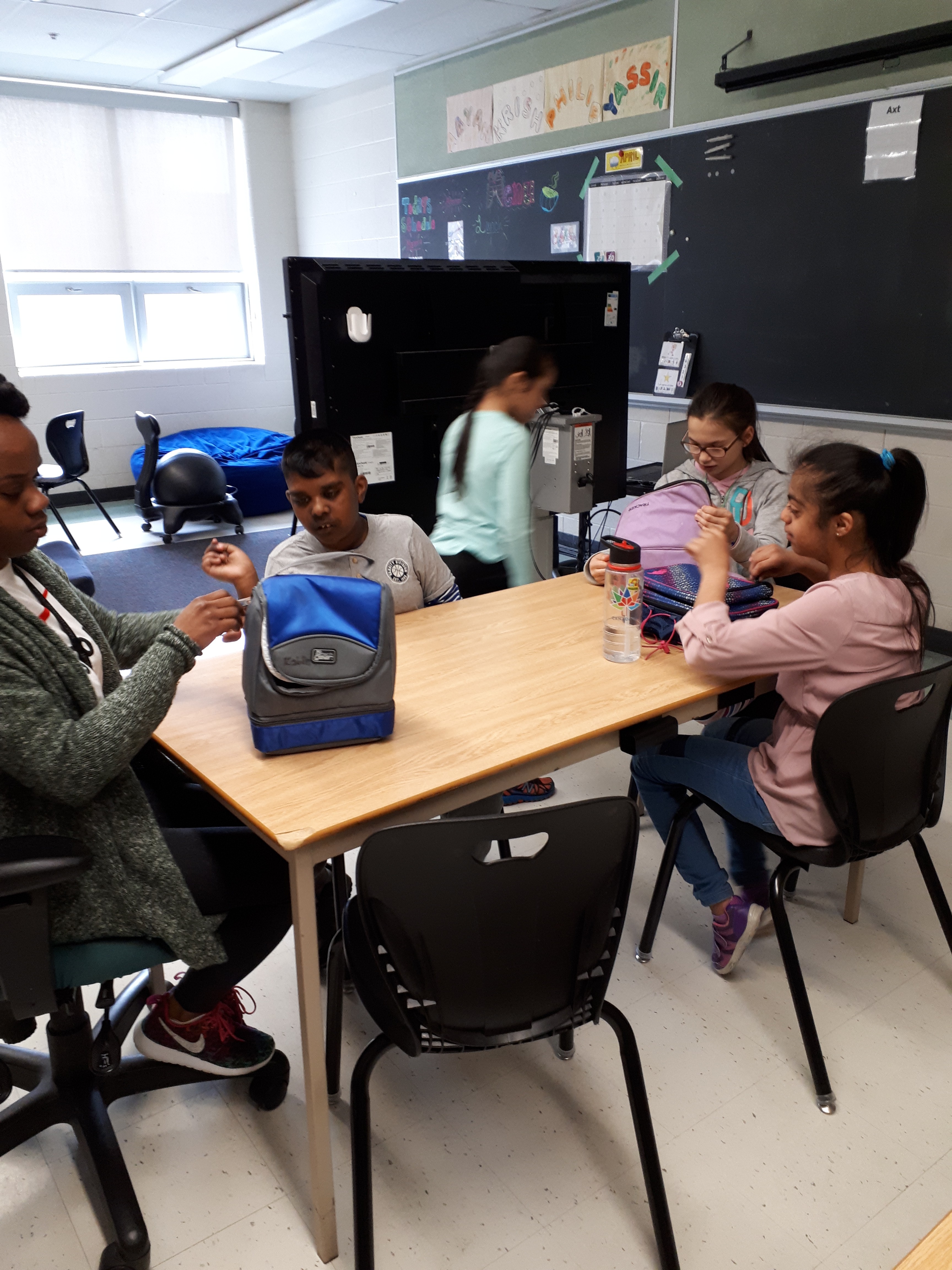
Snack time

snack

Gym or art

gym


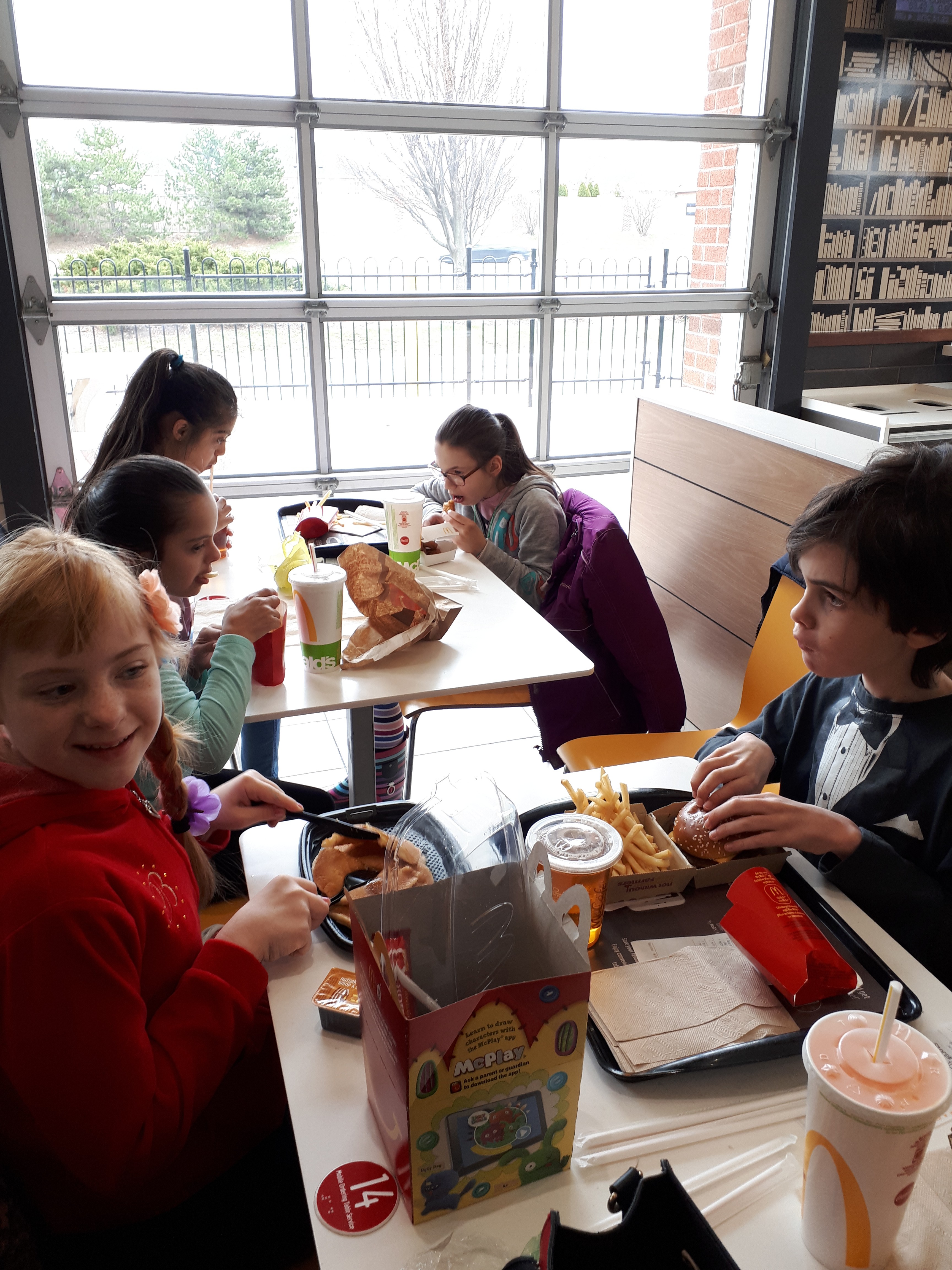
Lunch/Life skills (Today was public transit training and eating in a restaurant)


McDonalds

Hygiene Routine (brushing teeth, brushing hair, washing face and putting on deodorant)

Toothpasteonbrush

Afternoon work time/social skills


Games and work

Pack up and get ready to go home

Trading Places

I’ve been thinking a lot lately about the value of trading places between the teacher and student role. Building trusting and meaningful relationships with our students is one of the most important things we can do. An important part of this is showing students our vulnerable sides.

I want to reflect on the value of becoming the student and allowing students to become our teachers. I think there are three things that happen when we do this.

1. We show students that we are still learning, and making mistakes, too

2. We empower students to take on an expert role

3. We remind ourselves what it’s like to be a student

When we put ourselves in the position of the student and ask our students to teach us something, we are completely flipping the hierarchal system of the traditional classroom (for example, “I am the teacher, therefore I am the only person with right answers”). Most teachers these days are doing this in some ways already. The inquiry classroom model is one great example of teachers challenging the traditional role and learning alongside their students. Learning from them, is a whole other thing.

Students that are offered an opportunity to teach something they care and know about to an adult are empowered students. Whether it be a skill such as drawing, knowledge about their favourite animal or sharing aspects of their culture and heritage, every child has something that they are an expert in. Asking them to teach us what they know and care about builds confidence and empowers. Feeling like an expert is important.

It can be easy for teachers to forget what it’s like to be a student. It’s frustrating to want to learn something or master a new skill and struggle. It’s frustrating for us as adults (have you ever participated in a Paint Nite?), and it’s frustrating for our kids too. Trading teacher-student roles can be a refreshing reminder that understanding a concept does not always come easy.

There are many ways to become the student in your own classroom. I’ve seen colleagues implement things like “Teacher For a Day” projects, or include teaching as part of the culmination of independent inquiry learning. These are great ways to do it, but I think there’s a lot more value in allowing it to come up organically. A while ago, some of my students were writing in Arabic during their free time. I could have walked over and said, “great work!” but an opportunity would have been lost. Instead, I decided to ask them to teach me to write. It ended up being a wonderful bonding experience. I showed interest in their personal knowledge and skills, they felt empowered as experts, and most importantly, I showed them that learning is lifelong. I think that’s a powerful thing for kids to know.

Plus, you can learn some pretty cool things from the grade one and two kids of today. How do you trade places with the students in your classroom?


Hiring Uncertainty

I’ve been employed as an Occasional Teacher for just over three years now. I spent some time doing daily supply work and I’ve been very fortunate to have worked in full-time Long Term Occasional positions for nearly the whole time since. My last few LTO positions have been full-time, full-year, so I haven’t really been feeling like an Occasional Teacher, until the end of the year comes and I’m loading up my car, once again. I’m very happy doing what I do. Whether I’m with my class permanently or as an LTO teacher, it doesn’t change my day-to-day life and it certainly doesn’t change how much I care about my work.

But that doesn’t mean I’m not waiting patiently, and excitedly, for a permanent position.

If you’re like me, you’ve been paying close attention to the movement in your board, checking job postings daily, closely monitoring your place on that seniority list, and trying to determine your chances at having enough seniority in an applicant pool to finally get that permanent interview call. By my speculation, I was quite hopeful that this coming school year would finally be my year to gain permanent status.

Recent changes to our education funding have caused up quite a stir about hiring and the potential loss of teaching jobs. I can’t imagine how newly hired permanent teachers or those in positions at risk must be feeling. After all, they were right where I am not long ago.

My fellow Occasional Teachers are worried, too. Could my hoped-for permanent position be delayed by a year, two, or three as a result of the inevitable surplus? Many boards are hoping to absorb job losses through retirements, but it’s easy to see that next year’s hiring just won’t be what it has been over the past few years. It won’t be what I think many of us were expecting, meaning many people in the same boat as I am are probably feeling pretty discouraged right now.

What I want to say is hang in there. Remember that every day you spend in a classroom, whether you’re there for one day as an Occasional Teacher, or a year as an LTO, you are making a difference. You are teaching, inspiring and doing what you are meant to be doing. The road to permanent employment may have just become seemingly longer and harder to navigate, but it certainly doesn’t change the fact that one day, you won’t have to load up your car at the end of the year. One day, you’ll get to stay permanently in your happy place. Don’t give up on that.

It hurts my heart and my head to see colleagues and friends considering alternate employment, purely out of the necessity to provide for their families. I’m talking about people who have poured their heart and soul into becoming a teacher – people who belong in the classroom. Beginning teachers are some of the most driven, excited and passionate people I know. We’ve got so much to offer to our kids.

It certainly is an interesting time in education right now. To all my colleagues out there who are concerned about their jobs or their ability to find work over the next while – I see you. Hang in there and don’t let our circumstance overcome your drive and passion. Good teachers belong in classrooms, and you’ll get there eventually!

Attending ISRC (In-School Review Committee)

Most of us will attend an ISRC (In-School Review Committee) at some point during our career. Usually, it is for students that we have concerns about in a variety of areas including behaviour, academic success, emotional well being etc… In my experience, the ISRC will include an administrator, a Special Education teacher and a variety of other professionals from outside your school. The goal of the ISRC is to review and monitor students’ needs.

Like many other things in teaching, no one really sits you down and explains how to get the best out of your trip to the ISRC. I wish someone had told me how to prepare and what to ask for so that my students could get the best services possible.  After one year in a special education role, I have learned many things that I didn’t know before and I can share with you how I now prepare for an ISRC.

Before I go, I answer the following questions:

What is the problem? Is the student struggling academically, is attendance an issue, have they gone through some kind of trauma, is there severe behaviour, are they going through difficult financial times etc. Before you go before the panel have the issue that you are trying to address very clear in your mind. Basically, what is in the way of this student being an academically successful contributing member of the classroom? If it is multiple things, pick one to start.

Have I done my homework? Get out the OSR for this student to see if this student has ever had any kind of supports before. Referrals, signed consent forms and reports of service should all be in the OSR for you to review. A good team at the ISRC table will ask about previous supports for the student.

Do I have evidence to support my student’s need? Evidence will help you answer any questions that the panel may have for you. Evidence may include attendance records, assignments, report cards or behaviour tracking sheets. Basically, anything to demonstrate your student’s need.

Have I called the parents to communicate my concerns? Before you step foot in ISRC you should communicate your concerns with parents and explain that you will be going to discuss their child at an In School meeting.

What services does the student need? Before I started my current job, I literally had no idea what supports were even available to ask for. This is the mistake that I made many times early in my career. I went to ISRC not to ask for services but to highlight a student I was worried about. No one told me that going to talk about a student I was worried about was sometimes not a useful exercise.  I wish I could go back in time and request social work for my student who was always absent and Speech for my student who was struggling with his articulation.

Nobody told me that you could ask for:

  1. Speech and Language Therapy. Can address concerns about articulation, assistive technology, programming and communication needs.
  2. Occupational Therapy. Can address concerns about fine motor, gross motor, sensory needs and daily life tasks such as toileting, putting on clothing, holding a pencil and tying shoes.
  3. Physical Therapy. Can address concerns about physical mobility and safety around the school and in the classroom.
  4. Social Work. Can address concerns about family trauma, attendance and mental health. They can also provide support in making connections with community support.
  5. Phycologist. Can perform Physcoeducational assessments and support on the writing of a safety plan
  6. Behaviour Team. Can observe, plan and consult on behaviour at school and at home and help with behaviour that is interfering with academic success.

Obviously, there is usually a long, long wait list for many of the services and the services are often given to students that are most in need first. However, if you never ask, the student will never receive the help you are looking for.

One final thought

If the student is struggling academically, you can go to ISRC to get input on teaching strategies from the panel. However, please keep in mind that out of all of the people in the room you are the only one that has taught the student. It can be very frustrating listening to a group of people suggest strategies that you know will not work because of your experience with the student. It makes more sense to invite a colleague or a teacher in the school with special education experience to come in to your class and to co-teach a lesson and discuss strategies. After you have tried a few strategies and have some data to demonstrate the effectiveness of those strategies a trip to ISRC could be the next step and the experts in the room will be able to provide more effective feedback.


Thanks for all that you do every day to support your amazing students at your school!