What’s really scary

Ir’s October 31st, and in the chilling shrills of SCTV’s Count Floyd, “AAH-OOOOOOOOOOOOO, it’s very scary!!!!”

That’s right zomboys and ghouls, two months of school have flown past faster than a banshee in a frighter jet. Did you stop to breathe? Have you had a chance? Did the start of the new school year take your breath away?  A new year can be full of tricks and treats for both new and experienced teachers alike.

Congratulations, by my calculations 20% of this year’s pumpkin pie has been sliced and served. What memories will you take away from these first two months. In my class we take some time to thresh out what’s been alright from the blight.

We had another reorganization due to rapid growth in our school. That meant quite a few changes. Some students had to be moved to new classes, we welcomed new staff, and in some cases routines needed to be re-established with a completely new classroom dynamics. Did you have to re-organize after prepping all Summer for a different grade?

Did you smile? Did you know that some teachers were taught not to smile until November? I couldn’t make it past the first day. Chris Emdin’s TED Talk Teach teachers how to create magic shows us a better way. Now this is something to howl about. AAH-OOOOOOOO!!!

Has your year been a fright or a delight so far? Beware as the chilling thoughts of report card writing are lurking around every corner. When I first started teaching I was tormented by minutia of learning the operating system, communicating learned, strengths, and next steps in parent friendly voice, administrative preferences, and to make sure I had enough data to back it all up. VERY SCARY!!!! With the support of my grade partner(s) and a cauldron of caffeine I have slain the very beast that haunted my early practice.

How are you balancing the tricks and treats of classroom life? Did you give yourself permission to enjoy the experience? I find that teachers get so caught up acting like humans doing that they forget to enjoy that they are human beings. Where’s the treat in that?

You owe it to yourself to take time to take it all in while taking care of everything in your classroom. You’re an educator who stands alongside a room full of time machines, each with boundless ideas and imaginations. So that if we’re going to be afraid of something it will only be the boundaries we try to put around ourselves and therefore our students. Now that’s something scary. Happy Hallowe’en.


A letter to an inspiring teacher

Amazing work that encapsulates the heart and art of teaching and learning is happening all around the province every day. Many of us can remember that one amazing teacher who had a positive impact on our life. Recently, I decided to look up that one teacher that really had a positive impact on me and wrote her an e-mail telling her how amazing she is. I realize how impactful she was on my current practice and how I try to emulate her caring nature every day in my classroom.

Hello Ms. S,

My name is Tammy Axt (used to be Gallant) and over 20 years ago I had the pleasure of being one of your students.

Today, I spent the day at a workshop where the following question was asked: “Which teacher had the biggest impact on your life?” That answer was a simple one: it was you, Ms. S.

I joined the cross country running team, which you coached, during my time in high school. I was not interested in joining, but my friends talked me into it. I was definitely not the fastest runner that you ever coached, but because of your perfect blend of high expectations and caring nature, I felt great after every practice. You gave up your time after school to run with us around the neighborhood and taught us the mantra “Kill the Hill” when running up the never-ending hill close to the site where the school used to be. You taught me that hard work pays off and to never give up on difficult tasks. I really believed that you cared about us, our futures and our well-being. I have carried so many lessons learned from that time over the past twenty years.

You also supported me through the opportunity of teaching a dance unit to younger high school students when I was in the upper grades. Talk about a confidence builder. You really took the time to help me prepare and execute a successful dance class during your gym period. You valued my abilities and recognized my strengths that I didn’t even knew I had.  Taking on that leadership role was huge for me, and it started to shape my ability to explain things to other people.

As you might have guessed, I am now in the best profession in the world as well. I am a teacher with the Peel District School Board. I teach music, drama and dance to students in grades 1 to 5 and I love it. I try every day to do what you did for me, for my students.

You also might be interested to know that I lead learn to run clinics in my community, where we also have a huge hill. The mantra “Kill the Hill” continues on. I try to look at all of the runners the same way you looked at me: with confidence and belief in their abilities.

I hope this letter finds you well and if you have a moment I would love to hear how you are doing.

Thank you for doing all that you do every day to help kids reach their potential.


Tammy


Classroom Management- Nothing seems to work. What should I do? Part One

Classroom management is something that has been drilled into me since day one of Teachers’ College. I use my knowledge and training every day to make sure that my classroom is a safe and enjoyable place for students to come and learn. However, I do believe that classroom management is not always perfect. Sometimes a strategy that you have used for years just doesn’t work with a certain student. Also, every year your new group of students brings with them a new set of challenges. Maybe they are a chatty bunch or a group that really struggles with social skills. Therefore, classroom management is always a skill that needs work and constant reflection.

In addition, sometimes your management strategies can be working with a certain student, then one day, for whatever reason, it stops working. This is the position that I am in this week. I have had one of my students for a couple of years in music and this year, the strategies I have used are just not working as well as they have in the past.

As the problem is escalating, I feel like I have tried as many strategies that I can think of to help this student be a positive, productive member of our class, but nothing seems to be working. So now what?

After I exhausted all of my own strategies, my first step was to book a meeting with my special education team. To help facilitate this meeting, I brought in a few notes to help me explain the issues that were happening in class.

The page of notes that I brought was divided into four sections:

Section one– Concerns

This section outlined the concerns about the academic success of my student. In my experience, this is always the place to start any meeting of concern with administrators or advisory teams, as it shows the impact the behaviour is having on the child’s success in school.

This section also briefly outlined the behaviour concerns that I was witnessing in the classroom. I chose two main concerns as a starting place. I know that if the concerns that I chose were managed, things would not be perfect, but the student would be able to learn and begin to have positive interactions in the classroom.

Section Two- Strategies tried and results

This section explained the strategies that I have tried and what the results were. I wrote about proximity teaching, peer helpers, one-on-one assistance, scaffolding and many more. For each strategy, I explained exactly what I said and did, and what the child’s response was to the intervention strategy. This helped the special education team and I to identify trends and allowed the team to begin to see the picture of the interactions in the classroom.

Section Three – What is working/Not working

For this section, I made a list of things that I felt were working in the class such as: entering the classroom, finding their designated spot, sitting in that spot during introduction of lesson without interruptions. I know some of this may sound very obvious, but it helped the team and me to identify some triggers for the student. It also gave us a starting point for further discussions on strategies to help the student.

Section Four-  Next steps

This was a section that I left blank for notes to record all of the suggestions and ideas.

This is only the beginning of the conversation about this student. We will be meeting again this coming week to co-plan intervention strategies and plan check-in points for this student to gauge the success of our plan.


Making la vida “OT” less loca

By Agriculture And Stock Department, Publicity Branch [Public domain], via Wikimedia Commons
As a teacher, the daily demands of planning, preparing, assessing, and constant learning occupy most of my waking hours. Thankfully, after several years at, what I call, the speed of learning I have achieved what appears to be a work life balance.

One thing I clearly remember, from the start, was a vow to never (emphasis on never) take a day off due to illness, PD, or any other reason. And for a while, everything went according to plan. Steadfastly, I made it 8 months before the inevitable happened. I had to take a day (NTIP will get you every time).

4 brain wracking hours of over planning later, I gave myself permission to believe I was ready to be away. Looking back, I had really over-prepared and I know it…now. From what I reckon, I planned about 3 times more instruction and work on that single day for the Occasional Teacher or OT who covered my classes. Well, better too much than not enough right?

After the experience I began reflecting about that day. My first thoughts were a tad egotistical, truth be told. Did my class(es) behave, were my plans good? Was I going to be outed for not knowing how to prepare for an OT? What if I messed up? I felt a bit vulnerable. What if my colleagues (all experienced teachers) had to cover for me? What would I do the next time?

I also thought about what it must be like for the Occasional Teachers who, on a daily basis, find themselves in a different school classroom teaching someone else’s students and lessons? Did they ever get a chance to feel connected to the lives they were impacting, however brief? I remember the first time I noticed a couple of OTs sitting by themselves in the staff room during lunchtime – little to no eye contact and even less interaction. I didn’t like how it appeared so different than the inclusive environments we were espousing in our classrooms.

Did it have to be this way?

We are all in the same educational boat, but it seems that some are sailing on a different part of the ship. Did I break an unwritten rule the first time I said hello, and invited an OT to sit with our staff to eat? Did I miss a class in teacher’s college that covered how this was supposed to play out?

Perhaps, this was a rite of passage that all OTs had to go through in our profession? If it was, I claim ignorance, but what I observed guided me more towards how I wanted to support these colleagues who were going to occasionally be part of my teaching life. I wanted the OTs that were me for the day to feel welcome and valued in the space in my place.

So, I started with my Day Plans; ensuring they were informative, concise, and easy to follow. As a prep coverage teacher, I made sure all of the resources were marked by subject, class, and time on the schedule. I included names of students who are helpful, descriptions of students who might need extra support, and all details related to any/all safety routines/plans. Thankfully, our school had a booklet printed up with most of the general info to leaf through as well.

I thought about what else could I do? Maybe they’d like a snack? So I included a peanut free granola bar with my plans too. The response was overwhelmingly positive. I had a number of teachers write a personal note saying that no one had ever left them a treat. It made me feel good because we all know as the day goes on a little snack goes along way to staying strong. To this day I have a drawer full of treats ready to share with my OTs. I knew that if a little snack works for my students, it would work for others too.

Now that I’m a homeroom teacher, I share my plans with OTs digitally via Google Apps for Education or GAPPS. This allows me to include links to any internet content like websites or video to be shared throughout the day without having to risk typing in the wrong URLs or mistakenly opening the wrong file(s). The easier I can make their job, the better the day.

Taking stock of my OT plans from last year, it struck me that, for various reasons(mostly giving/receiving PD), I was away over 25 days from my class last year. I had to rely on a host of OTs like never before and with their support not a lesson was missed. Each one delivering the lessons and sharing important feedback after each day.

With more days out of the classroom guaranteed in the future, I know my students are in good hands.

Thank you for reading. Please feel free to share your OT stories and keep the conversation going.


Wisdom Begins in Wonder


tumblr_mabyllzj6p1qfvq9bo1_1280


The end of the Kindergarten day. The students are safely back with their parents, the classroom is a mess and I’m probably covered in some form of art medium, tidying blocks, cleaning paint brushes, organizing toys and most importantly, reflecting – reflecting on the deep thinking, problem solving, exploration and discoveries that my students made in just one day. Sometimes this meaningful learning took place as a result of a simple question or observation made by a child that exploded into a day full of inquiry. One morning, a group of students were chasing each other’s shadows, which led to the entire class exploring the concept of light, an inquiry that captured their full attention for three days. Another day, two students noticed a sprout growing in the cracks of the pavement outside which turned into a nearly month-long exploration of life and natural life cycles. Another time, a large truck came by the school to pick up a garbage dumpster, and after witnessing this the entire class spent days researching heavy trucks and vehicles, relating them to simple machines. This eventually stemmed into a second inquiry about recycling and caring for our environment. In every case, the learning spanned into their writing, their demonstration of mathematical concepts, their dramatic play, their art creations and their building projects. What was my role in all of this? To question them, support them and observe them. This is what I love about Kindergarten. It is the perfect environment for inquiry-based learning.

Inquiry is probably one of those buzz words that you are hearing left and right – and rightfully so. To prepare students for life in the 21st century, we need to change the way we are teaching them to think. In other words, we need to teach them to think. It’s not just about teaching facts and information, but teaching our kids how to come across, process and communicate that information. The process of inquiry is not just about delivering the curriculum in a new way, but equipping our students to apply critical thinking, research and exploration skills to all areas of their life.

A colleague of mine implements Genius Hour in his grade five class. For one hour each week, his students are given time to research and explore any topic that is of interest to them. His students are working in a variety of areas – researching dogs, writing skits, creating a new sport, making presentations about the Eiffel Tower. Are they necessarily working on curriculum concepts? No. Are they learning? Yes! Are they engaged, intrinsically motivated and excited about their learning? Yes, and this is the key.

When our students are engaged in an authentic inquiry process, guiding their own learning, being autonomous in their decisions and problem solving on their own, they are engaged in much higher learning. We need our kids to take ownership of their learning. We need our kids to be excited to explore the world around them. We need them to wonder. When we accomplish this through immersing them in inquiry based learning, we are creating 21st century learners. It’s not always about what our students learn, but how they learn it.

Many classrooms that I have been in are using the inquiry model of learning in at least one or two subject areas – most often in science and social studies. Think of how valuable the learning could become if one inquiry could span into all curriculum areas, much like it does so naturally in the Kindergarten classroom. Why not give it a try? As I’ve learned from teaching Kindergarten, when students are free to direct their own learning, amazing things can happen.

As a teacher, it is such a rewarding feeling to watch students go above and beyond in their learning when they are motivated and engaged. I think it’s important for us all to remember that sometimes we need to step back, stop teaching and start asking.


.

Ontario Student Record Search

Wow, we are already into the second month of this school year and I am not sure I really know my students very well yet. I have a working idea of who they are as students and as people but need to gather more information to help me with my programming. That is where using their Ontario Student Record (OSR) can help you gather further data to assist me  in this process.

I typically do not complete my OSR searches until after the first month of school so that I can establish my own opinion about them as learners. The OSR is a cumulative record of them as a student since their entry into the Ontario education system. It is a legal document that travels with them from community to community and school to school in Ontario. It is a valuable tool for any educator who is working with a student.

There is a wide variety of information that exists in a student’s Ontario Student Record. First and foremost are the provincial report cards from their time at school. It is here that a teacher can gauge where a student has typically performed in the various curriculae. In addition there is often a wide variety of other sources of information specific to that student. For example, there could be documentation around outside supports such as occupational therapy, early intervention, psychological assessments, legal documentation around custody, Family & Children Services involvement, suspensions, Individual Education Plans and Safety Plans. When you look at the back of the OSR you can see a history of whether a student has had a stable education in one school or whether their circumstances show multiple schools with little or no stability. I have had one student who was entering into his 8th school and he was only in Grade 4.

There is a combination of hard data as well as data that has a subjective component and is based on the interaction and opinions of adults. It is important to differentiate between the two. I am not saying you should discount in any way or ignore that data, but rather understand that the circumstances in which that data was obtained may have been affected by many outside factors. For the student who was entering into his 8th school, his OSR showed that he had difficulty making friends. That data was accurate but was also impacted by his inability to be in a single place long enough to establish friendships or the fact he knew if he did make friends, he would probably be moving soon.

The OSR search is most valuable to me for my at risk students. Students who I know come with challenges either from an academic or behavioural standpoint are the first ones I search, as they demand my attention immediately. When I have a firm understanding of what level of achievement my students are displaying I then look at previous report cards to help me. If for example a student is obtaining a lower mark in mathematics then what has been previously reported it prompts me to further examine my assessment data to ensure my determinations are aligned with my criteria.

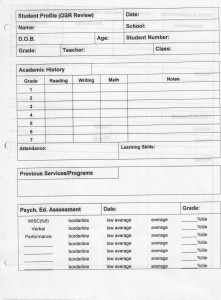
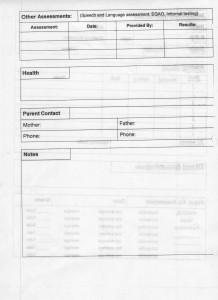
It is important to familiarize yourself with the proper protocol of what goes in an OSR, who can access an OSR, where that OSR can be viewed and the responsibilities a teacher has in regards to filing information in a student’s Ontario Student Record. A really rewarding aspect of doing my OSR searches is that I get to see how they have changed over the years with their annual photo. I have attached a template that I use when completing an OSR search.


scan

scan-1


Hello, I’m Laura!

My name is Laura Bottrell and I am quite happy to be joining the Heart and Art team for the first time this year. I am an Occasional Teacher in both the Hamilton-Wentworth District School Board and the Grand Erie District School Board, certified in the Primary and Junior Divisions. I had the wonderful opportunity to teach Kindergarten in an LTO position last year, and I am enjoying every moment of navigating my way through my first calendar year of teaching.

I hold a Bachelor of Youth and Children’s Studies and I am a Registered Early Childhood Educator. I have a professional interest in [and huge love for] early years education and I’m passionate about promoting and further exploring inquiry-based and play-based learning.

My other passion is the performing arts, which I love to bring into my teaching. I currently work in local community theatre and have taught drama, dance and visual arts for almost ten years. This year I am running a musical theatre program for children aged 3-6, which is just about as much fun as possible!

Other interests of mine include photography and travel – in fact, I’ve just returned from a five week adventure in The UK!

I’m very much looking forward to sharing my experiences as a beginning teacher with you and learning new things myself as we go along.

Happy Friday!


Open House as a Music Teacher

As a teacher that does not have a home room, open house can be a little different. I try to take the opportunity to chat with parents about the amazing things that their child is going to be doing this year. Often, I teach their children for four or five years so a positive relationship is very important to establish. The challenge that I often have on Open House is that I am only one teacher and I am visited by many of my 350 students’ families. To give waiting families something to do and to encourage shorter conversations with others, I have put up displays for all of the grades from one to five in the areas of dance and music.

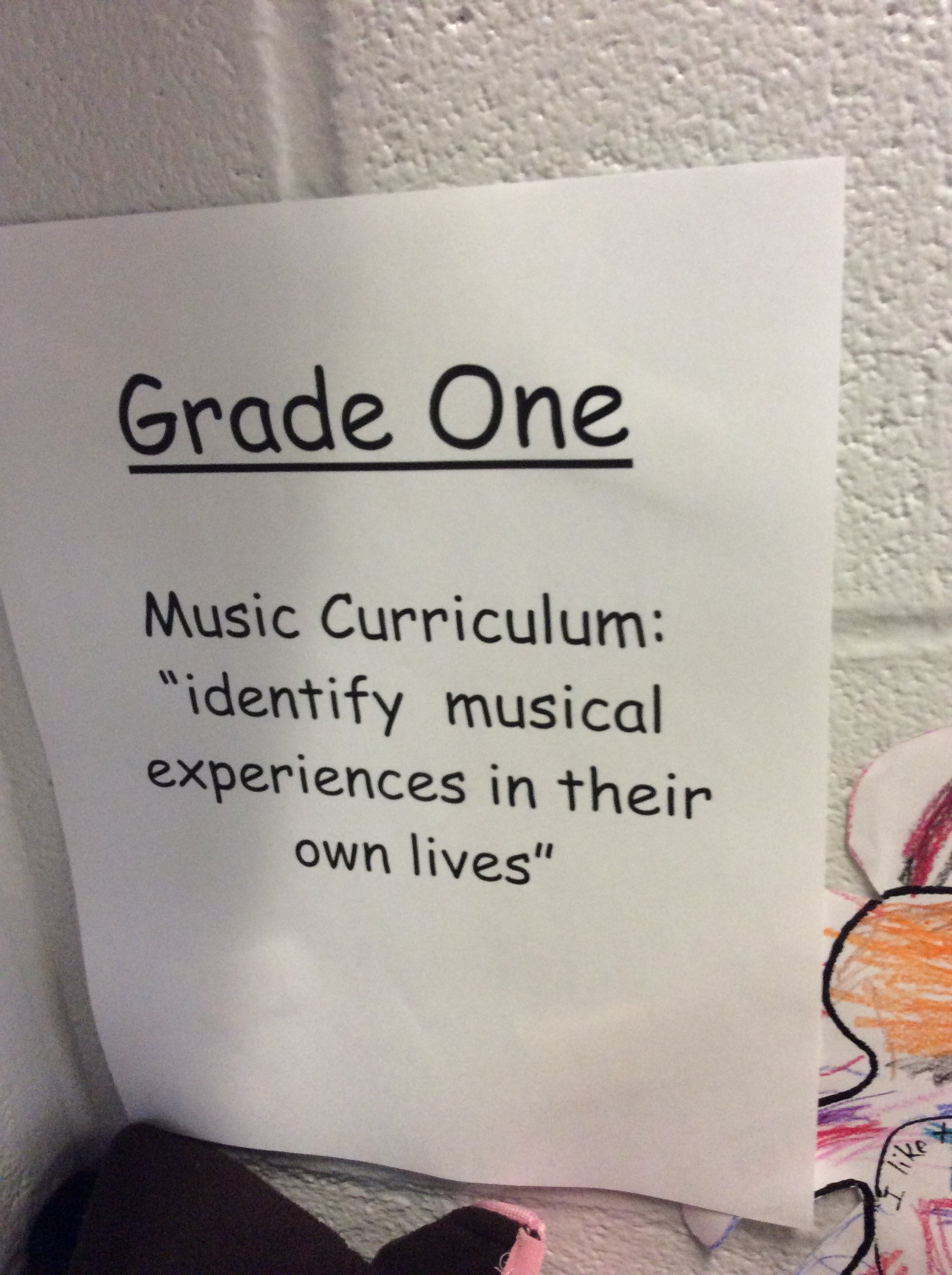
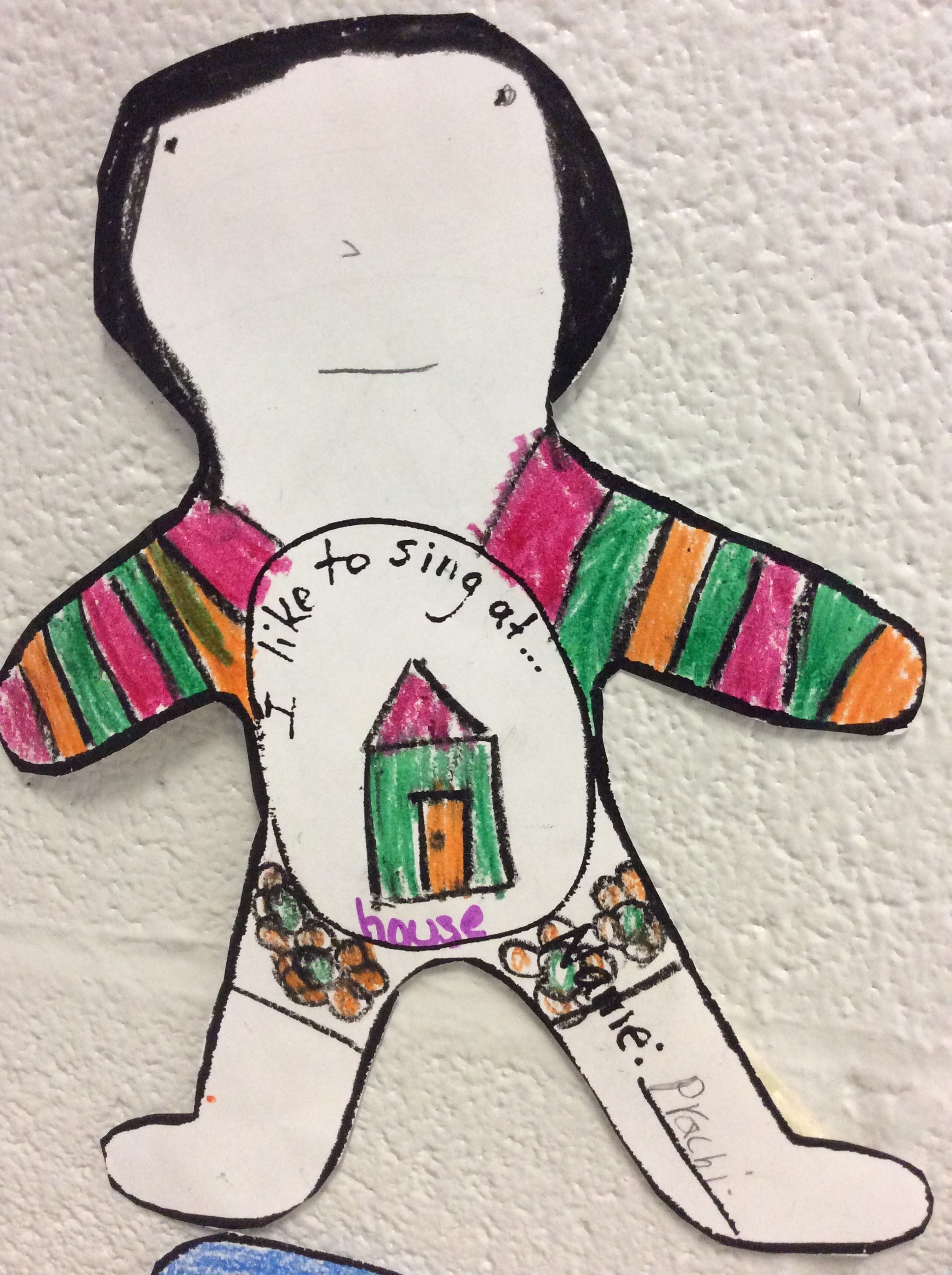
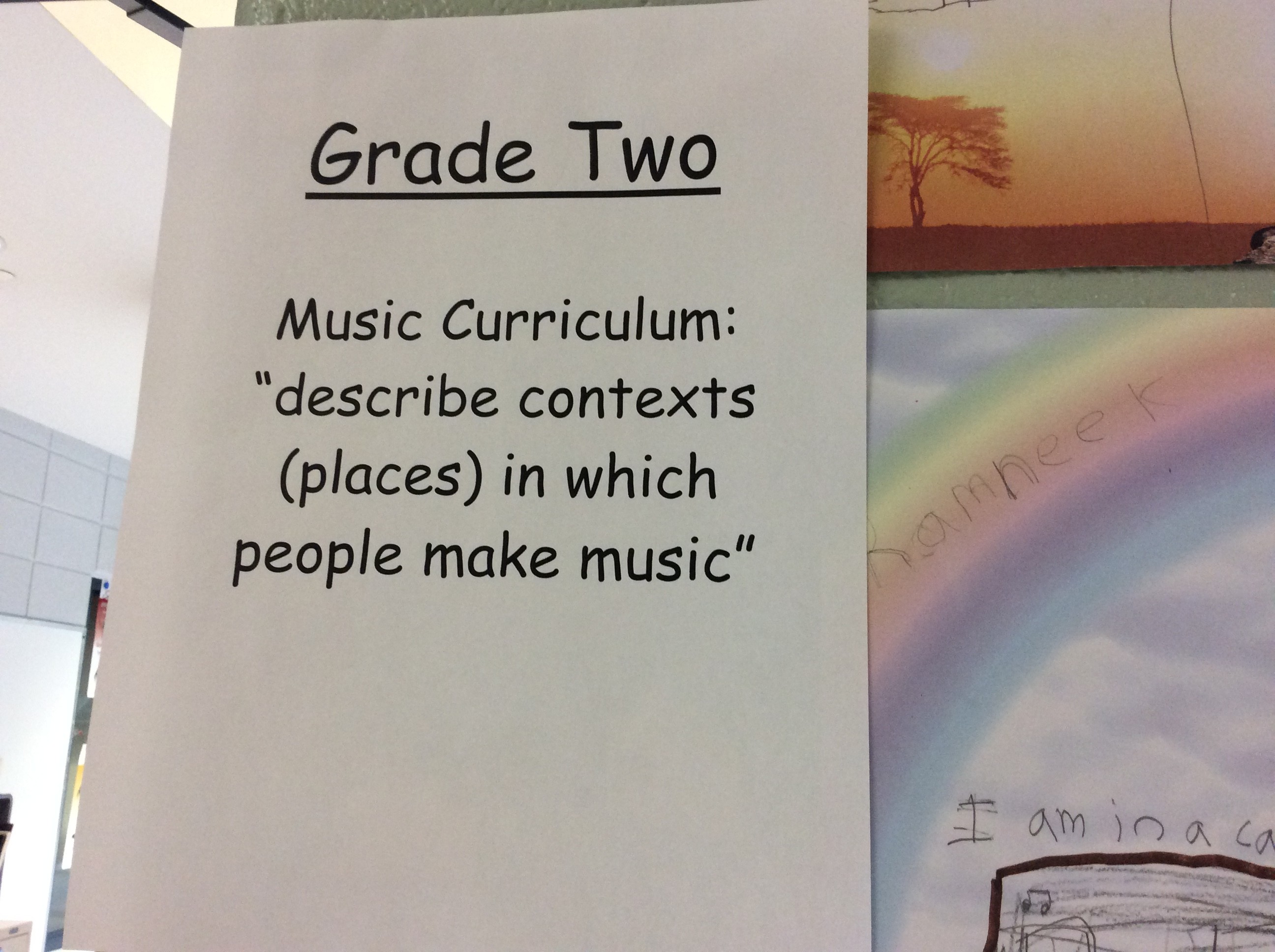
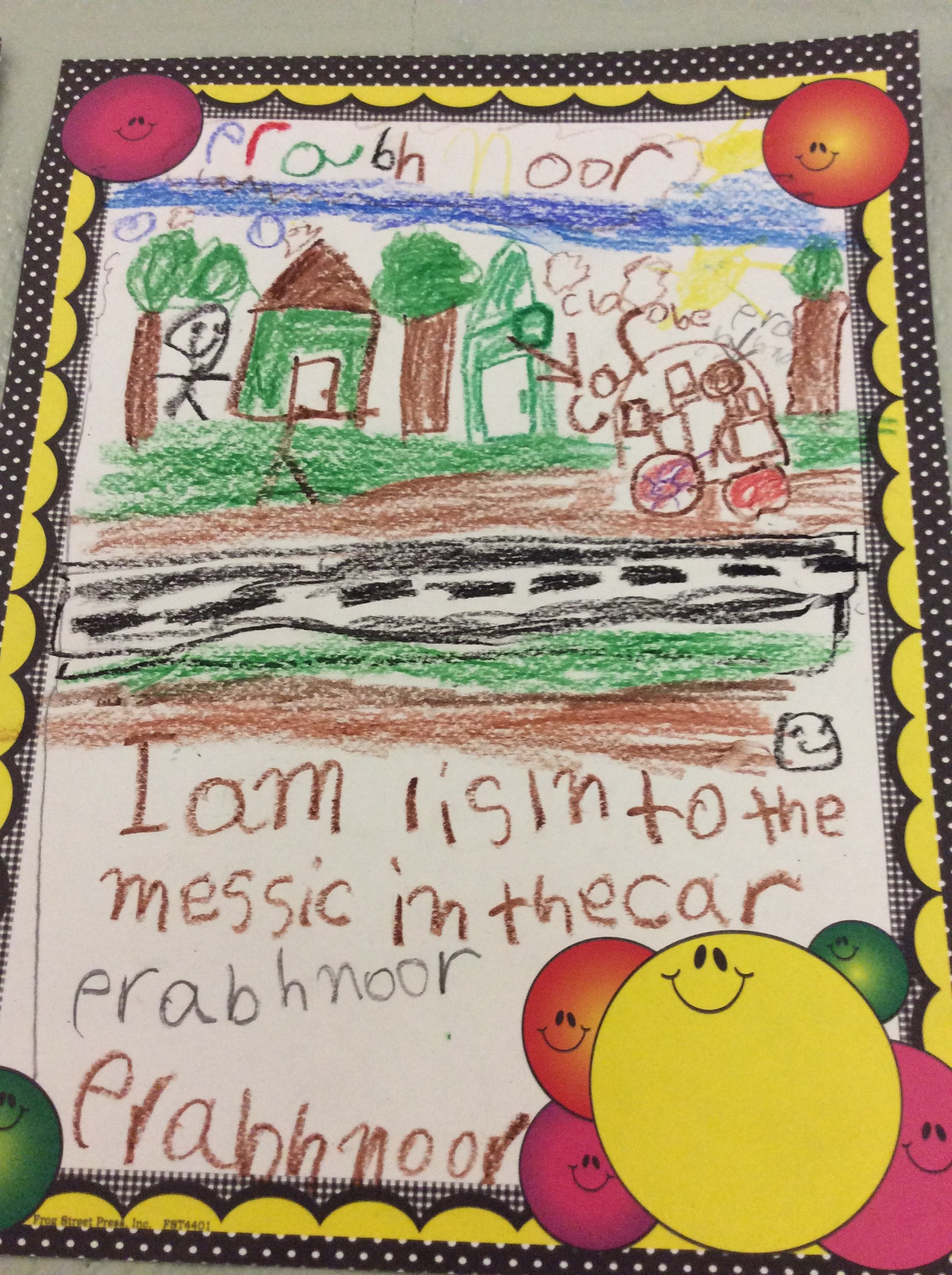
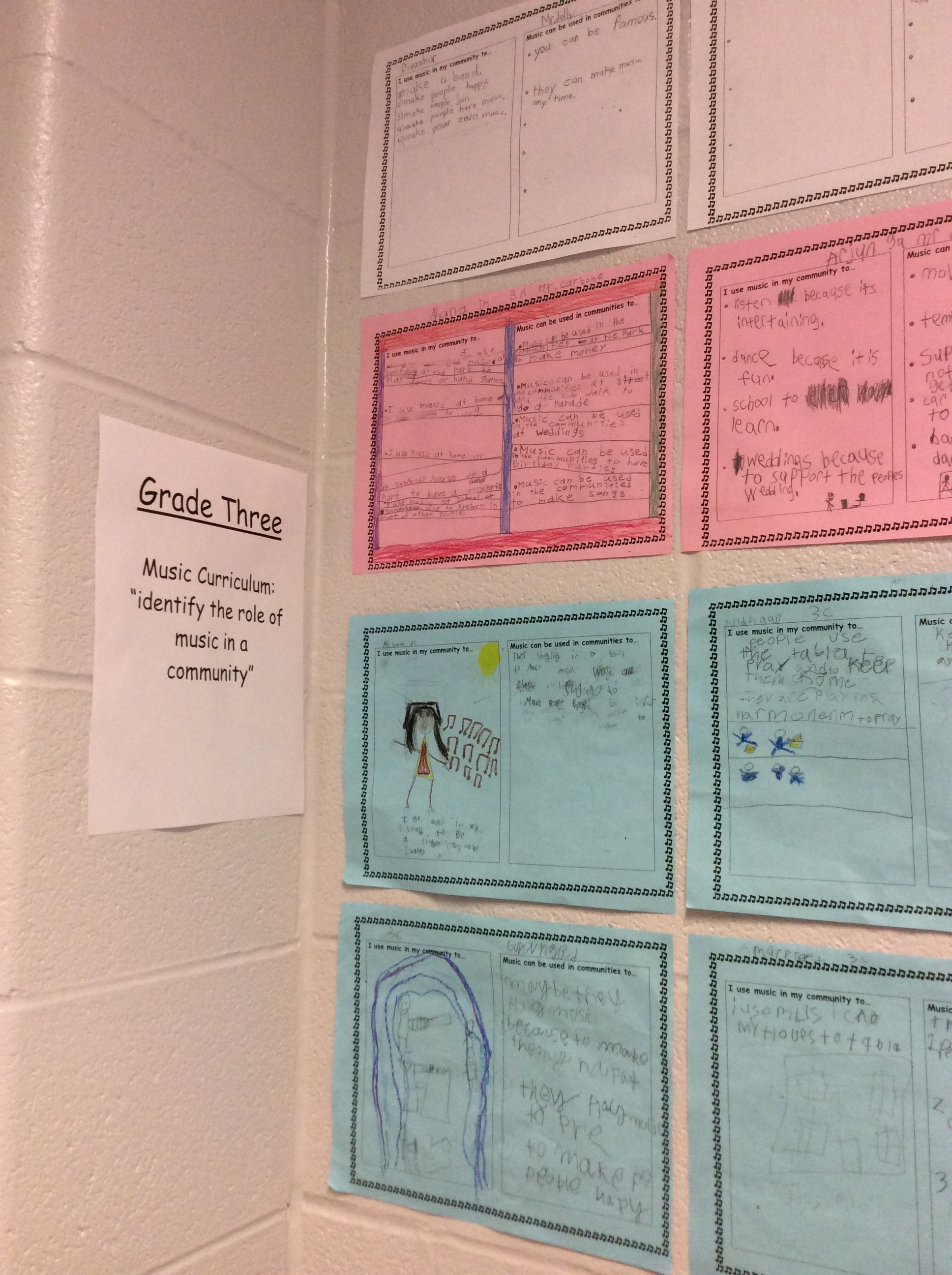
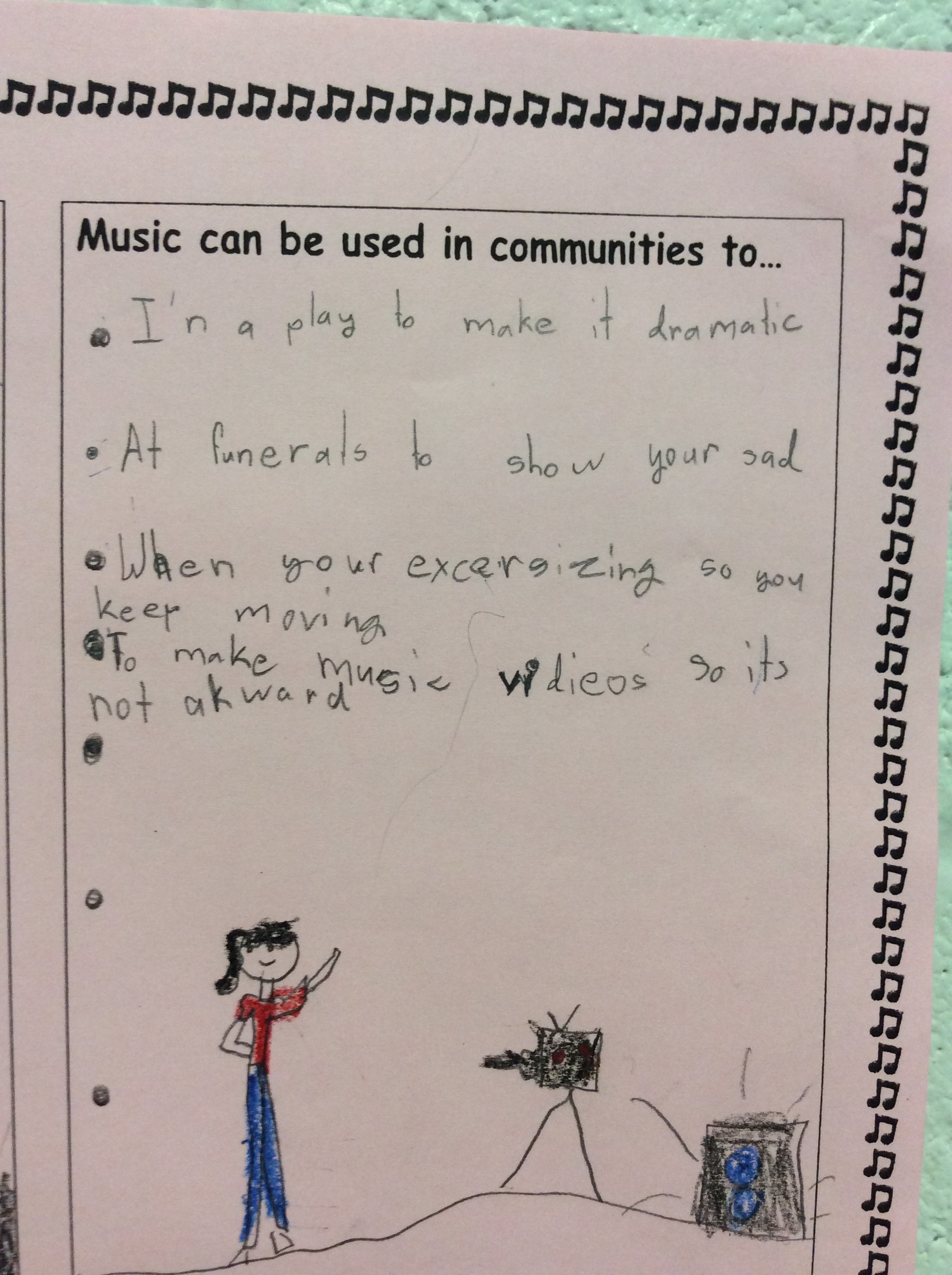
In the primary grades, the third part of the music curriculum asks students to identify and begin to reflect upon why people listen and use music in their community. In September, we spent some time sharing our own musical experiences through pictures and written responses and those were displayed for students to shared with their families.


Grade One:

open-house-2-2open-house-2-1

Grade Two: open-house-4-2open-house-4-1

Grade Three: open-house-6-2open-house-6-1

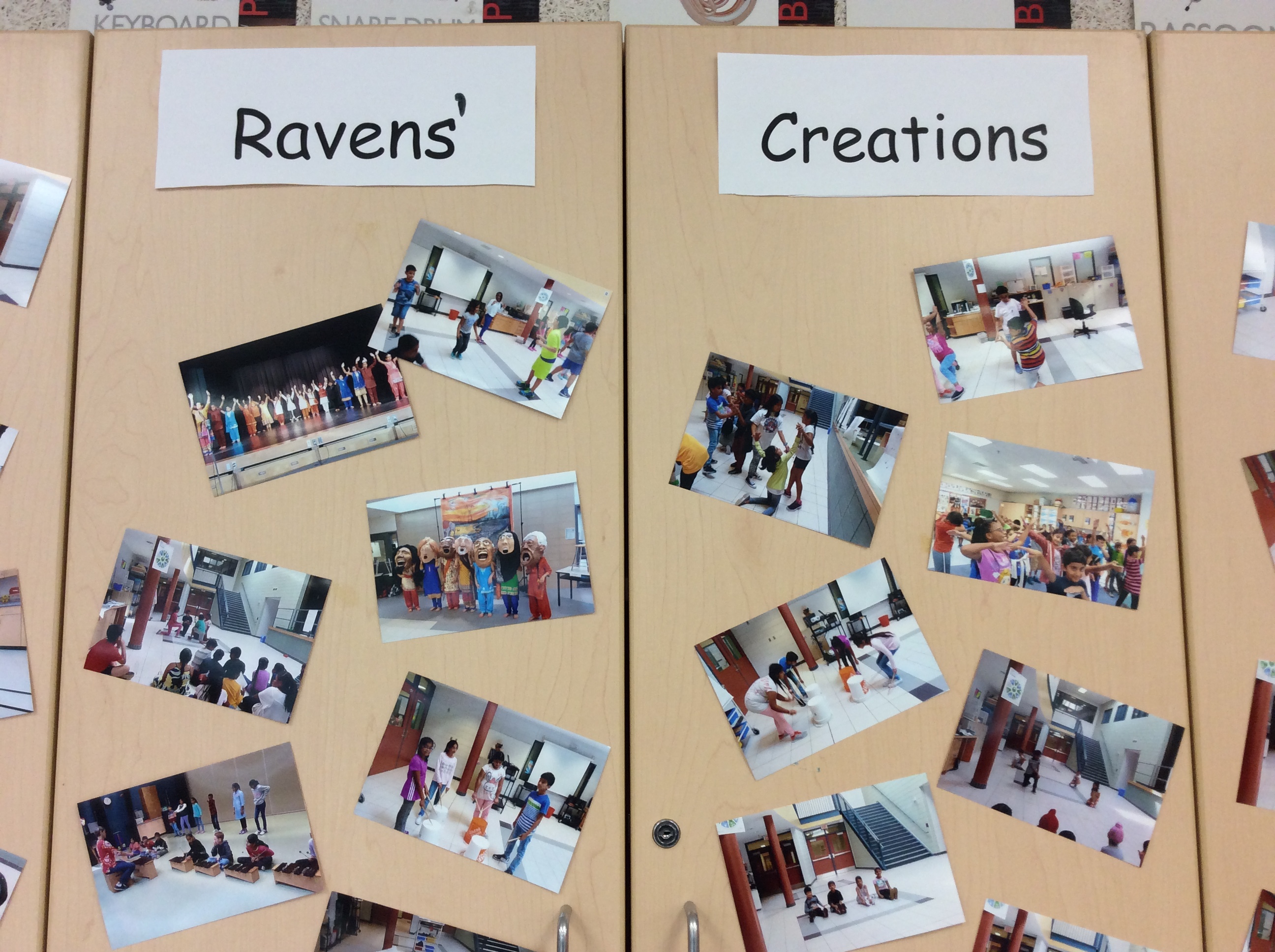
Grade Four and Five: My grade four and five classes have been very busy this September creating and playing the drums and xylophones. I displayed a variety of pictures to help students explain what kinds of things we do in class.

open-house-7

Open House can be a great chance for parents to ask questions, get informed and learn how they can support their child’s success throughout the year.

Introduction

Hello,

My name is Kelly McLaughlin and I am excited to be back blogging for my third year in a row! I am currently working in the Hamilton-Wentworth Elementary District School Board and am a LTO teacher. I am currently teaching grade five, exploring inquiry in all subject areas and am currently working on a classroom re-design project. I look forward to sharing more in my future posts with pictures and stories.

Kelly

The H word

Homework board-928381_1280Homework (shudder). It’s like two perfectly decent four letter words have conspired to become super villainous by joining forces. For most students, it’s part of a nightly ritual.

I get it. My parents used it as a polygraph test, of sorts when I was younger, by asking the same question after school each day.
“Did you do your homework?” 

We’ve all had to go through it, but now as teachers we must wrestle with the pros and cons of having to assign it to our learners…or not.

So as the year begins and questions of “To assign homework or not to assign homework?” bandy around staff meetings and grade teams. I want to share some personal thoughts on this 2 x 4 letter word and ask you to reflect on how you use it in your learning spaces?

Homework is not always where the heart is.

I love home, and I like work. For me, home is a place of relaxation, retreat, and support among family. Work is my home away from home. I have a family of caring colleagues and a classroom filled with students in possession of boundless potential. However, when it comes to homework I feel that things have changed since I was a student. My memories of homework hearken back to 1000s of pages of banal reading from largely outdated textbooks which I like to call knowledge coffins, redundant work sheets, and largely irrelevant content which seemed disconnected from my life.

Like all the good learning soldiers in my day. I did it, knowing of no alternatives. I wonder whether we gained any advantage from the discipline in completing assigned tasks, or lost a little of our desire to learn for never asking why we were doing it and where it would matter to me?

In my class when homework is assigned, it must be relevant to a larger idea that requires consideration beyond the classroom. That might mean asking students to lead a conversation at the dinner table or on the way to hockey practice with a captive audience. I remember assigning my Grade 5 Social Studies class the task of asking their parents, “What they would change about the government?” followed by, “Why do we need the government?” the next night. The conversations that resulted allowed students to lead, share, and gather ideas as they build on in class concepts/schema and then were able to take it back home to add on a broader family perspective. When they came back to school their responses were rich, often humourous, and engaging. Mission accomplished.

Some Irreducible Minimums

I do assign something for students every night, 30 minutes, or more, of reading. Don’t judge me! This is non-negotiable. Students do not have to show me proof, but are expected to develop their own positive habits around reading, its genres, and via any media of their choice.

Additionally, I’ve created and assigned flipped lessons using TED Ed as homework. Students view the lesson content, get to look at the guiding questions, and are able to browse additional resources to establish initial understandings on a topic. When we tackle the work the next day, my students are already familiar with the concept having prepared for it the previous night. I can track their progress via the TED Ed Lesson platform and provide feedback and next steps too.

On other occasions I have encouraged students to help out with the dishes or with other chores without being asked. The results have been so positive for everyone after the initial groans. But hey, they groan when you assign homework too. Perhaps it’s time to rethink the purpose of homework? Kids can thank changes in socio-economics, urbanization, and the Space Race.

It’s only since the early 20th century where homework became de rigueur in education. Even then the fervour in its favour continues to ebb and flow. We have to remember most kids were working at home before and after school to help their families. It’s what people did. There wasn’t time especially when there were chores to do.

Nowadays, more and more students enjoy a quality of life, and abundance of free time far removed from their homework deprived agrarian predecessors. Instead, students are filling their evenings with music lessons, participation on one or more sports teams, tutoring, and or second language classes. With all of the extra-curricular activities there is little time left at the end of the day when homework is added into the mix. I’ve had students say to me they couldn’t complete work citing one or all of the above reasons.

In a his post on homework from earlier this year, Mike Beetham shared a powerful experience in his piece Homework or No Homework. I love the consideration he puts into his practice. The final lines of this post serve as guidelines,  encouragement, and validation of the educator’s ability to use professional judgement when it comes to assigning homework.

“Homework for the sake of homework is not a productive component to any student’s learning. It must have a specific purpose that is helping meet the targeted academic outcomes of the classroom.”

How about you? Where does homework fit in with your pedagogy? Do you assign it to placate parents who insist their child have something to do at night? Do you vary the work from subject to subject each night? How do students who are chronically unable to complete homework get supported? Is the work you assign traditional in the sense of reading and responding to questions in writing? Do you post work via electronic classrooms or other apps?

If you’d like to discuss more about this post or learn more about TED Ed please take time to comment and I’d be glad to share more with you.  Reach out via Twitter or below. Thank you for reading this post.