
Photo of Lisa Taylor

Bulletin Boards – Teaching Tool, Art Gallery, or Wallpaper?

Every classroom has bulletin boards, some have one, some have 10! It all depends on the space you have and how you plan to use it. It is easy to set something up with plans for it to change or evolve, only to find that 4 months later you haven’t touched it, taught to it, or even referenced it!!

In my experience, Bulletin Boards end up falling into 1 of 3 categories: Teaching Tool, Art Gallery, or Wallpaper. Some bulletin boards are a blend of two or even all three of these categories. It is important to make the most of the space you have on your walls, while being cognisant of the fact that many children find too much stuff on the walls to be distracting.

When planning your walls, make sure you check with health and safety regulation, as many school boards have a maximum percentage of walls space that can be covered to stay within the fire regulation. So before you hit pinterest for some great ideas, make sure you are even able to cover the space! In my classroom, I have 5 large boards that cover almost every space that isn’t blackboard, windows or doors. The space that the bulletin boards cover is actually above the maximum percentage I can have covered in paper!! So I can’t paper back my boards as it is a fire hazard.

Many teachers like to paint their boards so they look crisp and clean all year. Again, double check with health and safety, as it is often an issue as it adds weight to the board which might not have been considered when mounting it. Especially if you are the 10th person in the classroom to paint them because the previous colours didn’t suit anyone’s decor!

Once you have established what your health and safety guidelines are, you can start to think about what is going on the walls. Ask yourself a few questions before you put something up there.

1. How will this help the students? While a Word Wall CAN help students, if you slap it all up before school starts and casually refer to it from time to time, it is not a useful tool and it is just wallpaper. Make sure you teach to it. Make it with the class and do it organically!

2. Is this something we need up for more than just today? If you only need it for the immediate future, don’t make a whole board of it. If you want to show off student work, I find the hallway is the best place for this type of thing. It gets more “traffic” from other teachers/students/parents, and it isn’t a distraction to learning. If you do need it for more than just today, you may want to ask a few more questions before you decide where to put it!

3. Do I need to put it all up right away and on my own? As teachers, we hate to look or feel like we aren’t organized, prepared, and ready to go! I recall as a young teacher, putting up bulletin boards before the first day of school. Yes, sometimes I taught to them, but generally they were just wallpaper. Many of us are guilty of putting up the whole word wall kit the day we get it! It just looks so pretty when it is done! Put it up gradually, and with the class! This will make it a more meaningful teaching tool. As teachers, we like everything to look complete and not “in progress” – but having the word wall with just 3-4 words up in September is what your students need!

4. Am I done with this? If you aren’t using it anymore, and the kids aren’t, take a picture of it and take it down! The more “stuff” you have on your walls, the harder it is for students to find what they are looking for. If you don’t need it anymore, take it down!

5. Are the kids using this? Even when you read the research, do the work, cut, past, laminate, and put up a beautiful board, the kids may not respond to it and it may not be useful to them. If you put up a board for math showing single digit addition strategies to start off the year, if they have all mastered it by December, they probably aren’t using it anymore. We have a tendency to keep things up in lieu of blank space to avoid looking like we aren’t accomplishing anything as a class! If they aren’t using it, take it down, or teach to it more, modify it, model how to use it. If after teaching to it more, they still aren’t using it – TAKE IT DOWN!!

There are thousands of blog posts and pinterest boards dedicated to amazing bulletin board ideas. Before you put one up, make sure it is actually something you need, that will get used, and that you install it in such a way that the students know how to access it.

There are great blog posts about what to do with your bulletin boards when you are done. My personal favourite is to snap a picture and create a bulletin board binder. That way, if there is still one of two children in the class that still need that bulletin board, they can go to the binder and look at it all year long! It will also serve as a nice reminder of how they looked if you end up needing to recreate it another year!


Sweat The Small Things

Contrary to what you may have heard or read, in a classroom it is critical that you pay attention to the small things. Those intricate details are what can either make or break a classroom. Each teacher has their own style and that is as different as each student is from one another. Therefore when you get new students every September they are products of the teacher or teachers they had in the past year. Every component of the school day is based on what approach was taken with them (or not addressed) in the past. Once again you must start with your vision. What do you want your classroom to look like, feel like and sound like. From that point, you backward plan to achieve your goals. This approach is necessary whether it is September, starting an LTO in March or whether you are moving into a new division. Each component is dependent on fulfilling many small, intricate details.

The following topics are key domains that I focus in on and plan out every detail to assist me in reaching my goals:

  1. How will I make my classroom a learning community where every member is valued and contributes to the overall success of the classroom (relationships)?
  2. What routines will need to be developed to ensure maximum on task time and therefore student success?
  3. How will I track student achievement and communicate to both parents and students about their growth and next steps?
  4. How will my classroom set up contribute to student learning and the development of positive relationships?
  5. How will I develop a student’s ability to self assess and not only be reliant on adults telling them how they are doing?

Each and every one of the above domains require specific attention to details in order for them to yield the results I desire. By sweating the small things, I am able to accomplish many BIG IDEAS!


Photo of Beverly Papove

A Year of Septembers

My colleague and I have had a challenging class since September. In fact, we are calling this year “The Year of Septembers” because although the students have come a long way, they are still very unsettled and we still spend a considerable amount of time re-establishing class rules and expectations. Thankfully, my colleague, who teaches English to my French Immersion students, is an amazing, funny, dedicated and sincere individual. What’s more, we are both on the same page when it comes to where we are with the students and where we’d like them to progress.

Our biggest challenge this year has been getting support for over 7 of our 19 students who came into grade 3 with a variety of issues and difficulties in learning. We have probably been a thorn in the side of the administration in our efforts to get additional in-class support for a few of the higher-needs students. However, it has been worth it as we have begun to see incremental improvements in learning skills and overall collaborative behaviour within our group. But it has taken great effort! We have often been exasperated with strategies that worked one week and then became ineffective the following. Our aim has been to express our collective expectations to the class so the students will understand that we are a team. This is especially important given that my colleague is only in the class for an hour at the beginning of the day, which has the added challenge of instructional time set aside for morning announcements and the national anthem. To help set the tone, I greet the students with my colleague as they come into the portable, allowing her the time to speak individually to certain students and to help them get settled into their morning routine.

During the week, we meet briefly to bring eachother up to date, to review goals and to cowrite email correspondence to parents. We support eachother with regard to behavioural goals as well as curriculum goals. This has been an absolute necessity as lessons and whole days have fallen apart due to extreme behavioural challenges and consequent interruptions in engagement in the class that have translated into a divergence from the lessons geared to meet curriuculum expectations. None the less, the students are learning and growing and progressing, and after many series of meetings with administration and parents, appropriate supports are being put in place to help us help the students with high needs, which in turn, has allowed us to also meet the various needs of all the other students. It has been an exhausting year thus far, but there has emmerged a sort of cohesion out of the often chaotic environment. Although every month has felt like September, my colleague and I are happy to see the pay-off in the successes of all the students.

Confessions of a Non-Sporty Phys Ed Teacher

I’m not a great Phys Ed teacher. Anyone who knows me knows that I don’t really do sports. My biggest claim to fame with sports is that I officiate roller derby – but my position is more mentally demanding than physically and involves more paperwork than movement, if I’m being honest.

As a kid, I was one of those students who flailed, at best, and just sort of hoped that one of my limbs would hit the ball. Maybe even in the right direction! But probably not. Mostly I just avoided everything and prayed I wouldn’t mess things up for my team.

I was not a highly sought-after pick when choosing teams.

One of my greatest challenges as an elementary school teacher in my school board has been Phys Ed. My board doesn’t generally have specialists, so I really have no choice but to teach Phys Ed. For someone who has never really played or followed many sports, this has been challenging. I have to read up on the rules of every sport before I introduce it to my students, and even then I usually have at least one student who corrects me at some point during the unit.

Once I understand the rules of a game, I can teach it. I can run drills, referee games, and get an idea of my students’ abilities. I can even recommend good players to my colleagues when they are looking at creating school teams.

I can’t help but think about the students I have who are like me, though – the ones who find traditional sports difficult and just really do not enjoy them. I have found it immensely helpful to develop a repertoire of games which develop students’ skills without being traditional sports. Obviously not every student will enjoy every game, and no matter what you do some students will not enjoy any physical activity, but I have found that these games are usually a hit with my Grade 4 and 5 students.


1. “Ballon quilles” (I guess you could call this Pinball in English)

Scatter hula hoops around the gym, usually around 8. Don’t put them too close together and don’t put them too close to the wall. In each hula hoop, put a bowling pin. Two students are assigned to each hoop, and their mission is to keep their pin from falling over. They can’t touch the bowling pin.

Using soft balls (the ones you would use for dodgeball are usually good) students try to knock over other students’ bowling pins. They have to have one foot inside their hula hoop to throw the ball, but can leave their hula hoop to go retrieve a ball to throw. They can block balls with their bodies, but if they knock over their own bowling pin by accident, it still counts.

When their bowling pin is knocked over, those two students leave the game and join the line of waiting players. The next two students in line run in and take their place, resetting the bowling pin when they get in.

I love this game because it moves fast, players change each time (they’re not allowed to change place in line just to be with their friends), and there is no winner.


2. Capture the Flag

I don’t know what it is about this game, but my students love it. I won’t even get into all of the rules I use because there are so many ways to play it. The general idea is that the class is divided into two teams, and each team has some kind of object (a “flag”) that the other team is trying to steal and get back to their territory. I use rubber chickens, which my students think is hilarious.

The game is popular with my students in part because there are many positions, not all of which require a lot of physical ability. Some students will go offensive and take the role of trying to steal the other team’s flag, but some students will play defense and keep a keen eye for opponents trying to sneak in and grab their flag.

Sometimes we go through an entire 40 minute Phys Ed period with no one winning. They don’t care. They love this game.


3. Prisoner Exchange

This is a variant of Capture the Flag that can be played in a gym. The gym is divided into four and students are split into teams as evenly as possible, with each team wearing a different coloured vest. Each quadrant has two hula hoops – one holding bean bags (I usually have around eight per team) and one empty. The point of the game is to steal other teams’ bean bags and have the most bean bags at the end of the game (usually the end of the period).

Players run into other teams’ territories to grab a bean bag. If they get tagged by someone on that team, they become a prisoner (they stand off to the corner to denote being in “prison”). They get back into the game by having their teammates pay a bean bag to release them. The empty hula hoop is a “safe zone” where they can buy some time to figure out how to get back to their territory without getting tagged.

Like Capture the Flag, there are both offensive and defensive positions. The game can get a little hectic if you have more than 25 students, so if you have one of those monstrously huge classes, you might want to adapt this somehow.


4. Bowling Pin Dodgeball

I don’t know about everyone else, but every class I have ever had has been obsessed with dodgeball. They love this game. I don’t understand the appeal of trying not to get hit by phys ed equipment. That said, dodgeball remains one of the only ways to get every single student in my class to play something actively. Why?! Why do they love this game?!

I have tried to find ways to make dodgeball less about hitting other students with the ball and more about developing precision and ball-handling skills. Usually, I play this game that I have called “Bowling Pin Dodgeball” mainly for lack of a better name.

The class is divided into two teams, as is the gym. At the back of each team’s area, four bowling pins are set up. The goal of the game is to knock down all of the other team’s bowling pins. As per usual dodgeball rules, the ball hitting you below the shoulder means you’re “out” and move to the wall, so there is still a dodgeball element to the game.

To get back into the game, one of your teammates has to catch the ball. When a ball is caught, the person who has been out the longest goes back in. To facilitate this, I have students stand at the wall in a line, with the most recently eliminated player going to the end.

There’s another way to get your teammates back into the game, though. We have basketball nets in six places around our gym, so I made a rule that if you get a basket on one of the nets on the other team’s side, then everyone on your team who is out gets to return to the game. Even better: you get to put a bowling pin back up!

What I’ve found is that my students spend more time trying to catch a ball AND trying to make a basket that they rarely even end up throwing the ball at each other. They feel like they’re playing dodgeball, but really they’re working on throwing/catching skills. Shhh, don’t tell them. 😉

For my kindred spirits who don’t feel super successful with traditional sports, this game offers them a few options. Some like to defend the bowling pins. Some like to lie in wait and try to roll a ball at the opposing team’s pins to knock them down unexpectedly. Some end up being the last member of their team still in the game, then get to feel like a real hero when they get a basket and let their whole team back in.


I didn’t invent any of those games. They were all introduced to me by colleagues, with adaptations happening from year to year as I refine the rules (or my students suggest new ones). They’re just a few of the games that I keep in my regular rotation (and get requested by students time and time again).

Five Things I Learned as a New Teacher

The first five years of teaching come, perhaps unexpectedly, with a lot of highs and a lot of lows. It’s no secret that many new teachers end up leaving the profession due to stress. It’s hard to go from the support of an Associate Teacher in your practicum placements to flying solo in your own classroom. Are you doing this right? Are your students learning? What if something crazy happens?

Here are a few of the most important things I’ve learned in my first five years.

1. You will have good days and bad days.

Some days, you’ll feel like you are the world’s best teacher. You might finish an activity, send the students off for the day, and want to run to tell the nearest adult that you really nailed that math lesson. You might take photos of your students’ work so that you can include them in your portfolio for interviews.

Other days, you’ll struggle just to make it through the day without crying. Your students won’t listen, your lesson plan will go wrong, you’ll forget your supplies (or realize that every one of your 30 packets of notes to give to your students is missing a key page), a fire drill will happen in the middle of an activity that was going really well… the possibilities for ‘top ways to ruin a teacher’s day’ seem endless. Sometimes it will even feel like your students are out to get you; as if they know that you didn’t sleep last night, or you fought with your significant other this morning, or your kids are sick.

It isn’t just you. Every teacher has both kinds of moments. Enjoy the really good days and find yourself someone you can excitedly tell about your awesome day. On the not so good days, remind yourself that it’s just one day out of the year. You have 193 other days. They can’t all be bad.


2. Always have a back-up plan.

No matter how prepared you are, every lesson won’t go smoothly. Sometimes, you may even find that you have to abandon an activity entirely because it just isn’t working. This has happened to me at least once every year, and that’s a very conservative estimate.

I keep a binder of activities ready to go in my classroom. There are enough photocopies/supplies on hand at all times for any of those activities. (Side note: this is also helpful for when you have supply teachers in because they can pull an activity from there if necessary.) On days when my students just cannot handle whatever free-form activity I planned for that day, I set that activity aside for another day and pull one of these back-up activities out.

What you put into that binder will really depend on your class and what subjects you teach. My binder of back-ups has never been the same from year to year. Mostly I keep it simple: vocabulary games, partner games for math, that sort of thing.


3. Not all of your students are going to like you.

Some new teachers try really hard to be liked by their students. It’s an admirable notion to try to connect with every single one of your students, but it’s also unrealistic. Life doesn’t work that way. I’m not saying that every year you’ll have a kid in your class who is rude – that’s not true! But every year there will be at least one student who never really clicks with you. It’s okay. Don’t take it personally. I promise they’re still learning even when they don’t like you all that much. The key thing I try to get through to my students is that they don’t have to like me, but they do have to show me respect.


4. Your students ARE learning.

You may finish a year feeling like nothing ever went as planned. You may get to June and realize you haven’t taught half of the specific expectations in the curriculum. You may start the year with grand notions of never using worksheets, never giving tests, and being the Best Teacher Ever, only to get to the end of June and realize you didn’t meet any of those goals.

Don’t panic.

No matter what happens, your students are learning. They may not always be learning the thing you intend for them to learn*, but they’re still learning. Just try and stop them!

*One year I made the mistake of trying to teach probability before checking my students’ knowledge of fractions first. Whoops! My lesson quickly ended up in a very different place than I had intended.


5. No news is (often) good news.

As a new teacher, one of the hardest things to get used to is that parents and colleagues who think you’re doing a good job will often not tell you that. It can become even harder if you have someone question something you do (and that will happen at some point) because you may feel like all you ever hear about are the things someone thinks you’re doing wrong.

I promise that many of your students’ parents think you’re doing great. Many of your colleagues do, too. As a society, we tend not to openly commend others for a job well done because for some reason we feel like we don’t need to, but we also tend to be highly self-critical and assume that we’re screwing up somehow. We allow for others to make mistakes and dismiss them as a part of life, but when we make mistakes ourselves we dwell on them and convince ourselves that all anyone will ever remember about us is that one time we did something wrong.

I can’t tell you how many times I have been impressed by a colleague’s work and meant to tell them that, but life got in the way. You see something you want to comment on, and then next thing you know it’s five o’clock, you need to get home, your colleague is gone anyway, and you completely forgot to commend them for that cool thing you saw them do. You tell yourself that you’ll definitely talk to them tomorrow, but odds are you’ll forget.

Someone out there is thinking that about you too.

Photo of Tammy Axt

How to Run a Recorder Karate Program

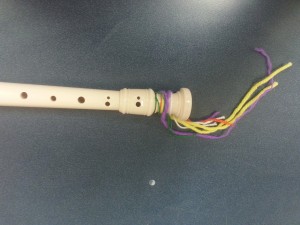
recorder belts

A very common program that is run by many junior music teachers is called Recorder Karate.  The program is a series of songs that the kids learn on the recorder that get progressively more difficult. After each song that they have completed correctly, they receive a “karate belt” with a corresponding colour.

Recorder Karate is a program that encourages student growth and allows for a highly differentiated music class. Every student is working at their own level and receiving consistent, specific feedback about their progress.  You can buy the program online through Music K-8.

The program looks like this in my classroom:

5 minutes- Warm-up/hand out recorders (either a student or I lead a quick warm-up)

10 minutes- Sight reading/song practice (we work together on difficult spots within the songs)

20 minute- Independent practice and testing of students

5 minutes- Sharing/clean-up ( I invite anyone who wants to share to come to the front and be a shining star)

After running this program for a few years,  I have learned from some of the mistakes that I have made. I hope some of these ideas will help you with your recorder karate program.

I have learned:

  1. Never start the program without taking a period to do an activity on building community. When I first starting doing the program, I used to dive right in as I felt that I had such limited time with the students. However, during the program, inevitably someone received a belt before someone else and another student struggled to get through the first song. I learned that if we took the time to do activities that talked about “put-ups” instead of put-downs, this encouraged positive language and the class was less competitive. Now most students will high five each other every time someone passes, no matter what level they are at.
  2. Feedback needs to be quick and easy for students to understand. I used to give elaborate feedback to students on pages and pages of paper and I realized that all that writing took up too much class time. Also, the students never read it and it was not helpful in moving the students forward. Now I have a simple chart that they refer to regularly and I can see at a moment’s notice where the student is having trouble. Also, I want to get through at least ten students in a period. This requires my assessment to be quick, specific and to the point. (I have attached the template that I use for my assessment tracking.)
  3. There is only one of me in the room. I have learned to accept the fact that I see my students for 40 minutes and I cannot help everyone every period. I have learned to stress to the class that we are a big recorder learning team and we need to work together. Sometimes I assign people to help others, and other times I do a mini lesson with one group while another group is being led by another student. What I have seen is that for students, sometimes helping another student to improve solidifies their own learning.
  4. Recorder karate is great to run with one grade while you are prepping your other classes for performances or concerts. Once Recorder Karate is up and running, there is very little preparation for each period. This can be SO helpful when preparing concerts, choirs and all the other performances your students will do throughout the year.

Overall, my students have had a lot of success with recorder karate and it is a program that I would recommend to junior music teachers.

Karate Belts and Scores sheet

Photo of Samantha Perrin

Safe and Accepting Schools in today’s Social/Political Climate

All teachers are familiar with the Ontario Ministry of Education’s initiative for teaching inclusion;

A safe, inclusive and accepting school environment is a necessary condition for student success. Students cannot be expected to reach their potential in an environment where they feel insecure and intimidated. We are committed to providing all students with the supports they need to learn, grow and achieve.
Building a positive and inclusive school climate requires a focused effort on developing healthy and respectful relationships throughout the whole school and surrounding community, among and between students and adults. “

We respect this philosophy and we would not deny our students the full application of this mandate. And yet, for all the anti-bullying lessons, resources, activities; for all the lessons and discussions on civics and character education within our schools, I cannot help but feel as if I am complicit in perpetuating a myth that grown-ups know how to behave properly – when in fact, outside of our schools, our society is anything but civil, respectful, and devoid of bullies. For examples of intolerance and disrespect, we need look no further than the relentless doses of hysteria, stereotyping and racism in our newspapers and in our laws. The media is rife with stories pitting Us against Them, creating fear about Others, and discrimination based on clothing, skin colour, or mother tongue. Meanwhile in stark contrast in our classrooms, we are reading books such as “Children like Me”, promoting diversity and trying our best to ensure that our students learn about community and how Social Justice applies to everyone in our society.

Feeling overwhelmed by the latest news stories, I have been thinking about young students who, on the way to school, or once within its confines, may be unexpected targets of the divisive environment where ignorance, scapegoating, blaming, shaming, guilt by virtue of association, and racial profiling may have trickled down. Our anti-bullying initiatives may be only a Bandaid solution to circumstances of inconceivable scope and which are completely out of our control. Children who are subjected to this intolerance have to navigate through the quagmire with little or no grasp on the realities and myths that may be associated with their lives, and as in many cases of intimidation, because it is insidious nature, teachers may have no clue what these children have to endure. As visible minorities, or as minorities suspected of an affiliation, no matter how remote, children risk being targets of ignorance and vitriol from other children or adults in the community. Sadly, we have so many brutal historical examples of just this type of situation. Therefore, it is essential that, we as teachers, remember to be aware and have empathy to help all of our students feel secure and free from intimidation so that they can learn, grow and achieve, even when we may not fully understand the greater issues that they may be dealing with – politically, religiously or culturally.

And, without a doubt, the world has always been so. Danger from bigotry and intolerance existed long before the implementation of the Safe and Accepting Schools Act in Ontario. We can only hope that the effort we put into promoting diversity and ensuring students are educated within a safe and accepting school environment will eventually make the myth of a society of respectful, civic-minded people a reality. In the meantime, it is worthwhile to make sure that our students know we are an ally they can depend on for help should they need it.

Photo of Tammy Axt

Classroom Layout Ideas- Music Room

Every teacher has talents. I, too, have a variety of talents, but organizing space is NOT one of them. I recognize that I am a very fortunate planning time teacher because I have a space assigned exclusively for music and I usually spend a week or two thanking my lucky stars for the space. However, after my football touchdown dance is over, I have to attempt to decide on a classroom layout.

In the arts, we rely a lot on community to be able to create together as a class. I believe that in order for my students to create, they need access to materials and space. They also need supportive information and guiding rules in easily accessible locations to facilitate their collaborations.

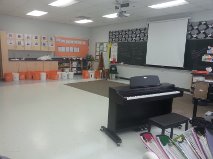
room

Here are some things I consider when creating my classroom layout:

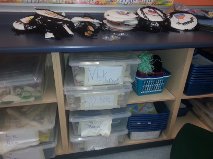
Materials and student accessibility: All recorders, xylophones and percussion instruments are in places where the students can easily access them. We go over the proper use of all the materials and if we are in the experimenting phase of the creative process, then they are able to access any of the materials that we have introduced. Sometimes this makes for a noisy, chaotic environment, but for me, allowing students the platform on which to create is important.

materials

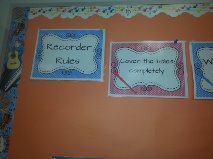
Rules for recorders and group work: Having some information posted in the room gives accountability to the students. They understand the expectations and I can easily refer to them with a student who is struggling to help the class with their creations.

rules

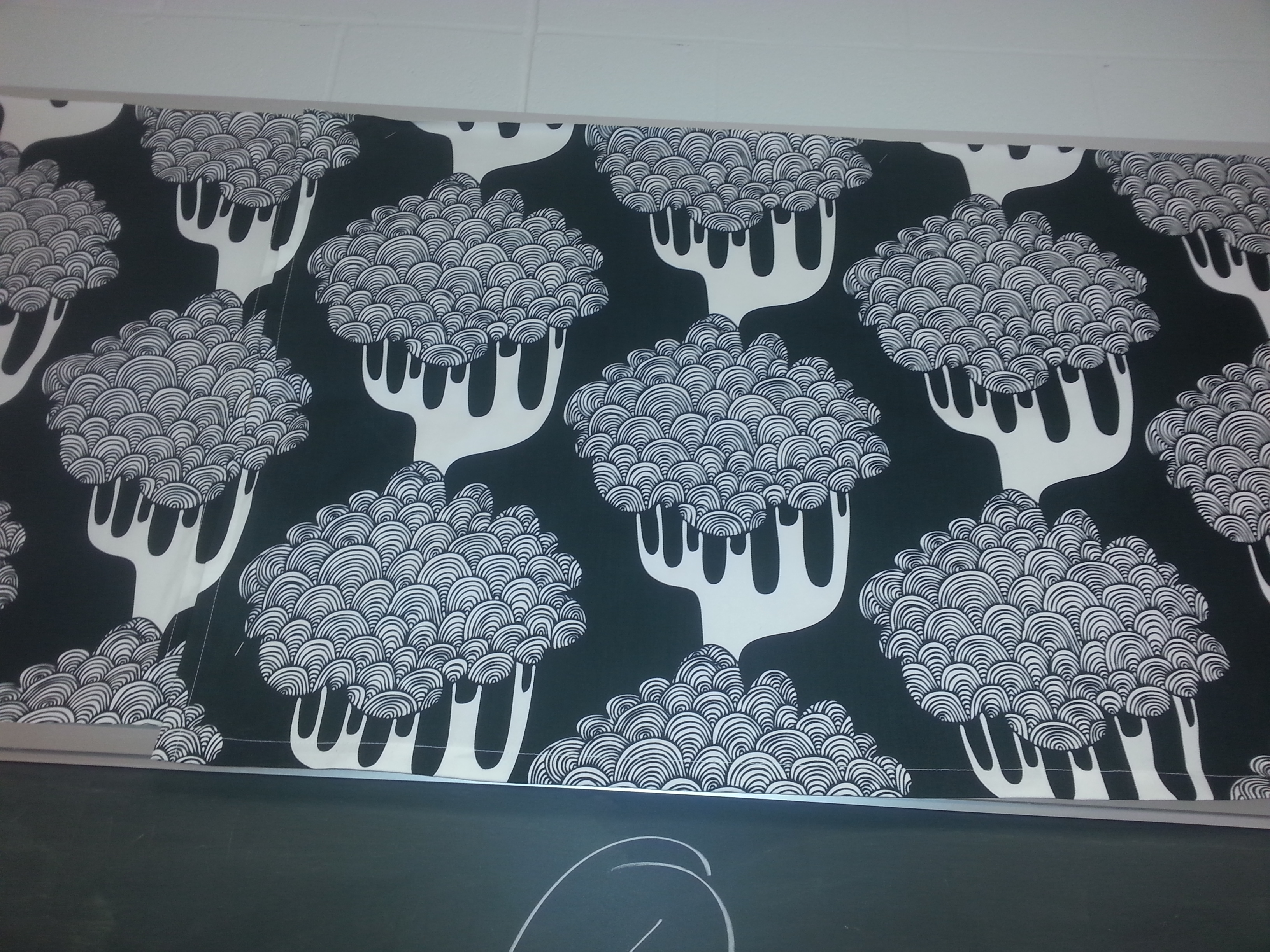
Designs and creative inspirations: I learned something this year when I put up the remnants of my Ikea curtains over the brown bulletin boards that existed at the front of the room for the first two months of school. Almost every single one of my 300 students commented on the new coverings when they entered the room. There were lively discussions about the interpretation of the design and repeated comments about how much the students liked them. It reminded me that creation is a very sensory experience. I usually spend a lot of time on the aural and oral senses in music but this experience reminded me that utilizing all of the senses heightens the ability to tap into the potential that every child has to create.

ikea

My professional library: Since many of my cupboards, shelves and tables are full of instruments or other materials for student use, I have very little space for my professional resources. However, my librarian came to the rescue this year when she was throwing out some furniture from the library. I scooped up these shelving units and they have come in very handy.

Meeting diverse learning needs: I have a student this year who is unable to physically play the recorder with the rest of class but can easily play the piano. The piano is easily accessible to her, as is the computer for some of the other students that I teach. There are very few materials that are for my use only and the layout of my classroom reflects that.

Photo of Samantha Perrin

Sharing your Experience with Others

I recently asked several colleagues a question; “Is there a tip someone has shared with you that has been helpful in your teaching practice and that you would pass on to a new teacher?” The colleagues who contributed their ideas range from relatively new teachers – 5 years in the classroom – to those a few years away from retirement, as well as a vice principal who has just completed all her courses and requirements to become a principal. Most people responded immediately and enthusiastically, while others needed more time to think of just one thing to share.
Responses vary in categories from classroom management to collaborating with colleagues and organizing lesson plans and resources. Some pearls of wisdom come with explanations while others are self-explanatory or open to interpretation. I was happy, but not surprised, to find all of the comments to be useful reminders of how to achieve a well-balanced and respectful working and learning environment.
A Sampler of Tips for Teachers
• “Align yourself with like-minded colleagues who are realistic, resilient, and creative, and have a sense of humour! It makes the job enjoyable and more productive!”
• “I’m not sure who told me this, but I’ve discovered: Sometimes throwing the lesson plan out the window can create the most meaningful and memorable teaching moments.”
• “Don’t worry if your students “like” you or think you are cool. Be fair and warmly strict and they will like you by the end of the year.”
• “Beg, borrow and steal if you need to! This really translates into not being afraid to ask for help with resources or lessons. Too often teachers reinvent the wheel rather than pooling or sharing resources.”
• “Choose a few things to focus on. Don’t try to be perfect at everything your first year.”
• “Make friends with the school custodian.”
• “Bow down to the office chief administrator! She is often the hub of the school and can be a wonderful source of information about everything school related when you need help. And don’t forget Secretary’s Day or celebrate it with a small, impromptu “thank you” on any other day of the school year to show your appreciation.”
• “Never contact a parent about an issue regarding their child’s behaviour on a Friday when it can wait until Monday. Why cause unnecessary concern or misunderstanding over the weekend?”
• “Let students “play” with manipulatives, regardless of their age. There is always a lot more learning going on than meets the eye.”
• “Be nice with everyone. You are the best model for appropriate behaviour for your students.”
• “Look for ‘invisible students’, the ones who are good academically, tend to be quiet and who rarely ask for assistance. These students may be easy to over-look in a class with high behavioural or academic challenges but need your attention just as much.”
• “Go the Ronald Morrish way! (author of “With All Due Respect – Keys for Building Effective School Discipline”) Greet your students by their names at the door as they come into the classroom, and expect them to acknowledge and thank you for holding the door open for them. I use this to help to identify that the classroom door is the threshold into a respectful learning environment.”

There are plenty more to be added to this list and many of them are common sense. Building common sense and respect into your teaching practice makes for a much more fulfilling work environment and can contribute to professional growth. If it is useful, let it be used!

Photo of Samantha Perrin

What is a District Review?

Next week, our school will be under District Review. We have known this for months, of course, and have been guided by an excited administration on what to expect and how to prepare for something called the “Walk About”. With all of the lead up to the visit, one can definitely detect some anxiety in the air. Making a comparison, I guess it is a bit like having company coming and wanting to be sure that you are ready and that your place looks great.
District Reviews generally take place every five years. In essence, a review is when the administrative members of the school district come to a school to see what is going on. They take notes, ask questions, and try to get a general feel for the school environment. Afterwards, the team makes a report highlighting what the school is doing well with regard to school board mandates and initiatives, and includes suggestions for areas that could use more focus.
The “Walk About”, which is the main part of the Review, seems to generate the most anxiety amongst teachers because superintendents, principals and vice principals from other schools join the school’s administration on a tour of the site, visiting classrooms and chatting with teachers and students. You may be in the middle of a lesson when the team drops by. They will look around your classroom and try to be as discreet as possible as they make their observations. The moment one of the members crouches down to quietly ask one of your students; “What are you learning?” and “Why are you learning that?” can be a little unnerving. Reviewing anchor charts, posters and messages on the classroom walls may make it easier for students to answer questions regarding their learning environment. In addition, you may want to make sure Big Ideas are clearly posted and that the students know to expect someone may ask them questions about their learning goals for the lesson.
While a School District Review is a big responsibility for the school administration and may seem like a distraction from your day-to-day teaching, it can also be viewed as an opportunity for you to take stock of how your classroom presents and how effectively you are communicating on a regular basis with your students regarding their Learning Goals. Take a look around. Do you still have Christmas decorations up in February? Does your class library need some organization? Are your bulletin boards interesting and informative? Would any of your students be able to answer the questions, “What are you learning and why?”? Review what you are already doing. This is not the time for you to change your practice and try to outdo yourself. Rather than being anxious about a District Review it may be more productive to take an objective look at your classroom, do some tidying up and make sure you are ready for visitors.