Photo of Alison Board

Big Ideas as Themes

I enjoyed reading Sangeeta’s blog and the meaningful themes that her students are learning about in her classroom. When she says, “there are some conflicting opinions about the use of themes in teaching” it is more likely the use of themes that lack relevance, scope, and purpose, such as a theme devoted entirely to apples or penguins.  The themes that Sangeeta have chosen are meaningful to her students and it is evident that she has selected them as the needs of her students have emerged throughout the year.

In my Grade 1 and 2 class we are learning the curriculum using similar themes, though we call them big ideas. These big ideas are umbrellas for the various subjects and strands that we are working on. The big idea provides a lens to consider our world. I used a question format for the students, asking them “What is hope?” at the beginning of the 2 month inquiry, then again at the end.

Here are my reflections on the first big idea that we embarked on back in September:

By recording the children’s responses I could see that the children had similar ideas of hope as wanting or wishing, such as “I hope I get a new toy.”  Only one comment (made by L.) seemed to differ in that it touched on worry or care for others. The children need an opportunity to consider hope in a deeper context. I looked at the sub-questions developed in connection to the Science and Social Studies curriculum, Why is hope important to our community? How is hope different for other communities around the world? How do the sun, air, and water (as energy/life source) give hope to people in our community and other communities around the world?

I needed to find rich texts to read aloud that would provide the opportunity to discuss the idea of hope in relation to our own community and communities elsewhere in the world. 

The following four texts became the foundation for our inquiry that were not in the original long range plan:

Poor Fish (local and global environment) Listen to the Wind (Korphe, Pakistan)
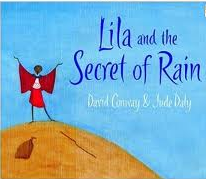
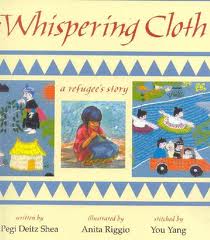
Lila and the Secret of Rain (Africa) The Whispering Cloth (Thailand)

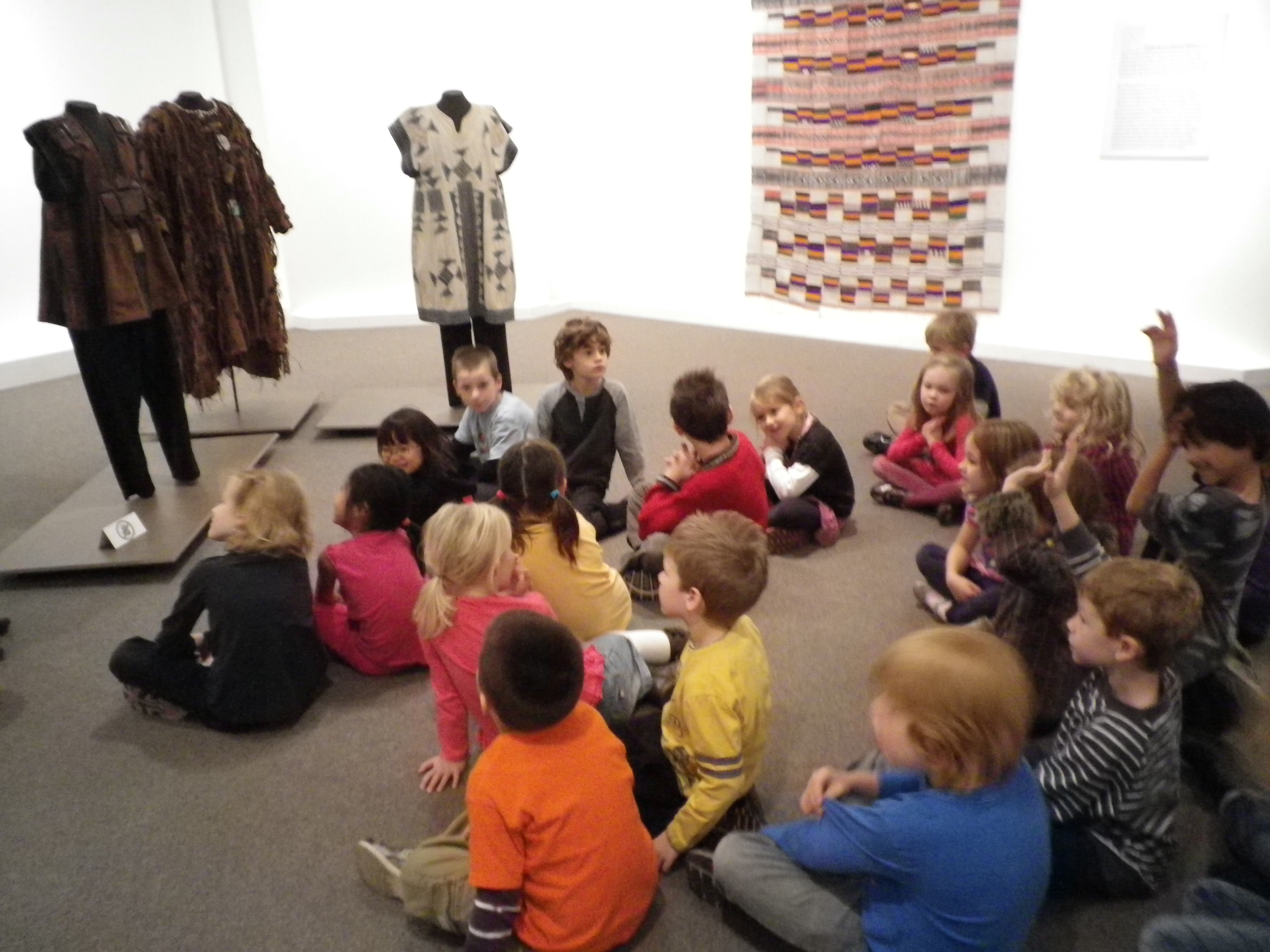
In my long range plans, I had outlined the culminating task as a fabric picture, using a variety of textiles to represent their understanding of hope in the context of their local community (grade one) or another community in the world (grade two). Part of our learning included a class trip to the Textile Museum of Canada. This trip provided us with information about the symbolism and purpose of clothing in African cultures. It also gave the students an opportunity to explore textiles, wool, and weaving in a hands-on area.

After our trip to the Museum of Textiles, extended “inquiry time” in the class to pursue topics and interests at various centers, and discussions around our four foundation books, the children started to make their own observations and connections. Integrating the science curriculum for both grades, which included focus on the sun’s energy (grade 1) and the need for air and water (grade 2) contributed to their understanding of the texts. I asked the children again “What is hope?”

M.: To keep the environment clean.

L.:  To build a school.

A.:  For rain to cool down the land, fill the wells so people will not die.

M.:  To live in a new country; to have a home.

K.:  To go to school.

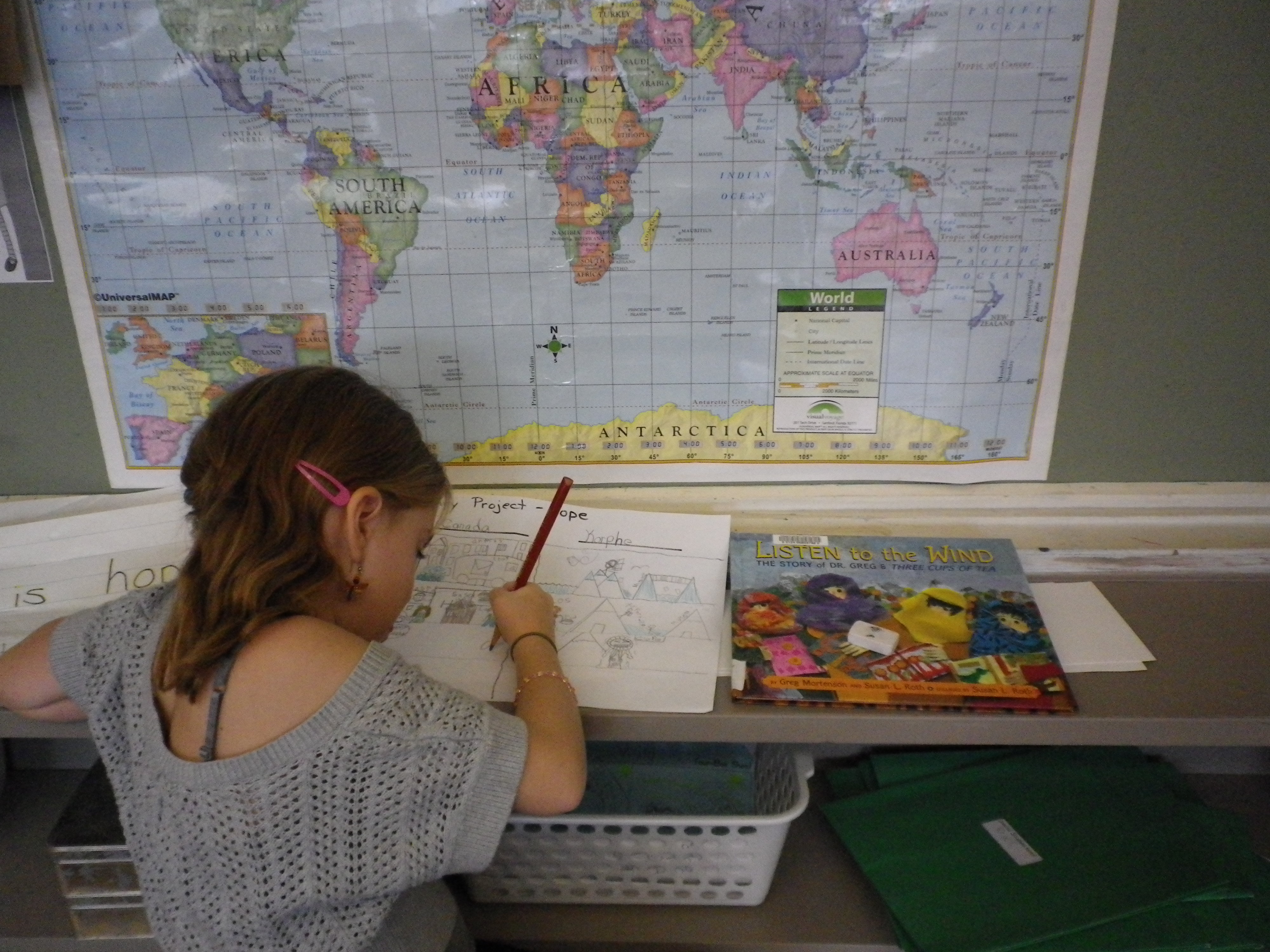
The children’s responses are reflecting their understanding of hope in other contexts. I see them making connections between the books that we read. They are also showing interest in locating the various countries that are the settings for the texts. When we were in the computer lab many of the children searched their country of interest on Google Earth. Some students were surprised to see the snow covered mountainous terrain of Korph, Pakistan. What a difference when they compared the region to their own street where they live.


L. takes her chair to work by the map where she is working on locating Korphe, Pakistan and describing its climate.


When it came time for the culminating project, I doubted my decision to rely on the fabric representation for assessment. So, I created a graphic organizer or template for the children to complete first.


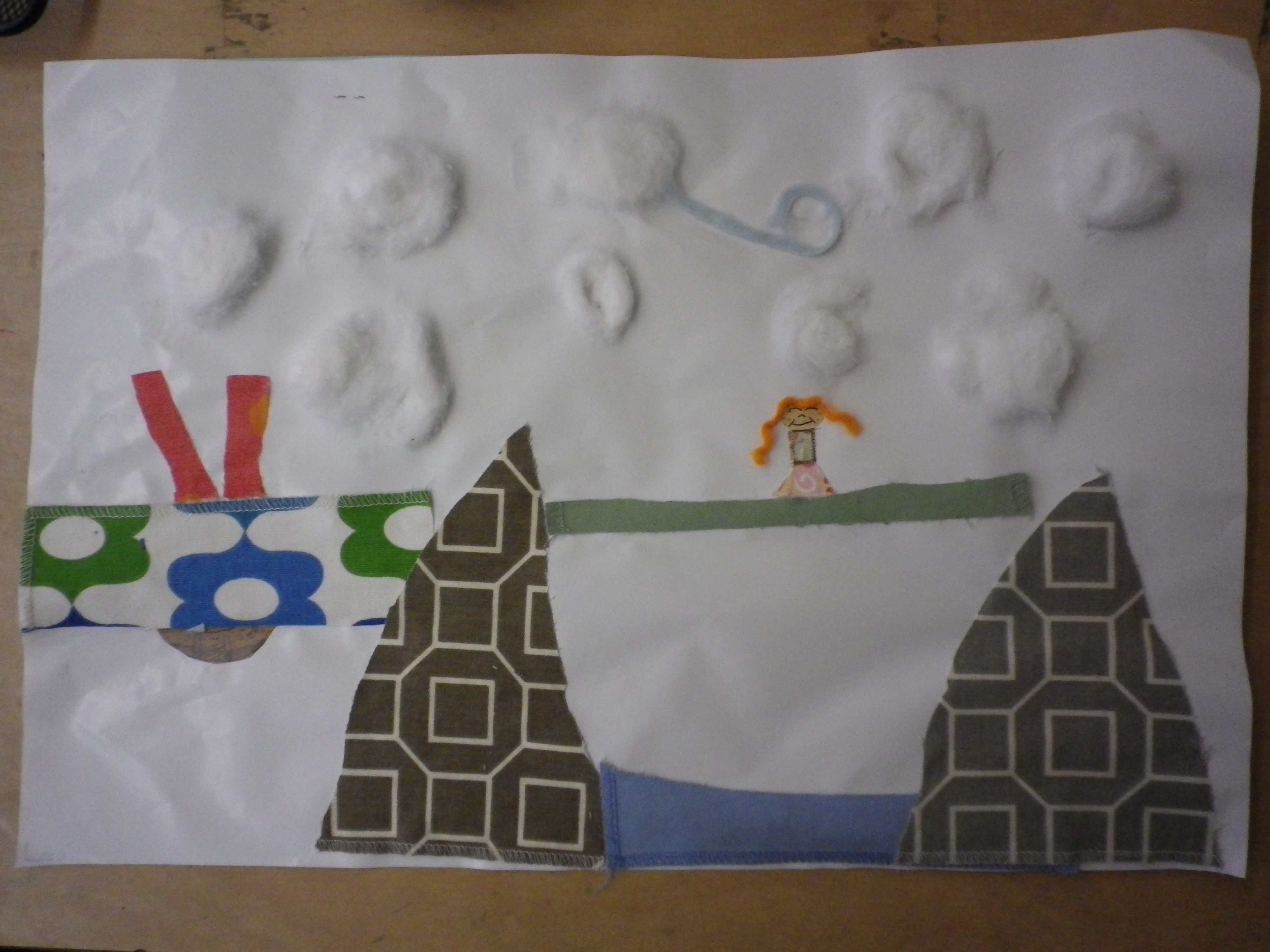
Grade 2 student, L.,uses detailed drawings to represent her knowledge when comparing her community with a community in Pakistan. Note the curly lines in the mountains representing the effects of the air as wind in the higher altitude of Korphe.


L.’s fabric representation shows the altitude of the Korphe community, the challenge of the water that was previously crossed using a wire pulley and a box to sit in, as well as the wise man who slipped. Their need for a bridge to connect them to building supplies and resources is more clearly needed before planning for a school.


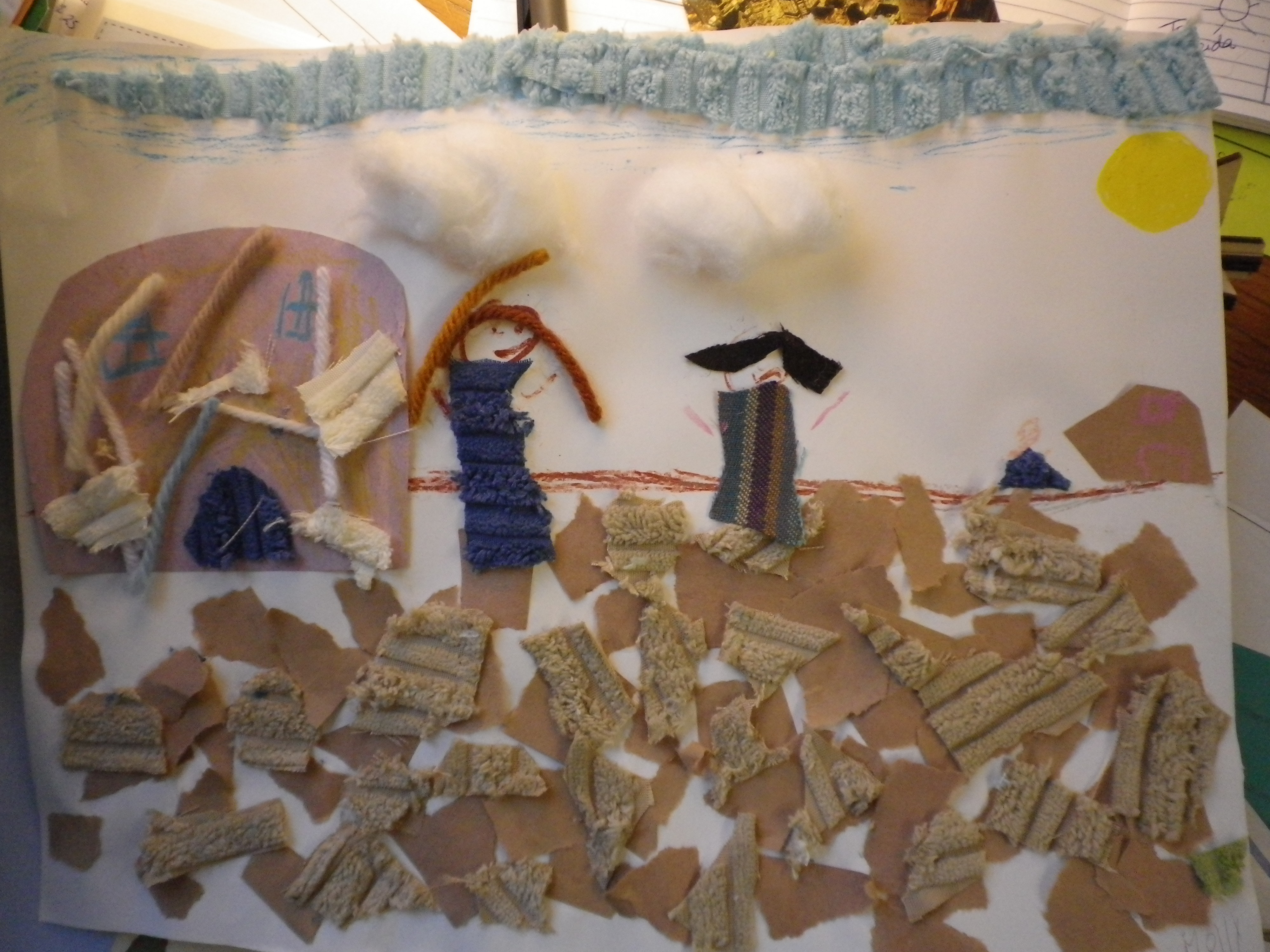
A Grade 2 student, uses fabric to effectively demonstrate her understanding of the dry African landscape. She has also shown perspective with a home and person in the background on the horizontal line, skills that were explored during instruction of the visual arts curriculum.


At the end of the inquiry, I asked the students if their ideas had changed about hope;

K.: Hope is more about needing something, like a place to live, food or water to survive.

L.: We pretty much have everything we need.

In addition to the observations, recorded conservations, and demonstrations of understanding through their independent works – their final responses to the question “What is hope” showed how much they had learned from the first day we considered this big idea. 

Photo of Sangeeta McCauley

Themes As the Driving Force

While there are some conflicting opinions about the use of themes in teaching, I have found that they are extremely powerful tools we can use to help our students connect their world to curriculum subjects.

I began my school year with the theme of Identity, so my Grade 4 students could know more about who they are as individuals. We examined factors like religion, gender, family, and media and how they play a role in shaping our identities. I was particularly excited to zero in on gender, in an attempt to work on one of the UN Millennium goals:

Goal #3 – Promote Gender Equality and Empower Women (http://www.un.org/millenniumgoals/)  

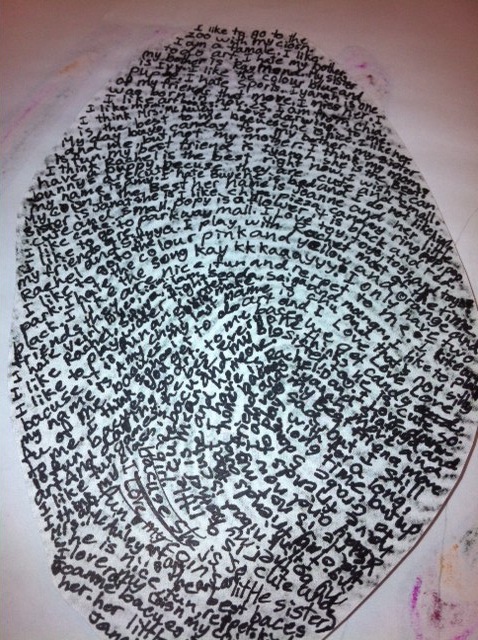
This led us to discuss stereotypes that can exist for males and females and through drama, visual arts and writing, my students reflected on their experiences and how stereotypes can lead to exclusion. We read personal stories and viewed clips from the site, “Because I Am A Girl” (http://becauseiamagirl.ca/) and they mapped places in the world where these stories came from and looked for patterns. At the end, students wrote about themselves and their learning in a blown-up version of their individual fingerprints.

Over the course of working within this theme, I began to see the challenges my students had with the concept of Choice and realized I had found my next theme to explore with them.

Goal #1 – End Poverty and Hunger

Goal #2 – Achieve Universal Education

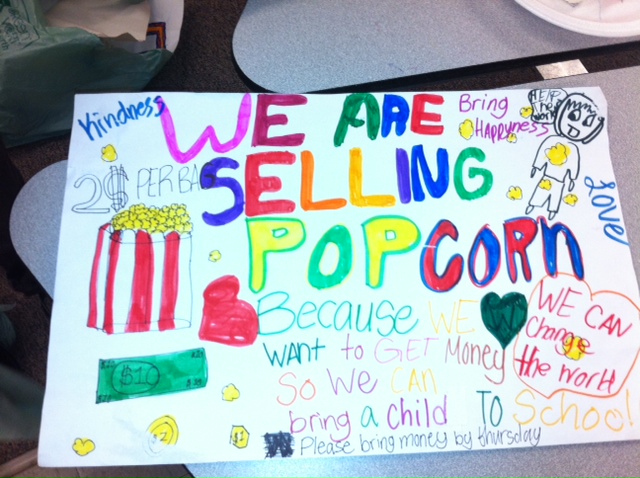
My students made puppet shows on iPads to illustrate a time when they had to make a difficult choice and we studied persuasive writing and how their voices can have an impact on the choices others make. Closer to the holiday season, we planned a fundraiser and I shared Unicef’s website and the survival gifts program (www.unicef.ca/). They convinced me that we should raise money to send a child to school because that would decrease the chances of this child living in poverty. So, we sold popcorn throughout our school, in the hopes of raising $75 to send a child to school. My students designed posters, they went to each class in the school and shared our idea, they counted and tracked the money that came in with the orders and to our surprise, we raised $300 and were able to send 4 children to school. Their one condition before I made the donation: can you please make sure that it is 2 boys and 2 girls?


Over the holidays, I contemplated how relatively quiet my mind was because I wasn’t hearing the daily concerns: he’s not sharing the soccer ball, I can’t find a teacher to help me outside, no one will play with me. In order to help my students with some of these issues, I needed to move to Power and its role in relationships and specifically on the playground. My students took post-its notes outside to record when they heard power being used and we studied about power in science through light and sound. They wrote articles for a class newspaper that outlined powerful people in our school and my personal favourite, we discussed imbalance in power, which led to yoga during our gym periods.

As I move into my last theme of the year, Agents of Change, Mission Impossible music plays in the background while my students are designing badges and creating surveys which will provide them with the data they need to make changes within our school.

Goal #7 – Ensure Environmental Sustainability

When my colleagues ask me how I find time to teach the curriculum, I say: The themes are my curriculum, they are what drive me to make connections for my students.

Photo of Erin G

Communicating (OMG) in French – A New Approach

I know that it can be a real struggle to get your students to communicate in French. Although initially enthusiastic in grade 4, by the time they hit grades 7 and 8, they are reluctant at best. I recently went to a workshop regarding the communicative approach which made me evaluate (apart from being forced to during the course of the session with those reflection activities) my current teaching practices. It’s always rewarding and energizing to be presented with a challenge and new ideas to try out. For those of you who might not have had the chance to attend any PD on the new philosophy rocking the world of FSL, I thought I’d sum up a few things to take into consideration when planning your next oral activity.

  • choose a reasonable task that reflects student interests and abilities
  • prepare students thoroughly by planning a progression of short activities that incorporate increasing degrees of communication
  • with your students, establish a list of expressions that they will need to use during the activity and have it displayed for reference
  • MAKE them communicate in French but in a way that is meaningful and authentic

Now that you hopefully have some food for thought, I’ll update you in my future blogs as to which activities I’ve created and tried out. In the meantime, loosen up, collaborate with your students for some ideas, be creative and have fun!

Heart Picture

Saying Goodbye…

Last week, my Long Term Occasional assignment ended.  Leaving a classroom three quarters into the year creates some mixed reactions from both students and me, their teacher. Part of me feels a little bit of sadness, knowing that I will miss my students, new colleagues and familiarity of the school I worked at, but I also feel a sense of  a renewed resolve, to continue getting to know new schools, and developing other collegial connections that could lead to a permanent contract. Mindful of the upcoming ‘goodbye’ and end of my contract, I did my best to prepare my students for the transition of me leaving and make it a meaningful and positive experience for them.

Throughout the school year, I collected pieces of student work and filed them away. During the last month of my contract, I was hard at work afterschool and evenings, glue-stick in hand, creating a scrapbook of each student’s work. These pieces consisted of writing pieces, crafts, drawings, photographs, math activities that showed the students’ progress.  I can’t say that I loved the hours of sorting and sticky fingers that were associated with the task, but I knew that the end result would be worth it. The final addition to their scrapbook was a photograph of me with each student and a ‘goodbye’ poem.

On my last day with the students, and before we had our ‘goodbye’ party, I settled the students and spoke to them about ‘reflecting on our learning’. I encouraged them to recall how some of them struggled with spelling their names at the beginning of the year, and many didn’t know how to read yet or spell many words. I reminded them of the many hours we had spent together at school, how they persevered and had accomplished so much.  I then sent the students off with their scrapbook to look at and reflect on the learning and fun that we had done throughout the year.  It was interesting to hear some students share their reflections:  “Look, Ms. Perrin, in September I didn’t know that my R’s were facing in the wrong direction”. “Why didn’t I finish a lot of my work? Oh yeah, I wasn’t good at focusing so well then”.

Many of them were excited to see a personalized photo of themselves with me, and I was happy to have given them something that demonstrated their learning, and something that they could reflect upon and remember me by.  I believe that I have given my students a meaningful ‘goodbye’ as demonstrated by the enormous hugs I received, thoughtful cards and requests to come back and visit. I am grateful to have had the opportunity to have touched my student’s lives in some way, and am equally grateful to have learned so much about Grade 1, from my students.

I’m certain that my next step of daily occasional teaching will bring forth different stirrings of emotions and experiences and it will be inevitable:  a lot of learning will take place. Wish me luck!

Students testing their knowledge of energy conservation by "living" in an online home and applying their learning.

Engaging and Supporting Kids Through Technology

One of my favourite moments to take in during a school day is watching kids as they become completely engaged in their learning.  I love to see their eyes light up, their facial expressions full of curiosity, and the buzz of interested voices in deep conversation.  It’s what teaching and  learning should be all about.

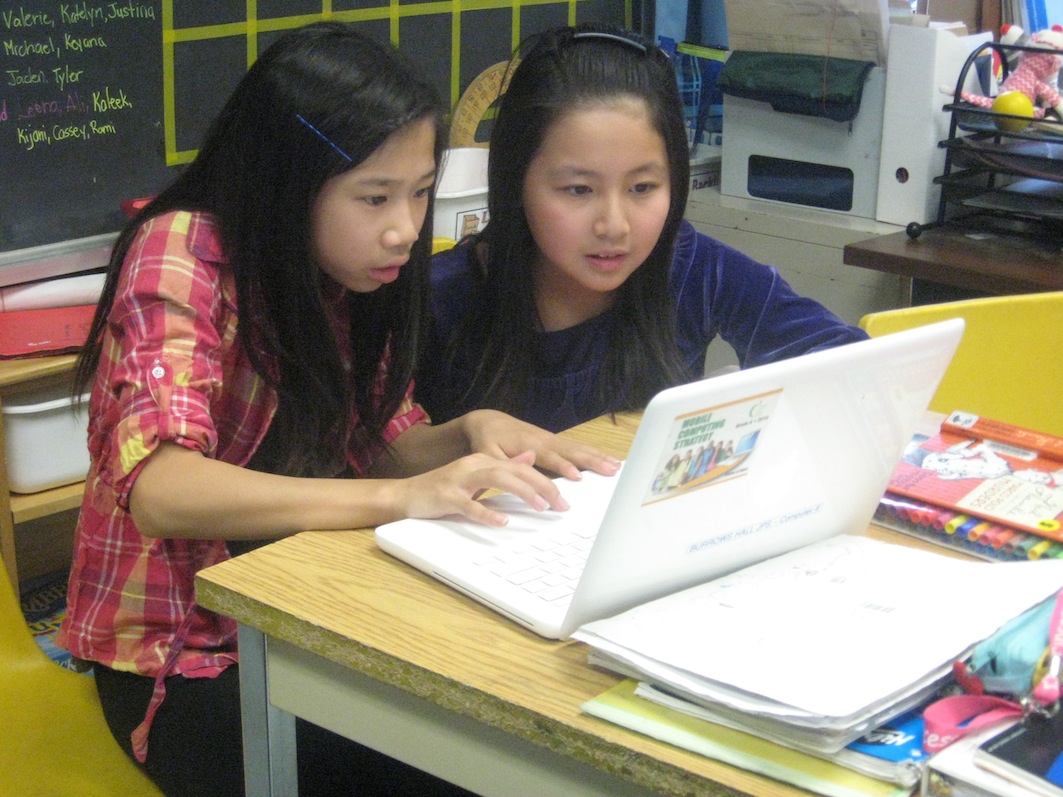
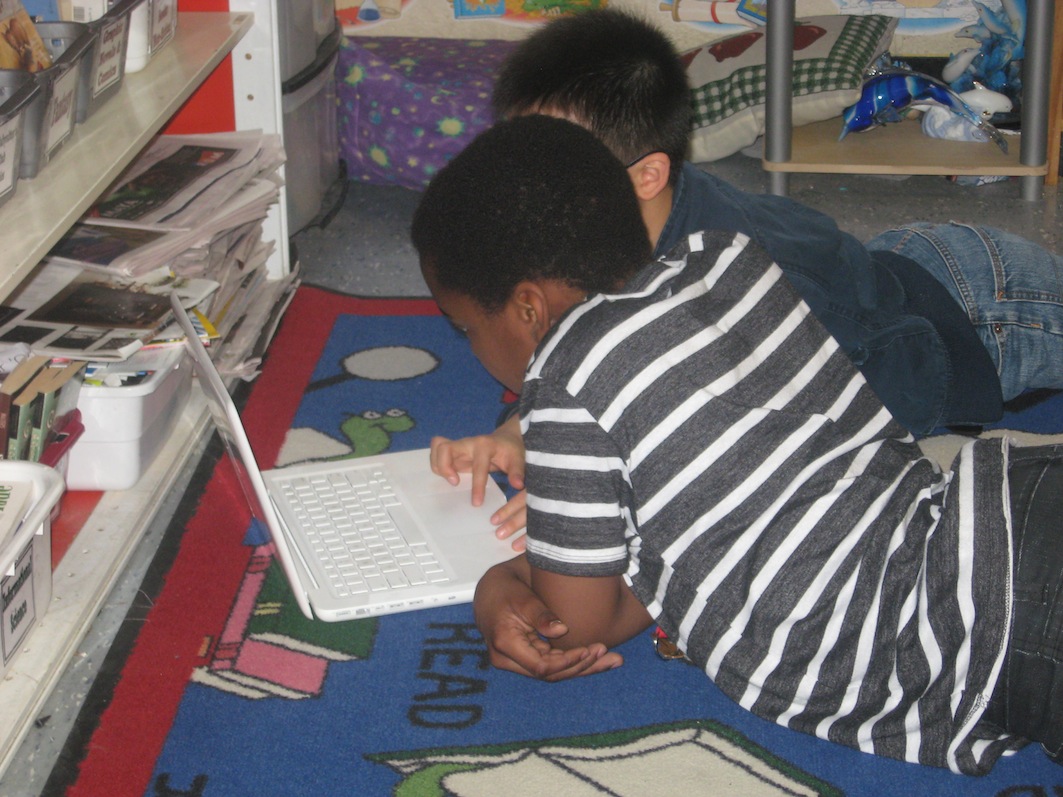
In our classroom, this experience often happens when kids build on and explore topics and concepts through the use of technology.  We are fortunate to have a SMART board and a set of laptops which we use on a regular basis to support our lessons.  It’s quite interesting to see the difference between how the students view and use technology now and how they did in the beginning, when everything was a novelty.  Through guided lessons on how to use technology to support our learning in constructive and meaningful ways, students moved away from simply wanting to play games to using it as a tool for research, independent reading, organizing their work, communicating with myself and their classmates, presenting projects and assignments in various creative formats, but of course, playing educational games is always an added treat!

Last week we had a metric conversion competition between each group by using an online game.  You would have thought you were watching the final of the World Cup of soccer with the cheering and excitement in the classroom.  Watching the teams work together to solve the metric conversions was a delight (they got extra points for demonstrating their cooperation skills) and I used it as an opportunity to assess their learning of the math concepts.

Using computers and laptops is just another way to add to the learning experience and it works when students become responsible for using technology at appropriate times and for appropriate reasons.  It’s not that I think we must have technology to teach engaging lessons and keep kids interested in their learning but in the reality we face today as educators, it sure is a very helpful tool!

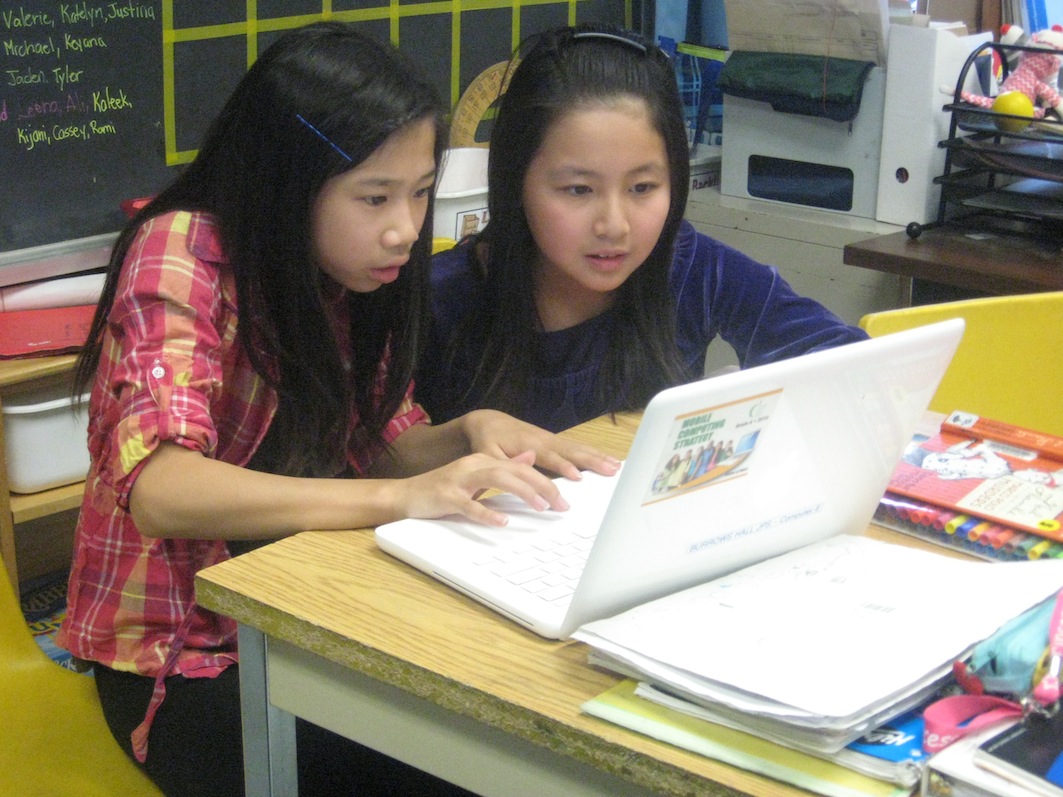
Students use a laptop to read a newspaper story and discuss their ideas and opinions through guiding questions.


Students testing their knowledge of energy conservation by "living" in an online home and applying their learning.
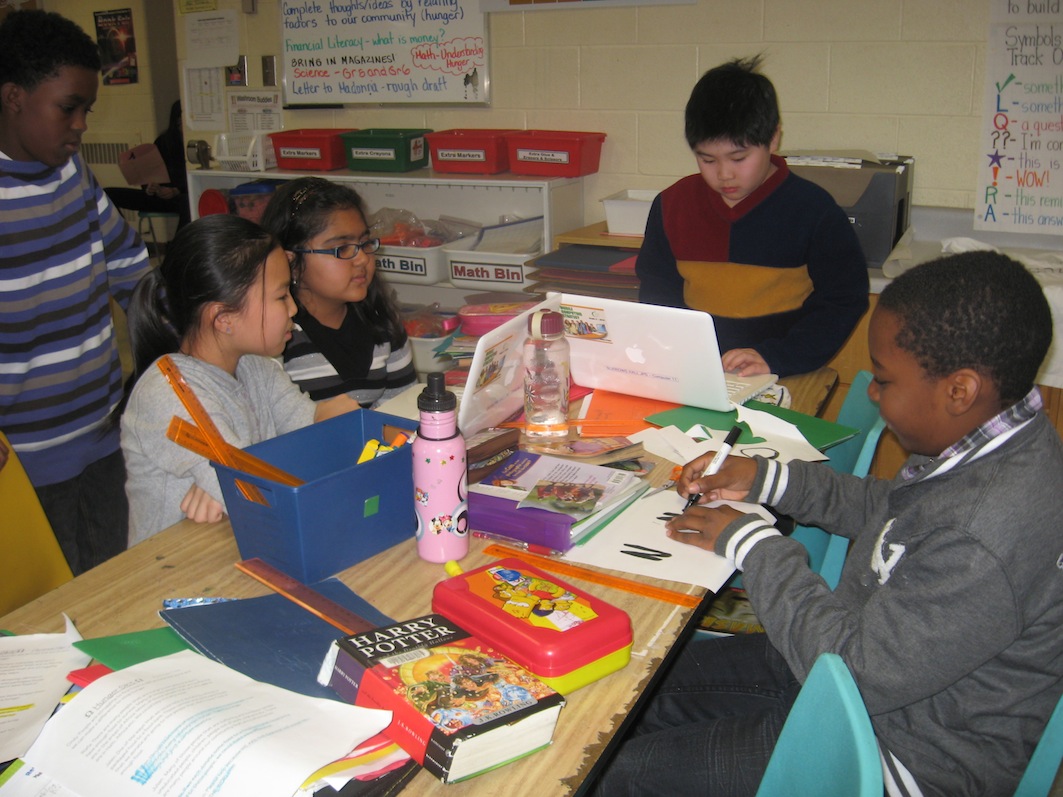
A group uses recess time (their decision!) to work on a project involving the presentation of a PSA and brochure.
Photo of Alison Board

Opportunities Beyond the Classroom

This week is our school’s Speech Arts Competition. It was introduced at a staff meeting with the hopes that all classes would participate. Some teachers are enthusiastic, some are not participating, while others (like myself) are using it as an opportunity to focus on oral language skills. I am presenting it to the students more as an opportunity  than a “have-to”. There are kids who are thrilled to create or memorize a poem, add dramatic flair and share it with the class. There are others that are anxious about selecting a poem, being able to memorize it, and having to present in front of their peers. Despite emails of worry from concerned parents of the anxious children, I continue to remain calm and relaxed about the process. It is the process that I want the children to learn from. If a few of the students are too nervous, they can recite their piece to me quietly when students are working independently. This option has eased their worry, however I am sure that when the time comes they will be fine, as a sense of community and support already exists within the group.

There are so many opportunities at our school for those who are confident expressing themselves in writing, visual art, or sports. I think that the Speech Arts Contest will appeal to those students who have abilities in oral language and drama. There are so many forms of expression, yet children are often presented with the same options. As teachers, we need to look for opportunities to explore other options and to provide students with a multitude of languages for self-expression, whether it is sculpture, nature, music, or math. I have one student who is often invisible in group discussions. Yet, if I play music or show a video with music, her face lights up, she moves to the beat, and she becomes the most visible.

With over 30 teachers and 500 students, our school buzzes with activity and events. It can be overwhelming for some (like myself) to participate in all the opportunities that are created by various staff members, such as growing seeds and tending our school garden, attending the Toronto Symphony Orchestra, participating in food drives, or sending Valentine’s to the Senior’s home, in addition to your own class trips and activities. However, I have realized that these are opportunities for the students to experience forms of expression beyond what I may provide in the classroom. If you can connect these opportunities with your own plans (such as graphing for Data Management during the food drives), the learning and the experience becomes authentic.

Heart Picture

New Year’s Resolutions

Happy New Year!!!

The New Year is a great time to reflect on the previous year and to set goals and resolutions for the year ahead.  I spoke to my students about New Year’s resolutions and shared some of my personal goals for school and for myself at home. I felt it was important for the students to see that setting goals help to make a person ‘better’ and that it is no different than the practice and work that they put in every day into their learning.  The message was not lost on them, and they were enthusiastic to prove that you’re never too young to start goal setting. In fact, I think that my young students really understood the purpose and value of goal setting because they grow, learn and improve so quickly (for example, in learning how to read).

Together the students came up with their own definitions of resolutions and we discussed the purpose and value of articulating a goal and coming up with a plan for meeting that goal.  Then, we all took turns sharing one resolution that pertains to school and one that pertains to home life.  The students then wrote about their goals for display in the school.  This week I will be sending a copy of the students’ resolutions home with them to serve as a reminder and a discussion point for parents in helping their children achieve their goals.

Click here to see some pictures of this activity from my classroom.

It’s important to strive for improvement, whether it is for the benefit of work or school, but also as busy teachers,  for achieving health and balance, which I will be working on  myself in 2012.


Heart Picture

More About Not Reinventing the Wheel…and Being Resourceful

It is sage advice for us as teachers not to  reinvent the wheel’, and it is so nice when it is followed up with a good idea.  Carmen’s Financial Resource link will go in my ‘back pocket’ of resources to use when in an upper grade, as will many of the ideas and suggestions from the teachers in this blog. To add to the blog’s repertoire of ‘resourceful ideas’ I have one to share that can be adapted to any grade and it has been successful with my Grade 1’s.

One of the initiatives at my school is to be more ecologically conservative (waste less, conserve, recycle and reuse).  In this spirit,  I have planned some creative cross-curricular art activities that have the students re-using found materials and scrap materials in the classroom.  It’s a simple formula for me to follow, requiring us to use what’s available in the classroom and it results in art work that the students become very engaged in and that is meaningful to them:

I start with a picture book or unit theme to act as a springboard to the task. From the unit/book I select something for the students to create in their own image (for example, at the beginning of the school year we read the story ‘Chrysanthemum’ by Kevin Henkes).

I then have the students design a ‘plan’ of their work, mapping out the materials and colour schemes of their work (in this case, a flower that reflects their own individuality, much like Chrysanthemum’s name in the story book).

I give the students a wide variety of materials to choose from (scrap paper, coffee filters, markers, crayons, pastels, water, old wrapping paper, foil, foam etc. ) to construct their item and encourage them t o follow their plan as they create.

I usually follow up the activity with a writing task which can be linked to a variety of Language expectations (writing in the voice of their created item, descriptive writing,  narrative etc.)

It’s incredible how enthusiastic and engaged the students are in these kind of activities because it reflects their own creativity and individuality.  There is no wrong answer as the artwork and writing is the students’ own creation, and it is a rich task that acts as a vehicle for me to teach and assess  specific strands of the curriculum that need to be applied to their work.

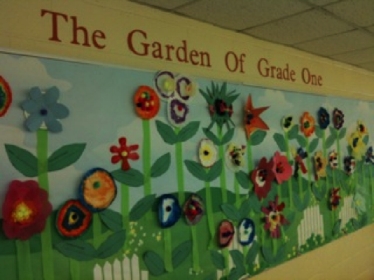
I am attaching a picture of the flowers created at the beginning of the school year, and I will attach more photos in the new year of the students’ more recent creations (*the leaves of the flowers show student writing: “I am special because…”)

Photo of Sangeeta McCauley

Preparing students for their generation

Lately, I’ve been doing a lot of thinking about how much I count on technology on a daily basis. There’s a mental checklist running through my mind before the day even begins. Laptop for note- taking, check. iPhone with recorded message for students, check. SMART Board lesson set up, check.

Most recently, I’ve added the best one of all to this list: iPad to encourage higher-level thinking and problem-solving. CHECK!!! (no, I do not work for Apple on the side…).

I have used the iPad to teach my students a number of skills:

-how to make webs as a springboard to writing (using Popplet)

-how to use audio recordings to explain what they do when they choose the “right” books to read

-how to make puppet shows that re-enact some tough choices they have made in their lives (using Puppet Pals)

I’ve never been a huge fan of paper-pencil tasks because I see how they can sometimes limit students who have a lot to say and who are creative thinkers. By using technology to engage my students, not only am I getting a more accurate picture of what they can do, but I am also preparing them to be what we always talk about in teaching: critical thinkers.

Their generation will be asked to do more thinking, more analysis, more decision-making, so why not start now?


Photo of Carmen Oliveira

When Our Teaching Comes Full Circle

There are moments in our teaching career when we can say that all the lessons that really mattered manifest themselves in the way our students think about and live their life.  Once in a while we’re lucky enough to experience how they apply what they’ve learned to real-life contexts which demonstrate their deep understanding of  certain issues or concepts and their ability to surprise us with unexpected levels of maturity.

This year, my grade team partner and I decided to base our teaching on the theme of responsible citizenship.  Our teaching focuses on and supports the belief that “we can all be the change we want to see in the world,” as Mahatma Ghandi stated.  What we read, write, and talk about involves issues linked to social justice and how each and everyone of us has a gift that we can use to make our world and environment better and healthier.  We try to structure our units of study so that we follow an inquiry model.  Students have control over what they learn because it’s based on their questions with respect to the issue we’re focusing on.  We guide the students through a gradual release of responsibility as they dig deeper into their learning.  The difference we see in many of our students is amazing.  Their questions, connections, perspectives, and opinions have demonstrated more critical thinking and their analytical skills are developing nicely.

This past week when I told the class that I had registered the school for the Holiday Food Drive, they came up with a phenomenal inquiry which, I have to admit, proved that the model is becoming embedded into their learning.  They suggested that we learn about hunger in the GTA (the cross-curricular links with Literacy, Math, Healthy Living, and Drama were obvious) and that as part of the inquiry and performance tasks they could educate younger students about hunger while leading the food drive for the school.  They then asked if we could go to the Daily Bread Foodbank to drop off the food ourselves and possibly volunteer as a way of using what they learned to help their community.  This is what it’s all about!  When students understand how to use what they’ve learned and apply it to a real-life context in order to better the world around them, I believe our teaching comes full circle.