
Photo of Mike Beetham

Celebrations

“If it is worth doing, it is worth celebrating”. That component is a significant part of every classroom agreement that I am a part of. As my classroom community evolves it becomes a priority that best effort is all that can be asked of the students and the teacher. As such, we do not celebrate grades, we celebrate best effort. Each and every child in the room knows and understands that as long as they are working as hard as they can, the result is always worth celebrating.

That belief began to evolve in my teaching about twenty years ago when I first began to understand the role of diagnostic assessment and how important it is to start where my students are and not be driven by grade expectations. I can best sum it up by saying, it is the juncture in my career where I began to teach children and not deliver curriculae.  My students (and classroom) began to lose the competitive edge and shifted toward a cooperative learning environment with a focus on helping everyone be successful. A significant aspect to that change was the need to redesign what celebrations looked like.

C– classroom community social events (Thanksgiving lunch, special days)

E– everyone gets to share their work in a public forum

L – lots of trips to connect learning to real life scenarios

E– extra high fives, fist pumps, sunshine calls home, notes and oral praise

B – board filled with weekly awards

R– regular positive visits from principal, parents and other staff

A – always asking for input from classroom advisors on new ways to celebrate

T – teacher models and then a gradual release of responsibility

E– every effort big or small is worth celebrating

How do you celebrate the efforts of your students? I encourage you to post your ideas for others to read.


Financial Literacy

Money “Cents!” Introducing Financial Literacy in the Elementary Classroom

Financial literacy is defined as, “Having the knowledge and skills needed to make responsible economic and financial decisions with competence and confidence.”  In A Sound Investment, 2010, a document released by the Ministry of Education, this is the definition according to leading experts called upon to look into the need to integrate financial literacy in the elementary and secondary curriculum.

Four years ago I began to wake up to the fact that I didn’t fully understand my own personal financial reality and the consequences my decisions had on both a short-term and long-term level.  I realized that I needed to understand the impact my financial decisions made on both my personal life and that of the global economy in order to participate as a responsible citizen in today’s every-changing and complex society.

I took the first step by immersing myself in resources to support my own financial literacy and those that would help me integrate the concepts and skills into my own classroom.  To my amazement (and delight), students thoroughly enjoyed each and every opportunity to learn about topics that focused on money management, healthy living skills, decision-making and personal awareness, consumer awareness, and responsible citizenship.  In addition, families showed their appreciation in having their children begin preparing for their financial future at such a young age.

I know that if I had been introduced to financial literacy in the elementary grades and explored it in-depth in secondary school, many of the financial decisions I made throughout my adult life would have been different.  We always want what is best for our children and often times that means doing for them what we wish was done for us.  Integrating financial literacy just makes “cents!”


The following are a few resources to get teachers started with learning about and integrating financial literacy in their own classroom.

A Sound Investment, Ministry of Education, 2010

www.edu.gov.on.ca/eng/financial_literacy_eng.pdf

EduGAINS: Financial Literacy Resources- Ministry of Education

http://www.edugains.ca/newsite/financialLiteracy/index.html

Investor Education Fund: Inspire Financial Learning 

www.getsmarteraboutmoney.ca


“I Know Here”

At one of our first staff meetings this year, we had a discussion about building community in our school. What is our community? How do we see ourselves? Many of the teachers had a difficult time describing our school community. We are in a building with additions that have been attached on various levels, resulting in doors and stairs that physically separate the classrooms into small groupings of three or four to a floor. The community outside of the school is also diverse. There are few apartment buildings as well as a neighbourhood of homes, a park, and a plaza of stores.

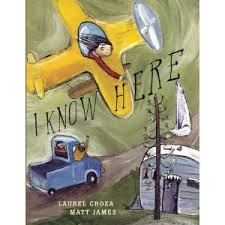
To discover our community through student inquiry, all the classes read the book I Know Here by Laurel Croza.


We then asked the students to take a similar approach and define their community with words and representations. The results were outstanding. Every age from Kindergarten to grade 8 was able to identify what made the community unique and they presented their own perspective. To extend that sense of our community defined by student voice, we set up a literacy night at the school to showcase the student work. It included descriptive writing, drawings, 3D representations, photos and videos.

The experience was rewarding for the teachers, students, and parents of our school community. The work was meaningful and the children were engaged. It was a topic that was accessible to all and promoted equity throughout our school. The children were also able to share new insight and point of view with us, the educators.

Photo of Erin G

Bitstrips Part 2 – Assessment Ideas

If you choose to use the program Bitstrips, students will submit their completed assignments directly to you via the program. To evaluate them, you will do so by logging into the program. I gave my students a rubric with the criteria we developed together as a class. This serves as a checklist and allows them to know in advance how the assignment will be assessed (see attachment). Usually, I have an Author’s Share where students present their work in their groups but since there are no hard copies, I just modified it somewhat. I provided each student with a total of 4 rating scales and posted all of assignments to the “Class Gallery”. They had a list of 3 students whose work they had to evaluate using the established criteria and lastly, evaluated their own work as a form of self assessment. This provided me with lots of input when doing my own assessment. Also available for viewing online at Bitstrips are samples of student work to get an idea of what they were able to accomplish and see how the program functions. All in all, it was a positive experience which provided a nice creative alternative for students who are not the best artists. Below are some suggestions that I would follow the next time.

You can access the link at:

vouloir pouvoir comic grille d’evaluation

vouloir c’est pouvoir comic rubric

*Have students complete their written scripts in full before proceeding to the computers. Because I was away for a day, I had them start with the program which made it very difficult to get them off the computers to go back and complete their drafts. Given the unexpected length of time it took to complete (about 8 classes), I would evaluate at several stages (vocabulary brainstorming, rough draft, 2 scenes, etc) and also have deadlines in place along the way to ensure that all students are progressing at more or less the same pace.


Photo of Erin G

Bitstrips – Incorporating Technology in the Core French Classroom

Using technology in the Core French class sounds like a good idea but, in reality, is fraught with difficulty. Despite a ton of great online resources and programs, I find that in my experience, one of the following scenarios takes place: 1) your classroom (if you’re lucky enough to have one) is not equipped with a functioning computer 2) frequently, the school’s equipment on the whole tends to be unreliable and you end up being stuck with a class of 30 kids waiting as you frantically try to get your program/media to play 3) Core French is not deemed high priority in terms of getting access to equipment such as smartboards and projectors.

This year I really lucked out by booking our Librarian for a two week block of Partner’s in Action sessions and thus gained access to the computer lab in the library. Since we happened to be working on a dialogue, I chose to have them convert it into a comic using the program Bitstrips. They offer a free subscription to teachers and is available at the website www.bitstripsforschools.com.

As with any assignment, you must be careful to properly set it up so that you aren’t left with 30 google translated abominations (chances are, you’ll end up with at least a few of these no matter what). Below are some couple of suggestions that will hopefully be helpful.

  1. Begin with a story/poem/dialogue which can be altered by students using familiar language structures and vocabulary (see attachment of dialogue Vouloir, c’est pouvoir- Addison Welsley).
  2. For those students needing accommodation, I provide them with a copy of the dialogue with certain sections highlighted along with a reference sheet from which they can modify and create their own version. Something else I’ve done in the past is to provide them with a choice of three things written in and they must choose accuratetly.
  3. Provide a sample level 3 text and then, as a class, show how to extend sentences and incorporate more advanced structures for a level 4.
  4. Make sure to provide ample time to complete project (which usually takes much longer than expected) and make sure students are accountable for completing subtasks to keep their project moving along.

In my next blog, I’ll talk about some ideas for what to do once projects are complete and provide some examples so you can see what the students were able to accomplish.

Vouloir, c’est pouvoir text

Photo of Mike Beetham

Conflict or Bullying

  • Bullying or Conflict?

Bullying is a reality in schools, but misplaced reactions to the day-to-day conflicts that occur in life will also not serve to help our students become problem solvers. I have noticed in my classroom (and around the school hallways) that any situation that involves one student disagreeing with another is being referred to as bullying. I had to really reflect on how to handle this scenario to ensure that the right approach is being taken to benefit all. I searched out information I could use to help clarify the misconceptions that were being developed by my students and came across an amazing resource entitled ‘We All Belong – A Multimedia Toolkit For Parents and Schools’. It was developed by the Centre Ontarien De Prevention Des Agressions (COPA). It is a very comprehensive tool for schools, teachers, parent councils and families to use as they work to develop a culture of inclusiveness within their community.

This resource helped me frame a strategy on how to move my students forward in their thinking. The Bullying Prevention Guide in the kit clearly explained that conflict is a disagreement or difference of opinion between two parties who are relatively equal in social status and thus there are two sides to a story. Bullying is not a natural part of daily life and is a targeted and planned act by a person or group of people in a position of power or social status and is often carried out over a period of time. If a bullying scenario is dealt with using conflict resolution strategies I have added to the harm done by the bully because I have now forced the victim to spend more time face-to-face working it out and have concluded that he/she is part of the problem.

The kit is a very rich resource that includes a Bullying Prevention Guide, The Capsule Families Get Involved and a DVD of short entertaining vignettes to be used. There are two volumes to the DVD with one targeting Parent Engagement and the other Bullying Prevention. The versatility of the kit has made it an option that can help bring families and schools closer in their battle against bullying. I am currently spending more time familiarizing myself with the resource as there are other options on how I may use it.

COPA – 457 Danforth Ave, Toronto, ON M4K 1P1
(416) 466-8975 or infocopa.com