Blog

Balance

Have you ever been driving along and all of a sudden you hear a low chime and look down to notice your fuel gauge has lit up and you are in desperate need of a fill up? Well, I can truly tell you this last week was just that feeling. It was like I was running on fumes and was hoping to be able to make it to Friday afternoon and the start of March Break. When I look back at a bad cold and three days off work, demands of our class’ annual play, contract voting, work on local committees, ETFO Executive role, monthly team meetings, staff meetings, report cards, school initiatives etc… there is no wonder that my tank was nearing empty. The bigger and more important question is how I let myself get to such a low.

In the first two thirds of my career the above stated condition was just what teaching was about. That is why we had Christmas Break, March Break and of course the famous summers off. What I found was that throughout the year I had put so much into my teaching, my students and my school that there was very little left for me and my family. The first two weeks of summer felt like being in recovery where my body just shut down and said, ‘REST’. I would then enjoy several weeks of life trying to get caught up with family time and me time. By the second week of August, I was starting my new cycle by pondering and preparing for the upcoming school year.

Then it hit me, well it felt like it hit me as I lost my voice for a two-week period and had damaged my vocal chords. The simple diagnosis was that I was doing too much and not allowing enough rest time for my vocal chords. I thought to myself, if that was occurring with my voice, it is likely occurring with all of me both from a physical and emotional state. That simple but important event helped me understand the word balance and how critical it is to every one of us no matter what career path we choose in education or other fields. The simple remedy was that I needed to get and maintain balance in all aspects of my life.

I began by prioritizing events, tasks, extra curricular time, family time and me time. My first professional priority was to teach and help my students be successful. That is where most of my school time should go. Any extra events I choose to be a part of are now based on my overall balance picture and what I think I can contribute while still maintaining a healthy life balance. As I have learned, that changes from month-to-month at times.

The second shift was to ensure that what I needed to maintain a balance in life (exercise, time in the outdoors, family time, friend time, alone time) was also a planned component of this new and improved work smarter not harder picture. No longer was I ever going to listen to my youngest son (5 at the time) tell me it is okay that I was not able to talk to him now, we could do it in the summer. So I have found that by just writing this blog it once again has forced me to revisit my life/work balance. It seems I was moving into unhealthy patterns again. Take care of yourself by striving for balance as teaching is a marathon and not a sprint.


Allies

The word ally is typically defined as a nation or state cooperating with another for a military purpose. As with most words it of course has been expanded for many uses but retains the meaning of being on your side. So the question I ask you today is, as a teacher who are your potential allies?

From the minute I enter into my school I have an amazing opportunity to make allies, get people to support the work I do with my students, school and community. Allies are everywhere but like countries you must take the time to build up relationships to develop those allies. When you do that, they will be there when you need them most. I am going to talk about several key allies that I have in working with my students and how without them there are many things I would have much greater difficulty accomplishing.

The first ally is of course the parent(s) of my students. Let’s be honest, we both really want what is best for a child even though we may not agree on how to accomplish that. From the moment I know a child is going to be in my classroom I reach out to families to try and start building that working relationship. It starts with a simple call home the week prior to school welcoming them and their child to my classroom. It continues on with my first Weekly News letter home by asking them to brag about their child as they know them best as well as asking them to prioritize two goals they would like their child to accomplish this year. This helps sends the message they are a part of the formula to create success for their child. I continually update them with sunshine calls home, weekly news updates, inviting them to attend events in the classroom and any other way I can include them or make use of their expertise and assistance in my room. Of course not every parent becomes my ally or totally agrees with every decision I make. There will be some parents who just won’t or don’t engage in your efforts. This work I put into recruiting parent allies always pays off with some very strong relationships that are there when I need them most.

The second set of allies I work hard at creating are with the school support staff such as our office manager and custodial team. These are key people who are the heart and soul of the school and can be there to support me in many situations when I need the help. One of the most unique request I made of our custodian was to have our front classroom door taken off so my class could create a drawbridge door for our Medieval Times study. Needless to say I had to have a strong relationship with that person to make and receive such a request. Our office manager (and every office manager) is the heart of the school. He/she is the first and often last person everyone sees when coming to our school. That role is so important and my class spends time on a regular basis showing how we appreciate the work she does. That time and effort has helped me many times over the years when I need a last minute request or forgot some important deadline.

The final ally I want to talk about is a community-based position. My class spends time doing service learning projects and as such we need to have people who trust that I can take a group of 8-11 years old out into the community and perform projects that enhance our community. I have worked a lot with city environmental personnel who over the years have come to value and trust our staff and the request we make. There are community agencies and people who can also become a potential ally for you.

As I began to change the lens upon which I viewed my classroom I began to see more and more how many potential allies (support) I have available to me. I do not have to do this on my own. My educational team continues to grow as I grow relationships and take advantage of the opportunities they can provide me in supporting my students and my professional growth. Allies do not just happen, you must work at creating them.

Cultivating a culture of creativity

Recently, I was asked to explain my vision on how to cultivate a culture of creativity in the classroom. After a few moments of reflection came this response.

From the moment that a student enters our classroom fostering a culture of creativity requires 3 key things; fearlessness, fluidity, and failure.

IMO, these 3 are inextricably linked in my classroom. As lead learners first, teachers are crucial to a successful culture of creativity as they model fearlessness to students in our own approaches to learning. When students see their teacher unafraid to take chances and make mistakes, they too will be emboldened to do the same as they approach the new and unknown.

Establishing this in a classroom might require teachers to become Pirates as Dave Burgess shares in his transformative book Teach Like a Pirate. This requires complete commitment and patience. Remember, it’s about the process not the product.

This requires flexibility to escape from what is fixed within a text book, a single narrative/point of view, or schema. A classroom must be a fluid space where the way must be tried (tentanda via), but if it is limited to merely the information provided out of ivory towers; when and where will students have an opportunity to challenge it?

If we want a culture of creativity, we must allow room in our instruction to critically consider/falsify(as Scientists would according to Popper) what is being taught. This takes a mighty courageous educator who is willing to let go and share “power” with students.

FailureFinally, for cultures of creativity to occur, a FAIL mindset is needed. FAIL is a wonderful acronym for First Attempts In Learning. We celebrate failure in the classroom because there is still something learnt in the attempts at something. When students feel safe to learn, try, and supported when they fail then they will be strengthened to extract the lesson, unlearn, relearn, try again, and repeat as a natural part of the process.

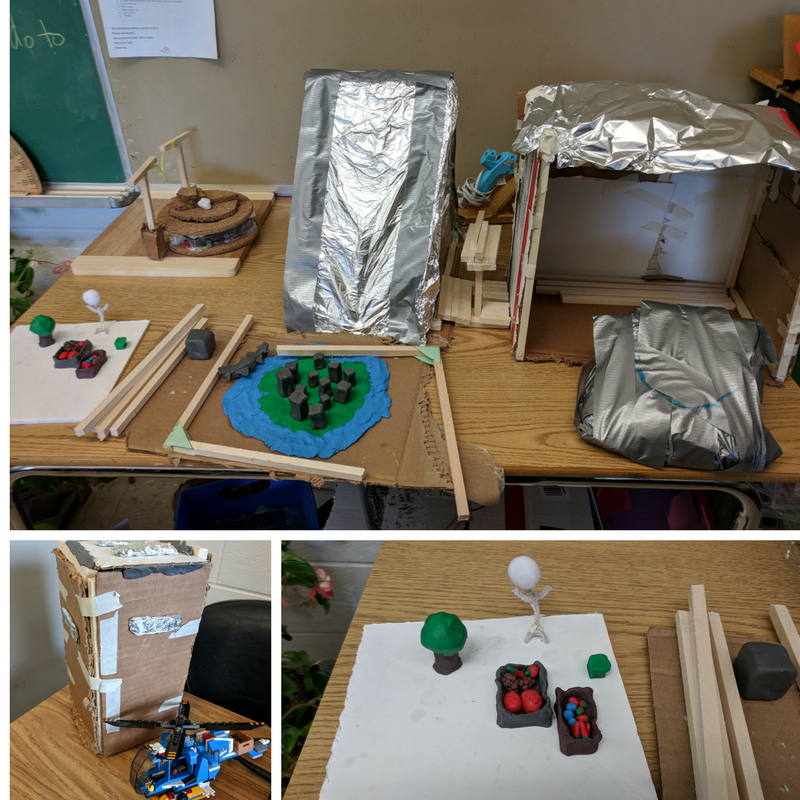
Some tangible examples of this in my class have come in my Electricity unit where we have been trying to make a fully functioning replica of BB-8 from Star Wars: Episode VII The Force Awakens movie. IMG_0131Throughout the process we have ideated, iterated, learned, adjusted, tried again. Instead of disappointment after an attempt or apparent failure, there is opportunity to rethink and try again.

Students empowered with a mindset of fearlessness in a flexible environment are bound to be invigorated and engage in their learning/tasks with their creativity emboldened.

I believe these 3 things to be at the core of innovation in education and have worked to embody them in my personal practice.
ps If I was to share a fourth item it would be that a culture of creativity is messy. Often, no path exists and therefore students must blaze their own trails. With the right attitude, the mess and muck of learning and creativity mesh to form a ‘lit’ learning environment.

pss – George Couros is the current godfather of innovative practices in education. He is a brilliant and gifted communicator who shares a passion for education with the world. His book the Innovator’s Mindset is on my reading list and I’d encourage you to add to yours.

If you want to continue this conversation about innovation or to share how you are innovating in your learning space, feel free to share in the comment section below. Thank you for reading. Will

Helping Children with FASD in Your Classroom

Many years ago, when I was in Teacher’s College, I did my practicum in what we could call today a ‘systems’ class. I worked with several students with Down’s Syndrome, a few with non-specific developmental challenges as well as some students who were identified as having Fetal Alcohol Syndrome (now called Fetal Alcohol Spectrum Disorder). This was the first time I learned about FASD. What we learned was very basic. We were told that there were certain facial features which might help to identify a child with FASD and some unpredictability in behaviour, but other than that, I do not recall learning, in practical terms, how to meet the needs of such a child.

Fast forward to today, and I am far more familiar with ADHD (Attention Deficit Hyperactivity Disorder) and ASD (Autism Spectrum Disorder) in the classroom than I ever was with FASD – for some reason, it seems it’s just not something we talk about or receive in-service training for. Then last week, I became enlightened by a workshop which helped explain how damaged a developing brain of a fetus that is exposed to alcohol in the womb can become, and what we as educators and caregivers can do to help children affected with FASD. As I heard more about the characteristics and strategies associated with children with FASD (Important to note: the majority of individuals with FASD do not have facial features associated with the disease, hence it is considered an “Invisible Disability”), I became excited about the possibility of fresh interventions that I could use to help some of my students, who, although do not have definitive diagnoses of FASD, still present with key behaviours such as memory deficits or impulsivity.

Some of the key points which have helped me readjust my perspective as I “put on an FASD lens”, I have taken from an information package provided by the Fetal Alcohol Resource Program (Citizen Advocacy of Ottawa). I highly recommend becoming more familiar with the condition because the strategies are relatively simple to employ and can be supportive not only to students with FASD but to any student struggling with behaviours in your classroom. A video entitled, Dear Teacher is also included in the package and serves as a gentle reminder of how we need to treat those of our students who face challenges which may be difficult to understand. I have found these useful reminders at a quick glance, but there is so much more that can be learned about FASD.

The chart below is called, “What FASD is NOT.” I find it particularly useful as it clarifies the ways certain behaviours may initially be perceived, and how, through a different lens, they should be understood.

                                    We NEED to shift our thinking

From Seen As….. …To Understand As
Won’t Can’t
Bad Frustrated, Challenged
Lazy Tried Hard
Lies Confabulates/Fills in
Doesn’t try Exhausted/Can’t start
Mean Defensive/Hurt
Doesn’t care Cannot show feelings
Is a problem Has a problem

With a few upgrades in our approach with one of our students who has had particularly challenging behaviours, my teaching partner and I have already noticed an improvement in the child’s independent learning, interactions with peers, and response to direction. Some phrases we have found useful reflect the intent of some of the examples provided in the information package; “I can see this is tricky for you. We are going to solve this later. Let’s get a drink of water.” (patience and redirection) ; “Let’s figure out a better way for next time,” (support rather than punishment); and, “Come here. It’s OK.” (no matter what you do, I am here for you).

At this point, we are by no means specialists in FASD, but we are willing to learn as much as we can as we continue to see positive results. As educators, we all use patience, consistency, support and understanding, but with some of our students, we may need to use a little (or a lot) more.

A school wide activity to gear up for 150!

I am very excited about Canada celebrating its sesquicentennial anniversary this year! There are so many fun activities and a feeling of celebration everywhere you go in our amazing country.

To gear up to a big celebration in June, we have been doing small activities every month as a school to get pumped up.

Last week in our assembly, I made up a 150 second challenge that my whole school participated in together. I put a large 150 second countdown timer on the wall and then took students on a tour across the whole country, through our actions and imaginations, before the 150 seconds were finished.

Below are the actions and activities that we did to start to celebrate our amazing country!

  1. Go skating on the Rideau canal in Ottawa IMG_0037
  2. Go skiing in Whistler BC.IMG_0038
  3. Climb a mountain in Banff national park in AlbertaIMG_0039
  4. Go fishing in Northern SaskatchewanIMG_0040
  5. Shovel your driveway in Winnipeg, ManitobaIMG_0041
  6. Paddle your canoe in Algonquin Park in OntarioIMG_0042
  7. Eat some poutine in QuebecIMG_0043
  8. Go dog sledding in the Northwest TerritoriesIMG_0044
  9. Watch the Northern Lights in the YukonIMG_0045
  10. Ride a snowmobile in NunavutIMG_0046
  11. Dance an Acadian jig in New BrunswickIMG_0047
  12. Wave to my family in PEIIMG_0048
  13. Catch a lobster in Nova ScotiaIMG_0049
  14. Go whale watching in NewfoundlandIMG_0050
  15. Roll up the rim in OttawaIMG_0051


Challenging and Inspiring students in Art class


creative process

Getting students going on the Creative Process can take some thoughtful planning on the part of the teacher. Students are sometimes stuck for ideas and need someone to provide them with a catalyst for inspiration. The chart above is directly from the Ontario Curriculum for the Arts, and gives some great ideas for how to challenge and inspire student creations.

Recently, in my grade 3 and 4 art classes, I decided that I was going to try a new idea for inspiring creations and see how students responded to a new type of stimulus. I gave them some quotes about inclusion and equity to choose from, and their job was to create an art piece that represented what the quote meant to them. The tricky part was getting them going on their pieces and providing them with support and an environment that would produce the artwork that I knew that they were capable of.

Using the above chart as a guide, I followed the suggestions when trying to inspire my students creations:

Introduce the initial idea, challenge, stimulus, inspiration and experience

Introducing this art piece to my students was tricky. They really needed to get their brains turned onto the issues of equity and inclusion before we tried to analyze our quotes or come up with imagery for our art pieces. I started by reading them the story of Viola Desmond from the book “Viola Desmond Won’t Be Budged”. (The book is very easy to understand for all students, and Viola’s sister was in Toronto a couple of weeks ago, so the students had some familiarity with the story). violaThis got the students thinking about racial segregation and asking thoughtful questions about Viola’s experiences. I introduced the quotes to them and encouraged questions or collaboration with others to reflect on the meaning of the quote that they chose. I even had some students bring in their own quotes. I gave them a graphic organizer with some questions on it to help to get them started reflecting on their pieces. The completion of a graphic organizer also allowed me a chance to see who needed additional inspiration or support before they started their art.

Provide models, examples and learning goals

As a class, we looked at the Peel District School Board art display for Black History Month on Twitter where many other students had used a variety of images to convey messages. We analyzed what we thought made particular pieces powerful and artistically appealing.

Establishes expectations, defines parameters and help develop criteria for success

Before we started our pieces, we talked through our criteria for successful completion of the art project. The students and I used Anne Davies process for co-creating a success criteria which can be found in the book “Setting and Using Criteria”.

criteria


The graphic organizer that I gave to students included the following questions:

My quote is:


In my own words, this means:


The symbols or images that this quote makes me think of are:


The mood I want to create in my art is:


The colours I will use are:


The focus of my piece (where I want people to look) is:


Some examples of the art with the quote that the students chose.

“Love is the only force capable of transforming an enemy into a friend.” – Martin Luther King Jr.

jannahmaanya

“I have decided to stick with love. Hate is too great a burden to bear”

– Martin Luther King Jr.

muskaan

alyssa

“It always seems impossible until it’s done.” – Nelson Mandela

gurtaj


Options

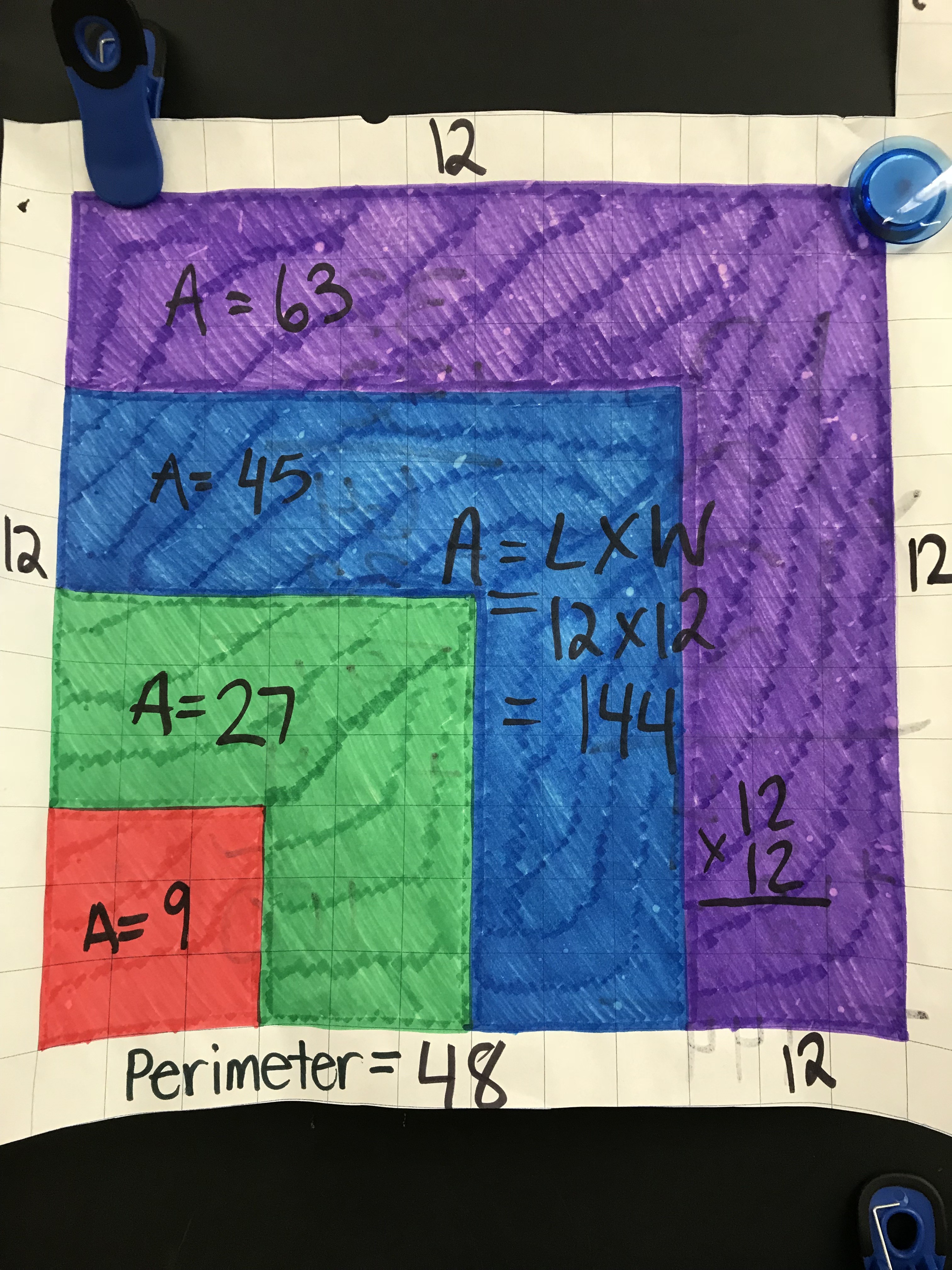
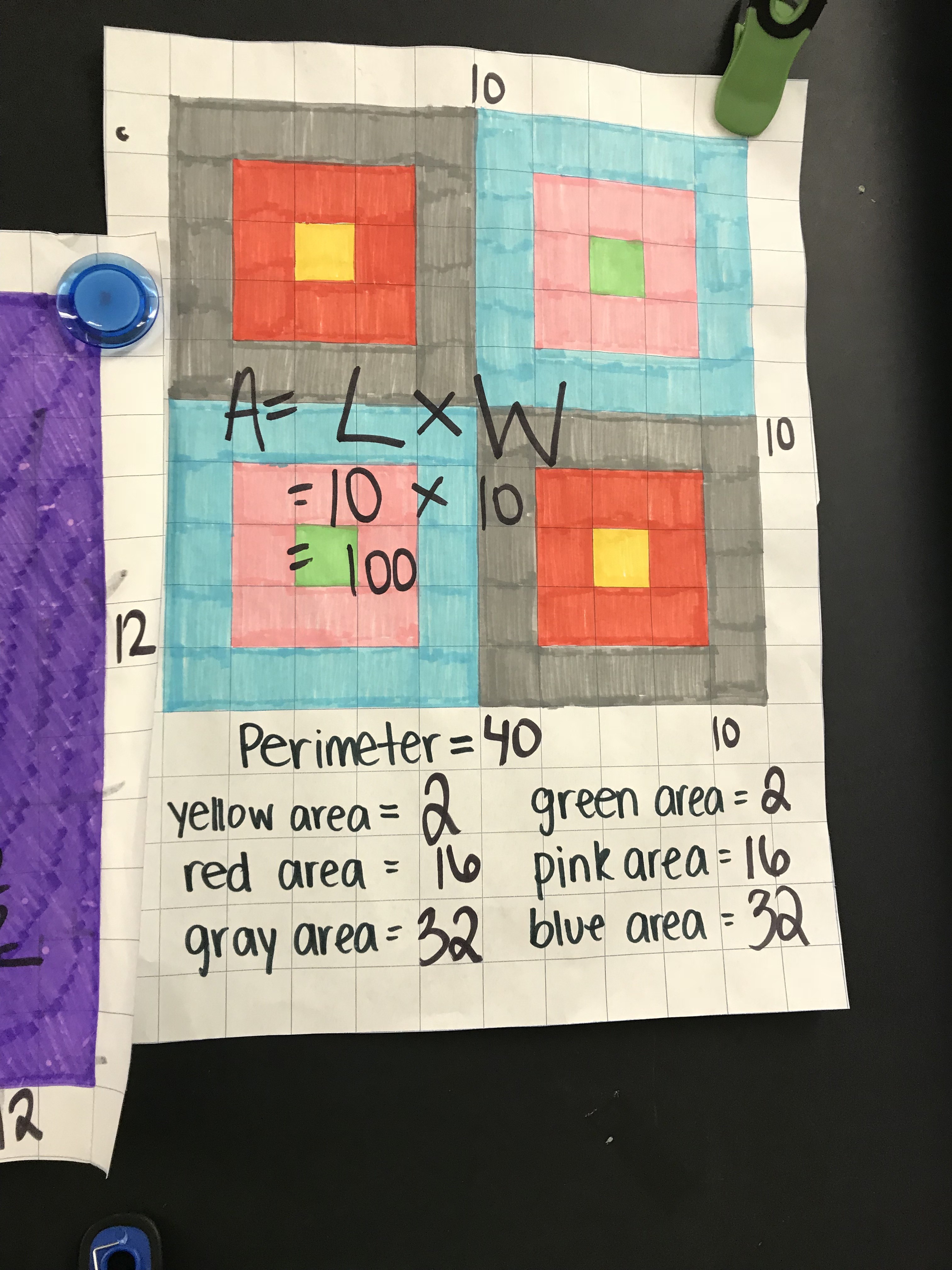
My grade five class is almost done their perimeter and area unit. At the close of this unit, I was having trouble deciding what the best option would be, a project or a test. I decided to present both options to the class and then let them select which one they should do.

I then had an issue with letting students who had received an “A” on their reports not do both. I wanted them to challenge themselves by trying both since they had achieved such a high mark on their report card.

Some students reacted very negatively to this thinking they wish they had received a lower mark. I on the other hand, tried to explain to them that since they had such a high mark on their report, they have proven that this unit is not a challenge to them so they should challenge themselves by trying to take on two activities.

It was interesting how many students chose to take the test over the project. I for one, HATE tests and as a child never enjoyed spending time after school studying for them. As a teacher, I dislike giving them as well because they do not offer any creative elements for the child who is writing it. So when some of my students chose the test over the project, I was rather shocked.

I am happy I gave my students the option because I loved seeing students debate over both and then finally arrive on their final choice. I think that when I was in university learning about choices for students, I never really understood the feeling over power it would give my future students. It was amazing seeing them weighing their options and I am happy I was able to give them that feeling.

Home Away From Home

I used to teach in a small school in downtown Ottawa that was about to celebrate its 100th anniversary. There were many activities planned for the celebration, and one of them was a tour of the school explaining how and why it was designed the way it was a century ago. I will never forget hearing about how glorious the original kindergarten room was, with its high ceilings, vast bay window and enormous mantelpiece over the fireplace. Apparently, there was even a big chandelier hanging in the middle of the room, “To make it feel like home.” Today, the chandelier is gone but the bay window is still there, the ceilings have dropped and the mantel was covered over long ago with drywall and plaster – guess that could feel a bit like some homes nowadays, too.

The idea that a classroom should feel cosy rather than sterile has come back to me as I teach kindergarten in a 50 year old school. We are lucky to be on a corner, with lots of windows, but the classroom is undeniably square, with painted concrete block walls, a dropped, acoustic-tiled ceiling, and fluorescent lights. When I say square, I mean that everything is at right angles – windows, walls, bulletin boards, etc. Nary a wavy line to be found. That was the way you would have found our classroom until last month, when my ECE colleague and I talked about changing things up to be a little more of a Reggio-Emilia inspired classroom with more natural,organic materials (cosy) and fewer brightly coloured, plastic ones (sterile). With a few changes to the way we set things up and to the materials we use, we feel that the energy of the room is now more calming and welcoming.

There aren’t a lot of changes we can make, but here are few that we tried. For starters, the concrete block walls in the classroom are painted a dull yellow in high gloss paint. The bulletin boards are also painted in a brighter high gloss, and the cupboard doors are a kaleidoscope of blue, purple, green, and yellow – waaaaay too many colours! To tame them down and calm the eyes, we covered the bulletin boards with large rolls of brown paper. To frame the bulletin board, we stapled scrunched up green tissue paper. The effect? With the irregular framing of green tissue paper combined with the brown, earthy colour of the bulletin board, the corner of the classroom has been calmed. The door to the classroom is directly opposite and it makes walking into the classroom much more appealing than the bright, mismatched colours that were there before, and the yellow walls are hardly noticeable any more.

Another thing we did was bring the outside into our room. We have a huge tree branch that I had intercepted from the custodian as he was hauling it towards the dumpster in the fall after a storm had snapped it off a tree in the yard. Hanging it horizontally from the ceiling was not possible due to health and safety regulations, so I stuck the bottom of the branch inside a rigid poster tube, and then attached the tube with plenty of duct tape to the side of a filing cabinet beside my desk. It is now one of the first things you see when you walk in the room. The students decorate it whenever they get in the mood and so it is constantly changing. Dead or alive, trees in the classroom are great. Period.

Another little “make it feel like home” touch we added was a set of white cotton curtains hung to frame the giant white board/projector screen that dominates one wall. Now the curtains cut off the corners of the big rectangular screen and make it look more like a movie theatre screen. Feels a little special. We’ve also talked about bringing in some table lamps to place at some of our centres but we lack enough room along the walls where electrical outlets are located, so we rely instead on the lovely sunshine that streams in from the considerable window space. The natural light is perfect for the plants we’ve got growing on the window ledge. Some live and some die due to a lack of water, or over-watering (depending on whose responsibility it is that week) but there is no doubt that they add another continuously changing organic presence to the room and soften its manufactured aspects. We’ve got kitchen herbs which inevitably get picked and eaten (chives, basil, mint, lemon balm), as well as a chrysanthemum we rescued at the end of autumn from our planter in the school yard, and a sweet potato vine which is growing quite happily in a clear glass vase where we can watch the roots reach down towards the water.

The final touch we add only on the coldest days when it is just not possible to have outdoor learning is projecting the fireplace channel on the whiteboard when the students arrive in the morning. It is a big fire and the gentle crackling sound offers a distraction from the fact that our routine has been changed and we are spending the morning indoors. Most definitely makes the whole room feel cosy and homey. The classroom may not be anything like the home my students return to at the end of the day but we can still try to make it feel as hospitable as possible, a little like their home-away-from home.

Express lane to learning

Recently, I was out shopping, and came upon something that’s not usually found for sale on the shelves at local grocers. Insight.

Funnily enough, it was probably there all along. I must have blown past a bunch of times while buzzing about my mental list of must buys. But this time, finding insight was meant to be. I’ll explain in 10 items or fewer.

https://www.flickr.com/photos/kirrilyrobert/2355105082/ CC by 2.0

Usually, upon walking into a store, I’m pre-occupied with my mental shopping list, figuring whether something is a good deal or not, and by getting out as quickly as possible. This requires the use of several life, mental Math, and critical literacy skills.

The act of shopping really requires planning and strategic thinking to figure out when a store will have the least amount of people as possible in it so that we may park, pickup a cart, procure, pay, and part. It is impossible to ignore the thought required for such seemingly innocuous trips that are made for our milk, bread, and eggs etc.

From now on, and armed with this understanding, I am going to use my trips to the store to seek out and share its valuable lessons. There’s knowledge to acquire about Math(Measurement or Number Sense), to Media Literacy(package design, use of space), and to the development of crucial future life/socialization skills in every aisle.

Consider the yogurt section for a moment; there’s something for everyone in that part of the dairy case. Where else could so many products co-exist so peacefully? In fact where else could such diversity exist(except Canada)? Here gluten free, lactose free, peanut free, Halal, Kosher, vegan, and meatatarian are available to all at the grocery store and share an inclusive space.

Then there’s the produce section.

While perusing here, I saw couples discussing, quite demonstratively, which bunch of Rapini to buy. Then I spied the apple aisle. There was a person who felt compelled to touch all of the apples in the case. I witnessed a grape thieve looking from side to side and then pop a few into her mouth. Here were real lessons on relationships, human behaviour, and decision making all before me waiting to be picked and extended into the classroom.

It’s like that in the classroom or a head of Iceberg(lettuce). Teachers work hard to make learning engaging, extendable, and relevant everyday.What most outsiders see is only the first leaf, layer or ply.*

Speaking of plies. I thought it would be fun for my students to calculate which toilet paper at the store was the better deal based on size and number of sheets per roll.

Talk about a real life problem. Initially, I went around snapping pictures of the different packages and their details to build the questions. The class discovered that there’s a lot going on that can confuse consumers. We came away wiser for the time knowing we wouldn’t get rolled over by the manufacturers next time. IMG_3962

Your turn

Have you ever considered or taken a class to the local grocer? What about a super-type store à la WalMart(wish I could still write Zeller’s here)?

Or how about a homework assignment to include children in the planning and shopping? Who knows it might become fun, or democratize the food choices in some households. It may even lead to conversational and debating skills.

There’s a line forming behind me. Happy shopping. Thank you for reading. Please share and take time to comment to keep the conversation going.

*You thought I’d say tip since iceberg was used, but no!

Jack of All Trades, Master of None

I am for sure aging myself here, but for those of you who may not be familiar with this figure of speech it is used to describe a person who is good at many skills but a master of none. That is the best way to describe who I am as a teacher and how I have evolved over my career of  learning to be a better teacher.

Far too often we think that in order to use a strategy or tool in our classroom we have to be an expert at it. We don’t! As a teacher I have to be familiar with the content, the methodology and/or the necessary steps but I do not have to be a master of it. I am going to talk specifically to my personal Achilles tendon of teaching, the ARTS. I am in no way a musician, yet I can share my passion for music, lyrics and the powerful messages found in music. I can learn and teach to the curriculum expectations of my grade. I can partake in professional development opportunities to expand my skill set and knowledge. Even after all that, I will still not be an expert as compared to a music specialist.

My greatest accomplishment in the arts has been my work on understanding drama as a teaching tool, learning dramatic content and implementing it into my program. I have never been on stage (other than as an elementary student at Christmas time). I have never been a part of any formal dramatic theme, other than helping clean up after a school event and yet drama is one of the most successful components of my program these days. Each year my team and I take a group of highly volatile behaviour students and put on a formal dramatic presentation that we travel with to various schools within my board to share. We are currently in mid production of this year’s play.

Like in almost anything I was not comfortable with as a teacher, the students’ skill set, passion and innate ability to learn took over and I was just left to facilitate their growth. The second message is that when you share your expertise with your colleagues (collaborative planning) the saying that no one person knows more than all of us holds true. I am writing this for all teachers to understand that is it okay to take risks, it is okay to make mistakes in your classroom and learn from those mistakes and it is certainly okay to be a jack of all trades and master of none.