Throughout my teaching career, there have been many days where I have been overwhelmed by the tasks and expectations I place on myself as an educator. If that is you today, stop what you are doing and go make a sunshine call to one of the parents in your class. Delivering positive news will brighten not only the parent’s day, but your day as well. The parent is usually so thankful that you took time out of your day to speak with them about how awesome their child is or about something amazing that they did this week. I recommend it over simply writing a note as you feel the positive energy over the phone, and the pleasant interaction stays with you.
I am fortunate that I teach about 450 students, so there is always something positive going on throughout the week. I have made many different calls this year for many reasons. However, the most memorable call of the year was to a family with a child for whom they don’t receive these types of calls often. The student was negatively approached by another child and maintained their composure and calm throughout the interaction. This was a very big deal for this child, who has been working on their explosive responses to others. When I called to tell the parent about how well her child maintained their composure, the parent was almost in tears and so thankful that I called with positive news. The parent repeatedly thanked me, and we have had an excellent relationship every since.
Parents are sometimes surprised by sunshine calls, as they are not used to positive news coming from the school. I tried to call a parent whose second language was English and left a message on their answering machine. The parent was alarmed that the school had called them, and it took some time to explain that I was calling to tell her how hard her child was working to catch up to the other grade five students, as they were new to the country. Once she understood, she too was very thankful and appreciative.
Parents are so busy and deal with so many stresses outside of the day. It’s very impactful for them to receive good news about their children, so it’s worth taking the time to be that person for someone’s family.
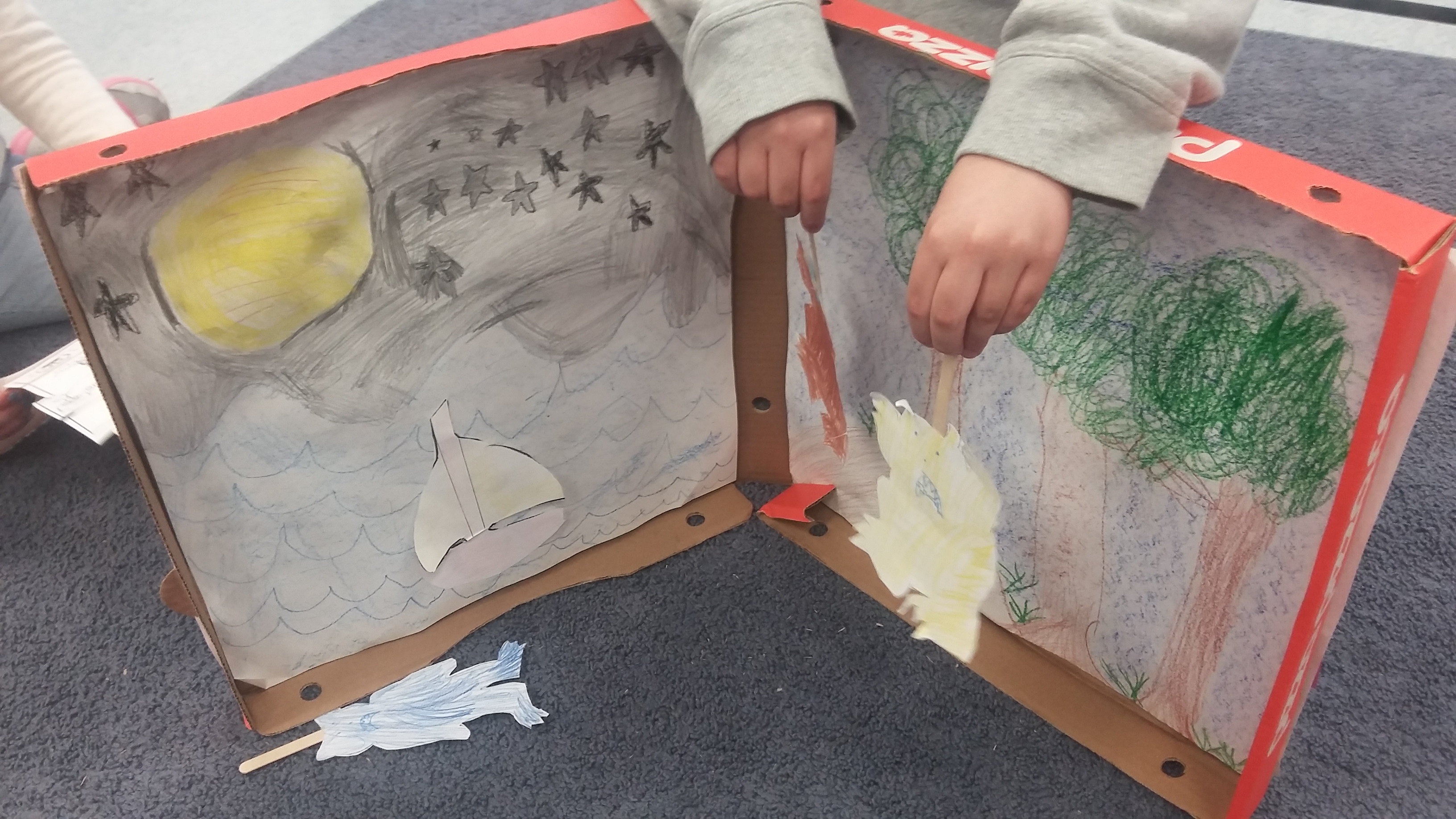
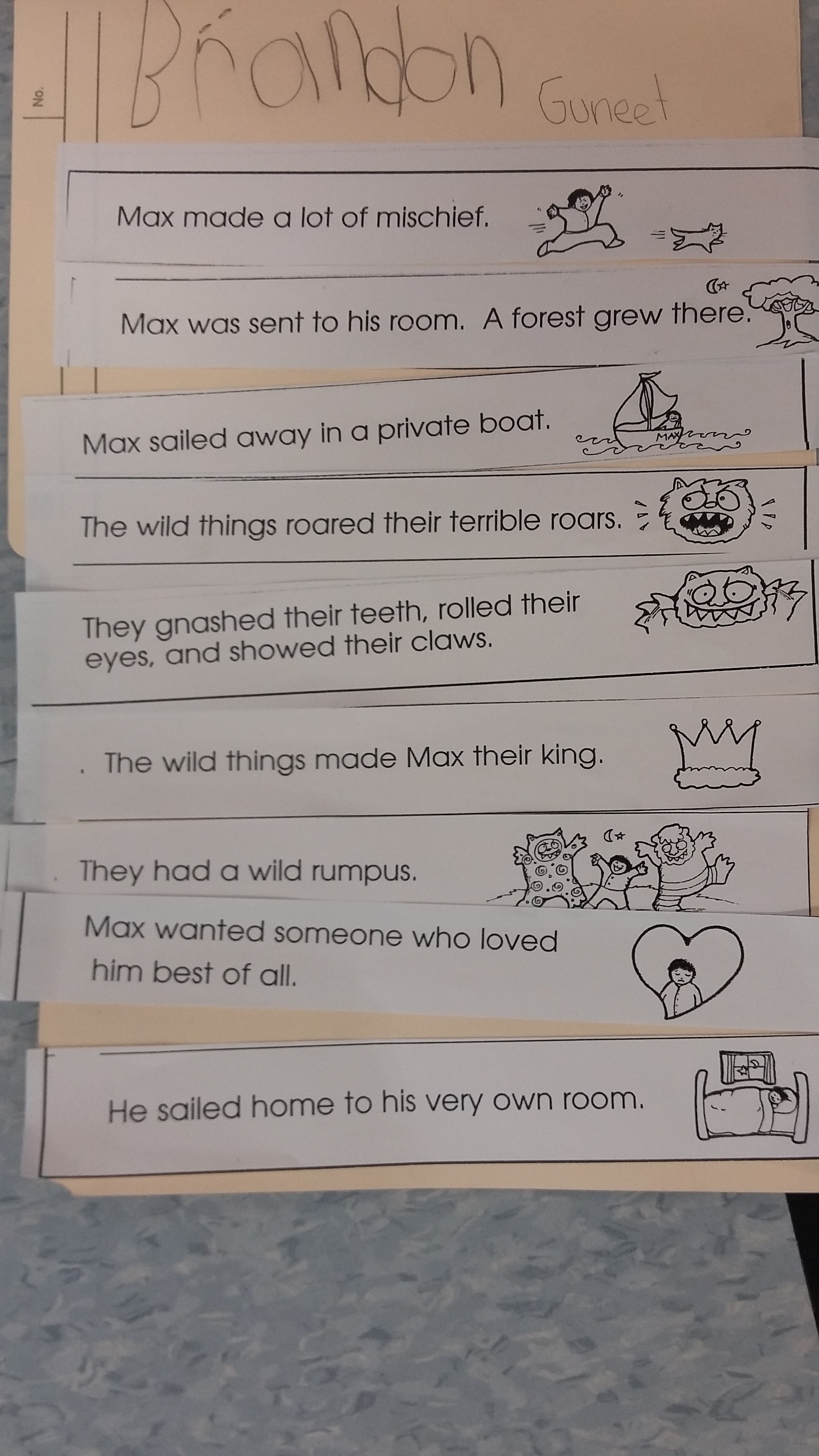
Without a doubt, the highlight for this term’s drama classes in the primary grades has been the creation of puppet theatres. We have taken pizza boxes and stick puppets and acted out some familiar stories. The grade two students are currently working on completing their performance of “Where the Wild Things Are”.
Leading up to our performances, we have spent half of each period exploring the story with our bodies, dialogue or reflections, and the other half has been spent preparing our puppet theatres. To prepare the students to really analyze the character’s feelings and thoughts, I have been reading a small part of the book every class and asking students to act out or respond to some part of the story.
A few examples of this are:
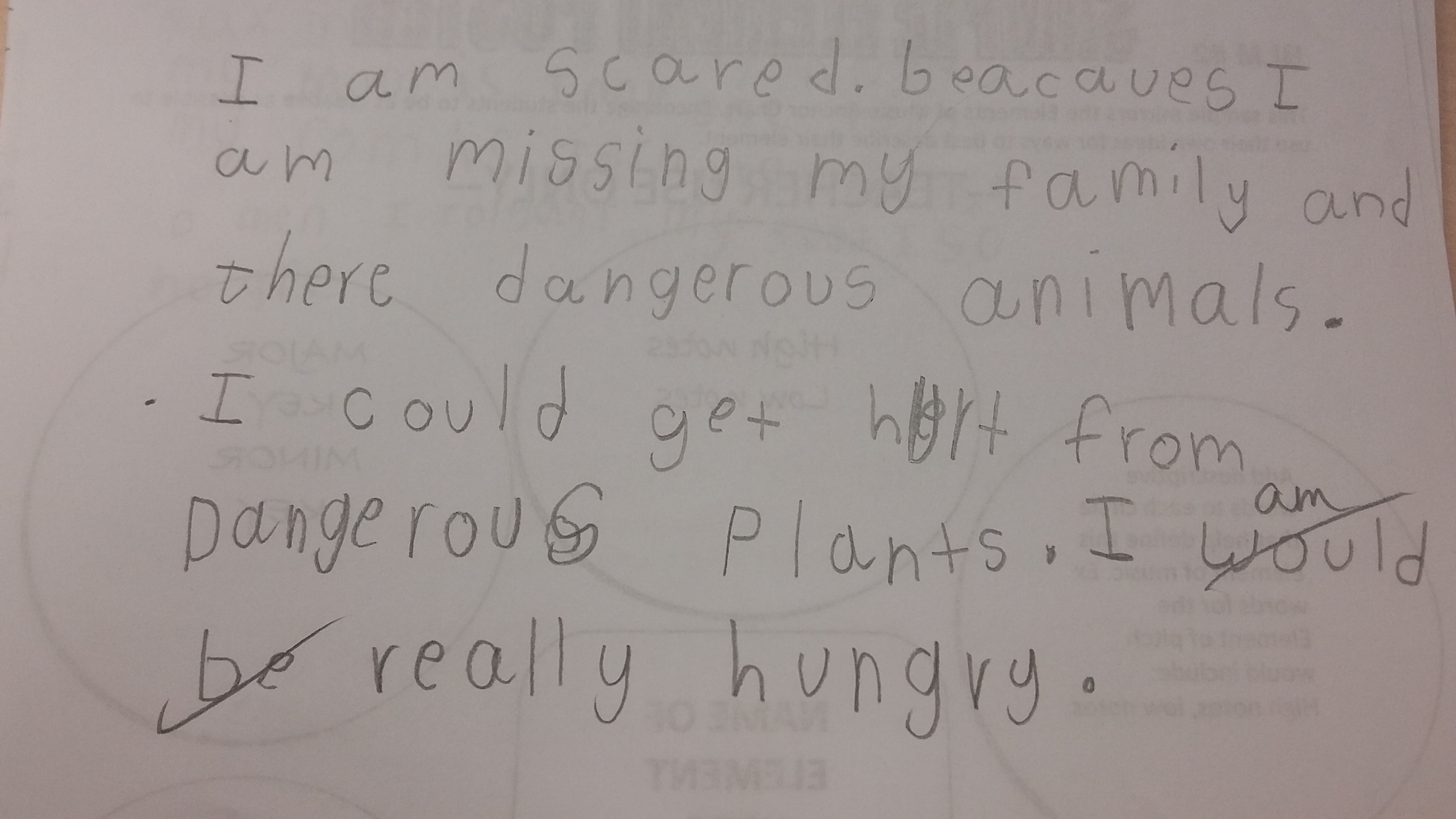
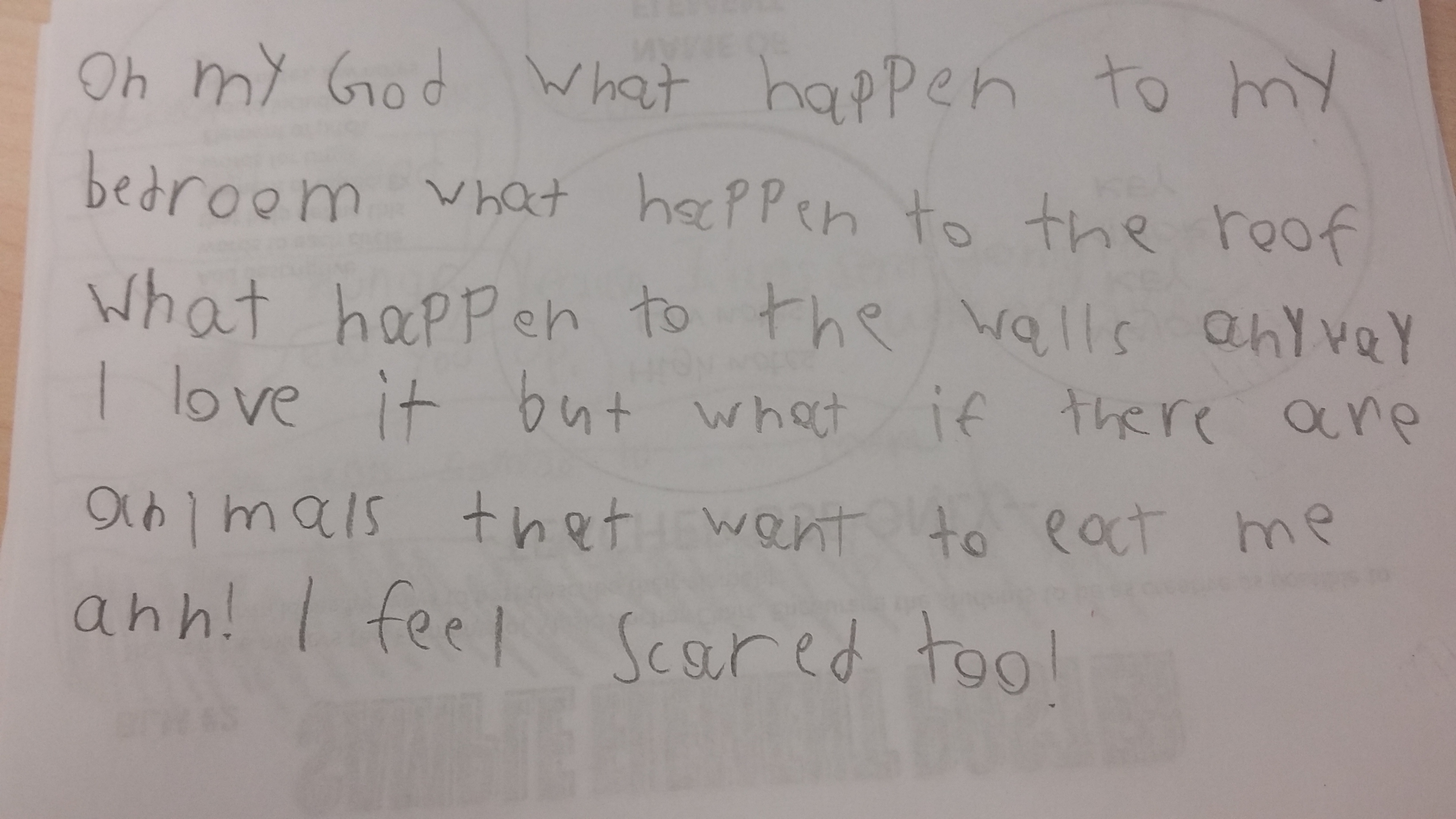
When Max’s room turns into a jungle I had students write in first person how Max is feeling.
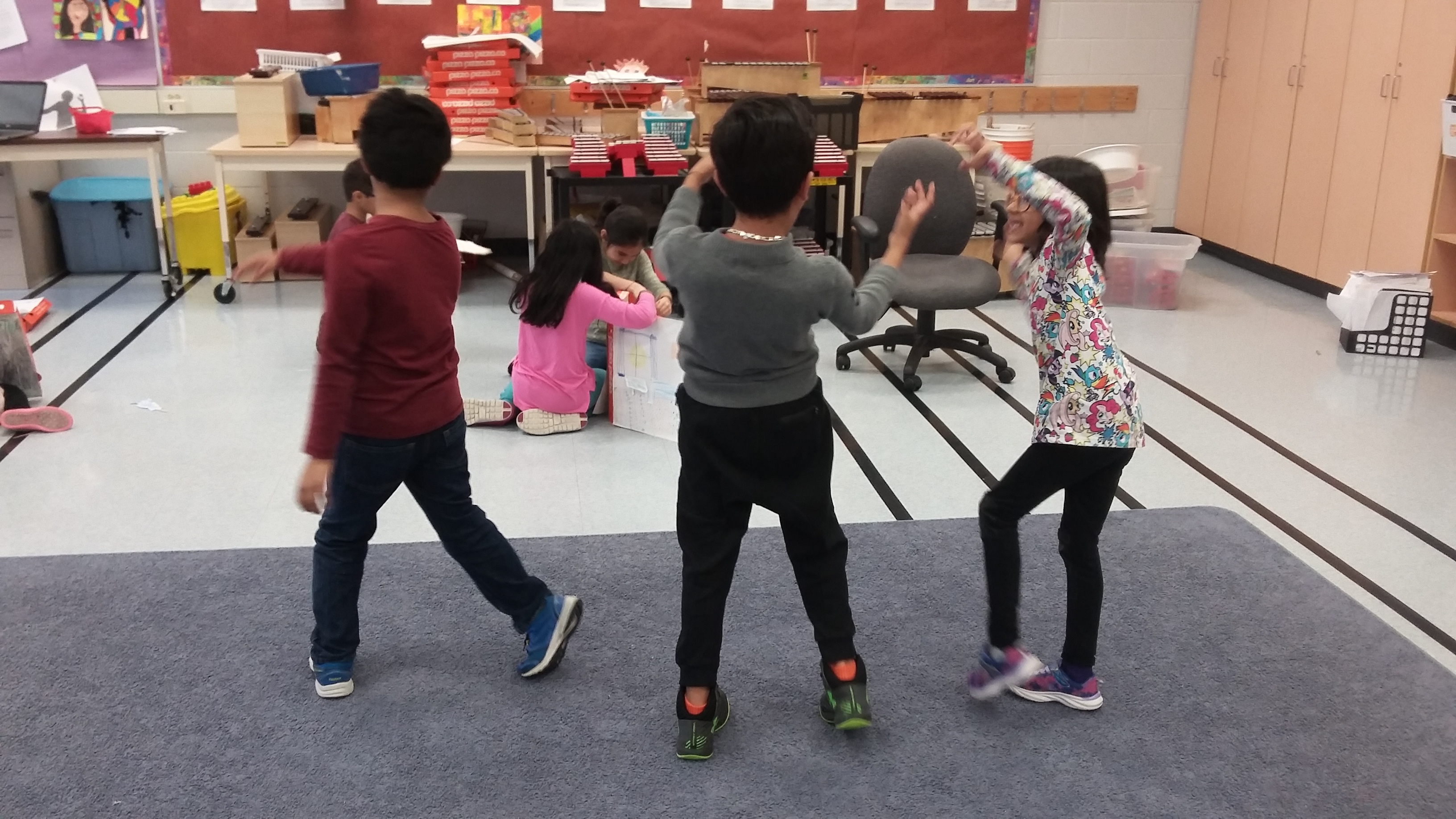
When Max gets on the boat and travels for several days, I had the students act it out while I narrated the story. At one particular point, I asked the students to freeze and I went around the room interviewing a variety of students about how they are feeling. They were encouraged to speak in first person.
In the part of the story where the wild rumpus begins, I had the students act this out in slow motion focusing solely on their body and facial expression.
The rest of the period was spent creating the theatres. We spent time talking about and imagining what would go in Max’s room and all the other locations in the story. I prepared papers that fit inside the pizza boxes, and students coloured and prepared the backgrounds.
This was my first time doing this kind of assignment in drama with primary students and I have learned many things:
1. Pick a book where there is very little text. You want the students to be adding to the story, not only telling the story as it is. For example, when Max arrives on the island of the Wild Things, there is very little explanation in the story about how the Wild Things feel. We explored the feelings and thoughts of these characters.
2. Create a class set of puppet theatres that everyone uses. Students are able to work on their performance with a variety of people and can play all of the different roles when they don’t have ownership over one theatre. I also use the theatres for all my classes so we created and build them as a large team.
3. Have a narrator with a small amount of assigned lines to help the students stay on track. It is difficult for students in grade one or two to remember every part of a story. Using prompts allows students to remember the part of the story that they are at, and focus on adding their original dialogue to the presentation.
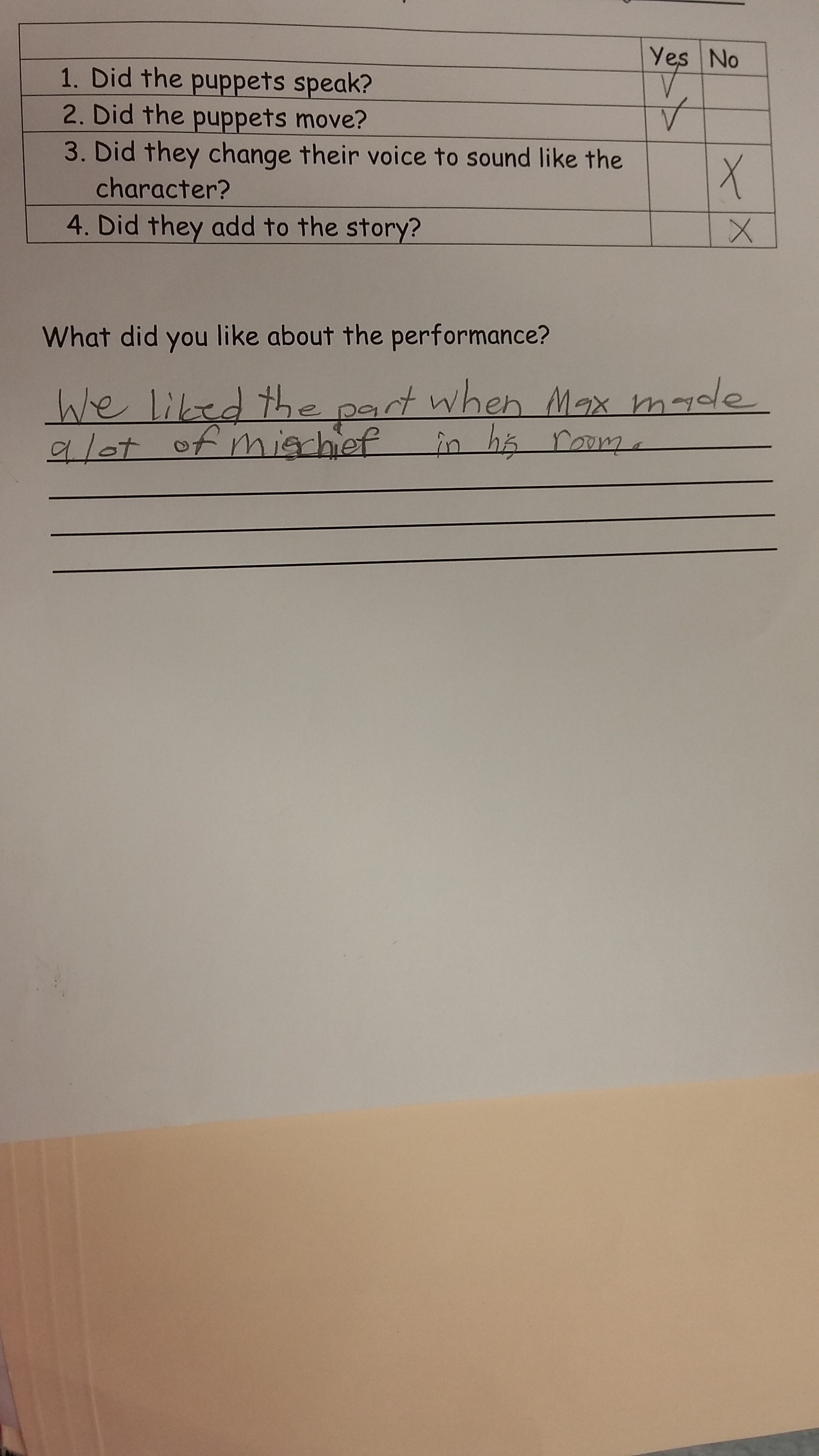
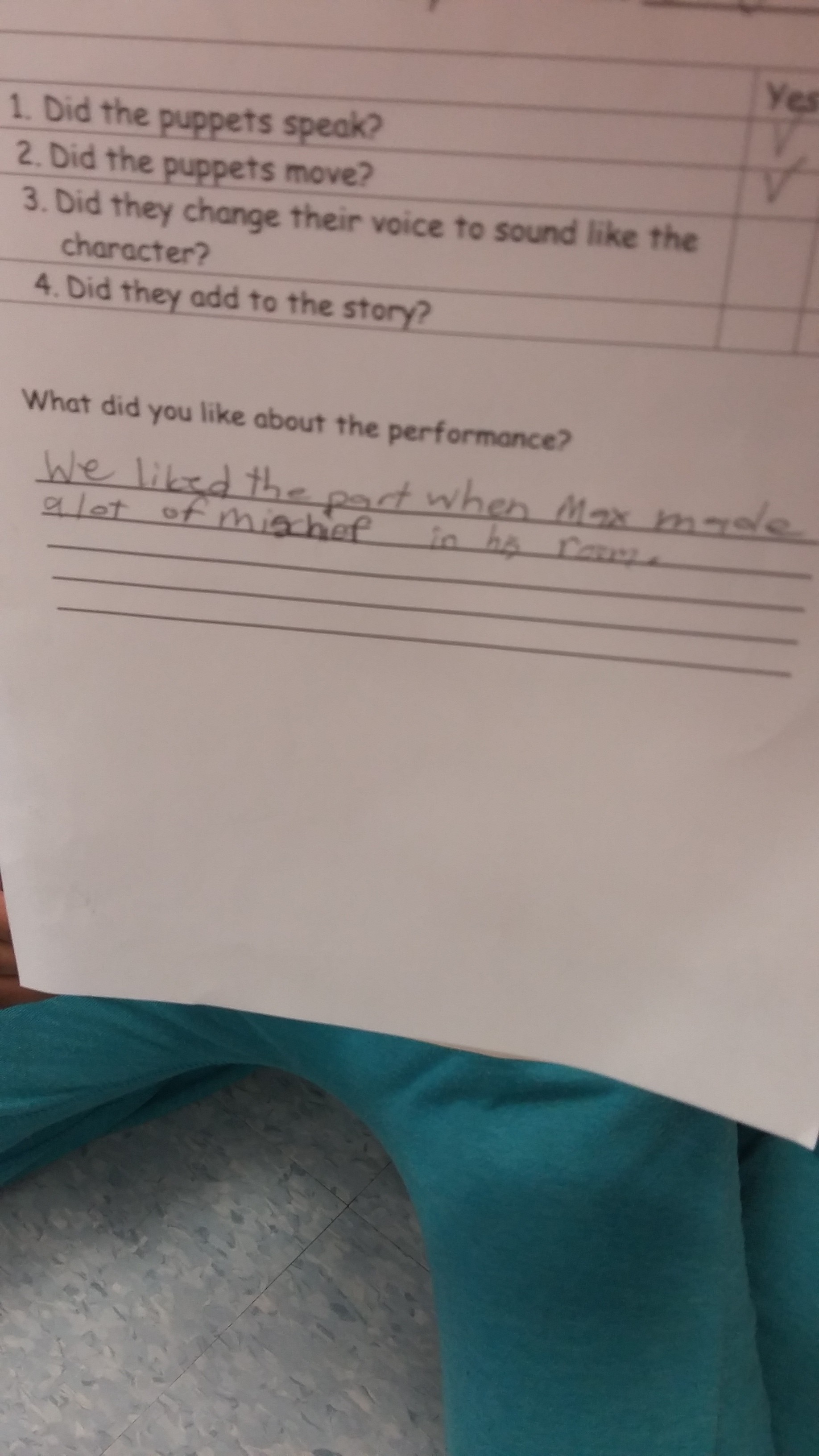
4. Have students give feedback to each other according to the criteria. We listened to each others’ performances and gave feedback. We stapled the feedback to the back of the narrator’s lines so that we could review it before every performance.
March is a great time to study the human body because it makes a logical segue into Nutrition Month. For our two kinder classes, my partner and I decided to set out a few provocations to see how far the students would delve into the body before we moved on to learn about the four food groups.
To start things off in March, we had “Mr. Torso”, a life-sized, human torso which became an internal organ puzzle that could be taken apart and reassembled by the students. In small groups I was able to present the torso to the students and answer their questions about the organs and how they worked. What the students seemed to be most interested in, apart from the functioning of the large intestine which elicited plenty of giggles, was the brain.
In the torso puzzle, you can remove half of the brain and then take it apart in three pieces of hard plastic. I could not imagine anyone being motivated to learn about the brain using chunks of grey plastic, and yet, an inquiry began to take shape one morning with one of our classes.
I asked the students what they wondered about the brain, and the questions that arose were terrific;
“How does your brain control everything in your body?”
“How come our brain has water inside?”
“How does our body talk to our brain?”
“How does the blood get to the brain?”
“How does your brain make you think?”
Amazing! We set about having a Knowledge Sharing Circle where they talked about what they knew. They also shared books from the classroom library, sat with friends looking for the answers and watched short animated videos that helped explain the way the brain works. Every student was involved somehow in the brain inquiry.
Now here comes the part of the story where the knowledge building is reserved for me as a teacher keen on re-enacting the same exciting inquiry-based lesson. When I did the same provocation with my second class the next day, the brain inquiry seemed to spark a little at first and then fizzle out. Puzzled and frustrated, I found myself wanting to lead the students into formulating their questions, and much as I tried to duplicate the energy and excitement of the previous day, I was trying a little too hard to draw out ideas and questions like; “Do you have any questions about what our brains DO?”, or, “Try starting a question with HOW…” Much as I tried, there was no spontaneous interest or individual ‘wonderings’, just a few students who were looking at me and trying to follow my prompts. So after eventually getting only one question which, I believe, even the student who offered it was not quite convinced that was really what he had wanted to ask; “Does the water in the brain… pump…to make the brain… change shape?,” I did my best to clarify the question with the help of the group, realizing that I probably should have asked them what organ they were interested in learning about, rather than expecting them to be as interested in the brain as the first group was. It’s not a student-led inquiry if the teacher comes up with the questions, after all.
It’s March, and things are changing – again. The birds now welcome me to school most mornings with their spirited songs. Not to be outdone, Winter still attempts to poison as many perfectly sunny seasonal days with its cold, wind, and snow. Preparing for outside supervision has required that I keep all outdoor gear at the ready for another March meteorological maelstrom. I am beginning to wonder whether I’ll make it through another outdoor supervision at -15 C or colder.
It’s been tough on our students too. Many times finding themselves cooped up in their classes due to frigid temps. Imagine learning, working, having your breaks, and eating your lunch in the same space as 25 other people? At least teachers can excuse themselves to the staff room. So it’s no wonder that, at the first signs of Spring, energy levels go from sedentary to bristling the moment the mercury rises above 0 C.
Yet, for all their energy, students find themselves confined to hardtop for recess while the weather changes its mind daily. The once snow covered fields are wet and look like pallid straw waiting for the sunlight to warm up its roots with the promise of growing greener. With it, a well worn patch of the mud and muck that has become the current site of a, “I dare you to jump this,” long-jump pit.
Recently, something stuck to my mind like mud on a shoe. It came after seeing this newly christened jumping pit on the school yard. It was a mucky/dirty patch of exposed earth full of tracks/footprints left behind by the brave who tried to clear it, but fell far short. Indeed, Spring’s official arrival comes with its share of magnificent and messy moments at schools.
the thought process
Those footprints made me think of how difficult it is to extricate a shoe or a car that is stuck in mud. That led to think about the expression,”a stick in the mud”, and how it relates to inflexible attitudes. Then I wondered, am I being inflexible? Could I be in a rut in my practice as an educator? Was I able to avoid the ruts and muck in my professional practice to stay in the groove moving forward, or was I already wallowing in it without knowing? Did I want to know? After all, some people pay big money at the spa for mud baths.
rut or a groove?
Are there ever signs to tell us we’re in a rut? I have been teaching grade 6 in one capacity or another since starting my career in 2009. The Junior Division is, definitely, one with which I am very comfortable as a teacher. But it’s that word comfort which concerns me because it might be keeping me in a rut and hindering my growth as a constant learner? Let me ask you. How long have you been teaching in the same classroom, subjects, grade or division? If you answered more than 3 years for any of these, you might be carving out quite a rut.
When you’re in a rut you can still roll along without an issue unless you try to get out. Climbing out is dangerous if ever attempted, and leaves one feeling exposed or vulnerable. Yet, if we move our students along from grade to another, why are we not seeking the opportunities to grow into new experiences as well by changing our routines in for some new ones? Sometimes a rut maybe so high that it is more like a canyon where sunlight seldom hits the floor. This means that perspectives become narrowed our hyper focused.
…we are certified to teach much more than we do. We spend tens of thousands of dollars to be certified to teach multiple grade levels, but we are put in a position, or are resistant to being any other position, of teaching one grade level for multiple years. Some teachers teach the same grade level for decades.
At some point, that does not foster growth. It fosters comfort. ” Peter DeWitt, 2015
Have you ever wondered why educators move schools? I know from experience that moving to a new school brings an infusion of enthusiasm, and ideas into a new learning space. We can’t help, but learn from one another when we engage in new situations and with new people. Many of us feel entitled to teach the same grade each year even when we are qualified to teach a range of grades and panels. We have to remember that assignments are not guaranteed for life and that change is ultimately better for our practice.
What about the argument that a rut is really a groove? In my next post, I will share about how we can escape or smooth out the ruts in our practice and get into a groove of our own.
I’d love to know your thoughts about this post. Please take the time to share in the comment section below.
Thank you for reading.
Have you ever been driving along and all of a sudden you hear a low chime and look down to notice your fuel gauge has lit up and you are in desperate need of a fill up? Well, I can truly tell you this last week was just that feeling. It was like I was running on fumes and was hoping to be able to make it to Friday afternoon and the start of March Break. When I look back at a bad cold and three days off work, demands of our class’ annual play, contract voting, work on local committees, ETFO Executive role, monthly team meetings, staff meetings, report cards, school initiatives etc… there is no wonder that my tank was nearing empty. The bigger and more important question is how I let myself get to such a low.
In the first two thirds of my career the above stated condition was just what teaching was about. That is why we had Christmas Break, March Break and of course the famous summers off. What I found was that throughout the year I had put so much into my teaching, my students and my school that there was very little left for me and my family. The first two weeks of summer felt like being in recovery where my body just shut down and said, ‘REST’. I would then enjoy several weeks of life trying to get caught up with family time and me time. By the second week of August, I was starting my new cycle by pondering and preparing for the upcoming school year.
Then it hit me, well it felt like it hit me as I lost my voice for a two-week period and had damaged my vocal chords. The simple diagnosis was that I was doing too much and not allowing enough rest time for my vocal chords. I thought to myself, if that was occurring with my voice, it is likely occurring with all of me both from a physical and emotional state. That simple but important event helped me understand the word balance and how critical it is to every one of us no matter what career path we choose in education or other fields. The simple remedy was that I needed to get and maintain balance in all aspects of my life.
I began by prioritizing events, tasks, extra curricular time, family time and me time. My first professional priority was to teach and help my students be successful. That is where most of my school time should go. Any extra events I choose to be a part of are now based on my overall balance picture and what I think I can contribute while still maintaining a healthy life balance. As I have learned, that changes from month-to-month at times.
The second shift was to ensure that what I needed to maintain a balance in life (exercise, time in the outdoors, family time, friend time, alone time) was also a planned component of this new and improved work smarter not harder picture. No longer was I ever going to listen to my youngest son (5 at the time) tell me it is okay that I was not able to talk to him now, we could do it in the summer. So I have found that by just writing this blog it once again has forced me to revisit my life/work balance. It seems I was moving into unhealthy patterns again. Take care of yourself by striving for balance as teaching is a marathon and not a sprint.
The word ally is typically defined as a nation or state cooperating with another for a military purpose. As with most words it of course has been expanded for many uses but retains the meaning of being on your side. So the question I ask you today is, as a teacher who are your potential allies?
From the minute I enter into my school I have an amazing opportunity to make allies, get people to support the work I do with my students, school and community. Allies are everywhere but like countries you must take the time to build up relationships to develop those allies. When you do that, they will be there when you need them most. I am going to talk about several key allies that I have in working with my students and how without them there are many things I would have much greater difficulty accomplishing.
The first ally is of course the parent(s) of my students. Let’s be honest, we both really want what is best for a child even though we may not agree on how to accomplish that. From the moment I know a child is going to be in my classroom I reach out to families to try and start building that working relationship. It starts with a simple call home the week prior to school welcoming them and their child to my classroom. It continues on with my first Weekly News letter home by asking them to brag about their child as they know them best as well as asking them to prioritize two goals they would like their child to accomplish this year. This helps sends the message they are a part of the formula to create success for their child. I continually update them with sunshine calls home, weekly news updates, inviting them to attend events in the classroom and any other way I can include them or make use of their expertise and assistance in my room. Of course not every parent becomes my ally or totally agrees with every decision I make. There will be some parents who just won’t or don’t engage in your efforts. This work I put into recruiting parent allies always pays off with some very strong relationships that are there when I need them most.
The second set of allies I work hard at creating are with the school support staff such as our office manager and custodial team. These are key people who are the heart and soul of the school and can be there to support me in many situations when I need the help. One of the most unique request I made of our custodian was to have our front classroom door taken off so my class could create a drawbridge door for our Medieval Times study. Needless to say I had to have a strong relationship with that person to make and receive such a request. Our office manager (and every office manager) is the heart of the school. He/she is the first and often last person everyone sees when coming to our school. That role is so important and my class spends time on a regular basis showing how we appreciate the work she does. That time and effort has helped me many times over the years when I need a last minute request or forgot some important deadline.
The final ally I want to talk about is a community-based position. My class spends time doing service learning projects and as such we need to have people who trust that I can take a group of 8-11 years old out into the community and perform projects that enhance our community. I have worked a lot with city environmental personnel who over the years have come to value and trust our staff and the request we make. There are community agencies and people who can also become a potential ally for you.
As I began to change the lens upon which I viewed my classroom I began to see more and more how many potential allies (support) I have available to me. I do not have to do this on my own. My educational team continues to grow as I grow relationships and take advantage of the opportunities they can provide me in supporting my students and my professional growth. Allies do not just happen, you must work at creating them.
Recently, I was asked to explain my vision on how to cultivate a culture of creativity in the classroom. After a few moments of reflection came this response.
From the moment that a student enters our classroom fostering a culture of creativity requires 3 key things; fearlessness, fluidity, and failure.
IMO, these 3 are inextricably linked in my classroom. As lead learners first, teachers are crucial to a successful culture of creativity as they model fearlessness to students in our own approaches to learning. When students see their teacher unafraid to take chances and make mistakes, they too will be emboldened to do the same as they approach the new and unknown.
Establishing this in a classroom might require teachers to become Pirates as Dave Burgess shares in his transformative book Teach Like a Pirate. This requires complete commitment and patience. Remember, it’s about the process not the product.
This requires flexibility to escape from what is fixed within a text book, a single narrative/point of view, or schema. A classroom must be a fluid space where the way must be tried (tentanda via), but if it is limited to merely the information provided out of ivory towers; when and where will students have an opportunity to challenge it?
If we want a culture of creativity, we must allow room in our instruction to critically consider/falsify(as Scientists would according to Popper) what is being taught. This takes a mighty courageous educator who is willing to let go and share “power” with students.
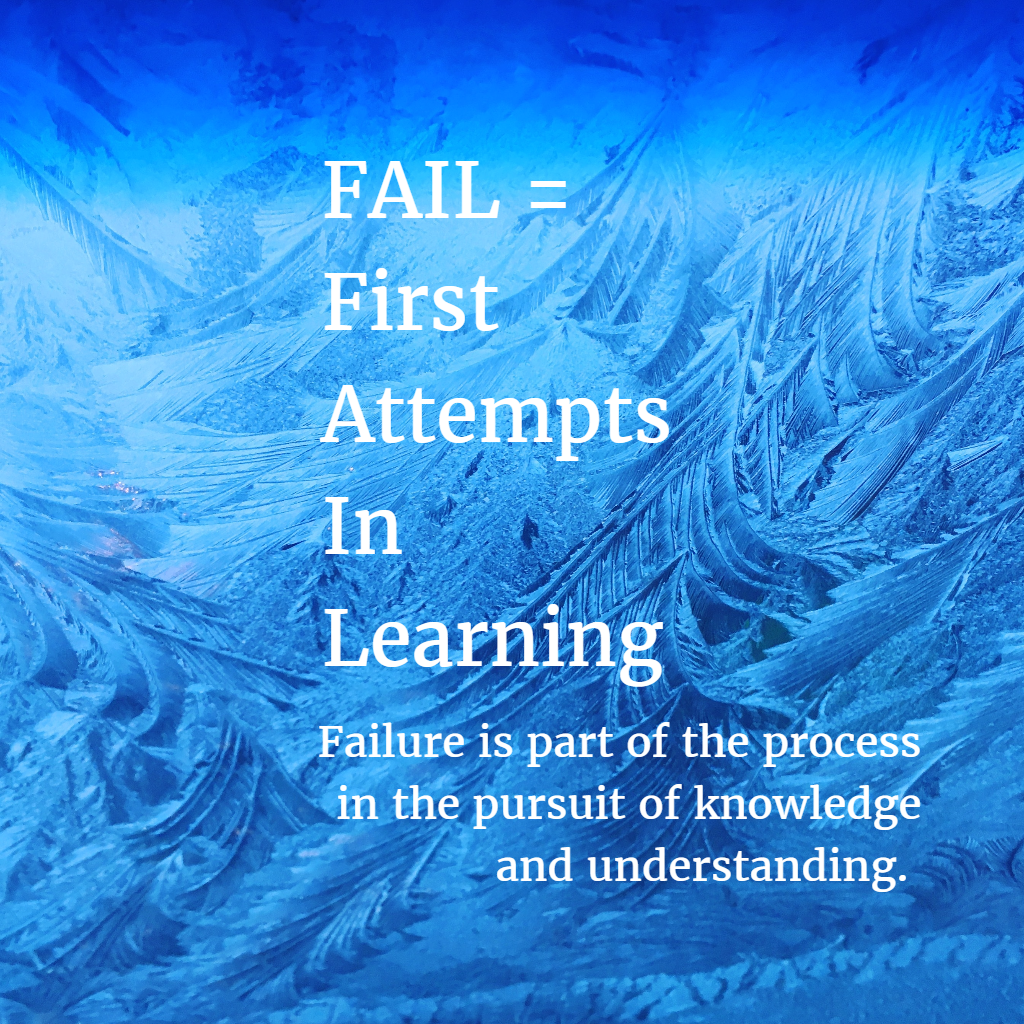
Finally, for cultures of creativity to occur, a FAIL mindset is needed. FAIL is a wonderful acronym for First Attempts In Learning. We celebrate failure in the classroom because there is still something learnt in the attempts at something. When students feel safe to learn, try, and supported when they fail then they will be strengthened to extract the lesson, unlearn, relearn, try again, and repeat as a natural part of the process.
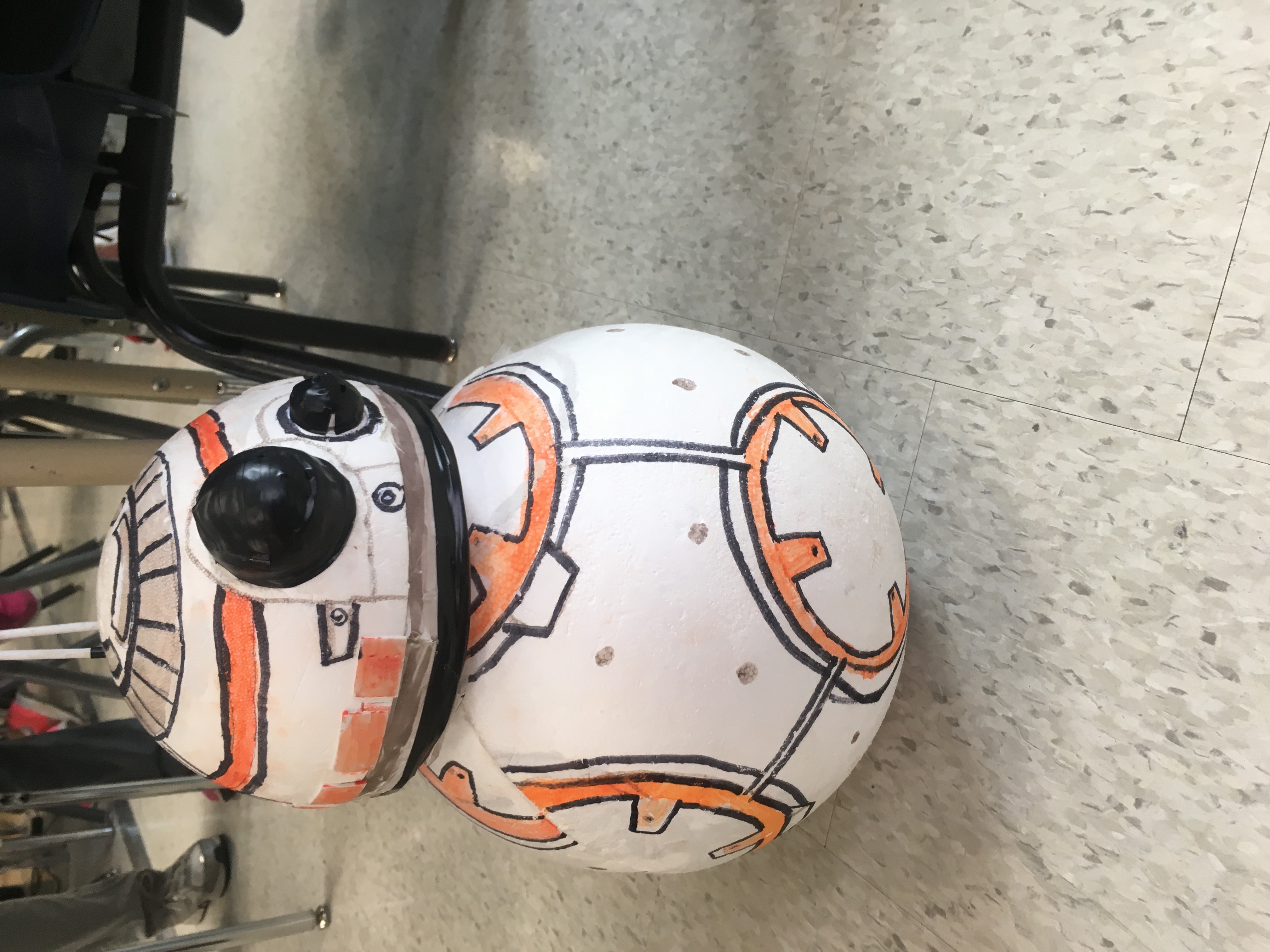
Some tangible examples of this in my class have come in my Electricity unit where we have been trying to make a fully functioning replica of BB-8 from Star Wars: Episode VII The Force Awakens movie. Throughout the process we have ideated, iterated, learned, adjusted, tried again. Instead of disappointment after an attempt or apparent failure, there is opportunity to rethink and try again.
Students empowered with a mindset of fearlessness in a flexible environment are bound to be invigorated and engage in their learning/tasks with their creativity emboldened.
I believe these 3 things to be at the core of innovation in education and have worked to embody them in my personal practice.
ps If I was to share a fourth item it would be that a culture of creativity is messy. Often, no path exists and therefore students must blaze their own trails. With the right attitude, the mess and muck of learning and creativity mesh to form a ‘lit’ learning environment.
pss – George Couros is the current godfather of innovative practices in education. He is a brilliant and gifted communicator who shares a passion for education with the world. His book the Innovator’s Mindset is on my reading list and I’d encourage you to add to yours.
If you want to continue this conversation about innovation or to share how you are innovating in your learning space, feel free to share in the comment section below. Thank you for reading. Will
Many years ago, when I was in Teacher’s College, I did my practicum in what we could call today a ‘systems’ class. I worked with several students with Down’s Syndrome, a few with non-specific developmental challenges as well as some students who were identified as having Fetal Alcohol Syndrome (now called Fetal Alcohol Spectrum Disorder). This was the first time I learned about FASD. What we learned was very basic. We were told that there were certain facial features which might help to identify a child with FASD and some unpredictability in behaviour, but other than that, I do not recall learning, in practical terms, how to meet the needs of such a child.
Fast forward to today, and I am far more familiar with ADHD (Attention Deficit Hyperactivity Disorder) and ASD (Autism Spectrum Disorder) in the classroom than I ever was with FASD – for some reason, it seems it’s just not something we talk about or receive in-service training for. Then last week, I became enlightened by a workshop which helped explain how damaged a developing brain of a fetus that is exposed to alcohol in the womb can become, and what we as educators and caregivers can do to help children affected with FASD. As I heard more about the characteristics and strategies associated with children with FASD (Important to note: the majority of individuals with FASD do not have facial features associated with the disease, hence it is considered an “Invisible Disability”), I became excited about the possibility of fresh interventions that I could use to help some of my students, who, although do not have definitive diagnoses of FASD, still present with key behaviours such as memory deficits or impulsivity.
Some of the key points which have helped me readjust my perspective as I “put on an FASD lens”, I have taken from an information package provided by the Fetal Alcohol Resource Program (Citizen Advocacy of Ottawa). I highly recommend becoming more familiar with the condition because the strategies are relatively simple to employ and can be supportive not only to students with FASD but to any student struggling with behaviours in your classroom. A video entitled, Dear Teacher is also included in the package and serves as a gentle reminder of how we need to treat those of our students who face challenges which may be difficult to understand. I have found these useful reminders at a quick glance, but there is so much more that can be learned about FASD.
The chart below is called, “What FASD is NOT.” I find it particularly useful as it clarifies the ways certain behaviours may initially be perceived, and how, through a different lens, they should be understood.
We NEED to shift our thinking
From Seen As…..
…To Understand As
Won’t
Can’t
Bad
Frustrated, Challenged
Lazy
Tried Hard
Lies
Confabulates/Fills in
Doesn’t try
Exhausted/Can’t start
Mean
Defensive/Hurt
Doesn’t care
Cannot show feelings
Is a problem
Has a problem
With a few upgrades in our approach with one of our students who has had particularly challenging behaviours, my teaching partner and I have already noticed an improvement in the child’s independent learning, interactions with peers, and response to direction. Some phrases we have found useful reflect the intent of some of the examples provided in the information package; “I can see this is tricky for you. We are going to solve this later. Let’s get a drink of water.” (patience and redirection) ; “Let’s figure out a better way for next time,” (support rather than punishment); and, “Come here. It’s OK.” (no matter what you do, I am here for you).
At this point, we are by no means specialists in FASD, but we are willing to learn as much as we can as we continue to see positive results. As educators, we all use patience, consistency, support and understanding, but with some of our students, we may need to use a little (or a lot) more.
I am very excited about Canada celebrating its sesquicentennial anniversary this year! There are so many fun activities and a feeling of celebration everywhere you go in our amazing country.
To gear up to a big celebration in June, we have been doing small activities every month as a school to get pumped up.
Last week in our assembly, I made up a 150 second challenge that my whole school participated in together. I put a large 150 second countdown timer on the wall and then took students on a tour across the whole country, through our actions and imaginations, before the 150 seconds were finished.
Below are the actions and activities that we did to start to celebrate our amazing country!
Go skating on the Rideau canal in Ottawa
Go skiing in Whistler BC.
Climb a mountain in Banff national park in Alberta
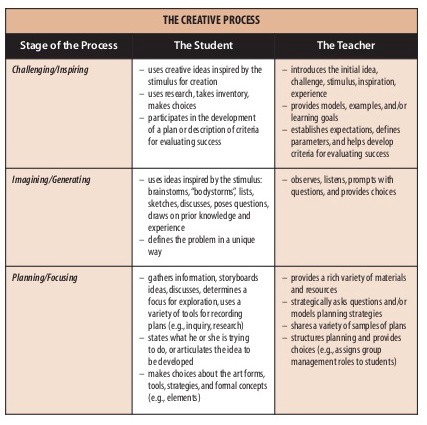
Getting students going on the Creative Process can take some thoughtful planning on the part of the teacher. Students are sometimes stuck for ideas and need someone to provide them with a catalyst for inspiration. The chart above is directly from the Ontario Curriculum for the Arts, and gives some great ideas for how to challenge and inspire student creations.
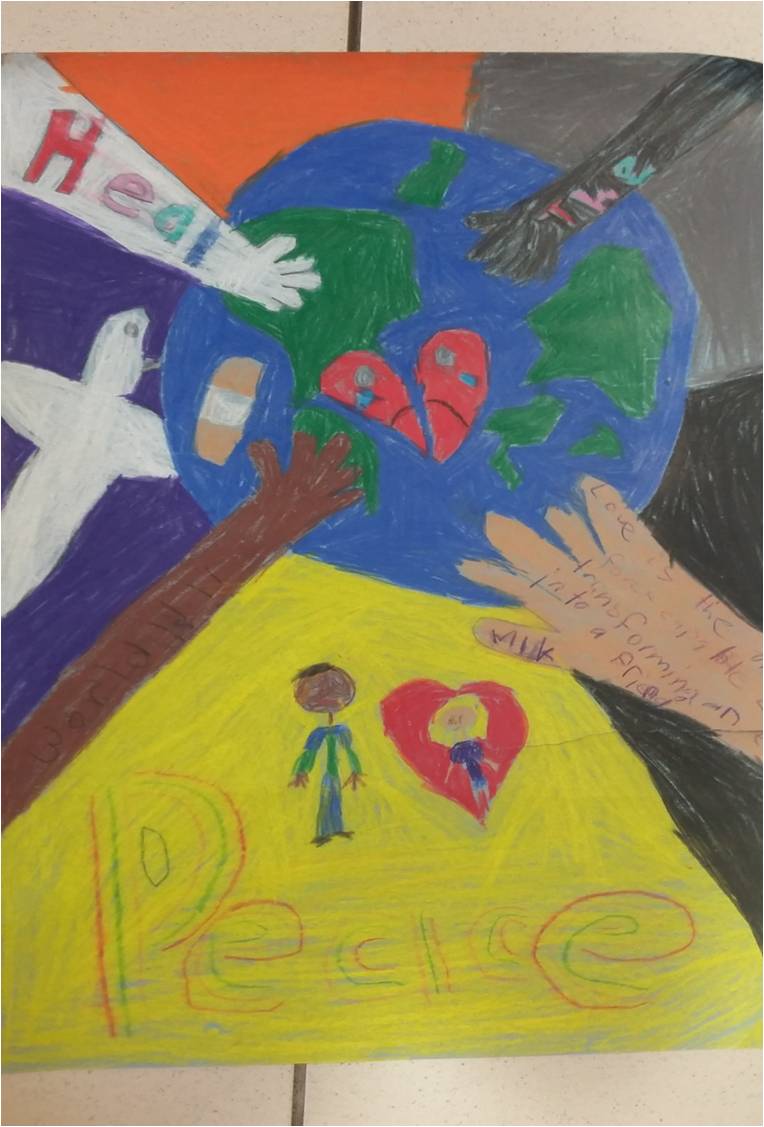
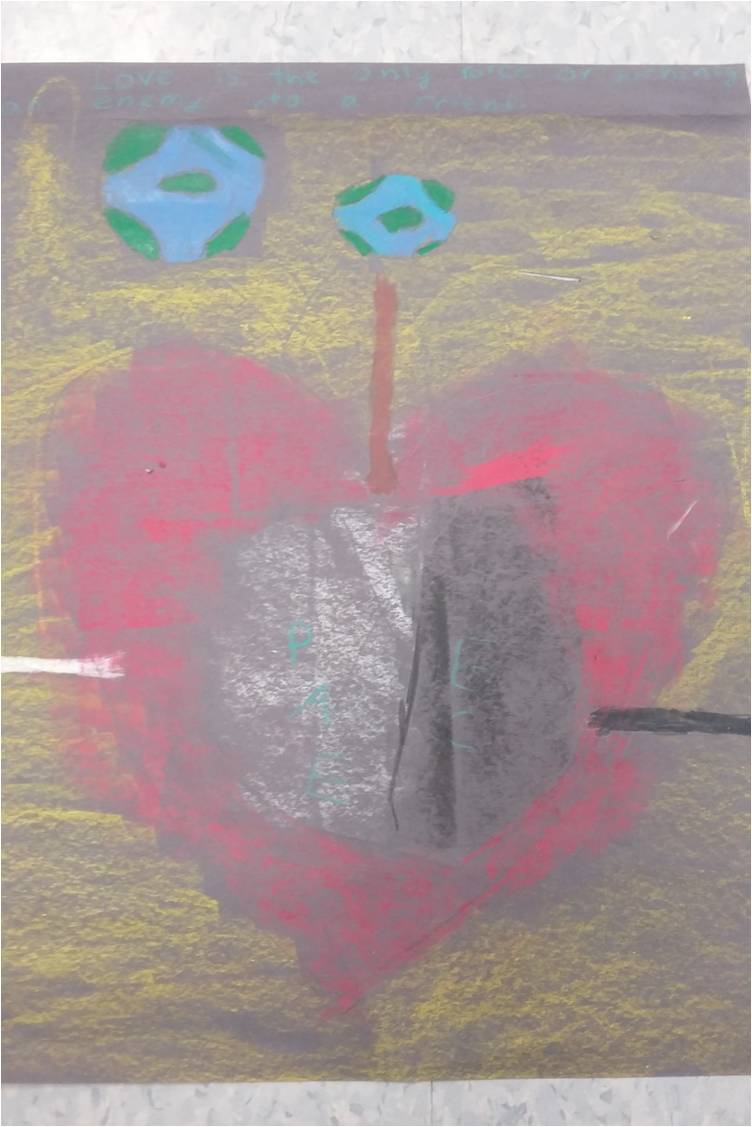
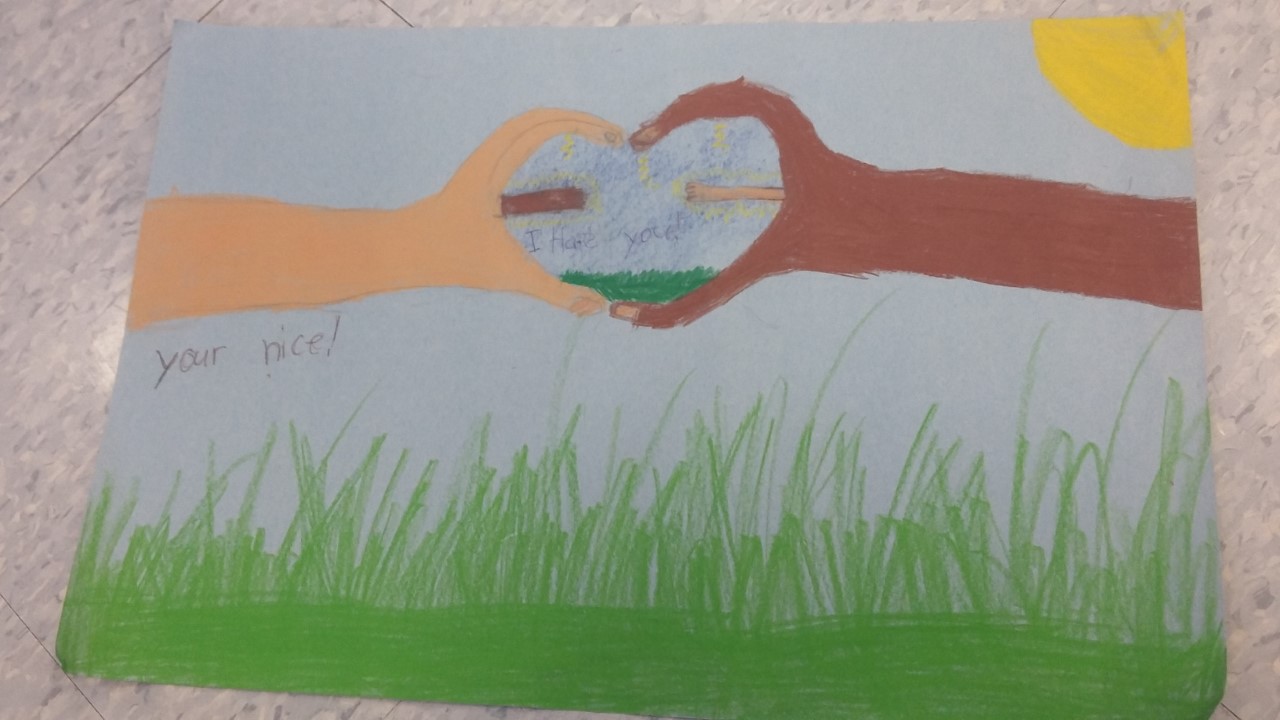
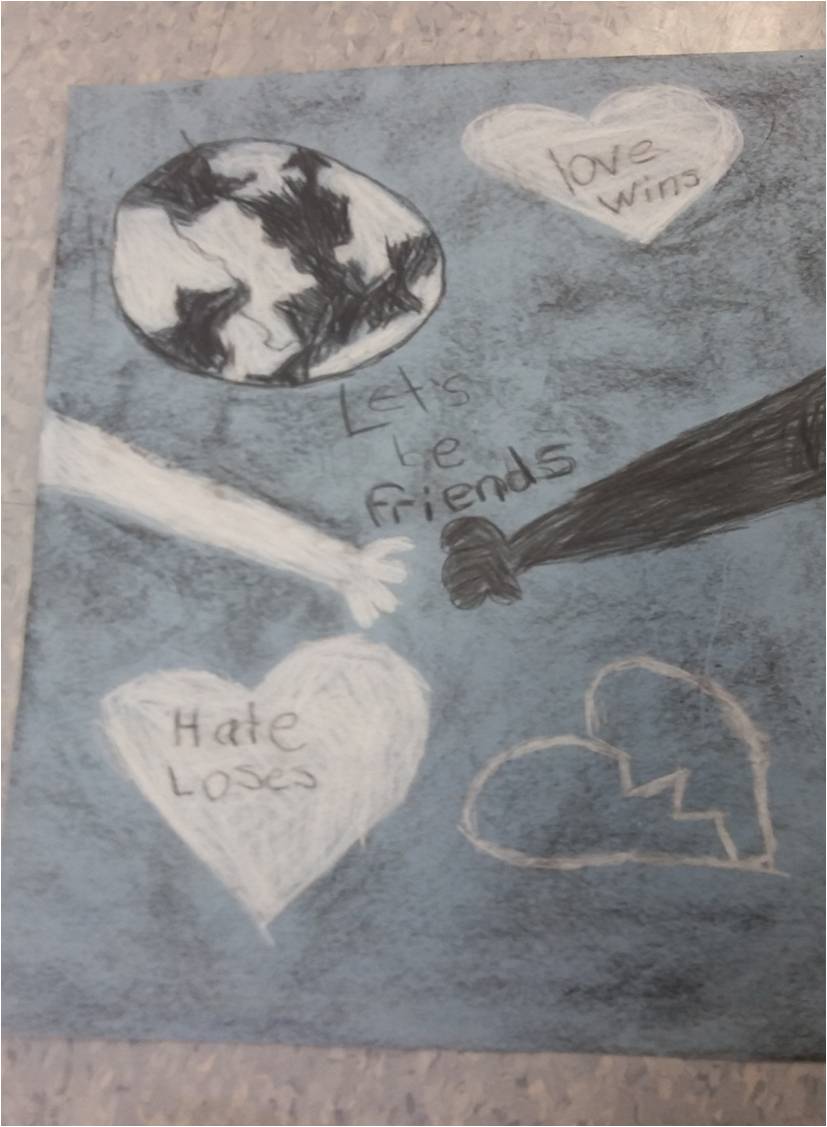
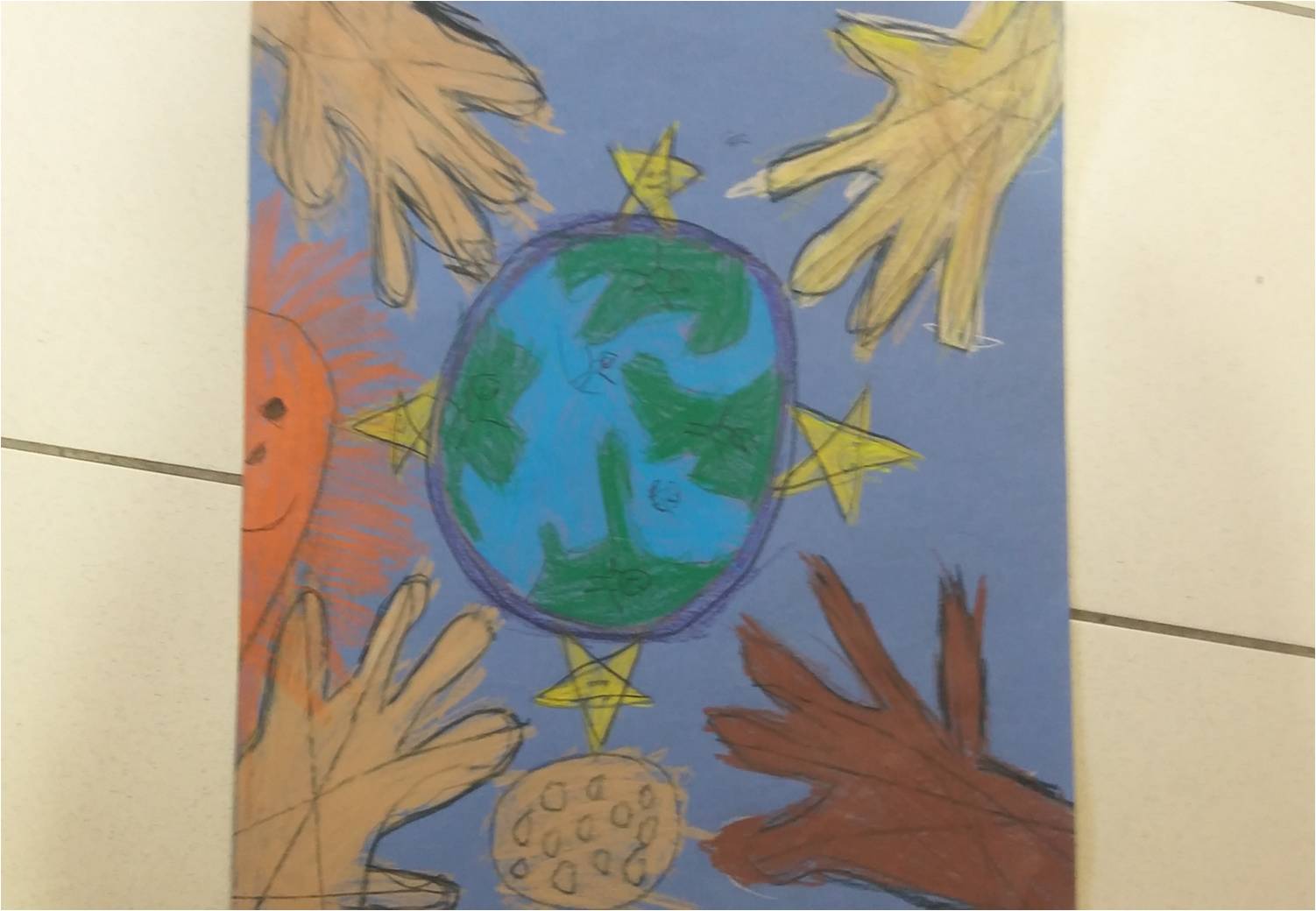
Recently, in my grade 3 and 4 art classes, I decided that I was going to try a new idea for inspiring creations and see how students responded to a new type of stimulus. I gave them some quotes about inclusion and equity to choose from, and their job was to create an art piece that represented what the quote meant to them. The tricky part was getting them going on their pieces and providing them with support and an environment that would produce the artwork that I knew that they were capable of.
Using the above chart as a guide, I followed the suggestions when trying to inspire my students creations:
Introduce the initial idea, challenge, stimulus, inspiration and experience
Introducing this art piece to my students was tricky. They really needed to get their brains turned onto the issues of equity and inclusion before we tried to analyze our quotes or come up with imagery for our art pieces. I started by reading them the story of Viola Desmond from the book “Viola Desmond Won’t Be Budged”. (The book is very easy to understand for all students, and Viola’s sister was in Toronto a couple of weeks ago, so the students had some familiarity with the story). This got the students thinking about racial segregation and asking thoughtful questions about Viola’s experiences. I introduced the quotes to them and encouraged questions or collaboration with others to reflect on the meaning of the quote that they chose. I even had some students bring in their own quotes. I gave them a graphic organizer with some questions on it to help to get them started reflecting on their pieces. The completion of a graphic organizer also allowed me a chance to see who needed additional inspiration or support before they started their art.
Provide models, examples and learning goals
As a class, we looked at the Peel District School Board art display for Black History Month on Twitter where many other students had used a variety of images to convey messages. We analyzed what we thought made particular pieces powerful and artistically appealing.
Establishes expectations, defines parameters and help develop criteria for success
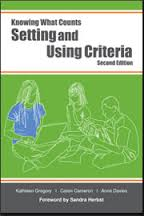
Before we started our pieces, we talked through our criteria for successful completion of the art project. The students and I used Anne Davies process for co-creating a success criteria which can be found in the book “Setting and Using Criteria”.
The graphic organizer that I gave to students included the following questions:
My quote is:
In my own words, this means:
The symbols or images that this quote makes me think of are:
The mood I want to create in my art is:
The colours I will use are:
The focus of my piece (where I want people to look) is:
Some examples of the art with the quote that the students chose.
“Love is the only force capable of transforming an enemy into a friend.” – Martin Luther King Jr.
“I have decided to stick with love. Hate is too great a burden to bear”
– Martin Luther King Jr.
“It always seems impossible until it’s done.” – Nelson Mandela