
Photo of Mike Beetham

More Than A Student

This past several months have been very challenging as it seems we have plateaued and are not progressing as I would expect us to at this time of the year. Thanks to a young girl in my class, I was reminded just how important it is to remember that I work with children and not adults.

Every morning the bell rings and I expect all of us to move into high gear in order to accomplish the day’s agenda. I am ready to give my absolute best effort (proverbial 125%) and have developed the expectation in the class that each person’s part is to put forth their best effort. Sometimes I can get lost in the tidal wave of curriculum expectations and forget that each and every day my students go home to a life that I often know little about. They come to school with many situations that can either contribute or detract from their success. I was reminded of just how important it is to take the time to check in with my class on a daily basis. This past month one of my students was going through some horrific custodial scenarios and yet she continued to come to school and attempted to live the classroom standards. She was not making the gains she had set and therefore put more pressure on herself, which ended up creating results that were not helpful from either a personal or academic standpoint.

My primary role at that time should not have been academics and curriculum accomplishment but rather meeting her social/emotional needs. Which in turn would have helped her where she needed it most.

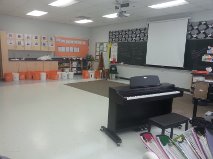
Photo of Tammy Axt

Classroom Layout Ideas- Music Room

Every teacher has talents. I, too, have a variety of talents, but organizing space is NOT one of them. I recognize that I am a very fortunate planning time teacher because I have a space assigned exclusively for music and I usually spend a week or two thanking my lucky stars for the space. However, after my football touchdown dance is over, I have to attempt to decide on a classroom layout.

In the arts, we rely a lot on community to be able to create together as a class. I believe that in order for my students to create, they need access to materials and space. They also need supportive information and guiding rules in easily accessible locations to facilitate their collaborations.

room

Here are some things I consider when creating my classroom layout:

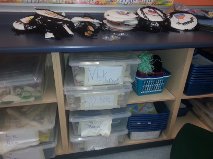
Materials and student accessibility: All recorders, xylophones and percussion instruments are in places where the students can easily access them. We go over the proper use of all the materials and if we are in the experimenting phase of the creative process, then they are able to access any of the materials that we have introduced. Sometimes this makes for a noisy, chaotic environment, but for me, allowing students the platform on which to create is important.

materials

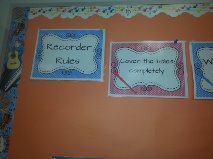
Rules for recorders and group work: Having some information posted in the room gives accountability to the students. They understand the expectations and I can easily refer to them with a student who is struggling to help the class with their creations.

rules

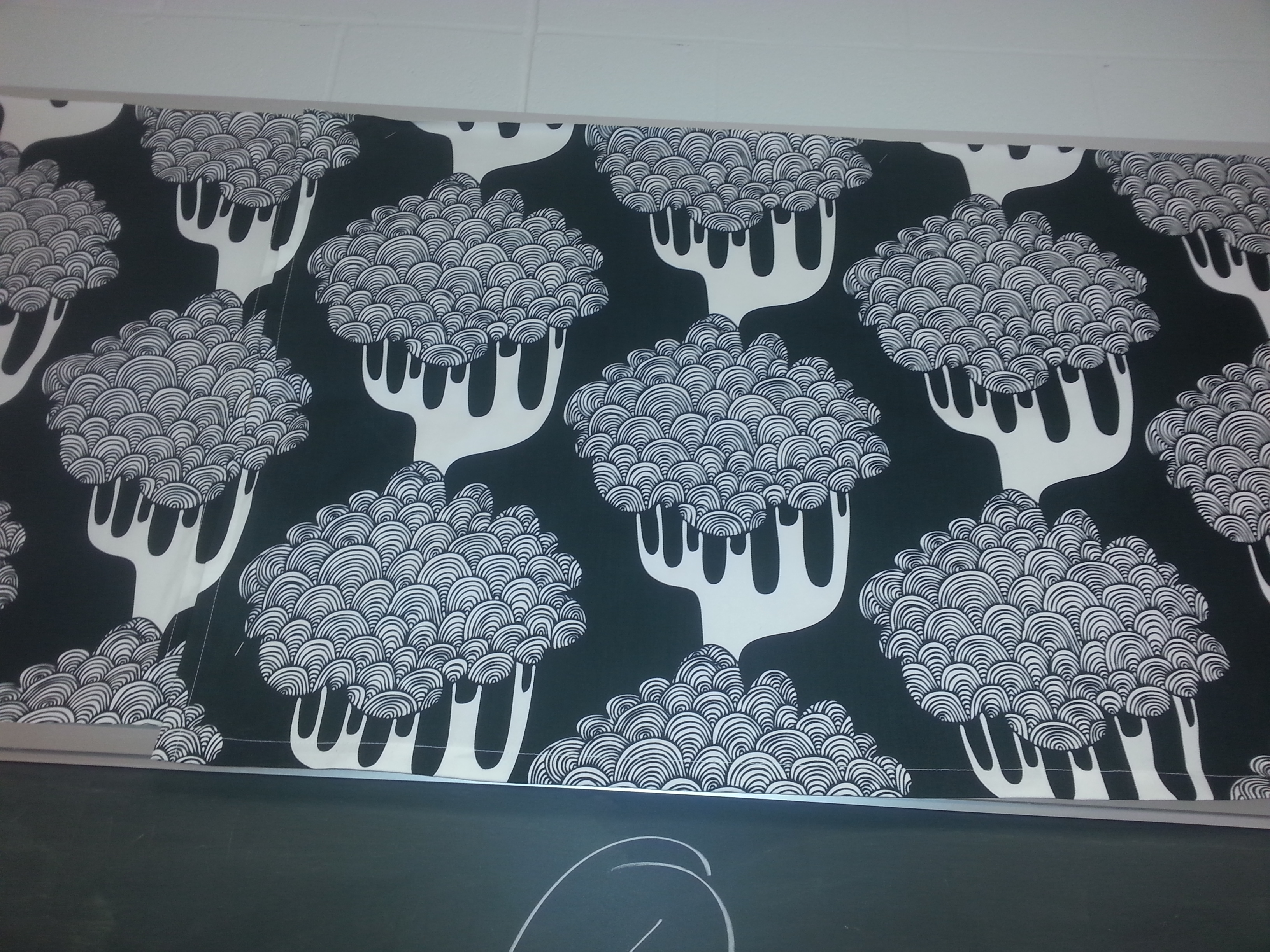
Designs and creative inspirations: I learned something this year when I put up the remnants of my Ikea curtains over the brown bulletin boards that existed at the front of the room for the first two months of school. Almost every single one of my 300 students commented on the new coverings when they entered the room. There were lively discussions about the interpretation of the design and repeated comments about how much the students liked them. It reminded me that creation is a very sensory experience. I usually spend a lot of time on the aural and oral senses in music but this experience reminded me that utilizing all of the senses heightens the ability to tap into the potential that every child has to create.

ikea

My professional library: Since many of my cupboards, shelves and tables are full of instruments or other materials for student use, I have very little space for my professional resources. However, my librarian came to the rescue this year when she was throwing out some furniture from the library. I scooped up these shelving units and they have come in very handy.

Meeting diverse learning needs: I have a student this year who is unable to physically play the recorder with the rest of class but can easily play the piano. The piano is easily accessible to her, as is the computer for some of the other students that I teach. There are very few materials that are for my use only and the layout of my classroom reflects that.

Photo of Mike Beetham

Trust and Verify

This is a fantastic new phrase I came upon. I have been experimenting with it in my class over the last two months. As I work with my special needs students I am always looking for new ways to say the same message. A key component that I strive to accomplish in my classroom is the concept of trust. That entails students trusting adults, adults trusting students, and students trusting students. TRUST is a pillar of an effective classroom community.

This phrase puts the trust factor as automatic and you know the verification will follow. That is a paradigm shift for many people. But what I have found from my student conversations is that the fact that I automatically trust them is in itself a breakthrough for their confidence and self esteem.

The way that I am using it is to show them that I believe in them, trust them to do what is right or what they were asked to do. Their role (critical piece) is to show me that my decision was the correct one. I guess a simple way to explain it is to see this as an attribute based approach in that all children are innately good and capable of being trusted. It is proving to have a self-fulfilling affect on my students. As a young boy in my class put it, “You are right Mr. B., I can be trusted”.

Photo of Mike Beetham

Accountable Talk

Students love to talk and some students love to talk more than others. That isn’t a bad thing! Talking is and should be an essential component of every classroom. The key is to help students understand the different types of talk that will take place at school. I teach my students the term ‘on task talk’. That means that if it is math we are working on, then it is math we are talking about or if it is science then scientific conversations are taking place in my room. This creates a win-win situation as humans are social beings and talking is a huge part of both the socialization and learning process. This is part of the routines and expectations that are established at the beginning of your year.

A second type of talk is question and answering or as I phrase it ‘inquiry talk’. This is different in that there is a key person who is explaining or justifying their solution or work to a group of peers. The students asking the questions need to be taught what thinking questions are, how to create them and what respectful dialogue looks and sound like. The person receiving the questions needs to understand that the questions are not meant to be negative but rather to evoke thoughts and express opinions.

The final type of talk in the classroom is social talk. This is just friend-to-friend conversations that take place. I will often interject these sessions as transitions in the room. For example we have just wrapped up our writing and I will tell my students to take a two-minute social break. During that time they can get up and move or talk with a friend or friends.

The key is to help students develop an understanding of what each type of talk is as well as when and how to use it. This is specific to each teacher and their style of teaching. Embrace the power of talk in your classroom

Photo of Mike Beetham

Zipper Club

I truly admire and hold deep appreciation for all of you who teach Kindergarten or Junior Kindergarten. You establish the foundations that will support a child’s academic life and that will allow the rest of us to build upon.  I had to share this great concept that I watched evolve from one of my colleagues who teaches Kindergarten. It is called the Zipper Club. The premise is that he is trying to develop and foster independence in his children (which can be transferred to all aspects of school life).

As his children grow from an academic, developmental and gross motor standpoint they are provided with success that fosters a belief of “I can do anything’. So as each child masters the famous jacket or hoodie zipper, he posts their picture in a public display in the hallway. This is then shared with our school so that all can see and celebrate. His students start to feel all grown up and this new found independence fosters many additional side benefits to his class such as less time dressing equates to more on task time.

I have adapted this style of setting targets and working toward those targets with exemplars of what success looks like, sounds like and/or feels like. To this point I have enjoyed many types of both individual and group success. By far the most beneficial has been in my understanding of how important targets and success criteria is.

Photo of Alison Board

Wellness in the Classroom

Wellness is an important focus for our grade 6/7 classroom and is also a hot topic school and board wide. It encompasses so much of what we do and who we are that it can be difficult to create a specific lesson for “wellness.” In The Heart and Art of Teaching and Learning book, it states, “Getting to know your students is a big part of your success as a teacher” (p 34). This is an important message, as it encourages teachers to be responsive to the specific needs and interests of their current students and not apply generic strategies or lessons.

I recently read a suggestion that a leader should learn and know at least 10 things about a person. This would be a good tool for teachers to use if getting to know the individual needs and interests of their students is challenging for them. A simple notebook with a list under each student name can be filled in as a teacher gets to know new students. I know that for some students I would easily have a list of 20 facts, while there are a few that I would struggle to get 10 for! The Class Database activity (p 39) could be easily modified with questions that involve students’ needs and interests around wellness, to gather some initial data on your students. I have also used a Multiple Intelligence quiz to determine preferences for students and used them (music, nature) throughout the year to guide my plans and make my lessons or activities more inclusive, especially when some students are feeling less confident with content or skill development.

Leading up to Bell Let’s Talk day, we viewed the commercials on YouTube and worked in groups to discuss the effective use of language and its influence on attitude and acceptance. During a language activity with the book, The Man With the Violin, students recognized the sadness of the child and made similar connections from their own experiences of being rushed through their day. We went for a class walk to a nearby park with no activity planned, but to enjoy whatever we noticed. Students were excited to Tweet about their own understanding of wellness using the Bell Let’s Talk #, making suggestions that were accessible and real for them such as “write in a journal” or “talk to an adult”. They are currently making lists of what inspires them and what brightens their day. These activities and discussions continue to be integrated through subjects like language, health, art, music, and science.

Photo of Mike Beetham

Term 2 For You

Report cards are in the final stages, IEP’s being developed, interviews upcoming and we still continue on with our long term academic plans. Term 2 is now underway and it seems that our daily workload has doubled as we try to fit all of the above items in. This is a critical time to also put into place a plan for your personal wellness. How will you balance all of the professional demands you are faced with and still make time for yourself?

This is a time of year where stress levels rise and as teachers we tend to put our professional obligations above all else, even if that is detrimental to our health. We will tell ourselves that the March Break is not that far away or I can rest up in summer or, or, or etc… It is essential that as we move into the very demanding time of year that we also plan for our own social and emotional wellness. For each individual that will look very different. For myself I have developed a practice of when something is added to my daily workload (like report card writing) I take away one item to make time for that. So this year I have delayed doing our annual class play until after the break where it will be a much better fit for me both professionally and personally. In addition I have booked every Sunday morning to go out either cross country skiing or snowshoeing with a close friend. By having other people part of my commitment I am now more obligated to follow-up on it as it is more than myself I am letting down. Personal wellness and lifestyle balance should be a part of every teacher’s yearly planning.

Setting Goals


Last year at this time, I introduced my class to goal setting. Although this is often done in September, I feel it is more effective in January when students have had the opportunity to received feedback in all subject areas. During our Writing Workshop, we discussed and wrote goals that were particular to student success at school. Many of the goals were vague or too broad, so we used the SMART goal process (Specific, Measurable, Attainable, Realistic, and Timely). This framework really helped students create better goals that suited their individual needs. Once the goals were created, students wrote them on foam discs and we hung them around the classroom to refer to and measure against.

This January, I plan to do the same goal setting work with my 6/7 class. I have found an article on edutopia that articulates the process effectively:

http://www.edutopia.org/blog/smart-goal-setting-with-students-maurice-elias


It shows how students are more engaged with their learning and goals when they know what they have to do and in what timeframe to achieve them. The article also provides information on goal setting for character traits, using peer review.

In The Heart and Art of Teaching and Learning, an activity is provided to align students goals, strengths, and beliefs as they relate to their life in school. The activity is suggested as a first day of school activity, but it would also work well in January, when students are comfortable to share more in their established classroom community. You can find this activity on page 36.

Goal setting is a task that correlates with the idea of growth mindset. Students should be encouraged to set goals for themselves at any time in the year. By helping them create goals that are attainable, you will also help them feel success.

Photo of Mike Beetham

The Second September of Your Year

Have you ever wished for an opportunity to do something over? You know you would make different choices if only you had the chance! Well, as teachers we get that wonderful opportunity at this time of the year (new year).  As all teachers do, self reflection is just part of our DNA and as such gives us wonderful opportunities to create change in our classroom. Every year when my students return after their two-week holiday I start off the year just as if it was our first week in September. The distinct difference being that the activities I choose, the type of engagement I devise is solely based on what has or has not occurred in my room over the first four months of being together.

This year I have found that there are cliques within my room and as such they do not work well unless certain groupings or pairing are created. I will start off the year with a major focus on team building with a specific design that will see a constant mixing of students so that they get to have fun and get to know students they have not made the effort to do so.

A second change that will start off our year is to work from drama to written tasks as often as I can. For example, I am going to be reading a novel that will focus on social justice so I will make use of classroom debates, readers’ theatre and character improvisation prior to my students completing their reading response journals. This change has come about due to the level of engagement that my students demonstrate when drama is a part of our literacy program.

It is important for teachers to take advantage of this unique opportunity that our yearly schedule provides to us. Reflect, re-organize and reap the benefits of your second start to the school year.

Photo of Tammy Axt

Visual learners that are visually impaired?

Is there such thing as a visual learner that is visually impaired? If you came to visit my grade four music classroom you would meet her. She would tell you all about her favorite lip gloss, her new music she is learning and her favourite TV shows. Basically, you would be lucky to get a word in edgewise. But one of the greatest things about having this student this year is that she has taught me some very important skills for teaching music to students who are visually impaired.

First off, just because she is visually impaired doesn’t mean that she doesn’t want to see the music or instruments just like everyone else. She has been a committed recorder player this year and I realized quickly that verbally explaining hand position or tonguing to her caused her confusion. Instead, she became very successful when I stood directly in front of her and showed her the technique.

She also tells me if there is not enough natural light in the class. She will ask me to open the blinds or ask me if she can go and stand beside the window. I try to never stand in front of the window myself because the bright light is then behind me, which makes it difficult for her to see.

Technology has also been our friend this year. I was busy preparing music that was enlarged for her to take home when she informed me that she has technology at home to enlarge everything. She also has taken pictures of items on her tablet and increase their size to see them more clearly.

This student also has incredibly strong sense of pitch. She is easily able to play pieces on the recorder that she has heard and can sing along to songs soon after learning them. I thought that the heightened sense of pitch for visually impaired people was a myth, but after reading a few articles on the topic it seems that that is the reality. People who are visually impaired often have perfect pitch or a strong sense of pitch. My student certainly fits in that category.

Teaching this student has taught me a lot as an educator. It has confirmed some previously held beliefs, and has brought to light some new discoveries about teaching someone who is visually impaired. This has made me a better teacher for all of my students.