Pay It Forward

As I reflect back on my teaching career I have come to understand how appreciative I am of the amazing teachers and administrators that have impacted and helped shape my life both as a teacher and a person. Everything I am as a teacher, everything I do as a teacher, everything I have is a result of the sharing that was done with me throughout my years in the classroom.

There are times when you do not know how to show your appreciation and saying thank you seems so inadequate. As a very wise principal (and now a good friend) once said to me, the best way you can show your appreciation is to make use of the advice given to you and pay it forward.

This post is going to be about paying it forward. I am going to share with you two of my most successful teaching units and two of my most cherished books that I use year in and year out. If you read this blog, I am going to then ask you to pay it forward by sharing in a response to this blog or via other social media options two of your most tried and tested teaching strategies, units or themes as well as two of your favourite books that you use in your classroom. Together we will pay it forward.

Books:

1994h4This book has been a part of my teaching for almost fifteen years. It is the book that starts my class off from Day 1 each September. The power of this book is in the multiple messages that can be drawn from the words and texts. The two main benefits I reap from this book are that everyone can read, reading is going to be fun and it kick starts my focus on drama for the year.

 

imgresThis book is part of who I am and my passion for the outdoors. It is the story of a 13 year-old boy who is lost in the wilderness and has to rely on himself to survive. This is a powerful book to hook children into the outdoors as the author creates a picture that transfers my students into the setting where they re-enact the main character. We culminate this book with our ‘Hatchet Day’ at a local outdoor education centre and then do a compare and contrast with the movie version ‘A Cry In The Wild’.


Poetry is a powerful form of writing and the success I have had with reluctant writers has been very inspiring to me. The power of this genre comes in the multi-faceted approach one can take with it. Poetic language does not have to follow grammatical rules, which allows reluctant writers to focus on meaning through word selection. I often use the outdoors as the theme behind our writing as we bring our experiences into the classroom and on to the paper. We culminate with a poetry recital where they invite guests to hear their writing.


Team building is a non-stop, five day a week, always on my mind approach that I take in my room. I de-emphasize competition and focus on common goals. ‘We’ is the pronoun that runs through the heart of my classroom. We enter into our year as individuals and from minute one we focus on coming together for a common good. The diversity and differences in our room becomes our strength as we celebrate and benefit from the shared expertise and passions in our classroom. This is accomplished through character education, books, songs, games and most of all face-to-face interactions such as eating lunch together.


Thank you for taking the time to read this blog and I now ask you to pay it forward.



The upside of encouragement

Photo by Peter Kratochvil https://creativecommons.org/publicdomain/zero/1.0/

It’s that time of year again. Autumn leaves have turned colour and fallen without a care to the ground. Halloween candy supplies are at seasonal lows and sugar fuelled misbehaviour incidents are subsiding.

There is a love-hate feeling attached to this time of year. A love of the beauty that nature has bestowed upon us, and a hate for the extra work it adds to the lives of many. How we see this season may define our perspectives in many areas of our lives. I will not be raking this year, but always take time to enjoy the changing colours.

Fall is also a time for appreciation and reflection. For many educators, it means time to write Progress Reports. It can also be a time of mild anxiety on both sides of classroom.

Teachers might be asking, “Have I assessed enough?”
“Did I give students enough opportunity to demonstrate their understandings?”
“Did I do everything I could to foster success?”
“Did I catch it when they were successful?”
“What will parents think of my assessment of their child?”
“What are the next steps in my class before the next reporting cycle?”

Students are probably wondering how they are doing too?
“Did my teacher notice that I am trying my best?”
“Did I do everything I could to succeed?”
“What marks will my friends get?
“Am I below, at, or above average?”
“Will my parents be happy with my marks?”
“Am I happy with my marks?”

Come to think of it, I have been thinking a lot about assessment lately. Educators assess for, as, and of learning. We use conversation, observation, and product to quantify student achievement and qualify our instructional methods. We have achievement charts, success criteria, and demonstrations of understanding all orchestrated to associate a grade, mark, or secure a checkpoint before moving forward. There is however, another key catalyst to move our students towards success. And that is encouragement.

Think of it this way. Have you ever been complimented by someone after something you did? I’m sure it was encouraging? Of course it was because you were noticed and validated for your efforts by someone else. I always value when someone takes the time share their appreciation for something I’ve done. Even when I didn’t see it myself. Each time I receive encouragement makes me want to work even harder. Our students respond this way too.
Why wouldn’t they?

When I look at what educators hold in their actions, words, and interactions with students – it is the power of encouragement that can make the biggest impact. So how can we use it to empower our students to succeed? Have you ever seen a student happy after receiving a mark, or feedback that only magnifies what was wrong with their work? How about after you complimented them after a job well done?

Students, usually, know where they stand in the classroom, whether they are budding on the tree, or withering. This could be emphasised for the better every time educators choose to acknowledge the good that is in each of their learners. Bandura shared that, “Teachers should also encourage students as a way to enhance their self-efficacies and thus improve their learning.” Some might call this Strengths Based Learning. For me encouragement is a simple, yet crucial instructional tool which promotes a positive outlook on effort, learning, and assessment.

When students are encouraged they are free to become risk takers who are safe to try, safe to make mistakes, safe to fail, safe to try again, and always safe to learn. As the marks fall on this year’s progress reports, with encouragement, students will see the beauty in their efforts instead of being raked over for their work.

Remembering To Remember

Life is so busy that it sometimes takes an overwhelming effort to make time for yourself, let alone remembering all the sacrifices that have been made that allow us to live in such a free country. Yet we must and we must teach our children so they understand the why of remembering and not just the act of remembering.

Every year we make a concentrated effort to bring the community and school focus on Remembrance Day. Teachers and students put together emotionally compelling presentations to honour the generations from our past that made the ultimate sacrifice to make Canada the country it is. As part of our daily commitment to students we must commit to educating them not only about the world events that lead us to November 11, but also the small, day-to-day acts that make their world safer, healthier and provides them with a seemingly endless list of opportunities.

Take the time to have classroom discussions about the role of police officers, firefighters, physicians, crossing guards and any other key individuals that impact their life. Write letters of thank you and deliver them to those individuals or organizations. As a teacher (and key role model for your students) model for them on a daily basis how remembering can be demonstrated in such small ways as simply saying thank you.

Finally, as a teacher who has been in the profession for over thirty years, I must say thank you to the generations of colleagues before me. They spent days on the picket line, sacrificed family time and were the target of public scrutiny in order to make my profession what it is. I am blessed to have job security, benefits, peace of mind knowing my wife is treated equitably as a teacher and that my working conditions and student learning conditions are constantly being protected. This was not always the way for teachers.

 “Remember For More Than A Day”

Dear Teacher

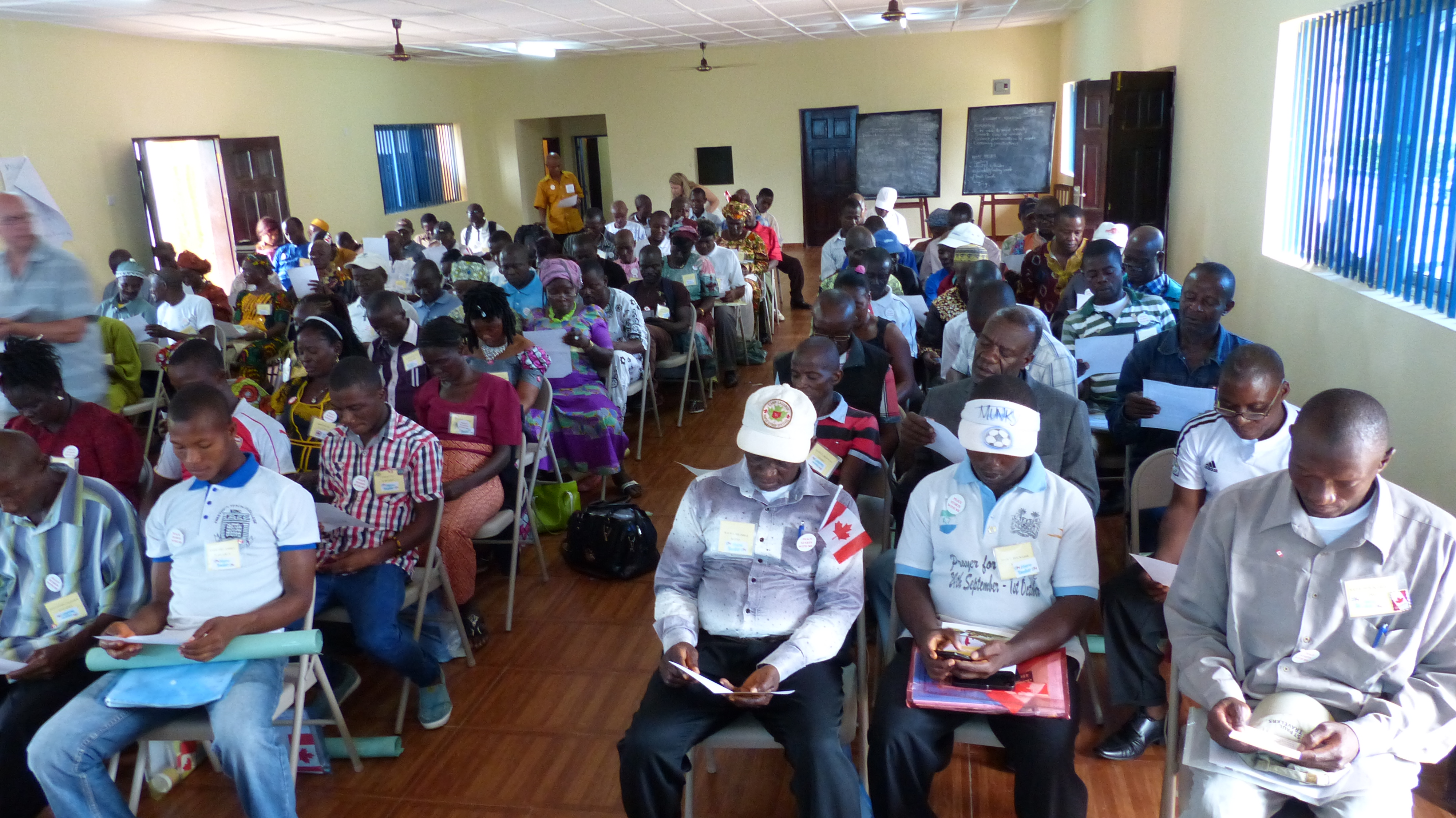
This is an open letter to all teachers across the world no matter what your role. This past summer I was part of a campaign entitled ‘Project Hero’. Teachers and students from across Canada wrote to teachers in Sierra Leone celebrating the extraordinary courage and resiliency they demonstrated during the Ebola crisis in their country. My team and I were able to hand deliver over 300 letters to teachers from all regions of that country. In continuing with this campaign, I am sharing a letter from me to teachers around the world.

Dear Teacher,

What words describe a hero? One might say kind, super hero strong, courageous, resilient, compassionate, generous, self-sacrificing, trustworthy, gracious, fearless and loyal (only to name a few). Each and every day you demonstrate these altruistic characteristics in so many ways that make a difference for the students you are entrusted with.

Yet, your tireless efforts are not celebrated in books, movies or on the television. Your efforts are not worthy enough to make the evening news or local headline. There are precious few times when even a thank you is shared. That is what makes you a hero. You are not seeking public fame. You are not trying to get unlimited likes on social media and you do not seek out recognition of any kind. You simply do what you do because it makes a difference in the life of a child and ultimately the world in which we live in.

I have had the honour of being a teacher for thirty-one years and am ready to start another voyage in the life of a group of children. I am honoured and humbled to be in such a noble profession working with heroes like you each and every day. I wish you the best in this school year and will say thank you in advance for the many, many heroic acts you will carry out on behalf of children around the world.

Humbly yours,

Michael Beetham

https://www.youtube.com/watch?v=QDVECWcYtjc

P1060687   PS – please share this video with a hero you know

– this is the moment some of the Sierra Leone teachers

received their letters

All gone

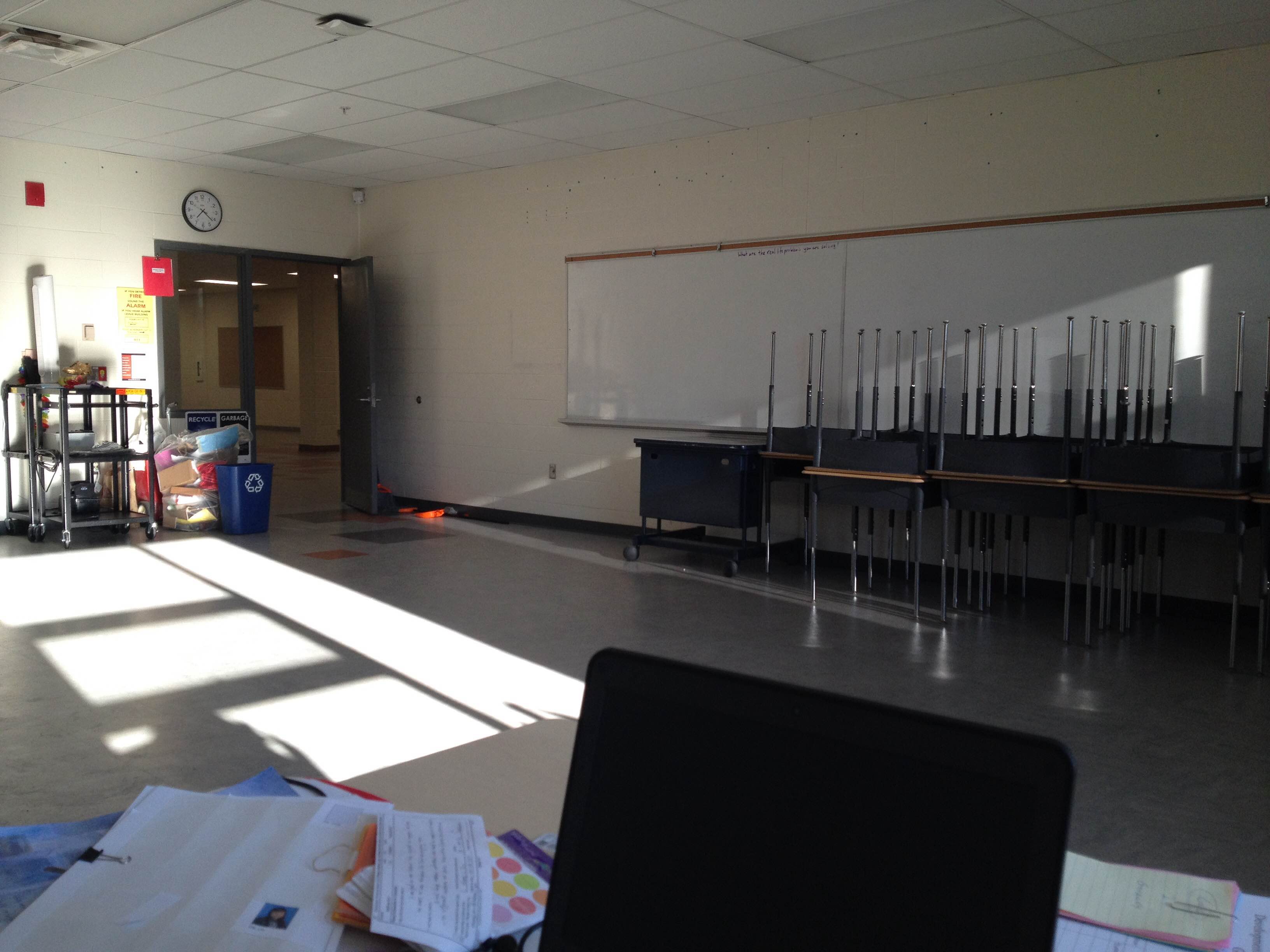
Rm 103 photo by author

Desks emptied, stacked and put aside. Check. Dormant superfluous paper recycled with extreme prejudice. Check. Walls filled with student work, learning goals, art, and inspirational messages now returned to vanilla coloured vacant voids in waiting. Check. Boxes packed and piled in preparation for transport to my new pending portable location (second in 4 years). Cool.

As you’ve observed from the picture on the left, Room 103 is on vacation along with my students. Until the middle of this week it has been a 10 month hive of activity home to 31 + 1 learners all buzzing at their own frequency. Our class was a hub of inquiry, personal growth, and constant learning. And now it’s all gone.

With 9 weeks of summer ahead, I wonder how much of what has been taught over this past year will come back with students when they return in September? Have you ever thought about why we the school year is paused in the modern learning era? Have you ever wondered what it might be like to embrace a balanced teaching year?

I am not advocating additional teaching days beyond the 190+/-, but am asking if we could consider alternatives to a schedule that seems more suited as a throwback to our hunter gatherer ancestors. This got me asking how the schedule we work around really came to be used? Other than the fact that our elementary schools are not equipped with any climate control in the classrooms I am not sure what else it might be from balancing the instructional year? A post from Learning Lab Why Does School Start in September? Hint: It’s not the crops provides some context to this issue.

Now before the hate mail about how important the summer break is for teachers and students, let’s consider the positives. Balanced school schedules allow for greater retention of instructional concepts. That means less knowledge hemorrhage from year to year. Imagine students having the same amount of instruction time, but spread out more evenly, but they retain more of what they’ve learned? Secondly, with a balanced year, there will be weeks off at different times for families to enjoy time together around already existing holidays. Think of the travel savings? Imagine if March Break was 2 weeks? We could all drive to Florida and back relaxed and ready for Spring.

Okay, I’ve shared the sunny side of this, but here’s the shady side. Balanced school years impede students’ ability to make money from summer jobs which may be crucial to helping them attend school, or helping their families. Balanced school years may not provide enough recovery/down time for students or educators to relax and recharge. This might lead to mental health issues such as stress and anxiety. Not good.

Weighing both sides of the conversation is healthy. There are schools already operating on a more balanced schedule with positive results. So where do stand with the classroom empty and the students/staff all gone. Where would you want education to go with this one? Holler when you get a chance. After some down time.
Happy summer. Thanks for reading, responding, and sharing. See you in September. Will

Start strong. Finish stronger

I write this post as a tribute and thank you to all educators who breathe inspiration into the lives of their students and into one another from September’s strong start to June’s stronger finish.

This post is the completion of a promise after a response reminiscent of a rant  written to address comments in the media about educators. In the spirit of warmth and fuzziness I’ll keep my word(s) positive.

You did it!
10 months in the books, out of the books, torn away from the books, and complete with several second looks. From field trip bookings and to figurative (text)book burnings the school year sparked a 5/6s of a year long fire of growth. And now, as the embers cool, the ash settles, and the warmth fades another year of memories will linger as ember in the mind to be stoked again soon.

Does anyone else feel the same way? I do and know that I’m not alone on this one.

This year, my seventh, which I am privileged to witness many intellectual and life fires lit, fanned, spread wildly, and occasionally control burned. A feat, I am sure, that was accomplished throughout millions of classrooms around the world thanks to incredibly caring educators like you.

Imagine that you were part of the transformation, edification, and education of a student. You helped someone, or several someones, be a part of something, achieve something or realize something they’d never known before? Could there be a more noble calling?

When students arrived in your classroom last September, they were rough around the edges, unsure of what was to come, carrying some of the baggage from the previous year, and full of energy (nervous and otherwise). And from that you set out rough around the edges, unsure of what was to come, carrying some of the baggage from the previous year, and full of energy (nervous and otherwise).

There were times, too many to mention (reports, parent meetings, phone calls, bombed lessons, planning lapses, sick days, and life in general) that required us to dig deep into our vaults to rise above, resolve, and retain our raison d’etre.

And now?

Rest, raise a toast to one another, as I do to you because you started strong and you finished stronger.

Cheers! Santé! Gom bui! Kampai! Prosit! Djam! Mabuhay!
Thank you for the inspiration.

Will

Harvesting Our Apples

It is that time of year when I am able to enjoy the labours of my endless hours of worrying, endless hours of commitment and endless hours of planning for my students. We call it our harvest time.

At the beginning of every school year a new group of students come into our program with a variety of dysfunctional behaviours accompanied by a lack of success in school and we always start with the same story. I bring out a group of apples in various conditions and ask them which one would they choose. Of course all of their decisions are based on what they see on the outside. Is it bruised? Is it ripe enough? Does it have the right shape as compared to all the other apples? But yet the best part of the apple is the part that nobody can see, the inside. That is who my students are. They are completely judged by what people see on the outside and from what they have experienced from the outside. Often, past teachers have no opportunity to experience what a wonderful, young person they truly are due to the violent, aggressive behaviour they exhibit. My first question to the students is how do we show people what an amazing person you really are on the inside. How do we show them your best part?

That is the question that was first asked over 10 months ago and after a year of academic and behavioural programming we have arrived at harvest time. They are now being judged for who they truly are and not what they previously looked like. Both the adults and students in Room 16 take great pride and enjoyment during harvest time. In our daily circles we are preparing them for that transition back to the regular world. That begins by revisiting awkward or negative scenarios that took place in our room, except at this time of the year we are able to laugh about it. The students shake their heads in disbelief as they have come so far and changed for the good so much, those past behaviours seem incomprehensible to them (self evaluation at its best).

They then begin to identify which strategies or skills have worked best for them over the year. They make a list of their most effective strategies, expressions or visuals and we put that together into a laminated bookmark. That is taken with them as they transition back to their next academic setting and becomes the foundation for their next year’s success.

I hope you are taking the time to enjoy your harvest time!

Get, Give or Pass

As part of our end of the week celebration my class convenes with our daily circle discussion. In addition to our debrief of the week’s events, we add our ‘Get, Give or Pass’ activity. Each person in the circle is asked whether they would like to give a compliment to another person, get a compliment from a fellow student or pass. This is truly a very powerful measure of the level of community that my class has evolved into.

In order for this level of comfort to be present in my group I have to spend time daily working on team building tasks that facilitate a comfort level between all members of the class. In addition, there is extensive time spent modelling and supporting effective communication skills. As with any other outcome, this has to be scaffolded over time in order for the activity to be successful. If this activity is done without the time spent in building to this level of trust it could and will most often produce negative results.

Two pieces of advice I would offer to teachers in implementing this strategy are first and foremost to spend daily time reinforcing the expectations you have around how people are expected to treat each other in your room. This is best done by finding and recognizing students who are exhibiting the target behaviours you seek to develop.These expectations must be clear and consistently followed through on. The second critical piece is the modelling by  you of the way to speak, to listen and how to give and receive compliments from other people.

Sunshine Calls

When my students arrive into my alternative behaviour classroom in September, so do their parents and families. The family’s beliefs and attitudes about school have been shaping ever since their child became a part of the formal school system. For the  family of my students, that means that most communication from the school has almost certainly been a negative scenario that had unfolded. So when I complete my first call home in September what do you think the response is from the parent who answers the phone? You are right, “Okay what did my child do now?”

Just as it takes time to build relationships with your students, so does it take time and effort to connect with families. This is especially true for families of students who have struggled in school or have had difficulty adjusting to school and classroom expectations. For me this starts with an onslaught of ‘Sunshine Calls’. A Sunshine Call is a strategy that I use to gain the confidence of my families by showing that I care about their child, I believe in their child and will balance the type of information that comes home and not dwell on the negative (attribute based approach).

The best analogy I can use to explain the benefits of this strategy is to compare it to banking. The more positive deposits that I put into my account (compliments, sunshine calls) the stronger that balance will be. When I do have to make a withdrawal (call home about a negative scenario) my positive balance will hold me over and the relationship will remain stable and the family will be more likely to support me knowing that it must be concerning for Mr. B. to be calling home about it.

What is exciting for me, is when my students start to understand and realize that their best efforts and positive changes will be shared often and ongoing with their family. I start by asking them if they would like me to cimagesall home and tell their parents about some positive scenario that took place that day. They 100% of the time say an astounding yes. As they come to realize this is a regular part of our classroom, they begin to ask me to call their family and let them know about their math work or reading. That is the time that I know why I will always look to see the glass as half full.

Batting 300 – Swinging for the fences pt 2

This is the second post in my word series in spirit of circling the bases of baseball and education. I’m back at the plate to take another swing. Click here for an instant ‘read’play of my first at bat.

It’s the 7th inning, and your back at the plate, again. So far you have popped out to short stop, struck out looking, and are starting to regret getting out of bed today because you are sitting on 2 strikes already for this at bat; and the pitcher is feeling pretty smug about setting you down for the third time in a row.

photo by jcclark74 CC0

You shake off the crowd noise and focus on the pitcher itching to make you look bad, again. Here it comes. The moment that defines you, validates you, and proves to the watching world, and yourself, that you deserve to be here. Your focus is Zen like. You want to hit one out of the park so badly, and leave the doubters gawking in awestruck wonder of your talent, and requisite, albeit, controversial bat-flip.

Here’s the pitch! Muscles tensed, eyes trained to the ball, hips and hands executing the swing in a fraction of a second, and in your mind play the immortal words of Jerry Howarth, “There she goes!” But the sound you hear is more of a thunk! You make contact, and the ball leaves the bat with barely enough force to escape the infield. Somehow, you are on base with a blooper, and after 2 failed attempts to get on base, you take what you can get. Time to make the most of it.

The classroom, like the baseball diamond, is where learning gets ugly and messy. Mistakes are going to be made, and that’s ok. Thoughts of perfection on every play only lead to frustration and disappointment. They are also unrealistic and can come at the detriment of the learner/player.

In baseball, like education, the goal is to get better every day. Results may often not be a result of what was planned or prepared for, but they allow us immediate feedback to keep our heads in the game. Do we quit when things are not going our way? Of course not. A perfect lesson in education, like a home run in baseball or pitching a perfect game, may be moonshot goals that should not keep us from swinging for the fences anyway.

Funny how life is like that too. The sweetest victories usually come after the most difficult times. As long as we are willing to be learning we are capable of achieving something. Success will look different from day to day. Are we preparing our students to stay in the games, step up to the plate, and take their swings? How we prepare our students will make all the difference. This comes through coaching, practice, resilience, and confidence. There is only one way to make this happen and it comes from believing in our students.

In a sport loaded with statistics, it is easy to glean relevant information about everything in baseball. Did you know that the last person to hit 400 was Ted Williams of the Boston Red Sox. It was in 1941 and few players ever since have even come close to attaining, what is arguably, the most illusive achievement in professional baseball. Education has been known to keep stats too. Between government standardized tests, and need for assessment metrics from JK to infinity in the classroom, there is no shortage of data. But what of it? Are we using the data to its fullest? Are there better ways to measure success in the classroom like Sabremetrics I mentioned in my first post?

Baseball Player by Paul Brennan little paul - Public Domain
Baseball Player by Paul Brennan little paul – Public Domain

Imagine that since 1941, not a single player has been able to hit the baseball 4 times out of every 10 at bats. That’s a 40% success rate! What if we looked at our students that way. Would any of them be in the hall of fame with a success rate like Ted Williams? What would are world look like if our students were lauded for their swings and misses as much as their hits?

To some, it gets worse. In the modern era, if a player is able to hit the ball 3 times out of 10 over lengthy career he too has a good chance of being enshrined in the Baseball Hall of Fame*. That’s by being successful only 30%. This got me thinking. How are you celebrating the success of your students? Are you finding them stressing over their last at bat(test result, essay, project)? Are they able to learn each time they come to the plate and take a swing without losing confidence when they get out?

In her incredible TED Talk Every kid needs a champion Rita Pierson shared how important it was to celebrate success in learning, even if it was a failure by all standards. I often lose track of this myself and need to take stock of the little victories that happen in the process. As teachers, if we are greeting students heading back to the dugout after an out with disappointment or derision then we are missing a chance to build confidence in them, and a chance to help reflect and prepare for what needs to happen for success next time.

If we can share this with our learners then success is possibly only a few innings away. In this way we can encourage and equip students to be ready for when their turns in the batting order come around again.

*Canada has its own completely different Baseball Hall of Fame.