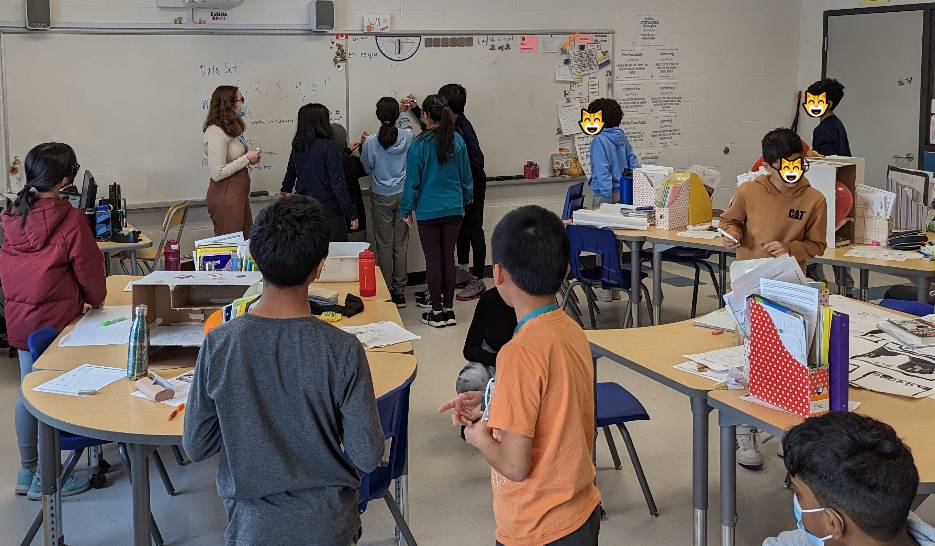
A diverse group of four students. Each is sitting in front of an easel.

Black History: Black Education Matters.

Photo By: Pavel Danilyuk

Ponder This: 
What did you learn about Black Canadian history in elementary and secondary school?
What was the narrative you were told regarding Black people in Canada? Did it begin pre-colonization?

The adoption of multiculturalism helped stabilize white supremacy by transforming its mode of articulation in a decolonizing era” (Maynard, 2017; Thobani, 2007: n.p., p. 50).

A Very Brief Canadian History

The prevailing myth in the United States is that Americans have overcome their racist past and are no longer racist, and the prevailing myth in Canada is that we are a country without a history of racism.

  • July 1784: “the first race riot in North America.” The confrontation ignited a wave of
    violence in Shelburne County that lasted approximately ten days. The majority of the
    attacks targeted the county’s free Black population.
  • Contrary to popular belief, Slavery was practiced in Canada until 1834.
  • Black families have petitioned the government and school boards for fair access and equity in education since the early 1800s.
  • Ontario was one of two provinces that legislated Black segregated schools.
  • The doors of Ontario’s last segregated school closed in 1965, while the last segregated school in Canada, located in Nova Scotia, closed in 1985.

Black Resilience over generations paved the way for the Black Lives Matter movement, which is recentering the narrative of Black Lives in Canada today. Unfortunately, systems of Anti-Black Racism are still part of the fabric of Canadian society and are still evident in our education system today. A big part of the change that needs to occur to combat Anti-Black Racism is the intentional education of students on the whole history of Canada instead of some of the highlighted parts.

One of the structural ways Black people continue to be discriminated against today is in education.

Far too often, contributions, innovations, and the ingenuity of Black people are not discussed within schools and learning environments until February, when there is a hyper-focus on Black History. During this month (February), there is a great focus on retelling the stories of oppression Black people have faced, which are presented as the only stories of triumph and fortitude attributed to Black people. In this guise, there is also a hyper-focus on American society and American issues, painting a false narrative of Canada’s racist past and present.

There needs to be a change in how we educate about the history of Black people in Canada. “It has to be changed in policies, practices, and it has to be systems change” (Hogarth, 2020). I boldly say that the change must begin in education.

“Racism is a learned behaviour that can be mitigated through the education of Ontario’s youngest learners. While there are topics in Ontario’s curriculum related to anti-racism and anti-discrimination and options for more in-depth teaching, explicit learning expectations related to Black history and issues must be built into the curriculum. A key issue that must be addressed is integrating discrimination and racism into teaching through a critical race lens. The instruction and learning must be ongoing. One-off lessons are insufficient to raise awareness and knowledge of the impacts of anti-Black racism and Black contributions to Canadian society” (Building Better Schools, 2023).

ETFO’s 365 Calendar provides ” educators and students with a visual touchstone to embed the voices of those who have been marginalized or silenced.” This resource highlights and celebrates many of the contributions and innovations of Black Canadians that have shaped Canada into the vibrant nation that it is today.  Though it is by no means an exhaustive list, it provides Elementary educators with the tools necessary to ’embed Black Canadian history in classrooms throughout the school year.”

A Call to Action

  • Deepen your understanding of the effects and impact of Anti-Black racism in education.
  • Find, read, and become familiar with your school board’s Dismantling Anti-Black Racism Strategy (if your board does not yet have one, advocate for intentional work in implementing one).
  • Conduct an audit of your unit plans, lesson plans, and teaching resources.
    • Ask yourself:
      • Do they provide windows of learning that represent the diversity of cultures, achievements, innovations, and impact of Black people in Canada and worldwide?
      • Are Black students mirrored in engaging and uplifting ways in the resources used, conversations had, and lessons learned?
  • Recognize how your own social positionality (e.g., race, class, gender, sexuality, ability) informs your perspectives, reactions, and responses as you engage with Black students and colleagues.
  • Remember that learning is ongoing. There is no one-and-done approach to systemic reformation.
  • Step out of your comfort zone and dare to engage in teaching and learning that intentionally amplifies the too often missing and omitted voices of everyday Black change-makers.
  • Join the fight in Addressing Anti-Black Racism in Education.

“ETFO supports calls by the Ontario Black History Society, Black families and others for the Ontario government to make Black studies a greater part of the public elementary curriculum” (Building Better Schools, 2023).

Black Canadian


References:

Aylward, C. (1999). Canadian critical race theory: Racism and the law. Fernwood Publishing.

Building Better Schools. (n.d.). Retrieved January 8, 2023, from https://www.buildingbetterschools.ca/addressing_anti_black_racism

CBC News. (2021). Being Black in Canada. CBC News: Special Presentation. YouTube Video. Retrieved from https://www.youtube.com/watch?app=desktop&v=Ntn0Nz8OT44&t=12s&ab_channel=CBCNews

Elementary Teacher’s Federation of Ontario. (n.d.). Retrieved February 1, 2023, from https://www.etfo.ca/classroom-resources/365-black-canadian-curriculum/365-black-canadian-curriculum-34d475930fc96a7121246be5c24e8be2

Gibson, D.O. (2018). Black Canadian. Hype B for Prosound Studios. YouTube video. Retrieved from https://www.youtube.com/watch?app=desktop&v=HSiQrXANexA&ab_channel=D.O.Gibson

Ladson‐Billings, G. (1995). But that’s just good teaching! the case for culturally relevant pedagogy. Theory Into Practice, 34(3), 159–165. https://doi.org/10.1080/00405849509543675

Lemert, C. (2021). Social Theory: The Multicultural, Global, and Classic Readings. 7th Edition. Routledge (Taylor & Francis). (Original work published 1993).

Advocacy – Using My Educator Voice

“Part of ETFO’s mission is the education, stimulation, and transformation of provincial and local organizations to be responsive to the diverse needs of the membership, and to be a positive influence for change at a societal level. “

 Source: ETFO Social Justice

I’ve been thinking more about my privilege in society and how to create space for others. I imagine my classroom, or even my school, as a microcosm of society and try to model kindness, joy, and hope to my students and colleagues. How do we make the world a better place? What does that look like in the teaching profession?

Reading the anti-oppressive framework created by ETFO helps me think critically about how I teach, the physical setup of my learning space, and the direction I’m helping my school take. It reminds me that part of being an ally is to advocate for those experiencing the negative impacts of colonialism, racism, homophobia, transphobia, classism, and ableism.

Sometimes advocacy work means starting conversations that will be uncomfortable, but educators need to ensure that we unlearn oppressive practices and ideologies. We can create space for the oppressed to have a voice. We can advocate spending school budgets on specialized resources for clubs or educational opportunities for students from marginalized groups. We can advocate for professional development to implement the calls to action of the Truth and Reconciliation Commission. We also know that the arts and libraries need our voices heard to give all students access to music, drama, art, dance, books and technology. 

The teacher-librarian AQ course taught me to advocate for the library/learning commons. For years, I have had to justify my requests for the school budget to be spent on books, magazines, and technology. The effort was worth it. Recently, a student who graduated from grade eight thanked me for allowing her to exceed the book checkout limit every week. When other students were taking 1-2 books, she was taking eight. Consistently, every week, for grades two and three, she continued this pattern. By grade four, she began reading some longer books, so the number of books she checked out was fewer, but she was still reading voraciously, and she continues to do so to this day. Her family did not use the public library, and they couldn’t afford to keep up with her appetite for books, so the school library was the place she relied on to keep her reading. With this student and others like her in mind, I will continue to advocate for schools to have libraries and for libraries to have books.

Educators, your voice is valued, don’t be afraid to use it to make things better for someone else.

Diverse Representation in the Media: An Unexpected Lesson

Isaac missed the first of four lessons in a media literacy unit. I invited him to my desk to review the first lesson. I didn’t know that Isaac was about to teach me instead.

In Media Literacy, my grade 2 class watched the video A Pep Talk from Kid President to You. We watched it a few times to observe how the words, the backgrounds, and the music impacted the meaning. In the next media literacy class, we reviewed a pep talk script I created based on the video. Students had to fill in the blanks to make their own pep talk, or they could choose to rewrite the script themselves. In the third class, we would pair off and film the pep talks using tablets. Finally, students could share the pep talks and accept feedback. 

When Isaac sat with me to watch the video, he reacted with shock as soon as Robby Novak came on the screen.  

“Hey,” said Issac, “He looks like me!”

In case you are not one of the 48 million viewers of “A Pep Talk from Kid President,” Robby Novak is an African American who was nine years old in the video. He went on to create more viral Kid President videos and wrote a book, all focusing on making the world more awesome.

When Isaac reacted so immediately and with such surprise to seeing someone he could identify with on the screen, I realized I needed to take diverse representation in the media more seriously. I must examine my privilege and bias when choosing media for any subject.

The American non-profit Common Sense media produced a report in 2021 called The Inclusion Imperative. The key findings include the following:

– High-quality children’s media can promote positive ethnic-racial attitudes and interactions.

-Among young people of colour, watching favourable depictions of their ethnic-racial group can have a positive impact on self-perceptions and views about their ethnic-racial group.

-Media created for even the youngest children should consider inclusiveness and representativeness.

I’m thankful for Kid President, and especially Isaac, for making me aware that I need to do more than I have been doing to ensure students experience more diverse representation in the media we use at school.

Resources:

Common Sense Media                     MediaSmarts


The Teacher Down the Hall

During these longer nights and shorter days, I often find time to reflect on my own journey as an educator. Coming up on 25 years very soon (gulp!), I can honestly say that I am not the same educator I was at the beginning of my career or even the same as I was five years ago.

Earlier this year I wrote a post about professional learning and realize as I reflect on my career that I also need to acknowledge the teachers down the hall. These educators have influenced and shaped my vision about students and teaching in so many ways through their mentorship, their permission to be human, and their examples as leaders. I want to dedicate this post to the teachers down the hall whose influence and teaching extended beyond students and to colleagues.

One of my favourite educators would always remind me, “You are human.” Teaching can be overwhelming and is often described as the job that never ends. I know there are times when I felt I could literally work 24 hours and still not have “finished”. However, we also need to understand that we are human. We need to give ourselves some grace for the weight of the work we do and know that we need time to recharge. Setting boundaries for work doesn’t make us bad teachers, it means we are humans who deserve the time for necessary self-care.

An intermediate colleague I worked with once asked me, “If you’re not having fun, how do you think the students feel?” In the light of all the curriculum expectations and data collection, it’s hard to remember to ensure that the class community enjoys their time together. Whether it’s engaging in community building, sharing funny stories, or a cool science experiment, having fun makes the learning environment a comfortable and safe place to be. It helps to build relationships between students and educators. One teacher I worked with always greeted his primary class with a morning joke and that was always brought up by students years later at every grade eight graduation. Those small moments where we have fun are sometimes the small moments that have a big impact.

Another mentor teacher would always tell me, “We teach children, not just curriculum.” It is so important to know each child that we share space with during the day. To recognize that they hold different identities and experiences, acknowledging that those factors influence how they feel seen at school. As teachers we all want students to feel welcome and that school is a place they belong. Getting to know and accept students’ full identities, such as cultural heritage and neurodiversity and everything in-between is necessary to create that feeling of belonging.

Working with another colleague, I learned “Be passionate about your own learning!” Teaching is a practice and one that we strive to get better at doing each year. Learning more about teaching strategies, resources, and new pedagogical research are all ways we can fuel our own professional learning. Trying new strategies helps to deepen our understanding of subject matter and to stay excited about teaching.

I reflect on those conversations and am so grateful to those teachers who gave me a shoulder to lean on and a listening ear. When I think back on the last two decades, it seems like no time has passed since my very first class. I feel like that same new teacher on the inside, though I have been shaped by different experiences and growth – much of that due to conversations and mentorship from those teachers just down the hall.

January Thoughts: On Practicing Self Care

As educators, I have always thought we have been rather blessed to have at least 2 New Year’s celebrations a year: the one that comes every September, and the one that comes every January 1st. For me, both of these days brings about a slew of self-care goals: to exercise more, eat better, cook more, be more social, or even look more “put together”. More often than not, I start strong, and regress just in time to reset for the next new year.

After years of cycling through all of my “new years” – and never really ever making any permanent lifestyle changes – it occurred to me that I wasn’t putting enough effort into my own self-care. In fact, I mistakenly believed that self care was something that would be instinctive, or simply happen without any expenditure of energy. What I have realized is that real self care comes with work.

This year has been exceptionally busy and Meg, the gym manager invited me to the dreaded new year fitness and nutrition challenge. The gym manager, a very young, fit and enthusiastic woman probably about half my age texted me with a flurry of fire and muscle arm emojis.

“Book the challenge! Commit! Are you in? Yassssss 🔥🔥🔥💪💪💪”

I honestly couldn’t picture myself cooking a whole other menu of food on top of what I was regularly preparing for my own family, all while regularly attending early morning workouts and of course, doing a full time job.

“You can do this. 🔥🔥💪💪Train insane or never change ayeeeee ☠️”

In that moment, I realized that there would never be an “ideal” time to embark on a lifestyle challenge. I had always wanted to clean up my diet and increase my fitness, but always made sure I was way too busy to ever do it in earnest. I had bought into a narrative in which I was the busy teacher-mom that was way too overburdened to do anything for myself. This narrative, I decided, needed to end.

I relented, said yes, and promptly scheduled my body scan so I could get the cold hard facts on what I specifically needed to improve.

Sure, I can book a vacation, a spa visit or an evening at a favourite restaurant and be practicing a version of self care where I feel I have carved out some “me time”. But these moments are fleeting, and end as soon as the bill is paid. These one-off events are fantastic, but do not bring any transformation. The kind of self care that brings lasting change means being consistent, and rethinking the way I approach my work as an educator.

As teachers, it is all too easy to throw ourselves into an endless workflow. In schools and school boards, there are always more things to do than people to do them. The key is knowing when to stop so you can have the energy to funnel to attempt manifesting your own personal goals.

You may be wondering, did I succeed? Did I indeed manifest?

To be honest, it is too early to tell. What I do know was that it was indeed liberating to simply stop answering emails, planning lessons, and reading yet another book on assessment to get to bed early enough to make a 5:45 am workout and make a protein smoothie. And if learning how to interrupt my endless workflow is the only thing that comes out of this whole experience, I will have achieved something truly transformational.

Thinking Beyond the Exit Card

One of my favourite ways to gather assessment is through thinking prompts. I love it because it gives me a quick snapshot of a child’s thinking at that moment. At the beginning of my teaching career, I used to use exit cards to determine whether or not students could understand a concept. Asking them to answer a question or to complete a parallel task were the common types of exit cards I used. As I started to reflect on my teaching practice and student learning, I felt this type of assessment had a certain finality to it. I was trying to find out what the students retained from lessons, but this didn’t leave a lot of room for student voice and reflection. These types of questions seemed content focused. As I became more interested in having students think reflectively about their own learning, I began to change the questions I used and while it took some time and a lot of modelling, these prompts became an important part of assessment that informed my own practice.

Reflecting on Learning Styles

Some thinking prompts help to elicit responses about students’ learning styles. They can be a great tool to arm students with the vocabulary and knowledge to advocate for their identities as learners. I always found this strategy most helpful in meeting student needs, honouring their voices, and being able to help make learning accessible for them. At the beginning of each year, I would begin by sharing about my own learning style with students. For example, I am a slow thinker so I need process time. I am a visual learner and like to learn by seeing things in math. If music with lyrics is playing, I get distracted easily. Sharing these examples empowers students with the knowledge that not everyone learns the same way and it’s okay to need different spaces or accommodations when we are learning something new. Prompts that help students to consider their own learning styles may include, “I could focus or learn better when….” or “I find it was easier to (use ……. strategy) because…..”

A few years ago in a grade four class, we were working on exploring sound. After designing and building musical instruments, I asked the students to finish the sentence, “I could focus on building my instrument better when…” The answers ranged from students who liked frequent check-ins with me through their progress, to those who worked better when they could talk with their friends, to others who liked being able to draw out their design before building. It was interesting for me, as the educator, to be able to see the variety of conditions the students wanted to do their best work. I used the information gathered from those exit cards to prepare for our next experiment and organized spaces in the classroom where students could choose to work based on their reflections.

A Change In Thinking

Sometimes I choose certain sentence starters when I want to encourage reflective thought. It allows me to see where the students’ thinking started and also asks them to reflect on their learning. In my classes, it usually takes some practice and modelling to use these prompts effectively. I would model my own thinking out loud for students during large group discussion. While reading aloud, I would often pause and explain how something changed my mind about a character or prediction and emphasize that when we have new information, our ideas may change. My favourite thinking prompts that encourage this type of response include, “At first I (thought)…. Now I (think)….because…” or “My thinking shifted when….”

I have found this opportunity for reflection gives students a chance to really engage reflectively in their learning and also provides valuable information for me. One year, we had worked with different representations of fractions and I had asked students to think about the prompt, “At first I thought…. Now I think… because….” One of the students shared the idea, “At first I thought fractions looked like pizza, now I think fractions look like linking cubes because the cubes are the same size and pizza slices are not always the same size.” This was far more interesting to me. In the past, I might have asked students to draw a representation of a few different fractions and looked at which representation they might use. With this response, I could see which manipulative was most influential to shift their thinking. I could also see they understood that fractions should be equal parts of a whole. As feedback for me, I could see the representation that helped to build their understanding and I could use that to inform future lessons.

When I think back to being a student, I wonder how I would have responded if I had been asked those reflective questions as a student myself. Would it have still taken me until university before I knew more about my learning style? Would it have changed my relationship with teachers to know that they really cared about what I thought and how I learned? What I love about these thinking prompts are that there is no definitive right or wrong answer; all the answers encourage students to know that I care about their learning, their thinking, and their ideas and that getting the right answer isn’t the most important thing to me. And maybe that’s the real lesson I want them to learn.

the past has passed

As a K-13 student, growing up, I was fooled into believing that the sage on the stage method was the only tried and true instructional practice that would lead to my success as a student. We were taught, tested, drilled, homeworked, derogated, compared to others, overlooked, underestimated, expected to listen to hours of lectures each day, and told “it has always been done this way”. 

There were some really bright spots along the way to be fair, but as many students, unfortunately, find out things change drastically year over year. Even if my experiences were not the norm, there are still others who went through something similar. The cherry on this crud sundae that I am sharing with you is that it was all amplified tenfold in university, but that post will have to wait. Until now, I really never had the scope or tools to consider why? 

After spending the better part of this month reflecting on the past year, it seemed like a good idea to look forward at the road ahead rather than through the rearview mirror of what truly belongs in the past. 

the audacity of it all

Why would anyone so young and uneducated dare to expect anything different let alone differentiated? It seemed that education even into the 2000s was more about control and conformity than the pure pursuit of knowledge, deeper understanding, and meaningful opportunities to put learning into action. Many teachers of a similar vintage as mine learned quickly that those desks were in rows for a reason, that the ancient textbooks weren’t going to cover themselves, and that the first assignment of each year was going to be a retell of what you did on your summer vacation. UGH!!!!

This time provided many eye-opening experiences that required some working out before stepping through the classroom doors in 2009. They can be summed up in a few words: sterile, rigid, and underinspired. 

I never really liked the oppressive nature of my past educational experiences. I have worked hard to unlearn them since becoming an educator. Lately though, I have been reckoning with these truths again as I try to shake them once and for all. Admittedly, it takes effort not to let them creep back into my interactions disguised as something else. Being stuck in a rut can fool you into believing it is a well worn path. Taking time to be mindful of this is especially important as I welcome another 2 teacher candidates into the classroom for Term 2.

I guess we all have to confront our own needs, wants, and desires in the workplace and see if they align with our current realities or not. In that spirit here’s my reflection exercise for you to try if you went through a similar schooling experience or wish to avoid inadvertently providing one for your students. 

taking stock

How much of your past experience from being a student is guiding your leadership in the classroom? I had to work on this especially knowing that learning in the 70s  and 80s was so drastically draconian and undifferentiated.

How do you infuse positive talk with your students each day? More importantly, how are you including positive listening to them? Avoid repeating phrases we were told as students at all costs? Here’s a classic: “If you just work harder you will get it eventually.” For me, eventually was years afterward no thanks to those teachers. What I needed was time and a clearer breakdown of the concept along with some guided practise. Please know that students are usually trying their best why wouldn’t they? 

Here’s another blast from the past: “How come you are the only one who doesn’t get this?” This might as well have been my theme song for grade 13 Math Functions and Relations? How is that supposed to help me or the other students who are too paralyzed with fear to raise their hands? I’ve felt this sentence trying to pass over my teeth and past my lips, but have also developed strategies to make sure it doesn’t happen. 

One more car from the trauma train: “Your brother never had a problem with this.” This was what my sister had to endure. She never deserved to be treated that way. To this day she continues to inspire me despite the attempted spirit murder she went through. It is a terrible injustice to compare siblings in the classroom. Please for the love of pound cake do not let this happen and call it out when it does. 

And finally, and more positively, how are you embracing the future? Does it include space and time for student voice, creativity, equity, intersectionality, identity, inquiry, design thinking, team problem solving, and otherliness? If not, what, other than the chains of the past, is holding you back from adding one, two or all of them to your classroom?

I am asking these questions of myself as a reflective exercise too because we have all come across it through our own years of sitting at our desks while educator after educator leads us through the lesson(s). Yet, even as we were taught multiple intelligences, strengths based learning, zone of proximal development and so much more from Gardner, Maslow, Marzano, Friere, hooks et al. If you are thinking “if it ain’t broke, don’t fix it” right now you can still benefit from a little proactive maintenance knowing that it is crucial to constantly refine what we do and how we do it in order to ensure a way for our students engage, wonder, and grow towards the future and not the past.


Building Better Schools: The Plan

ETFO represents approximately 83,000 members, including public elementary teachers, occasional teachers, education support personnel, professional support personnel and designated early childhood educators. ETFO provides protective and professional services for members and promotes equity and social justice within the education system and the broader society. ETFO is a social justice and equity-seeking organization” (ETFO, 2023).

Did I need to introduce ETFO to you? I don’t think so, but I wanted to ensure I shared that with you in case you did not know. ETFO advocates for equitable educational practices and equitable justice for all public elementary educators to position these educators as the changemakers we need in the education system.

Conferring on July 1, 1998, “ETFO continued the work of two federations that had worked to promote and protect the interests of public school educators for 80 years. ETFO’s two predecessors were the Federation of Women Teachers’ Associations of Ontario (FWTAO) and the Ontario Public School Teachers’ Federation (OPSTF).” There was much in the works, and much at stake during the time of this transition, but “elementary teachers proved once again they were up to the challenge” (Ritcher, 2006).

I urge you to take some time to get to know ETFO’s history, mainly to understand the consistency of ETFO as a social justice advocate and equity-seeking organization that has remained steadfast through the ages. Becoming familiar with ETFO’s history will provide a deeper understanding of ‘The Plan’ that ETFO has launched as a guide for revitalizing public elementary education.

As stated in It’s Elementary (2018), the following are five frames by which you can understand the position in the fight for social justice and equity for public elementary school educators.
1) Federations work steadfastly to promote and protect the interests of their members.
2) Federations were, and continue to be, leaders in advocating for the rights of teachers and the broader society.
3) Funding for elementary education has been an issue since the 1800s.
4) Legal or collective agreement rights are never entirely secure; the union and its members have had to be vigilant in keeping elementary education issues in the public eye and on the government agenda.
5) The union’s strength depends on its ability to build member trust and solidarity for its work” (ETFO, 2018).

These have been ETFO’s guiding principles since its inception. This is the work ETFO continues to do, Building Better Schools by creating and fostering opportunities for culturally responsive growth and development within the Elementary Public school system for educators and learners.

Let us take the time to look closely at the 9-pronged plan for building better schools.

  • Addressing Anti-Black Racism
  • A funding formula that works for kids
  • A single secular school system for Ontario
  • A stronger voice for your educators and their union
  • Enriching student learning
  • Inclusive classrooms
  • Smaller classes for everyone
  • Support for students with special needs
  • Testing rooted in learning

As educators who desire equitable learning environments for all students, let us all take the time to ‘Join the Campaign’ and “protect our public education system so we can build better schools for everyone.”

Take a moment to reflect:

  • How does this challenge you to get involved with your union?
  • What attitudes, beliefs, or ideas do you need to change or adopt to bolster this needed plan?
  • What challenges do you think might arise as this plan unfolds?
  • How can you support ETFO (your union) in surmounting these challenges?
  • What skills/attributes can you contribute to your local or provincial office?

As Sharon O’Halloran (Deputy General Secretary, ETFO) said in the ETFO Voice, winter 2022 edition, “Our Victories Prove We Are Stronger When We Work Together.”

“Join one of ETFO’s provincial Standing Committees and provide your perspective and expertise in developing provincial policies, positions, programs, and initiatives. Vacancies for the 2023-2025 term are listed on the website. The deadline to apply is March 1. Apply online at members.etfo.ca/etfo/standing-committees.”


Reference:

Building Better Schools. (n.d.). Retrieved January 8, 2023, from https://www.buildingbetterschools.ca/

Hammond’s Culturally Responsive Teaching

Culturally responsive and relevant pedagogy (CRRP) is becoming more and more spoken and written about within teaching and learning communities. In a fast-changing world, educators are challenged to question their own beliefs, values, practices, and pedagogy while remaining in a system that supports and fosters a specific worldview. 

In an effort to connect with like-minded educators who wanted to explore these ideas, I joined an equity, diversity and inclusion focused book club. The book club offered an opportunity for any 20 staff members from the board to receive a copy of the book and engage in monthly discussions of the text. Culturally Responsive Teaching and The Brain: Promoting Authentic Engagement and Rigor Among Culturally and Linguistically Diverse Students by Zaretta Hammond is written for educators who want to understand the science and research behind culturally responsive teaching, reflect on their thinking about why we do what we do and challenge the status quo.

While reading this book, I really appreciated the inclusion of an in-depth explanation of the structural functions of the brain involved in learning and the background knowledge required in order to foster a deep understanding of the role culture plays in learning. Being a reflective teacher, I loved that the author challenged the reader to explore their personal worldviews, core beliefs, and group values and that she described the necessity to go beyond surface (i.e., observable elements such as food and music) and shallow (i.e., social norms such as unspoken rules around personal space or eye contact) levels of culture. This is a concept that resonates with me because many people think of the surface and shallow levels of culture, but to effectively engage in CRRP we need to go beyond that and focus on the roots of culture. As members of an organizational structure I believe it is all of our responsibility to reflect on dominant cultural practices and the explicit and implicit messages these practices convey.    

This book assists educators who are ready to dig deep and reflect on their own beliefs and values. In order to understand the worldviews of others, we must first have self-understanding, knowing our own worldview, beliefs and values as well as their origins.  Hammond fosters the development of self-understanding by including a set of inquiry questions following each chapter summary. Furthermore, additional resources for further exploration are also included at the end of each chapter. While I did not access these resources yet, they may be useful for additional supportive information as I revisit the text.

Additionally, our book club included educators with different backgrounds and in varying roles and members expressed that some of the concepts were helpful and being utilized in their professional practice. The ideas presented are adaptable for varying grades and the contents of the book suitable for all classroom and school settings. This book would be appealing for any educator ready to rethink traditional teaching practices. 

Although some readers may feel the book fails to provide specific examples or lessons, Hammond does a thorough job of creating opportunities for educators to reflect on and shift their mindset about students’ capacities, especially in regards to working with dependent learners. A change in our thinking or expanding our worldview is more valuable to me than a specific lesson plan, and a mindshift fosters CRRP becoming embedded in our practice. Our ever changing classrooms require educators to not only understand the necessity of CRRP within education, but to question the origin of the views, values and beliefs on which our current practices are built. If you are looking for a resource to support your own professional development or that of a group of educators, Culturally Responsive Teaching and the Brain may be just what you are looking for!

Hammond, Z. L. (2015). Culturally responsive teaching and the brain. Corwin Press.

Crying Over Spilt Milk?

New Year, New Me? No. There are no new year’s resolutions for me, not yet. I’m resting and recovering from that never-ending cold, so I’ll consider my goals later. Taking care of myself and accepting where I am are important tasks for me right now. I do have one resolution. I resolve not to put additional pressure on myself at this time!

On the other hand, Joshua*, a  first grade student, told me that his goal is to make breakfast in the morning. He is so proud of this independent skill he is developing. We talked about how hard it can be to pour from a full milk jug into a bowl of cereal. It takes that careful, slow release, and the bowl has to be in the correct position. We agreed that the milk spills sometimes, but that’s how you learn, by making mistakes. That conversation got me wondering, am I that forgiving of myself when I’m learning something new?

In September, I started a new role, Early Intervention Teacher. In the first 100 minutes of the day, I work with small groups of grade one students to develop literacy and self-regulation skills in the classroom during language centres. Although I have a lot of teaching experience, this is the first time I have found myself in a position quite like this. I want to do it right, so I am putting in some effort to learn how to do the job. I attend professional development sessions, read books and blogs, and watch videos. Some days I feel like I spilled the entire jug of milk, and sometimes it feels like just a few drops. There are even days that go so smoothly I can hardly believe it!

Whatever your goals, I hope you are gentle with yourself when the milk spills. If you haven’t set goals yet, the Lunar New Year may seem like a better time, or the new moon or the first day of spring. Do it when the time feels right.

Happy New Year, everyone!

*The student’s name has been changed.