A Beginning Teacher’s Journey: Part Three

I knew this day was coming and I’ve been preparing myself for quite a while, but it didn’t make my last day of school this year any easier. Sure, I’m excited for summer vacation but I had to say goodbye to the students, staff and school community that has taken over my time, my mind and my heart for the past year and a half.

Out of all the challenges of being a new teacher in an LTO position, this is the biggest challenge – being able to embrace change and say goodbye to something you love. IMG_1076

A good teacher teaches from the heart, and when you teach from the heart you become personally and emotionally invested in your students and your school. My students became like my very own kids this year. I gave them everything I had. I quickly grew to love them and they grew to love me. I invested endless energy into their success and wellbeing. I had a special bond with every one of them and made a point of being an important part of their lives. I had beautiful professional and personal relationships with my colleagues and I dedicated myself entirely to the school community. It became my home and I absolutely loved everything about it.

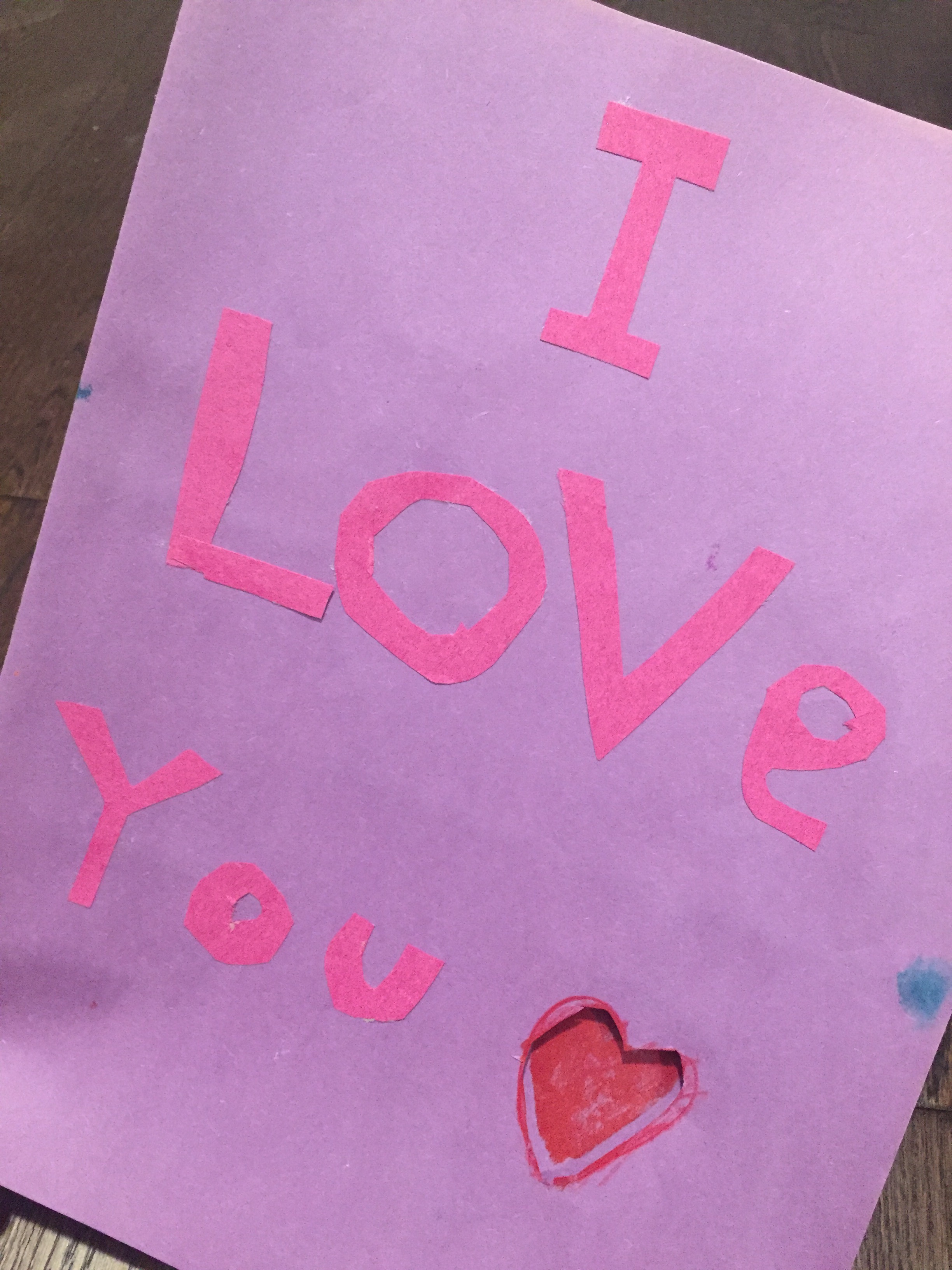
Yesterday was my last day at my school, as I will most likely be working elsewhere next year. My students showered me with goodbye cards, endless hugs and a lot of tears [many of them mine]. To be completely honest, I’m struggling with the feeling of loss. I feel like I’m leaving a huge piece of my heart behind, and I am – but that’s good teaching, right?

It will be hard for me not to get to watch my kids continue to grow and learn after our year together. I will wonder how they’re doing and who they grow up to be. I will worry about the ones that needed me the most, and miss being there to cheer them on.

The experience of being a new teacher and never really knowing where you’re headed next can be emotionally exhausting. As someone who doesn’t overly enjoy change, it can be difficult to not to let it get to me. I know that this is all part of the journey, and that with each new and different experience I have I will grow as a teacher and as a person. The prospect of starting new at a new school, and probably in a new grade is exciting, too. I have learned so much this year and can’t wait to put my new learning into action.

For now, I know I will spend a lot of time missing my students, my colleagues and being a part of an amazing school community.

And the [best?] part is, I will probably feel this way at the end of next year too.


Puzzling Together the Pieces

As the school year comes to an end, it’s important to keep our students engaged and active in meaningful activities. Aside from all of the celebrations and partying, we took some time at our school to get our students reflecting and connecting on their year as a whole.

My current school is a very small, close-knit community, which led me to think about a way to get the entire school collaborating on some kind of year-end reflection. My principal asked me to take the lead on an activity that would allow students to recall their learning, communicate it with others and possibly share these thoughts with younger students entering their grade next year.

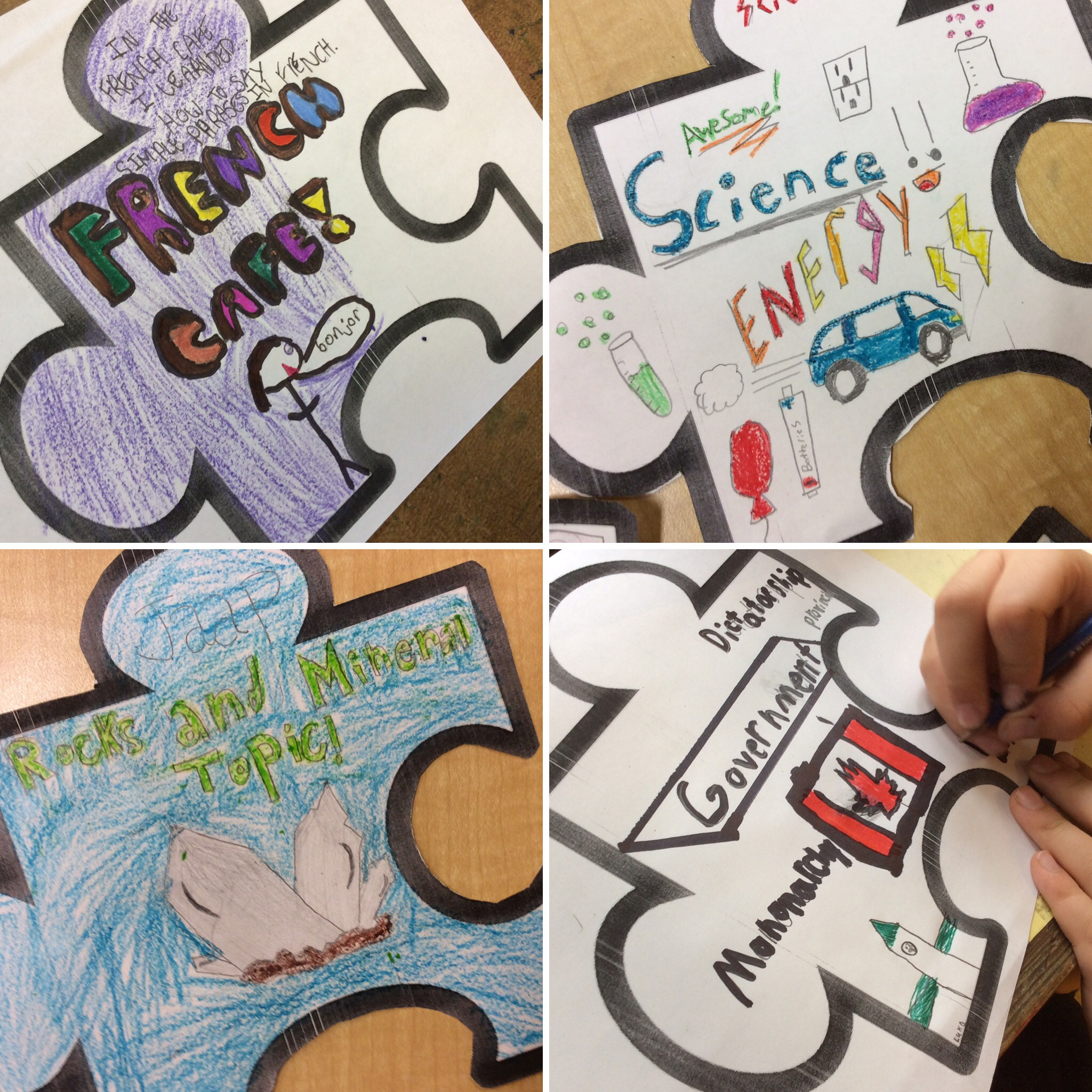
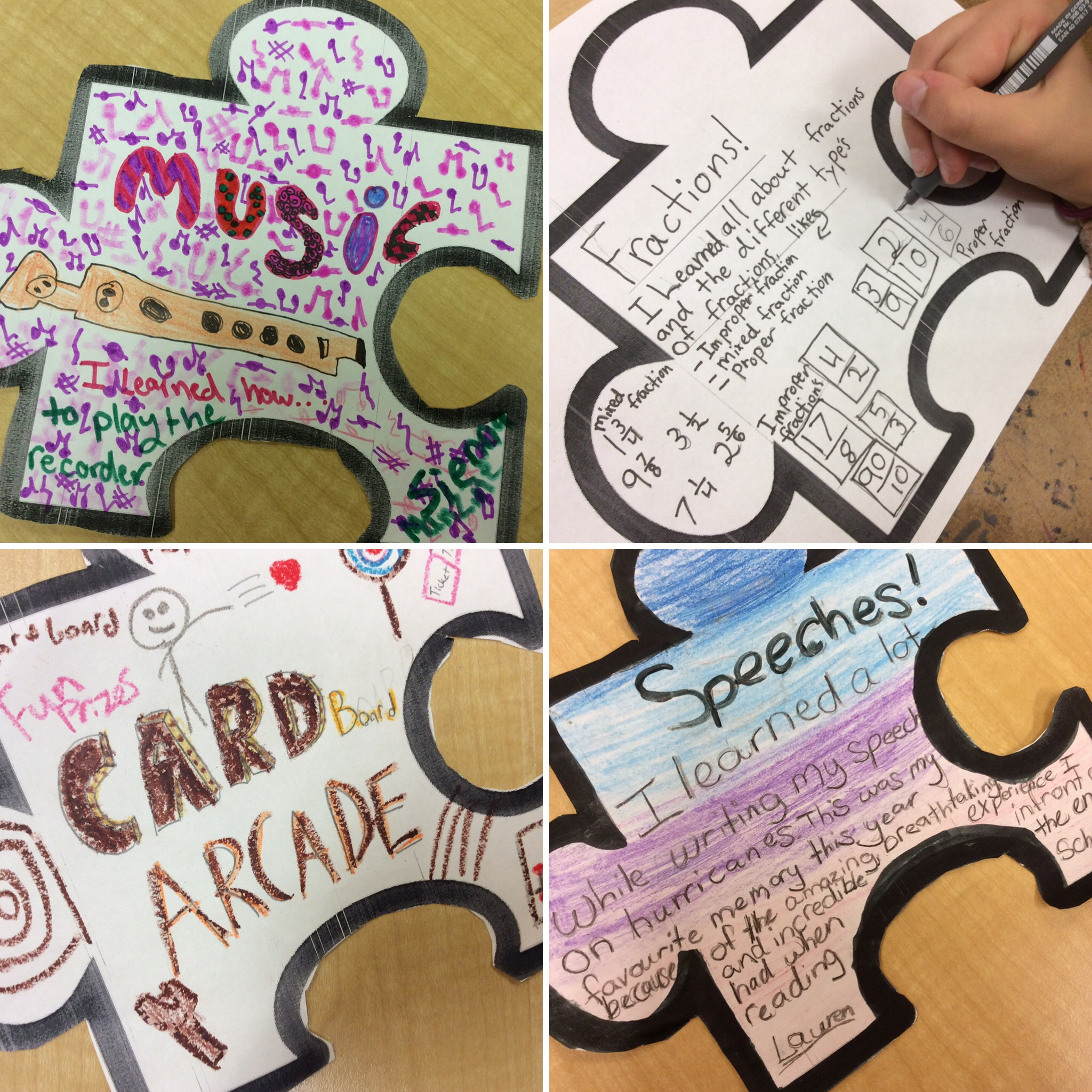
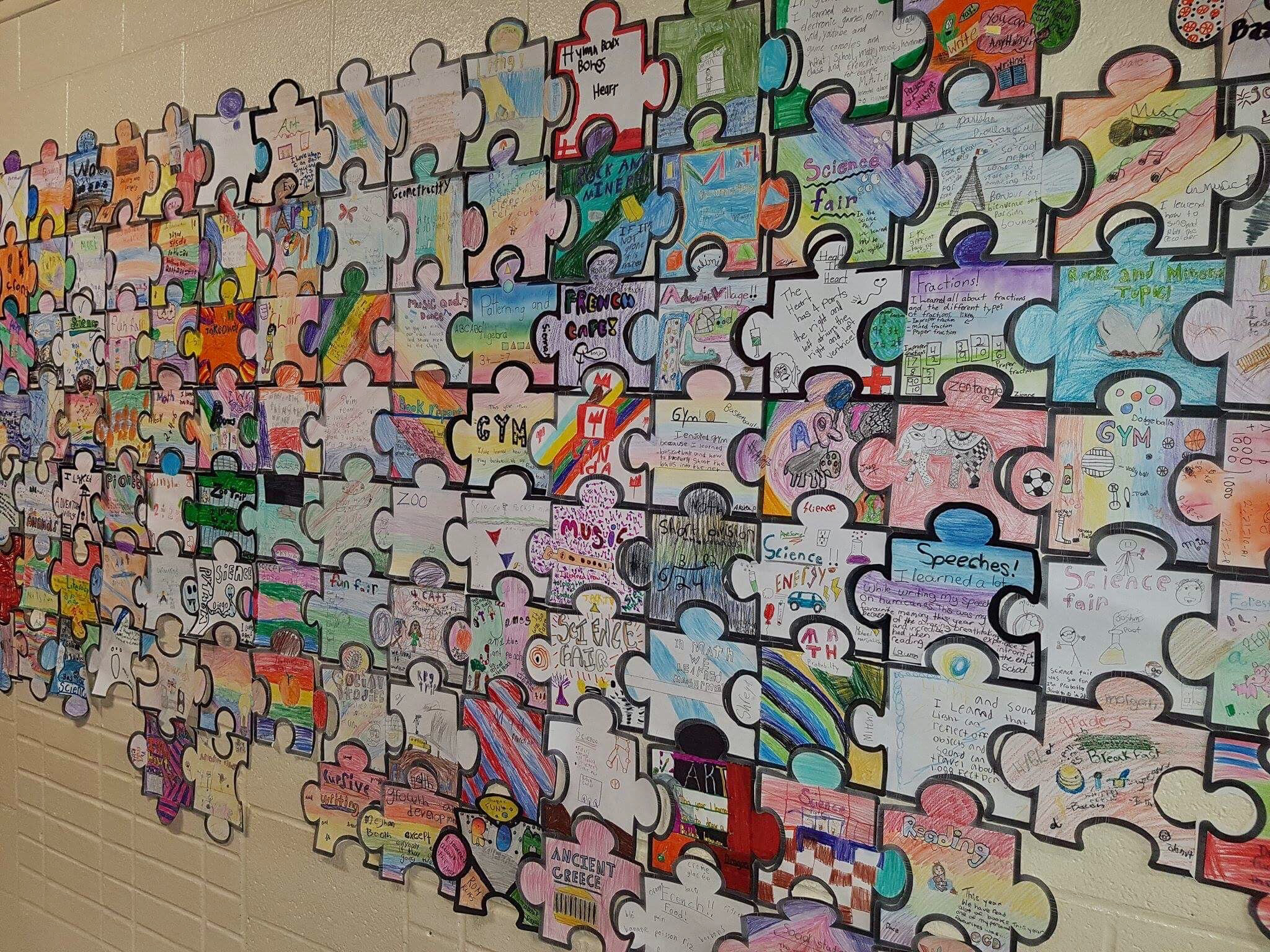
So, I came up with the idea of having each student in the school design a puzzle piece that represented learning that was meaningful to them. I visited each classroom and facilitated a discussion about what the big ideas of their learning were and what experiences were part of their story. Students had some wonderful reflections to share and once the conversation got started the students began to recall and make connections about many different areas of learning from their year at school – both curriculum based and not. We worked together to make sure that within the class, all of the most important areas of learning or events were represented.

We talked about how each piece of the puzzle was important and connected with the other pieces. We also talked about how all of their puzzle pieces came together to paint a picture of their experience, both of the individual class and the school as a whole.

It was nice for me, as a teacher, to participate in this activity with my students. I got to reflect on all of the wonderful memories we made together during our year and it was very informative for me to hear what they felt important enough to include in our discussion, and on their puzzle pieces.

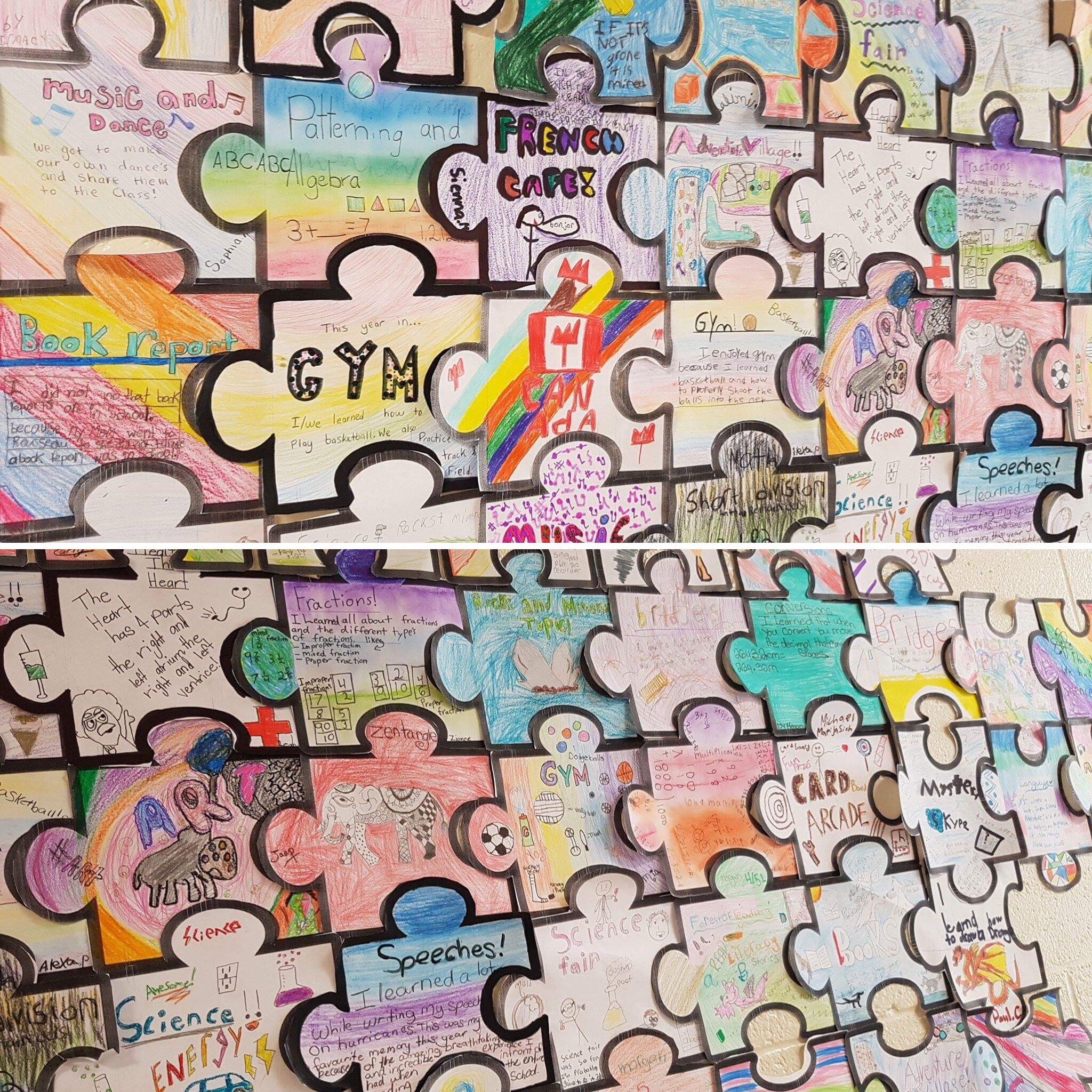
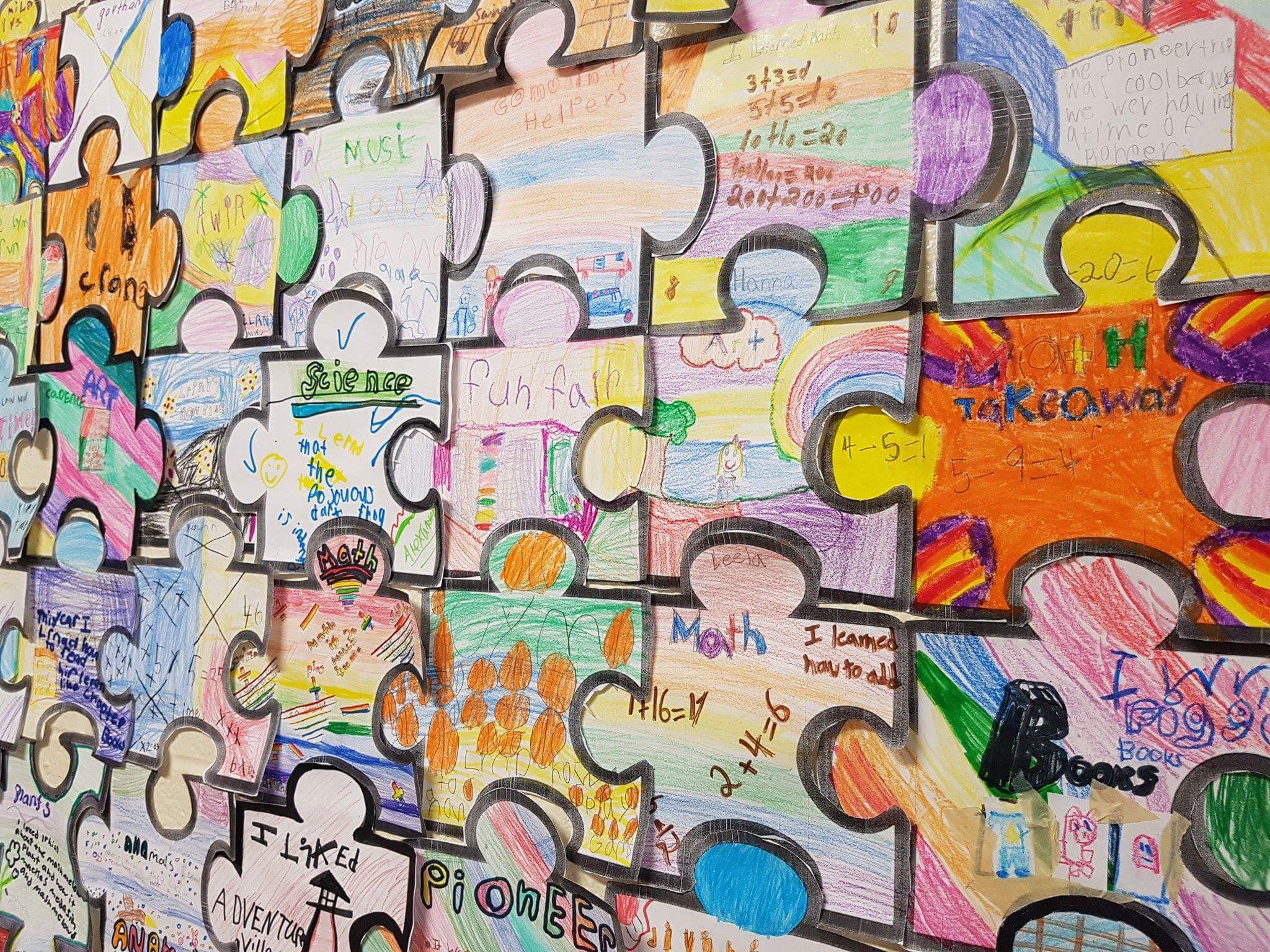
After visiting each class, I collected all the puzzle pieces and, with the help of some of my eager students, created a giant mosaic in our school’s entry way. This mosaic is going to remain there well into the next school year so students can look back at their learning!

This is only one of many ways to facilitate year-mapping with students. Next time I do this, I think I will challenge students to think about where their puzzle pieces fit into the puzzle as a whole, and get them to share why they place their piece in a certain spot. Overall, I really enjoyed leading this school-wide activity and it was a great way to celebrate the stories and success of our community!


puzzle2

puzzle3

puzzle4

IMG_1094

puzzle1

Time to hit the Recharge Button

After an insanely busy week of graduations, speech competitions and numerous performances to say goodbye, I am official exhausted. It is time to close up my classroom and go home and hit the recharge button. I will miss my amazing students over the summer, but I know that the best thing that I can do for them in preparation for next year is take some time for me. It is time to visit with my family, read the newspaper at a leisurely pace, have long lunches with friends and run along the beach. It is time to put school away for a good section of the summer and get some of the energy back that I will need to do this all again in September.

It is also time to recognize all the great things that happened this year. Congratulations to all of you on what I know has been a successful year. Thank you for caring about our most vulnerable students and making sure that they feel good about themselves. Thank you for continually studying to stay current on best teaching practices. Thank you for pitching in and helping during special events to make sure our families feel like they are part of their child’s education. Thank you for giving up so much time with your family to prepare modified lessons and reports that parents can understand. Thank you for spending your lunch hours helping students work on math skills. Thank you for helping instill a love of learning and reading.

Finally, thank you for making me SO PROUD to be a teacher in Ontario. Have a wonderful summer and I can’t wait to learn alongside you next year.

The (W)rap

The following is proof why I will never quit my day job for a career in entertainment.
Sung to the tune of Rapper’s Delight with apologies to the Sugar Hill Gang.

Rap

It’s June again and the heat is on,
School is buzzin’, students’ll soon be gone.

What’s that you say? No not yet.
You forgot to give one last test.

Too late my friends that’s all the learnin’
It’s time for the grades they’ve been earnin’.

10 months of fun fly by so fast.
Too bad, so sad these times don’t last.

But, that’s ok, not to fear,
We’ll all be back for another new year.

So say see you later, not goodbye
There’s no need to dry your eyes.

Take time to celebrate your endeavors,
Kick back, and relax. Take time to recover.

Boxes

Before you shut the door for the final time this June, take time to look back on all of the amazing things you were part of in your classroom this year? Maybe it was a break through in Math or Language. Perhaps it was a victory in classroom management? Don’t forget the “a-ha!” moments where it seemed like all of the light bulbs over your students’ heads went on at once. Make sure to pack your boxes of memories tightly. Holding on to each one, because it is the sum of these experiences that continue to inspire, shape, and fuel your practice.

Look at the lives you made better for students where you invested time to coach teams, organize a concert, or lead a club. Cherish the moments of learning outside of the curriculum. The minutes you have shared will add up to a life time of difference in the lives of learners. Think about the mentorship you provided a new teacher, or the warm welcome you gave to an OT.  Take time to remember all of the good you’ve brought to education this year.

Congratulations to everyone for another amazing year of education at the speed of life. It is an honour to share the journey of education with you all.  May your time away be truly be relaxing and restorative.

Mov(i)e Time

It’s the last school week of June. Things are still happening at the speed of learning, of course. Final assessments are in the books and reports are printed. Students are buzzing, bristling, and bursting with energy like they’ve been equipped with new solar panels from TESLA to absorb the energy of sunny days.

By this month’s end my school will have hosted an evening fun fair, a talent show, track and field day(s), a graduation, a TED Ed event, a play day, and a year end celebration. Despite June being the month with the longest days, it still feels there is not enough daylight to get everything done.

In addition to the above, we have curated, collated, crafted, and corrected our report card comments. Many of us are moving classrooms within the building or to new schools. Boxes are packed and rooms are returning to their neutral states, void of anchor charts, memes, inspirational quotes, and student work. The memes are gone too.

What do you meanWith so much happening around a school, it might be easy to let things slide with free time or busy work. Popping in a movie in order buy a little packing time is tempting, but it is also a great time to engage in some real world learning.

So in between assemblies, graduations, and ancillary events, instruction is alive and well. My grade 6s are working, consolidating, collaborating, digging, questioning, sharing, encouraging, playing(baseball for gym), and reflecting. As I type, they’re calculating the cost of living in Markham in Math. #EyeOpener

These lessons are meant to inform students in the area of financial, social, and life literacy as well as teaching them to be reasonable, realistic, and responsible consumers in our society. The lessons spark curiosity, comments, and conversations that lead to deeper understandings about a world of responsibility out there.

I’ve discovered that whenever students engage with activities like these, they are the ones that are remembered most. Most of the lessons will fade into the recesses of the mind, but the skills, the discoveries, and the “A-ha” moments never go away. As this final week hits its stride, my grade 6s are too. Now that is a scene that I can watch over and over again.

In my post Tick…tick…ticked off I rail against media making claims that teachers are holding film festivals during the last weeks of school.

The last weeks in a classroom cannot be taught on auto-pilot because there is still a lot to teach, discover, and share. So contrary to a public broadcaster’s opinion, the kids and teachers have not “checked out”.

Sorry I’m not sorry to burst this bogus bubble folks, but the kids will have to sit on their own couches over the Summer if they want to watch a movie.

Admittedly, I was prepared for another battle as June approached. However, this year, the same broadcaster brought forward a more appreciative stance towards educators, and in doing so took time to honour the hard work and dedication of our profession. Listeners heard stories of impactful educators as well as memorable students. Hearing these simple affirmations have made these last weeks, much more enjoyable. Once again, an encouraging word makes all the difference.

With 450 minutes or less of instructional time left to count down on this year’s clock, I know most teachers are looking forward to every minute. I hope that you do too.


It’s a Wrap!

Now that report cards and administrative protocols have been dealt with, this is the time of year where teachers often find themselves grappling with a mix of emotions. Personally, I am feeling; 1) exhausted – no explanation needed; 2) happy – to have had an amazing year of growth and learning in a new school; and 3) grateful – that our school is staying open and will be reincarnated as an alternative school next year, with an environmentally-focused program. The way I would describe myself right now would be all these emotions wrapped into one big bumbling ball of trying-to-be-a-teacher. I am still trying to make sure that everyone in my charge is safe, happy, and having valuable learning opportunities throughout their days – it’s just that I am a bit distracted as I look in cupboards or on my desk… There are still lots of things to do in my classroom before I can surrender my keys to the custodian because, as we know, it is never just say goodbye to students and colleagues, close the door and drive off into the holidays. At least this year I am not moving schools, just classrooms. I never needed help organizing my primary or junior classrooms at the end of the year, but in kindergarten, I am ever grateful for my ECE teaching partner. Nevertheless, the task of closing up seems mammoth. So where do I start?

On my desk a series of small containers and baskets accumulated throughout the year and slowly filled with loose parts – like lonely puzzle pieces, beads, buttons and dice. Yesterday, I took it all and emptied everything into a huge wooden salad bowl. Then, I placed the big bowl on a centre table with smaller empty bowls around it. Who would have guessed that it would be the most visited centre for 2 days? Without telling them what I wanted them to do, students started sorting by colour, then by theme, and pretty soon, all the items had been moved around, played with, and finally sorted out again so that everything could be put back in its proper place. One job done!

Next on my list is organizing all the books and resources I collected throughout the year – piles are scattered over and under my desk and along shelves in no particular order. Luckily, I was able to take several rigid file boxes from the librarian who was clearing out her space. In a strange kind of way, I am looking forward to organizing the books. Sorting a growing collection of resources gives me a sense of satisfaction that maybe only teachers who strive to be organized, but never fully attain that state, can understand.

Finally, apart from closing up my classroom for the year, I have an end-of-the-year gift for my teaching partner who made my year so much fun and fulfilling. We are lucky to share a philosophy about how young children learn and we make eachother laugh. I also really want to make sure I show my appreciation to the office administrator who always has my back. I can honestly say, that in all my years of teaching, so much of a school’s success has to do with an office administrator who manages so many of the fine details of the day-to-day life in a school. At my current school, she is the hub, essential and all-knowing, with a great sense of humour. It is a pleasure to recognize and thank her for all her efforts to help me with all the administrative stuff I tend to sometimes forget.

I am not quite there yet, but all will come together as it always does. Then, when I finally do say goodbye to everyone and hand over my keys, I will acknowledge all the work I have done throughout the year in one deep sigh and step into the holidays to relax and recharge. And then run back into the school to collect my worm composting bin (message to myself). Here’s to the holidays!


Celebrating Our Student’s First Language Through Music

Do you recognize the lyrics to this song?
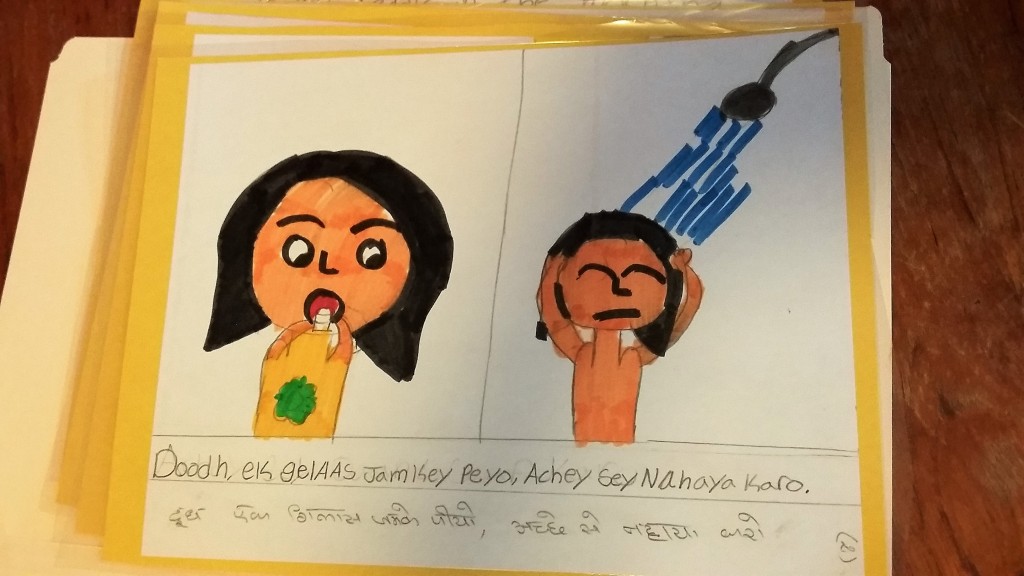
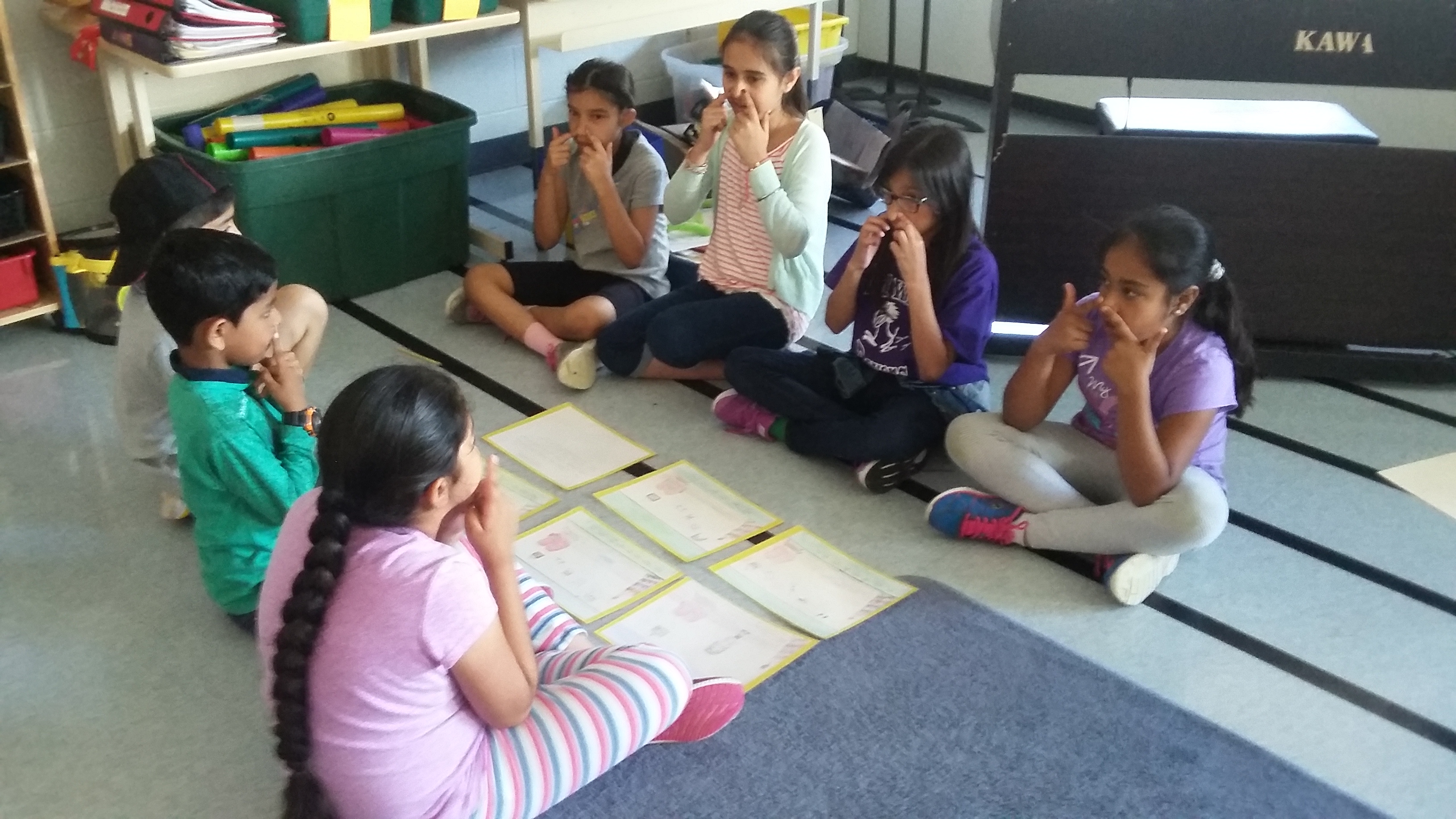
Lyrics better!

I didn’t until one month ago, when my students began a project I created about celebrating songs in other languages. This project came out of a desire to change one part of my music program. The most important part of any arts program is student creations. In my class students create songs, ostinatos, percussion compositions, raps etc… You name it, my students have probably created it. However, I felt that the part of the music curriculum that focuses on exploring forms and cultural contexts could be improved. I felt like the music that I was bringing in was authentic and reflective of my student population but the problem was, it was always initiated by ME. So I decided to try something new and it has been the most amazing project.

I am very fortunate to work in a very diverse school where many of my students are bilingual or multilingual. In previous years, as many songs as we learned from different communities and cultures, I didn’t feel as if I was really helping my students increase their multilinguistic skills or supporting them through their cultural identity journey. In the past, I felt that my students learned a lot about cultural music through units I created, but I wanted something deeper this time.

The idea for this project was inspired by a project called “Dual Language Identity Project” http://www.multiliteracies.ca/index.php/folio/viewProject/8. In this project, students were encouraged to write stories in their first language to support their acquisition of English Language Skills. I really liked how the students had ownership and pride in their linguistic skills in their first language. The inability to write proficiently in English was not placed as an obstacle for their expression.

My students differed from the students in the “Dual Language Identity Project” because they have a lot of proficiency in English. Most of my students were born in Canada and spoke another language at home until they came to school, but are now fairly fluent in English. However, I recognized the pride that came from the “Dual Language Project” and I wanted to emulate that. Being a music teacher, I decided that we would complete a project with songs. Students chose a children’s song from their first language and created a lyrics book so that our younger students could learn the songs. For many of our younger students who do not read or write in their first language, it also gave them exposure to text in Punjabi, Singhalese, Urdu, Guajarati, etc.

In addition to completing the project to increase student’s engagement with their own personal cultural music, I had some other goals with the project:

a)     To increase the exposure to languages that were unfamiliar to them. The project helped students become accustomed to hearing and interacting with people who speak different languages and have different cultural backgrounds. At the beginning of the project, with 6 or 7 different songs being played at the same time in the classroom, students would look up and sometimes react to the sounds of other languages. However, a couple of weeks into the project, students started asking questions about the songs instead of reacting negatively.

b)    To increase students’ pride in their cultural identity. At first, students were very shy to share their cultural heritage. Four weeks in, however, I have heard about students’ family trees and the multitude of different languages that are spoken in my students homes every day, and many, many other stories. I believe that holding onto first languages and culture has positive impacts on the social and emotional well-being of students.

c)     Studying the linguistic structures of one language really helps the growth of language acquisition skills in all languages.

d)    I have been looking for ways to include my incredible multicultural families into our music program and this was a perfect way.

To complete the project, students were primarily placed in groups based on their first language. If they were multilingual, they were allowed to pick which language they wanted to join. If they spoke no other language, they were allowed to choose which language they were interested in learning.  Today, my student who does not speak another language performed quite a lengthy song in Guajarati!

Some students worked alone by choice, others worked in groups of approximately 4 or 5. The students were given an IPad to use as a reference tool if they needed it.

In the first period, the students spent most of the time listening to different songs they might be interested in using. Some students found it difficult to find songs online so they asked their families that night at home for ideas.
20170614_133730

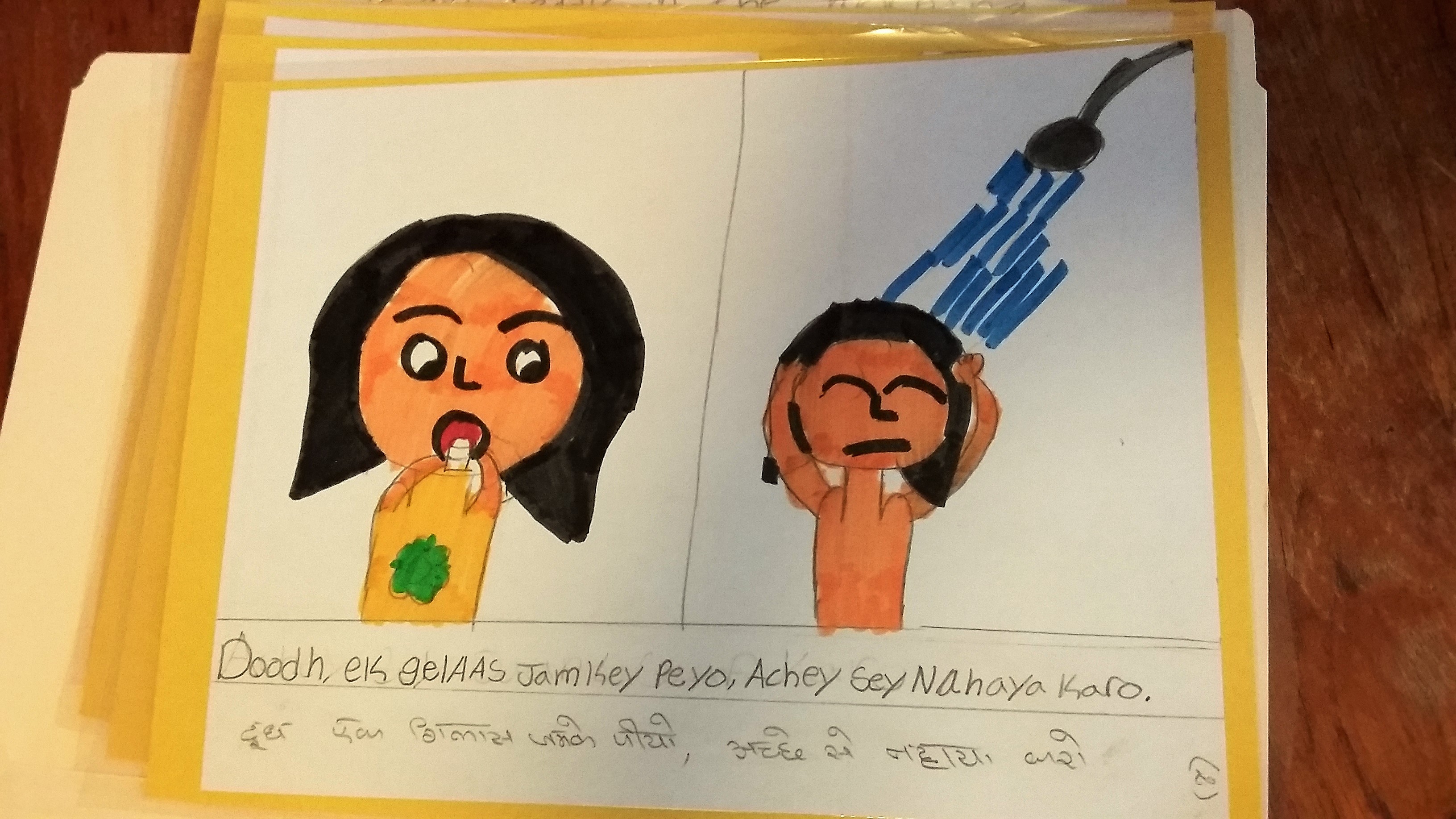
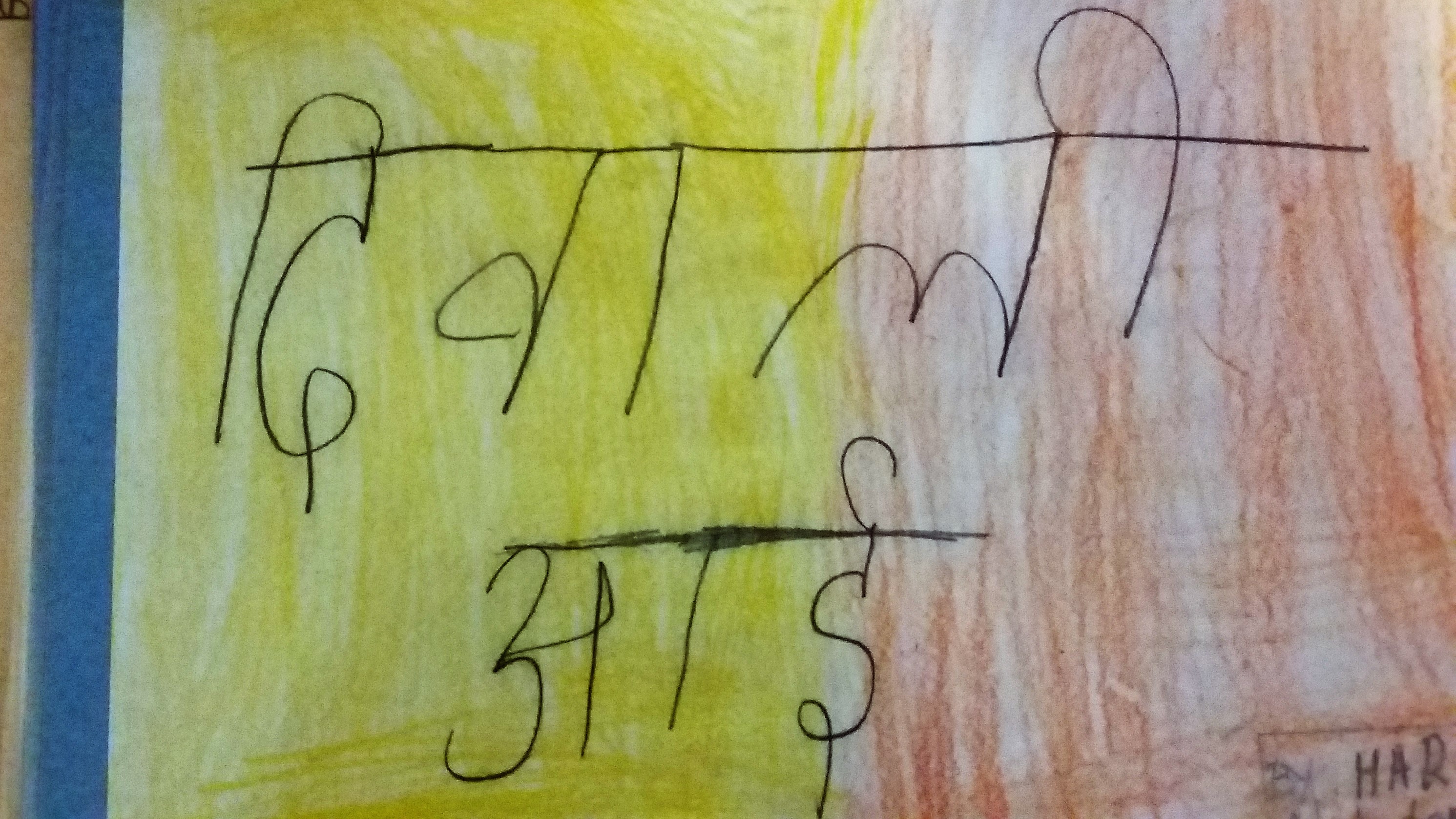
Their next job was to work together to create the books. The students wrote one lyric per page and drew a picture that corresponded with them. They were also responsible for including an English translation at the back of the book and a title page at the front. All of the books were between 6-12 pages.
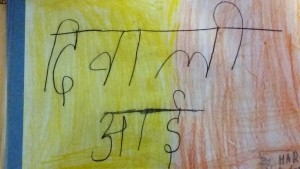
Title better!

The books turned out amazing and I can really see the desire each group had to create a polished product.

Teaching the younger students has been really fantastic as well. It is so special to see a grade four student connecting with a grade one student who both share the same language.
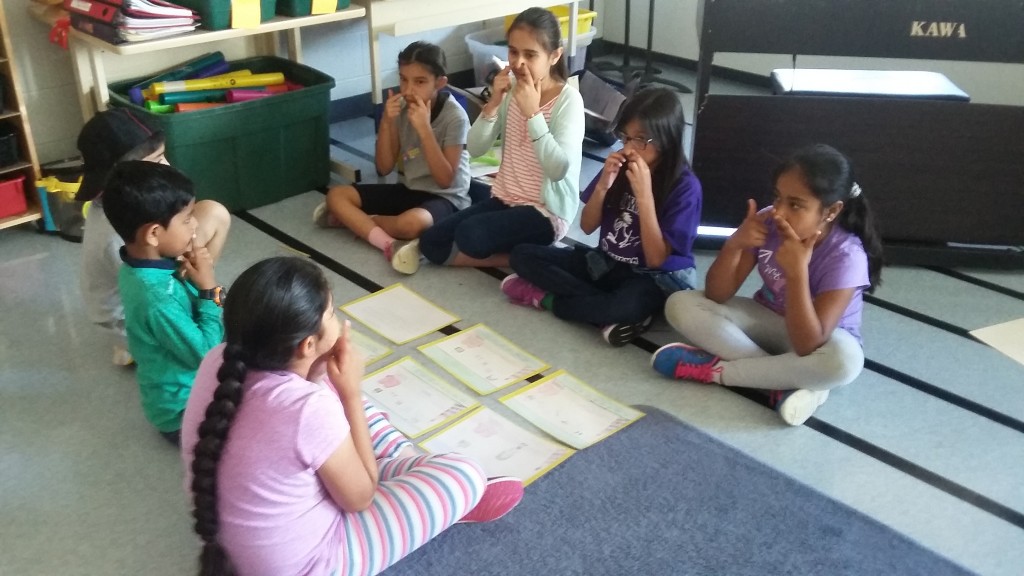
20170621_135116

In addition to watching the most amazing interactions between students, I had one student who did not speak Japanese but was really interested in learning a Japanese song so I told her go right ahead. Wow! She learned that song in no time. She was even teaching a rather reluctant student in my class to sing it (and he HATES singing). I felt like this project was a miracle worker.

I watched students of Trinidadian background learn songs in Urdu and students who are sometimes rather shy in my class absolutely shine as they shared their deep knowledge of their language and culture. Artistic students helped consult on picture and colour choices

Everyone had something to bring.

Everyone was allowed to choose their direction and course.

Were there mistakes in their multilingual writing? Yes, there were. For those of you who are proficient in Punjabi, my students literally sounded out the word foot and wrote it in Punjabi instead of writing paair. However, I could hear students discussing and trying to figure out how to write certain words, helping them to grow in their first language. Some rarely get this opportunity. I also listened to a 10 minute conversation between two students who speak Tamil about the translation to English. They were working with the song “Nela Nela Odiva” and the direct translation was about the ‘moon running’. They talked it out for a quite a while and decided that the ‘Moon was moving quickly’ made more sense.

I learned a lot about my students, their interests and their cultures through this project. I learned that some of my students work hard on their Saturday morning to learn how to write in Hindi, Singhalese, Punjabi, Tamil and so many other languages. I learned that Guyanese kid songs are incredibly difficult to find on the internet (that might be my next project).

Music is about connecting with who we are as expressions of ourselves and I feel this project helped me to get to know my students more deeply. It was also a powerful way of learning and working with cultural music.
Mud Lake in June

Now that the weather is nice, and the water has receded from the spring flood, we have been able to take groups of 5 kindergarten students to the forest behind our school every day for about an hour. It’s a wonderful way to start the day, especially when the temperature is hovering around 24 degrees Celsius.

I told the Dragonfly group it was their turn today. They checked that they had proper footwear (usually rubber boots, but if it’s dry, we make sure they have running shoes rather than sandals at this time of year, because there is poison ivy along the trails). After a quick visit to the bathroom, they were ready to leave. As we left the school yard, I let them run across the field behind the school and wait for me up ahead at the soccer goal posts. That way, they got some energy used up so that they wouldn’t feel like bolting along the trails in the forest.

Before we entered the gate to the forest from the bike path, I got them to prepare themselves as Nature Detectives, making sure their eyes, ears and noses were switched on. (I like the way a colleague of mine tells her students to use their ‘Rabbit Ears” and “Deer Eyes” when they are outdoors observing). Touching and tasting are not permitted in the forest, which is a nationally protected bird sanctuary, although not picking up sticks is really hard for some students. Generally, if it doesn’t change the landscape, a twig or leaf occasionally may get moved from one place to the other by some students but they know to leave empty handed, because we are “observers not disturbers” in the forest.

Due to the prevalence of the poison ivy, plant identification is really important so that the students are aware but not afraid to venture into the forest. “Leaves of three – let them be” is the helpful rhyme which many have used to stay clear of the nasty effects this noxious weed can produce (not a sting, more like a blistering burn which can last days and be serious enough to require hospitalization for those who are particularly sensitive to the toxic oil). Once informed however, students can make better choices about how they access a forested or natural environment, rather than simply avoiding it. So lately, my groups have been learning about different 3-leaved plants which are commonly found along trails – poison ivy, wild strawberry and purple clover. This is what our kindergarten students noticed;

Poison Ivy

Toxicodendron radicans

poison ivy

Wild Strawberry

Fragaria vesca

 wild strawberry

Purple Clover

(also called Red Clover)

Trifolium pratense

purple clover

Leaves

  • 3 leaves
  • shiny
  • pointy
  • 3 leaves
  • ‘teeth’ around each leaf
  • pointy
  • 3 leaves
  • white smudge in middle of leaf
  • rounded, not pointy

Height

  • low to the ground at the side of a trail
  • NOT a bush or a tree
  • same
  • same
 

Flowers


  • Bunches of tiny white flowers (too many to count)

How to Identify Poison Ivy

  • A few white flowers (you can count them, i.e., not too many on a plant blooming at the same time)
  • Single purple flower “like a ball” rising above the plant


Can you touch it?

NO!

YES

YES

Role

  • Food for birds and animals but NOT people
  • Food for people, birds and animals
  • Can eat the fruit
  • Food for people and animals
  • Can make tea with the leaves and flowers

As we walked along, someone would point to a plant and ask, “Is this poison ivy?”, and other students would reply, “No. It’s too tall,” “There are too many leaves,” or, “Yep. The leaves are shiny.” Now, apart from helping them to respect the ‘do not touch’ rule, students have started to look for different characteristics on plants, understanding that the forest is more than just a mess of green, and that each plant has a name and a special role to play.


THANK YOU!

It has been a long, arduous journey from September to the end of June and we are just weeks away from closing the chapter on another academic year. I am going to relive the last ten months of a fictional elementary school teacher.

A group of twenty plus disconnected, diverse individuals arrived in your classroom with a variety of needs beyond their academic status. Through careful planning, creative thinking, endless commitment and tremendous flexibility you were able to to:

  • make each child feel welcomed and loved
  • create a learning community
  • develop the confidence and self-esteem of your students
  • help them move forward in all academic areas
  • taught them the power of being a team
  • provided off campus, intramural, choir, club and athletic opportunities for them
  • offered them a high five to celebrate and emotional support when needed
  • in some cases provided food to meet their basic needs
  • laughed and cried with them
  • believed in them enough to provide tough love
  • wrote reports, called parents, attended meetings
  • organized assemblies and spirit days
  • created Individual Educational Programs
  • purchased necessary materials for your class and students
  • spent endless hours beyond your school day
  • gave up personal and family time for your students
  • helped develop future global citizens
  • attended a variety of professional learning opportunities to help in your journey toward best practice
  • you have sacrificed personal health for your class and school
  • please continue this list with anything I have missed

THANK YOU! THANK YOU! THANK YOU! On behalf of students and parents everywhere, you continue to be a part of one of the most rewarding and important roles there is. You are a teacher!

I would also like to take this time to thank ETFO for the opportunity they have given me to be a part of the Heart & Art blog for the last 5 years. In that time I have had the wonderful opportunity to learn from many talented people. I have had comments shared with me that reminded me how proud I am to be a part of this profession. Finally, I have become a better teacher as my blogging has helped me reflect on the day-to-day work in my classroom. I am making this my last blog and challenge the many talented and inspiring teachers in ETFO to join in and share the expertise that lies within you and your teaching. THANK YOU!

Partnerships

This past week allowed me an amazing opportunity to work with a very committed and compassionate group of Early Childhood Educators. They are part of ETFO and as such are able to partake in a variety of services that are offered including workshops. The topic of this session was on poverty (Why Poverty? is the official name for the provincial workshop). So on a Monday evening in the month of June, twenty ECE staff showed up after a full day of work to talk and discuss the topic of poverty.

At first I was quite nervous, as I had never facilitated a workshop for anyone but teachers. Over the two hours that we worked together the titles faded away and we just became a group of like-minded people who were seeking ways to help level the playing field for the children in our care.

Then it happened, that aha moment where the idea of partners and partnerships became very real for me. So on my drive home from Hamilton I began to ask myself where else could I find partnerships? Who could also partner with me to enhance the educational experience of my students? The answer was astonishingly simple. I need to look no further then the staff room in my school. I just needed to look with a different lens in order to see the amazing wealth of talent that exists within each school (Child and Youth Workers, Educational Assistants, Early Childhood Educators, volunteers).

Yes, right before my eyes existed a wealth of ideas, passions, skill sets and people who chose a career that focussed on helping young people be successful. The task is to work on bringing them all together, to create an environment that values each person, their profession and not their title. This approach is alive and well in our Kindergarten programs. How do we transfer that to our entire school? How do we bring support staff and teachers together in workshops to learn side-by-side?

I highly encourage the readers to please share their ideas or current practices on how to best create, maintain and foster growth in these types of partnerships. In closing, I would like to thank the Early Childhood Educators from Hamilton who helped me experience the power of a partnership.