Suggestions for Making Your Classroom ELL Friendly

This year I have the opportunity to serve my school as an English as Second Language (ESL) teacher for the first time. This privilege allows me to support students in Primary, Junior and Intermediate grades as they navigate the landscape of school and English language acquisition. But to be honest, I have alway been an ESL teacher. Since my very first year of teaching, my classes have always had students for whom English was not their first language. In this way, we are all ESL teachers regardless of if we have the designation or not. Similarly, if we take the notion of learning English literally, all of our students are English Language learners because they are constantly being introduced to new vocabulary and are learning the nuances of academic language for oral communication, reading and writing. In Ontario, however, the term English Language Learner or ELL, is defined as a student “born in Canada or newcomers whose first language is other than English or is a variety of English significantly different from that used for instruction in Ontario schools” (Many Roots, p. 51). Knowing this, how might classroom teachers tweak their practice to make their classrooms ELL friendly? I offer 4 easy teacher practices that will support ELLs in any classroom.

1. Keep expectations developmentally appropriate.
The ways we view our students determines the kind of learning we invite them to. This sentiment is particularly important to understand when designing programs that address the learning needs of students for whom English is a new language. Learning a new language, by any account, is a task of both perseverance and determination. As such, we need to be mindful that our English language learners have a multitasked learning situation. Focusing on the skills they bring from their native language as opposed to the limitations they have as they acquire English nurtures an asset based approach to engaging students as capable learners. When we embrace this mindset towards teaching English language learners, we can maintain high expectations for all students. Valuing the prior learning of all students, including ELLs in imperative in building upward to new understandings. Inviting students to share what they already know about a topic is always a great starting point for learning. Students who are English language learners have prior knowledge and this knowledge may or may not exist in their native Language. Regardless, valuing students’ prior knowledge solidifies the difference between cognition and language acquisition as two separate and distinct processes. For the most part, English language learners are developmentally ready for the learning that their peers are engaged in – they simply need to acquire the English skills to make the thinking that is already taking place in their minds visible in English.

2. Value students’ first language.
Nurturing an inclusive classroom community lets students know that they are both valued and respected as learners. Inviting students to continue to use and develop their native language is another way not only to accommodate ELLs but also to keep the learning expectations high. When students are able to use their native language to demonstrate their understanding and thinking in tasks that invite cognitive demand, the transition to English does not lower the expectation but rather accommodate the student’s opportunity for engaging deeply with ideas. The English language is further acquired when students translate their thoughts into English rather than the other way around. Valuing students’ first language can also be demonstrated by creating dual language or multilingual learning resources. With the partnership of students who are also native speakers of additional languages, parent volunteers, colleges and community partnerships, teachers can prepare translated learning resources for all students to use.

IMG_4429

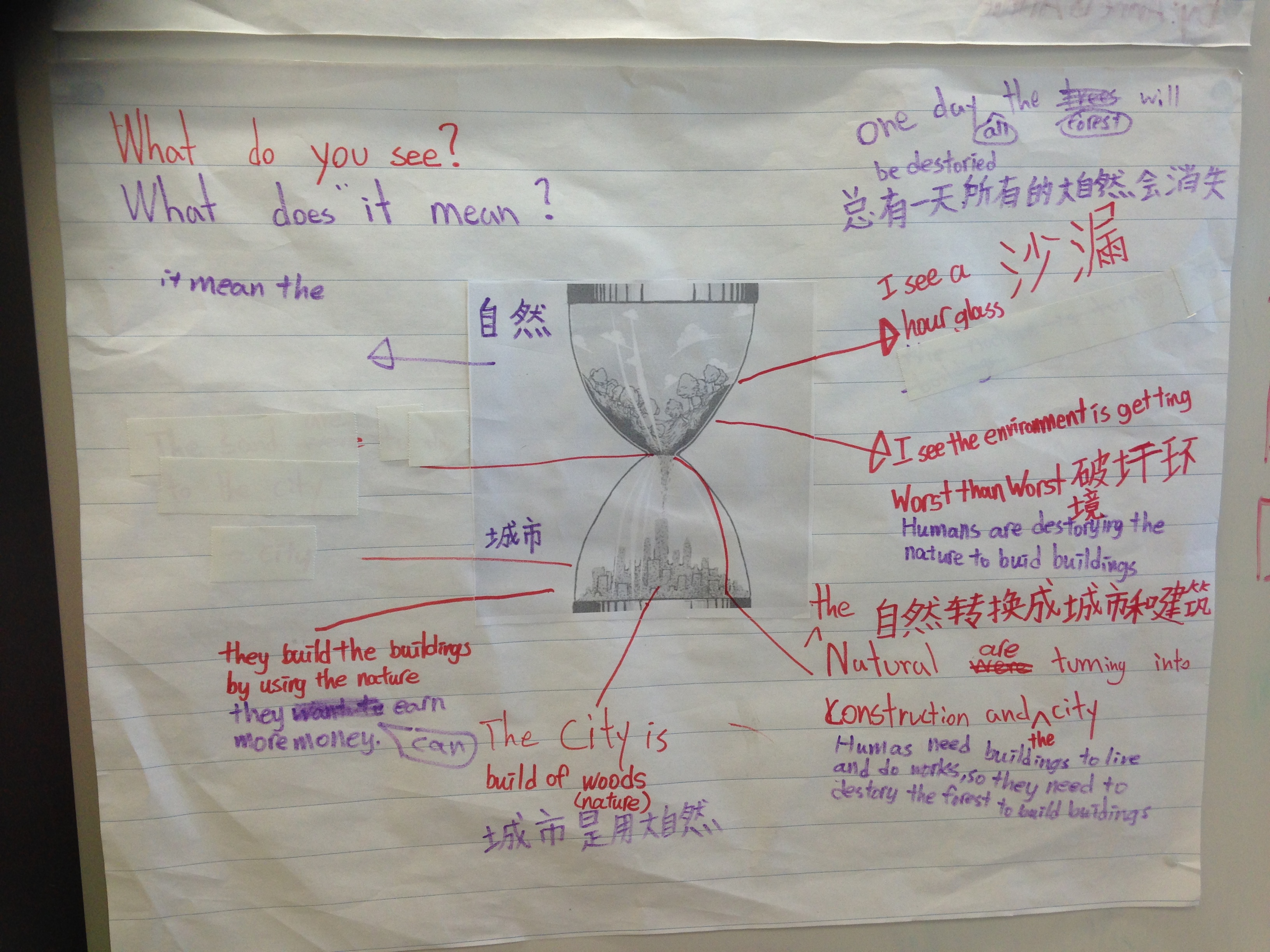
Students are invited to participate in collaborative learning experiences by expressing their  ideas using their first language

    
Screenshot 2015-11-23 at 8.25.43 AM

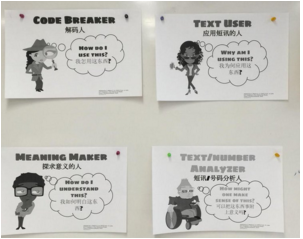
Dual Language posters translated in traditional Chinese to support English Language learners in my class.

3. Develop new vocabulary in context with the help of online resources.
When students are invited to continue to use and development their fluency of their native languages, teachers can employ many new technologies that can support English acquisition while yet maintaining native language fluency. Using tools such as Google Translate can serve as a bridge between a student’s first language and English. Similarly, introducing new vocabulary in context makes both social academic learning more meaningful in English. An idea or word may not be unfamiliar to a student learning English in that they may already have an understanding of the concept in their native language. When this happens, using tools such as Google Images and YouTube can serve as a bridge to comprehension of and acquiring English words. Word walls are also useful resources for students in all grade levels and for all subject areas. It is a tool to support students as they acquire new vocabulary in the context of their learning. In this way, all students can be viewed as English language learners as they engage in expanding their academic vocabulary. The inclusion of students’ native language on word walls is a simple accommodation that goes a long way to supporting student learning. The gesture speaks to the value for the student’s native language and a respect for the process of learning English. Native English speakers can also benefit from the dual language approach in that they can be exposed to the languages of the world and additional ways of knowing.

Screenshot 2015-11-23 at 8.25.28 AM

I asked my students to add Chinese translations to our Math word wall. This highlighted the relationships between numbers, as the ideas of addition and multiplication are embedded in the ways Chinese numerals are written.

Screenshot 2015-11-23 at 8.25.16 AM

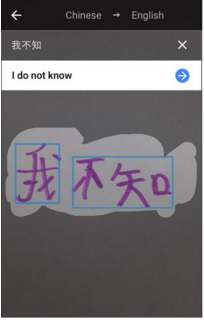
This is a screenshot of what a Grade 2 student, a stage 1 ELL, wrote as she was communicating an idea with me. I used Google Translate to take a picture of her writing and was able to translate and further communicate with her.

4. Embrace inclusive practices when communicating with parents.
When a student is an English language learner, it is important to also be aware of their parent or guardian’s experience with English as well. Whenever possible, supporting parents in the journey of their child’s language acquisition should be considered. Using resources mentioned above in addition to school-board translators and parent volunteers when communicating with parents is also crucial when English is also being acquired by parents. Ensuring that partnerships between students, teachers and parents is essential for the success of all children. We should be mindful to support parents who are English language learners in the context of the kind of communication that goes home, the necessary accommodations in place for parent-teacher meetings and the information needed for navigating the Ontario school system are essential in order to leverage the playing field for success.

Screenshot 2015-11-23 at 9.04.48 AM

The first page of a presentation to the parents of my students during Curriculum Night.

Screenshot 2015-11-23 at 9.06.12 AM

An assessment report sent home as communication to parents about student achievement.

Teachers in Ontario school are all ESL teachers and our students all, English language learners. Designing classroom spaces and learning opportunities with the principles of universal design will support English language learners but also enhance the learning experience of native English speakers. Keeping learning expectations high for all students, valuing students native languages and inviting parents as partners are essential ingredients to providing an enriched learning experience for English language learners. For more information check out the ministry document Many Roots Many Voices:Supporting English Language Learners in Every Classroom A Practical Guide for Ontario Educators https://www.edu.gov.on.ca/eng/document/manyroots/manyroots.pdf.

Occasional Teachers As Partners

In my classroom an Occasional Teacher is referred to as a Guest Teacher for many reasons. The most important being that the person who arrives that day is first and foremost a teacher. That individual is a qualified teacher who is there to help students continue on their daily academic journey. They are not there to keep students busy nor are they there to just supervise for the day.

It is very important that in my plans I both value and allow that incoming expertise to be shared with my students. Of course I have developed plans that will be a continuation of what is going on in my classroom but have left instructions that are open ended and allow the guest teacher to be able to adjust them based on the needs of the students they are working with as well as the expertise and experience they bring into our classroom. In that way, my students are able to enjoy and share the uniqueness of each teacher they work with.

My experience has taught me that one of the worst things I can do is to set up the guest teacher for failure or classroom management problems by assigning work that is not relevant or connected to the day-to-day academics that are occurring in that room. My students need to know that each and every task they are working on is important to their overall growth and academic success.

I truly enjoy the day after a Guest Teacher has been in my room and the students remember their name, tell me something personal they learned about that individual and are eager to share the work they completed. That type of response provides very valuable feedback about how well my students are transferring the classroom agreement to all individuals they come into contact with.

 I want to tell Occasional Teachers how important your role is and how much I appreciate the time and effort you put into my students. Thank you for everything you do as partners to contract teachers.

Is Beethoven in heaven?

Every day in our classrooms, we are asked a million questions. Where do I write my name? How long does this have to be? Where do I sit? Most are easily answered quickly. However, every once in a while a question is asked that can be incredibly difficult to answer. This kind of question came up in my class yesterday. We have been learning about Beethoven in my grade three classes and during O Canada one of my students was staring at my poster of Beethoven on the wall. Once O Canada was over, his hand shot up and immediately he asked “ Is Beethoven in heaven?” The whole class sat in silence waiting for a response.

I took a minute to decide how to respond. My classroom is very diverse with many different cultures and religions being represented. I didn’t want to say an immediate yes and exclude those in my class that didn’t believe in heaven. I also didn’t want to dismiss the idea of heaven to those who hold it as a belief. There seemed to be no right answer to this question. So I decided the only way to handle this question was to acknowledge and respect the different beliefs that are represented in my student population.

I explained to the class that different cultures and religions have different beliefs about what happens to us after we pass away. Some religions believe there is a heaven while others believe in reincarnation. I also explained that some cultures or religions do not believe in an afterlife at all. We further discussed how our familial, religious and cultural beliefs make us all special.

We then had an amazing discussion about the music that represents our culture and religion. The students taught me all about the songs and instruments played in their Gurdwara and others told me about singing in the choir at church. I am really glad I took the time to answer the difficult question as the sharing that followed was so important to creating our community as a class.

As the class went on, I began to wonder why the initial question popped into my student’s head. I wondered if someone in his life has passed away recently. I quietly asked him the question after the students were busy working on their assignment. He told me that he just wanted to know.

I am very glad that he asked.

Photo of Tammy Axt

The Sound of the Recorder

This week in my class, my grade four students had their first lesson on the recorder. I know what you are thinking….musical bliss fills the room and everyone is transported to an elevated level of happiness. Unfortunately, day one of the recorder doesn’t quite bring up those feelings. As the students are still learning breath control and finger placement, day one sounds closer to possibly the worst sound that can be produced by 25 children simultaneously. Since I have been teaching recorder for a couple of years now, the day one sound no longer phases me and I know that after a couple of lessons the recorder will sound more like music and less like noise. However, this week I had an unusual experience on day one of the recorder with one of my grade four classes.

On Thursday afternoon, my last class was preparing for the very exciting first blow into the recorder. I reminded them about not blowing too hard, putting your left hand on top, covering the holes and away we went. One of my students, who is hearing impaired, quickly took the recorder out of his mouth and made a very pained facial expression. I went immediately to him and asked what was wrong. He told me that the noise was too loud. We spoke for a few minutes and we decided that he would move his chair across the classroom and try the lesson from there. We played for another 10 minutes or so and I checked in with him again. He told me that he was getting a headache from the noise so we put our recorders away for the day and switched over to playing a game about the staff.

After the class, I immediately spoke with the classroom teacher and asked for the contact information of the consultant who is familiar with this student’s case. We had a meeting the next day where we both brought up concerns around damaging the child’s hearing further and the ability to limit the noise but still continue to hear the teacher. During the meeting we came up with a few strategies that I could use to minimize the impact of the sound. I also had a meeting with my vice principal to ensure that he was allowed to go into the hall to work with a partner if he needs break from the sound (which is not common practice at my school).

Tomorrow, I will bring all of the strategies to my student to be discussed further. It is important that he have input into his learning and that he not feel like he is being excluded from the classroom. I will ensure that he has a lot of choice and that we can change things at any time if it is not working for him.

Finally, later this week, I will be calling home to discuss the plan of action and to inform the family of his reaction to the recorder which may be important in their next meeting with their audiologist.

Yikes! I’m Teaching A “Split” Grade Class

Meet Linda. The start of the school year has come and gone and she has finally been successful at landing her first Long Term Occasional teaching assignment in October. It’s an FDK/Grade 1 class, and given the dynamics of the FDK program, she struggles to even make sense of what that might actually look like.

Meet Lester. After finally feeling settled with his Grade 5 class, he learns that as a result of a school wide reorganization, his neatly packaged single-grade class has now become a “split-grade” class.

Do either of these situations sound familiar? Do these narratives hold true for your current experience? Before you pull out your hair or scream, here are some practical strategies that will help you navigate this new experience. Consider the following 3Cs, Context, Community and Curriculum, for teaching in a multigrade classroom.

Context: Although a multigrade classroom is not the ideal setting for an optimum teaching and learning experience, it is worth re-imagining the situation as a combined class rather than a “split grade.” The idea of a “split” gives the impression of a type of separateness that does not accurately describe the context of learning in a class of students who generally are within the same developmental stages. The great news is that combined grade class have of two consecutive grades in one class as opposed to grades that are years apart. In this way, a combined grade class maintains a similar diversity of students, range of learning styles, social skills and academic needs as in a single grade classroom.

Community: Rethinking the notion of a “split” grade can do wonders for the type of classroom environment you nurture. As in any class dynamic, students learn best in an environment that is inclusive and fosters a of sense community and belonging. As such, the ways in which the class environment is setup should work to unite students rather than separate them based on grade. Students should have opportunities to work in flexible groupings using a range of collaborative learning structures as often as possible to invite positive peer interactions through both collaborative and independent learning situations. A combined grades should never be thought of as housing two classes in one room. Rather, students should know that they are one class engaging in similar learning opportunities. Students should be taught how to navigate their unique learning situation by explicitly teaching the importance of cooperation, and how to engage in learning that takes on a variety of groupings; such as whole class, small group, partners or even independent learning. Inviting leadership opportunities and encourage students to view their peers as resources will help to establish a community based on cooperative interdependence.

Curriculum: The idea of covering a combination of two curricula is one of the primary concerns for teachers who have been assigned combined grades. In Ontario, thankfully, many of the content areas align in ways that make tackling both grades more manageable. These content areas include Mathematics, Language, Health and Physical Education and The Arts. In these curricular areas, differentiating instruction is an essential tool for ensuring that the overall expectations of each grade is addressed and assessed. Differentiating content, process and product will allow for a seamless flow between the different grade expectations. At the same time, using the gradual release of responsibility will set the tone for independence that is often essential in a combined grade classroom. For content areas that are less similar such as Social Studies and Science, teaching through an inquiry framework allows teachers to focus on essential skills and invite students to apply those skills in different contexts. By focusing whole-class instruction on big ideas, thinking processes and strategies, teachers are able to engage students in parallel learning experiences while differentiating content.

Teaching a combined grade is never easy. But with the heart for learning and the art of teaching with finesse, even the least of ideal situations can be one that is done successfully.

For more information about teaching in a combined grade class, check out the resource Learning Together: A Teacher’s Guide to Combined Grades at Shop ETFO.

The Power Of A Story

Story is a magical tool that can bring to your students exactly what they need or want at any time in your day, week, month or year. When my students need to laugh I find a story that brings us to belly laughing. When my students need to understand empathy, a story helps them look beyond their own needs to the needs of others. When my students need to learn a lifelong lesson, I find a story where we learn from the positive or negative choices of the characters. Story, whether it is bound with a beautiful cover or comes from the mouth of an 8 year old captivates all of us.

I want to share with you how a young, heroic young girl named Maya has helped change my students and I. Several years ago I met Maya as she entered our school in Grade 1. Maya has had to deal with the effects of a brain tumour all of her life. She has encountered the ill effects of chemotherapy and made hundreds of hospital visits that each time involved some kind of painful treatment. She has lost some mobility, has limited vision and struggles with learning new concepts. Yet despite all of those barriers to living a regular life she is this magical, bundle of positive energy that lights up a room. When you are around Maya you can’t help but smile and enjoy life.

I teach some very challenging students who have learned how to use aggression and violence as a way to deal with the struggles they face. Our first unit in our class this year was looking at heroes, both fictional superheroes and nonfictional everyday heroes. We established some criteria as to what makes a hero and have been examining a variety of characters and real people to determine if they will make it to our hero board. I told my class that they were going to be able to meet one of my heroes. They were all excited and made multiple predictions as to who that hero might be and what made them a hero to me. So on one quiet Thursday morning the call from the office came that our guests had arrived. I went down with our class receptionist and welcomed them. As you would expect, the excitement was at a peak as to who would walk through our classroom door. As Maya carefully and slowly made her way in to our circle area there was an absolute look of shock. How could this young girl be Mr. B’s heroine?

Over the next hour, Maya with the help of her Mom shared her story. The group was captivated as they went through a spectrum of emotions listening to the courageous story of Maya. Despite my knowing and hearing this story many times, the students noticed the tears in my eyes. By the time Maya was ready to leave, the boys had embraced her and made her an official part of our classroom.

Needless to say, the letter writing we did that afternoon was some of the most powerful I had experienced with this group of students.There are so many stories out there that can and need to be shared to help all of us become better people.


On Being the “Best Teacher Ever”

Many times my students write me notes or draw pictures that I often post on my wall  saying that I was their “Best Teacher Ever!” Although flattering as it may sound, some students are at a loss for words to describe the ways in which they feel valued in my class and this sentiment, “best teacher ever” may be the most articulate way to describe their content. But might we delve deeper into what students are thinking and help them to articulate precisely what it means to be their best teacher ever?

When I speak about being the “Best Teacher Ever”  what I am really getting at are those specific things that we can do as educators that allow children to feel safe in an environment where they can learn and grow. As teachers, we can ask students to describe how our role might best support them in their learning.

Each year I invite my students to share with me the specific things they need me to do in order to support their learning. Although many are tempted to suggest unrealistic and simply untenable demands, once the sillies are out, students can and will articulate precisely what they feel would support them as a learner. After all, they are experts on themselves.

Best Teacher Ever

Pictured is the posted success criteria that I worked towards achieving every day in order to serve my students. This was developed by my Grade 5/6 combined class at the beginning of the school year. I asked my students what they needed in order to be a successful student in my class. They articulated that I could best serve them by honouring their need for movement and providing opportunities to collaborate in groups while at the same time valuing independent work experiences. Students articulated the need for music that would help them focus and to have access to technology that would complement their learning. Most importantly, students articulated that they didn’t want me to take life too seriously and noted that telling jokes was an integral part of their experience.

Throughout the year when the “Best Teacher Ever” sentiments came along, students were able to describe was working. “Ms. Nelson, It really helped when you used the examples.” “Ms. Nelson we really need that power-walk during this long work period.” “Ms. Nelson singing that song about similes and metaphors really helped me understand the difference.” When students said, “Ms. Nelson you are the best teacher ever!” I know what they meant. I knew the standard to which they were holding me accountable. I knew because I asked.

What Elizabeth Taught Me About Spec Ed

(This is a story about a student I had several years ago. Her name wasn’t actually Elizabeth. Teaching her taught me a lot about Spec Ed – how to tackle problems in steps, how to work with students to find what works for them individually, and above all else, how incredible it feels to know you really helped someone learn how to be successful.)

I heard about Elizabeth before my job even started. She was one of those students. If you haven’t had one yet, you will: the kids whose reputations precede them. The “hard” kids.

Let’s backtrack, shall we?

Fresh out of my teacher education program, I had just accepted a position teaching a full-day kindergarten program at a private child care centre. At that time, the OT lists for my board (OCDSB) weren’t open, so in order to pay the bills and get some money for AQs in the hopes of one day getting into the board, I took this job.

Because this was a child care centre, my class was small: 10 students total, with 2 more transitioning in partway through the year. This was starting to seem like a pretty easy assignment… until we got to Elizabeth.

“Oh, she’s going to give you a run for your money.”

“She’s vicious.”

“Good luck with her, she’s a nasty one.”

Those were all things people actually said to me about this child. A five year old. I have something of a stubborn streak in me, so right then and there I decided I was going to make it my goal to change Elizabeth’s experience at school.

Elizabeth was a bright, articulate girl who loved story time more than anything, needed you to know her opinion on something, and readily shared facts about things like the moon because she was always reading books and learning new things. She loved art, and she really loved success.

In the classroom, however, Elizabeth seemed to act out. It didn’t take long for me to see what other teachers had warned me about: she hit, she threw things, she had a hard time working with her peers, she couldn’t sit through circle without making at least one other student miserable, and she would have meltdowns during seatwork time.

Other teachers had tried positive and negative reinforcement strategies with her, their success limited. Her parents seemed defeated and were obviously reticent to even ask how her day had gone when they picked her up at the end of the day. I couldn’t figure this kid out: she really enjoyed learning, she really enjoyed arriving at school every day, and she loved her peers, so where was her behaviour coming from?

So I asked her. No one had ever asked her why she did these things. After a particularly trying circle time, I took her aside and calmly asked her why she had trouble sitting through circle time without rolling on the floor, taking out books from the shelves, or touching everyone and everything around her.

And at the tender age of five, she said, “Sitting still hurts.” Her tone was serious. She was distressed. “When I sit still for too long it hurts so I move around, but then I hit people and they get mad.”

It was clear that she felt compelled to move, and that asking her to stop moving was having a detrimental effect on her ability to engage with the class. Together, we discussed some strategies to help her through circle time. As a starting point, we tried fidget toys; she was partial to two bits of LEGO which had been put together with a hinge, so she could move the pieces back and forth while she sat and listened. Most of the time, just having that small toy was enough to keep her physical body occupied while she focused mentally on circle time. Some days she needed more than that, and in those times, we had an arrangement where she could get up and walk around the classroom as long as she didn’t play with anything and was still participating.

So that’s what she did. I sat with the rest of the class, going through our daily calendar work, reading stories, singing songs… and she did everything we did, she was just walking around while she did it. When she had something to contribute, she came to the edge of the carpet and raised her hand just like her peers. She waited to be called on. And when she felt she needed to get up and move again, she would show me a peace sign with her hand, I would nod, and off she would go.

These two small strategies completely changed her experience at circle time. After a month of success, we decided together that we would start tackling seat work next. It turned out that seat work was just as simple to “fix”: she just needed breaks where she could get up and move. She would work on her printing/reading for five minutes, go to a centre for a few minutes, come back to her seat work for another five minutes, go back to centres, etc. Some days she was able to get her seat work done all in one shot, other days she needed to break it up repeatedly, but she always finished it. I used a small timer (which I taught her how to operate) so that she could manage this herself.

There were other things I did to help, of course; I tracked her behaviour relentlessly to see what was and wasn’t working, I tried other strategies like an exercise ball to sit on, I worked with her parents to maintain consistent language and discipline between school and home. But the circle time and seat work strategies were really the key.

As Elizabeth’s behaviour in class improved, her relationships with her peers also improved dramatically. Because she wasn’t upsetting them at circle time any more, they were more keen to play with her and call her to join them at centres. Their forgiveness of her past behaviour was total and almost immediate. Even though they had known her for years and had nearly all been hit, pushed, bit, or yelled at by her, they were willing to set that aside and give her another chance.

By our 100th Day Celebration, I wasn’t tracking her behaviour any more because there wasn’t any need. By the end of the school year, all of our strategies were so second nature that I wasn’t even aware of them any more.

I saw her once a few years later when I was working as a daily OT at her elementary school. I said hello, we shared a smile, and off she went with her friends. She seemed to be doing well!

So, what’s the point of all this? I mean, it’s a nice story, sure, and we probably all have a student or ten like this…

1) Identification isn’t everything. Because this was the private system, I didn’t have any specialists to call on and I couldn’t refer her for any assessments to determine whether or not she had an official diagnosis. I could have suggested that her parents get her tested privately, but I was too new to feel that it was my place to make any comments like that. The thing is, even without being “identified” as Spec Ed, I was able to implement several accommodations which ended up helping her immensely. I didn’t need a legal document telling me that she needed to break work into chunks; I just went for it.

Now, as a public school teacher, I do the same thing: from the first day, I put strategies into place based on my students’ needs, even if they don’t have an IEP. If I think it’s going to help, I do it. I still flag students of concern, don’t get me wrong – but I don’t sit around waiting for those flagged students to actually be assessed. There is a LOT you can do while waiting for your concerns to be addressed.


2) Class size is important. I was teaching a full day kindergarten class with ten students. I was managing several other challenges in that class, but because I only had ten students, I was able to give each of my students a significant portion of my time and energy. It was easy to track behaviour and implement strategies because I only had ten students. I can’t imagine trying to identify, address, and follow up on students of concern in a full day kindergarten classroom in our public boards because they have two or three times as many students as I had. This is part of why we are fighting for smaller class sizes in Ontario.


3) Your students can tell you a lot about their needs. We spend a lot of time drawing on our own past experiences, training, and psychology in order to come up with strategies to help our Spec Ed students, but sometimes we forget that sometimes the best source of inspiration is the student him- or herself. I have made it a point, ever since teaching Elizabeth, to work with all of my students (not just the ones with IEPs) and have them identify their strengths and needs. I make them advocate for themselves: if they need to sit closer to the board, or not near their friends, or have a seat totally away from their peers during lessons, then they tell me that and I make it happen. The results have been astonishing and have dramatically reduced the amount of behavioural problems I deal with on a day to day basis.


Make them take ownership of their learning needs. You won’t regret it, I promise. 🙂

Sharing Your Passions Early and Often

When you are passionate about something, whether it is spending time in the natural world, cooking, art or music your excitement is palpable. It is also contagious. I have used this belief for the last three decades in my teaching practice. Every September my initial plan for developing a learning community and establishing relationships with the new collection of young learners is designed around those areas that I am passionate about.

My personal passions that I bring into my classroom centre on movement, life outdoors and literacy. Through these three vehicles I engage my students from the moment they enter into my classroom. I teach them that you don’t have to be an athlete to enjoy moving, to have fun through games and play. I spend as much time in the outdoors using the natural world as a springboard to the curricula we will journey through over the next 10 months. Finally, my love for reading is shared through a treasure of wonderful, engaging books that bring learning to life for my students. My favourite book to start off my year is ‘YO! YES!’ (written and illustrated by Chris Raschka) as it helps set the stage for the type of community our classroom will strive to become.

Photo of Mike Beetham

Service Learning Projects

Service learning projects are a form of project-based learning in which learning outcomes are accomplished through community service. It is a powerful approach to teaching that provides students with authentic learning experiences in real-life contexts. The outcomes of a quality service-learning project are endless (citizenship, responsibility, character, teamwork). Service learning projects are timeless and can be used at any time of the year.

I have used a service-learning component in my yearly plan for over two decades. In that time, my Junior students have worked with seniors, redesigned local parks, multiple environmental projects with the municipality, projects within our own school community, work at local outdoor education facilities, assisting local charities or community organizations and international projects with Sierra Leone. No matter what the project, the outcomes have been very consistent. First and foremost my students are able to start to look beyond their personal needs and develop a global awareness.

The goodness of all children just shines through like beacons when they know they are helping others. For my current teaching assignment I work with students who have reputations as aggressive, ego-centered individuals who do not care about the people around them. They rapidly lose that bravado when they know that they are making a difference for other people. Throughout this year we worked with our local education centre stacking wood for the upcoming maple syrup program, replanted trees and helped keep their site litter free. The experience of knowing they were making a difference for others created an outcome that was palpable. I am sure that I could see their self-esteem grow in front of my eyes.

My most memorable service-learning project occurred several years ago where my Grade 4 class worked with a group of seniors in a program called ‘Walk A Day In My Shoes’. The end result of our year-long work together was two fold. My students developed both respect and understanding for seniors and for many of the seniors, they found a new purpose in their life. As for me, I was reminded how much I love my profession and the difference teachers can make.