Sunshine Calls

When my students arrive into my alternative behaviour classroom in September, so do their parents and families. The family’s beliefs and attitudes about school have been shaping ever since their child became a part of the formal school system. For the  family of my students, that means that most communication from the school has almost certainly been a negative scenario that had unfolded. So when I complete my first call home in September what do you think the response is from the parent who answers the phone? You are right, “Okay what did my child do now?”

Just as it takes time to build relationships with your students, so does it take time and effort to connect with families. This is especially true for families of students who have struggled in school or have had difficulty adjusting to school and classroom expectations. For me this starts with an onslaught of ‘Sunshine Calls’. A Sunshine Call is a strategy that I use to gain the confidence of my families by showing that I care about their child, I believe in their child and will balance the type of information that comes home and not dwell on the negative (attribute based approach).

The best analogy I can use to explain the benefits of this strategy is to compare it to banking. The more positive deposits that I put into my account (compliments, sunshine calls) the stronger that balance will be. When I do have to make a withdrawal (call home about a negative scenario) my positive balance will hold me over and the relationship will remain stable and the family will be more likely to support me knowing that it must be concerning for Mr. B. to be calling home about it.

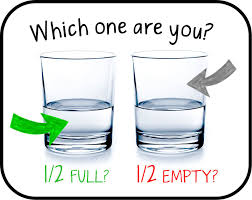
What is exciting for me, is when my students start to understand and realize that their best efforts and positive changes will be shared often and ongoing with their family. I start by asking them if they would like me to cimagesall home and tell their parents about some positive scenario that took place that day. They 100% of the time say an astounding yes. As they come to realize this is a regular part of our classroom, they begin to ask me to call their family and let them know about their math work or reading. That is the time that I know why I will always look to see the glass as half full.
Is Math Neutral?

The notion of neutrality speaks to the experience of being impartial or unbiased. It speaks to the absence of asserting value, power or privilege over another or the act of being impartial, unprejudiced and nonpartisan in nature. There are many areas of teaching and learning where the existence of prevailing politics is named and sometimes challenged: Whose stories do we include in the social studies/history curricula? What literature is considered to be the cannon? What art forms are considered cultured? But when educators think about the tapestry of math education, this notion of it being neutral tends to be widely agreed upon because of the perceived objectivity and absolutism that characterizes the ideas that are explored. But I wonder…is math really neutral?

“Math is about numbers. Surely it is neutral.”
This year, in supporting English Language Learners in math, I have learned many new Mandarin and Cantonese words from my students. More specifically, I’ve learned the inherent ways that Chinese characters are written to nurture a conceptual understanding of quantity. For example, the number eleven is written 十一 which means “ten-one” or can be understood as “ten plus one”. Similarly, the number twenty is written 二十 which could be understood as “two tens” or “two times ten”. Finally, the number thirty-three is written 三十三 Which could be understood as “three ten and three” or “three times ten plus three”. The fact that the word for the number eleven, when represented in English, has no relationship to the the concept of quantity speaks to the way numbers are represented are not neutral. This discrepancy in language representation speaks to the biased nature numbers are conceptualized through language. Thus proving an inherent bias in the ways in which numbers are conceptualized and number sense is acquired. Similarly, the bias toward English representation of numbers can limit the conceptual understanding of languages that represent numbers in a more conceptually friendly way.

“Math is about problem solving. Every has the capacity to solve problems.”
Consider the following problem: Brandon travels to the city using the subway. Each car seats 30 travelers. How many people might be on the subway if there are 10 cars? What background knowledge might students need to have in order to understand the context yet a alone respond the the problem mathematically? While the problems we pose to our learners may involve numbers that can be calculated and manipulated in flexible ways, the context, when coming from particular experiences, can deny access to the learning that needs to be achieved. In other words, if the context from which we invite students to explore math concepts can be carefully crafted in order for our learners to be able to relate to the ideas, they can also be unintentionally crafted in ways that could limit students access. In this way, contexts are never neutral because they come from a particular place of knowing or experiences that not all students have access to.

So there you have it. I’ve explored two very simple ways bias is experienced in math discourse. The presence of even one form of bias discredits the neutrality of math. If math, a lens for viewing the worlds through numbers, shapes and patterns, can be ladened with bias and politics, what else about the schooling experience share this similar trait?

Movers and shakers

I might catch a little fire for this title.
And thank you in advance for reading.

Every classroom has them- fidgety student(s). You know the ones who cannot get comfortable to sit still, are unable to focus for longer than 8 seconds (there are statistics for that), and are constantly in motion. Some days you see your classroom is more like a garden filled with hummingbirds flitting, buzzing, and appearing to faff about even when totally engrossed in a task.

Are they learning? Can students learn when their distractedness is a distraction? You’re thinking about your students right now(past and present) aren’t you? I am, and yes like yours are incredible capable learners, each of whom possess a curiosity and creativity that we allow to flourish.

So, how do(did) we manage to harness a student’s abundance of energy without blowing a fuse or short circuiting the individual? For me, working with* a ‘busy’ student, whether officially identified with ADHD or not, requires a deft balance of patience, structure, and at the same time flexibility. Inside of this is an expectation of great things that is mapped out and shared with the help of the individual learner. It is not my agenda that gets carried out. Student voice is crucial in this process. Negotiation skills training is included in the deal.

Do you allow students to doodle? This simple artistic expression allows students a place to focus the fidgety moments onto the paper while freeing their attention to concentrate on the lesson. How about a soft foam squeeze toy? In my class we have several available that are specifically dedicated to any students who might feel a bit of stress or the need to keep their hands occupied. Plus they’re fun to throw around the class as a kinaesthetic activity and to practice Math facts or French verb conjugation.IMG_0164

Doodling and fidget toys seem counter-intuitive to many teachers who were educated annually in the art of rote in row after boring row, but can be great ways to support your busy students. Sadly, the education from the good old days doesn’t always honour the progress of humanity in the 21st Century. Especially, when it keeps referring to what worked or is rooted(stuck) in the last one as the only path to knowledge. In my opinion this is antithetical to the needs of modern learners who, as a result of innovation, technology, and pedagogy find themselves barely coping in some classes while thriving in others. 

My teachers had a kid like that, me. My mom shared, that after some tests and upon the school’s urging our family doctor prescribed some meds which were intended to help channel my “energetic” demeanour. My parents refused. Thanks mom and dad!

Although some of my colleagues might volunteer to renew the prescription for me, I am glad my parents decided not to take the pharmaceutical option. Instead they chose to work with my teachers on implementing strategies which would keep me busy, moving, and engaged.

Do you know how many notes I delivered around the school, erasers I cleaned, or how many times I helped the caretaker sweep? And that was during instructional time. Every recess(2 x 15 mins + 60 mins lunch) was spent running, jumping, climbing, and playing. It was the time outside, in motion, that made the time inside learning tolerable. So it makes me wonder how many others went through, or are going through the same thing as I did?

Without apologies I wish to proclaim and thus forever own my ADHD. In fact I wear it like a badge knowing it was a blessing in my life as a learner and is a gift in my life as an educator. The challenge for learners and educators comes in finding that Goldilocks Zone between perpetual motion and learning progress each year that is just right.

As the researchers note, “in the school setting, the challenge becomes how to create an environment in which creativity is emphasized as a pathway to learning as well as an outcome of learning.” from The Creative Gifts of ADHD by Scott Barry Kaufman in Scientific American

And therein lies one of many Catch-22s in our profession. We have some who have blessed their classrooms for  35 years or more, and others who are just being hired. The gap between youth and experience is not going anywhere? How do we re-invigorate mindsets, open ourselves to greater collaboration, and sharing the wisdom gathered from experience. There is much to gain from having both. Now the challenge is preparing, pairing, and finding some playtime between the two sides.

* I had originally considered using the word ‘handle’ instead of ‘work with’ as I wrote this post. Upon reflection it was wiser to be considerate of the fact that handling a student conjures negative thoughts, whereas working with a student evokes a working opportunity.

Modifications and Accommodations in the Music Room

Modifications and accommodations happen daily in every classroom in Ontario. Teachers strive hard to make sure that their students have the necessary tools and supports to help them achieve the expectations of the Ontario Curriculum or modified goals. The following are some of the accommodations and/or modifications that I have used this year with a focus on the most common tool used in music…instruments!

When you ask my students what their favorite part of music is, many of them would answer quickly that they like using the instruments. I agree, instruments are AWESOME, but they can also be very challenging for students with impairments in fine motor skills, breath control, impulse control or visual acuity. To help these students, try a few of the following tricks…

  1. Xylophones- Most xylophones have removable bars for students who are overwhelmed with all of the notes laid out before them. I take the bars off that the students don’t need to play a particular song. I also rearrange the bars to make sections of the music more playable for some students. For example, I will move the E and F bars away from the G and A bars so that the student can more easily see the space between the two and identify them as separate. Selecting only part of the melody or accompaniment can also give students with processing difficulties a chance to keep up with the pace of the music. For my students with impulse control challenges, I give them a heads up that while I am giving the instructions I will be holding their mallets and as soon as we start playing I will return them. Furthermore, improvisation can be your student’s best friend on the xylophone as it takes the pressure off of playing specific notes. Finally, metallophones have much better contrast for students with visual impairments than regular xylophones.
  2. Recorders- To help students match their fingers to the right holes on the recorder, I have used small pieces of coloured electrical tape. I put a small piece of blue on the first hole of the recorder and put a small piece of blue on their pointer finger of their left hand. I add one finger at a time and work towards removing the tape when the student is ready. I have also matched a colour coded system to the music that they are reading. For students who have large challenges in fine motor skills, I have also taped the back hole for the first section of the year to let them focus on the front holes.
  3. Drums and Percussion Instruments- When it comes to the percussion family, instrument choice becomes very important. Maracas, bells and guiros are some of the more difficult instruments to use to produce clear rhythms. Rhythm sticks and bucket drums are a much better choice as the sound is more easily produced and controlled. Another helpful tool is to use words to learn rhythms. Using words to help students learn rhythms is great for all students but is especially important for students who need extra support. From the tabla in India to the taiko drum in Japan, there are so many countries that use words to share rhythms. Simple or repetitive words are much more accessible than musical notation for many students.


When Your Best Is Not Enough

I work with some very challenging students, who at their core, are really nice people. As I get to know them as people first and learners second, what surfaces quite rapidly is that many of their needs are beyond my skill set. I am not a counsellor. I am not a psychologist. I am not a physician. Yet the needs they bring to my classroom are very diverse and more complex than just literacy and numeracy. I find myself often saying, what can I do to help this child succeed and feel good about themselves. As you know, there is no simple answer to this question.

This year I have been faced with a dilemma that I have never before in my career been in. I do not know what to do for a child in my class. All of my efforts, strategies, consultations and professional readings have left me in the same place I started with this child over 6 months ago. This individual’s lack of progress (and at times regression) have been a huge stressful burden on me as I struggle everyday trying to figure out what to do to help this child stabilize and grow as a student should. My initial reaction was that despite my absolute best effort, I have failed this child.

I have a very good friend and colleague to whom I shared this belief about myself with. He was very quick to point out that I had not failed him. The student’s lack of progress is a result of many needs not being met. He began to query me about my approach with the student. The conversation went something like this:

Do you differentiate the work for this student so that it reflects his current academic level? Yes

Do you provide accommodations in his program that meet his individual’s learning needs? Yes

Do you work hard to make that student feel welcome and cared for each and every day in your classroom? Yes

Do you seek out additional supports within your school and/or board to assist you in creating a program for this student? Yes

Do you communicate your concerns in an ongoing manner to your school support team, principal as well as the student’s family? Yes

Do you smile and tell that student what a nice person they are and thank them for coming in everyday and putting forth their best effort? Yes

At the end of that conversation I came to realize that I had not failed this child. I had to the best of my knowledge and skill set did everything humanly possible to help this individual succeed and that despite my best effort, that progress was not occurring. I had not failed him, because I had not given up on him.

IEPs for Music

This week I am faced with the task of completing my term two IEPs for the subject area of music. Below is my process in determining the need for a student to be placed on an IEP for music and some of the past comments that I have used for my students.

Determining the need

Every year in term one and term two, I receive a list from the special education support team of students that are on an IEP. Attached to this list is the question of whether or not I feel that any of the students currently on an IEP require specialized goals for music.

The first question that I ask myself when determining whether or not a student requires an IEP comment for music is “Does the student’s exceptionality impair their ability to be academically successful in music?” In order to determine the answer to this question, I gather some assessment data on the student. This can be challenging at the beginning of the school year when the IEP needs to be completed in a very tight time frame. To help speed up the process, I recommend reading the student’s IPRC’s statement of decision or previous IEPs as they can direct you to analyze the student’s specific exceptionality in the context of your class. Afterwards, I watch my students for impairments in things like receptive language, language processing, expressive language, cognitive abilities, sensory engagement, visual spatial processing and both fine and gross motor skills. In a nutshell, after I have read the decision about the student’s needs in their OSR, I watch closely to see how that impacts their learning in music.

Once I have evidence to support my decision, I go about setting the direction for the music section of the IEP. After analyzing the data, I must decide whether to modify the number of expectations or modify the grade level expectations that I am using to assess the student. In addition, if the student is on an alternative IEP, I must create a measurable goal for them. I do my best to create a goal that will both challenge the student and ensure success for them.

After I have decided on the goal for the term, I compile the accommodations, assessment methods and annual program goals for the students. I then pass all of the information over to the teacher in charge of the IEP. See below for some examples.

Comments for Alternative IEPS

will demonstrate a response to a variety of songs once in a music period.

will physically respond to music (e.g., claps hands, whole body movements).

will participate in music 30% of the time

will participate in music class by singing and playing the xylophone, drums and unpitched instruments for 30 minutes every class

will create and perform a simple composition with some support

will perform a musical piece in front of a large audience

will participate and explore on the xylophone, drums and unpitched instruments

will ask music teacher or peers for help

Comments for IEPs

will apply the creative process to create and perform simple music compositions from modified musical notation.

will sing unison songs in tune and play simple accompaniments.

will perform simple music compositions from modified musical notation.

will communicate his feelings and ideas in response to a piece of music.

will respond to a piece of music through movement and using a light show.

will sing unison songs in tune and/or play simple melodies and accompaniments for music from a wide variety of cultures, styles and historical periods.

will create and perform music in unison on the xylophone and unpitched percussion instruments.

Assessment Methods

Observation of student playing an instrument

Checklist

music performance

self-reflection after singing a song

demonstration of moving to music

Accomadations

Colour cues

Large size font

Use of headphones

Visual cueing

Extra time for processing

Scribing


Resources – Here are a few resources to give some guidance when writing IEPs.

PRS Matters has written a great bulletin called “The Individual Education Plan (IEP)-What You Need To Know http://www.etfo.ca/AdviceForMembers/PRSMattersBulletins/Pages/Individual%20Education%20Plan%20Advice%20to%20Members.aspx

A great resource for writing IEPS is located on the Ministry website “The Individual Education Plan (IEP), A Resource Guide (2004)”


Brain Shifts

Have you ever been on a very long car ride and just as you think you are not able to continue you come upon a service center? Within 10 minutes of having a change of state, you eagerly hop back into your vehicle and are ready to go for several more hours. The same is true for students. By allowing short (1-2 minute breaks) you help energize the students to continue on with their learning, fully engaged.

I call these breaks ‘Brain Shifts’. For example my students just finished working on a problem-solving task in Mathematics and prior to starting Science (which is the next item on our daily agenda) I ask them to do a Museum Walk around our displays. The first benefit is that they are physically moving and thus increasing blood flow to all body parts, including the brain. Secondly they are now focussed on our science topic and have started to activate prior knowledge even before the lesson begins. The final benefit is that it allows socializing to occur amongst my students.

The Brain Shifts are not just random activities but rather have a very specific purpose. That purpose is dependent on what is occurring or not occurring in the class at that particular time. For example, if the energy level seems low, the activity will be chosen to increase the energy in the room (find 3 people and share with them the strategy you used to solve this task). If the students are bordering on being hyper, the task is designed to bring a calm to the room (look around the room and show with your fingers a score out of 10 that you would give this latest chapter in our book). There are so many ways that Brain Shifts can occur. The key is that you develop activities that are a good fit for your teaching style and accomplish what they are intended to be used for.

Plans for January

Well, it’s a good thing I hadn’t planned on trying an inquiry on SNOW this year. With the unusually warm weather, I am wondering if maybe an inquiry on climate change would be more appropriate! However, that would be a rather depressing topic for 5 year olds (as it would be for people any age), and regardless of the lack of snow, there is still plenty to explore about Winter.
During the last week of school before the holidays, we had our team meeting to make sure we all have an idea of what we will be doing when we jump back into the game in January.
Here’s what I am planning on doing when we get back:


  1. I’d like to do a Winter Web of ideas, to gather what the students know about “What Happens in Winter”. Following a field trip to a bird sanctuary in early December, we have been reading books and talking about what people, plants, animals and bugs are doing as the weather gets colder. A Winter Web will help anchor the ideas and vocabulary we are hoping to expand upon through our inquiry.
  2. Winter Wonder Wall – A Knowledge Building Circle is so helpful for giving students a space to ask their questions, and where possible, to have them answered by their peers. We write “I wonder” questions that need more exploration on sentence strips and will post them on the board beside the Winter Web to be answered as discoveries are made. To help with our Winter Inquiry, we are really looking forward to a presentation from the Ottawa Inuit Children’s Centre where we will learn to play some Inuit Games as well as see and touch Inuit clothing and tools.
  3. Assessment/Evaluation – Following threads of wonder, each of the educators for our classes (2 ECE educators, 1 English teacher and 1 French Immersion teacher) will provide opportunities, such as the live Bear Cam of two grizzlies hibernating at https://www.grousemountain.com/wildlife-refuge/bear-cam , for the students in both classes to explore in more depth an aspect of the Winter Inquiry (hibernation, adaptation, migration, etc.) The goal is for the students to show us what they have learned about “What Happens in Winter”.


I am not sure how this inquiry will evolve. I can imagine our classrooms being completely transformed into wild places where the sand and water tables have hibernating reptiles and insects deep below the surfaces; where the cubbies are stuffed not with backpacks and coats, but furry animals curled up for a long sleep, and where tables and shelves have evidence of the life cycle of various plants. And in the middle of the space (with the windows wide open), the children, dressed for the cold, are playing Inuit Games. Sounds rather perfect, however, we will have to see where the students decide to take their learning. Stay tuned!

Tortoise Brained Learning and Students

In my last post I focussed on the philosophical belief that quality vs quantity of professional learning is a more effective way of enhancing pedagogical practice. What does that mean for my classroom instruction? As I grow to understand the presence of different learning styles in my class, the presence of multiple intelligences and the wide variety of learning rates it forces me to re-examine both the long term and short term planning that I set up.

In the earlier part of my career my long-range plans were reflective of an efficient way to ensure that all of the curricula was covered. This I now refer to as curriculum planning and not student centred planning. As my understanding of differentiated learning and assessment grew, so did the need to adjust the way my planning unfolded. What I had experienced was a short-term understanding of content and when that topic was revisited months later there seemed to be a regression in the level of understanding of my students. That forced me to ask myself as to how well they had really learned the content in the first place.

Through years of experimenting with both my long range planning and unit design there arose two aha moments for me. The first was the need to revisit big ideas (overall expectations) through a spiralling curriculum. This means that I would chunk the content into more manageable pieces and revisit the content several times over the course of the year (quality vs quantity).

The second profound understanding was in time management and how do I accomplish the ability to revisit overall expectations with so many demands on the school day. Thus came the desire to increase my skill set in integrating learning across a variety of curricula. The following is a direct reference from the 2006 Ontario Language Curriculum:

In cross-curricular learning, students are provided with opportunities to learn and use related content and/or skills in two or more subjects. For example, teachers can use social studies reading material in their language lessons, and incorporate instruction in how to read non-fiction materials into their social studies lessons. In mathematics, students learn to identify the relevant information in a word problem in order to clarify what is being asked. In science and technology, they build subject-specific vocabulary, interpret diagrams and charts, and read instructions relating to investigations and procedures. All subjects require that students communicate what they have learned, orally and in writing. Their studies in the different subject areas help students develop their language skills, providing them with authentic purposes for reading, writing, listening, speaking, viewing, and representing.

Needless to say, this is a spiralling learning experience for me as I continue to help my students consolidate the learning that they are a part of each and every day.

“I Don’t Know” and “I Need Help”

“I don’t know” and “I need help” are two statements that I have uttered this week. I have said both of these statements while discussing two students that I am struggling to teach. After the conversations, I felt really down and defeated that I am at a complete and total loss on how to help these students and manage their behaviour. My usual management strategies are just not working and I have tried at least a half dozen new strategies with no success. I have analyzed every word, interaction and problem that has happened but cannot figure out the puzzle of these students.

After a couple of weeks of really beating myself up over not having all the answers, I realized this morning that I am not supposed to have all the answers. It is unreasonable to expect that I am an expert in ADHD, Autism, learning disabilities and communication disabilities which both of these students are identified as having. In addition, I also do not have a degree in child phycology or training in dealing with trauma. I want to help these students more than anything in the world, as I do with all of my students, but some of these students needs are greater than my training. In short, I needed to remind myself today that it is okay to ask for help and that my learning is an ongoing process!

So now that I have picked myself up from my downtrodden state, I have made a plan to be proactive in trying to change the patterns of learning in my classroom with these two students.

Plan #1

Re-read their IEPs.

My first task will be to re-read the IEPs for both of these students with a focus on their strengths. I know what the challenges are for these students. I have been focused on nothing but their challenges for the past month. It is time now to try and capitalize on their strengths.

Plan #2

Meet again with the classroom teachers

My plan is to go through my next lesson with their classroom teachers and let them see if they can add any insight into shaping an environment that will promote success for these students. Both classroom teachers have had moderate success with their students so I want to build upon the things that are working for them.

Plan #3

Get suggestions of resources and articles to read

My behaviour specialist has told me that the student I am struggling with has the most severe case of ADHD she has ever seen in 30 years of doing her job. This tells me that I need to learn more about ADHD by doing some further research. I will be asking my special education team and behaviour specialist for recommendations on resources and articles to read.

Hopefully, my plan of improvement will start the ball rolling in the right direction for these students. However, if the first three ideas that I try do not yield positive results, the most important part of the plan is…

PLAN #4

Do not beat myself up if things don’t go perfectly!!!

I admit that this is SO hard for me. If I have a problem with one of my classes or students, I will spend so much time thinking about how to solve the problem. I am trying hard to accept that challenges exist that I might not have answer to right away and that it is okay for me to be in a constant state of professional learning and growth.