This past March, I was able to attend the workshop Educating for Social Justice at the ETFO Provincial Office. It was an incredible experience! Sharing space and learning with other like minded educators is always so cup filling. The connections and conversations with other women were so meaningful over the course of the workshop.
To me, social justice in education is multi-faceted. It includes the way we interact with and care for students. It is a mindset that values diversity, equal opportunity to tell one’s story, and celebrates all identities. In this workshop we had so many examples of how to embed social justice in the daily classroom.
Dr. Stephanie Fearon, from York University, was the incredible keynote speaker. Her address was titled “It’s More Than Just Teaching: Storying Liberatory Learning Spaces”. She focused on storytelling and it’s importance in the classroom. I loved the way she used storytelling to share about her own family and identity. She invited us to be active learners in her presentation, and to critically think about how we tell stories and how we might unintentionally perpetuate stereotypes.
Something that I really appreciated was how Dr. Fearon framed the critique circle for us. She demonstrated a lesson for us and asked us to critique the lesson. She had us repeat that we ‘do this in service of the educator’ to ensure that everyone knew a critique was different from criticism. The idea that educators should seek critique of their work when we are striving to better our teaching practice was at the heart of the idea of a critique circle. We are all seeking to improve our practice and build trust in our fellow educators to give feedback that is meaningful and important.
Next, was a presentation by Jen Matsalla titled “Who Am I? Using Visual Arts to Explore Identity”. In this interactive workshop, we had a wonderful community building activity with open ended questions and the opportunity to think and explore our identities and the identities of others. I loved that everyone could have an entry point and it was low risk art activities that would be accessible to every student. Each table created a collaborative arts piece and we put them all together on the floor to make a large, beautiful collage of art.
We had the opportunity to listen to Michelle McKay’s presentation “Engaging in Teaching and Learning About Truth and Reconciliation in the Elementary Classroom”. This incredible early years educator shared with us her experience of working in kindergarten to provide opportunities to build students’ relationships with the land in a meaningful way. The activities she shared helped students to see themselves as stewards and in partnership with the land and community in their neighbourhood. She also shared a video clip with us of students as activists, appealing to Prime Minister Justin Trudeau for better care of the environment. It was so inspiring!
Lastly, we participated in a series of hands-on activities thanks to Gail Bedeau and Helen Vlachoyannacos. Their workshop, “Teaching Critical Literacy through a Social Justice Stance”, had us thinking about all kinds of texts, from visual designs to short stories and poetry. Using a variety of different strategies, these educators had us work through different tasks to experience and consider how we might use these strategies in the classroom at different grade levels to have students interact meaningfully with texts that share identities and social justice themes.
This conference is a must for educators! As an educator, it was a wonderful opportunity to learn with and from others’ experiences. I came away so inspired by Dr. Fearon’s presentation, with a full toolkit of strategies to use in the classroom, and great connections with colleagues across the province. If you’re looking for the chance to really think about how you can embed social justice into your classroom and teaching practice, this is a great place to start. Hope to see you there next year.
Bringing Culturally Responsive Learning Outdoors: Part 2
In part one of my post, I talked about the importance of breaking from narratives about the outdoors that do not serve the communities we teach. What are some next steps we can take toward helping students feel a sense of belonging in the Canadian outdoors?
We can start by reimagining outdoor learning from a stance of cultural responsiveness.
In her book, Culturally Responsive Teaching and the Brain, Zaretta Hammond provides an anti-oppressive and anti-racist framework for teaching culturally and linguistically diverse learners. While I will even attempt to summarize her entire work, I want to draw your attention to a few key ideas that will help us make our final learning goal actionable.
Based on Hammond’s framework for culturally responsive teaching, here are 6 approaches we can use as outdoor educators to support student well being.

1. Know and Own your Privilege
To assume a culturally responsive stance, it is important to be aware of your own social position in the outdoors. Explore the following questions:
What is your relationship with the land you inhabit?
What is your proximity to power?
How might you use your understanding of your intersected identities to rethink the way you plan and program for learners?
You can use tools like the Wheel of Power and Privilege to reflect on your social position so you can be better prepared to practice compassion and listen openly to others, especially the students you work with.
2. Leverage Representation to reduce social and emotional stress
Studies over the last 20 years indicate that historically, racialized and marginalized groups are underrepresented in the outdoors. As a kid, I remember reading the popular story of outdoor survival, Hatchet, and then still seeing it taught in schools as a much older educator. Does anyone here know that book? It’s absolutely riveting – but there are lots of other great choices to offer students in today’s increasingly diverse publishing world.
Representation matters, and when students see and hear stories where they can see themselves and their community in an authentic way, the impact is powerful. And I want to take a moment to emphasize the importance of authenticity, because there are many books that will tell the same stories but simply change the colour of the character’s skin, especially in picture books.
The publishing industry, like many other media platforms, have started to diversify its cent. As someone who has rarely ever seen people that look like me show up in books and media, I can personally attest that the shift in representation has been exciting and identity affirming.
3. Recognize the difference between individualism & collectivism and how they show up in different activities.
Let’s move on to the next culturally responsive approach, which is to recognize the difference between individualism and collectivism, and how they show up in different activities.
Individualism is typically associated with Western societies that value traits like independence, competition, and achievement without any outside help. Many cultures outside of Canada are more oriented toward collectivism, which is associated with interdependence and community.
We don’t always realize it, but the games we play and the activities we plan often reflect deep cultural values. Many outdoor activities celebrate and explore individualism, conquest, aggression and competition – which may not be valued by all communities. As a result, some students may experience a lot of discomfort when engaging in such activities.
For a more culturally responsive approach, incorporate outdoor activities that encourage community building, self-reflection, and personal wellness. Providing different options for kids to choose from can go a long way in fostering a connection between your students and the natural world.
4. Broaden your understanding of how different communities interact with the outdoors.
This brings me to the next approach, which is to broaden your understanding of how different communities interact with outdoor spaces.
It is a powerful practice to honour the different ways students and their families already engage with the outdoors as a foundation for learning.
People from different cultures bring different knowledge about the outdoors and the environment. As an educator, it is totally worthwhile to talk with students about what they do with their families outside, what types of clothing they wear in different conditions, and how their communities connect with and interpret nature.
They may camp, play sports, visit the beach, picnic, play music, or gather in large groups. Some communities may cope with environmental challenges differently, especially if they have arrived from a climate that is significantly different from Canada’s.
It is important to understand these differences so we can better respond to student needs and help them to feel more confident in challenging physical environments. Talking about nature in this way also builds cultural competence, and positions students as partners in learning with educators.
5. Make instructions, activities, & information comprehensible and relevant to students and families.
Next, let’s talk about the importance of making instructions, activities, and information comprehensible and relevant to students and families. As a teacher of multilingual learners, I cannot stress enough how important it is to bridge communication gaps between the school and home. In an outdoor learning context, where there is often an element of risk, maintaining clear communication is critical.
In my school board, more than half the learners are multilingual and in the process of acquiring proficiency in English. They often have families that are also learning the dominant languages in Canada. It is becoming increasingly commonplace for students to arrive with limited and interrupted schooling due to environmental events and political crises.
When we are engaging in land based and outdoor activities, it is important to know linguistic variability among students so you can provide appropriate scaffolding to make the learning, information, and instructions comprehensible.
Create a supported environment by pairing or connecting same language speakers during lessons, adjusting the pace of your speaking, or by using physical gestures to help students understand whatever activity you are engaging in.
Communicating with families about outdoor learning in the school in the languages spoken throughout the community may also help families feel more secure and confident when field trips and offsite learning is being offered. They will also know more about the role of outdoor learning in their child’s education.
6. Create supportive, trauma-informed environments that cultivate a desire to explore, play, take risks, and experience awe.
Finally, I want to talk about the last approach: create supportive, trauma-informed environments that cultivate a desire to explore, take risks, and experience awe.
Newcomers to Canada and marginalized communities often experience economic and physical barriers to outdoor spaces and may not come with the same background experiences as their peers. Though outdoor learning challenges that involve risky play are excellent ways for students to build confidence and problem solving skills, it is important to understand that some students may approach the activity much differently based on their lived experience and background knowledge. Challenge and support students based on their level of safety and comfort.
Take into consideration that some students may have complex relationships with recreation and play. This is something I struggle with personally as a child of immigrants. My parents worked a lot, especially during time of economic uncertainty, and play and relaxation was something I believed needed to be “earned” or “worked for”.
In her book “Permission to Come Home” – which I recommend for any of my East and Southeast Asian colleagues here today – Psychologist Dr. Jenny T. Wang writes about the difficulty many communities have accessing play as a result of learning in childhood that play must be postponed for survival. As educators we can use this awareness to support students in finding their way to play so they can experience its gifts: rest, joy, creativity, and the freedom to explore and experience awe in nature.
Finally, with any activity, know your learner, especially if they have experienced recent or significant trauma that may impact the way they show up in the outdoor learning environment. Leverage nature as a resource for practicing activities that reduce anxiety or provide an outlet for releasing difficult emotions, such as meditation or other sensory activities.
Mindfulness Through Art
I’ve spent my life being really critical of my artistic abilities so this blog took me out of my comfort zone! Lately I’ve been wanting to give myself a chance to create art, especially after learning that putting your hands to use can be an excellent way to relax your brain and get some good feelings from dopamine.
There is data to back up the theory that busy hands are good for your brain. Knitting, painting, carving, needlework, cooking, gardening and so many more activities that use our hands also help us feel happy and calm. Studies by neuroscientist Dr. Kelly Lambert explore the effort driven reward cycle. She believes that moving our hands to produce satisfying creations may help prevent depression and have other positive benefits on mental health.
Applying this science to ourselves and our classrooms could very helpful! Lambert encourages us to get off screens and put our hands and minds to use in more productive ways.
I’ve included a suggestion for an art lesson. You could definitely do this with a class but honestly I also do it for myself. My brain needs a break too!
What you need
Paper – watercolour paper is great but try experimenting with old music sheets, pages out of discarded books, box board, etc
Watercolour paints – I have very inexpensive ones
Small paintbrush – since this is very blobby art, the brush doesn’t matter much
2 containers of water (one for washing brush and one for clean water to add to paint)
A marker, pen, pencil crayon or crayon
Scissors and glue (optional)
Technique
- Use masking tape to frame the paper and attach to the work surface.
- Draw curvy intersecting lines with your marker – many of them
- Where the lines intersect make them thicker and more curved
- Spray your water colour paints with water and let them sit for a minute
- Dip your brush in and paint one of the empty spaces.
- Continue filling the empty spaces with colour.
- Allow colours to mix or leave each blob as a colour of its own.
- Let it dry.
- Options:
- Fold it and use it as a card.
- Cut out shapes and glue them on a card.
- Frame it!
If you enjoyed this activity then I encourage you to follow Andrea Nelson on Instagram. She often references that creating art soothes her brain. Her videos inspired me to do this!
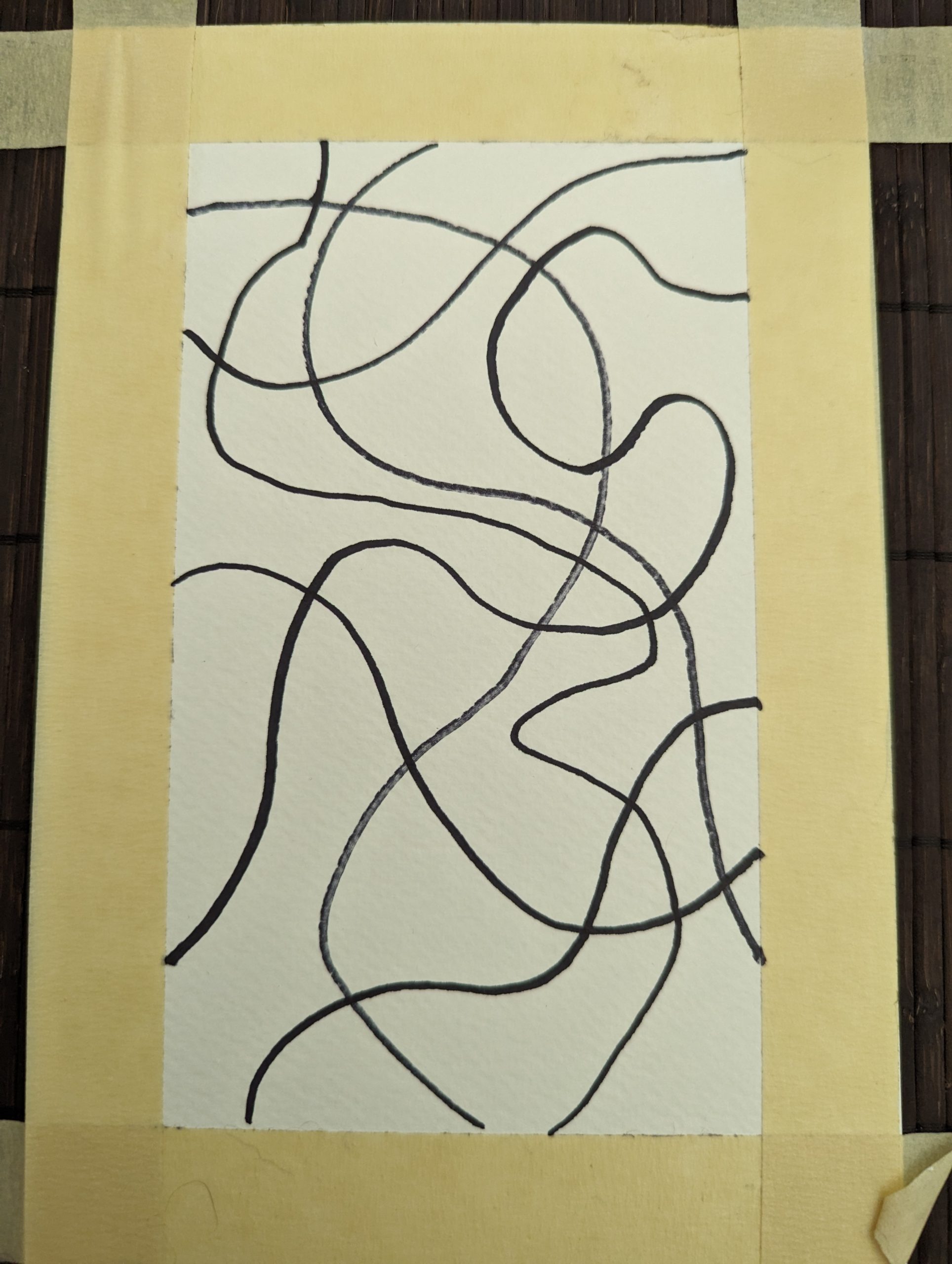
Photo by the author.
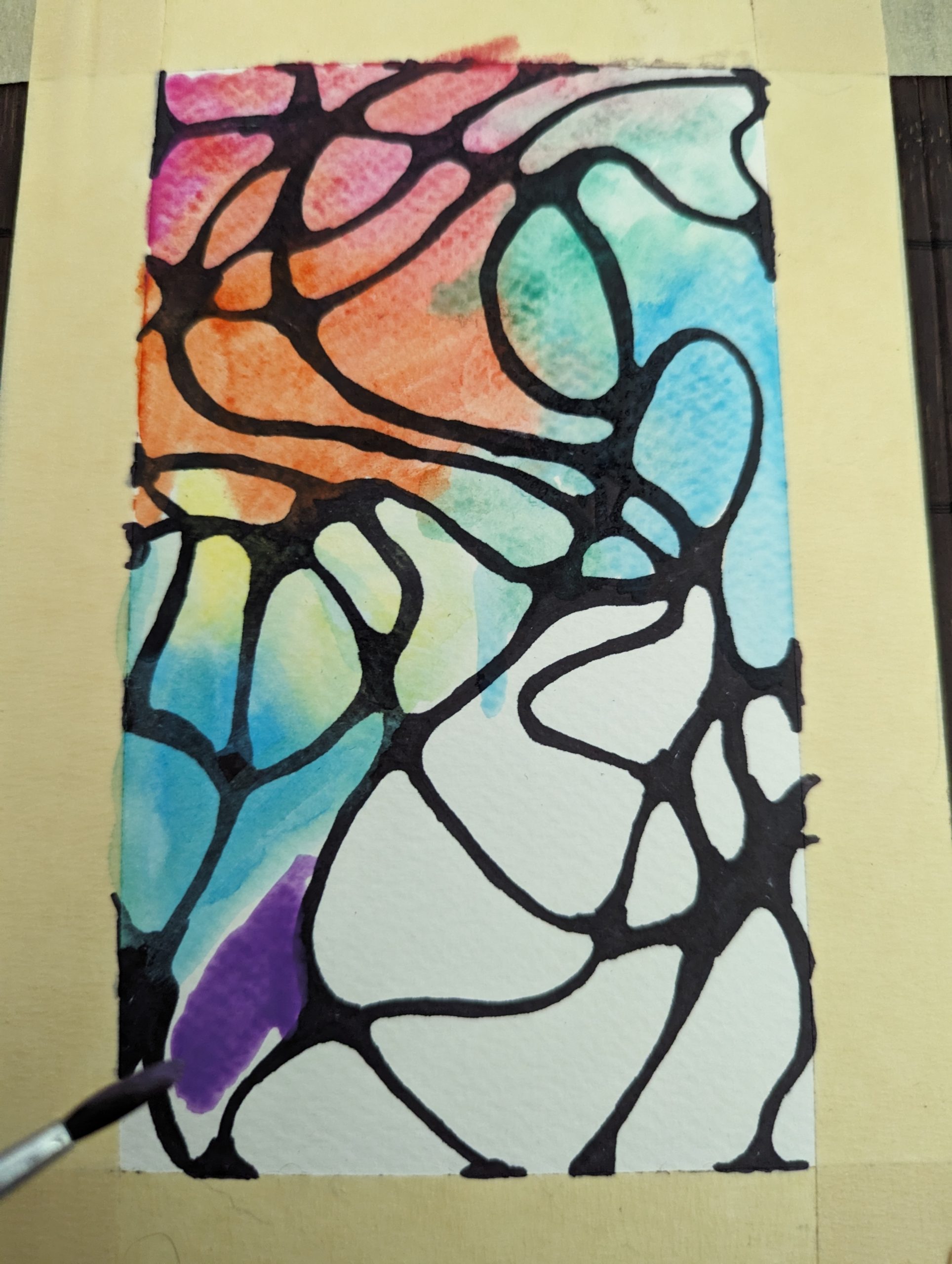
Photo by the author.
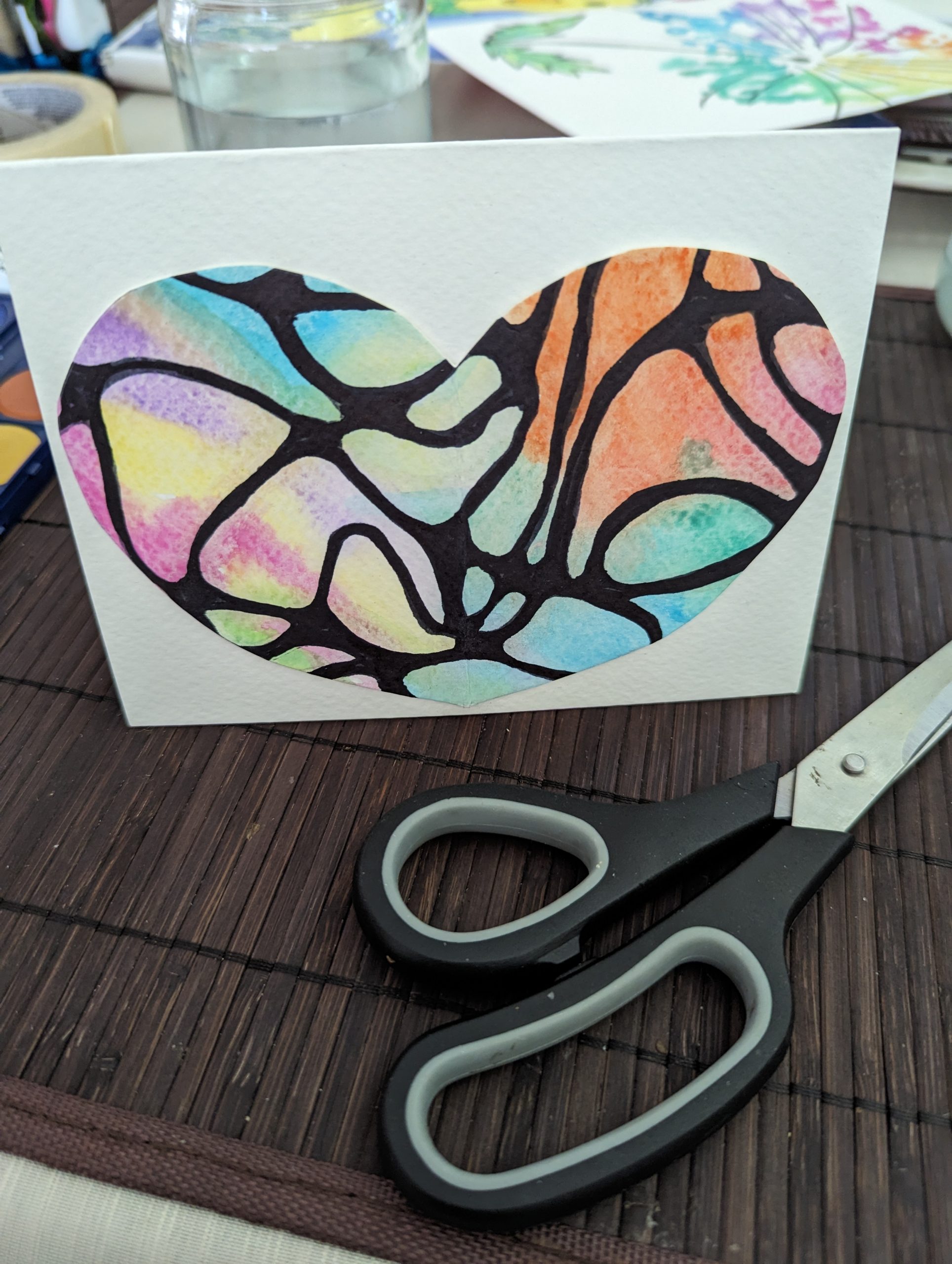
Photo by the author.
seasons
seasons May 2024
This May seemed more like dismay, and there is not a thing we can do about it. It’s in the books.
As the sun sets on our 9th month of teaching for this school year, I am finding it hard not to mumble a bit more due to fatigue. It’s not just mumbling either. To be transparent here, I am speaking a bit more slowly, writing a bit more slowly, teaching a bit more slowly, assessing a bit more slowly, and on top of it all, I seem to be walking a bit more slowly too. Now before you dial 911 on my behalf, I am otherwise in passable physical condition. I have cut down on the caffeine, tried to be more active, and have increased my sleep times. Despite that little health flex, everything is just happening a little more slowly.
My friend commented that I might be suffering from A.G.E.. Bwahahahahaha!
If this was my first year in the classroom, I might have needed to take a day to visit the doctor, but I know that the way I feel as June draws nigh, is largely a function of time; time of year, and time in environment. Definitively and definitely.
So how could these two factors be the cause of my compounded confusion? It’s simple. So far, there have been 170+/- instructional days to plan, deliver, assess, and repeat subject over subject. Even with a fairly balanced amount of holidays, PA days, breaks, personal illness, family illness, and weekends this work takes its toll on body and mind. These past few weeks have come with a certain heaviness and have me feeling like it is a good time to hibernate rather than frolic in the fields. I find myself really craving quiet solace instead of seasonal solstice.
Regardless of the current sources of my discombobulation, it seems like I can’t be the only one feeling this right now. Come to think of it, I have been noticing that there is a different set of seasons in this job. Here’s what it feels like as I type this post;
Sept to late October = Spring
late October to March = Winter
March to May = Spring, then Winter again
June = Spring, then Summer
This may not line up meteorologically or anywhere else except in my perception of education, but my physio-emotional barometer has read like this pretty consistently year over year.
Maybe a better way to make sense of my seasons can come from acknowledging that we all have them and go through them in our own way. Truth be shared, my quasi-psyentific explanation above is quite falsifiable. Could this all be more a function of my current situation with another round of reports due soon? Is the internal weather that I am experiencing only a mental anomaly? Why am I struggling instead of dancing down the hallways with only one month of school left? I think there are three big reasons.
First, the past 9 months have taken a toll on me mentally and physically. Running teams, mentoring sessions, and clubs in addition to the planning, instruction, and assessment comes with its costs. Time is finite and so are energy levels. The need to fill our tanks is undeniable. I also would not have it any other way.
Secondly, there is a lot going on in June. Reports, EQAO, room moves for some, grads, school moves for others, and of course an extra demanding challenge of keeping the learning happening as the temperatures continue to rise. I have resorted to a resort styled wardrobe to beat the heat. Classy and cool.
Thirdly, I am going to miss my students. Like every year, this group has really grown on me and we have come so far together.
As I try to snap myself out of this odd out of season stupor and into true June mode I am going to double up on my down time, continue to teach a little more slowly, linger longer in conversations with my learners, and take a little more time to take each of the coming moments all in knowing that another season is already on its way.
Experiencing Outdoor Learning at Take Me Outside 2024 Conference
Finding your place as an outdoor educator can be a challenge at first. You may not immediately see the connections between the outdoors and the subjects you teach. You may also be curious about which pedagogical frameworks and approaches will make sense for your classroom.
This is where an organization like Take Me Outside can make a critical difference. Take Me Outside (TMO) is a Canadian education organization dedicated to getting students and educators engaged with outdoor learning. What is wonderful about TMO is the various events, professional learning sessions, and materials it offers educators in a variety of contexts.
I highly recommend any and every educator to explore TMO’s website to see the full range of resources and activities they have organized for educators. The work is inspiring and fulsome.
I had the unique opportunity of joining TMO for their annual conference this year. Jade, a team member with boundless energy and passion for outdoor learning, invited me to present on the topic of student well-being at the conference months before the event took place. She had found a blog post that a colleague and I had co-authored about inclusion and belonging in the outdoors, and was interested in having us share our work.
To be honest, I was surprised and a little intimidated by the offer: as someone that doesn’t actually work in an outdoor education department or taken their outdoor education additional qualification course, I felt a bit underprepared. And against all of my rational thoughts – I agreed.
What I did not expect was the journey of learning I would undertake to write the presentation. And I certainly did not imagine how transformative a conference could be when I arrived.
The Journey
Presenting and facilitating professional learning isn’t something new for me, but researching and writing an entire presentation for hundreds – in an area I felt like I had very little expertise – is a whole new ballgame. I listened to countless audiobooks about the outdoors, read academic papers and reports, took a wellness course, and even signed up for an Outdoor Learning AQ (which I ended up dropping when I realized it was not actually meeting my needs). Imposter syndrome was in full effect, and I used every opportunity to connect my learning to this conference presentation.
One surprise I had along the way was how much I enjoyed the process of preparation. I learned things so seemingly unrelated from my regular sandbox of English literacy and language learning, which was motivating and exciting. The personal wellness course I took with an incredible Toronto studio, SAOR, introduced me to a whole body of knowledge. Eventually, all the learning and reading started to intersect with my day-to-day work.
I re-wrote and re-published our original blog, presented at my board’s early years conference, and continued experimenting with different ideas in my writing. What started as a gracious invitation to share ideas turned into a full blown passion project that changed the trajectory of my professional growth.

The Conference
The Take Me Outside Conference exceeded my expectations. The event took place at the spectacular Banff Centre in Alberta, nestled high in the mountains with unreal views, access to trails, and wonderful food. I took full advantage of my local’s professional learning pathways to get the release time for the event.
Outdoor educators are among the friendliest, open-minded, and joyful group of people you will meet. While I ended up attending the conference on my own, I had no problem making new friends and connecting with other educators across the country.
The learning was as inspiring as the scenery that surrounded the conference centre. Workshops on the pillars of well-being, the environment and climate change, and Indigenous learning took place outdoors in the forests and seemingly unrelenting sunshine we were met with that entire week.
I learned the story and thinking behind Elder Albert Marshall and Louise Zimanyi’s wondrous picture book, “Walking Together”. Dr. Chuk Odenigbe gave a deeply insightful and beautiful talk on the issues of environmental racism, and nature as place of therapy and despair.
As one of the final presenters, there was an element of excitement and anxiety that accompanied me over the days of the conference. I fussed over my presentation, rehearsed, and took long walks. By the time I was up – I realized I had absolutely nothing to worry about. I was in front of one of the most warm, welcoming, and supportive groups of professionals I think I will ever meet. I had so many kind words of encouragement from my new friends, and hundreds of smiles from my fellow educators. We talked about the importance of holding space for each other and the students we teach, and how cultural responsiveness can be a starting point for fostering connections between diverse students and the outdoors.

The Aftermath
I left the conference with so many feelings of excitement, connectedness, and insights about learning from the land. I have new goals for my teaching practice, and a whole new perspective on what it takes to build educator capacity on critical topics related to land based learning and play. I feel like I am right at the beginning.
First Chapter Friday
I first heard about First Chapter Friday, while listening to The Spark Creativity Teacher Podcast. It can be challenging to get students to take the first step in choosing a book to read independently, try out new authors or genres, or to get excited about new books in the library. Betsy, from Spark Creativity, says whether you call it First Chapter Friday, Meet a Book Monday, Too Many Books Tuesday, We Love Reading Wednesday, or Thoroughly Into Books Thursday the premise remains the same: introduce students to a variety of different books for independent or self-selected reading.
I always loved reading the first of a series with students in my class. I would carefully choose books I loved, read the books with students and watch with joy when I saw them reading the next books in the series. I now realize that I introduced them to books I loved, Percy Jackson and the Lightning Thief, Among the Hidden, The Wild Robot, Princess in Black etc. Most of them featured similar characters and exciting adventures, but I know now that something else was missing: student voice and choice, a variety of identities and topics, different themes, etc. Maybe I, too, should have taken part in First Chapter Fridays for educators!
To prepare for this activity, choose a variety of books from your classroom or school library. In my experience, librarians always have a great list of new titles and authors and love the opportunity to co-plan with classroom teachers. Some school boards have a central lending library where you can borrow a box of different books for three or four weeks with a variety of titles or themes as an option. Then, ask yourself a few questions when choosing books to share.
Do I have books from a variety of genres? I didn’t realize my love of exciting adventure books was factoring into what I thought made a good read for the students in my class. When I looked around at the books students were reading independently, I saw that they loved comedy – Diary of a Wimpy Kid, Dear Dumb Diary, Dog Man, etc. Be sure to include something similar to what they are already drawn to as well as some new genres and authors they might not have met yet.
Is the language and content accessible for students at this grade level? Have a peek through the book yourself, look up suggested age range levels, or find familiar authors you know in order to make some informed choice about reading levels and content. We definitely want students to try new stories, but we also want them to feel successful and excited about reading! Ensure that during your activity, you are offering books at reading levels that everyone can access.
Do these books offer an opportunity for students to learn about themselves and others? Are there a variety of identities and experiences represented? I suggest checking to ensure that the author is writing from a place of ‘own voice’ or is, at least, working with a member of that community to tell a story or build characters. If you’re not sure which identities to look for, try looking at the different heritage months or days of significance that are celebrated here in Ontario and Canada as a place to start. Find out the identities of the students and families in your school community. Seek out student voice: who or what events the students are interested in learning about.
Once you’ve chosen a few books to highlight, get ready for reading! Plan to read the first chapter of each book out loud to the students and while they are listening, they may be sketching or writing some of the key points of the book or story so that they can keep track of the details for each book. Remember, it’s not an assignment, it’s practice for students to use as a possible way to track their thinking. I like to think of this as another way for students to engage with reading and for them to find the method (sketching, jot notes, drawings, lists) that works best to express their ideas.
What I love about First Chapter Friday is that it reminds me of the importance of connecting students with reading and using it as a practice of interacting with text. When the educator reads the text aloud, it allows all students access to the story and opens the lines of discussion as a whole class as opposed to reading being an isolating activity. Thinking about the texts with students helps to build community and model curiosity and a love of reading. Whichever day you choose, introducing students to new books and new worlds can help build a community of readers.
where it is
I have a hard time forgetting my first months of teacher’s college. It had its ups and downs as might be expected, but few to no negative experiences which is odd to think about. That time, moreover, made an indelible impact which continues 15 years into my career.
Having been out of school for nearly 2 decades working in the real world, teacher’s college was a daily mix of excitement, imposter syndrome, confusion, and wonder. By wonder, I mean wondering why I was there some days and in amazement at possibilities awaited at the end the others.
Most of what was shared was so new to me. I am also prepared to admit I received the lessons differently than my younger, fresh out of university peers. It was nothing short of a life invigorating 180 degree turn to begin to learn the philosophies of education, and then combine them with inclusion, community, and curriculum.
We started with Mazlow, Vygotsky, and Hume, and then were introduced to Freire, Piaget, and Schumacher. Reading the various passages chosen by our faculty instructors seemed more like another university course rather than a pathway to pedagogy at the time. It was the discussions however, that helped all of that theory (wisdom) become practical and purposeful.
And then there were my own experiences, mistakes, suppositions, and assumptions that needed to be reckoned with in order to make sense of this world I had all figured out already. What a misconception it can be to think that there was no more thinking to do. The revelation that I was still far from anything resembling a future educator was indeed a humbling challenge that served as a lesson and call to action.
I was now, afterall, a learner learning to become a leader of other learners. There were so many questions. Surprisingly, the answers did not come from others, but rather in those quiet times while journaling another reflective response. I shared with our dean that I was becoming more mirror than man through all of this. She laughed and quoted something I shared back, “You wouldn’t want to miss the learning.”
She was right. I was right. We were right. I didn’t want to miss the learning whenever, whatever, however, from whoever, why ever, and wherever it was happening. This look back reminds me to continue seeking out the lessons in each of the spaces I am privileged to teach (learn). This can be difficult when it seems like there is always so much left to do, but from my own experience in doing so come many more positives such as a clearer sense of direction, resolve, validation, and purpose.
We all need time to consolidate the what, why, how, when, and where are up to you. My advice is to take stock at different times of the year. For me, November, Feb, and May seem to find me doing this. I know that coincides with reporting times and I hope that it is only a coincidence. What I get out of taking the time to seek out “the learning” has led to some big shifts in my instructional approaches.
The most significant shift occurred when I was in my first year as a homeroom teacher and had begun to get a little bored with the way things were going in the classroom. We were on schedule, the students were progressing well, and all seemed going according to plan, but the spark seemed to be missing.
I decided to ask students what they would change about the class if they were in charge? At first they thought it was a trap. After all, how many students have ever had the latitude to speak their minds when asked to contribute to something as important as their own learning? Once I assured them that my intentions were good, they let me have it- respectfully.
We want;(the response)
“more independent learning” (how about Genius Hour or ISPs?)
“more art” (happy to add more art and will include this in Math too #MARTH)
“more movement”(movement breaks can be scheduled on the regular)
“more learning about real life” (consider it done throughout our different classes)
“more homework” (there’s always one kid to ask for this)
I also heard;(the response)
“less tests”(happy to shift to other less traditional types of assessment)
“less homework”(only work not finished in class except 30 minutes of reading each night)
“less note taking”(happy to provide notes and materials in digital classroom)
My add-ons
More conversations about mental health.
Time for mindfulness and quiet thought.
Snacks where food security might be an issue.
Focus on progress over perfection with a shift to praising hard work and fearlessness when it comes to making mistakes.
Each time these convos happened served as a reminder that our students need to have opportunities to be heard in order to make their learning relevant where they are too. Whether they find their what, why, when, how and where in personal reflection, times of boredom, structured activities, sharing their voices or by accident. I have already done this a couple of times this year so far with one more big conversation to come.
I have learned that we are on to something meaningful each time this happens as all of our attitudes as learners largely change as a result of these conversations. Now 12 years later, hearing from students, good and bad, is still where it is happening and helping me shape my work.
My class motto this year is, “Let’s fail spectacularly.” It is an odd rally cry, but seems to resonate with this year’s group of 6s. Through it we are all working to overcome our fear of getting it wrong and replacing it with a chance to take risks and make mistakes without worrying so much.
As I consolidate all of this right now, I am putting everything where it might possibly belong in the thought boxes of my mind and hoping the voices who have shared in the past and now will continue the work that was started here, with us, where it was and is…
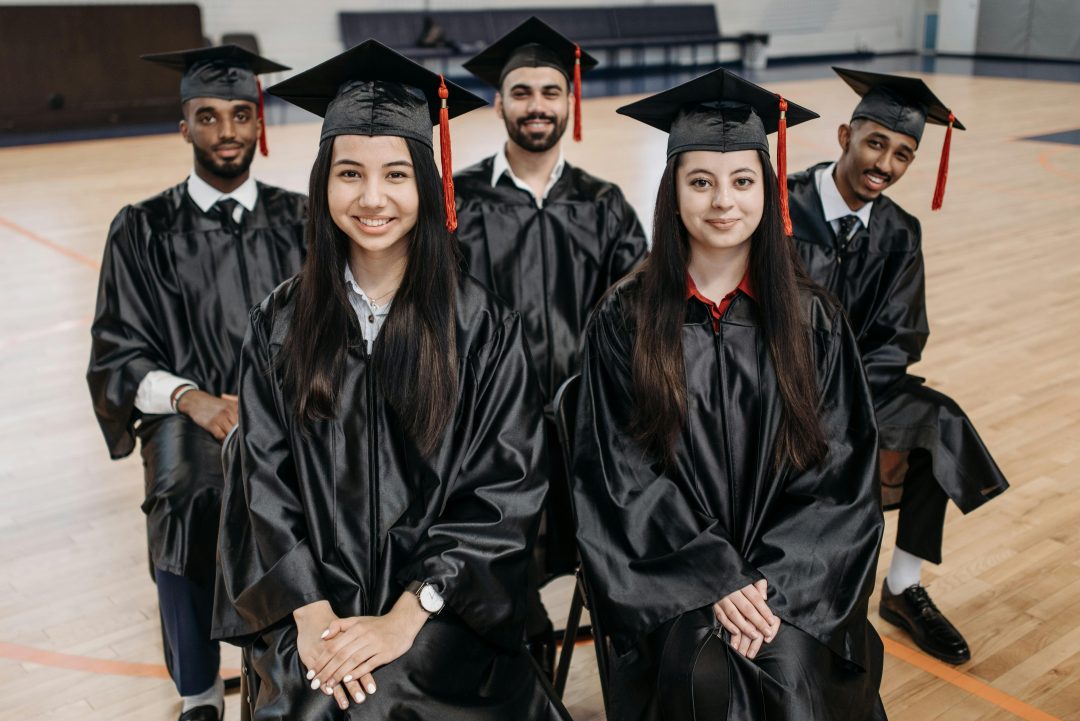
Fostering Excellence in Classrooms: A Comprehensive Approach
Picture By: Pavel Danilyuk
In the ever-changing landscape of education, pursuing excellence in classrooms is a collective endeavour encompassing academic excellence and holistic student development. To unveil the secrets of successful learning environments, let’s explore critical elements that educators can implement to meet the diverse needs of their students.
Begin with a curriculum designed to spark student interest and connect with real-world experiences. Align lessons with academic standards while infusing practical applications and real-life scenarios. Cultivate a passion for learning by making the curriculum an exciting gateway to knowledge.
Recognize and cater to diverse learning styles and preferences. Implement personalized learning approaches that allow students to progress at their own pace, explore topics of interest, and engage with materials personally. Foster a sense of ownership and motivation, paving the way for sustained academic success.
Establish clear expectations and maintain a positive, inclusive atmosphere. Implement proactive behaviour management strategies that create a safe and respectful learning environment. A well-managed classroom sets the foundation for effective learning and active student engagement.
Leverage technology as a powerful tool to enhance the learning experience. Incorporate digital tools and resources to make lessons more engaging. Equip students with essential digital skills for the future, embracing the benefits of technology in education.
Recognize the connection between academic success and social-emotional well-being. Prioritize the development of social and emotional skills, fostering empathy, self-awareness, and effective communication. Create a supportive environment where students feel valued, heard, and prepared to navigate interpersonal relationships.
Equipped with knowledge, teachers can adapt their strategies to meet the evolving needs of students, contributing significantly to classroom success. Stay current on the latest pedagogical approaches, technological advancements, and educational research. How do they align with your pedagogical practice? Which aspects can you adopt, adapt, or discard? Consistent review of pedagogical practices empowers the educator to effectively and responsively meet students where they are to guide them to success.
Action Items for Educators:
Curriculum Innovation: Review and enhance your curriculum to include practical applications and real-world relevance. Seek opportunities for cross-disciplinary connections to make learning more engaging.
Proactive Classroom Management: Establish clear expectations for behaviour and create a positive classroom culture. Implement proactive strategies to address potential challenges and develop an environment conducive to learning.
Technology Integration Workshop: Familiarize yourself with educational technology tools and explore ways to integrate them into your lessons. Attend workshops or sharing sessions/events at your school to enhance your digital teaching skills.
SEL Integration in Lesson Plans: Infuse social and emotional learning into your lesson plans. Incorporate activities that promote empathy, self-awareness, and critical communication skills among students and their learning community.
Continuous Professional Learning Plan: Create a personalized professional development plan. Attend workshops, webinars, or learning opportunities that support you in staying current on the latest education trends. Collaborate with colleagues to share insights and strategies.
By implementing these action items, educators can contribute to cultivating excellence in classrooms in a way that supports students’ overall well-being and growth.
Bringing Culturally Responsive Learning Outdoors: Part 1
When we think of culturally responsive teaching, outdoor learning may not be the first area that comes to mind. How do you connect nature with culture and student identity? The answer is not straightforward. However, making nature relevant to students from culturally diverse communities is important, especially when we consider the importance of environmental stewardship and the historical underrepresentation of diverse communities in outdoor culture.
Spending time outdoors is one of the most high-impact, easy, and cost-efficient ways we can support the well being of all students. Outdoor play lowers anxiety, enables students to explore difficult emotions, experience awe and wonder, and disconnect from digital spaces.
It is important to keep in mind that culturally and linguistically diverse students may interpret and engage with the outdoors in ways that do not reflect what we see in dominant, Western representations of outdoor culture. One of the most interesting discrepancies I have noticed between typical Westernized representations of the outdoors and my own lived experiences is the ideal of the “empty wilderness”.

Many representations of the outdoors reflect an aesthetic of stillness and solitude: the empty dock, the barren mountainside, or the endless fields. Indeed, I have personally taken such photos, adjusting the camera so that I or the subject of my photos appear alone.
While I think this type of image taking is largely done to avoid having background distractions in the photo, I can’t help but connect it to the Canadian fascination with solitude in the outdoors, rooted in the romanticized concept of the explorer: Europeans who arrived in Canada and “discovered” a wealth of land and natural resources to exploit. Of course, we know that Turtle Island was far from being uninhabited – and we are just starting to see and hear Indigenous perspectives in our educational landscape – but I believe this reverence for emptied out natural spaces is tied to this piece of history.
Exploring Incongruent Experiences of the Outdoors
The dissonance between the way we idealize nature from a Western perspective and the ways different communities actually engage with nature becomes clear to me every spring when the trees start to blossom.
I’m very fortunate to live near High Park in Toronto, and I try to visit the park when its famous cherry blossoms are in full bloom. Droves of people across the city do as well, and as a result, the park is filled with crowds of people of all backgrounds taking photos and gazing into the beautiful pink canopy that forms in different areas throughout the park.

This year when I visited I noticed that the crowds were largely people of East, Southeast, and South Asian descent. I could hear so many different languages, but perhaps what was most amazing was the sound of joy and excitement at seeing the blossoms.
It occurred to me how amazing and wonderful it was to be in the masses of people enjoying something special in nature. I also wondered why we stay so fixated on this concept of nature as a lonely and empty place. I caught myself trying to capture photos of my family as though they were in an empty space, realizing how futile and pointless it was, and also questioning my own impulse to have a photo that did not reflect the environment I was actually in.
As wonderful as it is to see so many people outdoors enjoying the park, there always seems to be negative sentiments about the Cherry Blossom crowds. Perhaps unsurprisingly, complaints about traffic and the selfie-snapping crowds start to resound in online comments or conversations in the community. To be perfectly clear, I too have made some complaints as a resident who despises sitting in traffic while cars line up to get to the park. But I notice much darker sentiments of anger and irritation pervade comment threads about High Park and other popular places to visit, such as Niagara Falls or “cottage country” in the summer.
I remember reading a news post about Niagara Falls on social media a few years back and reading complaint after complaint in the comments about the high proportion of South Asian visitors who were picnicking instead of “supporting the local business.” Racism and xenophobia similarly echo in complaints about large, culturally and linguistically diverse groups that flock to beaches to enjoy the summer weather.
Why do so many people detest seeing others enjoy nature? Is it part of the collective fascination for an empty “wilderness”? Racism and xenophobia? A mix of both?
Connecting Back to Outdoor Learning
For me, outdoor time has always been strongly connected to being in large groups, being part of large potluck gatherings with family, sharing a cottage rental, or joining droves of tourists that gravitate toward an awe-inspiring sight like Cherry Blossoms. These are activities that, at least in my view, are rather broad in appeal to most people in Canada. I find it upsetting when certain groups are stigmatized for enjoying the outdoors in this way. And I can’t help but feel a tinge of shame and self-consciousness when I am part of a group of “too many” or “so many” Asians.
These feelings of being “othered” in outdoor spaces can be difficult to talk about, but I think it is important to name them because internalization of colonial values have such detrimental impacts on mental well-being, especially for those of us who grow up in Canada learning colonizer mythologies. As culturally responsive educators, we especially need to be mindful of when we may be sharing such narratives to students.
In part 2 of this blog, I will present a framework of cultural responsiveness we can use to start breaking away from harmful and inaccurate historical narratives.
Joyful Readers
There are some memories about school that are crystal clear in my mind. One such memory is when I was in first grade with a friend of mine (I’ll call her Beth). The most prominent memory I have of us is when we were reading with the teacher. She told us that we would be able to choose our own books from what I now understand was the levelled reading room . We went down the hall together and when she opened the doors it was like a bright light that shone in our eyes and a choir singing in the background. We saw so many BOOKS. These were different books than you would find in the library in the primary section – there were chapter books, picture books, and long books and books with lots of different characters in them. We could choose and exchange any books we wanted to read from this special room.
In retrospect, I know there wasn’t theme music or bright lights (unless it was the sun coming through the window). The books probably would be boring by today’s standards and were likely more dusty than I remember, but it remains a defining moment for me. I am still a voracious reader. I love a good story and I aim to develop a love of reading with students.
I think there’s something to be said for building a love of reading. When I was young I read books that were fun. As I grew older, I went through all the genres; scary books, romance books, literary canons, non-fiction, etc. I discovered what I love most about reading is the way I can learn about the world and the people who live in it.
I’m going to go out on a limb and say that despite the fact that I learned to read in school, it isn’t the phonics worksheets that developed me into a reader. It wasn’t the focus on sounding out the alphabet and consonant blends that made me want to visit the local library and get the newest book from a favourite author. Of course, all of those things are important in the science of reading; developing decoding skills and a knowledge of words, but today there’s so much more opportunity for students to gain experience in developing these skills. Using audiobooks, thinking about text images to introduce vocabulary and ideas before engaging in print, technology, videos, and even music are all helpful in allowing so many students access to reading and language development. What I loved most, as a student, is the books coming alive. I remember my grade one teacher reading aloud to us and having us imagine (then vocalise) the sound effects for the stories she read to us. We would make knocking sounds when someone knocked on the door or big sighs when we saw a character’s emotions on their faces. This interactive way of engaging with reading helped me to understand that reading is also important because of the way we make sense of texts and ideas.
It was also the autonomy to choose books that meant something to me, ones that I thought were interesting or fascinating. I could spend time learning about myself and what I liked to read. It was the opportunity to talk about things that were interesting to me with my teachers. It was finding a voice and learning the words to express ideas and emotions and thoughts in a small reading group when I was painfully shy to raise my hand in class.
One of the main goals of the revised language curriculum is “to encourage students to experience the joy and possibility that literacy learning can ignite.” It sounds like such a beautiful learning experience. What if we made sure to create joyful literacy moments for every student? What possibilities would they dream of? What would inspire them to become readers and to love reading a good text – whether it be books or movies or an instructional manual – or to love creating one? Think about the possibilities that literacy learning blocks can bring when we consider learning to read and reading to learn a purposeful partnership. Maybe those are the core memories of joy and possibility we can cultivate for students.