I am for sure aging myself here, but for those of you who may not be familiar with this figure of speech it is used to describe a person who is good at many skills but a master of none. That is the best way to describe who I am as a teacher and how I have evolved over my career of learning to be a better teacher.
Far too often we think that in order to use a strategy or tool in our classroom we have to be an expert at it. We don’t! As a teacher I have to be familiar with the content, the methodology and/or the necessary steps but I do not have to be a master of it. I am going to talk specifically to my personal Achilles tendon of teaching, the ARTS. I am in no way a musician, yet I can share my passion for music, lyrics and the powerful messages found in music. I can learn and teach to the curriculum expectations of my grade. I can partake in professional development opportunities to expand my skill set and knowledge. Even after all that, I will still not be an expert as compared to a music specialist.
My greatest accomplishment in the arts has been my work on understanding drama as a teaching tool, learning dramatic content and implementing it into my program. I have never been on stage (other than as an elementary student at Christmas time). I have never been a part of any formal dramatic theme, other than helping clean up after a school event and yet drama is one of the most successful components of my program these days. Each year my team and I take a group of highly volatile behaviour students and put on a formal dramatic presentation that we travel with to various schools within my board to share. We are currently in mid production of this year’s play.
Like in almost anything I was not comfortable with as a teacher, the students’ skill set, passion and innate ability to learn took over and I was just left to facilitate their growth. The second message is that when you share your expertise with your colleagues (collaborative planning) the saying that no one person knows more than all of us holds true. I am writing this for all teachers to understand that is it okay to take risks, it is okay to make mistakes in your classroom and learn from those mistakes and it is certainly okay to be a jack of all trades and master of none.
I’d like to share, what is probably, my favourite on-line and in-class instructional tool – TED Ed. And since 2013, it has been front and centre in my classroom. TED Ed you wonder – it’s like TED Talks right? Kind of yes and not exactly. Although I use both at my school, there are some differences.*
It all started in 1984
Last year, I shared TED Ed with alot of educators. So to break the ice, I begin by asking them to guess what TED stands for? Most people respond with Technology, Education or Engineering, and Design. Those happened to be my guesses too, but the ‘E’ in TED, stands for Entertainment. Since those first talks in 1984, tens of thousands of speakers(students included) have stood on the dot and shared their ideas worth spreading which are both entertaining and educational.
The Ed or education component is a relatively recent addition, but it is quickly becoming a phenomenon that is uniting educators around the world.
TED Ed Clubs
Out of the incredible talks and desire to connect educators around the world with one another, the TED Ed Club and TED Ed Lesson platforms were developed. Now teachers have an opportunity to curate, create and share lessons with a global cohort of educators and learners. What’s incredible is that students can access and contribute to the lessons too.
So far this school year, I have shared lessons with high school students in Poland, connected with TED Ed Club leaders and students in Zambia, and worked welcoming new club leaders from Syria, India, and here in Canada. From these experiences we support one another, while encouraging students and educators to discover their passions, find their voices, and develop important presentation literacy skills.
Through TED Ed Clubs in my school, students cultivate ideas, learn to organize and express them and then present their talks at number of opportunities throughout the school year. Some talks are even shared, with permission, on the TED Ed YouTube Channel.
TED Ed Lessons
Whether it is for mind’s on activities introducing new subjects, or I have created and shared over 50 lessons using their freelesson editor. It starts with an idea, and then another one, and suddenly there are ideas spilling all over the desks, into the hallways, and out the doors of the school. Simple right? Did I mention it was free?
With a certain lens. I’ve discovered the magic occurs whenever I am able to find out what interests students as I plan my instruction. Armed with that knowledge, I can then create or bookmark lessons to spark curiosity, broaden understandings, and encourage digging deeper.
In fact, one of my favourite parts of creating a TED Ed lesson is filling the Dig Deeper section with resources and additional lessons, images, and points of view. I even post music videos as a soundtrack for some. The feedback has been overwhelmingly positive from students and parents. I hope you take the time to explore TED Ed and are able to use it in your classroom. If you create a lesson, please share it with me.
If you’d like to learn more about TED Ed, please message me in the comment section and I would be happy to share. In the meantime, click on some of the links. One of them is the current Prezi I share with educators for PD.
Thank you for reading.
* When I was starting out in French Immersion, the subtitles in TED Talks allowed me incredible access to fascinating digital content, while honouring the need to maintain a focus on French language learning. Now, I am trying to gather like minded educators to contribute lessons to be shared for French Language education. Please leave a message in the comment section if you are interested in joining me.
It’s been over a year since Canada opened its doors and hearts to thousands of Syrian refugees. They, along with countless others from nearly every country, chose to make Canada their new home.
Along with the joy, angst, and tumult of moving must also come stress and bit of culture shock from so many new routines, signs, systems, official languages, and day to day decisions. Each of these are indeed daunting to any new arrival at our border including my own. Here’s my story.
In this post I wanted to parallel some of the memories, experiences, and feelings. Since the PM’s name hasn’t changed, I wondered if there were other things that still mirror the experience of moving to Canada nearly 40 years later. As the expression goes, “plus ça change plus c’est la même chose”. However, this time I’m not the nervous student stepping across the threshold of the unknown and into a new classroom. I am the smiling face that greets them on the other side. Here are three tips that help out in my learning space.
Firstly, remember immigration to Canada is nothing new. This can be a great chance for students to learn more about one another in the context that almost all of us have an arrival story to be discovered. That’s how my ancestors got here in the early 1900s.
Our nation was able to flourish because of the generosity of our its First Nations People, it is our privilege to continue making it greater by making room in our hearts and neighbourhoods for newcomers. This is not different in our classrooms whether it is by providing time to learn about a new arrival’s country, culture, and customs or a little extra ELL support. In doing so, teachers can plant seeds of cultural literacy in the classroom and foster an inclusive environment around everything we have in common.
Secondly, not everyone is equipped or able to embrace each new member to the community, but as a family of learners we can always be respectful, polite, and supportive. Whether it is having students initiate a brief conversation, offer help navigating the halls at school, or an invitation to play at recess – a bit of kindness goes a long way to making someone feel welcome. With a little time and encouragement, educators can turn this into an incredible mentorship opportunity that develops and empowers students into school ambassadors.
Thirdly, have students share classroom norms and expectations, not you. Instead, why not build in time for whole-class inclusion activities and ice breakers when new students arrive? Whether it is a game of Octopus, Hoedown tag(Chain tag), or Electricity students get to interact with one another through movement instead.
Over the past 4 decades, I have come to love our move back to Canada in 1978. Reflecting on this is what got me thinking about my own quasi-immigrant (repatriation actually) experience that prompted this post in the first place.* The lessons and lenses gained from all of this now guide my instructional practice and ensure that there is room in our hearts, minds, and classroom to welcome and support new citizens to Canada.
*It’s been a while since I’ve hauled these memories out of the vault – my first through the lens of an educator rather than student.
I remember my first day of teaching as if it had happened yesterday and not 32 years ago. As my journey of teaching continues, there have been countless scenarios that have occurred that brought a smile to my face, made me cry, challenged me, taught me and humbled me. Those are the moments that inspire me each and every day I enter my classroom. About 13 years ago a very passionate and visionary principal I worked with started our year off by giving each teacher an empty box. She then went on to describe how it is up to use to fill that box with memories, moments in time that are like treasures not to be lost or forgotten. Ever since that time I have kept a memory box.
This box is filled with magical moments that I have been a part of in my teaching experiences with colleagues, students and/or their families. There are letters, cards, toys, photographs, trinkets, phone call summaries, thank you cards, trip mementoes, amazing accomplishments of individual students as well as class accomplishments. What goes into that box is anything that reminds me just how precious and important my efforts are and that no effort is wasted. I take the time to go and revisit my box in moments of self-doubt, challenging times or just when it seems that nothing is going right. After just a few moments of revisiting these wonderful experiences I can raise my head and once again forge on filled with confidence and positive energy. I look forward to the day (not too far in the future) when I can stop, reflect back on a career as I take the time to go through each item in my memory box, piece by piece, story by story.
I hope you take the time to stop and smell the roses in your everyday teaching and life. Make a pledge to start your memory box in 2017. Happy New Year!
As the holidays approach it is important to sit back, relax, reflect and rejuvenate as you take time to get that balance back in your life. In the mean time, I would like you to celebrate everything you have done to advance your students’ learning and social development by putting in endless hours of lesson preparation, all the small things that are not part of your role, hours of team practices, choir practices and performances, clubs, extra support at recess, calls home, visits, breakfast clubs and on and on and on.
Please take the time to watch the following collection of short videos as they remind us just how important teachers are in a student’s life. ENJOY!
As I reflect back on my teaching career I have come to understand how appreciative I am of the amazing teachers and administrators that have impacted and helped shape my life both as a teacher and a person. Everything I am as a teacher, everything I do as a teacher, everything I have is a result of the sharing that was done with me throughout my years in the classroom.
There are times when you do not know how to show your appreciation and saying thank you seems so inadequate. As a very wise principal (and now a good friend) once said to me, the best way you can show your appreciation is to make use of the advice given to you and pay it forward.
This post is going to be about paying it forward. I am going to share with you two of my most successful teaching units and two of my most cherished books that I use year in and year out. If you read this blog, I am going to then ask you to pay it forward by sharing in a response to this blog or via other social media options two of your most tried and tested teaching strategies, units or themes as well as two of your favourite books that you use in your classroom. Together we will pay it forward.
Books:
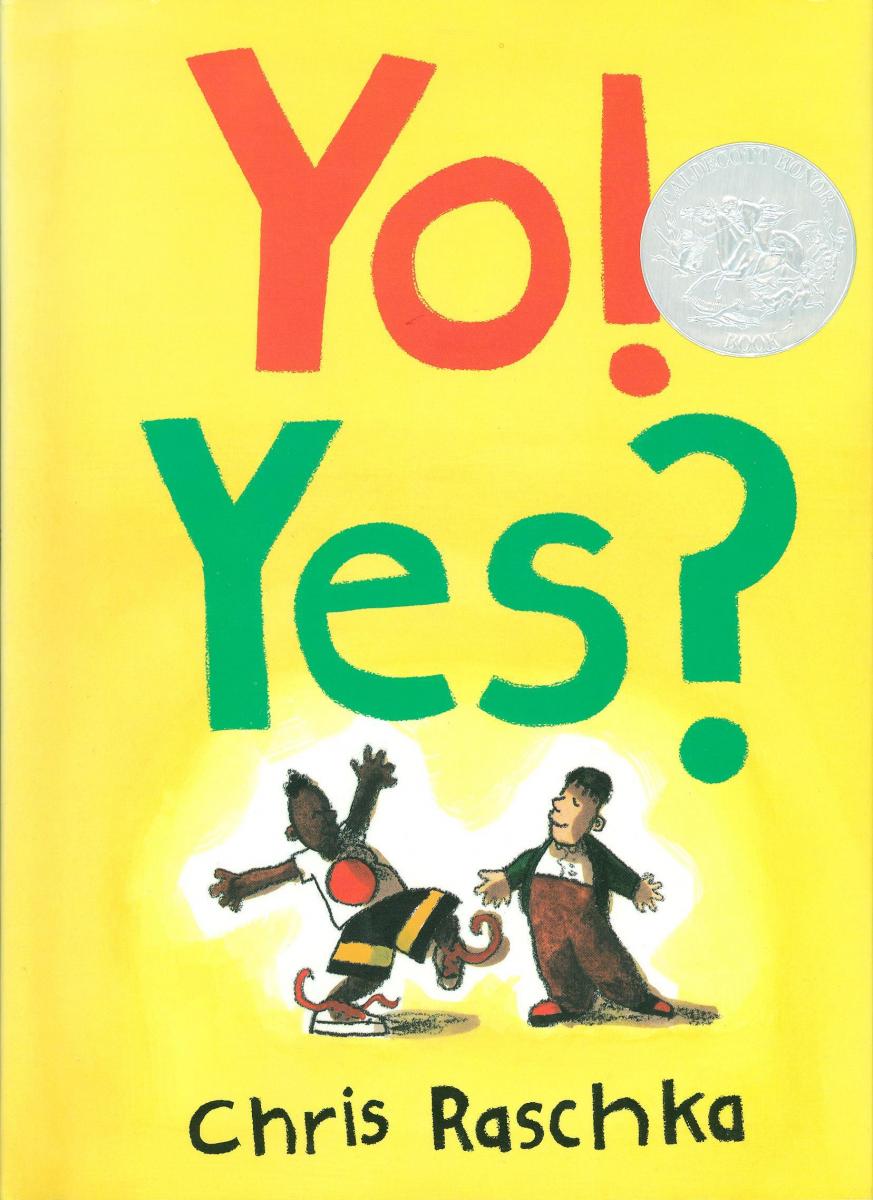
This book has been a part of my teaching for almost fifteen years. It is the book that starts my class off from Day 1 each September. The power of this book is in the multiple messages that can be drawn from the words and texts. The two main benefits I reap from this book are that everyone can read, reading is going to be fun and it kick starts my focus on drama for the year.
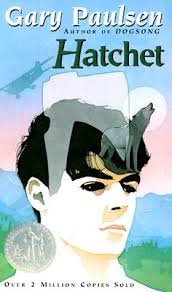
This book is part of who I am and my passion for the outdoors. It is the story of a 13 year-old boy who is lost in the wilderness and has to rely on himself to survive. This is a powerful book to hook children into the outdoors as the author creates a picture that transfers my students into the setting where they re-enact the main character. We culminate this book with our ‘Hatchet Day’ at a local outdoor education centre and then do a compare and contrast with the movie version ‘A Cry In The Wild’.
Poetry is a powerful form of writing and the success I have had with reluctant writers has been very inspiring to me. The power of this genre comes in the multi-faceted approach one can take with it. Poetic language does not have to follow grammatical rules, which allows reluctant writers to focus on meaning through word selection. I often use the outdoors as the theme behind our writing as we bring our experiences into the classroom and on to the paper. We culminate with a poetry recital where they invite guests to hear their writing.
Team building is a non-stop, five day a week, always on my mind approach that I take in my room. I de-emphasize competition and focus on common goals. ‘We’ is the pronoun that runs through the heart of my classroom. We enter into our year as individuals and from minute one we focus on coming together for a common good. The diversity and differences in our room becomes our strength as we celebrate and benefit from the shared expertise and passions in our classroom. This is accomplished through character education, books, songs, games and most of all face-to-face interactions such as eating lunch together.
Thank you for taking the time to read this blog and I now ask you to pay it forward.
Underlying An artist was preparing to paint one day. First, she stretched and secured her canvas over its wooden frame. The artist continued by arranging her brushes, planning a colour scheme, and then by setting up her supplies. Finally, it was time to ponder her subject forever to be captured in a moment of time and occupied space – where her vision would be on display in pigment, oil or acrylic for evermore for all to enjoy.
The artist could already see her finished masterpiece. As if the picture had miraculously painted itself. Without anything left to imagine, conjure, or deliberate she began.
Un-(der) inpired It was all right there in living, er um, cold dead colour. All she had to do was slather it onto the wintery whitewashed space in waiting. She pulled out the widest brush in her kit, dipped it into the first colour, white, and painted a perfectly straight line across the top of the canvas. She dipped her brush again and repeated, the same thing over and over, with the precision of her first strokes until she has covered the entire canvas. She felt satisfied, but did not have time to admire her work for long. There were 29 more canvases to cover just like the first one. She smiled, sighed, dipped her brush, and started on the next one. Yet, with a pallet of colours and brushes at the ready, the artist only knew how to paint with a single brush and to use white paint to do her work.
Under pressure Does teaching ever seem like this to you? Do educators feel they are asked to paint blank canvases everyday, but are only given one wide brush and a single colour to work with? I wonder whether that is how some teachers have come to feel when a learning system is imposed on them which expects students to be taught to the test?
Teachers plan and prepare their materials to deliver a lesson much like the artist in the story above and in the end are expected to use the broadest brush and one shade of paint. What may be more disappointing, is that many only have time to paint one coat before feeling they have to move on.
Underwhelmed I am not a huge fan of the traditional textbook. In fact I have called them “knowledge coffins” in the past. When traditional textbooks are at the centre of the instructional day, there is little option for learners to explore beyond its pages. Yes, it’s all in there, but at what cost are other things and ideas being left out?
First, consider the cost of purchasing texts/licenses per class. Math books alone can range upwards of $1500 to $2000 for a class set per subject. What happens when the curriculum gets revamped like what has recently happened in Ontario with the French(2013), Health/Physical Education(2015), and Social Studies(2013). Could the money schools, boards, and government pour into photocopies and textbooks be used to provide Chromebooks for every student instead? Imagine the cost savings in paper alone. If we did this, every learner from K to 12 could be equipped with a productivity and research tool for the classroom at their fingertips? And, at home too if WiFi is available.
Unrepentant
I am a fan of adaptive and hands on learning environments. In the classroom, I want students to have a voice in how and what they are being taught so we can democratize education. I believe all educators possess the means/ability to transform and tailor their instruction to suit their students. What they need now is a safe place to do so and that’s an issue of system and school leadership.
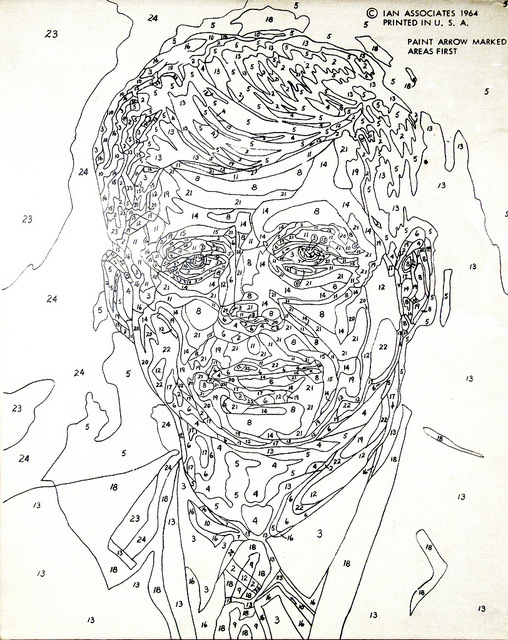
JFK Paint by Numbers
To paint a portrait of the future, educators need to use the prescribed curriculum as a pallet filled with colours that is not limited to a paint-by-number task. However, many are afraid to use other, less traditional brushes and materials to paint their masterpieces because the outcomes might not look resemble or match work gathering dust on the walls.
Yes, there are things to be taken from the past, but the world outside our classrooms has not remained fixed in space and time. Neither should it remain static inside. The classroom must become a vibrant and connected place where students have access to, and be able to contribute to a world of knowledge.
This requires courage to happen. It requires time for others to understand, accept, and embrace. It doesn’t have to look perfect. The mess is an important part of the process.
Ask yourself what or who inspires you to take chances as a learner? What new idea(s) would you try in your classroom if you knew you couldn’t fail? Start by giving yourself permission to change things up in one subject area, and then go from there.
I’ll be here to chat if you want to talk more about how we can change the portrait of education to a landscape of creativity, differentiation, and encouragement.
Life is so busy that it sometimes takes an overwhelming effort to make time for yourself, let alone remembering all the sacrifices that have been made that allow us to live in such a free country. Yet we must and we must teach our children so they understand the why of remembering and not just the act of remembering.
Every year we make a concentrated effort to bring the community and school focus on Remembrance Day. Teachers and students put together emotionally compelling presentations to honour the generations from our past that made the ultimate sacrifice to make Canada the country it is. As part of our daily commitment to students we must commit to educating them not only about the world events that lead us to November 11, but also the small, day-to-day acts that make their world safer, healthier and provides them with a seemingly endless list of opportunities.
Take the time to have classroom discussions about the role of police officers, firefighters, physicians, crossing guards and any other key individuals that impact their life. Write letters of thank you and deliver them to those individuals or organizations. As a teacher (and key role model for your students) model for them on a daily basis how remembering can be demonstrated in such small ways as simply saying thank you.
Finally, as a teacher who has been in the profession for over thirty years, I must say thank you to the generations of colleagues before me. They spent days on the picket line, sacrificed family time and were the target of public scrutiny in order to make my profession what it is. I am blessed to have job security, benefits, peace of mind knowing my wife is treated equitably as a teacher and that my working conditions and student learning conditions are constantly being protected. This was not always the way for teachers.
I write this post as a tribute and thank you to all educators who breathe inspiration into the lives of their students and into one another from September’s strong start to June’s stronger finish.
This post is the completion of a promise after a response reminiscent of a rant written to address comments in the media about educators. In the spirit of warmth and fuzziness I’ll keep my word(s) positive.
You did it!
10 months in the books, out of the books, torn away from the books, and complete with several second looks. From field trip bookings and to figurative (text)book burnings the school year sparked a 5/6s of a year long fire of growth. And now, as the embers cool, the ash settles, and the warmth fades another year of memories will linger as ember in the mind to be stoked again soon.
Does anyone else feel the same way? I do and know that I’m not alone on this one.
This year, my seventh, which I am privileged to witness many intellectual and life fires lit, fanned, spread wildly, and occasionally control burned. A feat, I am sure, that was accomplished throughout millions of classrooms around the world thanks to incredibly caring educators like you.
Imagine that you were part of the transformation, edification, and education of a student. You helped someone, or several someones, be a part of something, achieve something or realize something they’d never known before? Could there be a more noble calling?
When students arrived in your classroom last September, they were rough around the edges, unsure of what was to come, carrying some of the baggage from the previous year, and full of energy (nervous and otherwise). And from that you set out rough around the edges, unsure of what was to come, carrying some of the baggage from the previous year, and full of energy (nervous and otherwise).
There were times, too many to mention (reports, parent meetings, phone calls, bombed lessons, planning lapses, sick days, and life in general) that required us to dig deep into our vaults to rise above, resolve, and retain our raison d’etre.
And now?
Rest, raise a toast to one another, as I do to you because you started strong and you finished stronger.
Cheers! Santé! Gom bui! Kampai! Prosit! Djam! Mabuhay!
Thank you for the inspiration.
It is that time of year when I am able to enjoy the labours of my endless hours of worrying, endless hours of commitment and endless hours of planning for my students. We call it our harvest time.
At the beginning of every school year a new group of students come into our program with a variety of dysfunctional behaviours accompanied by a lack of success in school and we always start with the same story. I bring out a group of apples in various conditions and ask them which one would they choose. Of course all of their decisions are based on what they see on the outside. Is it bruised? Is it ripe enough? Does it have the right shape as compared to all the other apples? But yet the best part of the apple is the part that nobody can see, the inside. That is who my students are. They are completely judged by what people see on the outside and from what they have experienced from the outside. Often, past teachers have no opportunity to experience what a wonderful, young person they truly are due to the violent, aggressive behaviour they exhibit. My first question to the students is how do we show people what an amazing person you really are on the inside. How do we show them your best part?
That is the question that was first asked over 10 months ago and after a year of academic and behavioural programming we have arrived at harvest time. They are now being judged for who they truly are and not what they previously looked like. Both the adults and students in Room 16 take great pride and enjoyment during harvest time. In our daily circles we are preparing them for that transition back to the regular world. That begins by revisiting awkward or negative scenarios that took place in our room, except at this time of the year we are able to laugh about it. The students shake their heads in disbelief as they have come so far and changed for the good so much, those past behaviours seem incomprehensible to them (self evaluation at its best).
They then begin to identify which strategies or skills have worked best for them over the year. They make a list of their most effective strategies, expressions or visuals and we put that together into a laminated bookmark. That is taken with them as they transition back to their next academic setting and becomes the foundation for their next year’s success.
I hope you are taking the time to enjoy your harvest time!