
The First 20 Days of School – Connecting with Students is a Great Place to Start

Teaching is always new! With a new group of students, fresh reflections on practice and the opportunity to start from scratch, as it were, the start of the school year provides teachers and students alike the opportunity to create new beginnings every year. Knowing this, what might some important considerations be to make it a great start? Chapter One of The Heart and Art of Teaching and Learning: Practical Ideas and Resources for Beginning Teachers highlights four important themes for success: connecting with students, passion for teaching, attributes-based approach and importance of school culture. I would like to focus this reflection on the importance of connecting with students within the first 20 days of school as a means to establish an authentic relationship with students that fosters trust and inspires a willingness to take risks within a safe learning environment.

Renowned poet and author Maya Angelou once said, “I’ve learned that people will forget what you said, people will forget what you did, but people will never forget how you made them feel.” This profound sentiment holds true for teachers and their relationship with students in that when students feel respected, safe and cared for, the experience of learning is enriched. The following are five practical ways for teachers to build authentic connections with their students at the start of the school year:

1. Be authentic. When teachers model what it means to be an authentic learner – mistakes and all, students are then encouraged to take risks without fear of reprisal. Let your model of authentic learning influence students to do the same. This form of transparency sets the tone for fostering meaningful connections between teachers and students.

2. Ask students about their needs and listen. Validate student voice by positioning them as the experts on themselves. Invite students to share their learning needs and the things that you could do as their teachers that would support their success and commit to doing them. Conducting multiple intelligence and attitudes and dispositions surveys are great ways to begin the dialogue for students to articulate how you can support their learning and their level of self-efficacy.

3. Explore student interests. As teachers we all need to cover the curriculum but viewing the curriculum as a launching pad as opposed to a landing pad can invite student’s interests to take centre stage in the teaching and learning process. Ask students about their interests and find creative ways to invite further inquiry into them while exploring the curriculum at the same time.

4. Learn the students. In addition to the information that can be found in student records (i.e. OSRs), commit to learning more about your students in meaningful ways. Pronouncing student names correctly is important way to let students know that they are valued. Challenge yourself to learn at least five non-school related facts about each of your students. This can help to build a positive relationship and validate their experiences outside of the domain of the classroom. Finally, being aware of students personalities (i.e. introverts, extroverts, etc.) will inform how to relate to them as well as setting the conditions of the classroom experience.

5. Invite to student voice by fostering a reciprocal relationship with your students. Nurturing a collaborative learning environment for students does not merely mean giving students the opportunity to collaborate with each other, but it also means positioning students as collaborators with you. Partner with your students to design the learning space and learning opportunities. This fosters student ownership in the teaching and learning experience and empowers students to be meaningful contributors to the class. When you invite their voice in classroom decisions, ensure that it is validated by action on your part. Leveraging positional power in the classroom creates space for a more meaningful connection between students and teacher.

As teachers we are in the business of supporting students success. Fostering meaningful connections with students goes along way in promoting both student achievement and well-being. When students know that their teachers authentically care about them, their willingness to learn will support their ability to do well. Starting the school year with students in mind will set you on a solid foundation for building upward. Make it a great start.
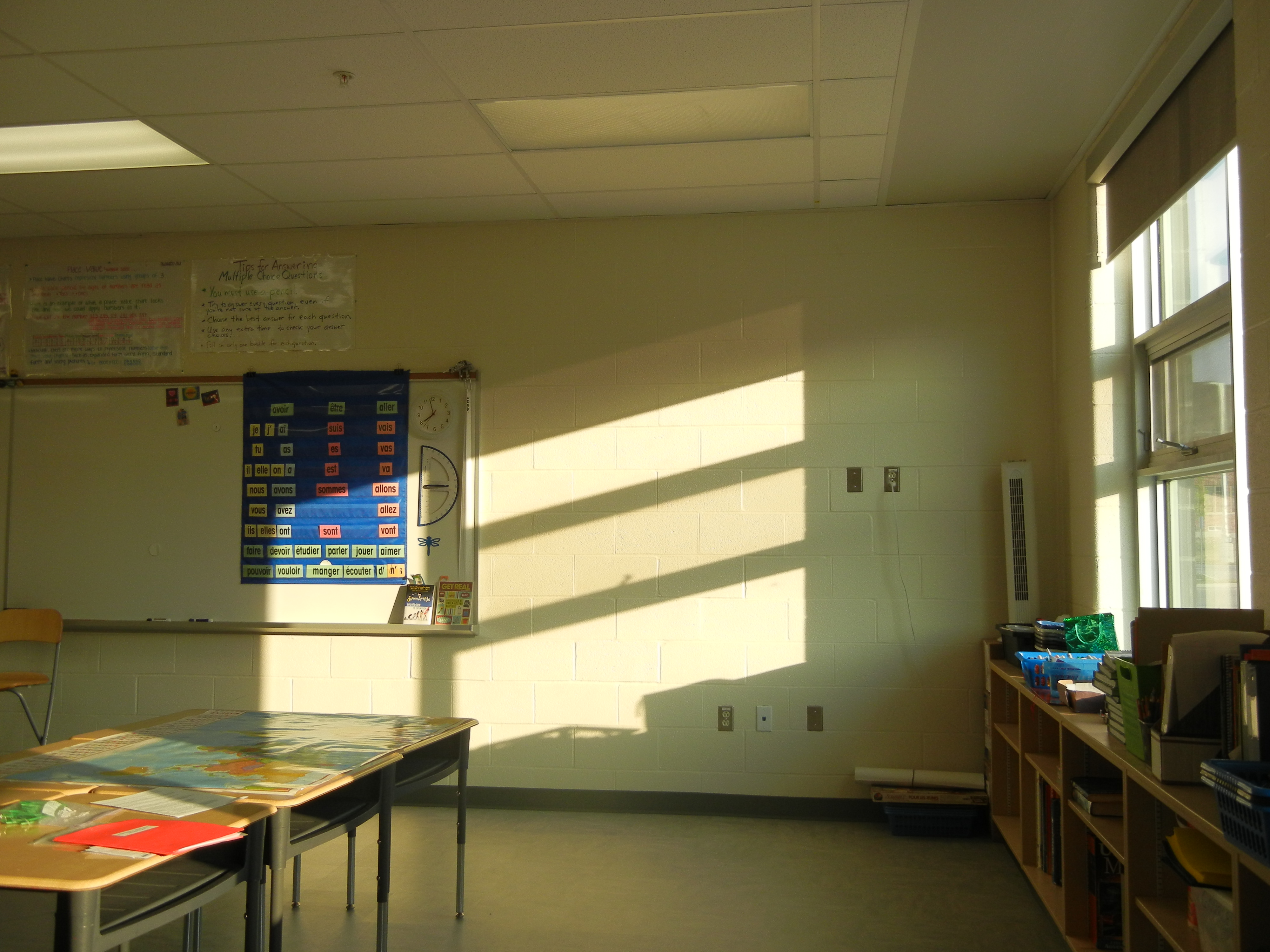

This is not a drill. We are live.

Dawn of new year.
Dawn of new year.

It’s the first day.
I’m alone in my classroom.
Wow! It’s so calm in here.
And why not? It is nearly 2 hours before the first bell of the new year.

Why do I feel so excited? Yet, at the same time like butterflies are barfing in my stomach? 

We’ve all thought about it, dreamt about it, and for many, myself included, stayed awake the night before thinking about it. Our first day. Albeit,  only for a moment, or as part of lifelong “professional reflection”, the first day of school evokes feelings of anticipation, excitement, fear, or fearcitement (my word).

Did I set my alarm? Am I dreaming? What will my students be like? What about the parents? Will admin be stopping by our class? Is everything organized? Did I pack a lunch? Where’s my coffee? What if they don’t like me?

If you’re experiencing anything from self-doubt to euphoria to start the year, take heart; you’re not alone. Whether this thought life is old hat or brand new for you; congratulations you’re a teacher. For many entering the classroom for the very first time, it is the culmination of many years of hard work and dedication to our profession.

In this new era, just landing a job is worthy of celebration in Ontario. So when you get a moment, set aside some time to take it all in.

It seems like only yesterday. I recall being there 2 hours before the first bell. I recall the faces of students and parents meeting the “new” teacher outside. I recall the first big breath taken before entering the classroom. I recall the sense of accomplishment knowing I survived. Moreover, I recall this where I began to thrive.

Thinking back on the excitement from my first days of school; I  appreciate how they have led to personal growth, professional friendships and constant learning.

So take some time and enjoy the moments that can only happen on a first day of school. Take time to watch the parents who are seeing their child off for the first time. Take time to notice the student who is standing off to the side trying not to make eye contact. Take time to be still and appreciate the world of difference you are about to make in the lives of your learners. Take time to get caught up in the excitement, and let it carry you through that first day.

Enjoy every moment. I know I will too.

Will

Why My Facebook Profile is Private (A Cautionary Tale)

Every year, I find myself having a discussion with a colleague about social media. Often times it’s with a newer teacher who is excitedly posting photos and details about his or her new teaching assignment to their Facebook page. I don’t blame them for being excited; I am often proud of things I have done in class and want to share them! When I got my contract, I couldn’t wait to tell people. And you can do that! Just be careful about HOW you post details of both your personal and your professional life.

At least once a year, I find a teaching colleague who has a public Facebook profile. Sometimes these profiles are perfectly tame – no details, no real status updates, and I get the distinct impression that they have a profile only to read other people’s posts. Often, however, I find a wide variety of details: names of family members, home address or phone number, e-mail addresses, photos of themselves and their families or friends, sometimes some truly unflattering photos which don’t even approach “professional”…

I’m not Facebook stalking, I promise. When I come across these teaching colleagues’ profiles, it’s usually because they popped up in my “People You May Know” tab, likely because Google and Facebook are forever stalking ME and connecting all of my social media accounts without my knowledge. I should probably stop leaving five Gmail tabs and two Facebook tabs open at all times.

Back to the topic at hand. Sometimes, I find photos of students at my school. Posted by teachers. Purely innocent – it’s often a “Look what awesome thing my students did today!” kind of post. The intention is kind. The thing is, those aren’t your kids. You don’t have permission to post those photos. And if I’m not on your friends list and I’m finding these photos, it means that anyone can see them – along with any other details you’ve posted, like where you work.

Now, lots of people think, “Really, Shawna? Who even cares about that kind of thing, though? I have ten Facebook friends. No one is ever going to find my profile… definitely not my students or their parents.”

Ha. HAHA. 🙂

In five years, these are just some of the experiences I have had on social media:

  • Students looking me up by name on Facebook;
  • Students looking me up by e-mail on Facebook;
  • Parents finding me through mutual friends because they saw me comment on said friend’s profile and figured out who I was even though I was using a pseudonym;
  • Parents finding me through posts I made on ETFO’s Facebook page;
  • Students finding my personal e-mail address which does not have my name anywhere in it and isn’t connected to ANYTHING I do professionally;
  • Students finding my personal Twitter account;
  • Students finding my XBox Live account with my personal e-mail address they found somehow…

I could go on, but it would become (even more) glaringly obvious to everyone reading this that I spend entirely too much time on the internet.

Those are all things that have happened to me in five years of teaching Grades 4 and 5, and I’m careful. I didn’t use my real name for ages on Facebook. I never do anything professional with my personal e-mail address. My personal social media accounts are not connected to my work e-mail address in any way. When commenting on friends’ pages, I do not give any personal details. Still, they find me. They request to add me as a friend. I turn them down. We do the same dance six months later when they find me again. Try having a parent/teacher interview after you’ve (kindly) turned down a parent’s Facebook friend request. It’s awkward.

The point is, they’re looking. They look up everyone. Students, parents, colleagues – someone out there has looked you up on Facebook, almost certainly. And if my Facebook profile wasn’t private, they would suddenly have access to ten years’ worth of photos, status updates, events, rants, laments… I’m pretty open with my students, but not THAT open.

While I am in no way a fan of the idea that everything you do online can have professional repercussions, like it or not, we are members of a profession which doesn’t really have “off hours.” Before you post that photo of you at the cottage with friends, before you post a photo of a few of your students doing your hair because they met their Terry Fox goal, before you use the same address for both Facebook and communicating with parents… imagine your students looking you up. Or their parents. Or your boss.

Be careful what you post. Be mindful of your privacy settings. Know that nothing is ever completely “private” on the internet because someone with access could repost it without your consent.

And for heaven’s sake, set your Facebook profile to be private. 🙂

Summer Reading – Blog List

Here it is, last day of June, and I am finally finding the time (read: sequestering myself in the office while my husband watches the baby) to post. Sigh. 🙂

In simpler times, when my only real concern over the summer was daydreaming about my class the following year (because I am a giant nerd), I found myself perusing blogs for ideas the way many newly engaged women pore over bridal magazines. My summer has always been full of planning, thinking, dreaming, and preparing. In my travels, I’ve come across a few really wonderful teaching blogs which have provided me with a wealth of ideas and inspiration. I can’t possibly be the only one always looking to others for new strategies, so with that in mind, here are a few of my favourite places to visit:

Runde’s Room – Home to heaps of resources and ideas. She has a VERY good shop on Teachers Pay Teachers. When I was teaching Math, I purchased several of her resources and my students always loved them.

That Artist Woman – So many engaging, wonderful art projects on her blog, complete with tutorials. I always find lots of inspiration here. I think I might have more fun doing these projects than my students, but that’s just because I love art so much!

Living Avivaloca – Another well-written blog full of reflections on teaching and learning, written by a Grade 1 teacher.

Madame Bellefeuille – She doesn’t post too terribly often any more, but this blog has been great for finding resources for beginner French Immersion.

Teaching FSL – Mme Aiello maintains her blog regularly and her Teachers Pay Teachers store is FULL of great products for FSL teachers. She regularly offers freebies, and her blog is full of advice for new and experienced teachers. Her ideas saved me regularly while I was doing occasional teaching work, and now that I have Core French on my schedule next year I expect to be visiting her blog even more regularly.


Hopefully someone out there finds one of those links as helpful as I have. 🙂 If you have any other favourite places to visit online, I’m always looking for new sites to add to my blogroll!

Photo of Samantha Perrin

Keeping it calm during the last week of school…

To be honest, it isn’t really possible to keep calm and carry on during the last week of school. There is so much anticipation for the summer holidays that everyone is feeling a little giddy with excitement. However, it is possible to keep your students occupied and happy, and not push yourself too far towards further exhaustion by involving your students in an all-ages/all abilities project that takes little preparation and that can evolve over an afternoon or a few days.

Although workbooks and school materials may have begun to make their way home, usually you can find the bare minimum of materials the students will need to complete this project. What they need, they often make themselves or find in the school yard if you don’t have it in the classroom. The project involves students making a board game that employs elements of math, arts, and language. As an added challenge, perhaps they can include an aspect from a strand in science or social studies topic that will truly be a culmination of their learning over the year. Sometimes, however, the games are modeled on games they already know well, such as Pokemon or Mindcraft. Regardless of the genesis of ideas, students seem to have plenty of enthusiasm for creating a game and for fine-tuning it so that is will be successful.
Materials needed;
• Scrap paper for rough copies
• 1 sheet of legal-sized paper, car stock or poster board per person/group for final copy
• Pencils, erasers, markers
• Rulers

For the criteria for creating the board game, I ask students what elements make a game fun to play.
Criteria for Creating a Board Game;
• How many people can play?
• Will you need dice, spinners, or numbered cards, etc. for probability?
• What will you use to move across the board? (ex/ stones, coloured blocks, lumps of plasticine)
• What is the goal of the game?
• How can you win the game?
• What are some challenges that may prevent you from winning the game right away?
• Are there colourful graphics?
• Are the rules easy to understand?

Students seem to be happier to do this in partners, although some students prefer to work alone. Whether they work alone or in pairs, students plan to have a game day on the last day of school where they invite other students from other classes to play their game with them (your colleagues will love you for this!) When the weather is nice, students can play out doors in the school yard. Every year, I love to see everyone busy creating and playing and trouble-shooting their games, and then proudly sharing their creations with their peers. And, a fun, student-led activity is definitely a great way to end the school year.
Let the games begin!

Photo of Tammy Axt

Do you like the band Rush?

20150617_205634


Do you like the band Rush? I guarantee no matter how much you think you love Rush, you are no match for the man who sat beside me at the Rush R40 concert last night. He knew every drum beat that Neil Peart played, every lyric that Geddy Lee sang and every guitar solo that Alex Lifeson wailed. He didn’t just love their music, he loved their music and worshipped the band. We all have music that speaks to us in that way. For me, when I hear Fleetwood Mac or Michael Franti, I have an emotional connection to their music that is unlike any other.

During the school year, my students spend a lot of time writing music or playing music that is from a variety of cultures and time periods. This June, I decided to let the students create a list of what songs they would like to sing in music class to tap into the songs that they love. Most songs that they chose were modern pop, rap, hip hop or alternative songs. The goal was to give my students the same experience that the man at the Rush concert had when he cheered and high fived me for all his favourite songs.

I took the lists that they created and went on line and previewed the lyrics. Some songs had just one or two bad words and with the magic of “YouTube” I found clean version of the song. Songs that had inappropriate themes got omitted from the list. After the list was created, I made a word document that had all the YouTube URLs. I projected the lyrics on my screen and had a good old fashioned sing-along.

These sing-alongs were also a great opportunity to talk about musical tastes with the students. I started off every class by telling the students that “I guarantee that there will be at least one song that you do not like today.” I asked the students what they should do when they hear a song they don’t enjoy. The students quickly said that they should be respectful of someone else’s choice. I added on a quick conversation about how musical tastes develop and that interests in music are very personal.

I have spent the last two weeks singing songs like “See you Again” and “Firework” with my students at the top of our lungs. We have been high fiving each other when we hear our favourite songs. It has been a great way to end off the school year!

4gzuYzgeDK2uv1DA[1]

Photo of Tammy Axt

Gearing Up For The Last Day of School “WOOT WOOT!”

With 9 days left of school, many classrooms around the province are starting to wind down. But not us! Here at my school, we are gearing up to the craziest, wildest show that will take place on the last day of school.

The idea for what is now known as the “variety show” came out of a need for something to keep students engaged on the last day of school. The premise began and has remained very simple. If your class would like to attend an entertaining performance, then they must prepare something for the show. Also, anything and everything is welcome in the show. In past shows we have had classes tell jokes, make up a play, do dances or sing songs. This year, we will be entertained by a glow stick dance, a stomp inspired basketball routine, kazoo “name that tune” and a variety of other performances. Classes usually use the last two weeks of school to practice a little bit every day.

Sometimes teachers approach the music or drama teachers to help with ideas and we are happy to help. Many of my ideas that I share come from YouTube. I just search something like “grade 5 basketball stomp performance” into YouTube and tons of ideas come up.

In between each performance, the drama teacher and I (decked out in a crazy costume) entertain the audience. We use chants like Boom Chicka Boom or tell cheesy jokes. We also do lots of cheering and build up school spirit. In the past we have ended the show by singing a song like Bruno Mars’ “Count On Me” as we celebrate all the friends we have made this year.

The drama, music and gym departments work together to make the schedule and provide any technical support required. We plan the show so that the groups alternate the performance space between the stage and the gym floor. This keeps the show moving at a very quick pace and keeps everyone on task. When each class is done performing, they go right back to their spot in the audience.

Sometimes when we are feeling extra energetic, we put a staff act into the mix. The students always love seeing their teacher dance or sing to Beyoncé or Rush.

Our “Variety Show” Keeps things positive until the final school bell rings.

Photo of Samantha Perrin

“Reconciliation through Education”

It would have been hard to miss the news coverage of the closing days of the Truth and Reconciliation Commission last week. With the tabling of the Report, any doubt, misinformation or ignorance has been addressed regarding the cruel treatment that Aboriginal children were forced to endure for over 100 years of Canada’s 148 years as a nation. What was also made abundantly clear is that this history was not taught in Canadian schools in the past, and at present is still not expected to be taught by all teachers all across the country. Last week, many Canadians heard for the first time in detail the horrors that over 150,000 children experienced while attending residential schools across Canada between 1840 and 1996. Throughout the 360 pages of the Truth and Reconciliation Commission’s Report, the accounts of 7,000 Survivors document the hunger, sickness, physical and sexual abuse, torture, humiliation and fear perpetrated by their educators and guardians in these schools. And if there was ever any doubt about the severity of the effects of the residential school system on Aboriginal children and families, this legacy in Canadian history was so calculated and so thorough in its aims that it is now considered a “cultural genocide”.
None the less, a week has passed, and the media has turned to other timely events. Where does that leave us? The talk of reconciliation is becoming distant, along with the concern of the general public. As teachers at this critical time we have the opportunity, responsibility even, to not let reconciliation become just another passing news item. Taking to heart what Manitoba Justice Murray Sinclair said in his closing remarks, there must be “reconciliation through education”. As Chair of the Truth and Reconciliation inquiry into the terrible legacy of Canada’s Indian Residential School System, Justice Sinclair urged educators to close the gap in our understanding about this shared history and walk with the Survivors and their families towards reconciliation. There is no better time than the present. Regardless of the fact that curricula across the country will take time to change, there are many ways that teachers can start the learning right now: beginning in the primary grades, by reading and discussing books like; Shi Shi Etko, Shin Chi’s Canoe, When I was Eight, Not my Girl, Arctic Stories, to name a few, or, following the lead of the First Nations Child and Family Caring Society’s initiative, by planting a Heart Garden at your school to commemorate the children lost and those who survived.
Now that it is over, it is not enough to simply have acknowledged the testimony of the Survivors and the work of the Truth and Reconciliation Commission, and we cannot honour the lives of the generations of Aboriginal children and families who were affected by the residential school system if we wait for other teachers to teach this history. It is our responsibility as educators to open the dialogue now and to learn and grow in this new chapter of reconciliation between settler and Indigenous peoples. Indeed, Ontario Premier Kathleen Wynne has admitted that “for reconciliation to succeed, we must also renew our commitment to educating Ontarians on the role that treaties and the residential school legacy play in Canada’s past, present and future.” So, although many teachers in the past may have faced scrutiny or a lack of support from colleagues and administration as they endeavoured to teach the truth about the Aboriginal residential school system in Canada, we can now consider Premier Wynne’s statement and Justice Sinclair’s words of ‘reconciliation through education’ as a rallying call to all educators to do what is right not just once, but every year we teach.

Photo of Lisa Taylor

Keeping Lessons Engaging to the End of June

It can sometimes be difficult to stick with the curriculum until the end of June. The sun is shining, you hear kids outside your window playing soccer-baseball during gym class, the room is sweaty, it is just time to be done! Resist the urge to abandon the curriculum for recreation, unless you can combine the two!

There are lots of fun ways to keep kids engaged until the very end of the school year. In my experience, the last month of school is the best time to do a big, whole class project.

One year, when studying Ancient Civilizations, we wrote a poem about some of the major battles in Ancient Greece. Then we drew on the Arts curriculum and made a set, props, and developed acting cues for the poem. We worked with the Media Literacy curriculum and marketed our production to the rest of the school and families. We did some math around how many showings of the play we would need to do if we had room for 35 seats in the classroom. We talked about what it would be like if we charged money for the show, what would we use the money for, how much would we get if we charged $0.25 per seat, $1.50 per seat, etc. What if your ticket included popcorn, how much would it cost? We purchased popcorn, popped it and measured how many servings we could get out of it. Then we did the math on how many bags we would need and how much we would need to charge for it. They worked out the math on how long the show was, how much time would be required between showings to get organized again, and then looked at the school schedule to see how many showings they could fit in during the day. They wrote reviews of the play for the newspaper, they wrote ads to go on the announcements, they even filmed commercials! They made a program to hand out, worked out how many copies they would need, they did it all.

The learning in this project was incredibly rich, and it was all culminating in the final 3 days of school when they presented their play multiple times throughout the day. This kept them busy, engaged, and connected to the curriculum for the last month of school. The last few days which can be chaotic, were a breeze. They ran the whole day, bringing classes to and from their play, presenting, and keeping the set organized and ready to go.

There are so many different ways you can plan for this last month to ensure the learning is rich, the students are engaged, and the days fly by! Inquiry Based learning is the perfect way to finish out the year. I had a grade 2 class that was very interested in restaurants. So we incorporated the social studies of food from around the world, and we turned out whole class into a restaurant that served dishes from different places around the world. Again, we did advertising, signage, lots of math around how much we would need of different supplies, etc.

Pick a topic that you know will hook your class. Then turn it into something big and run with it. You will be surprised at how much learning they get out of it and how quickly it takes over!

Photo of Lisa Taylor

Field Trips – Making them Meaningful

Field Trips are often booked in a variety of different ways, for a variety of different reasons. How do you infuse a field trip with learning to ensure it is as valuable as a learning experience, as it is as a life experience?

Some trips are booked for you. The school might have funding for each class to attend a theatrical production, or a science activity, so sometimes you don’t have any say in what trip your class is participating in. In this case, all you can do is know that if admin has booked it or approved it, that it must be educational and board approved. It is not inappropriate to ask admin for a summary of what the trip involves to you can preteach to what the focus will be. If there is content that might not be familiar to your students, it will add significant value to the trip should you prepare the students for some of what they will learn. In the past, my class has been assigned a trip to see a drama troop that had a focus on mime. My kids didn’t know what mime was, so in the weeks approaching the trip, we talked about mime, watched some videos of different types of mime, and then we tried it ourselves. When they saw the live performance, it was so much more meaningful.

When you book a trip yourself, you will likely need to fill out paperwork to have it approved by the board. Often a risk assessment is necessary – is there potential for the kids to get hurt? Once it is approved, you need to ensure you have permission slips, supervisors to meet the adult to student ratio, and a bus booked (or walking route set up). It is NEVER okay to transport students in your own vehicle, nor should you be planning a trip where parents are driving students that are not their own child.

You will also need to consider the cost for the trip. I have been at schools that have a community that can afford to go on expensive trips regularly, while I have been in other areas where asking for any money for a trip can be asking too much of the families. You need to know your clientele and make sure you are booking appropriate trips. If families cannot afford to pay for trips, your school may have a fund that can be accessed to ensure no child is left out. You should not be taking trips that include required content for essential learning and exclude students if they cannot pay. This is a huge equity issue.

You will also want to ensure you have a plan in place if there are any medical emergencies, behaviour issues, or other unforseen problems. Will you call the school to have someone come join you? Will the trip just get cut short? Will you bring an EA along with you that isn’t part of the ratio so if there is an issue the EA can take the student that is struggling and work 1:1 with them to ensure the trip is successful? There are lots of things to take into consideration when planning a field trip.

Make sure you run all plans by the office. The last thing you want, is to have a problem while you are on the trip and find out that the admin had no idea that was part of the trip and that they wouldn’t have approved it if they had known. Cover all of your bases before you leave!

Make sure you bring all epi-pens, medications, therapy devices, and a first aid kit. I always bring my cell phone as well to call for help should I need to. You will want emergency contact info for all students on the trip as well to ensure you can contact parents if there is an emergency.