Science Through Inquiry

I’ve always been excited about Science. Believe it or not, as a child it was my dream to become a Pediatrician. In High School, that dream was slightly crushed by my Grade 11 Chemistry and Grade 12 Co-op teacher who said that I would be a better teacher than Scientist. I thought that if perhaps she had stuck to Science rather than teaching, I may not have been so terrible at it. But that conversation also sparked in me something that made me want to prove her wrong. I went on to get a degree in Science, worked for a chiropractor and then did Pancreas Cancer Research. And then, I got on with my true passion – teaching.

I say this because I think in a very real way, we have the power to be able to shape our students’ interests. If we make a topic or subject engaging, they are more likely to embrace it. If we offer tools to allow them to think critically, collaborate and problem solve, then no matter the content, they can transfer those skills and embrace new learning opportunities.

I remember my experiences and that conversation with my Science/Co-op Teacher vidly because I said that if ever I became a teacher, I would never teach Science in the same way. As a beginning teacher, I think that I did. I taught based on what I remember learning which was through a textbook or worksheets with a few experiments sprinkled in. I wasn’t doing much better because I found myself again mirroring the content-delivery that I was familiar with. It wasn’t until I learned about and understood the power of inquiry that my practice was able to change.

4 years ago I had the privilege of working at John A. Leslie Public School with some amazing teachers who were on a journey through inquiry and looking at how it might be done in the whole school through the theme of water. Classes from Kindergarten through grade 8 were engaged in allowing students to question and explore their own interests related to water. From exploring pollution in the Great Garbage Patch to investigating water scarcity in different parts of the world, – including Canada – students were learning about Science in meaningful ways.  Seeing the messiness but high engagement of inquiry allowed for me to make the shift and I haven’t looked back since.

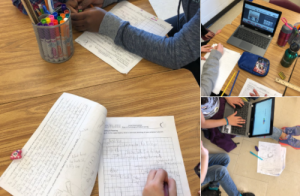
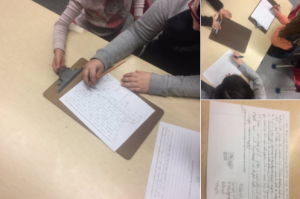
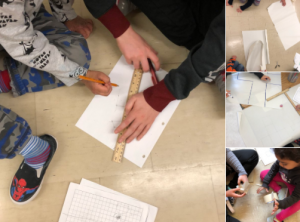
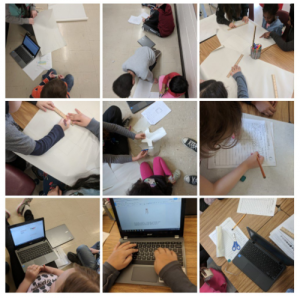
Currently, I teach grade 5 Science and my students have been working on their own inquiry related to Human Body Systems. In the beginning, we watched a few brief videos identifying the systems and their interconnectedness. From that point, students were asked to consider a rich question to investigate related to our learning. Almost every student came up with a different question and they have been investigating them. We’re now at the stage where students are creating artifacts of their learning. Some are creating websites that will host their information for others. Some are creating slides presentations, while other are creating models. Some are even choosing to do a combination of a model and presentation.

During our classes, students are the ones directing what they need to do in order to complete their tasks. They’re collaborating with peers for feedback and to share their information as they learn. They have choice in how they wish to present their learning to others and are excited about doing it in their own way. The process isn’t always as straightforward and sometimes I wish there were more of me to go around and conference with students, but when students are engaged in and learning about something that is meaningful to them, I find it to be the best type of work.

Here’s to hoping that through inquiry, students can find an entry point into the wonderful world of Science.

Our Journey In Music

Last month I blogged about Music and Identity and asked you to stay tuned because my students and I were on a mission to dig a little deeper into the power of song. Well, this month, we did just that. In my last blog, I was really excited to have the opportunity to be interviewed by Noa Daniel for the Personal Playlist Podcast and wondered how I might do something similar in my classroom with students as we were in the process of better understanding identity and the characteristics that shape who we are.

On a bright and sunny – well…maybe it really wasn’t bright or sunny – Monday morning, I shared my own Personal Playlist Podcast with students and asked them to consider their own three songs that would be considered notstalic, descriptive of their identity, and a pick me up. What made that morning bright and sunny was how eager students were to jump into it and find songs that resonated with them based on the 3 categories. As students spoke with one another, listened to song choices and read lyrics, there was a buzz in the room and it amazed me because while I know the power of music, it was evident right in that moment that students were really coming alive and energized to share about parts of themselves through song.

From songs like Brave by Sara Bareilles to This Is Me by Kesha, students were pulling out and sharing lyrics that were meaningful to them. It sparked conversations from some of my most introverted students about how they were feeling and what they were experiencing. In Brave, one student mentioned liking these lyrics:

“Innocence, your history of silence

Won’t do you any good

Did you think it would?

Let your words be anything but empty

Why don’t you tell them the truth?”

She stated that everyone should consider the power of their words, not only to bring others down but to be able to bring about change and to really stand up for who you are. This was the starting point for a discussion on when we hear something or see something that isn’t right, we should say something and not only that, make sure that you are living the words that you are speaking. It was very powerful and resonated with these lyrics from This Is Me:

“I am brave, I am bruised

I am who I’m meant to be, this is me

Look out ’cause here I come

And I’m marching on to the beat I drum

I’m not scared to be seen

I make no apologies, this is me”

The student who shared this song mentioned wanting to be brave although it is sometimes difficult because we are bruised by the words and actions of others. We spoke about marching to beat of our own drums and how it is sometimes hard because it isn’t always accepted or embraced by others. We spoke about the challenges that exist when we want to be seen and yet we are so afraid to stand out. How do we become those who make no apologies for who we are?

As if that wasn’t powerful enough, the sharing grew even deeper when our Co-op student shared her playlist which included a song that wasn’t in English. I assumed that it went without saying that students could choose songs in a different language but because I wasn’t explicit, students stuck to songs they knew in English. When she shared her choices, the room erupted with, “Well, I know this song that my mom used to play to me when I was younger. Listen to this…”. All of a sudden, students were sharing about themselves, their families and their histories through songs from different cultures and languages. Whether or not their peers understood the lyrics to the song, they understood the meaning behind it through the help of their peer. All of a sudden, it was connecting on a deeper level. Music really transcends all boundaries.

A few minutes before the bell rang for recess an announcement came on to say that it was an indoor recess due to the rain. There was no groan this time and students were eager to continue on sharing their Personal Playlist.

I have to thank Noa Daniel for the experience and connecting me back to music in a deeper way and ultimately allowing for my students to share their experiences through music. We’re in the process of writing a musical for tdsbCREATES on identity and our time spent examining our own song choices are really guiding us as we start to write our own lyrics to the songs in our musical.

Music & Identity

This past week, I had the opportunity to be interviewed by Noa Daniel for the Personal Playlist Podcast on VoicEd. I was asked to identify 3 songs to share: one that held a nostalgic value; one that gave a sense of identity; and one that motivates me. Even though Noa was kind enough to give me a lot of notice, it was difficult for me to find the right songs. When I did, it was amazing how they spoke to different aspect of me and had me thinking about how music is such a powerful tool for allowing us to be able to express our identities and sometimes say things that we have difficulty expressing. I started wondering how something like this might impact my students.

This year, our school was selected to participate in tdsbCREATES which is a program that connects local artists to classrooms in our board in order to shine a light on the Arts and careers in the Arts. Our Artist is a musician who has worked with schools to create the 10-minute musical. This year’s theme is Narratives of NOW – it’s about you, it’s about the world, it’s about time! Immediately, I thought about current issues in the world around us and how students have been speaking up to be able to create change. I also thought about the fact that change usually comes when we identify with a specific issue and so we have started to look at identity and how we might be able to use music to express our own identities and in our understanding of others around us. Today, students had the chance to use a Padlet to be able to add their thoughts on identity after having some time to consider for themselves by making notes in their journals. Many students said that identity is something that we can’t change and is a part of us and that our identities are what makes us unique. They determined that parts of your identity could be based on gender, sexual orientation, race, background, religion and family status. We came to the conclusion that there are many facets to our identities and that there are no two people that can have exact identities because they may also be impacted by lived experiences. It was such a deep discussion and sadly, we had to cut it short for recess.

Thinking about the work that we are about to do with our artist and my recent experience with Noa, my next step might be to get students to consider a song that speaks to their identity and to share the lyrics with us. I think we’ve gotten to the point in our class where we have a sense of respect for one another so that the sharing of songs may be valued and may help us to grow in our understanding of one another. I would be interested in seeing what songs resonate with them and the reasons why. I would also be interested in unpacking the lyrics – considering we will be writing our own for our musical – and seeing how lyrics to a song speak specifically to areas of identity.

I always feel as though I end my blog posts asking you to stay tuned but please do! Next month we will be getting deep into our tdsbCREATES project and I will be blogging about our progress.

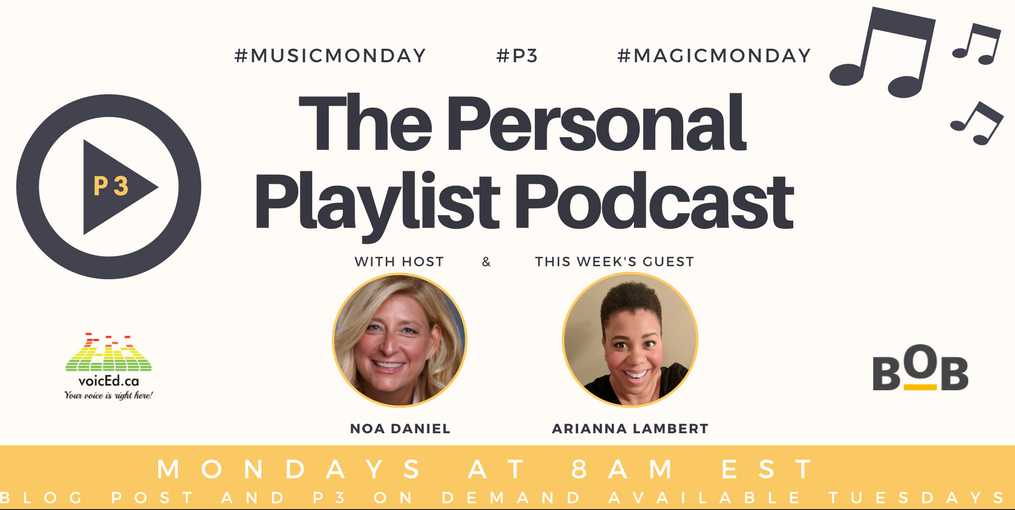
Interested in hearing my personal playlist? Check it out this Monday, April 2nd, 2018 at 8:00am and at 7:30pm.

Screenshot 2018-03-29 at 4.27.28 PM

Digital Breakouts

Escape Rooms have been all the rage as of late. Over the past couple of years, I’ve learned about and used breakouts in my classroom to engage students and as a tool in assessment for and assessment as learning. Essentially, it’s a Google Slides presentation or a Google Site where there are links to different elements of learning and a form where students or colleagues can enter their responses.

Last week, I was fortunate to work with an amazing group of teachers during #TinkeringThursdays and we spent the time breaking out and considering applications for the classroom. I have to say that students tend to be a little more resilient in trying to solve problems but in this process, it was interesting to see teachers as learners and to consider what students might experience when presented with tasks that challenge them and push them to problem solve.

Breakouts with students

As mentioned before, I enjoy using Breakouts as assessment for and assessment as learning. For me, it allows me to see whether or not my students can apply some of their learning to solve puzzles collaboratively. A couple of weeks ago, I worked on a decimal breakout with my students as a means for assessment for learning. I wanted to understand what they already knew about decimals. Now I used this breakout before with students who were a little further along in their learning and it was great to see that my current group of students took the time to view the videos in order to learn or understand a concept in a deeper way, whereas my previous students were more able to apply their learning to solve the problems. Either way, there was the support needed to help guide them as they problem solved. When we work on breakouts, I usually have students work in groups of 2 or 3 so that they have the opportunity to collaborate and possibly look at a problem from a different perspective.

Breakouts with colleagues

Over the past year, I have had the opportunity to present sessions on Digital Breakouts to colleagues and it’s been so much fun. In each session, we start with a breakout and I’ve seen this as a great way to engage in learning in a fun way. This got me thinking about how we might be able to use breakouts to engage colleagues in new learning in staff meetings or PD sessions. Rather than having information delivered, could this be a tool where we – like our students – discover and learn on our own? I’m starting to think about more applications for breakouts with colleagues so stay tuned!

Next Steps

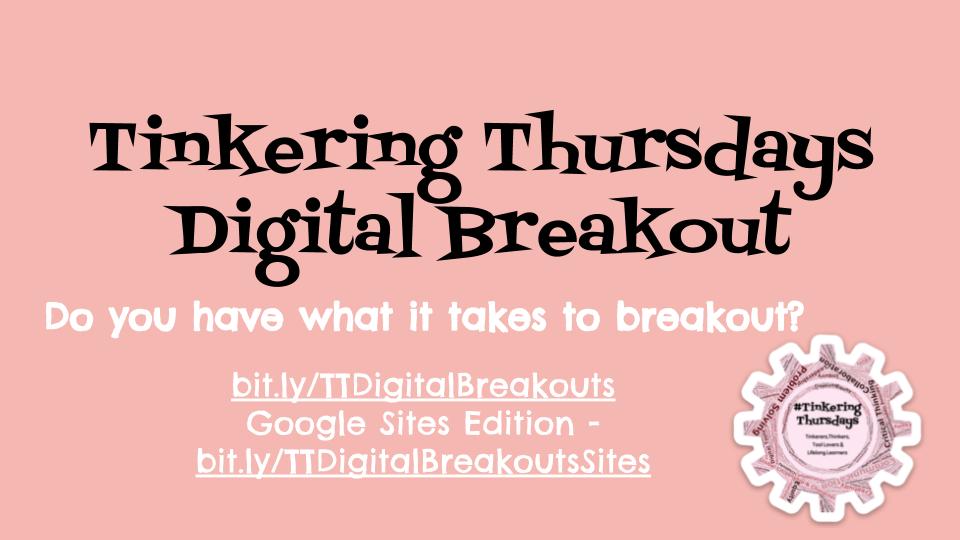
While writing this blog, I started to think about gamification in the classroom. How might it engage some learners and what might the implications be for students who truly enjoy learning in this way? It also had me thinking that it was great that students had an experience in learning though a breakout, but what’s next? How might we use student-created games to not only facilitate their own learning but collaborative learning in our classrooms? My next step is to get my students to start creating their own and getting them to consider how they develop their questions and how they determine what information might be helpful to others solving the problems in their games. Again, I’ll keep you posted. In the meanwhile, if you’re interested in trying the breakout that we used for #TinkeringThursdays, click on the image below. The last couple of slides have important information on creating your own.

Tinkering Thursdays - Digital Breakout - Slides

Also, please feel free to share how you are using games – like breakouts – in your classroom for student learning or learning with colleagues. I would love to hear from you!

Twitter EDU

Over the last few years many people have become disgusted and disenchanted with the platform of Twitter.  I agree that it can be an echo chamber for those who like to hear their own voice.  However, I also know that it can be an effective Professional Learning tool.  I have created an entire Professional Learning Network on Twitter because of the people that I chose to follow and I am diligent about blocking people who are spreading unworthy tweets.  My Twitter account posts nothing personal.  It is about my own professional learning. With Twitter colleagues challenge my thinking regularly.  Questions that I have for my educational colleagues are answered immediately and without judgment.  Global connections are made easily and then I use these connections to learn with my students.

Let me give you a few examples of how I’ve used Twitter in the classroom.  One of my students brought in a rock with a fossil on it from his backyard.  We took a photo and tweeted it out to find out if anyone could tell us what it was and the approximate age.  Within an hour we heard back from a scientist at the ROM.  He had an answer for us and was happy to help.  In fact, he told us that corresponding on social media at the ROM as a scientist IS his job! One of the students brought in a mushroom from the woods near their house.  We tweeted out to our PLN because they wanted to know whether or not it was edible.  We were answered immediately and there were many links to other sites for information that sent us on a further journey into the wonderful world of fungi.  Consequently, the advice from our Twitter contact was to never eat anything you find in the woods unless you are a scientist. In music, we were learning the words to a song by the Alternate Routes band and the students asked to tweet the band. They tweeted us back thanking us for the support and encouraging us to keep singing.  We found some great classes across Canada to Skype with through Twitter and did mystery number finds with other grade 1 and 2 classes. You get out of Twitter what you are willing to put into it.

I have gotten more out of 15 minute Twitter education chats than I have out of some day long workshops.  The educators on Twitter chats are there by choice and they are passionate about education. The questions are specific and the answers are in 140 characters. The best part is, you don’t even have to comment if you don’t feel comfortable.  You can just sit back and learn.  I have also met these Tweeters in person at IT conferences and taken their workshops.  Knowing the presenters ahead of time and having a connection is like going to a concert when you already know the newest album really well; it makes the experience richer and deeper.

Here are a few EDUTweeters that I suggest you follow to get started:

@dougpete  @peterskillen   @brendasherry    @avivalova   @mraspinall  @sylviaduckworth  @Toadmummy (that’s me)

Here are a few #hashtags to follow

#EdchatON    #edtechchat     #teacheredchat   #bfc530

Twitter may not be your thing, but don’t knock it until you’ve tried it as your #PLN.  I guarantee you will find some ideas for #deeperlearning or #inquiryed.


Collaboration Amongst The Grades

Have you ever asked kindergarten students what bugs them? Well, we were on a mission to do just that and I’m pretty amazed by what they have come up with!

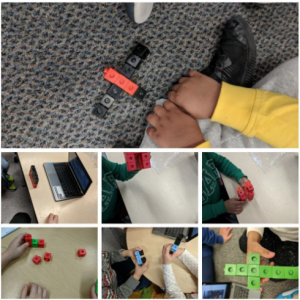
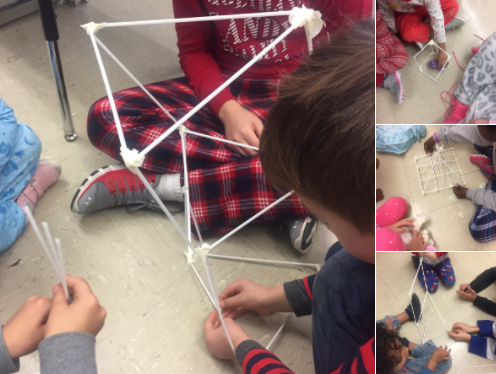
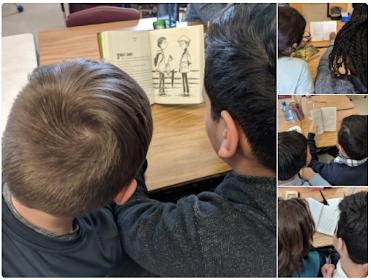
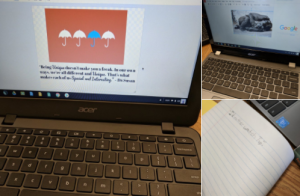
Over the years, my students and I have had the opportunity to work with younger students for Reading Buddies. And while it’s always great to have a chance to read to each other, I wondered if there was something more that could be done in order to foster true collaboration and maybe even a leadership role for my older students.  This year, we partnered with a kindergarten class in the hopes of seeing how we might be able to engage kindergarten students in STEM activities. From building with linking cubes to creating amazing structures with straws, my students have been growing in the area of questioning and documenting the works of their buddies. They’ve learned that kindergarten students can cut in straight lines, given a bit of guidance and that with the right questions, they can have incredibly imaginative conversations.

Kinder2

Kinder3


Using the Engineering Design Process, we are currently working on creating solutions for some of the things that bug them. We started the process with a brainstorming sheet and I should have left the bugs off of the top because it quickly became that the biggest problem were bugs themselves. I need to keep in mind that kindergarten students can be literal. After some discussion, we realized that while there were many who were bugged by bugs, some found it difficult to tie their shoes or carry their backpacks. Others found it a challenge to keep their devices out of the hands of their older siblings and still others found that the blocks in Kindergarten weren’t decorative enough and were way too big.

Kinder6Kinder4Kinder5

Our next step was to use a Design Template to really identify the specifics of the bug and then to work on designing a solution, including a list of materials. After some research with their buddies, this past week, we took some time to create paper prototypes of our solutions to ensure that what we envisioned was something that we might actually be able to bring to life. It was glorious. I asked my students to really take a step back and allow for the kindergarten students to be the lead in building with paper and they rose to the occasion. From asking for rulers to create straight lines to sharing that a cube has 6 faces, the kindergartens were really excited to share what they already knew and weren’t shy to ask for a helping hand when they needed it.

Kinder1Next week we are on to our build and learning about hand tool safety in kindergarten. It’s sure to be a new adventure and I can’t wait to see and share the actual solutions that they create.
In what ways are you collaborating with others in your building? Is there a way in which you might allow for greater student leadership through a similar partnership? I’m always wondering what educators are doing in their buildings to foster collaboration amongst staff and students. Let’s start a conversation and share ideas here.


Book Clubs and Talks

Over the past month or so, we’ve been on a mission to really identify what we enjoy reading and how we can gain greater meaning or understanding from texts. From character analysis and making connections between events in texts to our lives; to searching for themes that speak to greater societal realities, we’ve been looking at what we are reading in the hopes that they may inspire us towards being better people. Now some of us enjoy light reads that make us laugh and think about ideas that may be totally out of our realm of reality. The beauty in these reads is that they elevate our spirit and increase our imagination, which may be just what we need at that time.

BookTalk1 As we started reading individually and sharing our texts with one another, I realized that there were great conversations and connections being made between texts and lived experiences. Some students found themselves or their friends or family members on the pages of the texts and some found that the scenarios in some texts reminded them of familiar experiences. This made me think of the value that comes from students – or even adults – reading a text together and drawing out some of this work through rich conversations. So this past week, we started book talks.

Students had the opportunity to select from a choice of 5 books that I thought would be of interest to them based on what they were reading over the past month. Having submitted their top 3 book selections, the difficult task was organizing the groups; creating their reading schedule; and determining assignments that might be engaging and promote discussions about the books. The goal is to hopefully have our work completed by the time we start March break so we’ve got 2 weeks to go and things have started off really nicely.

BookTalk2On Day 1, many groups decided to start off with reading and to jump into making predictions through the use of Padlet. They discussed and made inferences based on the blurb, images from the text and what they read in the first few pages and determined what they thought the text would be about and from whose perspective the text may be written. Today, some groups decided to search for a quote that had a deeper meaning that could be applied to our lives while others took some time to visualize the setting and drew a scene. It’s inspiring not only to see students helping each other out with pronouncing and/or making meaning from new or unfamiliar words but there is also a true sense of collaboration as they work understand the text and in the completion of tasks. They may not necessarily be in groups with their friends but they are making new friendships as they work together and learn from and about each other.

Amazingly as I was planning this out for my students and realizing the benefit of having a community of readers collaborating to learn together, Joanne Languay shared a flyer about ETFO’s Online Book Clubs. They run from April 1st to 28th and are a great way to engage in some incredible resources that are sure to inspire. There’s even one on the Heart and Art of Teaching and Learning. Take a look at the flyer and consider joining!


Teaching Dramatic Arts-Resource Recommendations

My first Additional Qualification Specialist was in Dramatic Arts.  When I signed on at my current school board I worked as an overlay teacher between two schools and taught whatever I was assigned by the Teachers for whom I provided preparation time.  I was mostly asked to teach art, drama, dance, and music.  These curriculum areas are my passions but not all Teachers feel qualified or comfortable teaching these subjects.  Drama seems to be one of those courses that some Teachers “tack on” for a week or two just before a reporting period and with good reason, they aren’t comfortable teaching it and it can become difficult to manage behaviour during dramatic arts.

Drama lends itself well to all areas of the language curriculum.  There is a misconception that Drama and Theatre are the same thing and that scripts and plays are the end goal of the Dramatic Arts curriculum.  However, there are many ways in which to incorporate Dramatic Arts activities into the daily language curriculum and you don’t ever have to mount a full scale production.  Drama doesn’t have to be scary.

One of the best resources that I recommend to Teachers who have Dramatic Arts Anxiety is the DramaNotebook website.  It has all of the Drama games you will ever need all in one place and is especially handy for Occasional Teachers for transition times.  In addition, it has poems and scripts that you can access from 2 parts up to 30 parts.  There is a sign up for a cost, but there is also many free items including 40 drama games for teachers.

Another great Canadian source for drama lessons is Larry Swartz.  He is an Educational Consultant, author, speaker and Dramatic Arts specialist.  His book, “Dramathemes” is in it’s 3rd edition and is used in many Education Faculties in Ontario.  It not only provides “activities” but it creates units that are easily integrated into the language curriculum.

The Council of Drama and Dance Educators has a fantastic website and there are many free resources which are written by educators and can be accessed even if you are not a member of CODE.  In addition, they have a conference each year held in the fall which provides opportunities to learn along with other Educators.

I would also highly recommend the Arts resources from ETFO.  The Primary ETFO Arts and Revised ETFO Arts resources provide an integrated approach to all of the Arts.  You can find them at Shop ETFO on the website by following the link below.

http://www.etfo.ca/SupportingMembers/Resources/pages/shopetfo.aspx

Revised ETFO Arts (2014) $23

Ref. #91.129  The Revised ETFO Arts book is a practical step-by-step handbook for junior/intermediate grade teachers who want to include the Arts in their classroom program by introducing all the elements of dance, drama, music and visual arts.

Primary ETFO Arts (2013) $20

Ref. #91.169  Primary ETFO Arts is a publication that features 10 picture books that will pique children’s interest with their universal themes, issues and questions. Each section of Primary ETFO Arts includes engaging verbal and non-verbal activities to stimulate imagination, communication and critical thinking.

I hope that these resources provide you with some ideas and inspiration.  I am always looking for more.  If you have some other resources to recommend; please add a comment.


Goal Setting

As the year winds down, I take time to reflect on the year that has past and consider setting a few goals for the year to come. Not only do I do this personally but I’ve often seen the new year as a great opportunity to work with students to consider what they might like to achieve moving forward in the school year.

Screenshot 2017-12-31 at 5.32.43 PMOver the years, I’ve considered different types of goal setting but have found SMART Goals as being the most effective, personally and in my work with students. SMART Goals are: Specific, Measurable, Attainable, Relevant, and Timely. This year, I created a SMART Goal Action Plan to work on with my students. Using this Google Doc, students will decide on a goal that they would like to accomplish and answer questions to make sure that their goals are indeed SMART. Now I know that I’ve made New Year’s Resolutions in the past that were easily forgotten by January 3rd, but I also know that an essential part of achieving our goals is support and accountability. By having students turn-in their work in Google Classroom, I’ll have the opportunity to conference with them on their action plan and have ongoing discussions as they progress. Part of the learning is going through the process. I’m really excited to support students in achieving something that is of importance to them and the hope is that by participating in this process, they may gain the skills necessary to continue to set SMART goals, personally and academically.

What goals are you setting for yourself and for your students this year? All the best for 2018!

Embracing Creativity?

I’ve always been fascinated by teachers who are true life long learners. Those who understand that our work is a practice and that there are always professional development opportunities that are available to us to pursue for both personal and professional growth. I would have to say that my love for continued learning has in part been inspired by my parents who are constantly taking courses in order to grow. For the last few months, my mother has been taking a course in Critical Thinking and Creativity. I have to admit that I usually love following along in her modules to learn with her but didn’t get that opportunity this time because of my schedule. The course was developed to foster Critical Thinking and Creativity and yet when it came to her culminating activity, – in my opinion – the course fell short and this opened a discussion about how we might be doing the same in Elementary and Secondary classrooms.

In our board, consideration has been given to the understanding and implementation of the Global Competencies. We have even gone as far as creating a site with Learning Experiences that teachers can use in classrooms as we work towards helping our students to become globally competent. I found it interesting that my mom’s course would be in developing 2 of the competencies in participants. As mentioned before, I thought that her culminating activity was everything but creative and used very little critical thinking in order to put it together. When she first told me of the task, I was excited and wondered how I might be able to introduce something similar with my students but as the printer continued printing the long list of specific expectations, it became apparent that there was really only 1 way to be able to accomplish the task and the exemplars provided, solidified this understanding. As I watched my mother work through her assignment, I started to reflect on the assignments that I offer to students that are considered open, and wondered if in reality, they really foster creativity. Am I truly getting my students to think critically about information provided to them or simply getting them to regurgitate facts based on their research? How am I doing that? In the creation, am I encouraging students to be creative in their own way or am I limiting what they may create by what I hope to assess?

A few weeks ago, we started working on a board game project for Social Studies. The idea came from the book, Launch: Using Design Thinking to Boost Creativity and Bring Out the Maker in Every Student. My goal was to have students uncover parts of the Social Studies Curriculum and then create a board game, not a bored game. The grade 4s had a focus on the following expectations around the Political and Physical Regions of Canada.

Screenshot 2017-12-30 at 4.40.00 PM 

The grade 5s focused on the following expectations based on the Role of Government and Responsible Citizenship.

Screenshot 2017-12-30 at 4.41.34 PM

After doing some research and learning collaboratively about Canada, they were asked to select the expectation that they would like to focus on. From there, they worked on their own individual research that they would submit with their board games at the end. Although we made some general guidelines about what was to be contained in their board games, it was open for students to create and for some, it appeared too open. Many wanted to know what they could do to get a B or an A and were expecting a list, similar to my mother’s. I struggled with finding a balance between providing enough support while at the same time giving them the freedom to try something, even if it didn’t quite work out the way that they expected. After investigating some of the qualities of games that we enjoyed as well as exploring some that were new to us, we worked together as a class to come up with our success criteria that was based on both the Social Studies and Language Curricula. Posted in the class, it was available for all students to review as they continued to work, not for the specific way to create the same cookie-cutter board game but rather to make sure that they were critically thinking about their research and their ability to communicate the learning by guiding players with their procedural writing.Screenshot 2017-12-30 at 5.34.40 PM

What I noticed during this activity was that students wanted to dig deeper into developing and sharing a plan of social or environmental action rather than merely providing facts about Canada. Many of my students looked at issues from bullying to deforestation and urbanization and considered creating games where people were given ways in which to have a positive impact in our country.


Screenshot 2017-12-30 at 5.32.24 PMAs I mentioned before, we are well into the creation stage and will continue in the new year. I do wonder however, if by calling it a board game, if I have steered them into a specific direction. Could it have been just a game where I may have seen a greater diversity of materials being used from physical to online? Did I in reality just do the very thing that bothered me so much about my mother’s course? Ask students to create something that wasn’t bored and yet steered them all into asking for bristol board? I’m on a path to really reflect on the types of tasks that I design for students while expecting them to become critical thinkers who are creative. This has now become food for thought for future tasks that we’ll embark on. Please stay tuned!