As the year winds down, I take time to reflect on the year that has past and consider setting a few goals for the year to come. Not only do I do this personally but I’ve often seen the new year as a great opportunity to work with students to consider what they might like to achieve moving forward in the school year.
Over the years, I’ve considered different types of goal setting but have found SMART Goals as being the most effective, personally and in my work with students. SMART Goals are: Specific, Measurable, Attainable, Relevant, and Timely. This year, I created a SMART Goal Action Plan to work on with my students. Using this Google Doc, students will decide on a goal that they would like to accomplish and answer questions to make sure that their goals are indeed SMART. Now I know that I’ve made New Year’s Resolutions in the past that were easily forgotten by January 3rd, but I also know that an essential part of achieving our goals is support and accountability. By having students turn-in their work in Google Classroom, I’ll have the opportunity to conference with them on their action plan and have ongoing discussions as they progress. Part of the learning is going through the process. I’m really excited to support students in achieving something that is of importance to them and the hope is that by participating in this process, they may gain the skills necessary to continue to set SMART goals, personally and academically.
What goals are you setting for yourself and for your students this year? All the best for 2018!
I’ve always been fascinated by teachers who are true life long learners. Those who understand that our work is a practice and that there are always professional development opportunities that are available to us to pursue for both personal and professional growth. I would have to say that my love for continued learning has in part been inspired by my parents who are constantly taking courses in order to grow. For the last few months, my mother has been taking a course in Critical Thinking and Creativity. I have to admit that I usually love following along in her modules to learn with her but didn’t get that opportunity this time because of my schedule. The course was developed to foster Critical Thinking and Creativity and yet when it came to her culminating activity, – in my opinion – the course fell short and this opened a discussion about how we might be doing the same in Elementary and Secondary classrooms.
In our board, consideration has been given to the understanding and implementation of the Global Competencies. We have even gone as far as creating a site with Learning Experiences that teachers can use in classrooms as we work towards helping our students to become globally competent. I found it interesting that my mom’s course would be in developing 2 of the competencies in participants. As mentioned before, I thought that her culminating activity was everything but creative and used very little critical thinking in order to put it together. When she first told me of the task, I was excited and wondered how I might be able to introduce something similar with my students but as the printer continued printing the long list of specific expectations, it became apparent that there was really only 1 way to be able to accomplish the task and the exemplars provided, solidified this understanding. As I watched my mother work through her assignment, I started to reflect on the assignments that I offer to students that are considered open, and wondered if in reality, they really foster creativity. Am I truly getting my students to think critically about information provided to them or simply getting them to regurgitate facts based on their research? How am I doing that? In the creation, am I encouraging students to be creative in their own way or am I limiting what they may create by what I hope to assess?
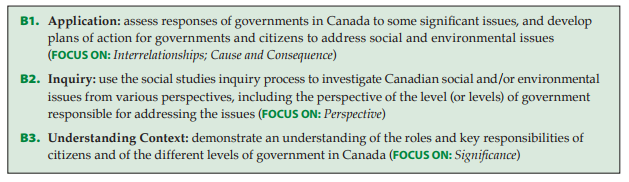
The grade 5s focused on the following expectations based on the Role of Government and Responsible Citizenship.
After doing some research and learning collaboratively about Canada, they were asked to select the expectation that they would like to focus on. From there, they worked on their own individual research that they would submit with their board games at the end. Although we made some general guidelines about what was to be contained in their board games, it was open for students to create and for some, it appeared too open. Many wanted to know what they could do to get a B or an A and were expecting a list, similar to my mother’s. I struggled with finding a balance between providing enough support while at the same time giving them the freedom to try something, even if it didn’t quite work out the way that they expected. After investigating some of the qualities of games that we enjoyed as well as exploring some that were new to us, we worked together as a class to come up with our success criteria that was based on both the Social Studies and Language Curricula. Posted in the class, it was available for all students to review as they continued to work, not for the specific way to create the same cookie-cutter board game but rather to make sure that they were critically thinking about their research and their ability to communicate the learning by guiding players with their procedural writing.
What I noticed during this activity was that students wanted to dig deeper into developing and sharing a plan of social or environmental action rather than merely providing facts about Canada. Many of my students looked at issues from bullying to deforestation and urbanization and considered creating games where people were given ways in which to have a positive impact in our country.
As I mentioned before, we are well into the creation stage and will continue in the new year. I do wonder however, if by calling it a board game, if I have steered them into a specific direction. Could it have been just a game where I may have seen a greater diversity of materials being used from physical to online? Did I in reality just do the very thing that bothered me so much about my mother’s course? Ask students to create something that wasn’t bored and yet steered them all into asking for bristol board? I’m on a path to really reflect on the types of tasks that I design for students while expecting them to become critical thinkers who are creative. This has now become food for thought for future tasks that we’ll embark on. Please stay tuned!
Unfortunately, I have had many health challenges this year that have necessitated having to take a significant amount of time off of work to recuperate. These absences have provided me time to reflect on my practice as a classroom teacher and about how important occasional teachers are in our practice. I had the pleasure of working in our local ETFO office as a released officer for 3 years alongside the incredible Marsha Jones, Occasional Teacher President extraordinaire. She taught me a lot about Occasional Teachers, the obstacles they face and the little things that I could do to make their days go easier. I thought I would share a few of my insights.
Occasional Teachers that come to our school like to return because of the friendly atmosphere. In the staff room, they are included in our “tea days”, people engage them in conversation and always ask how they can be of help. It sounds like a simple thing, but many of the Occasional Teachers that come to our school comment on our friendly staff. So the next time you see an Occasional Teacher in your school, smile and say hello and ask them how their day is going.
Do NOT ask an Occasional Teacher “who” they are for the day. What an insult! You can ask who they are in for, who they are helping out, who they are rescuing or replacing, but they are themselves each and every day they come to work. We should appreciate the fact that we have access to qualified teachers to replace us for the day so that we can take sick days when we need them or go to conferences for professional learning.
Speaking of insults, please try not to call Occasional Teachers “substitute” or “supply” teachers. We rely on these colleagues. “Occasional Teacher” is their job title. Be respectful of it; we rely on them.
Remember to have a few days of “emergency” plans in advance of your absence. It takes the edge of having to type up plans in between trips to the washroom when you have the flu. Leave them in a place that is easy for the Occasional Teacher to find. This makes your life easier too.
If you generally have an active classroom that engages in centres, activities etc., then TRUST your Occasional Teacher and leave plans that include those lessons. Chances are your students know how this stuff runs and will let the Teacher know. It may mean giving up a bit of control; deal with it. If you leave all day seat work that you’ve photocopied or a movie that isn’t connected to anything that they are doing in the classroom, it will not be enjoyable for the students and likely your Occasional Teacher will have more behaviour issues. Consequently, you will not get the quality of work that you normally see from your students. Don’t have huge expectations. No matter how wonderful the Occasional Teacher may be, they are not you and the students know that. We also need to remember to trust the judgment of an Occasional Teacher. I’ve heard it and I’ve said it; “The ‘supply’ didn’t follow my day plan. I worked for hours on that detailed plan.” We don’t know what kind of a day that teacher had with our students. They may have experienced a lockdown, fire drill, class evacuation, pizza money, scholastic money, a student injury or even a skating field trip. (My sincere thanks to Occasional Teacher Rachel Johnston on that one!) We need to remember that they are qualified teachers and they have the right to exercise their professional judgment in order to keep the class calm and engaged. Let them do their job and thank them for it.
I write my day plans on my computer for myself each week. This makes writing a day plan for the Occasional Teacher much easier. I have all of my emergency information, how to deal with specific students, who to count on and the general rules and routines in a separate document to attach to daily plans. I always attach a class list. Try to keep your plans as close to the regular routine as possible. If I am going to be away for a meeting I will try to find out who will be replacing me for the day and I email them the plans in advance and ask if they have any questions. I include my cell phone number in case they can’t find a password or an item and few of them ever use it but if they do then I know that they care about my students and the plans that I have left for them.
Finally, show your gratitude. Some Occasional Teachers drive an hour to get to our school and in bad weather. Some are called at the very last minute, through traffic, to an unfamiliar school using GPS. Their mornings are often stressful before they even arrive on site. So when an Occasional Teacher has done a great job and your classroom is still standing when you go in the next day, write a quick email and say thank you. Occasional Teaching is often a thankless job but we can’t be sick without these wonderful people.
In my last post, I blogged about attending and presenting at workshops. And well…perhaps I should have waited a few weeks before sharing about that topic. Hindsight is always 20-20 and I’m grateful for the opportunity to share with you on this topic once again.
That being said, I must admit that I am coming off of a high that I haven’t had the pleasure of experiencing enough of as of late. This past Monday and Tuesday, I had the privilege of participating in ETFO’s The Workshop Presenter’s Palette. I walked in not knowing quite what to expect but prepared to work on something and in all honesty, quickly realized that I was really working on myself. I’ve said it before, I love sharing the work that I get to do with amazing students and this session was really for me to be able to improve on something that I already enjoy doing.
Much thanks to the “Terrific ETFO Trio” – Ruth Dawson, Joanne Myers, and Jane Bennett. Not only was it inspiring to watch these 3 women share strategies – with intentionality – but I also felt as though they gave to us on every level. From remembering our names to making sure there were yummy treats, they hosted us so well and reminded me of the importance of making my audience feel as though they matter every time that I present. I walked away wishing that I had more time to sit down and learn from them. Thank you!
Now you’re probably wondering what was so magical. Well, here are a few tips that I picked up over the 2 days. Now I can’t go giving away all of their amazing secrets, you’ll have to stay tuned and try to get in on the fun next year.
The Environment Makes A Huge Difference
We were in a large room with great acoustics so it was clear to hear the presenters. Everything was already set up for us and it was inviting because it made me feel as though they were welcoming me not just a group of people. If you know who your audience is and have time to prepare for them in advance, do it! Make it obvious that you have thought of them in planning your session.
Not sure who will be joining your session? Not to worry. Play some music. I learned that the number of beats matters. Aim for 120 beats per minute. It’s uplifting and raises the energy in the room. Consider playing a game to get started. We started with a Meet Three activity where we were asked to meet 3 new people and were given prompts for each new person we met. Each prompt was timed and eased participants from a place that was familiar to them – what they plan on doing over the holiday – to the deeper purpose of the workshop – what made a workshop memorable.
When I say that there was intentionality behind every part of the workshop, there really was. Down to the variety of tools to get the attention of participants such as clappers and other noise makers. I felt heard, never screamed over but gently brought back to the larger conversation. Small things that made a huge difference in the learning space.
Help A Friend!
Ever been in a session where people were offering feedback on something you were creating? Have you ever gotten the feeling of being overwhelmed by capturing all of the amazing feedback? Well, I think I was just given the solution. We were asked to get into Mentor Groups where we shared our workshop ideas and were given the opportunity to get feedback and answers to some of the questions we may still have about our work. Rather than frantically trying to write down the wealth of information shared, the person to the right of the presenter took notes while the presenter was able to actually engage in active listening. Sound simple? It really is and believe it or not, I never thought of it. I think this is a strategy that I will take back to the classroom and use with students in peer feedback sessions.
Equity
Language matters and the idea of intention vs. impact was made so clear to me. No matter my intentions, the impact of my words is what participants and those around me actually feel. Adam Peer was our presenter for this portion of the day and he addressed the importance of being conscious of the images that are shown in our sessions. Do they show the diversity that exists in terms of abilities, skin colour, religion, age, family, and genders? Still saying girls and boys or ladies and gentlemen? Consider using children, everyone or using the person’s name instead.
I feel as though I’ve just touched the surface of all that was incredible about this 2-day session but at the same time given away a few tips that you may chose to take back to your classrooms or even workshops. I’m refreshed and excited to implement my learning into my sessions and classroom. Remember to stay tuned to ETFO’s Upcoming Events to sign up for amazing PD that is sure to change your life.
A colleague of mine started a book club for educators in our school. We read the book “The boy who was raised as a dog” which takes you on the journey of various stories from the child psychiatrist, Bruce D. Perry. The book group involved seven to eight educators discussing the assigned chapters we had read for the week. I highly recommend this read for any teachers who have ever struggled with a “challenging” student. The book details the accounts of many children Perry encountered whose traumatic past altered their future. The book teaches all teachers to have a compassion that is so necessary for these traumatized children.
We discussed many things during our meetings each week. We started discussing the chapters but the conversations always had a way of covering anything and everything. The meetings helped me go into each day with an open mind and a compassion for a child’s situation that I did not have before. You rarely think of the reason someone behaves “badly” or defiantly. We may just assume that that is the way that child is. Many of us may have not stopped to think of the reason for that action. Realistically, we all have a lot on our plates that day and we may be thinking of a quick way to discipline the child. The book helped our book group members to think of ways to help these children in class so that they may have a successful future outside of it.
Today was our last meeting and we took the last twenty minutes to reflect on our love for teaching. How amazing of a feeling it is when you have that moment in the classroom (or outside) when you just get that feeling of “this is the most incredible job on earth!” We all discussed moments we have felt like that and how incredibly lucky we are to be teachers. The book group was a great way to celebrate and to continue our love for learning. If anyone would like more information about this book, please let me know. The book could change your entire outlook on those “tough” situations, reminding us never to give up on a child or to jump to negative conclusions especially when we do not know their entire situation.
My presenter journey started a couple of years ago when I thought, “why not take a chance and share my work with other educators?”. My first conference was Bring It Together in 2015. Funnily enough, I find myself starting to write this blog from this year’s BIT conference.
In 2015 our school was involved in a school-wide Water Inquiry and I had just begun working with students on Entrepreneurial Thinking in the classroom. It was something new in our board and I was excited about this work and naturally thought the conference would be a great way to share it.
In Marketplace style, I set up my booth and had an hour filled with inspiring conversations with other educators about similar work that they were doing with students in their classrooms. Initially I thought I was there to present our work but found such value in learning from the experiences of others and gained great insight on how to take this work further. I caught the conference bug then, I’ve still got it, and I’m not letting go.
Over the years, I’ve learned 3 things as a presenter and attendee:
The Power of Story
Being Open to New Learning
Network, Network, and Network
The Power of Story
Sessions that have inspired and impacted me the most have been ones where the presenter has connected with me through the power of story. Either through taking me on their journey or sharing their students’ journey, these sessions have brought life to the material that the presenter is sharing. Seeing a real application and/or the humanness and messiness behind the implementation of ideas or projects makes it real and tangible. As an educator, I’ve realized, the realness of the struggle and the ability to overcome makes the process inspiring. I’ve tried to implement this in my presentations and am learning that it’s not just about me, but more so the amazing students who I am privileged to work with and whose work I am sharing that are the power in my presentation. As I presented at STAO a couple of weeks ago, I realized that I was most passionate when I was sharing my students’ work on hurricane solutions and the learning that I gained from them. If ever you are considering presenting, tell your story; and with their permission, tell the story of your students. It’s some of the best PD I have ever experienced.
Being Open To New Learning
It’s inevitable. At every conference, I end up attending a session where I think it might be on a particular topic and find out that it’s really about something else. In the beginning I would get discouraged and tune out if I found that I wasn’t getting what I thought I was supposed to be. Then I learned that I could get up and find another session that might better suit my needs. While I thought the second “strategy” was effective/useful, I’m learning the importance of seeing a session through and finding new learning. Whether there is a new tip or trick used by the presenter or participants or a strategy to avoid, there is always something that I can learn. Fortunately, this happened a couple of weeks ago during a session. I learned that it’s essential to test a demonstration before facilitating a session and to ensure that I truly understand all the steps involved when I’m asking participants to take a risk and try something new with me. Presentations can be tough and many of us are just learning about how to give them. Bear with us. Consider sticking it out and perhaps you may just learn something that will be of value to you in the long run. By being there you’ve already opened the envelope. Why not read its contents to the end?
Network, Network, and Network
Ok…It may be no secret but I love Twitter. I have to say that all credit goes to my former Principal, Greg McLeod, who suggested I hop on a few years ago to participate in a Twitter chat. I hesitantly agreed to join the Twitterverse and little did I know, it would be a revolutionary tool that would connect me to educators all around the world. I’ve gained tips and ideas by seeing the work of others online and during conference time, it’s my opportunity to seek them out and meet them in person. It’s also my chance to find new people to connect with and learn from. Last year, I attended a workshop at STAO where I met Shari Green-Brown who is the Principal of RJ Lang Elementary & Middle School. Who would have thought that learning about hand tools during a session would lead to the opportunity to collaborate with her – and others – to help facilitate our STEM Certificate Course or our current PD series – Tinkering Thursdays? I’ve grown as a teacher, presenter and facilitator by building a relationship that began on Twitter, was strengthened through an experience at a conference and developed over time. If ever you decide to take advantage of presenting or attending a conference, take the leap! Talk to a stranger or a Twitter friend. You never know who you might meet & what journey you’ll have the chance to take with them.
Fall conference season is almost done for me. As I look forward to the fun of conferences this spring, I’ll keep in mind: The Power of Story; Being Open to New Learning; and Network, Network, and Network. Consider taking advantage of conferences and events offered by ETFO. Last year I had the opportunity to present at ETFO’s ICT Conference. The energy was simply amazing and the sessions offered many new learning opportunities for participants.
I look forward to learning from and with you soon!
Whenever possible, I search for ways to integrate the curriculum to create deeper learning opportunities for students and connect to the world around them. It has always been easy to make connections between geometry and art. Measurement and art wasn’t something that I had integrated much before. However, in working with my Teacher Candidate from the Trent University Faculty of Education program, we were excited to see what the students would create. It only goes to show you that when teachers are able to work collaboratively, wonderful programming ensues for students.
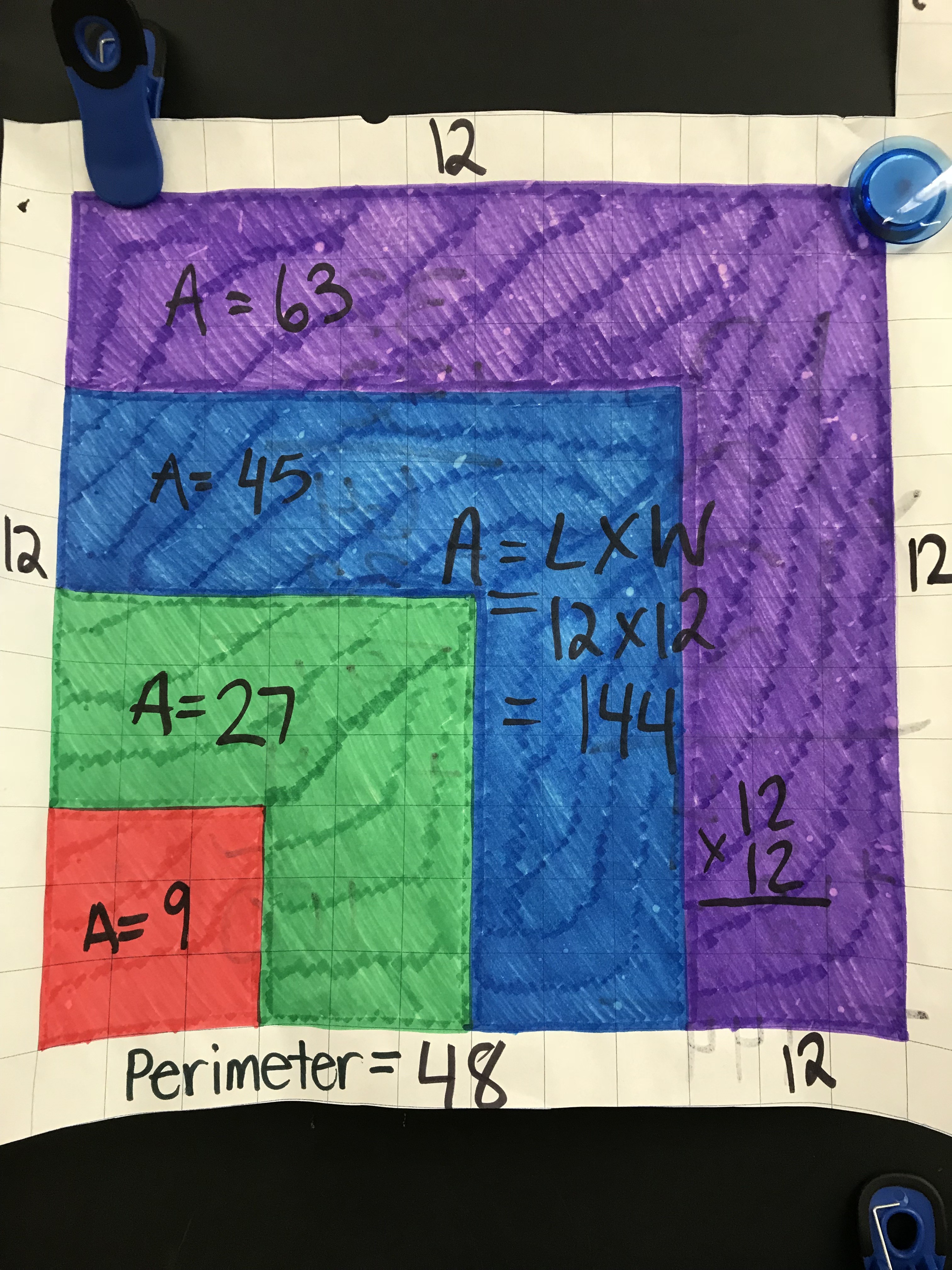
We have been working on perimeter and area for a little while, but students were still having trouble figuring out the difference between the two concepts. We started by giving the students 9 square tiles. Students were asked to create a 3 x 3 array of square tiles and determine the perimeter and the area. The perimeter was determined to be 12 and the area determined to be 9. From there, students were given a number of different challenges to reduce the area but maintain the perimeter of 12. The challenges grew increasingly difficult.
1. Reduce the area by one square unit but maintain the perimeter of 12 units.
2. Reduce the area to 7 square units while maintaining the perimeter of 12 units.
3. Reduce the area to 6 square units while maintaining the perimeter of 12 units.
4. Reduce the area to 5 square units while maintaining the perimeter of 12 units.
5. Reduce the area to 4 square units while maintaining the perimeter of 12 units.
6. Reduce the area to 3 square units while maintaining the perimeter of 12 units.
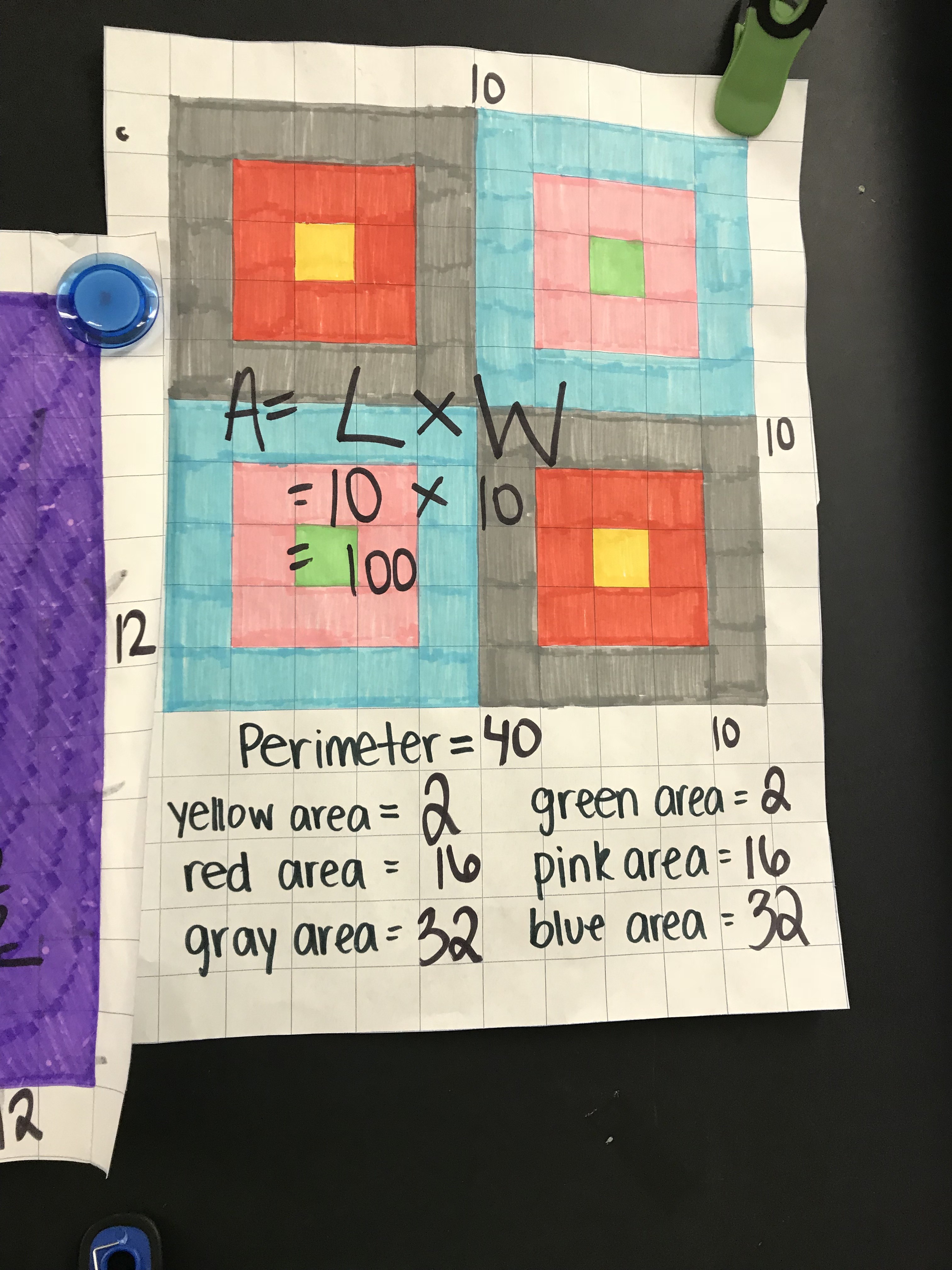
After having the students share their different solutions we thought we would show the students artwork that Ms. Marchiori created inspired by Ellsworth Kelly’s “Colors for a Large Wall”. In a guided math lesson the students figured out the area and perimeter of different parts of the artwork. The way in which students figured out the answers to the area demonstrated that they had a much better understanding of the difference between area and perimeter than they had previously.
At this point, we wanted to get into the artwork and considered the work of Piet Mondrian. Piet Mondrian is famous for the work that he created using primary colours, horizontal and vertical lines and squares and rectangles. Perfect for working with area and perimeter and for incorporating the different elements of art.
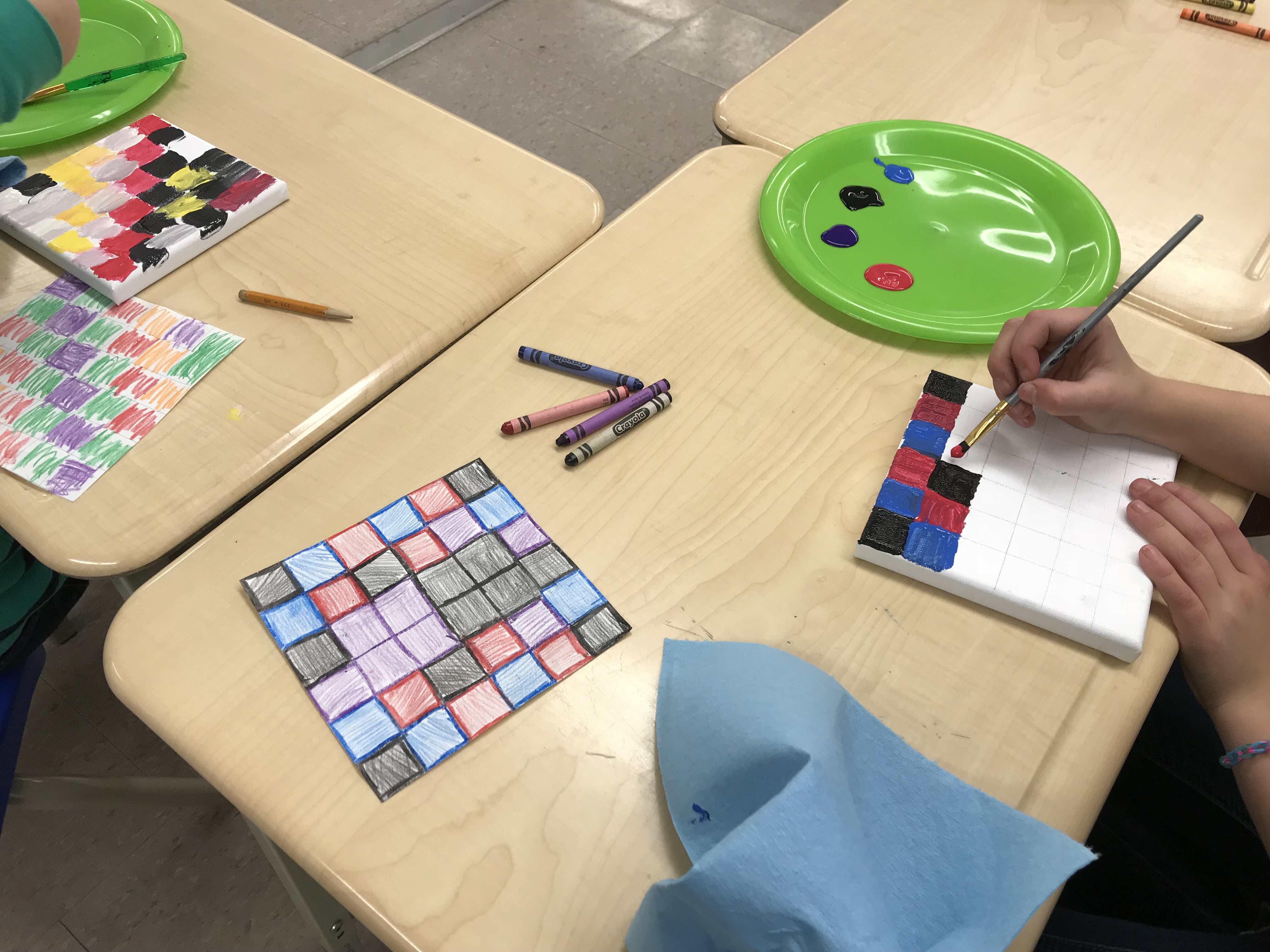
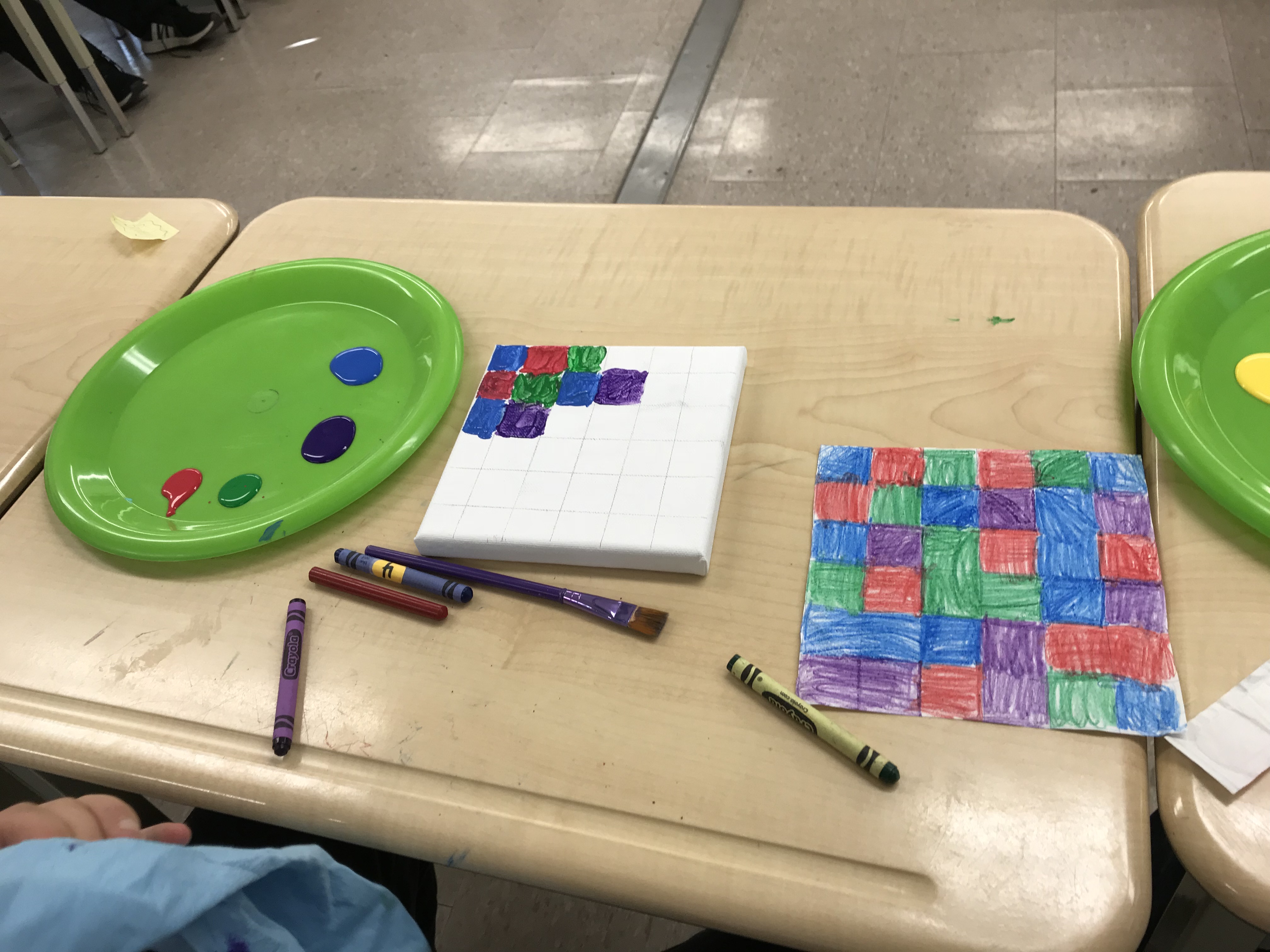
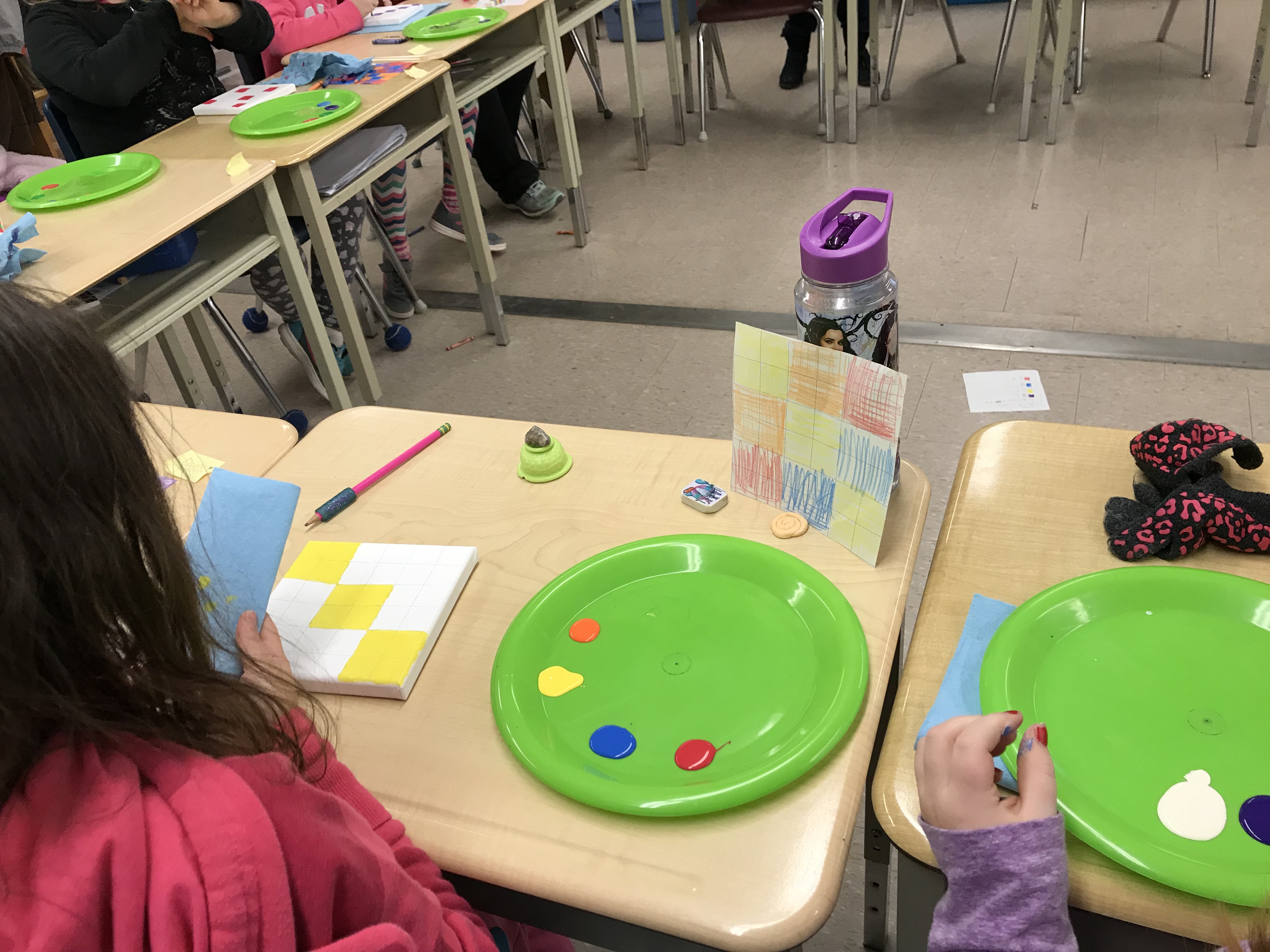
Ms. Marchiori showed the YouTube video of Piet Mondrian’s artistic life in a nutshell. Afterwards, the students then created their own Mondrian inspired artwork using chart sized grid paper (6’X6′) and crayon. To continue our math focus, the students then had to calculate the area of each of the colours that they used and write that on the back of their art “plan”. From there, the students used acrylic paint on canvas with grids drawn in pencil to recreate their “plan” for their art.
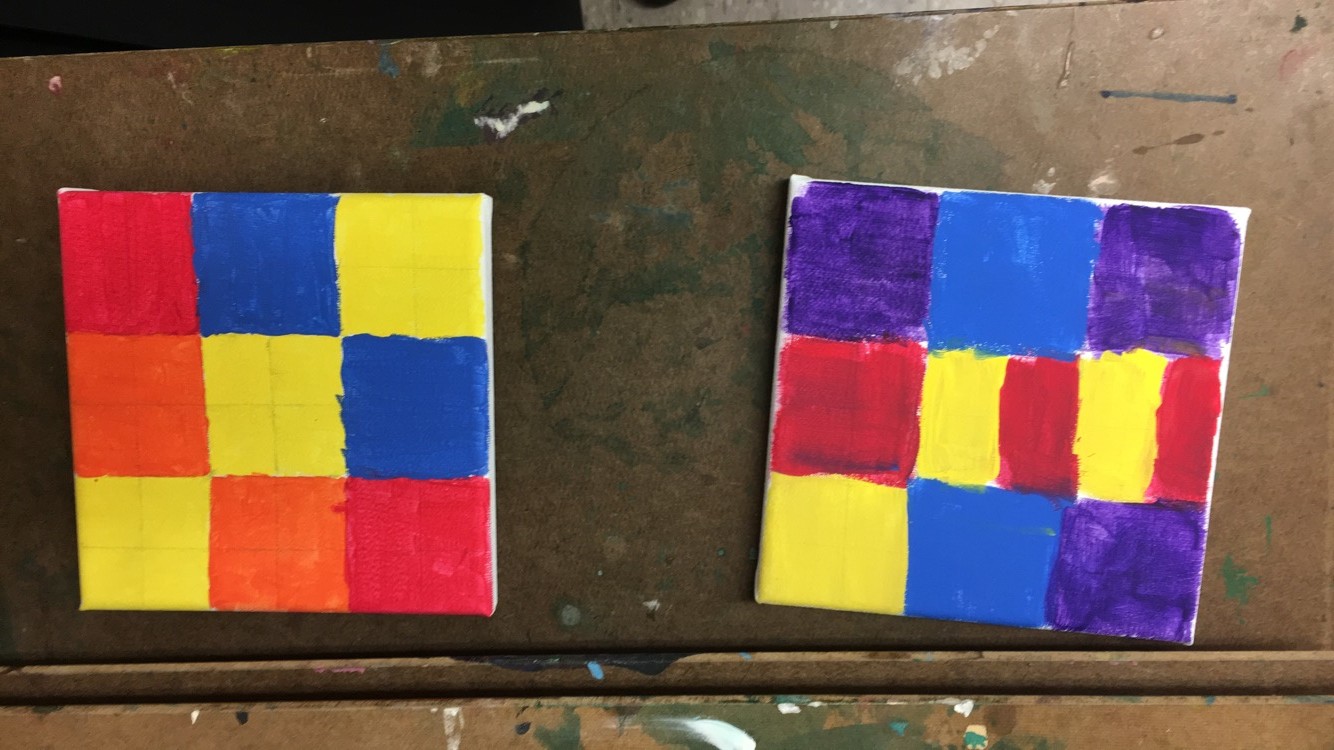
A few of the finished artwork samples;
This artwork would also connect to fractions. Students could express their colour content in a fraction, reducing it to it’s simplest form and then compare which colours covered the largest fraction of the area of the painting. When the artwork is complete, the students will be adding an artist’s message about what they learned during the process about area and perimeter, about the elements of line, colour and shape and about Piet Mondrian. This week we will be creating Mondrian inspired artwork while exploring balance and colour in art using much of the same grid technique but with the medium of crayon resist and watercolours.
I’ve recently spent some time with fellow educators and health care practitioners in order to find solutions to an all too prevalent issue. Burn out, stress, compassion fatigue or empathy fatigue; whatever you call it, it is a reality for those in caring professions like teaching and health care. The room was filled with women from all over the province. Although our stories were different, we were all exhausted, overwhelmed, and consumed by feelings of guilt and inadequacy. We had a common purpose for coming together; to find ways to put mindfulness and stress reduction into our daily living. The most common excuse that people use with regards to self-care is that they don’t have enough time. I used to say the same thing. Then I realized that if I have had enough time to watch two episodes of something on Netflix, I had enough time to go to the gym or cook a healthy meal. As I have learned more about mindfulness and meditation I have realized that it doesn’t have take a huge amount of time and it really doesn’t take a whole lot of effort. You just have to start. I’m an “all or nothing” kind of person and a perfectionist. I used to set lofty exercise, meditation and healthy eating goals for myself and then quit when I haven’t met these unrealistic expectations. Now, I start one thing and do it, slowly and simply. I try to adopt Nike’s “Just Do It” advertising campaign as my mindset towards mindfulness. I have to remind myself to be patient, kind and compassionate around my mindfulness practice. I forget, I get distracted and I feel disappointed in myself sometimes. The most important thing that I try to remember is I can always begin again. I can begin again every moment. The judgment that I have about missing days at the gym or on my meditation cushion is my own. There is no one that works at the gym that will berate me when I come through the door. They will welcome me and I have never left the gym or my meditation cushion wishing that I had done something else with my time. I thought it might be helpful to share some simple and quick ideas that can easily become habits in order to become more mindful and practice self care.
1. Begin each morning by spending three or four minutes lying in bed awake before getting out of bed. Pay attention to your breath and set your intention for the morning rather than shutting the alarm off and immediately swinging your legs to the floor. It seems like such a simple thing, but it can make a positive impact on how you face the day.
2. While doing any mundane task such as washing your hands you can simply pay more attention to the task. Don’t try to multitask and don’t be on “auto-pilot”. Be aware of what you are doing and do it slowly. Actually enjoy the simple task of hand washing. It may take you a few seconds longer but it gives your brain and body time to become more grounded. Pay attention to your breath. Are you holding your breath? Are your shoulders tense? Let the warm water flow over your hands and be grateful for the water we have. Lather the soap and feel it squish through your fingers. Dry your hands completely, taking the time to appreciate the act. We know in the teaching profession how important the act of hand washing for our health and we do this many times a day but how often do we wash our hands mindfully? Take these few extra seconds, breathe, be aware and be grateful.
3. Each morning before exiting your car at work take a few minutes to check your breathing. Be grateful for the day, be aware of your intention for the day at work. Try to do a quick body scan to see if you are holding any tension and let it go. If you aren’t really looking forward to the day, force a smile. The silly act of putting a smile on your face on purpose while alone in your car will often produce a genuine smile!
4. Be mindful about your cup of tea or coffee. Over the years we have become accustomed to having our tea or coffee “to go” that we are no longer mindful about drinking it. In fact, we have adult sippy cups to ensure that we don’t spill it and companies that put warnings on the side of cups to remind us that the contents might be hot. As a society, we have become pretty mindless about drinking hot beverages. Our coffee and tea have become caffeine that is fuel to be consumed rather than a comforting and tasty beverage to savoured and enjoyed. So take the time when drinking your hot drink. Take the time to smell it, feel the warmth in your hands, to really look at it and to enjoy and be grateful for it.
For more information about “Tea” Meditation and mindfulness visit Tea Meditation – Plum Village 5. In order to incorporate mindfulness practice into your work life, practice it with your students. Each day I have a morning meeting with my class. I use a singing bowl to draw attention to our practice and we sit in a comfortable position. We only do this for a few minutes each day but we pay attention to our breathing, we close our eyes or choose a spot to land a soft gaze. The students have said that they can feel the energy in the room become more calm and peaceful. I do the practice along with them. I have grade 4 and 5 so we also talk about mindfulness and what it means. It works hand in hand with self regulation. If students are mindful about their behaviour then it becomes easier for them to practice self regulation strategies.
I do not claim to be any kind of mindfulness or meditation guru. I have not painstakingly researched the positive effects of mindfulness from a scientific perspective. I’m just an elementary teacher and mom trying to bring balance to my life, one moment at a time.
Over the last year and a half I’ve had the privilege of co-moderating #tdsbEd – Twitter chats for TDSB Educators. It has become a community of teachers – well beyond our board – who are sharing their thoughts and ideas around trends in education in order to ensure student success, well-being and achievement. Throughout this time, I’ve been fortunate to work with amazing educators who have been guest moderators for our chats.
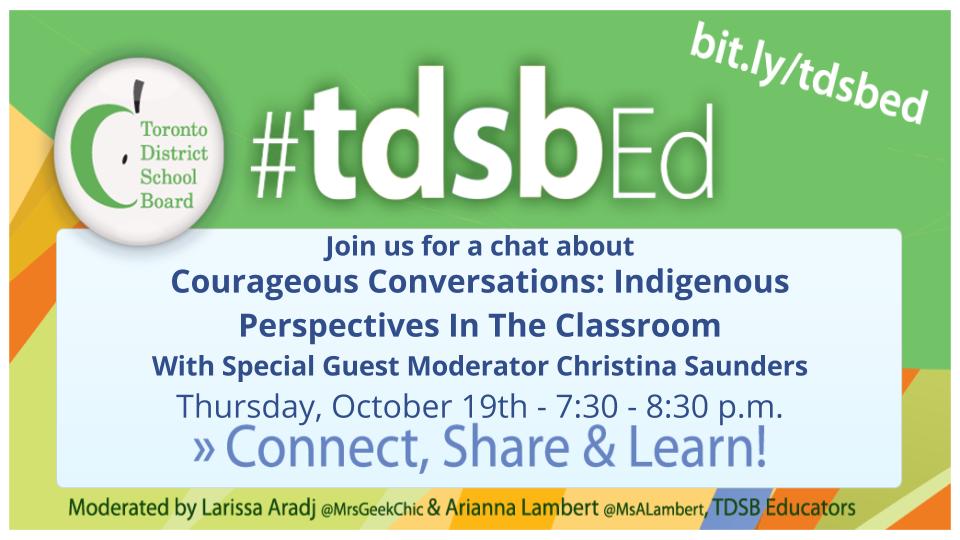
I was fortunate to have had the opportunity to work with Christina Saunders – a TDSB Indigenous Education Instructional Leader – on a chat entitled, Courageous Conversations: Indigenous Perspectives In The Classroom. Last Thursday we had our chat and it was refreshing to take time to both reflect on my own practice as well as be inspired to take specific actions to evolve in this area. Our chat had 7 questions that focused on Indigenous knowledge in the classroom as well as reflecting on our practice and learning spaces through checklists.
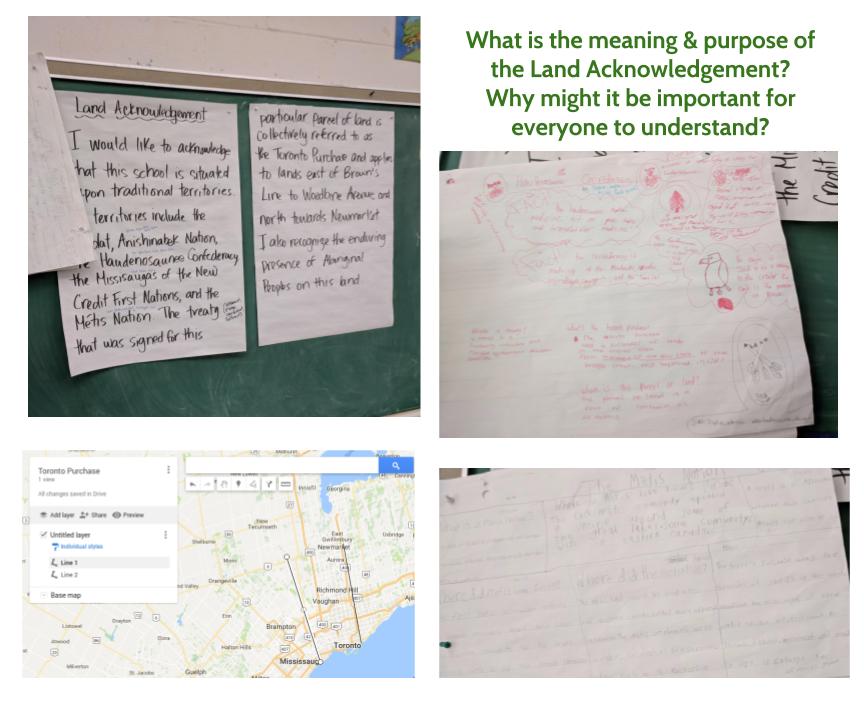
Treaties Recognition Week is coming up and we also took time to reflect on how we are unpacking the land acknowledgment with students. I must admit that I often found myself being able to recite the TDSB land acknowledgement but truly understanding the diversity of the Indigenous groups represented or even having an understanding of the Toronto Purchase, eluded me. If this is true for some of our educators, how much more so might this apply to our students? I decided to unpack it with my students by asking them to research the different groups of Indigenous Peoples, the Toronto Purchase and using Google My Maps, students had a chance to visualize the parcel of land referred to. This was an extremely beneficial learning opportunity for my students because they now have a deeper understanding of the peoples, the land and the agreements that set out the rights, responsibilities and relationships of Indigenous Peoples and the federal and provincial governments. If you are still looking for information on Treaties Recognition Week, please check out this amazing article written by Christina in ETFO Voice – Getting Ready for Treaties Recognition Week.
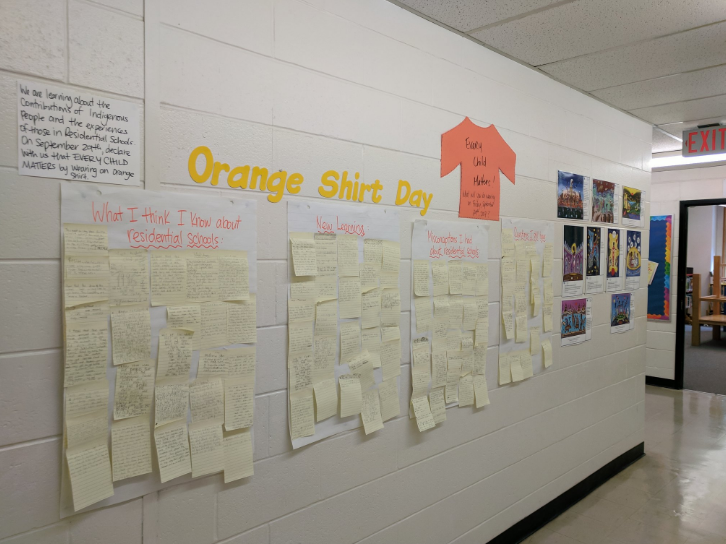
In my class this year, I’ve made it a goal to ensure that Indigenous perspectives are reflected in both my teaching and in our learning space. In the past I’ve struggled with months or days to celebrate a particular heritage or cultural group because I find that it leads to tokenism. While there is value in that celebration, I wonder how we might be able to go beyond and infuse this learning into our everyday experiences with students. I’m learning the importance of valuing inquiry as students start to investigate for themselves diverse experiences within Canada. Earlier this year, we read Jenny Kay Dupuis’ I AM NOT A NUMBER as we heard discussions around Orange Shirt Day and the experiences of Indigenous families and residential schools. Seeing my students question the actions of others based on ignorance and not respecting difference was invaluable. My hope is that this leads them to consider the way in which they treat others and ways in which they can become change makers to speak up when they see injustices.
One of the biggest takeaways from my chat was to ensure that I have contemporary representations of Indigenous Peoples in the reading materials that I introduce and that are a part of our classroom library. I’m learning to ensure that the stories told are being told by Indigenous Peoples rather than being told for them. I’m learning to take the time to do author studies to find out more about who is writing and the influences that impact and inform their writing. I have a long way yet to go but I think that beginning to have these courageous conversations is a step in the right direction.
If you are interested in finding out more about our chat on Courageous Conversations: Indigenous Perspectives In The Classroom, here is the archive.
Have you ever walked into a classroom and did a double take? Trying to gather your bearings, did it feel as if you’d been in that exact same spot and the very same moment before? I know it’s happened to me and wonder if other educators feel this way?
Returning to the classroom in September can be like this. The faces are different, maybe even the school, but there are connective currents running through time and space that signal you’ve been there before. I am reminded of a hall of fame quote by Yogi Berra, “It’s déjà vu all over again.”
This September, I started at my 4th school in 9 years. I could not be more thrilled joining a new family of learners and educators. Of course, I miss my old schools, but as I’ve written before, we have to move on to grow in our professional practice. This year was no exception, even after 3 amazing years at my former school.
Unsurprisingly, since the first bell on Day 1, things have been occurring at the speed of learning. Meeting my students/families, observing them interact, and watching them navigate our classroom for the first time. I’m never sure who is more anxious on the first day, parents, students or me?
To this teacher, the first week of school is like a three-way collision between energy, ideas, and awkwardness. I love walking into a new building and asking students to help me learn directions and routines. On more than one occasion, a student will ask, “Aren’t you supposed to know this?” I reply, “Maybe, but it’s more fun to ask. I’m new.”
What I’ve seen over my first 9 Septembers
After 9 first days of school, some things have not changed. September is a time when everyone is (re)acquiring their routines and rhythms. Everyone is trying to put their best foot forward – almost. Depending on their Summer, the most reticent learners and educators might still require an extra week or 2 to get up to speed. We need to avoid the rush to establish out of reach expectations. There have been a couple of years where I struggled to find my groove. I have found that the first few weeks are like a contract negotiation. Everyone is trying to get what they want out of the deal, and it takes time to hammer them out.
Each year I enter our, not my, classroom with complete trust that students are there to be awesome. Empowering them and presuming best intentions have always been great places to launch an important year together. Bringing students into the conversation and decision-making process, from the start, allows for long-term success based on understanding and mutual respect.
This happens in our classroom in a number of ways across a number of days. Students are asked to take chances, make mistakes, and be unafraid to fail. It asks us all to become comfortable with discomfort, feeling safe when vulnerable, and knowing everyone is respected and valued. If a space for this has not been created in my classroom, then there will be a risk of starting off on the wrong foot. Taking the time to create a consistent and caring class culture will ensure a cohesive committed community for the whole year.
What I did over the Summer
As a kid, it seemed that every start of the year writing assignment was a retelling of my summer. This was usually followed up with a presentation in front of the class. I am not sure whether this was an act of sadism or masochism for the teachers who assigned the task, and then had to listen as each one was shared. All I remember is that the act of recalling my summers and the subsequent in-class attention were boring for me too.
As I enter the classroom, I vowed to change this. I have asked students to share what they’ve regretted about their Summer, or what they would do over and change. We hold off on “presentating” in favour of peer sharing where volunteers are asked to read a few highlights that stand out after reading their classmates’ work. I’ve found that using 6 Words Stories as a great introduction exercise.
This year I had students write their own and then write one for their seat partner. *
Build flexibility into your planning
Beware of over planning. Yes, some planning must be done. Preparation is important, but a measured approach is best. Over planning has been, and continues to be a mistake I make. However, when plans go uncompleted or go off course, I am not going to count it as a loss. There needs to be time built into our work for the second and third questions. Sometimes students have more questions than we have answers. Yes, it takes away time from your plans, but the relationship building established through it will become invaluable going forward. Give yourself permission to go off script. The students will appreciate the spontaneity.
Noise
As part of classroom routines and noise management, I have heard classics from, “Hands on top. That means stop.” to “Un, deux, trois, les yeux sur moi.” These work well with JK/SK and primary classes, but tend to aggravate the more sophisticated learners in the Junior Panel.
I use a number of noise makers, ranging from a wood block shaped like a pig, a rain stick, and a guira Each is strategically placed about the room to access as needed. They are used to draw students back from their independent or team work. I also have a spot in the class where I will wait for students to come back to hear further instruction or feedback.
Another ‘attention-getter’ to consider is something shared by Paul Solarz called “Give me 5!” I love the power this places in students hands along with the responsibility to be relevant and engaging as they capture the room to share their ideas.
Having a wide variety of tools in the kit have allowed each of my 9 first days of school to begin memorably and effectively. Of course there are bumps and tweaks to be made along the way, but that ads to the joy of the job. As each year brings us a unique set of lives to discover, equip, and watch flourish.
Thank you for reading this post. I look forward to sharing with you again this year. If you have any questions about the resources or strategies shared please message me below.
*Which 6 words would you use to share your story? Feel free to share in the comments section.

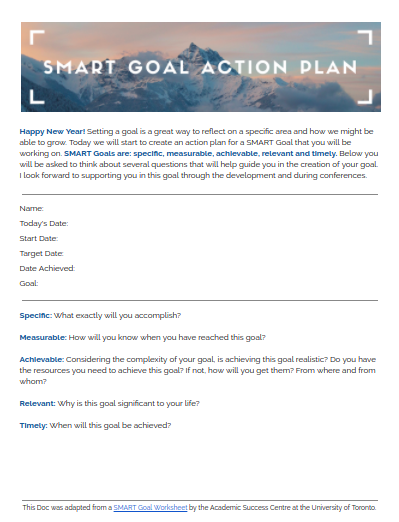 Over the years, I’ve considered different types of goal setting but have found SMART Goals as being the most effective, personally and in my work with students. SMART Goals are: Specific, Measurable, Attainable, Relevant, and Timely. This year, I created a SMART Goal Action Plan to work on with my students. Using this Google Doc, students will decide on a goal that they would like to accomplish and answer questions to make sure that their goals are indeed SMART. Now I know that I’ve made New Year’s Resolutions in the past that were easily forgotten by January 3rd, but I also know that an essential part of achieving our goals is support and accountability. By having students turn-in their work in Google Classroom, I’ll have the opportunity to conference with them on their action plan and have ongoing discussions as they progress. Part of the learning is going through the process. I’m really excited to support students in achieving something that is of importance to them and the hope is that by participating in this process, they may gain the skills necessary to continue to set SMART goals, personally and academically.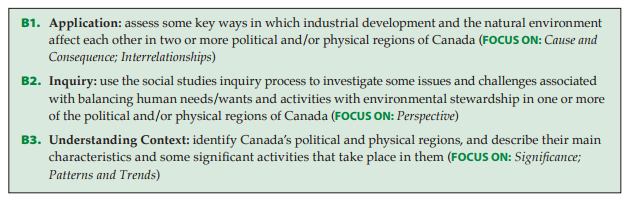
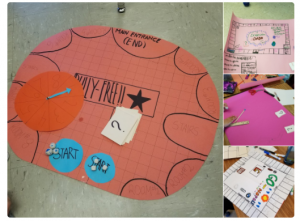
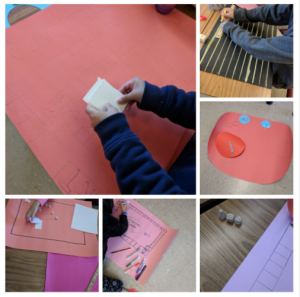 As I mentioned before, we are well into the creation stage and will continue in the new year. I do wonder however, if by calling it a board game, if I have steered them into a specific direction. Could it have been just a game where I may have seen a greater diversity of materials being used from physical to online? Did I in reality just do the very thing that bothered me so much about my mother’s course? Ask students to create something that wasn’t bored and yet steered them all into asking for bristol board? I’m on a path to really reflect on the types of tasks that I design for students while expecting them to become critical thinkers who are creative. This has now become food for thought for future tasks that we’ll embark on. Please stay tuned!
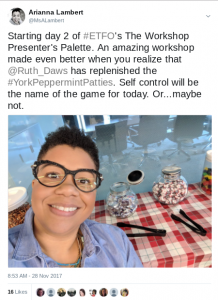 Much thanks to the “Terrific ETFO Trio” – Ruth Dawson, Joanne Myers, and Jane Bennett. Not only was it inspiring to watch these 3 women share strategies – with intentionality – but I also felt as though they gave to us on every level. From remembering our names to making sure there were yummy treats, they hosted us so well and reminded me of the importance of making my audience feel as though they matter every time that I present. I walked away wishing that I had more time to sit down and learn from them. Thank you!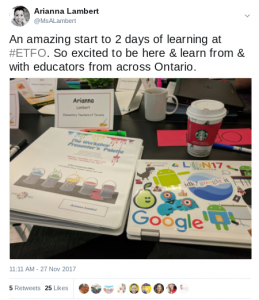


 In my class this year, I’ve made it a goal to ensure that Indigenous perspectives are reflected in both my teaching and in our learning space. In the past I’ve struggled with months or days to celebrate a particular heritage or cultural group because I find that it leads to tokenism. While there is value in that celebration, I wonder how we might be able to go beyond and infuse this learning into our everyday experiences with students. I’m learning the importance of valuing inquiry as students start to investigate for themselves diverse experiences within Canada. Earlier this year, we read