Building upon balance

I’m back. You’re back. They’re back. We’re back!!!!!
And it could not have come at a better time. Or could it?

While our transition from summer to school traditionally begins after Labour Day, there are more and more students starting back to class in August than ever before. This is known in edu-circles as a balanced or modified year. It offers quite a few upsides that benefit our learners and with some time for adjustment, for our profession. So I ask…

Imagine if we all started in August with a balanced school year that allowed the learning to be spread out over a longer period of time, but with a few week long breaks built in? What are the pros and cons of such a shift in a historically established calendar? Is it possible to change a 100+ year old practice?

Helping out on the farm

A balanced school year makes sense on a number of levels. Especially, when we consider that the original reason for a September start stemmed from the need for students to be available to work on the family farm. In some areas of the province, farming is still a factor, but it is very evident, that the majority of the nearly 2 million students from K to 12 live close to or in cities. Most are not feeding a herd, driving a combine, or mending fences in July and August.

However, a greater majority of students are left to swelter in concrete jungles trying to stay cool. There are few if any universally accessible programs that do not require a computer bot like skill in order to register on-line for limited spaces. So no swimming lessons, city camps, or classes for all. In fact, the City of Toronto announced that it will try to add 70 000 new program spaces just to accomodate current demand.

Which means, for the foreseeable future, most students will still be given a summer sentence stuck indoors. It is no secret, our cities lack adequate child care, recreation, youth programming, and social spaces. What if all school boards were able to offer a balanced school year and provide working families with an option that would ultimately save them money in conjunction with municipalities? A kind of multi-tiered approach to community and education.

Who will pay?

With government money used for creating and subsidizing child care spaces, an investment in a balanced school year would relieve, not remove, the pressure by allowing younger school aged children to be in the classroom rather than a daycare centre. This in itself could save families 3 to 4 weeks of childcare costs that could then be spread out over time through the year rather than in one expensive 9 week chunk. Granted, that there are extra weeks off throughout the year, but they are distributed over the school calendar.

The biggest obstacle to all of this is from a purely structural point of view and comes from having to retrofit hundreds, if not thousands of elementary schools with adequate climate controls, aka air conditioning. Recent returns to the classroom remind us all that our elementary schools are woefully equipped to deal with irratic temperature fluctuations and extreme heat. 2 fans per classroom do nothing to cut through the sweltering heat on the first or second floors of any ill-equipped building – even with the lights off.

The bigger question that comes to mind is why our province still chooses to provide air conditioning to students in high school, but not from JK to 8? This type of systemic disparity does not seem fair. Are elementary school students and staff expected to feel they are being treated fairly by the government’s funding model? I can see fingers pointing in all directions here, but not a one is doing a thing to acknowledge or remedy the problem. Students suffering from heat exhaustion do not make good learners. Perhaps it’s time for our grade 5 Social Studies classes to mount a letter writing campaign to ask our government to do its job and serve its future taxpayers. We’d better hurry before that curriculum gets changed. http://www.edu.gov.on.ca/eng/curriculum/elementary/social-studies-history-geography-2018.pdf
I feel we are about to see bigger problems in our province if facilities equity cannot be guaranteed in all schools. Think of it like this; the province buys or leases 1000s of vehicles each year. After a few years they are traded in or replaced with newer models and the fleet stays rolling. If Ontario maintained its government auto fleet like its schools, some would have hand crank windows, some might have air-conditioning, some would have low mileage, while others would be up on blocks. Most would need to go to the body shop for repairs and others would have to be towed to the scrapyard. Nobody would want to drive in an unreliable vehicle. So why are our schools being left to deteriorate through underfunding and repair backlogs?

How is it fair to expect standardized results when there are no standard facilities? Is it a class thing? A neighbourhood thing?

As teachers, we take pride in our workspace. We have witnessed all that can be done each year despite the structural shortfalls and disparities from school to school and board to board. We also know that the current funding model for our schools cannot be a band-aid solution. The recent cuts by the new provincial government are leaving school boards with open wounds.

It’s not all bad (well the above part is, but below is all sunshine)

This year’s return to school was ushered in with all of the elation, excitement, and chaos of its predecessors. How could it not be so? At my school over 600 hope-filled students converged on the playground for a surreal moment of truth. Who was going to be their teacher? In which classroom? Main building sauna or luxurious portable? I loved the chaos that was the first day. It was perfect weather for a July day in September. Perhaps in the future you will be reading this message in August. In the meantime, welcome back.
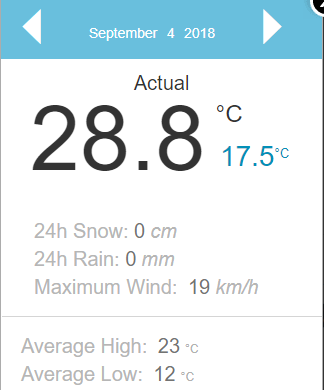
https://www.theweathernetwork.com/ca/monthly/ontario/richmond-hill

In my next post I’ll discuss the aspects of greater knowledge retention that come from a more balanced school year. What do you think of the idea of the school year spread out over a longer period of time? Please share and comment to continue the conversation. Thank you for reading.

Further reading

Interesting blog post explaining how education is funded in Ontario.
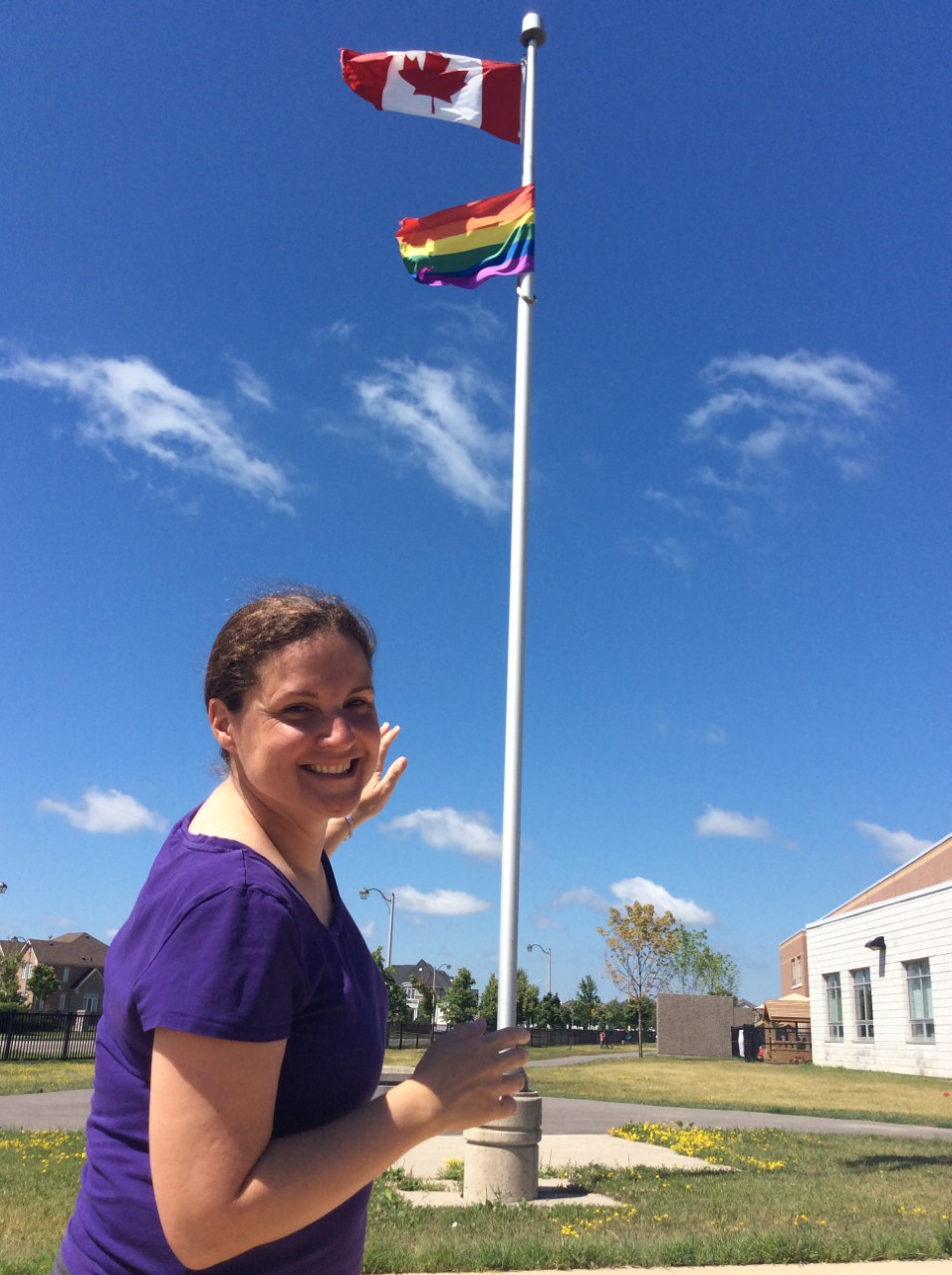
Happy Pride Month!

flag

This June, Peel District School board has raised the Pride Flag at every school for the first time. I didn’t realize the impact that the flying of the flag would have on me until I saw it every single day as I came into school. It gave me such a sense of joy and happiness that I was entering a building that explicitly and overtly demonstrated to my community that our building is a safe space for the 2SLGBTQ+ community!

It is so important that our students and their families see that flag flying high as our students who are queer are some of our most vulnerable students. Rates of suicide and self harm are alarming.  It is paramount that our students feel that they attend a school that values them and promotes a climate of inclusiveness.

In addition to the flag, The Peel District School Board has taken some great steps in recent years to support teachers in providing safer spaces for the 2SLGBTQ+ population. We held our 2nd annual middle school GSA conference this year which is helping teachers bring Gay Straight Alliance Groups to middle schools all over Peel. I also cheered the day I read the following headline in the Toronto Star: “Peel Board Won’t Exempt Kids from Learning About Gay Families, Gender Issues” in 2015.

ETFO, in conjunction with many locals across the province, has been doing this work for many years and has so many fantastic resources and professional development opportunities for teachers. I attended the workshop called LGBTQ in the Primary Classroom this past year.  We worked through a variety of scenarios focused on gender identity that many teachers are experiencing with their kindergarten and grade 1 students. Teachers in the workshop were committed to making their classroom a place where students can explore their identities. This included training on language used in the classroom, physical classroom environment and managing the challenging conversations with parents that regularly arise. We also reviewed Peel’s Gender Identity and Gender Expression Guidelines, which I appreciated. Every piece of policy helps support the conversations I need to have in order to provide a safer and inclusive environment for all of my students.

positive space poster

ETFO has created many resources including safe space posters that hang in our classrooms as a welcoming symbol to all and has provided us with training on how to start/facilitate and maneuver dialogues about inclusion. My safe space poster is beside my door. I regularly have students ask me about my safe space poster as we line up. I explain that this poster is to tell people that my classroom is a safer place for transgender, 2 spirit, lesbian, bisexual, queer and gay people. I have explained that to students between the ages of 6-11 regularly for the last 10 years. When you start teaching students about the idea of respect for all at a young age, it becomes part of the norms for our teaching space.


I hope everyone had a Happy PRIDE MONTH!!

Did something

Done

There are less than 0 days of classes left in this school year. Rooms have been undecorated. Incidents of dishevelled desks are now down to zero. I can actually see the top of mine again. It is the culmination of 10 months of hard work, joy, and growth.

DPA time lasted a little bit longer this week and despite the fact that there was a wind down in full effect, there were some delightful learning opportunities delivered. In defiance and deference to dimming the lights and decreasing instruction my class had work to do. It was different in my class.

Over our final week we dissected the year, loaded recycling dumpsters with past academic momentos, and did a little more learning. That’s right, we worked on a project. My students worked on a final team task: Identify a problem in our world and solve it.

Define

First we brainstormed. Students popcorned out their thoughts and I scribed. Slavery, poverty, pollution, ignorance, intolerance, racism, greed, war, hunger, and bullying all made the list of problems affecting our world. I asked whether there was room for increased kindness, respect, and patience with one another too?

Students chose partners and then decided on which topic to tackle. The roles of searcher, sheriff, scribe, and spokesperson were divvied up among team members. A device was distributed and the deconstruction of their global problem began.

Discovery

I have to admit, it was a lot of fun to watch the students collaborating on one last job. While they worked together, it was a good time to wander about the classroom while they wrapped their minds around the challenge. I enjoyed interacting with them knowing this task did not require an assessment, that it was democratic, and that students would be discovering that they have the tools to be problem solvers. I may have stoked that fire by stating that adults have failed them, look at the mess that we are leaving their generation to clean up?

After two days of self-directed learning, students were asked to share their solutions to global problems and then to lead a discussion about what they decided to do about them. They did not disappoint.

Decision

The decision to do this each year reminds students that we start strong and we finish stronger. And that there is always something more to learn and do before the year is done. Each final week of school has become an amazing opportunity to celebrate hard work and success right to the very end. A little pizza party and social activities on the second last day has never hurt either. We even watched a documentary about screen addiction.

Today, before our final farewells, we played social games, shared moments of appreciation for one another, and organized the classroom. Another best year ever is in the books.

Thank you for all of your support this year. Thank you for the opportunity to share my classroom experiences with you.
Wishing you a restful, restorative, and happy summer.


Thanks for all you do!

Congratulations on another successful year! Being a teacher is one of the greatest gifts and it is usually the students’ words at this time of year that remind me of the important impact that we have everyday. When I asked the students about their teacher, Ms. Duong, this is what they had to say:

“She is really caring and kind. She doesn’t leave anyone out and includes everybody. She always treats everyone equally. She is a joyful teacher and when she came, she told us she was nervous but she did a really great job! I learned a lot from her and she told us all the time that we are the best class. She brought us up and treated us well like we were one of her children so that we could be our best person.”

“She was really inspiring and every day when we saw her she had a big smile on her face and it made us smile as well. She would always let us know how great we are and that made us feel really happy.  She inspired us to become more involved and join more clubs. She also made really fun projects for us to do. “

“She is really sarcastic and can joke around with us. She also gives us fun activities to do. She made a lot of jokes in class and made me feel very happy. “

“She made me feel happy.”

“She always inspired me to be myself and made us feel comfortable. She made us feel happy and had a lot of smiles and always had a positive attitude. She always made anyone sad feel better and she taught everyone in such a respectful and caring way. We had a very active and fun class which helped us be motivated!”

“She is super caring and she treats everyone in the class equally. She never puts one student before another. She is super fun and makes learning fun! She makes games and even her tests are fun because they have jokes. She is always happy and even when she is stressed she finds the humour in the day. The classroom never has a negative vibe.”

“She does a lot of fun things. She doesn’t get agitated over little things. She is really honest with us about situations. She makes learning fun and joyful and funny. She lets us watch things a lot which we really like. She does community circles which helps us solve problems and also share about our weekends and our lives.”

I know that many of your students feel the same way about you! Thank you for all the work that you do every day to help our students of Ontario be the best people that they can be!

Departure

A friend shared their thoughts on why cars have huge windshields? To them, it was so drivers and passengers could get the widest/fullest view of what was to come on the road ahead.

They added that the rearview mirror was smaller because it was meant to serve only as a reminder of the road already traveled, and that our focus would be best fixed on the future rather than what has happened in the past.

As part of our role as lead learners in the classroom we are constantly asked to prepare for our students for the future. How well are educators preparing for the future when they are equipping themselves with prescribed resources that are older than their learners? At times it seems like the rearview mirror is blocking the entire windshield. For some, the road ahead is so cluttered by the past that it’s hard to see at all.

https://www.flickr.com/photos/ashleybuxo/15321215129/ CC by-SA 2.0

I wonder what it would be like to drive where the only view was like a peep hole on a door?

In itself, there is nothing wrong with using a tried and true resource in the classroom. We all have our favourites. My friend said that they use the windshield-rearview mirror analogy when they speak with people who are nervous about taking risks or are so stuck in the past that they are forgetting to live in the present or consider what’s coming.

What I am suggesting is that it should never come at the peril of losing sight of the future and our surroundings based solely on what has worked or been purchased in the past. Our schools are full of textbooks that are outdated the moment they are published. How are you keeping learning fresh and moving forward in your classroom when it comes to resources? I have cycled Language and Math resources this year. I try to give my students something fresh that has not been recycled from previous years’ plans. It took some time and searching, but the energy, encouragement, and engagement have been worth the effort.

As we wind down the instructional year, it might be a good idea to say goodbye to some old friends in order to welcome in some new ones. You might discover something new that has been waiting for you and if not a change is always as good as a rest. I get that change is difficult. I know that veering off of a familiar path can cause many to worry over the uncertainty. I promise that the destination will be worth the decision to make that departure. Make sure you have lots of windshield washer fluid to wash the bugs off on your journey. After all, you want to see the amazing destinations waiting on the road ahead. Bon voyage.

The post within a post

When I wrote this piece, I was intentional with my pronoun choices. In the opening paragraphs, they, them, and their were used instead of she, he, his, and her. I learned this from a wonderful PD session with a former student from the YRDSB who spoke on gender fluidity with our school staff. I mention this here to point out that the use of them, their, and they would serve us well in our writing to recognize that gender and identity are still often not being considered in all spaces, and that our ability to be inclusive and open can be challenged and stretched even further.

If you would like to see more about this please check out this amazing student voice talk by Noah Gibson shared at the YRDSB Quest for Well-being A Collective Responsibility.

Thank you for reading.

Shopping List For a New Class Designed for Students with Developmental Disabilities

Shopping, shopping, shopping! This week has been all about shopping. I was given the large task of ordering all the furniture/items for my brand-new classroom that will be providing a program for 10 amazing kids with developmental disabilities. As this was my first time setting up this kind of program, I visited multiple classrooms and reached out to many people for advice and suggestions. I also used my new students’ IEPs and transition meetings to guide my purchases, which is a mandatory part of the process. For those of you out there trying to make decisions without my amazing network of colleagues to rely on, below is the list of items that I purchased this week for the upcoming school year:

List of things to buy for new DD class

  1. Printer with colour ink
  2. Laminator
  3. Velcro
  4. Microwave
  5. Fridge
  6. Plates
  7. Cups
  8. Cutlery
  9. 3-seater couch
  10. Bean bag chairs
  11. Glider rocking chair
  12. Carpet
  13. Independent work stations
  14. Shelf for books
  15. Trampoline/active movement in the school?
  16. Bikes
  17. Washer/dryer
  18. Tables
  19. Independent work station desk
  20. Sensory bins
  21. Peg board
  22. Chewlery
  23. Cause and effect toys
  24. Slant board
  25. Writing tool grips
  26. Triangular tools
  27. Multi-sensory materials
  28. Math manipulatives
  29. Calendar
  30. Bob books/Pattern books
  31. Reading A to Z
  32. Site word activities
  33. Number games
  34. Timers
  35. Alphabet books
  36. Playdough
  37. Picture books
  38. Matching activities
  39. Thera-putty
  40. Paint/art materials

This is by no means exhaustive and was designed to meet the needs of my particular students. Also, some of the items will come through referrals by Occupational Therapists and Speech and Language Therapists.  But if you were like me last week and had no idea where to start, hopefully, this will give you a staring point! Happy shopping.

Decline(d)

https://pixabay.com/en/fracture-bone-xray-skeleton-2333164/ by Taokinesis

Have you ever heard of a child breaking a limb only to have medical treatment declined by their parents/guardians because they didn’t want anyone to know the extent of the injuries? Of course not. There’d be a rush to the hospital and a cast applied within hours.

I’ve rarely, if ever, known of anyone to refuse medical care for their child. Religious choices aside, it is impossible to think of a time when medical treatment should ever be withheld or denied. In fact, child services might be called in to ensure an injured child is receiving proper care – if it ever was the case. We have seen this occasionally played out in the court system.

Yet, in our schools a parallel situation is happening year after year. Students are identified with academic or psychological needs which affect their education, emotional well being, and long term mental health only to have offers of support declined, ignored, or attacked.

Optional Support

Is there a stigma in the minds of some about an educational identification that is at the root of learners not getting the support that they need? Does access to Special Education support and resources fall into the optional only category at the peril and loss of our students? I wonder how education at all levels can change the perceptions around identifying students, their needs, and the importance that education plays in supporting them? Have you encountered this? I have.

Many who serve as SERTs/admin have worked alongside school staff to identify students at risk and proposed solid plans of action to help, only to have them abruptly halted/refused without consideration of the detriment it will have on the child. Thus leaving another learner unidentified and under-supported. How can we let students slip through the cracks based on the belief that they should be able to grow out of it or that there identification is perceived as a social shame or dirty secret? Why do people take exception to receiving support for exceptionalities?

A number of recent conversations with colleagues have all seemed to reflect on how some of our students still struggle. A common thread here being a reluctance to formally identify any academic or behavioural issues. To me it feels like put a bandaid on a compound fracture. As long as it’s kept covered up, it doesn’t exist despite the discomfort, quite convinced that it will get better on its own.

After 9 months of growth plans, ISTs, academic testing, IEPs, IPRCS, and countless meetings; many are working feverishly to support at risk learners for a successful start in September. Is there something else we can do? Are there any magic words that can convice a family that we are working hard to help their child succeed? I wonder how we can collectively share, support, and encourage one another in our practice and through professional conversations that will continue fighting for our students. If you have any stories and successful strategies to share please share them in the comments section below.  Wishing you all of the best of life’s breaks.


Why Collective Bargaining is Important for Teachers

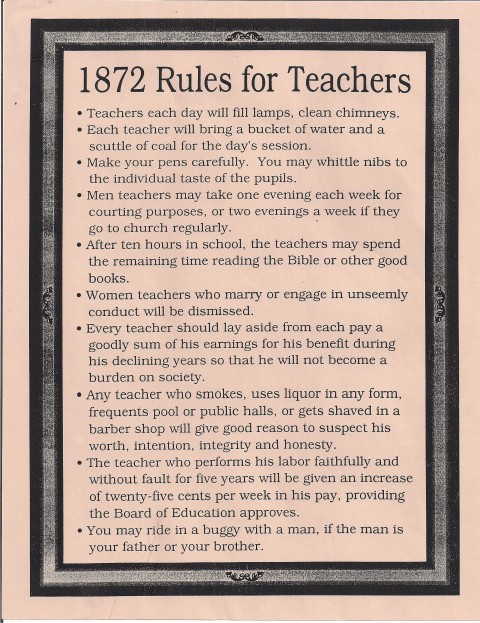
1872-Rules-for-Teachers

I was born into the union. In 1966, my father worked for Tommy Douglas and ran for the an NDP member of parliament in the Ottawa region. Photo below with my father looking over Tommy’s shoulder.

tommy douglas

And my mother was on the CUPE (Canadian Union of Public Employees) collective bargaining unit for the secretaries (i.e.typists) local in the early 1970s.

My first experience with collective bargaining (CB) was with my mother.  I remember my mother being gone for long periods and coming home very late at night bargaining for CUPE members’ rights. My mother says it took a great deal of work hours and strategy to advocate for members’ pay and working conditions. Every Labour Day, my family marched in the Toronto parade. I got to wear very cool white gloves and wave to people! I also remember walking picket lines with my mother.

At the time of my mother’s involvement in CUPE’s collective bargaining, she had four children, aged 11 (me), 9, 3, and 1 years old. The long hours and family commitments eventually led to her leaving for another role. My mother ultimately became a teacher and teacher union steward.

When I started teaching, I had a ready-made union mentor (even though she was part OSSFT – Ontario Secondary School Teachers Federation). I was fortunate to have my mother to walk me through the importance and processes of collective bargaining and collective agreements. When talking to new teachers, I often wonder how much they know about collective bargaining and the importance of collective agreements.

Fortunately, I have attended two ETFO collective bargaining professional development sessions and have learned specifically about ETFOs collective bargaining processes.

Until these PD sessions, I felt safe in my practice as a teacher and as an ETFO member. But, in the PD sessions, I also heard stories that have made me feel distressed by what EFTO members had experienced in their schools. These stories and the calibre of members involved in ETFO collective bargaining has implored me into posting a blog for new members.

In my last collective bargaining PD session, Heather Ann McConnell , a labour lawyer with Goldblatt Partners, spoke eloquently about collective bargaining, the collective agreement, and ETFO member rights. I asked her what new ETFO members needed to know about collective bargaining. She listed the following points:

  • Understand the process and terms of collective bargaining
  • Understand member rights as an ETFO member
  • Understand the separate bargaining units within ETFO
  • Attend PD seminars on collective bargaining
  • Talk to ETFO stewards
  • Get involved by attending local and provincial annual general meetings
  • Develop ETFO leadership at school, local, and provincial levels

What really hit me was when Heather stated:

“ the most important issue in collective bargaining is that collective agreements need to be reinforced to be worth the paper they are written upon” or in other words, “use it or lose it”.

Did you know that …

  • In the years of the one room school house, teachers were obligated to teach students, clean classrooms, chop wood for the fire, prime the well, and feed the students for poverty level wages.
  • At one point, teachers who married or became pregnant had to quit their jobs.
  • In 1888, one of the first teacher unions was formed by the Lady Teachers’ Association of Toronto, to fight for better wages and working conditions – just like teachers do today over 130 years later.
  • In the 1920s, there were two volunteer teacher organizations, one for women and one for men. The men got paid more BTW.
  • In 1944, the first teachers’ federation was established. This lead to more teacher rights, an increase in salary, and a pay grid based on qualifications and experience.

Source: It’s Elementary: A Brief History of Ontario’s Elementary Teachers and Their Federations

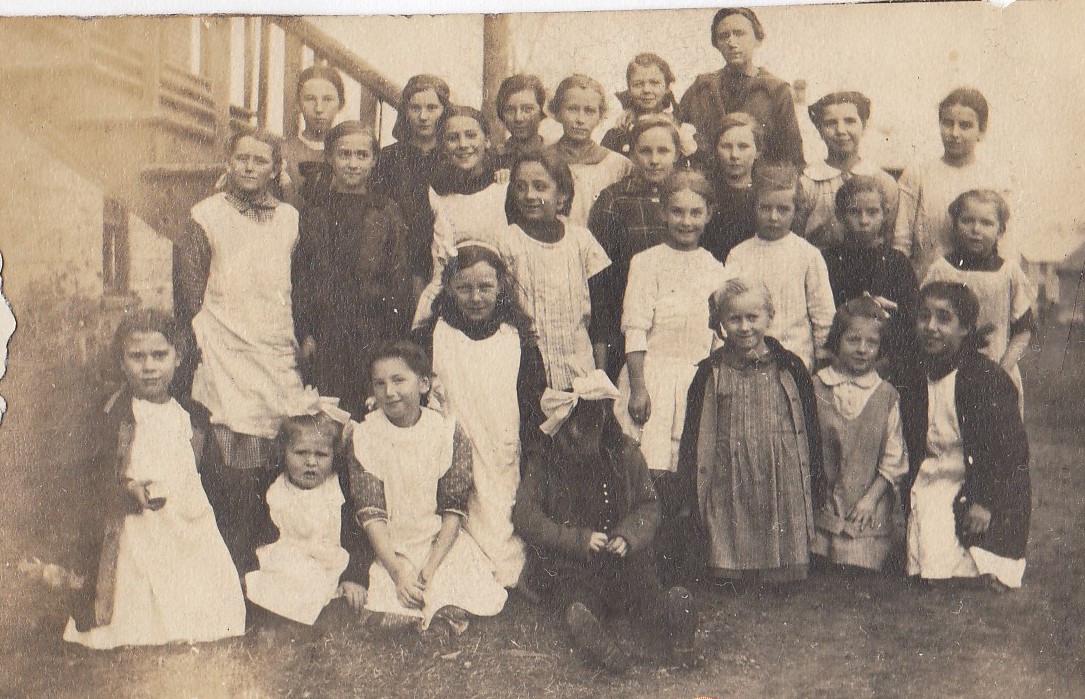
My grandmother’s one room classroom near Feversham, Grey County, Ontario (first row, 4th from the left).

Permilla Anne Coulthard's School 4th from left

My mother’s classroom in King Township, Ontario  (second row, 2nd from the left).

Elizabeth Ebert School second left in middle row


Collective bargaining and the collective agreements that follow are the reason for teachers’ current pay and working conditions.

I’m very pleased that I am not obligated to clean classrooms or to prepared lunches for all my students. I am proud that I get paid based on my level of experience and qualifications, regardless of my gender.

Check out some of the resources below. Learn about your rights. Be part of your union. Make sure your collective agreement is being honoured. Read your collective agreement today!

Collaboratively Yours,

Deb Weston

It’s Elementary: A Brief History of Ontario’s Elementary Teachers and Their Federations

Its Elementary

Part I of It’s Elementary: A Brief History of Ontario’s Elementary Teachers and Their Federations

Part III of It’s Elementary: A Brief History of Ontario’s Public Elementary School Teachers and their Federations

Kitchen, J., & Petrarca, D. (2013/2014). Teacher Preparation in Ontario: A History, Journal of Teaching & Learning, Brock University, 8(1), 56-71

The Importance of Collective Agreements: Protecting Salary and Working Conditions

This resource discusses salary, insured benefits, sick leave entitlement, teachers’ work days, teachers’ job allocation, and protection against arbitrary discipline. It discussed how collective bargaining is on ongoing process which, over time, evolves to achieve more protection and better working conditions for teachers. The role of collective bargaining is to fill in gaps in existing law and to be flexible enough to respond to changing conditions in education. This means that each collective agreement has a deep history of hard won rights and working conditions. Every ETFO member has ownership to their collective agreement.

Source: The Importance of Collective Agreements: Protecting Salary and Working Conditions

From ETFOs: Defending Working & Learning Conditions

“Each and every ETFO member has a stake in reading and understanding the agreement, and in supporting the local bargaining process. Your principal, superintendents, and trustees may be well-intentioned individuals committed to helping you do your job. But good intentions are no substitute for the negotiated, legally-enforceable document that unambiguously sets forth your rights in the workplace. In short, collective bargaining protects your rights as an education worker. Read your collective agreement today.”

#Booksnaps

1E78CB7A-CFFF-43FE-96B2-AF4E2EB93DF6

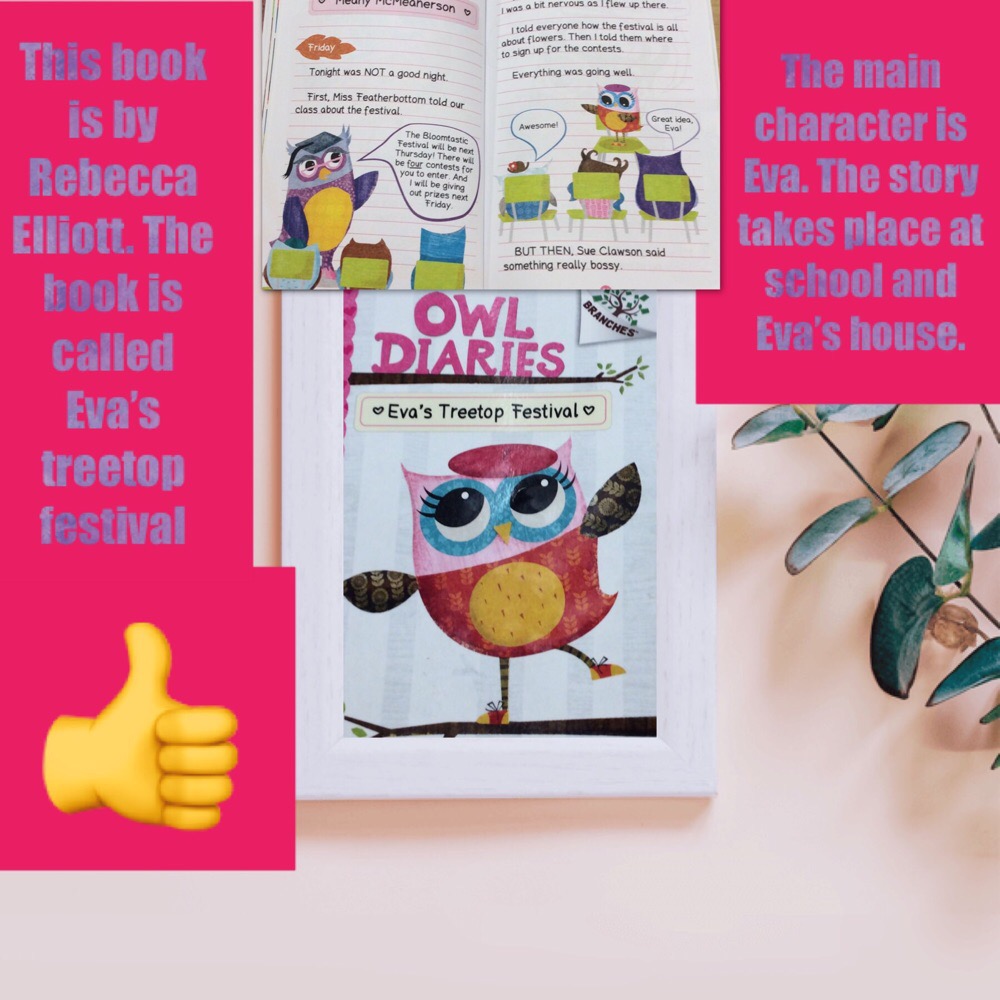
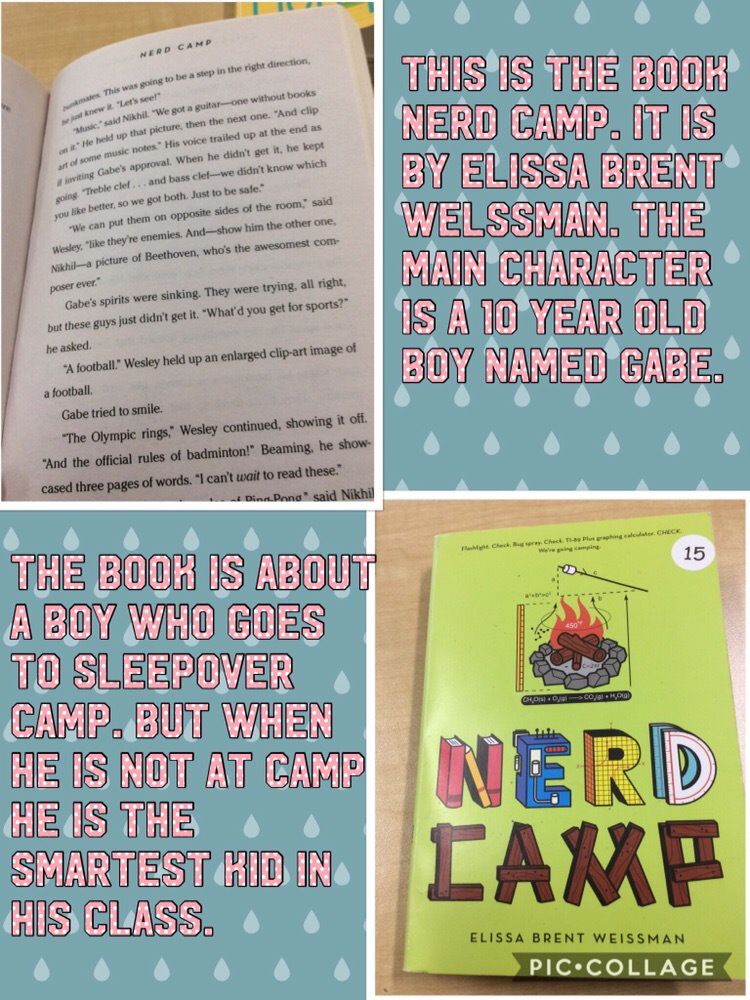
“Booksnaps” are visual responses to texts that students are reading.  When I first saw #BookSnaps on Twitter I was a little confused.  There were a lot of “Bitmojis” and “emojis” pasted on pictures of text.  My understanding was that the students were providing a personal reaction to the books that they were reading.  I certainly liked the idea of responding to books in a visual way using technology, but I wanted my students to go deeper than just pasting emojis onto pictures of books. As a class, we came up with a list of when it would be appropriate to create a #Booksnap and then created the success criteria together to make our #Booksnaps something that others would be interested in reading.

When to #Booksnap

An interesting or exciting part in the story.

Information or a fact from a Non-Fiction book that you found particularly interesting.

At the beginning of the book when you would like to make a prediction.

A personal reaction to something that has happened in the story.

A book recommendation when you have completed reading the book.

To identify and react to the problem in the story.

To identify and react to the main idea in the story.

To identify and react to the setting description in the story.

#Booksnap Success Criteria 

Balanced design between pictures and text.

Text is written clearly and is easy to read.

Title and author are included (source).

Includes a personal reaction and evidence from the text.

In our class we have used Seesaw  to create #Booksnaps but find that Pic Collage is much easier to edit and make changes and it has a few more bells and whistles for choices in texts and backgrounds.  Here are a few more samples of the work that students have created.  All of the samples that I have included here are from grade four students.

F79BDF56-203F-45A7-A771-46582A91EFA8                 17FDE4F3-C6B8-4728-9537-FB930C4AFB13               4D19E6FD-8D36-4BEB-B610-4824E6BC6A52


When students finish the #Booksnaps they post them to their account in Seesaw and I also airdrop them to myself and then put them on Twitter under my class account with the #Booksnaps and share on our school Twitter account.  Sharing these responses and getting feedback makes the learning authentic and meaningful for students.  The students are excited to create book responses in this format and they keep amazing me with new and interesting ways to interact with their texts.


Google Classroom

I just wanted to share about an exciting digital tool I have been trying for a few months now. Google classroom is an organized way of creating a document on google drive and then having it available on google for all your students to use. Google classroom can create a separate copy for each student as if you have printed them all off their own copy. This helps the environment and is awesome if you have a supply in or did not save time to photocopy.

The great feature about this program is once a student “turns in” their work, you can submit their mark to them online. You just add the mark in the mark column and then they get it back in their google classroom accounts.

I am hoping one day to use this for all assignments but for now, it was great to use for a grade 7/8 writing assignment as they used their typing skills to help get their ideas down faster. They also stayed organized and it was my way of ensuring all documents were turned it at the end of class.

Another feature includes the students not being able to re-open their document until the teacher has added their mark. They can turn it in again if they need to change something but only after it has been graded the first time. Since it is turned it at the end of class, students cannot add anything at home.

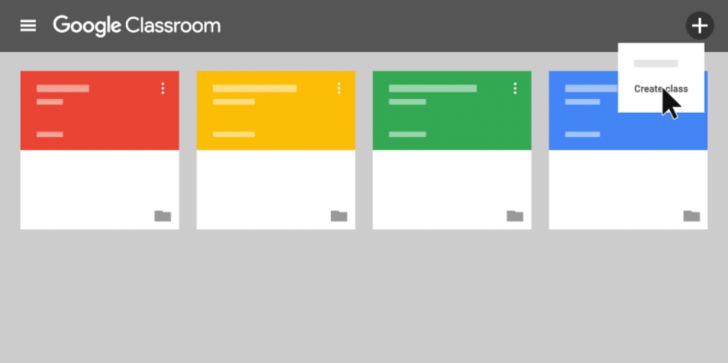
To use this program, look in to your google classroom account and simply click “Create Class”. I promise you will all love this paperless tool! nexus2cee_google-classroom-creat-728x363