Having Math Anxiety May Make Me a Better Math Teacher

Growing up I had many terrible experiences with math, which started when I moved schools mid-way through the year in grade three.  At my old school we hadn’t learned about multiplication yet.  In my new school, they were already on division.  Skipping that step in my math learning haunted me through high school.  My parents even hired  tutors along the way and I still struggled.  I have vivid memories of feeling my mind shutting down, having sweaty palms, a racing pulse and my eyes glazing over.  Even as an adult, I refuse to keep score in a card game in social situations.  Math is not something that comes easily to me.  However, I do believe that having this experience gives me an understanding of how my students feel when they find math tough.  Math anxiety is real and it is horrible but I think it may make me a better teacher.

After twenty years of teaching in the early primary grades (mostly because I was afraid to teach junior math), I have made the jump to grades 4 and 5.  I admit when I first started my long range planning this year, I was more than a little intimidated.  However, I am pleased to say that I have a fabulous group of helpful and understanding colleagues, have discovered some informative professional web sites such as http://www.youcubed.org  and have had access to professional learning through my school board.  I’m starting to gain some confidence.  I also believe that the hands-on math teaching that I did with my primary students has given me insight into how to make math more accessible. Knowing how children develop their math skills at an early age helps me to see where gaps might be in the learning of the junior students.

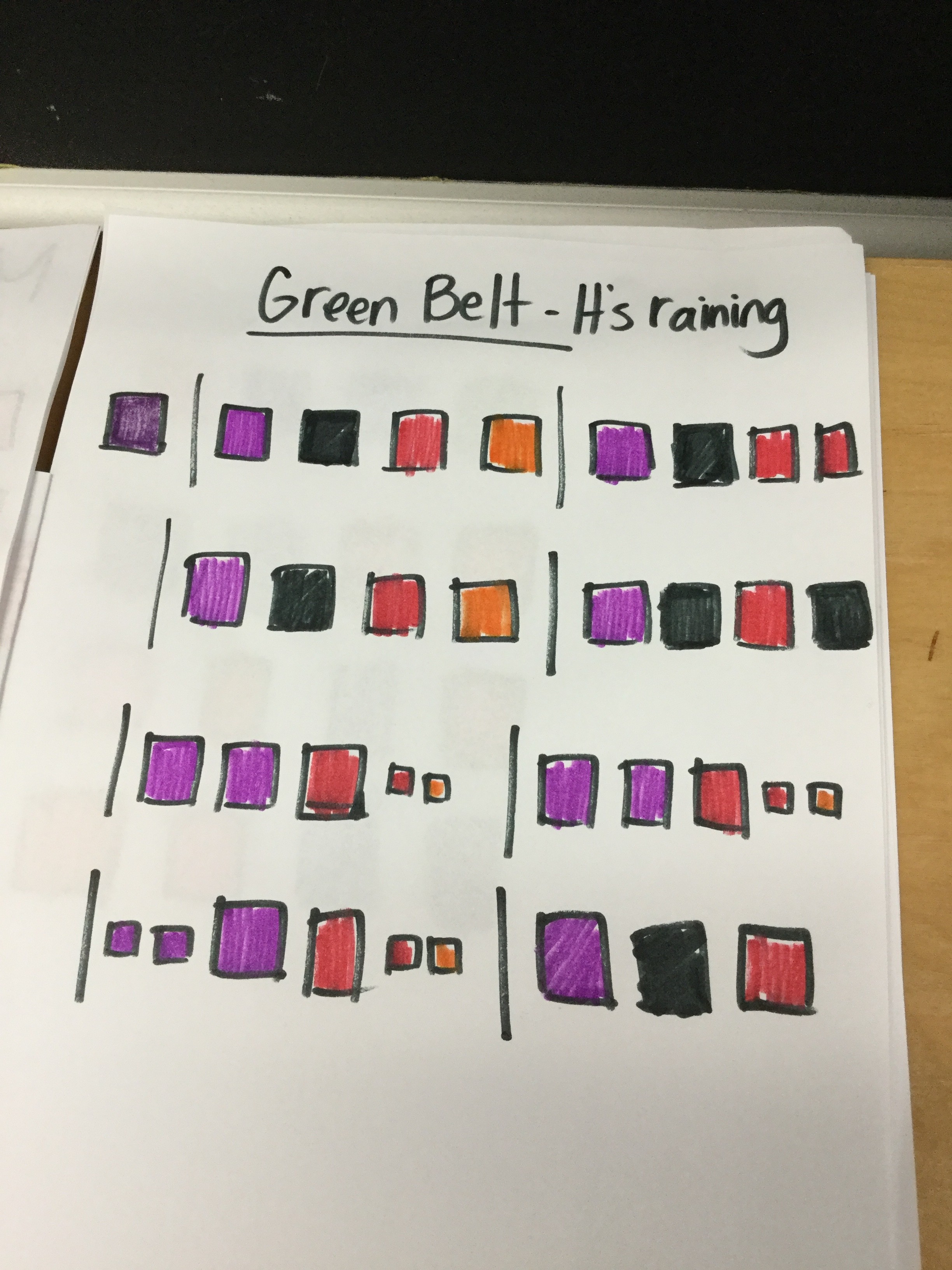
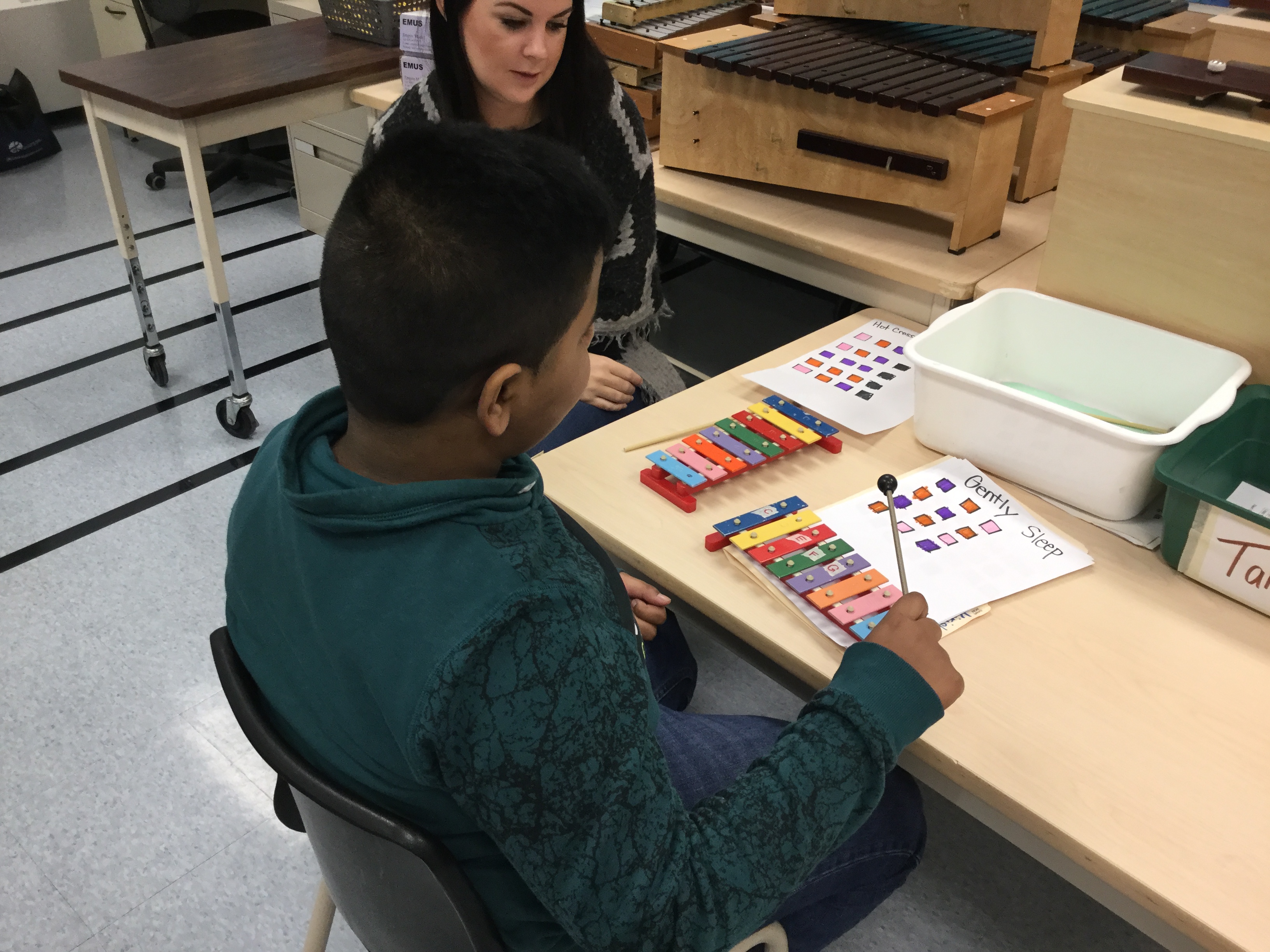
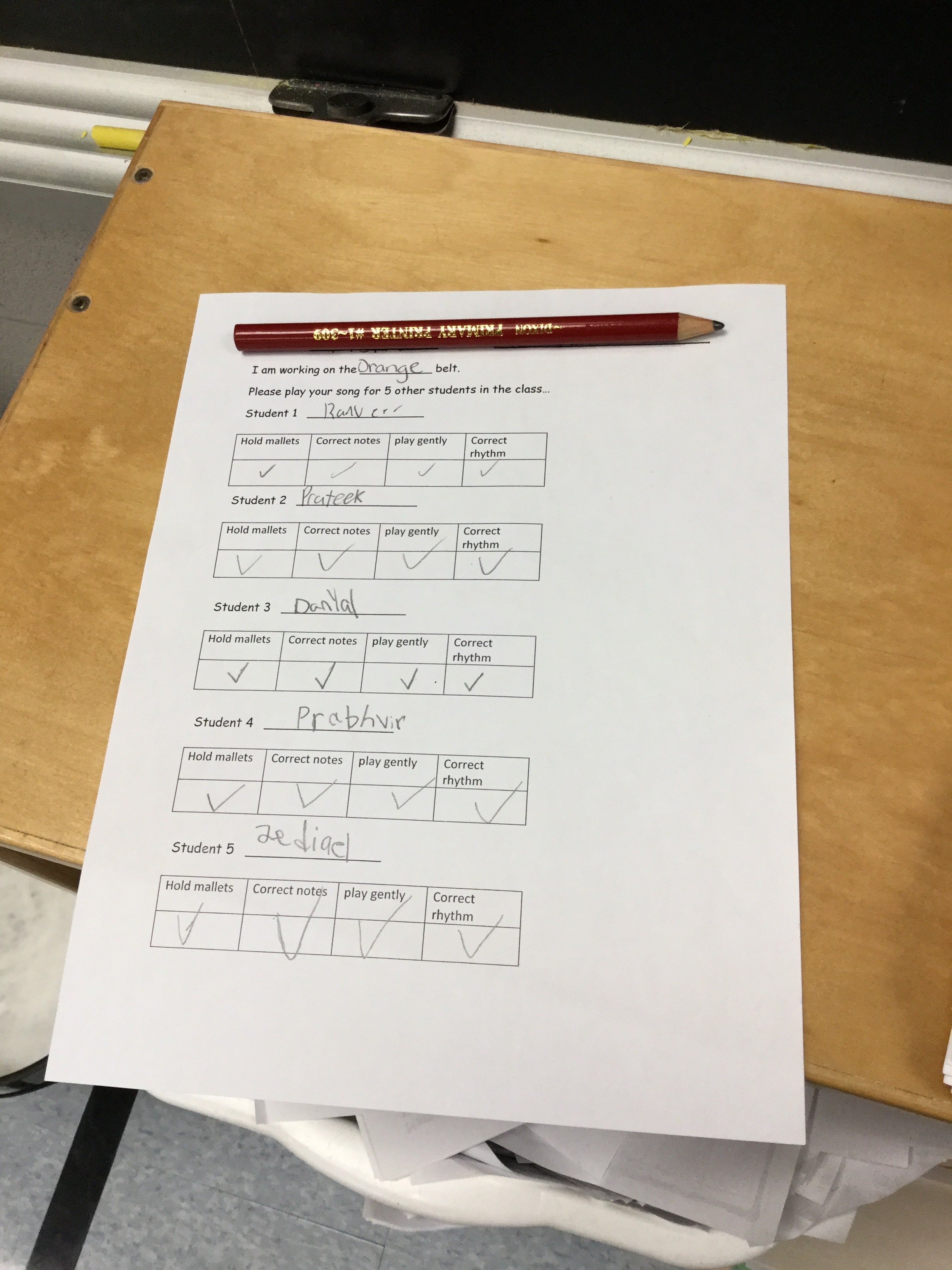
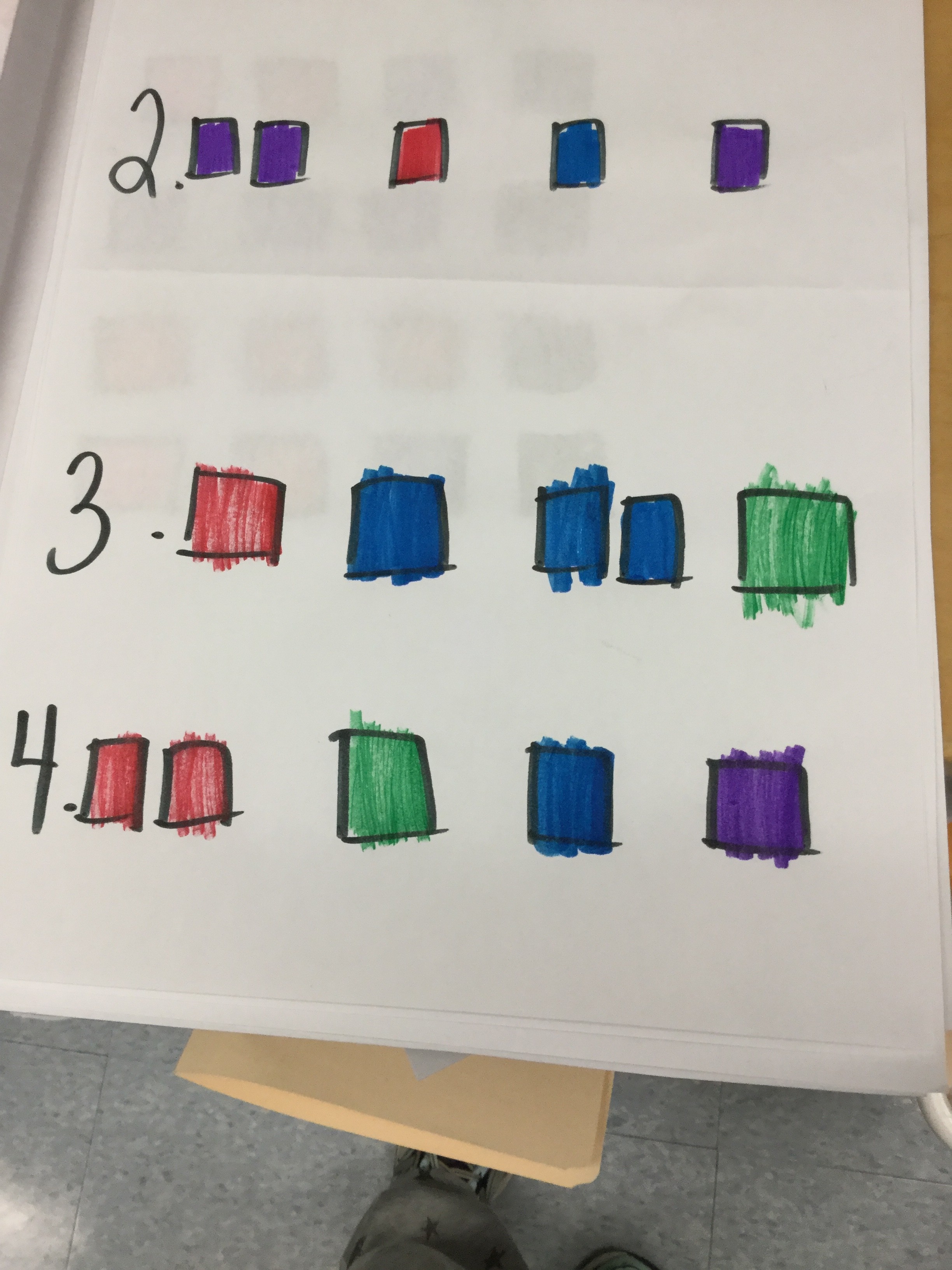
My passsions and teaching strengths have always been language and the arts.  When I first began teaching it was actually called “Language Arts”.  This week I had a student say to me, “You must really love math.  It seems like we are always doing it.”  I laughed out loud and said, “I’ve been called a lot of things, but a “math” teacher isn’t one of them!”  I’ve shared my personal story about math anxiety with my students.  I have assured my students that there will be no competitive math facts games in my classroom and no timed tests.  Being good at math doesn’t mean being fast at math.  Actually,  I don’t have math tests at all in my classroom.  I call them assessments and they aren’t always paper and pencil tasks.  Recently, my students showed their learning of growing patterns using manipulatives in the photos below.  This was only one part of the assessment but it provides an example of how we can still use those visible learning hands-on opportunities in the junior grades.  It was also uploaded to their digital portfolios and communicated to families immediately.

IMG_0329                                             IMG_0330

IMG_0332


I am committed to developing a growth mindset about teaching and learning math.  I’ve learned about the myth of the “math person”. I’ve learned that our brains continue to grow and change with math challenges and not with answers that come easily. I am not afraid to admit that there are times when I ask colleagues for help to ensure that I am solving problems correctly myself so that I can then teach my students.  There are times when my students have found a different way to solve a problem and there are times when they have pointed out mistakes in my calculations.  We encourage owning our mistakes in our classroom and being ok about it. We learn more deeply when we make and then correct our errors.  Our classroom is changing our vocabulary to have a growth mindset about math.  When they encounter a difficult problem in our classroom the students say, “I don’t get this…yet.”  I may not see myself as a mathematician “yet” but I will continue to demonstrate empathy to those who struggle and model a growth mindset to my students.  Each lesson that I teach will help to silence the words of my grade 12 math teacher as he handed back my mid-term exam and said, “Guess your parents wasted good money on that tutor.”

Why then? What now?

Friendships, extra-curricular activities, and field trips are all amazing parts of the school experience. Ask anyone to recall their most memorable moments across the years, and they usually make mention of one or all of the above. Reflecting on my own time in the classroom these memories are the remnants of many happy times if I ignore the minor conflicts, the bullying, or being scolded/hit/screamed at by teachers.

Perhaps, it’s a function of time, appreciation, and experience, but the good does outweigh the residual frustration. This is not the case for all learners. There are some who barely survived their educations to consider alongside those who have gone on to thrive beyond them. The emotional wounds remain unhealed.

Imagine, being set apart from your friends, losing your privilege to participate in extra-curriculars, or frequent trips to see the principal instead? Imagine being hit for not having your homework completed, for misbehaving, or for being different?

It reminds me of George Orwell’s striking essay Such, such were the Joys. This text reveals as much about education as do the happier parts I mentioned in my opening paragraph. Orwell’s work centred on a British boarding school in the past, complete with constant humiliation and corporal punishment. It is descriptive and dark reminder that education was not be perfect in the “good old days”. Fast forward, it is still not perfect, but it is now getting a G for initiative.

Here’s a more recent story that did not involve the extremes outlined by Orwell;

I was taking part in some Math PD at a sister school in 2015. During lunch break, I wandered into the office and happened upon a student who was sitting at a desk writing lines. When I first saw him, he was trying the multiple pencil method where you try to hold as many pencils as possible to write as many lines at the same time. FLASHBACK to 1978 and it’s me at that desk writing line after line. I suggested he try writing the first word all the way down the page and then the second and so on. He laughed. I laughed, but on the inside I wondered what was being accomplished here?

So, I asked. “What are you in for?” The student replied, “I wasn’t listening during lunch.” I knew that, because it was all across his paper, but thought it good to ask anyway. “How many I asked?” “Two pages,” he replied “both sides.” Ouch. I wished him luck and returned to my session a bit confounded by it all.

During that brief interaction I felt sorry for this student. Somewhere in that building was someone who felt that writing lines was the answer. Yes, he had made a poor choice by disrespecting the lunch supervisor, and by not listening, but I sided with this student. It was as if someone was trying to extinguish a flame that was trying to burn brightly in this child through the exercise of power and authority. That was what troubled me. Was the act of writing lines really going to accomplish something monumental or was it merely a controlled burn?

What would you have done with this articulate, bright eyed student wearing out pencils in a pointless exercise? How could this be turned around so all parties would be satisfied and the pencils spared? Was I wrong to empathise with this kid? After our conversation, I didn’t think so.

Whether it’s 2 or 200 years ago, there are still many issues around discipline in our schools. Isn’t it time to approach it from a different angle?

In my next post I will share about Discipline being a noun and verb.  Please share and comment. Thanks for reading. It keeps me going knowing you’re out there along the journey of education. Will

A Week of Inspirational Math

To begin the year of math instruction, most of the junior division teachers in my school decided to try Jo Boaler’s “Week of Inspirational Math” on YouCubed. Jo Boaler is one of the leading researchers in mathematics education and focuses largely on developing mathematical mindsets. On the website www.youcubed.org, there are many high quality resources for teachers and parents based off her research. I am quite familiar with some of the resources, having explored it during staff professional development days. I was quite excited to get into the classroom and try it out for myself.

The Week of Inspirational Math, actually expanded to three weeks, provides student videos and lesson plans that include rich, open ended math tasks. They are described as low floor, high ceiling tasks, meaning that they have many access points for all levels of learners and allow for multiple solutions and higher level thinking. The tasks, sorted by grade level, touch upon different strands of math as the days progress. Each lesson is accommodated by a video for students, usually of Jo Boaler herself, creating and framing mindsets for math.

I loved using this as my programming for the first few weeks of school. First, because it set the tone of positive mathematical mindsets in my classroom. One of the very first activities has students discussing what makes a good problem solving group member. They are invited to discuss what things they might like their classmates to say and do while consolidating math experiences. What a great way to establish classroom norms!

What I really loved about the Week of Inspirational Math was that it acted as a great diagnostic tool for me. By touching upon many strands, offering a large window of access points and relying heavily on math conversations, the program provided me with a great opportunity to get to know my students as mathematicians fairly early in the year.

Jo Boaler’s approach to teaching mathematics is based off of these seven positive classroom norms:

1. Everyone can learn math to the highest levels

2. Mistakes are valuable

3. Questions are really important

4. Math is about creativity and making sense

5. Math is about connections and communication

6. Math class is about learning not performing

7. Depth is more important than speed

The Week of Inspirational Math isn’t the only excellent resource available at YouCubed. I have been spending some time exploring the tasks, videos for students, parent resources and research articles available. YouCubed offers professional development courses both online and in-person. The website also lists a variety of texts and resources for teachers to use in the classroom. If you’re interested in learning more, head over to www.youcubed.org or check out Jo Boaler’s latest book, Mathematical Mindsets.

I am looking forward to continuing to use these resources with my grade 5/6 class in addition to many other wonderful resources out there! As a teacher, I sometimes feel that there is an overwhelming amount of resources, new research and ideas available. It can be quite time consuming to sort through and find what is meaningful to you and your students’ needs. There will never be a “perfect” or “right” way of teaching math, but I thought I’d share with you this resource that has worked well for me!


A Wonder-Ful Start to the Year

This year I am teaching a grade 5/6 class. I’m learning a lot as I transition from teaching a grade 2/3 class last year. I have always had a heart for the younger grades but as I am getting to know my new group of grade fives and sixes, I feel my heart growing.

I have a class of 24 wonderfully bright, inquisitive and compassionate kids. Every day I am blown away by their ability to share ideas, challenge norms and push their learning to new limits. My favourite thing about teaching this class are the spontaneous, unplanned conversations that arise during the day and the powerful learning that comes from them.

I wanted to find a way to break down barriers and set an inclusive tone for their year. There had been a lot of buzz around the book Wonder, by R.J Palacio, so I decided to use it as our first read aloud. I cannot recommend this book enough. If you haven’t heard of it, Wonder follows the story of a fifth-grade boy named August Pullman, who has a severe facial deformity, as he makes his way through attending school for the first time. The book is written through his point of view, but also through the point of view of other characters in his life. The story touches upon countless valuable topics, themes and discussion points. Ranging from bullying, social groups, peer pressure, self esteem, growing up, parent divorce and grief to love – the interweaving storylines of Wonder’s characters offer a wide range of access points for teachers and students.

9780552565974_custom-b8367e7a41f7c527051b3b8024b7924b3e0a113c-s400-c85

Since the first day of school, we have started every morning sitting under the big tree in our playground reading Wonder together – my students gathered around me reading, completely immersed in the story, always asking to read on to the next chapter. It is my favourite part of the day. Not only does this create a calm transition into the school day for my students, but it sets the tone with powerful messages and mindful discussion.

With Wonder as our mentor text, my students have engaged in many literacy, drama, visual arts and health learning experiences. Our classroom has been taken over by Wonder and it’s message – choose kind. The curriculum connections are plenty but they aren’t why this book is so powerful. It is powerful because of its ability to resonate with every student in the room. It is powerful because of the thinking it sparks.

Last week, I had one of my top teaching moments. After nutrition break, I thought my students needed a few minutes of quiet to transition them into our math block. I called them over to our carpet, sat down there with them, and thought I would read just a few pages of our book. We didn’t get to that math lesson. Instead, we happened to read a fairly impactful chapter about the idea that everyone is fighting a battle though we may not know it. I noticed a few tears in the eyes of some students. When I stopped reading, the chapter sparked a very powerful conversation. Without invitation, several of my students chose to share their own experiences of struggle in their own lives. A few of them were brought to tears in doing so, immediately comforted by their peers. Other students commented on how brave they were to openly share that with others. They talked about empathy, compassion and shared some very profound thoughts. The bravery, maturity and vulnerability they displayed amazed me. It was a beautiful experience to share with them.

All this to say, the author of Wonder has done an outstanding job at addressing real issues in a way that is engaging and accessible for kids. I highly recommend this book for your class and I believe every child in school should have the opportunity to read it.


Report Cards Are Coming: Professional Reporting

Growing Success K-12

Elementary Report Cards … the mere mention of report cards can send some teachers into anxious ridden days and sleepless nights. Even after 17 years of writing elementary report cards, I anticipated that my levels of anxiety would be non-existent but, no, for me, the thought of report card writing still stresses me out. I know of some colleagues who are so anxious about report card writing, that they had to seek medical support.

The source of this anxiety is embedded in inconsistencies in how report card policy is implemented. And the source of the inconsistencies is rooted in the process of educational policy implementation. With each level of educational policy implementation gatekeepers, such as boards of education, superintendents, schools, administrators, and classroom teachers, all interpret and change the policy based on their own context and their own perspectives (Ball, Maguire, & Braun, 2012).

As report card policy initiatives are translated into real life, the policy stakeholders, like administrators and teachers, adapt and reinvent their interpretation of the policy into school contexts. Since the education policy guidelines tend to be abstract and non specific, confusion and disjointedness results (Ball, 1993), and teachers end up decoding and recoding the policy text such as the reporting policy, Growing Success (Ontario Ministry of Education, 2010). Even with the well written Growing Success document (Ontario Ministry of Education, 2010), the process of understanding and translating report card policy can result in various degrees of intentional and unintentional interpretations (Fuhrman, Clune, & Elmore, 1991). Or, in other words, there are inconsistencies in report card policy implementation. Competing theories between policy authors (i.e., governments and school boards) and report card implementers (i.e., principals and teachers) can cause conflicts between the vision of policy and the practice of policy (Timperley & Parr, 2005). This can result in gatekeepers’ experiencing “most carefully planned” initiatives unfolding in a “non-linear manner” (Timperley & Robinson, 2000, p. 47).

This policy implementation process results in the practice of report card writing that look different from the vision of the report card policy writers. Therefore, because of this flux,  report card formats and content can change from school board to school board, school to school, year to year, administrator to administrator, and sometimes even term to term (Note: this is strictly based on my own experience over 17 years). As noted earlier, at every level of implementation, each person put their own spin on the policy. The result is that teachers have to deal with changing report card writing expectations. Inconsistencies directly result in teachers having to spend a great deal of time trying to meet the expectations of different stakeholders. Teachers then have to use their professional judgement to interpret these expectations.

The document Growing Success (Ontario Ministry of Education, 2010, p. 152) states “ Judgement that is informed by professional knowledge of curriculum expectations, context, evidence of learning, methods of instruction and assessment, and the criteria and standards that indicate success in student learning. In professional practice, judgement involves a purposeful and systematic thinking process that evolves in terms of accuracy and insight with ongoing reflection and self-correction.”

Further, Growing Success states that “successful implementation of policy depends on the professional judgement of educators at all levels, as well as on educators’ ability to work together” (Ontario Ministry of Education, 2010, p. 2). It is through educators’ collaboration that educational change becomes reality; it is how policy becomes practice. “Teachers’ professional judgements are at the heart of effective assessment, evaluation, and reporting of student achievement.” (Ontario Ministry of Education, 2010, p. 8). So teachers, working with other stakeholders, using their professional judgement need “to clarify and share their understanding of policy and to develop and share effective implementation practices” (Ontario Ministry of Education, 2010, p. 2).

Below is a breakdown of the Growing Success policy based on areas I have needed information on while writing report cards. This is not an exhaustive list. Please refer to the documents noted below for further information.

Growing Success Reporting Chart

Ontario Report Card Policy Breakdown with reference to report card writing

The Growing Success document notes the following “It is important that teachers have the opportunity to compose and use personalized comments on report cards as an alternative to selecting from a prepared set of standard comments. School boards should not enact policies that prevent teachers from providing personalized comments on report cards. It is expected that principals will support best practice and encourage teachers to generate their own comments.” (Ontario Ministry of Education, 2010, p. 64)

Given the focus of encouraging “teachers to generate their own comments”, having a bank of pre-approved board-wide report card comments available to elementary teachers may or may not be forthcoming.

After the above analysis and reflection regarding report card writing and professional judgement, I ask myself “What has helped me the most in report card writing?”

My answer is collaborating with other teachers. It is in the discussion, co-creating, and sharing of report card comments that I have been supported the most in my writing of the Progress, Term 1, and Term 2 report cards. For me, sharing report card comments does not mean that I simply “cut and paste” my colleagues’ work. This does not happen because I write comments through the lens of my own teaching practice. My colleagues’ shared learning skill comments often inspire me to write comments especially for challenging students.

In writing report cards, I use my professional experience and knowledge that has resulted in the development of my professional judgement. So my advice to any teacher who is being challenge in report card writing is to reach out to your colleague … for advice, support, or debate.

I believe that when working collaboratively, teachers are better together … especially when writing report cards.

Collaboratively Yours,

Deb Weston

 References

Ball, S. (1993). What is policy? Texts, trajectories, and toolboxes. Discourse, 13(2), 10-17.

Ball, S. J., Maguire, M., & Braun, A. (2012). How schools do policy: Policy enactments in secondary schools. New York, NY: Routledge.

Elementary Teachers Federation of Ontario. (ETFO). (2016). The elementary provincial report card continued implementation update – Grades 1 to 8, Professional Relations Services, PRS, Volume #66, January 2016. Retrieved from http://www.etfo.ca/SupportingMembers/Employees/PDF%20Versions/The%20Elementary%20Provincial%20Report%20Card%20Continued%20Implementation%20Update%20-%20Grades%201%20to%208.pdf

Fuhrman, S., Clune, W., & Elmore, R. (1991). Research on education reform: Lessons on the implementation of policy (pp. 197-218). AR Odden, Education Policy Implementation. Albany, NY: State University of New York Press.

Ontario Ministry of Education. (2000). The Ontario Student Record (OSR) Guideline, Retrieved from http://www.edu.gov.on.ca/eng/document/curricul/osr/osr.pdf

Ontario Ministry of Education. (2010). Growing success: Assessment, evaluation, and reporting in Ontario schools, First Edition, Covering Grades 1 to 12 Retrieved from http://www.edu.gov.on.ca/eng/policyfunding/growSuccess.pdf

Timperley, H. S., & Parr, J. M. (2005). Theory competition and the process of change. Journal of Educational Change, 6(3), 227-251.

Timperley, H., & Robinson, V. (2000). Workload and the professional culture of teachers. Educational Management & Administration, 28(1), p. 47-62.

Wiliam, D. (2011). Embedded formative assessment. Solution Tree Press.

It’s like September all over again

via izquotes.com
via izquotes.com

Have you ever walked into a classroom and did a double take? Trying to gather your bearings, did it feel as if you’d been in that exact same spot and the very same moment before? I know it’s happened to me and wonder if other educators feel this way?

Returning to the classroom in September can be like this. The faces are different, maybe even the school, but there are connective currents running through time and space that signal you’ve been there before. I am reminded of a hall of fame quote by Yogi Berra, “It’s déjà vu all over again.”

This September, I started at my 4th school in 9 years. I could not be more thrilled joining a new family of learners and educators. Of course, I miss my old schools, but as I’ve written before, we have to move on to grow in our professional practice. This year was no exception, even after 3 amazing years at my former school.

Unsurprisingly, since the first bell on Day 1, things have been occurring at the speed of learning. Meeting my students/families, observing them interact, and watching them navigate our classroom for the first time. I’m never sure who is more anxious on the first day, parents, students or me?

To this teacher, the first week of school is like a three-way collision between energy, ideas, and awkwardness. I love walking into a new building and asking students to help me learn directions and routines. On more than one occasion, a student will ask, “Aren’t you supposed to know this?” I reply, “Maybe, but it’s more fun to ask. I’m new.”

What I’ve seen over my  first 9 Septembers

After 9 first days of school, some things have not changed. September is a time when everyone is (re)acquiring their routines and rhythms. Everyone is trying to put their best foot forward – almost. Depending on their Summer, the most reticent learners and educators might still require an extra week or 2 to get up to speed. We need to avoid the rush to establish out of reach expectations. There have been a couple of years where I struggled to find my groove. I have found that the first few weeks are like a contract negotiation. Everyone is trying to get what they want out of the deal, and it takes time to hammer them out.

Each year I enter our, not my, classroom with complete trust that students are there to be awesome. Empowering them and presuming best intentions have always been great places to launch an important year together. Bringing students into the conversation and decision-making process, from the start, allows for long-term success based on understanding and mutual respect.

This happens in our classroom in a number of ways across a number of days.  Students are asked to take chances, make mistakes, and be unafraid to fail. It asks us all to become comfortable with discomfort, feeling safe when vulnerable, and knowing everyone is respected and valued. If a space for this has not been created in my classroom, then there will be a risk of starting off on the wrong foot. Taking the time to create a consistent and caring class culture will ensure a cohesive committed community for the whole year.

What I did over the Summer

As a kid, it seemed that every start of the year writing assignment was a retelling of my summer. This was usually followed up with a presentation in front of the class. I am not sure whether this was an act of sadism or masochism for the teachers who assigned the task, and then had to listen as each one was shared. All I remember is that the act of recalling my summers and the subsequent in-class attention were boring for me too.

As I enter the classroom, I vowed to change this. I have asked students to share what they’ve regretted about their Summer, or what they would do over and change. We hold off on presentating” in favour of peer sharing where volunteers are asked to read a few highlights that stand out after reading their classmates’ work. I’ve found that using 6 Words Stories as a great introduction exercise.

This year I had students write their own and then write one for their seat partner. *

Build flexibility into your planning

Beware of over planning. Yes, some planning must be done. Preparation is important, but a measured approach is best. Over planning  has been, and continues to be a mistake I make. However, when plans go uncompleted or go off course, I am not going to count it as a loss. There needs to be time built into our work for the second and third questions. Sometimes students have more questions than we have answers. Yes, it takes away time from your plans, but the relationship building established through it will become invaluable going forward. Give yourself permission to go off script. The students will appreciate the spontaneity.

Noise

As part of classroom routines and noise management, I have heard classics from, “Hands on top. That means stop.” to “Un, deux, trois, les yeux sur moi.” These work well with JK/SK and primary classes, but tend to aggravate the more sophisticated learners in the Junior Panel.

I use a number of noise makers, ranging from a wood block shaped like a pig, a rain stick, and a guira Each is strategically placed about the room to access as needed. They are used to draw students back from their independent or team work. I also have a spot in the class where I will wait for students to come back to hear further instruction or feedback.

Another ‘attention-getter’ to consider is something shared by Paul Solarz called “Give me 5!” I love the power this places in students hands along with the responsibility to be relevant and engaging as they capture the room to share their ideas.

Having a wide variety of tools in the kit have allowed each of my 9 first days of school to begin memorably and effectively. Of course there are bumps and tweaks to be made along the way, but that ads to the joy of the job. As each year brings us a unique set of lives to discover, equip, and watch flourish.

Thank you for reading this post. I look forward to sharing with you again this year. If you have any questions about the resources or strategies shared please message me below.

*Which 6 words would you use to share your story? Feel free to share in the comments section.

Musings Of A New(ish) Teacher On The First Days Of The School Year

Happy first week back to school! This past Tuesday marked the beginning of my 9th year of teaching and I still feel a little bit like a newbie. Like many, I struggled with falling – and staying – asleep on Monday night.

Every year I think that it will somehow be a little different and that I will get used to the feeling of the first day of school for another year, but I haven’t so far. Being at a new school this year, I knew that my students were probably wondering about me and feeling just as nervous about our first few days together. As with any new encounter, I tried to stick to three things this week: observe & listen; get to know names; and engage.

Observe & Listen

I’m learning more and more that there is great power in pausing, observing and actively listening. This is true in many areas of life but especially when working with students. On our first day together, we participated in the cup challenge where students use string and an elastic band to build towers out of plastic cups. While I could have walked them through all of the steps to successfully build their tower with ease, it was really powerful to stay back and observe as the activity demanded that they use problem solving to succeed. And they did it! It was so refreshing to see as teams graduated from not knowing how they were going to build their towers without hands, to asking for the next challenge. I listened and stepped in when I knew that a group was just bordering on frustration to offer a little advice. During this activity, I saw some of my more introverted students speak up to offer their ideas whereas in larger groups, they may not have been so bold. I also observed a couple students who were quiet on the sidelines for a few minutes observing what was happening and excitedly jumped in with a solution. When we debriefed at the end of our challenge, students spoke of the skills that they used to accomplish the task – perseverance, respectful speech, compromise and teamwork – and how these skills would help us in being successful this year. Being a facilitator in the classroom rather than the sage on the stage has afforded me the opportunity to learn with and from my students. As an educator, I need to keep in mind that when I pause, observe and listen to my students, I’m able to notice what they say and also what they don’t say which sometimes speaks much louder.

Screenshot 2017-09-10 at 7.06.05 PM

Get To Know Names

Day 1 is always a challenge for me. I strongly believe that our names are a part of our identities and should be honoured. Not knowing how to pronounce a name or calling a student the wrong name is something that I worry about doing. Over the years, I’ve learned that there is no shame in a name tag for our desks – at least for the first couple of days. I decided that this year we would do a STE(A)M Challenge that I saw online. Students were asked to create their name tags with the following criteria:

  • Had to stand up
  • Had to be visible from 4 meters away
  • Have a movable part
  • Describe 2 things about themselves

I was inspired by what students created and the interplay between fun and learning. From pulley systems to wheels and items that popped-up, my students got creative and it was a great way of connecting to how they wanted to be identified. I posted our work on Twitter and I was amazed at how many other teachers gave the challenge a try with their students. No two name tags were the same and it spoke to the uniqueness of each of our students. I think it’s imperative that we engage students in activities that allow for who they are and what they enjoy to come to life.

Screenshot 2017-09-10 at 7.10.58 PM Screenshot 2017-09-10 at 7.10.19 PM

Engage

How do you plan to fully engage a group of students who you have never met and whom you know nothing about? You select a variety of appropriate tasks, get them building and watch it unfold. During the first week of school, I always enjoy working on STE(A)M Challenges with students. I find that they help students to consider and use the Global Competencies: Critical Thinking & Problem Solving; Innovation, Creativity & Entrepreneurship; Learning to Learn / Self-Aware and Self-Directed Learning; Collaboration, Communication; and Global Citizenship.

Present a problem or a challenge and it’s amazing to see how students engage in the problem using these skills. With our challenges this week, I asked students to consider:

  • How did you complete the task?
  • Did the task become easier after some practice? Why or why not?
  • What did you and/or your group struggle with? How were you able to overcome?
  • What skills did you need to make this activity successful?

Although we met with some failure in our challenges, I would say that I’m grateful that I have the opportunity to work with an amazingly reflective group of students who realized that even though they struggled initially, they showed collaboration and resilience while problem solving.

While I feel as though the first week was a great success, I know that there are areas that could have gone better. I look forward to trying again tomorrow as we begin a new week and reconnecting with students.

Getting Past “The 5 Year Wall”

wall peek

As a new elementary teacher, I believed I would really know what I was doing after 5 years of practice. After 5 years in my previous careers, I could handle just about anything. I had 8 years experience as a student in elementary school. And, yes, I had watched my elementary teachers teach. I thought, “How hard can it be?” I figured after 5 years of teaching, working long hours after and on weekends, I’d be able to relax a bit.

But back then, I was very naive.

There was a lot about teaching I did not know or even consider. I did not count on having to switch grade levels every year for the first 5 years of my practice. I thought I’d have readily available teacher resources. I did not know that teachers spent a great deal of their own money to stock their classrooms with supplies and books. Nor did I realize I would be expected to implement waves of educational initiatives within a year of introduction. Further, I had not considered having students functioning at grade levels below the grade I was teaching or dealing with special education needs with little or no support. In addition, I did not know how to deal with students who had behaviour issues – in my first week of teaching grade 8, a student threw a chair at me. I also was hoping to get support and mentorship from my teacher colleagues, which at the time was not always forthcoming. My teacher education had not prepared me for all of this.

So I pushed forward by working hard and doing the best for my students. I took courses that I thought would fill in some gaps, which helped a bit. I solicited curriculum support from my colleagues and spent a great deal of time talking to my peers about my classroom challenges. My colleagues were very helpful and I absorbed as much wisdom as I could from my tenured peers.

Then it happened. I hit “The 5 Year Wall”. After 5 years of teaching, I thought I’d know more and feel more effective in my practice. I thought my lesson plans should be going the way I planned them. I thought that my classroom management would be awesome by this time. Instead, I was left with feelings of frustration and dissatisfaction in myself as a teacher. I thought, maybe if I worked harder, I would feel more effective; I was so disappointed in myself.

But because I was very committed and dedicated to becoming a great teacher, I moved forward facing many challenges. I continued to seek support and mentorship from my colleagues. My collaborative collegial support proved to have the biggest impact on my practice. My colleagues saved me from my professional dissolution.

Then something else happened. Around my 7th and 8th year of teaching, I started to feel my levels of self-efficacy and self-confidence rising. I started to finally feel like I knew what I was doing … most of the time. At 7+ years of teaching, I still faced challenges with switching grades. I realized that educational initiatives did not always stick. Lack of continued resource support or the introduction of a “new” initiative, often meant the end to last year’s latest innovation. Having students with multiple functioning levels and needs was a classroom norm. My teacher skin grew thicker when dealing with student and parent issues. I realized that lesson plans were made to be adapted to address the students’ needs, not the teachers. After 8 years of practice, I really started to enjoy teaching.

While researching, I discovered that my experience of building professional confidence and self-efficacy was supported in the literature. In the British VITAE study of 300 teachers in 100 schools, authors Day, Sammons, Stobart, Kingston, and Gu (2007) showed that teachers’ levels of confidence and self-efficacy continue to grow until around the 7 year mark. After 8 years, teachers reached a significant turning point in their professional development (Day et al., 2007).

I thought about what made this 7 year mark so significant. Then a friend mentioned that in the book Outliers, Malcolm Gladwell stated that in order to master any skill  it takes “to a large extent, a matter of practicing … for a total of around 10,000 hours” (Gladwell, 2008).  I did the calculations and the 7 year mark correlated with about 10,000 hours of teaching practice. This made sense because teaching is a complex and challenging profession and as a result it takes over 7 years to develop high levels of professional efficacy. Further to this, as teachers’ professional knowledge grows, so does their professional judgement.

Well into my 8th year of teaching I noticed several new teachers experiencing high levels of professional frustration. Some of these teachers were so distressed they regretted becoming teachers. Some were thinking of leaving the profession. Remembering my own frustration, I reached out to my novice colleagues. I told them about The 5 Year Wall. In my following years of teaching, I have talked many novice teachers off the ledge of The 5 Year Wall. Sometimes there were tears. Sometimes there were daily pep talks. Sometimes there were weekly meetings at a well known coffee shop. After my years of collegial mentorship and support, my colleagues have become excellent teachers.

So if a new teacher talks to you about their professional frustration, tell them about The 5 Year Wall. Tell them to hang in for the next few years so they can reach their professional turning point in year 8. Support them with your mentorship and listen to their concerns. Because in isolation, there are no colleagues to inspire novice teachers with ideas or to suggest resources/strategies or to support them when it’s really needed. And even as an 18 year plus teacher, I thank my colleagues for all the mentorship, collaboration, and support they continue to give me, every day.

I believe that when working collaboratively, teachers are better together.

Collaboratively Yours,

Deb Weston


References

Day, C., Sammons, P., Stobart, G., Kingston, A., & Gu, Q. (2007). Teachers matter: Connecting lives, work and effectiveness. Maidenhead, UK: Open University

Gladwell, M. (2008). Outliers: The story of success. Hachette UK.