Play-Based in Primary

At the start of October, I began a full year assignment at a new school teaching Grade 1/2. After teaching Kindergarten last year, I am overjoyed at the opportunity to teach these grades. I am looking forward to “following” the early learning continuum from a Kindergarten environment into primary, and the opportunity to bring along my favourite aspects of Kindergarten.

As a teacher, I feel I’ve got a strong foundation in my knowledge of child development in the early years. I majored in the subject in University and I am also a Registered Early Childhood Educator. Kindergarten was my “place”. I was comfortable there. I could talk shop for hours about the research supporting play-based learning and child-directed inquiry. I truly stand behind the play-based curriculum and spent my year in Kindergarten challenging norms and pushing thinking. The potential in children that is unlocked in a play-based program is powerful, and I see it first hand.

Moving to primary, I don’t want to suddenly ignore that part of who I am as a teacher. I’m glad that there is beginning to be a shift toward more play in the primary grades, but it hasn’t fully or truly happened yet. This often makes for a rocky transition for our students, who sometimes move from a free-flow day to one with a lot of structure. Some of our students have never seen a worksheet, and are suddenly expected to sit quietly and complete them for extended lengths of time. Even just a comparison between the difference in how long we expect them to listen attentively between the two grades just doesn’t make sense. There needs to be a continuum.

I do believe that change is needed to ease this sudden shift in what we are expecting of our young learners. If Kindergarten is designed to be best for a six year old’s development, why do all of those considerations disappear when they enter primary only two months older? I don’t have these answers, and I don’t have control over this – but I do have control over how I teach.

My personal learning goal this year is to explore authentic, play-based learning and inquiry in primary. I have a lot of questions and things I am unsure of:


How do I ensure I teach to where they’re at, while simultaneously teaching them for where they’re heading?

What does this actually look like? Where does this fit in my daily schedule? How do I effectively combine play and inquiry with necessary instruction “must haves”, such as math talks/three-part lessons, small group instruction or the components of balanced literacy? 

How do I make sure I cover the necessary curriculum content?

How do I actually source the materials needed for an effective play-based environment in a primary hallway? My classroom certainly didn’t come equipped with blocks or loose parts!

How do I set up an environment that is conducive to independent inquiry? What materials will my students need access to, and what explicit teaching is needed to set them up for success here?

Aside from anecdotal and conferencing, how do I asses their progress? Obviously, pencil-paper assessments are necessary in many cases, but how can I assess in a more authentic way?

How do I ensure that my environment is meaningful and planned carefully enough that I know my students are exploring curriculum concepts in their play? I’m finding this gets trickier as the curriculum concepts increase in complexity. 

How do I support and justify a play-based environment to those who do not understand or agree?


Also on my mind, is that I want my play-based environment to be built around authentic play. There is a difference between learning centre rotations and actual play. Adult created and directed activities are fun but they are not true play. Play is self-chosen, open-ended, child-directed and does not come with instructions. This is the play that allows a child’s curiosity drive them to discover and do wonderful things. This is what I want happening in my Grade 1/2 classroom!

As I figure all of this out, I hope to share my experiences with you. Are there any other play and inquired based primary teachers out there? I’d love to hear from you!

 

Bygone day(s)

CC by 2.0 https://www.flickr.com/photos/10485077@N06/38017292926
https://www.flickr.com/photos/10485077@N06/38017292926 CC by 2.0

It’s October 31st, All Hallows Eve or Hallowe’en to most. The day is lit like the candles of a million pumpkins with anticipation and excitement in the classroom. For most of our students this day could not come at a better time because October 31st is a day that seems to be celebrated across many faith and cultural lines. It could also be that on this day students are able to express themselves in ways that they are not normally permitted. Or it could be the addition of treats or fun activities to accompany a full day of curriculum in the classroom that will happen between costume parades and crafts.

Although it might get overlooked, today also signifies that 20% of the school year has screamed past like a wizard on a Nimbus 2000.

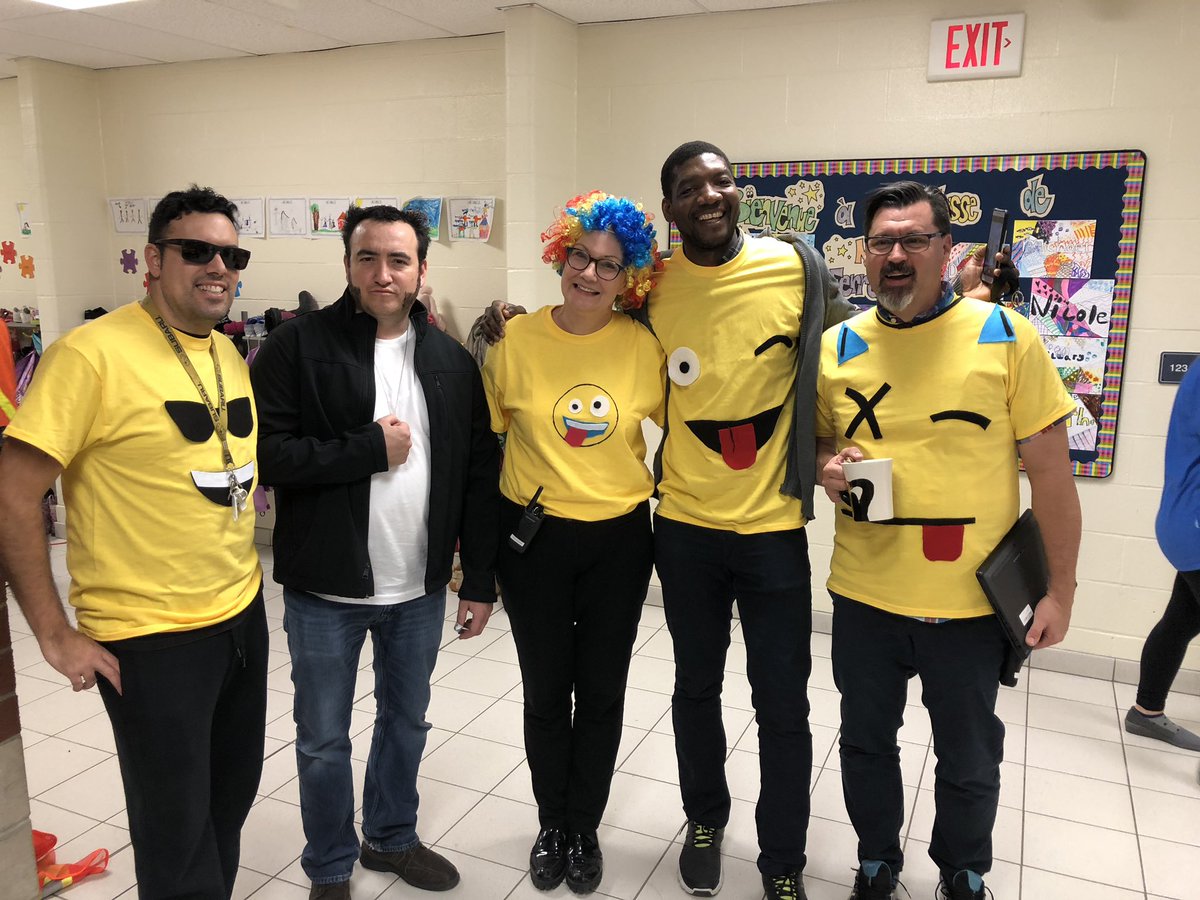
For staff, there are a lot of reasons to get excited about days like Hallowe’en too. It is a great chance to join in the fun. Last year, our school staff dressed up as playing cards. We had fun making our costumes beforehand, enjoyed the camraderie, and took lots of photos for the yearbook. We were proud to wear them alongside of students. They are always thrilled when teachers show their school spirit at events like today. This year most of us transformed into emojis while others took the super hero route (see Wolverine Elvis -below right). It’s nice to let the inner child out in a world that needs to laugh and play more often.

photo by Cynthia Quirion

For our students, their childhoods are incredible times of excitement and Hallowe’en tops many lists of favourite dates to celebrate being a kid. I asked my students why they wanted to dress up today and many replied that it was fun and that wearing a costume made them feel good.

On another side of our conversation came a message about how it was okay that some did not wear a costumes. It allowed us to discuss inclusion and respect even while everyone was not doing the same thing.

All of this fun and frivolity, got me thinking about how the world is constantly rushing its young through their childhoods and youth. To this end, I keep wondering for what? What’s even more frightening, is how quickly the world expects students to have it all figured out. We have students who are stressing about going to university already, and they haven’t even graduated grade 8. The horror of the future is the nightmare our youth face today. This is scary because it comes at a time when they are supposed to be enjoying, learning, and discovering their talents and life’s passions not worrying whether they will go to Med or Law or Engineering school.

So days like today are important reminders to us all that we may need to model having fun for our students too. While you’re at it, add a little time for laughter into the day too.

I hope you were able to relive some of the fun of your childhood to share with your students, but if hear any of you knocking at my door for candy, we’ll have to talk.

Creative Confidence

Lately, I’ve been thinking a lot about the concept of creative confidence. At its core it’s about believing in your ideas and that you hold the ability to have a positive impact on the world.

I share with people all the time that I’m always amazed by kindergarten students. Whenever faced with a challenge, they somehow jump right in and offer solutions that they truly believe will work. They eagerly share solutions to everyday challenges without censoring themselves or second-guessing their ability to actually be a part of a change for the better. But what happens with these eager students as they move into higher grades? At what point do they start to censor themselves and display that creative confidence in a muted way? I’ve had students as young as those in grades 4 and 5 who no longer believed in their ideas and genuinely didn’t know what steps to take in order to solve a problem “in the right way”. How did they get there? How do we get them back? I wonder if the following elements that exist in Kindergarten classrooms might be key in answering these questions.

Play

If I haven’t mentioned it before, I have the two most amazing nephews in the entire world! I genuinely love watching them play. Sometimes in role as others or even just as themselves, they interact and problem solve on the fly. Issues come up when the other character doesn’t quite respond in the way one expects and they have to come up with a solution so that the game or activity continues. There’s the freedom to play anything and to try anything. The idea that you have to be good at playing just doesn’t exist. They just do it at home and at school. I wonder if we adopted the same idea for older students as they entered the classroom, what might the learning be like? What if tools were given and they were asked to interact with them in a way similar to play? What if there was no association with being good at something but the idea of just jumping in and trying it was valued. Would students engage more and worry less about the outcome? Would they embrace failure and try again, ultimately learning as they try again? How would our classrooms be different if this concept or idea was valued well after kindergarten?

Design

Kindergarten students are forever designing something for someone or something. They build homes for their figurines with blocks and use craft materials to build homes for animals. They also draw pictures to bring a smile to a loved-one’s face and some use tech to create. How might we keep this going as they age? It’s no secret that I’m going to say…dig deep into Design Thinking! It’s a creative framework that can be used in any discipline to allow students to hone their creativity as they work towards creating unique and innovative solutions for real-world problems. Consider the learning goals that you are working towards, connect them to a real-world problem and let students engage in the process. The more that they see themselves as creators of meaningful change in the world, the greater their creative confidence will be!  

Interdisciplinary Learning

I can’t help but be inspired by the interdisciplinary learning that happens in kindergarten. This reminds me of the learning that happens as adults. I joke that I don’t just do Math between 10:30 and 11:30 and often wonder why this is the case for our students. What if we were able to integrate subjects? What if students saw connections between the work that they were doing in Language and in Math? Or Social Studies and Science? Would they learn more easily learn the transferability of skills? I know that it’s a challenge when we have a specific number of minutes or hours of a specific course that have to be completed and even more so in Secondary Schools where subjects are taught by specialists. In what ways might we make a shift so that learning isn’t so siloed? I don’t have an answer but I wonder if when students see the connections between subjects, if they might just become more excited about approaching something new because they realize that they have a tool-kit from a variety of subject areas that can be meshed together to them as they go.

I’m working on my own creative confidence by playing more, designing new things at Future Design School and thinking about how I might be able to help others with interdisciplinary planning and learning for students. I’ll keep you posted on how things go!

Student Led Conferences in a Special Needs Class

I am so lucky to be working in a class with students who have special needs. I am so proud of them everyday for everything that they learn and how kind they are to others around them. My students are just a whole bunch of awesome! For those of you who are used to student led conferences as opposed to traditional parent-teacher interviews, but are not sure how to organize the experience for kids with special needs below is one possible example. One important piece of information to note is that most of my students are verbal, have the ability to explain something simple and can recognize the numbers up to 10.

I labelled some of the areas of our classroom and had each of my students lead their parents through the numbers one to seven.

1. Pictures of places outside the classroom. Students said statements like “I go to gym to practice my basketball skills” or ” We learn about flowers outside”

McCrimmon1 cropped


2.  Our morning activities on the smartboard. Students showed their parents how they could complete activities about the weather, months, date and personal information.

InkedMcCrimmon2_LI

3. This is a picture of our business, the coffee cart. Students shared with their parents “I practice using money ” or “I practice my counting”

McCrimmon3

4. A table of student work from their teacher table time. Students shared with their parents “I practice my printing” or “I practice my reading”

McCrimmon4

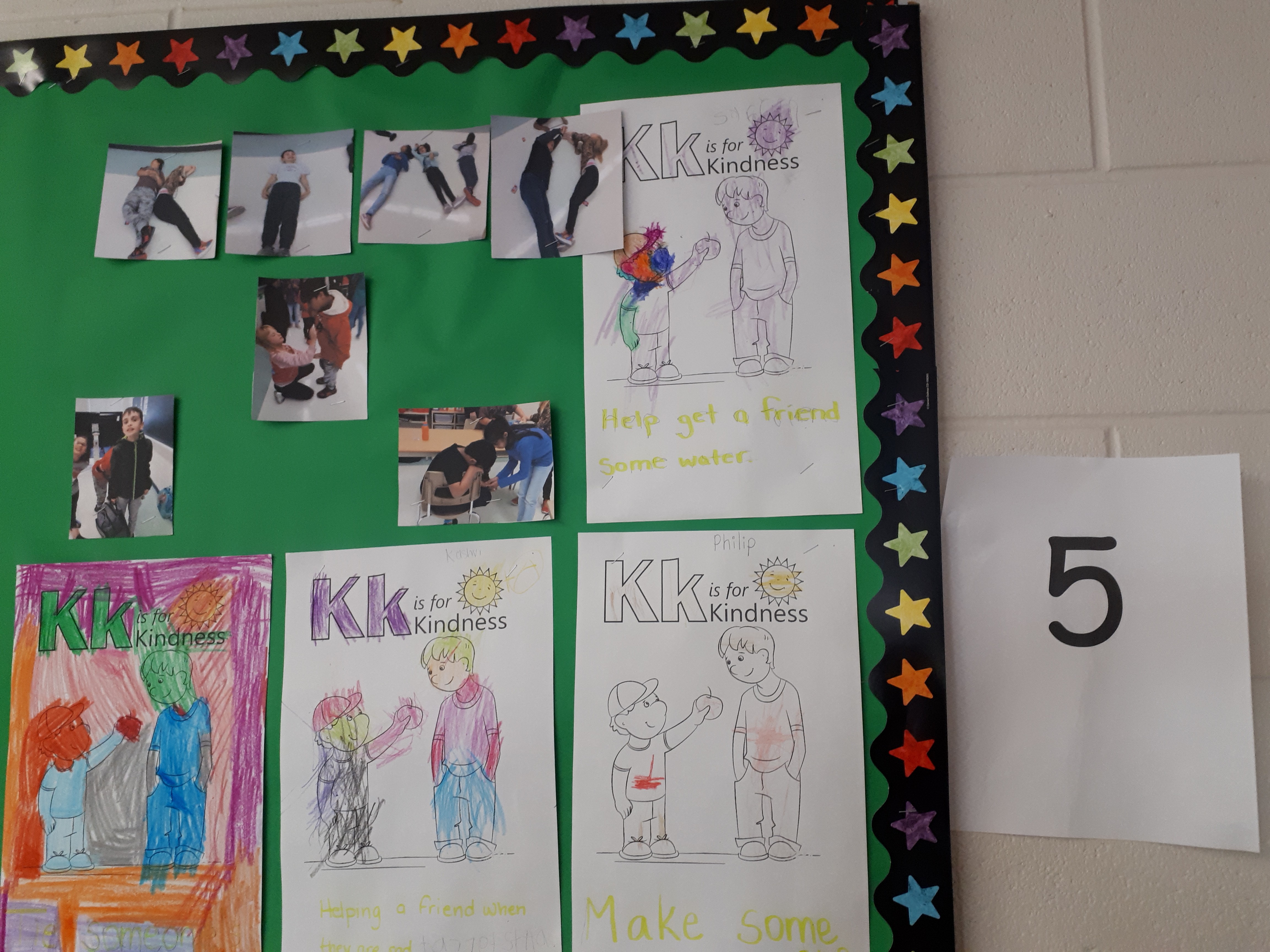
5. This board is where we shared our ideas of how to be kind. Students shared their ways that they could show kindness.

McCrimmon5

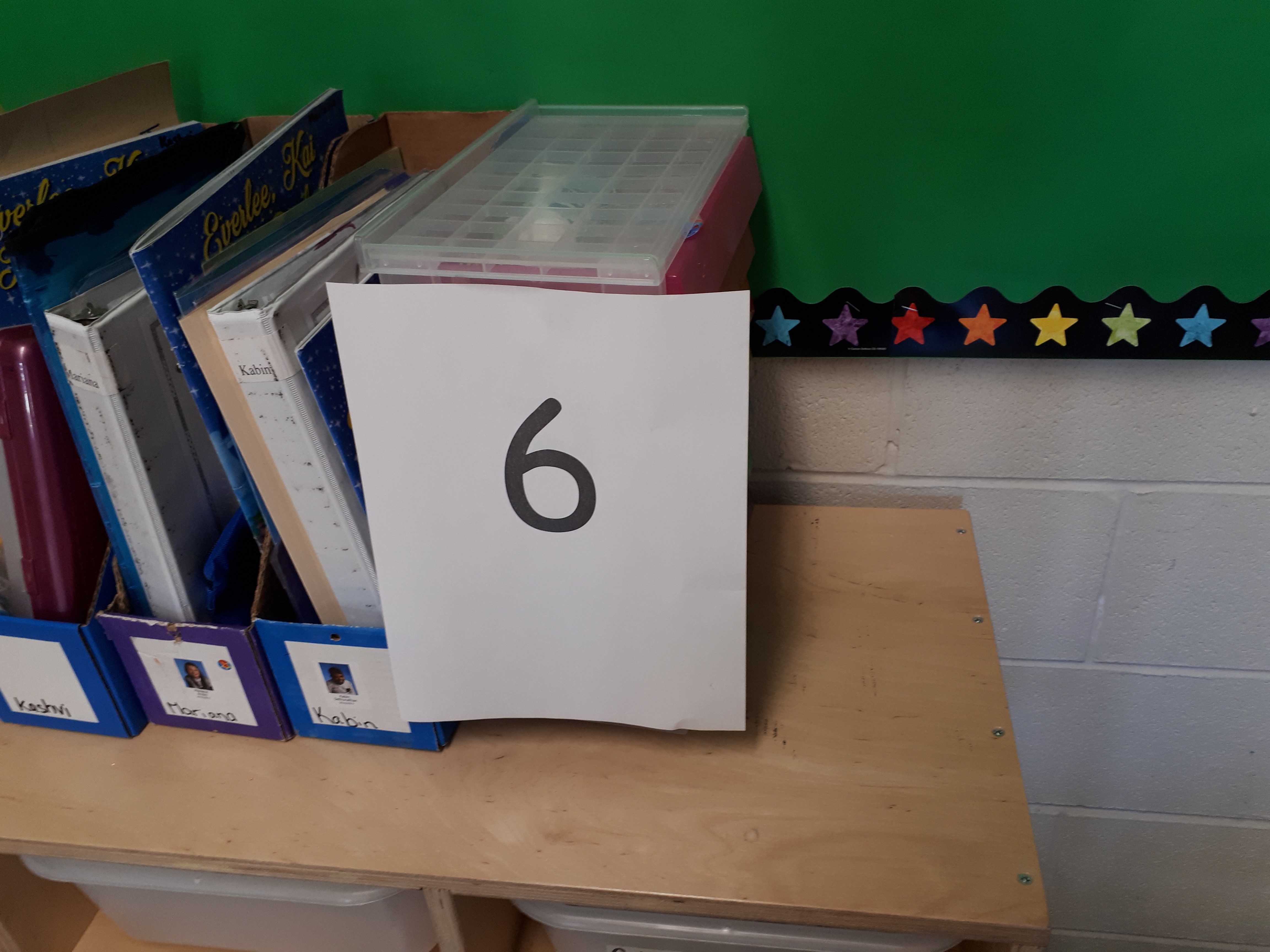
6. This small cabinet holds our toothbrushes, toothpaste and wash clothes. Students told their parents “I brush my teeth everyday after lunch”

McCrimmon6

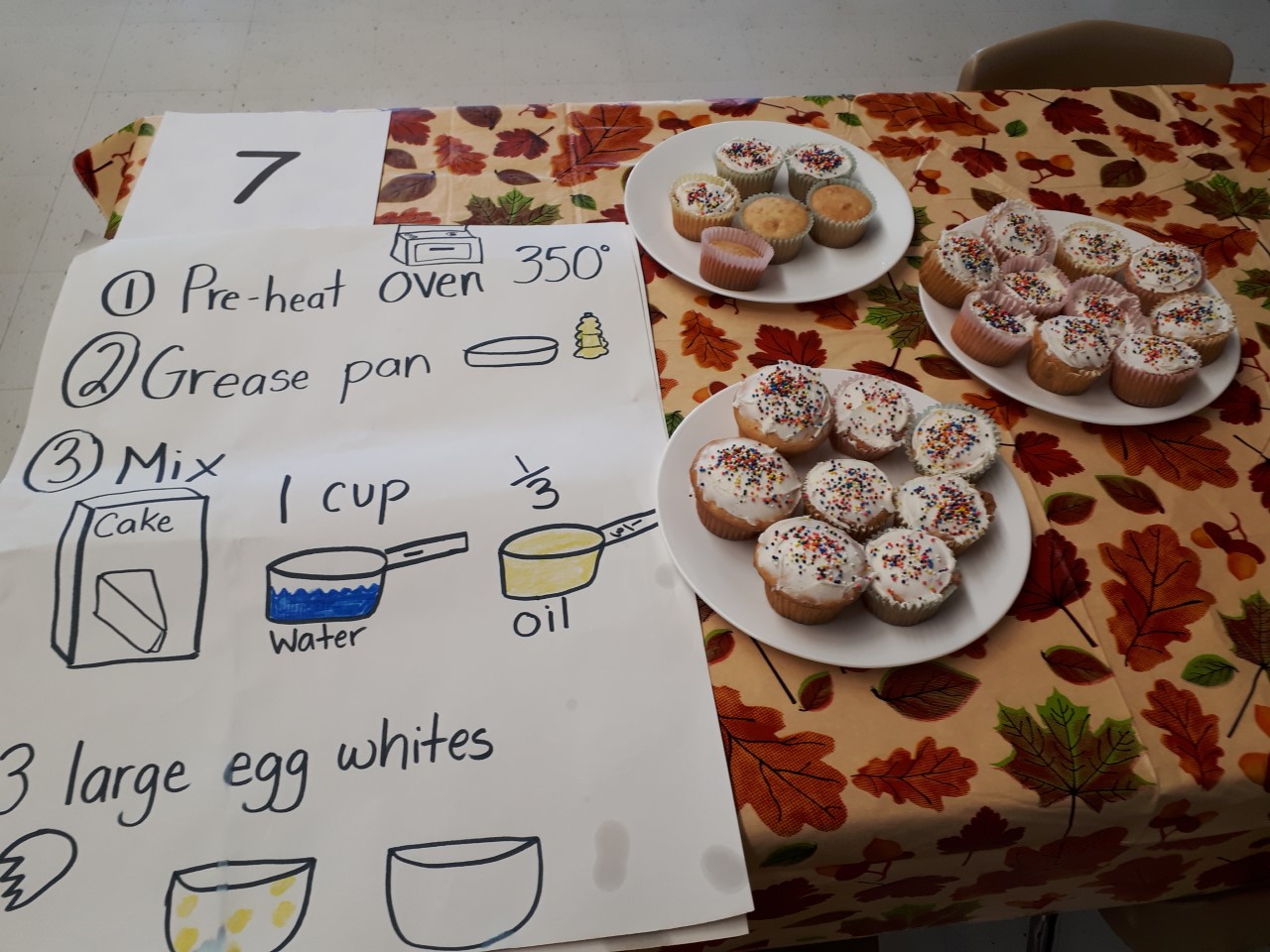
7. We have a baking and cooking program so we made sure to make a sample for our parents to try and an example of a recipe we follow

McCrimmon 7

Parents really enjoyed seeing all the amazing things that happen in our class everyday!

Parent-Teacher Interviews

It is that time of year again! It is time to meet with parents to discuss their child’s progress. Over the past 11 years of teaching I have made tons of errors when meeting with parents. I have been too academic in my language at some points and I also have not been specific enough on how parents can support their children in other meetings. It wasn’t until I had nephews and listened to my sister describe her anxiety leading up to the parent-teacher meetings that I changed my approach. She was petrified and afraid to ask questions to the teacher. This conversation helped me understand that I needed to change my approach when meeting with parents. I needed to ensure that every parent I meet on interview night feels welcome and comfortable to speak to me about their child.

Below is a template for how I structure all my parent-teacher meetings to ensure that every parent feels welcome and has a voice when we meet.

Greetings, introductions and something awesome about their child:

I begin every meeting with some introductions even if they have met me before. After introductions, I share something amazing about their child. I share something they have accomplished or something they have contributed to our class. I am genuine when I give this compliment. Even if the child is having a very difficult time in class, I find something to share with the parent to set a tone that tells the parent that I care about their child.

Questions from the parents:

Before I share information about their child, I always ask the parents if they have any questions to start. This ensures that we don’t run out of time before their questions are answered. I listen, take notes and clarify while they ask me their questions. After I understand all the questions, I answer them one by one using evidence and examples if required. If the parent does not have any questions, I will highlight one strength of the student and one area of need using evidence and examples.

Specific Ways that Parents can help their child:

In the past, I was really vague when making suggestions to parents. I have learned that picking something small and specific will give parents success when helping their children and therefore feel confident in their ability to help. For example, in the past, I have asked parents to help their child with mathematical problem solving. I have learned that I need to request something more specific as problem solving is much too broad. When I started asking parents to work on skip counting by twos up to one hundred,  I could immediately see the results in the classroom and the parents felt like they were successfully contributing to their child’s education.

Closing:

I thank them for coming and remind them that they can ask me a question any day of the year, any time and that my door is always open. I also tell them how lucky I am that their son or daughter was placed in my class.


Parents are our partners in education. I truly believe that the majority of parents just want their child to learn and be happy while they are at school. However, for those parents that are very difficult to work with due to mental illness, substance abuse or anger management issues ensure that you have support in the interview from a colleague or administrator.

I am wishing you all very successful parent-teacher interviews!


It’s Progress Report Time!

This is my first November out of the classroom in 10 years and yet with the majority of my friends as teachers, I still find myself somehow feeling the anxiety that comes with this time of year. Not only have they been feverishly working to complete progress reports, they know that with reports come Parent-Teacher interviews. This can be an incredibly stressful time for teachers, students and parents.

The first thing that used to bring a great deal of anxiety at this time of year was often wondering whether or not I had gotten to know the strengths and needs of my students well enough to write a report. I found myself thinking that parents would surely expect me to know everything about their child by this point of the year and yet I found that in every day, there was something new to learn. While I found that there was sometimes stress placed upon me by parents to know everything about their child, a lot of the stress and anxiety I felt at this time of year was my own doing. In retrospect, there were a few things that I could have done differently to ease some of the pressure although I am fully aware that it wouldn’t be eliminated completely.

Plan ahead when writing reports. I know that anyone who knows me well is laughing right at this precise moment. Throughout my career, I have been that teacher who has left reports until the very end. All-nighters have been pulled trying to make sure that I could cram every last letter into the reports. I’ve always been one who needs some of the stress of a close deadline in order to get things done. Many times this strategy worked but I notice that as I get older, planning my time seems to be a more effective. I find that when I give myself deadlines to achieve different parts of a task, they become more manageable and I end up achieving greater results. I know that the deadline is fast approaching – if it hasn’t already – perhaps consider breaking up the task of writing reports into smaller components and working through them at your own pace. Is writing a few reports a day manageable or could writing a specific comment each day for all students be easier? Either way, take some time to consider and plan what would make the task more simple for yourself and ultimately more meaningful as you document the progress of your students.

Take time to do something fun with friends. I’m all for working hard and playing hard. My struggle is finding the balance between both. Lucky enough I have great friends and family who notice and try to help. When the crunch is one, I often don’t think that I have time to spare. However, it’s amazing how much more focused and in the moment I become when I actually take some time to stop and connect with someone and have a good laugh. I’m learning more and more that during times of stress, I need to make the time to stop, laugh and enjoy the company of others. Mental health is an important part of our general health and well-being. We know that reports won’t go away and neither will the stress of them but consider what is in your wellness tool-kit that might help as you go through the stressful time. For me it’s laughter with people and I need to make sure that I take the time – even if it’s only for an hour – to do just that.

Consider student-led interviews. The question that is heard the most by teachers in the month of November is, “How is my child doing?”. Every parent wants to know and every teacher feels as though they are just scratching the surface in understanding who the child really is. Over the years, I’ve had colleagues share about student-led interviews. I’ve done them at the end of the first term but wonder about their effectiveness for the progress report. What if we continued in our role as facilitator in these interviews and prepared our students ahead of time to share what they have been learning over the course of the year? Imagine how powerful it could be to get students sharing about the first 2 months and how they have worked to build the classroom community as well as how they are growing as learners. It would certainly allow for students to take the time to reflect on the past couple of months and it could be a great way for them to start setting goals and to discuss how parents might be able to support them in their goals at home. What if we asked students to use the following sentence starters to garner how they are feeling about school as an authentic opportunity for student voice?

  1. So far I’ve learned…
  2. I’m really excited about…
  3. I feel successful…
  4. I need some help with…
  5. I’m most proud of…
  6. I would like to improve…

I wonder if starting off the first set of interviews in this way would reduce the stress teachers felt and would empower students to start thinking about their strengths and advocating for their own needs. It certainly wouldn’t be easy as teachers work to prepare students but I think this could be a really effective start to the relationship between home and school. I can’t help but think that using the 10 to 15 minutes to actually hear from students about their own progress might be a fantastic insight into their true progress.

As I mentioned before, it’s my first November outside of the classroom in a long time and yet I can’t help reflecting on my own practice and thinking about what I might do differently if I was in the classroom at this time. Here’s hoping that my thoughts in hindsight might help another teacher who is currently experiencing some of the stresses of Progress Report time.

Both feet

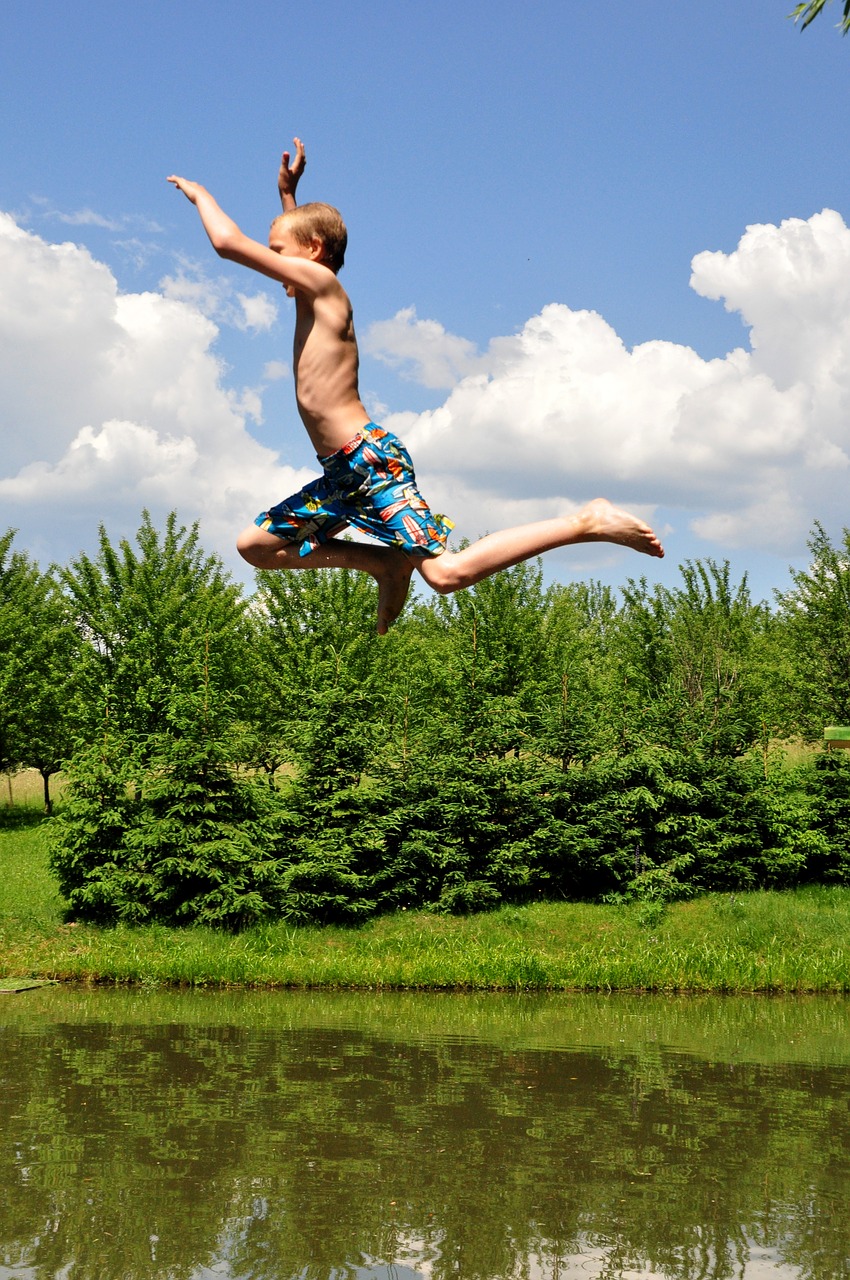
https://pixabay.com/en/summer-swim-pond-landscape-austria-2209393/

Have you ever jumped into a body of water and been able to stop part way? If you have, can you show me how because to this point of my existence it has been impossible when I try? So far.

Defying all of the laws of Physics may not part of our human skillsets, yet. Perhaps with the aid of some bungee cords and a team of riggers, it is possible, but since most times when we take a leap(intellectual or otherwise), we do so without a team to save us.

Oddly enough, the leaps are often contrary to conventional wisdom and traditional thinking/practice. Society loves its non-conformists. As long as there are not non-comforming in their schools. Is it therefore heresy, innovation, boredom with the status quo, egotism, creativity in action, insight or indictment to break the status quo, take chances, or challenge authority/colleagues? Where does it fit in with your practice and pedagogy?

With or without a safety crew, I have always jumped into something with both feet. Knowing there is no way to stop once I’m in the air. Yes, I’ve climbed out and jumped somewhere else when the landing hurt. No, I did not land on anyone either.

Sometimes, I bounced out, unable to fit in with a particular ideology or methodology. What never changes as I try and stretch, and a leap and fall, and land/crash, is the need to keep looking for new places from which to jump with all the excitement and uncertainty that leaping, change and learning provide. A sort of educational thrill seeking if you will.

This is how I see my teaching style and I’m inviting other educators to step out onto the dock and take some leaps of their own. So often, the risk taker in all of us has been hushed by comfort, complacency, or fear. Trying new things is hard. What if no one likes it? What if I fail? How are your students supposed to take chances when you are clothed in bubble wrap yourself.

Our classrooms have to be shaped into an ultra-soft space for students to take their intellectual and emotional leaps with both feet without worrying about the landing or bouncing off the walls from time to time. It doesn’t mean they don’t feel a thud once in a while. It means that they will have a place to discover the limitless potential of their learning not the limit.

How do you see yours? When was the last time you felt free and safe enough to jump in with both feet not knowing how deep the waters?

How did  it feel?
Dangerous? Perhaps.
Exhillarating? Always.
Always successful? Not yet.
Staying put? Never!

We owe it to our students to show how much there is to gain from trying new things, taking leaps into new spaces, and from thinking about how, when, and where we are going to land.

Over the next month, I challenge you to try something new in your classroom and share it with us.
Tag me on Twitter @willgourley and try to encourage others to do the same. Thank you for reading and happy landings.

 Extra Reading for keeners

16 Reasons Why You Should get out of Your Comfort Zone

Why Taking Risks Pays off for Students and Teachers

Barriers to Student Learning – An Overview

Priviledge

Education is one of the foundations of Canadian society. If you are wondering why your board is addressing issues of equity and inclusion recently, a policy/program memorandum has impacted the way Ontario public school boards are conducting their business of education.

Through the Policy/Program Memorandum No. 119, Developing and Implementing Equity and Inclusive Education Policies in Ontario Schools, it is stated that there is a need for our “publically funded education system to support and reflect the democratic values of fairness, equity, and respect for all” (Ministry of Education, 2013). The Government of Ontario has established three core priorities in education:

  • high levels of student achievement
  • reduced gaps in student achievement
  • increased public confidence in publically funded education (Ministry of Education, 2013)

In “providing a high-quality education for all is a key means of fostering … diversity is affirmed within a framework of common values that promote the well-being of all citizens” (Ministry of Education, 2013). The Ministry of Education recognizes factors such as race, sexual orientation, physical or mental disability, gender, and class can create barriers to learning. There is evident that some groups of students continue to encounter discriminatory barriers to learning. Research shows that when students feel connected to teachers and other students, they do better academically (Goleman, 2006).

Through Policy/Program Memorandum No. 119, all publically funded school boards are required to address equity and inclusive policies covering in three areas of focus including:

  • shared and committed leadership by the ministry, boards, and schools to eliminate discrimination through the identification and removal of biases and barriers
  • equity and inclusive education policies and practices to support positive learning environments that are respectful and welcoming to all
  • accountability and transparency with ongoing progress demonstrated and communicated to the ministry and the community (Ministry of Education, 2013)

The policy further goes on to state that “school board policies must be comprehensive and must cover the prohibited grounds of discrimination set out in the Ontario Human Rights Code. The code prohibits discrimination on any of the following grounds: race, colour, ancestry, place of origin, citizenship, ethnic origin, disability, creed (e.g., religion), sex, sexual orientation, gender identity, gender expression, age, family status, and marital status” and the intersectionality that may occur within this list (Ministry of Education, 2013).

So what does this mean to teachers?

School boards must seek out barriers to learning for all students. Teachers therefore must also address barriers to learning due to factors such as race, sexual orientation, physical or mental disability, gender, and socioeconomic status.

Through Policy/Program Memorandum No. 119, school boards, and teachers, must address barriers to learning that fall within prohibited grounds of discrimination set out in the Ontario Human Rights Code. This policy will impact all ways Ontario teachers conduct their business of education.

In the next few blogs, I will address some of the barriers to learning that students face based on their race, sexual orientation, disability, gender, and socioeconomic status.

If you would like me to address barriers to learning for a specific student group, please provide a suggestion below.

Collaboratively yours,

Deb Weston

References

Goleman, D. (2006). Social Intelligence: The New Science of Human Relationships.-New York, NY: Bantam Dell, A Division of Random House.

Ontario Ministry of Education. (2013). Policy/Program Memorandum No. 119: Developing and Implementing Equity and Inclusive Education Policies in Ontario Schools, Government of Ontario. Toronto. Downloaded from http://www.edu.gov.on.ca/extra/eng/ppm/119.pdf

Mindful Pause, with or without Technology?

Everywhere I turn I see the effects of our technologically advanced world. Gains have been made in medical research, communication abilities, and advancements toward an easier life?
Some of the effects on individuals are now coming to light. Many people are connected to the internet 24/7. This is causing sleep disturbances, eye issues, addiction behaviours, and other physical ailments.

As a previous mental health professional I look at my present vocation in Education with that type of lens. I have practiced and taught Mindful strategies for many years now. I see the benefits of technology in the curriculum. I also observe the negative effects. I have noticed some educators looking for a researched solution to help calm, focus and ground their students. Some are now turning to all the apps, and internet connections to provide a quick and easily guided mindful activity. I think this may be counter productive to being present and in the moment. We are seeing the effects of this new age world and the fast pace it is changing. As educators we are up to date with the many changes or apprised to avenues in which to guide our charges.

When I guide a group through a mindful experience I eliminate as much technology or other electrical sources as possible. I then guide students into focusing on being present in their own body and mind through the use of many verbal scripts vocalized in a relaxed, quiet voice. These moments of taking a pause are valuable. We live in a busy, stressful society where a pause can assist in a healthy balance to our daily lives.

Links-
https://www.psychguides.com/guides/computerinternet-addiction-symptoms-causes-and-effects/

https://www.psychologytoday.com/us/blog/virtual-addictions/201710/tips-mindful-technology-use

http://meditationscience.weebly.com/what-is-mindfulness-meditation.html

Mindfulness Meditation: Guided Practices

Education Acronyms

PLC, IEP, TPA,…. Just a few acronyms in the world of Ontario education. I managed to complete the expectations of those three letter words, this month.

WOW! Some may say, “What are you talking about?”, others may say,” HOW?!”

As a person who is a futuristic thinker, I am continuously planning, creating lists and maximizing my energy.  I plan each weekend to complete a portion of the upcoming expectations for the month. This past month, I spent time creating unit plans to ensure a smooth sail through the four Junior and intermediate Math classes I teach.  While knowing that IEP’s (Individual Education Plans), are due in early October and help me understand my students. I reviewed and updated these a few at a time.

Yes of course this is my TPA (Teacher Performance Appraisal) year. Things have changed since I graduated from Teachers College.  I was just as nervous as my first evaluation.  This one was much different because I have learned many new teaching strategies, and ways to interact with all the people we come in contact within our profession.  I look at each year with a lens of the time. October, pumpkins are in season.  Pumpkins are a great way to create a hands on unit in Math for all grades. If you are still learning about making the many connections to the Big Ideas, there are many units on the web.  This is a perfect topic to bring excitement into the class, being aware of all the variables from cleanliness, to the use of sharp objects, and social skill development for group work.  This TPA in my umpteenth year of teaching was successful. After I reviewed my assessment, I realized some things still need work.  I need to clearly connect to daily learning goals to guide the directions of my students and their exploration. I also want to find a way to create easily displayed information charts/word walls that can travel from class to class? Keeping abreast of recent research and data helps.  A specific focus is important  so ideas don’t become lost in the many theories of our closely connected world (www).

This year I’ve noticed my board is using Monthly meetings and PD (Professional Development) days to facilitate PLC’s (Professional Learning Communities).  To my advantage, our focus is on math.  The discussion and connections for all help create a purposeful direction in our teaching and learning.  The superintendents and lead teachers carefully create PD to learn from and directly effect board and school goals. As a team, we have each other to support our teaching and direction.  If communication is continuously supported in meetings, this assists in sharing and supporting each other and the growth of our students and programs. Some of my observations from these meetings are: Don’t get rid of the old…some strategies are still good. Things are changing quickly. It’s admirable to see colleagues rise to new and connected positions while keeping valuable connections.

At the beginning of the month, I was apprehensive about completing these monthly tasks.  Tah Dah…another successful month as an educator.

Links:

Learning for All: http://www.edu.gov.on.ca/eng/general/elemsec/speced/LearningforAll2013.pdf

Planning for Learning: 

http://www.etfo.ca/SupportingMembers/Resources/ForTeachersDocuments/Planning%20for%20Student%20Learning.pdf

TPA: http://www.edu.gov.on.ca/eng/teacher/pdfs/TPA_Manual_English_september2010l.pdffbclid=IwAR3rtRjDQ50iFr81Lb45e9SXuzhXJebIzEdjFhzqIFTNqtvnw_IMaGV-V3kspecific links

http://www.etfo.ca/SupportingMembers/Professionals/Pages/ALP.aspx

Pumpkin Unit Ideas:

Ultimate Collection of Pumpkin Math Ideas for K-12