Brutalist worksheets

Have you ever seen something that made you wonder whether it’s sole purpose was to make you feel small or insignificant? I don’t mean this in feelgood sort of humbling way like you might ponder a mountain’s majesty or an ocean’s depth. I mean, the way you feel uneasy when looking at a decades old worksheet from a resource 20 to 25 years past its pedogogical prime – where thought and creativity were never part of its iterations. I’m talking about copy after copy of soul sucking work pages given to students only to be regurgitated upon with rote facts and little, if any, critical thought. Let’s call them Brutalist worksheets because, like the architecture, they make the learner to feel small, and powerless, and the learning devoid of inspiration.

Over the years, I have found a number of Brutalist offerings left behind in the photo-copiers, and they make me shudder a bit to think that they were destined for students’ desks and to inevitable irrelevance shortly thereafter. I’d like to say this is a long distant memory, but it is still happening in 2020.

20 years into 21st Century learning and brutalist worksheets are still being shared. But first a bit about Brutalism.

Minds On

In the creative world of architecture there are several styles that have pervaded through history. We have remnants of the Victorian, Mid-Century Modern, Art Deco, and Modernist eras that occupy much of the past century and its edifices. There is another that cannot be overlooked because of it’s austere, raw, and imposing nature, Brutalism.

Brutalism, but this is a blog for teachers? Why are we having an architecture lesson? Why not? After all, design is design and the way that we construct, craft, curate, and create content for our students matters. It is inconceivable to think it can be done without consideration of the learners we are teaching or without differentiation.

Imagine a stark and unwelcoming piece of paper that seems as if it’s sole intention is to crush your spirit. Next, think of a page full of Math calculation questions that you have been handed, and are now expected to complete before the 2 or 3 minute timer goes off. Think of a different, but equally oppressive Math sheet with instructions, but no guiding example or room to show your thinking? Think of a double-sided sheet of French -er, ir, and -re verbs to conjugate. Brutal and absolutely intended as rote busy work to keep students from being their best.

I was visting a school a few years back and came across a teacher with a stack of photocopies at least 1500 pages or more in total. I asked if this was for a whole school letter to which they replied that it was for their classroom followed by, “You have to keep ’em busy somehow.” I walked away very sad at that moment and have tried to hang on to that interaction as a reminder of what not to do.

Brutalism in our profession has no business in any of our classroom resources. In fact, we need to seriously consider the function and purpose of everything we are printing for students. It starts by cleaning out the cabinets and binders that contain outdated worksheets. I know it means having to start fresh for some, but imagine the potential for deeper learning rather than a time filler destined for the recycle bin? Perhaps doing this over the course of the year will make it less daunting. With so many digital tools at our fingertips now, creating and updating content is easier than those Xerox days of yore.

Our shift to digital learning has allowed many of us to curate constructive content with links that are informative and interactive. There are also environmental and financial benefits from avoiding copy after copy too. With a suite of apps and productivity tools. Teachers can create these spaces from a trove of templates and fellow educators who are willing to share. No need for TPT here.*

Start with the incredible digital resources being shared from your school board and from a cohort of amazing educators via Twitter. I know that PeelDSB, TDSB, DurhamDSB, and YRDSB have provided many excellent resources to their staff, and am sure there are more boards out there doing the same for theirs. If you want to start your own, you can always check out Ditch that Textbook, MathigonShukes and Giff, TV Ontario, and TED Ed for ideas. If you have a favourite, please share in the comments below.

All that I ask is that you resist the urge to hit the copy button without considering the content you intend to share with students. Will it make them feel insignificant and under-inspired? Then you might have a brutalist worksheet in your hands and it might be time to go back to the drawing board to design something inviting and engaging to students as modern learners.

* I always think of toilet paper when I see TPT. Sorry, not sorry.

This Year’s Teaching Adventure: Minecraft

Every year, I seem to take on at least one new thing to try in the classroom. I’m definitely guilty of jumping into things with both feet – and sometimes, just sometimes, taking on a bit too much at once.

This year, I’m trying to limit myself to one “big” new thing. My school board just granted us access to Minecraft: Education Edition, so that’s where all of my creative energy seems to be going this year.

I can’t imagine there’s anyone left who doesn’t know what Minecraft is in a general sense. What you may not have considered previously is that Minecraft: Education Edition provides all kinds of really interesting opportunities for student learning in a highly engaging context.

I can’t say it’s been smooth sailing. Every time Minecraft gets an update, the game seems to be blocked on my board’s network again – which, this year in particular, can take a few weeks to get sorted out depending on how busy the IT department is. But the game itself is very easy to learn and runs on a wide variety of devices. 

My students LOVE Minecraft. Every day, they ask if they’ll have some time to play. I’m quite familiar with the game as I’ve played the standard edition at home for a few years, but using it in the classroom is a brand new adventure.

Our first foray into the game involved working with a group to create a treehouse. It was a low-stress way to introduce students to the game without too many expectations. It also provided an opportunity to work in a bit of oral language, as students could then show their completed treehouse to the class and give everyone a tour.

I learned a few things quickly:

  1. If I host the game and then leave it running while I work with other students, my Minecraft students WILL create elaborate structures around me as a (harmless!) joke. I have now been encased in glass, built into a tree, had a hot tub built around me, and been set on fire multiple times (both by accident and on purpose).
  2. If I don’t provide clear guidelines for what they are doing, they will quickly throw something together that they think satisfies the requirements and then disappear, having gone off in search of treasure and discovery.

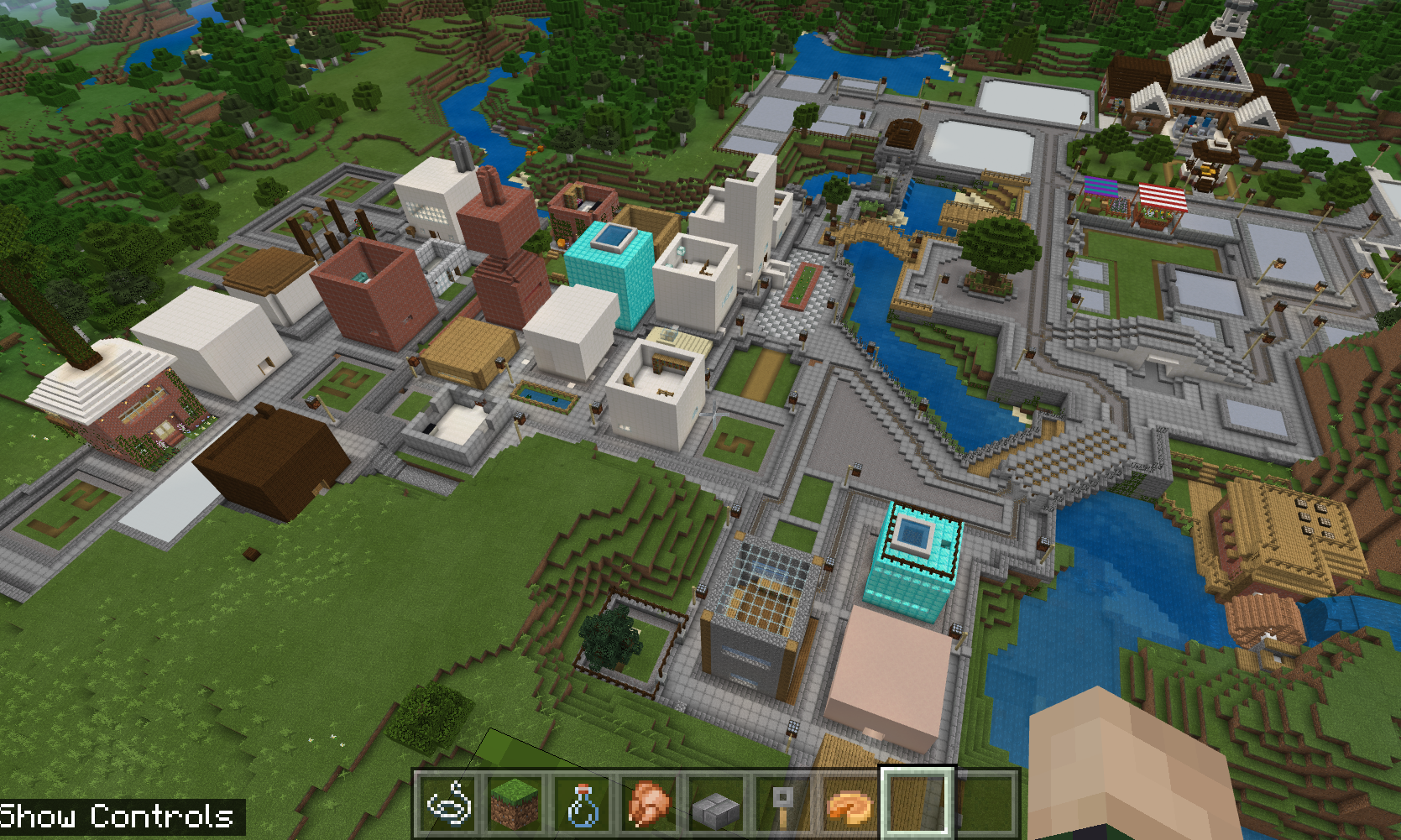
For our second big task, I had students design houses that would fit into 10×10 grids. I used one of the worlds built by the Minecraft team – called Starter Town for those interested – and showed the class the town we would be creating together. I assigned them each a plot of land in the world where they would build their house.

The world with our town in it also contains many other things to explore and discover. This week, I assigned them a scavenger hunt within the town and surrounding area. Not only does it encourage them to go off exploring and learn about in-game features, it also allows me to work in a bit of French reading, as they have to follow clues to know what to look for in the world.

Before I set them loose in the town to build their houses and explore, we discussed our digital community and what sorts of behaviours supported our community or hindered it. Students signed to acknowledge that they knew the expectations as members of the community.

My students are still hard at work building their houses, but they already have two dozen ideas for other things they think the town needs. When we finish, we plan to invite other classes in our school to visit our town and maybe do a scavenger hunt of their own. Eventually, we’d like to find some opportunities to collaborate with other classes in a shared world – we miss working with other classes in the school!


I’m really looking forward to finding more ways to integrate Minecraft into the classroom. If you’re also using Minecraft, what kinds of things are you doing with your students?

Reflecting on Professional Practice During a Pandemic

Three months into the school year, I find myself reflecting on my teaching practice a lot. I started the year feeling frustrated that everything was so different, most of what I enjoy about teaching is gone, and students were more difficult to engage in learning than I had ever experienced before.

Now, as we round the corner into December, I’m realizing that within this very different school year, there are also things to rediscover – things I had lost or forgotten about somewhere in working full time, parenting, dealing with personal issues, trying to survive.

Here are a few of the things that I find are really working this year that I hope to continue once we’re on the other side of this whole mess (and we will, one day, be living in a world where “pandemic” isn’t the word of the year).

Focus on the Big Ideas. All too often, I get caught up in all of the specific expectations in the curriculum. My class goes off on tangents. We get far, far away from the “big ideas” – the key takeaways in each unit. Usually, I’m able to get us back on track after a while, but “a while” isn’t a luxury this year affords.

To keep myself focused, I’ve been posting the big ideas in my classroom. Having them visible – to both students and myself – helps us remember what the point is. My students will connect their learning directly to those big ideas during discussions. It’s helped us have more targeted, intentional conversations about Social Studies and Science in particular.

Don’t be afraid to go back to fundamental skills. This year, I’m teaching a 4/5 split. My grade fours (16 of my 25 students) are in their first year of French Immersion, some with no French exposure at all before the first day of school. My grade fives have been in immersion since last year. The last time I taught this split, I mainly kept very early literacy skills (phonics, word sorts, etc.) to my grade four students because the grade fives were already able to decode, read with decent fluency, etc.

This year, I don’t really have the same ability to split the class and teach only one grade. My grade four students still needed instruction on French phonics, though, and rather than giving the fives independent work during those lessons, I decided I would just include everyone in these lessons. The whole class will do short “chalk and sock”-style lessons, for example – which is a lot to manage with 25 students, but not impossible.

A few months later, I can look back and say that was absolutely the right call. My grade fours are making great progress (some even further ahead this year than I would normally see by December!) and my grade fives have shown huge improvements in their literacy skills. They may have seemed “beyond” these lessons at the start of the year, but that didn’t mean that the lessons would be worthless to them. The extra practice has given them a big boost this year.

Next year, should I find myself teaching grade 5 again, I’ll likely continue whole-class lessons on phonics, spelling patterns, etc.

Not everything needs to be a big, creative, grandiose project. I really love finding creative ways to teach concepts and have my students show me what they know. My students generally love them, too. This year, though, it’s difficult to find the time or energy to come up with the same level of engaging tasks as I normally would. I’ve had to scale back my plans and teach in a much more traditional way for some concepts.

At first, I was worried about it. Would my students be miserable? Would they learn as much as they usually do? How deep would their understanding be? While I will admit their engagement in some tasks is lower than I would see in a normal year, I can confidently say that they are still learning what they need to learn. It’s not as fun to teach and they don’t get as excited about it, but they ARE learning.

This is an important lesson for me, because I often take on too much at work due to guilt over not being the super fun, creative, quirky teacher with the wild ideas. I needed the reminder that it’s really, really okay to step back and scale it down. My students will still be learning.

Finally, I REALLY need to get better about packing up well at the end of the day. I sheepishly admit that I have, in pre-pandemic times, been that teacher who has come to school sick because everything was in too much of a shambles to even know where to start planning for an OT. The pandemic really snapped me out of that mindset, but I have a long, long way to go in leaving my classroom “OT-ready” at the end of the day. I still find myself saying, “It’s fine, I’ll put those away tomorrow morning.” Except I can’t be certain that I will be back in tomorrow morning. I could wake up symptomatic and have to get a COVID test. I could have to stay home with one of my children. I could be put in self-isolation unexpectedly.

I know myself well enough to know that I’ll never be one of those teachers who can leave a perfectly tidy desk and classroom at the end of the day, but I can at least try to be better than I have been in the past. I’m getting there – it’s just slow.


I’m sure these won’t be the last little revelations that I have this year. I know none of these are new ideas – it’s just been interesting to suddenly see them differently or be reminded of their value.

Has the pandemic surprised anyone else with some teaching strategies or practices that have worked well and that you want to continue when we’re “back to normal”?

About those indoor shoes

Winter’s coming and as I share this on the eve of December and our possible first snow day of the 20-21 school year, the timing is intentional.

Recently, I had a moment of clarity while greeting students at the door of my classroom. It started out simply enough as they returned after a snowy midday recess. Amid our usual pleasantries it happened – a simple and often overlooked aspect of privilege kicked me in the thoughts as I welcomed students back inside. Although, there was nothing out of the ordinary on this particular day, all I could think about, in that moment, was indoor shoes.

You know, that 2nd pair of shoes students are expected to bring from home, that stay at school, so they can change in and out of for recess and indoor activities. The ones that every student is told they are supposed to have. The same shoes that can be found classrooms away from their owners’ personal effects after being dribbled down the hallways soccer style by budding Christine Sinclairs and Alphonso Davies’. Those indoor shoes. 

Although an extra pair of shoes might be a small issue for many of us, I wonder whether asking students to have a dedicated pair of shoes to change into for inside school exagerates the socio-economic divisions that are obvious in many of our communities. After nearly 2000 days in the classroom, I am only seeing the ability to bring a second pair of shoes as an indicator of privilege, and that got me thinking about equity.

So, I’ll ask. Do you think that requiring/expecting students to have a 2nd pair of indoor shoes is unfair to those who are unable? Have schools become too demanding to expect this considering that many families are living pay check to paycheck? How are educators working to support their learners without isolating or alienating them by their supportive actions? Don’t even get me started about winter boots.

Clearly, there is a fine line to tread and I am wondering what’s changed, what needs to change in the way we were are doing things, and what else have I/you/we been missing? 

What’s changed? 

Nothing and it is not going to either as long as our socio-political and economic structures remain the same, we will always have students coming to school from places of unearned disadvantages being asked to act like they do not.

When we know that students are in need, how do we as a school community genuinely support them equitably? Is there a way that we can help while being discrete in our actions? One way might be by intentionally looking the other way while still making a note of things like a single pair of shoes, no boots, or a lack of weather protective garments rather than confronting their lack of them outright. How do we provide help without awkward and uncomfortable moments for a child?

What needs to change?

There will always be students with needs. Even though we might have enough, and it looks like they have enough. It is easy to be fooled into inaction by the belief that their enough is actually enough. When students are sent to school with a lunch to eat at school, it’s not obvious at first look whether it is the only meal they are having each day. It starts at relationships. 

Knowing the learner is the key here. Without it, we risk allowing students to fall through the cracks. With recent restrictions to work due to the pandemic, it is becoming clearer that families are living in more precarious circumstances. That fancy car that drops students off at the kiss and ride each morning may about to be repossessed. The top dollar running shoes and brand name everything to wear seems incongruous to the jam sandwich or mac and cheese everyday that those same students are bringing for lunch. I am always hopeful that the child really likes the same lunch everyday, but am also watchful whether it is an indicator that something else is going on outside of school.

What else have I/you/we been missing?

Even though I have used indoor shoes as the soul of this post, they are not the sole indicators of unidentified needs or inequities. At-risk students are everywhere in our hallways. I am trying to pay attention to their actions, words, and body language. I never want to look back on this time and think that our students slipped through the cracks without our support. Conversations with other colleagues also help to fill in the blanks if something doesn’t seem right. It has become second nature to ask a student how their day is going. It is also important to include all of the community resources available to schools too. 

If we pay attention to the little signs, we have an excellent chance to close some of the gaps for our students. It might be as simple as connecting families with access to community supports they may not have known about. This may be a simple as ensuring that there is English language assistance for them when it comes to access. For others, it might mean ensuring there is something extra to eat available for any who are experiencing food security issues. For others it might mean an invitation to help out in class during a particularly cold day at recess. 

Whatever the circumstances, we can walk alongside students as they learn to fill the shoes that are waiting for them in the future. 

Thanks to Tim Bradford and Nicolette Bryan @ACPS for their wisdom and candour while discussing this topic. 

Further Reading:

Equity: The Missing Piece of Most Back-to-School Conversations

Fun times in a Special Education classroom

I currently work in a class for Developmentally Delayed students in a hybrid model. This means that I am teaching both students online and at home at the same time. Last week, my one student had a very difficult day. She cried for much of the morning and just generally was in a bit of a funk. After a very tough morning, I asked her to come outside with me to chat. After a few minutes, she turned and told me what was going on.

She said, “I hate home right now. I am not allowed to have any friends over. I am not allowed to see Kelly or Puneet. I am not allowed to see our family. I want to see Greg and Nancy. I can not see them right now. I am bored at home. I want to see my friends.”

This student captured how most of us are feeling right now.  I wish that I could have all her friends in our class come back to hang out but since that is not an option, making school fun is the best I can do.

Here is how we are beating the blues by making school fun right now!

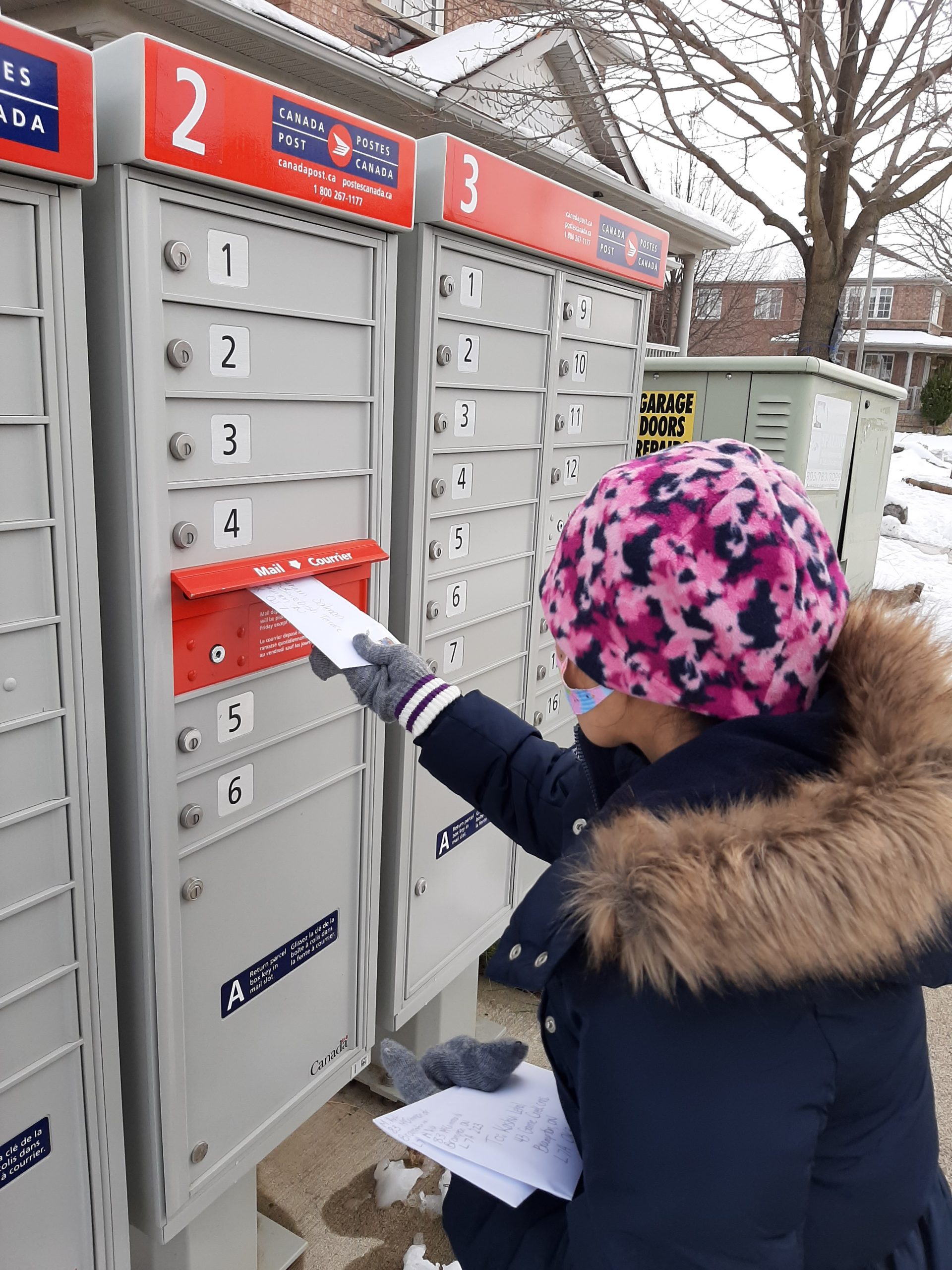
Drawing pictures and writing letters for our friends that are learning at home. For one week, all the staff and students wrote letters and coloured pictures to send to our friends so that they know we are thinking of them. It was an exciting activity and we can’t wait to hear back from everyone.


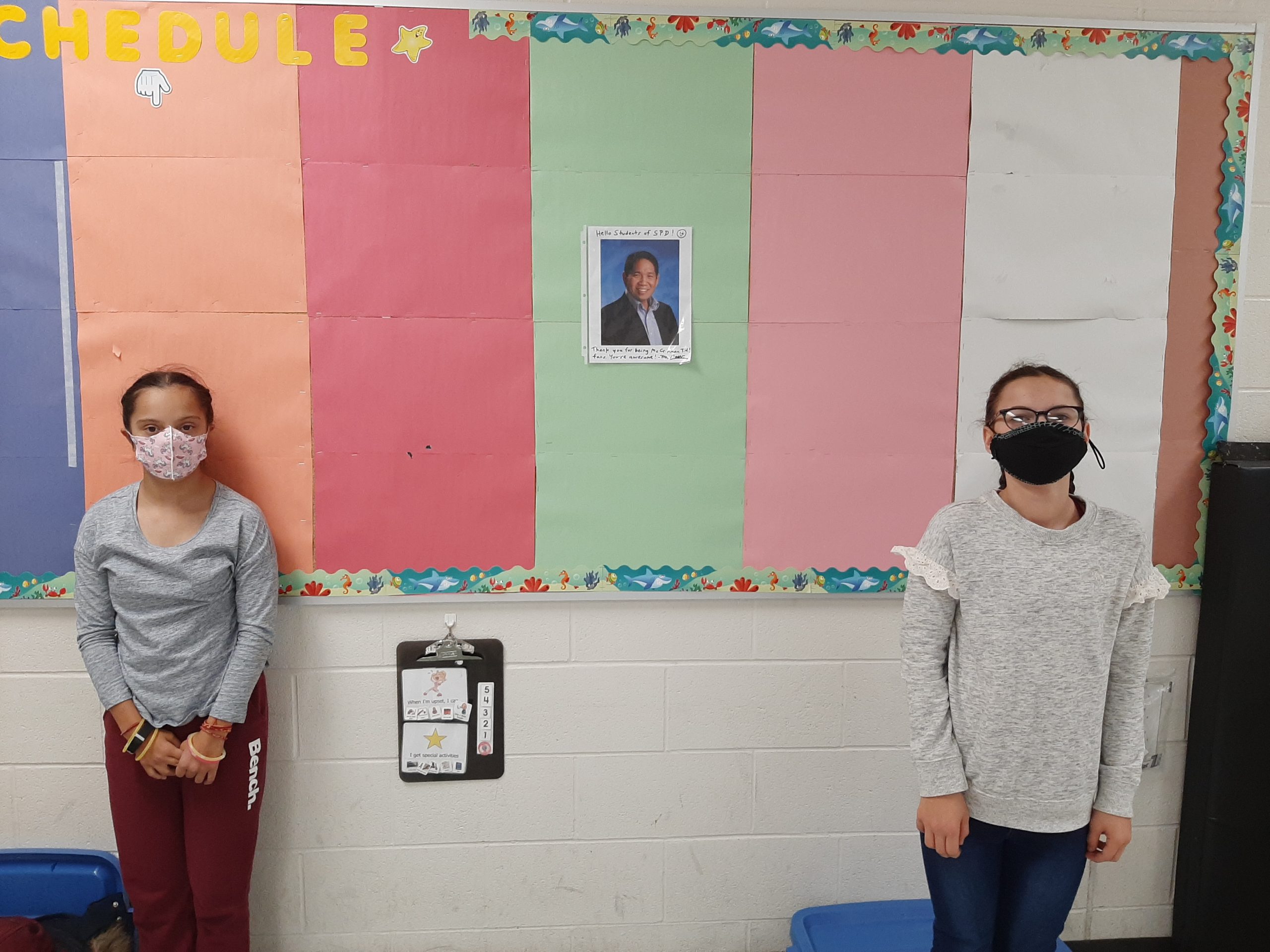
We have hyped up our daily TV show at my school. We watch our school TV show every morning and enjoy the teacher who is the anchor of the show. He does an amazing job interviewing students and staff and it is just what we need during these difficult times. My students love him! We use his catch phrases often in our class. We asked for an autographed picture of him to hang in our class and we are interviewing him next week online. We are so pumped.

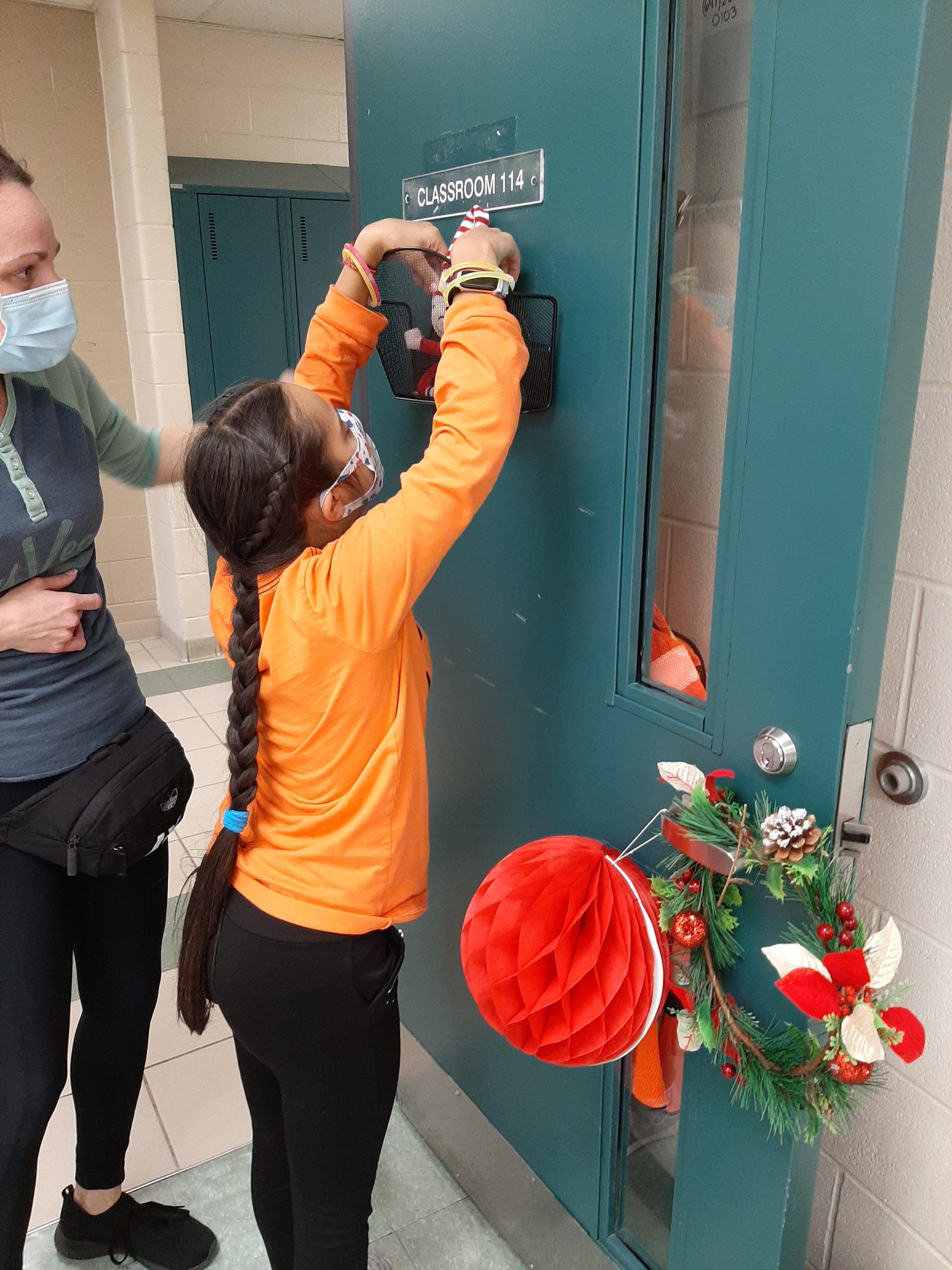
We decorated the classroom A LOT. This year we are not having a gathering at my home for the holidays so we took all of my home decorations and put them everywhere in the room. On the decoration day, I did have to laugh that my student who is obsessed with Halloween showed up in her pumpkin shirt to decorate for Christmas.

We are taking any chance to celebrate. Lucky for us, we have a few birthdays in our class at this time of year. We went big with the birthdays this year with lots of decorating and a big covid friendly celebration.

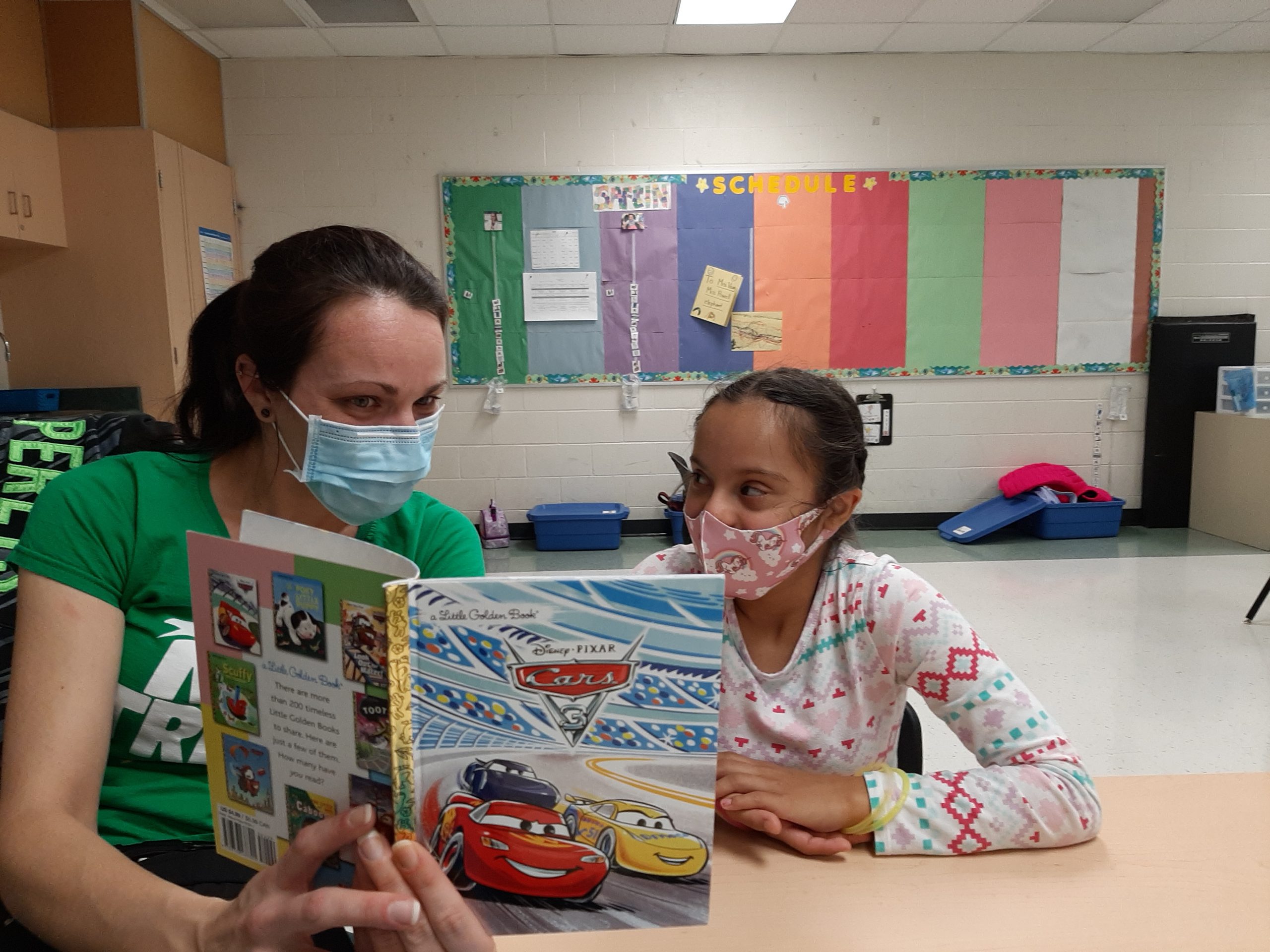
We have been reading some epic books and I have been taking book requests. My one student has read a lot of the Little Golden books. She is quite the expert on Lightning McQueen and Mater.

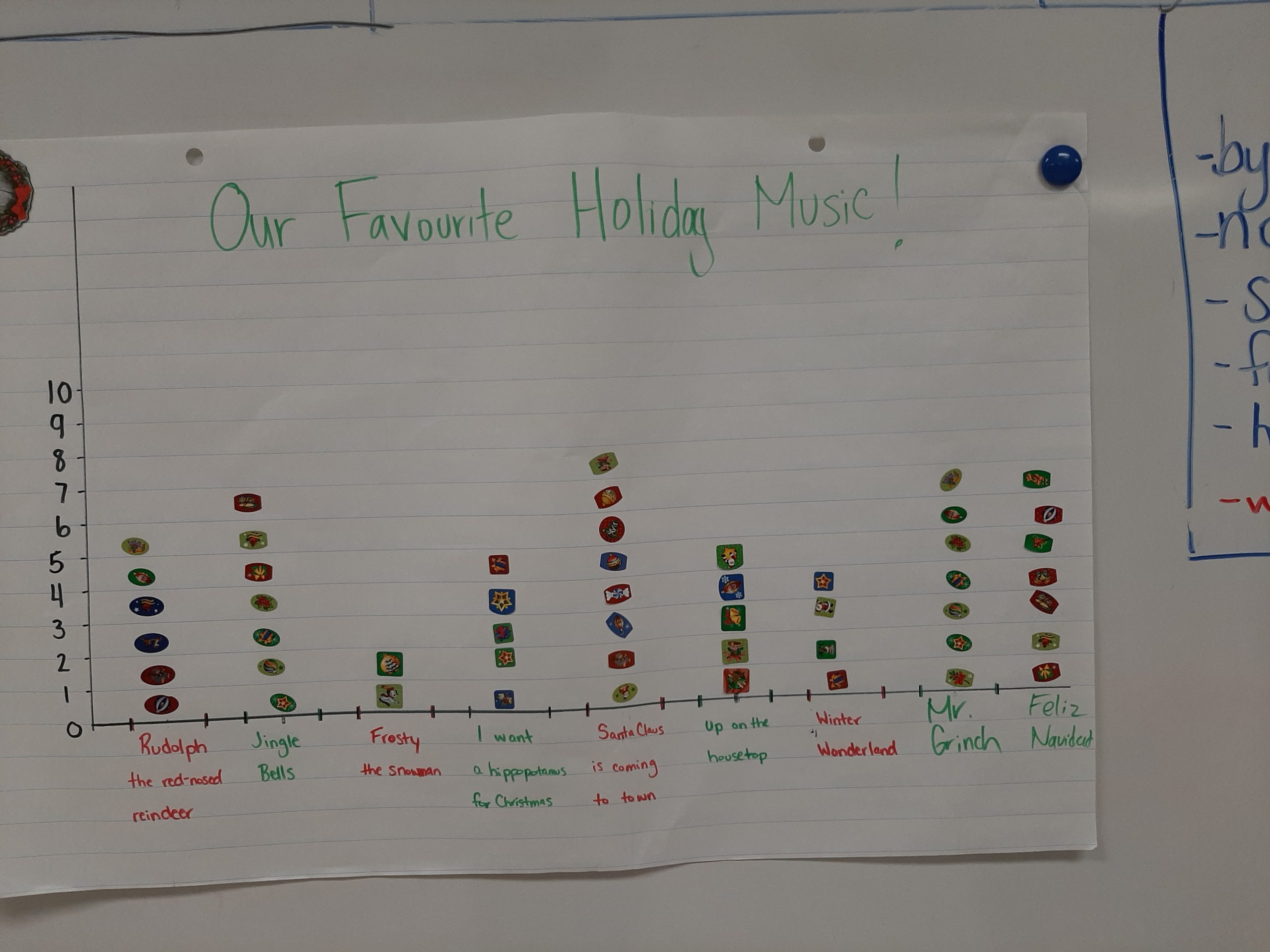
We have also started “Favourite Fridays” for both our online and in school students together. Every Friday we become Siskel and Ebert or Rolling Stone Magazine and give thumbs up or thumbs down to things that we like or don’t like. Last week was all about our holiday songs.

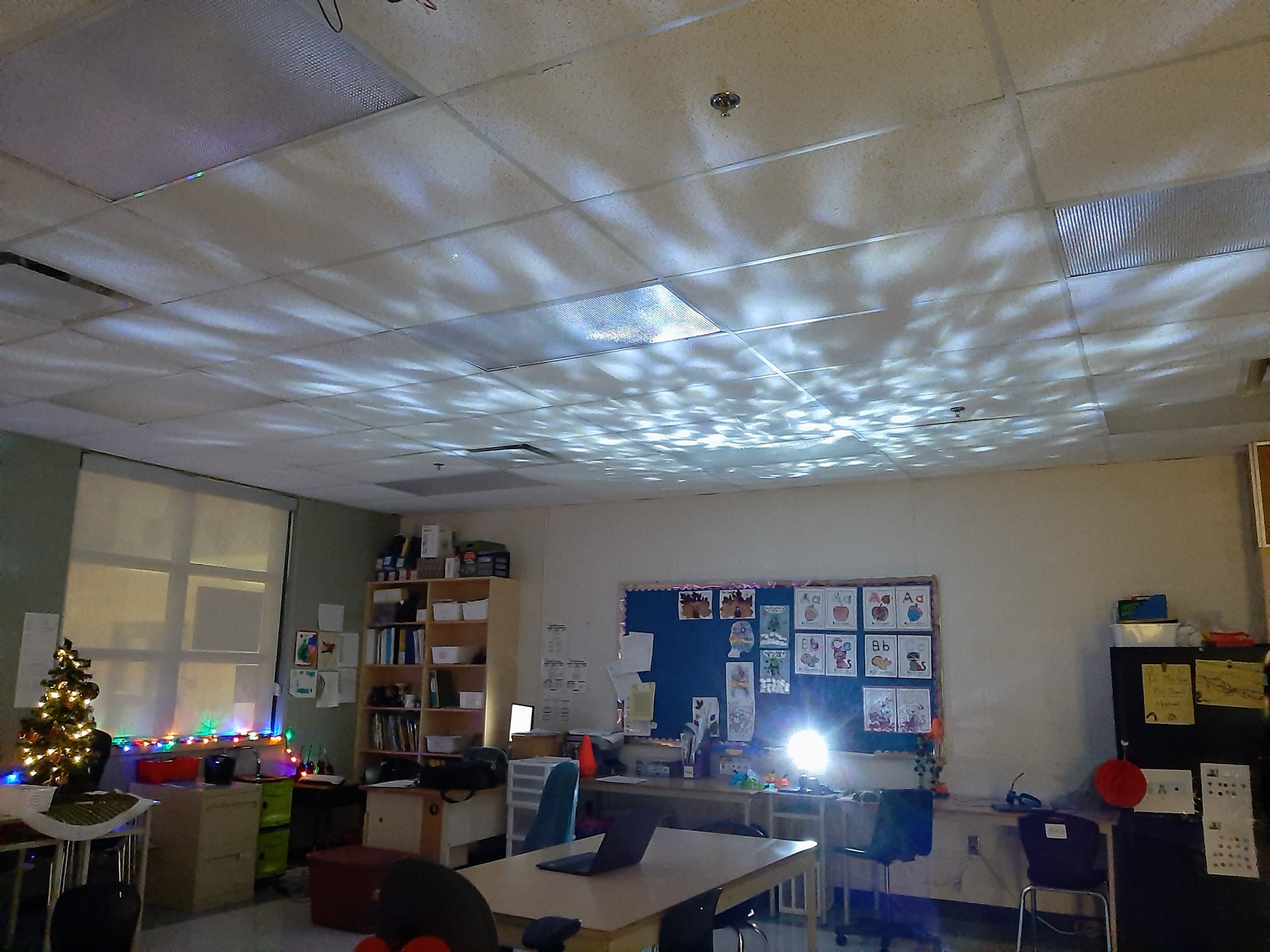
We also have added some exciting lights to our relaxation time!

In these times, keeping the excitement and energy is tough but as teachers that is about all we can do to ease our students woes.

Teaching Students with Down Syndrome to Read

I have tried to teach my one student with Down Syndrome to read words for the past two years with some success. However, it wasn’t until this year when I read about a different approach that things really started to click. Since we introduced this method into our instruction, she has been able to read a group of words consistently, comfortably and with confidence. It is the first time that she really gets excited about reading words.

In a quest to try something new with this student in October, I picked up a book I had bought a couple of years ago called “Teaching Reading to Children with Down Syndrome: A Guide for Parents and Teachers” by Patricia Logan Oelwein. The book was written in 1995, which seems quite a long time ago, however from our experience this fall, it was the one methodology that really worked for my student. Also, the general thesis of the book that any child with Down Syndrome can read if the programming is appropriate is a principle that I also strongly believe.

The book is divided into 3 sections. The three sections are: background information about the learner with Down Syndrome, the How-To section and reading units to use with your students.

Background Information

This section is highly important to read before you begin instructing your student. Even though the book was written quite a while ago much of the information remains accurate and up to date. I cross referenced much of the information in this section with the educator guide posted on the Canadian Down Syndrome Website and find the information to be consistent.

As mentioned above, the primary thesis for this book is that all children with Down Syndrome can be taught to read if programming is done correctly. Ms. Oelwein also does a very effective job of describing hurdles that you may face and things to watch out for if your student is not being successful with the methodology described in this book.

Some of the areas that she highlights are:

  1. Medical concerns: People with Down Syndrome have a higher rate of vision problems, hearing problems and chronic illnesses. Ensure that you read your student’s OSR and speak with parents about any concerns in this area. Any unaddressed medical concerns will greatly impact the ability of the student to be successful in learning to read. (Interestingly, according to the Canadian Down Syndrome Society, people with Down Syndrome are less likely to get asthma, many types of cancer and dental cavities.)
  2. Continuous Intervention: Many times, in special education we hear about early intervention and the importance of it. Ms. Oelwein takes it one step further. She speaks about the importance of early intervention and continuous intervention. She stresses the importance of maintaining high expectations for the students and providing them with high quality education throughout their academic career. I feel this is especially important as the student enters grade 6, 7 and 8 in Ontario in an inclusive setting. It is important that the student has modified tasks that are both aware of the social dynamic of this age as well as tasks that are academically appropriately for the child. Ongoing intervention is paramount to the student’s success in reading.
  3. Avoidance Behaviours: My students are very smart. Just like many students, they know how to avoid certain tasks if I have given them things that are too easy, too hard, or not interesting to them. Effective programming is the key to success and using consistent best practices in assessment will help you to develop tasks that support student’s language acquisition.

The How-Tos

The next section of the book explains how to introduce sight words, the alphabet, beginning phonics and writing and spelling.

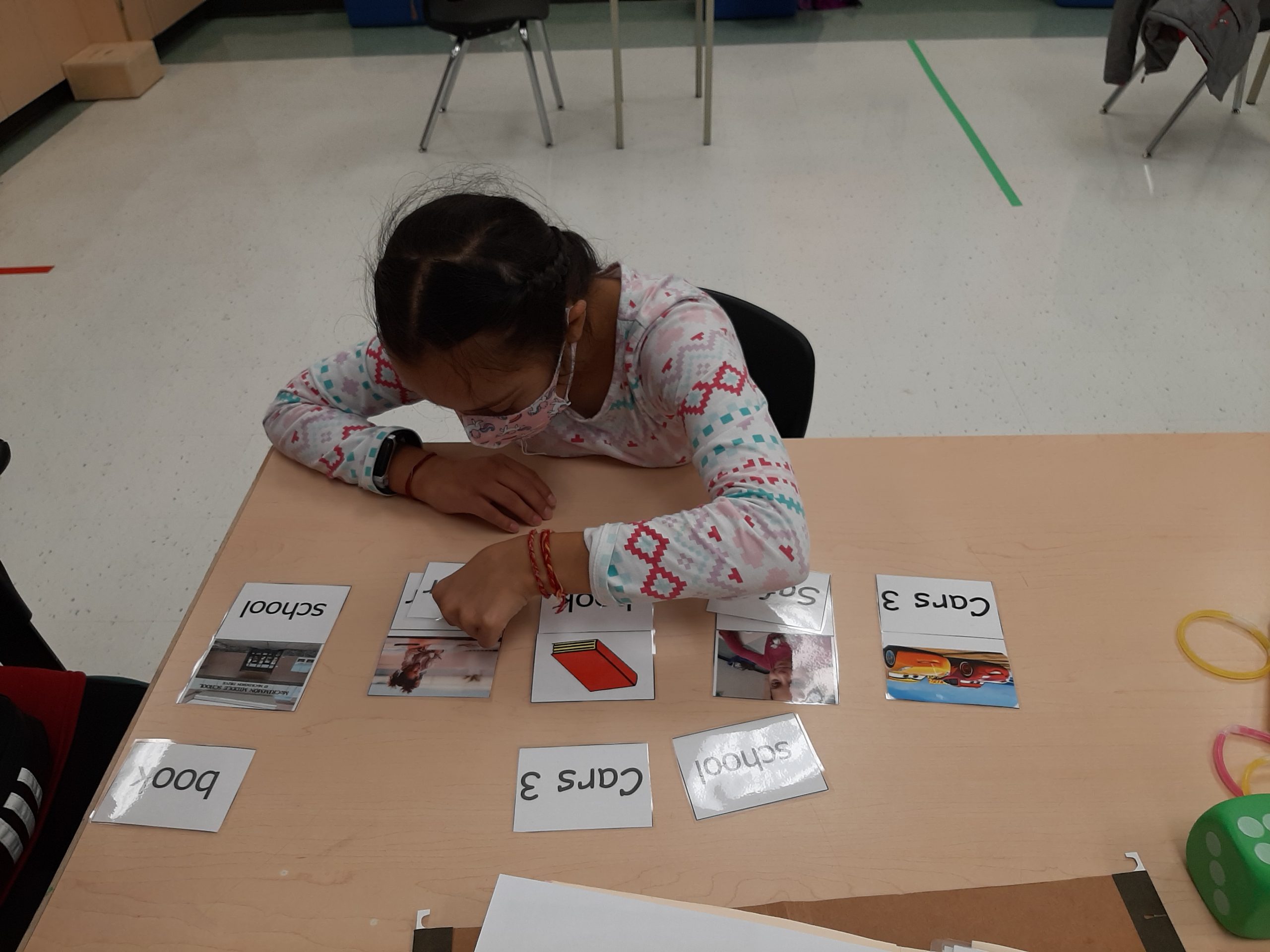
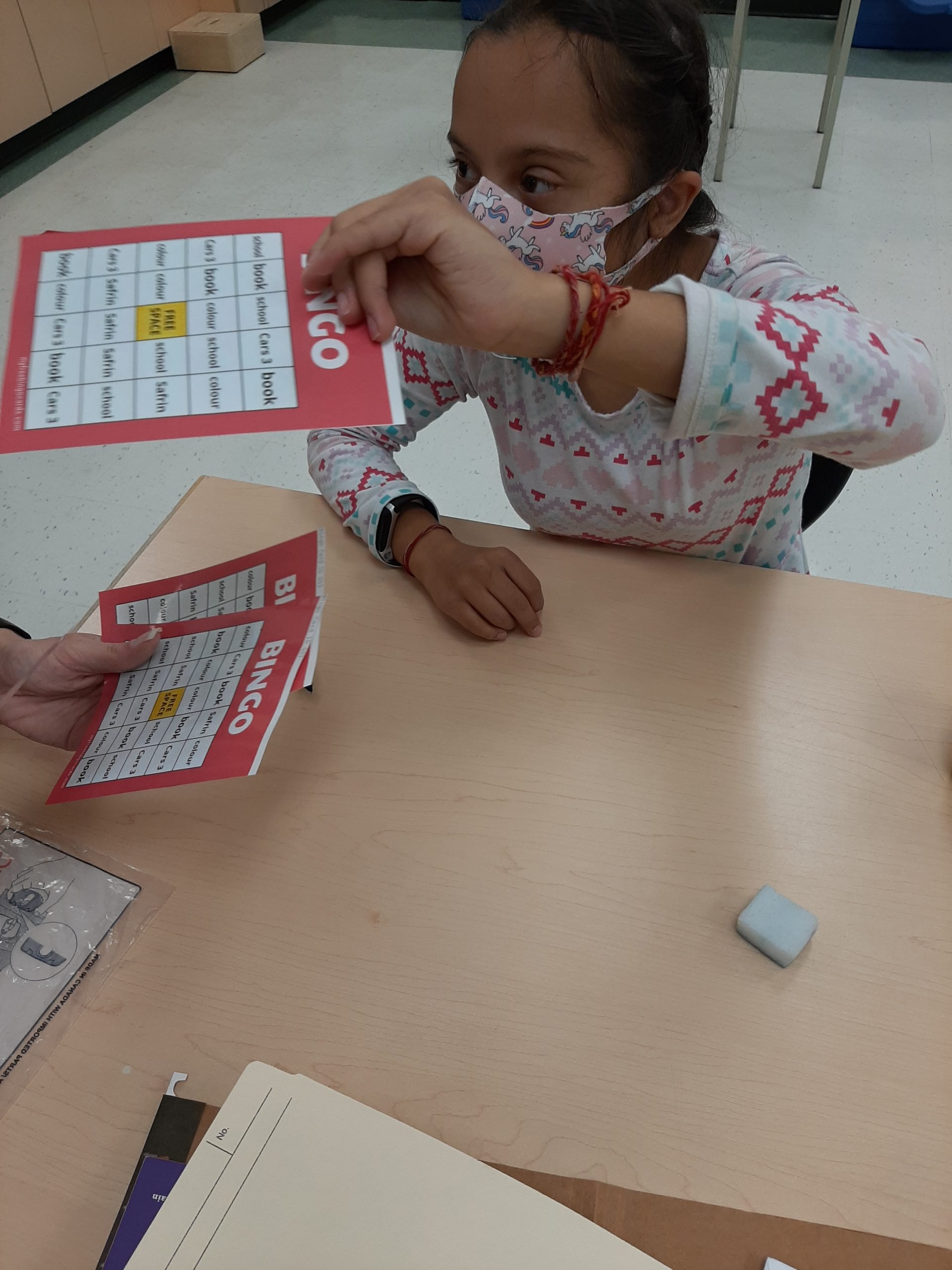
The instructions are very clear and can be followed by you, your education assistant, your special education team or a parent at home. This can provide ample opportunity for the student to practice the skills. Ms. Oelwein has also provided many, many ideas for activities and ways to keep learning fun and engaging. Below are some pictures of my student following the steps outlined by the author.

  1. We began by selecting a few personally relevant words for the student and followed a number of steps to introduce the words to the student. She surprised us at how quickly she learned them.

2. Next, we spent some time focusing on the beginning letter of the words we introduced.

3. Finally, we created some fun activities to reinforce the words.

Reading Units

The final chapters of the book use the same steps to continue to introduce additional words and many activities to help solidify understanding. All the materials to play games and create activities to build  understanding are provided in appendices at the end of the book. There are units on foods, action words, household words etc.

If your students with Down Syndrome are struggling, this might be one book to try to get you started. The steps worked for my student and it might just work for your student as well.


Equity or Anti-Racism

Equity vs Anti-racism

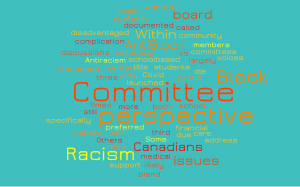
As part of my advocacy for students, I’m on a school-based committee to address systemic equity issues within my school board. These board wide equity issues deal specifically with documented Black racism.

Within our committees’ discussions, a debate launched into what our committee should be called. Some members wanted the title, Equity Committee. Others preferred, Anti-Black Racism Committee. A third group of voices discussed a blend of both, Anti-Black Racism Equity Committee.

Equity

Equity is defined as “justice according to natural law or right specifically freedom from bias or favoritism” or “the quality of being fair or impartial; fairness; impartiality: something that is fair and just.” The idea of equity does not address the systemic issues that people face. Making all things equal does not compensate for the underlying challenges faced by groups such as oppression and socio-economic factors. Equity does not always invoke the action needed to overcome deeply rooted systemic cultural issues.

Anti-racism

Anti-racism “is a form of action against racism and the systemic racism and the oppression of marginalized groups. Being antiracist is based on the conscious efforts and actions to provide equitable opportunities for all people on an individual and systemic level.”

In order for anti-racism action to be effective, all people involved must take a conscious approach to face their own privilege by acting against acts of racial discrimination and changing personal biases.

Does equity work, really work?

Over my various careers as a Geologist, Marketing Manager, and now Teacher, I seen many equity committees come and go. Well meaning participants discussed the importance of promoting equity in organizations but in the end, they failed to meet their goals as the initiatives merely scratched the surface. These committees also did not address organizational cultures that support systemic barriers and prevent the implementing of real change.

Equity for Women’s Rights

As a Geologist, over 30 years ago, I faced many systemic walls and gatekeepers that discouraged me from moving forward in my career because I was a woman. I lost track of how many times I was told that I should “just get married and have babies.” My colleagues were mostly White privileged men with wives who did the unpaid work of managing family and home. These men had the privilege of devoting all their time to their work. They rarely faced barriers.

Equal Pay for Work of Equal Value

As a Marketing Manager for a Canadian corporation, I was part of an “equity” committee. Here we discussed ways to give more equity to women. During an “Equal Pay for Equal Work” program, my corporation rated my job title to a job title in their warehouse; it probably had more to do with what I was getting paid instead of my level of responsibility. I did not get a raise in pay.

More Workplace Equity for Women

The equity committee discussed surface level approaches to support more equity for women in the workplace. But the managers and directors of the company were all men with White privilege. I felt I was treated equally to men most of the time, until I had children. Having children unearthed the many inequities faced by all working mothers. Besides finding good daycare, I had challenges staying home with my children when they were sick. Their father refused to take time off as it was a “career limiting move.”

I started talking with women parenting while working and suggested creating a support lunch group called “MAW – Mothers At Work.” This was quickly shut down by my supervisor as the gatekeepers were not comfortable with the existence of this group. I knew then that starting a daycare at the corporation was not going to happen!

The most significant memory I have of this time was when a meeting went over time and I told my supervisor that I had to leave to go home and feed my child. I could not get home late; I was breastfeeding at the time and had an hour’s commute to Burlington. My boss told me that if I left the meeting, it would be a “career limiting move.”

The corporations’ gatekeepers pushed for the equity committee, not to promote equity, but to give the impression of promoting equity as they were comfortable in the systemic culture that kept them firmly in place.

Systemic Organizational Barriers Against Anti-racism

I cite the above personal experiences as examples of how untargeted equity work is ineffective in making real change for those who need it. Real change means unearthing barriers to equity. This means that gatekeepers can either change their ways, or be replaced. In order to effect change, this means that people, who identify as racialized, must see people like themselves in leadership roles. Having a token person who identifies as racialized does not cut it.

Parents without their Voice Being Hears

As a teacher, I attended a school board meeting where a group of parents were advocating for special education support for their children. These parents had already asked teachers, principals, superintendents, and school board trustees for support for their children and this was their next step.  Listening to their stories, I wondered why these parents had to go to such lengths to get this support. In order to support these students, resources would need to be found. It became clear to me that the school board did not want to pay for the psychoeducational assessments needed to unearth these students’ specific special education needs. The board probably noted that if these parents got this support, then it would open the flood gates of more board paid psychoeducational assessments. Providing more opportunities for board paid students assessments would be very costly. These students were Black and lived in low social-economic households.

Lack of Resources to Support Students

In my role as a teacher, I’ve witnessed Black students not getting the support they needed to be academically and socially successful. Many reasons exist. Students may be on long waiting lists for psychoeducational assessments that are paid by school boards; note that resourced parents don’t wait for these assessments and pay for them privately. A lack of funding for extra supports, such as social work, could also be an issue in getting students’ support. Additional issues could be that students’ significant socio-economic issues distract from getting to the root of academic challenges. In the end, these students still move from grade to grade without the supports they need, falling further behind.

Targeting historic, systemic legacy of racism

Here, the heart of Black racism starts with the Transatlantic Slave Trade. As early as the year 1503, the Black Slave Trade devastated African countries, making many Europeans and North Americans very rich. To what is now Canada and the United States, the Slave Trade shipped millions of people, forced into bondage into a lifetime of work in fields, households, and mills. It is estimated up to 12 million Africans were captured and forced into the slave trade as human property. Unfortunately, more that a million people never set foot on North American soil as they died on the journey.

In Upper Canada, now Ontario, a former slave, Peter Martin, brought the mistreatment of Black slaves to the attention of Lieutenant Governor John Graves Simcoe.  Simcoe pushed for the legislation of 1793 Act Against Slavery. The Upper Canada elected executive council members, “who were merchants or farmers who depended on slave labour, saw no need for emancipation”. The Assembly did pass an Act Against Slavery that legislated the gradual abolition of slavery. This meant “no slaves could be imported; slaves already in the province would remain enslaved until death, no new slaves could be brought into Upper Canada, and children born to female slaves would be slaves but must be freed at age 25”. It took until another forty years, in 1833, for Britain to abolish the slavery of Black people.

Enslaving Black Africans and African Americans would not end until after the American Civil War on December 18th, 1862 (only 158 years ago). This resulted in many freed slaves becoming poorly paid sharecroppers and workers. White supremacy movements and Black Codes were launched, a year after, in 1877.

In the 1960s, the Civil Rights movement achieved political and social gains. This would still be not enough as the Black Lives Matter movement would rise in 2013.

A legacy 360 years of social and economic systemic oppression

The 360 years of slavery would leave a legacy of social and economic systemic oppression for all people who identify as Black.

As Dunia Nur, the president of the African Canadian Civic Engagement Council (ACCEC), states

Will Anti-racism work to overcome systemic bias?

For me, the push for equity for all is not enough. There are documented issues of racism against Black students within school boards in Ontario. It is time to dig deeper into challenging the systemic racist structures within school systems in order to give our students, who identify as Black, a chance to overcome their own barriers to social and academic success. As educators, we must take this difficult task of challenging our own biases towards those who identify as Black. Teachers work to promote the best opportunities for all students’ futures. We have more work to do.

I write this blog as a White woman with economic and educational privilege. I live my life carrying my White Backpack of privilege, never worrying about being carded or being asked to see a receipt when I leave a store. When my students, who identify as Black, complain about police bothering their families, I acknowledge that this happens and we talk about the roots of racism. When my students note that books have “all White kids” in illustrations, we talk about why this is the case and how it should change.

I will work towards Anti Black racism on an Anti-Racism committee as I unpack my White backpack …  as it is a life long task.

Collaboratively Yours,

Deb Weston, PhD

M is for Mindfulness

My inbox and social media feeds are filled with reminders to take care of myself and to focus on the mental health and wellness of my students and community, and I am trying. This month, I felt the phunk of COVID fatigue. I am working hard to create playful moments of joy, and generate my own light.

My teacher friend, Bruce Gramlich, offered me a new resource called, “Fostering Mindfulness: Building skills that students need to manage their attention, emotions and behaviours in the classroom and beyond,” by Shelley Murphy (2019). In this book, Murphy has curated educator stories and several concrete examples of intentional exercises and activities to support the practice of mindfulness. Murphy believes that in order for educators to be successful at supporting students to be mindful, we must focus on our own practice. Like many educators, I am always paying attention and aware of what is happening to those around me, but mindfulness is about paying attention to myself.

What is Mindfulness?
“Mindfulness is both a way of being in the world and a practice. As a way of being, mindfulness is the quality of presence we bring to everything we do. It describes our innate capacity to pay full and conscious attention to something in the moment. It is the awareness that emerges from paying attention on purpose, in the present moment, and nonjudgmentally to the unfolding of our experience” (Kabat-Zinn, 2013).

Reflecting the Sky:
When I think about mindfulness, I imagine sitting still and meditating, breathing with intention, not thinking about anything, just “be”ing in the moment. Those moments are very rare for me. As soon as I step into the school building, I am pulled into a current that is swift and fast. I am a strong swimmer, but I have to work hard to keep my head above the water. I rarely float, and there are few moments of stillness. I love my work, and I am grateful every day for the creative flow and waves of energy, but I know that the water needs to be calm in order to reflect the sky.

As I begin to cultivate a practice of mindfulness outside of the classroom, I am learning that there are moments of wonder and gratitude in many different activities, including walking in the park, cooking a delicious meal, listening to music, riding my bicycle, playing with my dog, and doing yoga. One of the challenges for me is to re-create these moments in the classroom. Here are some examples of how I am trying to practice mindfulness and honour stillness with/in my Grade 2 students:

Gratitude:
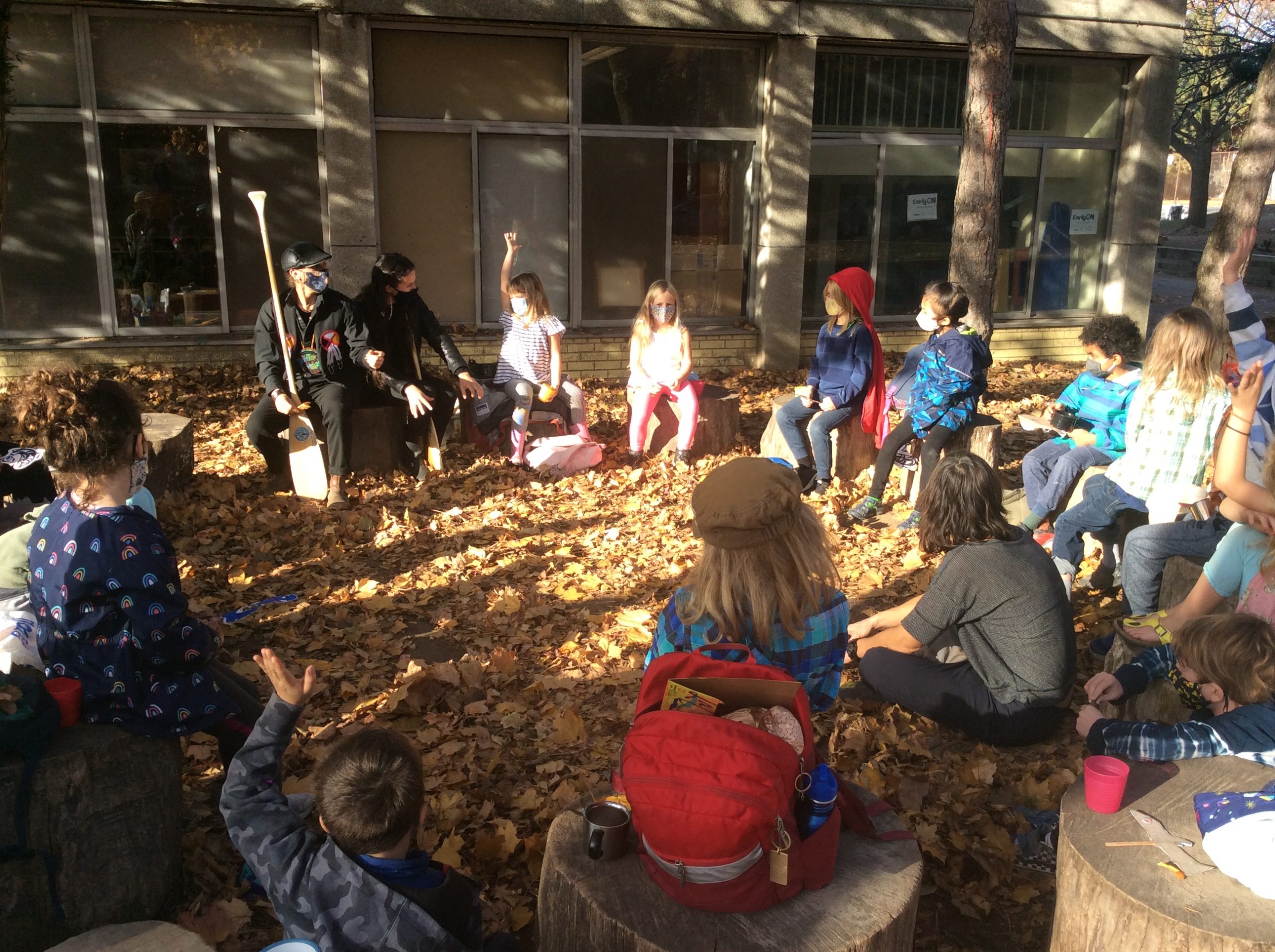
We begin every day outside in a circle. Before we acknowledge the land with respect, gratitude, and a commitment to take action, I invite everyone to take five deep breaths together. We do “Five Finger Breathing,” and use one finger to trace each inhale and exhale around the fingers of the other hand. Acknowledging land includes noticing and paying attention to all of our relatives: the wind, the birds, squirrels, puddles, and roots in our school yard. We recognize the original caretakers of the land and review our understanding that a treaty is a promise. This daily practice of gratitude is an important part of mindfulness and also supports decolonizing pedagogy.


Listen to the City:
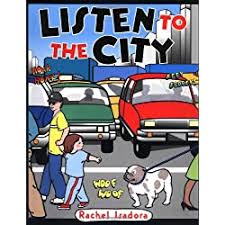
As we sit together and breathe, we use our senses to pay attention. I ask students to share what they hear, see, feel, smell. We talk about seasonal changes and transformation. Murphy (2019) calls this practice “Mindful Sensing.” Soundscapes are a dramatic convention that can be used throughout the curriculum, and can be combined with movement. Students use their voices and/or found sounds to tell a story. We have created soundscapes connected to our learning about water and wind. After reading the book, “Listen to the City” by Rachel Isadora, students worked in small groups to create a soundscape about the city and share it with the class.

Blindfold Tree Walk:
In one corner of our school yard, there is a small grove of cedar trees growing together. This area is being cared for and used as an Outdoor Classroom by many educators. One day, we used our sense of touch to do a Blindfold Tree Walk. We worked with a partner to find a special tree. Then, one partner was blindfolded and guided carefully to different trees to touch, until they found their special tree. Before blindfolding students, we talked about what might be challenging for people who are Blind or have low-vision, and how we can support them to walk safely. After participating in this activity, students reflected on the experience, and described what they noticed and how they used their senses to find their special tree. I also tried this activity and was delighted when I reconnected with my tree.


What Does Peace Feel Like?
This activity inspired us to explore another book called, “What Does Peace Feel Like?” by Vladimir Radunsky. This book is filled with the voices of children who use their five senses to describe peace. Students were inspired to write their own descriptions of peace, and used watercolours to paint what peace looks like. We shared our poetry with a special guest who joined us via ZOOM. Donna Jodhan is a disability justice activist who we met ten years ago when she successfully challenged the Canadian government to make websites more accessible for Blind people. It was a wonderful opportunity to celebrate, reflect and recognize the importance of allyship and advocacy.


Loving Kindness:
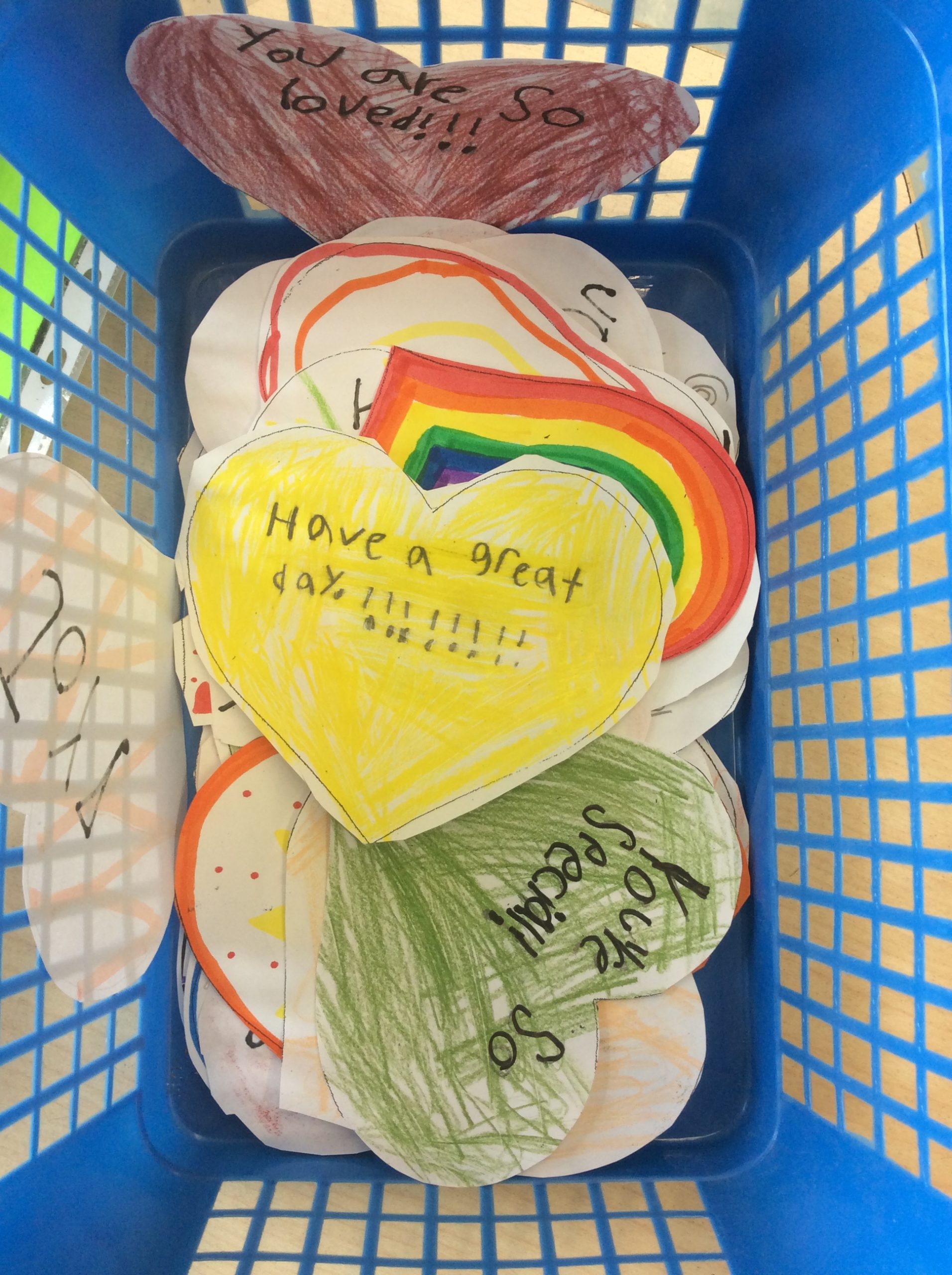
“Heartprints” are celebrations of when we have been successful at meeting our learning goals. Currently, we are working on the following goals: “I can be a good friend”, “I can keep trying” and “I can solve problems.” After recess, I will often ask students to share a story about when they were a good friend to someone, or when someone was a good friend to them. As they are sharing, I write their story on a heart-shaped piece of paper. These heartprints are hung in our classroom. Heartprints support cooperative learning, encourage the practice of gratitude and sharing appreciation, reinforce positive behaviour, and help us to create an inclusive and kind classroom community.


My teacher friend, Kelly Fricker recently supported her Grade 1/2 students to share random acts of kindness and #passiton. Together, they generated a list of positive messages to encourage the adults in the school building, and wrote them on heart-shaped paper. Kelly filled every mailbox with messages such as, “You’ve got this!”, “You are appreciated! ”, “You are my sunshine!” I was inspired and worked with my own students to fill the mailboxes in my school with messages of loving kindness. It was a wonder-full activity. Pass it on!


Virtual Field Trips: Connecting With the World Beyond the Classroom

The pandemic has changed the ways in which we can explore the world around us. Rather than being able to sign up to go on a field trip, many educators are opting for virtual field trips. With so many options out there, how might we ensure that we use these opportunities to connect it back to the learning in the classroom and to life in general? I ask this because I’ve been guilty of giving students these links to get them to simply explore but I wonder if there is more that we might do with these incredible opportunities. In this post, I’ll share a few ideas that I have.

Zoos & Aquariums

The San Diego Zoo and Ripley’s Aquarium are 2 sites for virtual field trips related to zoos and aquariums. I have to admit, these creatures are amazing to look at and I think it’s incredible that we have the opportunity to watch them live. 

While watching, it got me thinking about a debate we had in class several years ago about zoos.  After researching a variety of animal habitats, we used found materials to create our own zoo of sorts in our classroom. Students were tasked with determining what conditions needed for their animal of choice to survive and to build their habitat. Once all of the habitats were created, we organized the animals into areas that we thought made sense based on their needs. It was pretty cool and it led us to start talking about animals in their real habitats and in zoos. 

We researched and discussed differing opinions and feelings about zoos. 

A zoo supporter might say:

  • The zoo is a fantastic place to learn about and see animals from different parts of the world.
  • Zoos help to keep animals safe so that they don’t become in danger of extinction.
  • Zoos help to take care of animals who may become sick.  In the wild, these sick animals may die.
  • Because of pollution and deforestation, animals are having a hard time finding food.  Animals in zoos are well fed and taken care of.

Someone who is against zoos may say:

  • Zoos don’t teach us much about animals because the animals there don’t act the way they would in the forest, jungle, or ocean, where they belong. We can learn more about animals by reading books or watching wildlife programs on TV.
  • Animals are not happy in zoos. They want to be free to walk, run, fly, climb, hunt, and have families. There simply isn’t enough room for them in the habitats that are created at the zoo. 
  • When a zoo doesn’t want an animal anymore, the animal gets killed or sold to another zoo and might have to travel far away by boat, truck, or plane.

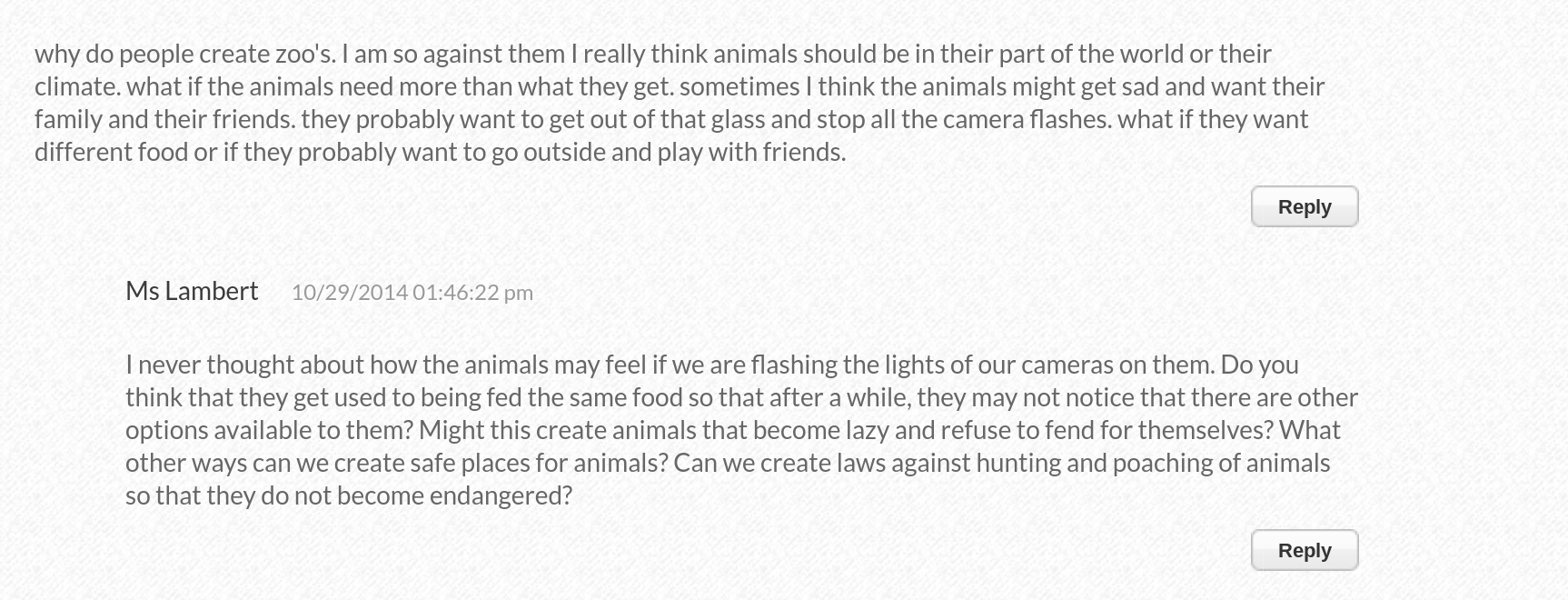
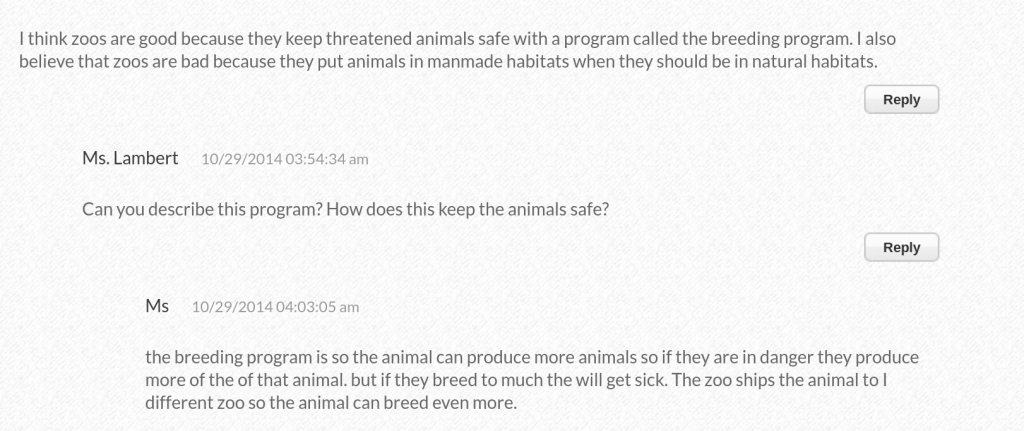
After sharing these ideas, students were asked to reflect on a couple of questions, and as a part of our classroom blog, they shared their thoughts and debated their points with their peers. The questions were:

  1. What kinds of things do animals need to be happy? Do you think animals in zoos get all these things? Why or why not? 
  2. Think about the animals you’ve seen at the zoo. Do you think there is somewhere else they would rather be? Something else they would rather be doing? Why or why not?
  3. Do you support zoos? Why or why not?

There was a lot of healthy debate going back and forth as students justified their answers about whether or not they supported zoos. 

Not only might heading on these virtual field trips be a great way for students to see animals they may not have seen before, but it may also be a great start to conversations around the need for zoos and aquariums and the ethics behind them. 

Museums & Art

Art has always been of interest to me. From studying Art from a particular part of the world to understanding how art is connected to culture, so much can be said by looking at a painting or sculpture. Here are a few sites that I’ve explored with students:

  • Christi Belcourt – Christi Belcourt is a Métis artist with a deep respect for Mother Earth, the traditions, and the knowledge of her people.  In addition to her paintings, she is known as an environmentalist and advocate for the lands, waters, and Indigenous peoples
  • Tomb of Menna – Located in Luxor, the tomb of Menna is known for the colorful and well-preserved paintings that adorn the chapel walls.
  • The Canadian Museum of History – The mandate of the museum is “to enhance Canadians’ knowledge, understanding and appreciation of events, experiences, people, and objects that reflect and have shaped Canada’s history and identity, and also to enhance their awareness of world history and cultures.”
  • The Royal Tyrrell Museum of Palaeontology – Canada’s only museum dedicated exclusively to the study of ancient life.
  • The Aga Khan Museum – The Aga Khan Museum presents and collects art from historically significant Muslim civilizations as well as contemporary Muslim communities and diasporas around the world.

When exploring museums and art, I’ve asked students to reflect on pieces that stand out to them and to explain why they were of particular interest. I’ve also had students consider the elements of art – line, shape, texture, form, space, colour, and value – and how the artist used the elements to evoke particular emotions or feelings. I also tend to ask students if there is a particular style that they can attribute to the artists and consider learning more about their particular style. I’ve mentioned before that art is connected to culture. Perhaps posing a question such as, “Is art shaped by culture or is culture shaped by art?”, might spark meaningful conversations around the connection between the two.

Science

Ok…zoos and aquariums fit under this category too. Here are a couple of virtual field trips that my students enjoyed related to physical and earth sciences. 

  • Slime in Space – This is a 15-minute virtual field trip to outer space to see how slime, and water, react in a microgravity environment.
  • Hawaii’s Volcanoes – Take a trip back in time to explore the land shaped by the world’s most active volcanoes.

Everyone loves slime. Ok…well…maybe not everyone. I’ll admit. I’m not a fan. When I stumbled upon the link to Slime in Space, it got me thinking about the time I had a student teach the class how to make slime. It was an opportunity to see the connection between procedural writing for a science experiment and an exercise in problem-solving when it didn’t quite work out.  It was an experiment based on the student’s interest and it was amazing to watch them lead their peers with great enthusiasm. When thinking about student interest, last year I had a student who was so fascinated by natural disasters and when it came to exploring Hawaii’s volcanoes, he was all in. This interactive adventure allowed him to learn more about volcanoes and understand how the land was formed in a way that was more real than reading it in a book. How else might we bring student interest into the classroom through these virtual opportunities?  

The world is changing and it seems as though virtual field trips are a way to still connect us to the greater world around us. By no means is this an extensive list of what is out there in terms of virtual field trips. Hopefully, this gives you some ideas of how they can be used in the classrooms with students. Have other ideas to share? Please feel free to add them in the comments below!

A Call for Change

In this post, I write as a Black educator struggling to understand why change is so hard. Over the years, I’ve had many colleagues and administrators who “understand” my position, and yet when it comes to enacting change, the status quo is upheld. If you understand my position and can support me in the private moments when you come to “pick my brain”, why is it so hard to support my position in public? Understanding to me means that you have heard me and are willing to do something about this new knowledge. Now, don’t get me wrong, I am not expecting that everyone should change their practice to accommodate my preferences but when real harm is being done in schools and they are voiced, I expect that these voices would not be silenced and dismissed. Here are 2 ways that I think we can do better.

Think Critically to Understand the Why

The old adage, “We’ve always done it this way” is dangerous. Just because something has always been done, doesn’t mean that it needs to continue.  Throughout my career, the people I have admired or respected the most have been those who have been reflective on their practice. Years ago, I remember myself and a colleague often popping by our VP’s office to just sit and talk at the end of a day. It became common practice – that probably annoyed our VP at the time – but it was a time to debrief and to think critically about our day and next steps. In speaking aloud and reflecting on lessons or upcoming school events, it became a space where we asked the important question, “why?” In these moments, I learned the value of being intentional in my practice. When there has been no substantial or good answer to the question, I often sit with the origin of the practice and consider how I got started using it. The first way that I think that we can bring about change in our schools for the better is to think critically about why we do what we do. With a clear understanding of “why”, we can choose which practices we continue and which ones we should consider changing or eliminating altogether. 

Speak up!

Many may recall my post from months ago on “Crazy Hair Day”.  The number of people who messaged publicly and in private was amazing. People taking the time to read, reflect, and reconsider made me think that my moment of vulnerability might possibly bring about some change for the many harmed by this practice that has no place in schools. While I don’t see as many pictures of the days on Social Media, I’m not naive enough to think that they no longer happen. Earlier this month in a meeting, the topic came up again and there were a number of sighs in the room. While sighs are a step up from remaining silent, without a justification for the sigh, there’s no conversation on what evoked the sigh. In that moment, I wished that all the messages around the harm of Crazy Hair Day would have been voiced. I wish that those who mentioned the inequity online and those that mentioned their feelings of uncertainty through messages would have taken the time to speak up, rather than looking to me to say something. One person came to me and asked why I didn’t speak up and I said that I always do and have written on the topic publicly. In that space, every person knew my perspective. As I packed up my bags to leave, I didn’t bother to ask my colleague why they didn’t speak up. The last time I asked them this, they said, “Yes, I should have said something.” My ask is this, please stop relying on that colleague who is seen as the disrupter to always speak up. They’re tired. Use your privilege and voice to do what you so proudly do in private. We need you to talk on these matters when they actually matter. As Maya Angelou said, “Do the best you can until you know better. Then when you know better, do better.” If you’ve heard or learned that something is problematic, please turn that learning into action by speaking up. If as a collective we speak up, then there is a greater opportunity for change. 

I know that we are all on a journey of learning. My call for change today is that this learning includes action. Think critically about practice. Ask the “why”. Speak up; particularly when you have privilege in a space. Your voice is needed to enact tangible change.