Blog

Don’t Give Up on a Tough Class

I have one class that is very tricky. It is a very large class with a lot of emotional, physical and academic needs. It is the two periods in the week that I wish I had a clone of myself so that I could meet everyone’s needs immediately all the time (with this class I might need an army of clones).

I would rate the autumn with this class as alright. We have had our ups and downs. Some periods have gone well. Some have not. The thing that has been most consistent with this class is that I refuse to give up on them and their ability to do well in Music.

I feel at this point in the year, I have tried so many strategies to get the classes running smoothly and find ways to support my weaker students. However, it wasn’t until this past week that I feel like I have made a breakthrough!

I have finally landed on a combination of whole group instruction, peer-supported creations and individual choice.

Getting to know the students has been an important factor in this positive change. I have had several conversations with many of the students about sports, animals, music and all of their interests. I have used that knowledge to help build a relationship with them and inform my decisions around content for upcoming classes. I know for one of my students who is having the most difficult time at school right now, he really loves sports. I am planning to do a basketball dance this term to incorporate his interests.

I also have some students in the class who are significantly below grade level. Many of these students are embarrassed to ask other students for help. They are weak in reading and writing and therefore, they are very reluctant to work with many of the students in the class. Last week, I went to each of them individually and asked if they felt comfortable with anyone in the class. I let them choose who their partner was and since they all had a say in who they were going to work with, they all had a level of comfort in working in the class.

I met with the classroom teachers about good accommodations that I could provide for their students with upcoming assignments. I have also conferred with the classroom teachers about medical needs and emotional needs.

I have built in the usage of many of my student’s strengths. Everyone has so many amazing skills and I have tried to highlight them. I have a student who can’t read but is great at tech. He is my technology advisor and the kid I send everyone to when we have problems. Another student can’t read either, but is an incredible singer and rapper. He can improvise at the drop of a hat and can generate ideas at a speed I cannot match. When we need lyric or rhythm ideas, we know who we can count on.

I have continuously worked on trying to improve the climate. Last week, before we started our partner activity, I had the students do the game Two Truths and a Lie with their partner to build a relationship with their new partner. Taking time away from curriculum to build climate has been worth the investment.

Using choice as a motivator has also worked exceptionally well. Students begged me to allow them to listen to music of their choice when they are finished their compositions. “For sure!” I said. We are developing a pre-approved list of music to listen to.

Ultimately, the most important thing is not to give up. Have a good cry, a particularly big piece of chocolate cake and a long phone call complaining to your friend about your difficulties. After that, analyze what is going on that is not working, and start a plan tomorrow. And if that doesn’t work, try something else on the next time. It might take time, but it is worth it!

Precarious Absences – The impact of teacher intervention truancy systems

c648498d03ebec4dc8d0dd29a6fdfa4a

I write this blog in response to watching a highly capable and talented, long-term occasional teacher worrying about taking time off to go to a medical appointment. She actually considered cancelling her appointment as she worried about taking too much time off school because she thought it would impact her chance for a full-time teacher contract. Supply teachers and long term occasional teachers are feeling the pressure of not taking time off to meet their self care and medical needs. And this is the place where all teachers are at.

In the past few years, school boards have started using teacher intervention truancy systems. These systems track how many days teachers take off for reasons such as being sick, attending medical/dental appointments, or taking time off to care for family.

When I started teaching 18 years ago, I had 20 sick days which could be “banked” and then “cashed out” at the end of my career. As a teacher, I did not want to take time off if I did not have to … as it is a lot of work to make day plans to be off. But, as a single parent at the time, if my children were ill, I had to take time off. Also note that I got sick too. As a teacher, I am on average exposed to many children … up to 100 a day (I counted).

Then, I few years ago, teachers’ 20 sick days were reduced to 11 sick days, plus family responsibility days. This meant that teachers could no longer “bank” sick days and received a reduced salary after the 11th sick day.

Children (i.e. viral conduits) are very good at transferring their illnesses to their parents and teachers. Over my 18 years of teaching I’ve contracted a plethora of infections including many bacterial and viral infections, skin infections, eye infections, Whopping Cough (twice), Norwalk virus (twice), many weeks of bronchitis, several bouts of flu including H1N1, and lots of colds. With my doctor’s insistence, in the spring of 2017, I ended up taking 12 days off from school due to my ongoing bronchitis.

Once my health was marginal enough for me to return to work, I did coughing away, sucking on cough drops, drinking tea with honey, and carrying a tissue box around to blow my nose. Hey, it was report card time – I needed to get back!

Recently, some Ontario school boards started tracking teachers’ absences. The “teacher intervention truancy systems” notes when teachers take more than 3 sick days off in a 3 month period. At this point, the teachers are sent letters documenting that they were being put on a program to track their absences … like they were not really sick and just needed to take a day off. Let me say again that it is a lot of work to planning for being away from the classroom.

In the “teacher intervention truancy systems”, teachers have to document their absences with notes to prove they were either really sick or really attending medical/dental appointments. Note that I have had to pay $20 out of my own pocket to document my sick days, for each appointment!. In addition, to make things more interesting, teachers in some schools were told not to take half days off as schools were finding it difficult to find supply teachers who would work only half days. This tells me boards have to hire more supply teachers!

Based on my observation, I believe that this “teacher intervention truancy system” is casting a wide net to catch some people who may be abusing sick days. But based on my own experience and that of my colleagues, I believe that, since teachers are subjected to so many children’s illnesses, the relative number of sick days are too few. Teachers need more sick days!

Based on my own health experience, I believe the “teacher intervention truancy systems” have impeded by ability to meet my own self care and medical needs  – it has resulted in me having to choose between being sick or going to medical appointments. I believe that if I had taken the time I needed to rest, I would not have been off sick for so long, away from my students.

I wonder how new teachers are doing with the management of their self care, given their own family responsibilities and the care of their own health.

I find it ironic that school boards talk a lot about supporting employee health but their walk is not supporting employee health.

Collaboratively Yours,

Deb Weston

Downloadable Adaptable Emergency Lesson Plans

If you are even too sick to go to school and you have no day plans yet, I have attached a 5-day Emergency Lesson Plan that can be adapted to your classroom/grade level. Download it, change it, make it your own!

Generic Emergency Teacher Lesson Plans (1)

5 Day Plan Schedule Emerngency Lesson Plan.xls (1)

Any Read Aloud Book Graphic Organize

1 Rounding100s Game

Note: The term “teacher intervention truancy systems” is my own acronym.

Moving Beyond “Cultural Months”

I don’t mean to be flippant but I’m sometimes leary when we have a month to celebrate a particular racialized group. What happens to their history or their identities during the rest of the year? I recently saw this post on Twitter and it got me thinking – how do we ensure that we go beyond these months and into a deeper desire for ourselves as educators and our students to value the diversity that exists in our classrooms?

Screenshot 2018-01-28 at 5.15.07 PM

Checking Our Bias

In our board, we have had many conversations around bias and equity. How are we moving from conversations and into action? In what ways are we really ensuring more equitable outcomes for our students and colleagues who are racialized? We all have bias and privilege to one degree or another. When we acknowledge our bias and privilege and are conscious of it in the spaces in which we exist, we are better equipped to extend equity and honour the experiences of others. In doing so consistently, we become those who seek out and foster ways in which to level playing field for others. What is your bias? What are your thoughts about the students that you serve? How does your bias impact the way in which you serve your students?

Courageous Classroom Conversations

Over the past few years of teaching, I’ve realized to a greater degree, the value in having conversations about the world around us with students. Earlier on in the year, we had conversations around Colin Kaepernick and other NFL players taking a knee. I had a colleague who was shocked that I was talking about it in the classroom. We have to remember that our students are living in and experiencing the same world that we are. They are keenly observing and are not oblivious to what is going on. Shouldn’t they have a space to engage in conversations about what is happening, not from a stance of judgement but of fact finding and meaningful sharing about its impact on them and the communities in which we live? By shying away from these conversations, we do a disservice to our students because that is what is real and authentic in our world and they need the opportunity to understand, discuss and determine ways in which they are able to navigate these situations in the hopes of bringing about a different tomorrow. This too is a part of education

Meeting The Needs Of Our Students Based On Their Realities

Shaughnessy is the 5th school that I have had the privilege of teaching at here in Toronto. Each school has had a different community and it’s been exciting to get to know and understand who my students and their families are. When we take the time to find out what is of value to our students and our community and teach from there, we truly start to meet the needs of our students. High expectations with lessons that are authentic and are based on the interest of our students increases engagement and allows for our students to make connections to the curriculum that are meaningful and relevant. This is what gives them greater opportunity to flourish based on who they are. We all want greater student success, why not find out what is meaningful to our students and work from there to ensure that they are represented in our lessons, tasks and classrooms?

Special months are great for celebrations of cultures but as this Tweet reminds us, let’s consider ways in which to go beyond a particular monthly celebration and make sure that our diverse identities are celebrated throughout the year.

The Teacher Who Couldn’t Read

It’s hard to imagine that a school board would every hire a teacher who couldn’t read. Well, if I have been given a reading test past the grade 4 level, I may not have been hired.

I am a teacher with 18 years experience. I am qualified in many areas including Reading, Technology, Math, and Special Education. I have 5 university degrees. But I cannot read well aloud past the grade 4 level, really.

I went through school with an undiagnosed reading disability called Dyslexia. When I read, words and letters move. I have a great difficulty writing and especially when I need to proofread my work. As a student, I was told I was slow … I failed grade one. I was told I made careless mistakes and I was sloppy. Spelling tests were a nightmare for me. Luckily, through lots of hard work and determination and using computers to support me in my work … I am here writing to you today as a teacher.

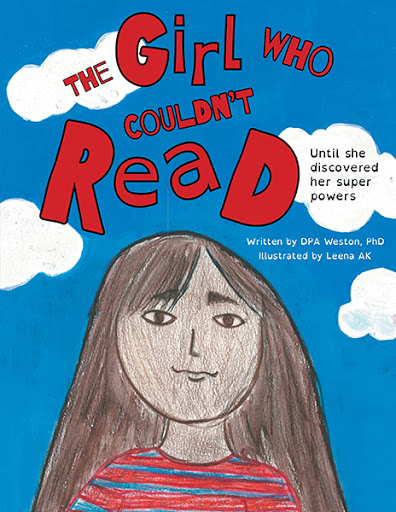
I’ve written a book about my challenges as a student to help students, teachers, and parents become informed of the challenges faced by struggling readers.

Here’s the link to a PDF download … share it with your students, their parents, and your colleagues.

Remember, everyday students come to school to do their best learning.

Collaboratively Yours,

Deb Weston

Review of The Girl Who Couldn’t Read

The Girl Who Couldn’t Read Friesen Press

The Girl Who Couldn't Read


#PDThatWorks

It’s no secret…I’m a lover of professional development! I’ve always been of the mindset that learning is a continuous process that is afforded to all of us in a variety of ways and we should take advantage of as many opportunities as we can. That being said, over the past couple of years, I’ve been on a hunt for #PDThatWorks. It’s a hashtag that we used last year as part of our STEM Certificate Course hosted at RJ Lang Elementary and Middle School for K – 8 Teachers. We too were interested in finding a model for professional development that would inspire teachers to continue the work outside of the session and build capacity in their schools and over-time, the board. I think that I finally found what works for me:


  • Building a community with participants
  • Time for implementation and reflection
  • An opportunity to celebrate and look for next steps

Building A Community With Participants

Our module was 4 days long, over a 4 month period (1 day per month), and this time afforded us the opportunity to get to know the colleagues that we were working with on a deeper level. It wasn’t just one session where we learned something to take back in isolation, but over the course of even the first day or 2, we were quickly realizing that we could leverage the skills in the group in order to learn from one another. As a facilitator, it was exciting to see relationships being built based on reflecting on experiences and connections we might be able to make with the students we have the opportunity to serve. Amongst facilitators, it was great to be able to understand the skills that each of us brought to the course and how we were able to form a great team because of the diversity in our skills. Once the course was finished, we simply couldn’t stop there. As facilitators, we decided that we wanted an opportunity to continue our work together with like-minded educators who were just as excited about learning and growing professionally as we were. #TinkeringThursdays was born out of this idea.

Time For Implementation And Reflection

Ever participated in a PD session where you received many handouts and great ideas to take back to the classroom without any real follow-up, accountability or commitment to implementation? I have. Ultimately, as educators it’s our responsibility to take the learning back to the classroom to implement but often times, without accountability, things fall by the wayside. Good intentions exist but follow-through doesn’t always happen. Being a part of a workshop or course such as this, allowed for participants to take the time needed to implement, reflect and return to have discussions on successes and areas of need. I know that there should be some intrinsic motivation for implementing our learning but let’s face it, collaborating with colleagues who have also had the chance to implement ideas in their own spaces, provides a better opportunity for success. There are many times that I’ve seen ideas that worked well in one learning space and then when brought into my own have had different results. What’s the difference? The students. When we take an idea and make pivots based on the needs of our learners and share, there’s even more learning that can be gleaned.

An Opportunity To Celebrate and Look For Next Steps

On the last day of the course, participants showcased the work that they did with students based on their learning during the course. It was phenomenal. Some participants even went as far as bringing their students so that their actual voices were heard through the projects and tasks that were created. Not only were the presentations or projects diverse, but they spoke to the true learning and teachers were excited to share with one another their next steps for implementing the Engineering Design process. Again, there was the gathering of ideas and an excitement about having been able to learn with such an amazing group over a 4 month period.

Now that I know the type of #PDThatWorks for me, I’m better able to tailor my learning experiences and find sessions that truly honor my style of learning and speak to me as an educator. What type of #PDThatWorks will you find?

The Virtues of Non Fiction Reading and Writing – Part 1

Many years ago at a Reading for the Love of It Conference, I listened to author and educator Tony Stead speak about the virtues of teaching non-fiction reading and writing in the elementary grades. It was an “ah-ha” moment for me as an educator. As an adult the majority of the text that we interact with each day is non-fiction. Writing a grocery list, filling out a survey, reading an advertisement, reading a blog and corresponding in an email are all examples of interacting with non-fiction text. If I read fiction it is because I choose to do so for pleasure. Yet, much of my language curriculum in the primary grades had been fiction based. I had chosen many beautiful picture books for read alouds and focused a lot of our time on narrative story writing.  Most of what I write as an adult is purposeful communication, not for pleasure. During that time I also put together that the majority of what the boys in my class were interested in reading and writing were non-fiction topics and that likely contributed to the reluctance of many of them to read and write.

Consequently, as an educator, I spend much more of my time teaching how to read non-fiction and how to write in different non-fiction genres.  Recently with my grade 4-5 class, we have been investigating non-fiction text features.  We are learning to use non-fiction text features to help us both as readers and writers.  For example, through inquiry the students learn what a diagram is, what is used for, how it helps the reader to gain new information and how we can then use it in our own writing to communicate information effectively.  The students are working towards providing a kind of instructional guide to non-fiction text features using the app Explain Everything to present to younger students in our school.  Students search for examples of non-fiction text features, take photos and using voice, text or diagrams; explain how the text features work and how they help readers and writers communicate.  Students understand that these diagrams, graphs, maps etc., in their texts can provide quick snapshots of important information and make their research interesting, richer and often more expedient.  In their writing, they understand that many features provide “proof” of the point they are trying to make for their readers.

My love of non-fiction does not exclude studies in fiction.  However, as educators it is important that we are expose our students to purposeful, rich, relatable tasks as well as good stories.  In part two of the blog, I will be sharing student work with non-fiction.  For more information about educator and author Tony Stead I have included some links below.

Tony Stead author biography

The RAN Strategy video


Digital Documentation


Documentation can be one of the most time consuming aspects of teaching Kindergarten and working with young learners. Especially in a program where there are no pencil-paper assessments, but rather the learning is something that is seen and heard.

I found a tool a few years ago that changed the way I document tremendously. Not only is documentation easy, natural and quick – it is inclusive of families and further builds our classroom community.

SeeSaw is an online documentation tool designed for teachers to capture the learning of students through photo, video and audio recording. What makes SeeSaw unique, and in my opinion its best feature, is that it acts as almost a social media tool for engaging parents and families. Here are some ways that SeeSaw is working wonders in my classroom:

SeeSaw is easy and quick, allowing me to capture learning in the moment. I have the app on our classroom iPad as well as my own device. This way, I’ve always got my documentation tool at hand when learning happens. The interface is easy to use and navigate. SeeSaw allows you to create a folder for each individual child, which is visible only to that child and their families. For each entry, I can select individual children, groups of children or post it to the entire class’ journal. SeeSaw allows you to add multiple teachers to the account, which makes co-teaching and collaborating with prep coverage teachers even easier.

SeeSaw has tools that deepen and strengthen learning. After capturing a photo, I have the option draw on top of the photo (even record and replay this drawing), as well as record audio. If I take a photo of a structure a child built in the block centre, I’ll ask them to add a label or verbally describe their creation. I can also record how my students are thinking while writing and view it again later. The opportunities to capture much more than a written sample are endless!

SeeSaw can be used by my students to document their own learning. This takes a little bit of scaffolding, but children as young as Kindergarteners can independently use SeeSaw to document their own learning. In my classroom, we have a designated SeeSaw iPad that children know they can access to take photos and videos of something they are proud of. This is powerful because, even with two educators in the room, we can’t always see everything that happens. At the end of the day, I can scroll through what the children chose to document that day and “approve” their posts to the journal. This provides so much insight into what my students think is important. In the older grades, the opportunities are endless to use this as a tool for paperless assessment.

SeeSaw has become the guide to our “reflecting and connecting” discussions. My favourite time of day is just before we head outside for our second outdoor block, when we all sit down together on the carpet and “see what we saw” – a term coined by one of my year two students! During this time, we scroll through the posts to SeeSaw from that day and talk about them. We might view a photo of an art project done by some students, invite them to talk further about it and then ask the entire group if they might feel inspired to try something similar the next day. This way, my students have a chance to see what other children are doing during the day and be inspired by their ideas. It also allows us to have reflecting and connecting conversations about our experiences. This continues at home, when children and parents can do the same together.

SeeSaw is the “one stop shop” when it comes time for writing the Communication of Learning. When it comes time for assessment and writing reports, I’ve got all of my documentation in one spot. I simply open that child’s folder and then have access to hundreds of photos, video footage and notes that I have entered about that child’s learning and development. I also record my students during their DRA assessments so I can share this with parents and I can refer back to their reading behaviours. This allows me to easily include very personalised information into my comments, including direct quotes from their videos and audio recordings.

SeeSaw brings parents into our classroom and opens doors for family involvement. My favourite thing about SeeSaw is how inclusive it is of families. As I mentioned earlier, it acts almost as a social media platform where parents can view their child’s or class wide content, “like” it and even add comments. The comments build community between families but also acts as a communication line between the child and their parent. If a comment pops up during the day, shortly after I post something, I will share it with the child and then we reply to the comment together. Parents in my class are fully informed about what we’re doing in the classroom and what their child works on during the day. Many parents have told me that it has become a nightly ritual to sit with their child and look at SeeSaw together, discussing the events of the day. Parents love the app because it provides spark points for discussions about what their children are learning, rather than asking what they did that day and being told “nothing!”. SeeSaw also has a messaging tool that allows me to send announcements to families (for reminders, etc) and a private messaging tool that I use for all communication with our families.

SeeSaw is a wonderful tool for all grade levels. So far, I have used it with Kindergarten, 2/3 and 5/6 and have found new and wonderful uses for it in each setting! If you’re looking to try something new with the way you document your students’ learning, I recommend checking out this awesome – and free – app!


Venngage: new and useful online program

While visiting Hillfield private school the other day with the grade eight students at my school, I came across many different grade eight presentation displays. We went to learn more about ways to help the environment and after hearing an excellent WE presentation, we were able to explore the grade eight presentations. They all worked on various topics such as the liquid in ice packs, growing habitats for various plants, stereotyping, etc. There were over 50 topics and they were all made on these beautiful display posters. I had to ask the students where they had designed these posters since they looked beyond professional. They had used a program called venngage. A nearby teacher said they if you want them poster size you need to print them with an outside company such as kinkos but if you want them just your standard size of paper then you can print them off any computer.

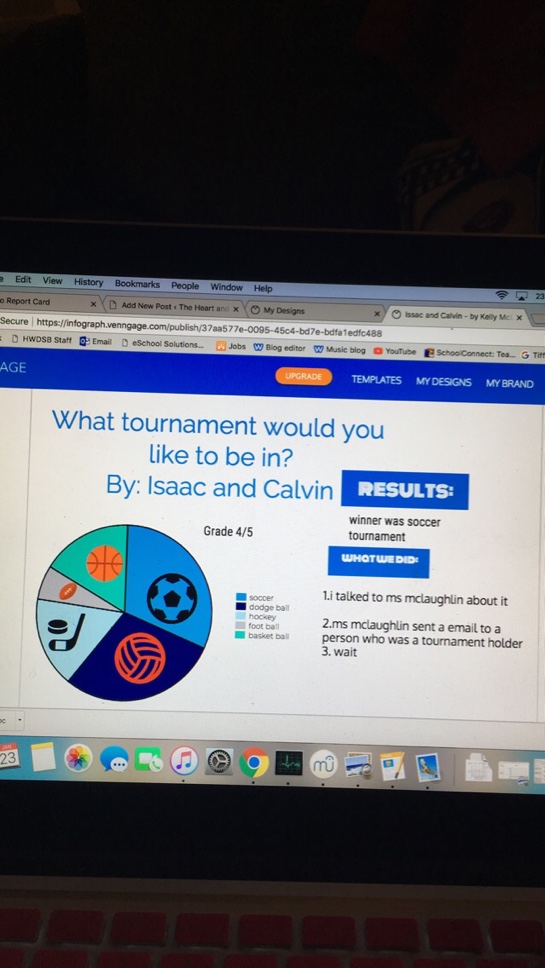
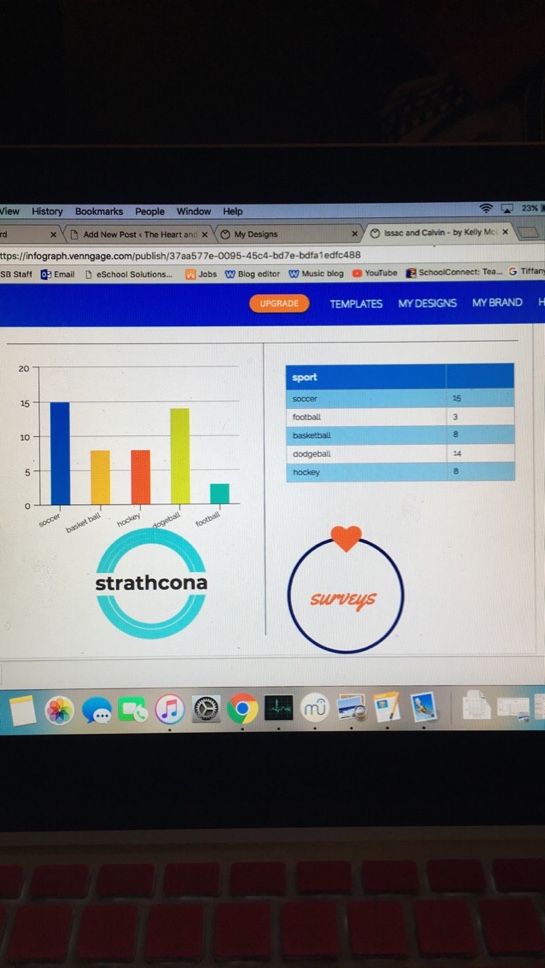
After leaving that conference, I went online right away to check out the program. There are many things you can do with it that will not cost you any money at all. Some more exciting features such as saving your work to a PDF would involve you paying the monthly costs. After playing around with the program I discovered exciting features such as adding bar graphs to the document, pie graphs, text and various professional looking icons that make the page stand out.

I taught my grade four/five class how to use this program to display their recent data management project results. I will attach a few photos of their finished work. It took them less than an hour and it was a neat and organized way for them to display their results for their final data project. An awesome program worth checking out!

Photo 1 (1) Photo 2

Guiding Principles

I’ve been doing some self-directed professional development on behaviour management lately. I have a personal interest in the psychology behind learning and development, and as a Kindergarten teacher this is my main area of focus on a daily basis. Before my students will learn literacy and math, I need to ensure their social and emotional well-being.

I recently took a PD session through my board where I was inspired to take a step back and think about my language in the classroom. How do my words and actions influence the behaviour and well-being of my students? After all, behaviour management in a classroom is influenced the greatest by the teacher’s words and actions, rather than those of the children.

As adults, we are tempted to flood our children with rules. These rules make us feel better. If we redirect our students constantly, we will keep them safe and ensure they are doing what we want, right? Well, this isn’t always the case. Think of how many commands, comments or redirection you dole out to your student on a daily basis. These phrases may sound familiar to you:

“Don’t run in the hall”

“Quiet voices inside”

“Don’t build that tower too high”

“Get down from that chair”

“Careful with those scissors”

“Hands to yourself”

“That wasn’t very nice”

“I don’t like to hear those words”

The list goes on, and on, and on, and on. But what if we don’t need to spew out these phrases repeatedly? What if there was a way to get that message across without overloading our kids with what, will inevitably, become white noise to them? We know that overloading kids with language can be overwhelming and as a result, can bring about even more behaviours.

This is where guiding principles come in. For your classroom, choose a phrase or a few words that define what you believe to be the most important rules. In our classroom, we use:

“At school, we are safe and kind”. 

Rather than throwing out constant redirection and comments as listed above, we simply repeat this statement to our class. Why is this effective? We’re using simple language with words that are clear and effective. Almost any situation that could come up in your classroom can be successfully redirected using this phrase. For students who are ready, it can be turned into a question to get kids thinking and reflecting about problems as they arise. For example, if a student is running in the hallway I might stop them and say, “At school we are safe. Are you being safe?”, rather than giving the command, “Stop running in the halls”. For a group of students that are not including someone in their play, I might remind them, “At school we are kind. Are you being kind?”. I think of the two words as umbrellas that all desirable and undesirable behaviours can be categorised under.

This method has worked wonders in our Kindergarten classroom. I always know my strategies are effective when I hear my students repeating my language. Since beginning using guiding principles, I hear my students guiding each other through situations by using the exact same phrase, “At school we are safe and kind!”. Undesirable behaviours are being stopped much faster and I’m noticing more mindful students.

I do believe that there is never a “perfect” or “correct” method for anything in teaching, as we know, every group of children is different. This particular method has really changed how I think and interact with my students and has been a wonderful guide to my own approach to behaviour management. I encourage you to give it a try!


A Tree-Mendous Learning Opportunity


Outdoor learning is becoming an increasingly important and celebrated element of the Kindergarten program. As more and more teachers are beginning to embrace true inquiry and play-based learning, time spent outdoors is becoming a focal point of the Kindergarten day rather than a “break from the learning”. Outdoor time IS the learning.

My Kindergarten class spends upwards of two and a half hours outside each day. We begin and end the day outside, which helps us arrive at school smoothly, eliminate transitions (especially with those pesky winter clothes) and get valuable physical activity before entering the classroom. Unless there’s a cyclone, we’re out there.

The school I teach at is very lucky to have an amazing outdoor learning space. Designed by a natural playground company, our outdoor space is filled with sand boxes, stumps, giant logs for climbing and trees. It is an outdoor learning lover’s dream! Not one primary coloured, plastic thing in sight. I really love the pedagogy behind forest schools or completely outdoor schools, and while we aren’t quite set up for that here (or ready for that amount of norm-challenging!), I think our outdoor space comes pretty close.


IMG_2170


My students are always engaged when we are outside. Whether it’s finding interesting pieces of nature, building forts, dramatic play or digging in the sand – all of my students are learning.

We love to introduce new and interesting nature activities. In the fall, we began to hone our skills at wood whittling. This can be done safely with proper adult supervision, some potato peelers and freshly picked sticks off a bush or tree. My students always feel so empowered when we allow them to engage in “risky” play!

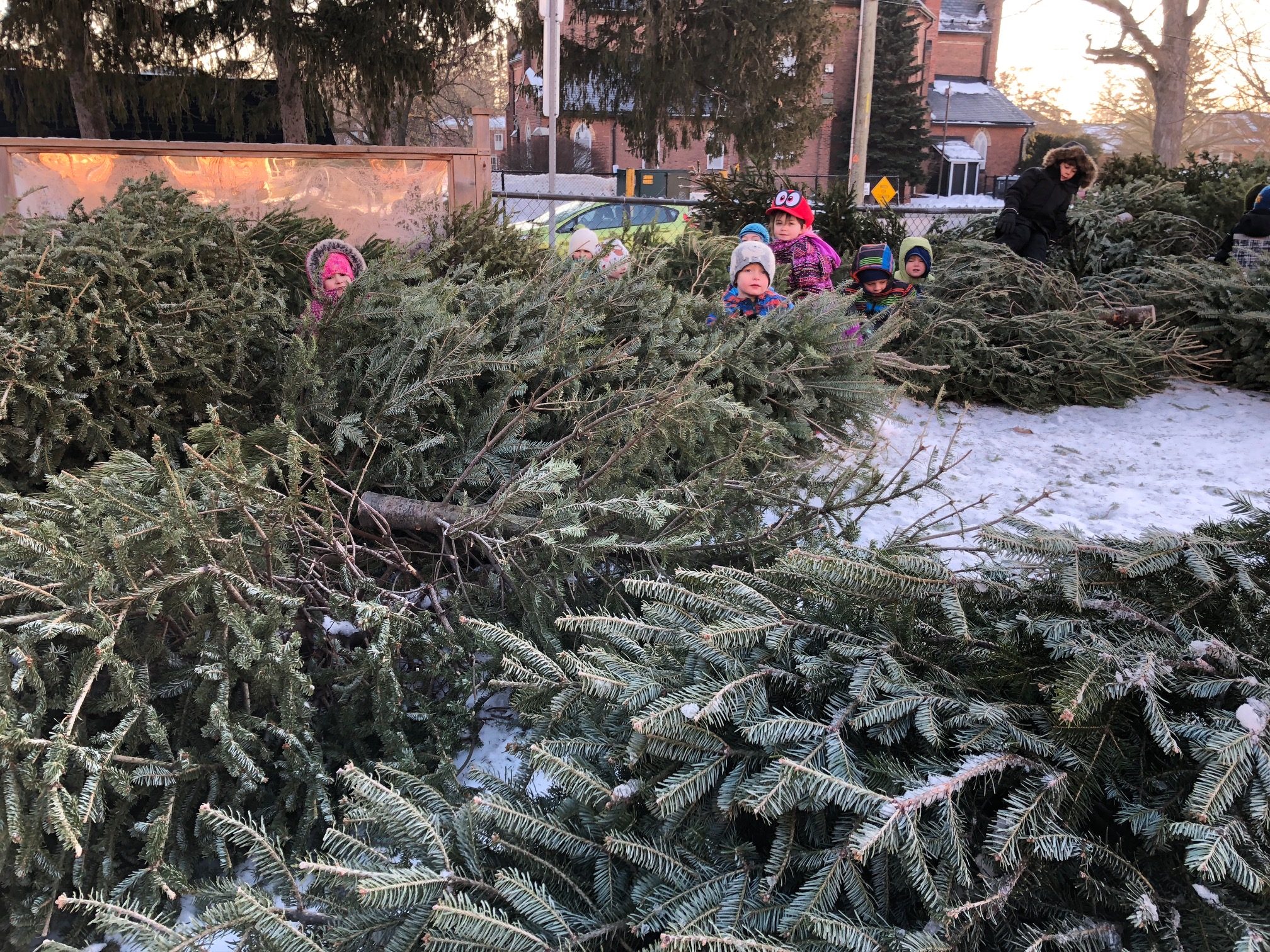
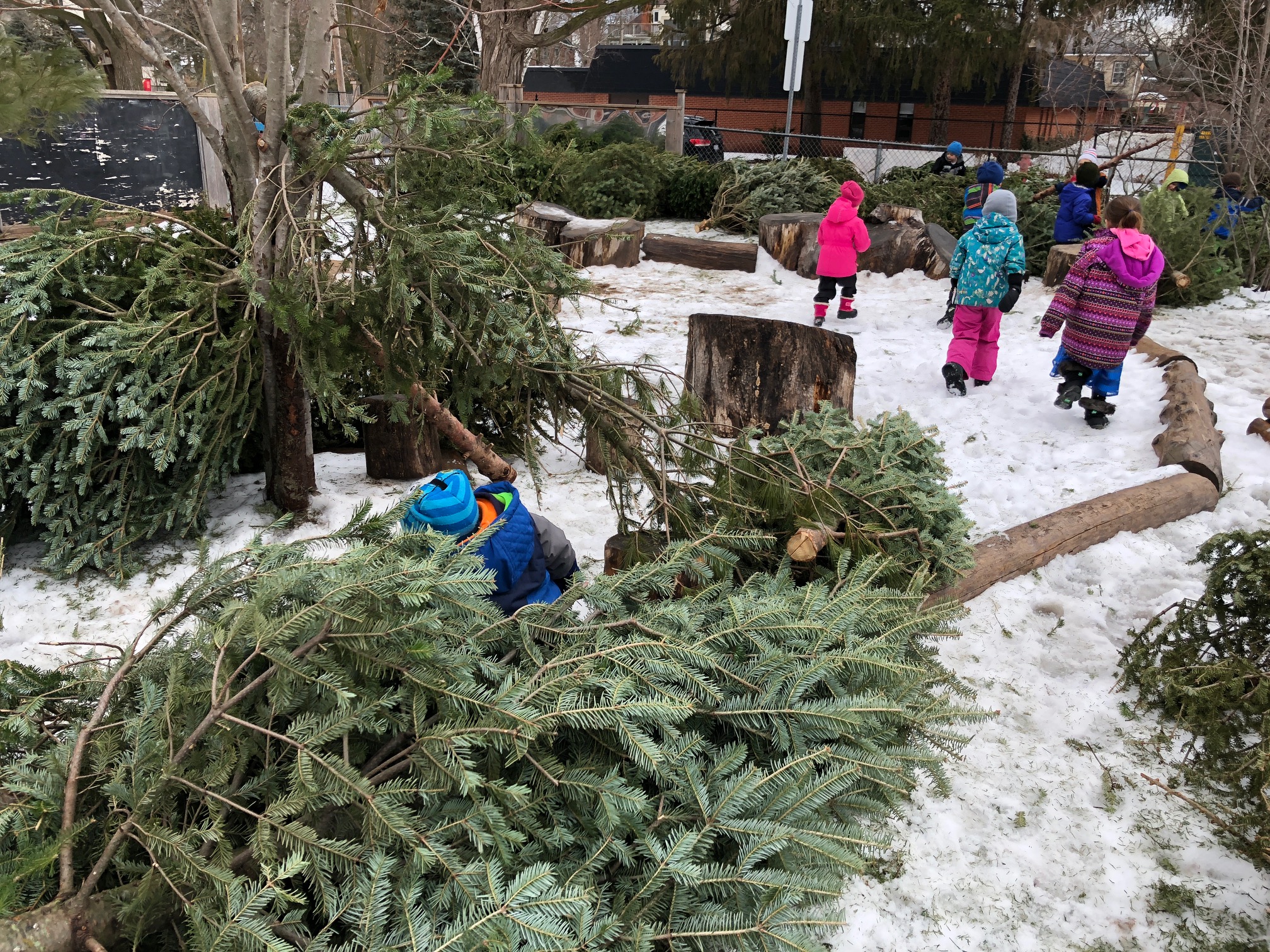
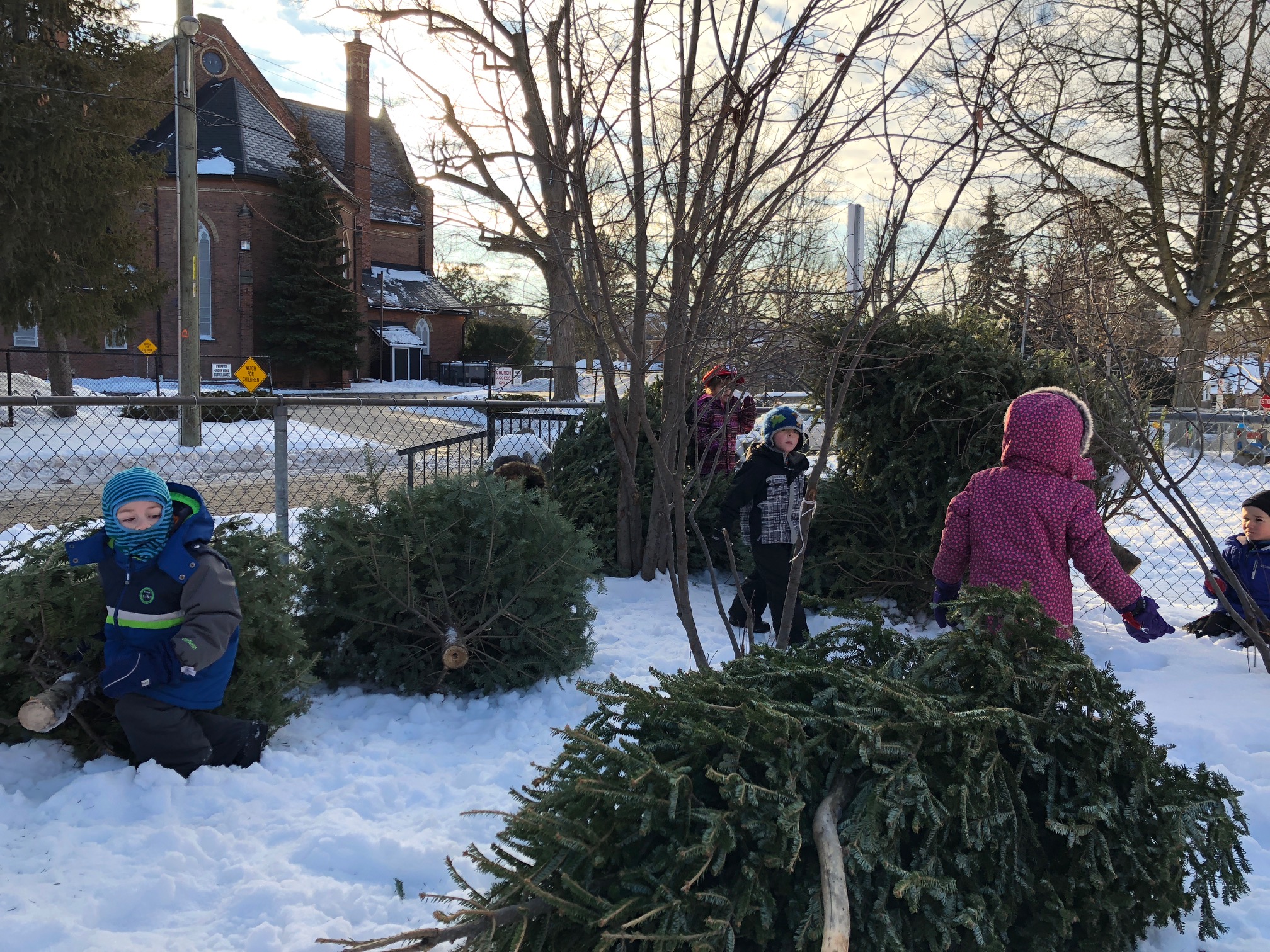
After the holidays, we asked our families to donate their discarded Christmas trees to our playground. We were so impressed at the response when we returned to find about 30 pine trees laying in our yard! This began the most engaging experience we’ve had outside yet.


IMG_0799


Other than a quick chat about making choices that are safe and kind, we didn’t assign any rules to these new materials we had to explore. The children quickly put them to use by moving them around the space, rearranging them into walls, forts and mountains. They climbed on, under and between them. The dramatic play that happened was so rich. Children demonstrated perseverance and grit when they couldn’t lift a tree or got stuck. There was a huge amount of problem solving, communication and collaboration as the students negotiated how to safely move the trees and build different structures.

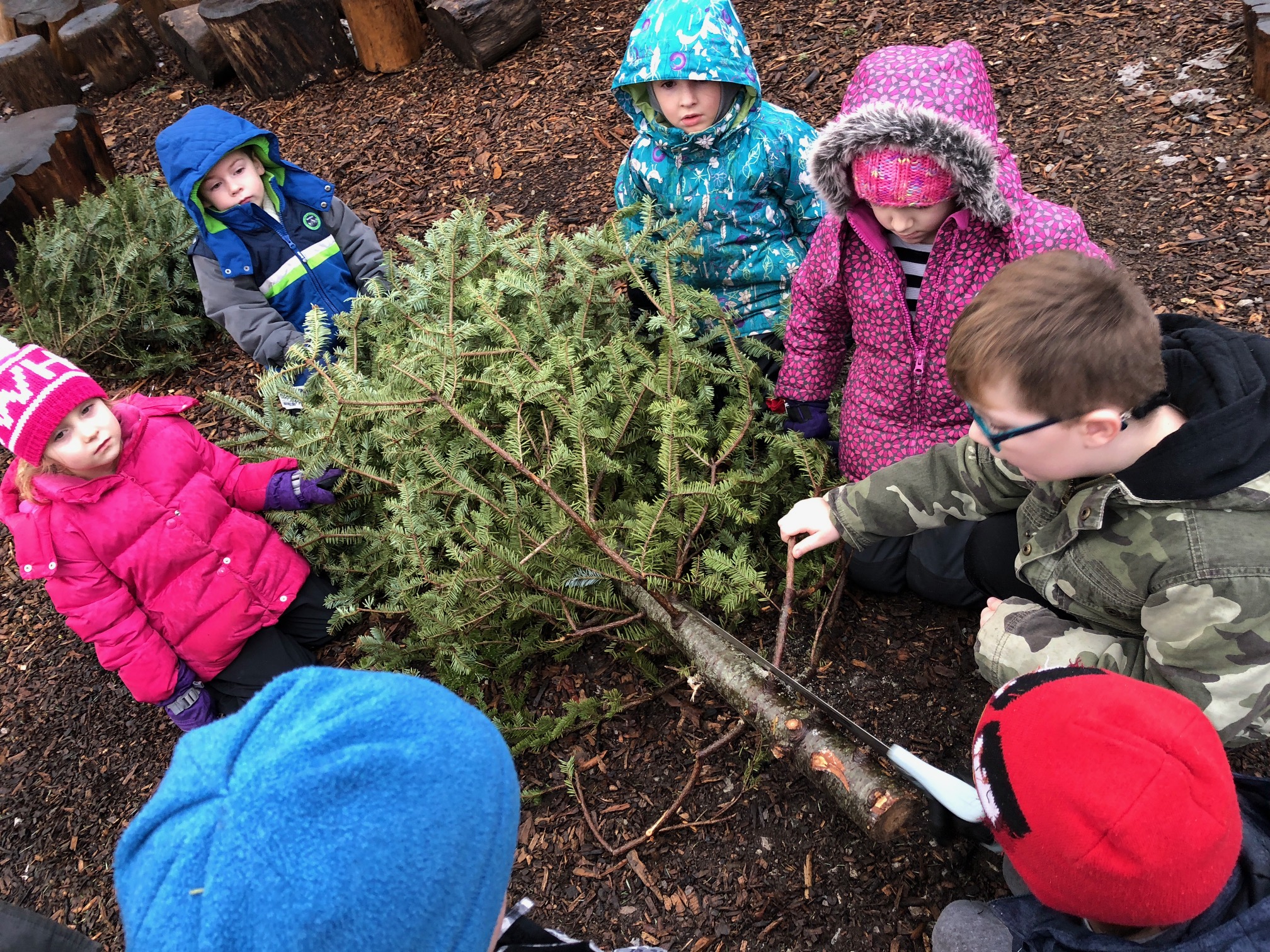
After a few days of exploring the trees, we interrupted the play by suggesting that we all work together as a class to build a fort. This is when we brought out the hand saws! Saws?! Many people panic at the thought of Kindergarteners using saws. In our program, we are working to empower and build confidence in our students. We want them to have applicable, real world skills. What better time and place to learn how to do “risky” things, than when you have several careful adults supervising and guiding you? So, in our class… we saw!


IMG_0869


Students had the opportunity to saw branches off the trees under 1:1 supervision. Once we have enough loose branches, we plan to use sticks and twine to build a large fort in the corner of our playground. We will learn about how to make the structure walls and roof, and our students will take the lead in all of the design and construction process. Talk about a hands-on, authentic project!


IMG_0827

IMG_0761


We are all at different comfort levels with outdoor learning and exploration. I hope this post might inspire you to rethink and challenge your outdoor play norms to turn it into something valuable and authentic for your students! After all, being outside is our Kindergartener’s natural habitat!