 Wanderers, tourists, sight seers, visitors, escape artists, runners…”Hey!” this teacher asks, with a smile, “See any cool artwork today?” or maybe the exchanges are in passing such as, “How are you? How’s your day going?” However, what rarely gets asked is, “Aren’t you supposed to be in class right now?”
Have you ever observed a student or few who seem to be conspicuously far away from their usual classroom or floor? Have you ever watched them take the long way around the school to complete an errand? How about the students who take the time to ponder every single art exhibition or piece of student work in the hallways? Not surprisingly, these are the same students who are frequently found quenching their thirsts at the farthest drinking fountains or outside of their friend’s classes waving as well.
At first, I paid little attention to moments like these. Perhaps those students were delivering messages to the office or helping another teacher? Of course it’s a possibility, but I was able to discern the difference quite quickly when the students being observed were empty handed, on the opposite side of the school building relative to the office, and not in possession of a good reason for being in that particular space and time. I have to empathize with students like this. That was me too. I used to take lots of notes to the office for my teachers. I wonder if those notes said, “Please keep William busy for a few minutes and then send him back. Thank you.”?
The Thinking Lap
Maybe the students that I’m seeing are taking a lap to think? Most times I use this option as a means to support anxious, stressed, and or physically active learners. A walkabout is an excellent mental health strategy for all of us, but then I started to see some patterns that piqued my attention. The students who I was regularly seeing in the hallways, were showing up at around the same times each day? Was there something going on that they needed to get out of class at the same time each day? It was then that I began to see this through a different lens.
In my role as SERT, I provide resource support in a number of classes throughout the school. Recently, I observed a student from the intermediate panel at a water fountain on a different floor about 30 minutes into the first period of the day. Harmless enough in itself, but what struck me about all of this was the fact that the student would have had to pass at least 2 other fountains along the way. 45 minutes later they were skipping down an empty hall during class to their locker. 30 minutes after that, back at the faraway fountain. I smiled, said hello, and went about my morning.
Perhaps they are enjoying an extended walk to work out some stress? If so, what are the underlying factors that explain this student’s to need be out of class so often? Could all of their self-navigated detours be coincidence? Barring medical issues, this is less likely to be believable based on frequency and time of day. What’s worth noting as well, are the other students who might be taking their own detours around the school.
3 Questions and 3 Answers
Q1. Would these students like to have someone to walk alongside and listen?
Q2. How many others feel like doing the same, but don’t act on it?
Q3. How can wonderlust be infused into these learners’ days to go with their wanderlust?
A1. It depends on whether they will be heard or given a hard time for being in the wrong place at the wrong time without any understanding by others.
A2. If there is one, there are others. Albeit subtle, shifting, shuffling, and staring into space are good indicators to teachers that students need a break.
A3. Throw the map away sometimes. Keeping the learning space, active, challenged, and engaged is often a trip to an undiscovered land. It is an act of re-invention and creativity that takes practice, patience, and persistence. Don’t be afraid to change directions by throwing in detours of your own.
Thank you for reading this post. Please take time to comment and share to keep the conversation going. Enjoy your detours.

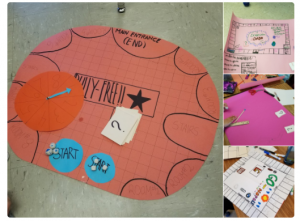
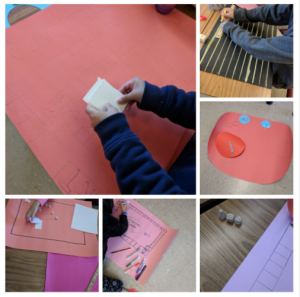 As I mentioned before, we are well into the creation stage and will continue in the new year. I do wonder however, if by calling it a board game, if I have steered them into a specific direction. Could it have been just a game where I may have seen a greater diversity of materials being used from physical to online? Did I in reality just do the very thing that bothered me so much about my mother’s course? Ask students to create something that wasn’t bored and yet steered them all into asking for bristol board? I’m on a path to really reflect on the types of tasks that I design for students while expecting them to become critical thinkers who are creative. This has now become food for thought for future tasks that we’ll embark on. Please stay tuned!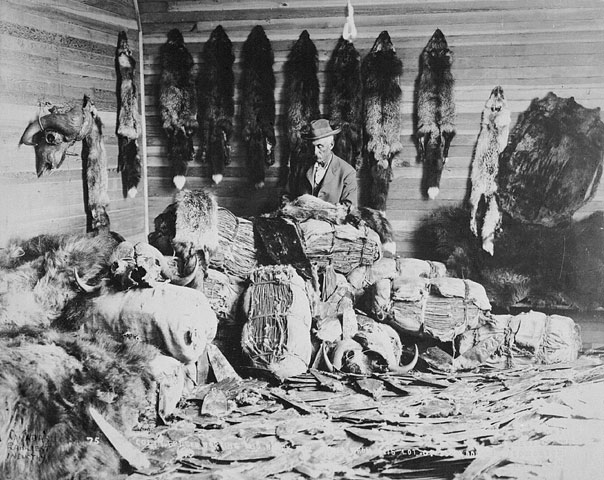
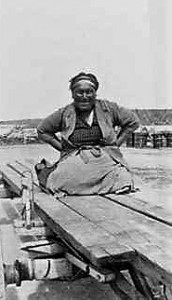 winter. The European men came to North American accustomed to a different less harsh weather, and faced dealing with different food sources and clothing unsuitable for the Canadian climate.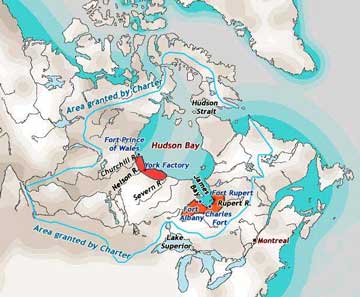
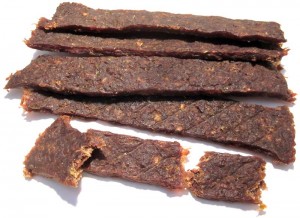 Picking the right food could result in delicious, nourishing meals which provided enough calories to fuel long trips through the wilderness. These women taught Europeans how to fish and trap animals for food as well as preserve food for winter. They taught the Europeans how to plant corn and use it for bread, like bannock or corn stew like sagamit. The First Nations women provided fur traders with high calorie Pemmican made from dried bison, moose, caribou, or venison meat powder mixed with animal fat and berries (see recipe below). Apparently Pemmican can last over 50 years without going bad, now that’s the ultimate survival food!